 Skip to content
Complex Dress Design Development
From difficult design concepts to production-ready dresses with controlled pattern, structure, materials, fit, revisions and bulk manufacturing standards.
- 7+ senior womenswear pattern makers supporting complex pattern, fit and structure development.
- 2 sample rooms and 20+ sample machinists for first samples, fit corrections and revised samples.
- Complex corset, strapless, lace, mesh and sequin samples typically require 15-25 days, depending on material readiness and construction depth.
- PP sample approval and Golden sample sealing establish the reference before bulk production.
Built for Teams Developing Technically Demanding Dress Collections
Product Development Teams
Product development teams often receive strong sketches, reference images or tech packs before every construction detail has been solved. The difficult work starts when a neckline needs more support, a waist seam changes the proportion, a cut-out affects stability, or a chosen fabric cannot hold the intended silhouette. Jinfeng reviews the style as a garment system rather than a flat drawing.
- Structure review covers bust, waist, hip, neckline, straps, armholes, lining, support and hem balance.
- Development comments are converted into pattern, measurement, fabric, trim and sewing actions instead of remaining in informal messages.
- Sample stages are planned around what still needs to be validated before PP approval.
Established Fashion Brands
Established brands usually need more than an attractive first sample. A complex dress must fit the intended market, photograph well, survive handling, meet the planned cost level and remain reproducible when quantities move into thousands of pieces.
Jinfeng connects design development with bulk manufacturing decisions early, so a successful sample does not rely on one-off hand adjustments that cannot be repeated later.
- Fabric and trim choices are reviewed against appearance, comfort, sewing behavior, MOQ and bulk availability.
- High-risk details such as boning, cups, sheer panels, lace placement, sequins, ruching and invisible zippers are validated during sampling.
- Approved construction details are transferred into bulk files and QC checkpoints.
Sourcing and Buying Teams
- Project review can begin from a tech pack, line sheet, original sample, reference image or sketch.
- MOQ, material constraints, development cost and production feasibility are reviewed before commitments are locked.
- Multi-style programs can be grouped by construction, fabric family and sample priority to reduce avoidable development congestion.
Where Complex Dress Development Most Often Goes Wrong

Looks Good, Fits Poorly
- Strapless and corset styles can slip when upper-bust grip and internal support are not coordinated.
- Cut-outs can distort when the opening removes stability from a high-tension area.
- Long or asymmetric hems can become unbalanced after drape, stretch and pressing are introduced.

Fabric Fights Structure
- Weight and drape affect silhouette and hem balance.
- Stretch direction and recovery affect body fit and seam stability.
- Transparency affects lining coverage and seam visibility.
- Surface sensitivity affects cutting, sewing, pressing and packing.

Revisions Become Fragmented
Complex samples often need several rounds of precise feedback. Problems start when comments arrive across email, messaging apps, annotated photos and separate measurement sheets without one controlled revision record.
A neckline can be corrected while an older waist measurement remains in the pattern, or a new trim can be approved without updating the BOM and sewing instruction. Jinfeng records sample version, issue category, client comment, internal analysis, revision action, pattern impact, cost impact, lead-time impact and next sample action.
Bulk-relevant changes move into updated patterns, size charts, BOMs, fabric approvals, trim approvals, sewing instructions and QC checklists before the next approval stage.

Sample and Bulk Disconnect
- Final pattern and size chart must match the approved fit.
- Fabric, lining and trims need approved references.
- Construction methods need clear sewing instructions and checkpoints.
- Golden sample and QC criteria provide a physical and written production standard.
Complex Dress Categories Requiring Deeper Development Control

Corset and Bustier
Corset and bustier dresses combine silhouette shaping with internal engineering. Cup shape, boning position, under-bust placement, waist suppression, lining, back closure and skin comfort all influence whether the style looks structured or simply feels rigid. Satin, lace, mesh and structured woven fabrics can each require a different internal solution.
- Pattern review focuses on upper bust, under bust, cup position, waist shaping and side-seam balance.
- Support review covers bra cups, boning, lining, hook-and-eye or lace-up construction, and anti-slip control where required.
- Sampling checks whether support remains comfortable while preserving the intended neckline and body shape.
Bulk production needs repeatable boning placement, cup position and seam symmetry rather than hand-corrected sample-only shaping.

Strapless Structure
A strapless dress has no shoulder strap to correct balance after the garment is worn.
Upper-bust grip, internal support, side-seam position, waist anchoring and zipper behavior must work together.
A neckline that looks clean on a mannequin can slip, gape or compress the bust when fitted on a person.
Jinfeng reviews neckline depth, upper-bust measurement, cup volume, boning, anti-slip requirements, lining and zipper position during sampling.
Fit feedback should include front, side and back images so downward movement, side pressure and back tension can be identified.
Before bulk production, the approved structure needs fixed measurements and repeatable support placement across the size range.

Mesh and Sheer
Mesh creates visual lightness but introduces transparency, stretch and edge-control risks.
Power mesh, soft stretch mesh and double-layer mesh behave differently around bust panels, cut-outs, sleeves and bodycon sections. A lining that looks correct in one size may shift or expose more skin after grading if coverage points are not defined.
- Stretch direction and recovery are checked before pattern decisions are finalized.
- Lining coverage is reviewed around bust, waist, hip and high-exposure areas.
- Seam and binding methods are selected to reduce puckering, holes and distortion.
- Sample fit checks tension changes created by layered mesh and body movement.
Bulk QC needs both measurement control and visual transparency checks, not measurement alone.

Lace Placement
Lace development depends on motif position, symmetry, seam location, edge treatment and lining color.
Cutting a lace dress without placement planning can produce visible left-right imbalance, broken motifs or inconsistent visual density across units.
Lace may also stretch or distort differently from the base fabric.
Jinfeng reviews where the lace motif should sit on the neckline, bodice, waist, sleeves and hem before production cutting standards are set.
Placement-sensitive areas can require controlled markers or reference photos.
Lining color and transparency are checked together, while joining methods are tested for comfort and seam appearance.
Bulk inspection then compares motif balance, edge quality, damage and lining exposure against the approved reference.

Sequin Embellishment
Sequin dresses create a strong visual result but increase sewing, comfort and packing risk. Sequin density can affect fabric weight and drape; seam lines may require controlled sequin removal or protection; exposed edges can scratch skin; and careless folding can damage both decoration and neighboring garments.
Development review covers sequin base fabric, stretch, seam placement, lining, zipper area, edge treatment and garment weight. Sample sewing is used to identify needle breakage, sequin loss, bulky seams and uncomfortable contact points. Before bulk release, workmanship standards should define acceptable decoration coverage, seam finish and protective packing so appearance does not deteriorate between finishing and delivery.

Cut-Out Asymmetry
Cut-outs and asymmetric shapes create tension around openings that would normally be supported by continuous fabric.
A waist cut-out can pull the side seam forward, an asymmetric neckline can twist the bodice, and a back opening can change shoulder or bust stability. The pattern therefore needs to control both the visible shape and the forces around it.
Jinfeng checks opening position, edge stability, body coverage, seam direction, stretch behavior and internal reinforcement where needed. Fit samples are reviewed from multiple angles and during movement, not only in a static front view. Production files then need clear opening dimensions and seam methods so the cut-out does not gradually change across sizes or bulk batches.

Draped Satin
Draped satin looks simple when the lines fall correctly, but the development is sensitive to grain direction, fabric weight, bias behavior, shine direction, seam placement and pressing.
Small changes can shift the neckline, twist the side seam or create uneven hem balance. Surface damage is also easy to see.
Jinfeng reviews matte, stretch or heavier satin options against the intended silhouette and support needs.
Sampling verifies drape, neckline stability, strap position, zipper flatness and lining behavior.
Cutting direction and shade consistency need attention before bulk production, while pressing and anti-crease packing are treated as part of the finished appearance rather than an afterthought.
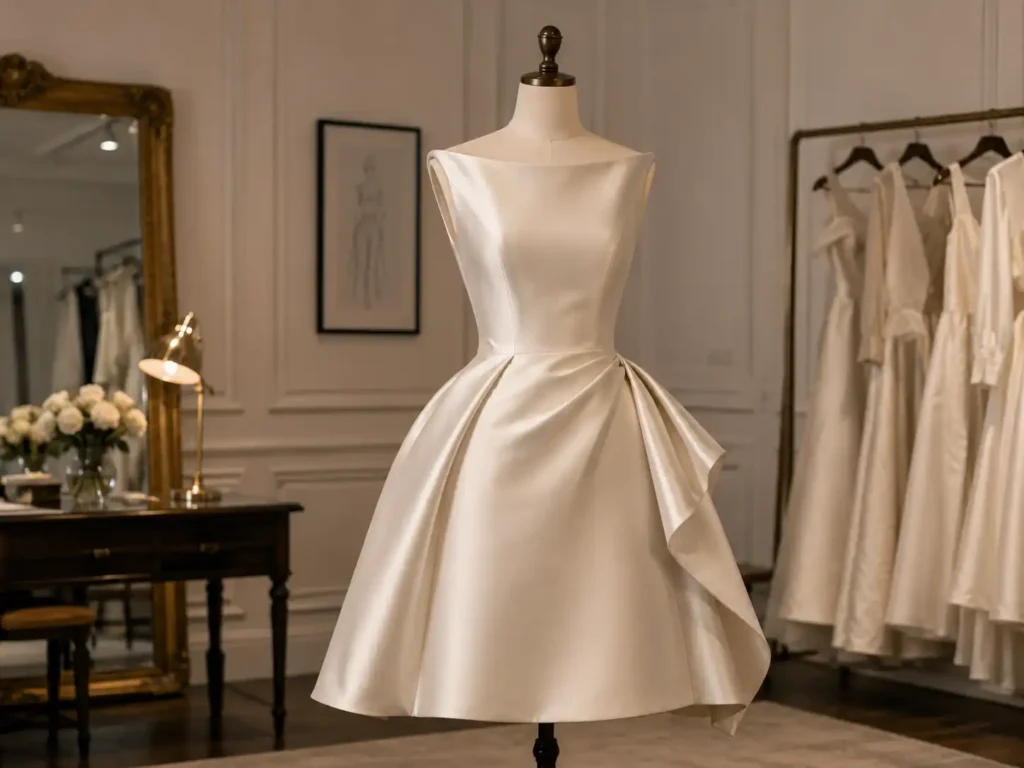
Structured Occasionwear
What We Need Before the First Complex Sample
Development Inputs
A project can begin with a tech pack, line sheet, reference image, original sample, sketch, size chart, fabric swatch or trim reference. More complete inputs reduce assumptions and allow the development team to identify conflicts earlier. The most valuable information is not only the visual design but also the commercial target surrounding it.
- Target product type and wearing occasion.
- Intended size range and base-size measurements.
- Preferred fabric, lining, color and key trims.
- Construction details that must remain unchanged.
- Target quantity per style and color.
- Target price level and launch window where available.
- Label, packaging and retail or ecommerce requirements.
Missing items are flagged for review instead of being silently guessed during sample making.
Technical Review
- Style structure: neckline, bust, waist, hip, back, cut-outs, slit, lining and length.
- Material behavior: drape, weight, stretch, recovery, transparency, surface sensitivity and shrinkage risk.
- Trims and support: cups, boning, zippers, hooks, anti-slip tape, lace, sequins or decorative attachments.
- Production feasibility: seam access, workmanship difficulty, pressing, packing and repeatability.
- Commercial fit: material MOQ, sample cost, bulk cost drivers and production timing.
Complex Dress Feasibility and Development Risk Map
Before pattern cutting begins, complex details are reviewed according to how they affect fit, material behavior, construction and bulk repeatability. A risk map helps the development team decide which points must be tested in the first sample and which can be locked later.
| Design Area | Main Risk | Development Review | Production Consequence |
|---|---|---|---|
| Corset / strapless bodice | Slipping, cup mismatch, rigid comfort | Upper bust, under bust, cup, boning, anti-slip, lining | Fixed support placement and size-specific fit control |
| Mesh / sheer panels | Excess transparency, stretch distortion | Mesh type, stretch direction, lining coverage, edge method | Visual coverage checks plus measurement QC |
| Lace placement | Broken motif, asymmetry, fraying | Motif position, seam location, lining color, edge finish | Placement references and cutting consistency |
| Sequin / embellishment | Loss, scratching, bulky seams | Base fabric, seam route, lining, protection, packing | Workmanship and decoration inspection by area |
| Cut-outs / asymmetry | Opening distortion, body exposure | Opening shape, reinforcement, balance, movement fit | Controlled dimensions and sewing method |
| Satin drape / bias | Twisting, zipper bulging, shade or crease marks | Grain, shine direction, drape, zipper, pressing | Cutting direction, shade control and packing protection |
| Long structured styles | Uneven hem, slit or lining imbalance | Front/back length, slit height, lining, drape | Length measurement, pressing and final balance check |
Pattern, Fit and Structure Built Around the Body
Complex dress development becomes reliable when visual design is translated into measurable body relationships and repeatable construction. Jinfeng uses pattern development, fit review and sample correction to control shape rather than relying on pressing, pinning or hand adjustment to disguise structural problems.
Silhouette, Proportion and Balance
A complex silhouette must work in three dimensions. Jinfeng starts by locating the measurements and balance points that control how the garment sits on the body: bust, upper bust, under bust, waist, high or low waist, hip, front length, back length, strap length, armhole, neckline depth, slit height and overall dress length.
The goal is not to chase every measurement independently. The pattern must create the intended proportion while allowing the fabric and construction to behave correctly.
A fitted bodice, for example, can look too short even when center-front length matches the chart if the bust volume is insufficient.
A low-waist dress can appear to pull upward when the hip and torso relationship is wrong. A halter or asymmetric style can twist because tension is unbalanced between neckline, shoulder and side seam. Long dresses can develop uneven hems after the bodice fit changes because front and back length are affected by body volume and drape.
Development therefore works through linked corrections:
- Bust and upper-bust corrections are checked together with neckline shape and armhole coverage.
- Waist position is reviewed against torso proportion and the intended silhouette, not only waist circumference.
- Hip ease is balanced with side-seam direction, skirt fall and movement.
- Straps and necklines are adjusted without shifting the entire bodice out of balance.
- Hem and slit positions are rechecked after major bodice or hip corrections.
Fit feedback is most useful when front, side and back images are paired with measured points. Vague comments such as “the top feels wrong” are converted into specific pattern questions so the next sample can target the actual cause.
Support, Coverage and Wearing Security
Many complex dresses depend on internal structure that is barely visible in finished photography. Corset, strapless, deep-V, backless, cut-out and fitted occasion styles can require cups, boning, anti-slip tape, lining, controlled seam placement or other support methods to hold the visual line safely on body. Support cannot be added as a generic solution because each element changes pressure, comfort and pattern behavior.
For corset and bustier development, Jinfeng reviews cup position, under-bust shape, boning routes, waist shaping, side-seam balance and back closure together. A cup that is too high can create neckline gaping; boning that is too rigid or poorly positioned can push the bodice away from the body; excessive waist suppression can distort side seams or reduce comfort. Strapless designs also need upper-bust grip and body anchoring rather than relying on the zipper alone.
Coverage is treated as part of fit engineering. Mesh panels, deep necklines, side cut-outs, high slits and low backs are checked against the target wearing condition and intended size range. The first sample may reveal that a visual opening needs a few millimeters of repositioning, additional lining, edge stabilization or a different stretch direction to remain secure during movement.
Key controls include:
- Cup shape and position relative to bust point.
- Boning placement, length and interaction with seams.
- Upper-bust tension for strapless security.
- Lining coverage around sheer or low-cut areas.
- Slit height and opening stability during walking and sitting.
- Anti-slip or closure details where the design requires extra anchoring.
The approved structure should produce the same wearing logic across bulk units, not only on the first fit model.
Production-Ready Pattern Control
A pattern is not finished simply because one sample looks acceptable. Complex development needs a pattern that can be cut, sewn and checked repeatedly with defined construction references. Every major sample revision that affects fit or structure must be reflected in the pattern and related production files before PP approval.
Jinfeng separates temporary sample adjustments from permanent pattern corrections. Pinning a waist, manually reshaping a cup or pulling a side seam during fitting may help diagnose the problem, but those actions are not production instructions. The approved solution must be translated into pattern lines, measurement values, seam allowances, lining pieces, support positions and sewing methods that a production team can follow consistently.
Pattern control becomes especially important when the size range expands. Grading a simple measurement up or down is not enough for every complex feature. Cup position, neckline depth, strap position, cut-out dimensions, slit height and support placement may need size-specific review so the design remains visually proportional. Jinfeng uses the approved fit and measurement logic as the basis for size development and bulk checkpoints.
Before release into production, the development record should align:
- Final outer-shell and lining patterns.
- Approved size chart and measurement method.
- Fabric direction, stretch direction and cutting notes.
- Support component position and trim specification.
- Construction and seam instructions.
- Areas requiring measurement or visual QC.
- PP and Golden sample references.
The result is a pattern package built for repeatability, not a one-off sample that only one technician knows how to reproduce.

Materials and Support Systems Must Work Together

Drape and Surface
- Review weight, hand feel, drape and shine direction against the silhouette.
- Check snagging, crease marks and pressing response on surface-sensitive fabrics.
- Match lining weight so the inner layer supports rather than fights the outer shell.
- Confirm bulk color and shade control when multiple rolls or batches are involved.

Stretch and Recovery
Stretch fabrics can solve movement and close-fit requirements, but uncontrolled stretch creates twisting, riding up and unstable measurements. Jersey, stretch satin, power mesh and elastic woven fabrics all behave differently in the width, length and bias directions.
Recovery is as important as extension because poor recovery changes fit after wearing or handling. Jinfeng checks stretch direction, recovery, relaxation behavior and the relationship between fabric tension and pattern reduction. Bodycon and fitted styles are reviewed around bust, waist and hip rather than simply making the garment smaller. Seam type, lining and zipper choice are also considered because non-stretch components can create hard points inside an otherwise flexible garment.
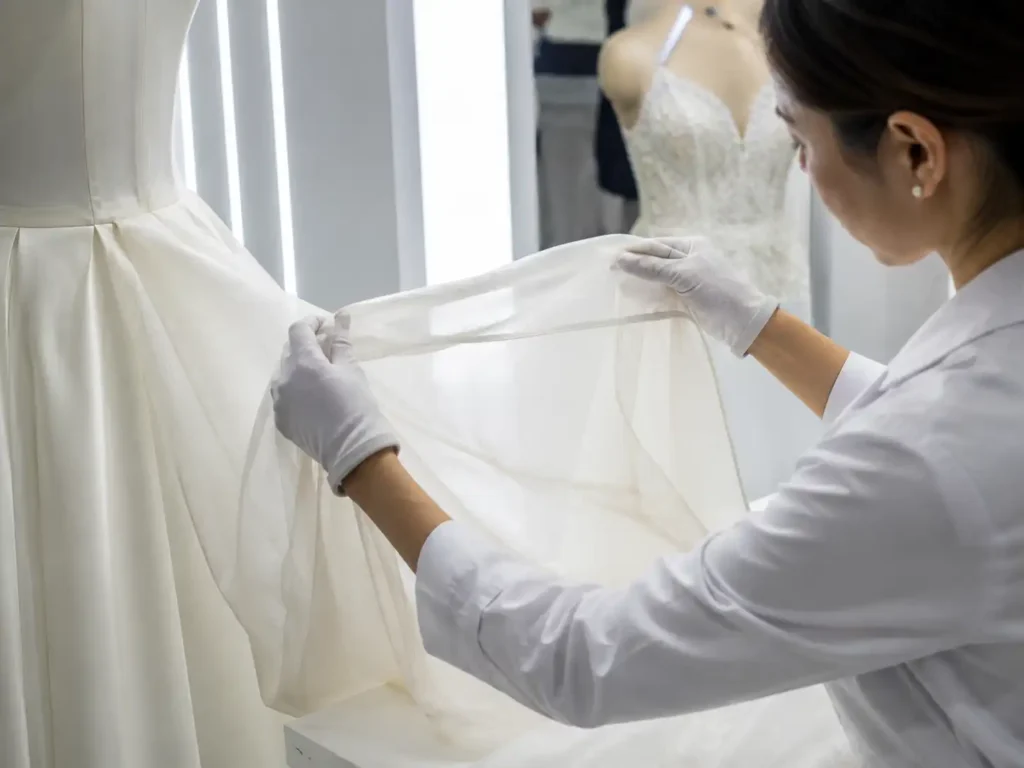
Transparency and Lining
- Define where coverage starts and stops around bust, waist, hip and cut-outs.
- Match lining stretch with the outer fabric when required.
- Check lining color under studio light and normal indoor light.
- Control lining length so it does not show below the shell or pull the outer layer upward.
- Review seam visibility through sheer panels.

Bust Support Systems
Built-in cups, boning, lining and anti-slip elements can transform the fit of corset, strapless and deep-neckline dresses, but support must follow the pattern rather than overpower it.
Cup shape and placement influence neckline position; boning affects torso shape and comfort; lining affects friction and internal stability.
Jinfeng develops support according to bust shape, neckline, back construction, fabric weight and intended fit.
Sample review checks whether the bodice stays in position during movement, whether support creates visible ridges, and whether internal components remain comfortable. Approved positions are then translated into clear trim specifications and sewing references for bulk production.

Closures and Stability
- Match zipper type, length and color to fabric and construction.
- Check zipper flatness through the full wear position.
- Use closures to support structure, not compensate for poor fit.
- Confirm strap hardware size against strap width and skin comfort.
- Review closure strength before decoration or lining hides access points.

Decorative Construction
Lace, sequins, rhinestones, bead chains and other decorative materials affect more than appearance.
They add weight, create hard edges, change seam routes and increase handling risk. Decoration therefore needs a defined attachment and protection method during sample development.
Jinfeng reviews placement, symmetry, attachment strength, skin-contact risk, seam interference and packing protection. For sequins and dense embellishment, sample sewing identifies whether decoration must be cleared or protected around seams and zippers. Lace edges are checked for fraying and motif balance. Decorative components are also considered in cost and lead-time planning because handwork or specialized trims can materially change the development and production schedule.
Construction Engineering for Difficult Dress Details
Strong development must survive the sewing floor. Jinfeng reviews complex construction according to assembly order, seam access, material sensitivity, symmetry, internal support and finishing so the approved design can be reproduced without relying on improvised workmanship during bulk production.

Building Structure in the Correct Sequence
Complex dresses often contain layers and internal components that must be assembled in a controlled order.
A corset bodice may require outer panels, fusible or supporting layers, cups, boning channels, lining, zipper or lace-up components and top-edge finishing. If the sequence is wrong, later operations can distort earlier work or make accurate adjustment impossible.
Jinfeng reviews how the garment moves from cut components into a stable shell before the first sample is treated as final.
Seam intersections are checked for thickness and alignment. Support elements are positioned so they follow the intended body line. Linings need enough ease to sit smoothly without pulling the outer layer.
Closures are integrated into the structure rather than inserted as an isolated operation.
Development attention is especially important around:
- Corset panel seams and boning channels.
- Cup attachment and neckline finishing.
- Cut-out edges and reinforcement.
- Layered mesh or lace joining.
- Ruched panels that must remain symmetrical.
- Invisible zippers crossing waist seams or dense fabric areas.
A repeatable assembly sequence reduces the chance that bulk operators solve the same construction problem in different ways. Sample comments also record where seam bulk, internal components or difficult access points require extra attention, so the approved method can be taught and checked instead of rediscovered on the line. For multi-size production, the team also reviews whether the same construction route remains workable after grading changes panel width, cup position or opening dimensions.
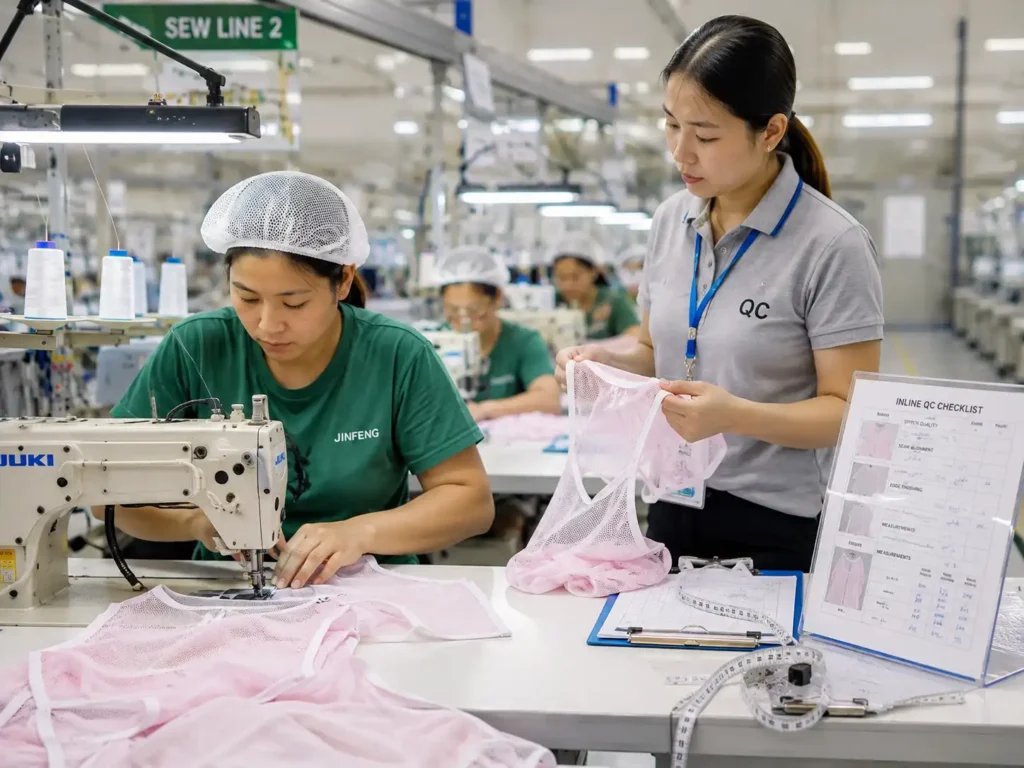
Sewing Sensitive and Decorative Materials
Material sensitivity changes workmanship requirements. Satin can show needle marks, puckering and zipper waves. Mesh can stretch under the presser foot or develop holes at concentrated stress points. Lace can shift or fray at joining seams. Sequin fabric can create broken needles, bulky seam allowances and exposed scratch points. Each material needs a sewing approach that respects both appearance and production speed.
Sample development is used to expose these risks before production. Jinfeng can adjust seam route, seam allowance, lining method, edge binding, reinforcement or construction sequence when the original method is not stable enough. For stretch materials, seam elasticity and fabric recovery are checked together. For surface-sensitive fabrics, pressing temperature, handling and protection become part of workmanship planning.
Visual inspection focuses on details that immediately reduce perceived quality:
- Puckering around necklines, side seams and zippers.
- Twisted straps or uneven shoulder positions.
- Exposed lining at openings or hems.
- Broken lace motifs or damaged edges.
- Missing or rough sequins near skin-contact areas.
- Uneven ruching, pleats or decorative placement.
The aim is a construction method that preserves the design while remaining stable enough for repeated production. Before PP approval, any special handling point should be explicit enough for production and QC teams to recognize it. Areas that depend on hand positioning, temporary pinning or an individual sample machinist’s personal technique are reviewed again, because a bulk standard must be teachable, measurable and visually comparable across operators and batches.
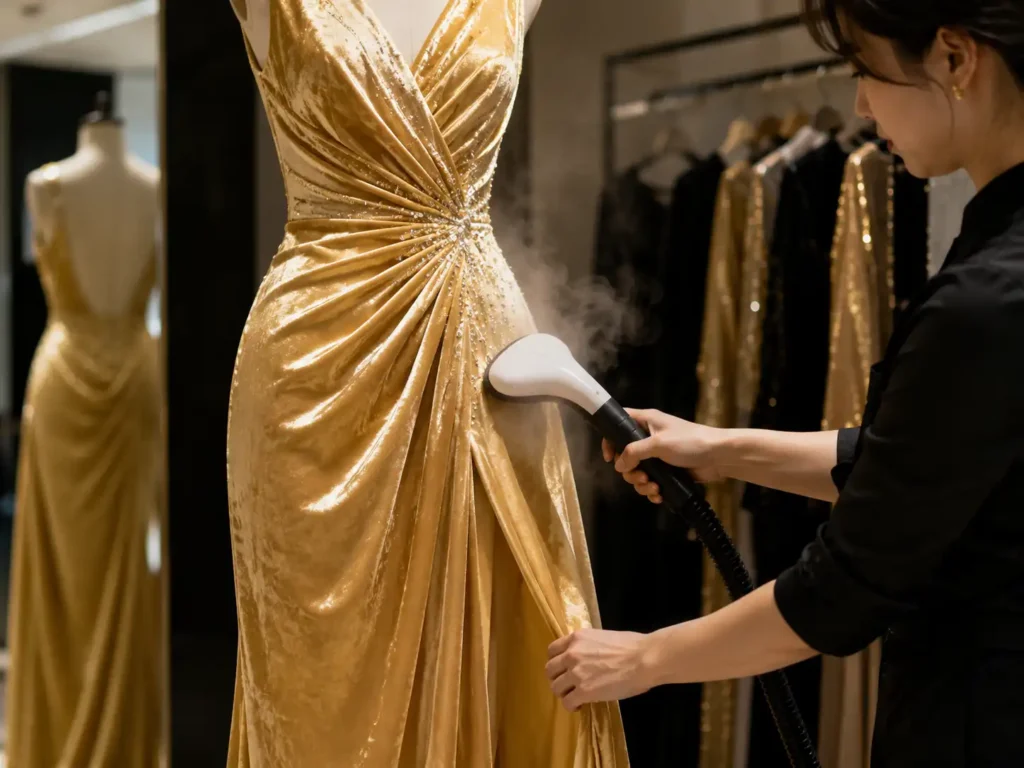
Symmetry, Finish and Pressing Control
Complex dresses can be technically correct and still look poor when finishing is inconsistent.
Symmetry is particularly important in corset panels, cups, straps, ruching, lace placement, cut-outs and decorative features.
Small left-right differences become highly visible in product photography and fitted styles.
Jinfeng uses sample and production checkpoints to compare panel alignment, neckline balance, waist seam level, strap position, zipper line, slit position and hem shape.
Pressing is reviewed as part of the construction result. Excessive heat or pressure can create shine marks, seam impressions or flattened texture, while insufficient pressing can leave a garment looking unfinished even when measurements are correct.
Finishing control also connects directly with packing.
Satin and structured occasion dresses may require folding methods that reduce creasing or pressure on cups, boning and embellishment. Sequin and rhinestone surfaces may need protection from abrasion.
Long dresses need careful handling so hem balance is not lost during final finishing.
A finished complex dress should therefore be checked as a complete product: shape on body, seam quality, symmetry, pressing, closure function, lining coverage, decoration and packing readiness all need to agree with the approved sample. The finishing standard is also photographed or referenced where visual details matter, giving later production and repeat orders a clearer benchmark for how the garment should look after final pressing rather than only how it looked during sewing.
Sample Stages with a Clear Decision at Each Step
First Sample
Fit Sample
Revised Sample
Photo-Ready Sample
PP Sample
Golden Sample
Complex Sampling Is Built Around Validation, Not Speed Alone
Corset, strapless, lace, mesh, sequin and multi-layer dresses need more verification than straightforward styles. Jinfeng uses the sample stage to test construction behavior, body fit, material interaction and production repeatability before an unstable detail becomes a bulk-production problem.

Break the Design into Technical Questions
A complex style is easier to develop when the design is broken into the decisions that can fail independently. Jinfeng reviews the garment by zones and systems: bodice support, waist shaping, hip fit, opening stability, skirt balance, fabric behavior, lining, closure, decoration and finishing. The first sample is planned to answer those questions rather than simply produce a visual copy.
A corset dress may need to test cup and boning position before decorative lace is fully committed. A mesh cut-out style may need to confirm transparency and edge stability before the final lining route is locked. A sequin dress may need a seam and zipper test to determine how decoration should be handled in bulk. A draped satin style may need grain and weight validation before the final pattern is graded.
Complex first samples commonly require about 15-25 days when fabrics and standard trims are available; timing can extend when custom materials, special components or deeper construction development are involved. The schedule is therefore tied to what needs to be validated, not a blanket promise across every style. Development planning also considers whether the brand needs a fit sample, photo-ready sample or salesman sample before PP, because each additional purpose can change finishing requirements and sequencing. When several complex styles are developed together, high-risk constructions are prioritized earlier so late technical discovery does not compress the entire collection calendar.
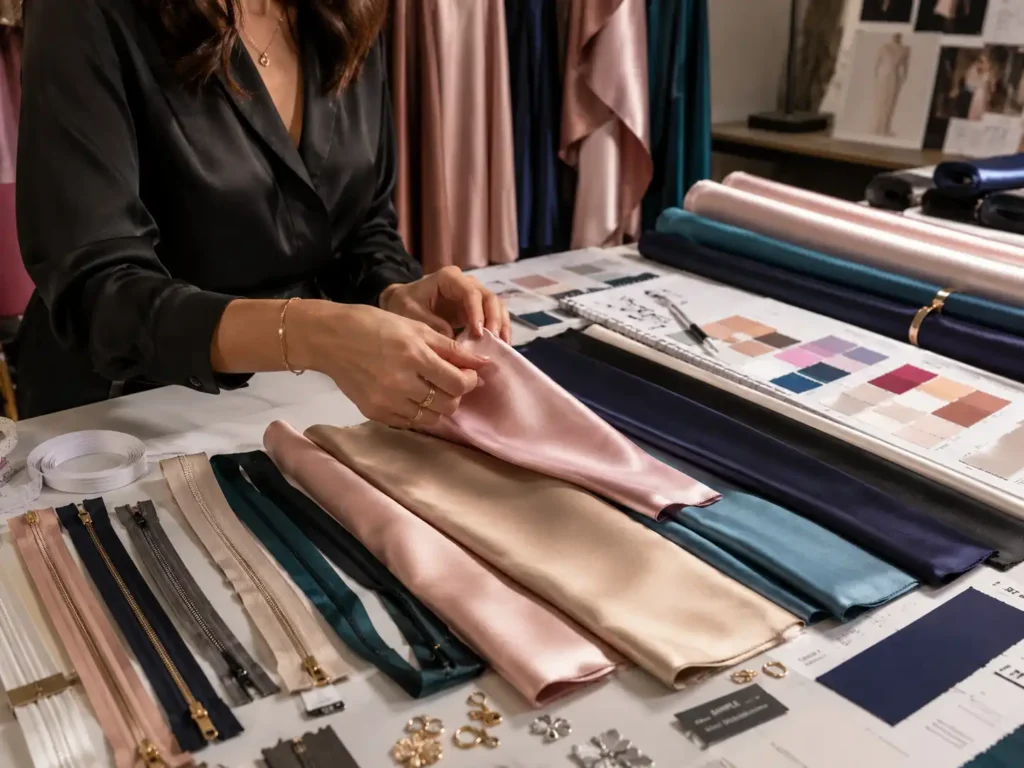
Validate Fit and Material Behavior Together
Fit cannot be separated from material behavior in a difficult dress. Stretch changes bust, waist and hip tension.
Drape changes hem and neckline balance. Lining changes friction and coverage. Boning changes the way pressure is distributed through the torso. Even a zipper can change the back or side seam line when the fabric is lightweight or highly fitted.
Jinfeng checks measurements against the size chart, then observes the garment on mannequin or fit model where appropriate. Front, side and back images are useful because complex fit problems often appear away from the area where discomfort is felt. A pulling neckline may originate at the bust or side seam; a twisting skirt may begin with bodice balance; a strapless neckline may fall because waist anchoring is insufficient.
Material changes during sampling are re-evaluated according to weight, hand feel, stretch, recovery, drape, transparency, shrinkage risk, MOQ, cost and lead time. When the new fabric materially changes structure or fit, a revised sample is a controlled development step rather than unnecessary repetition.
Measurement records are checked again after meaningful fabric changes because a garment can remain within the old pattern dimensions while the on-body result shifts through different stretch, thickness or drape. The revised sample therefore confirms both numeric fit and visual proportion.

Decide When the Style Is Ready to Move Forward
Complex sampling needs a clear exit condition. A style should not move into PP or bulk because the development calendar is getting tight.
The pattern, fabric, color, trims, construction, lining, decoration, measurements, labels and packing requirements need enough stability to define a production standard.
Jinfeng reviews unresolved points before the next stage. Minor appearance notes may be manageable through documented finishing instructions, but major changes to pattern, material or construction can require another sample. The development team records what changed, why it changed, whether cost or timing is affected and which files must be updated.
Before PP approval, the production-relevant record should include the revised pattern, current size chart, BOM, fabric and trim approvals, sewing instructions and QC checkpoints.
Golden sample sealing follows when the agreed standard is ready for physical reference. The result is not only a better sample; it is a style with enough technical clarity to enter controlled bulk production. A final readiness review also checks whether any unresolved trim, label, packing or material-supplier issue could still force a change after PP. Moving forward only when the major variables are stable protects the approved fit and reduces the risk of production teams receiving late instructions that conflict with the Golden sample.
Sample Revisions Are Diagnosed and Documented Before Approval
Complex sample feedback can involve fit, fabric, workmanship, on-body effect, color, trims, design accuracy, measurements or cost. Jinfeng separates the symptom from the cause, then converts approved corrections into controlled development files before the revised sample or PP stage.
Diagnose the Cause Before Changing the Garment
A useful revision starts by identifying why the sample is wrong. If the waist appears loose, the problem may be waist circumference, bodice length, fabric stretch or insufficient internal support.
If a neckline gaps, the cause may be cup shape, strap length, upper-bust measurement, fabric recovery or seam direction. Altering only the visible area can move the problem somewhere else.
Jinfeng classifies comments by fit, fabric, construction, trim, color, appearance, measurement, label or packing issue. The development team then reviews the relevant pattern points, fabric behavior and construction method.
When a sample does not match already confirmed files because of factory execution, internal correction is prioritized. When a new brand decision changes fabric, neckline, length, trim, decoration or structure, the revision is treated as new development and the cost or timing impact is reviewed before proceeding.
Clear diagnosis reduces random back-and-forth and gives every revision a technical reason that can be carried into the next sample. It also makes responsibility clearer. A missed confirmed measurement or wrong trim is treated differently from a new design request or late material change, allowing the brand and factory team to discuss correction, cost and timing on the same factual basis rather than treating every revision as an undefined sample problem.
Convert Feedback into Controlled Changes
Important development changes cannot remain in chat history or marked only on photos. Jinfeng records sample version, original comment, issue category, internal analysis, revision action, measurement change, pattern impact, material impact, trim impact, cost impact, lead-time impact and the required next action.
- Revised outer or lining pattern.
- Updated size chart and measurement record.
- Updated BOM and trim specification.
- New fabric approval, color reference or lining choice.
- Revised sewing instruction and construction sequence.
- Updated label or packing instruction.
- New QC checkpoints for the corrected area.
The process prevents an old version from remaining active while the sample evolves. It also helps multi-style programs because sourcing, pattern, sampling, merchandising and QC teams can see which version is current and what still requires approval. When a single comment affects several files, such as replacing a fabric or moving a neckline, the related pattern, BOM, measurement and workmanship references are updated together. Version control is especially important when many styles are moving through revised and PP samples at different speeds. The same discipline also supports sourcing and costing: when a trim, lining or construction method changes, the active BOM and quotation basis can be updated together, reducing the chance that an approved sample and commercial file describe different garments.
Approve the Revision and Freeze the Standard
A revised sample is useful only when the development team knows what it is proving. Major pattern, fabric or construction changes are checked against the latest approved comments. Once fit, fabric, color, trims, workmanship, lining, decoration and relevant packaging points are confirmed, the style can move toward PP approval.
PP approval creates a stronger change-control boundary. Late changes after material ordering or production preparation can alter price, lead time and consistency, so they need to be reviewed as formal changes rather than casual sample comments. Jinfeng aligns the final pattern, size chart, BOM, sewing instructions and QC criteria with the approved sample before bulk handover.
The revision record also supports repeat orders. When a successful style returns in a new color or later season, the team can refer to the approved pattern history, material records, trim specifications, workmanship notes and Golden sample instead of reconstructing previous decisions from scattered messages. If a new color, fabric or trim changes the behavior of the garment, only the affected variables need fresh validation. The retained development history makes it easier to separate a true new-development issue from a repeat-order control point. For seasonal extensions, the team can identify whether the old fit standard remains valid or whether a new fabric, size range or construction detail requires targeted sampling before the repeat program is released.
From Approved Sample to a Controlled Bulk Standard
Sample approval must become a production package that cutting, sewing, QC and packing teams can follow. Jinfeng transfers the approved fit, materials, trims, construction and finishing references into written files and a Golden sample before bulk production begins.
| Locked Item | Production Reference | Bulk Control Point |
|---|---|---|
| Final pattern | Outer shell, lining and revised pattern files | Correct version used for cutting and grading |
| Measurements | Approved size chart and measurement method | Bust, waist, hip, length, neckline, straps, slit and style-specific points |
| Fabric and color | Approved swatch, composition, weight, stretch or drape notes, color reference | Batch, shade, direction, relaxation and cutting consistency |
| Trims and support | BOM, cups, boning, zippers, hooks, anti-slip, lace or decoration references | Correct specification, placement, strength and comfort |
| Construction | Sewing instruction, seam details, support routes, finishing method | Repeatable workmanship and approved assembly sequence |
| Labels and packing | Label placement, hangtag, barcode, polybag and carton instructions | SKU accuracy and branded delivery consistency |
| Quality standard | QC checklist, PP comments and Golden sample | Incoming, cutting, in-line, measurement, garment and packing checks |
Quality Control Focused on Complex Dress Failure Points
Complex dresses need quality checks that follow the risks identified during development. Jinfeng combines material, cutting, sewing, measurement, garment and packing control with style-specific checkpoints so the final inspection is not the first time a structural problem is discovered.
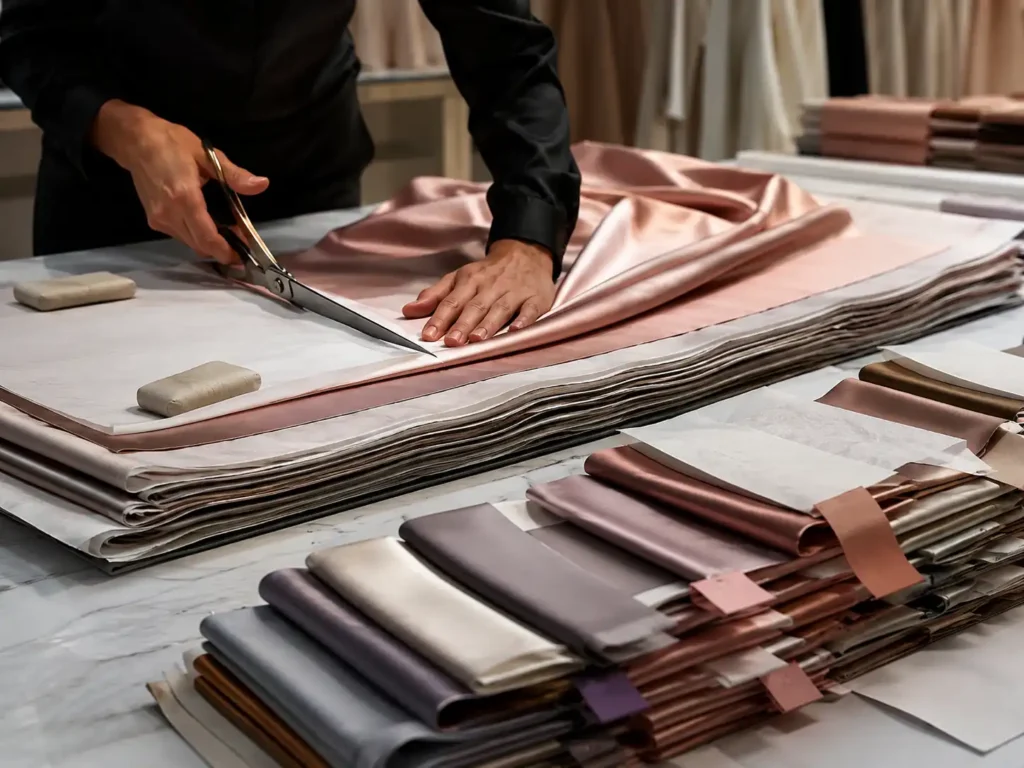
Material and Cutting Controls
Quality starts before sewing. A correct pattern cannot produce a stable garment if the fabric batch, stretch direction, lace placement, sequin surface or cutting orientation is inconsistent. Jinfeng reviews incoming materials according to the approved development references and the known risks of the style.
For satin and other surface-sensitive fabrics, shade, shine direction, marks and handling condition require attention. Stretch fabrics need direction and recovery checks before cutting. Mesh and lining need coverage and compatibility review. Lace may require motif placement controls. Sequin or embellished fabric needs inspection for decoration condition and areas where cutting or seam preparation could cause loss.
- Approved fabric and color reference.
- Correct pattern revision and size identification.
- Grain, stretch and shine direction.
- Lace, print or decoration placement where required.
- Paired-piece and left-right consistency.
- Cutting damage around delicate surfaces.
Problems identified here are less expensive to correct than the same issues after sewing or finishing. Material and cutting records also support traceability when several colorways or fabric lots are running together. When a visual issue appears later, the team can compare it with the relevant roll, cutting direction or placement standard instead of treating every garment as an isolated defect. That linkage is particularly useful for shade-sensitive satin, placement lace and directional surfaces.
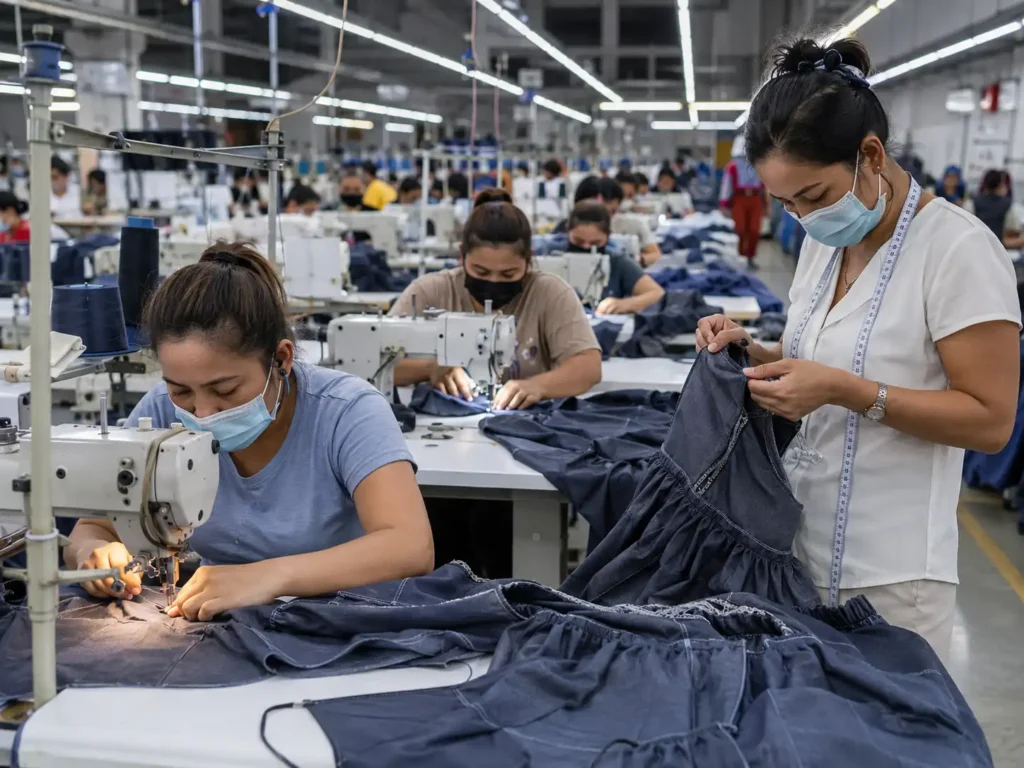
Sewing, Fit and Measurement Controls
In-line inspection needs to follow the technical areas that make the style complex. Jinfeng’s QC system is supported by 15+ QC inspectors and development references that define what should be checked during production, not only at the end.
Corset and strapless dresses require cup and boning position, upper-bust fit, waist shaping, closure and anti-slip control. Mesh styles require seam stability, lining coverage and hole prevention. Lace styles need placement, joining and edge quality. Sequin styles need decoration retention, seam treatment and skin-contact comfort. Satin styles need zipper flatness, seam smoothness, shade and pressing awareness.
Measurement control is linked to the approved size chart and style-specific fit points. Depending on the garment, checks can include bust, upper bust, under bust, waist, hip, dress length, strap length, armhole, neckline depth, slit height and lining length. Where a measurement is within tolerance but the garment still looks unbalanced, visual fit references and the Golden sample remain important.
In-line checks reduce the risk of discovering a repeated construction error after thousands of garments have already passed the same operation. When QC finds a recurring issue, feedback returns to the production team while the affected operation is still active. Corrective action can then address seam tension, component placement, measurement method or operator instruction before the same problem spreads across additional bundles, colors or sizes.
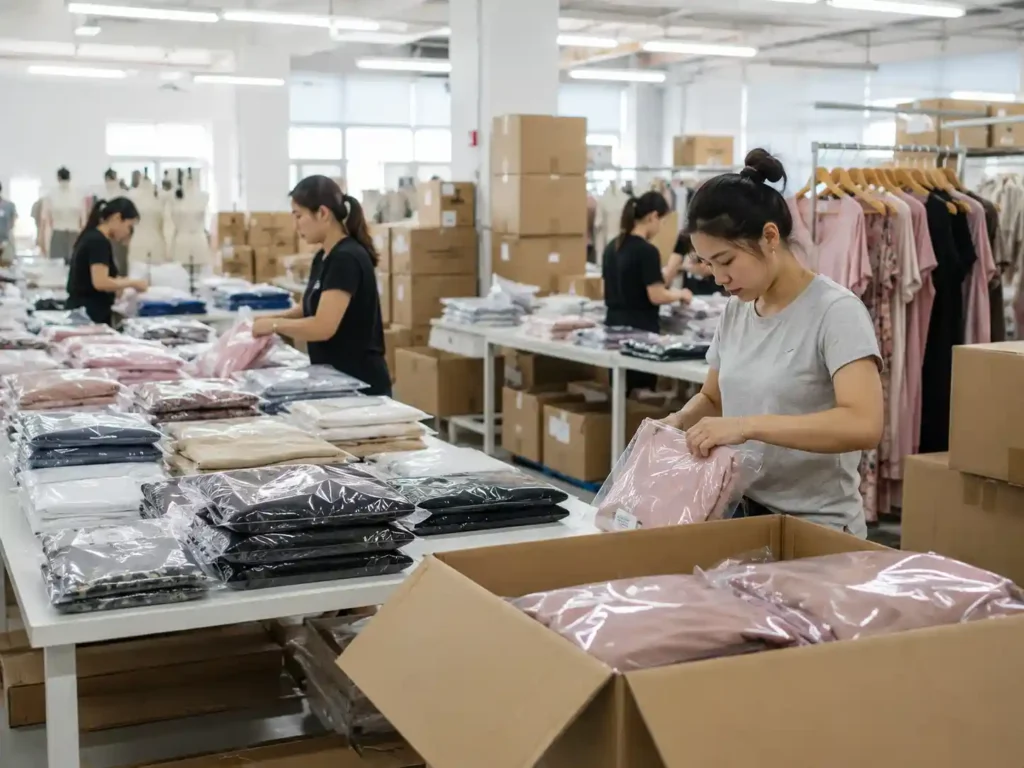
Final Garment, Pressing and Packing Controls
Final inspection verifies the complete garment against the approved visual and technical standard. Complex dresses need more than a measurement pass. Symmetry, support, closures, lining, decoration, pressing and packing can all change the final appearance after sewing is complete.
Jinfeng reviews zipper function and flatness, neckline balance, strap position, cup and boning symmetry, lining exposure, slit height, hem balance, ruching, lace or sequin condition and overall finishing. Pressing is checked because excess heat or pressure can create shine, impressions or flattened texture. Long dresses and structured bodices also need shape-conscious handling before packing.
Packing QC verifies label, size, barcode, SKU, polybag and carton information according to the project requirements. Surface-sensitive satin, sequins, rhinestones or structured cups may need protective folding or separation to reduce transit damage. The final goal is consistency with the approved sample at the moment the garment leaves production, not merely at the sewing-machine stage. Final records should also match the physical shipment: approved labels, size breakdowns, barcodes, carton information and packing instructions need to agree with the garment standard so a technically correct dress is not compromised by identification or packing errors after inspection. For multi-style programs, final QC can reference style-specific checkpoints rather than applying one generic checklist to every dress, preserving the technical decisions made during development.
Multi-Style Development Managed as One Coordinated Program
Style and Fabric Grouping
Programs involving 10-30 styles can contain very different technical demands. Jinfeng groups styles by construction and material relationship so pattern, sourcing and sampling decisions can be managed more efficiently. Corset and structured bodices may form one development group, while mesh or lace styles require another review path and satin drape styles need separate surface and pressing controls.
- Shared fabric families can reduce unnecessary material fragmentation.
- Related silhouettes can use common fit logic while still keeping style-specific patterns.
- Special trims are tracked by style so one late component does not confuse the entire program.
- High-risk styles receive earlier technical review before the collection calendar becomes compressed.
Sample Priority and Launch Timing
Revision and Timeline Control
Development Capacity Supporting Complex Styles and Bulk Transfer
Pattern Development Team
Two Sample Rooms
Sample Machinist Team
QC and Production System
Complex Dress Development Proven in Multi-Style Brand Programs
Complex development is most meaningful when the approved technical work survives a real brand order. The following anonymized programs reflect the current scale of Jinfeng’s brand cooperation: multi-style collections with total order quantities in the tens of thousands rather than isolated development pieces.

Structured Party Program - 16 Styles / 36,000 Pieces
An anonymous US fashion brand developed a 16-style party and occasion program totaling approximately 36,000 pieces. The collection combined corset minis, strapless midis, fitted satin dresses, mesh-panel styles and lace-detail silhouettes across several color and size groups. The technical challenge was not a single difficult garment; the program needed one development system that could manage different support structures, material behaviors and sample revisions without losing the brand’s fit direction.
Jinfeng grouped styles by construction risk. Corset and strapless styles were reviewed around upper bust, cup shape, boning, anti-slip control and waist anchoring. Satin styles focused on drape, zipper flatness, shine direction and pressing. Mesh and lace styles required transparency, lining coverage, placement and edge-control checks. Fit feedback from the first and revised samples was converted into updated patterns, measurement records, BOMs and sewing instructions before PP approval.
The bulk handover used approved material references, final patterns, QC checkpoints and Golden samples. Production and QC teams could therefore compare each style against a defined standard rather than relying on sample-room memory. The program demonstrates the core requirement of complex development: several technically different styles can remain part of one coherent brand collection when pattern, materials, revisions and bulk standards are controlled together.

Occasion Collection - 24 Styles / 62,000 Pieces
A second anonymized brand program involved 24 dress styles and approximately 62,000 pieces across satin, crepe, chiffon, lace, mesh and embellished constructions. The collection included fitted cocktail dresses, draped midis, long occasion dresses, asymmetric necklines and selected structured bodices. Development pressure came from the number of parallel styles, different material lead times, repeated fit decisions and the need to keep color, labels, barcodes and packing consistent across a large SKU structure.
Jinfeng created style-level tracking for fabric, trim, pattern and sample status, then prioritized samples according to technical risk and launch needs. Material-sensitive styles were reviewed before bulk commitments so changes in fabric weight, drape or stretch could be reflected in the pattern. Revised sample comments were recorded by version, while PP approval locked the final construction and product references for production.
During bulk execution, QC focused on the risks identified in development rather than applying only generic inspection points. Long dresses were checked for hem and lining balance; satin styles for shade, zipper and pressing; lace for placement and edge condition; mesh for coverage and seam stability; structured bodices for support symmetry and fit measurements. The program shows how development discipline supports both design complexity and commercial order scale.
Cost and MOQ Decisions Follow Real Design Complexity
Development Cost Drivers
Sample cost reflects development work that does not exist in the same form during bulk production. Style analysis, fabric and trim sourcing, initial pattern, lining pattern, support structure, sample cutting, single-garment sewing, fit review, internal correction and revision communication can all be part of the first sample cost. Complex features such as corset structures, built-in cups, boning, lace placement, sequin sewing, cut-out finishing, layered mesh, ruching, invisible zippers on satin and long-dress hem balancing increase both development time and workmanship risk. A sample fee therefore should not be read as the future bulk unit price; bulk pricing is recalculated around material quantities, production efficiency and order volume after the specification is stable.
MOQ and Material Boundaries
Cost Optimization Without Weakening Design
Cost control is most effective when the visual priority of the style is clear. Jinfeng can review whether a fabric with similar drape or surface can replace a higher-cost option, whether an internal construction can be simplified, whether a trim can be changed, or whether color and size planning can reduce unnecessary fragmentation. The objective is not to remove every difficult detail. A corset dress loses its commercial value if support is weakened; a satin dress loses quality if zipper and pressing control are reduced; a lace style can look inconsistent if placement is abandoned only to save cutting time. Cost optimization therefore focuses on areas where the manufacturing method can improve while preserving the design elements that define the garment at retail.
Protect Unreleased Designs Before Development Files Are Shared
Design and File Protection
- Unreleased designs are used for project review, pattern, sampling and production only.
- Client brand names, original tech packs and unpublished sample images are not intended for public display without authorization.
- Pattern and measurement records remain connected to the relevant project and repeat-order history.
- Labels, packaging artwork, barcodes and SKU data are handled as production information rather than promotional content.
How Development Files Are Used
Each file should have a manufacturing purpose. A tech pack supports pattern, measurements, materials and construction.
A line sheet helps group styles and plan sample priorities. Fabric and trim references guide sourcing and BOM control. Packing files become part of label, barcode, polybag and carton preparation after the garment standard is approved. Jinfeng can use approved project files across development, sample revision, bulk production, QC, packing and repeat-order preparation.
When a design returns in another color or season, the stored pattern, material, trim, construction and Golden sample references help preserve continuity. Files are not reused as another brand’s design source, and anonymized case presentation should not expose protected product identity.
Frequently Asked Questions About Complex Dress Development
Yes, when the reference is clear enough to identify the intended silhouette and key details. Jinfeng can review structure, likely fabric direction, fit risk, trims and missing specifications, then identify which measurements or construction details still need confirmation. A reference image alone creates more assumptions than a complete tech pack, so the first sample may require a deeper revision process before PP approval.
The review covers pattern structure, body fit, fabric behavior, lining, support, trims, seam access, finishing, bulk repeatability, material availability and cost. High-risk details are separated into technical questions that can be validated during sampling. A style is not treated as production-ready simply because the visual concept can be sewn once.
Fabric weight, drape, stretch, recovery, transparency and surface behavior can change the way a garment hangs and fits. A softer satin can alter neckline and hem balance; a different mesh can change tension and coverage. When material behavior changes enough to affect fit or construction, pattern and lining decisions need to be rechecked and a revised sample may be required.
They often do when the first sample reveals changes in cup shape, upper-bust tension, boning position, waist shaping, anti-slip control or neckline coverage. A revised sample confirms whether the corrected support system works on body before the style reaches PP. Minor corrections may be handled differently, but major structural changes should be validated physically.
Corset, strapless, lace, mesh and sequin styles commonly require about 15-25 days for a first sample when materials and standard trims are available. Custom fabrics, special trims, deeper pattern development or complex decoration can extend the cycle. Revised and PP sample timing depends on the amount of change and whether final materials are ready.
Front, side and back fit images combined with clear measurements are more useful than general comments such as “too loose” or “not flattering.” Mark the exact area, describe movement or coverage concerns, and note whether the issue appears when standing, walking or sitting. Jinfeng uses the feedback to identify whether the cause belongs to pattern, material, support or construction.
Fit, measurements, fabric, color, trims, construction, lining, decoration, labels, packing, cost, MOQ and production timing should be sufficiently confirmed. PP sample is intended to verify the final production standard rather than continue major redesign. Bulk-relevant comments also need to be reflected in current patterns, BOMs, sewing instructions and QC checkpoints.
Jinfeng transfers the final pattern, size chart, fabric and trim approvals, sewing instructions, label and packing requirements, QC checklist, PP comments and Golden sample into the production handover. In-line and final checks then focus on both general quality and the style-specific risks identified during development, such as support placement, transparency, lace position or zipper flatness.
Yes. Multi-style programs are managed by grouping construction and material families, assigning sample priorities, tracking revisions by style and controlling approval status. Jinfeng’s current brand programs commonly involve 10-30 styles, so the workflow is designed to keep pattern, fabric, trim, sample and bulk references separated while still managing the collection as one program.
Yes. NDA-based cooperation can cover tech packs, sketches, original samples, patterns, size charts, BOMs, fabric and trim information, labels, packing files, launch dates and unpublished styles. Sensitive files are used for the authorized development and production workflow and are not intended for public display without permission.

Send Your Complex Dress Project for Technical Review
A useful project review starts with enough information to understand the design, intended volume and development stage.
Send a tech pack, line sheet, reference image, original sample photos or sketch together with the planned quantity per style and color. Jinfeng can then review structure, fabric direction, fit risk, trims, sampling needs, MOQ fit and the main production questions before a formal development route is confirmed.
For faster evaluation, include:
- Product type and reference images or tech pack.
- Planned styles, colors and quantity per style/color.
- Base size, size range and measurement chart where available.
- Preferred fabric, lining, trims and key construction details.
- Target launch or delivery window.
- Private-label, barcode, packing or warehouse requirements.
- Any current sample problem that needs to be corrected.


