 Skip to content
Column Dress Development
Develop clean, elongated column silhouettes with controlled fit, fabric behavior and production-ready construction for established fashion collections.
Jinfeng Apparel develops custom column dresses from tech packs, sketches, reference garments and design images, covering fabric direction, pattern development, fit correction, sample revision and bulk production.
- 2 sample rooms, 7+ senior pattern makers and 20+ sample machinistssupport structured dress development.
- Regular dress first samples are generally planned around 10–15 days; revised and PP samples are commonly 7–15 days, subject to fabric, trims and revision scope.
- Custom production starts from 200 pcs per style/color, with 100,000+ pcs regular monthly capacityfor multi-style womenswear programs.
What Defines a Commercial Column Dress Silhouette?
A successful column dress relies on controlled vertical proportion rather than excessive shaping or skirt volume. Fabric fall, hip ease, hem width, side-seam balance and movement allowance work together to keep the silhouette long and clean without turning it into a bodycon, sheath or slip dress.
| Silhouette | Fit Character | Lower Shape | Fabric Behavior | Main Development Focus |
|---|---|---|---|---|
| Column Dress | Straight, body-skimming | Narrow and vertical | Controlled drape | Hip ease, vertical balance, movement |
| Bodycon Dress | Close to body | Narrow | High stretch and recovery | Bust-waist-hip fit, recovery |
| Sheath Dress | Tailored and shaped | Narrow to moderate | Stable woven structure | Darts, waist shaping, contour |
| Slip Dress | Fluid and relaxed | Soft straight line | High drape | Bias behavior, straps, neckline |
| A-Line Dress | Fitted upper body | Expands toward hem | Structured or fluid | Waist transition, flare |
| Shift Dress | Relaxed | Straight | Stable or softly fluid | Ease, shoulder balance, length |
Development Support for Established Fashion Teams
Product Development Team
Sourcing Team
Quality Team
Column Dress Directions for Modern Fashion Collections

Crepe Column Dress

Satin Column Dress

Knit Column Dress

Jersey Column Dress

Sleeveless Column Dress

Slit Column Dress

Open-Back Column Dress

Evening Column Dress
Match Fabric Behavior to the Column Silhouette
Fabric selection changes the entire behavior of a column dress. Drape, weight, stretch, recovery, transparency and shrinkage influence pattern ease, lining, seam method and bulk consistency, so fabric approval should happen as part of product engineering rather than as a separate sourcing decision.
| Fabric Direction | Visual Effect | Development Advantage | Main Risk | Pattern / Production Response |
|---|---|---|---|---|
| Crepe | Clean, controlled vertical fall | Stable premium appearance | Weight variation, surface texture | Review hip ease and hem balance |
| Satin | Fluid and polished | Strong evening value | Snagging, directional shine, zipper bulging | Control grain, lining, pressing |
| Ponte | Structured stretch | Smooth body-skimming shape | Recovery variation | Adjust ease to stretch/recovery |
| Jersey | Soft and relaxed | Comfortable column shape | Growth, twisting, transparency | Check stretch direction and stabilization |
| Rib Knit | Defined vertical texture | Contemporary fitted column | Width growth, recovery | Recheck measurements after wear |
| Rayon / Viscose | Fluid movement | Soft fashion drape | Shrinkage, instability | Relax/test fabric before bulk |
| Linen Blend | Relaxed structural line | Resort and summer positioning | Wrinkling, shrinkage | Review finishing and garment ease |
| Mesh Layering | Sheer, directional styling | Visual depth and fashion detail | Transparency, distortion | Engineer lining and seam support |
Engineering the Fit of a Column Dress
A clean column silhouette magnifies small pattern errors. Without a wide skirt, heavy gathering or decorative structure to disguise imbalance, the eye follows the dress vertically from shoulder to hem. Fit work therefore focuses on proportion, controlled ease and garment stability rather than simply making the dress tighter.

Bust, Waist and Hip Balance
Column dresses usually need enough shaping to follow the body without creating the compression expected from bodycon styles. Bust shaping should sit naturally without horizontal drag lines or excess fabric near the armhole. Waist suppression can be subtle, especially for relaxed or minimalist versions. Hip ease becomes one of the most important variables because too much produces folds while too little restricts movement and changes the visual category of the garment.
Fit comments should identify where excess or shortage occurs rather than relying on broad comments such as “too loose.” Front, side and back fitting images make it easier to distinguish pattern balance from fabric behavior.

Vertical and Side-Seam Balance
Side seams provide an immediate visual reference for garment balance. A seam pulling forward may indicate front-body shortage, bust distribution issues or uneven pattern shaping.
A seam moving backward can signal the opposite. Stretch fabrics add another variable because recovery and grain direction can create twisting even when paper patterns appear symmetrical.
Dress length also needs to be checked from front, side and back. Bust and hip projection can change how the hem sits on the body, especially on long column silhouettes.

Hem Width, Slit and Movement
Narrow hems preserve the vertical shape but reduce walking range. Movement can be introduced through a side slit, center-back slit, front slit, stretch fabric or carefully calculated hem width.
Slit review should cover more than appearance. Walking stride, sitting coverage, reinforcement, lining construction and target wearing occasion all affect the correct position. Excessive slit height can undermine wearability; insufficient opening can make a long column dress uncomfortable even when stationary fit looks correct.

Neckline, Armhole and Lining
Minimal silhouettes make upper-body finishing highly visible. Neckline stretching, armhole gaping or lining rolling outward can immediately reduce the perceived quality of the dress.
Pattern review considers neckline depth, shoulder position, armhole coverage, facing or lining construction and fabric stretch. Lining should support opacity and comfort without fighting the outer shell. The lining hem also needs enough clearance from the outer layer and slit to prevent exposure while walking.
Construction Details Behind a Clean Column Silhouette
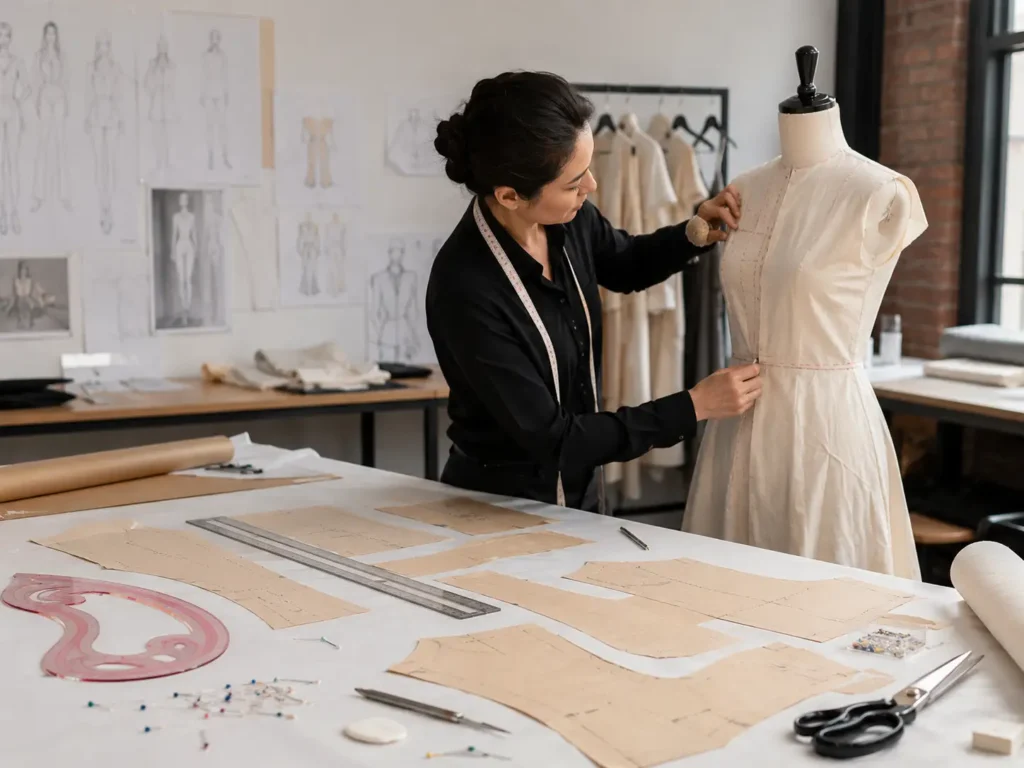
Pattern Shaping

Invisible Zipper
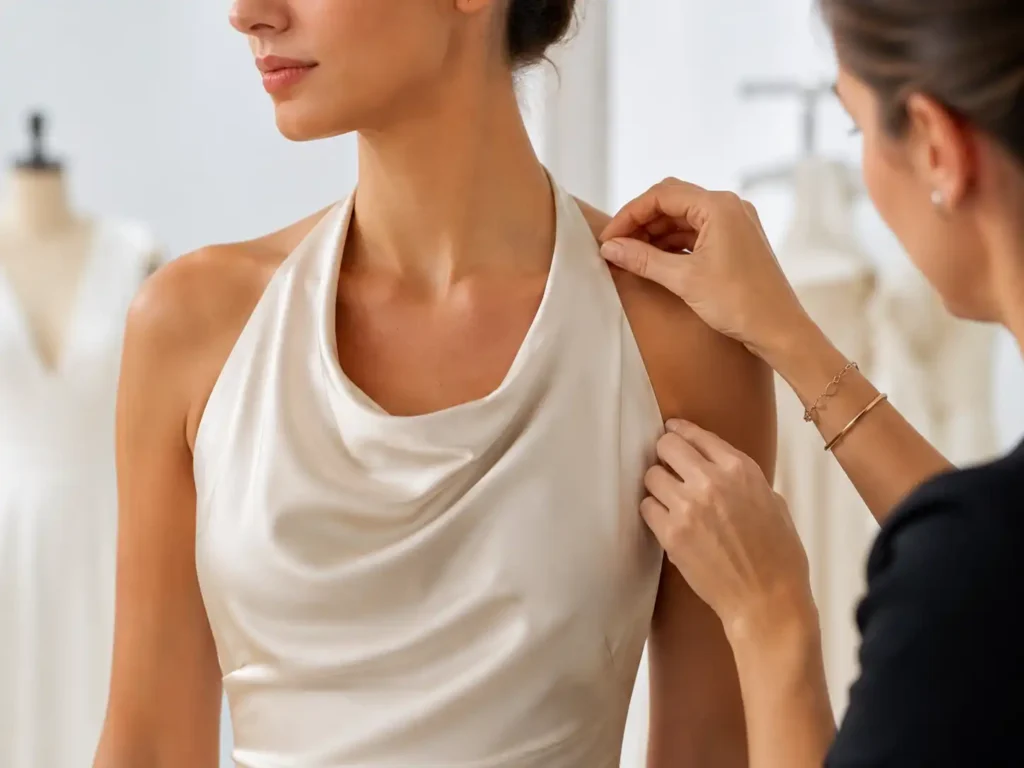
Neckline Stability

Slit Reinforcement

Lining Integration

Hem Finishing
Send the Right Inputs for Dress Development
Tech Pack
Reference Images
Original Sample
Size Chart
Fabric and Trims
Line Sheet and Packing
From Design Brief to First Column Sample
Requirement Review
Structure Analysis
Fabric Direction
Pattern Development
Sample Sewing
Internal Review
Fit Feedback
Revision Planning
Fit Samples and Revisions Before Production Approval
Sampling is where a column dress moves from visual concept to production-ready standard. A first sample is not treated as a guaranteed bulk reference; it is used to verify whether silhouette, material, fit and construction work together in a real garment.
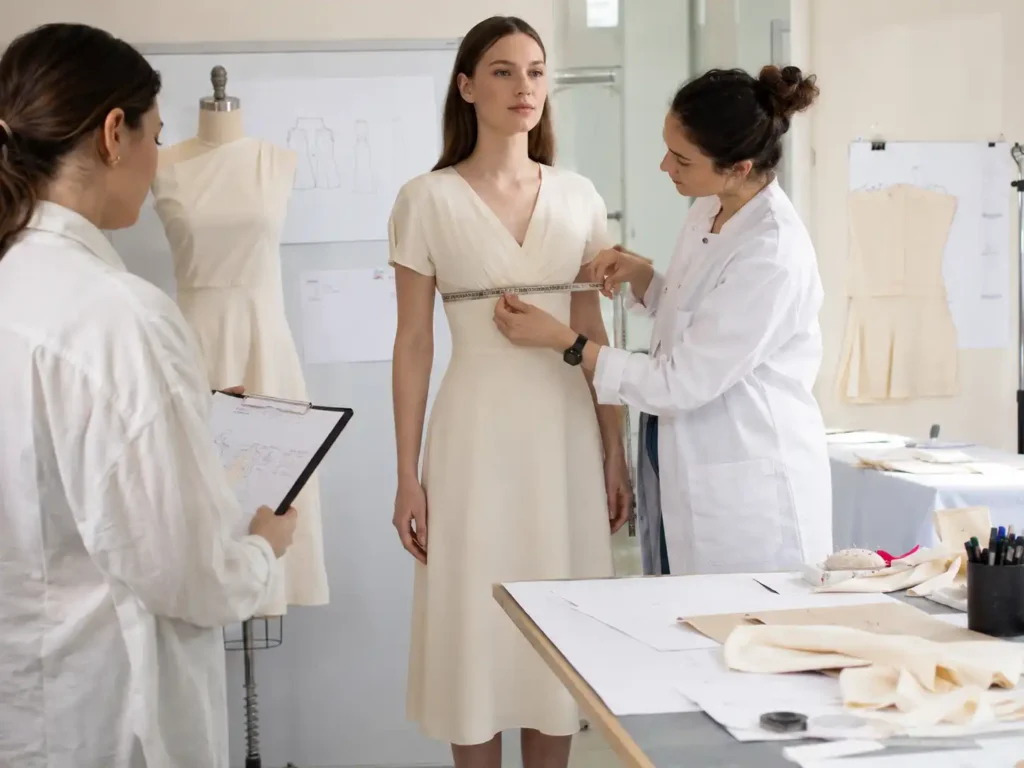
First Sample: Make the Design Measurable
A first sample tests the overall idea: silhouette, fabric behavior, neckline, bust, waist, hip, length, slit, lining, zipper and basic construction.
Regular dress first samples are generally planned around 10–15 days.
Simpler styles may be approximately 7–10 days, while complex lace, mesh, sequin, corset or strapless constructions may require 15–25 days.
Customized materials or special trims can extend development according to supplier readiness.
The goal is not to claim perfection on the first attempt.The goal is to create a reliable garment that can be measured, fitted, photographed and discussed clearly.

Fit Review: Diagnose Before Altering
Fit comments are classified before pattern changes begin.
Common column-dress review points include:
- bust circumference and shaping
- waist position
- hip ease
- side-seam direction
- neckline depth
- armhole coverage
- dress length
- slit height
- lining length
- back opening
- zipper flatness
- movement while walking and sitting

Revised Sample: Record Every Production-Relevant Change
A revised sample may include pattern correction, measurement change, fabric substitution, trim adjustment, lining modification or construction improvement.
Revised samples are commonly planned around 7–15 days, with timing confirmed against the scale of the revision.
Major changes in fabric, silhouette or construction may require a new development cycle rather than being treated as a small alteration.
Bulk-relevant changes should be reflected in updated pattern files, size charts, BOM records, sewing instructions and QC points before PP approval.
Transfer the Approved Sample Into Bulk Production
A strong sample has limited value if its standards are not transferred accurately to production. Jinfeng Apparel connects approved fit, materials, construction and brand details through PP and Golden Sample control before bulk sewing begins.
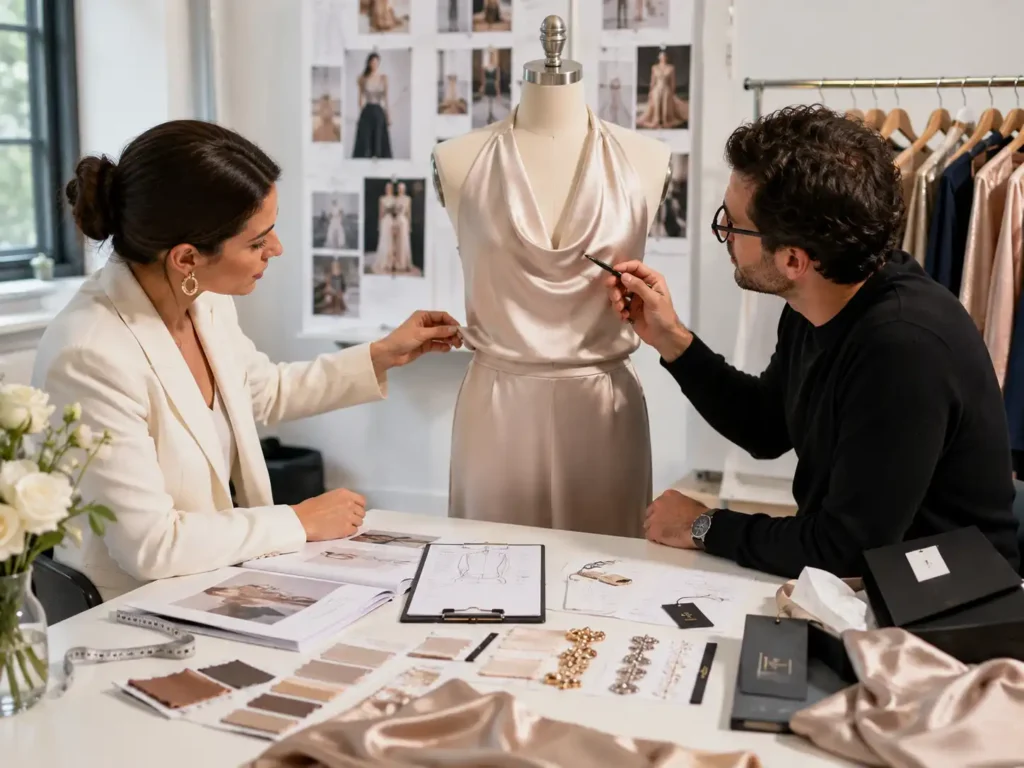
PP Sample Locks Production Decisions
The PP sample is produced after key elements are confirmed:
- final fabric and color
- approved trims
- final measurements
- construction method
- zipper and slit details
- lining
- label placement
- hangtag direction
- packing requirements
- carton information where required
PP samples are commonly planned around 7–15 days when final materials are ready, with timing adjusted for project complexity. PP approval is treated as a production lock rather than another stage for unrestricted design changes.

Production Handover Connects Teams
Approved development information is converted into production records before sewing:
- final pattern version
- size chart
- fabric reference
- trim information
- BOM
- sewing instructions
- label positions
- packing instructions
- QC checklist
Jinfeng Apparel’s production management process connects sample development, factory lines, QC and packing so bulk work follows confirmed development standards rather than restarting interpretation on the production floor.
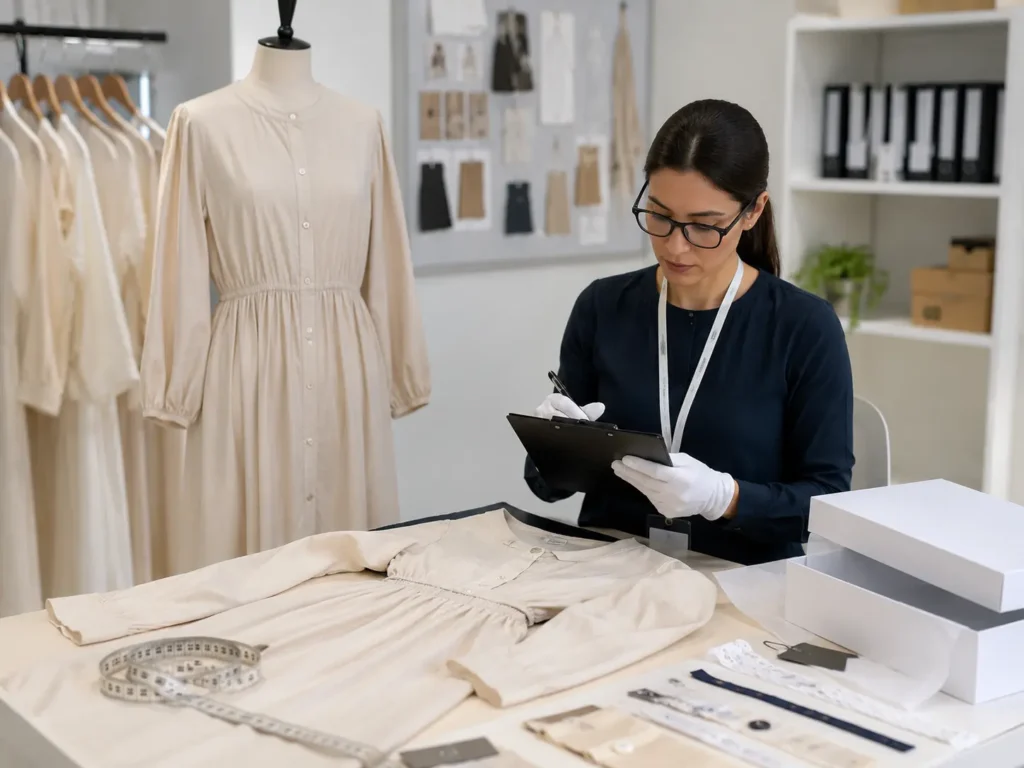
Golden Sample Creates a Physical Reference
The Golden Sample acts as a physical comparison standard for production, QC, packing and later repeat orders.
Pattern, fabric, construction, measurements, trim placement and visible finish can be checked against one confirmed garment rather than relying only on written comments.
For repeat programs, the Golden Sample can be reviewed alongside stored pattern, BOM, fabric, trim and packing records.
Woven and Knit Column Dresses Need Different Controls
Woven Column Dresses
- fabric direction
- shade consistency
- cutting slippage
- zipper flatness
- lining length
- slit structure
- hem balance
- seam puckering
- pressing marks
- packing creases
Knit Column Dresses
Jersey, ponte, rib and stretch constructions introduce stretch direction, recovery and garment growth. Key controls include:
- two-way or four-way stretch
- recovery after extension
- bust-waist-hip response
- neckline growth
- shoulder stability
- side-seam twisting
- garment length growth
- shrinkage
- measurement tolerance
A knit dress that measures correctly immediately after sewing may change after hanging or wearing.
Sample review should therefore consider both initial fit and fabric recovery before production measurements are finalized.
Column Dress Quality Control at Critical Risk Points
Incoming Fabric
Cutting Control
Sewing Control
Measurement Control
Garment Review
Packing Control
See the Development and Production Evidence
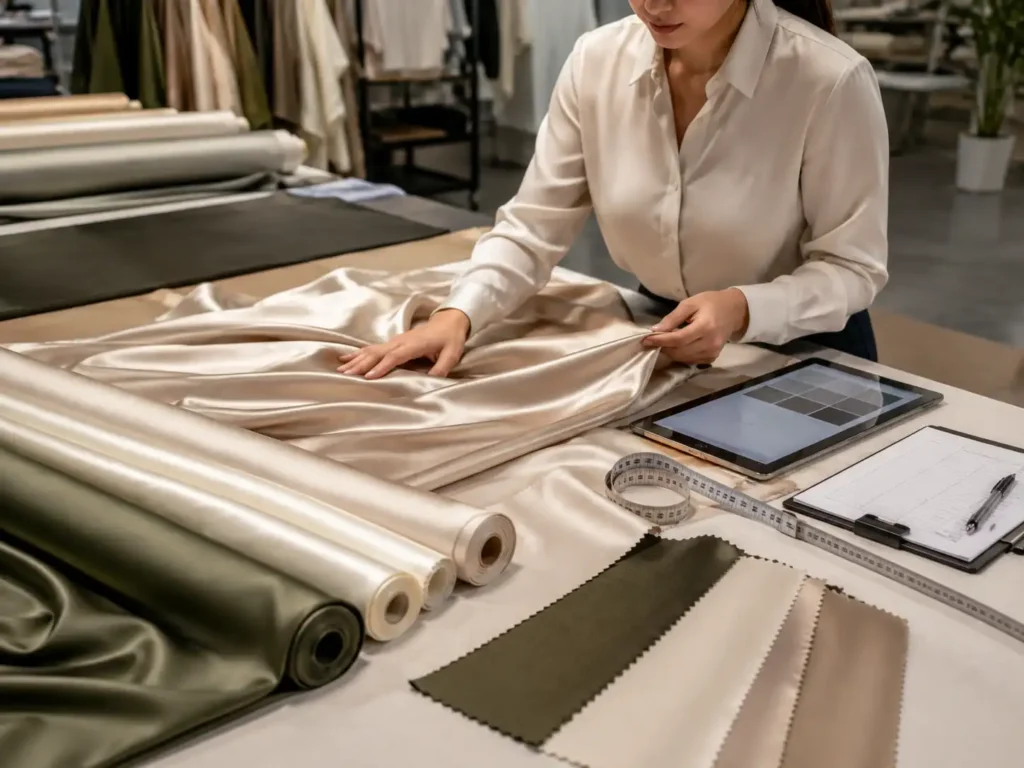
Fabric Review

Pattern Development
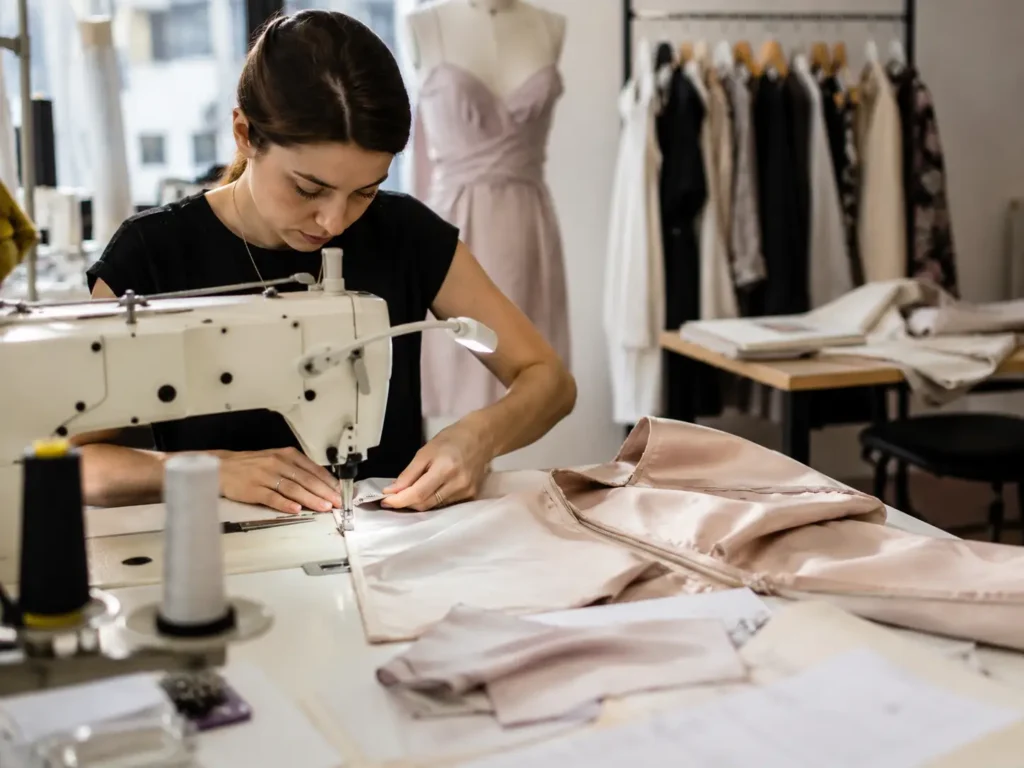
Sample Sewing
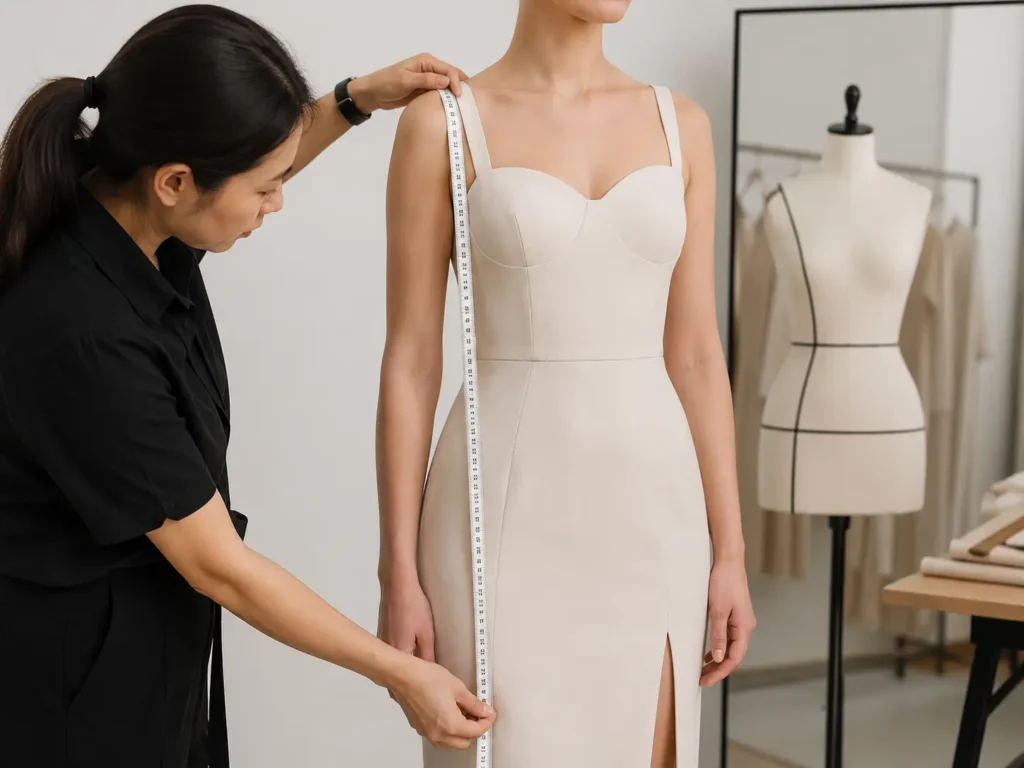
Fit Measurement

Revision Evidence

Inline Inspection
Final Garment Review
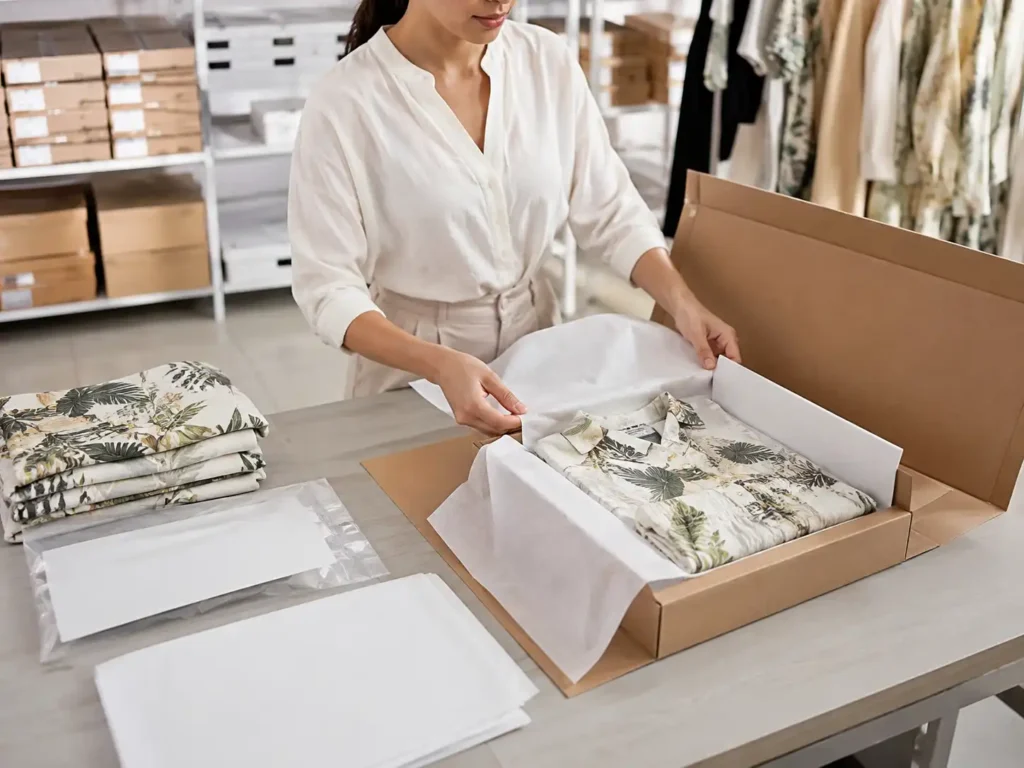
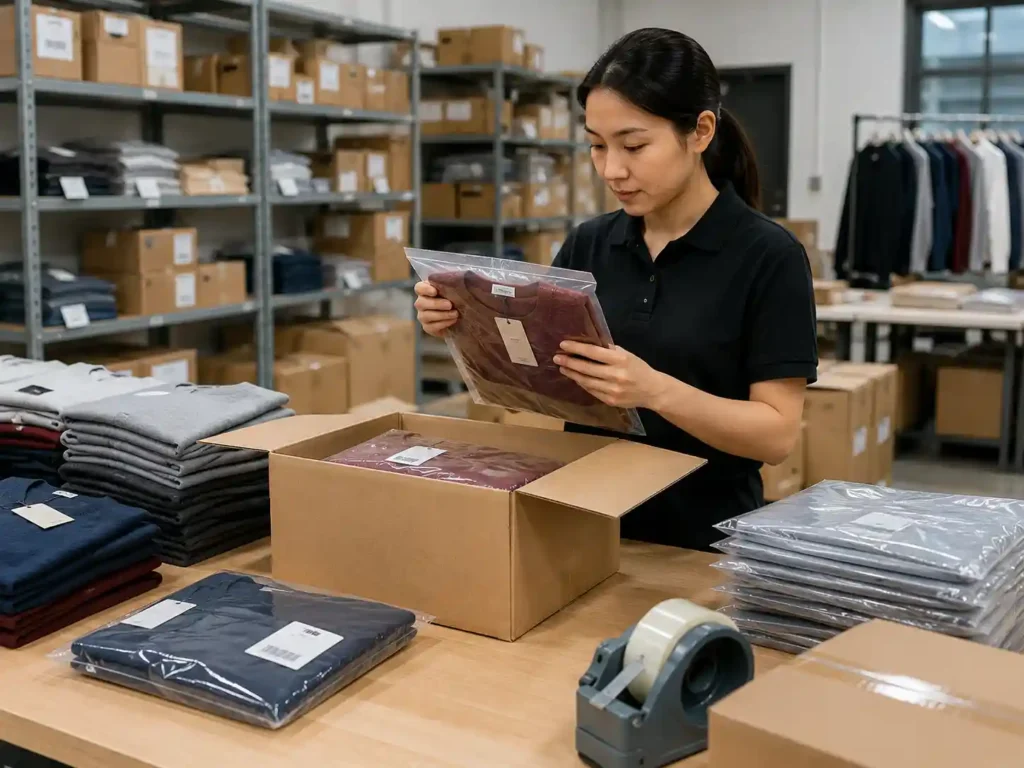
Packing Check
Column Dress Development Case for a US Fashion Brand
An anonymous U.S. womenswear program shows how a column-focused collection can move from multiple design directions into a controlled production structure without forcing every style into the same fit or fabric formula.
Development Brief
The program contained 18 dress styles with approximately 42,000 garments across the confirmed bulk order, positioned around clean occasion, evening and contemporary column silhouettes.
The collection used three main material directions:
- crepe for controlled, tailored-looking column dresses
- satin for fluid evening styles
- stretch knit for body-skimming contemporary styles
Individual designs included sleeveless columns, high-neck versions, side-slit maxis, open-back styles and cleaner day-to-evening shapes.
Development did not start by applying one base pattern to all 18 styles.
Fabric behavior and design structure were grouped first so pattern and sample priorities could be managed by product type.
Problems Found During Sampling
Several issues appeared during first and revised samples.
Crepe styles:
Hip ease on two fitted silhouettes was too close to the reference look, pushing the garment toward bodycon. Side seams also moved slightly forward when worn.
Satin styles:
One center-back zipper created visible bulging under light. Another style showed uneven fall around the slit because the outer shell and lining behaved differently.
Stretch styles:
A knit version gained length after wear and showed slight side-seam twisting. Initial measurements were acceptable on the table but fabric recovery changed the on-body result.
Corrections were separated into pattern, construction and material actions instead of applying generic alterations across the collection.
Production Standard
Crepe styles received revised hip ease and side-seam balance. Satin construction was adjusted around zipper support, lining and slit handling. Stretch styles were reviewed for recovery and length stability before final measurements were locked.
Each approved direction moved through PP confirmation with final pattern, measurements, BOM, fabric reference, trims, sewing details, labels and QC points documented for bulk transfer.
The 18-style / 42,000-piece order was then managed as a coordinated collection rather than 18 unrelated purchase orders, allowing material groups, sample priorities, production allocation and quality controls to remain aligned.

Manufacturing Resources Behind Column Dress Programs
6 Owned Factories
10+ Production Partners
18+ Sewing Lines
6+ Flexible Lines
Development Team
Quality and Execution Team
Cost, MOQ and Commercial Feasibility Review
Fabric Cost
Construction Cost
Quantity Structure
Sample Cost
Private Label Cost
Production Schedule
Extend One Column Silhouette Into a Collection

Core Midi

Maxi Extension

Sleeveless Variation
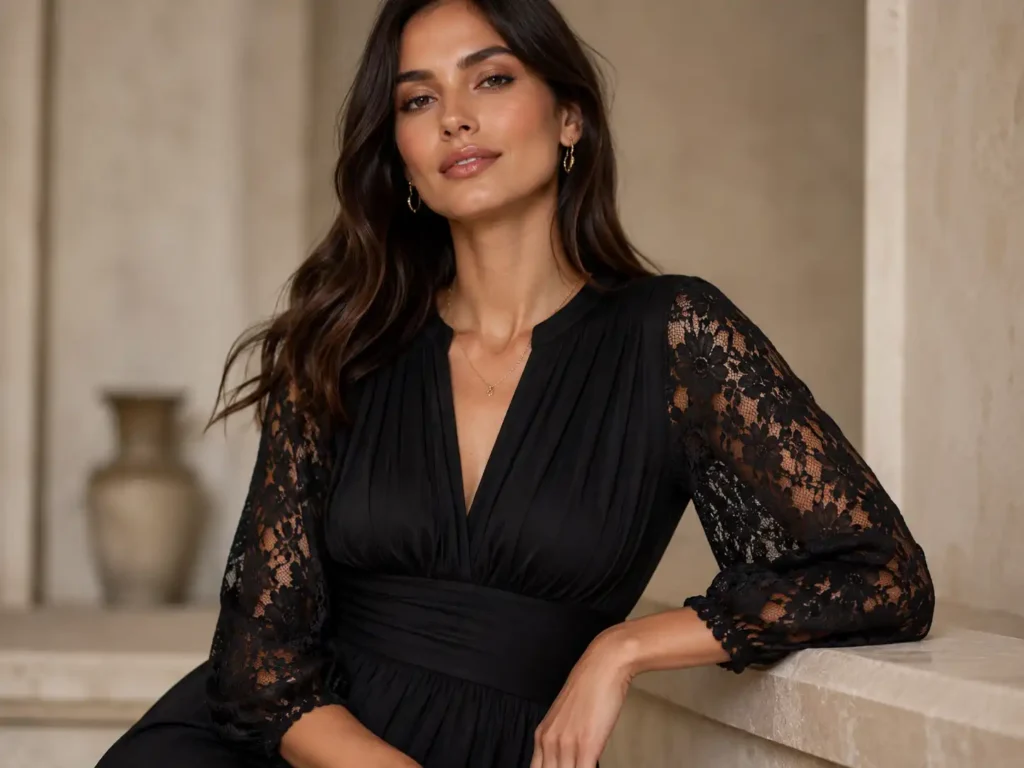
Long-Sleeve Variation
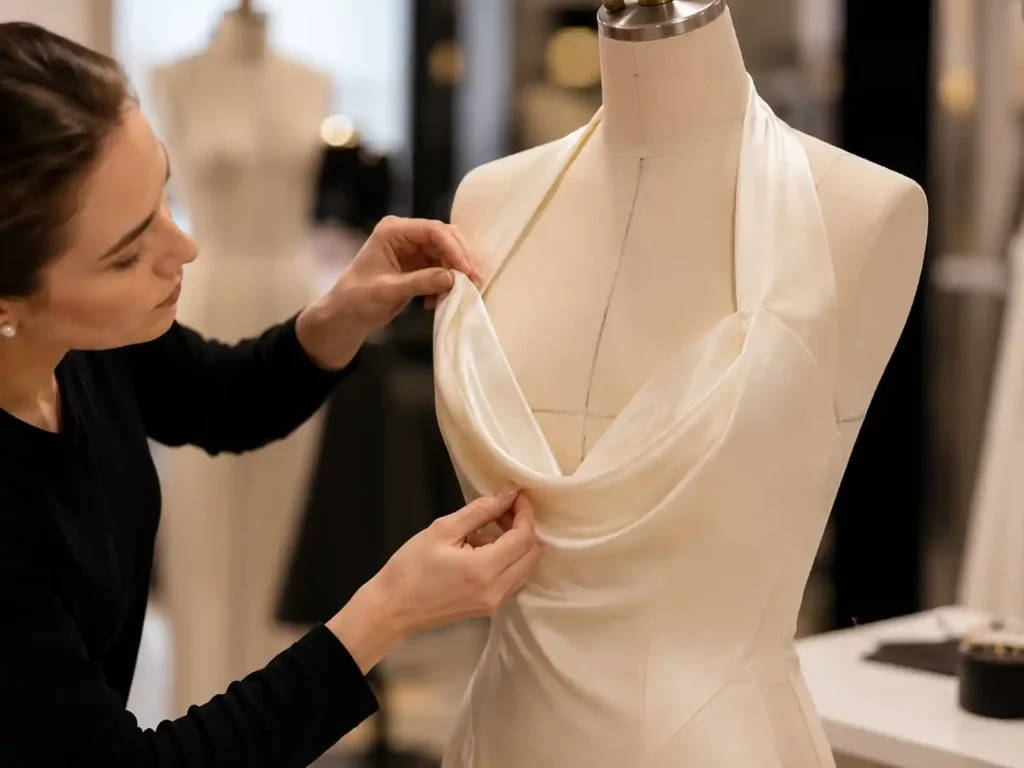
New Neckline

New Color Program
Same Pattern, New Fabric

Repeat and Replenishment
Column Dress Development Frequently Asked Questions
Crepe, satin, ponte, jersey, rib knit, rayon and selected linen blends can all work. The right direction depends on whether the silhouette should feel structured, fluid, relaxed or body-skimming. Drape, weight, stretch, recovery and transparency should be reviewed before pattern approval.
Hip ease, waist shaping and fabric stretch need to be controlled together. Using high stretch with aggressive negative ease usually creates a bodycon result. Column development generally keeps a cleaner vertical line with enough ease for movement and a less compressed visual effect.
Not always. Movement can come from hem width, stretch or construction, but many narrow woven maxi styles benefit from a slit. Position and height should be checked while walking and sitting, with reinforcement and lining reviewed at the same time.
Yes. Reference images can define visual direction, but measurements, hidden construction, fabric, lining and finishing still need to be interpreted. Tech packs, original samples, size charts or fabric references improve development accuracy when available.
Possibly, but automatic reuse is not recommended. New fabric can change drape, stretch, shrinkage, thickness, seam behavior and garment measurements. Pattern adjustment or a new sample may be required before bulk production.
Regular dress first samples are generally planned around 10–15 days. Simpler styles may be approximately 7–10 days, while more complex constructions may require 15–25 days. Special fabrics and trims can extend the schedule.
Comments are separated into pattern, measurement, fabric, construction and trim issues. Bust, waist, hip, side seams, neckline, length, slit and lining are reviewed using measurements and fit images before confirmed changes are recorded.
Final PP sample, fabric, colors, trims, measurements, BOM, sewing methods, labels, packing requirements, QC standards, quantities and delivery arrangements should be confirmed before bulk production is released.
Jinfeng Apparel’s production MOQ starts from 200 pcs per style/color. Special fabric, custom-dyed materials, trims, labels or packaging can carry separate supplier minimums depending on specification.
Yes. Multi-style development can group designs by fabric, fit and construction so pattern priorities, samples, PP approvals, production allocation and repeat-order records can be coordinated across the collection.

Start Your Column Dress Development Program
Jinfeng Apparel works with established fashion brands, sourcing teams and apparel groups that need more than a finished sample.
Column dress projects can move from initial references into fabric evaluation, pattern development, fit correction, revised samples, PP approval, bulk production, QC, private-label packing and export coordination through one structured manufacturing workflow.
For an accurate development review, send as much confirmed information as available:
- Tech pack, sketch or reference images
- Original sample photos when available
- Target fabric or fabric composition
- Brand size chart and fit requirements
- Planned styles, colors and quantities
- Required labels, hangtags and barcode specifications
- Packing and warehouse requirements
- Target launch or delivery window
- Existing quality manual or inspection standard
- Any special material, testing or logistics requirements

