 Skip to content
Color-Block Dress Development
Jinfeng Apparel develops color-block dresses from tech packs, sketches, reference images or original samples, combining color placement, panel engineering, fabric compatibility, pattern correction, sampling and bulk control in one development workflow.
- 3 core development controls before bulk: color placement, panel structure and fabric compatibility.
- 7+ senior pattern makers supported by 2 sample rooms and 20+ sample machinists.
- 8 major QC checkpoints can be built around fabric shade, cutting direction, panel alignment, seam quality, symmetry, measurements, pressing and packing.
- MOQ starts from 200 pcs per style/color; custom dyeing, special fabrics and trims may require separate material minimums.
Built for Product Teams Developing Complex Color Placement
Product Development Support
Jinfeng can start from a tech pack, line sheet, sketch, reference image or authorized original sample. Development work focuses on structure, panel division, fit, material direction, color requirements and construction feasibility before a production pattern is locked.
Pattern and Sample Capacity
Production and QC Handover
Suitable Program Profile
Where Color-Block Dress Development Commonly Goes Wrong
Panel Proportion Drift
Seam Position Misalignment
Fabric Compatibility Failure
Shade and Batch Variation
Seam Puckering and Bulk
Asymmetry in Production
Fit Distortion After Paneling
Sample-to-Bulk Shift
Color-Block Structures We Can Develop Across Dress Categories

Vertical Side Panels

Horizontal Waist Blocks

Diagonal Color Blocking

Curved Panel Blocking

Bust and Upper-Body Blocks

Asymmetric Front Panels

Contrast Waist and Hip Panels

Mixed Opaque and Sheer Blocks
Color Placement Must Follow Body Proportion, Not Flat Artwork
A color break becomes part of the silhouette once the dress is worn. Strong development work checks where the line sits on a real body, how it travels across curves, and whether it supports the intended proportion from front, side and back views. Pattern correction is often needed even when the original sketch is visually strong.

Bust-Level Color Breaks Need Structural Control
Color placement across the upper body interacts with bust apex position, neckline depth, armhole coverage and shoulder or strap balance. A straight line in a sketch may need reshaping once the fabric forms over the bust. For fitted styles, the panel seam may also carry dart-like shaping, which means the color boundary and fit cannot be developed independently.
Development review should compare the reference image or sketch against the sample from front, side and three-quarter views. If the line climbs, drops or changes angle around the bust, the pattern can be corrected before a revised sample is made. Lining and seam thickness also matter because a bulky join across the upper body can show through lightweight fabric or create a visible ridge under strong studio lighting.

Waist Blocking Controls Visual Leg Length
A waist-level block can make the body look longer, shorter, narrower or wider depending on its exact position and width. High-waist color breaks are often used to extend the leg line, while lower blocks create a different fashion proportion. The development team should confirm whether the intended line sits at the natural waist, above it or below it rather than simply copying a sketch measurement.
Pattern balance must remain correct after the new seam is introduced. A waist seam can affect bodice length, skirt balance, zipper placement and the way the fabric settles after pressing. On close-fitting dresses, even a visually attractive line can fail if it creates extra seam bulk or restricts stretch at the narrowest part of the garment.

Hip and Side Panels Must Protect Fit
Contrast side panels are common in bodycon and fitted dresses because they can visually reshape the body. The panel is also located in an area with strong movement and fit pressure. Fabric stretch direction, hip ease, side seam position and panel width need to be reviewed together. A panel that looks slim on the sample size may become proportionally too wide or too narrow after grading if the grade rule is not considered from the beginning.
Bulk measurement checks should therefore include both standard garment measurements and visual panel location. The objective is not only to keep bust, waist and hip within the approved size chart, but also to keep the color design visually consistent across the intended size range.

Diagonal and Asymmetric Lines Need Multiple View Checks
Diagonal lines attract attention immediately. Any change in angle, start point or seam smoothness becomes obvious in ecommerce photography. During sample review, Jinfeng checks the line from front, side and back and compares the result with the design reference. Pattern notches and joining points can then be adjusted so the seam follows the intended direction instead of being forced during sewing.
For asymmetric styles, the production file should clearly identify left and right panels, fabric face direction and sewing order. Clear panel marking reduces the chance of mirrored cutting, reversed pieces or inconsistent color placement once the style moves from the sample room to a production line.
Pattern Engineering Converts Color Lines Into Production Panels
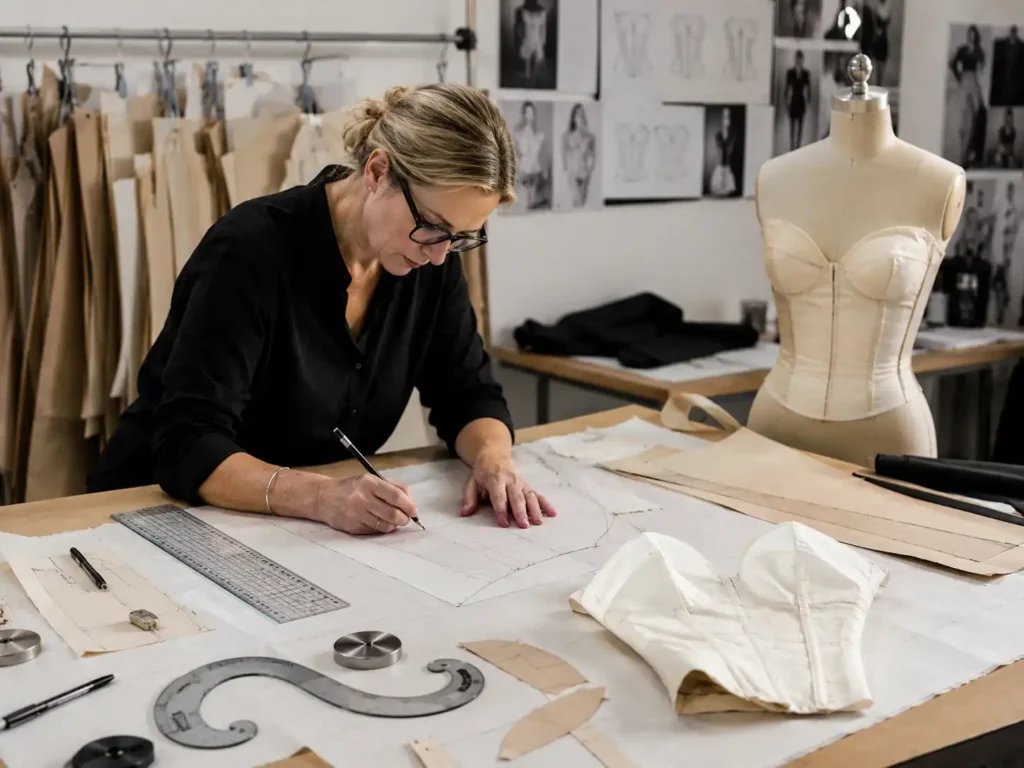
A finished color-block dress depends on a production pattern that explains exactly where every color begins and ends. Jinfeng treats color placement as part of pattern engineering: the base silhouette is established first, then visual break lines are converted into accurate panels with seam allowance, notches, grain direction, stretch direction and clear joining logic.

Start With a Balanced Base Shape
Before dividing the garment into color sections, the base silhouette needs to make sense. Bust, waist, hip, neckline, armhole, length, zipper position and lining structure are reviewed according to the style. If the underlying fit is wrong, adding more panels only multiplies the number of places where error can appear.
For projects supplied with a tech pack, the pattern team reviews the size chart, POMs, construction notes and fabric direction. For a sketch or reference image, additional information such as target fabric, sample size, intended fit, size range and target market is collected before accurate development begins.
Convert Visual Break Lines Into Real Pattern Pieces
A color line on artwork has zero thickness. A real garment seam has seam allowance, stitch depth, pressing behavior and two physical edges that must join correctly. Each new panel needs truing so matching seam lengths, curves and notches are accurate. Curved or diagonal sections may require more control than straight horizontal joins because the fabric is often handled on different grain angles.
Panel numbering and grain direction become especially important when a style has six, eight or more contrast pieces. Production should be able to identify each panel without relying on visual guessing. Clear pattern naming, cutting bundles and sewing references reduce mix-ups during bulk production.

Protect Fit When the Pattern Is Split
Splitting a fitted bodice or skirt can interfere with dart intake, princess shaping, stretch distribution or side balance. The pattern maker needs to decide whether a color-block seam is only decorative or whether it also carries shaping. If a seam carries bust or waist shaping, it must be checked carefully during fit review because changing its position also changes the garment structure.
For stretch fabrics, panel direction and recovery become part of the pattern decision. Two fabrics with different stretch percentages can create tension at the join and pull the color line off position. A revised pattern or alternative material pairing may be required before bulk approval.

Build a Pattern Standard for Grading and Bulk
A successful sample is not the final goal. The approved design needs a final pattern, grade rule, panel references and measurement standard that can be repeated. Sample feedback is converted into pattern changes rather than left as informal comments. Once the style is approved, the final pattern supports size grading, cutting, sewing instructions, QC measurements and future repeat orders.
Jinfeng’s 7+ senior pattern makers work with 2 sample rooms and 20+ sample machinists, giving the development process enough depth to move from pattern correction into physical sample verification before production standards are locked.
Fabric Pairing Compatibility Matrix
Using two colors does not always mean using the same fabric. A color-block dress may combine matte and glossy surfaces, stretch and stable materials, opaque and sheer sections, or fabrics with different weights. Jinfeng compares material behavior before pattern and seam decisions are finalized because incompatible fabrics can distort the design after sewing, pressing or wear.
| Development Factor | What We Compare | Risk If Mismatched | Development Response |
|---|---|---|---|
| Weight / GSM | Relative fabric weight and body | One panel hangs or pulls more than the other | Adjust fabric choice, panel position or internal support |
| Stretch | Stretch direction and amount | Color seam shifts or fit becomes uneven | Align stretch direction and revise pattern allowance |
| Recovery | Ability to return after stretch | Panel growth, waviness or side twisting | Test recovery and avoid unstable pairings |
| Shrinkage | Expected dimensional change | Seams distort after steaming or washing | Review shrinkage before approval and test by project |
| Drape | Softness and fall | Silhouette breaks at the color seam | Match drape or redesign panel location |
| Thickness | Seam bulk after joining | Raised ridges, puckering or hard edges | Adjust seam construction and pressing method |
| Transparency | Sheer level and lining need | Uneven coverage or visible internal seam | Confirm lining coverage and seam finish |
| Surface / Shine | Matte, satin, mesh or textured surface | Unbalanced visual effect under lighting | Review swatches and sample under intended appearance |

Build Color Standards Before Bulk Fabric Is Ordered
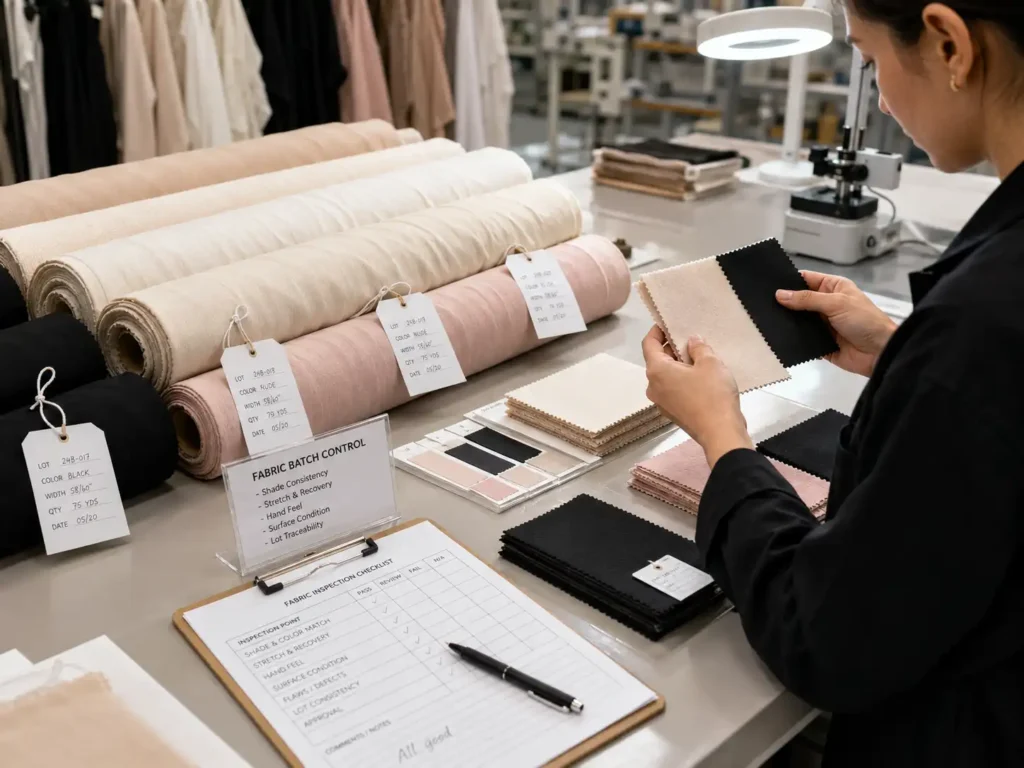
Color blocking becomes unforgiving when strong contrast sits in one garment. A slightly warm white against a cool white, two blacks with different undertones, or a red panel from another dye lot can make a production run look inconsistent. Jinfeng uses approved color references and material records so color decisions are locked before bulk sewing begins.
- Pantone and Physical Swatch Reference
Pantone can provide a starting target, but final appearance depends on fiber, fabric construction, finish and surface shine. A physical fabric swatch is therefore important when a color must coordinate closely with another panel, lining or trim. For satin, mesh and textured fabrics, visual review should consider both direct light and normal garment lighting.
- Lab Dip and Custom-Dyed Programs
When stock colors do not meet the intended palette, lab dips can be reviewed before bulk dyeing. Custom-dyed programs require additional lead time and material MOQ because the fabric supplier must prepare and approve the shade before bulk fabric is produced. The production plan should not assume a custom color follows the same timeline as an in-stock shade.
- Shade Band and Fabric Lot Control
Bulk fabric can show slight variation between dye lots. For a color-block garment, lot control is especially important because two panels are seen next to each other. Fabric references should identify approved shade, batch information and any acceptable variation before cutting begins. If the same style uses multiple materials, each material needs its own color confirmation.
- Thread, Lining and Trim Coordination
Thread color, zipper tape, lining, elastic, hook-and-eye or visible trims can sit directly next to the color boundary. They should be reviewed as part of the complete color system rather than ordered independently. A clean color-block dress loses refinement quickly if zipper tape, lining or topstitch thread creates an unintended third shade.
Start Development From the Files Your Team Already Uses
The color boundary becomes a sewing line in most color-block dresses. Clean design therefore depends on seam accuracy, tension control, pressing and the behavior of both materials at the join. Jinfeng evaluates seam construction during sampling so visual lines remain flat, smooth and repeatable rather than changing with each operator.
Straight Joins Still Need Tension Control
Even a simple horizontal or vertical seam can pucker when two panels stretch differently or one fabric feeds faster under the presser foot. Stitch density, seam allowance, thread, machine handling and pressing method should match the selected materials. The goal is a flat color boundary with no visible rippling or pulling.
Curved Seams Need Accurate Notches and Shaping
Curved panel lines require precise joining points. Pattern truing and notches help operators align the seam without stretching one side to fit the other. Clipping, grading and pressing may also be needed so the curve lies smoothly against the body. Poor control creates lumps, hard edges or an uneven visual arc.
Diagonal Seams Can Distort on Bias
Diagonal panels may place part of the seam closer to the bias direction, especially in woven fabrics. Handling can stretch the edge before it is joined. The sample process should reveal whether stabilizing, revised seam handling or another construction method is needed to keep the line straight and prevent later growth.
Multi-Panel Junctions Need Clean Meeting Points
Some color-block dresses use three or four colors meeting at one waist, bust or side point. Those intersections must be planned in the pattern and sewing sequence. Excessive seam allowance creates bulk; inaccurate joining creates a visible step. Junction quality should be checked closely before PP approval.
Pressing Is Part of Construction
A seam may be correctly sewn but still look poor if pressing is wrong. Satin can show shine marks or pressure marks, mesh can distort, and heavy seams can remain raised. Pressing temperature, direction and protective handling are selected according to the fabric rather than applying one method to every style.
Interior Finish Matters on Light and Sheer Areas
If the color-block style uses mesh, light satin or a pale panel, internal seam allowance can become visible from the outside. Lining method, seam finish and thread choice need to be reviewed with transparency in mind. Clean inside construction also reduces skin irritation and improves the overall garment feel.
Start Development From the Files Your Team Already Uses

Tech Pack

Reference Image

Sketch or Line Sheet
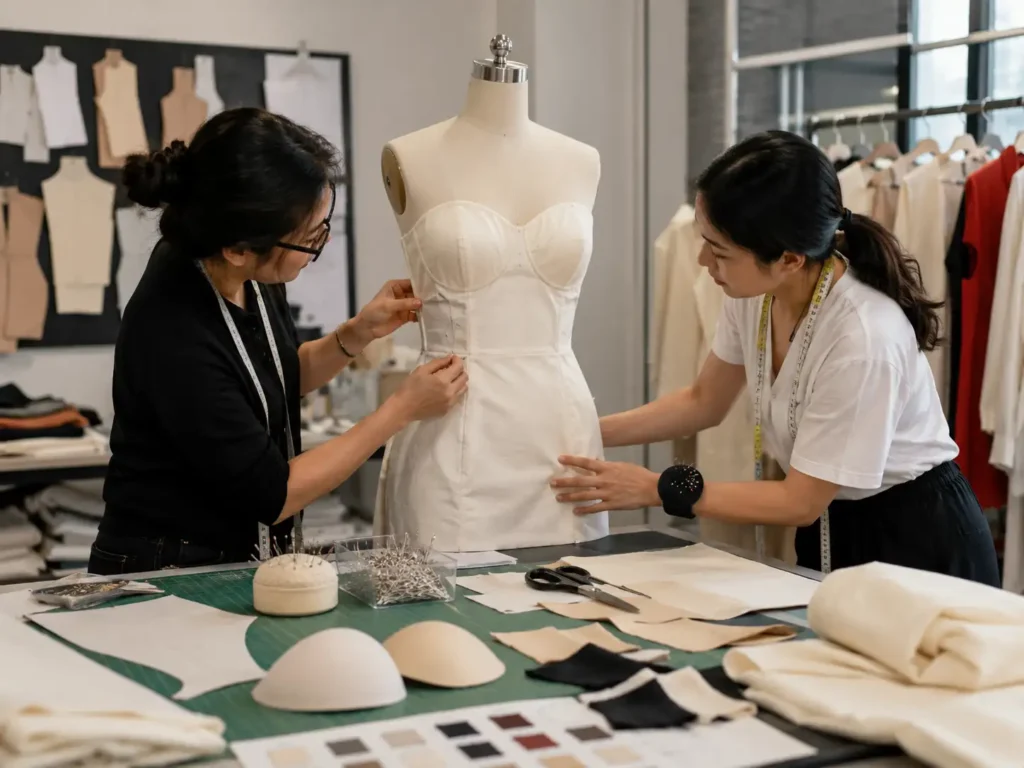
Authorized Original Sample
Sampling Turns Color Placement Into a Wearable Product Standard

Development Review
Fabric and Color Direction

Pattern and Panel Build

First Sample

Fit and Visual Review
Revised Sample
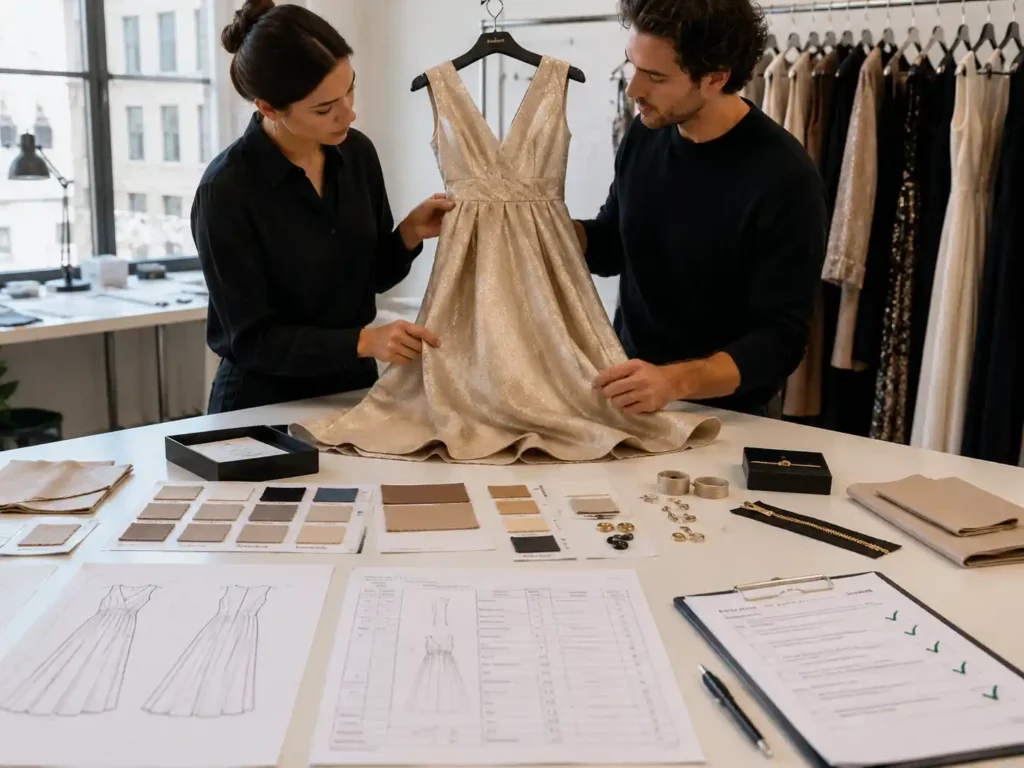
PP Sample
Golden Sample and Production Reference
Sample Revision Must Correct Both Fit and Graphic Proportion
Color-block dresses often need a different revision mindset from solid-color styles. A sample can fit correctly and still look wrong because a color panel sits too high, too wide or at the wrong angle. Jinfeng records visual and structural feedback together so the next sample corrects the actual cause rather than only the visible symptom.

Separate Fit Problems From Color-Line Problems
A waist seam that appears too high may be caused by bodice length, garment balance or the visual width of the contrast panel. A diagonal line that looks uneven may be a pattern issue, a sewing issue or a fabric stretch issue. Revision begins by identifying the source before any pattern is changed.
Fit review can include bust, waist, hip, dress length, neckline, armhole and closure, while the visual review checks panel location, symmetry, line angle, front-back continuity and surface appearance. Both reviews need to agree before the style is considered stable.

Use Marked Photos and Measurements
Clear feedback is more useful than comments such as “move it slightly” or “make the block smaller.” Front, side and back photos with marked lines, measured distances and written priorities help the pattern team understand the intended result. Measurement review also protects the approved fit while visual panel adjustments are made.
For overseas development, photos and short fitting videos can show how the seam moves during standing, walking or sitting. The information helps determine whether the issue appears only in a static image or reflects a real balance problem.

Record Every Bulk-Relevant Change
Changes that affect production are written into updated pattern files, measurements, fabric records, trim references and sewing instructions. If a new fabric changes drape or stretch, the pattern may need another review. If a color changes, lining, thread or zipper references may also need updating.
A structured revision record is especially valuable in multi-style programs because comments do not remain buried in separate email or chat threads. The final production file should show the approved version clearly.

Re-Sample When the Structure Changes
Major pattern changes, material replacement, seam relocation or new construction should not be treated as a minor cosmetic adjustment.
A revised physical sample provides a safer check before PP approval.
The objective is to remove unresolved development risk before quantity, material commitment and production pressure increase.
Lock the PP Standard Before Fabric Enters Bulk Production
Final Fabric
Final Color
Final Panel Geometry
Final Measurements
Final Construction
Final Labels
Final Packing
Final Production File
Transfer the Approved Sample Into a Repeatable Production System
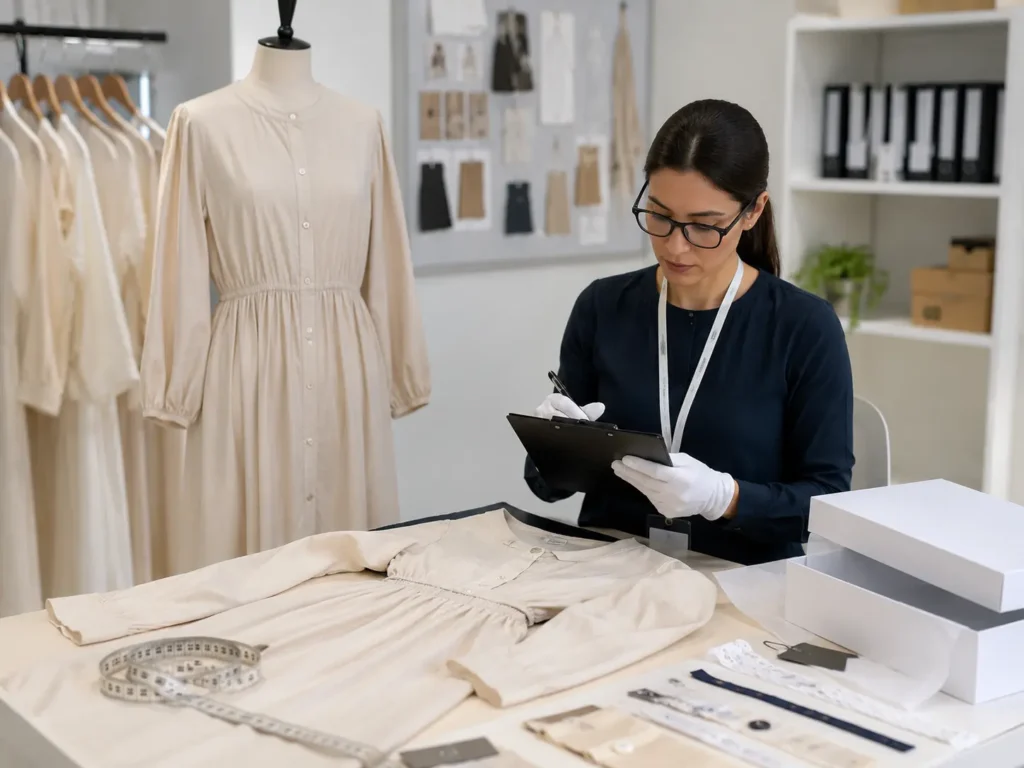
Many production failures happen after a good sample has already been approved. The sample room understands the style, but the bulk line receives incomplete information. Jinfeng reduces the gap by transferring the approved pattern, materials, measurements, color references, sewing method and QC controls into a production file before bulk starts.
Final Pattern and Panel Identification
Every approved panel should have a clear pattern version, size, grain or stretch direction and left-right identification where needed. The production team should not have to interpret a sample visually to decide which piece belongs where. Clear pattern references also support grading and repeat orders.
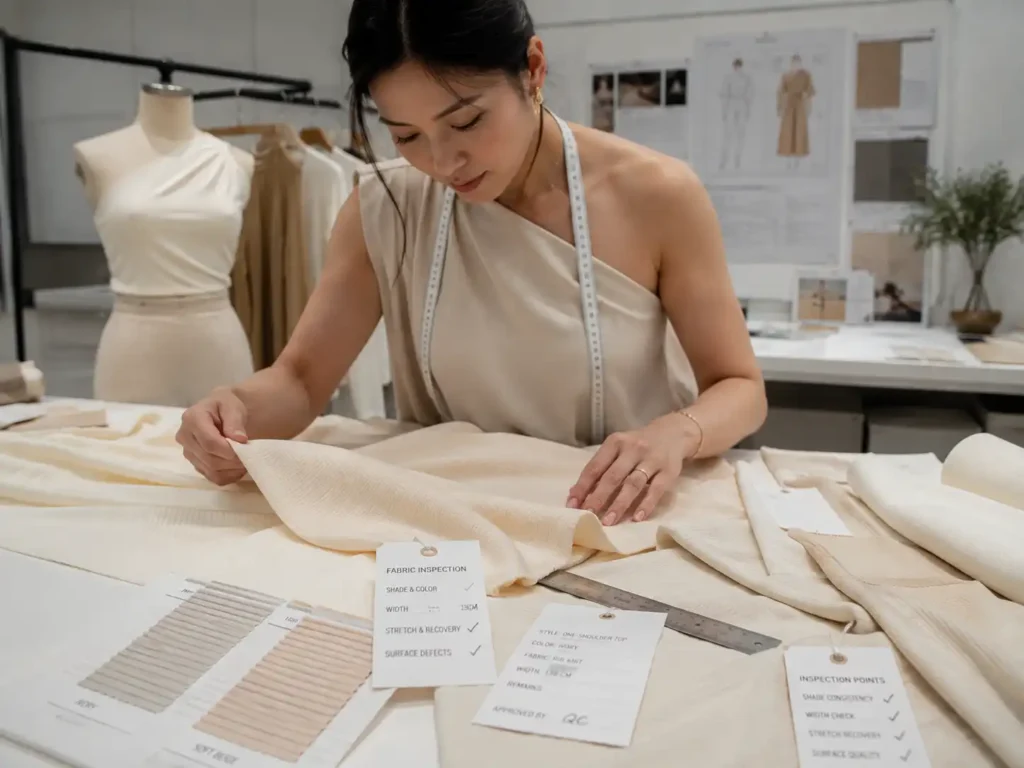
Fabric and Color Reference Control
Approved swatches, fabric codes and shade information move with the production package. When several colors or materials are used in one dress, cutting and bundling must keep the correct panel combination together. Material substitution should not happen at line level without renewed approval.
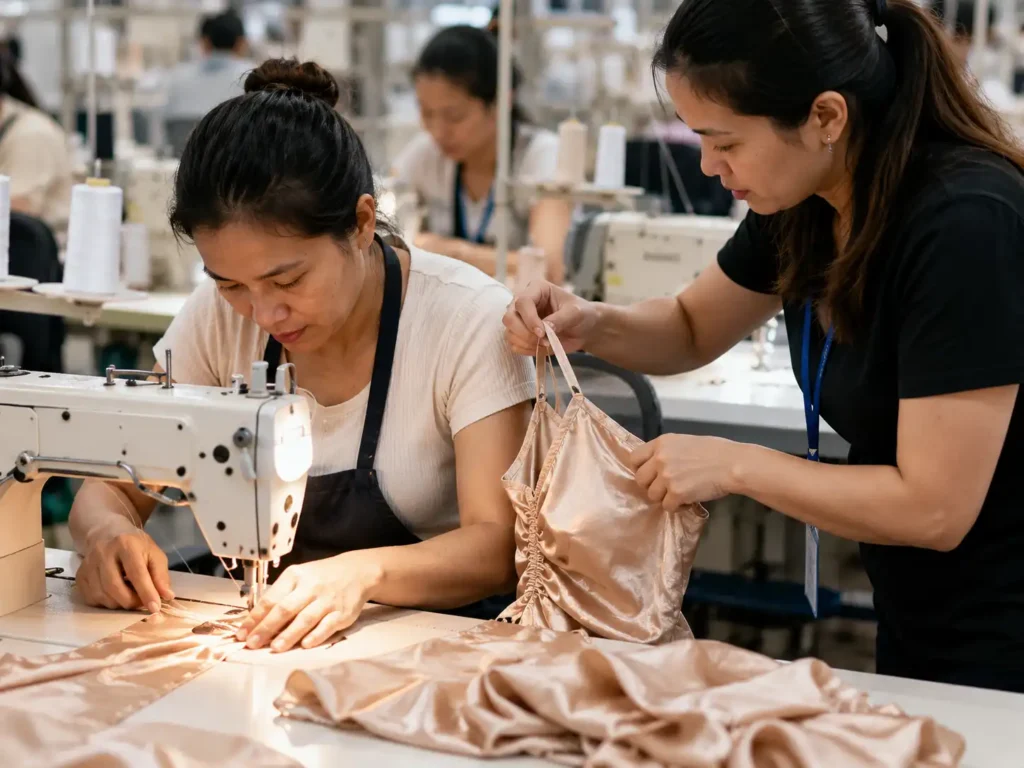
Sewing Instruction and Critical Junctions
The file should identify seam type, seam allowance, stitch density, joining order, zipper or closure position, lining method and any critical multi-panel junction. Color-block lines that create the visual identity of the style deserve explicit reference rather than being left to normal sewing interpretation.

Measurement and Visual QC Standard
Traditional measurements such as bust, waist, hip and dress length remain essential. Color-block styles may also need visual location checks for a waist line, side panel or diagonal seam. The approved sample provides a physical reference for proportion, symmetry and pressing finish.
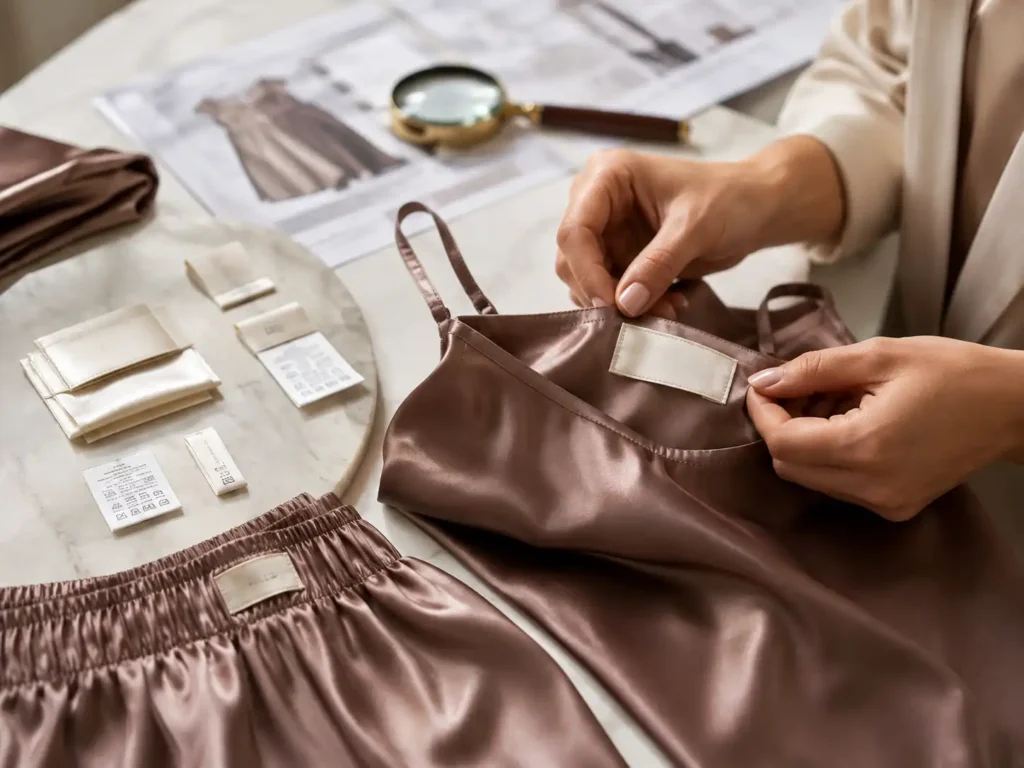
Label and Packing Transfer
Private-label files, barcode logic, polybag requirements, carton marks and folding method are connected to the final production specification.
For crease-sensitive or high-contrast styles, packing orientation can affect how the garment presents when unpacked.
Golden Sample and Repeat-Order Record
Where a Golden sample is used, production, QC and repeat-order teams can compare future batches against the same physical standard.
Pattern, fabric, color, trim, packing and quality records reduce the chance of restarting development from memory on a repeat program.
Scale Approved Color-Block Styles Without Losing Panel Accuracy
Bulk production should reproduce the approved development standard, not reinterpret it. Jinfeng allocates womenswear programs according to fabric type, construction difficulty and order schedule, then manages cutting, sewing, inline inspection, finishing and packing against the approved PP information.

Production Allocation by Product Risk

Cutting and Bundle Control
Multi-panel dresses create more opportunities for mixing errors.
Cutting control checks pattern version, fabric face, direction, panel quantity, size bundling and left-right identification. When multiple shades or materials belong in one garment, bundling needs to preserve the approved combination through sewing.

Inline Correction Before Errors Multiply
Color-Block Dress QC Must Check Both Measurements and Visual Lines
Standard garment QC is not enough when the design depends on strong color geometry. Inspection has to protect material shade, pattern direction, panel position, seam finish, symmetry and measurements at the same time. Jinfeng builds product-specific QC points around the approved PP sample and production file.
| QC Stage | Key Checks | Color-Block Risk Controlled |
|---|---|---|
| Incoming Fabric | Color, weight, hand feel, width, shrinkage, stretch, visible defects | Shade mismatch and incompatible material behavior |
| Cutting | Pattern version, panel direction, fabric face, stretch direction, quantity, size bundling | Reversed panels, wrong grain, mixed sizes or wrong color sections |
| Panel Preparation | Panel ID, notches, left/right pairing, edge stability | Mirrored pieces and inaccurate joining points |
| Sewing | Seam allowance, stitch density, tension, seam flatness, junction accuracy | Puckering, shifted color lines and bulky intersections |
| Inline Inspection | Symmetry, panel width, seam angle, zipper flatness, lining attachment | Repeated line-position errors before quantity grows |
| Garment Measurement | Bust, waist, hip, dress length and style-specific POMs | Fit drift that changes color placement on-body |
| Visual Review | Front/back continuity, color-line proportion, pressing, shade relationship | A garment that measures correctly but looks visually wrong |
| Packing QC | Hangtags, barcodes, size stickers, folding and carton marks | Wrong SKU identification or packing that damages presentation |
Control Cost Without Weakening the Color-Block Design
Panel Count Changes Labor
Material Pairing Changes Cost and MOQ
Color Count Affects Material Planning
Construction Can Be Optimized Selectively
Cost reduction should protect the features consumers will see and feel: color proportion, fit, seam flatness, lining coverage, zipper quality and stable measurements. Opportunities may include a more suitable fabric alternative, simplified hidden construction, coordinated color counts or a revised panel shape that keeps the intended appearance with more efficient sewing.
Complete Development With Private-Label and Retail-Ready Delivery
Labels and SKU Identification
Packing for Surface and Seam Protection
Export and Forwarder Coordination
Frequently Asked Questions About Color-Block Dress Development
Yes. A reference image can be used to review silhouette, color placement, panel division, neckline, waistline, closure and likely fabric direction. Accurate development still needs supporting information such as target material, sample size, intended fit, size range, quantity plan and target market. The image is treated as a development reference rather than an automatic production specification.
Usually, visible sewn color blocks become separate pattern panels unless the effect is created by printing, applique or another construction method. Each panel needs seam allowance, notches, direction and joining references. The pattern team also checks whether the new seam carries shaping or affects fit around the bust, waist or hip.
Yes, when the materials are compatible with the intended structure. Weight, stretch, recovery, shrinkage, drape, transparency, surface and seam behavior should be compared during development. A visually attractive combination can still fail if one panel grows, pulls, shrinks differently or creates excessive seam bulk.
Color control can use Pantone references, physical swatches, lab dips, shade bands and approved fabric records depending on the material and project. Bulk fabric lots are reviewed before cutting, while lining, thread, zipper tape and visible trims can also be coordinated when they influence the final color relationship.
A typical dress first sample with available materials is often around 10-15 days. More complex panel geometry, mixed fabrics, custom-dyed colors, special trims or difficult construction may move into roughly 15-25 days or require a project-specific timeline. Revised and PP samples depend on the scope of changes and material readiness.
Common revisions include panel width, seam angle, waist-line height, bust proportion, side-panel position, fabric pairing, seam tension, zipper flatness, lining coverage and garment measurements. Significant pattern or material changes are recorded and normally re-sampled before PP approval.
The approved pattern, panel identification, fabric references, color approvals, sewing instructions, measurements and QC points are transferred into production. Cutting, bundle control, inline inspection and visual checks are used to catch shifted lines, reversed panels, seam puckering or inconsistent proportions before quantity increases.
Yes. Size grading should protect both fit and visual proportion. Bust, waist, hip, length, armhole and other POMs are graded according to the approved size system, while key panel locations may also need review so a side block or waist line does not become visually disproportionate in larger or smaller sizes.
Jinfeng Apparel’s standard MOQ starts from 200 pcs per style/color. Fabric supplier minimums can be higher for custom dyeing, exclusive materials, special trims, certified fabrics or complex color programs. The final arrangement is reviewed after material direction and color breakdown are known.
Yes. Jinfeng supports woven labels, size labels, care labels, hangtags, barcode stickers, SKU labels, polybags, carton marks and other project-specific packing requirements. Label and packing standards are confirmed before bulk production so the finished garments can move into ecommerce, retail or nominated warehouse receiving workflows.

Send Your Color-Block Dress Project for Development Review
Share the files your team already has and Jinfeng can review panel placement, fabric direction, pattern complexity, sample requirements, MOQ factors and bulk risks before the project moves forward.
Clear early information reduces repeated sampling and helps the development team separate design changes from production constraints.
For the fastest review, provide:
- Tech pack, sketch, line sheet or reference images.
- Front and back color placement, including any asymmetric or diagonal panel lines.
- Preferred fabric or required surface effect for each color section.
- Sample size and intended size range.
- Quantity per style/color and expected color breakdown.
- Target market and intended launch or delivery window.
- Private-label, barcode, packing or warehouse requirements if already defined.
- Any original sample, previous fit notes or known production problems that should be corrected.


