Skip to content

Collection Solutions for Multi-Brand Retail Buying Cycles
Development-led womenswear manufacturing support for retail teams managing multi-style ranges, approval calendars, production windows, and repeat programs.
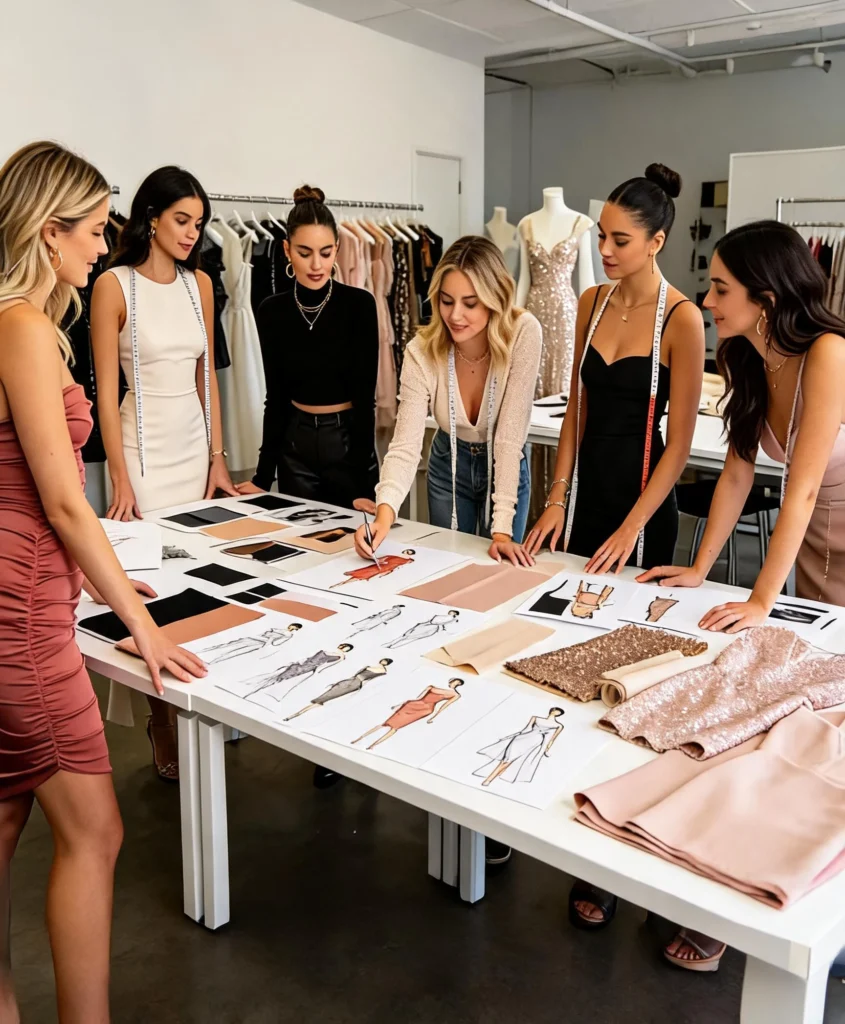
– Multi-style programs: coordinated development across dresses, skirts, jumpsuits, matching sets, and tops, grouped by fabric family, fit risk, launch priority, and production route.
– Development resources: 2 sample rooms, 7+ senior pattern makers, and 20+ sample machinists support first samples, fit revisions, photo-ready samples, PP samples, and approval tracking.
– Production depth: 6 owned womenswear factories, 10+ long-term production partners, 18+ sewing lines, and 6+ flexible production lines support varied construction and delivery needs.
– Retail execution: 15+ QC inspectors, private-label packing, barcode and SKU control, multi-batch shipment planning, and repeat-order records connect approved styles with warehouse-ready delivery.


Built for Teams Running Complex Retail Collection Calendars
Merchandising Leadership
Sourcing Direction
Product Development
Product development teams need drawings, references, tech packs, or original samples converted into workable patterns, materials, fit standards, and production instructions.Jinfeng can review neckline shape, bust balance, waist placement, hip fit, length, lining, closure, support, trim placement, and fabric behavior before bulk production. First samples, revised samples, photo-ready samples, PP samples, and Golden samples serve different approval purposes.
The aim is to keep design intent intact while moving each style toward a repeatable manufacturing standard.
QA Management
Brand Group Teams
Retail Operations
Clear Roles Keep Retail Planning and Manufacturing Aligned
Retail Team Owns
- Define seasonal category and style mix.
- Set commercial price points and margin targets.
- Approve final styles, colors, sizes, and order quantities.
- Decide launch windows, channel allocation, and replenishment strategy.
- Approve warehouse, compliance, packaging, and logistics requirements.
Jinfeng Executes
Jinfeng takes the confirmed range direction and builds a manufacturing path around product structure, material readiness, sample approvals, production allocation, QC, packing, and delivery. Work can begin from a line sheet, tech pack, sketch, reference image, or original sample, provided the project contains enough information to evaluate style intent and order scope.
- Review construction, fit risk, fabric direction, trims, and MOQ.
- Develop patterns and samples, then track revisions toward PP approval.
- Group styles by fabric, complexity, launch priority, and factory fit.
- Control bulk standards through approved references and QC checkpoints.
- Execute private-label packing, SKU identification, carton control, and shipment coordination.
The result is a clearer handoff between commercial planning and garment execution without pretending that factory management replaces retail merchandising judgment.
Where Multi-Brand Collection Calendars Usually Lose Control
Approval Drift
Different styles rarely progress at the same speed. One dress may be waiting for a revised neckline, another for a lab dip, while a third is already ready for PP approval.
When approval status is not separated by style, late comments can enter production after materials or patterns were assumed final.
Jinfeng uses style-level revision records and approval checkpoints so first sample, fit revision, photo sample, PP sample, and bulk standard are not treated as interchangeable milestones.
- Lock comments by sample version.
- Separate pending, revised, and approved styles.
- Escalate decisions that affect fabric, pattern, or bulk timing.
Sample Bottlenecks
A 20-style range should not enter the sample room as 20 equal priorities. Hero styles, campaign pieces, complex fabrics, early photo needs, and long-lead trims require different sequencing.
Jinfeng can group sample work by launch date, fabric readiness, construction complexity, and approval purpose. Simple first samples generally move faster than corset, lace, mesh, sequin, or custom-material styles, so planning around complexity protects the critical path rather than promising one unrealistic sample date for the entire range.
- Identify hero and photo-critical styles first.
- Separate material-ready styles from sourcing-dependent styles.
- Reserve extra revision time for fit-sensitive construction.
Fabric Fragmentation
Collections often combine satin, mesh, jersey, ponte, chiffon, lace, sequin, and other fabric families.
Each behaves differently in drape, stretch, transparency, shrinkage, color, cutting, pressing, and MOQ. A range can become expensive or slow when every style uses an unrelated material with its own supplier minimum and approval sequence.
Jinfeng reviews fabric families early so styles can share suitable material directions where design permits while preserving the required hand feel, structure, and visual level.
- Group compatible fabric families.
- Flag supplier MOQ before sample approval.
- Confirm color and batch risks before bulk commitment.
Fit Inconsistency
Different silhouettes create different fit risks, and one generic measurement routine cannot protect an entire womenswear collection. Bodycon requires stretch and recovery control, corset styles need bust support and waist balance, slip dresses depend on drape and neckline stability, while jumpsuits add torso and crotch-length risk. Jinfeng connects pattern review, fit comments, revised samples, and measurement tolerances to each product type so a visually coherent range does not hide inconsistent wearing performance across styles.
- Define product-specific fit checkpoints.
- Keep size grading tied to approved pattern logic.
- Recheck styles when fabric stretch or weight changes.
Production Collisions
- Allocate by product risk, not only quantity.
- Keep complex styles with experienced production units.
- Align QC planning with each production route.
Delivery Mismatch
A retail launch can lose value when finished goods arrive in the wrong sequence. Hero styles may need an earlier shipment, one warehouse may have a different receiving window, or replenishment may follow after the initial drop.
Jinfeng can support multi-batch delivery by style group, color group, size ratio, warehouse, market, or freight mode. Each shipment needs its own carton data, packing list, labels, and forwarder instructions so speed does not create SKU or receiving errors downstream.
- Separate launch-critical quantities from remaining bulk.
- Keep carton and SKU records clear by batch.
- Confirm warehouse and forwarder rules before packing closes.
Translate the Buying Calendar Into Manufacturing Control Points
A retail calendar becomes workable when commercial milestones are tied to physical manufacturing outputs. Each stage below defines what information must be ready, what Jinfeng controls, and what needs approval before the next stage can move without creating rework.
| Retail Milestone | Manufacturing Input | Jinfeng Control Point | Output for Next Decision |
|---|---|---|---|
| Range direction confirmed | Line sheet, sketches, references, target categories | Style feasibility, construction risk, fabric direction, MOQ review | Development priority list |
| Fabric shortlist | Hand feel, composition, weight, stretch, color direction | Swatch sourcing, substitution review, supplier MOQ, lead-time risk | Approved fabric direction |
| Sample priority set | Hero styles, photo needs, launch dates | Pattern queue, material readiness, complexity grouping | First-sample schedule |
| Fit and design review | Sample comments, measurements, photos | Pattern correction, trim updates, construction revision | Revised sample or fit approval |
| PP lock | Final fabric, trims, size chart, labels, packing | PP confirmation, BOM review, construction standard, packing standard | Production-ready specification |
| Bulk allocation | Confirmed quantity, color-size ratio, delivery window | Factory allocation, line planning, material arrival, QC plan | Bulk production schedule |
| Retail readiness | Barcode, SKU, carton, warehouse rules | Garment QC, packing QC, carton mark and document review | Shipment-ready goods |
| Launch and repeat | Priority delivery, sales feedback, reorder need | Multi-batch shipment, record retention, change review | Replenishment or next-cycle brief |
Build a Womenswear Range With Distinct Commercial Roles

Going-Out Minis
Mini dresses can supply high-newness visual impact for party, birthday, club, and social occasions. Satin, stretch mesh, jersey, sequin, and structured woven fabrics all create different production risks.
Development should control front and back length, hip fit, lining coverage, zipper flatness, movement security, and embellishment comfort. Minis are useful as visual drivers, but short proportions leave little tolerance for fit errors, so approved sample measurements and size grading deserve more attention than a simple shortened hem.

Occasion Midis

Resort Maxis

Bodycon Contour Styles
Bodycon styles can provide a repeatable commercial core when stretch, recovery, and fit are controlled well. Jersey, rib, ponte, double knit, and stretch mesh need careful evaluation of stretch direction, hand feel, weight, opacity, shrinkage, and recovery.
Bust, waist, hip, side-seam balance, neckline shape, and hem ride-up should be checked during fit development. Bulk QC needs consistent measurement methods because small deviations become visible on fitted garments and can create size-related returns even when sewing looks clean.

Corset Statement Dresses
Corset and structured dresses serve party, occasion, evening, and campaign-led ranges where silhouette and support carry the design value. Development may involve bra cups, boning, lining, waist shaping, anti-slip support, hook-and-eye reinforcement, zipper control, and precise neckline geometry. Fit cannot be judged from a flat sketch alone. Cup position, underbust, waist suppression, top-edge security, and ease must be tested on sample. Bulk production also requires repeatable placement because a few millimeters can change comfort and visual balance.

Fashion Jumpsuits

Matching Sets

Fashion Separates
Plan Fabric Families Around Product Role and Risk

Satin Visual Tier
Satin brings sheen and occasion value to slip dresses, corset dresses, cocktail styles, wedding guest pieces, and elevated separates.
Development must evaluate weight, drape, opacity, surface sensitivity, color depth, lining need, and pressing behavior. A satin that looks strong on a swatch can still fail when zipper tension creates rippling or when fold marks remain after packing.
- Confirm face direction and cutting consistency.
- Review shade under consistent lighting.
- Protect surfaces from snagging during sewing and finishing.
- Match lining weight so the garment hangs naturally.
- Plan pressing and packing around crease sensitivity.
For multi-color programs, fabric batch and lab-dip approval need to be locked early because even small shade movement is highly visible on smooth reflective surfaces.
Mesh Newness Tier
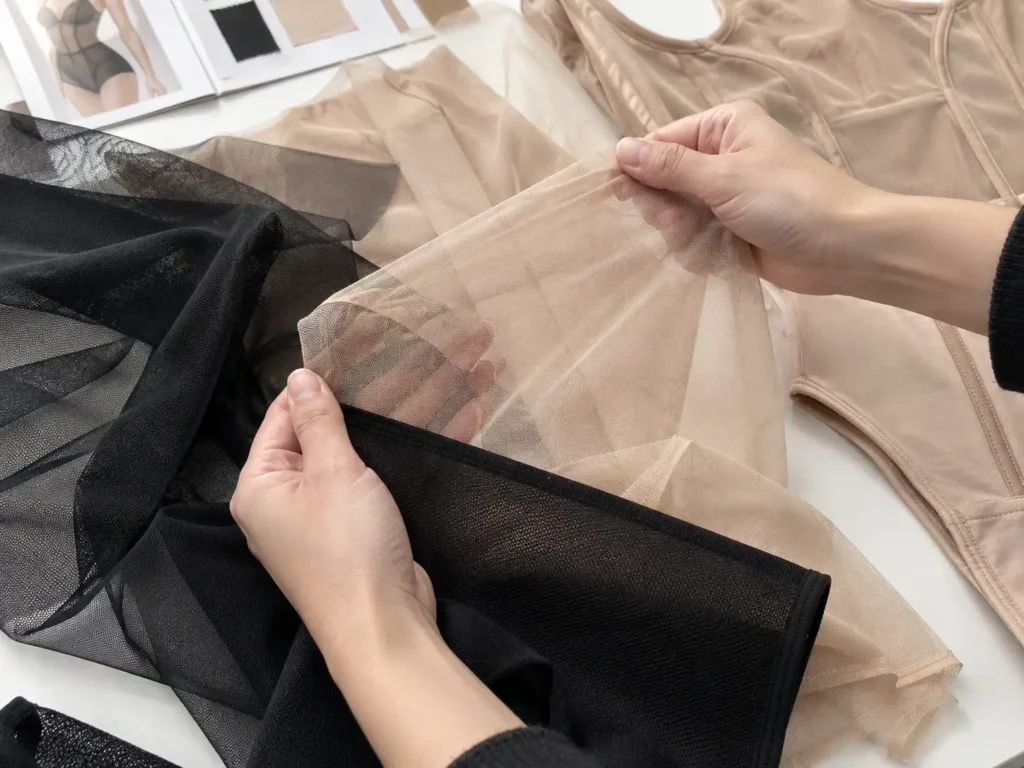
Stretch mesh supports partywear, cut-out details, layered dresses, sleeves, bodice overlays, and semi-sheer visual effects. Its value comes from transparency and body interaction, yet those same qualities create risk.
Jinfeng evaluates stretch direction, recovery, hole resistance, edge stability, transparency, lining coverage, seam bulk, and color relationship between mesh and lining.
- Use lining placement to control exposure without flattening the design.
- Check neckline and armhole recovery after sewing.
- Protect mesh from rough trim edges and sharp hardware.
- Test layered opacity under realistic lighting.
- Keep seam allowance controlled to reduce visible bulk.
Mesh styles should be grouped by similar stretch and lining logic where possible, reducing repeated pattern corrections across a large range.
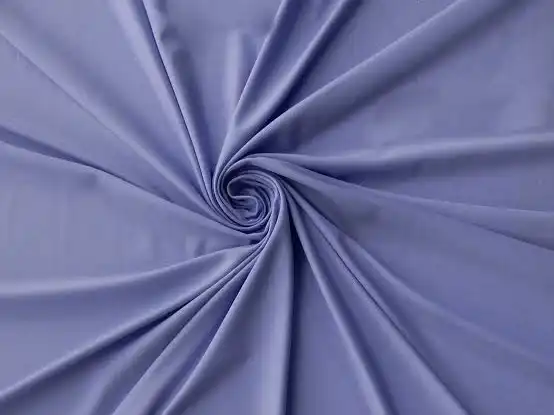
Jersey Commercial Core
- Record stretch direction and recovery before pattern lock.
- Check bust, waist, hip, and side-seam balance on fit samples.
- Control neckline growth and hem waviness.
- Review shrinkage when care requirements make washing relevant.
- Keep bulk fabric close to approved hand feel and weight.
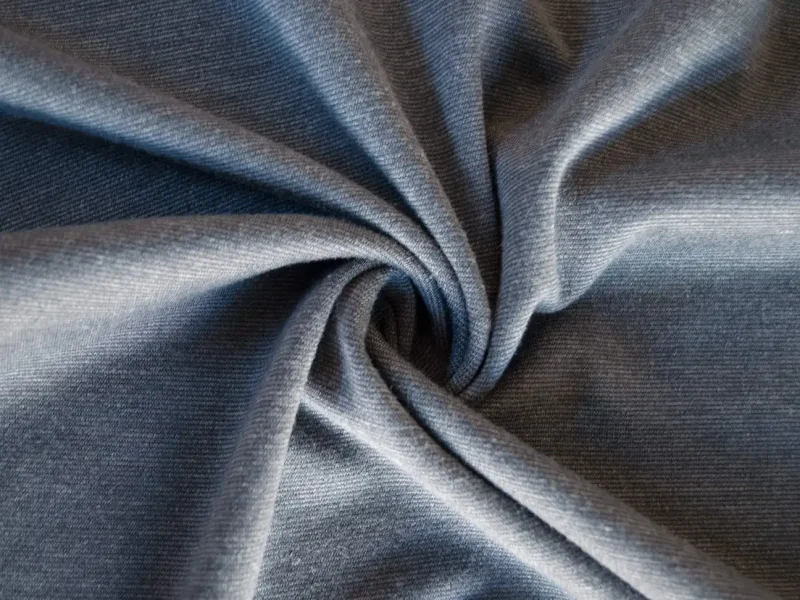
Ponte Structure Tier
Ponte and dense double knits suit office-to-evening dresses, structured bodycon silhouettes, skirts, and tailored-looking knit pieces. Their value comes from shape retention and comfort stretch, but density can increase seam bulk and pressing difficulty. Jinfeng reviews weight, recovery, edge thickness, zipper compatibility, seam allowance, neckline stability, and panel balance before bulk production.
- Avoid excessive seam layers around waist and zipper areas.
- Confirm stretch does not distort structured pattern lines.
- Use pressing methods that preserve surface quality.
- Review grading around fitted waist and hip zones.
- Check hanger or fold packing according to garment weight.
Ponte can function as a commercial bridge between softer knit styles and more structured woven product groups.

Chiffon Movement Tier
Chiffon supports wedding guest, bridesmaid, resort, occasion, and layered maxi silhouettes where movement matters.
Light weight introduces challenges around transparency, seam puckering, cutting movement, hem finish, lining length, static, and wrinkle behavior. Jinfeng evaluates whether the chosen chiffon needs full lining, partial lining, double layers, or opacity control through color pairing.
- Stabilize cutting to protect grain and panel balance.
- Match thread and seam finish to fabric fineness.
- Control hem consistency across long curved edges.
- Check lining length so it does not show below the shell.
- Plan packing to reduce hard creases before delivery.
When several chiffon styles share a color family, lot management becomes important for a visually consistent retail story.
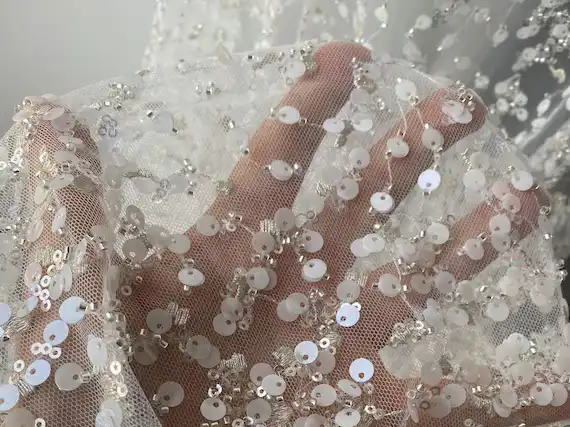
Lace and Sequin Tier
- Mark motif direction and critical placement before cutting.
- Remove or protect sequins where seam bulk becomes excessive.
- Check lining and binding where surfaces may scratch skin.
- Confirm supplier MOQ and replenishment availability early.
- Use protective packing for embellished surfaces.
Control Fit and Construction Before Range Approval
A collection becomes scalable only when each silhouette has an explicit fit and construction standard. Jinfeng converts design intent into measurable pattern decisions, sample checks, and bulk controls instead of relying on appearance alone.
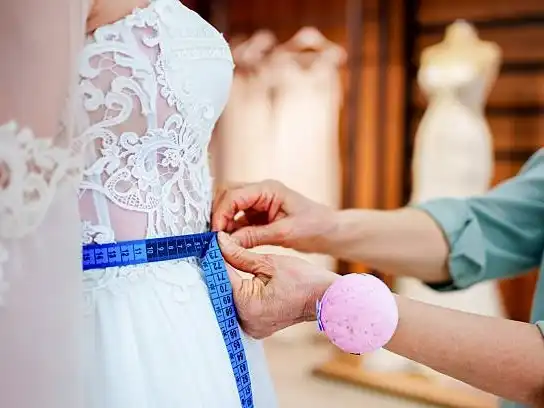
Fit-Sensitive Styles Need Product-Specific Measurement Logic
Bodycon, corset, strapless, backless, low-cut, and fitted jumpsuit styles expose small pattern errors quickly. A generic size chart cannot solve every risk because garment behavior changes with stretch, support, neckline geometry, lining, and seam placement.
Fit review focuses on the parts that control wearing performance. Bust balance must consider cup shape, neckline depth, armhole exposure, and fabric recovery. Waist shaping needs enough suppression to create silhouette without causing drag lines or closure strain. Hip fit needs movement allowance appropriate to the fabric and product. Strap length and angle influence bust position and armhole exposure. Strapless edges need support, anti-slip planning, and stable top-edge construction. Jumpsuits add torso length and crotch depth, so sitting and walking checks matter as much as standing fit.
For size development, Jinfeng works from the approved base pattern and confirmed grade rules rather than scaling every dimension by the same amount. Size changes are reviewed around bust, waist, hip, strap, neckline, length, slit, and crotch where relevant. When fabric weight or stretch changes after a sample, the pattern must be re-evaluated because the original fit relationship may no longer hold.
Bulk QC uses agreed measurement points and tolerance logic. Fitted products deserve tighter attention at high-visibility points because a 1 cm change can feel more significant on a contour dress than on a loose resort silhouette.
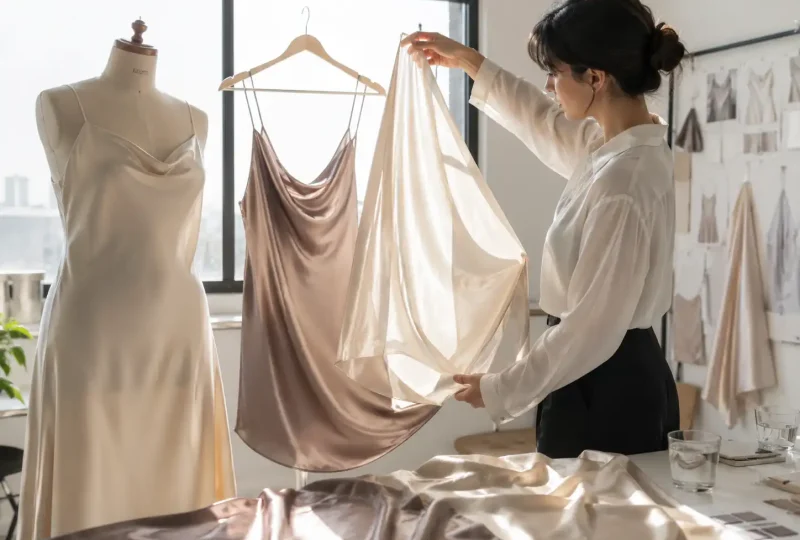
Drape-Sensitive Styles Depend on Grain, Weight, and Balance
Slip dresses, satin midis, chiffon maxis, bias-influenced silhouettes, and softly draped occasion styles depend on fabric behavior as much as pattern shape. A style can match the sketch in outline and still fail if the cloth is too stiff, too fluid, too transparent, or unstable after hanging.
Jinfeng reviews weight, grain direction, drape, stretch, lining relationship, seam tension, zipper position, hem sweep, and panel balance during sampling. Satin requires special attention to zipper flatness and pressing because surface reflection makes rippling visible.
Chiffon and lightweight fabrics need controlled cutting and seam handling so long panels do not twist or grow unevenly. Maxi lengths are checked after the garment has settled because lightweight fabrics can relax differently across panels.
Lining is treated as part of construction, not an afterthought. Lining weight, length, color, and attachment influence opacity, movement, comfort, and hem balance. For high-slit dresses, lining coverage must protect wearability without blocking intended movement. For light colors, opacity should be checked under strong lighting rather than judged only on the worktable.
Before bulk production, approved measurements, fabric direction, seam method, zipper installation, lining length, hem standard, and pressing method become part of the production reference. The aim is consistent drape across size and color, not merely a correct first sample.
Structured Styles Require Repeatable Internal Support
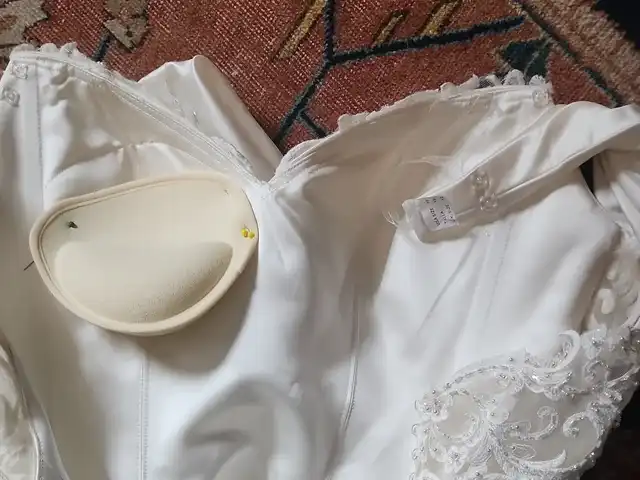
Corset dresses, bustier tops, structured minis, fitted eveningwear, and styles with shaped cups rely on internal components that are often invisible in product photography. Boning, bra cups, lining, fusible support, anti-slip elements, hook-and-eye reinforcement, zipper structure, and seam allowance all influence how the garment feels and holds its shape.
During development, Jinfeng evaluates cup position, cup volume, underbust balance, boning length, boning placement, top-edge security, waist suppression, zipper strain, and lining coverage.
A visually attractive sample can still fail if a bone ends at an uncomfortable point, a cup sits too high, or zipper tension distorts the center back. Internal support should be strong enough to hold the silhouette without making the garment rigid or painful.
Construction details are marked consistently before bulk production. Boning channels, cup positions, strap attachment, hook placement, zipper length, and lining joins need repeatable references. Where trims or internal components come from different suppliers, size and stiffness must be checked against the approved sample rather than assumed equivalent.
QC for structured styles includes closure security, symmetry, top-edge shape, cup alignment, boning position, seam smoothness, and wearer comfort. Small placement differences can create a visible mismatch across a retail rack, so structured styles receive more control than basic sewn garments.
Design Details Must Survive Sewing, Finishing, and Packing

Ruching, cut-outs, lace placement, sequin panels, hardware, narrow straps, high slits, asymmetric necklines, and decorative trims create the visual identity of many fast-moving womenswear collections. Their commercial value disappears when manufacturing variation makes one garment look different from another.
Jinfeng converts visual details into measurable placement and construction standards. Ruching needs controlled start and end points, gathering density, and left-right balance. Cut-outs need stabilized edges and correct tension so openings do not stretch wider in wear. Lace motifs need alignment rules around visible seams. Sequin areas need seam preparation and abrasion control. Narrow straps need stable length, angle, slider function, and attachment strength. Slits need consistent height and secure reinforcement. Hardware weight must match fabric strength so metal pieces do not drag or distort lightweight garments.
Finishing also affects design perception. Satin pressing, mesh edge cleaning, lace trimming, sequin thread cleanup, zipper shaping, and hem pressing should preserve the intended silhouette. Packing needs to protect delicate surfaces and avoid placing hard trims against easily marked fabric.
A strong design-detail standard gives production, QC, and repeat-order teams something objective to compare against instead of relying on memory or subjective visual judgment. Placement photos, measurement references, trim cards, and approved construction notes can also reduce interpretation differences when the same visual detail appears across several related styles.
Run Multi-Style Sampling as a Controlled Development Program
A 10-30 style range needs more than extra sewing capacity. Jinfeng groups sample work by fabric, pattern difficulty, trim dependency, commercial priority, and approval stage so one late style does not obscure the status of the full collection.
Start With a Development Intake That Exposes Risk Early
Sampling begins with the information available: line sheet, tech pack, sketch, reference image, original sample, size chart, BOM, fabric direction, target quantity, color plan, packaging need, and target delivery window. More complete inputs produce faster technical decisions because the sample team spends less time guessing basic intent.
Each style receives an initial review around silhouette, neckline, bust, waist, hip, length, closure, lining, trim, fabric behavior, construction complexity, and likely MOQ. The review also identifies whether a style should follow a relatively direct sample path or needs extra validation for support, transparency, embellishment, stretch recovery, or special material sourcing.
Indicative first-sample timing depends on complexity and material readiness. Simple styles may take around 7-10 days, ordinary dresses around 10-15 days, medium-complexity dresses, sets, or jumpsuits around 12-18 days, and corset, strapless, lace, mesh, or sequin styles around 15-25 days. Custom fabrics or special trims can extend development to around 20-35 days or follow supplier lead time. Those ranges are planning references, not blanket promises.
The output from intake is a clearer development map: which styles can move first, which need material decisions, which require additional fit work, and which could threaten the calendar if left unresolved. It also gives merchandising and sourcing teams a concrete basis for deciding where to simplify, where to protect design value, and where extra development time is justified.

Group Samples by Fabric and Construction Instead of Style Number
Treating Style 1 through Style 20 as one sequential queue creates avoidable waiting. Jinfeng groups development around shared technical conditions so material sourcing, pattern decisions, and sample review can move more coherently.
A satin group may share similar drape, lining, color, and pressing risks even when silhouettes differ. A stretch group may include bodycon dresses, fitted tops, and jumpsuits that all depend on recovery and measurement behavior. A structured group may include corset dresses and bustier tops requiring cups, boning, and closure control. A decorative group may include lace, sequin, rhinestone, or hardware styles with long-lead trims and extra workmanship.
Grouping does not mean forcing every style into identical construction. It means identifying common dependencies early enough to prevent repeated sourcing and inconsistent material choices. One fabric approval can inform several compatible styles, while separate styles remain isolated when their technical needs differ.
The sample room can then plan paper patterns, sewing sequence, trim preparation, and internal review with fewer abrupt switches. Merchandising teams gain a clearer view of which development blocks are moving and which are waiting on decisions. Large ranges become easier to discuss because status is organized by manufacturing logic rather than a long list of disconnected style codes.


Keep Revision Records Clear From First Sample to PP
First samples are development tools, not final bulk standards. Their purpose is to expose structure, proportion, material behavior, fit, construction feasibility, and cost implications. Comments should therefore be linked to a specific sample version and translated into concrete pattern or construction changes.
Jinfeng records revision points around measurements, neckline shape, bust balance, waist position, hip ease, strap length, armhole exposure, garment length, slit, lining, zipper, cup, boning, ruching, trim placement, and other relevant details. When a comment changes several linked areas, pattern adjustment is reviewed as a system rather than patched locally.
Revised samples usually require around 7-15 days depending on modification depth, material availability, and complexity. PP samples also commonly require around 7-15 days once final materials, trims, labels, and production details are ready. Photo-ready or salesman samples follow their own requirement because visual finish, quantity, and material standard may differ from a normal fit sample.
Approval language should stay precise: fit approved, color approved, trim approved, packing approved, or PP approved. Clear status prevents an old sample from being mistaken for the final production reference. Once PP is locked, late design changes should be treated as controlled changes because they can affect materials, price, line planning, and delivery.

Use Sample Priority to Protect Launch-Critical Styles
Large ranges rarely need every style at the same moment. Campaign pieces, hero SKUs, high-revenue categories, long-lead fabrics, complex construction, and styles needed for early photography often deserve earlier development positions. Jinfeng can use a priority list agreed with the retail team rather than allowing sample requests to compete only by submission date.
Priority can be based on launch date, hero status, photo requirement, fabric readiness, trim lead time, pattern complexity, expected bulk volume, or production dependency. A visually simple style with a long-lead custom trim may need to start earlier than a more complex style using ready materials. A core repeatable dress may deserve early fit lock because several colors or replenishment plans depend on it.
Priority is also useful when comments arrive at different speeds. Styles with complete feedback can continue while others wait, reducing the chance that one unresolved piece blocks all development. The sample room, pattern team, merchandising staff, and production planning team can then see the same order of importance.
For 10-30 style programs, the goal is not maximum speed on every style. The goal is to protect the critical styles that carry photography, launch, order placement, or production dependencies while maintaining a controlled path for the rest of the range.
Prioritize Samples Around Commercial and Technical Dependencies
Launch Date
Styles tied to an earlier launch, campaign, showroom, or warehouse receiving date should enter development sooner.
The date is reverse-planned through first sample, revision, PP, material arrival, production, QC, packing, and freight. Early launch information also exposes whether a normal shipment route remains realistic or whether selected quantities may need a different delivery plan.
- Confirm launch and warehouse dates.
- Identify latest safe PP approval.
- Flag styles with insufficient buffer.
The planning record should show the required approval date as well as the final launch date, making schedule risk visible before production is booked.
Hero SKU
Hero SKUs often carry more campaign investment, deeper quantities, or a larger visual role in the collection. Delaying one hero style can affect photography, merchandising, and production planning beyond its own SKU. Jinfeng can place hero styles earlier in fit and PP review while keeping supporting styles moving in parallel. Hero status should come from the retail team rather than factory assumption.
- Mark key styles on the line sheet.
- Protect early fit and material decisions.
- Reserve bulk allocation once approved.
Where a hero style has several colors or deeper volume, early material and capacity discussion can prevent one successful approval from becoming a later production bottleneck.
Fabric Readiness
- Confirm swatch or bulk-standard fabric.
- Check supplier MOQ and color route.
- Replan styles waiting on custom material.
Construction Risk
- Identify structural risk at intake.
- Allocate extra fit-review time.
- Confirm bulk method before PP lock.
Photo Requirement
- Confirm exact photography deadline.
- Define material and trim standard.
- Record any photo-only differences.
Bulk Dependency
- Map shared fabric and trim dependencies.
- Lock common standards early.
- Release bulk only after linked approvals.
Lock PP Standards Before Multi-Style Bulk Production Starts
Bulk consistency depends on a disciplined transition from development to production. Jinfeng uses PP approval, final patterns, material references, construction details, labels, packing rules, and Golden samples to reduce interpretation gaps across multiple styles.
Convert Fit Approval Into a Final Production Pattern
Fit comments only create value when they are translated into an updated production pattern and measurable standard. A verbal note such as “raise the neckline,” “reduce waist,” or “make the skirt fuller” is not enough for bulk execution. Jinfeng reviews the effect on linked pattern areas before the revision becomes final.
The final pattern can include shell pieces, lining pieces, facings, boning channels, cup positions, strap positions, slit positions, cut-out shapes, hem sweep, seam allowance, notches, and grading information depending on style. Measurement points on the size chart should match the approved pattern logic. When a fabric has stretch, recovery, or weight characteristics that materially affect fit, those properties need to remain part of the production reference.
Before PP approval, the team compares revised sample measurements with the intended standard and checks whether comments have been fully incorporated. A fit-approved sample made in substitute fabric may still require confirmation once final bulk fabric arrives. Similarly, a style changing from one lining or trim to another needs review where the change affects thickness, drape, or wearing comfort.
Pattern lock protects the full production cycle. Cutting, sewing, QC, and repeat orders all depend on one confirmed geometry rather than a mix of earlier sample versions.


Use the PP Sample to Lock Materials, Construction, and Branding
The PP sample is the point where design development becomes production instruction. Final shell fabric, lining, trims, color, measurements, construction method, label placement, hangtags, barcode or SKU requirements, and packing details should be reviewed before bulk release.
Jinfeng uses PP review to confirm fabric hand feel, shade, stretch, transparency, trim quality, zipper length, cup or boning placement, seam method, ruching position, lace or sequin placement, pressing quality, and other product-specific details. Private-label components are checked against approved artwork and placement requirements. Packing expectations such as folding method, polybag, size sticker, color sticker, barcode, carton mark, and carton breakdown should also be clear before goods reach the finishing area.
A PP sample commonly requires around 7-15 days once final materials are ready, but complex styles, custom materials, or changed specifications can require additional time. Late changes after PP approval need to be treated carefully because a small visual change can affect pattern, material consumption, trim ordering, sewing sequence, price, QC, or delivery.
Strong PP control is especially important in a multi-style program because each style can otherwise carry a different interpretation into bulk. A locked PP standard gives production and QC one reference for each approved SKU family. It also gives costing, finishing, and packing teams a stable baseline when quantities, color ratios, or delivery waves are finalized after development.
Keep a Golden Sample for Bulk, QC, and Repeat Programs
A Golden sample acts as the physical reference for production workmanship, measurement intent, fabric appearance, trim placement, labels, and packing presentation. It is useful when several internal teams need one agreed standard and when future replenishment needs to recreate the approved product accurately.
Jinfeng can retain approved references and related records for repeat programs, including pattern files, size charts, fabric references, trim information, sewing instructions, packing records, and QC notes. The Golden sample does not remove the need to recheck variables. New fabric batches, new colors, changed stretch, changed trims, different packaging, or revised size requirements can require additional review before a repeat order begins.
During bulk production, the Golden sample supports sewing-line reference and QC comparison. During finishing, it helps confirm appearance, label placement, pressing, and packing. During repeat orders, it reduces reliance on old photos or memory and gives the team a stronger starting point for verifying whether new materials still match the original standard.
For a multi-brand or multi-style calendar, keeping one confirmed reference per approved style creates continuity between development, bulk, shipment, and replenishment. The goal is controlled repeatability, not an assumption that every future batch will be identical without verification. Clear retained references also help new internal team members understand prior decisions without reopening every historical comment thread.

Allocate Multi-Style Production by Product Risk and Timing
Approved styles should not enter bulk as one undifferentiated workload. Jinfeng routes production by knit or woven construction, fabric behavior, workmanship complexity, fit sensitivity, trim needs, quantity, and launch priority while maintaining project-level QC and packing rules.
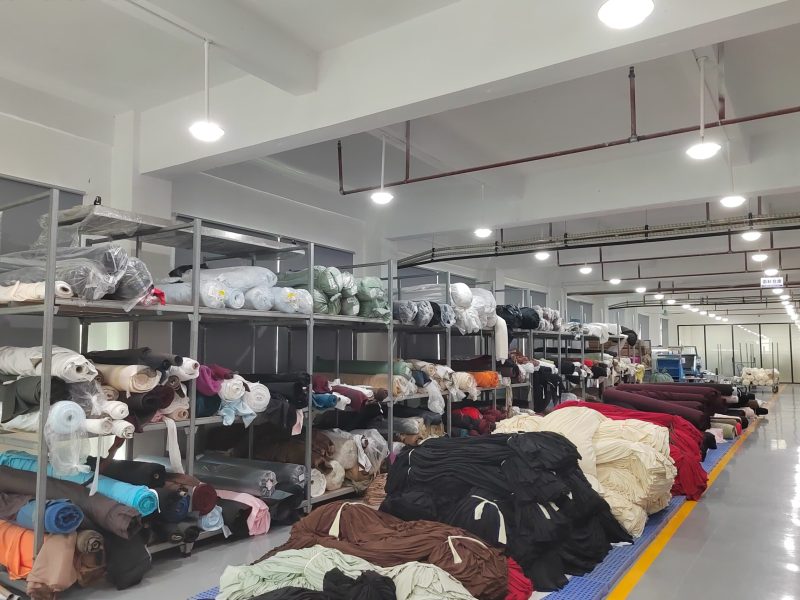
Group Production by Product and Fabric Capability
Different womenswear categories benefit from different production strengths. Satin dresses need careful surface handling, zipper control, shade management, and pressing. Bodycon and stretch pieces require sewing methods that respect stretch direction and recovery. Corset and occasion styles need experience with internal support, lining, cups, boning, and precision placement. Mesh and lace need edge control and delicate handling. Jumpsuits combine bodice fit, torso balance, crotch length, and movement requirements.
Jinfeng uses a structured production network with 6 owned womenswear factories, 10+ long-term production partners, 18+ sewing lines, and 6+ flexible production lines. Allocation is not presented as unlimited capacity. Each factory or line must match the product structure, material behavior, quality requirement, and confirmed production window.
A multi-style order can therefore be divided into logical production groups rather than forced through one route. Styles sharing compatible methods may move together, while high-risk products remain with teams experienced in their construction. The allocation plan is created after PP standards, materials, quantities, and delivery priorities become clear.
Grouping also supports clearer QC planning because inspectors know which risks matter in each production block. Production flexibility means organizing the right work in the right place, not reducing technical standards or ignoring MOQ requirements. Capacity is therefore evaluated against approved style mix and calendar pressure rather than quoted as one theoretical number for every product type.
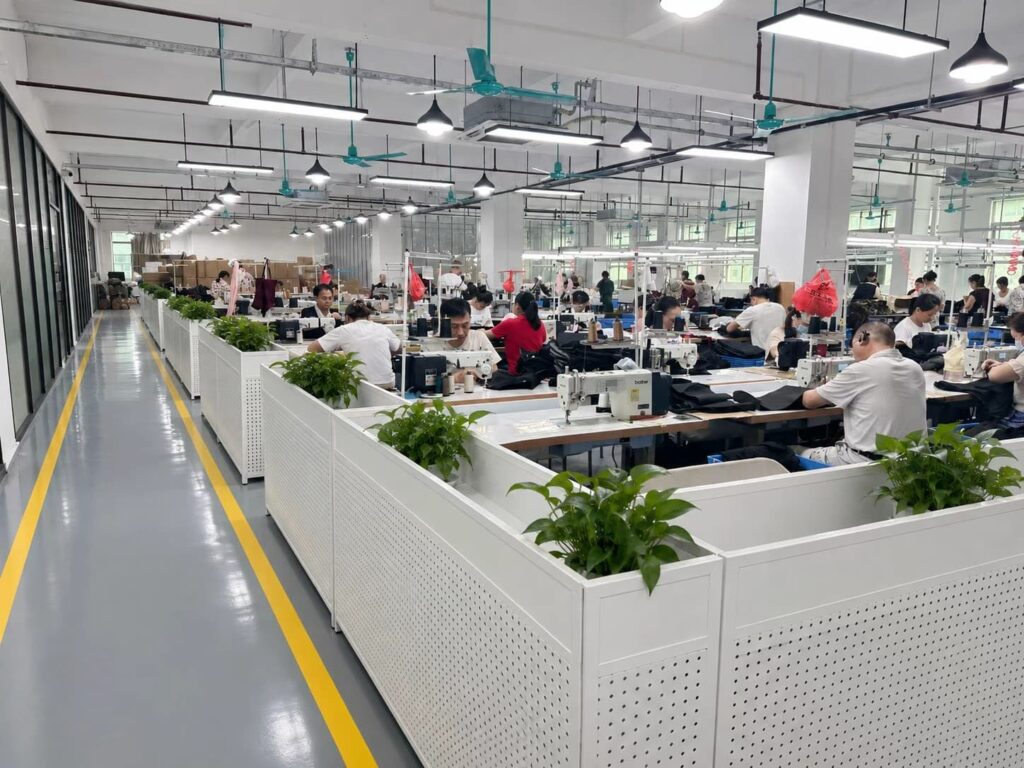
Use Flexible Lines for SKU Variety Without Losing Control
Flexible production lines are valuable when a seasonal range contains multiple silhouettes, fabrics, colors, and size breakdowns.
Their purpose is to manage product variation and line changeovers more effectively, not to turn complex womenswear into a casual short-run process.
Jinfeng’s 6+ flexible production lines can support collection programs where approved styles need different sewing sequences or staggered production windows. Planning considers fabric arrival, trim readiness, pattern release, size ratio, color groups, launch priority, and packing requirements. Styles with similar operations can be grouped where appropriate, reducing unnecessary setup changes while keeping product identity clear.
The line plan also needs realistic buffers around more difficult construction. A simple woven skirt does not require the same sewing time or inline control as a sequin mini, corset dress, lined lace midi, or structured jumpsuit. Mixing those categories without adjustment creates output expectations that do not reflect actual workmanship.
Production progress can be tracked through material arrival, cutting, sewing, inline inspection, finishing, packing, and shipment preparation.
For key programs, milestone updates help retail teams see whether a delay sits with material, sewing, QC, or packing rather than receiving one vague “in production” status.
Flexible lines create value when they are combined with disciplined style grouping, approval status, and production records.

Separate Color, Size, and SKU Control From Sewing Output
A garment can be sewn correctly and still fail at retail if the color, size, label, barcode, or carton information is wrong.
Multi-style programs increase those risks because each style can contain several colors and sizes, creating dozens of style-color-size combinations within one order.
Jinfeng keeps production identification linked to confirmed style codes, color names or codes, size ratios, label requirements, and packing instructions. Color management includes fabric batch and shade review where required. Size control follows the approved size chart and grading. Finishing teams use the correct main label, size label, care label, hangtag, barcode sticker, SKU label, and polybag requirement for each garment.
Carton-level checks then compare quantity, color, size, barcode, carton mark, and packing list information before shipment. Mixed cartons or special size ratios require explicit instructions rather than ad hoc packing decisions at the end of production.
Separating SKU control from sewing output matters because retail operations depend on accurate identification.
A range with strong product quality can still create warehouse rework, receiving delays, or relabeling cost when packing data is not controlled. Production management therefore continues through finishing and carton close, not only sewing completion. Barcode lists, size ratios, and packing instructions should be frozen early enough for finishing teams to prepare without repeated relabeling or carton reopening.

Manage Production Progress Against the Approved Calendar
Large retail programs need milestone visibility without turning factory communication into constant daily reporting. Jinfeng can organize progress around meaningful checkpoints: material arrival, cutting, sewing start, inline QC, finishing, packing, carton completion, and shipment preparation.
The approved calendar should identify which styles are launch-critical, which have shared material dependencies, and which can move in later waves. When a material delay or revision affects one group, production can be re-evaluated around remaining approved styles instead of assuming the whole range must stop. The same logic applies when one factory allocation becomes tighter than expected; compatible work can be reviewed against available routes while preserving the approved technical standard.
Key risks should be communicated in terms of consequence. A late zipper does not only mean “trim delayed”; it may move sewing start. A late PP approval can delay fabric cutting. A barcode artwork change can block packing even after garments are finished. Linking progress to downstream effects helps commercial teams make better timing decisions.
The aim is a traceable route from approved sample to shipment readiness across multiple styles, with enough visibility to manage exceptions before they become missed launch windows. Status updates are most useful when they show the next dependency and owner, not merely a percentage-complete figure with no operational meaning.
Manufacturing Capacity Built for Multi-Style Collection Programs
6 Owned Factories
10+ Long-Term Partners
18+ Sewing Lines
6+ Flexible Lines
2 Sample Rooms
Dedicated Control Teams
Apply Collection-Level QC Without Flattening Product Differences
Quality control needs one project discipline and several product-specific control plans. Jinfeng combines common checkpoints with style-specific inspection logic so satin, mesh, bodycon, corset, sequin, jumpsuit, and retail-packed SKUs are not judged by one generic checklist.
Start Quality Control Before Cutting and Sewing
Bulk quality begins with material and specification readiness. Fabric type, composition, weight, width, stretch, hand feel, drape, transparency, shade, shrinkage risk, and approved reference should be checked before the production line inherits a material problem. Trims such as zippers, cups, boning, sliders, hooks, lace, rhinestones, labels, and hangtags also need comparison against approved requirements.
Cutting control then protects grain, pattern version, color batch, size identification, placement, and delicate material handling. A wrong pattern revision or mixed shade can create defects across hundreds of pieces before sewing begins. For lace, placement and motif direction deserve attention. For satin, face direction and surface protection matter. For stretch fabrics, direction must follow the approved pattern and fit logic.
Production documents should reflect the final PP standard, size chart, BOM, construction method, label placement, and packing requirement. When one specification changes, related teams need the same updated instruction rather than separate local interpretations.
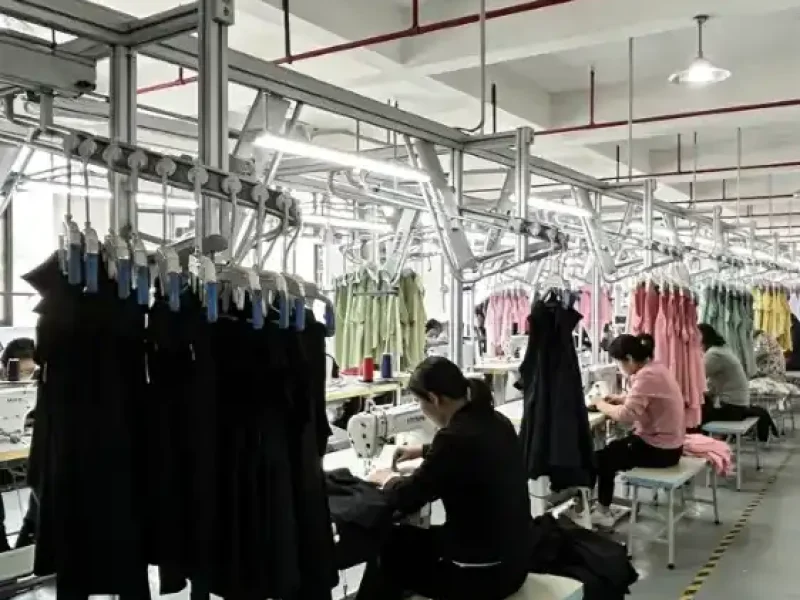
Jinfeng’s 15+ QC inspectors support incoming, in-process, finished-garment, and packing control. Inspection intensity can be adjusted by product risk and client requirement, while third-party inspection or AQL-related support can be coordinated by project where required.
The strongest QC result comes from preventing wrong inputs, not only sorting defects after sewing is complete.
Use Product-Specific Inspection Points for Visible Risks
Different styles fail in different ways. Satin should be reviewed for shade, snagging, seam puckering, zipper bulging, pressing marks, and hard packing creases. Mesh should be checked for transparency, holes, stretched edges, lining position, seam appearance, and recovery. Bodycon styles need measurement consistency, stretch direction, recovery, side-seam balance, neckline stability, and hem ride-up. Corset styles need cup alignment, boning position, top-edge security, closure strength, and symmetry.
Lace requires motif alignment, damaged areas, edge treatment, color relationship with lining, and seam placement. Sequin needs attachment security, missing areas, seam bulk, scratching risk, needle damage, and protective packing. Jumpsuits need torso balance, crotch length, waist position, zipper function, leg proportion, and movement. Matching sets require shade and trim consistency between components.
Those control points are built around commercial visibility. A 3 mm trim-placement shift may matter more on a symmetrical corset neckline than on a loose resort dress. A small measurement deviation can create a major fit difference on a fitted bodycon style while remaining less critical on a flowing maxi.
QC therefore follows approved product risk, not one identical list applied mechanically across the range. Clear inspection points help production teams understand what matters before defects are repeated at scale. Inspection references can also be updated when a revised PP sample changes a high-visibility construction or measurement point.

Measure Size Consistency Against Approved Grade Rules
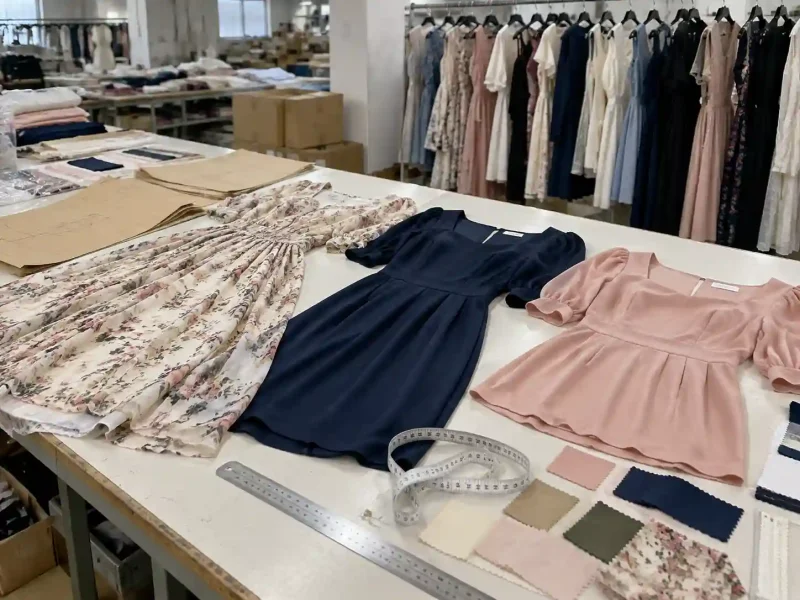
Multi-size production requires more than checking one sample size. The approved base pattern, grade rules, size chart, and measurement tolerance need to stay connected through cutting and finished-garment inspection. Key points vary by silhouette, but common areas include bust, waist, hip, garment length, strap length, neckline, armhole, slit, sleeve, inseam, and crotch length where relevant.
A confirmed order can distribute multiple sizes within the style-color quantity. For example, XS-XL can be packed according to the client’s size ratio while MOQ remains calculated by style and color. Plus, petite, tall, or extended-size work may require separate review where proportions change beyond standard grading logic.
Measurement method should be consistent. Stretch garments need agreed relaxation conditions and points of measure. Long dresses should be checked for hem balance after hanging where appropriate. Structured garments need measurements that reflect internal support rather than flattening the garment unnaturally. Jumpsuits need both upper-body and lower-body balance.
When a fabric batch has different stretch or weight from the approved reference, measurement alone may not guarantee the same fit. The production team should review fabric behavior and pattern relationship before assuming old tolerances remain sufficient.
Size consistency protects not only fit but also retail trust. Consumers compare colors and repeat purchases, so the same labeled size should feel recognizably related across approved production.

Extend QC Through Packing and Shipment Preparation
Retail-ready quality continues after garments pass appearance and measurement inspection. Labels, barcodes, stickers, folding, polybags, carton marks, size ratios, mixed-carton rules, warehouse labels, and shipment documents can all create receiving problems if they are handled as administrative details.
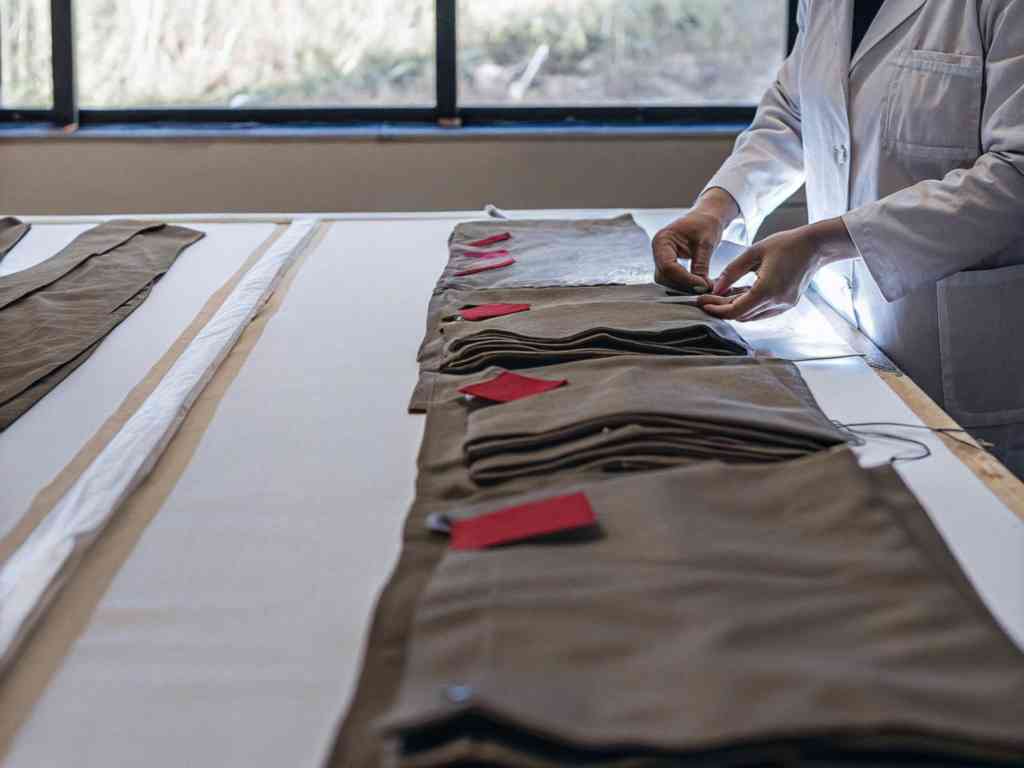
Jinfeng checks that each garment carries the correct brand label, size label, care label, hangtag, barcode, SKU identifier, and packing method based on approved instructions. Barcode readability and style-color-size matching should be reviewed before cartons close. Carton-level quantity, color, size, barcode, and carton mark information is then compared with the packing list and delivery requirement.
For multi-batch programs, each shipment needs a clean breakdown so priority styles do not become confused with later waves. Warehouse address, forwarder contact, booking instructions, cut-off dates, carton requirements, and required documents should be confirmed early enough to influence packing, not after cartons are finished.
Pre-shipment photos can support project communication while brand-sensitive information remains protected. Client-nominated forwarders can be coordinated with cargo details, packing lists, commercial invoices, carton measurements, and pickup preparation.
The quality objective is warehouse-ready accuracy as well as garment appearance. A premium dress with the wrong SKU label is still a failed retail delivery. Final packing review should therefore be scheduled as a quality gate with named checks, not left as an administrative task after garment inspection is finished.
Plan Cost and MOQ Across a Multi-Style Collection
Collection costing becomes clearer when commercial teams see which variables move unit price, material minimums, sampling workload, production efficiency, packing complexity, and delivery cost. Jinfeng quotes from confirmed product requirements rather than one blanket price across unrelated styles.
| Planning Variable | Manufacturing Effect | Jinfeng Planning Approach |
|---|---|---|
| Style count | More patterns, samples, revisions, PP approvals, production instructions | Group styles by fabric, complexity, and launch priority |
| Quantity | Changes material buying efficiency, cutting layout, sewing utilization, QC, and packing cost | Quote by confirmed quantity tier and production route |
| Color count | Each color adds fabric, SKU, label, packing, and shade-control work | MOQ normally starts at 200 pcs per style/color; review color plan early |
| Size range | Adds grading, cutting, measurement, size labels, and carton complexity | Build size ratios inside the confirmed style-color quantity |
| Fabric family | Supplier MOQ, color route, lead time, shrinkage, and wastage vary | Use stock fabrics where appropriate or confirm custom-material minimums |
| Construction | Corset, lace, mesh, sequin, cut-out, and jumpsuit styles add labor and QC | Cost from actual structure, trims, sample work, sewing, pressing, and risk |
| Packaging | Labels, hangtags, barcodes, polybags, carton marks, warehouse labels add setup and MOQ | Confirm retail-ready packing before final bulk quotation |
| Delivery plan | Air, sea, split shipment, DDP by project, or nominated forwarder changes landed cost | Match freight route to launch timing, quantity, and warehouse requirement |
Build Retail-Ready Packing Into the Collection Standard
Garment Identification
- Confirm label type and placement.
- Match size label to garment size.
- Keep label records for repeat programs.

Barcode and SKU
- Confirm barcode list before packing.
- Match code to style, color, and size.
- Check readability before carton close.

Size and Color Control
- Separate style-color-size combinations clearly.
- Follow agreed size ratio per carton or order.
- Reconcile packed quantities before shipment.

Private Label Packing
Private-label execution can include hangtags, hang strings, stickers, thank-you cards, custom polybags, folding instructions, and brand-specific presentation.
Materials may carry their own supplier MOQ and lead time, so artwork and quantity should be confirmed early. Jinfeng treats packing components as production inputs that need approval, sourcing, inspection, and allocation alongside garments.
- Review artwork before production.
- Confirm packing-material MOQ.
- Protect sensitive brand files under NDA.
Packing artwork and brand-specific presentation are controlled as project files, not reused as generic factory materials.

Carton Control
Carton marks, carton numbers, style references, quantity, color-size breakdowns, gross and net weight, dimensions, and destination requirements need to align with the packing list and logistics plan.
Jinfeng checks carton-level quantity, SKU, color, size, barcode, and carton mark consistency before shipment. Mixed cartons require explicit instructions so warehouse receiving remains clear.
- Confirm carton mark format.
- Keep batch and destination data separate.
- Match physical cartons to packing list.
Carton close becomes a control point for quantity and identity, not only a packaging operation.

Warehouse Readiness
Retail and ecommerce warehouses may require receiving labels, PO information, specific carton marks, routing instructions, pallet rules, or nominated forwarder processes.
Jinfeng can support warehouse label preparation and shipment coordination when the required guide is supplied. Early warehouse information prevents a finished order from waiting while packaging is reworked to meet receiving requirements.
- Share warehouse guide before packing.
- Confirm destination and forwarder details.
- Prepare required shipment documents by project.
Receiving labels and carton instructions are most reliable when supplied before bulk finishing starts.
Protect Launch Windows With Multi-Batch Delivery Planning
Delivery strategy should reflect the retail calendar, not only the date when the final carton closes. Jinfeng can coordinate priority shipments, standard bulk freight, client-nominated forwarders, and split delivery by project when commercial timing and freight economics require different routes.
Split Priority SKUs From the Main Bulk When Timing Requires
A seasonal range may contain a small group of styles needed earlier for launch, photography, a regional event, or an initial warehouse release while the remaining bulk can move on a more economical schedule. Jinfeng can support air-and-sea split planning by separating urgent SKUs or selected quantities from the remaining production, provided packing, carton identification, and documents stay clear.
Split shipment works best when the decision is made before packing. The retail team should identify which styles, colors, sizes, and quantities are truly priority. Jinfeng then reviews whether those goods can complete production and QC earlier without weakening the standard or disrupting the remaining range. Separate packing lists, carton marks, shipping labels, and freight instructions reduce confusion between waves.
Express courier is normally suited to samples, swatches, trim approvals, and urgent small items. Air freight can support launch-date bulk, urgent replenishment, or higher-value time-sensitive goods. Sea freight is normally more suitable for regular large-volume bulk and planned repeat orders. DDP, DAP, FOB, CIF, EXW, or client-nominated forwarder arrangements can be evaluated according to destination, import setup, warehouse rules, and project requirements.
The purpose of split delivery is not to make every order “fast.” It is to protect the commercial timing of selected goods while keeping freight cost and warehouse control visible.


Coordinate With Client-Nominated Forwarders and Warehouse Rules
Large retail organizations often have established freight partners, consolidation warehouses, booking procedures, cut-off dates, and receiving standards. Jinfeng can work with a nominated forwarder rather than forcing a factory-controlled route. Required information may include forwarder contact, booking instruction, warehouse address, cargo-ready date, cut-off time, carton mark format, commercial invoice, packing list, carton dimensions, gross and net weight, and other shipment documents.
For multi-supplier consolidation, goods may move EXW or FOB to a nominated warehouse where several vendors are combined. Jinfeng’s role is to prepare the confirmed cargo, packing data, labels, carton information, and documentation accurately enough for the appointed logistics process to continue without rework.
Warehouse rules should be available before finishing whenever they affect labels, carton configuration, pallet use, or receiving marks. A last-minute routing guide can force cartons to be reopened or relabeled, creating unnecessary cost and launch risk.
Shipment photos and tracking can support communication after dispatch. Public-facing images should not expose PO numbers, barcodes, warehouse addresses, brand labels, or confidential order information. Project communication can contain the specific evidence needed by the relevant retail team. When several suppliers consolidate through one forwarder, accurate cargo-ready notices and carton data also reduce avoidable handoff delays. Booking deadlines and warehouse receiving cut-offs should be treated as production dependencies whenever they determine the latest acceptable cargo-ready date.
Treat Replenishment as a New Controlled Production Decision
Replenishment can move faster because patterns, measurements, fabric records, trims, packing details, and Golden samples are retained, but a repeat order still needs confirmation. Fabric availability may have changed, a color may move to a new dye lot, a trim may come from another batch, packaging may be updated, or the delivery window may require a different production allocation.
Before repeat production starts, Jinfeng reviews the retained standard against the new order: style code, quantity, color, size ratio, fabric source, stretch or weight, trim specification, labels, barcode data, packing requirement, QC notes, and delivery plan. If the product changes from one fabric or color to another, relevant fit and visual risks are rechecked rather than assuming the original pattern can always be reused unchanged.
Replenishment timing should be connected to sales information and warehouse need supplied by the retail organization. Jinfeng does not decide the commercial reorder quantity, but manufacturing records help the team evaluate how quickly a proven style can return to production.
A well-managed repeat cycle turns approved development work into an operational asset. Each new order still receives risk review, yet fewer decisions need to be recreated from the beginning. Reorder planning is stronger when the retail team shares required warehouse date, priority colors, and quantity changes early enough for material and line allocation to be checked.

Build Repeatability Into Every Approved Collection Program
Pattern Records
Fabric Records
Trim Records
Packing Records
QC Records
Measurement points, tolerance notes, product-specific defect concerns, approved appearance, pressing method, packing checks, and prior production issues can inform the next order. Historical records help inspectors focus on known risk without assuming a new batch needs no verification. A prior issue such as zipper rippling, mesh growth, or sequin loss can become an explicit checkpoint rather than being rediscovered after production restarts.
Collection Extension
A proven style can lead to new colors, fabric updates, related silhouettes, or a broader seasonal story. Jinfeng can use retained fit and construction knowledge as a development starting point while reviewing new material behavior, trim changes, MOQ, and launch timing separately. Color extensions may reuse the same pattern while still requiring shade approval, and fabric extensions may need renewed fit review when stretch, weight, or drape changes.
Protect Multi-Brand Product and Commercial Information
Unreleased Design Protection
- Keep unreleased styles out of public content.
- Do not expose brand logos or private sample images without approval.
- Use anonymized production evidence where public proof is needed.
Pattern and Fit Protection
Patterns contain valuable brand-specific fit information, especially for bodycon, corset, jumpsuit, strapless, and repeat-order styles. Jinfeng can retain project patterns and revision records to support production and replenishment, while those records remain tied to the relevant client program rather than being sold, transferred, or intentionally reused for unrelated brands.
- Use patterns only for the approved project and repeat work.
- Keep size charts and fit comments linked to the correct program.
- Re-evaluate patterns when materials or fit requirements change.
Repeat-order efficiency comes from controlled reuse of approved information, not from treating protected fit assets as general factory patterns available for unrelated development.
SKU and Commercial Protection
Barcode lists, SKU structures, quantities, pricing, warehouse addresses, carton marks, launch dates, packaging files, and order information can reveal commercial plans before a collection launches. Jinfeng treats those records as operational inputs, not public content. Anonymous case material should remove brand identifiers, PO numbers, barcodes, real pricing, and warehouse details unless explicit permission is provided.
- Protect barcode and order data during project communication.
- Separate brand-specific packing files and artwork.
- Keep public case evidence anonymized by default.
Commercial confidentiality matters before launch as much as design confidentiality because quantities, timing, and warehouse data can reveal a retail program’s operating plan.
Anonymous Multi-Style Collection Program Execution Example
The example below uses a representative order structure aligned with the scale of established fashion programs: 18 styles, 31 style-color SKUs, 42,600 total pieces, six fabric families, XS-XL sizing, and three planned shipment waves.
Commercial Brief and Collection Architecture
An anonymous North American fashion program was structured around 18 womenswear styles and 42,600 total pieces, creating 31 style-color SKUs across mini dresses, occasion midis, bodycon silhouettes, jumpsuits, matching sets, and selected separates. The range was planned in XS-XL with different size ratios by style group rather than one uniform size curve. Six fabric families were used: satin, stretch mesh, jersey, ponte, chiffon, and lace or embellished materials.
The first manufacturing task was not sewing. It was separating the range into development blocks with different technical and calendar requirements. Satin and chiffon styles were reviewed around drape, lining, shade, zipper, and pressing. Stretch styles were grouped around recovery, bust-waist-hip fit, and measurement stability. Structured styles were isolated for cup, boning, top-edge security, and closure review. Jumpsuits received separate torso and crotch-length checks. Decorative styles were flagged for material lead time, placement, abrasion, and packing protection.
The retail organization identified six priority styles for early photography and launch preparation. Those styles moved into the first development wave while remaining products continued through fabric confirmation and pattern preparation. The range therefore had one commercial line sheet but several manufacturing routes from the start.
The approach prevented the 18 styles from being treated as one average product. Commercial assortment stayed unified while technical execution remained specific to each product family.
Sampling, Fit, and PP Control Across 18 Styles
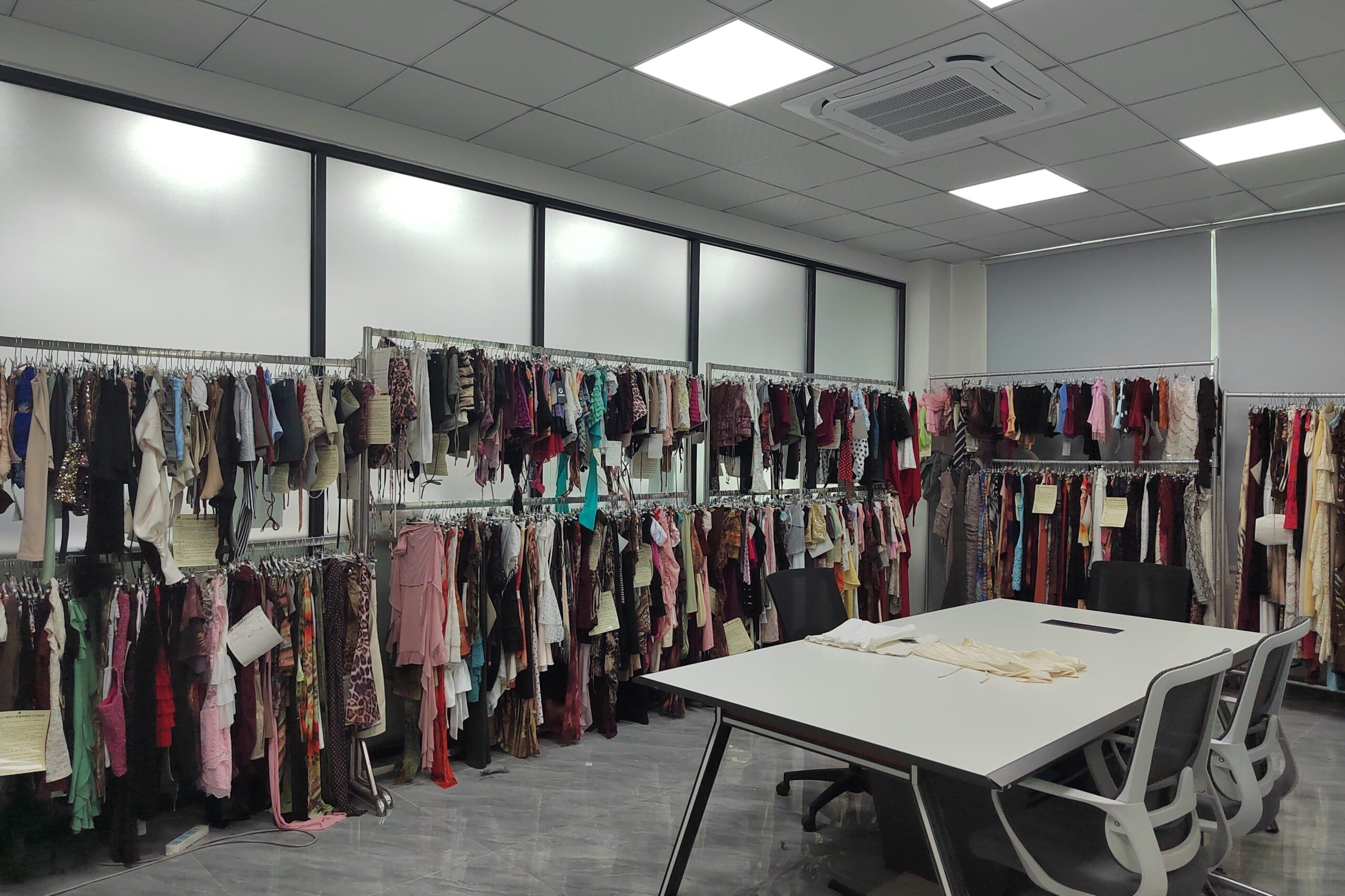
Sample priority was divided into three groups. Wave A contained six hero and photo-critical styles. Wave B contained seven commercial styles using materials with relatively clear sourcing. Wave C contained five styles with higher construction or trim dependency. Each style carried its own sample version, comments, fabric status, and approval stage so “sample approved” never became a vague collection-wide label.
First-sample expectations were planned by complexity. Simple and ordinary dresses followed shorter development windows, while corset, mesh, lace, and embellished pieces received longer buffers. Fit comments focused on product-specific points: bust and neckline on corset pieces, waist and hip on bodycon, strap and armhole exposure on slip styles, slit and hem balance on occasion dresses, and torso or crotch length on jumpsuits.
Revisions were transferred into patterns rather than left as email comments. When fit was approved, each style moved toward PP with final fabric, trims, measurements, construction method, labels, and packing requirements. The 31 style-color SKUs were not released as one bulk package until relevant PP standards were locked.
A Golden-sample reference and supporting records were retained for approved styles. The purpose was to give production, QC, finishing, and later replenishment one defined standard per style while still allowing new fabric batches or colors to be rechecked in future orders.
The sampling system protected the six launch-critical styles without forcing every product into the same rushed timeline.


Production Allocation, QC, and Retail-Ready Packing
Bulk production was divided by product and fabric risk rather than style number. Stretch products moved through units familiar with recovery and measurement control. Satin and occasion products received routes suited to delicate surfaces, lining, zippers, drape, and pressing. Structured and decorative styles were kept with teams experienced in internal support, lace placement, mesh handling, or embellishment. Production waves were aligned with material readiness and launch priority.
QC combined common project rules with product-specific inspection. Common control covered approved materials, correct pattern version, measurements, sewing, appearance, pressing, labels, packing, and carton information. Satin styles added snag and shade review. Mesh added transparency and edge stability. Bodycon added recovery and side-seam balance. Structured pieces added cup, boning, and closure checks. Decorative styles added attachment and skin-contact review.
Retail-ready packing was managed across 31 style-color SKUs and XS-XL size breakdowns. Each garment required the correct label, size identification, barcode or SKU reference, folding, polybag, and packing instruction. Cartons were checked against color-size breakdown, carton mark, quantity, and packing-list data before shipment preparation.
The program used three delivery waves so early launch styles could move first while later groups followed the confirmed calendar. Each wave kept separate carton and document control, reducing the chance that urgency would create warehouse identification errors.
The result was a collection treated as one commercial program but executed through several technical production groups.

Repeat Readiness and Next-Cycle Value
The strongest value appeared after the initial bulk order because approved product data did not disappear once the cartons left the factory. Pattern versions, size charts, fabric references, trim details, construction notes, packing rules, QC observations, and Golden-sample standards were retained for future review.
When a successful style is reordered, the old standard becomes the starting point rather than a substitute for verification. A repeat order still checks fabric availability, dye lot, stretch, weight, trims, labels, barcode data, quantity, size ratio, packing, and delivery timing. New colors may require lab-dip or shade confirmation. A changed fabric may require fit review. Updated packaging may introduce a new supplier MOQ. Those differences are recorded rather than assumed to be harmless.
The same records can also support collection extension. A proven bodycon fit may become a new neckline or length. A successful occasion dress may expand into additional colors. A stable satin or jersey family may support related silhouettes. Jinfeng can use retained manufacturing knowledge to shorten the rediscovery phase while keeping new design, material, and timing decisions under review.
For retail teams running recurring buying cycles, the operational gain is continuity. Development effort from one collection becomes controlled knowledge for replenishment and future seasons instead of being recreated style by style every time.
Collection Buying Cycle Frequently Asked Questions
Yes. Multi-style programs can be grouped by fabric family, construction complexity, sample priority, fit risk, trim dependency, and production route. Each style still needs its own development status, approvals, quantity plan, and production standard. A line sheet helps Jinfeng review the range before confirming sampling and bulk planning.
A useful starting package includes a line sheet, tech packs or references, target categories, quantity per style and color, fabric direction, color plan, size range, priority styles, target delivery window, private-label requirements, and warehouse or forwarder rules where known. Incomplete files can still be reviewed, but quotation and timing become more accurate as specifications are confirmed.
Indicative timing depends on complexity and material readiness. Simple styles may take around 7-10 days, ordinary dresses around 10-15 days, medium-complexity dresses, sets, or jumpsuits around 12-18 days, and corset, strapless, lace, mesh, or sequin styles around 15-25 days. Custom materials or special trims may extend development to around 20-35 days or supplier lead time.
Priority can be agreed around launch date, hero SKU, photo requirement, fabric readiness, trim lead time, construction risk, expected bulk volume, and production dependency. Jinfeng recommends identifying key styles on the line sheet so pattern, sample, revision, and PP resources protect the commercial critical path instead of treating every style as equally urgent.
No. Jinfeng’s basic MOQ starts from 200 pcs per style/color, subject to fabric availability, color development, trims, construction complexity, packaging, and production schedule. Several styles totaling 200 pieces do not meet the standard MOQ. Custom-dyed, custom-printed, certified, lace, sequin, imported, or specially developed materials may require higher supplier minimums.
Yes. The confirmed style-color quantity can be distributed across multiple sizes according to the approved size chart and size ratio. XS-XL is common for many womenswear programs, while extended, petite, tall, or proportion-sensitive ranges may require additional grading and fit review. MOQ remains based on style and color rather than each individual size.
Bulk release should follow PP approval with final fabric, trims, color, size chart, pattern, construction, BOM, labels, packing requirement, QC standard, quantity, delivery window, and shipment plan confirmed. A Golden sample or approved physical reference can then support production and inspection. Late design changes after PP approval need controlled review because they may affect cost and timing.
Yes. Jinfeng supports main labels, size labels, care labels, hangtags, barcode stickers, SKU labels, polybags, size and color stickers, carton marks, packing lists, and warehouse labels according to supplied requirements. Barcode data and warehouse rules need client approval, and custom packing materials may carry separate supplier MOQ or lead time.
Yes, by project. Multi-batch delivery can be planned by launch priority, style group, color group, size ratio, market, warehouse, or freight method. Urgent quantities may move by air while remaining bulk moves by sea when the program supports a split route. Each shipment needs clear carton data, packing lists, labels, and forwarder instructions.
Jinfeng can retain pattern files, size charts, fabric references, trim records, construction notes, packing requirements, QC notes, and Golden-sample references. Repeat orders can begin from those records, but new fabric batches, colors, trims, labels, quantities, or delivery requirements are reviewed again before production. Retained data improves continuity without replacing verification.
Send Your Collection Brief for Manufacturing Review
If your retail organization is planning a multi-style womenswear range, send the working line sheet and the information already confirmed. Jinfeng Apparel can review product structure, fabric direction, fit risk, sample priority, MOQ, production allocation, QC, retail-ready packing, and delivery planning before formal sampling or bulk scheduling begins. Clear inputs help the team identify which styles can move quickly, which require longer material or fit development, and which decisions need to be locked before the range enters PP and bulk production. Established programs often involve 10-30 styles, several fabric families, multiple colors and sizes, private-label requirements, and more than one shipment window, so early project structure matters. A complete brief also helps separate hero styles from supporting styles, material-ready products from sourcing-dependent products, and straightforward silhouettes from construction-heavy pieces. Jinfeng can then return a more useful development route instead of a generic quotation based only on a reference image. The first review should clarify what can be sampled, what needs further specification, where supplier minimums may influence the plan, and which approvals could affect the proposed delivery window.
Please include where available:
– Line sheet, tech pack, sketch, reference image, or original sample photos.
– Style count and priority or hero styles.
– Quantity per style and color; basic MOQ starts from 200 pcs per style/color.
– Fabric direction, color plan, size range, and fit requirements.
– Target sample, photography, launch, and delivery dates.
– Labels, hangtags, barcode, SKU, polybag, carton, and warehouse requirements.
– Forwarder contact, trade term, or destination information when known.