 Skip to content
Clubwear Production
Develop Fit-Driven Clubwear From Design Files to Repeatable Bulk Production
Jinfeng Apparel develops and manufactures custom clubwear for established fashion brands, sourcing teams and private-label womenswear programs. Clubwear needs more than a striking silhouette: stretch behavior, bust-waist-hip balance, neckline security, cut-out placement, lining, embellishment and sewing tension must work together before a style is ready for bulk production. Our development process connects fabric sourcing, pattern making, sampling, fit correction, PP approval, bulk control, QC and branded packing.
- 7+ senior pattern makers and 20+ sample machinists support fit-intensive clubwear development.
- Complex corset, mesh, lace and sequin samples typically require 15-25 days, depending on materials and construction.
- 18+ sewing lines and 6+ flexible production lines support regular and multi-style womenswear programs.
- 15+ QC inspectors support incoming, cutting, sewing, in-line, garment and packing inspection.
Clubwear Production Backed by Real Manufacturing Capacity
Since 2008
6 Owned Factories
10+ Production Partners
100,000+ Monthly Capacity
2 Sample Rooms
15+ QC Inspectors
Built for Established Clubwear and Fashion Programs
Global Fashion Brands
Established Clubwear Labels
Premium Ecommerce Brands
Occasion and Partywear Labels
Sourcing and Buying Teams
Designer-Led Labels
Clubwear Production Risks That Need Early Control
Stretch Changes the Fit
Mesh Can Lose Stability
Cut-Out Placement Can Drift
Strapless Styles Need Support
Sequins Affect Construction
Bulk Can Drift From Samples
Clubwear Styles We Develop for Fashion Collections

Bodycon Mini Dresses

Ruched Club Dresses

Cut-Out Dresses

Mesh Panel Dresses

Corset Club Dresses

Strapless Dresses

Halter Club Dresses

Backless Dresses

Satin Club Dresses

Sequin Party Dresses
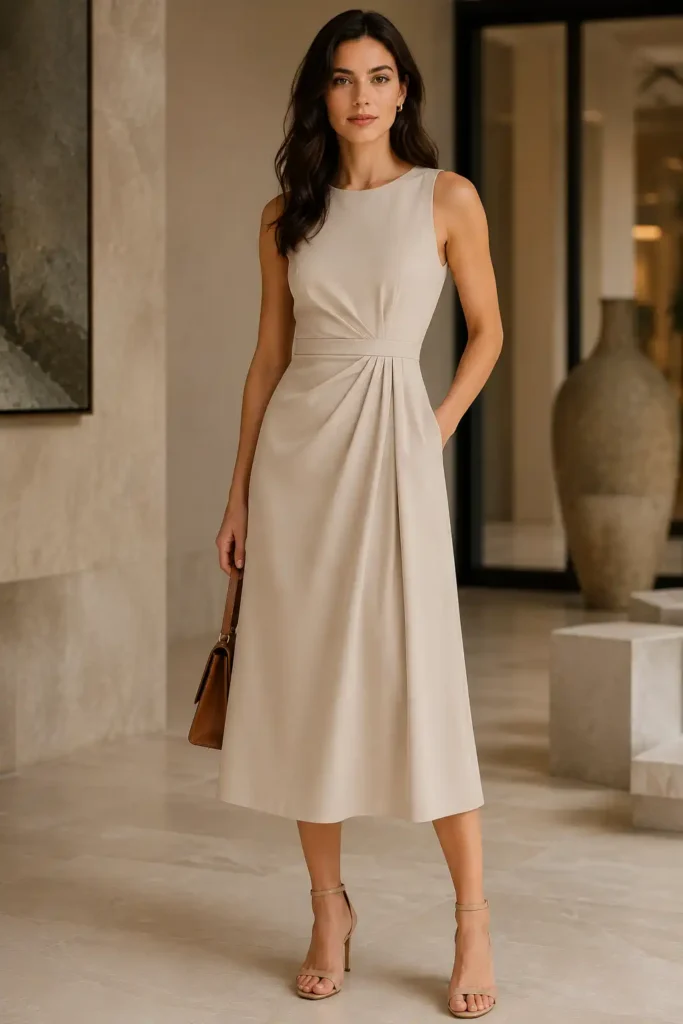
Fitted Midi Dresses

Matching Clubwear Sets
Fabrics Engineered Around Clubwear Fit and Appearance
Fabric selection changes the fit, support, transparency, drape, sewing method and cost of a clubwear style. Development therefore starts with the intended silhouette and wear behavior, then evaluates material options rather than selecting fabric only by surface appearance.

Stretch Jersey and Ponte
Stretch jersey is widely used for bodycon and ruched clubwear because it follows the body and supports movement. The important variables are not limited to composition. Weight, stretch percentage, stretch direction, recovery and surface friction change how tightly the garment sits and how stable seams remain after wear. A soft high-stretch jersey may create a different bust and waist profile from a firmer ponte even when flat measurements are identical.
Ponte can provide more structure for fitted dresses and panelled silhouettes. Its heavier body may support smoother shaping, but added thickness affects seam bulk, hem choice and temperature during wear. When switching between jersey and ponte, pattern ease, seam allowances and construction may need adjustment. Bulk approval should confirm the actual fabric and color because darker dyes, finishes or supplier batches can also influence handfeel and recovery.
For development, fabric review should connect directly with intended compression, ruching, cut-outs, neckline tension and grading behavior. A successful sample is not only a visual match; it should also establish the fabric standard used for production.

Mesh and Power Mesh
Mesh is central to sheer panels, cut-outs, sleeves, body contouring and layered clubwear. Lightweight fashion mesh can create a delicate appearance, while power mesh can add support and controlled stretch.
The two should not be treated as interchangeable because their recovery, opacity and tension are different.
Development needs to confirm where transparency is intentional and where lining is required. Skin-tone or contrast linings may change the visual result significantly. Seams and edges should be tested for waviness, rolling and stretch distortion. Necklines and armholes may need stabilization, especially when mesh is joined to heavier fabrics or structured panels.
Color also matters. Black mesh may appear less transparent than white, nude or bright colors at the same weight. For private-label collections with several colorways, visual coverage should be reviewed by color rather than assumed from one sample. Bulk cutting and sewing should keep stretch direction consistent so mirrored panels behave the same way on the body.

Satin and Fluid Wovens
Satin gives clubwear a polished, high-contrast surface suited to slip dresses, corset minis, draped shapes and evening-inspired pieces.
Unlike stretch jersey, satin offers limited forgiveness, so bust, waist, hip and zipper areas require accurate pattern balance. Surface puckering or zipper waves can become highly visible under studio lighting.
Fabric weight and weave affect drape, opacity and seam behavior. A lighter satin may need lining or reinforcement, while a heavier satin may create more structure around cups, waist panels or skirts.
Bias-cut sections also behave differently from straight-grain panels, so pattern placement and hanging behavior should be evaluated during sampling.
Handling and pressing are part of production quality. Shiny surfaces can show marks, creases or snagging, and packaging can influence presentation after transport.
Sample approval should therefore include construction, pressing and packing considerations rather than treating finishing as a last-stage detail.
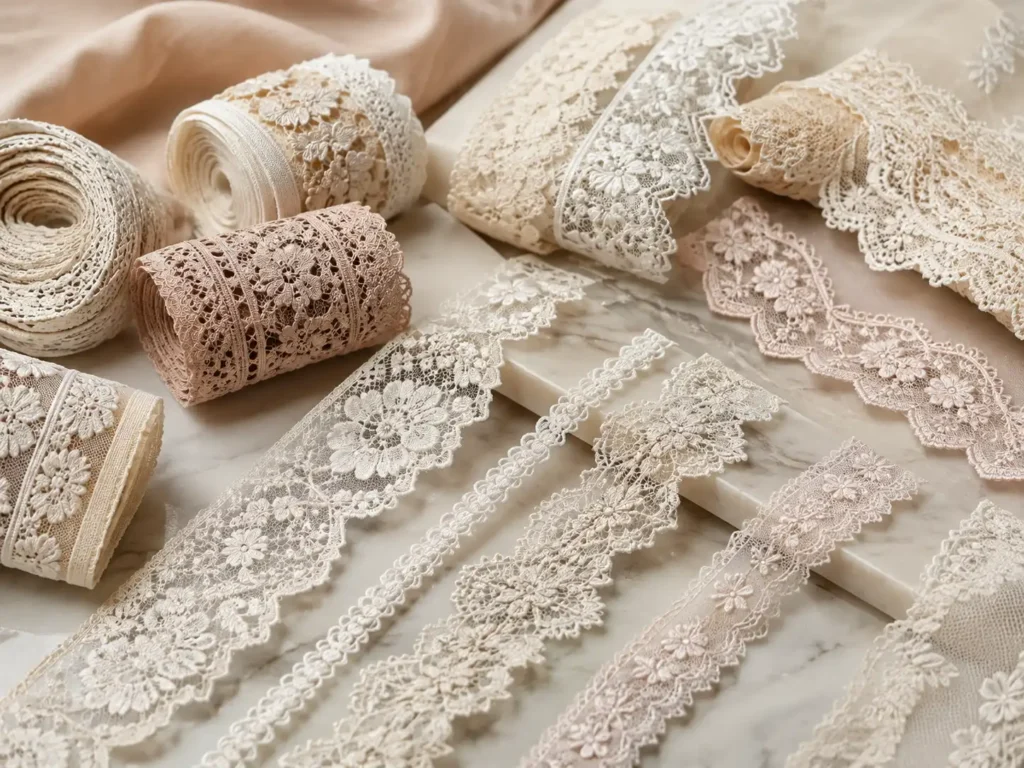
Lace and Layered Transparency
Lace can be used as full-body fabric, contrast panels, sleeves, overlays or trim. Placement becomes important when motifs are visible, especially around necklines, bust seams, center front and symmetrical panels. A design may require lining coverage under selected zones while leaving other areas sheer.
Stretch lace needs evaluation for recovery and edge stability. Non-stretch lace often needs more precise shaping because it cannot adapt to the body in the same way as jersey. When lace is combined with mesh, satin or corset structures, the different materials must be balanced so seams do not pull or ripple.
Production planning also needs to consider motif direction, usable width and material wastage. Decorative edges may affect cutting layout, while delicate areas may require controlled handling during sewing and finishing. Fabric substitution should be reviewed before pattern approval because changes in stretch or motif scale can alter the visual proportion of the entire style.
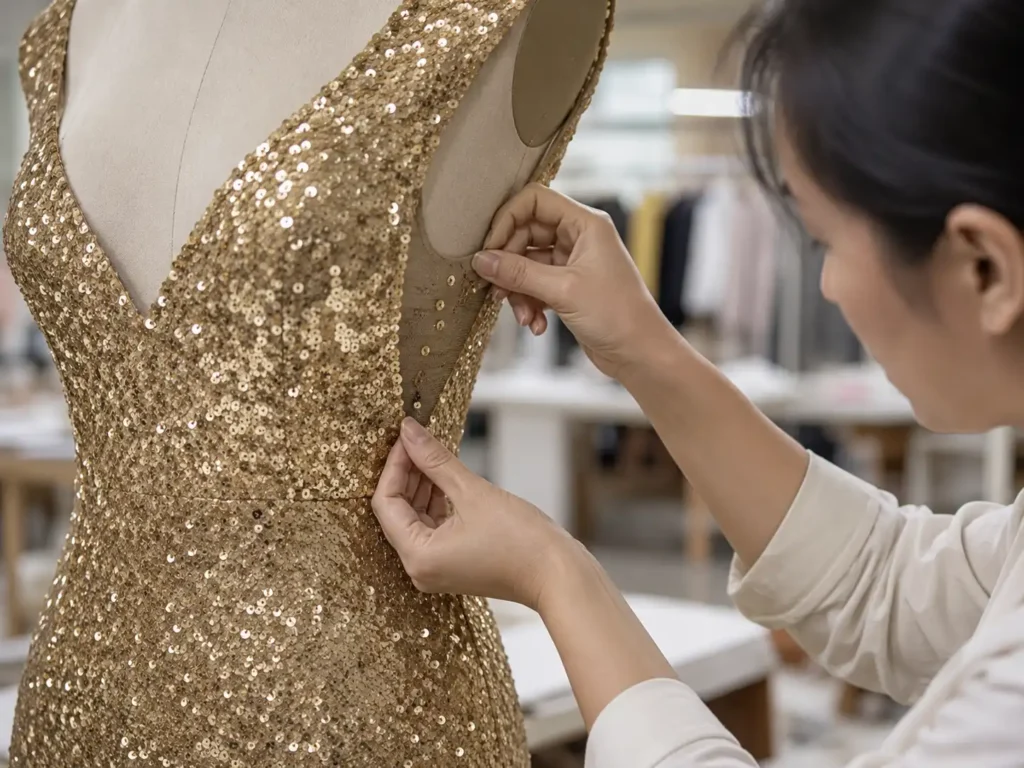
Sequin and Embellished Fabrics
Sequin fabrics are visually powerful but technically demanding. Sequin density, backing structure, motif direction and garment weight influence cutting, seam construction and finishing. Some areas may need sequins cleared from seam allowances or zipper lines to reduce bulk and protect stitching.
Lining is often necessary for comfort and to separate abrasive backing from the skin. On fitted silhouettes, lining should be compatible with the outer fabric so the two layers move together rather than twisting. Necklines, armholes and hems may need different finishing depending on whether embellishment reaches the edge.
Production time and cost are affected by material handling, wastage, seam preparation and repair work. For a collection, sequin styles should be identified early because their sampling and bulk schedule can differ from simpler jersey styles. Approval should cover not only appearance but also attachment stability, comfort, zipper operation and packing protection.
Fit Engineering for Secure and Flattering Clubwear
Clubwear fit is a controlled relationship between body measurements, fabric behavior, pattern shape and movement. A close-fitting garment can look visually strong while still failing in wear if the neckline shifts, cut-outs move, straps dig in or the fabric loses recovery.
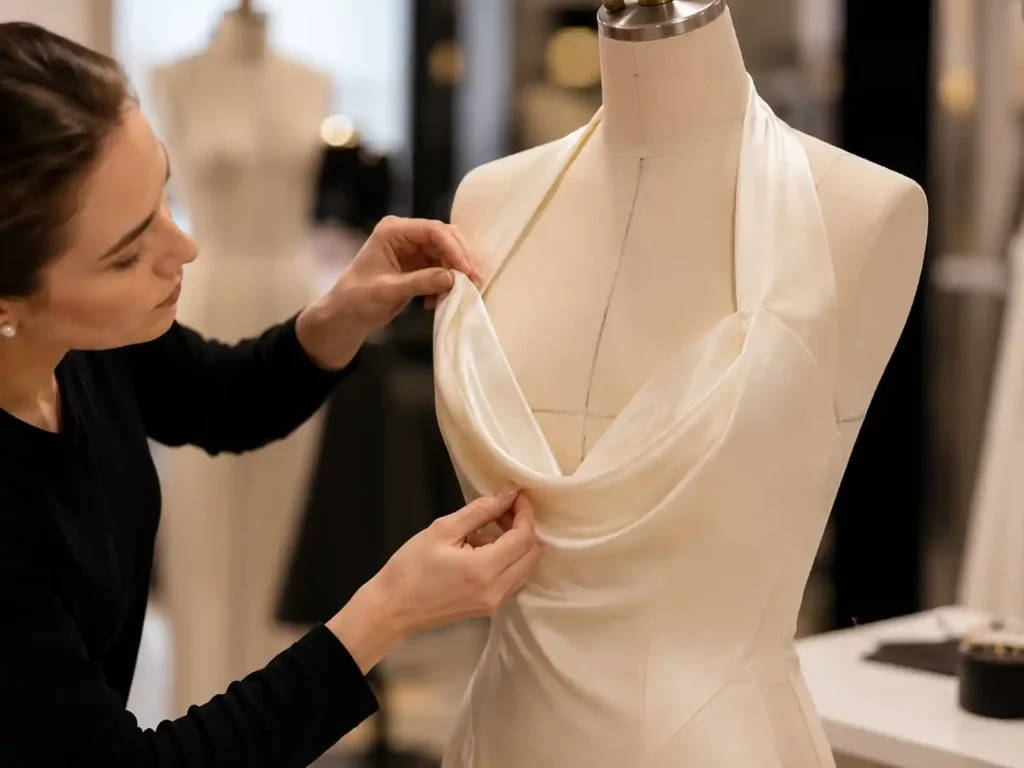
Bust, Neckline and Upper-Body Balance
Bust fit affects almost every fitted clubwear silhouette. Deep V, halter, strapless, corset and cut-out designs each distribute tension differently. Cup position, neckline depth, under-bust seam, side seam and strap length should be checked together because changing one area can move another.
For stretch garments, the pattern may use negative ease, but the amount should reflect actual fabric recovery. Too much reduction can flatten the intended shape or pull side seams forward; too little can create gaping or loss of support. Structured designs may use cups, boning, lining or internal elastic, so the outer pattern and internal structure need to be developed as one system.
Fit samples should be reviewed from front, side and back. Neckline security is especially important for clubwear intended for movement and social settings. A style should maintain the intended line during normal movement without relying on excessive tightness as the only means of support.

Waist, Hip and Body Contouring
Clubwear often depends on a strong waist-to-hip silhouette. Pattern shaping, fabric recovery, panel lines, ruching and seam position all influence the final contour. Bodycon dresses may appear visually simple, yet a small imbalance between waist and hip can create diagonal drag lines, twisting or an uneven hem.
Ruching can help shape the body and soften fit variation, but placement and gathering ratio need control. Corset or panelled dresses may use stronger waist definition, which requires careful transition into stretch skirts or fitted hips. Cut-outs around the waist add another variable because opening size changes when the garment is stretched on the body.
Grading should maintain visual proportion rather than enlarge every area mechanically. Waistline height, cut-out position and side seam balance may need review across the intended size range. Final size specifications should be confirmed in the tech pack and production files before PP approval.

Stretch Direction, Recovery and Grading
Two fabrics with similar composition can behave differently in production. Four-way stretch, two-way stretch, recovery speed, weight and finishing affect garment measurements under tension. Pattern pieces therefore need clear orientation so stretch direction remains consistent during cutting.
Fit correction should be performed using the intended production fabric whenever possible. If fabric changes after a fit sample, the pattern may need another review. Changes in weight or stretch can affect neckline stability, sleeve opening, bust compression, hip fit and finished length. For mesh and power mesh, opacity and support also change with stretch.
Grading needs to account for how each construction zone behaves. A corset bodice, mesh panel and stretch skirt may require different rules within one garment. Production files should capture approved measurements, not rely on verbal comments, so cutting and QC teams work against the same standard.

Movement, Security and Wear Behavior
Clubwear is often photographed, worn while standing, sitting, walking and dancing, and expected to keep its intended silhouette through movement. Fit evaluation therefore should not stop at static measurements. Strap stability, slit opening, hem movement, backless tension and cut-out position should be checked under normal wear conditions.
Short mini dresses need careful finished-length control because a small difference can change both appearance and wearability. Slits require enough movement without opening beyond the intended point. Halter and backless designs should be reviewed for tension transfer, while strapless styles need to stay secure without excessive pressure.
The goal is not to make every style loose or conservative. The goal is to preserve the design while engineering predictable fit. Approved corrections should flow into patterns, size charts, sewing instructions and QC measurement points before bulk production begins.
Construction Details Behind High-Impact Clubwear Designs
Strong clubwear often relies on hidden construction: cups, boning, lining, reinforcement, controlled gathering and clean joining between different materials. Workmanship decisions should be resolved during development because many of them affect pattern, cost, sewing time and bulk consistency.

Corset and Strapless Structure
Corset-inspired clubwear may use bra cups, boning channels, shaped panels, under-bust seams, lining and back closures. Each element changes the way tension travels through the garment. Boning should support the intended silhouette without creating hard ridges or twisting. Cup position should match the neckline and grading plan rather than being added as a decorative afterthought.
Strapless styles may use internal elastic, grip construction, lining or boning to improve stability. The back neckline and side seams also contribute to support, so simply tightening the upper edge is rarely enough. Sample review should consider both appearance and comfort because excessive tension can distort the bust or pull the garment upward.
Before PP approval, construction should be documented clearly: cup specification, boning position, channel width, lining extent, closure type and critical measurements. Bulk sewing teams then have a repeatable reference instead of relying on one physical sample alone.

Mesh, Cut-Out and Sheer Construction
Mesh and cut-outs expose seam quality more than opaque fabrics. Joining stretch mesh to jersey, satin or structured panels requires balanced tension so one material does not ripple against another. Reinforcement may be needed at cut-out corners, strap joins or narrow bridges where stress is concentrated.
Edge finishing should suit the design and fabric. Binding, elastic, turned edges or lining can create different visual thickness and stretch. A clean-looking cut-out may require internal support that is invisible from the outside. Sheer areas also need planned lining coverage so the final garment matches the intended transparency rather than leaving coverage decisions to the sewing stage.
For graded sizes, opening position and width should be checked against body landmarks. Production patterns should define seam allowance and reinforcement consistently. QC can then inspect shape symmetry, edge stability and placement using approved measurements and Golden sample references.
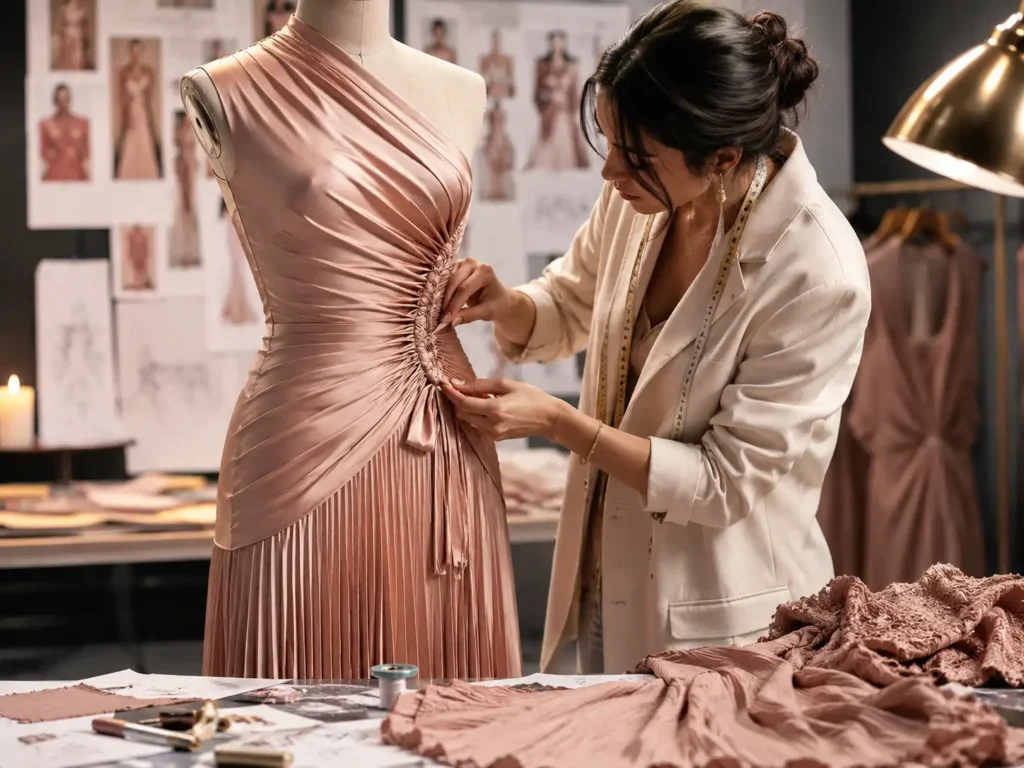
Ruching, Double Layers and Shape Control
Ruching can be created with elastic, fixed gathering, channels or adjustable drawcords. Each method produces a different appearance and different production tolerance. Gathering ratios need to remain consistent so one side does not look fuller than the other and size grading does not change the visual effect.
Double-layer construction is common in fitted clubwear because it can improve opacity, smoothness and recovery. The inner layer should be compatible with the outer fabric in stretch and direction. If two layers respond differently, the garment may twist or create unwanted tension. Seam bulk also increases, particularly around hems, zippers and curved areas.
Sampling should verify how layers behave after pressing and wear. Production instructions should specify layer orientation, joining points and finishing. Such details are especially important in light colors, where uneven layering or seam show-through becomes more visible.

Sequins, Zippers and Finishing Control
Sequin and embellished garments often require extra preparation around seam lines. Dense embellishment can interfere with needles, zipper insertion and clean edge finishing. Selected areas may need sequins removed or managed before sewing, while loose threads and damaged pieces should be checked during finishing.
Zippers on fitted dresses need enough support to avoid waving or pulling. Satin, mesh and sequin fabrics create different zipper challenges, so interfacing, lining and seam construction may need adjustment. Backless or cut-out styles also place visual attention on closure areas, making alignment important.
Finishing includes more than trimming threads. Pressing temperature, surface protection, hem appearance and packing method influence how the garment arrives. Clubwear with shiny satin or embellishment should be handled to reduce marks, crushing and unnecessary creasing before shipment.
Sampling Clubwear Into a Production-Ready Standard
Sampling is where design intent is translated into measurable production decisions. Jinfeng Apparel uses separate sample stages because a first visual sample, fit sample, photo sample and PP sample serve different purposes and should not be treated as the same approval.

Project Input and Feasibility Review
Development can start from a tech pack, reference photo, original sample, sketch, size chart, fabric swatch, trim card, label artwork, packing requirements, target price and launch date. The first step is not blind execution. Style structure, fabric direction, trim requirements, construction difficulty and likely production risks are reviewed before pattern work begins.
For clubwear, feasibility review pays particular attention to stretch direction, bust support, cut-outs, sheer zones, lining, boning, cups, ruching, sequin handling and closure methods. When a requested fabric is unlikely to deliver the desired fit or appearance, alternative material directions can be discussed before a sample is made.
Early review also helps clarify whether special fabrics, trims, dyeing, printing or packaging have separate supplier minimums. Clear boundaries at the start reduce unnecessary sample rounds and allow development timing to be planned around real material availability.
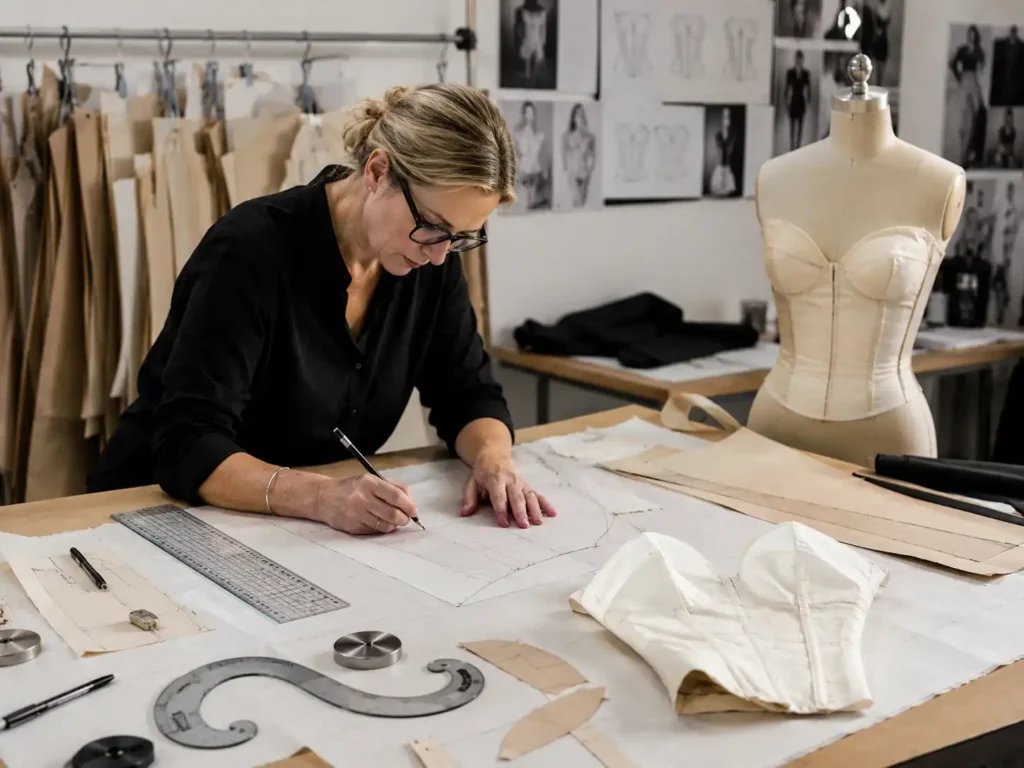
Pattern Development and First Sample
Pattern development translates the design into garment structure. The first sample is used to evaluate silhouette, basic measurements, construction feasibility, fabric behavior and key design details. It is not automatically treated as the final bulk standard.
For fitted clubwear, pattern makers examine bust, waist, hip, neckline, armhole, strap, dress length, slit and other relevant points. Corset and strapless styles may require internal structure to be tested; mesh and cut-out styles need stability and coverage review; sequin styles may need seam and lining solutions confirmed.
Internal fit and measurement checks are completed before feedback is consolidated. Photo or video review can support remote communication, but physical sample approval and updated specifications remain important when moving toward PP production. The objective is to turn design comments into controlled pattern and construction decisions.
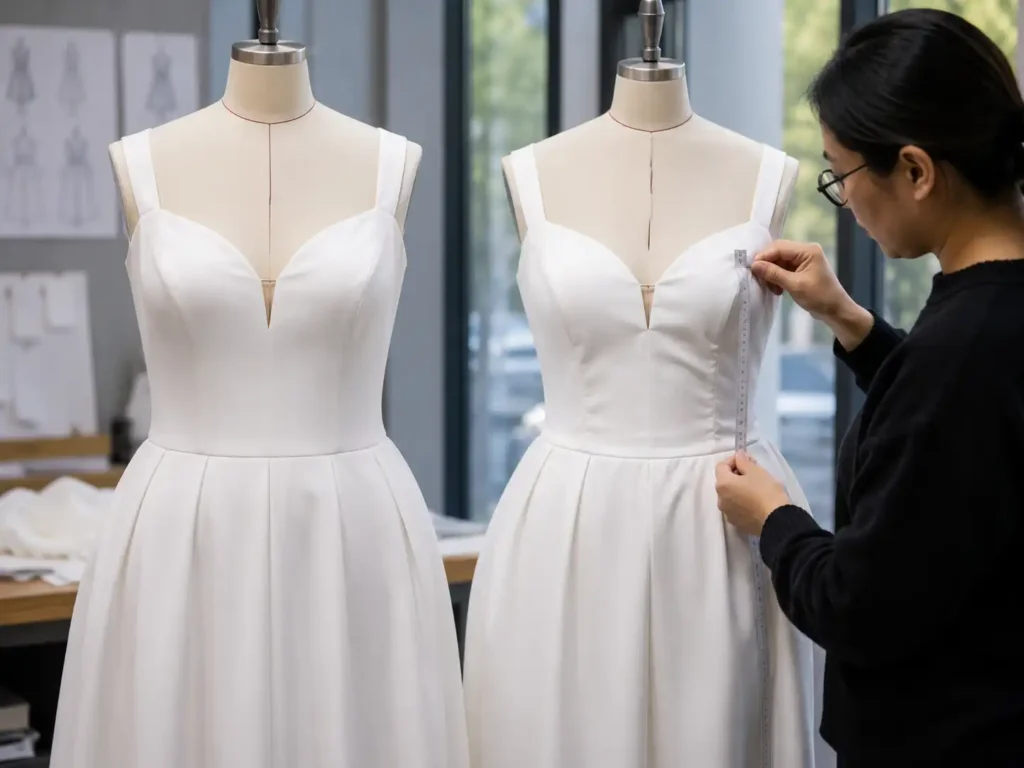
Fit Sample and Revision Management
A fit sample focuses on how the garment sits on the body and whether proportions remain faithful to the design. Comments should identify the exact area, required change and reason. Adjustments may involve bust, waist, hip, length, straps, neckline, armhole, slit, fabric, trims or construction.
Revisions are not kept only in chat messages. Approved changes should update the pattern, size chart, BOM, sewing instructions and QC checklist where relevant. When fabric changes, composition, weight, stretch, transparency, MOQ, timing and pattern impact should be reviewed again. Construction changes can also affect sewing time, cost and the need for another sample.
Such discipline is especially important for clubwear because several small fit changes can interact. Shortening a strap can lift a neckline; changing fabric recovery can alter cut-out size; moving a waist seam can change hip balance. Revisions need to be managed as connected production changes.

Sample Types and Development Timing
Jinfeng Apparel separates First Sample, Fit Sample, Revised Sample, Photo Sample, Salesman Sample, PP Sample and Golden Sample. Each sample has a defined role. A photo sample may support campaign photography, while the PP sample confirms final production details. The Golden sample becomes the highest-priority physical reference for production, QC and repeat orders.
Typical first-sample timing is 7-10 days for simple styles, 10-15 days for ordinary dresses, 12-18 days for medium-complex dresses, sets or jumpsuits, and 15-25 days for complex corset, strapless, lace, mesh or sequin styles. Custom fabrics and special trims can extend development to 20-35 days or follow the supplier cycle. Revised samples commonly require 7-15 days depending on the changes.
Sample fees are charged separately. For qualifying bulk orders at the standard MOQ, sample fees may be credited by project rather than treated as an unconditional cash refund.
From Revision to PP and Golden Sample Approval
Revised Sample
PP Sample
Golden Sample
MOQ and Cost Planning for Clubwear Production
Clubwear pricing should reflect the real construction of each style. Jinfeng Apparel uses a standard MOQ of 200 pieces per style and color, while special fabrics, trims, printing, dyeing and packaging can carry separate supplier requirements.
| Cost Driver | Clubwear Example | Main Cost Effect |
|---|---|---|
| Fabric | Jersey, mesh, satin, lace, sequin | Material price, usable width, wastage, stretch and handling |
| Lining | Partial lining, full lining, double layer | Material consumption, sewing time, opacity and comfort |
| Structure | Basic bodycon vs.?corset or strapless | Pattern work, cups, boning, reinforcement and labor |
| Construction | Ruching, cut-outs, paneling, channels | Sewing operations, alignment, tolerance and inspection |
| Trims | Cups, boning, zippers, hooks, hardware | Sourcing, supplier MOQ, attachment and testing needs |
| Embellishment | Sequins, decorative mesh, lace placement | Wastage, handling, seam preparation and finishing |
| QC | Fit-sensitive or embellished styles | Measurement points, in-line checks and final inspection effort |
| Packing | Ecommerce or retail-ready packing | Labels, barcodes, SKU control, polybags and carton preparation |
Multi-Style Clubwear Collection Development at Brand Scale
Established fashion programs rarely arrive as one isolated SKU. Clubwear drops can contain 10-30 styles across different fabrics, colors, construction levels and launch priorities. Jinfeng Apparel can organize development so the collection moves as a coordinated program instead of treating every style as an unrelated order.
Line Sheet and Style Grouping
A line sheet or development list gives the project team visibility across the entire range.
Styles can be grouped by silhouette, fabric family and construction difficulty: jersey bodycon, mesh cut-out, satin, corset, sequin, matching sets and other categories. Grouping helps identify shared materials, repeated trims and similar fit blocks that may improve development efficiency without forcing different designs into one pattern.
The review also separates styles that need early technical attention. A sequin corset mini or complex mesh cut-out dress may need more time than a straightforward ruched jersey style. Prioritizing difficult styles first reduces the risk of discovering material or construction problems too close to the planned launch window.
Sample Priority and Launch Coordination
Not every style needs to move through sampling at the same speed. A brand may have hero campaign pieces, core volume styles, supporting colorways and later-release SKUs. Sample priority can be aligned with photography, showroom, sales or launch timing so critical styles reach approval earlier.
Photo samples, salesman samples and PP samples should be distinguished. A photo-ready garment may be approved for visual presentation but still need production details locked before bulk. Clear sample purpose prevents confusion when several teams are working with different sample sets at the same time.
Project communication should record which styles are waiting for fabric, which need fit correction, which are ready for PP and which have moved into bulk. Such visibility becomes more important as the collection grows beyond a handful of styles.
Volume Planning Across 20,000-80,000 Pieces
Current brand programs can involve 10-30 styles with total order quantities commonly ranging from roughly 20,000 to 80,000 pieces per program. Production allocation should therefore consider more than total volume. Style complexity, color count, fabric readiness, size ratio, sewing route and private-label packing requirements determine how the project is divided across available lines and production partners.
Regular monthly capacity exceeds 100,000 pieces across the production network, but actual allocation is confirmed by project. Complex clubwear and simple fitted styles may require different sewing resources and production pacing. The goal is to protect approved fit and workmanship while keeping the collection moving through a realistic bulk plan.
For large programs, PP approval and material readiness become key gates. Production should not start simply because part of the order is ready while critical specifications remain open.

Bulk Production Controlled From PP Approval to Shipment
PP Approval
Material Purchasing and Inspection
Fabric Relaxing and Cutting
Cut-Panel Checks
Sewing and In-Line Inspection
Pressing and Garment Finishing
Packing and Final Inspection
Delivery Window Control
There is no universal delivery-time promise for every clubwear program. Bulk timing is confirmed after PP approval, material readiness, order mix, style complexity and packing requirements are known. Express, air and sea shipment options can then be coordinated according to the agreed delivery plan.
Clubwear-Specific Quality Control by Product Risk
Quality control is built around the actual failure points of each style. A bodycon jersey dress, mesh cut-out mini and sequin corset should not be inspected with one generic checklist.
| Clubwear Risk | Main QC Focus |
|---|---|
| Bodycon fit | Bust, waist, hip, side seam balance and finished length |
| Stretch fabric | Recovery, distortion, stretch direction and seam waviness |
| Mesh panels | Transparency, seam stability, edge shape and lining coverage |
| Cut-outs | Position, symmetry, reinforcement and graded shape |
| Strapless styles | Neckline stability, upper-body fit and internal support |
| Corset construction | Cup position, boning, panel balance and closure alignment |
| Ruching | Gathering ratio, left-right balance and placement consistency |
| Sequin styles | Attachment, seam areas, zipper clearance, lining and surface damage |
| Satin styles | Puckering, zipper wave, pressing marks and surface handling |
| Private label | Label, barcode, SKU, polybag and carton-mark accuracy |
Private Label and Packing for Clubwear Collections

Main Labels

Size Labels

Care Labels

Hangtags
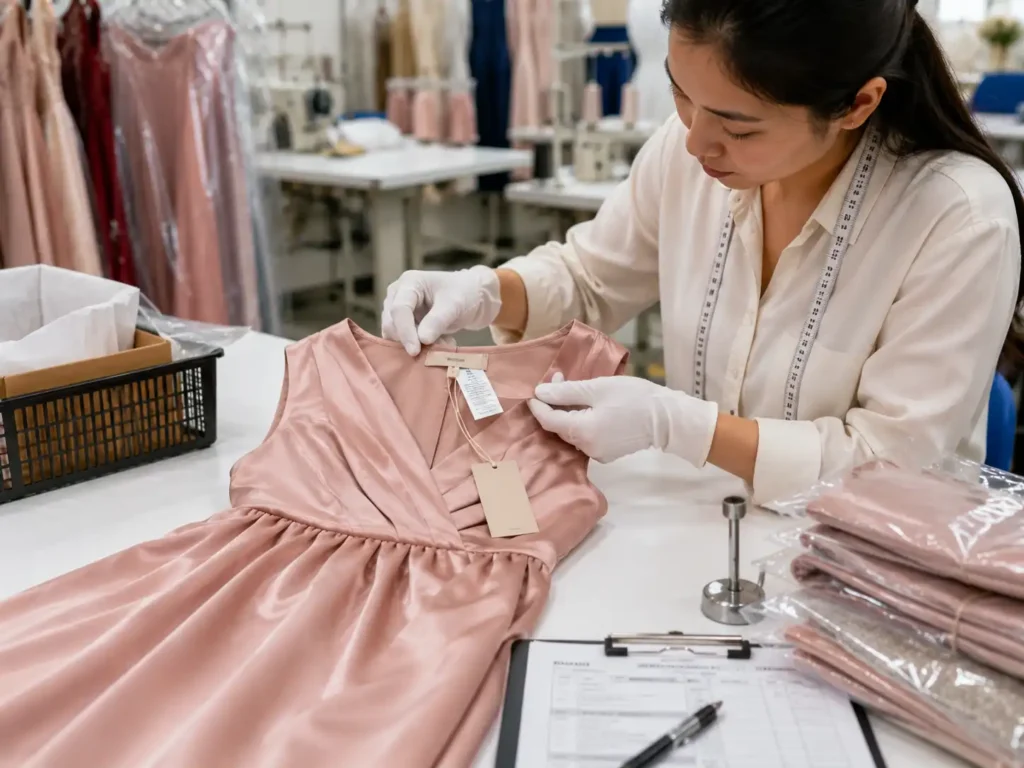
Barcode and SKU Labels
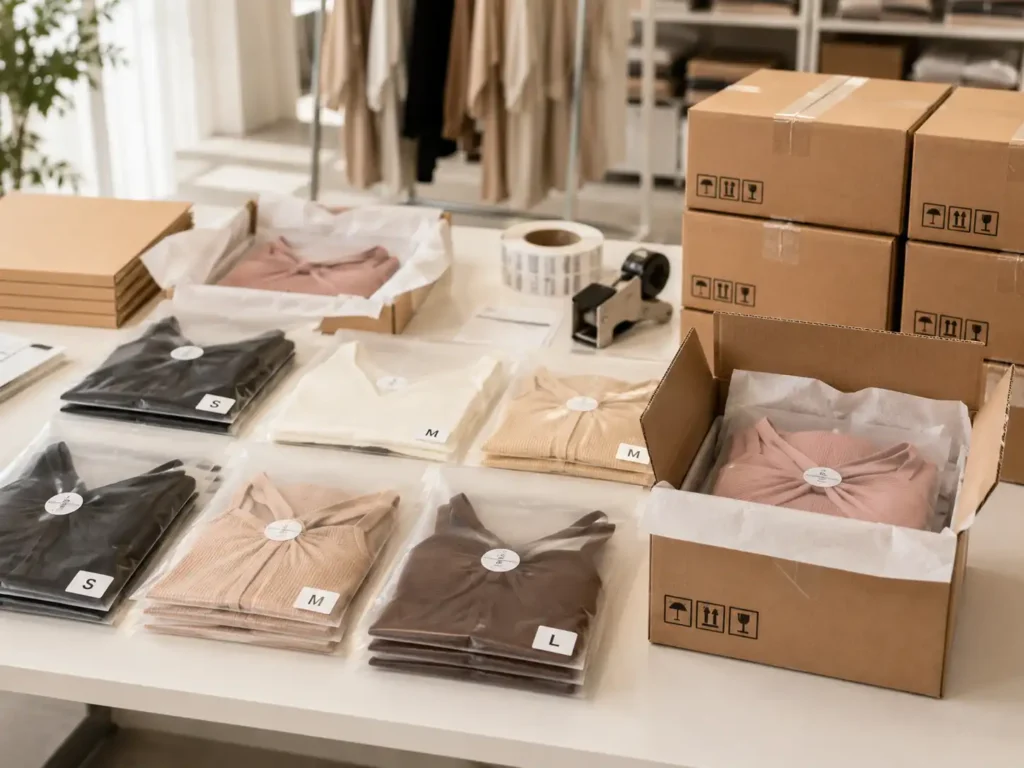
Polybags
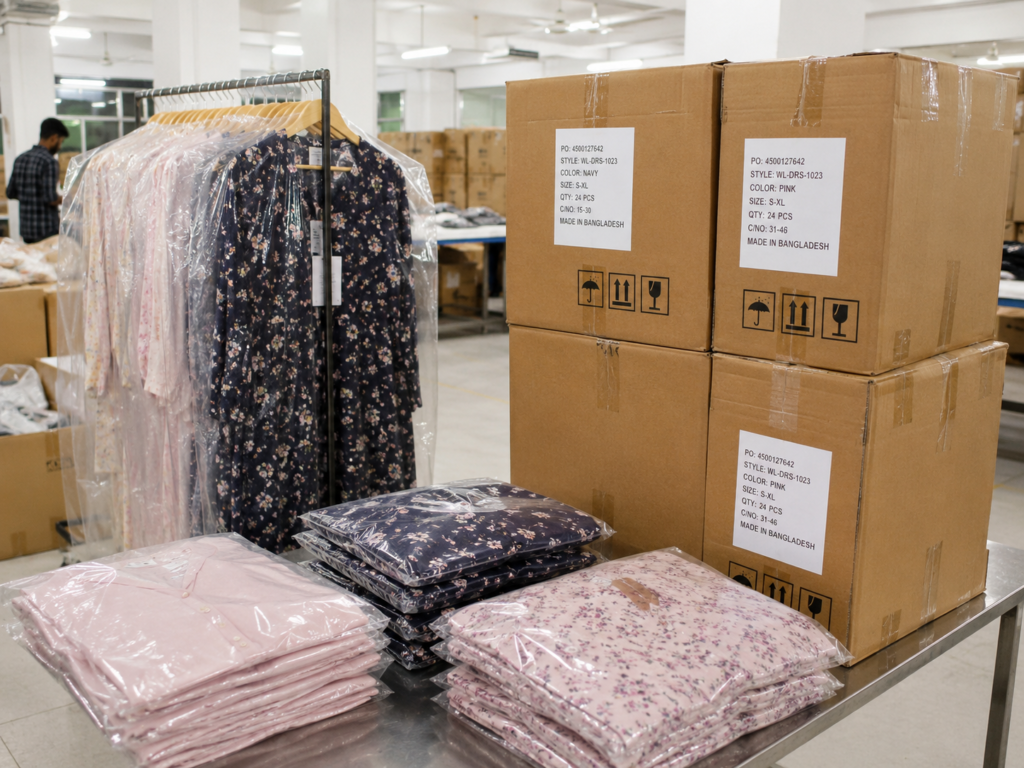
Carton Marks
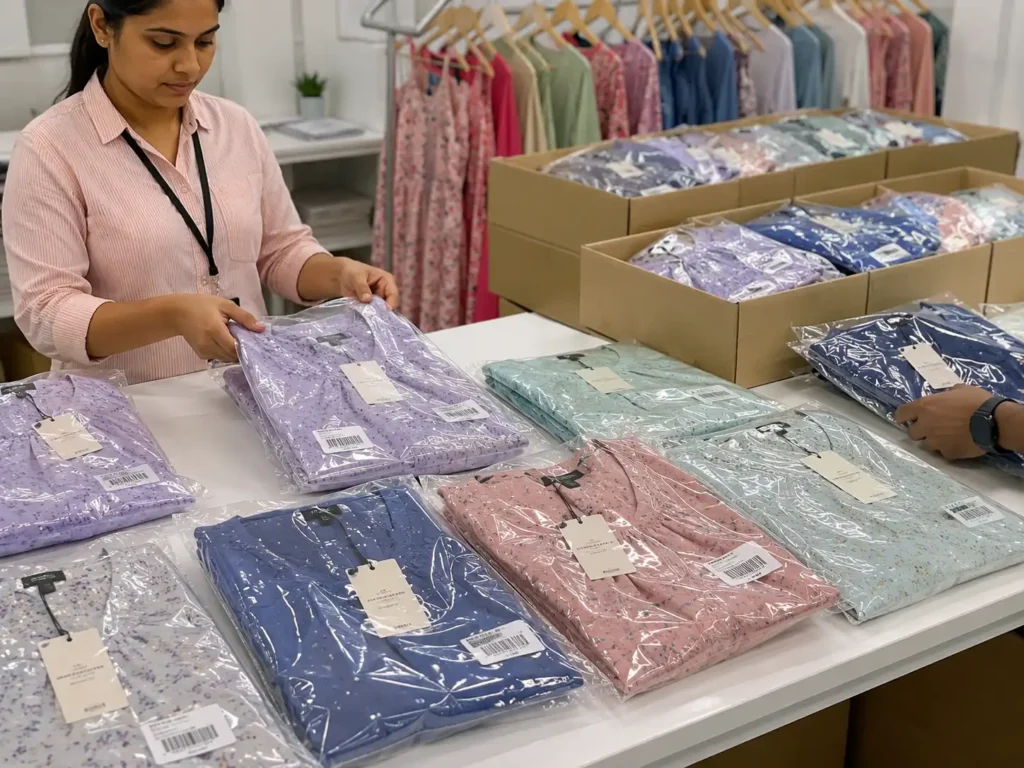
Retail and Ecommerce Packing
Retail-ready and ecommerce-ready packing can be planned by project. Labels, barcodes, folding, polybags and carton configuration should be confirmed before bulk packing rather than added after production is complete.
Brand Protection, Compliance Support and Export Delivery
NDA and Design Protection
Project-Based Compliance Support
Export and Logistics Coordination
Clubwear Programs With Real Production Scale
The cases below reflect the scale and production structure common in current brand cooperation. Brand names and unreleased design details remain confidential; style count, volume and manufacturing challenges are presented in anonymized form.

US Going-Out Clubwear Program - 18 Styles, 46,000 Pieces
A US fashion program included 18 clubwear styles across stretch jersey, mesh and satin, with a combined order volume of approximately 46,000 pieces. The collection mixed ruched bodycon minis, mesh-panel dresses, cut-out styles and fitted satin pieces. Development pressure came from several directions at once: photo timing, multiple fit-sensitive silhouettes, repeated black and red colorways, and different fabric behaviors within the same launch.
Jinfeng grouped the line by fabric and construction rather than sampling all styles in random sequence. Stretch jersey styles were reviewed around bust-waist-hip balance, recovery and finished length. Mesh designs were checked for transparency, seam waviness and cut-out stability. Satin pieces received additional attention around zipper areas, puckering and pressing.
Hero styles moved through fit correction earlier so photography samples could be prepared without confusing photo approval with PP approval. Comments were converted into updated patterns, measurement charts and sewing instructions before bulk planning. Production was then allocated by construction family, with in-line QC points set according to the dominant risks of each group.
The program demonstrates how a multi-style clubwear order benefits from coordinated development rather than treating every design as an isolated quotation. Approved patterns, BOMs, packing instructions and Golden samples were retained as references for later production planning.

EU Bodycon Fit Program - 14 Styles, 28,000 Pieces
A European fitted-womenswear program covered 14 bodycon and going-out styles with a total order quantity of roughly 28,000 pieces.
The collection relied on stretch jersey, ponte and mesh, with several silhouettes sharing similar visual proportions but different stretch behavior. The main challenge was maintaining consistent bust, waist and hip balance when fabrics changed between styles.
Development started by separating fabric families and reviewing recovery before finalizing fit. Using one flat measurement standard across every fabric would have produced different compression on the body, so pattern corrections were made against the intended production material.
Several styles also used side ruching and waist cut-outs, requiring review of gathering distribution, opening position and finished length after stretch.
Revised samples recorded dimensional and construction changes before PP approval.
For graded production, attention was placed on preserving visual proportion rather than mechanically enlarging cut-outs and neckline shapes. QC measurement points focused on bust, waist, hip, dress length and seam balance, with stretch direction controlled during cutting.
The program shows the importance of fit engineering in clubwear production.
A visually similar family of dresses can still require different pattern and QC logic when material recovery changes.

US Holiday Sequin Drop - 22 Styles, 63,000 Pieces
A US holiday program contained 22 party and clubwear styles with a combined volume of approximately 63,000 pieces.
Sequin minis, embellished tops, fitted dresses and coordinated pieces created strong visual impact but also introduced material weight, seam bulk, surface abrasion and packing concerns.
Development identified sequin density, backing structure, lining coverage, zipper zones and edge finishing before PP approval.
Styles with denser embellishment were scheduled separately from simpler stretch pieces because sewing preparation and finishing required more time.
Sample review also considered comfort where the backing contacted the skin and whether sequins near closures interfered with smooth zipper operation.
Bulk instructions defined the treatment of seam areas, lining, zipper clearance and sensitive surfaces. In-line checks focused on attachment, alignment and construction around high-stress areas, while final finishing included surface review and packing protection.
SKU handling was important because several dark and metallic colorways looked similar once folded and bagged.
The program illustrates a key clubwear lesson: embellished garments need their own production rhythm. Treating sequin styles as ordinary jersey dresses would create avoidable pressure on sewing, QC and packing.
Repeat Production Built on Approved Clubwear Records
Pattern Records
BOM and Material References
Golden Sample Reference
QC History
Packing Records
Seasonal Updates
Clubwear Production Frequently Asked Questions
The standard MOQ is 200 pieces per style and color. MOQ is calculated by style and color rather than total order quantity. Special fabrics, trims, dyeing, printing or packaging can have separate supplier minimums, so material requirements should be reviewed before sampling and quotation are finalized.
Yes. Development can start from reference photos, tech packs, original samples, sketches, size charts or line sheets. For production accuracy, additional information such as measurements, fabric direction, trims, label artwork, packing requirements, target price and launch timing helps the team convert visual references into controlled production files.
Fit development considers bust, waist, hip, garment length, seam balance and the behavior of the actual stretch fabric. Weight, stretch direction and recovery can change compression and silhouette, so fabric substitutions may require pattern review. Approved fit corrections are transferred into patterns, measurement charts and QC points before bulk production.
Yes. Mesh designs can use full lining, partial lining or intentionally sheer zones depending on the design. Development reviews opacity, stretch, edge stability, seam waviness and lining compatibility. Light and bright colors may appear more transparent than black, so coverage should be reviewed by actual color where needed.
Corset-inspired styles can involve cups, boning, shaped panels, lining, under-bust seams and structured closures. Sampling validates cup position, neckline stability, waist shape, boning placement and interaction with stretch areas. Complex corset or strapless samples typically need more development time than simple dresses.
Yes. Sequin production requires attention to fabric backing, seam areas, lining, zipper clearance, edge finishing and packing protection. Dense embellishment can increase handling time and wastage, so sequin styles are reviewed separately during costing, sampling and bulk planning rather than treated as standard jersey garments.
Simple first samples typically require 7-10 days, ordinary dresses 10-15 days, medium-complex dresses, sets or jumpsuits 12-18 days, and complex corset, strapless, lace, mesh or sequin styles 15-25 days. Custom fabrics and special trims can extend the cycle according to supplier timing.
Yes. Revised samples are used to correct measurements, pattern shape, fabric, trims or construction before PP approval. Changes should update relevant patterns, size charts, BOMs, sewing instructions and QC checklists. Once the PP sample is approved, further major changes may affect material purchasing, cost and production timing.
Yes. Private-label support can include main labels, size labels, care labels, hangtags, barcodes, SKU labels, polybags and carton marks. Ecommerce-ready or retail-ready packing can be planned by project, with packing details confirmed before bulk packing begins.
Repeat production can reference approved patterns, BOMs, fabric and color records, trims, packing instructions, QC points and Golden samples. New fabric batches or design changes are still reviewed because material behavior can vary, but retained records reduce repeated communication and provide a stronger production reference for replenishment.

Send Your Clubwear Project for Production Review
Jinfeng Apparel works with established fashion brands, sourcing teams and private-label programs that have clear product direction, sampling requirements and planned batch production.
A useful first review does not need a perfect tech pack, but it should provide enough information to evaluate style difficulty, fabric direction, fit risk, MOQ, sampling path and bulk feasibility. Reference images, line sheets, original samples or existing technical files can all provide a starting point.
Please include where available:
- Brand or company name
- Product category and style references
- Tech pack, line sheet or reference images
- Target quantity per style and color
- Preferred fabric or material direction
- Planned colors and size range
- Main label, care label and hangtag requirements
- Barcode, SKU and packing requirements
- Target launch or delivery window
- Any NDA, testing or inspection requirements


