
Clubwear Capsule Manufacturer
Build a Coordinated Clubwear Collection, Not a Group of Unrelated Styles
Jinfeng Apparel develops clubwear capsules for established fashion brands that need strong silhouettes, aligned fabrics, controlled fit and synchronized bulk delivery across dresses, sets, tops, skirts, bodysuits and jumpsuits.
- 10-30 style capsule programs planned by fabric group, construction level and launch priority
- 20,000-80,000-piece collection orders supported through multi-factory production allocation
- 2 sample rooms, 7+ senior pattern makers and 20+ sample machinists for parallel development
- MOQ starts from 200 pcs per style/color, with size ratios distributed within each confirmed quantity
- Bodycon, corset, mesh, sequin, satin, cut-out, matching-set and statement-detail capability
Clubwear Programs Built for Structured Brand Growth
Established Clubwear Brands
Partywear Labels
Partywear requires more than shine. Bust support, mini-length safety, lining coverage, stretch recovery, zipper flatness and trim durability influence both appearance and wearability. Jinfeng Apparel develops partywear across satin, mesh, sequin, metallic, velvet, lace and stretch constructions, with product-specific sample checks before PP approval and production transfer.
Premium Ecommerce Brands
Multi-Channel Retailers
Product Development Teams
Private-Label Programs
What Makes a Clubwear Capsule Commercially Coherent
A strong capsule has one recognizable point of view, yet every product still needs a distinct commercial role. Jinfeng Apparel helps organize silhouettes, materials, color, price architecture and production sequence before multiple styles move into sampling.
Not Just Separate Styles
A mesh mini, sequin dress, corset top and satin skirt do not automatically form a capsule. Visual coherence comes from repeated design language: a controlled color story, related hardware, consistent exposure levels, compatible fabric surfaces and a deliberate balance between fitted and statement silhouettes. Product planning also considers how each item appears alone, how sets can be cross-merchandised and how hero pieces support campaign imagery without making the entire assortment too expensive or technically unstable.
A collection can be grouped into hero styles, commercial core styles, matching products and category extensions. Hero styles carry the strongest visual message and often require more sample development. Core styles use controlled structures and reliable materials to support volume. Matching tops and skirts create styling options and higher basket value. Jumpsuits, bodysuits or fashion tops extend the theme without repeating the same dress shape. Shared fabrics and trims can improve alignment, but every construction still requires its own pattern, sample and measurement approval.
Built Around One Launch
A clubwear capsule is developed against a selling calendar, not only a production calendar.
Campaign samples, ecommerce photography, wholesale presentations, PP approval, material arrival, bulk sewing, final QC, packing and freight all need a connected schedule. Key styles are identified early so photo-ready samples and critical fit decisions receive priority.
Material groups are reviewed for availability and supplier MOQ before final color and style counts are locked.
The launch plan also determines whether all styles ship together or whether hero and core products move in staged deliveries. A holiday drop may require embellished pieces to begin earlier because trim sourcing and hand application take longer. Stretch core styles may move faster after fit approval. Jinfeng Apparel maps these differences into one collection schedule, helping fashion teams see which approvals protect the final delivery date and which late changes would create cost or timing pressure.

Three Risks That Can Break a Clubwear Launch
Collection Fragmentation
Sample Bottlenecks
Bulk Inconsistency
Build a Balanced Twelve-Style Clubwear Capsule
Hero Corset Mini
Embellished Mesh Dress
Ruched Bodycon Mini
Satin Going-Out Mini
Cut-Out Dress
Metallic Statement Dress
Clubwear Products Developed as One Connected Line

Bodycon Dresses
Corset Mini Dresses

Mesh and Cut-Out Dresses

Sequin Statement Dresses

Satin Going-Out Styles

Matching Sets

Fashion Jumpsuits

Bodysuits and Tops
Fabric and Color Systems for Clubwear Collections
Clubwear fabric decisions affect fit, exposure, visual impact, cost, sample timing and bulk stability. Jinfeng Apparel’s fabric and trim team reviews composition, GSM, width, hand feel, drape, stretch, transparency, color risk, shrinkage, snagging, lining needs, supplier MOQ and lead time before material approval.
Foundation Fabrics for Core Volume
Stretch jersey, ponte, Roma knit, power mesh and stretch satin can form the commercial base of a capsule. Selection starts with measurable behavior rather than surface appearance alone. Stretch percentage is reviewed in the length and width directions, while recovery is assessed after extension. Fabric weight and density determine whether a bodycon style can remain opaque, whether double layers are needed and whether the garment will hold its shape after wear.
Power mesh can add controlled support under ruched or sheer designs, but excessive tension can distort seams and sizing. Ponte offers structure and smoother coverage but may feel too heavy for certain nightlife markets. Stretch satin combines shine with movement, yet its spandex content, grain direction and surface sensitivity need to match the intended silhouette. Material choices are documented by style so bulk fabric can be checked against the approved reference.
Visual Fabrics for Hero Styles
Sequin, rhinestone mesh, metallic fabrics, velvet, lace and specialty mesh create campaign value but introduce additional production risk. Sequin fabrics vary in base stretch, sequin size, density, direction and attachment method. Rhinestone materials require adhesion or setting tests and packaging protection. Metallic coatings can crack at folds or show needle marks. Velvet has pile direction and shading concerns. Lace requires motif placement, clean joining and stable edge treatment.
Hero materials are assessed for skin contact, garment weight, seam construction, cutting loss, pressing restrictions and trim durability. Where the visual fabric is unsuitable for direct contact, lining or protective construction is added. Material yield and workmanship time are included in costing so the product team can compare a full hero version with a controlled commercial alternative without weakening brand-level appearance.
Color Story and Batch Control
Black is rarely one universal black across jersey, satin, mesh, velvet and sequin. Surface shine, fiber content and dye method change how the same color appears under daylight, studio lighting and club lighting. Color planning therefore connects Pantone references, physical swatches, lab dips when needed, lining color, zipper tape, elastic, thread and hardware finishes.
A capsule may use two foundation colors, one metallic direction and one seasonal accent. Reducing unnecessary color fragmentation can improve material efficiency, simplify SKU management and protect visual consistency. Bulk color approval is confirmed before cutting. Shade differences are reviewed by fabric batch, and styles using the same visible color are compared together before final packing.

Fit Engineering for Body-Conscious Clubwear Styles
Clubwear fit must look strong in photography, remain secure through movement and stay repeatable across a full size run. Jinfeng Apparel uses 7+ senior pattern makers, 2 sample rooms and 20+ sample machinists to develop and revise core womenswear structures before PP approval.
Bust Support and Neckline Security
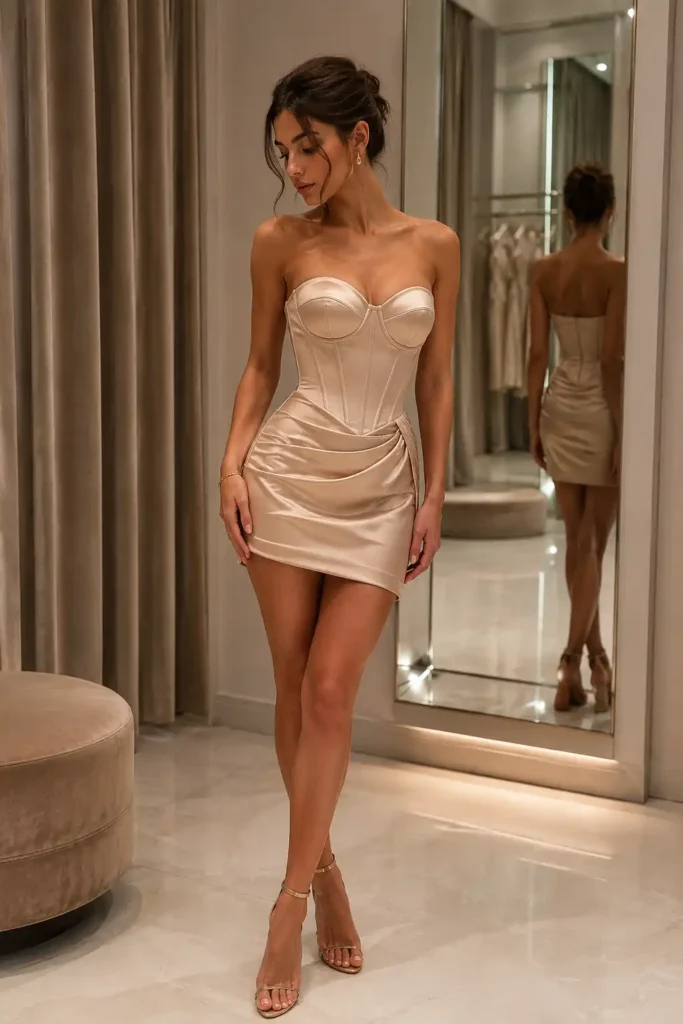
Bust fit is controlled through upper-bust, full-bust and under-bust measurements, cup position, neckline depth, center-front stability, side coverage and strap placement. Corset, strapless, deep-V, halter and cut-out styles each require a different support strategy. Bra cups, boning, underwire, anti-slip tape, power mesh, lining and elastic may be combined according to the intended look and comfort level.
Sample fitting checks whether the neckline stays stable when standing, sitting and moving. Cup volume and position should follow the target body shape rather than simply copying a reference image. Grading rules protect support and exposure across sizes, because enlarging cup openings, strap gaps or neckline depth by a fixed percentage can create risk in larger sizes. Bulk inspection verifies cup placement, boning length, strap measurement and neckline symmetry.
Waist, Hip and Negative Ease
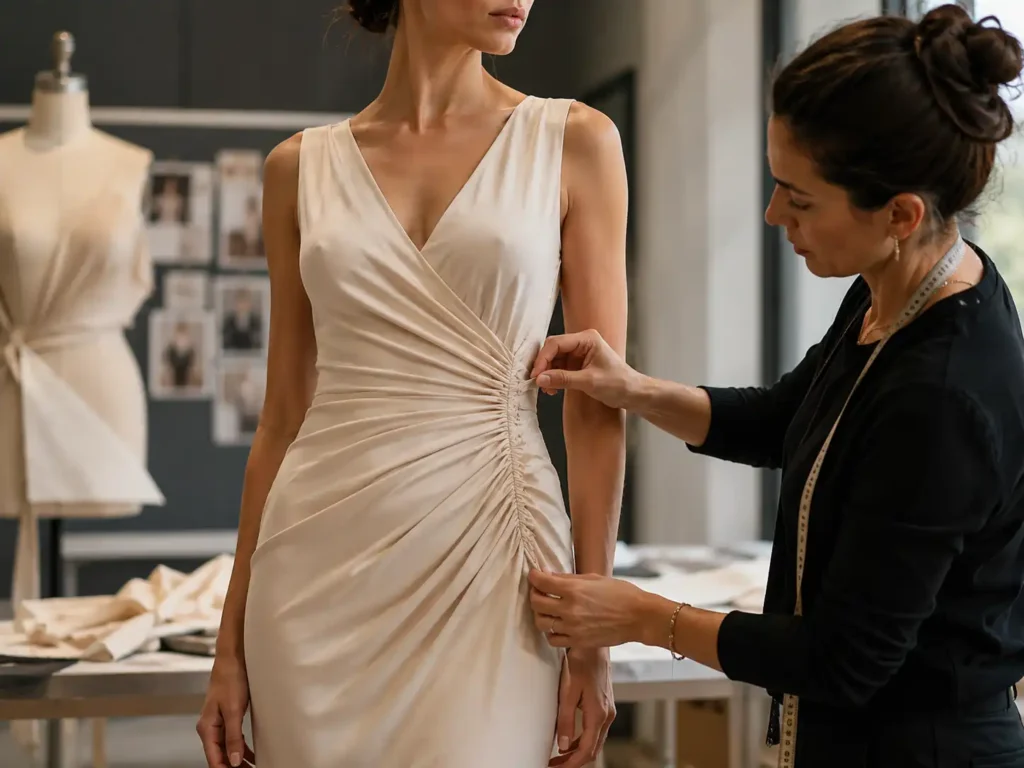
Bodycon garments use controlled negative ease, but compression must suit the fabric and market. Waist and hip balance are reviewed against stretch percentage, recovery, lining and seam structure. Excessive reduction can create horizontal pulling, zipper stress, seam opening or uncomfortable wear. Too little reduction can remove the intended silhouette and cause ruching or drape to collapse.
Pattern correction considers high waist, natural waist, low waist, high hip and full hip. Side seams should remain vertical, ruching should distribute evenly and center-front or back details should stay aligned. Stretch direction is marked for cutting. During bulk production, measurement tolerances, seam twist, elastic tension and panel symmetry are monitored before finishing.
Length, Slits and Movement
Mini length is reviewed from both visual and movement perspectives. Front and back length, hip projection, hem stretch and slit height affect coverage when walking or sitting. A stable standing length can become unsafe when the garment rides upward, especially with high stretch, tight hip fit or horizontal ruching. Fit samples are checked in movement rather than only on a static mannequin.
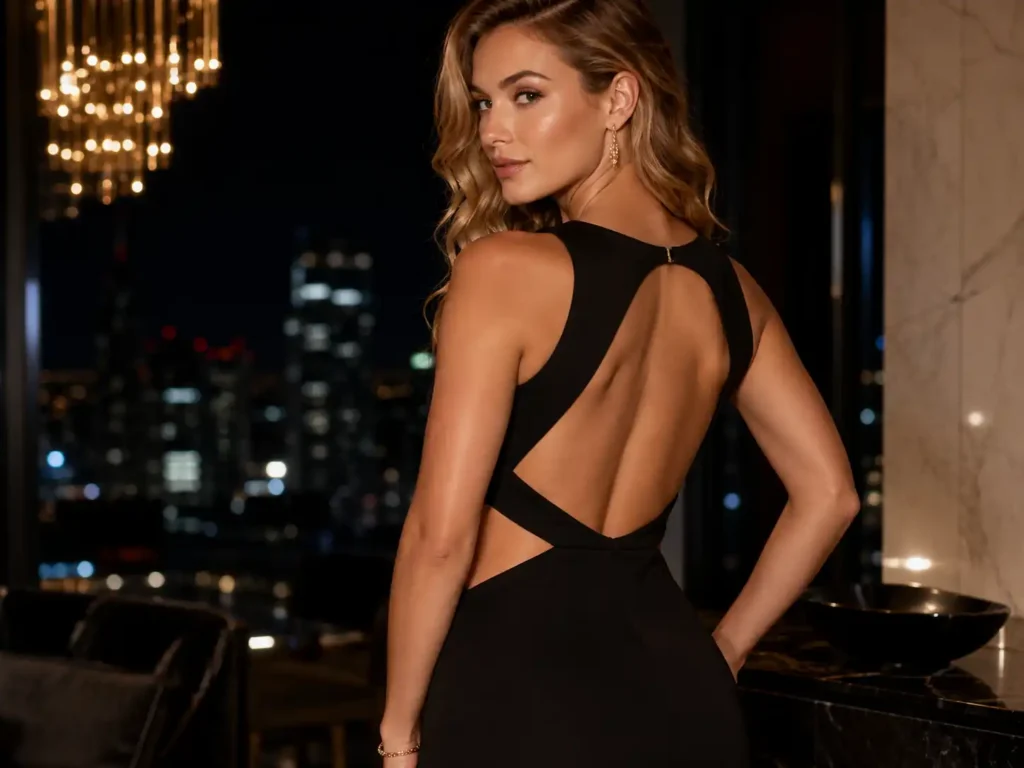
Slits and cut-outs need reinforcement where seam stress concentrates. Jumpsuits add torso and crotch length, while bodysuits add torso stretch and leg-opening comfort. Garment balance is assessed through front length, back length, shoulder or strap position, waist location and hem level. Approved measurements are transferred into the graded size chart and production QC checklist.
Size Grading and Measurement Control
Bulk programs can be produced in multiple sizes according to the approved size chart and size ratio. A common commercial range may run XS-XL, while extended ranges require separate grading review. The confirmed quantity for each style/color is divided across sizes, and overly fragmented ratios are assessed for cutting, packing and inventory efficiency.
Grading is not a uniform enlargement. Cup position, cut-out size, neckline depth, strap length, armhole, waist shaping, slit height and garment length require controlled grade rules. Before bulk cutting, size charts and tolerances are confirmed. Measurement QC covers critical points by product type, with records maintained for repeat orders and later color extensions.
Construction Details That Define Premium Clubwear

Corset and Boning

Built-In Cups

Mesh and Lining
Ruching and Draping

Sequins and Rhinestones
Cut-Outs and Hardware

Extend One Hero Style Into a Sellable Line
A strong hero style can establish pattern language, material direction and visual identity for several related products. Jinfeng Apparel supports controlled extensions without assuming every variation can share one pattern or skip sample approval.
From Corset Mini to Product Family
A structured mesh corset mini can begin as the campaign hero. Once bust support, waist shaping, mesh coverage, boning and closure are approved, the visual language can extend into a corset top, a matching mini skirt, a longer dress, a simplified stretch version and a second color. Shared trims and fabric groups may improve alignment, while each new product receives its own pattern and fitting because length, support and movement change with the silhouette.
The product family can be divided by commercial role. The original embellished mini carries campaign value. A cleaner corset dress supports broader volume. The corset top and skirt create styling flexibility. A stretch interpretation can reach a different price point. A later color extension can use retained pattern, measurement, trim and packing records, subject to new color and material approval.
Control Before Extension
Series extension starts after the hero structure is stable. Unresolved fit problems should not be copied into several related styles. The approved pattern, fitting comments, fabric behavior and production notes are reviewed before deciding which elements can be repeated. A new neckline, hem length, fabric or cut-out may change support, grading or sewing requirements enough to require an independent development path.
Cost and timing are also reviewed. Shared fabric can reduce fragmentation, but adding too many colors may create separate supplier MOQ and batch-control requirements. Reusing hardware can improve consistency, while specialty embellishment may be reserved for one or two hero styles. The result is a connected line with deliberate differences rather than multiple versions created without production discipline.
Multi-Style Sampling Without Losing Collection Control
Project Intake
Style Grouping
Fabric Readiness
Sample Priority
Revision Tracking
PP Approval
Transfer Approved Samples Into Controlled Bulk Production
Production consistency depends on how thoroughly sample decisions are converted into material standards, pattern files, sewing instructions, QC points and packing requirements. Jinfeng Apparel uses a structured handover before cutting begins.

Production Allocation by Product Risk
Jinfeng Apparel operates 6 owned women’s fashion factories and works with more than 10 long-term satellite production partners. Production is allocated according to product structure, fabric type, workmanship, order quantity, launch schedule and available capacity. Stretch bodycon styles, corset products, embellished garments and satin pieces may require different sewing experience and process controls.
Collection allocation also considers which styles share materials or trims, which styles need specialist handling and which styles must finish first for launch or split shipment. A production plan is not built solely around factory capacity; it also protects technical fit, material consistency and QC visibility.

Material Readiness Before Cutting
Fabric, lining, zippers, cups, boning, elastic, hardware, embellishments, labels and packaging files are confirmed against the approved sample. Incoming materials are reviewed for color, hand feel, stretch, transparency, damage and specification. Fabric may require relaxation before cutting, especially for stretch materials. Shade groups and batch references are recorded where needed.
Cutting starts only after quantity, color, size ratio and pattern version are confirmed. Cut panels are checked for direction, correct face, damage, print or motif placement, mesh holes, lace faults and bundle quantity. Early inspection reduces expensive sewing-stage rework.
Sewing Instructions and Inline Control
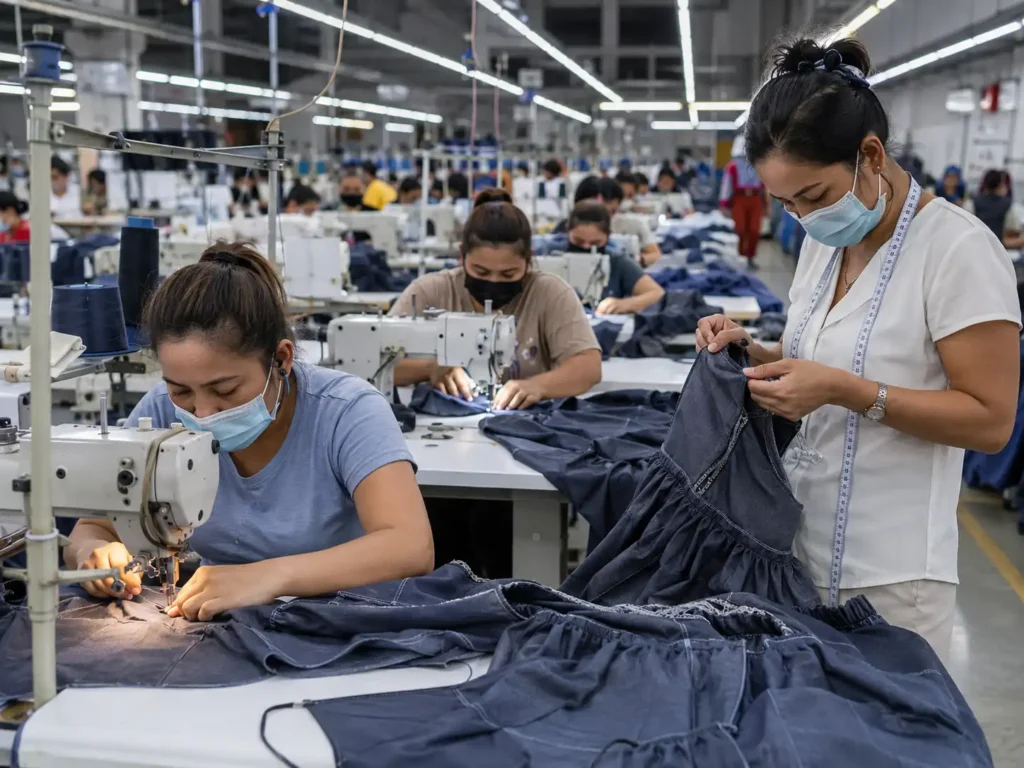
The production file includes the approved pattern, size chart, bill of materials, fabric reference, trim card, stitch and seam requirements, zipper position, cup and boning placement, ruching marks, label position, packing method and product-specific QC points. The PP sample or golden sample remains the visual construction reference.
Inline inspection checks neckline, straps, armholes, cups, boning, waistline, hips, cut-outs, zipper, ruching, lining, slit, seam quality, symmetry and fabric damage according to the product. Problems are corrected while production is running rather than after the full quantity is completed.

Multi-Style Status Management
A collection may have some styles in cutting, others in sewing, others in finishing and some waiting for material or correction. Merchandising and production teams track each style through material readiness, cutting, sewing, inline inspection, finishing, final inspection and packing. The status view helps identify dependencies before they affect the collection delivery plan.
For planning purposes, standard multi-style bulk production is often scheduled around 35-55 days after PP lock and complete material readiness. Highly embellished, corseted or material-intensive programs may require 45-65 days. Final timing depends on style count, order quantity, material lead time, color count, size ratio, packing requirements and production capacity at approval.
Collection Quality Control Matrix for High-Risk Clubwear Products
Clubwear QC must follow product-specific risks from incoming material through packing. A single generic final inspection cannot control stretch recovery, mesh damage, corset placement, sequin protection, cut-out symmetry and SKU accuracy across a full capsule.
| Control Stage | Core Checks | Clubwear-Specific Focus | Release Standard |
|---|---|---|---|
| Fabric and Trim Inspection | Color, hand feel, width, weight, visible damage, trim specification | Stretch and recovery, mesh holes, sequin loss, rhinestone security, metallic coating, lining match | Approved reference and order specification |
| Cutting Inspection | Pattern version, direction, size, quantity, panel damage | Stretch direction, cut-out location, mesh and lace faults, motif placement, shade grouping | Correct bundle before sewing |
| Sewing Inline Check | Seam, stitch, symmetry, zipper, label position | Cup and boning placement, ruching tension, neckline security, lining coverage, hardware attachment | Corrected before volume continues |
| Measurement Check | Critical points by size, tolerance, graded balance | Bust, under-bust, waist, hip, length, slit, strap, torso and rise | Approved size chart and tolerance |
| Finished Garment Check | Appearance, pressing, loose threads, stains, construction | Ride-up risk, exposure, sharp embellishment, missing sequins, zipper bulging, mesh damage | Ready for packing or rework |
| Packing and AQL Review | SKU, size, color, label, barcode, polybag, carton mark | Surface protection, set pairing, embellishment protection, shade separation | Approved packing list and inspection result |
Private Label Packing Built Around SKU Accuracy

Brand and Size Labels

Hangtags and Care Information
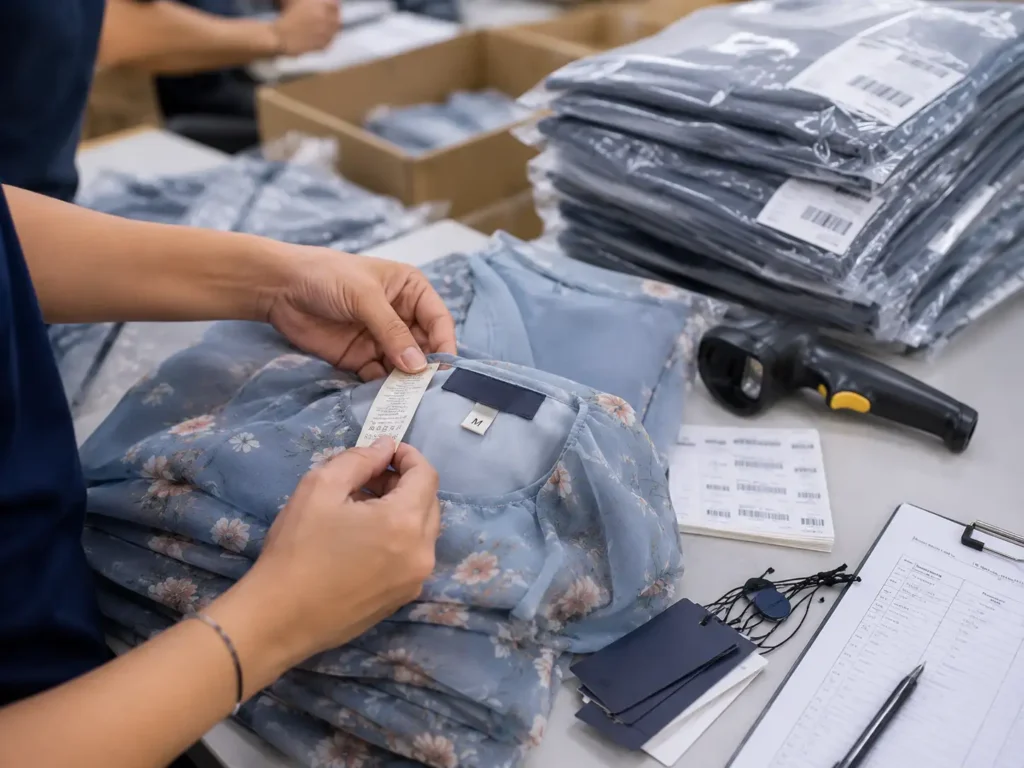
Barcode and SKU Control

Retail and Export Packing
MOQ Planning for Multi-Style Clubwear Capsules
Jinfeng Apparel’s MOQ starts from 200 pcs per style/color. Size quantities can be distributed within the confirmed style/color total, while fabric, trim, printing, dyeing, certified materials and custom packaging may carry separate supplier requirements.
| Order Structure | Standard Review | Planning Note |
|---|---|---|
| 1 style x 1 color x 200 pcs | Meets the starting quantity for review | Size ratio can be divided within 200 pcs |
| 1 style x 2 colors x 200 pcs per color | Meets the starting quantity for review | Each color is planned as a separate material and SKU group |
| 1 style x black 100 pcs + red 100 pcs | Normally below the standard color quantity | Each color usually needs 200 pcs |
| 4 styles x 50 pcs each | Does not meet the standard style/color structure | Total collection quantity cannot replace per-style planning |
| 12 styles x 1 color x 1,500 pcs each | Suitable for a structured capsule review | Production can be grouped by fabric, complexity and delivery priority |
| Custom sequin, dyeing or special packaging | Reviewed separately | Supplier MOQ and lead time may increase the requirement |
Manufacturing Around a Fixed Launch Calendar
Development Window
Approval to Bulk

Manufacturing Resources Behind Every Capsule Program
Since 2008
Six Owned Factories
Ten-Plus Production Partners
Two Sample Rooms
Pattern and Sample Teams
Quality and Merchandising Teams
Clubwear Capsule Programs Managed at Commercial Scale

US Ecommerce Clubwear Capsule
Market: United States
Program: 16 styles, 42,000 garments, XS-XL
Product Mix: Bodycon minis, corset dresses, mesh cut-out styles, satin dresses, two matching sets and one jumpsuit
Material Groups: Stretch jersey, power mesh, stretch satin and sequin mesh
Development: Three sample rounds across the line, with five hero styles prioritized for campaign photography. Corset and cut-out products received separate bust, neckline and grading review. Black shade alignment was checked across satin, mesh and knit before bulk color approval.
Production Control: Styles were divided into four production groups according to fabric and construction. Inline inspection focused on cup position, boning, ruching balance, mesh damage, zipper flatness and mini-length measurement. Barcodes were checked by style, color and size before packing.
Delivery Result: Bulk production and packing were planned across a 52-day window after PP lock and full material readiness. Hero and core styles were released in a controlled air-and-sea split plan to support campaign and warehouse dates.

UK Holiday Partywear Drop
Market: United Kingdom
Program: 12 styles, 28,800 garments, UK 6-16
Product Mix: Sequin minis, metallic dresses, velvet bodycon styles, rhinestone mesh, satin party dresses and corset tops
Material Groups: Four visual fabrics with coordinated black, wine and silver directions
Development: Sequin scratch protection, metallic coating behavior, rhinestone attachment and velvet pile direction were tested during sampling. Two high-risk styles required an additional revised sample before PP approval. Care labels and hangtags were locked early because packing needed to begin immediately after final inspection.
Production Control: Cutting and sewing groups were separated by material handling. Sequin seams were prepared before sewing, metallic pieces followed limited-pressing instructions and velvet panels were controlled by pile direction. Packing added surface protection to prevent abrasion during transport.
Delivery Result: Production was completed through staged style releases across 48 days after PP lock. Final cartons were organized by SKU and destination allocation for a fixed holiday receiving schedule.

Australian Nightlife Collection
Market: Australia
Program: 24 styles, 63,600 garments, AU 4-14
Product Mix: Club dresses, corset minis, ruched mesh, satin sets, bodysuits, skirts and fashion jumpsuits
Material Groups: Six coordinated fabric and trim groups with shared hardware finishes
Development: The line was divided into hero, commercial core and extension products. Eight hero styles received priority sampling. Size grading focused on cup position, cut-out proportion, bodysuit torso length and jumpsuit rise. A shared hardware library reduced finish variation across sets, dresses and tops.
Production Control: Styles were assigned by structure and fabric. A collection status tracker separated material readiness, cutting, sewing, inline inspection, finishing and packing. Set pairing, size labels, barcode stickers and carton ratios received additional packing checks.
Delivery Result: A 58-day bulk and packing schedule followed PP lock and material readiness. Delivery was staged by launch priority, with core replenishment records retained for later repeat-order planning.
Clubwear Capsule Manufacturing Frequently Asked Questions
MOQ starts from 200 pcs per style/color. Fabric availability, custom dyeing, printing, certified materials, sequins, special trims and packaging may have separate supplier requirements. Size quantities are divided within the confirmed style/color total.
Usually no. MOQ is calculated by style and color rather than total collection quantity. A 12-style program can be reviewed as one project, but each style/color still requires an efficient production quantity and clear material plan.
Yes. Reference images, sketches, original samples, tech packs and line sheets can be reviewed. Missing information such as fabric, lining, closure, measurements, fit preference, size range, quantity and packing requirements is clarified before sample planning and quotation.
Straightforward first samples are commonly planned around 7-12 working days after fabric and trims are ready. Corset, cut-out, sequin or heavily structured styles may need 12-20 working days. Revision timing is commonly 5-10 working days after complete feedback and material confirmation.
Yes. Multi-style programs are grouped by fabric, silhouette, trim, complexity and launch priority. Hero products, campaign samples and high-risk constructions can move first. Every style keeps its own sample stage, revision record and approval status.
Options include mesh, power mesh, sequin fabric, satin, stretch satin, jersey, ponte, Roma knit, velvet, lace, metallic fabric and rhinestone materials. Final choice depends on hand feel, weight, stretch, transparency, recovery, color, supplier MOQ, cost and lead time.
Yes. Bulk orders can follow an approved size chart and size ratio, commonly including ranges such as XS-XL or market-specific equivalents. Critical grading points include bust, cup position, waist, hip, cut-outs, straps, length, slit and jumpsuit rise.
Yes. Support can include woven labels, size labels, care labels, hangtags, barcode stickers, polybags, carton marks and custom packaging. Packaging suppliers may apply separate MOQ, development and lead-time requirements.
Standard multi-style programs are commonly planned around 35-55 days after PP approval and complete material readiness. Highly embellished, corseted or complex programs may require 45-65 days. Final timing depends on style count, quantity, material, color, packing and capacity.
Yes. Jinfeng Apparel supports NDA-based cooperation and protects tech packs, original samples, patterns, size charts, fabrics, trims, label files, packaging files, SKU data, unpublished styles, quantities, pricing and launch plans. Project details are not published without authorization.

Start Your Clubwear Capsule Review
Send a line sheet, reference images, tech packs or original sample information to Kelly for an initial project review. A useful submission should show how many styles are planned, the quantity per style/color, preferred fabrics, color direction, intended size range, label and packaging needs, target launch date and destination market.
Clear files allow the team to assess pattern complexity, material risk, sample sequence, MOQ structure, costing inputs, production allocation and delivery planning before formal development begins.
Please include:
- Reference images, sketches, line sheet or tech packs
- Number of styles and priority hero SKUs
- Quantity by style, color and size ratio
- Fabric, lining, trim and embellishment direction
- Private-label, barcode and packing requirements
- Photo date, PP deadline, launch date and delivery destination
- Required testing, inspection or compliance documents


