
Chiffon Resort Dress Collection Manufacturer
Custom chiffon resort collections developed for global fashion brands, seasonal launches, retail programs and long-term private-label production.
- 10-30 coordinated styles can be managed as one seasonal program, including maxi, midi, mini, halter, wrap, tiered, backless and printed resort dresses.
- 2 sample rooms, 7+ senior pattern makers and 20+ sample machinists support parallel style development, fit correction, photo samples and PP approval.
- MOQ starts from 200 pcs per style/color, with XS-XL or project-defined size ratios distributed inside each confirmed style and color quantity.
- 6 owned women’s fashion factories, 10+ long-term satellite production partners and 100,000+ pcs monthly capacity support multi-style bulk production and repeat orders.
Manufacturing Capacity for Multi-Style Resort Collections
Collection Development
Scalable Bulk Production
Repeat Order Records
Built for Established Resortwear and Fashion Programs
Global Fashion Brands
- Quarterly or seasonal collection planning
- Multi-style sample approval
- Bulk consistency and replenishment records
Product Development Teams
- Tech pack and line sheet review
- Fabric and construction feasibility
- Sample version and revision tracking
Private-Label Retail Programs
- Brand labels and care labels
- Barcode and SKU control
- Carton and shipment documentation
Where Chiffon Resort Collections Commonly Go Wrong
Collection Launch Risks
- Unclear assortment roles and duplicated silhouettes
- Late artwork, color or fabric approval
- Sample versions not linked to the final pattern
- Packaging and SKU data arriving after production
- All styles scheduled as if they carry the same risk
Chiffon Production Risks
Chiffon introduces visible defects that are difficult to hide in photography or retail inspection. The shell may become transparent under daylight, the lining may lift the outer layer, printed panels may be cut in opposing directions, or a full maxi hem may drop unevenly after hanging. Fine seams can pucker, narrow hems can twist and unprotected fabric can snag during finishing or packing.
- Fabric slipping during spreading and cutting
- Needle marks, seam puckering and edge distortion
- Lining exposure or restricted movement
- Uneven gathering, pleats, ruffles or skirt balance
- Snagging, shine marks and packing creases
Chiffon Resort Dress Styles We Develop
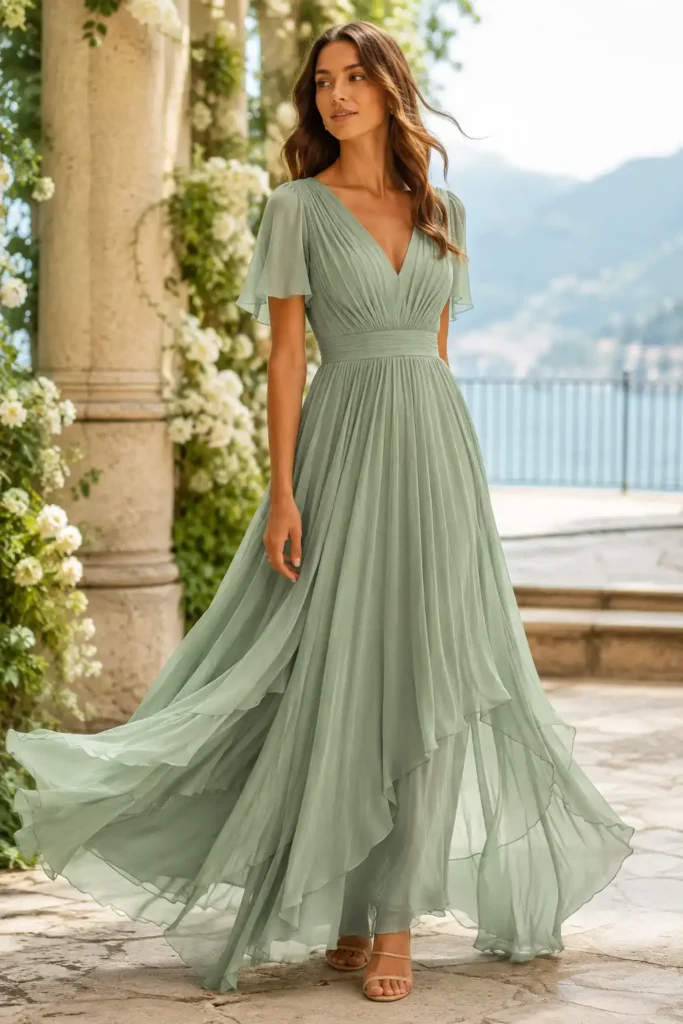
Chiffon Maxi Dresses

Printed Resort Midis

Ruffle Mini Dresses
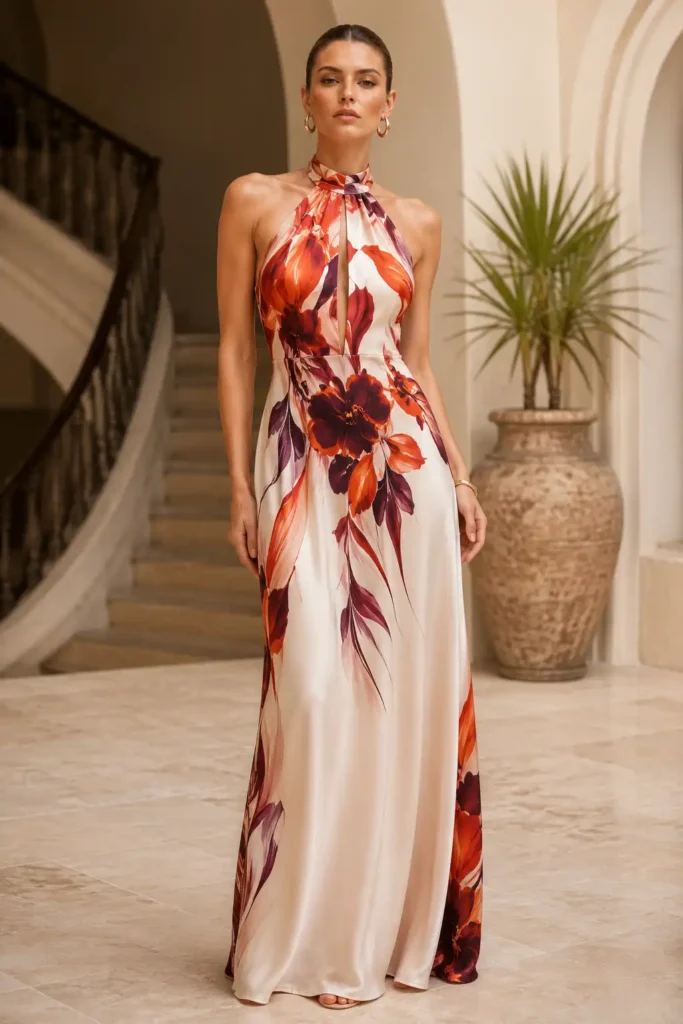
Halter Vacation Dresses

Wrap Resort Dresses

Tiered Chiffon Dresses
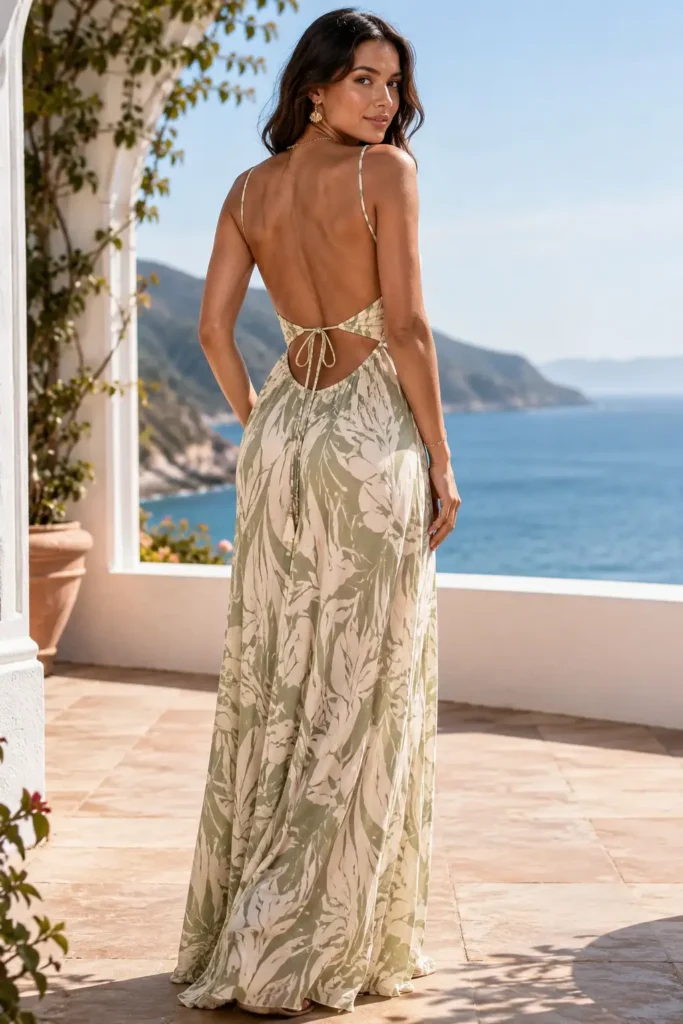
Backless Slit Styles

One-Shoulder Dresses
Selecting Chiffon for Drape, Coverage and Performance
Fabric choice determines silhouette, transparency, print clarity, sewing behavior and packing recovery. The ranges below are development references; final composition, weight, shade, finish, certification scope and availability are confirmed by swatch and supplier batch.
| Fabric Direction | Indicative Weight | Hand and Drape | Best-Suited Styles | Development Notes |
|---|---|---|---|---|
| Lightweight plain chiffon | Approx. 45-60 gsm | Very light, fluid and transparent | Layered maxi, flutter sleeve, ruffle detail | Usually requires lining or strategic layering. Cutting stability, seam puckering and snag protection need early review. |
| Standard dress chiffon | Approx. 60-80 gsm | Soft drape with slightly more body | Midi, wrap, halter, one-shoulder | A versatile direction for solid or printed styles. Final choice depends on opacity, hand feel and print base compatibility. |
| Crepe chiffon | Approx. 65-90 gsm | Grainy surface, controlled fluidity | Wrap, gathered waist, slit midi, long sleeve | Texture can reduce visible shine and minor packing marks. Seam and hem appearance must still be checked on the approved sample. |
| Crinkle chiffon | Approx. 70-95 gsm | Textured, relaxed and travel-oriented | Tiered dress, loose maxi, vacation midi | Wrinkle character is part of the surface. Shrinkage, width stability and lining choice require confirmation before costing. |
| Printed chiffon | Base-dependent | Drape follows the selected ground fabric | Floral maxi, border print, coordinated capsule | Artwork scale, repeat, direction, strike-off, bulk shade and cutting marker affect MOQ, consumption, cost and lead time. |
| Certified or recycled option | Project-dependent | Selected by approved supplier range | Brand programs with documented material requirements | Certificate scope, color, batch, MOQ, price and lead time must be verified before quotation and production. |
Custom Prints and Color Stories for Resort Collections
Resort prints must work as garments, not only as attractive artwork. Scale, direction, base cloth, color separation and cutting placement are reviewed before the design becomes a repeatable bulk specification.
Artwork, Repeat and Garment Scale
A complete print package should identify the original artwork, repeat dimensions, colorway, print direction and intended scale on the body. Large florals can become oversized on a mini dress yet lose impact on a full maxi skirt; small repeats can become visually dense when several gathered tiers are added. Jinfeng Apparel reviews the artwork against actual pattern pieces so the collection can use one print family without forcing every silhouette into the same visual treatment. Border prints, placement motifs and engineered panels require additional planning because the cutting marker must follow a fixed orientation and garment position. A line sheet should also identify which styles use the full print, which use a reduced scale, and which use a solid coordinate. That structure creates variety while protecting a coherent collection identity.
Strike-Off and Color Approval
Print color should be approved on the intended chiffon base, not only on screen or paper. The same artwork can appear softer, darker or less saturated when the ground fabric changes in whiteness, texture or transparency. A controlled approval route uses the artwork file, color reference, strike-off or sample yardage, lining comparison and photographed review under neutral lighting. Pantone references can guide communication, but the approved physical sample remains the more reliable production reference. Solid color styles need the same discipline: shell, lining, thread, zipper and label components should be reviewed as one color package. When several colorways share one collection, the brand should identify the commercial core colors, campaign colors and replenishment candidates before bulk material booking.
Bulk Print and Cutting Consistency
Bulk control begins with confirming the ground fabric, print method, approved colorway and acceptable shade range. Incoming printed fabric is reviewed for color variation, repeat distortion, missing areas, staining and direction. Cutting instructions identify one-way prints, border positions and panels that require visual matching. Exact motif matching can increase consumption and must be agreed during costing rather than added after the marker is completed. For multi-style programs, fabric rolls and cut panels are tracked by style and color so similar artwork does not create mixing errors. A final garment check reviews print orientation at the front, back, sleeve, tier and visible seam, along with overall balance when the dress is worn or displayed.

Lining and Transparency Control for Chiffon Dresses
A lining is part of the garment structure, not an afterthought. Color, stretch, weight, length and attachment determine opacity, comfort, movement and the final drape of the chiffon shell.
Match the Lining to the Silhouette
Soft woven lining works well when the dress needs fluid movement without noticeable stretch, while selected stretch linings can support closer fits or fitted upper bodies. A lining that is too heavy can flatten chiffon layers and reduce movement; one that is too light may cling, twist or show every seam allowance. The lining pattern is developed with its own ease and length rather than copied directly from the shell. Wrap dresses require secure overlap coverage, backless styles need deliberate edge positions, and high-slit dresses need a lining opening that protects coverage without restricting stride. Shell and lining colors are approved together because a tonal change underneath chiffon can alter the apparent shade or print contrast.
Test Opacity in Real Wearing Conditions
Opacity is checked under more than one lighting condition. Indoor light may make a pale dress appear acceptable while outdoor daylight or camera flash reveals the body, seam allowance or lining edge. Development review can include neutral indoor lighting, daylight and photography-style illumination, with special attention to the bust, waist, hip, back and slit areas. White, ivory, pale yellow, blush and light blue require stricter comparison because minor lining differences remain visible through the shell. Printed chiffon also needs review where the motif becomes sparse, since light ground areas can reveal more than dense floral sections. The approved sample should establish both the required coverage and the intended lightness of the design.
Control Attachment, Static and Movement
The lining should move with the dress rather than pull against it. Attachment points at the neckline, armhole, waist, zipper and side seam are selected to prevent twisting while preserving drape. The lining hem must remain concealed during walking, sitting and wind movement, yet should not be so short that the shell becomes visibly transparent. Static behavior, seam bulk and edge finishing are reviewed during try-on. For fuller skirts, shell and lining may need different sweep measurements; for fitted bodices, excess lining ease can create folds under the chiffon. Bulk inspection includes lining length, attachment security, exposure at openings and the way both layers settle after pressing and packing.

Pattern Control for Movement and Balanced Hems
Resort dresses should feel relaxed without looking uncontrolled. Pattern work connects soft drape with secure coverage, balanced proportions, repeatable sizing and a hem that remains level after movement.
Upper-Body Fit and Strap Balance
Critical upper-body points include bust width, neckline depth, armhole shape, strap length, halter tension, back opening and zipper position. Soft chiffon can hide a slight flat-pattern error until the garment moves, when gaping, twisting or exposed lining becomes visible. A base-size fitting reviews the relationship between neckline, bust, waist and back edge before the pattern is graded. Tie straps need enough adjustment without creating excessive length; fixed straps need a stable approved measurement; clasp halters need reinforcement around the closure. Backless styles are assessed from front, side and rear views so the design remains open while the side seam and neckline stay in place.
Size Range and Grade Rules
Bulk orders can be produced in multiple sizes, commonly XS-XL or a project-defined range, with the size ratio distributed inside each confirmed style/color quantity. The brand supplies a measurement chart, base size and grade rule, or Jinfeng Apparel reviews the available specification before pattern development. Bust, waist, hip, shoulder-to-hem length, strap length, armhole, slit height and lining length are treated as connected measurements. A grade rule should preserve the intended silhouette rather than enlarge every point mechanically. Extended sizes, petite proportions or tall lengths need separate review because skirt sweep, bodice length, neckline coverage and component placement may require more than a standard grade increment.
Maxi Length, Slits and Skirt Movement
Full, bias-influenced and multi-tier chiffon skirts can relax after construction, creating an uneven front, back or side hem. Selected samples are allowed to settle before final hem assessment, then reviewed on a level form or model. The pattern, grain direction, side seam, tier circumference and lining weight are considered together. Slit height is measured from a fixed reference point and checked during walking and sitting; a high slit that looks balanced in a flat photograph may open too far when the skirt moves. Bulk control uses the approved pattern, length specification and garment comparison rather than trimming every dress by eye without a shared standard.

Design Details That Shape a Resort Collection

Neckline Geometry
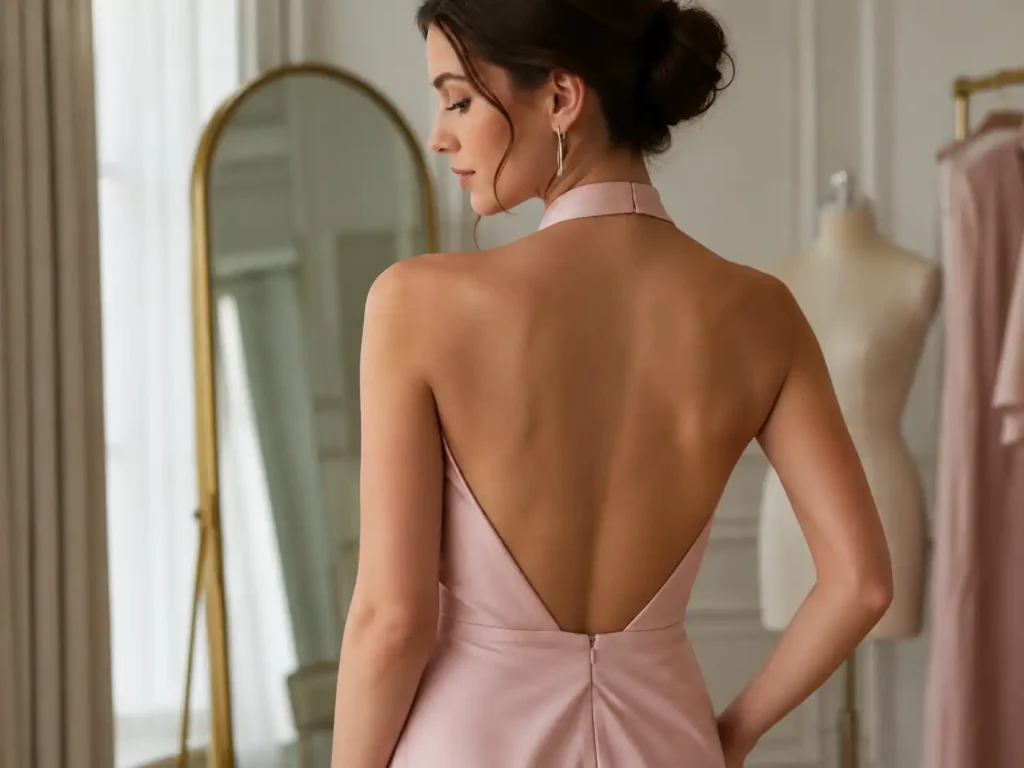
Halter Structures

Ruffles and Flounces

Sleeve Volume
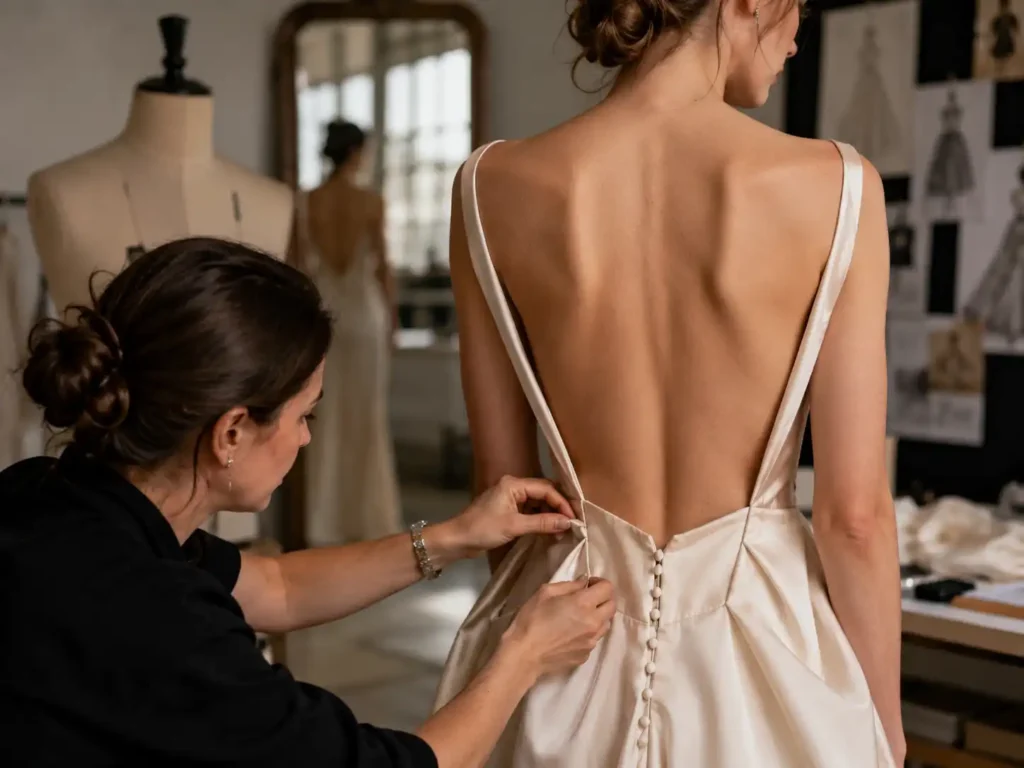
Backless Control

Slit Engineering

Pleats and Gathering

Closures and Trims
Building a Commercial Chiffon Resort Collection
Silhouette Mix
Balance campaign impact with repeatable commercial shapes. A collection may use a full printed maxi as the visual anchor, a midi wrap as the broad-selling style, a mini as the social-content option, and a simpler halter or slip direction as an accessible entry. Repeating the same neckline and skirt shape across every style weakens assortment depth even when prints change.
- Define hero, commercial and supporting styles
- Avoid duplicate silhouettes
- Share fit blocks only where suitable
Color Story
Separate core colors from seasonal highlights. Neutral, black, ivory or deep tones may support longer selling periods, while tropical or trend colors create campaign energy. Shell, lining, thread, zipper and trim colors should be grouped before sampling. A first program is easier to control when colors are concentrated by fabric family instead of spreading small quantities across many unrelated shades.
- Identify core and campaign colors
- Approve shell and lining together
- Plan replenishment colors early
Print Family
One artwork can support several styles through scale, ground color or selective placement, but uncontrolled reuse makes the range look repetitive. The line sheet should identify full-print styles, reduced-scale styles, border or placement styles and solid coordinates. Shared ground fabric can improve material planning, while every variation still requires clear artwork, strike-off and cutting instructions.
- Full print, scale variation and solid coordinates
- One-way and border-print rules
- Shared fabric without visual duplication
Price Architecture
Not every style should carry maximum fullness, layering and trim cost. Build a price ladder through controlled differences in fabric consumption, lining coverage, sleeve volume, ruffles, closures and construction time. A high-impact maxi can carry more complexity, while a cleaner midi or mini protects the collection margin. Cost control should never weaken the intended brand-level appearance.
- Separate statement and volume styles
- Control fabric consumption
- Standardize selected trims where suitable
Size and Color Ratio
MOQ starts from 200 pcs per style/color, while sizes are distributed within the confirmed quantity. A workable ratio should reflect the brand’s sales history and channel rather than divide every size equally. Multi-color collections need clear quantities by style, color and size so fabric booking, cutting, labels, barcodes, packing and carton breakdown remain accurate.
- Submit style-color-size matrix
- Use sales history for ratios
- Avoid excessive SKU fragmentation
Launch Phasing
Photo samples, campaign styles and bulk production do not always need to move at the same speed. Priority styles can be developed first for shooting and wholesale review, followed by commercial support styles. Bulk can also be grouped by material readiness or launch wave. A phased plan protects the calendar while keeping the complete collection under one approval system.
- Prioritize photo and hero styles
- Group bulk by readiness
- Plan launch and replenishment waves
From Collection Brief to Approved PP Samples
Project Review
Fabric Print Direction
Pattern Development
First Sample
Revision Photo Sample
PP Sample Approval
Construction Details for Clean Chiffon Garments

Fine Seam Finishing

Narrow Hem Control

Ruffle Edge Finish

Pleat Gather Balance
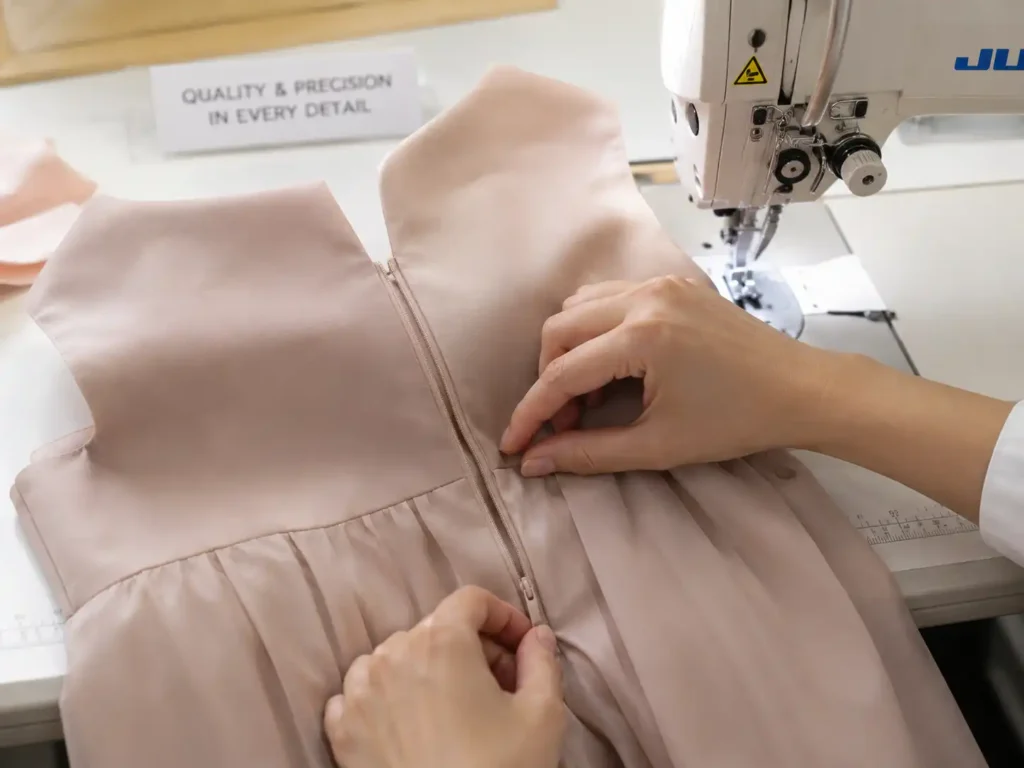
Zipper Opening Areas

Pressing Snag Protection
Bulk Production Managed Across Multiple Resort Styles
Multi-style production succeeds when factory allocation, material status, sample versions and QC milestones are managed as one program rather than several disconnected orders.
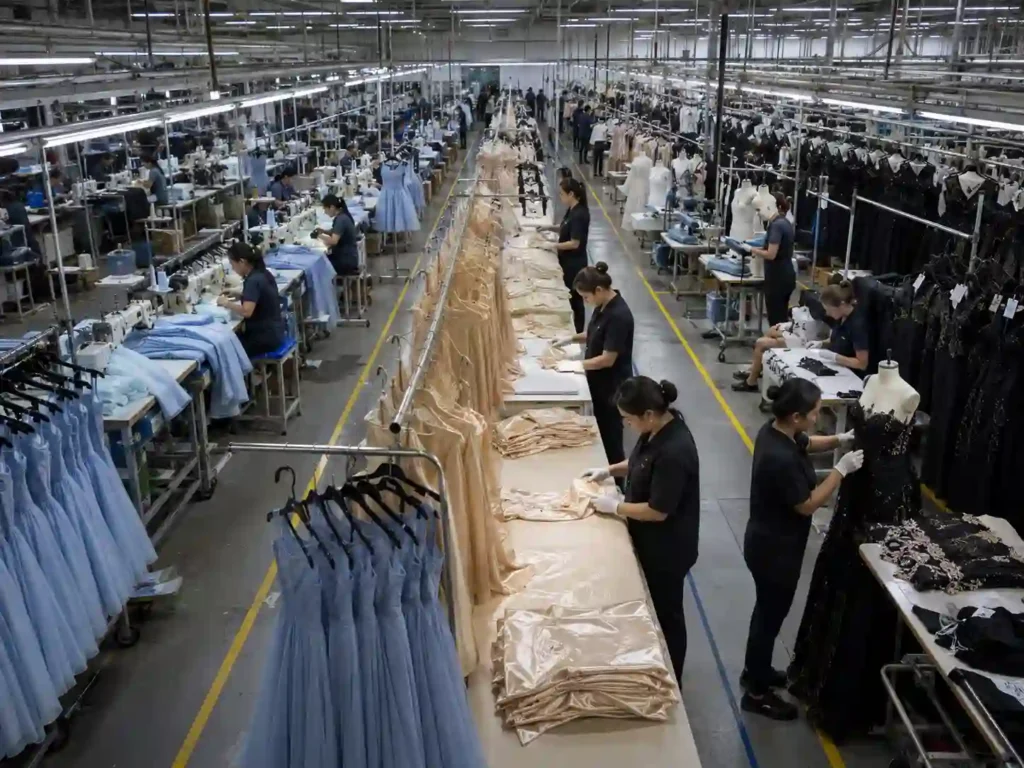
Factory Allocation and Style Grouping
Styles are grouped by fabric, construction and production risk before line allocation. Lightweight printed maxis, structured halter bodices, tiered dresses and simpler midis may require different production attention even when they belong to one collection. Jinfeng Apparel uses six owned factories, more than ten long-term satellite production partners, eighteen or more sewing lines and six or more flexible lines to match product structure with suitable capacity. Allocation remains subject to approved materials, quantity, workmanship standard and production calendar. The goal is controlled scalability, not placing every style on one line or promising unlimited capacity. A program-level schedule identifies which styles can run together, which require earlier pilot production and which should follow after the first in-line review.

Material and Version Control
Bulk production starts from confirmed material and approved documentation. Fabric rolls, print colorways, lining, zippers, thread, labels and packing components are tracked by style and color. The final pattern, measurement chart, BOM, trim card, construction notes, label placement, packing instruction and PP reference must carry the same version. When a revised sample is approved, the old version should no longer remain in active production files. Printed chiffon receives direction and marker notes; pale colors receive lining and opacity confirmation; long skirts receive hem and balance checkpoints. Material shortages, shade differences or trim substitutions are reported for approval rather than introduced silently after cutting.

Production Milestones and Timing
The production calendar covers material arrival, incoming inspection, fabric relaxation where required, cutting, cut-panel inspection, sewing launch, in-line QC, finishing, measurement review, packing and final inspection. Standard bulk production planning commonly starts around 35-50 days after PP approval and material readiness for a conventional program, while a 10-30-style collection is quoted by grouped line plans and may require a longer coordinated window. Custom printing, dyeing, special trims, extensive pleating or late packaging approval can extend the schedule. Updates should state current status, risk, next action and expected effect on the launch date rather than simply reporting that production is “in progress.”

Communication Across the Collection
A dedicated merchandiser or order follow-up specialist coordinates style status, fabric and trim progress, sample revisions, bulk milestones, QC feedback, packing approval and shipment documents. Jinfeng Apparel has twelve or more merchandisers and order follow-up specialists supporting project communication. For larger programs, updates can be structured by style group and milestone, allowing product teams to see which styles are approved, cutting, sewing, under correction, packed or ready for inspection. Clear status reporting is particularly important when photo samples, first bulk, repeat quantities and split shipments overlap in one seasonal calendar.
Quality Control for Chiffon Resort Dress Production
Chiffon QC follows the product from incoming fabric through packed cartons. Each stage targets risks that are difficult or expensive to correct after the full order is complete.
| QC Stage | Main Checks | Chiffon Risks Controlled | Working Evidence |
|---|---|---|---|
| Incoming fabric | Shade, print, width, surface defects, hand, shrinkage or test requirement by project | Color variation, missing print, stains, pulls, unsuitable base fabric | Fabric inspection record, roll identification, approved swatch or print reference |
| Cutting | Direction, marker, panel identity, layer stability, notches, border or placement position | Fabric slipping, reversed print, mixed panels, inaccurate slit or tier parts | Cutting instruction, panel check, style-color bundle identification |
| Sewing and in-line | Seam quality, measurements, gathers, pleats, ruffles, zipper, strap and lining attachment | Puckering, needle marks, uneven fullness, neckline instability, twisted lining | In-line inspection notes, measurement record, corrective action |
| Garment inspection | Overall appearance, fit points, shell-to-lining relation, transparency, slit, hem balance | Exposed lining, uneven maxi hem, gaping, asymmetric drape, visible defects | Approved sample comparison, measurement chart, appearance checklist |
| Finishing and pressing | Loose threads, stains, surface condition, pressing shape, edge and closure function | Snagging, shine marks, hard creases, distorted ruffles or pleats | Finishing record, visual check, repair status |
| Packing and final | Labels, barcodes, SKU, size ratio, polybag, carton mark, quantity and inspection status | Wrong identity, packing crease, mixed SKU, receiving errors | Packing checklist, carton record, AQL or client inspection support by project |
MOQ and Cost Planning for Multi-Style Collections
Commercial planning begins with quantities by style, color and size. Material MOQ, print development, garment construction and packing requirements are reviewed before a reliable quotation can be built.
MOQ by Style and Color
Jinfeng Apparel’s MOQ starts from 200 pcs per style/color. Several different styles cannot simply be combined to reach one 200-piece minimum, and one style in two colors normally requires the confirmed quantity for each color. Sizes are distributed within the approved style/color total, allowing an XS-XL or project-defined size ratio without changing the basic MOQ calculation. Custom-dyed fabric, custom printing, certified material, special trims and branded packaging may carry separate supplier minimums. A 10-30-style collection is therefore reviewed as a line sheet with quantities by style, color and size, not as one undivided order total.
What Builds the Garment Cost
A chiffon resort dress quotation reflects the selected shell fabric, lining, print method, color development, trims, pattern and sample work, cutting consumption, sewing time, ruffle or pleat handling, pressing, QC, packing, wastage, testing and logistics scope. A full maxi with several tiers and lining uses more material and labor than a clean midi, even when both use the same chiffon base. Placement prints, border prints, special zippers, covered buttons, branded packaging and extended size requirements can change both unit cost and lead time. Accurate costing therefore follows the approved design and material direction rather than a generic price for every chiffon dress.
Control Cost Without Weakening Appearance
Cost control works best before the PP sample is locked. Related styles can share one approved chiffon base, lining family, zipper specification or print ground. The collection can concentrate colors, reduce unnecessary fullness, simplify hidden construction, standardize selected trims and reserve higher-cost details for hero styles. Cutting layout and print direction should be optimized without damaging the intended drape or motif. Split shipment can balance launch timing and freight cost, while size and color ratios can reduce SKU fragmentation. The objective is cost control without weakening brand-level appearance, fit, durability or retail readiness.

Planning Production Around Your Resort Launch Calendar
A resort program is tied to campaign shooting, wholesale review, ecommerce launch, warehouse receiving and seasonal travel demand. The schedule should be built backward from those dates.
Build a Backward Launch Calendar
The working calendar includes project launch, fabric and artwork approval, pattern completion, first sample, revision, photo sample, PP approval, bulk material arrival, production, QC, packing, inspection and shipment. Hero styles may be prioritized for campaign photography while commercial support styles continue through development. Early approval matters most when custom printing, color development, special trims or branded packaging are involved. A launch date alone is not enough; the program should also identify the photo deadline, sales sample deadline, warehouse cut-off and latest acceptable shipment date. When the brand changes fabric, artwork or construction after approval, the schedule and cost are reviewed again rather than absorbing the change without consequence.
Use Freight as a Launch Tool
Air freight can support urgent photo, launch or priority SKU quantities, while sea freight is better suited to the main bulk where the calendar allows. For launch-sensitive programs, a split shipment may send roughly 10-30% of selected styles, colors or sizes by air and move the remaining quantity by sea. The exact split depends on sales priorities, carton plan, freight cost and destination. SKU lists, commercial invoices, packing lists and carton marks must be separated accurately so the warehouse understands each shipment. Jinfeng Apparel can coordinate with a client-nominated forwarder or a project-approved freight partner, subject to the confirmed shipping term and route.
Prepare Successful Styles for Repeat Orders
Repeat production is supported by retaining the final pattern, measurement chart, fabric reference, approved color, print file, trim specification, construction notes, label placement, packing method and QC feedback. Replenishment is not treated as automatic duplication: fabric batch, shade, print, trim availability and production schedule are checked again. A successful maxi can return in a new color, a printed midi can move to a related ground, or one pattern can support a new seasonal fabric after sample confirmation. Organized records shorten the restart process while protecting the brand from silent material or fit changes between seasons.

Private Label Delivery and Brand Protection
Private Label Execution
Compliance Coordination
NDA Design Protection
Chiffon Resort Collection Programs Managed at Scale
Anonymous program summaries show how style count, fabric groups, approval priorities and delivery planning can be organized without disclosing protected brand names, artwork or commercial terms.

European Resortwear Program: 18 Styles, 36,000 Pieces
An established European resortwear label developed an 18-style program covering chiffon maxis, printed midis, halter minis, wrap dresses and tiered vacation styles. The confirmed bulk quantity was approximately 36,000 pieces across five color and print families, with an XS-XL size range. The main technical risks were pale-color transparency, inconsistent floral direction, maxi hem balance, lining movement and packing creases. Development was divided into priority groups: campaign maxis and photo styles first, then commercial midis and supporting minis. Shell and lining colors were approved together, one-way print instructions were added to the cutting file, and selected long skirts were reviewed after settling before the final hem standard was sealed. Bulk production used style-color bundle control, in-line measurement and a shared packing matrix. Priority launch quantities were separated from the main shipment, while final pattern, print, trim and packing records were retained for the next seasonal program.
Program data: 18 styles | approximately 36,000 pcs | 5 color/print families | XS-XL | chiffon, rayon and printed woven groups | staged delivery
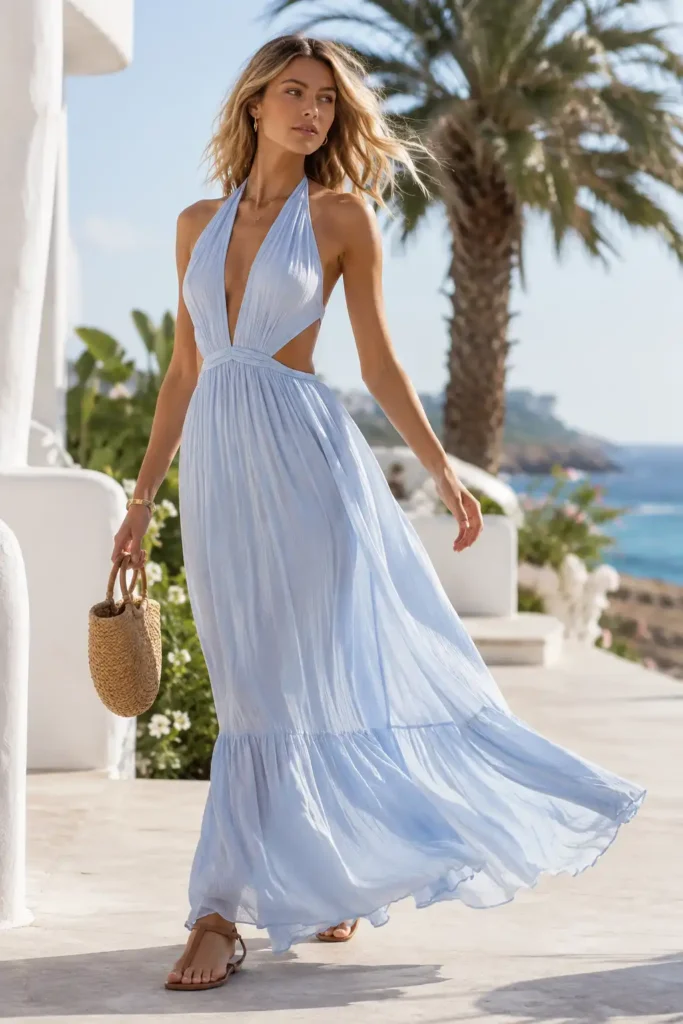
North American Private-Label Program: 24 Styles, 52,000 Pieces
A North American private-label fashion program required 24 coordinated resort and summer dress styles totaling approximately 52,000 pieces. The assortment combined solid chiffon, crinkle chiffon, printed chiffon and viscose-based coordinates, with mini, midi and maxi lengths. The project carried eight commercial colorways, six sizes and retailer-specific barcode, polybag and carton requirements. Jinfeng Apparel grouped the line by fabric base and construction risk, allowing shared materials where suitable while keeping print artwork and size ratios separate by style. Sampling priorities were linked to campaign, wholesale and bulk deadlines. During production, the main controls covered print orientation, lining length, strap and neckline stability, zipper flatness, gathered volume and carton identity. Final packing followed a style-color-size matrix, and selected high-priority SKUs were planned for earlier shipment while the remaining bulk moved under the main freight plan.
Program data: 24 styles | approximately 52,000 pcs | 8 colorways | 6 sizes | private-label barcode and carton matrix | split launch planning
Frequently Asked Questions About Chiffon Resort Collections
MOQ starts from 200 pcs per style/color. The confirmed quantity can be divided into approved sizes, but different styles or colors do not automatically combine into one minimum. Custom print, dyeing, certified fabric, special trims and branded packaging may carry separate supplier MOQ. Send the line sheet with quantities by style, color and size for a project review.
Yes. Jinfeng Apparel supports multi-style development and production. A collection is organized by style number, fabric group, print or color family, sample priority, size range and launch milestone. Each style/color still needs a workable quantity, and the overall schedule depends on material readiness, sample revisions, PP approval, line allocation, QC requirements and packing complexity.
Related styles can share an approved chiffon base when weight, hand, color, print method and performance suit every silhouette. A maxi, tiered midi and ruffle mini may use the same ground fabric, yet consumption, lining and construction remain style-specific. Shared fabric can improve consistency and material planning, but final suitability is verified through swatches and samples.
Usually yes. Custom printing depends on the ground fabric, print method, colorway, artwork scale, supplier requirement and total printed meterage. Strike-off or sample yardage, bulk shade and cutting direction also affect cost and timing. A print used across several coordinated styles may improve material planning, provided every style follows the approved print and color specification.
A standard chiffon style is commonly planned around 10-15 working days after the selected shell, lining and trims are ready. Printed, pleated, multi-layer, embroidered or special-trim styles require a project-specific schedule. Timing also depends on pattern complexity, revision rounds and approval speed. The sample plan is confirmed after Jinfeng Apparel reviews the technical package and material status.
Yes. Bulk orders can use XS-XL or a project-defined size range. The brand should provide a measurement chart, base size, grade rule and size ratio, or request a review of the available specification. Extended, petite or tall sizes may need separate pattern and fit validation because neckline coverage, bodice length, skirt sweep, slit height and component placement can change.
Shell and lining are reviewed together for color, weight, stretch, length, attachment and movement. Opacity can be checked under indoor light, daylight and photography-style illumination, with attention to bust, waist, hip, back and slit areas. The lining pattern receives its own ease and length so it covers correctly without pulling, twisting or flattening the chiffon shell.
Bulk production begins after PP approval and confirmation of fabric, color, trims, measurements, construction, labels, packing and production files. A conventional bulk program is often planned around 35-50 days after PP approval and material readiness, while multi-style collections, custom prints and complex constructions receive a grouped production schedule. Final timing is confirmed by project rather than promised as one fixed number.
Yes. Main labels, size labels, care labels, hangtags, barcode stickers, SKU labels, polybags, carton marks and warehouse labels can be coordinated according to the approved specification. Packaging suppliers may have separate MOQ and lead time. Packing QC connects garment style, color and size with the correct label, barcode, carton quantity and shipping documentation.
Yes. NDA-based cooperation can protect tech packs, samples, patterns, print artwork, trims, labels, packaging, quantities and unpublished designs. For repeat orders, Jinfeng Apparel retains approved pattern, measurement, fabric, trim, construction, packing and QC records. A new material batch, shade, print or trim still requires confirmation before production restarts.

Start Your Chiffon Resort Collection
Send Kelly a clear project package for an initial review of style feasibility, fabric direction, custom print requirements, MOQ structure, sample priorities, bulk planning and private-label delivery. A complete brief allows the development team to identify the right chiffon base, lining approach, pattern risks, artwork approvals, cost drivers and production milestones before sampling begins. For a multi-style program, one line sheet is more useful than separate messages because it shows how silhouettes, colors, prints, size ratios and launch dates connect.
Jinfeng Apparel can review tech packs, reference images, original samples, print artwork and brand packing requirements under NDA-based cooperation. The reply will focus on the information needed to move into fabric selection, quotation and a structured sample plan rather than offering an unsupported price from one image.
- Collection line sheet with style names, reference images or tech packs
- Target quantity by style, color and size; MOQ starts from 200 pcs per style/color
- Preferred chiffon, lining, print artwork, color references and trim requirements
- Size chart, base size, grade rule and intended market fit
- Main label, care label, hangtag, barcode, polybag and carton requirements
- Photo deadline, launch date, warehouse timing and preferred freight arrangement
- Testing, certification, inspection, NDA or nominated-forwarder requirements


