Skip to content
CAD Pattern Development for Womenswear
From design reference to fit-approved, production-ready womenswear patterns.
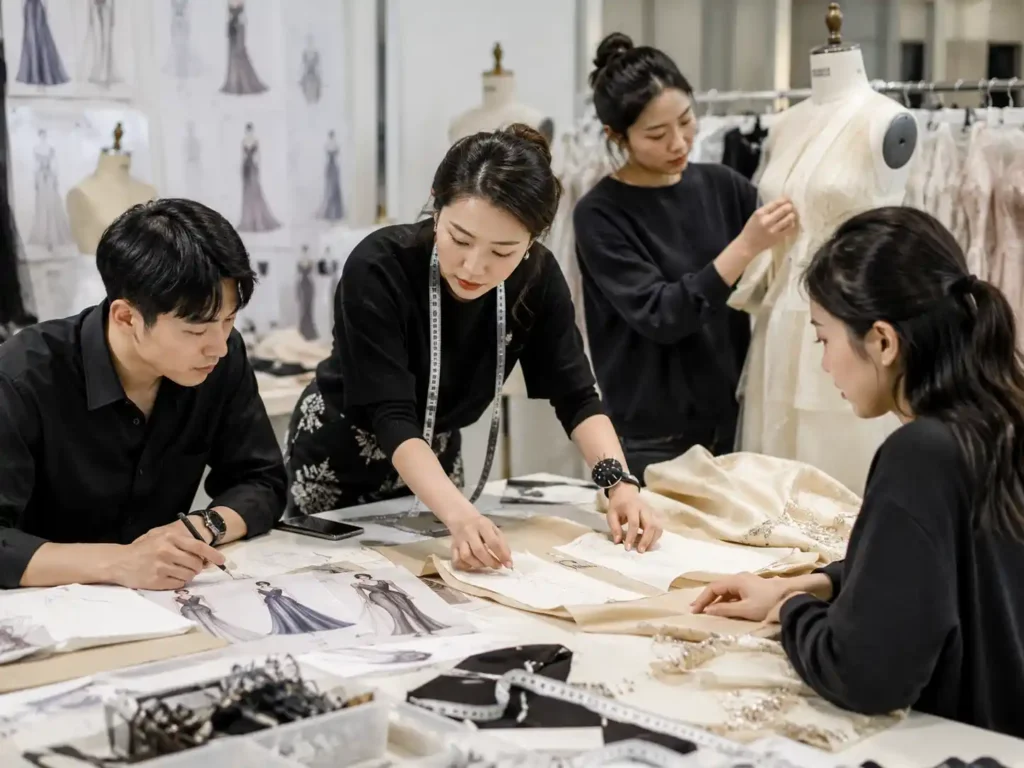
Jinfeng Apparel supports womenswear pattern development for fashion brands that need more than a pattern drawn from measurements. Our pattern team works from tech packs, sketches, reference garments, images and size specifications, then connects pattern development with physical sampling, fit review, pattern correction, size development and bulk-production control.
- 7+ senior womenswear pattern makers
- 2 dedicated sample rooms
- 20+ sample machinists supporting fit validation
- Mini, midi, maxi, bodycon, corset, slip, halter, strapless, backless, jumpsuit and coordinated-set development
- US, UK, EU and AU sizing programs supported
- Pattern records carried forward into PP approval, bulk production and repeat orders
Pattern Development Built Around Real Garment Production
A pattern has to work beyond a computer screen. Our development process connects technical pattern decisions with fabric behavior, physical sampling, fit comments, size requirements and the production conditions needed to reproduce an approved garment consistently.
7+ Pattern Makers
2 Sample Rooms
20+ Sample Machinists
Multiple Size Markets
Fit-Led Revision
Bulk-Ready Control
What CAD Pattern Development Covers for Womenswear
| Development Stage | Main Technical Focus | Working Output |
|---|---|---|
| Design Review | Silhouette, structure, fabric direction, closures, lining and fit expectations | Development brief |
| Initial Pattern | Bust, waist, hip, length, neckline, armhole, straps and garment balance | First pattern |
| First Sample | Construction feasibility, fabric behavior, proportion and visual balance | Physical sample |
| Fit Review | Measurement comparison, wearing comfort, coverage, support and movement | Fit comments |
| Pattern Correction | Shape, balance, ease, position and construction adjustment | Revised pattern |
| Size Development | Base size, target size range and grade-rule control | Size-development standard |
| PP Approval | Final fabric, measurements, construction, trims and appearance | Approved PP sample |
| Bulk Control | Final pattern, size chart, grade rule, Golden Sample and QC measurements | Production standard |
Built for Professional Womenswear Development Teams
Fashion Brands
Product Development Teams
Technical Design Teams
Sourcing Offices
Premium Ecommerce Brands
Occasionwear Teams
Start Pattern Development from the Files You Already Have
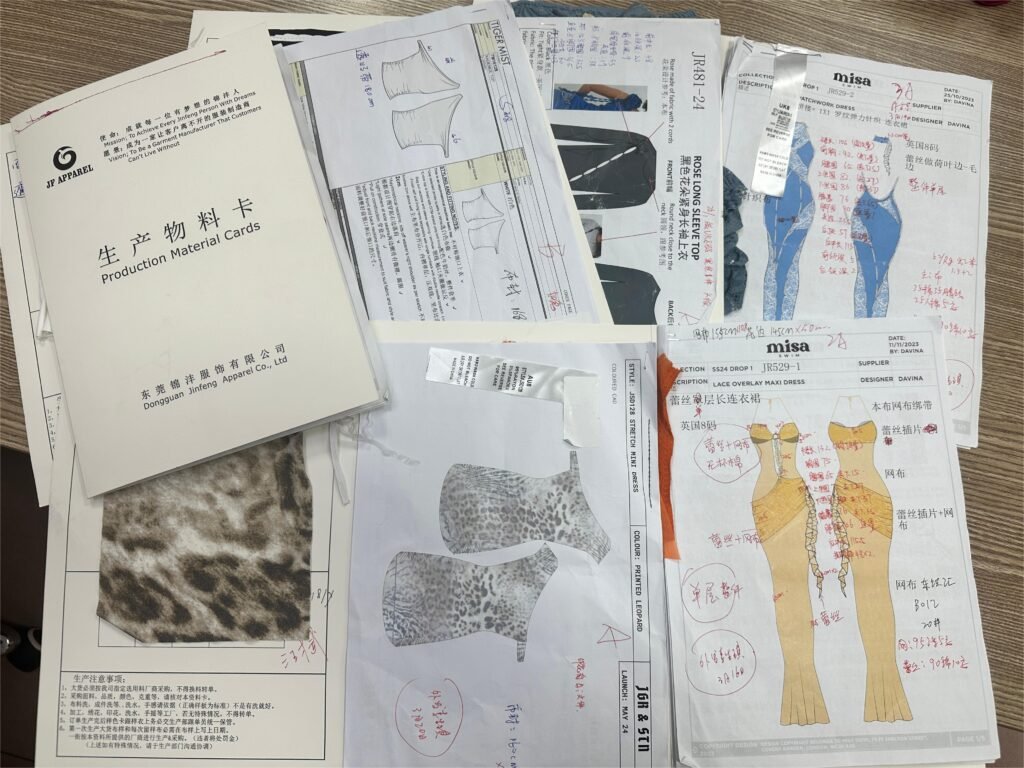
Tech Pack

Original Sample
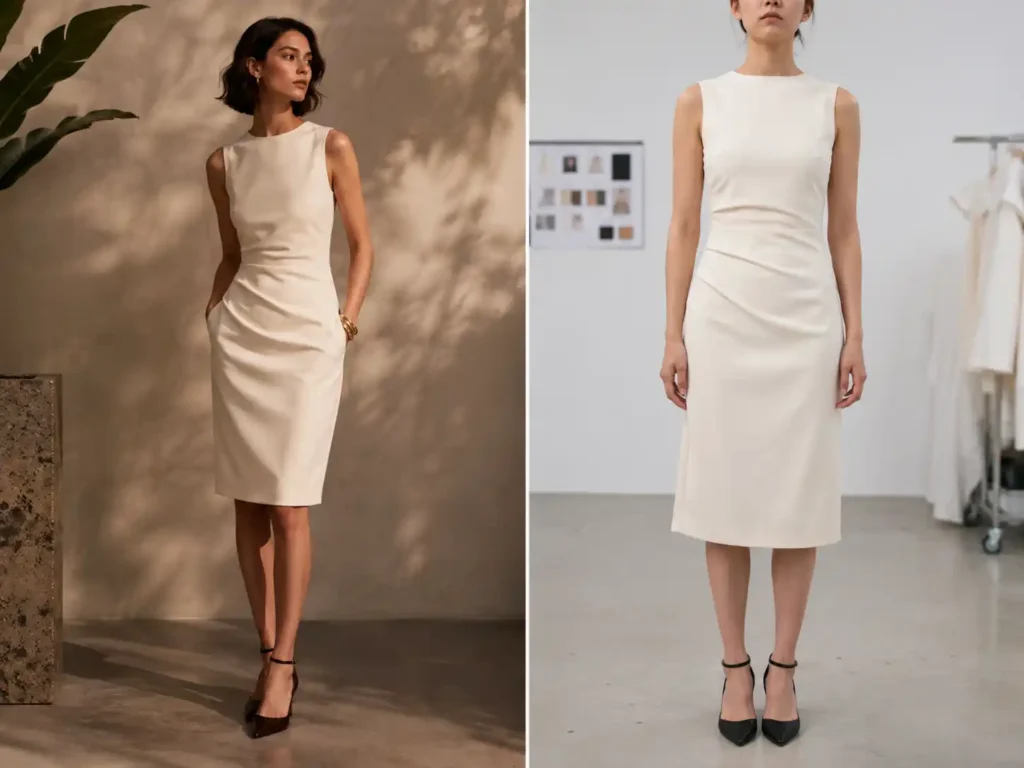
Reference Image

Design Sketch
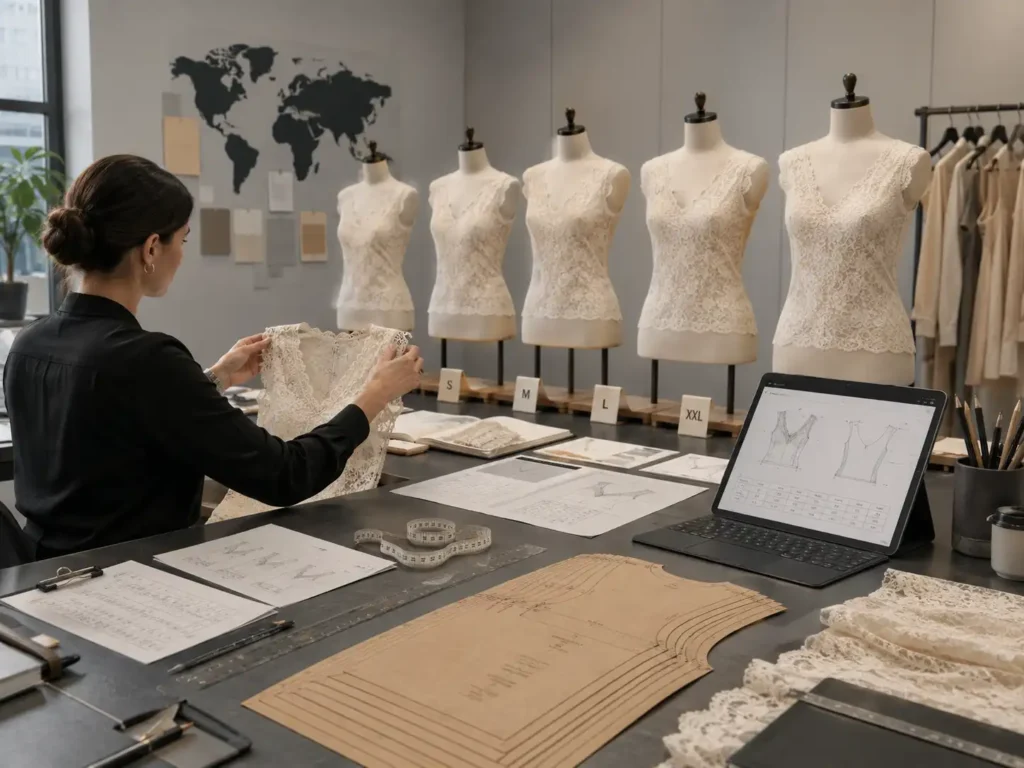
Size Chart
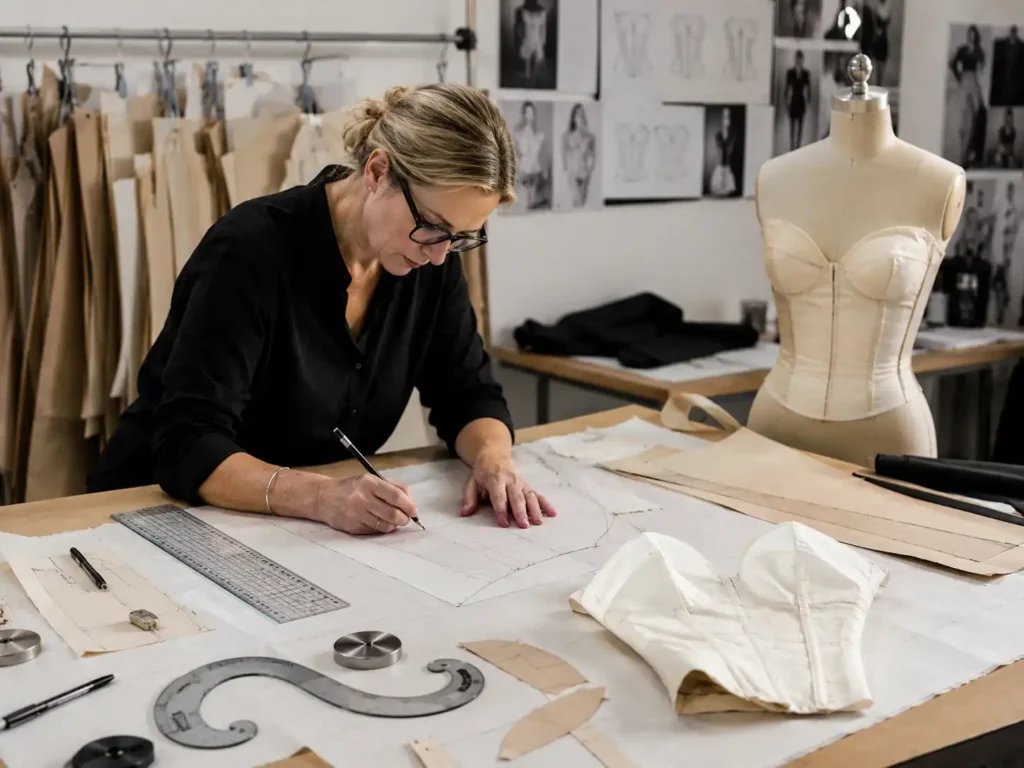
Existing Pattern
From Design Reference to Production-Ready Pattern
Pattern development is not a single drafting action. Each stage should answer a different question: Does the design structure make sense? Does the pattern create the intended silhouette? Does the garment work in the selected fabric? Can the approved fit be reproduced across sizes and bulk production?
Design Structure Comes Before Pattern Lines
Before an initial pattern is developed, the garment has to be interpreted as a three-dimensional structure rather than a flat image. A fitted mini dress, corset dress and satin slip dress may have similar visual references yet require very different construction logic. The pattern maker needs to understand where shape comes from, how the garment is supported, how the wearer enters the garment, how the fabric behaves and where production risk may appear.
For womenswear, the review commonly covers bust shaping, upper and under-bust relationships, waist position, hip shaping, front and back length, neckline depth, armhole coverage, strap placement, slit height, lining coverage, closure position and hem balance. Jumpsuits add another critical relationship between torso length, waist position, hip shape, rise and movement.
Fabric direction is reviewed at the same stage because pattern decisions made for a stable woven may not work for stretch jersey, power mesh or a fluid satin. Construction details such as cups, boning, elastic, anti-slip tape, lining or multiple layers can also change the amount of support and ease required.
The goal is not to promise that every reference can be copied exactly. The goal is to identify what needs to be defined before time and material are spent on the first sample.
The First Pattern Creates a Testable Garment
The first pattern converts design information into a garment that can be cut, sewn, measured and worn. At this stage, every important decision should be visible enough to test: silhouette, body proportion, neckline, waist position, hip fit, strap length, armhole, back coverage, slit position, lining relationship and overall balance.
A first sample is therefore not judged only by whether it resembles the sketch on a hanger. It needs to answer questions that affect later production. Does the neckline remain stable when the wearer moves? Does a strapless bodice stay in position? Is a bodycon dress tight because of the pattern or because the fabric has insufficient stretch? Does the maxi hem hang evenly? Does a jumpsuit have enough rise and movement while keeping the intended waistline?
Sample machinists also provide information during sewing. A pattern may be mathematically correct yet create problems when the selected material is cut or sewn. Slippery satin, stretch mesh, lace edges, sequins, heavy linings or multiple support layers can reveal seam, allowance or construction issues.
The first pattern creates a measurable starting point. It is intentionally designed to be reviewed and corrected rather than treated as an untouchable final file.
Approval Must Be Converted into Production Standards
Once fitting comments have been resolved, the development information must be consolidated. A verbal “sample looks good” is not enough for a bulk order involving multiple sizes, colors and production lines. Pattern corrections, measurement changes, construction changes and approved details need to be reflected in the final production standard.
The approved base pattern should align with the confirmed size chart and grade rule. The PP sample provides another checkpoint for fabric, color, trims, construction, measurements, labels and overall appearance. A Golden Sample can then serve as the physical comparison reference for production and inspection.
For repeat programs, pattern records, size information, fabric references, trim details, revision notes and approved samples help reduce the need to rebuild the same product knowledge from the beginning. New colors, repeat orders and related silhouettes can start from a controlled historical reference while still being reviewed for any material or design changes.
Jinfeng Apparel links pattern development with sample rooms, production, merchandising and QC teams so an approved fit can move forward as a production standard rather than stopping as an isolated development file.

Control the Measurements That Define Womenswear Fit
Good womenswear fit depends on relationships between measurements, structure, fabric and movement. Pattern development therefore focuses on the areas most likely to affect appearance, comfort, coverage and size consistency rather than simply matching a list of numbers.
| Pattern Area | Main Control Points | Common Failure to Prevent |
|---|---|---|
| Bust | Full bust, upper bust, under bust, cup position | Gaping, compression, weak support |
| Waist | Natural, high or low waist position | Wrong proportion, twisting, excess tension |
| Hip | Circumference, ease, stretch allowance | Drag lines, restricted movement |
| Neckline | Shape, depth, support, lining coverage | Exposure, unstable edge |
| Armhole | Depth, curve, front/back coverage | Underarm exposure, tight movement |
| Strap | Length, width, angle and position | Falling straps, distorted neckline |
| Back | Back height, opening and strap tension | Front instability, poor support |
| Slit | Height, overlap and movement allowance | Excess exposure, pulling |
| Hem | Length, sweep and balance | Uneven mini/maxi length |
| Jumpsuit Rise | Torso length, crotch depth and waist position | Pulling, sagging, limited movement |
Fit Approval Comes Before Size Grading
Grading cannot rescue a weak base pattern. The approved sample size has to establish the intended silhouette, body balance, comfort and coverage before the same design logic is carried into the remaining size range.
Build the Right Base Size First
A base pattern provides the reference from which the rest of the size program develops. The process begins with the brand’s target measurements and fit preference, then tests how those numbers interact with garment construction and fabric behavior. A bodycon style, corset dress and loose resort dress may use the same nominal size yet require very different ease and balance.
During fitting, attention is paid to visual proportion as well as measurement compliance. A waist can measure correctly while sitting too high or too low on the body. A neckline may meet its stated depth yet expose too much because of strap angle or bust shaping. A jumpsuit hip measurement can be within specification while the rise still limits movement.
Fit comments should identify both the visible issue and its technical cause. “Too tight at hip” may require added ease, a different side-seam shape or a change in stretch allowance. “Armhole too low” may involve strap position, front width, bust shaping or back balance rather than one isolated line.
Once the base sample achieves the intended fit, the pattern becomes a more reliable foundation for size development.
Grade Rules Need Product Logic
Size development is not simply enlarging every pattern edge by the same amount. Bust, waist, hip, shoulder, armhole, strap, garment length, neckline and slit position can follow different increments depending on the brand standard and product structure.
Fitted womenswear needs particular attention because small grading errors become visible quickly. Bodycon garments must maintain body proportion and stretch distribution. Corset styles need support and cup relationships to remain balanced across sizes. Strapless dresses need stable upper-bust control. Jumpsuits require torso and rise development as well as hip and waist grading.
Petite, tall and plus-size programs may require more than adding or subtracting length. Waist position, strap length, armhole coverage, neckline depth, slit height and body proportions may need separate adjustment so the garment still looks intentionally designed on different bodies.
Jinfeng Apparel can work to US, UK, EU and AU requirements, including XS–XL, extended-size, plus-size and petite/tall programs according to the specification supplied for each project.
Verify the Size System in Production
An approved base size and agreed grade rule create the technical foundation, but bulk control still matters. Final pattern information, size charts, grade rules, PP samples and measurement standards need to remain aligned as production moves through cutting, sewing and finishing.
High-risk measurements should be identified before production. For a fitted dress, bust, waist, hip, length, neckline and straps may receive greater attention. A maxi dress adds hem balance and long-length consistency. A jumpsuit requires waist, hip, inseam and rise checks. A lined sheer dress needs shell and lining dimensions to work together.
Measurement checks during production help identify drift before finished garments are packed. The goal is not to claim zero tolerance. Apparel production always requires agreed measurement tolerances appropriate to the product, fabric and construction. A controlled size program is one where the standard is defined, measured and recorded consistently.

Pattern Development for High-Impact Womenswear Styles
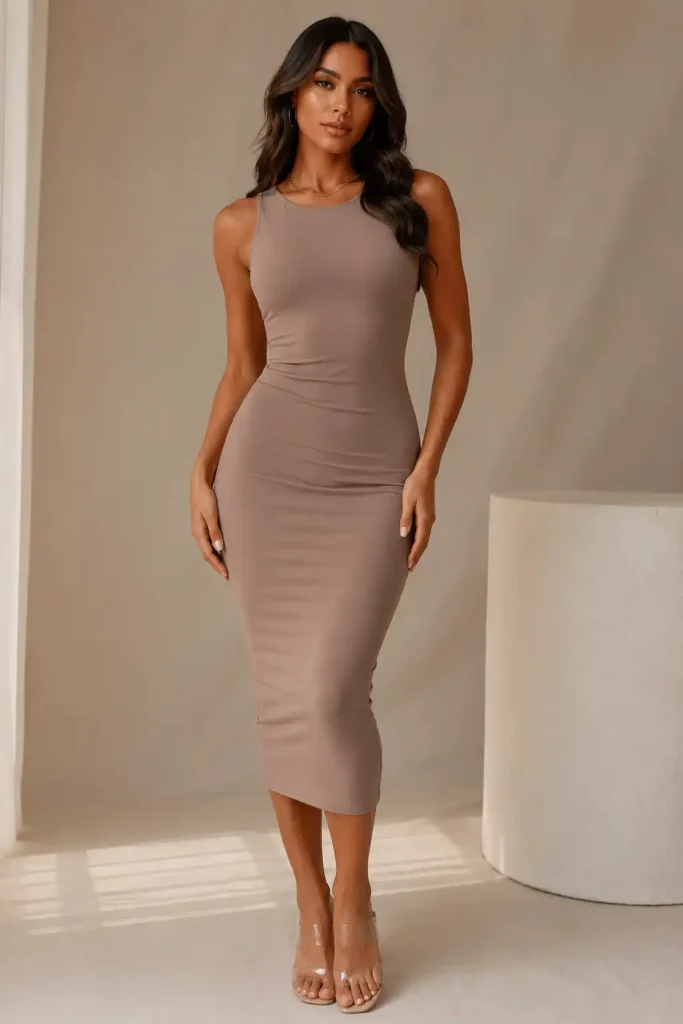
Bodycon Dress
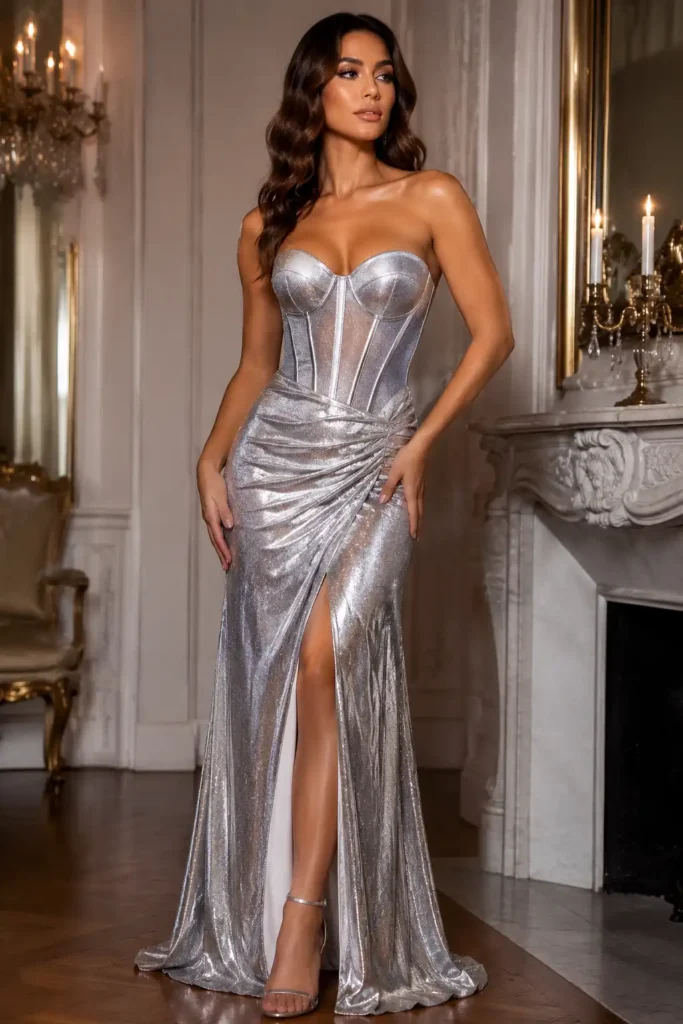
Corset Dress

Slip Dress

Strapless Dress

Halter Dress

Backless Dress

Maxi Dress

Jumpsuit
Fabric Behavior Changes Pattern Decisions
Pattern geometry and fabric behavior cannot be separated. Drape, stretch, recovery, thickness, transparency and surface stability influence fit, ease, seam design, lining, support and the way an approved garment behaves in production.

Stable, Fluid and Stretch Fabrics Need Different Ease
A stable woven fabric holds shape differently from stretch jersey, and a fluid satin hangs differently from ponte. Reusing one pattern without reassessing ease and structure can change the silhouette even when measurements stay unchanged.
Stretch fabrics require attention to stretch percentage, recovery and direction. A bodycon dress made from high-recovery ponte may need a different fit allowance from a lightweight jersey with more give. Power mesh used as a support layer can influence compression and recovery around the bust, waist and hip. Stable woven fabrics depend more heavily on darting, seam shaping or panels because the material itself contributes less stretch.
Fluid fabrics introduce another set of considerations. Satin and chiffon can drop, shift or reveal imbalance through the hem and side seams. Bias-oriented construction can change length and drape after the garment hangs. A long skirt can therefore need a different sample-validation approach from a short structured style.
Pattern development works best when fabric direction is established before the pattern is treated as final. If bulk fabric changes materially from the sample fabric, fit and construction may need to be rechecked.
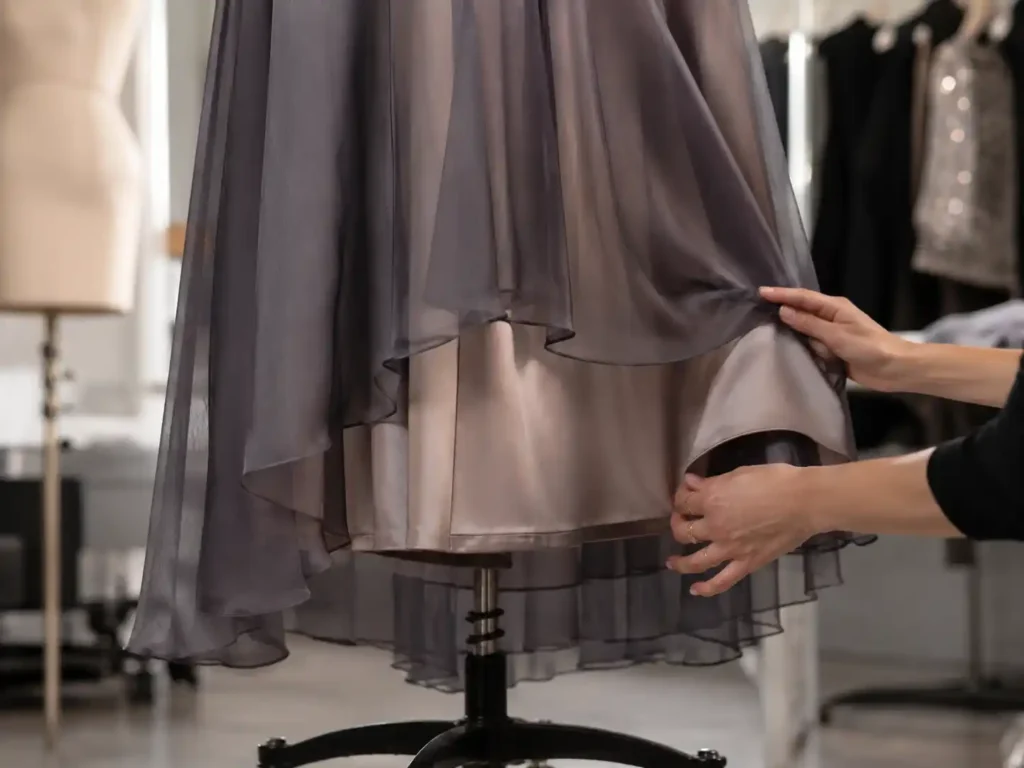
Lining and Support Can Change the Outer Pattern
Lining is not only a finishing detail. It influences coverage, comfort, stretch, weight and movement. A stretch outer shell paired with a rigid lining can restrict the garment. A sheer mesh dress may need strategically placed lining while preserving transparency in other areas. Satin may require lining choices that support drape without adding unwanted stiffness.
Corset and strapless structures can introduce cups, boning, elastic, anti-slip tape and multiple internal layers. Every added component changes thickness, tension or support. Pattern pieces may therefore need to account for the internal structure rather than being developed as if the outer shell were the entire garment.
Lace and sequin materials introduce placement issues as well. Lace edges, motifs or appliqué can influence seam positioning. Sequin fabrics can create bulk at seams and may need protection from skin contact. Such construction decisions need to be considered alongside the pattern because late changes can alter fit or garment balance.
A pattern should represent the complete garment system—shell, lining, support, trims and construction—not only the visible exterior.
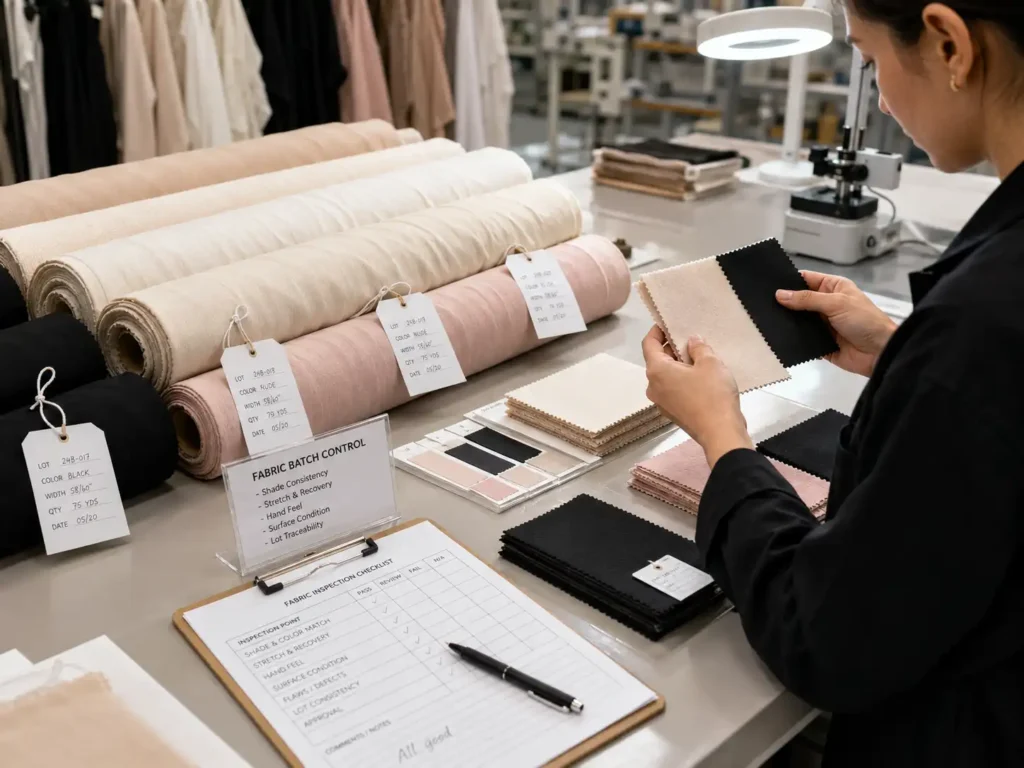
Fabric Changes During Sampling Need Reassessment
Switching fabric during development may appear simple when color and design remain unchanged, yet a new material can affect drape, stretch, recovery, shrinkage, transparency, thickness, seam behavior and pressing. Pattern decisions made with the first fabric may therefore need review.
A common example is moving from a soft stretch satin to a heavier low-stretch satin. Bust, waist and hip ease can change, and the new material may hold folds or seams differently.
Replacing lightweight mesh with stronger power mesh can increase compression. Changing chiffon weight can alter the hang and balance of a maxi skirt.
When a material changes, the development team should review whether the pattern remains suitable, whether lining or trims need adjustment and whether another sample is required.
The decision depends on how materially the fabric changes garment behavior.
Early reassessment costs less than discovering during bulk production that the revised material no longer works with the approved fit.
Physical Sampling Validates Pattern Decisions
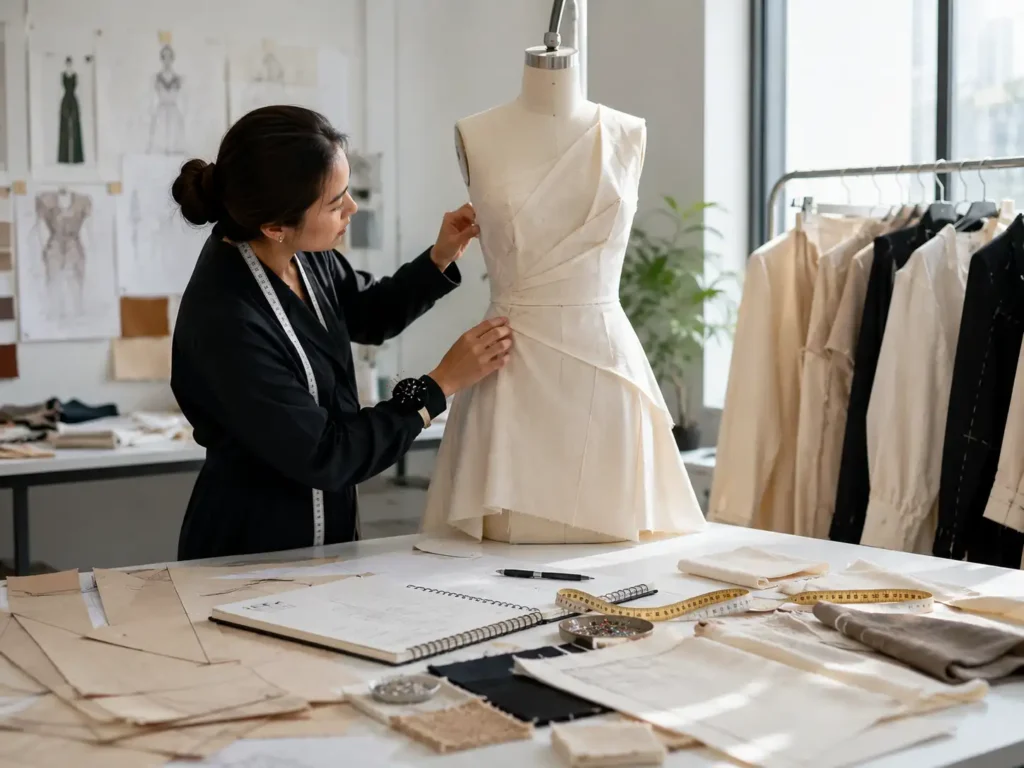
First Sample Validation

Complex Structure Testing

Sewing Feedback
Sample machinists can identify issues while the garment is being assembled: difficult seam intersections, excessive thickness, unstable edges, poor lining behavior, uneven ruching, zipper distortion or fabric slippage. Pattern or construction changes can then be made before bulk methods are finalized.

Measurement Review
Finished samples are measured against the agreed specification. High-risk dimensions such as bust, waist, hip, dress length, strap length, armhole, neckline depth, slit height and jumpsuit rise can be checked before fit comments are consolidated.
Pattern Correction Through Real Fit Feedback
Strong pattern development is iterative. A first sample makes fit visible; fitting comments turn visible problems into technical actions; the revised pattern then needs another physical check before the fit standard can be locked.
Identify the Cause, Not Only the Symptom
Fit comments are most useful when they explain what is happening on the body.
“Waist feels wrong” could mean the waist circumference is incorrect, the waistline is positioned too high, the bodice length is short, the skirt pulls upward or the fabric stretch differs from the intended material.
Pattern makers review fitting comments together with garment measurements, photos, sample condition and fabric behavior. Bust problems may involve full bust, upper bust, cup position, neckline shape or strap angle. Armhole exposure may come from armhole depth, front width, bust shape or shoulder placement. A maxi hem that appears uneven can originate from body balance, grain direction, seam tension or fabric drop.
Corrections should address the root cause rather than making isolated changes that create a new problem elsewhere. Each adjustment is therefore considered in relation to surrounding pattern pieces and the overall silhouette.
Physical fit review turns subjective feedback into measurable development work.
Record Every Approved Revision
Multi-round development becomes risky when changes live only in emails, screenshots or chat messages. Pattern changes need to remain connected with measurements, fabric, trims, construction and approval status so the next sample reflects the latest decision.
Revision records may include changes to pattern shape, garment measurement, neckline depth, strap length, waist position, hip ease, lining coverage, fabric choice, trim placement or sewing method. The record should also distinguish a confirmed change from a suggestion still waiting for approval.
The same discipline becomes more important when several styles are moving simultaneously. A 15-style or 25-style seasonal program can contain multiple fabrics, size ranges and revision rounds. Without structured records, an old measurement or construction note can easily move into a newer sample.
Jinfeng Apparel keeps project records around pattern, measurement, fabric, trims, packing and repeat-order requirements so approved information can be carried forward instead of reconstructed from memory.
Move Only Approved Corrections into Bulk
Sample approval and production approval are related but not identical. A visually approved revised sample still needs its changes reflected in the final pattern, measurement file and production instructions.
Before bulk production, pattern corrections should align with the PP sample. Fabric, color, trims, measurements, construction, labels and packing requirements are reviewed as part of production preparation. The resulting PP and Golden Sample references help production and QC teams compare bulk garments against the approved standard.
If a major design or fabric change occurs after approval, the technical impact needs to be reviewed again. Changing a neckline, support structure, fabric stretch or lining can affect pattern balance and may require additional validation.
The objective is controlled translation: fitting feedback becomes a corrected pattern; the corrected pattern becomes an approved sample; the approved sample becomes a repeatable bulk standard.
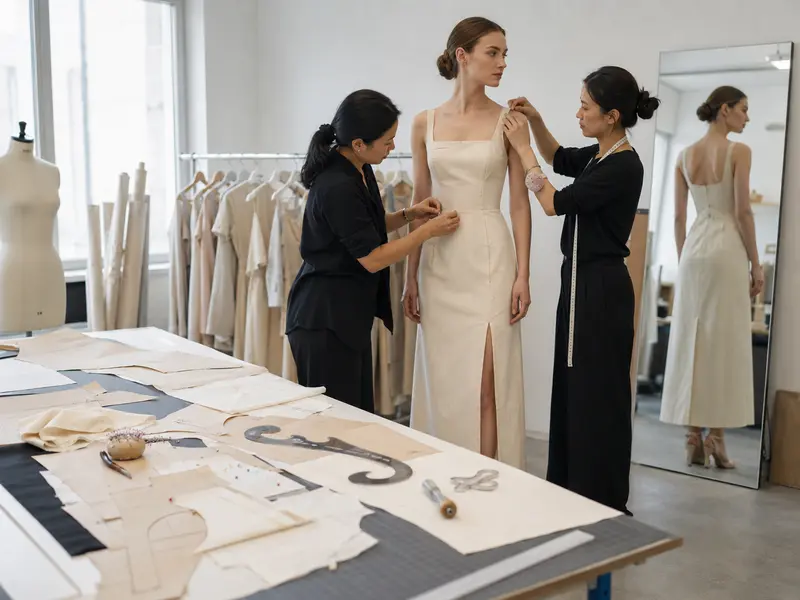
Size Development for Global Womenswear Programs
US Size Programs
UK and EU Programs
XS–XL Development
Extended Sizes
Plus-Size Fit
Petite and Tall
Lock the Pattern Before Bulk Production
Final Pattern
Size Chart
Grade Rule
PP Sample
Golden Sample
QC Measurements
Multi-Style Pattern Development for Seasonal Collections
Large womenswear programs rarely move one style at a time. Collections can contain different silhouettes, fabrics, complexity levels and launch priorities, requiring pattern and sample resources to be organized around the commercial calendar.
Group Styles by Development Logic
Styles can be grouped by fabric family, silhouette, construction complexity and shared components. Satin slip and satin corset dresses may use the same fabric family but require very different pattern and sample attention. Grouping helps the development team see where materials can be shared and where technical work must remain separate.
Prioritize Hero Styles
Not every style needs to reach approval on the same day. Hero SKUs, photo-sample priorities, styles with long-lead fabrics and technically complex garments can move earlier in the schedule. Lower-risk styles can follow once shared materials or fit directions are confirmed.
Track Revision Status
A multi-style program needs clear status for first pattern, first sample, fit comments, revised sample, PP approval and final pattern. Revision records reduce the risk of an earlier measurement, fabric or construction instruction entering a later development round.
Connect Development to Bulk
Pattern development should also consider the intended bulk schedule. Approved styles can be grouped for material preparation, PP confirmation and factory allocation according to fabric, construction complexity, order quantity and launch timing rather than waiting for the entire collection to finish at once.
Multi-Style Womenswear Development Program

Program Scope
22 womenswear styles with a combined order volume of approximately 52,000 garments, covering fitted dresses, occasion dresses, satin styles, bodycon silhouettes, skirts and coordinated sets. The size range ran across XS–XL, with several styles requiring additional fit attention around bust, waist, hip, neckline and length.
The development workload was divided by silhouette and fabric behavior instead of treating every style as an identical task. More structured styles received earlier pattern and fit review, while simpler silhouettes progressed after shared fit directions had been confirmed.

Development Control
Pattern work was organized around common checkpoints: design and tech-pack review, base pattern, first sample, measurement review, fitting comments, pattern correction, revised sample and PP preparation.
High-risk styles were separated from lower-risk products. Corset and strapless constructions required support and upper-bust validation. Bodycon styles required closer review of stretch and negative ease. Satin pieces were checked for drape, neckline balance and hem behavior. Multi-style records kept pattern, measurement, fabric and revision information aligned as the program moved forward.

Bulk Transition
Approved styles moved into production preparation with final pattern references, size information, PP samples and QC measurement standards. Bulk production could then be allocated according to product type, fabric, construction complexity, quantity and timing.
For a program of this size, the value of structured pattern development is not simply getting 22 patterns completed. The commercial objective is maintaining one controlled technical standard from the earliest design files through sample approval and into tens of thousands of finished garments.
Pattern Development Evidence You Can Review
Professional pattern capability is easier to judge through working evidence than broad claims. Development imagery should focus on the technical process while protecting confidential brand information and unreleased designs.

Pattern Pieces

Measurement Checks
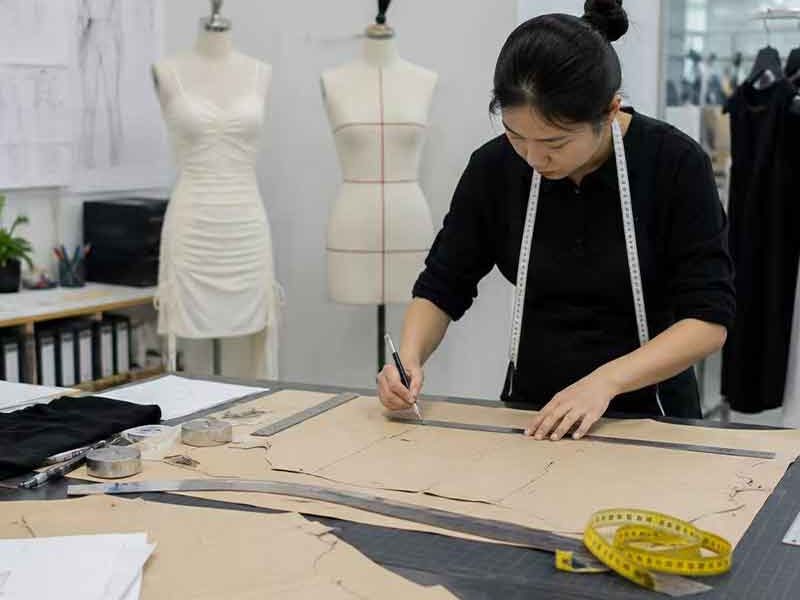
Sample Room

Fit Corrections

Complex Details

PP References
NDA Protection for Patterns and Unreleased Designs
Design Confidentiality
Pattern Protection
Private Label Protection
CAD Pattern Development Frequently Asked Questions
You can send a tech pack, design sketch, line sheet, reference image, measurement chart, existing pattern information or an original sample. More complete information usually allows a more accurate initial review. Fabric preference, target market, size range, intended quantity and any known fit requirements are also useful.
Reference images can be used as a development starting point. Hidden construction details still need to be defined, including back structure, lining, closure, support, target fabric, size range and fit preference. The aim is to interpret the intended design into a workable garment rather than blindly copying a photograph.
Yes. An original sample can be measured and reviewed for construction, fabric behavior, seam placement, lining, closures, support and fit. Requested changes should be identified before a new pattern is developed so the new version reflects the brand’s requirements rather than simply reproducing the existing garment.
Corrections can be based on fitting comments, garment photos, measurements, mannequin observations, model fitting, fabric stretch behavior and brand fit preferences. Pattern makers identify the technical cause of the issue, update the relevant pattern areas and validate significant changes through revised sampling when required.
Yes. Jinfeng Apparel can support development for US, UK, EU and AU size programs according to project-specific measurement standards. Alpha sizes such as XS–XL, extended sizes, plus-size programs and petite/tall adjustments can also be reviewed according to the supplied brand specification.
Size development should follow approval of the base-size fit. Starting grading before the core pattern is stable can multiply the same fit problem across the size range. The preferred sequence is base pattern, physical sample, fit review, correction, approved base size and then controlled size development.
Our pattern and sample teams work with bodycon, corset, slip, halter, strapless, backless, mini, midi, maxi, skirt, jumpsuit and matching-set styles. Development can address bust support, neckline, armhole, straps, waist, hip, slits, lining, boning, cups and movement according to garment structure.
Approved fit changes are carried into the final pattern and aligned with the confirmed size chart, grade rule and PP sample. Golden Sample references and QC measurement standards help production teams compare bulk garments against the approved development standard.
Approved pattern, size, fabric, trim, revision and production information can be retained for repeat-order support. A repeat order still requires review when material, color, construction, sizing or other product requirements have changed from the previous production.
Yes. Jinfeng Apparel supports NDA-based cooperation for sensitive development projects. Tech packs, samples, patterns, private-label materials and unreleased designs can be protected throughout development and production according to the agreed confidentiality requirements.

Start Your Womenswear Pattern Development
Send the development information you already have and our team can review the garment structure, pattern requirements, target fit, fabric direction, size range and sampling needs before the project moves forward.
Complete information allows a more useful technical discussion and helps identify potential fit or production risks earlier.
For a faster review, include:
- Tech pack, sketch, line sheet or reference images
- Existing sample or pattern information, when available
- Target fabric or fabric preference
- Base size and intended size range
- US, UK, EU or AU market requirements
- Key fit comments or known problem areas
- Quantity plan by style and color
- Number of styles in the collection
- Target sample or launch schedule
- Any NDA or confidentiality requirement