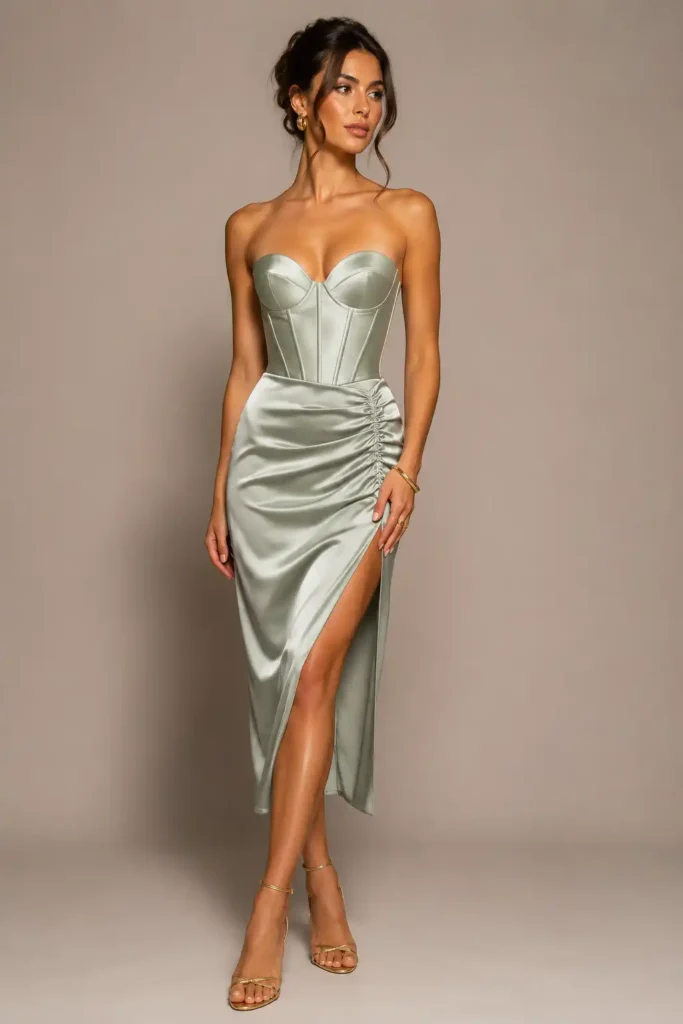
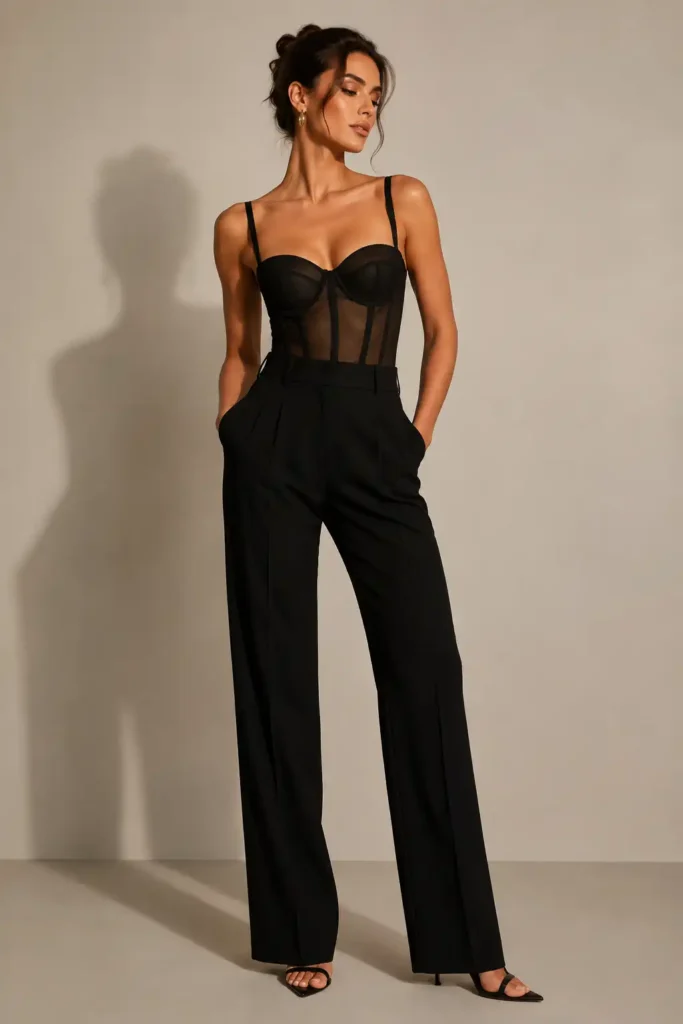
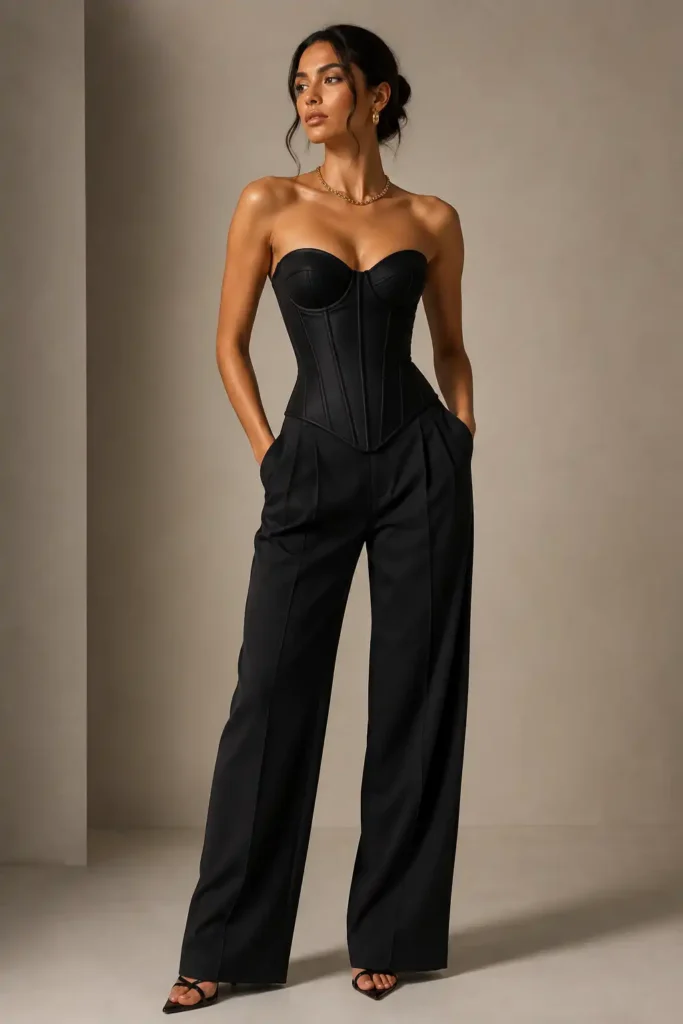
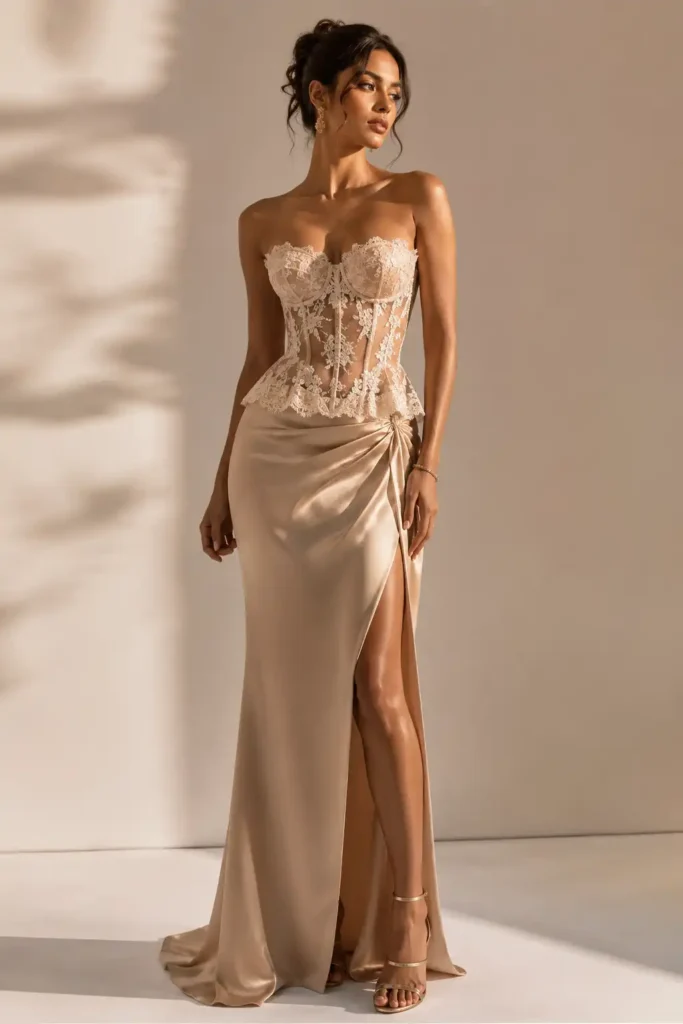
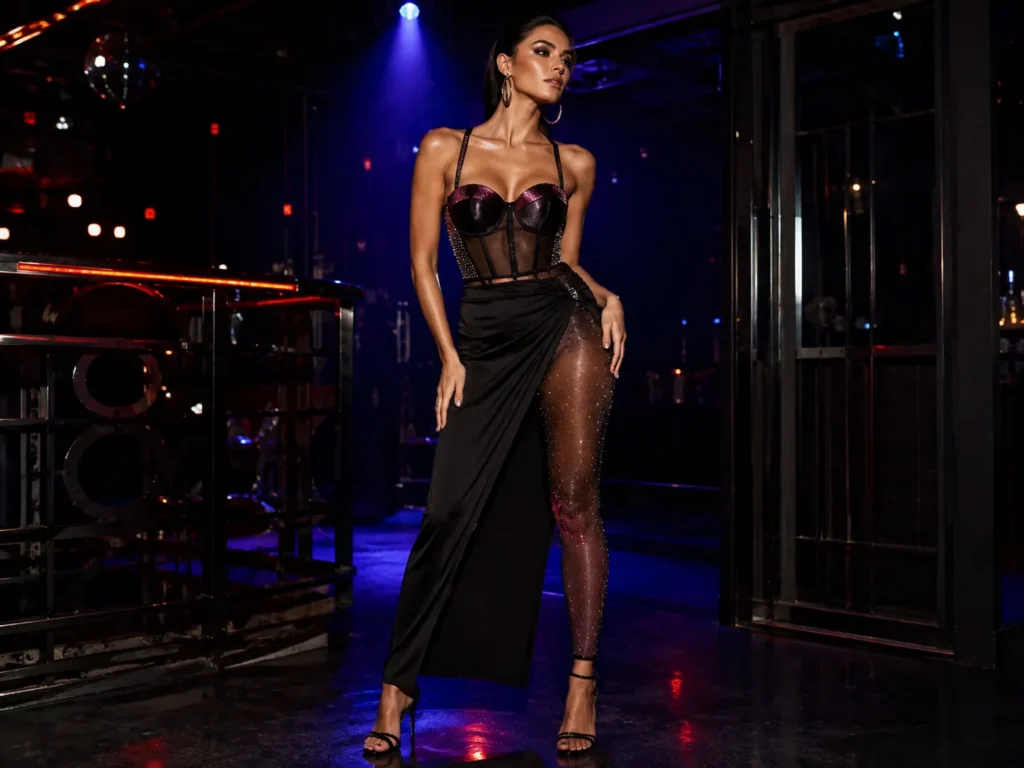
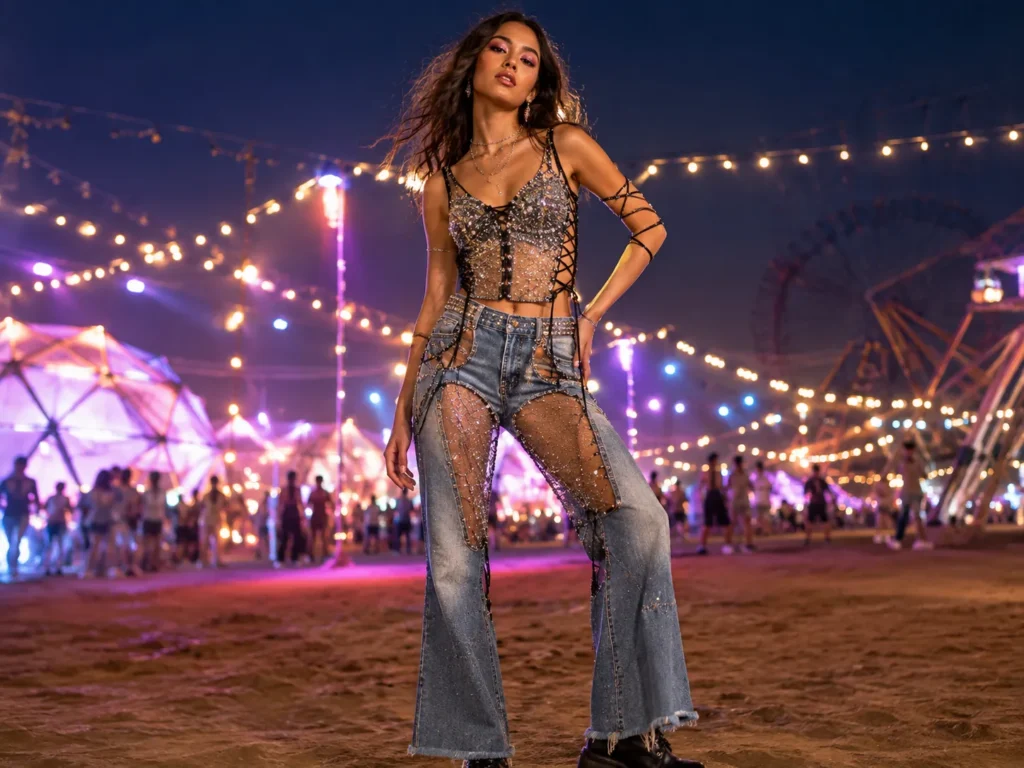
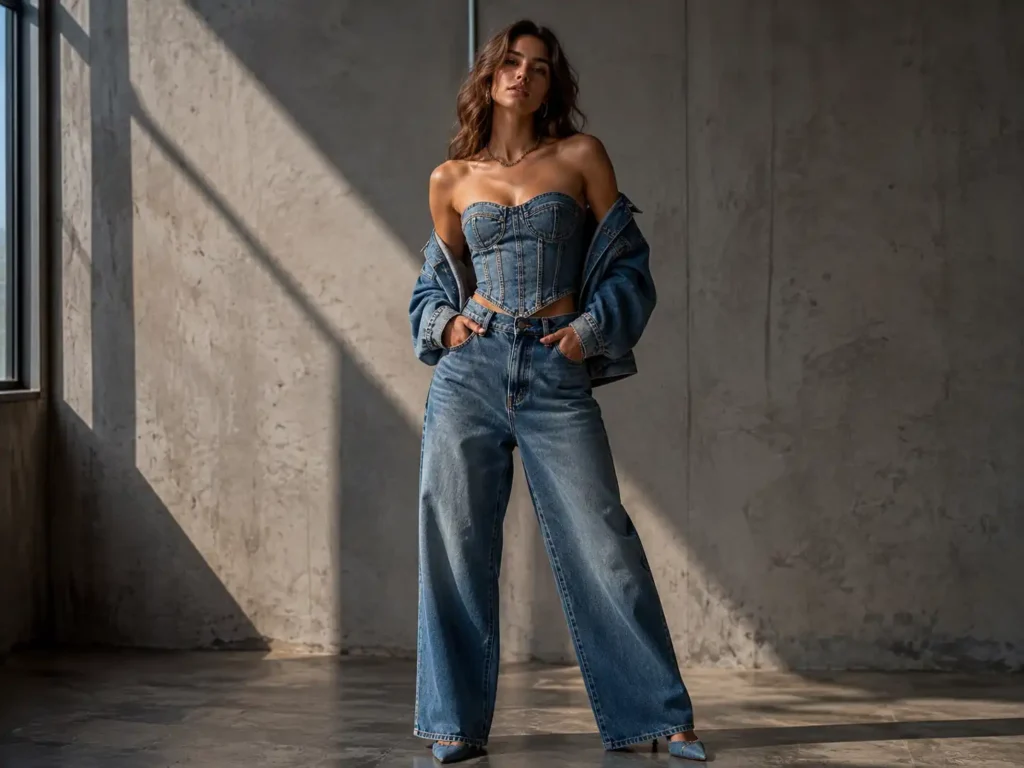
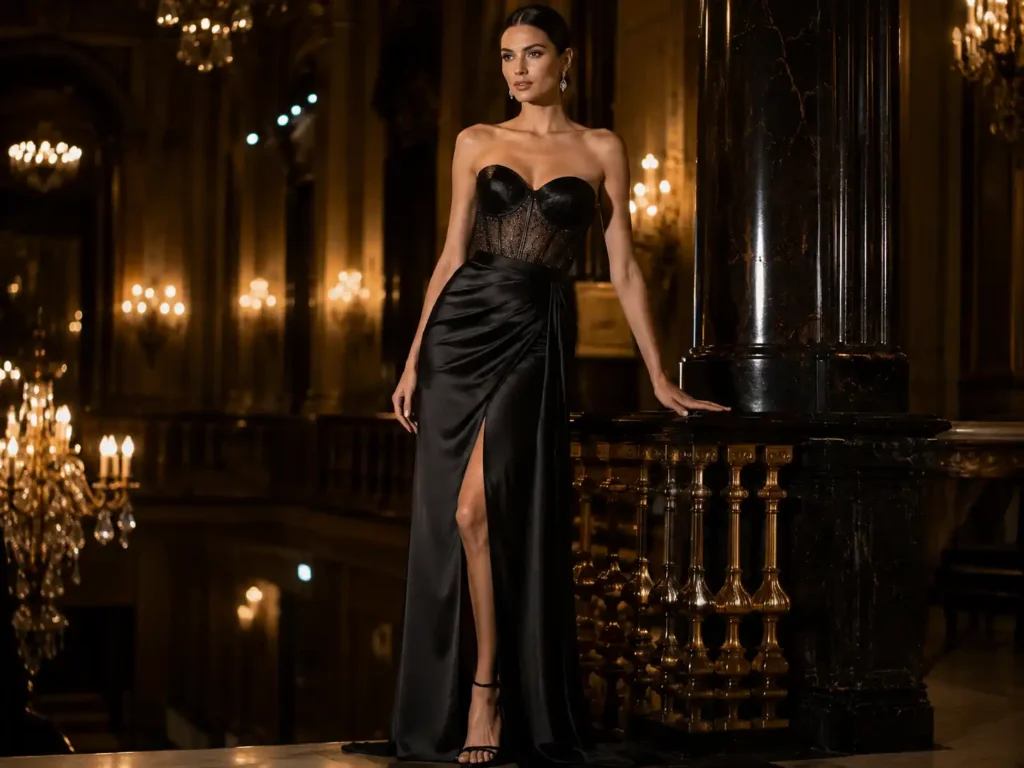
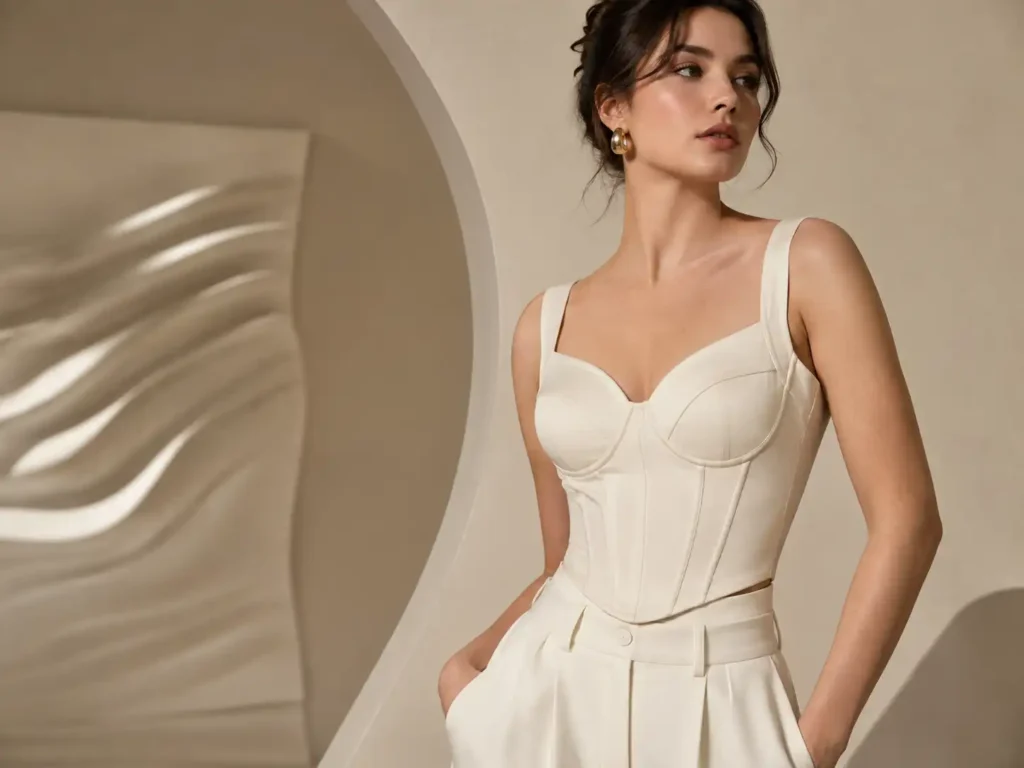
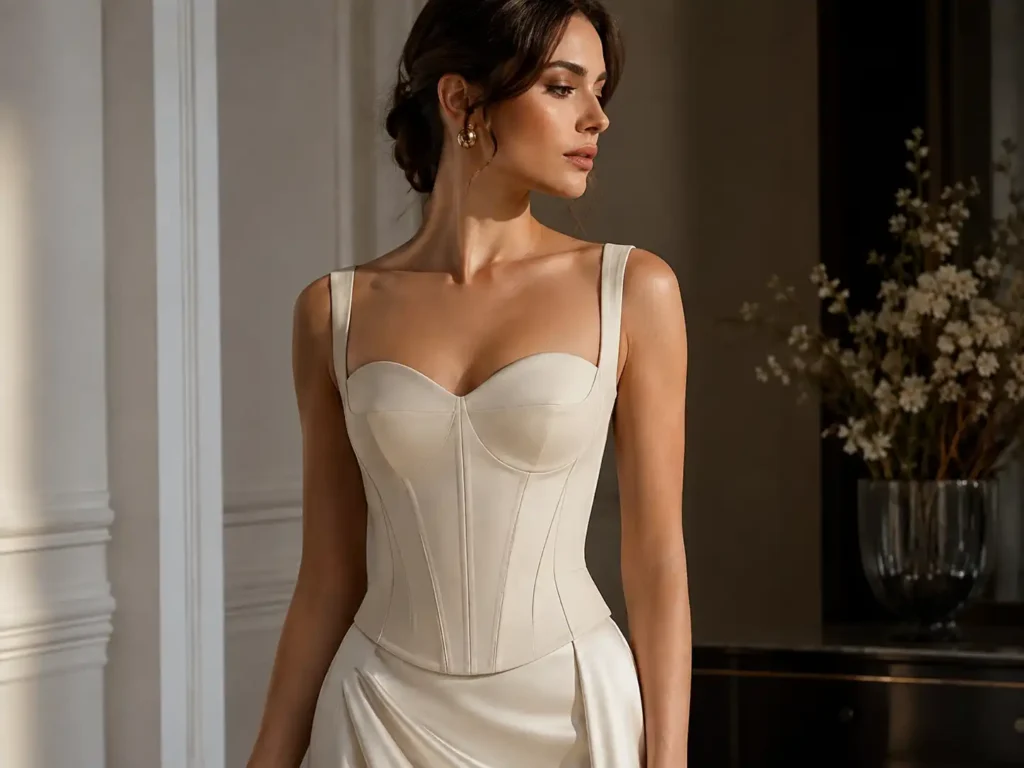
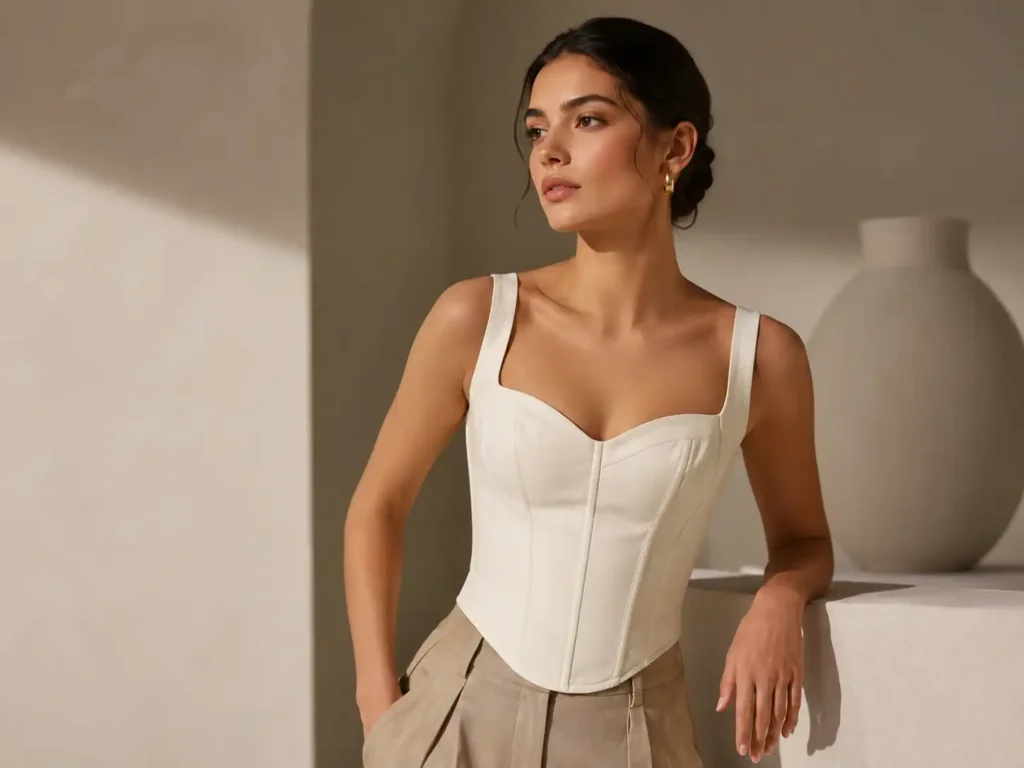
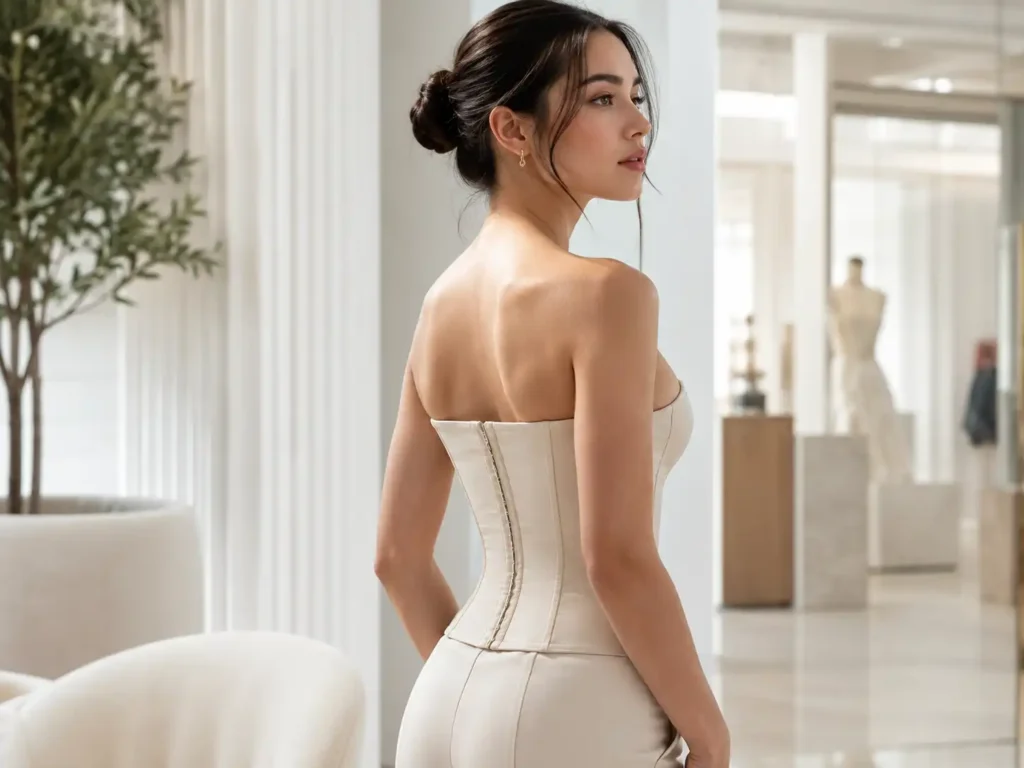
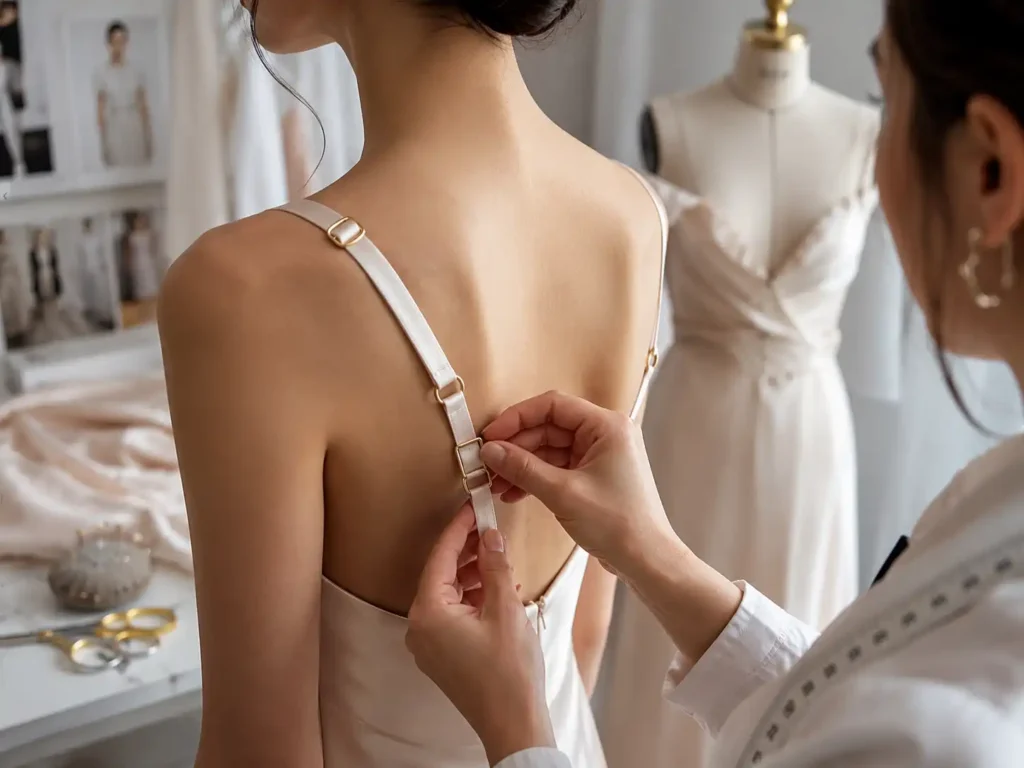
Bustier Top Manufacturer for Fashion Labels

Custom bustier development for established fashion labels requiring controlled fit, structured support, repeatable bulk production and retail-ready delivery.

  • MOQ starts from 200 pcs per style/color, subject to fabric, trim, color and construction requirements.
  • Complex bustier first samples are commonly planned within 15-25 days after material and construction details are confirmed.
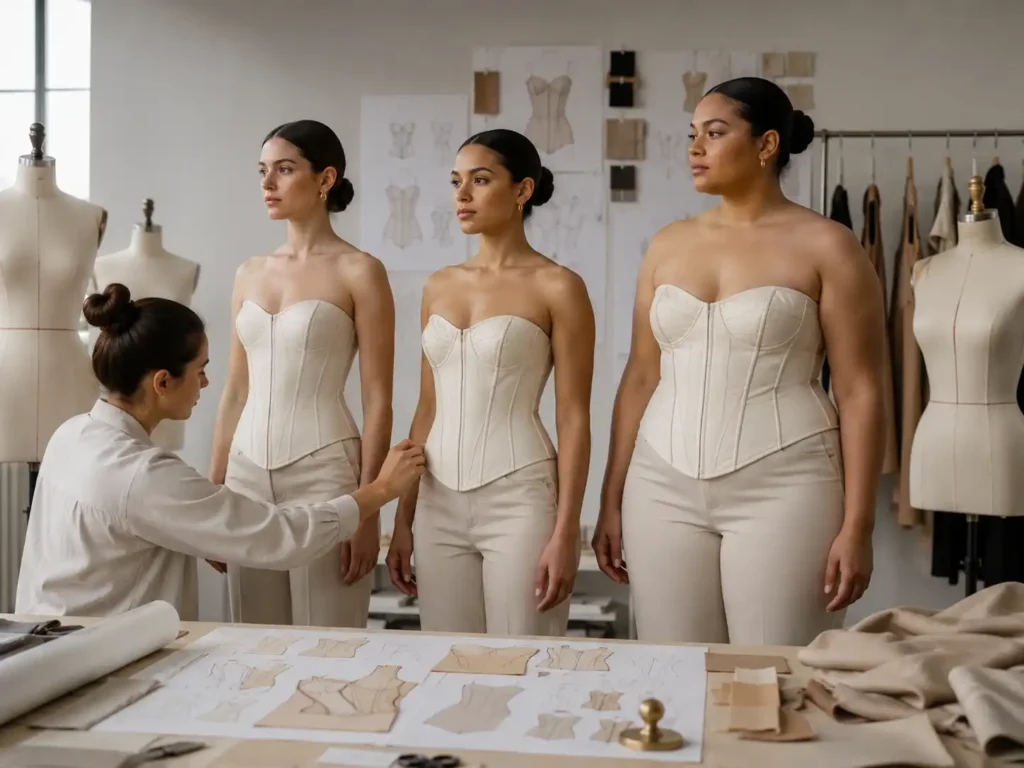
  • 2 sample rooms, 7+ senior pattern makers and 20+ sample machinists support structured style development.
  • 6 owned women’s fashion factories and 10+ long-term production partners support multi-style orders and staged delivery.

A Manufacturing System Built for Fashion Labels

Jinfeng Apparel combines structured product development with a production system designed for multi-style womenswear programs. Every bustier project is assessed by fit, fabric, internal support, order volume, launch timing and private-label requirements before sampling begins.

Since 2008

Women’s fashion manufacturing experience since 2008 supports decisions that go beyond copying a reference image. Pattern balance, bust coverage, boning placement, lining, closure strength, fabric behavior and bulk repeatability are reviewed as one product system. Long-term experience is most valuable when a style looks simple from the outside but contains several interacting layers inside.

Six Owned Factories

Six owned women’s fashion factories allow production allocation by product structure rather than by available space alone. Satin, mesh, lace, denim, fitted tops and matching sets do not follow the same sewing or finishing logic. Order allocation is planned around material behavior, construction difficulty, quality checkpoints and delivery sequence, helping each style enter a suitable production route.

Ten Plus Partners

More than 10 long-term satellite production partners add controlled capacity for seasonal programs, repeat orders and multi-batch delivery. These partners are used within an established supply network, not as unknown temporary subcontractors. Project files, approved samples, material references, sewing instructions and QC requirements remain aligned across the production plan.

Two Sample Rooms

Two sample rooms support parallel development of bustier tops, corset-style dresses, matching skirts and related collection pieces. Sample capacity matters when a fashion label is preparing 10-30 styles for one launch and cannot wait for every design to move through a single development queue. Priority is set according to campaign, showroom, approval and bulk-production dates.

Seven Pattern Makers

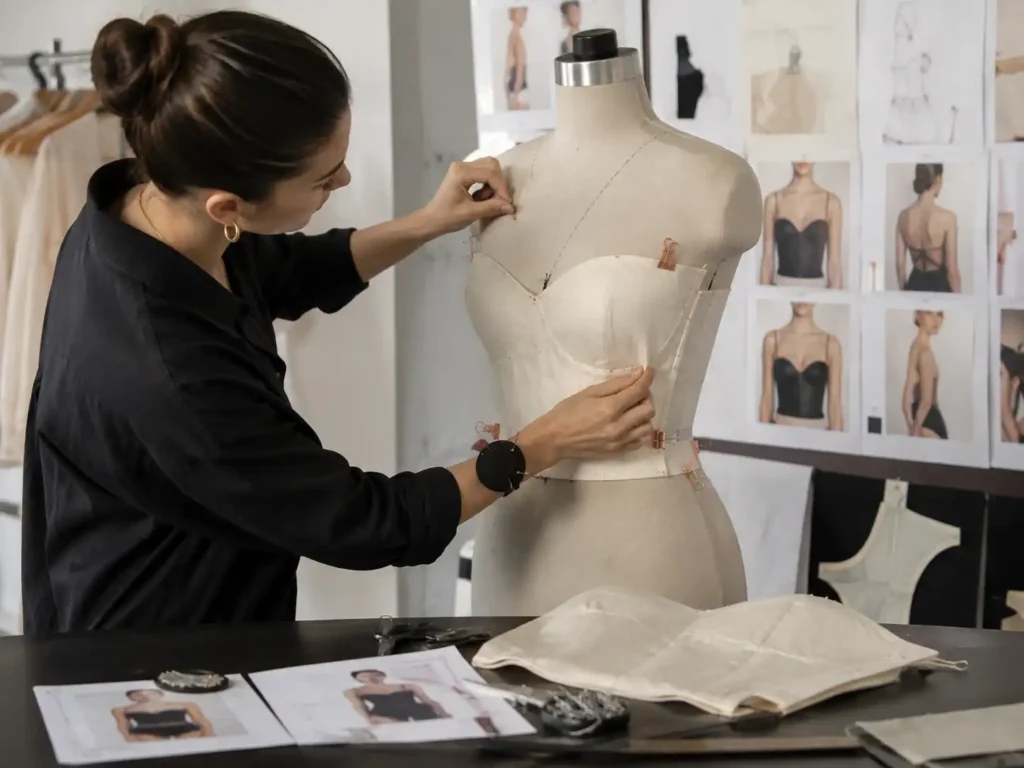
Seven or more senior pattern makers support bust, underbust, neckline, side seam, back height, cup position and waist shaping corrections. Bustier fit cannot be graded by adding the same amount at every edge. Pattern rules must protect support, coverage and proportion across the intended size range.

Fifteen QC Inspectors

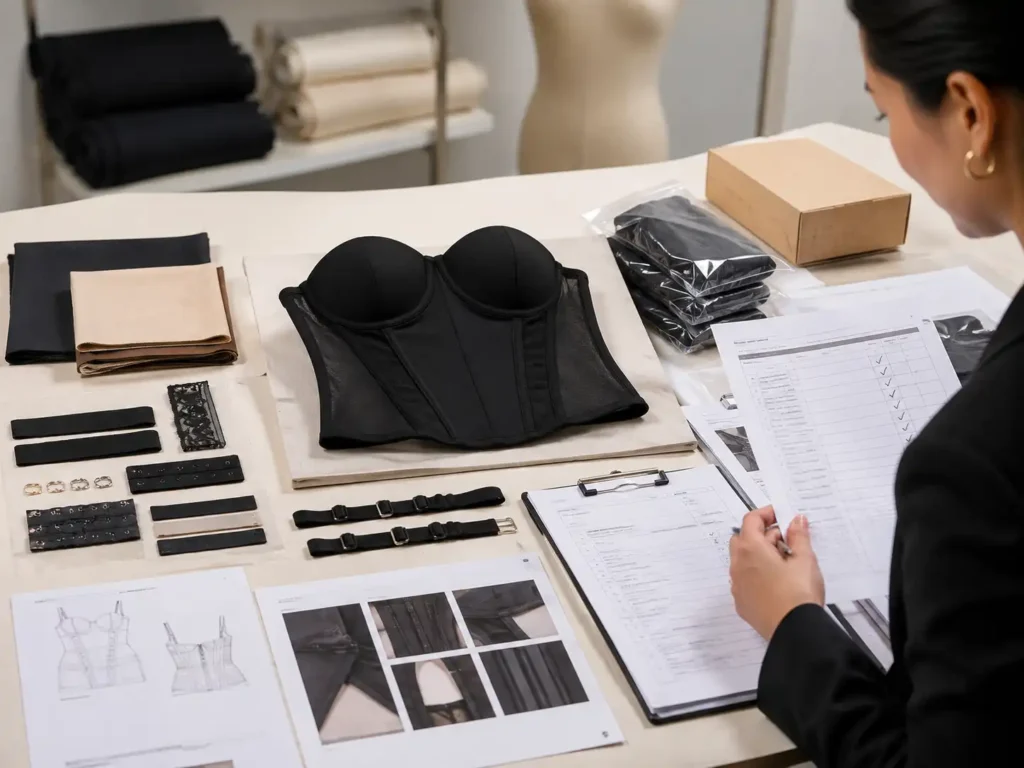
A 15+ person QC team supports incoming material checks, in-line review, measurement control, workmanship inspection and final packing verification. Bustier QC places additional attention on symmetry, cup position, boning channels, underwire casing, zipper or hook strength, neckline stability and interior comfort.

Built for Established Fashion Programs

The strongest project fit is a fashion label with a clear product direction, a professional sampling process and a real bulk-production plan. Jinfeng Apparel supports single-category bustier programs as well as wider collections containing skirts, trousers, dresses and coordinated sets.

Ideal Project Profile

A suitable program normally includes reference images, a tech pack, an original sample, a line sheet or a defined design brief. The brand has a target market, planned size range, quantity by style and color, preferred fabric direction, target launch period and private-label requirements. These details allow the development team to judge structure, sample timing, material feasibility, cost drivers and production allocation before commitments are made.
  • Custom OEM development from complete technical files
  • ODM support from a design direction or collection brief
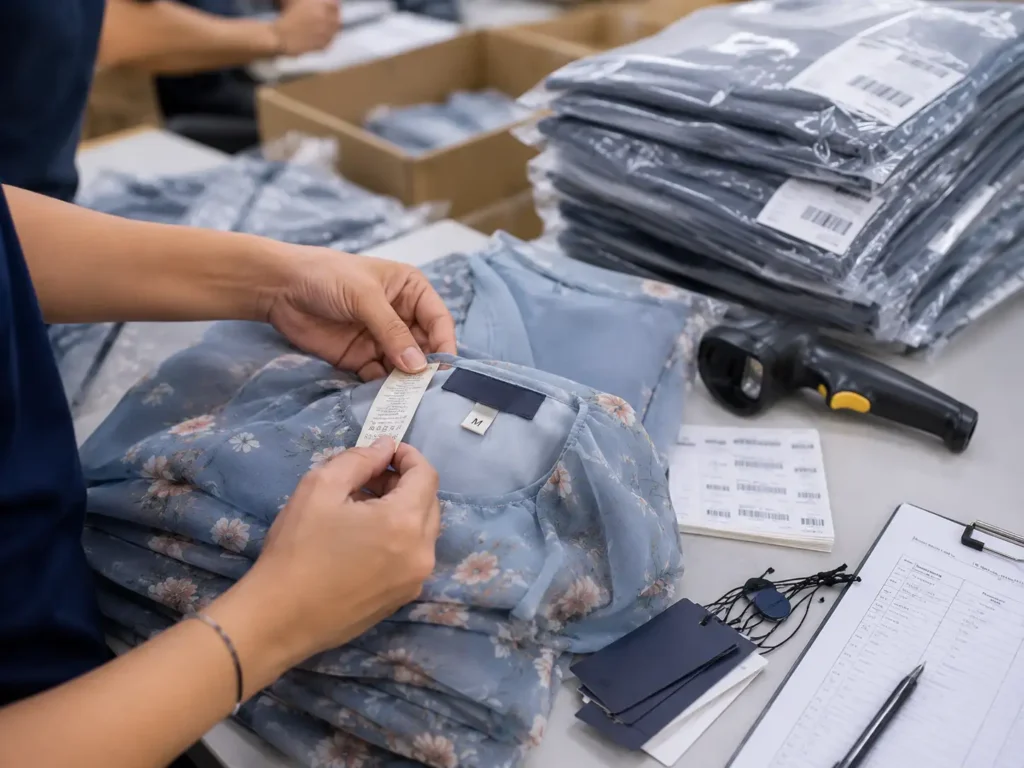
  • Private-label production with labels, hangtags, barcode and packing
  • Multi-style seasonal launches and repeat-order programs
  • U.S., U.K., European, Australian and Canadian market support

Project Review Standards

Each inquiry is reviewed for style complexity, cup and support requirements, fabric availability, custom trim needs, MOQ by style/color, size grading, packaging, testing and delivery timing. A strong production plan is built on confirmed information rather than an early price that ignores structural details. When important information is missing, the first response focuses on feasibility and document preparation instead of a misleading final quotation.

  • Bustier purpose: fashion outerwear, occasionwear or lingerie-inspired styling
  • Required support: light shaping, medium support or structured hold
  • Quantity and color split
  • Size range and target fit block
  • Material, trim and packaging requirements

Where Bustier Top Programs Commonly Fail

A bustier top can look attractive on a hanger and still fail during fitting, grading or bulk production. Early risk review concentrates on the points most likely to create returns, delayed approvals or inconsistent production.

Neckline Gaping

A floating upper edge usually comes from an incorrect upper-bust curve, insufficient shaping, unsuitable elastic recovery or missing support near the neckline. Tightening the entire garment is rarely the right fix because it can create pressure at the underbust or back. Pattern correction should isolate the gaping area while preserving breathing room, movement and the intended silhouette.

Incorrect Cup Position

A cup may have the correct overall size but sit too high, too low or too far apart for the fit block. Bust point, underwire curve, cup seam and center-front width must work together. When cup position shifts during grading, larger sizes often lose support while smaller sizes gain unwanted coverage. The cup system therefore needs size-specific review, not only a base-size approval.

Weak Internal Support

Decorative seam lines can imitate a corset appearance without providing real hold. Support depends on the combined effect of shell fabric, interfacing, cup, underwire, boning, power mesh, closure and pattern tension. Adding more boning does not automatically improve performance. The correct solution matches support level to product purpose and expected wearing comfort.

Fabric Structure Conflict

Soft satin, stretch mesh, denim, jacquard and faux leather react differently to shaping. A fabric that drapes beautifully may collapse around a cup seam, while a rigid fabric may resist the required bust curve. Interfacing, lining, seam allowance and internal support must be selected with the shell fabric, not added later as separate components.

Unstable Size Grading

Simple proportional grading can move the bust point, deepen the armhole, widen the neckline and change the garment length in unwanted ways. Bust, underbust, cup volume, back width and strap length need controlled grade rules. Fit review should include the smallest, base and larger sizes when the size range is broad or the neckline is low.

Sample Bulk Difference

An approved sample can change when material lots, trim specifications, seam methods or pressing are not transferred into production records. Final pattern files, BOM, trim cards, approved material references, sewing instructions, measurement tolerances, Golden sample and QC checkpoints form the bridge from development to repeatable bulk production.

Bustier Top Styles We Can Develop

Product development covers fashion-led bustier tops ranging from softly structured occasion pieces to stronger boned silhouettes. Each style is developed around its visual direction, support level, fabric behavior, closure system and intended size range rather than one standard internal construction.

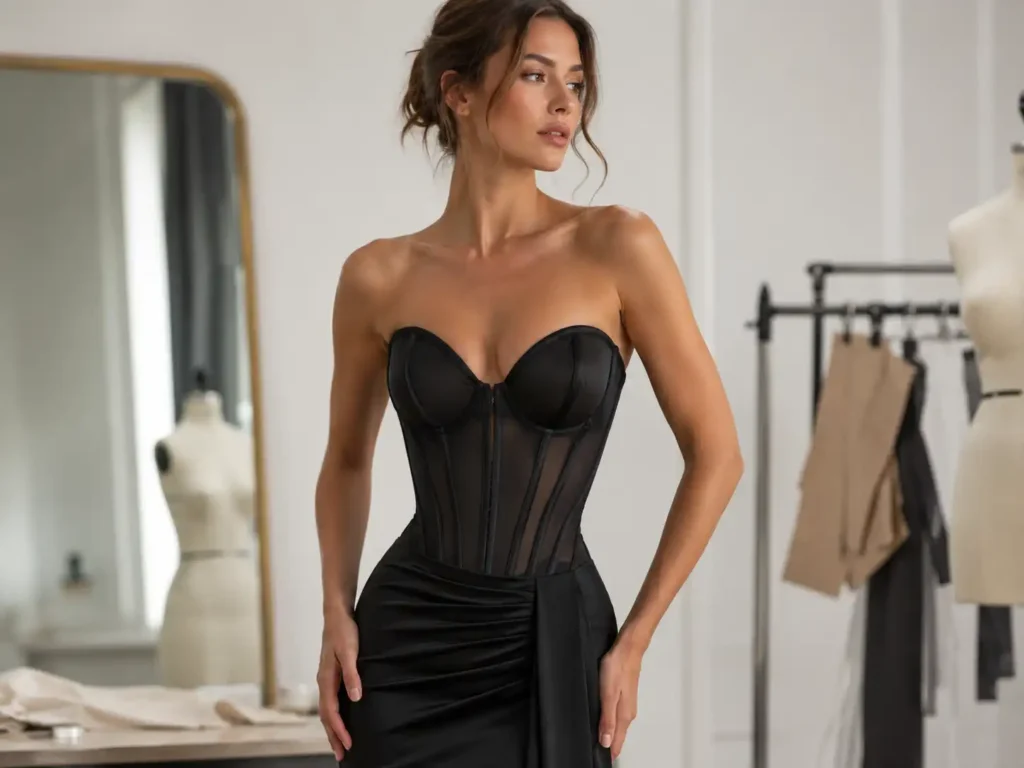
Strapless Sweetheart Bustier

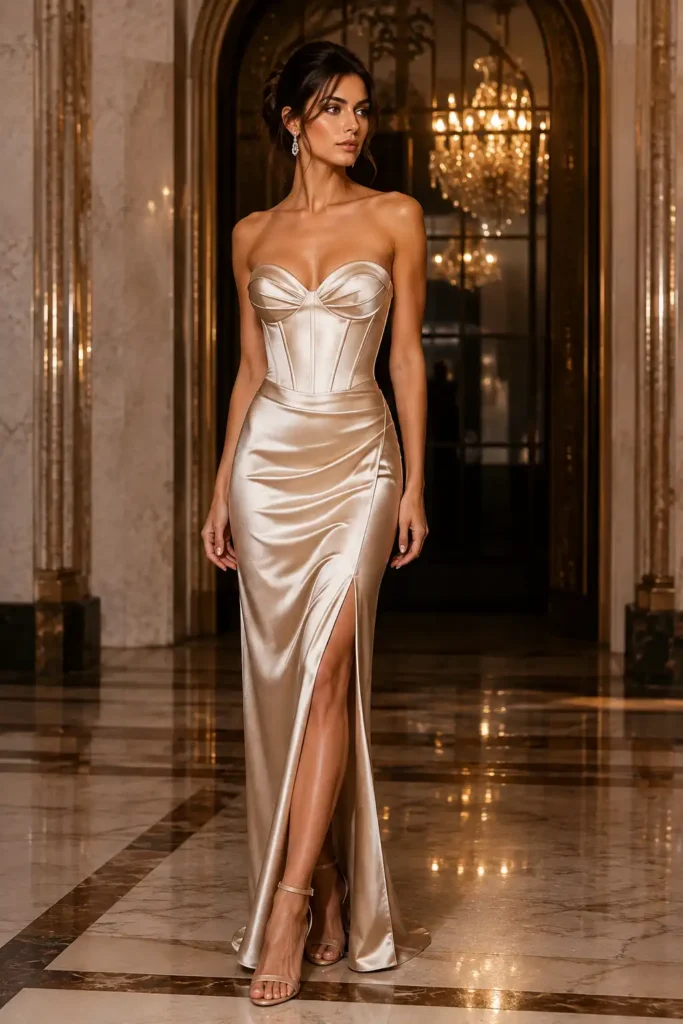
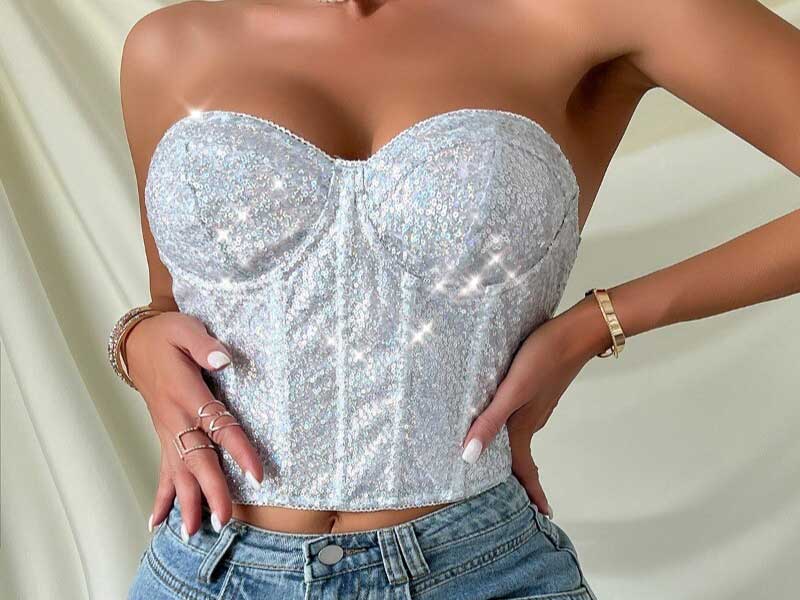
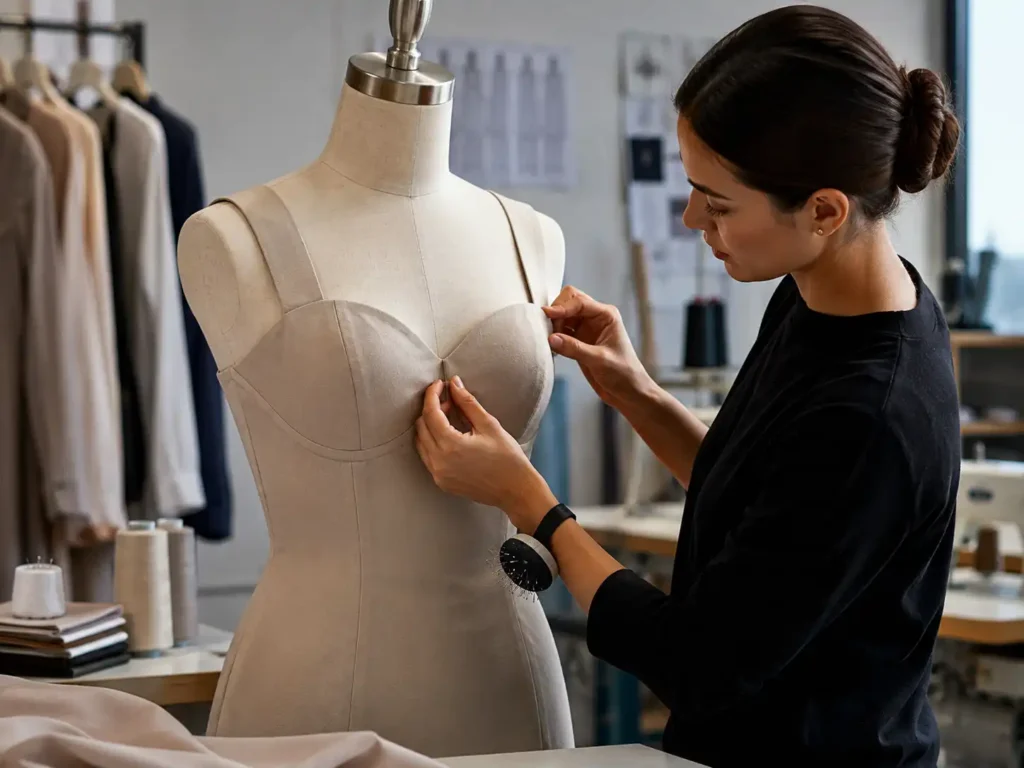
A strapless sweetheart bustier needs a stable upper edge, balanced cup shape and enough internal hold to remain secure without excessive compression. Development may combine shaped cups, underwire, vertical boning, side support, non-slip tape and a stable back closure. The neckline curve is reviewed on body or dress form because a small pattern change can alter coverage, symmetry and center-front appearance. Best suited to party, cocktail, birthday and evening collections. Common shells include satin, stretch satin, lace overlays and structured woven fabrics. Matching mini or maxi skirts can extend the style into coordinated occasion sets.

Underwire Bustier Top

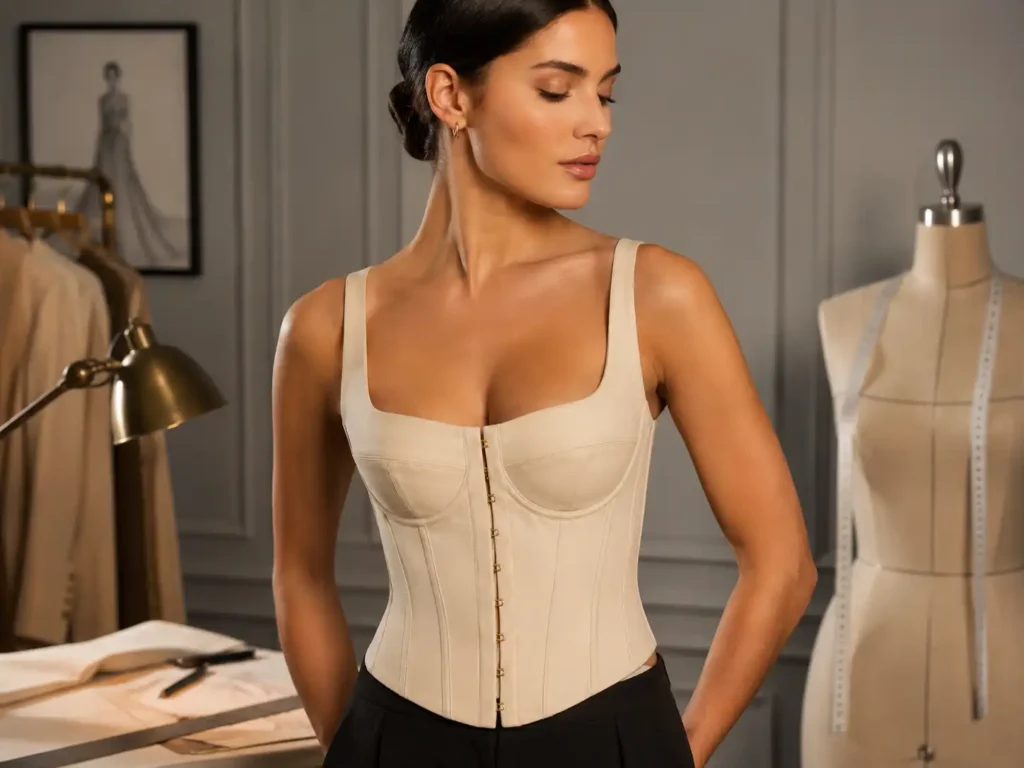
An underwire bustier uses the wire, cup, cradle and underbust seam as an integrated support system. Wire shape must correspond with the cup and target fit block; a standard wire cannot be inserted into every neckline or size without review. Wire casing should remain smooth, secure and comfortable, while cup seams need enough control to prevent collapse or pointed shaping. Suitable for premium going-out, occasionwear and lingerie-inspired outerwear. Options include molded or cut-and-sew cups, adjustable straps, hook-and-eye backs, invisible zippers and decorative topstitching.

Longline Boned Bustier

A longline bustier extends toward the waist and creates a stronger torso line. Boning placement, panel balance and waist suppression determine whether the garment shapes smoothly or creates pressure points. The lower edge must stay level during sitting and movement, while the closure should carry the tension without rippling or separating. Longline silhouettes work well in structured partywear, denim capsules, corset-inspired tailoring and evening separates. Length, boning stiffness and back construction are adjusted to the intended level of shaping rather than copied from traditional waist-training products.

Lace Mesh Bustier

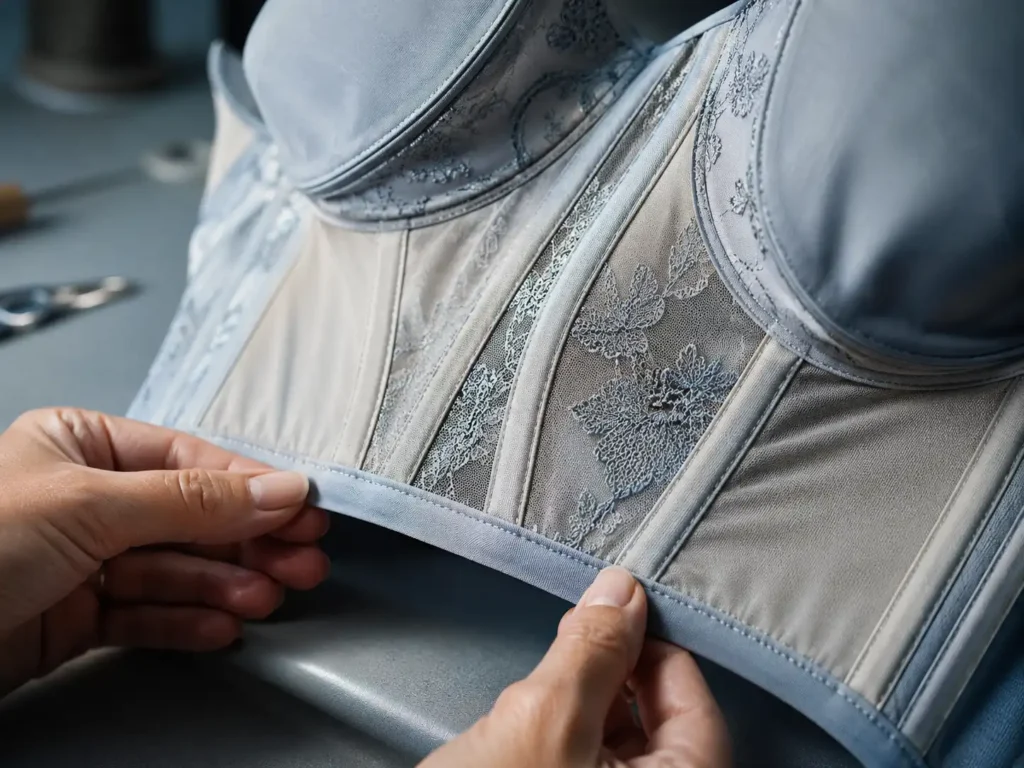
Lace and mesh create strong visual value but require careful transparency and support control. Stretch mesh may be used as an outer layer, a lining, a side panel or a back support component, while power mesh serves a different structural purpose. Lace placement should remain balanced across cups and center front, especially when the pattern has directional florals or scalloped edges. Development focuses on lining coverage, cup opacity, seam visibility, edge finishing and snag risk. Suitable for romantic evening, party, festival and social-media-led collections.

Satin Bustier Top

Satin bustiers depend on clean surface handling. Cup seams, boning channels and panel lines can become visible through a smooth shell, while pressing marks, shine variation and zipper rippling can reduce the finished appearance. Fabric weight, stretch, backing, lining and seam construction are reviewed before the first sample. Matte satin supports a refined occasion look; stretch satin offers closer fit but requires recovery control. Common designs include sweetheart necklines, draped cups, corset seaming, halter straps and coordinated satin skirts.

Denim Corset Top

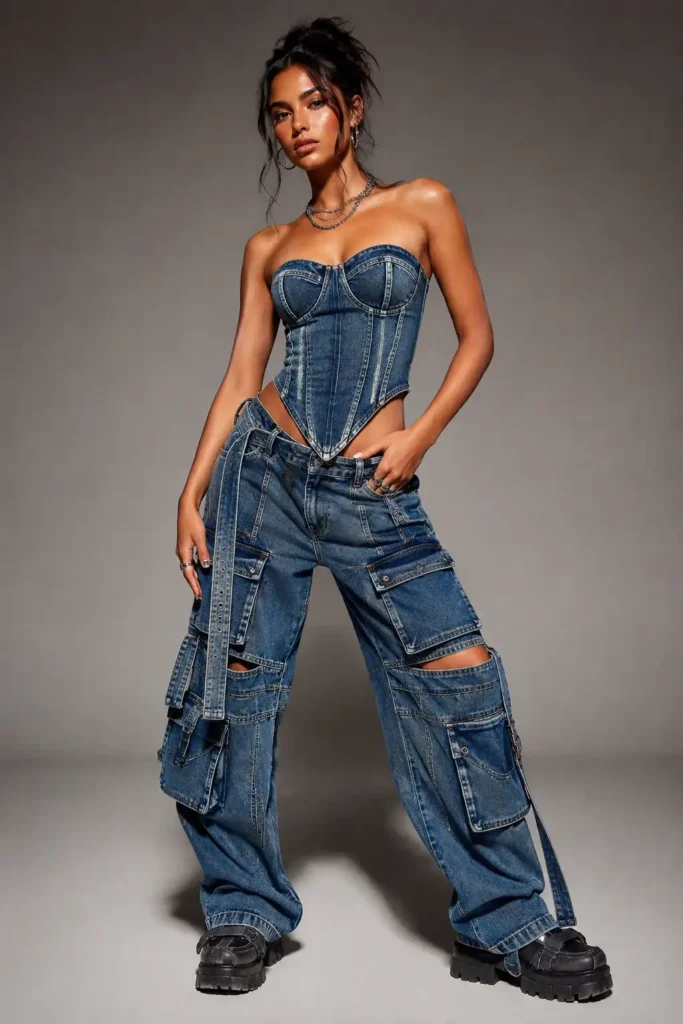
Denim provides strong shape and commercial appeal for festival, streetwear and transitional collections. Weight, stretch percentage, wash effect and seam bulk influence the internal structure. A rigid denim bustier may need more shaping seams, while stretch denim requires recovery testing to prevent the neckline or waist from growing during wear. Topstitching, metal zippers, eyelets, hook-and-eye closures and panel washes can reinforce the design language. Development also reviews color transfer, shrinkage and wash-related size change before bulk approval.

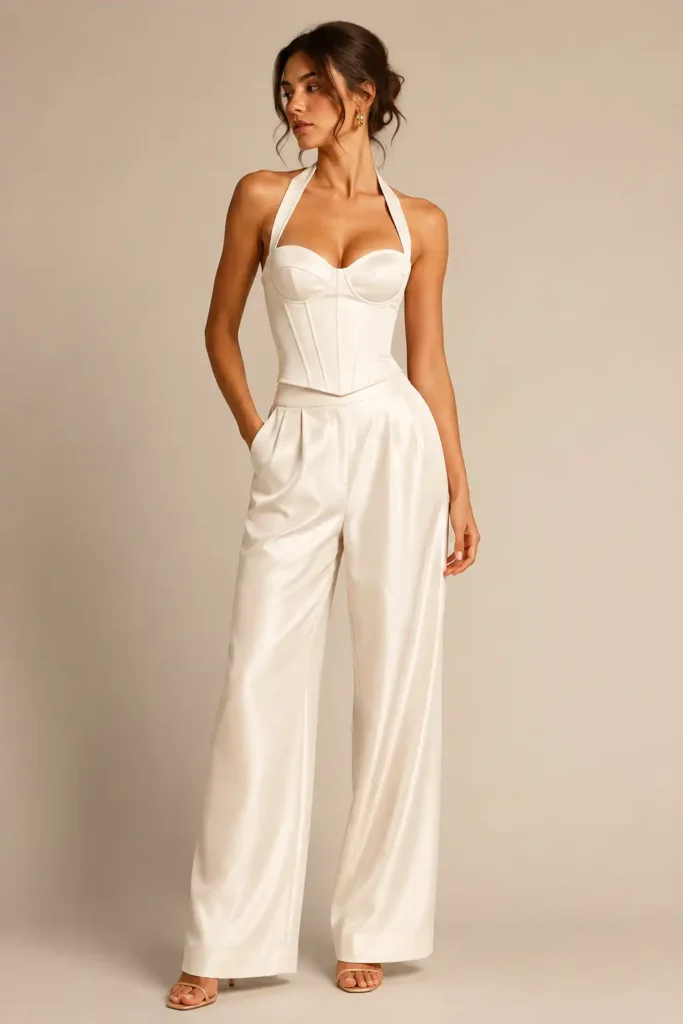
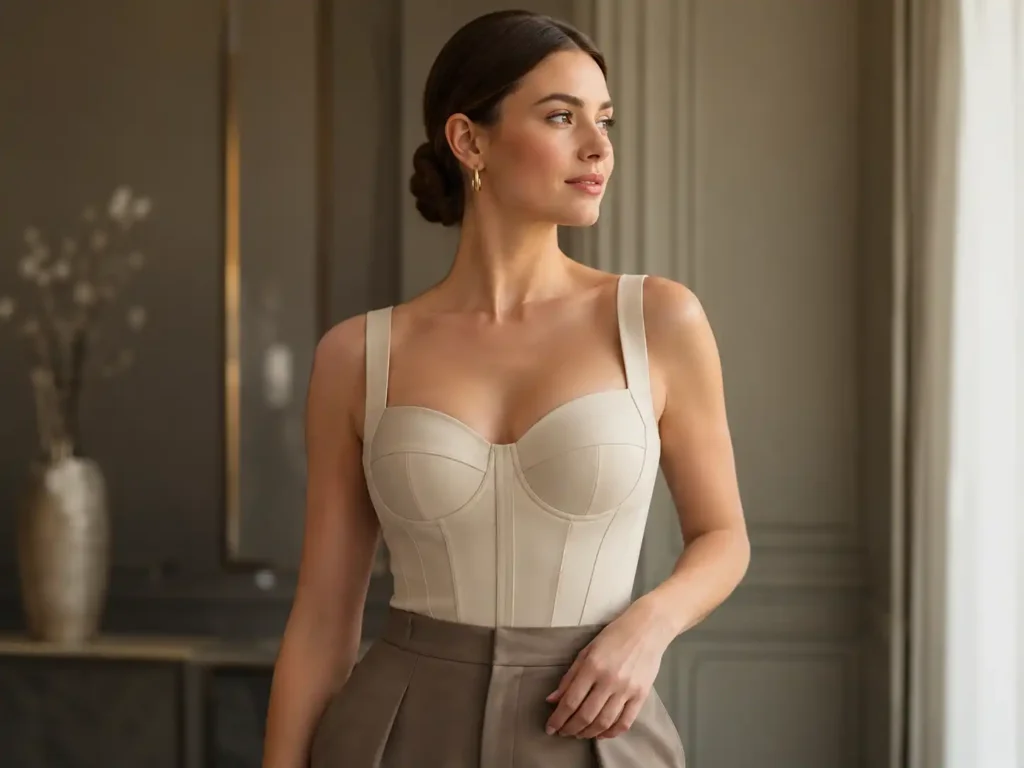
Halter Strapped Bustier

Halter and strapped bustiers redistribute support through the neck or shoulder straps. Strap width, attachment point, adjustability and neckline shape affect pressure and lift. A narrow tie can create neck discomfort when the bodice depends on it for most support, so the internal body structure should carry the main load wherever possible. Options include fixed straps, adjustable sliders, tie halters, cross-back straps and detachable straps. Suitable for resort, party and summer occasion programs in satin, crepe, lace, mesh and structured stretch fabrics.

Bustier Matching Set

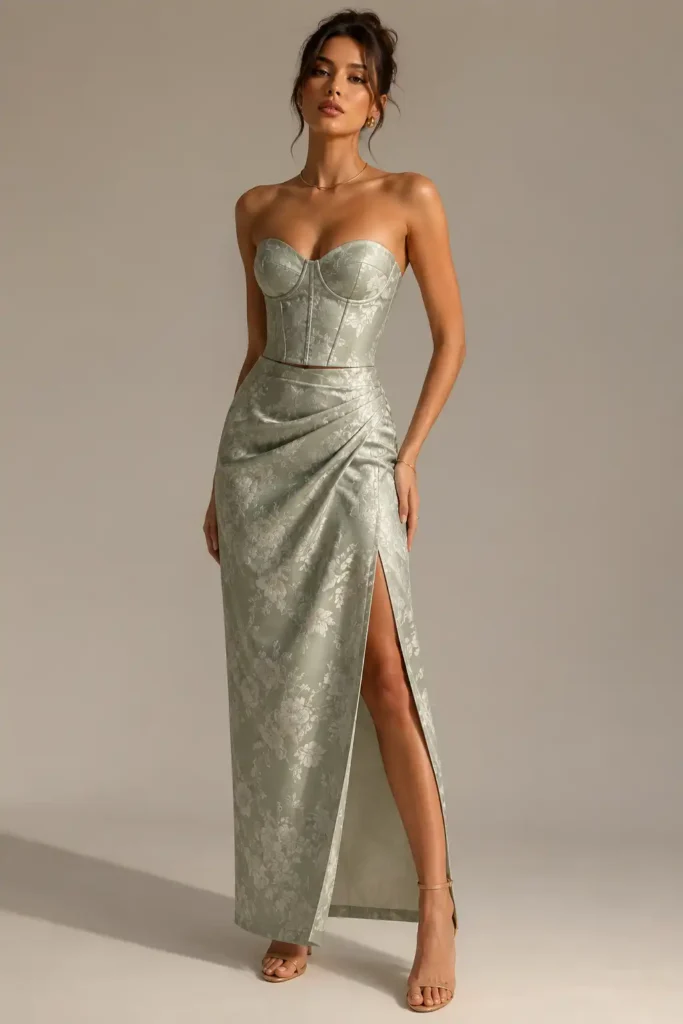
A coordinated bustier set combines the visual strength of a fitted top with a skirt or trouser that can also sell separately. Proportion is critical: top length, waist placement, skirt rise and exposed midriff need to work together across sizes. Fabric shade, lining color, hardware and labels must remain consistent between both pieces. Set development can include mini skirts, maxi skirts, tailored trousers, low-rise skirts or detachable overskirts. SKU planning should define whether pieces are packed together or sold independently with separate barcodes.

Built for Modern Fashion Label Assortments
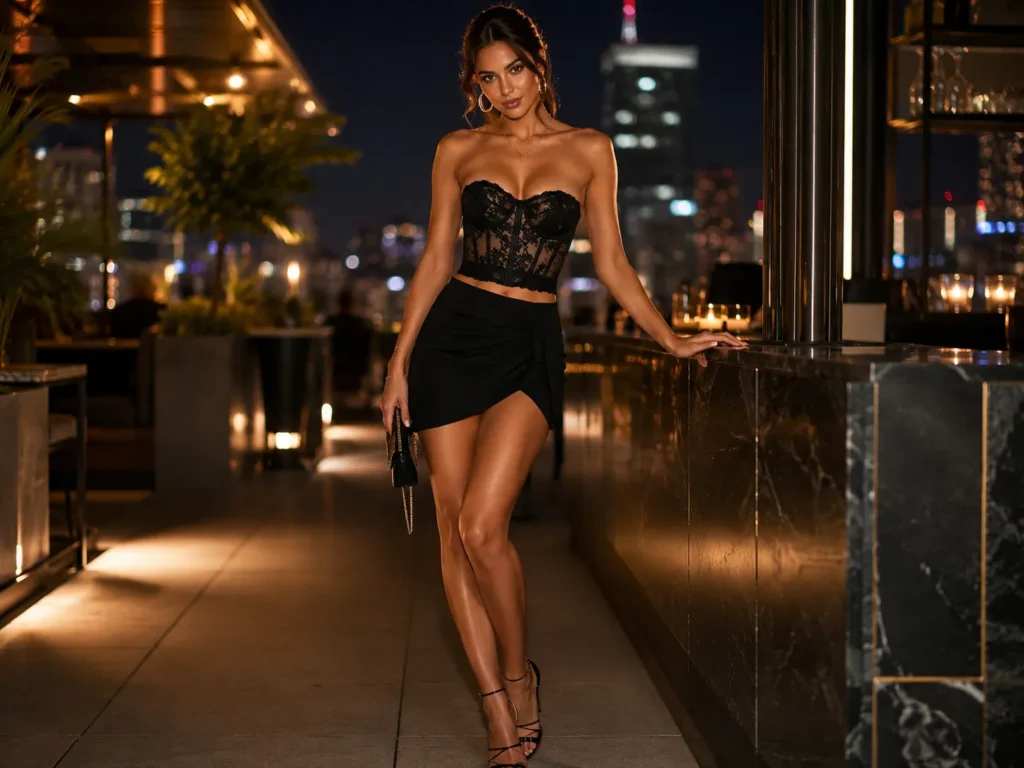
Bustier tops perform differently across party, occasion, denim, festival and seasonal collections. Product direction should connect visual impact with the wearing occasion, merchandising plan, launch calendar and coordinating pieces.

Going-Out Collections

Going-out bustiers need immediate visual impact in product photography while remaining secure through movement. Cropped lengths, sweetheart necklines, lace overlays, satin surfaces and sculpted seams work well for online drops. Fit should be close without creating neckline gaping, side spillage or excessive back pressure. Coordinated mini skirts and trousers can increase styling options and average order value.

Party Clubwear

Party and clubwear programs often use stretch mesh, satin, sequins, cut-outs and high-contrast panel lines. The technical focus is not only appearance: stretch recovery, bust coverage, lining placement, closure strength and skin comfort need verification. Strong internal structure should remain hidden so the finished top looks clean under direct flash and close-up photography.

Occasionwear Capsules

Occasion bustiers call for refined fabric, balanced coverage and polished finishing. Satin, lace, jacquard and crepe are common directions. Neckline height, cup shape, underarm coverage and back construction must support longer wear. Matching midi skirts, maxi skirts or tailored trousers can turn one top into a wedding-guest, cocktail or formal capsule.

Festival Holiday Drops

Festival and holiday programs favor denim, metallic surfaces, embellished mesh, corset lacing and distinctive straps. Production planning should consider abrasion, sequin protection, metal-trim security, color transfer and packing. Multi-style drops are easier to manage when common trims, base fabrics and fit blocks are shared across related designs.

Denim Fashion Stories

Denim bustiers can connect with skirts, jeans, shorts and jackets. Wash testing, shrinkage, stretch recovery, topstitching and metal accessories require early confirmation. Rigid and stretch denim should not use identical pattern tension. A coherent denim story may use shared wash colors while varying panel seams, straps, closures and hem shapes.

Evening Eventwear

Evening bustiers need smooth shaping, secure support and strong surface quality. Matte satin, heavy satin, velvet, lace and embellished fabrics are frequent options. Cup seams, boning channels and closures should remain discreet under directional lighting. Pressing, garment support during packing and protective layers help preserve the intended shape before the style reaches a showroom or warehouse.

From Brand Direction to Production-Ready Design
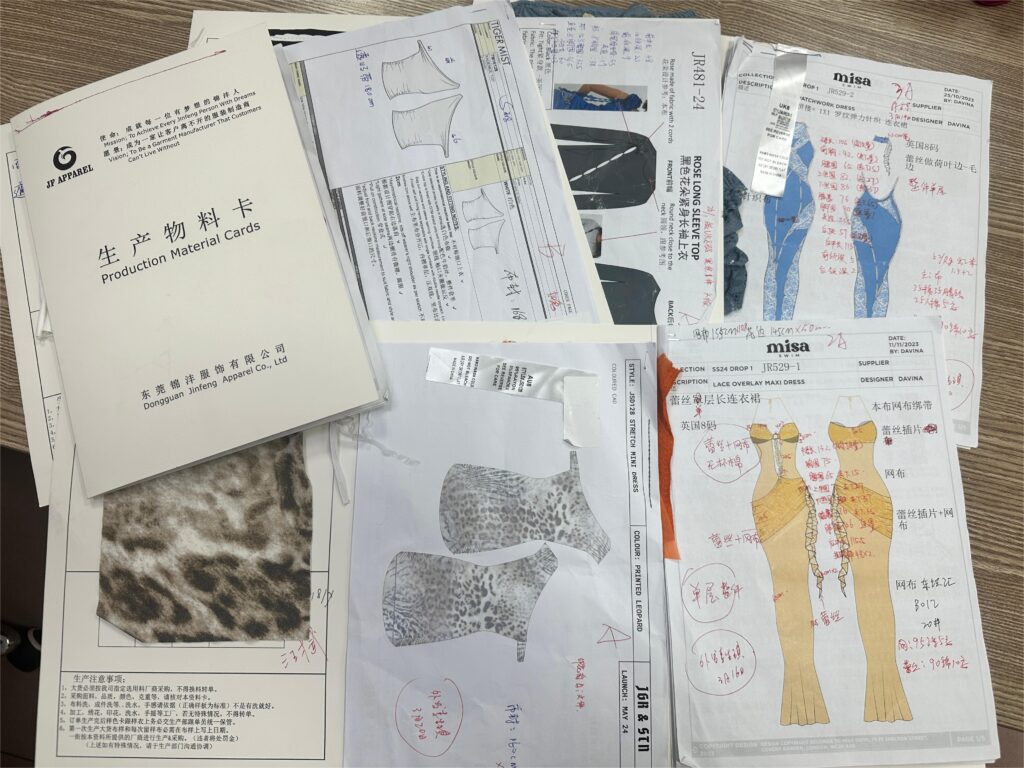
Development can begin from several types of product information. Better input produces faster technical decisions, clearer costing and fewer avoidable sample rounds. Every route ends with confirmed pattern, materials, construction, size standards and bulk-production records.
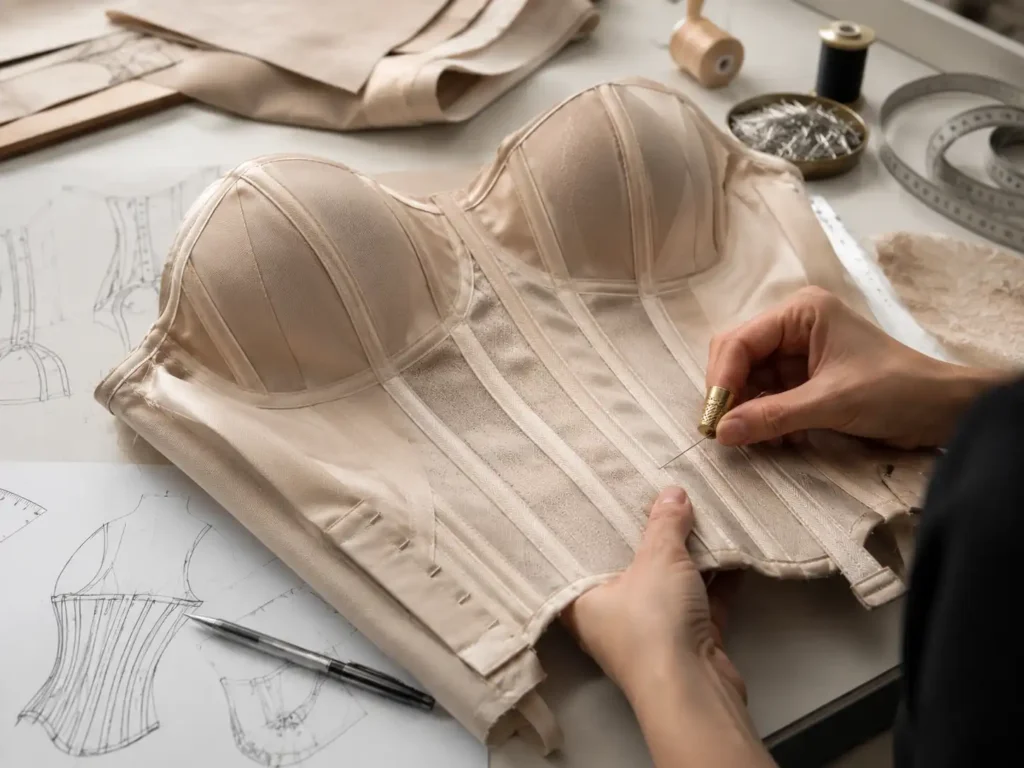
Fashion design draft data package

Complete Tech Pack

A complete tech pack provides the fastest route to structured development when it includes front and back flats, construction notes, measurements, grade rules, fabric, lining, cups, underwire, boning, closures, labels and packing. The team reviews conflicts between design and construction before paper pattern work begins. Missing or unclear points are listed for confirmation rather than guessed during sewing.

Reference Images

Reference images can establish silhouette, neckline, panel lines and styling, but they do not reveal internal construction, measurements or legal ownership. Jinfeng Apparel converts the visual direction into a development brief covering fabric, support level, cup type, closure, size range and target fit. The brand confirms the proposed direction before pattern development and sampling.

Original Garment

An original garment allows measurement, structure review and fit comparison. The sample is assessed for pattern balance, cup position, seam method, internal support, fabric behavior, trims and finishing. Development should respect design rights and authorization. The goal is not blind duplication; corrections may be recommended when the original garment shows fit, comfort or production weaknesses.

Sketch Line Sheet

A sketch or line sheet is useful for collection planning when the final technical package is still under development. Each style is translated into a construction brief with likely materials, support method, closure, lining, key measurements and risk points. Similar styles can share fabric, fit blocks or trims, improving collection consistency and making sample scheduling more efficient.

Engineering Bust Fit, Support and Coverage
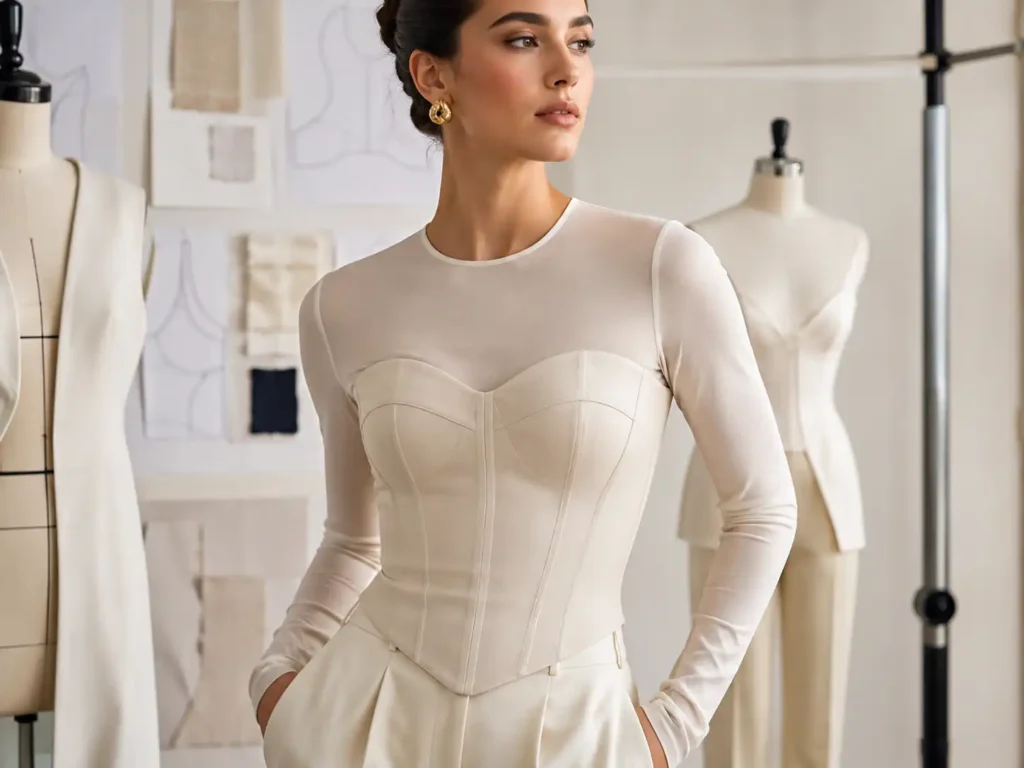
Bustier fit is controlled through a network of measurements and pattern relationships, not by one bust circumference. Development considers upper bust, full bust, underbust, cup position, neckline, side coverage, back tension and size grading as connected decisions.

Upper Bust Control

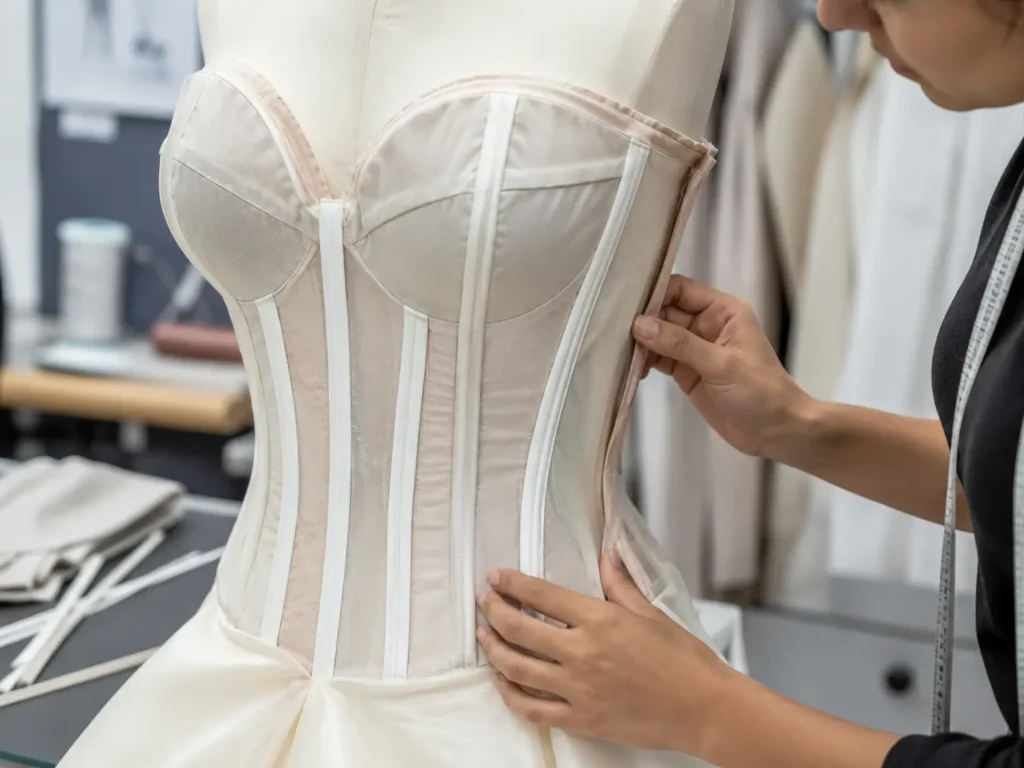
Upper-bust shape determines whether the neckline sits flat or opens away from the body. The pattern needs enough contour through darts, cup seams or panel shaping without tightening the entire torso. Strapless styles may also use stable tape or elastic at the upper edge. Final tension is checked after the shell, lining and internal support are assembled because each layer changes the edge behavior.

Full Bust Volume

Full-bust volume should match the target body without flattening, spilling or creating empty space. Cut-and-sew cup seams, princess lines and curved panels distribute volume differently. Fabric stretch and cup material affect the result, so measurements alone cannot replace a fitted sample. Development records the approved shape in the final pattern and size specifications.

Underbust Stability

The underbust carries much of the support in underwire and longline styles. Too much ease reduces hold; too little creates pressure and closure strain. Underbust measurement, wire length, cradle shape, back material and closure extension need balance. Power mesh or elastic can provide controlled flexibility when a fully rigid back would be uncomfortable.

Bust Point Position

Bust point affects cup height, seam direction, visual proportion and strap location. A small vertical or horizontal shift can make the top look unbalanced even when circumference measurements pass. The position should be reviewed on the target fit model and carried through grading rules. Larger sizes often require controlled movement rather than simple proportional expansion.

Cup Volume Balance

Cup volume can be created with shaped foam, molded cups, cut-and-sew cups, gathers or panel shaping. Each method produces a different profile. Cup depth, apex, neckline edge and underwire curve must correspond. When the design uses a decorative outer cup over an internal cup, both layers should move together without wrinkles or visible displacement.

Neckline Coverage

Coverage is a commercial and technical decision. Low necklines create strong visual impact but require careful control of center-front height, cup edge, strap position and movement. The approved sample should be reviewed from front, side and movement positions. Coverage standards may differ between partywear, occasionwear and broader retail programs.

Side Back Fit

Side seam angle, underarm height, back width and closure position determine whether the top feels secure and looks clean. Low underarms may expose cup edges or create side spillage, while a high back can conflict with the intended silhouette. Zipper, hook-and-eye and lace-up backs distribute tension differently and should be tested with the selected fabric.

Size Grade Rules

Bustier grading needs controlled rules for cup, underbust, waist, body length, neckline and strap. Size XXS to 3XL cannot be treated as a uniform scale increase. For broad ranges, review of at least a small, base and larger size is recommended before bulk. Measurement tolerances should identify which points are critical to fit and support.

Inside a Reliable Bustier Top Structure

Internal components should support the intended silhouette without turning every style into heavy shapewear. Structure is selected according to fabric, neckline, fit, size range and wearing occasion. Each component needs a defined role and a documented specification.

Bra Cup

Bra cups can add shape, coverage and modesty, but they do not correct an inaccurate pattern. Options include cut-and-sew cups, foam cups, removable pads and molded shapes. Cup thickness, edge, size and placement are confirmed with the shell and lining. Visible cup outlines under satin or light fabrics are reviewed before final material approval.

Underwire

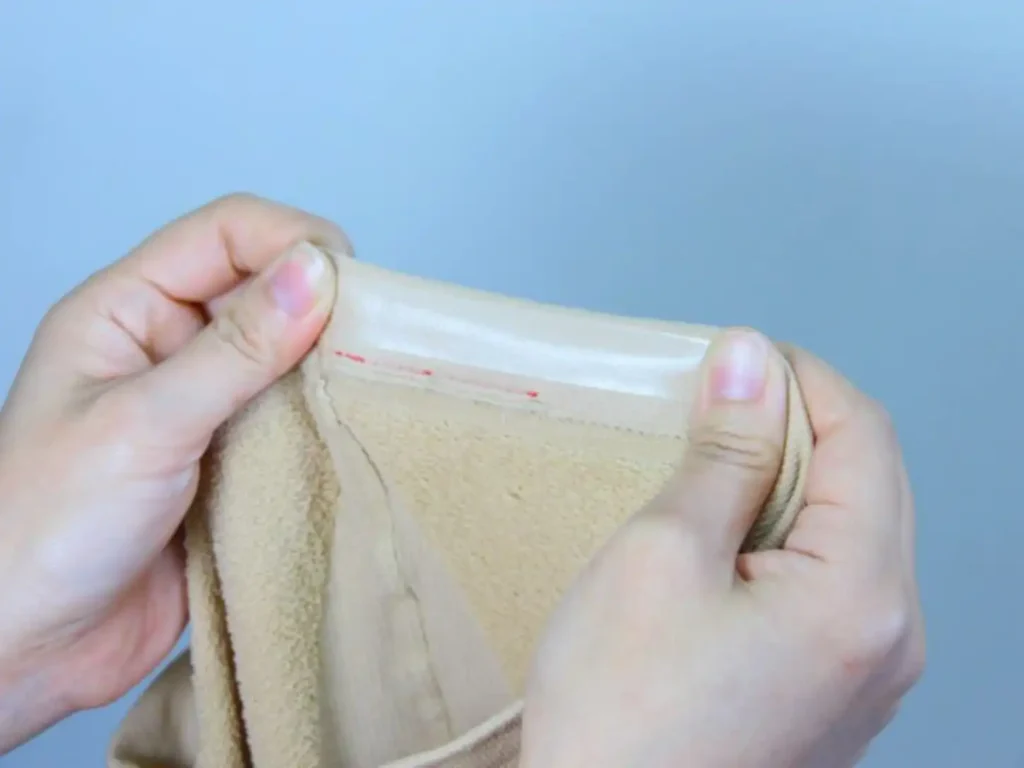
Underwire provides support from below and helps define the cup. Wire shape, length and flexibility must match the cup seam and target size. The casing needs secure stitching, smooth ends and enough room for the wire to settle without twisting. Wire specifications should be recorded by size where the range requires more than one wire shape.

Boning

Boning helps maintain vertical shape, stabilizes seam lines and supports strapless or longline silhouettes. Plastic boning, spiral steel or flat steel may be considered according to product purpose, although many fashion bustiers use flexible plastic or synthetic support. Position, width, stiffness and end protection are more important than adding the maximum number of bones.

Interfacing

Interfacing stabilizes shell fabric, supports curves and reduces distortion around closures or seam lines. Weight and bonding behavior should suit the outer fabric. An interfacing that is too stiff can create bubbling or a board-like hand; one that is too light may not hold the panel shape. Bonding tests are especially important for satin, stretch woven and coated fabrics.

Power Mesh

Power mesh provides controlled stretch and recovery in backs, side panels or internal support layers. It should not be confused with decorative fashion mesh. Stretch direction, recovery, weight and transparency are reviewed according to the required hold. A stable back panel can improve comfort by allowing movement while maintaining underbust and waist tension.

Lining System

Lining protects the skin from seam allowances, boning and hardware while controlling opacity and internal cleanliness. Full lining, partial lining, cup lining and power-mesh lining serve different functions. Color should coordinate with the shell, especially under lace and transparent mesh. Lining stretch must also match the outer construction to avoid pulling or bagging.

Anti-Slip Support

Anti-slip tape or silicone elastic can support strapless necklines when applied with suitable tension. It is not a substitute for correct pattern and internal structure. Width, softness, recovery and skin contact are reviewed during sampling. The top edge should remain smooth rather than puckered, and comfort should be checked during movement and extended wear.

Closures Straps

Invisible zippers, metal zippers, hook-and-eye tapes, lace-up backs, adjustable straps and detachable straps affect fit and production. Closure strength must match garment tension. Zipper length and placement influence dressing ease, while hook spacing affects adjustability. Strap hardware, reinforcement and slider direction should be defined in the trim card and confirmed before bulk.

Fabric Direction for Fashion Bustier Tops
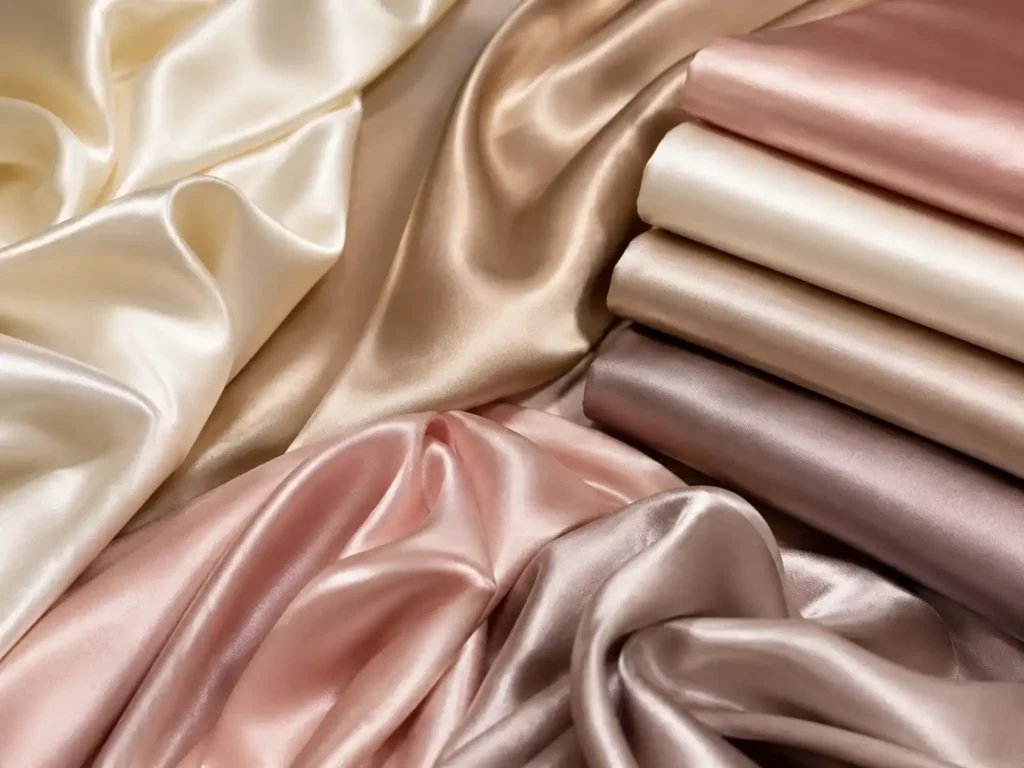
Fabric selection changes fit, support, seam visibility, pressing, comfort and cost. Shell, lining, interfacing and internal support should be considered together. Swatches and sample testing remain essential whenever weight, stretch or surface behavior differs from the original reference.

Stretch Satin

Stretch satin supports fitted silhouettes with a polished surface and controlled movement. Weight, stretch direction, recovery and shine level vary widely. Too much stretch may weaken neckline stability; low recovery can cause growth around the bust and waist. Interfacing and lining should stabilize the structure without creating a visible change in drape or surface shine. Key controls include snagging, seam puckering, color difference, pressing marks, zipper ripple and packing creases. Stretch satin works well for party, birthday and evening bustiers when the sample confirms both surface quality and recovery.

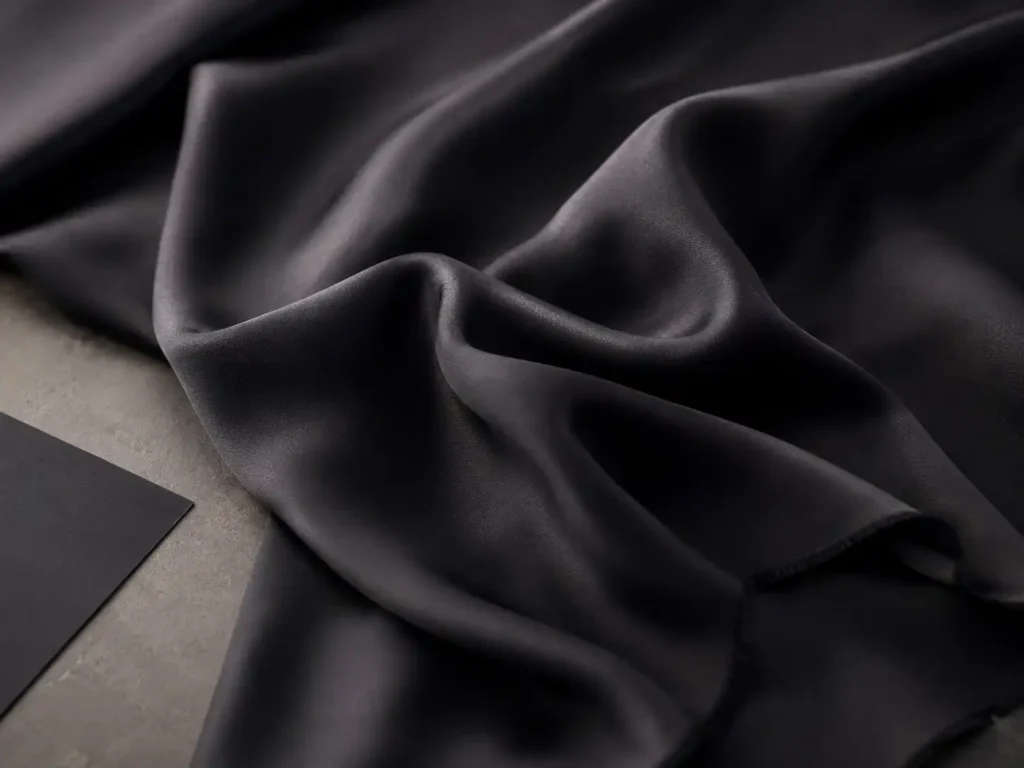
Matte Satin

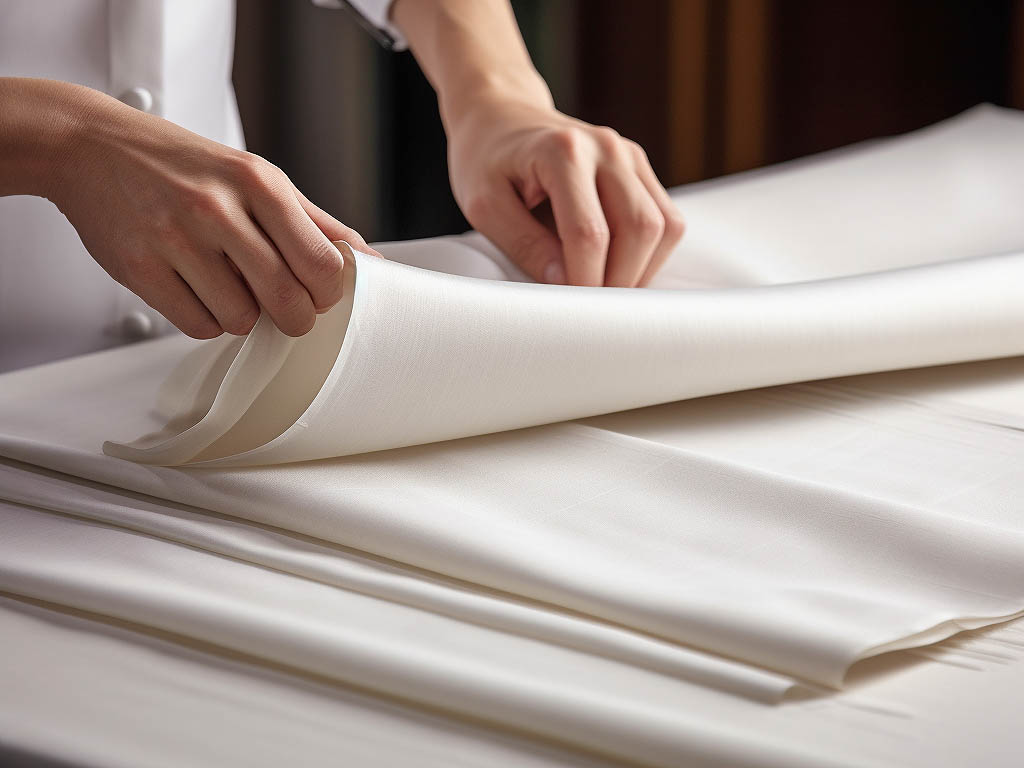
Matte satin gives a refined finish with less glare than high-shine satin. It can suit occasion, cocktail and elevated matching sets. Smooth surfaces reveal cup seams, boning channels and uneven pressing, so internal layers must be selected carefully. Fabric direction should remain consistent across panels to prevent visible shade or reflection changes under lighting. Lining, interfacing and seam allowance are reviewed to reduce show-through. Dark and light colors may require different opacity solutions even in the same fabric quality.

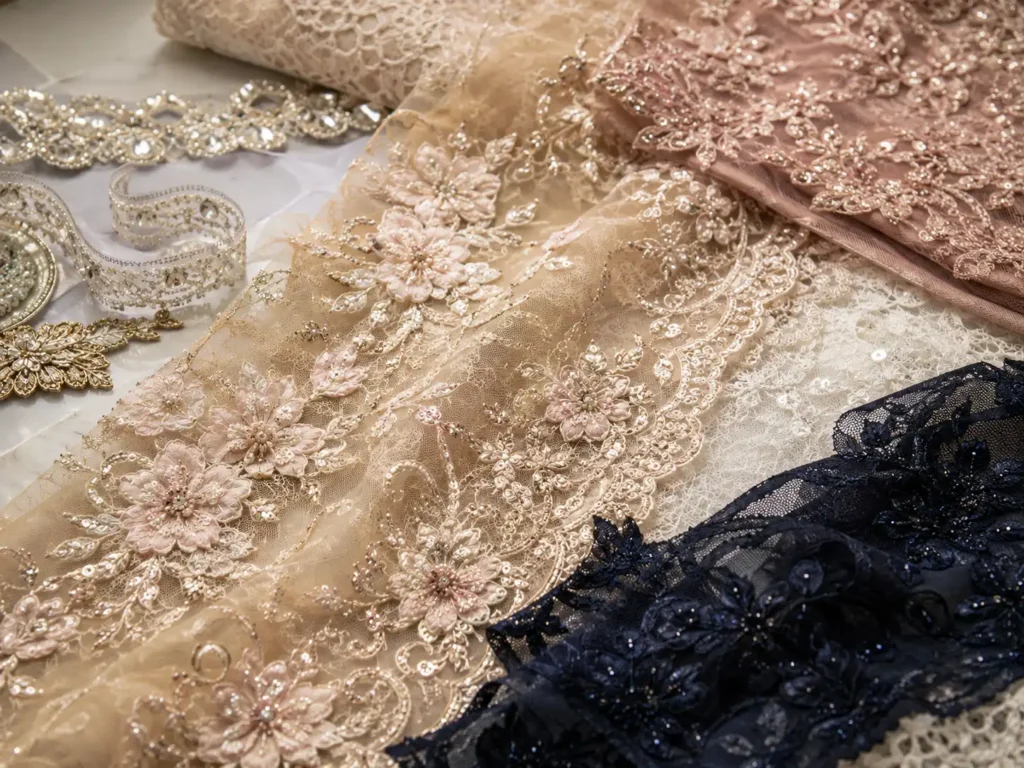
Lace

Lace adds texture and femininity but introduces placement, transparency and edge risks. Common weights range roughly from 60-250 gsm depending on fiber, density and embroidery. Floral direction, scallop placement and symmetry should be planned before cutting. A lace overlay may require solid lining, cup lining or selective skin-tone mesh according to the intended coverage. Bulk control focuses on holes, edge fraying, motif alignment, shade variation and lining exposure. Lace should be approved by batch because flower scale and hand feel can vary between qualities.

Stretch Mesh

Stretch mesh is useful for transparent sleeves, neckline panels, side sections, back panels and full-body overlays. Common fashion mesh may range around 40-120 gsm, with stretch and recovery depending on nylon, polyester and spandex content. Decorative mesh does not provide the same hold as power mesh. Development checks transparency, recovery, seam strength, edge waviness and lining placement. Fine mesh needs careful handling around underwire, boning and zipper seams to reduce tearing or distortion.

Power Mesh

Power mesh is selected for support rather than decoration. Its weight, stretch ratio and recovery influence back tension, side control and comfort. Stronger is not always better; excessive compression can distort the neckline or create pressure near the closure. The sample should confirm hold, movement and skin feel. Power mesh may be hidden inside the garment or used as a visible back section. Color matching matters under lace and sheer shell fabrics, and each lot should be checked for recovery consistency.

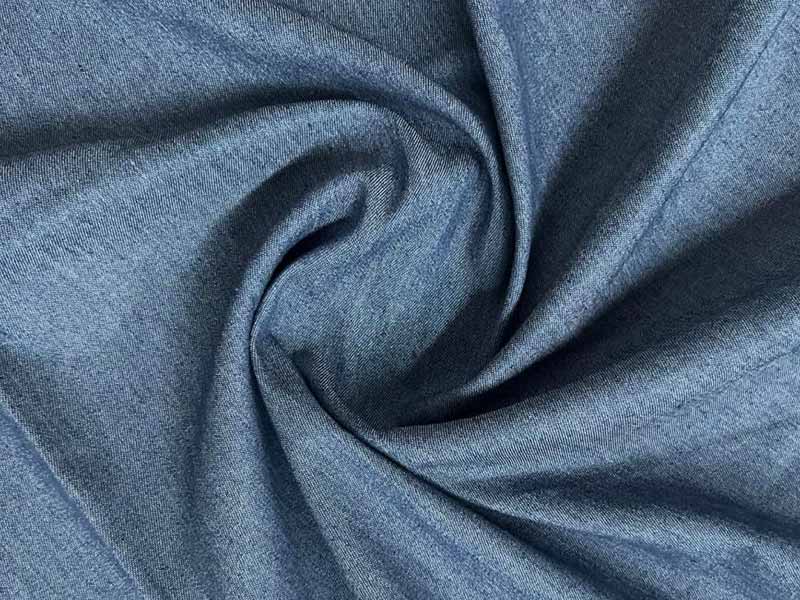
Denim

Denim provides a structured hand and strong fashion identity. Rigid denim needs shaped paneling and enough closure ease, while stretch denim requires recovery and shrinkage testing. Weight, wash, topstitching and seam bulk affect the final silhouette. Washed styles should be evaluated after the intended laundry process because measurement and color may change. Bulk controls include shade grouping, wash consistency, color transfer, metal-trim compatibility and thick-seam handling. Denim bustiers can extend into matching skirts, jeans and outerwear.

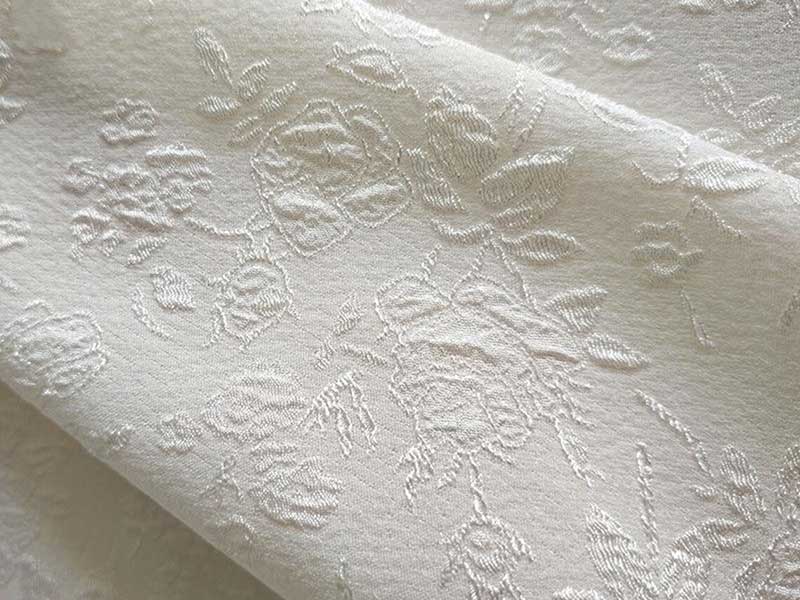
Jacquard Brocade

Jacquard and brocade create a premium, structured surface suitable for evening, festive and statement capsules. Motif direction, repeat size and panel placement influence cutting consumption. Some constructions fray easily or become bulky at multiple seam intersections. Lining and seam finish should protect the skin and maintain a clean interior. The material can support longline and strapless shapes, but the sample must confirm whether added interfacing is necessary. Metallic yarns or raised surfaces may need protective packing.

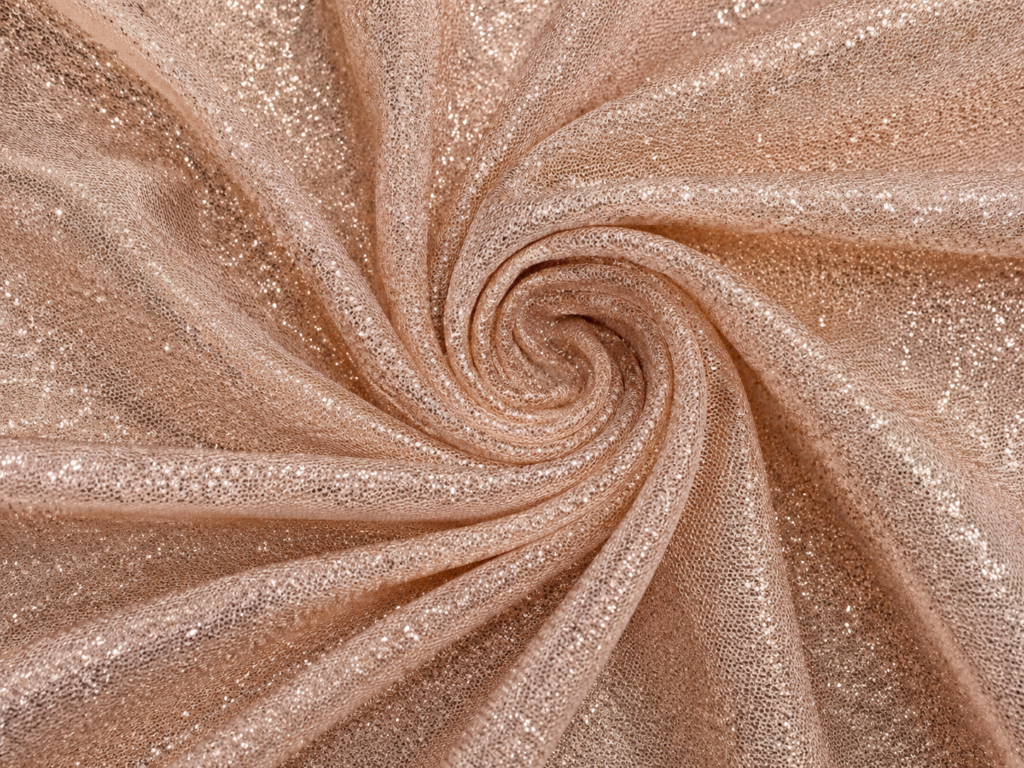
Faux Leather Sequin

Faux leather and sequin fabrics deliver high visual impact but require different construction controls. Coated surfaces can show needle marks and may not recover after stitching, while sequins can create bulky seams, scratching and loss around cut edges. Internal support must be applied without damaging the outer surface. Development reviews seam placement, needle-hole risk, edge finishing, lining, heat sensitivity and protective packing. These materials are best used with a clear production plan rather than late-stage substitution.

Design Details That Protect Fit and Brand Identity

Small design decisions control how a bustier looks, fits and sells. Neckline, panel geometry, closure, straps, length and decorative placement should be resolved before the approved sample becomes a bulk standard.

Neckline Geometry

Sweetheart, straight, plunge and asymmetric necklines create different support demands. Center-front depth, cup edge, upper-bust curve and strap position should be reviewed together. A low center front may need a stable bridge or internal support to prevent spreading. Neckline shape also affects grading, so the approved visual line should be recorded with measurements and pattern references.

Panel Seam Layout

Princess seams, corset panels and decorative topstitching shape the torso and define the product language. Seam placement should follow body curves rather than imitate a visual line without fit purpose. Panel width, seam allowance, boning channel and motif placement are confirmed during sampling. Balanced left-right panels improve both appearance and cutting control.

Back Construction

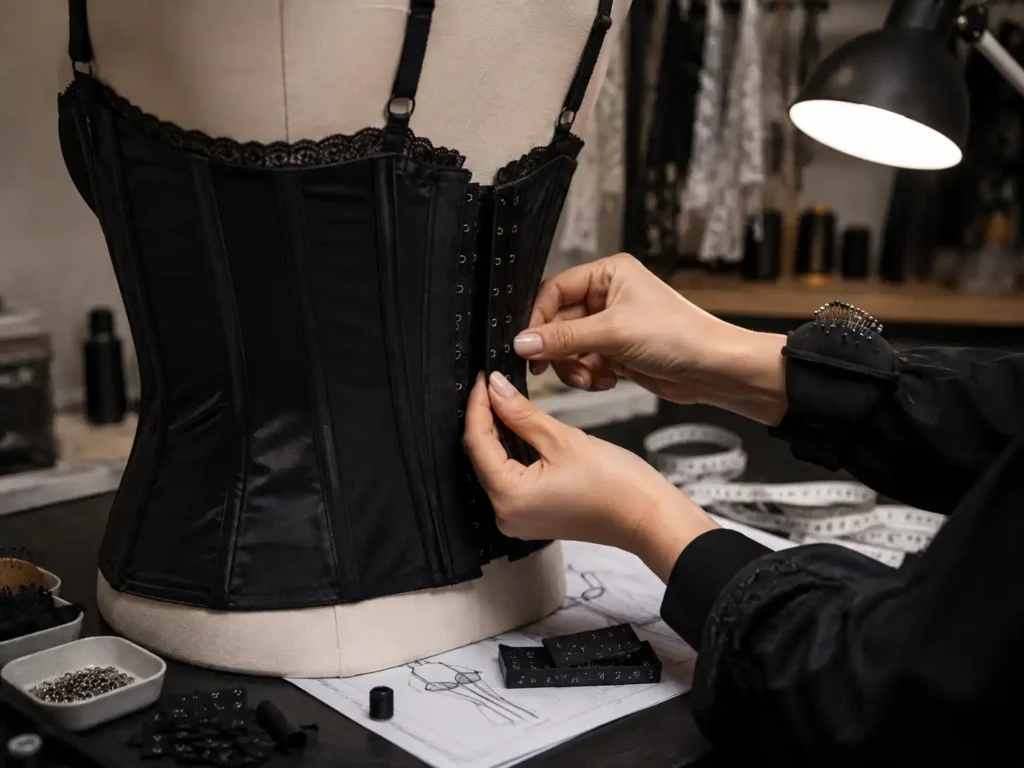
Back options include invisible zipper, exposed zipper, hook-and-eye, lace-up panels and elasticized sections. Each closure provides a different level of adjustability and tension distribution. A lace-up back offers visual flexibility but requires reinforced eyelets and controlled opening width. Zippers need smooth insertion and enough stability to avoid rippling under tension.

Strap Engineering

Fixed, adjustable, tie, halter, cross-back and detachable straps influence lift, pressure and styling. Strap width and attachment point should suit the support requirement. Hardware size, plating, slider direction and reinforcement are recorded in the trim specification. Detachable straps need secure loops that remain hidden when the strap is removed.

Hem Body Length

Bustier length changes the balance between top and bottom and affects movement. Cropped styles should remain level when the wearer raises her arms, while longline styles should not dig into the waist when seated. Center-front, side and back length may need different shaping. Matching-set development also considers skirt or trouser rise.

Cup Surface Design

Gathered cups, molded cups, multi-panel cups and smooth princess shapes create different visual profiles. Decorative drape should not distort the support layer underneath. Cup seams need clean transitions into neckline and side panels. When satin or light fabrics are used, internal edges and foam steps are checked for show-through.

Lace Motif Placement

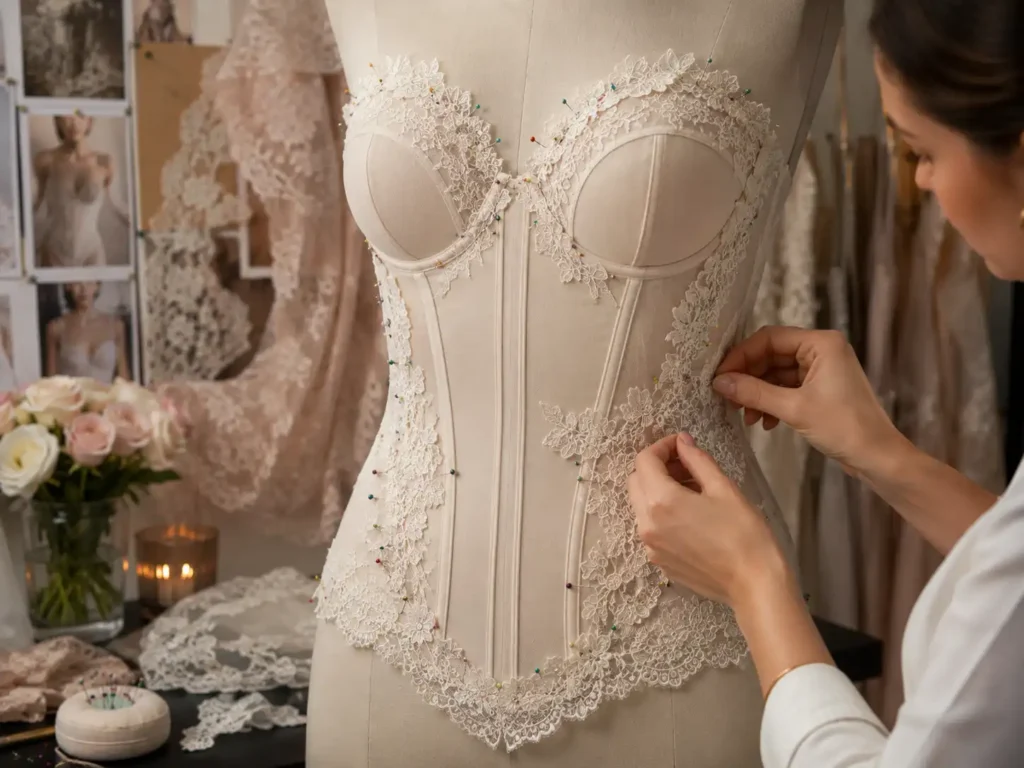
Lace motifs can frame the neckline, cups or center front, but careless placement creates asymmetry. Pattern repeats and scalloped borders are planned before cutting, with allowance for size grading and material consumption. For bulk production, placement standards should identify which motifs must align and where natural variation is acceptable.

Hardware Branding

Zippers, hooks, eyelets, strap sliders and decorative metal parts can reinforce brand identity. Finish color, size, shape, logo option, plating quality and skin contact are reviewed. Hardware should survive the intended wear and care process. Custom parts may carry separate supplier MOQ and development time, so early confirmation is essential.

Workmanship That Protects Shape and Comfort
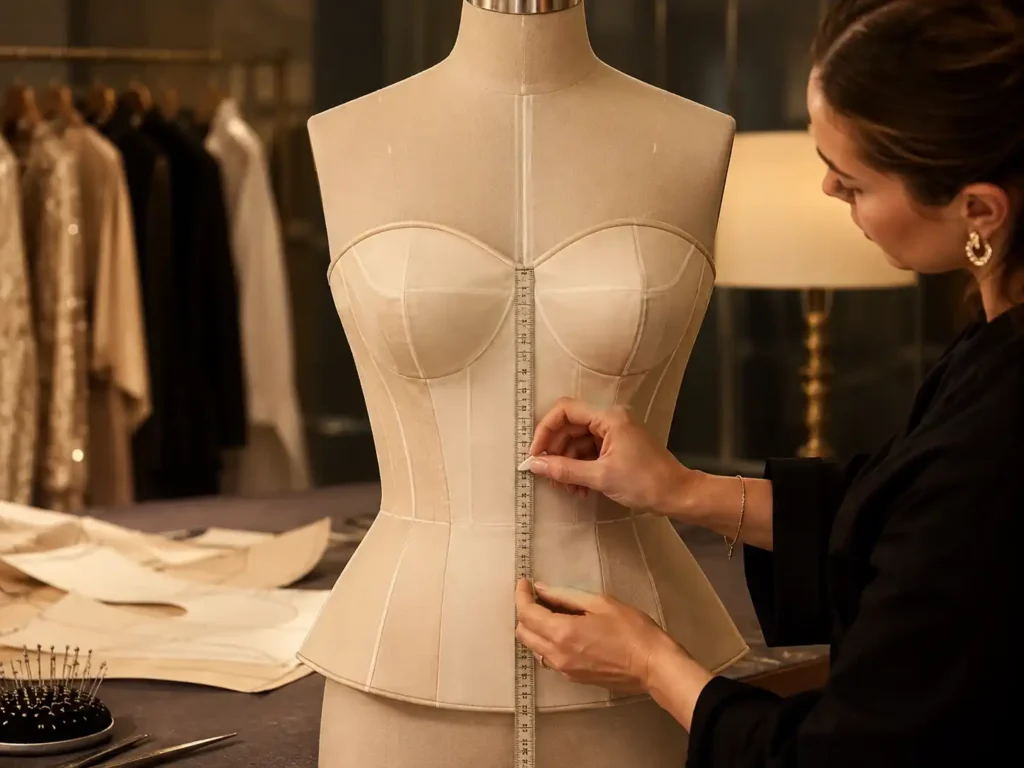
Good bustier workmanship is visible in symmetry, smooth surfaces and clean edges, but the strongest evidence often sits inside the garment. Sewing standards should define how each structural component is attached, reinforced and checked.

Panel Symmetry

Left and right panels should mirror each other in seam direction, cup position, neckline height and boning placement. Pattern notches, controlled cutting and in-line checks help prevent gradual shift during assembly. Asymmetry is especially visible in satin, contrast topstitching, lace motifs and sweetheart necklines. Measurement alone is not enough; visual balance must also be compared with the approved sample.

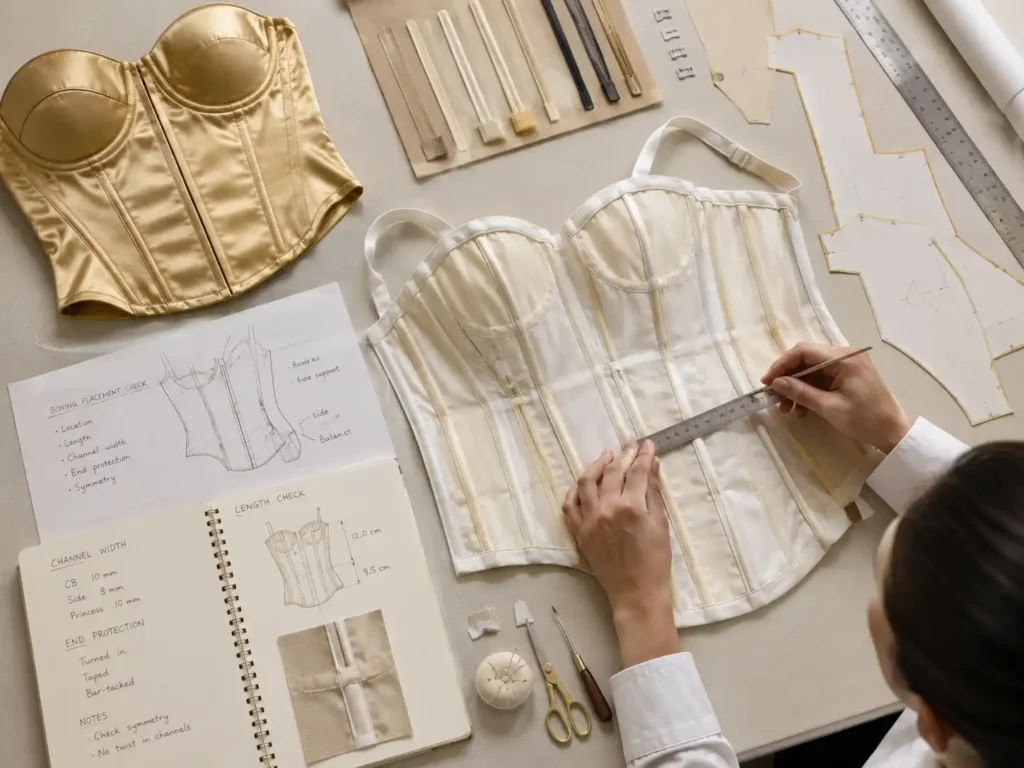
Boning Channels

Boning channels need consistent width, position and stitching tension. A channel that is too tight can twist the bone; one that is too loose allows movement and visible ridges. Ends should be protected to reduce abrasion and prevent the bone from pushing through. Channel placement is checked against the pattern and Golden sample before production continues.

Cup Attachment

Cup attachment should remain smooth at the underbust, neckline and side seams. Foam or molded cups must not fold, shift or create hard steps under the shell. Cut-and-sew cups require accurate seam matching and controlled easing. Stitching should secure the cup without reducing volume or creating puckering that becomes visible on the outside.

Underwire Casing

Underwire casing should follow the cup curve without twisting. The wire is inserted with enough room to settle, while ends are secured and protected. Casing stitches must remain away from the wire to prevent needle damage and breakage. Final inspection checks that the wire sits at the correct position and does not emerge during bending or wear.

Lace Placement

Lace placement is controlled through cutting markers, motif references and paired components. Scalloped edges should finish cleanly and remain balanced. Where lace overlaps cups or boning seams, bulk is managed to avoid a raised ridge. Edge finishing must protect delicate yarns without flattening the intended texture.

Edge Finishing

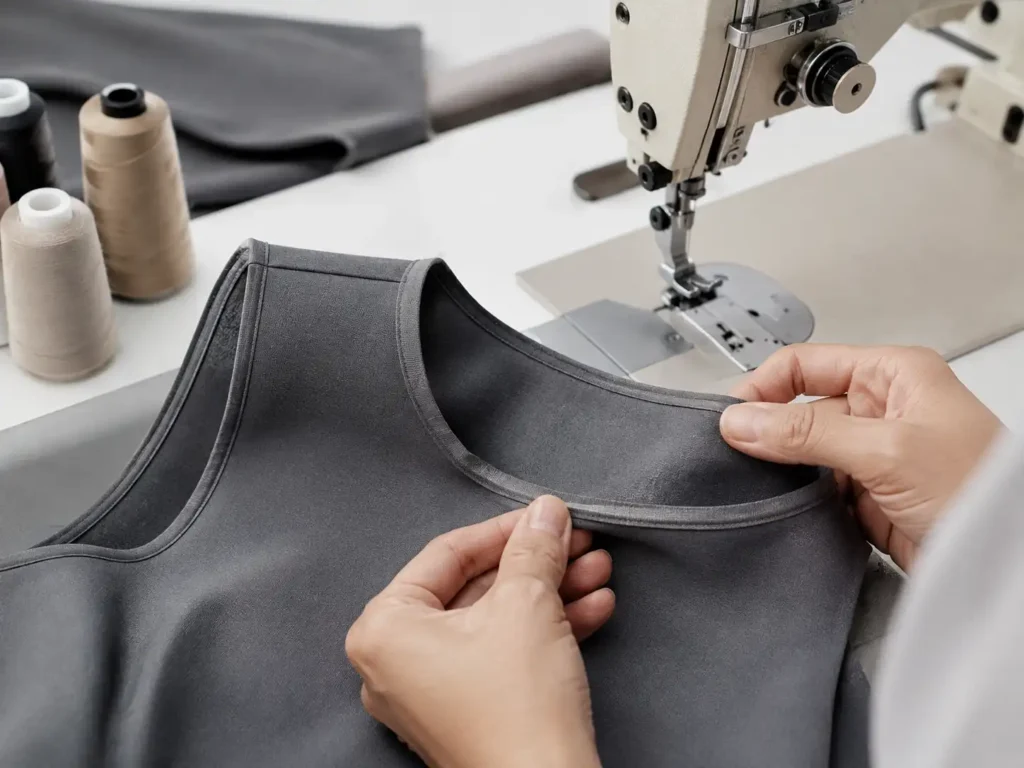
Necklines, underarms and hems may use clean turn-back, binding, facing, lining bag-out or elastic finishes. The method should suit fabric thickness, stretch and visual direction. Edges must remain smooth without rolling, waviness or visible seam allowance. Strapless upper edges receive additional attention because they influence both fit and comfort.

Closure Reinforcement

Closures carry repeated tension during dressing and wear. Zipper ends, hook-and-eye tapes, eyelet panels and strap attachments need reinforcement that remains discreet. Stitch density, backing and seam allowance are defined according to fabric strength. Final checks include opening and closing, alignment, pull resistance and surrounding fabric distortion.

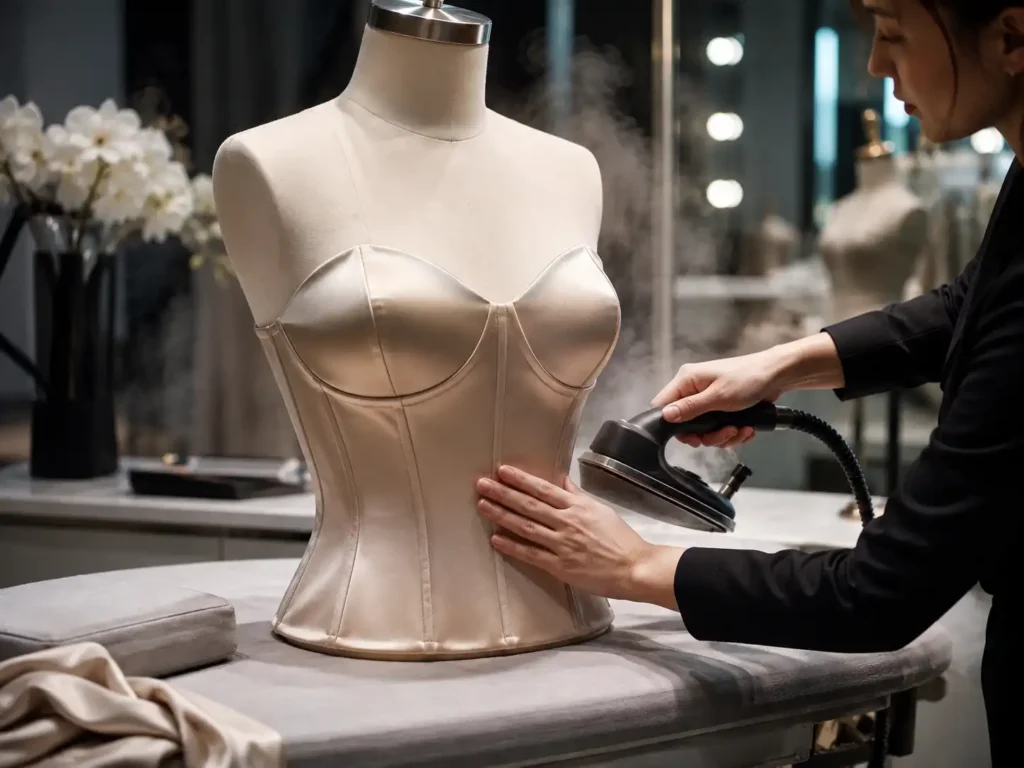
Pressing Final Shape

Pressing sets seam lines and final shape but can damage satin, coated fabric, foam or synthetic support layers. Temperature, pressure and protective methods are selected by material. Bust cups and longline panels should retain dimension rather than being flattened for packing. Garments may need shaped support or careful folding to preserve the approved silhouette.

Sampling, Fitting and Revision Workflow

Bustier sampling is a technical validation process rather than a single garment-making step. Complex styles commonly require 15-25 days for a first sample after materials and construction are confirmed. Revised and PP samples are scheduled according to the correction scope and final material readiness.

Project Review

The project begins with design files, target quantity, size range, fabric direction, support requirement, label needs and launch timing. The team identifies missing information, production risks and material dependencies. A preliminary development plan confirms the sample route, expected material sourcing, key fit points and decisions needed before paper pattern work begins.

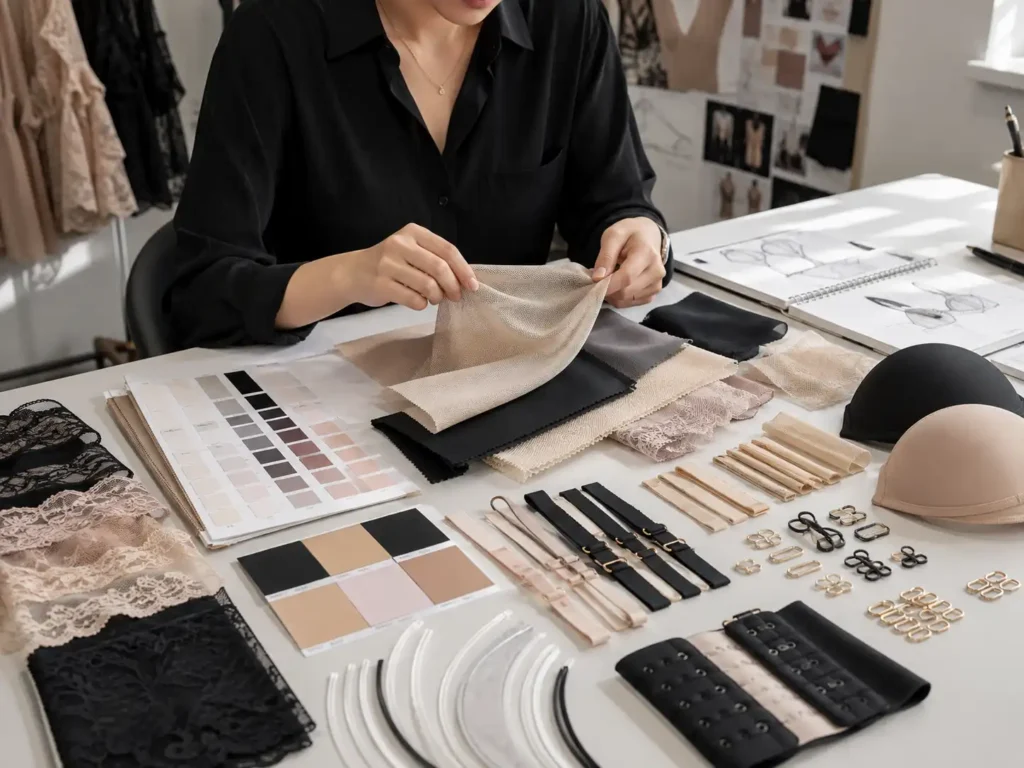
Material Direction

Shell, lining, interfacing, cup, underwire, boning, power mesh, closure and straps are proposed or matched to the approved reference. Swatches may be reviewed before the first sample when surface, stretch or color is important. Custom dyeing, special lace, branded hardware or printed packaging can extend the timeline and should be identified early.

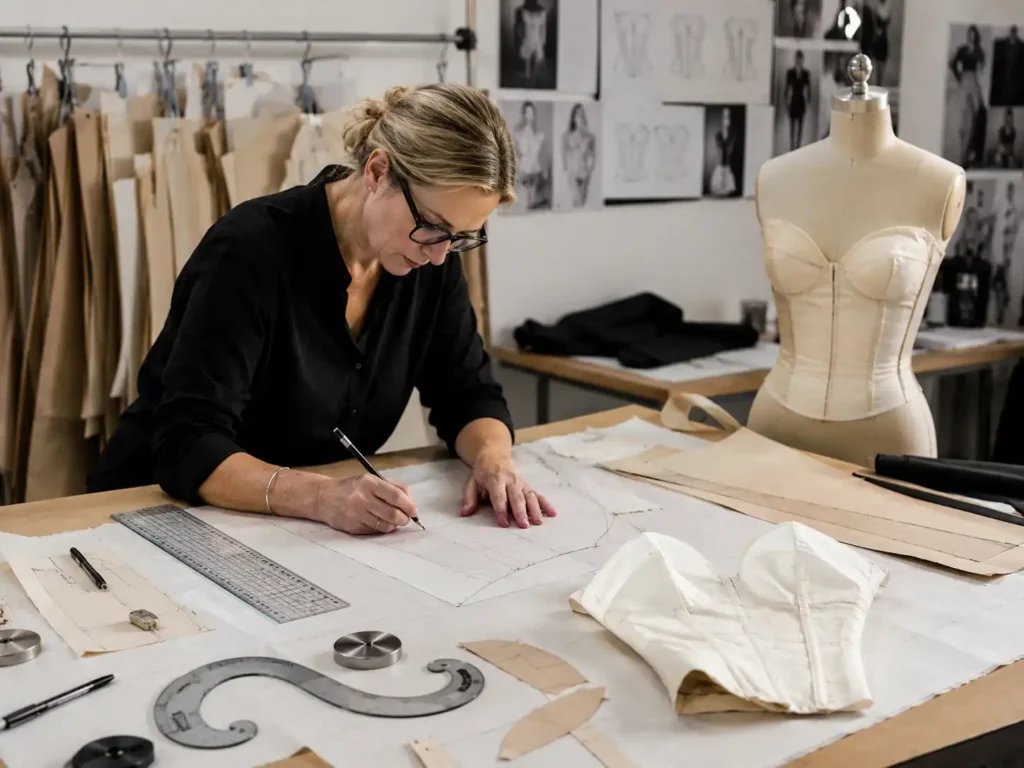
Pattern Development

Pattern makers translate the design into panel shapes, cup structure, neckline, back construction, length and seam balance. Critical measurements include upper bust, full bust, underbust, waist, cup position, center front, side length and back width. Pattern notes identify where boning, underwire, elastic, reinforcement and lining should be applied.

First Sample

The first sample verifies silhouette, material direction, construction feasibility, support, comfort and visible finish. Its purpose is to expose issues before bulk, not to create an artificial promise of one-round perfection. Complex bustiers are reviewed inside and outside, with attention to cup, neckline, side coverage, closure, boning and movement.

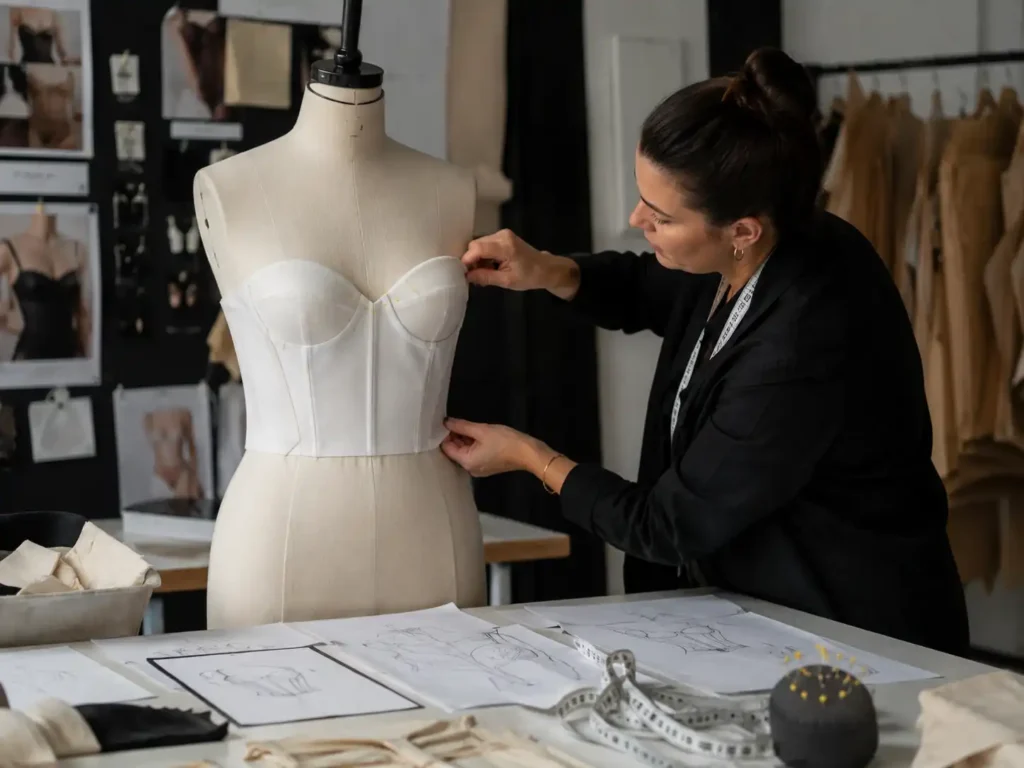
Fit Revision

Feedback is converted into measurable corrections: raise neckline 8 mm, move bust point 5 mm, reduce upper edge, extend side coverage, change bone position or adjust strap length. Clear notes, marked photos and measurement comments shorten the revision cycle. Revised samples commonly require 7-15 days, depending on material and structural changes.

PP Approval

The PP sample uses confirmed bulk materials, trims, labels, measurements, construction and packing direction. PP approval locks the production standard. A PP sample commonly requires 7-15 days once final materials are available. Major changes after approval can affect material orders, cost and delivery timing, so every critical point should be resolved before production release.

From PP Sample to Bulk Production

Approved development files are transferred into a controlled production package. A bustier program cannot rely on the sample garment alone; final pattern, BOM, trims, measurements, sewing instructions, labels, packing and QC standards must agree before cutting begins.

PP BOM Lock

The approved PP sample is matched with the final BOM, material references, trim card, measurement chart, grade rules, label placement and packing instructions. Changes are recorded through controlled updates rather than informal messages. The production team receives one defined standard for fabric, cup, wire, boning, closure and finishing.

Incoming Materials

Shell fabric, lining, interfacing, mesh, cups, wires, bones, closures, labels and packaging are checked before release. Review may include color, weight, width, stretch, recovery, hand feel, transparency, visible defects, lot difference and trim specification. Materials that do not match the approved reference are separated before they reach cutting or sewing.

Cutting Preparation

Cutting plans consider fabric direction, lace motif, satin shine, denim shade, stretch direction and paired components. Pattern version, size ratio and marker are verified. Structured tops contain many small panels that can be mixed or reversed easily, so bundle identification and pair control are important. Critical components are protected from distortion during handling.

Structured Sewing

Assembly follows the defined sequence for panels, cups, underwire, boning channels, lining, closure, straps and edge finishing. In-line checkpoints are placed before later layers hide important construction. Early review of cup symmetry, wire position and neckline shape prevents defects from moving through all remaining operations.

Inline Inspection

In-line QC compares work against the PP or Golden sample, measurement standards and workmanship requirements. Inspectors review seam alignment, panel symmetry, cup position, boning, closure, edge quality and fabric appearance. Findings are communicated while correction is still possible within the production flow, rather than waiting until final inspection.

Finishing Packing

Finished garments are measured, visually inspected, pressed according to material, checked for thread and stains, then matched with labels, hangtags, barcode and packing instructions. Bust cups and longline shapes are protected from crushing. Carton quantities, size-color breakdown and warehouse marks are verified before shipment release.

Controlling Sample-to-Bulk Consistency
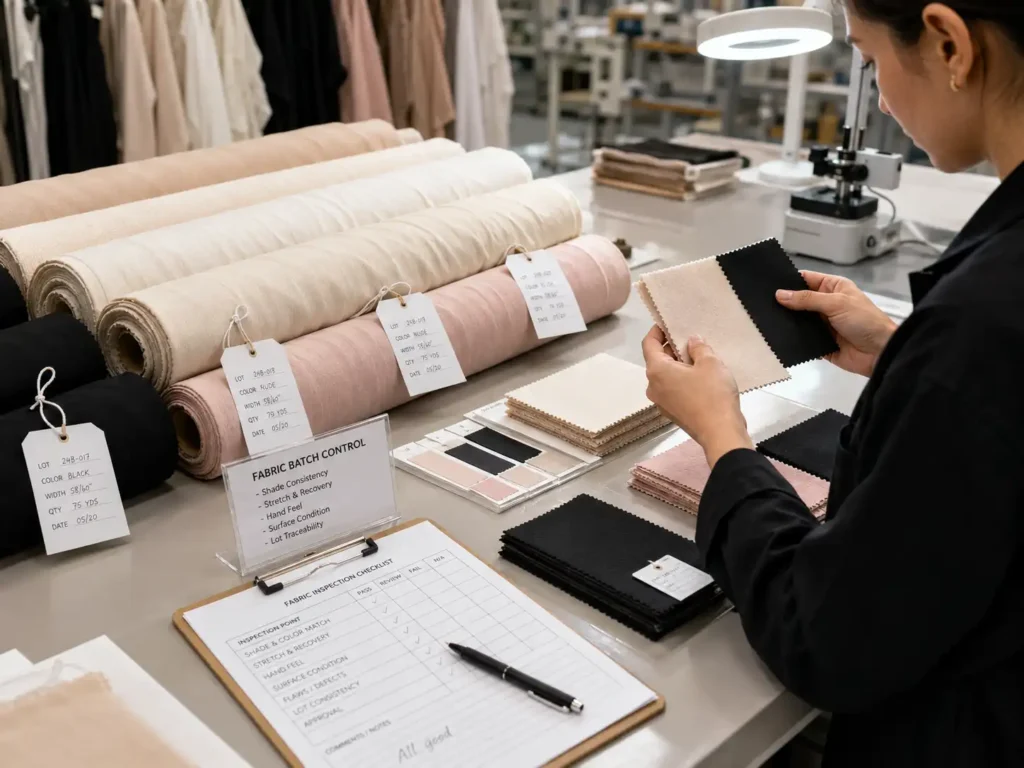
Consistency is created through records, checkpoints and material control. The approved shape must survive changes in fabric lot, production scale, operator sequence, pressing and packing. Eight control areas protect the transition from sample to bulk.

Fabric Batch Control

Fabric lots are identified and reviewed for shade, weight, width, stretch, recovery, hand feel and surface condition. Satin direction, denim wash and lace pattern may create visible differences even within the same named quality. Lot separation and approval records reduce mixed-shade garments and help trace any later issue.

Stretch Recovery

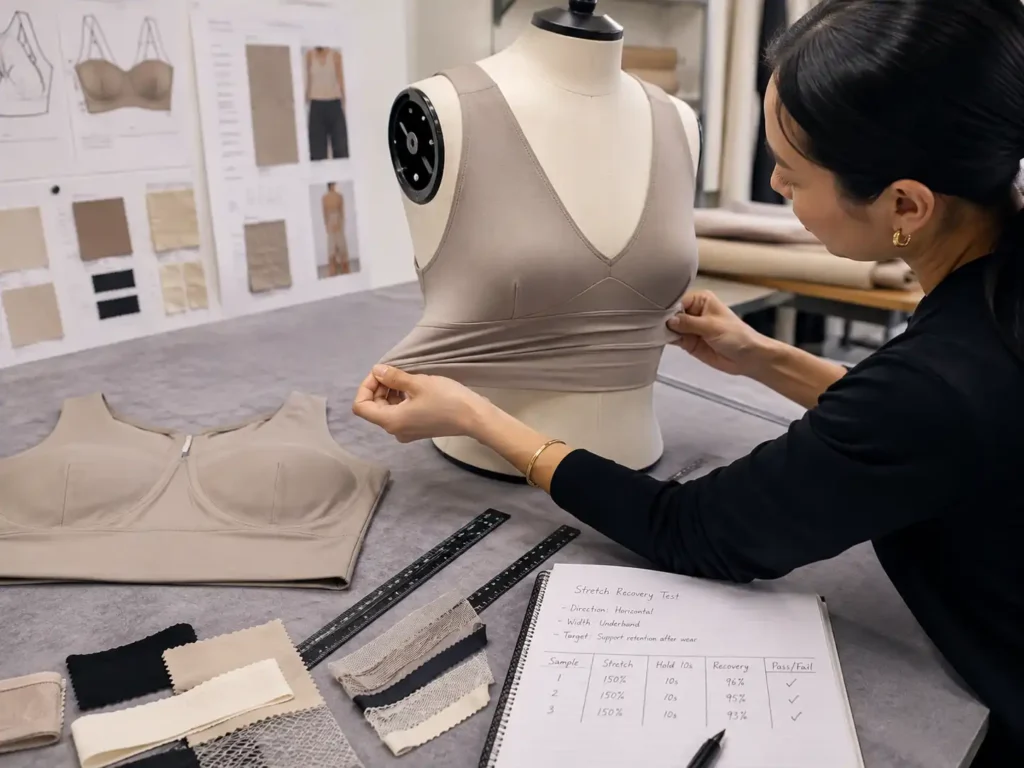
Stretch fabrics are checked for direction and recovery because circumference measurements can pass while the garment loses support after wear. Shell, lining, mesh and elastic should work together. Recovery concerns are reviewed at neckline, underbust, back and waist. Cutting and sewing must preserve the approved orientation.

Cup Wire Position

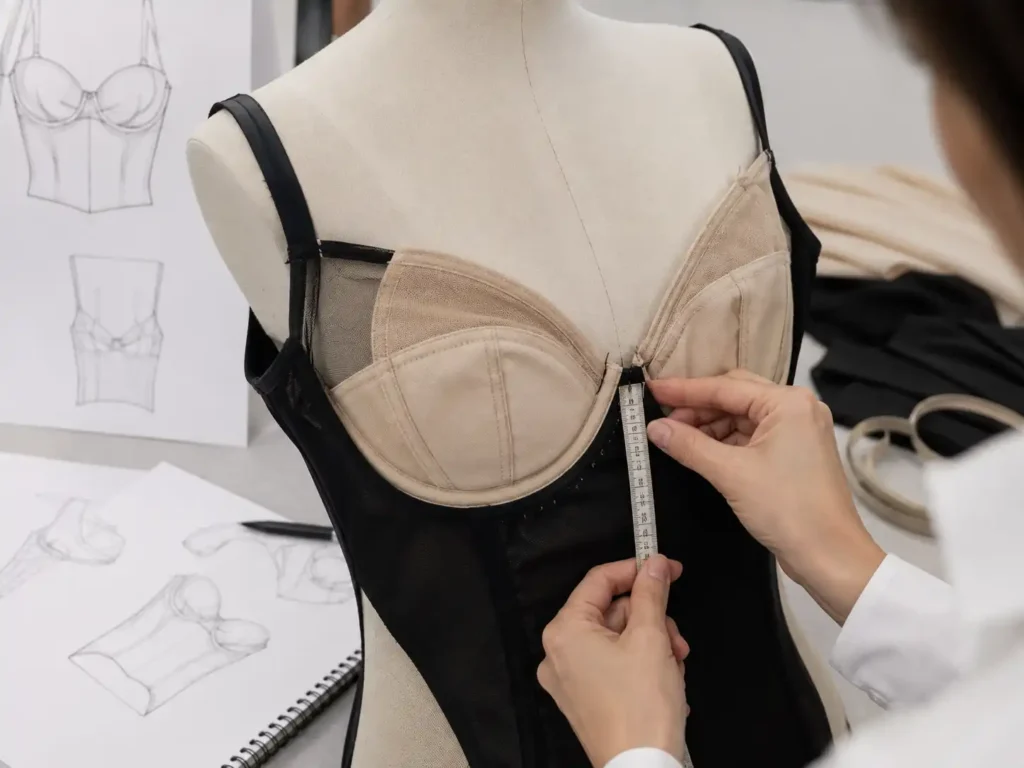
Cup and underwire position are measured and visually compared against the approved standard. Small movement can alter coverage and support. Production records define cup size, wire reference, casing length and attachment points. In-line inspection takes place before lining closes the internal construction.

Boning Placement

Boning location, length, channel width and end protection are checked against the pattern and Golden sample. A bone that shifts toward the side or center can change the silhouette and create discomfort. Pair symmetry and end clearance are particularly important in cropped styles with short vertical space.

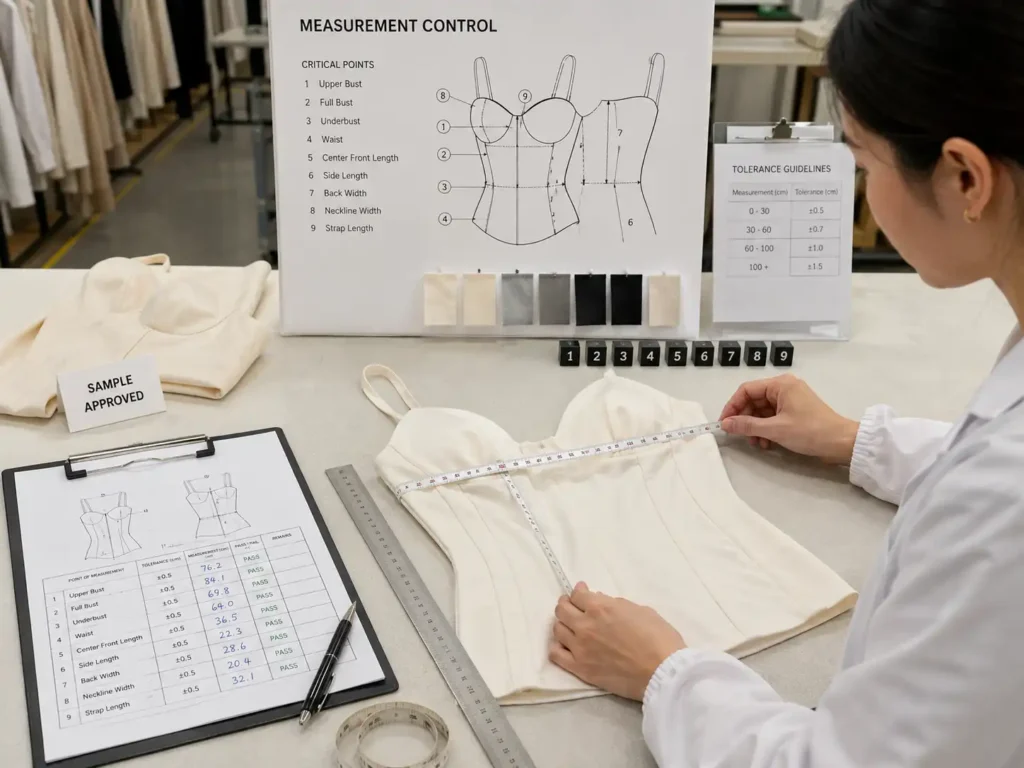
Measurement Control

Critical points include upper bust, full bust, underbust, waist, center-front length, side length, back width, neckline width and strap length. Tolerances are set according to function. Measurements that affect support receive tighter control than non-critical decorative points. Results are recorded by size and production stage.
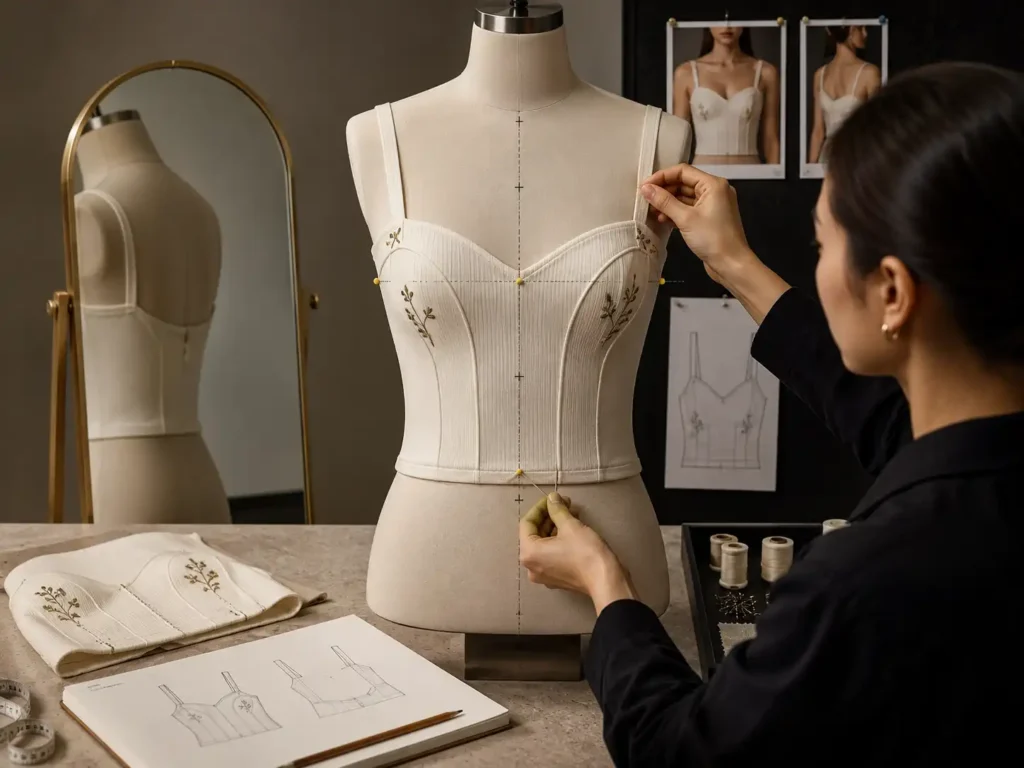
Visual Symmetry
Symmetry review covers neckline, cup height, center front, panel seams, straps, lace motifs, topstitching and hem. A garment can meet circumference measurements and still look unbalanced. Visual checks use a flat surface, dress form or comparison against the approved sample, depending on the issue.

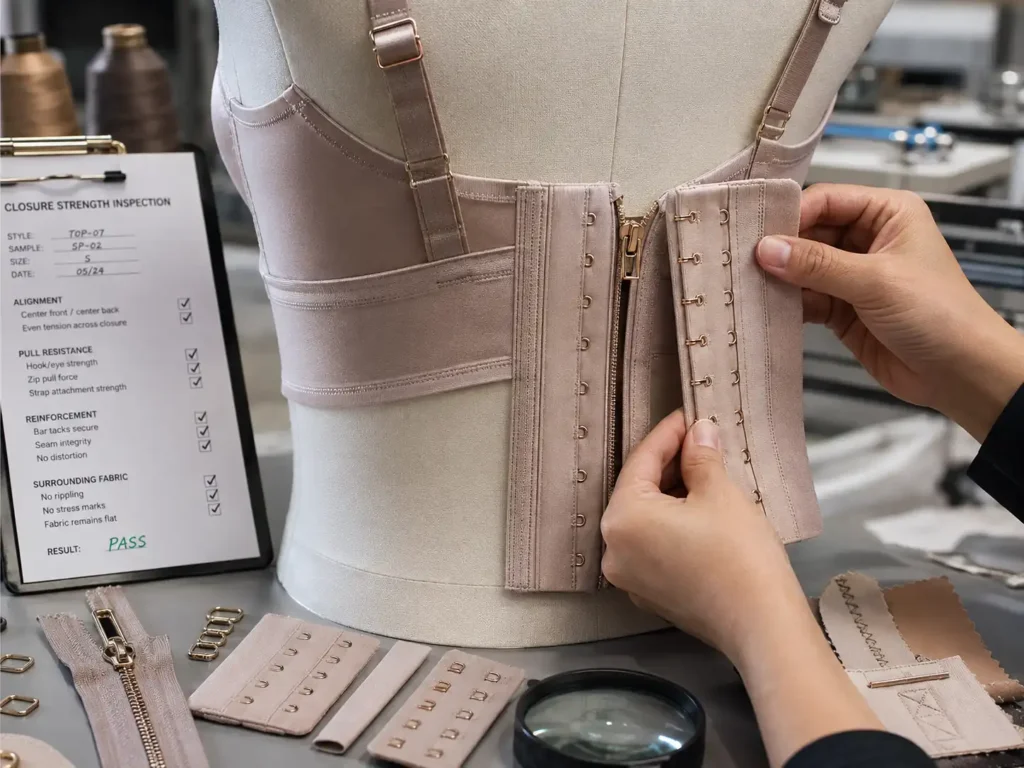
Closure Strength

Zippers, hooks, eyelets and strap attachments are opened, closed and inspected for alignment and reinforcement. The surrounding fabric should remain flat under expected tension. Pull or use testing is defined by the project and trim type. Any change of closure supplier or specification requires renewed approval.

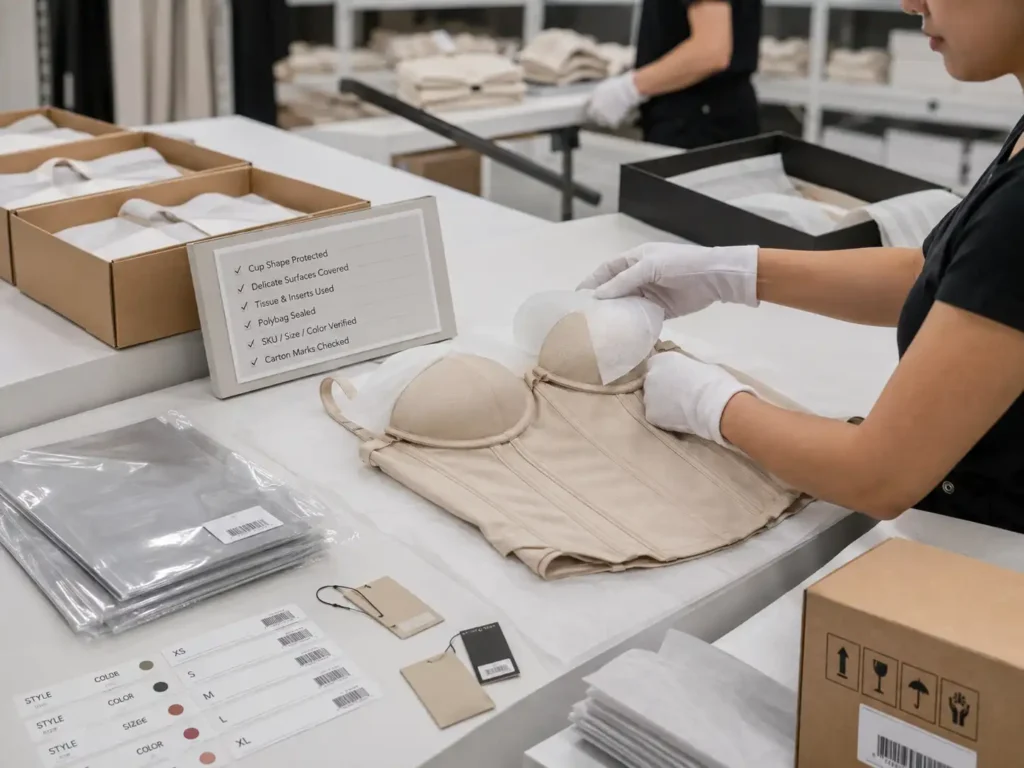
Packing Protection

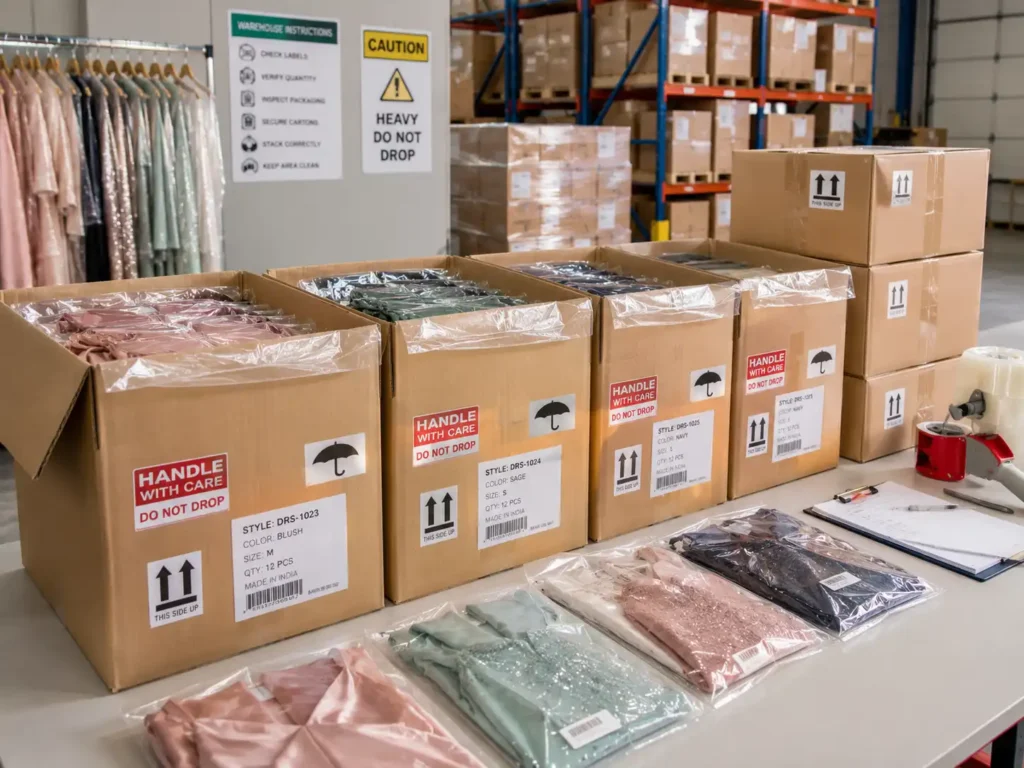
Packing should protect cup shape, boning and delicate surfaces. Satin needs crease control; sequins and coated fabrics may need protective layers; molded cups should not be flattened. Size, color, barcode, polybag and carton marks are checked together so a technically correct garment also reaches the correct SKU destination.

MOQ, Cost and Capacity Planning

MOQ starts from 200 pcs per style/color. Final feasibility depends on fabric availability, custom color, trims, cup and wire specifications, construction complexity, packaging and production schedule. Concentrated quantities create more stable material purchasing and production planning than highly fragmented color or size splits.

Order StructureInitial AssessmentMain Considerations
1 style, 1 color, 200 pcsCan be assessed under the standard MOQStock fabric, standard trims and normal packing improve feasibility
1 style, 2 colors, 200 pcs eachCan be assessed as 400 pcs totalEach color needs separate material, cutting, labels and QC control
1 style, 2 colors, 100 pcs eachUsually below the standard per-color structureFabric and trim MOQ may exceed the garment quantity
12 styles, 2 colors, 400-1,000 pcs per style/colorSuitable for a planned collection reviewSample priority, shared fabrics, capacity allocation and staged delivery should be planned
Custom-dyed satin or exclusive laceRequires supplier MOQ confirmationLab dip, dye lot, lace availability and replacement risk influence timing
Custom hardware and printed packagingSeparate supplier MOQ may applyDevelopment, plating, print proof and lead time need early approval

Private Label and Retail-Ready Delivery

Private-label completion covers the identity and warehouse details attached to every garment, not only a logo. Label, barcode and packing records are confirmed before bulk so the correct style, color and size arrive under the correct brand presentation.

Woven Brand Labels

Main labels can be developed in woven, printed or heat-transfer formats according to fabric, placement and comfort. Artwork, dimensions, fold type, color and attachment method are approved before bulk. Label edges should remain smooth against the skin, especially at the center back or side seam of a close-fitting bustier.

Size Care Labels

Size and care labels need consistent fiber content, care symbols, country information and size identity. Information should match the approved fabric and target market requirements. Placement is chosen to remain readable without interfering with fit or exposing through transparent mesh and lace.

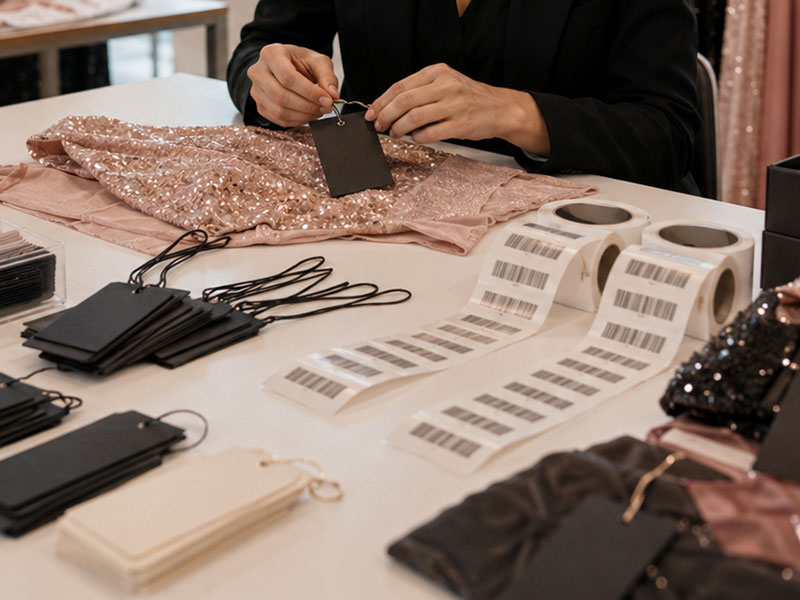
Hangtags

Hangtags can carry brand story, price, size, barcode, collection or care information. Paper, printing, string and attachment point are reviewed. The tag should not snag lace, mark satin or distort a strap. Proof approval and SKU mapping are completed before production quantities are printed.

Barcode SKU Labels

Barcode and SKU labels connect the garment with inventory, ecommerce and retail systems. Style, color, size and quantity data are checked against the order breakdown. Scan testing can be arranged according to the project. Separate top and bottom SKUs are needed when matching-set pieces are sold independently.

Custom Polybags

Polybags may use warning text, ventilation holes, size stickers, barcode labels or printed branding according to warehouse requirements. Bag dimensions should allow the garment to fit without compressing cups or creating excessive folds. Protective tissue or inserts may be added for satin, embellishment or molded shapes.

Carton Warehouse Marks

Carton marks, style-color-size breakdown, carton number, gross weight, net weight and destination information support receiving and customs documentation. Packing ratios are confirmed before final packing. Multi-batch or split shipments require clear carton allocation so priority SKUs can be identified at the destination warehouse.

Extend One Bustier Into a Collection

A successful bustier block can support more than one SKU. Shared fit, fabric and trims help a fashion label build coordinated products while keeping development records organized. Each extension still requires its own sample and proportion review.

Bustier Mini Skirt

A bustier and mini skirt can create a strong party or festival set while allowing separate sales. Top length, skirt rise and exposed waist should remain balanced across sizes. Shared satin, denim, lace or jacquard improves visual consistency, but each piece needs individual lining, zipper, measurement and barcode records.

Bustier Maxi Skirt

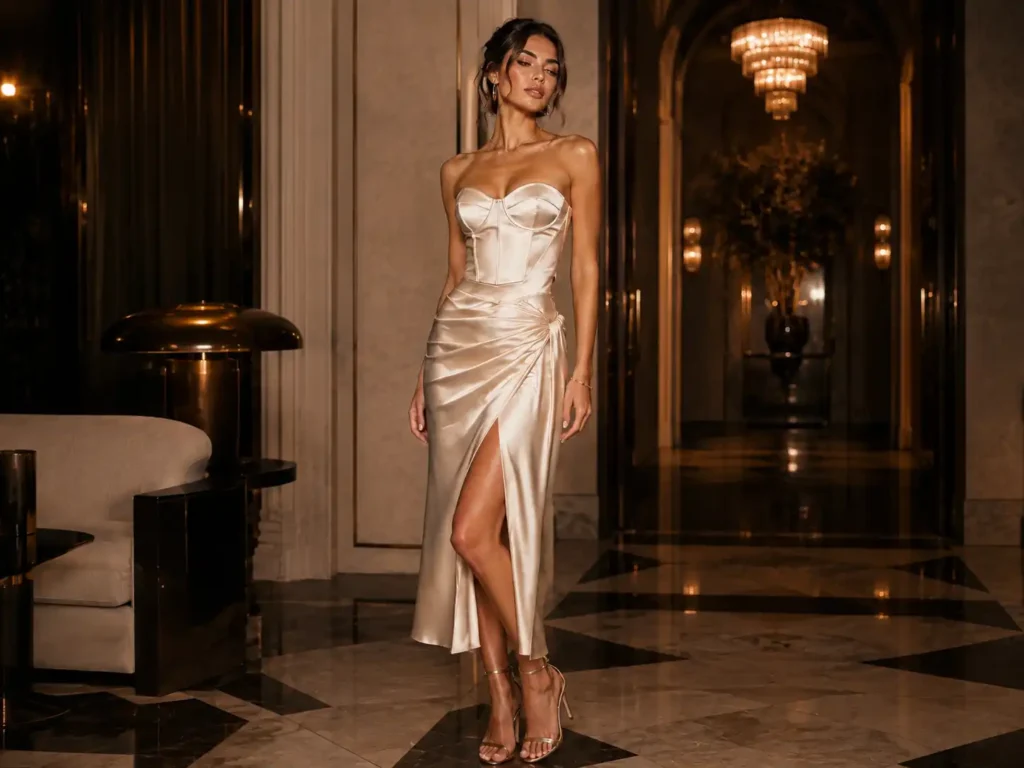
A maxi-skirt set moves the bustier into occasion, resort and evening programs. Fabric drape, waist stability, skirt length, slit height and lining affect the complete silhouette. Shade control is important because a small lot difference between top and skirt becomes visible when worn together.

Bustier Trousers

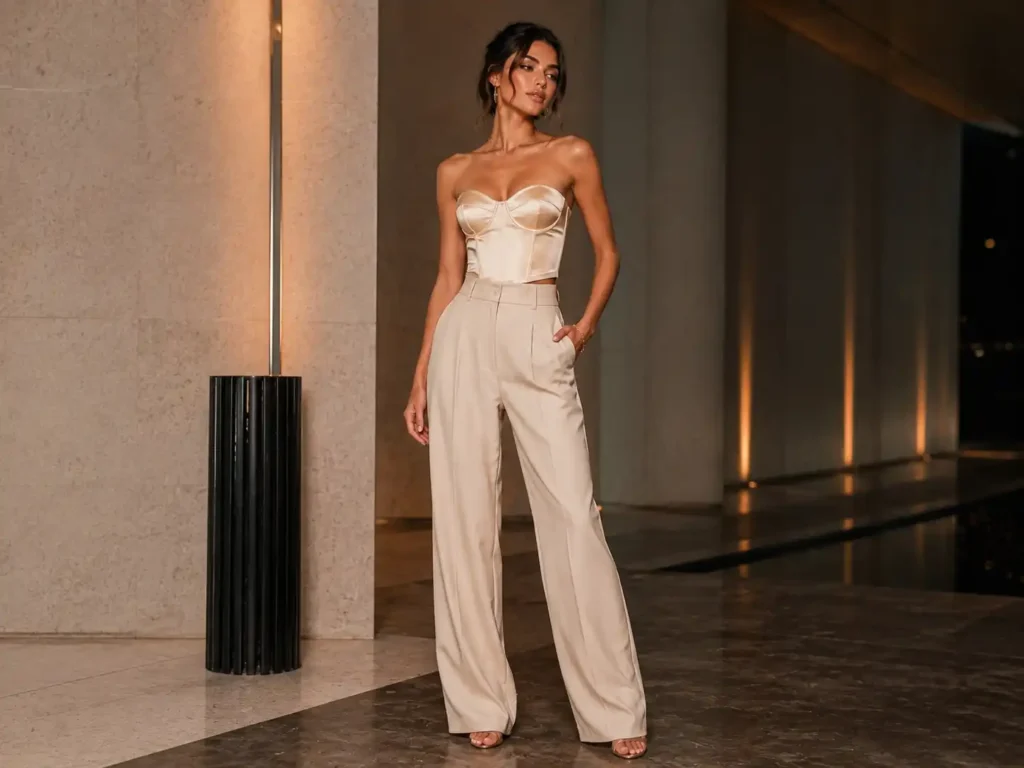
Bustier and trouser sets support tailored going-out, evening and premium ecommerce collections. The top’s waist line should connect visually with the trouser rise. Shared suiting, satin or stretch woven fabrics need consistent color and hand feel. Size pairing should be planned when pieces are packed as one set.

Bustier Corset Dress

An approved bustier structure can inspire a corset dress, but the lower body changes tension and movement. Waist, hip, skirt attachment, zipper length, slit and lining need new development. Reusing the upper-block direction can shorten design decisions while preserving a recognizable collection identity.

Frequently Asked Questions About Bustier Manufacturing

MOQ starts from 200 pcs per style/color. The final production structure depends on fabric availability, custom dyeing, lace or mesh supplier MOQ, cups, underwire, boning, branded hardware, labels, packaging and order timing. A quantity plan should show each style, color and size ratio separately so the material and production team can assess feasibility accurately.
Yes. Reference images can define silhouette and styling, while the development team converts the visual direction into a construction brief covering fabric, lining, cup, underwire, boning, closure, key measurements and support level. A reference image does not contain enough information for a final bulk quotation by itself, so missing details are confirmed before pattern work begins.
Yes. An authorized original garment can be measured and reviewed for pattern shape, cup position, internal construction, fabric, trims, closure and workmanship. Development may include corrections when the original shows fit or production weaknesses. Brand teams should confirm that they hold the legal right or authorization to reproduce or adapt the submitted design.
Yes. Jinfeng Apparel develops fashion bustiers using cut-and-sew cups, foam cups, underwire, plastic or other suitable boning, interfacing, power mesh, stable lining, anti-slip tape and multiple closure options. The selected structure depends on the style, fabric, size range, required support and wearing occasion. Heavy support is not added unless the design needs it.
Complex corset, strapless, lace, mesh, sequin and structured first samples are commonly planned within 15-25 days after construction and material direction are confirmed. Revised samples commonly require 7-15 days according to the correction scope. PP samples commonly require 7-15 days once final bulk materials and trims are available. Each schedule is confirmed by project.
Fit control covers upper bust, full bust, underbust, bust point, cup volume, neckline curve, side coverage, back tension and strap position. Pattern feedback is converted into measurable corrections and updated files. Broad size ranges may require review of a small, base and larger size before bulk to protect cup position and coverage during grading.
Yes. Fabric resources include satin, stretch satin, lace, fashion mesh, power mesh, denim, jacquard, velvet, sequin fabric, crepe and other women’s fashion materials. Availability, color, MOQ, stretch, weight, transparency and lead time are confirmed by supplier and batch. Swatches and sample approval are recommended before bulk purchasing.
Consistency is controlled through the approved PP sample, Golden sample, final pattern, size chart, grade rules, BOM, fabric and trim approvals, sewing instructions, QC checklist, label placement and packing instructions. Incoming material, in-line construction, measurements, visual symmetry, closure strength and final SKU packing are checked at defined stages.
Yes. Private-label support can cover woven labels, size labels, care labels, hangtags, barcode stickers, SKU labels, custom polybags, tissue, inserts, carton marks and warehouse receiving details. Artwork, dimensions, placement, print proof and quantity are approved before bulk. Packaging suppliers may have separate MOQ and lead-time requirements.
Yes. NDA-based cooperation can protect brand names, tech packs, line sheets, original samples, patterns, material plans, private-label artwork, pricing, order quantities and unpublished designs. Public case studies can remain anonymous and focus on product category, technical challenge and manufacturing solution without revealing confidential identity or launch information.
Provide the design or tech pack, quantity per style/color, size range, fabric direction, cup and support requirements, closures, trims, private-label packing, target market and delivery window. Complete information produces a more reliable costing review. Where details remain open, Jinfeng Apparel can first provide a feasibility and development plan before final quotation.

Send Your Bustier Top Project

Send your reference image, tech pack, original sample information or line sheet for a structured project review. Include the expected quantity per style/color, size range, fabric direction, cup and support requirements, color plan, private-label packing and target launch date. Kelly will coordinate the initial assessment with the development team and return the information needed for material selection, sample planning, quotation and production scheduling.

  • Name and company or brand
  • Email and WhatsApp
  • Product type and number of styles
  • Quantity per style/color
  • Target size range
  • Fabric, lining and color direction
  • Cup, underwire, boning and closure requirements
  • Label, barcode and packing requirements
  • Target sample and delivery dates
  • Tech pack, reference images or related files

Tell Us About Your Dress Project

Share your product details, estimated quantity and development requirements. Our team will review your project and provide practical OEM/ODM production feedback.

Premium Women’s Apparel Production for Fashion Brands

From dress sample development to bulk production, JF Apparel supports fashion brands with confidential OEM/ODM manufacturing, reliable quality control and scalable production support.

START YOUR DRESS PROJECT

Ready to Develop Your Next Dress Collection?

Share your design concept, product requirements or sourcing plans with our team. We’ll review your project and provide practical feedback on development, materials, MOQ and production.

7-10 Days

Sample Development

200 PCS

Starting MOQ

Fast Response

Professional Follow-Up