Skip to content
Burgundy Dress Manufacturer
Custom color development, dress engineering and controlled bulk production for established fashion, occasionwear and private-label womenswear programs.
- 6-point color control covers shell fabric, lining, zipper, thread, visible trims and bulk shade approval.
- 8 core product directions include satin, corset, bodycon, bridesmaid, velvet, lace, mesh and sequin dresses.
- Ordinary first samples commonly require 10-15 days; complex corset, lace, mesh or sequin samples commonly require 15-25 days.
- MOQ starts from 200 pieces per style/color, subject to fabric availability, custom dyeing, trims, construction and production scheduling.
- 2 sample rooms, 7+ senior pattern makers, 20+ sample machinists and 15+ QC inspectors support development and bulk control.
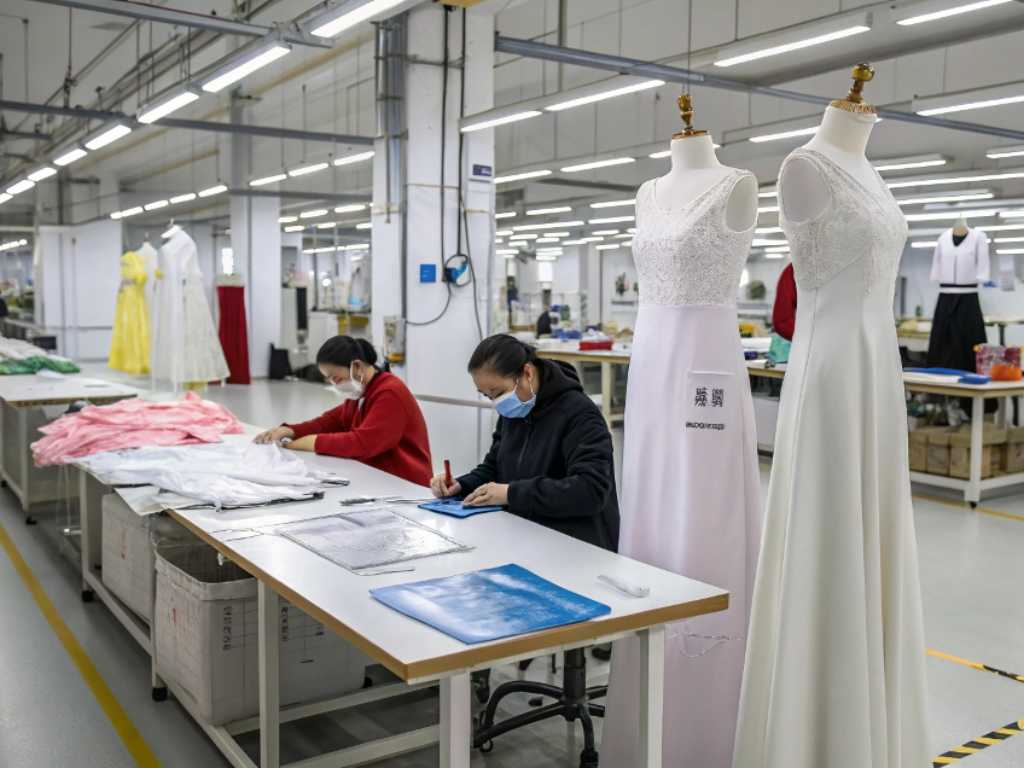
Manufacturing Capacity for Burgundy Dress Programs
Since 2008
Six Owned Factories
Ten-Plus Partners
Two Sample Rooms
Pattern Development Team
QC and Project Control
Built for Established Fashion and Occasionwear Programs
Occasionwear Brands
Partywear and Ecommerce
Retail and Sourcing Teams
Burgundy Dress Categories Developed for Commercial Collections

Burgundy Satin Dresses

Wine Red Corset Dresses

Burgundy Bodycon Dresses
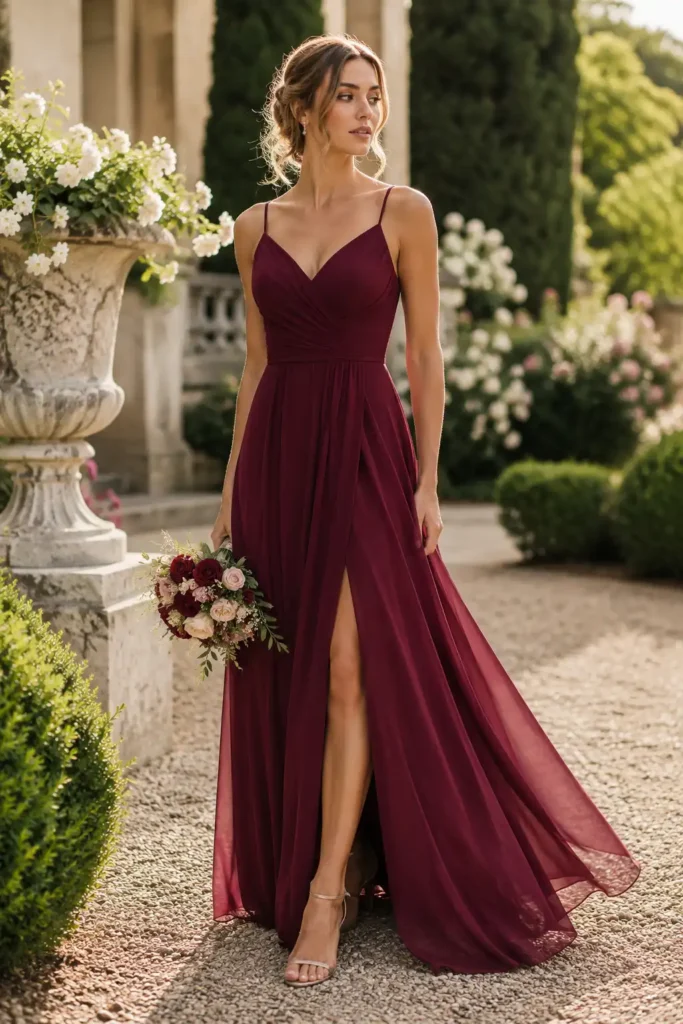
Wine Red Bridesmaid Dresses
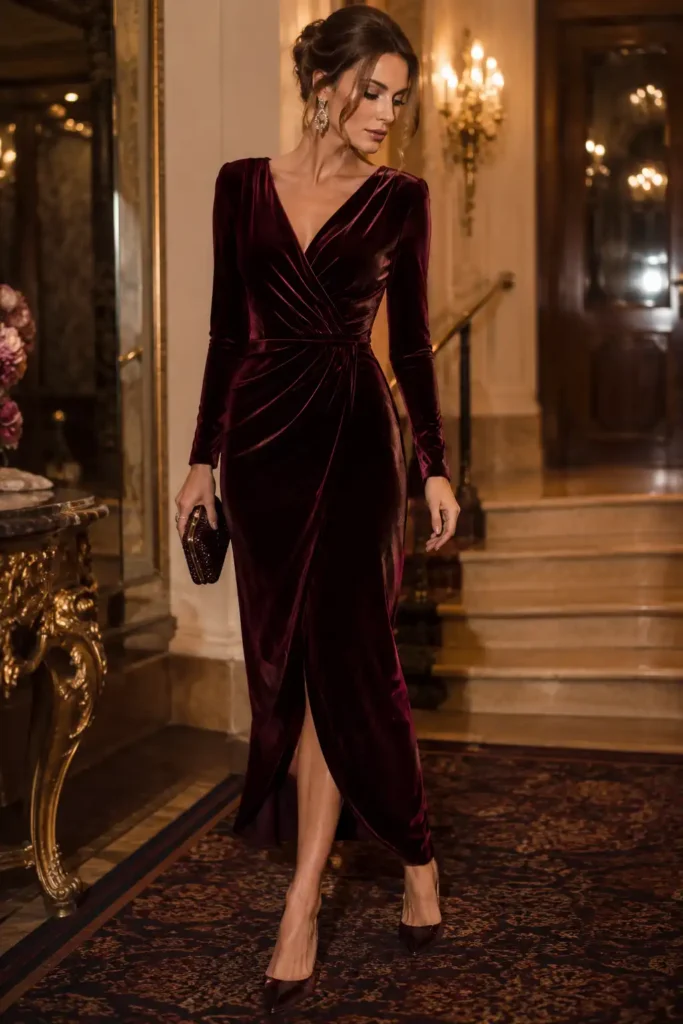
Burgundy Velvet Dresses
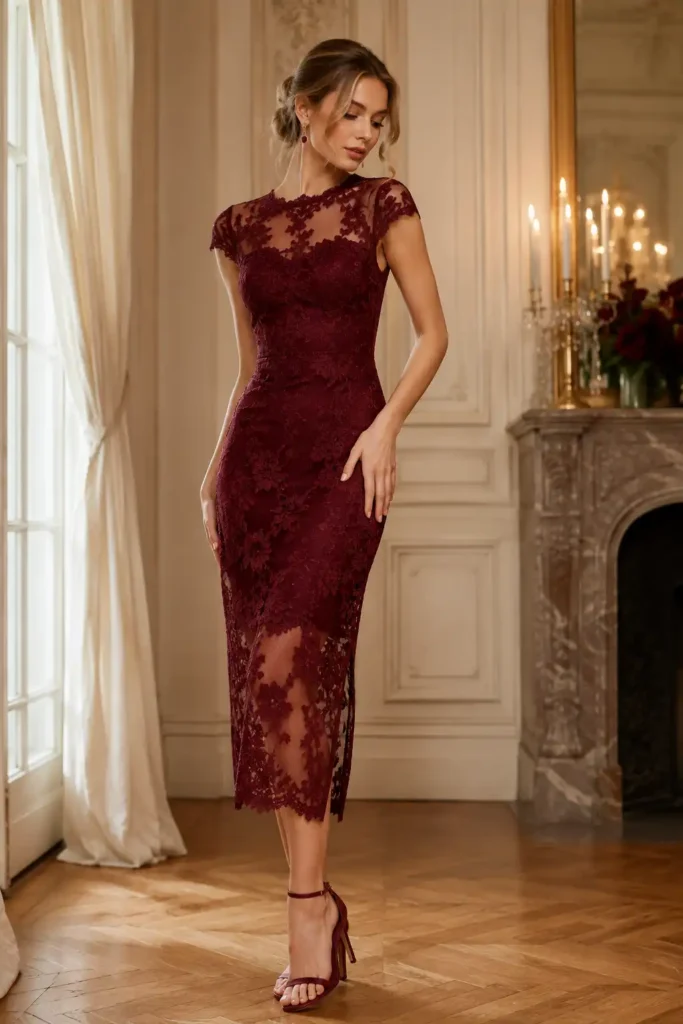
Wine Red Lace Dresses

Burgundy Sequin Dresses

Wine Red Mesh Dresses
Define the Burgundy Tone Before Sampling
Color names are useful for merchandising, but they are not production standards. Burgundy, wine red, merlot, maroon and bordeaux overlap in everyday use. Final approval should be tied to Pantone, a physical swatch, an approved garment or a confirmed fabric sample.
| Color Direction | Visual Character | Typical Undertone | Common Dress Use | Approval Basis |
|---|---|---|---|---|
| Burgundy | Deep red with a visible purple cast | Cool to neutral | Occasionwear, bridesmaid, satin and velvet | Pantone TCX, physical swatch or approved fabric |
| Wine Red | Balanced deep red inspired by red wine | Neutral red-purple | Party, cocktail, evening and formal dresses | Approved garment, swatch or lab dip |
| Merlot | Soft dark red with a rounded purple warmth | Warm purple-red | Satin, velvet, lace and premium occasionwear | Physical material standard and garment review |
| Maroon | Dark red with a brown influence | Warm brown-red | Fall ranges, formal dresses and work-to-evening styles | Pantone or approved bulk fabric |
| Bordeaux | Dense, elegant dark red | Deep neutral red | Evening, wedding guest and structured dresses | Lab dip and assembled sample |
| Dark Red | Red-dominant shade with less purple | Warm or neutral red | Holiday, party and commercial fashion dresses | Pantone, swatch or approved original sample |
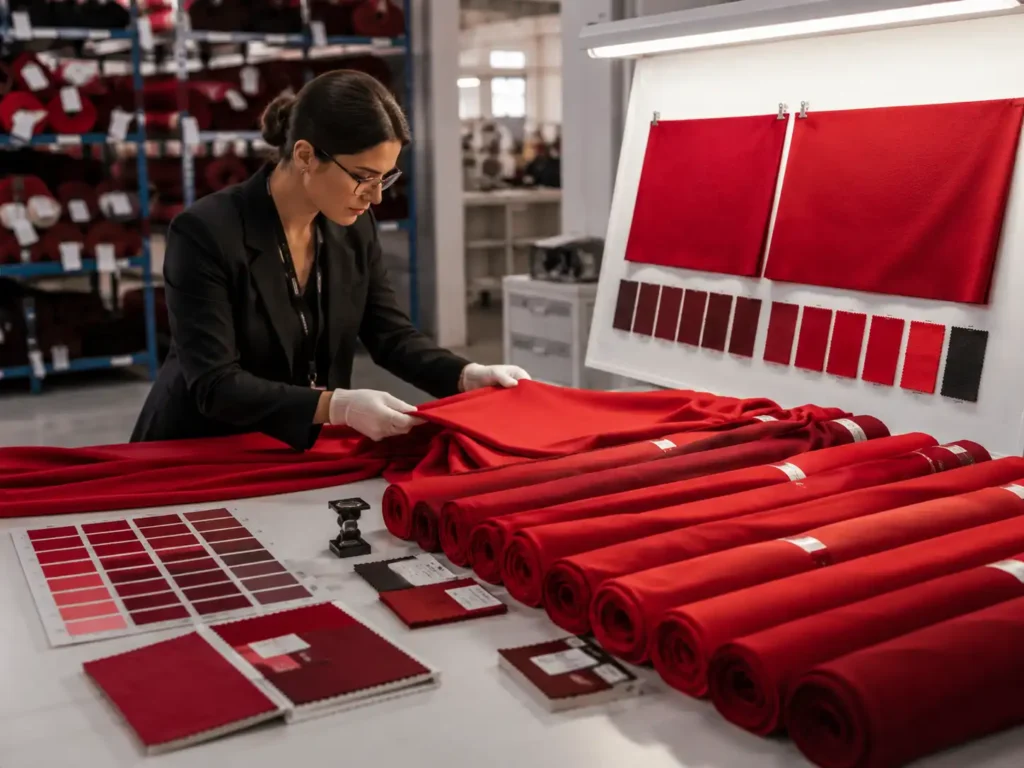
From Color Reference to Approved Bulk Burgundy
Color development should close the gap between a merchandising name and a repeatable production standard. Approval covers the shell fabric, supporting materials, assembled sample and bulk fabric before cutting begins.
Color Standard Confirmation
Development can begin from Pantone TCX, a physical swatch, an original garment, an approved fabric cutting or a brand color archive. Screen images alone are not reliable because monitors, photography, compression and lighting change dark red tones. The first review identifies whether the program requires an exact match, a commercially close stock shade or a new custom-dyed route. The color name, reference number, material, date and approval status are recorded by style.
Lab Dip and Material Review
Custom dyeing may require lab dips and supplier minimums. Satin, velvet, chiffon, lace, mesh, lining, zipper tape, thread and visible trims should not be approved in isolation. Every material reflects light differently, and transparent layers change the color placed underneath. Jinfeng Apparel reviews the group physically under controlled indoor light, daylight and garment-level observation. The preferred option is recorded before sample construction or bulk material booking.
Bulk Fabric and Garment Approval
Approved lab dips do not replace bulk-fabric review. Bulk material is checked for shade, width, weight, surface defects, shrinkage risk and lot variation before cutting. Representative shade bands or roll samples may be reviewed when required. The PP sample links the color standard to the final construction, lining and finishing. Cutting release follows approval of bulk fabric, trims, pattern, measurement, labels and packing requirements.
How Burgundy Changes Across Dress Fabrics
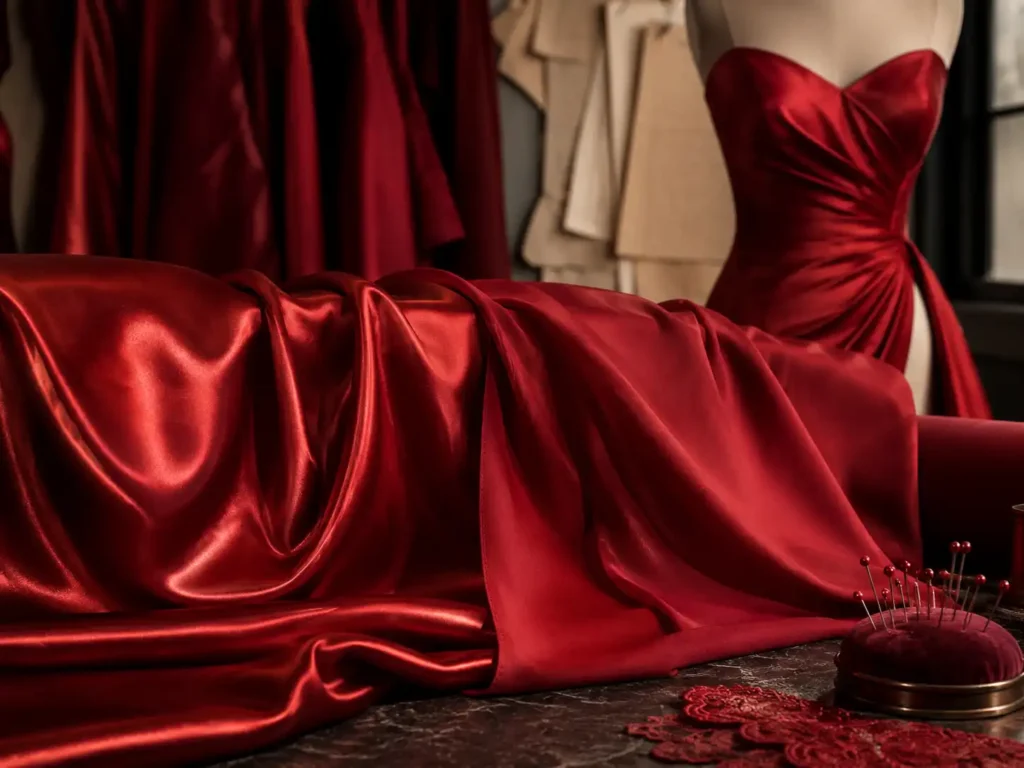
Satin and Stretch Satin
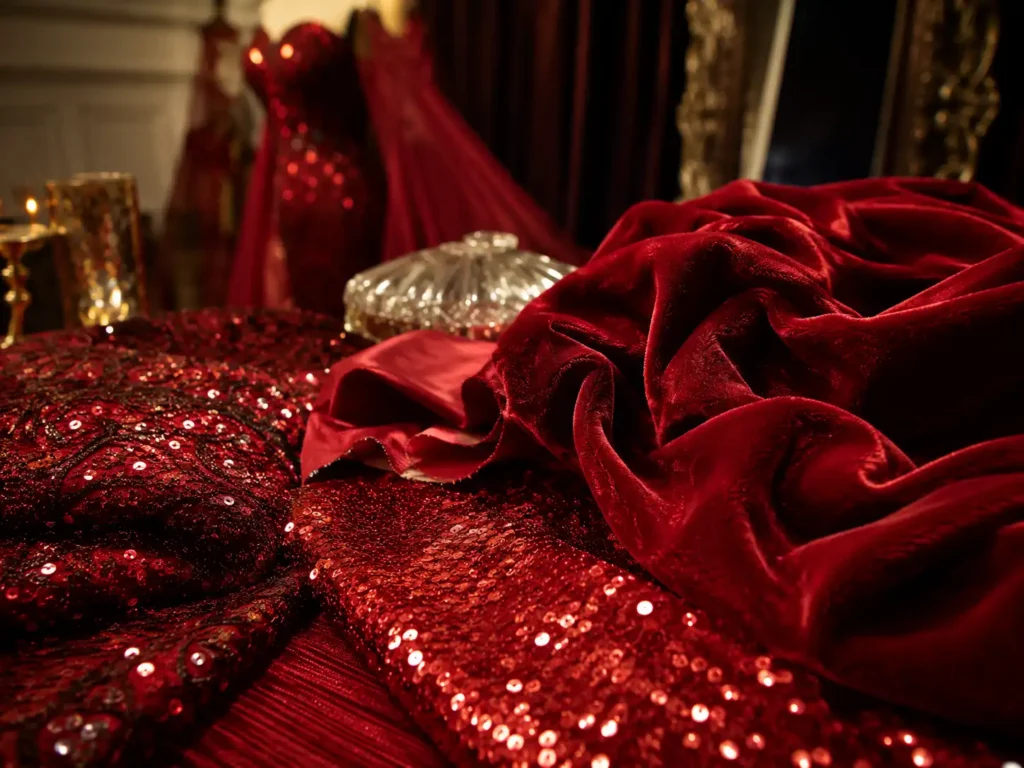
Velvet
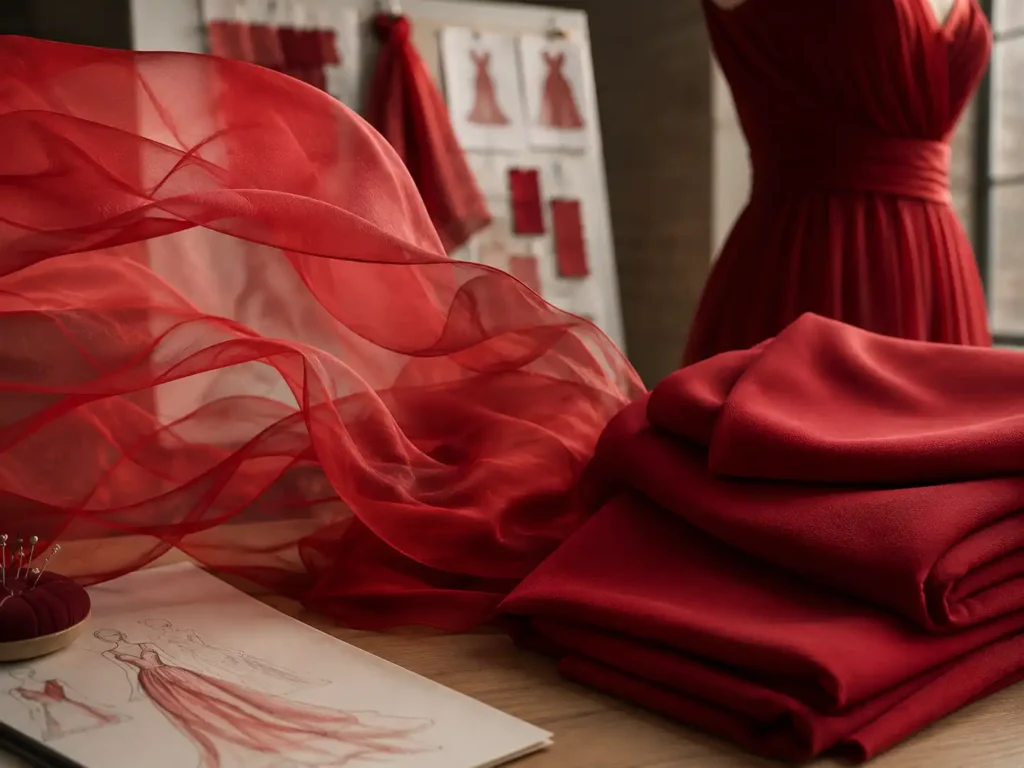
Chiffon and Crepe
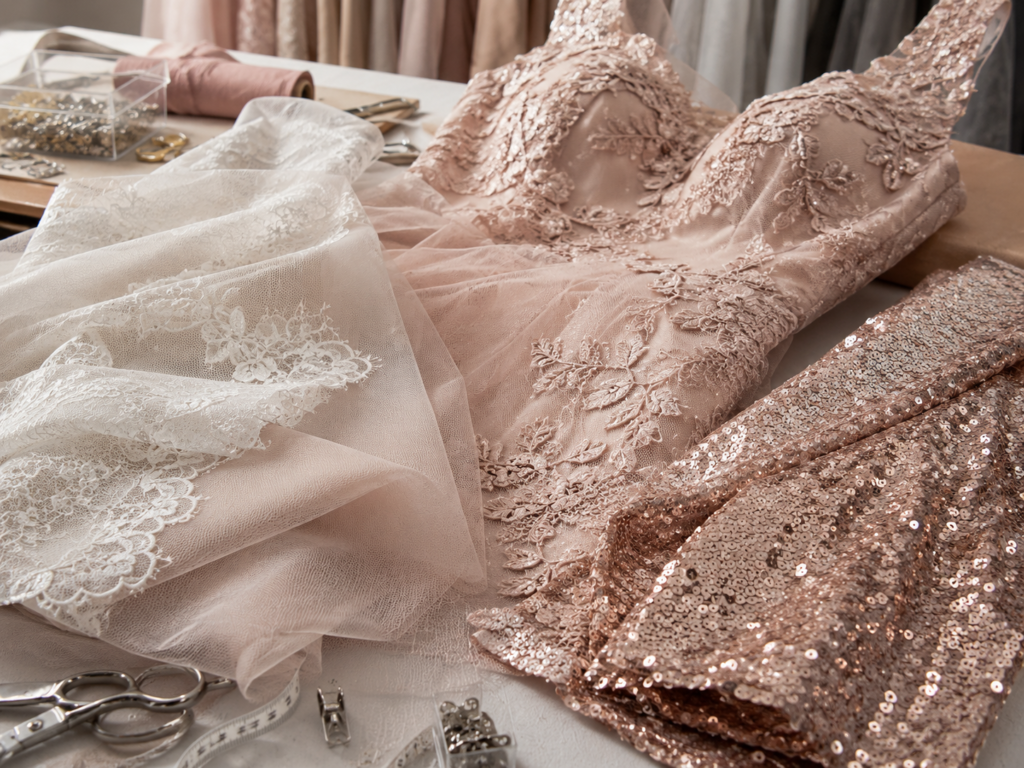
Lace and Mesh
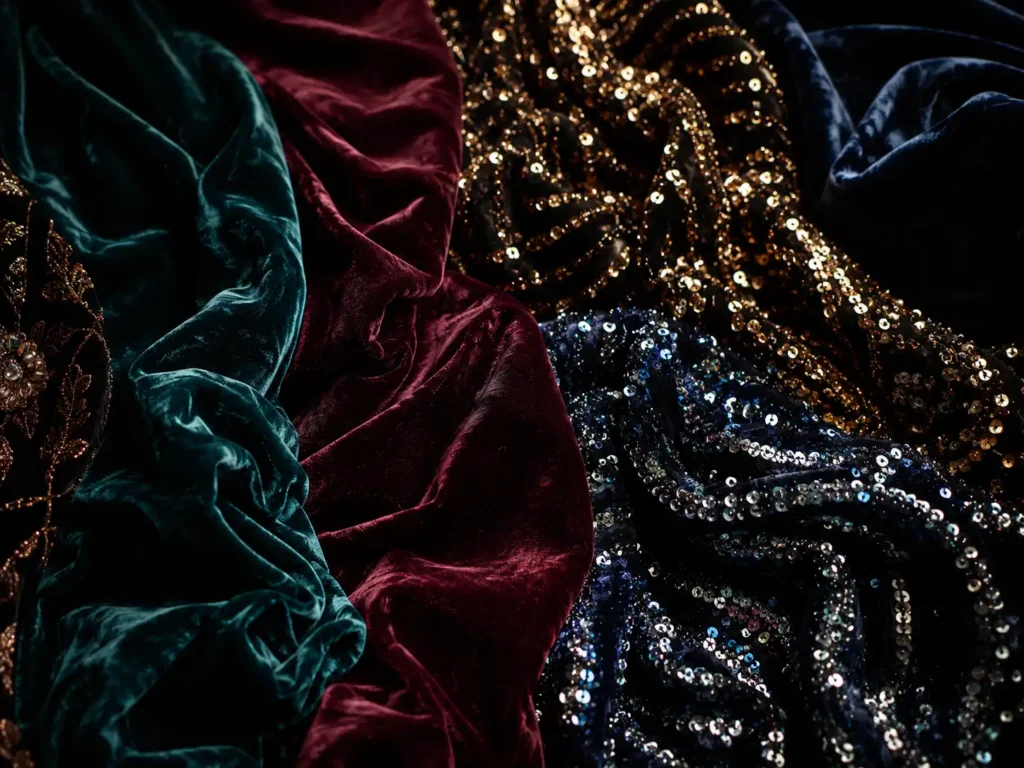
Sequin and Embellishment
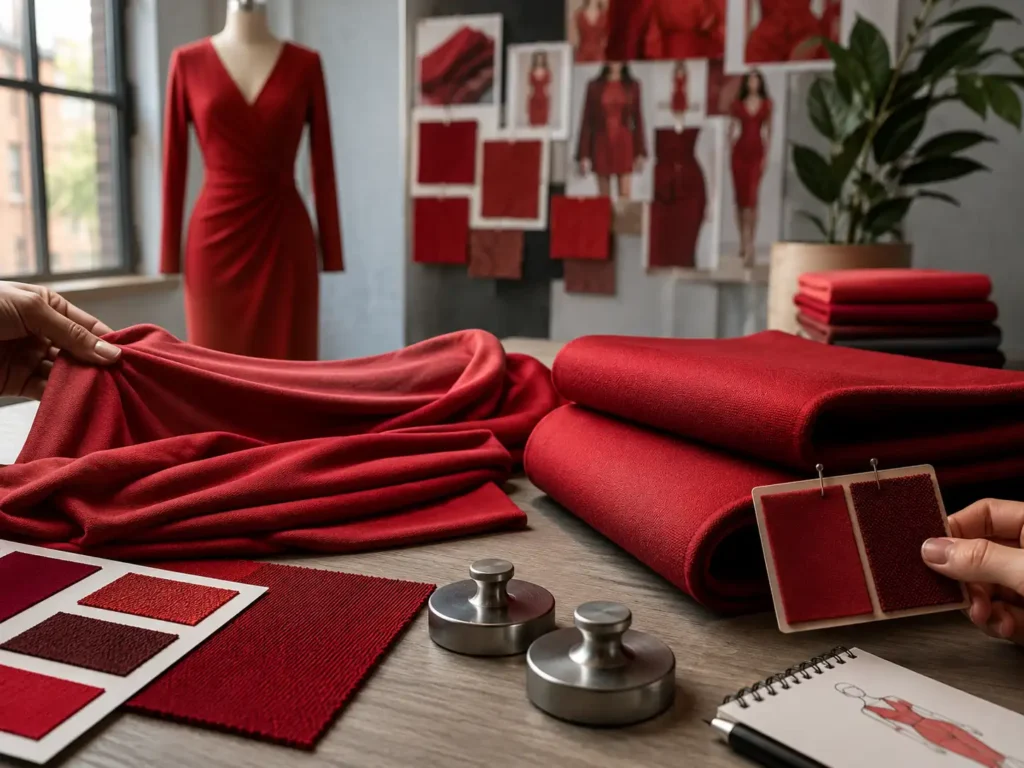
Jersey and Ponte
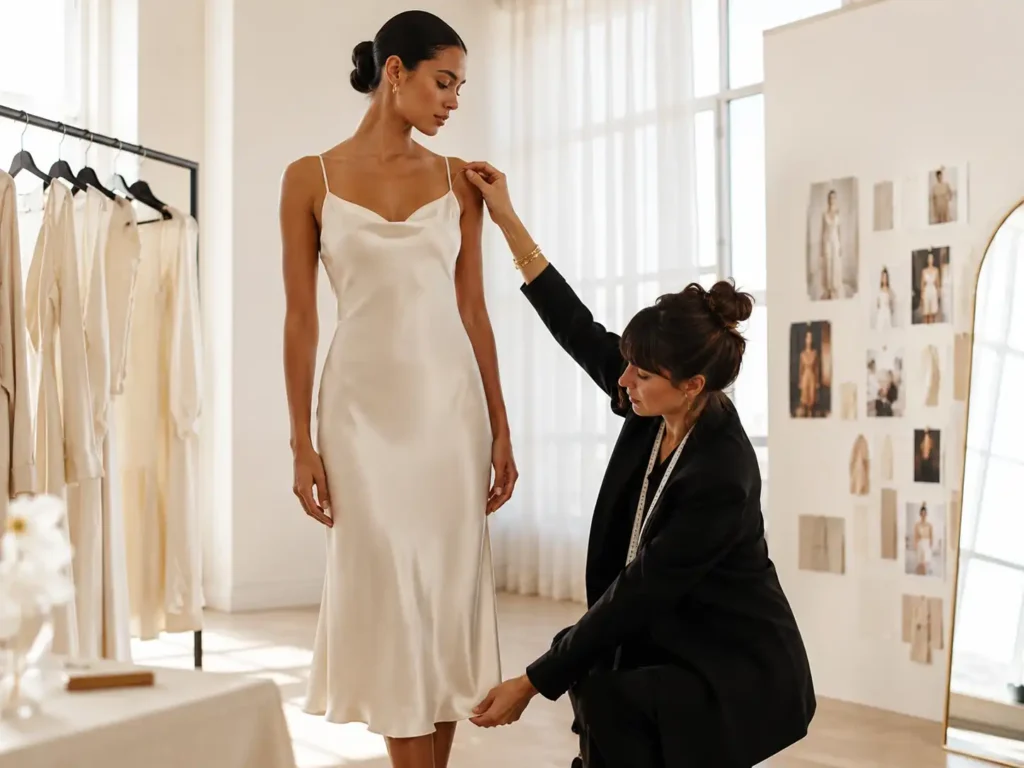
Fit and Structure Controls for Burgundy Silhouettes
Color attracts attention, but fit determines whether a dress becomes a repeatable commercial product. Pattern work connects fabric behavior, support, movement, coverage and size grading to the intended silhouette.
Bodycon, Ruched and Stretch Fits
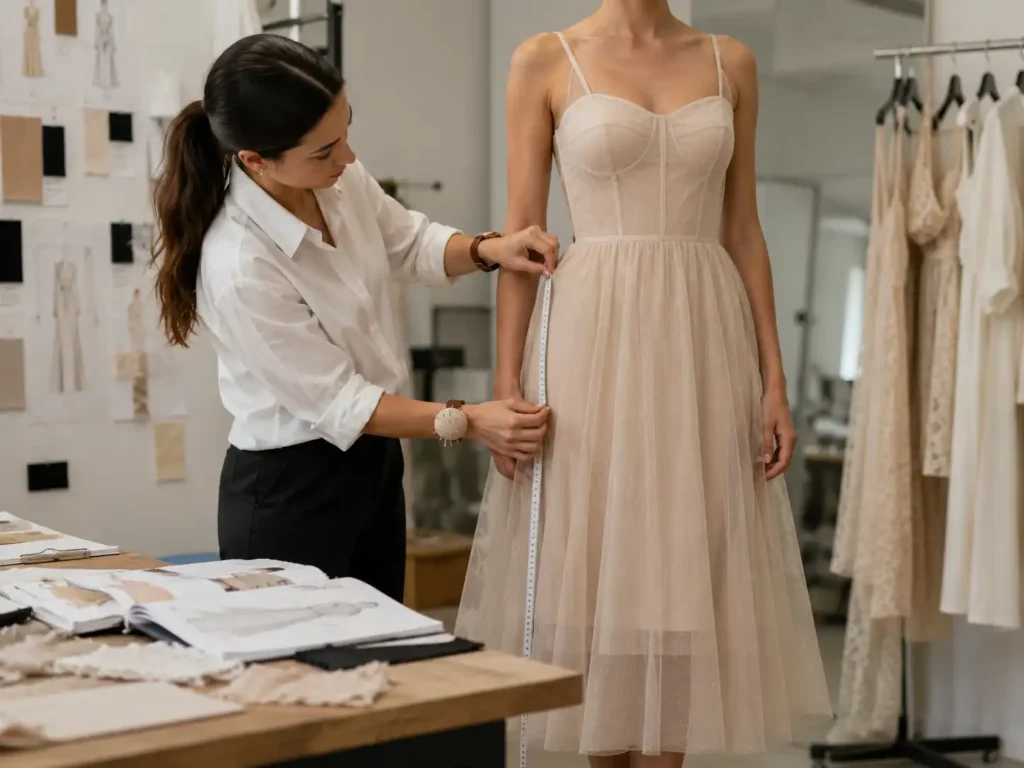
Stretch percentage, stretch direction, recovery and fabric relaxation are recorded before pattern correction. Negative ease is adjusted by material rather than copied across styles. Bust, waist, hip, torso and dress length are checked after the garment rests. Ruching depth, placement and symmetry are controlled with notches, construction instructions and approved samples. Lining must stretch with the shell without restricting movement or pulling the outer fabric out of shape.
Corset, Strapless and Structured Support
Corset and strapless dresses require coordinated cups, boning, waist seams, lining, zipper construction, top-edge security and anti-slip support. A visually strong sample can still fail when the cup sits too high, the torso is too short, the zipper carries excessive tension or the top edge opens during movement. Fit review covers front and side profile, sitting comfort, arm movement, neckline security and graded-size behavior before PP approval.
Slip, Maxi and Asymmetric Balance
Slip and bias silhouettes depend on grain, drape, strap length, neckline position and fabric relaxation. Maxi styles add skirt balance, slit height, walking clearance and hem settling. One-shoulder or asymmetric dresses require left-right balance despite different panel shapes and load points. The pattern team records neckline, waist, length, hem and lining corrections by sample version so bulk grading does not reproduce an early error.
Burgundy Dress Sampling from Brief to PP Approval
Project Review
Fabric and Color Search
Pattern Development
First Sample
Revision and Fit Review
PP Sample Approval
Size Development for US and Global Dress Programs
Core Size Systems
Stretch-Fabric Grading
Extended Size Review
Extended and plus-size development requires more than proportional enlargement. Bust support, armhole coverage, shoulder and strap width, waist-hip balance, back height, lining comfort, slit height, skirt length and sitting movement may need separate correction. Key graded samples can be requested when the style carries high fit risk.
Petite and Tall Options
Petite or tall programs can be assessed from the brand standard and product category. Torso length, waist position, sleeve length, strap setting, rise, skirt length, slit height and hem sweep may change independently. A shorter hem alone does not create a balanced petite dress, and extra length alone does not create a well-proportioned tall fit.
Controlling Dye Lots and Bulk Color Consistency
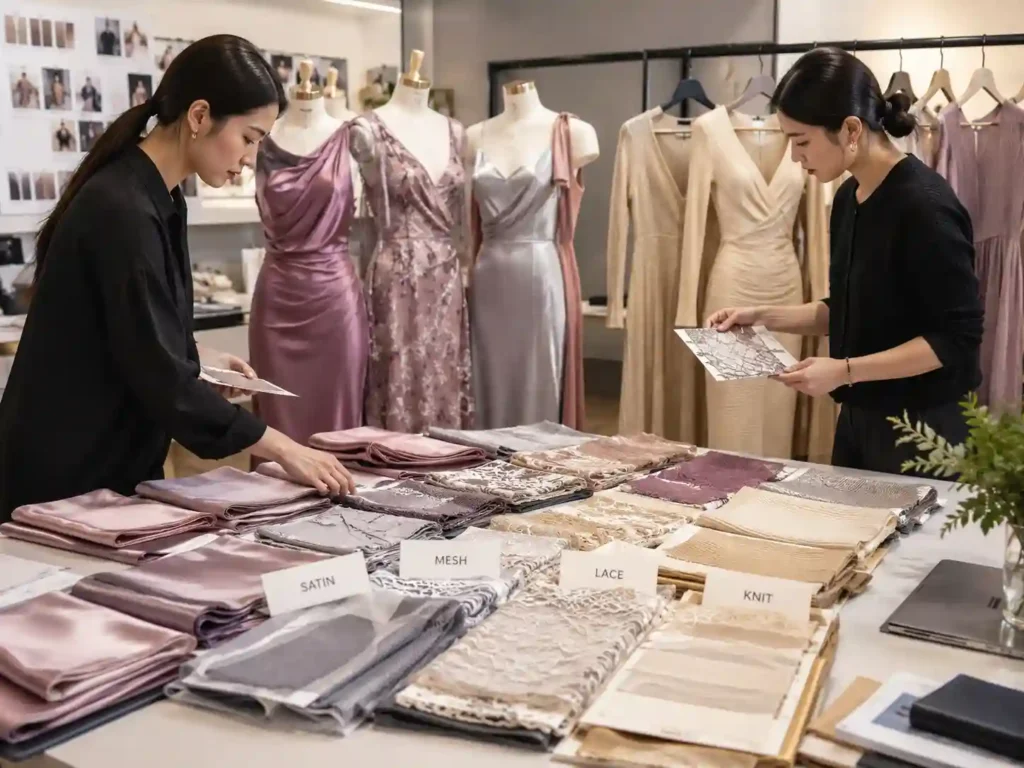
Color approval only has value when the approved standard survives material receiving, cutting, sewing, finishing, packing and repeat production. Dark red shades make mixed lots and reflected differences highly visible.
Fabric Batch and Roll Control
Incoming fabric is identified by supplier, color, lot, roll and quantity. Shade differences are reviewed before cutting, and visibly different lots are separated. Satin shine direction, velvet pile direction and transparent layering are considered together with dye-lot variation. Roll information follows the cutting and bundle process where required, helping the production team avoid mixing panels that look different after assembly.
Trim and Component Matching
Lining, zipper tape, thread, elastic, lace, mesh, cups, boning channels and visible decoration are checked against the approved garment direction. Exact matching is not always technically possible because fiber, surface and transparency differ. The goal is a controlled tonal relationship that looks intentional on the finished dress. Approved component codes and photos are retained in the style file.
Garment-Level Shade Review
Inline and final review compares garments within the same batch and against approved references. Inspection considers front-to-back consistency, adjacent panels, sleeves, lining visibility, zipper tape, replacement panels and pressed areas. Dark garments are checked under suitable light rather than only inside cartons. Packing separates style, color, size and lot information according to the confirmed order plan.
Cutting, Sewing and Pressing for Burgundy Fabrics
Deep color makes small workmanship defects easier to see. Direction, tension, seam shape, heat, pressure and surface protection must match the selected material instead of following one generic sewing method.
Direction-Controlled Cutting
Satin grain, velvet pile, sequin direction, lace motif and printed or woven surface direction are marked before cutting.
One-way layouts can increase fabric consumption but prevent finished panels from appearing lighter, darker or reversed. Markers also account for nap, stretch, damaged areas, motif placement, left-right symmetry and shrinkage. Bundles remain separated by style, color, size and material lot according to the project plan.
Stable Sewing and Assembly
Needle, thread, stitch density, seam type, feed and tension are selected for the material. Satin needs flat seams without puckering or shine marks. Velvet requires pile protection and controlled feeding.
Mesh and lace need stable joins without distortion. Bodycon fabrics require seam recovery. Zipper areas, corset seams, slits, straps, cups, boning and decoration receive operation-specific instructions and inline checks.
Pressing, Finishing and Protection
Pressing temperature, steam, pressure, dwell time and protective layers are tested before broad use. Excessive heat can glaze satin, crush velvet, shrink mesh, discolor synthetic lace or damage sequins. Finished garments are rested, measured, thread-trimmed and appearance-checked before folding. Tissue, covers, hangers, folding boards or other protection can be assessed according to fabric, decoration and delivery method.
Quality Control for Burgundy Dress Production
Fabric Inspection
Checks cover color, dye lot, width, weight, composition reference, surface defects, stains, pulls, holes, snagging, shrinkage risk, stretch, recovery and quantity. Satin, velvet, mesh, lace and sequin materials receive fabric-specific review. Material issues are identified before cutting whenever possible.
Trim Inspection
Zippers, thread, lining, cups, boning, hooks, elastic, buttons, lace trims, sequins, labels and packaging components are checked for specification, color, size, quantity and function. Visible trim colors are compared physically with the approved garment direction rather than accepted from a screen image.
Cutting Inspection
Cutting control covers marker version, fabric direction, pile or shine direction, shade separation, size bundle, damaged areas, notches, symmetry and critical panel placement. Errors at this stage can create permanent shade mismatch, twisted seams, uneven necklines or inaccurate measurements across the full order.
Inline Sewing Inspection
Inline checks focus on stitch quality, seam shape, measurements, panel shade, zipper flatness, neckline stability, strap security, corset support, slit construction, ruching symmetry, lining attachment and decoration. Early correction limits the number of garments affected by one repeated operation error.
Final Garment Inspection
Finished garments are reviewed for measurements, appearance, color consistency, stains, pressing marks, loose threads, closure function, lining, hem, symmetry, decoration and brand components. Inspection plans may follow brand manuals, agreed checkpoints or AQL-based pre-shipment requirements.
Packing Inspection
Packing checks confirm style, color, size, quantity, barcode, SKU sticker, polybag, warning text, inserts, folding method, carton ratio, carton marks, gross and net weight information and shipping documents. Dark surfaces and delicate materials receive protection against rubbing, color transfer, crushing and visible packing creases.
Color Fastness and Third-Party Testing Support
Color Fastness Review
Fabric Performance Tests
Inspection and Test Partners
MOQ, Quotation and Burgundy Order Planning
MOQ starts from 200 pieces per style/color. Final feasibility depends on fabric availability, custom dyeing, special trims, construction, size breakdown, private-label materials, inspection requirements and production scheduling.
| Order Structure | Initial Assessment | Main Variables |
|---|---|---|
| 1 style / 1 burgundy color / 200 pcs | Can be reviewed under the standard starting MOQ | Stock fabric, trim availability, size ratio, construction and schedule |
| 1 style / 2 colors / 200 pcs each | 400 pcs total; each color meets the starting MOQ | Separate shade approval, lining, zipper, labels and packing codes |
| 10-30 styles / 200+ pcs per style/color | Suitable for coordinated collection planning | Sample sequence, shared fabrics, factory allocation, QC and phased delivery |
| Custom-dyed burgundy fabric | Supplier minimum may raise the project MOQ | Lab dips, minimum dye quantity, loss, shade tolerance and lead time |
| Special lace, velvet or sequin | Reviewed by material and construction | Supplier MOQ, consumption, direction, damage allowance and handling time |
| Complex corset or embellished dress | Quoted after technical and consumption review | Pattern work, cups, boning, lining, sewing minutes, finishing and protection |
| Private labels and retail packing | Garment MOQ and packaging MOQ may differ | Artwork, label supplier minimum, barcode data, polybag and carton requirements |
Private Labels and Retail-Ready Burgundy Dresses
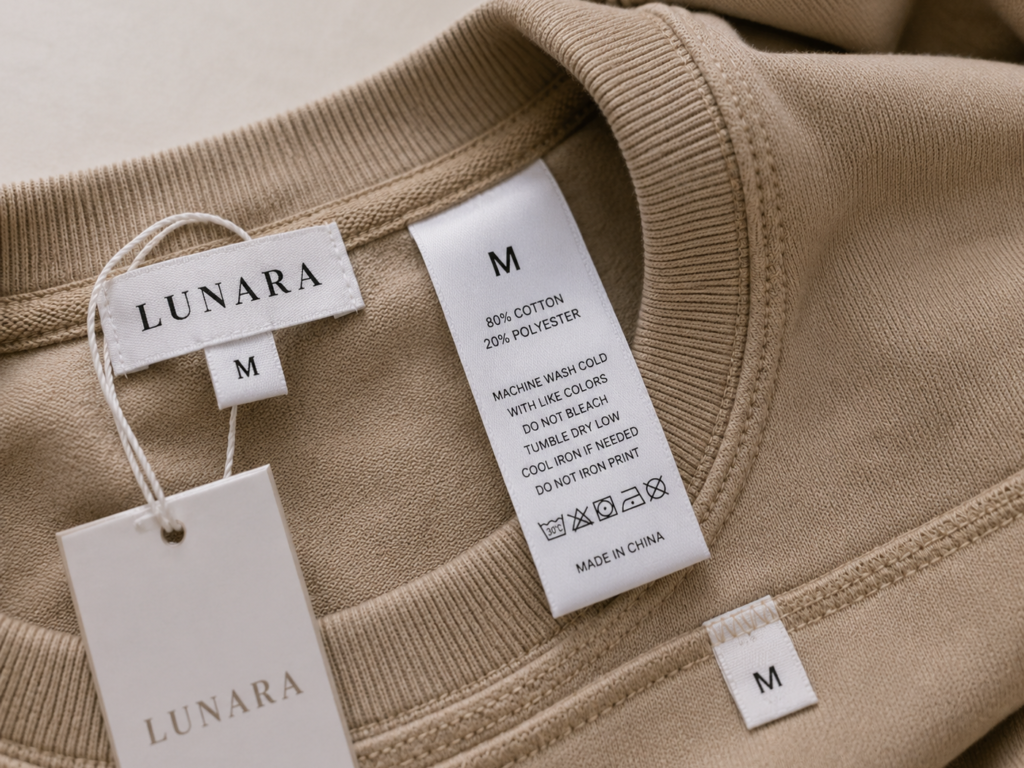
Main and Woven Labels

Care and Size Labels

Hangtags and Hang Strings
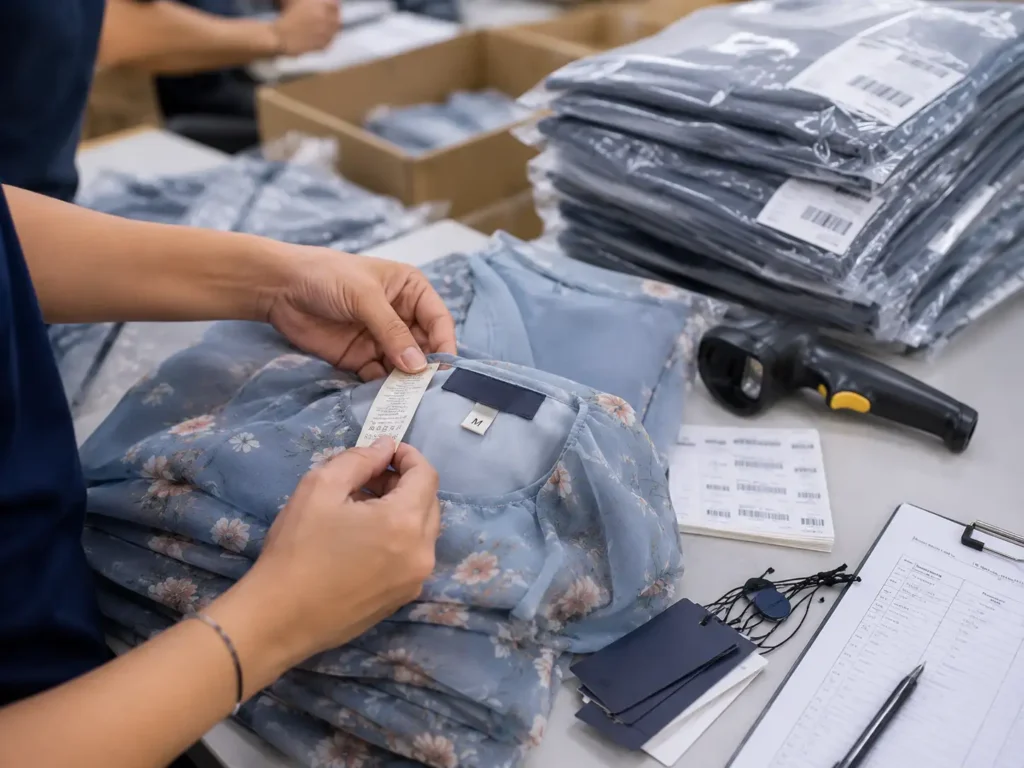
Barcode and SKU Labels
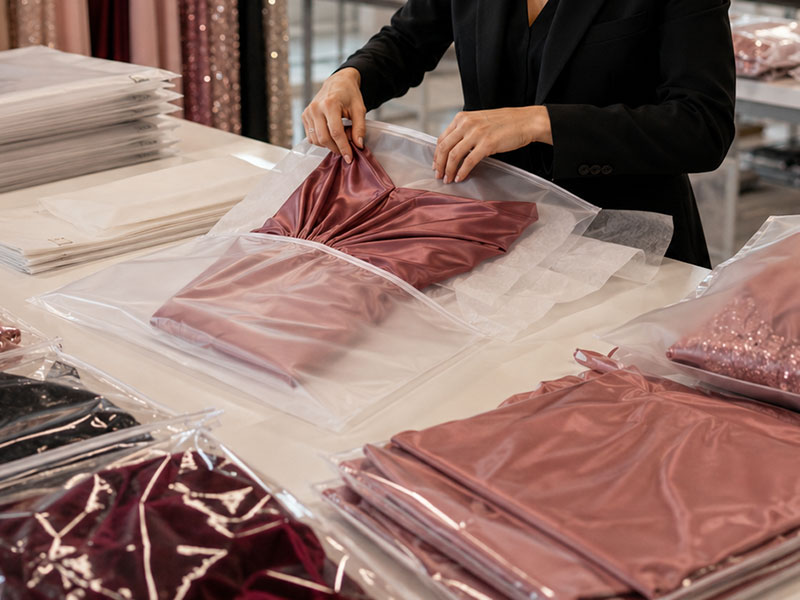
Polybags and Protection
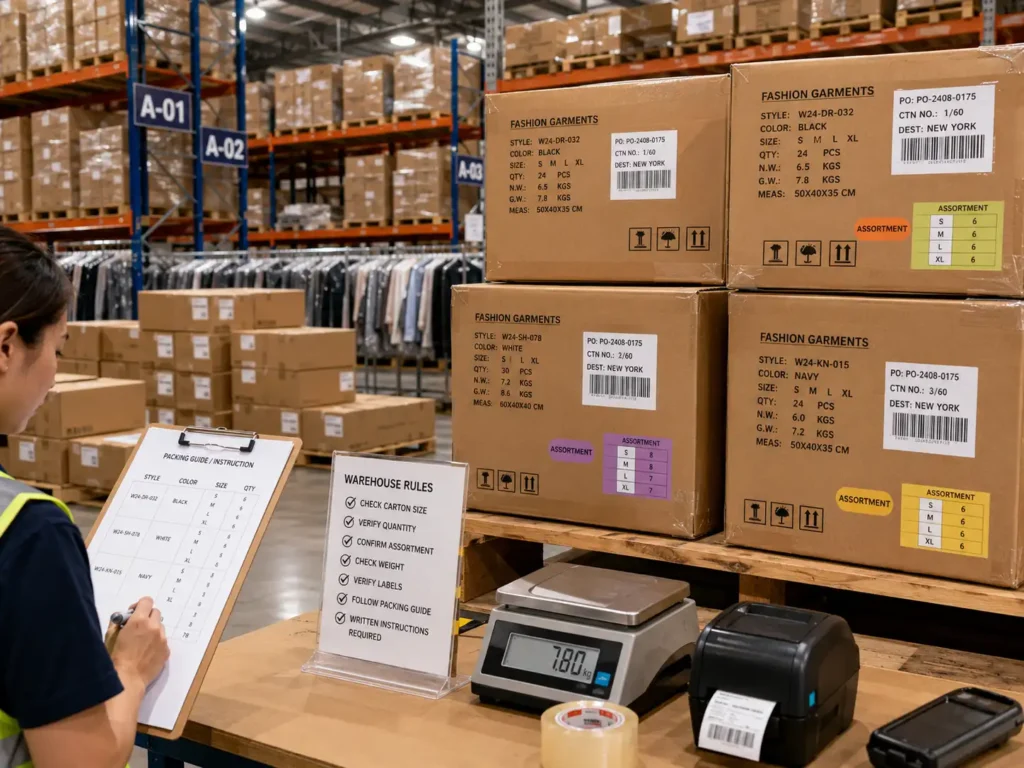
Cartons and Shipping Marks
Project Management, Production Scheduling and Delivery
Style-Level Critical Paths
Sample and Bulk Timing
Shipment Coordination
Keeping Burgundy Consistent Across Repeat Orders
Repeat production becomes faster and more controlled when approved product records are retained. A later dye lot still requires current review because raw material, finish, supplier conditions and color can change.
Records Retained for Reorders
Project files can retain the approved color name and Pantone reference, lab dip record where used, approved swatch, bulk fabric color, lining and trim colors, zipper and thread codes, dye-lot information, pattern version, size chart, grade rules, BOM, sewing method, pressing standard, QC points, labels and packing instructions. These records help the next production team recover the approved standard without relying on memory or photographs alone.
Items Reconfirmed Before Production
A repeat order should reconfirm material availability, supplier, color, finish, minimum quantity, current pricing and production schedule. New dye lots may show slight differences. Satin luster, velvet pile, sequin reflection and mesh layering can alter visual shade even when the color code is unchanged. Substituted fabric, expanded size range, new lining, new trims or revised packaging may require a new sample or PP approval before bulk release.
Burgundy Dress Manufacturing Case Studies
The following anonymized cases represent different burgundy and wine red dress development programs, covering occasionwear collections, statement fashion projects and large private-label seasonal productions. Brand identities, original designs and commercial information remain confidential.
Case 1: Burgundy Occasionwear and Evening Collection
Project Scope
A premium occasionwear brand developed a burgundy dress collection for weddings, formal dinners, cocktail events and evening markets.
- Collection size: 22 dress styles
- Product categories: burgundy satin dresses, velvet evening gowns, lace cocktail dresses, chiffon occasion dresses and structured midi styles
- Materials: satin, velvet, chiffon, lace, crepe and structured lining systems
- Construction details: slip dresses, corset silhouettes, draped necklines, fitted waists and flowing skirts
- Requirement: deep burgundy color consistency with premium finishing
Development Challenges
Burgundy requires careful control because different fabrics create different visual depth.
Key challenges included:
- Maintaining burgundy tone between satin, velvet and chiffon
- Preventing lining from changing the final shade
- Controlling velvet pile direction
- Protecting satin surfaces from pressing marks
- Maintaining elegant proportions across sizes
Manufacturing Approach
The development team created a fabric-specific burgundy approval process.
Key controls included:
- Physical burgundy shade reference approval
- Fabric swatch comparison
- Lab dip review when required
- Shell and lining coordination
- PP sample approval before bulk production
Manufacturing Value
The collection achieved a refined burgundy occasionwear identity through coordinated control of color, fabric behavior, pattern engineering and finishing quality.
Case 2: Wine Red Partywear and Statement Fashion Collection
Project Scope
A premium ecommerce fashion brand developed a wine red collection focused on high-impact partywear and contemporary fashion silhouettes.
- Collection size: 18 dress styles
- Product categories: wine red bodycon dresses, corset mini dresses, mesh dresses, sequin party dresses and fitted satin styles
- Materials: stretch satin, jersey, power mesh, lace and sequin fabrics
- Construction details: ruching, cut-outs, corset panels, asymmetric designs and fitted structures
- Requirement: strong visual impact with stable commercial fit
Development Challenges
The main challenge was balancing dramatic design with repeatable production.
Key risks included:
- Stretch changing the visible wine-red tone
- Mesh transparency under body tension
- Corset support affecting comfort
- Sequin surfaces creating production risks
- Ruching inconsistency between sizes
Manufacturing Approach
The project focused on fit engineering and surface control.
Key controls included:
- Testing stretch direction and recovery
- Reviewing bust-waist-hip balance
- Confirming mesh and lining relationships
- Developing corset support structures
- Mapping sequin placement before production
Production controls included:
- Measurement inspection
- Seam stability checks
- Zipper flatness review
- Ruching consistency checks
- Decoration protection during packing
Manufacturing Value
The collection delivered a bold wine-red fashion direction while maintaining reliable fit, production consistency and ecommerce-ready presentation.
Case 3: Large Private Label Burgundy Dress Collection Program
Project Scope
An established fashion brand required a complete burgundy dress assortment covering multiple silhouettes, fabrics and retail occasions.
- Collection size: 30 dress styles
- Production scale: 80,000+ pieces
- Product categories: burgundy mini dresses, midi dresses, maxi dresses, bodycon dresses, corset dresses, bridesmaid dresses and evening gowns
- Materials: satin, velvet, chiffon, lace, mesh, jersey, crepe and sequin fabrics
- Requirement: consistent quality across multiple SKUs, sizes and delivery batches
Development Challenges
The program required coordination across different burgundy and wine-red fabric systems.
Major challenges included:
- Managing burgundy, wine red, merlot, maroon and bordeaux directions
- Maintaining color relationships across fabrics
- Controlling different lining requirements
- Managing size grading across silhouettes
- Coordinating private-label packing
Manufacturing Approach
The collection was divided according to fabric family and production risk.
Burgundy Formal Group
Focused on:
- Satin evening dresses
- Velvet gowns
- Structured occasion styles
- Surface protection
Wine Red Fashion Group
Focused on:
- Bodycon dresses
- Mesh styles
- Corset mini dresses
- Stretch recovery control
Manufacturing Value
The program demonstrated that large burgundy collections require both production capacity and detailed control of color, fabric, fit, quality and retail delivery.
Manufacturing Proof, Design Protection and Compliance Support

Production Evidence
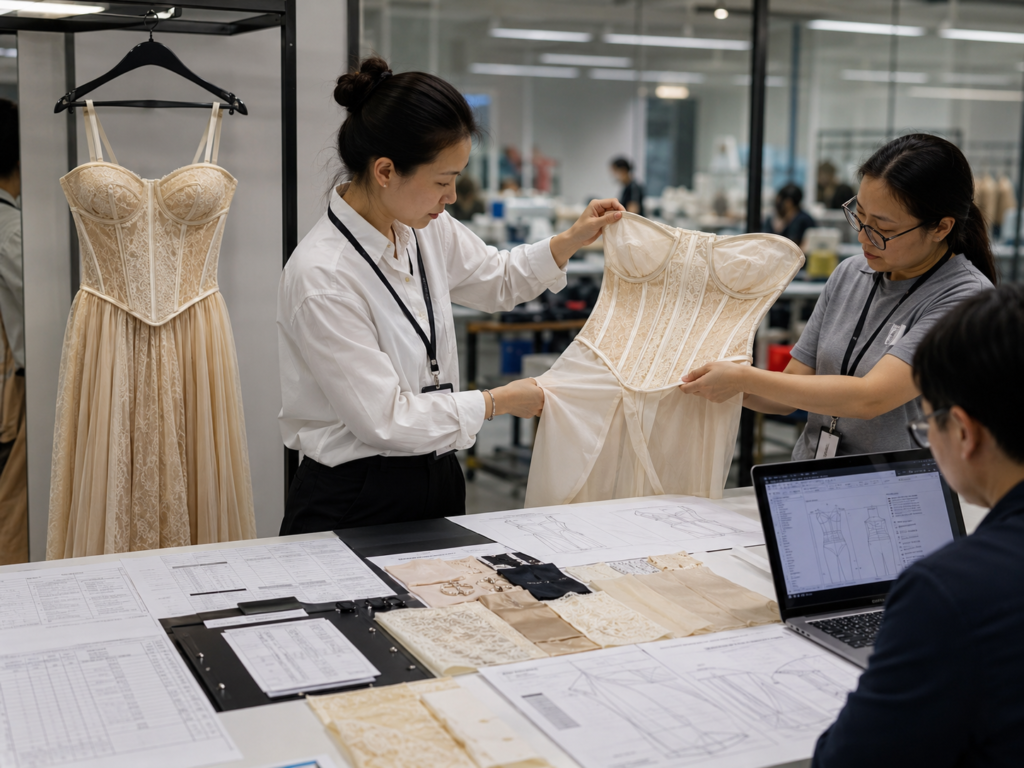
NDA and File Protection
Testing and Audit Coordination
Burgundy Dress Manufacturing Frequently Asked Questions

Start Your Burgundy Dress Manufacturing Project
Send the available product and commercial information for a focused project review. A tech pack gives the clearest technical starting point, while a line sheet, original sample, sketch or reference image can also begin the discussion when quantity, fabric, color, size and delivery expectations are included.
Jinfeng Apparel will review the intended burgundy direction, fabric suitability, pattern and support requirements, sample stages, MOQ structure, private-label materials, production capacity, QC scope and shipment planning before a formal development or quotation route is confirmed.
Color information should include Pantone TCX, a physical swatch, an approved garment or a clear target direction such as burgundy, wine red, merlot or maroon. Quantity should be listed for every style and color, together with the planned size range and ratio. Include the target sample date, launch date, warehouse date, destination, inspection standard and preferred shipping arrangement whenever known.
Files remain protected under NDA-based cooperation and are used only for project review, development, production, QC, packing and delivery.
Please include:
- Tech pack, line sheet, reference images or original sample photos
- Quantity for every style and color
- Pantone, physical swatch or approved burgundy reference
- Preferred fabric, lining, lace, mesh, velvet or decoration
- Size chart, base size, grade rules and planned size range
- Main label, care label, hangtag, barcode and packing requirements
- Target sample date, launch date, warehouse date and destination
- Testing, inspection, compliance or nominated-forwarder requirements