Brand-Specific Trim Development
Subtitle: Develop branded trims as part of the garment, from visual direction and material selection through approved bulk production and repeat orders.
Jinfeng Apparel integrates trim development into premium womenswear development rather than treating trims as isolated accessories. Brand appearance, garment structure, wearing comfort, production feasibility, MOQ and repeatability are reviewed together before bulk procurement.
- 6 development families:closures, adjustment, support and structure, decoration, brand identification and packaging identification.
- 3 approval gates:trim sample, garment application sample and PP sample.
- 200 pcs per style/color:base garment MOQ; custom trim supplier MOQ is reviewed separately.
- Approved trim specifications are carried into bulk control and retained for repeat-order reference.




Who Brand-Specific Trim Development Is Built For
Brand-specific trims matter most when a label needs recognizable product details that must remain controlled across multiple garments, colors, seasons and production runs. Jinfeng supports development teams working beyond generic stock components.
Global Womenswear Brands
Product Development Teams
Sourcing And Merchandising Teams
Sourcing and merchandising teams must balance visual requirements with MOQ, cost, supplier lead time, launch timing and bulk repeatability.
A custom metal finish or branded label may look minor on a line sheet but can delay an entire program when tooling, artwork, color approval or supplier MOQ is discovered too late. Jinfeng reviews trim requirements during development so commercial constraints are visible before PP approval and bulk material commitment.
Where Brand-Specific Trims Fail Before Bulk Production
Many trim failures begin before production: an attractive component is approved in isolation without checking garment weight, fabric response, placement, wearing comfort or repeatability. Small specification gaps become expensive when multiplied across thousands of garments.
Visual Approval Alone Can Hide Garment-Level Problems
A trim can look correct on a supplier card and still perform poorly after installation. Jinfeng therefore treats visual approval as only one part of trim evaluation.
Weight and garment balance:
- A heavy puller can drag a lightweight center-back zipper, distort a thin woven fabric or make the back seam fall away from the body.
- Large metal components on mesh, chiffon or lightweight satin require proportion review before approval.
- Decorative chains, rhinestone straps and bead trims need enough structural support to avoid pulling, twisting or stretching the garment.
Color and surface finish:
- Zipper tape should coordinate with shell fabric and lining rather than being judged from a small isolated sample.
- Metal plating can appear different beside warm satin, cool-toned mesh or high-shine sequin fabric.
- Matte, polished, brushed or soft-metal finishes change the visual level of the garment even when the hardware shape remains unchanged.
Placement and body contact:
- Strap sliders positioned too close to the shoulder or underarm can create pressure during wear.
- Decorative hardware near the bust, waist or hip must be checked during movement.
- Label edges, metal corners and stone settings require comfort review whenever they contact skin.


Small Trim Errors Multiply Fast Across A Bulk Program
One millimeter of logo distortion or a slightly different plating tone may seem minor during development. Across 10–30 styles and tens of thousands of garments, uncontrolled variation becomes a visible brand problem.
Specification drift:
- Supplier descriptions such as “gold,” “black nickel” or “soft touch” are not precise enough for repeat programs.
- Approved dimensions, material, finish, color and attachment method need to move into working production records.
- Verbal approvals or scattered chat messages create unnecessary interpretation during bulk procurement.
Sample-to-bulk changes:
- A sample may use available substitute hardware while final branded hardware is still under development.
- Bulk procurement should not assume the substitute and final component behave identically.
- Weight, finish, zipper operation, edge treatment, attachment and garment balance may require another check after the final component arrives.
Commercial timing:
- Special colors, custom artwork, molds, woven constructions and branded packaging can carry supplier-specific MOQ and development lead time.
- Discovering those conditions after garment PP approval can change cost or delay material readiness.
Six Trim Families Managed Around The Finished Garment

Closure Trims
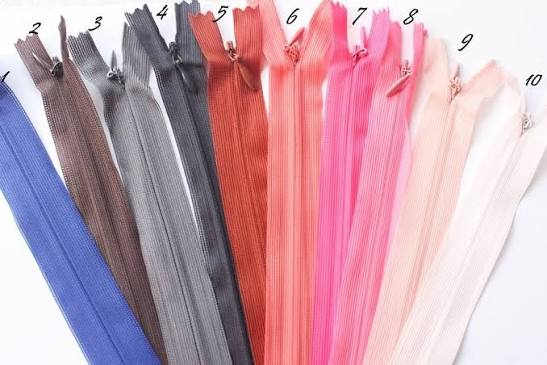
- Invisible zippers: flatness, smooth operation and tape color.
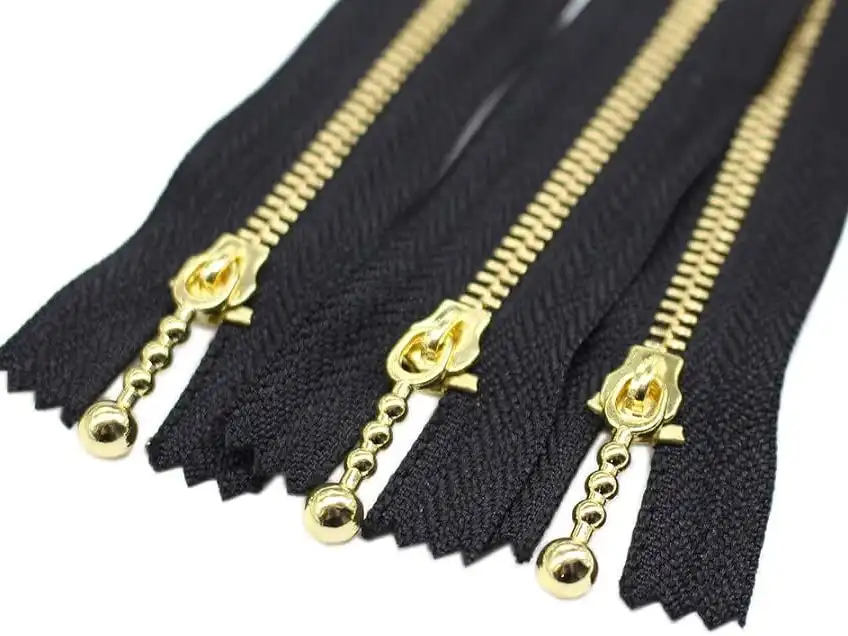
- Metal zippers: weight, plating, teeth color and skin contact.
- Buttons and snaps: size, finish, spacing and attachment strength.
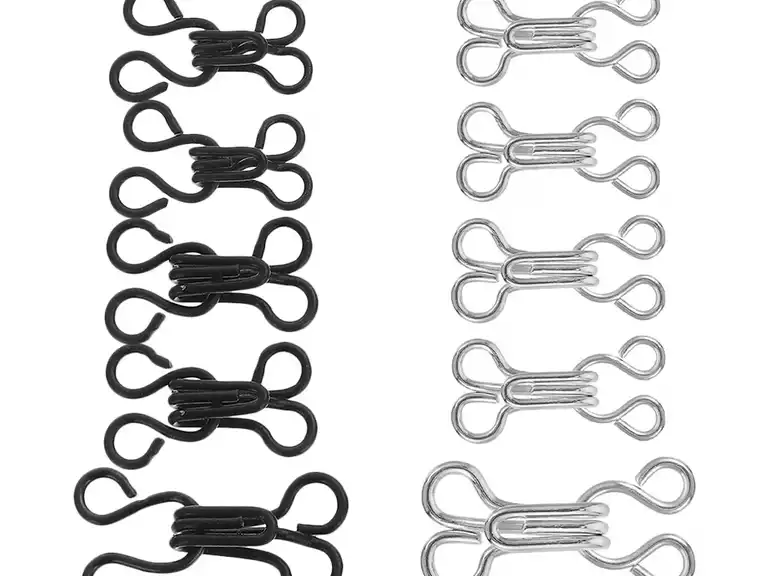
- Hooks: top closure security and comfort.

Adjustment Trims
Strap sliders, elastic bands and tapes control fit as well as appearance. A small slider can change neckline height, strap tension and wearing comfort, while unsuitable elastic can lose recovery or distort the finished shape.
- Strap width and slider opening must correspond.
- Adjustment range should work across intended sizes.
- Elastic recovery and hand feel require sample review.
- Metal or plastic components are selected according to garment weight, finish and body-contact position.

Support And Structure
- Cup shape should match neckline and bust structure.
- Boning length and position affect support and comfort.
- Anti-slip tape requires placement review on strapless designs.
- Structural components are checked together with lining, seam construction and body movement.

Decorative Trims
- Rhinestone and chain details need attachment security.
- Lace trim requires color and motif coordination.
- Sequin or bead edges should not scratch skin or damage adjacent fabric.
- Decorative placement must remain repeatable across bulk garments.
Brand Identification
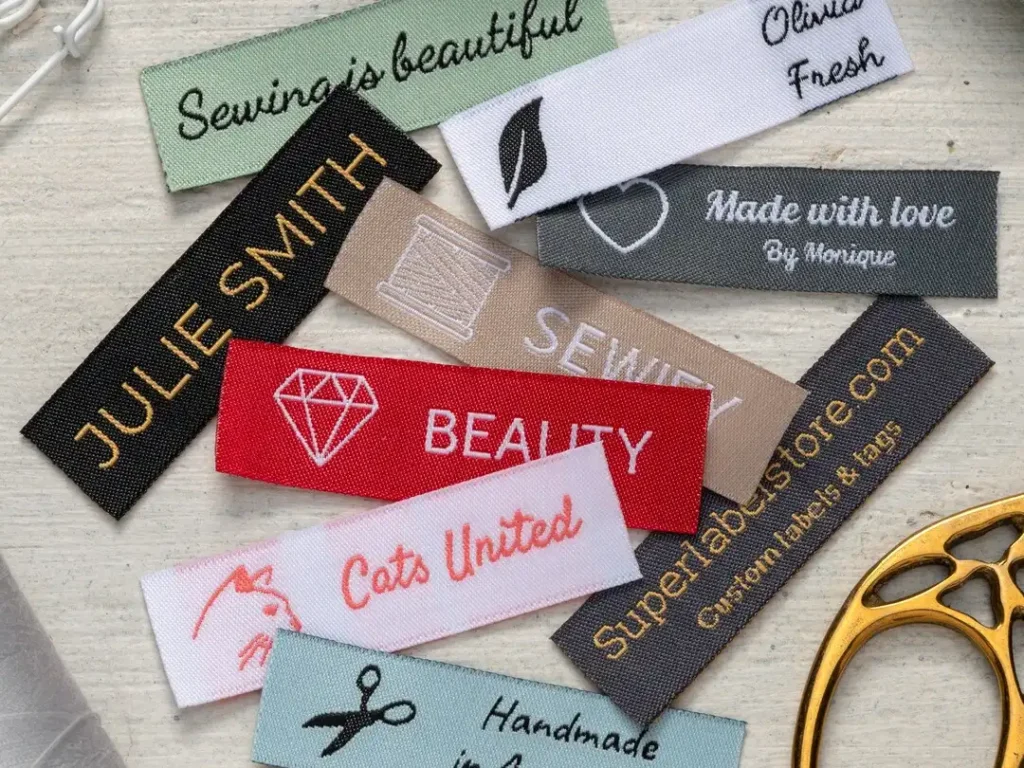
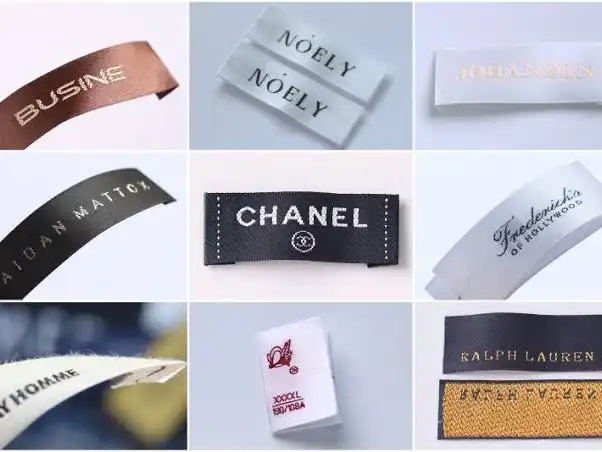
Woven labels, satin labels, printed labels, heat-transfer labels, size labels, care labels and logo labels carry brand identity directly on the garment.
Artwork accuracy alone is not enough.
Jinfeng reviews size, color, fold or edge treatment, placement, sewing method and interaction with lining or shell fabric.
Care and fiber-content information remains subject to brand confirmation and market requirements rather than being decided casually during production.
Packaging Identification
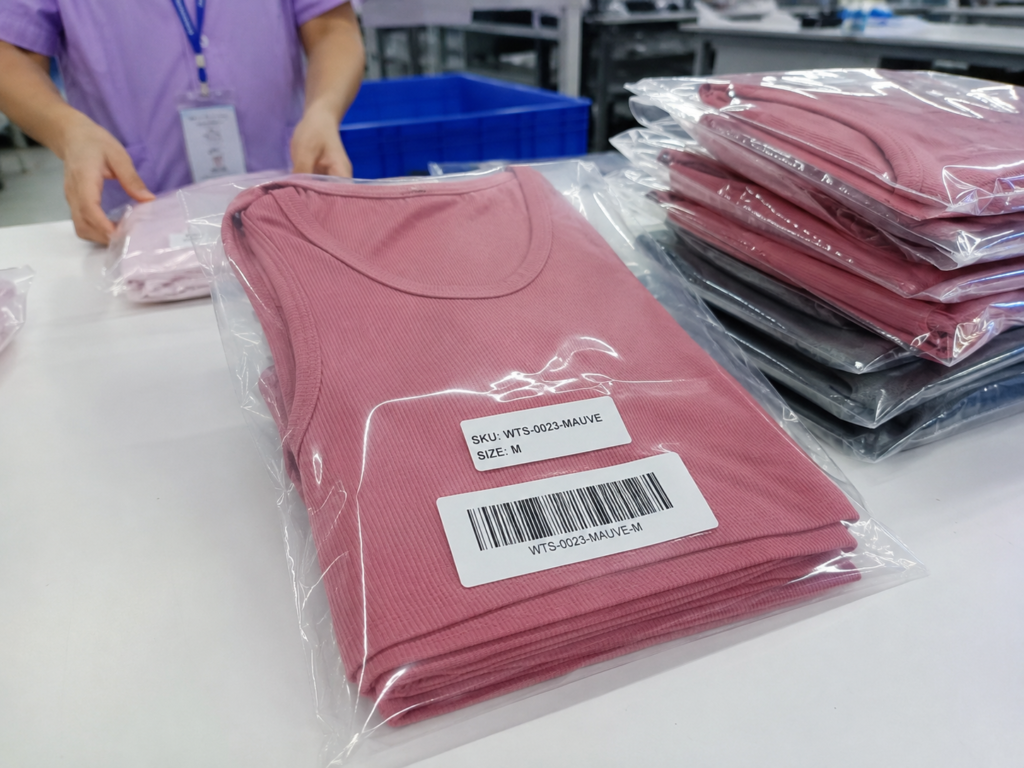
Hangtags, barcode stickers, SKU labels, polybags, size stickers, color stickers and carton marks extend brand identification beyond the garment.
They also affect warehouse receiving and order accuracy. Jinfeng connects packaging information with style, color, size and PO records so finished garments, labels and packing instructions correspond before shipment.
Barcode readability, SKU accuracy and carton identification are checked as operational requirements, not decorative extras.
Turning Brand Language Into A Production Trim Specification
A logo file is only the starting point. Production-ready development requires decisions about material, finish, dimensions, placement, garment interaction and repeatability. Jinfeng translates brand direction into specifications that can be sampled and controlled.
Start With Artwork, References And The Intended Brand Character
Brand identity can arrive as vector artwork, a tech pack, trim card, reference garment, sketch, line sheet or visual reference. Development begins by understanding what the component needs to communicate before choosing a manufacturing route.
Artwork interpretation:
- Logo proportions need to remain recognizable after reduction to zipper-puller, label or hardware scale.
- Fine lines, narrow gaps and sharp corners may require adjustment when moving from screen artwork to woven, printed, embossed, engraved or molded execution.
- A vertically oriented logo may work on a hangtag but become awkward on a narrow puller or strap component.
Reference evaluation:
- Reference garments can clarify scale, hand feel, weight, attachment and finish better than a photograph.
- Existing components can be reviewed for function and proportion without treating another brand’s protected design as something to copy without authorization.
- Development should preserve the intended visual language while creating specifications suitable for the brand’s own garment program.
Garment context:
A trim direction for satin occasionwear may require a refined, low-profile finish, while a structured set can carry heavier buttons or visible hardware. Partywear may support rhinestones or decorative metal details, while lightweight resort garments usually need less weight.
The development question is therefore not “Can the logo be added?” The stronger question is “Which material, scale, finish and construction express the brand correctly on the intended garment?”
Define Color, Plating, Texture And Hand Feel Before Approval
Color terminology alone is rarely enough for branded trim control. “Gold,” “silver,” “black” and “cream” cover wide visual ranges, especially when trim materials reflect light differently from fabric.
Color relationship:
- Zipper tape and sewing thread are checked beside shell fabric rather than from an isolated color name.
- Woven and printed labels can shift visually because yarn and ink absorb light differently.
- Soft goods such as tapes, labels and elastics need hand-feel review in addition to color.
Metal finish direction:
Polished gold, matte gold, brushed gold and softer antique finishes can create completely different results on the same garment. Highly reflective hardware may compete with satin shine or crystal embellishment, while a muted finish can support a more refined collection.
Surface quality:
Edges, coating, plating consistency and contact surfaces matter wherever trim touches the body. A component can meet the desired color but still fail because the edge feels sharp, the finish rubs against fabric or the surface marks easily.
Approval discipline:
Color and finish are easier to control when approved against a physical reference, approved sample or clearly identified development record. Final bulk materials should be checked against the approved direction rather than accepted solely because a supplier uses the same finish name.

Control Dimensions, Placement And Visual Proportion On The Garment
A branded component needs the right scale. Oversized hardware can dominate a delicate dress; undersized hardware may lose the intended identity. Jinfeng reviews component dimensions together with garment proportions before bulk approval.
Component dimensions:
Length, width, thickness, opening size and logo scale can influence both appearance and function. Strap sliders must match strap width. Hooks must suit closure load. Zipper pullers need enough grip without creating excessive weight.
Placement:
A logo plate at the waist operates differently from a puller at center back. Hardware near the underarm, bust or hip requires movement review. Labels placed at the neckline, side seam or waist need different considerations for visibility and comfort.
Symmetry and repeatability:
Paired components should sit at consistent heights and angles. Decorative trims crossing seam lines require clear start and end positions. Brand marks should remain upright and correctly oriented after attachment.
Grading considerations:
A trim position that looks balanced on one sample size may need review across the size range when garment proportions change. Placement references should therefore be tied to garment construction points rather than guessed from photographs during sewing.
Good brand-specific development creates a specification that a production team can follow repeatedly, not a visual idea that needs to be reinterpreted on every garment.
Check Garment Application Before Calling A Trim Fully Approved
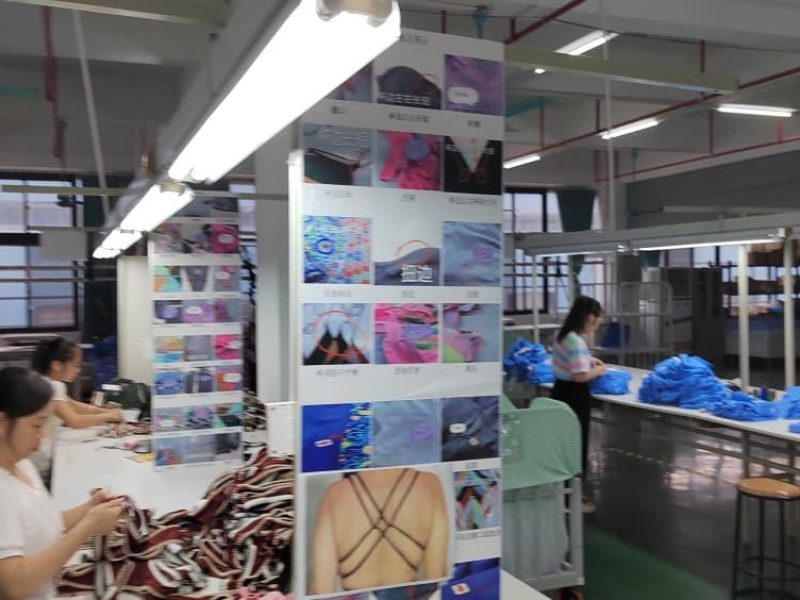
Trim development is not complete when a component looks correct on a supplier sample card. Jinfeng evaluates the component after installation because garment fabric, seam structure and body movement can expose problems that are invisible in isolation.
Fabric response:
A rigid metal component can pull on lightweight satin, chiffon or mesh. Thick labels may show through delicate fabrics. Heavy embellishment can stretch a soft knit or distort a narrow strap.
Construction response:
Zipper tape thickness can change seam bulk. A button can require added reinforcement. Boning changes the behavior of bodice seams. Decorative trim crossing darts, seam lines or curves may need a revised application method.
Wearing response:
The garment is reviewed for pressure, scratching, pull, twisting, opening security and movement. Fit-sensitive products need particular attention because a small component can influence neckline position, strap tension or closure stability.
Production response:
Attachment should be repeatable at bulk scale. A hand-applied detail that looks beautiful on one sample may require an attachment standard, template, stitch rule or alternative construction before thousands of garments can reproduce the same result.
Matching Trims With Fabric, Fit And Garment Structure
Brand identity becomes stronger when trim decisions support the garment rather than fight it. Jinfeng reviews hardware, labels, structural components and decoration against the specific fabric and silhouette before bulk approval.

Satin And Slip Styles Need Low-Bulk, Controlled Trim Integration
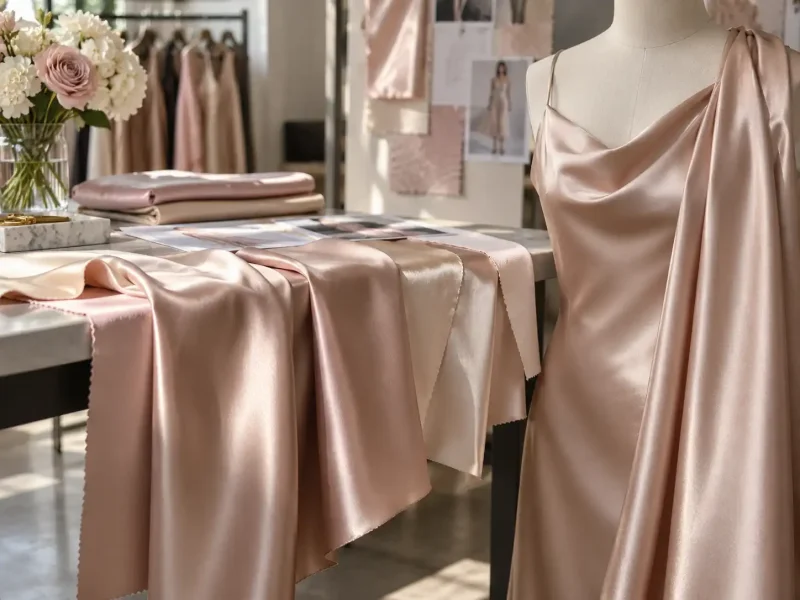
Satin exposes mistakes quickly because smooth surfaces reflect light across every seam, zipper and attachment point. A component can have the correct branding and still weaken the garment if weight, color or construction is wrong.
Zipper selection:
An invisible zipper should sit flat without creating a ridge along the back or side seam. Tape color needs to coordinate with the satin, especially on light or saturated colors where contrast can show through. A heavy decorative puller may cause the zipper end to hang or change how the seam falls on the body.
Strap hardware:
Slip dresses and camisole-style garments often use narrow straps. Slider openings must suit strap width, and metal edges should remain smooth where components contact shoulder or back skin. Adjustment should hold securely without allowing the strap to slip during wear.
Labels and internal trims:
Bulky labels can mark the outside of light satin. Placement near center back, side seam or lining needs review so the identity element does not create an external impression or uncomfortable edge.
Finish direction:
High-shine gold beside high-luster satin can become visually aggressive. Softer metal finishes may produce a more balanced result depending on the brand direction.
Sampling should therefore show the final trim in the actual garment whenever possible, not only beside a fabric swatch.

Corset And Strapless Styles Depend On Structural Trim Decisions
Corset and strapless garments require a different trim logic because support components directly affect fit, wearing security and comfort. Bra cups, boning, hooks, underwire, anti-slip tape and closures should be evaluated as a connected structure.
Bra cup selection:
Cup shape and volume need to work with neckline geometry and bodice pattern. A generic cup chosen only by nominal size can change the intended bust line or create visible edges.
Boning:
Length, stiffness, channel position and end treatment influence how the garment sits through the torso. Excessively rigid boning can feel uncomfortable; weak boning may not provide enough support. Ends need clean finishing so they do not push through the garment.
Anti-slip support:
Strapless silhouettes may require anti-slip solutions depending on structure and fabric. Placement and body contact need sample review rather than automatic use.
Closure engineering:
An invisible zipper, hook-and-eye or other closure must work with the support structure.
A top hook can reduce direct strain on a zipper. Closure positions need enough reinforcement to remain secure when the garment is fitted closely.
Brand-specific hardware is most successful when aesthetic direction and structural engineering are approved together.

Party And Clubwear Trims Must Survive Movement And Body Contact
Partywear creates strong visual opportunities for rhinestones, bead chains, decorative hardware, metal rings and statement straps, but the same details create concentrated quality risk.
Decoration weight:
A rhinestone strap or chain can look balanced when the garment hangs on a rail and pull differently once worn. Narrow shoulder areas, mesh panels and cut-out edges need enough reinforcement to carry decorative weight.
Attachment security:
Stone settings, chain connections, rings and decorative appliqué points need defined attachment methods. Loose components can become both a quality issue and a wearing problem.
Skin contact:
Backless, low-cut and cut-out silhouettes expose more trim edges directly to the body. Rough settings, sharp metal corners or exposed chain connections require comfort review during sampling.
Fabric compatibility:
Stretch mesh and jersey move with the body. Rigid decorations can restrict stretch or create stress around attachment points. Satin can snag against rough stone settings. Sequin fabrics can catch chains or hardware.
A strong visual idea should survive repeated movement, dressing and normal handling without turning decorative impact into a return risk.

Sets And Jumpsuits Need Consistent Hardware Across Multiple Garments
Matching sets and jumpsuits create another challenge: one trim direction can appear across several garment components or across a coordinated collection.
Small differences become easier to notice when pieces are worn together.
Color consistency:
Buttons, zipper pulls, strap hardware and branded details used across a set should maintain a coordinated finish.
A warm gold top paired with a cooler gold skirt can make the assortment look mismatched even when both components are individually acceptable.
Scale and function:
Hardware size should suit each application. A waist closure may need more strength than a decorative top button. Jumpsuit zippers require enough length and smooth operation for dressing ease.
Garment proportion:
Longer garments carry trim placement differently from mini styles. Hardware around the waist, neckline or strap should support the intended vertical balance.
Packing and pairing:
Matching sets also depend on color, size and component coordination during packing.
Trim consistency cannot stop at sewing; the finished pieces need to reach final packing as the correct coordinated set.
Brand Identification Trims Built Into The Garment
Woven And Satin Labels
Woven and satin labels can carry primary brand identity, but yarn density, edge treatment, fold method, size and hand feel all influence the final result.
Jinfeng reviews label dimensions and placement against garment construction before bulk use.
- Check logo proportion and legibility.
- Match label scale to neckline, waist or side-seam position.
- Avoid excessive thickness on lightweight garments.
- Confirm fold, seam allowance and sewing direction.
- Review color beside the actual garment where needed.

Printed Heat-Transfer Labels
Printed and heat-transfer labels suit different garment constructions and visual directions.
Selection depends on fabric surface, stretch, wearing location, required information and desired hand feel.
A heat transfer used on stretch material should not be judged only from artwork.
Jinfeng reviews transfer placement and garment compatibility during development.
Printed labels are checked for content, size and legibility, while application methods are aligned with fabric and construction to avoid unnecessary stiffness, distortion or visible marking.

Size And Care Labels
- Size designation should match finished garment records.
- Care and fiber information requires brand confirmation.
- Placement should remain consistent within the program.
- Label edges and materials should remain comfortable.
- Bulk checks should confirm style, size and label content before packing.
Logo Brand Labels
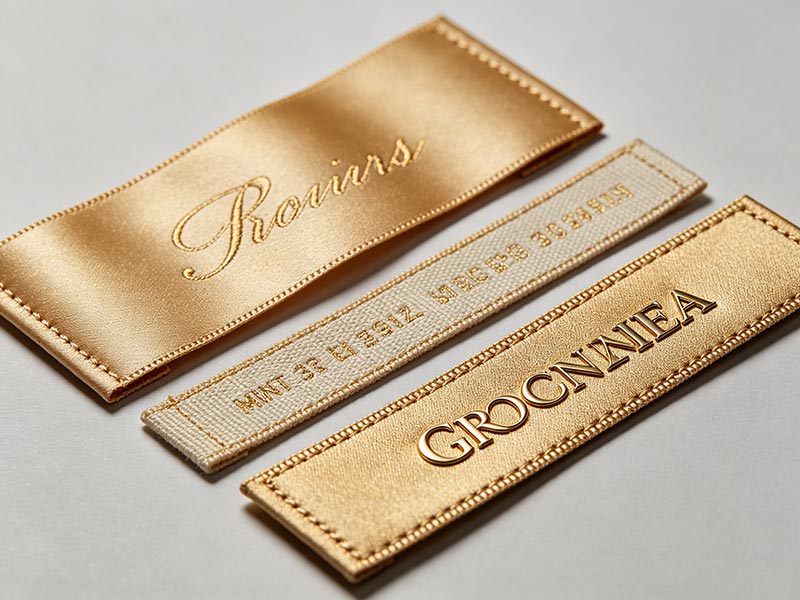
A logo label can be subtle or highly visible depending on the collection. Jinfeng reviews the label as part of garment presentation rather than inserting a logo wherever space is available. Important decisions include width, height, color, texture, edge construction and placement.A visible label on a premium dress should support the silhouette instead of looking oversized. Internal brand labels should remain clear and recognizable without creating discomfort or showing through lightweight shell materials.
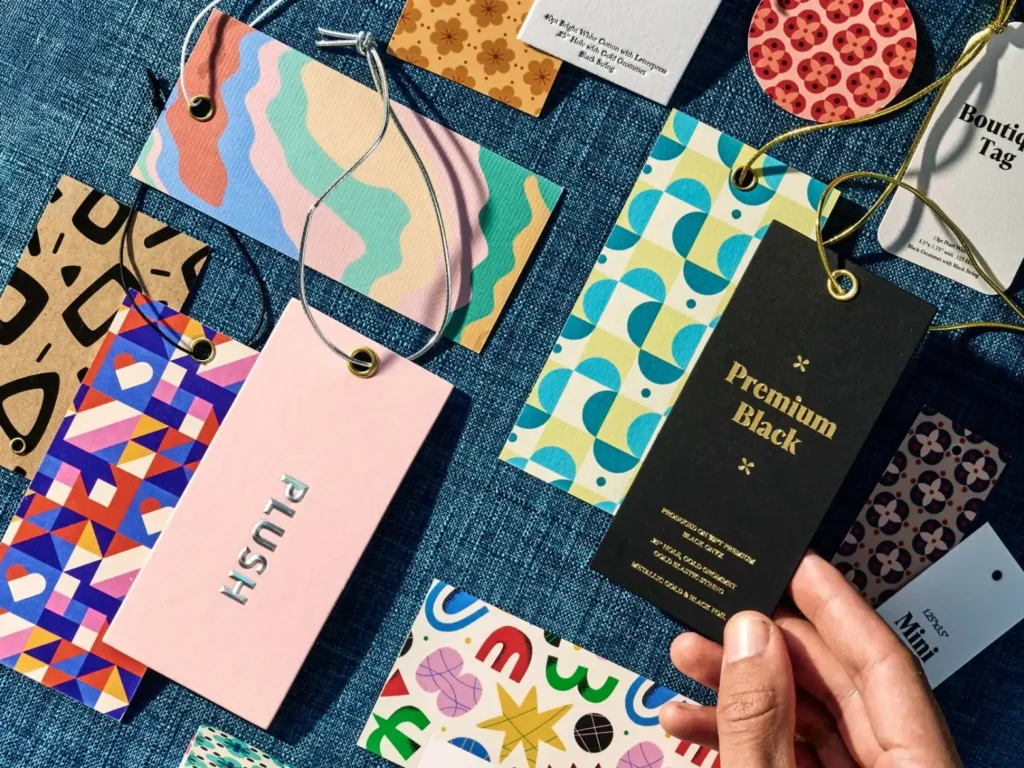
Hangtags And Hang Strings
Hangtags carry brand information after the garment leaves production and often include style, size, price, barcode or collection details. Artwork accuracy needs to connect with physical attachment and finished packing. Jinfeng supports hangtag and hang-string execution according to approved artwork and packing requirements. Attachment position is checked so tags do not damage delicate satin, mesh, lace or embellished areas. Style and size information should also correspond with garment and SKU records before final packing.

Placement And Integration
The strongest label system uses defined placement rather than production-floor judgment. Neckline, side seam, waist, lining and packaging positions each create different visibility, comfort and construction requirements. Jinfeng links approved label placement with sample and production information so sewing teams can reproduce the intended position. For multi-style programs, common placement rules can be established where garment construction permits, while exceptions are identified for backless, strapless, sheer, reversible or unusually structured products.
Functional Hardware With A Brand-Level Visual Direction
Zippers And Pullers

Buttons And Snaps
Hooks And Closures

Strap Hardware
Strap sliders, rings and related hardware need to suit both strap width and the expected tension during wear. Jinfeng reviews opening dimensions, material, finish, adjustment range, edge smoothness and color coordination. On satin slip dresses, lingerie-inspired pieces and partywear, hardware becomes highly visible despite its small size. Final components therefore need to support the brand aesthetic while holding the strap securely and remaining comfortable against the body.
What To Send For A Focused Trim Development Review
Garment Tech Pack
Send the current garment tech pack with construction details, measurements and trim callouts. A tech pack allows Jinfeng to see where each component sits and what role it plays. Placement, seam construction, fabric type and finished measurements can materially change trim recommendations, particularly for fitted, strapless, backless, corset or embellished garments.
BOM And Trim Card
Logo Artwork Files
References Or Samples
Color And Finish Direction
Commercial Project Plan
How A Brand-Specific Trim Moves From Brief To Bulk
Trim development should create a controlled production standard rather than end with a visually approved component. Jinfeng connects trim decisions with garment sampling, revisions, PP approval, procurement, incoming inspection and bulk production.
From Development Brief To The First Trim Direction
The first stage turns reference material into a workable specification. Jinfeng reviews the garment, brand direction and commercial requirements before sourcing or developing options.
Requirement review:
- Identify whether the component is functional, structural, decorative, brand-identification or packaging related.
- Confirm intended garment type, fabric, position and visual priority.
- Review artwork, reference dimensions, finish direction and target quantity.
Feasibility review:
Stock trims may be suitable when the brand requires a standard functional component. Brand-specific versions may require custom color, custom weaving, printing, engraving, tooling, plating or another supplier process. The development route changes MOQ, cost and timing.
Option development:
Suitable references or development samples are reviewed for scale, material, color, finish and function. Substitute components used for an early garment sample are clearly separated from final branded components so an available temporary trim does not silently become the bulk standard.
The goal of the first stage is not to collect the greatest number of options. The goal is to narrow the direction to components that can work visually, technically and commercially inside the garment program.


From Trim Sample To Garment Sample And Revision
A component that passes standalone review moves into garment-level evaluation whenever its function, weight, placement or appearance can affect the product.
Garment application:
The trim is installed on the relevant garment or development sample. Zippers are checked for flatness and operation. Strap hardware is checked for tension and comfort. Structural trims are judged with fit. Decoration is reviewed for balance, movement and attachment.
Sample timing:
Garment sampling at Jinfeng is normally assessed by complexity: simple styles commonly require about 7–10 days, standard dress development around 10–15 days, and complex styles around 15–25 days, after suitable materials are available. Custom trims may add supplier development time for artwork, special color, tooling or other custom processes, so trim readiness must be considered separately from sewing time.
Revision control:
Any change to zipper length, cup shape, boning, lace trim, hardware, labels or packaging is recorded because a trim change can affect appearance, fit, cost, MOQ or lead time.
Approval therefore moves from component appearance to actual garment performance before PP lock.
From PP Approval To Procurement, Inspection And Repeat Records
PP approval establishes the version intended for bulk production. After approval, trim specifications should no longer remain as loose development notes.
PP lock:
Final fabric, color, trims, measurements, construction, labels and packing requirements are aligned with the approved garment standard. Material changes after PP approval can affect cost, timing and production consistency and therefore require controlled review.
Bulk procurement:
Approved trim descriptions, supplier references, dimensions, color or finish direction and quantities move into production planning. Special supplier MOQ and lead-time requirements are considered before orders are placed.
Incoming inspection:
Bulk trims are checked against the approved direction before use. Zippers, buttons, cups, boning, labels, hangtags and related components are reviewed for relevant specifications and function.
Production and repeat orders:
Trim records remain part of the order history. Repeat programs can call back approved details rather than starting from memory, while new colors, new finishes, supplier batch changes or new garment applications still require reconfirmation.
Build A Trim Approval Record Before Bulk Procurement
An approval record removes ambiguity between development and production. The record should identify what was approved, where the component belongs, how it is used and which details require rechecking when bulk materials arrive.
| Approval Field | What Should Be Controlled | Why It Matters |
|---|---|---|
| Trim ID | Unique internal reference | Prevents similar components from being confused |
| Component Type | Zipper, button, slider, label, cup, boning, decoration or packing item | Clarifies function and inspection method |
| Material | Metal, resin, textile, elastic, woven, printed or other approved construction | Affects hand feel, weight and performance |
| Color / Finish | Approved color, plating or surface direction | Protects collection consistency |
| Dimensions | Length, width, thickness or opening size | Controls scale and compatibility |
| Logo / Artwork | Approved logo file and orientation | Protects brand identity |
| Garment Position | Defined application point | Supports repeatable attachment |
| Attachment Method | Sewing, transfer, fixing or approved construction | Influences security and appearance |
| Approved Reference | Physical sample, PP sample or controlled reference | Gives production a comparison standard |
| Supplier Conditions | MOQ and development lead-time notes where relevant | Supports commercial planning |
| Bulk Check | Required incoming or garment-level inspection | Prevents unverified substitutions |
Test The Trim On The Garment, Not In Isolation
A trim can pass a visual review and still fail after sewing, fitting or movement. Garment-level review examines balance, comfort, operation, attachment and interaction with fabric before the component becomes part of a bulk standard.

Check Appearance, Weight And Balance On The Finished Silhouette
Visual proportion changes as soon as a component moves from a sample board onto a garment.
Jinfeng reviews trims against the actual silhouette because garment length, fabric drape and body position alter how small details are perceived.
Weight distribution:
A heavy zipper pull or chain can pull a soft garment downward.
Large decorative details on narrow straps can twist the strap. Dense rhinestone applications on stretch mesh can change local tension and distort an edge.
Scale:
Hardware that looks appropriately sized on a desk may dominate a mini dress or disappear on a structured jumpsuit. Logo scale also needs enough visibility without competing with the overall design.
Color relationship:
Metal finishes are checked beside shell fabric, lining and other visible hardware.
A collection using several gold components should avoid obvious temperature or reflectivity differences unless intentionally designed.
Surface interaction:
Rough metal, stone settings or decorative edges can snag satin, mesh, chiffon or lace. Visible abrasion after sample handling is a warning sign before bulk production.
The evaluation target is a balanced finished garment where trim identity feels intentional rather than attached as an unrelated decoration.

Check Function, Comfort And Wearing Security During Movement
Functional components are tested through normal garment use rather than judged only while the garment hangs still.
Closures:
Zippers should open and close smoothly after installation. Top hooks should support the intended closure point. Buttons and snaps need enough strength for the location without requiring excessive force that distorts the garment.
Adjustment:
Strap sliders should hold their position under normal tension. The adjustment range should allow the garment neckline or bust position to remain wearable across intended size variations.
Support:
Bra cups, boning, anti-slip tape and underwire influence how fit-sensitive garments behave on the body. They require review together with pattern, lining and seam structure.
Body contact:
Sharp corners, hard edges, chain connections and label edges should be checked in the actual wearing position. Backless and cut-out products expose more components directly to skin, making comfort particularly important.
Movement:
Sitting, walking and arm movement can reveal pulling, twisting or scratching that does not appear during static inspection.
A successful trim therefore needs to work mechanically and physically, not only photograph well.

Check Attachment Security And Reproducibility Before Scaling Production
Bulk production requires an attachment method that can be repeated across thousands of garments without excessive variation.
Sewing security:
Buttons, labels, tapes and hook components need defined stitch placement, thread choice and reinforcement where appropriate. Decorative elements should not depend on uncertain operator judgment.
Reinforcement:
Hardware mounted on lightweight or stretch fabric may need backing, interfacing or another structural solution so concentrated force does not tear or distort the shell.
Decorative security:
Rhinestones, bead chains, sequins and related trims require checks for loose elements, sharp points and surrounding fabric damage. A decorative component should not become unstable after routine handling.
Consistency:
Placement references, approved distances and orientation rules help maintain symmetry. Paired trims need corresponding height and angle. Logo hardware must remain correctly oriented.
Production feasibility:
Development teams should identify whether an application requires unusually high manual handling before bulk price and schedule are locked.
A beautiful one-off sample can become commercially difficult when the method is too slow or inconsistent to reproduce.
Control Trim Changes During Garment Sampling
Visual Direction Changes
- Record old and new color or finish.
- Update artwork and dimensions where required.
- Recheck proportion on the garment.
- Confirm whether supplier development must restart.
- Replace outdated references so bulk teams do not use an earlier version.
Functional Trim Changes
- Recheck construction compatibility.
- Review body contact and movement.
- Update relevant sample comments.
- Confirm whether pattern or sewing method needs adjustment.
- Evaluate whether another garment sample or PP review is required before bulk lock.
Commercial Requirement Changes
Understand MOQ, Cost And Lead Time Before Approval
The garment and its trims have connected commercial conditions. Jinfeng’s base garment MOQ starts at 200 pcs per style/color, while special colors, artwork, tooling, labels or packaging may carry separate supplier requirements.
| Trim Direction | Typical Development Impact | MOQ / Cost / Timing Consideration |
|---|---|---|
| Standard Functional Trim | Existing zipper, hook, button or elastic direction | Usually simpler to source when specification and color are available |
| Custom Color | Special zipper tape, elastic, label yarn or coordinated component | Supplier color MOQ and color-development timing may apply |
| Custom Artwork | Woven label, printed label, hangtag or branded tape | Artwork setup, sample approval and supplier MOQ require confirmation |
| Custom Hardware | Branded puller, plate, button or special metal detail | Tooling, finish sampling and supplier production conditions may increase development time |
| Decorative Trim | Rhinestone, bead chain, lace or special embellishment | Material MOQ, attachment labor, wastage and QC risk affect quotation |
| Brand Packaging | Printed polybag, stickers, hangtags, SKU or carton materials | Printing MOQ, artwork version control and packing quantity affect final requirement |
| Garment MOQ | Finished womenswear production | Base MOQ starts at 200 pcs per style/color; special trim conditions can raise the workable minimum |
Carry Approved Trim Details Into PP And Bulk
The highest-risk gap often sits between an approved sample and bulk production. Jinfeng transfers approved trim information into PP and production records so purchasing, sewing and QC work from the same controlled direction.

Move Final Trim Details Into The Production Record
Development information becomes valuable only when production teams can use it without guessing.
Final trim records are therefore linked with the garment’s production information.
BOM alignment:
The BOM should identify the final zipper, button, cup, boning, label, hangtag, packaging material and special trim requirements used for bulk.
Reference alignment:
Approved colors, finishes, dimensions and physical references should correspond with the PP garment.
Temporary sample substitutes need to be removed from the final bulk record.
Construction alignment:
Attachment locations and sewing requirements should match final garment construction. A trim approval cannot remain separate from pattern, seam and lining decisions when the component affects those areas.
Packing alignment:
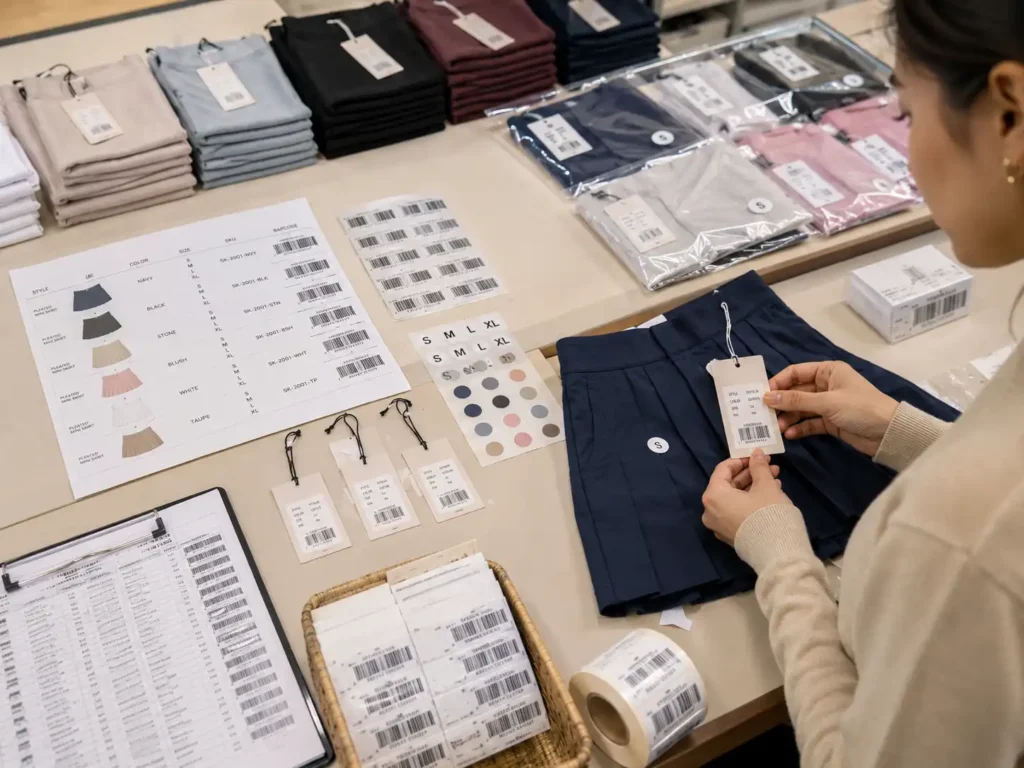
Labels, hangtags, barcodes, SKU stickers and packaging components need to correspond with approved style, color and size information.
Use PP Approval To Lock Commercial And Technical Decisions
PP approval marks the point where garment and trim decisions need production discipline. Changes remain possible when necessary, but they cannot be treated as cost-free informal edits.
Items locked for production planning include:
- final fabric and color;
- final trims and structural components;
- measurements and garment construction;
- labels and hangtags;
- packing method and related identification.
A change to branded hardware after PP approval may require new tooling or plating. Changing a zipper can affect seam appearance.
A different bra cup can change fit. Revised packaging may create a new supplier MOQ. Those effects need to be reviewed before production continues.
PP lock protects both sides from ambiguity. The brand knows which version is entering bulk. Purchasing knows what to order. Production knows what to install. QC knows what to compare.
The goal is not inflexibility. The goal is controlled change with visible consequences instead of silent substitution.

Hand The Approved Standard To Production And QC Together
Trim control weakens when purchasing and QC receive different information. Jinfeng’s production approach connects bulk material arrival, trim inspection, sewing and finished-garment review with the approved standard.
Before sewing:
Incoming trims are compared against relevant approved specifications for type, color, dimensions, function and quantity.
During sewing:
Application issues such as zipper bulging, wrong label placement, twisted straps, exposed support components or unstable decorative attachment can be identified before defects spread through the full order.
At finished garment inspection:
QC reviews the trim as part of the completed product. Operation, appearance, placement and surrounding workmanship matter together.
At packing:
Labels, hangtags, barcode information, size identification and packaging components are checked against garment and order information.
A trim is therefore controlled from approval through use, not only when the component enters the factory.
Inspect Bulk Trims Before Problems Reach Finished Garments
Incoming Trim Review
Bulk components are checked against approved direction before production use.
The inspection focus changes by component rather than applying one generic checklist.
- Zippers: type, length, tape color, operation and visible finish.
- Buttons and hardware: dimensions, color, surface and obvious defects.
- Bra cups and boning: shape, length and required specification.
- Labels and hangtags: artwork, size, content and correct version.
- Packaging items: style, size, barcode or SKU information where applicable.

Application Control
- Zipper seams should remain flat.
- Strap hardware should face the correct direction.
- Labels should sit at the approved position.
- Boning and cups should remain enclosed and aligned.
- Decorative trims should follow approved placement.
- Hardware attachment should not damage surrounding fabric or create distortion.

Finished Garment Review
- Closures operate smoothly.
- Components remain symmetrical where required.
- Trim colors and finishes remain visually consistent.
- No sharp edge or exposed structural trim creates an obvious comfort issue.
- Decoration remains secure.
- Surrounding seams, lining and fabric remain clean and undamaged.

Packing Identification Check
Brand-specific control continues after sewing. Labels, hangtags, SKU stickers, barcodes, size stickers, color stickers and polybags must correspond with the garment going into the package.
Packing review checks style, color and size identification, barcode readability where required, hangtag information and carton-level consistency.
|
An accurate garment with incorrect identification can still create warehouse, inventory or retail problems, so packing data remains part of the finished standard.
Keep Brand Trims Consistent Across Multi-Style Collections
A seasonal collection may use shared hardware, labels and finish directions across many silhouettes. The challenge is maintaining a common brand language without forcing one component onto garments where structure or fabric requires a different solution.
Build Shared Trim Directions Without Ignoring Garment Differences
Collection-level consistency does not mean every style receives identical hardware. Strong trim planning separates reusable brand details from application-specific components.
Shared brand elements:
A woven label, approved metal finish, logo proportion, hangtag family or selected zipper-puller direction can create a recognizable connection across several styles.
Garment-specific adjustments:
A lightweight satin mini may need a smaller or lighter component than a structured jumpsuit. A backless style may need different label placement from a conventional dress. Strapless products require support components irrelevant to a long-sleeve style.
Style mapping:
Multi-style development should show which trims are common, which are modified versions and which are unique. The mapping also helps procurement understand where supplier MOQ can be consolidated and where separate development is unavoidable.
Approval status:
One style should not enter PP using an earlier finish while another uses the newly approved version unless the difference is intentional. Clear approval status is especially important when several samples move in parallel.
The result is a controlled family of trims supporting the collection rather than a forced one-size-fits-all component list.

Control Trim Information When Multiple Styles Move At Once
Programs with 10–30 styles create more information risk than single-style development. Fabric, color, samples, trim references, revisions, PP status and production timing can overlap quickly.
Jinfeng supports multi-style womenswear development through structured project records and grouped production planning.
Grouping logic:
Styles using the same label, zipper family, metal finish or decorative component can be grouped for review and procurement planning.
Exception control:
Special components are identified separately. A corset dress may use support trims absent from the rest of the collection. A crystal party style may require decorative sourcing and QC not needed on a satin slip.
Revision control:
If the shared brand finish changes, affected styles should be identified so an old version does not continue into one garment by mistake.
Bulk planning:
Factory allocation does not remove the need for one approved trim direction. Production teams should receive the same approved references and order-specific requirements.
Collection management therefore treats trim development as shared brand information with clearly controlled exceptions.

Keep Approved Trim Records Ready For Repeat Orders
Retain Approved Records
Reconfirm Changed Variables
Restart From A Standard
Anonymous Occasionwear Program: 12 Styles, Around 20,000 Pieces
A real large-scale program illustrates why trim control belongs inside garment manufacturing. The project involved a US occasionwear label developing satin mini and midi dresses where zipper performance and multi-color consistency directly affected finished quality.
Where Trim Control Mattered Across Twelve Satin Styles
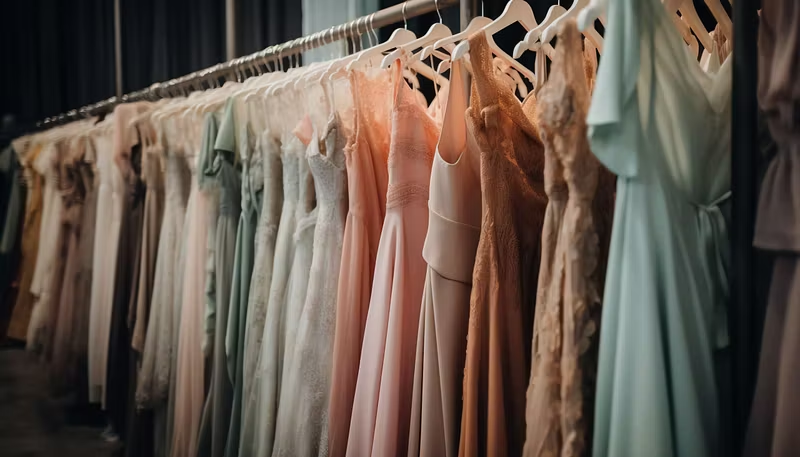
The anonymous US occasionwear program covered 12 satin mini and midi styles and around 20,000 pieces. Core manufacturing concerns included satin color consistency, zipper flatness, lining comfort and stability across multiple colors.
The zipper detail is particularly relevant to brand-specific trim management. Satin exposes closure problems quickly. A zipper that bulges, uses a visibly mismatched tape color or creates a ridge down the back can weaken an otherwise clean garment.
Garment-level control points included:
- zipper flatness against smooth satin;
- surrounding seam appearance;
- lining interaction near closure areas;
- visual consistency across multiple colors;
- repeatable execution as several related styles moved through production.
The project did not depend on one isolated “approved zipper.” Finished quality required coordination between fabric behavior, pattern and seam construction, closure selection, sewing and inspection.
Programs at similar scale also show why component decisions must be clear before bulk production. A small trim issue multiplied across several styles and thousands of garments becomes a production and brand-presentation problem rather than a minor accessory correction.
What The Program Shows About Scaling Approved Details
The occasionwear program is relevant because it demonstrates the manufacturing side of trim control without pretending that every component needs custom tooling.
For large multi-style orders, Jinfeng’s working method links trims with sample, PP, production and QC records.
Before bulk commitment:
The approved garment needs a defined zipper, lining and related construction direction. Substitute development materials should not silently become final standards.
During production:
Zipper appearance cannot be checked only as an incoming component. Installation quality determines whether the closure lies flat against satin. Sewing and in-line inspection therefore matter as much as component sourcing.
Across colors:
Trim and fabric relationships can change with each colorway. Tape, thread and visible hardware may require coordinated review rather than assuming one color solution works everywhere.
Across styles:
The same general closure family may be used on several silhouettes, but zipper length and garment placement still need style-specific confirmation.
The lesson is straightforward: trim consistency is achieved through garment development and production control, not by purchasing a branded component and assuming the job is finished.
Protect Brand-Specific Trim Files And Unreleased Product Details
Artwork And Tech Packs
Trim Samples And Specifications
Unreleased Collection Details
Brand-Specific Trim Development Frequently Asked Questions
Yes. Jinfeng can review brand artwork, tech packs, trim cards, reference images or physical references and coordinate suitable trim development or sourcing for womenswear programs. The process considers component material, dimensions, color, finish, placement, garment compatibility, MOQ, development timing and cost. Final feasibility depends on the specific trim and supplier process.
No claim is made that every zipper, label, hardware item or decorative trim is produced internally. Jinfeng operates as a womenswear manufacturer and manages trim sourcing, development, garment integration, sample approval, bulk procurement and QC through appropriate supply resources according to the project.
Programs can include zippers, buttons, snaps, hooks, strap sliders, elastic, tapes, bra cups, boning, underwire, lace trims, rhinestones, bead chains, sequins, woven labels, printed labels, size labels, care labels, hangtags and related private-label packaging. Feasibility depends on garment structure and the required custom specification.
Yes. Jinfeng’s base garment MOQ starts at 200 pcs per style/color, but custom trims can carry separate supplier MOQ. Special zipper colors, custom artwork, branded hardware, weaving, printing, decoration and packaging can change the workable minimum. MOQ is therefore reviewed before final trim and bulk approval.
Trim direction is reviewed during sampling, and final trims should be aligned before PP approval whenever they affect appearance, fit, construction or packing. The PP sample confirms the production direction. Significant trim changes after PP approval require review because they may affect cost, lead time, garment performance or production files.
Timing depends on trim type and supplier process. Stock components can usually be reviewed more quickly than custom colors, artwork, tooling or special constructions. Garment samples commonly fall into roughly 7–10 days for simple styles, 10–15 days for standard dresses and 15–25 days for complex styles once suitable materials are available. Custom trim lead time is assessed separately.
Yes. Garment-level review is important whenever trim weight, placement, closure function, structural support, decoration or body contact can affect the product. Zipper flatness, strap adjustment, hardware comfort, cup and boning behavior, decoration security and surrounding workmanship can be reviewed through garment sampling before bulk production.
The new component is reviewed for visual, structural and commercial impact. A different zipper, bra cup, boning, lace trim, hardware finish, label or packaging item can affect fit, construction, quotation, supplier MOQ or timing. Relevant development and production records should be updated before PP lock.
Approved trim records can support repeat production together with BOMs, patterns, size charts, packing requirements and QC notes. New colors, different finishes, supplier batch changes, fabric changes or unavailable components still require reconfirmation. Repeat-order efficiency comes from controlled historical records, not from assuming every material remains unchanged.
Yes. Jinfeng supports NDA-based cooperation and protects tech packs, samples, patterns, trims, private-label details, unpublished designs and order information. Brand names, logos, unreleased garments, labels or confidential packaging files are not used publicly without authorization.
Send Your Brand-Specific Trim Brief For Project Review
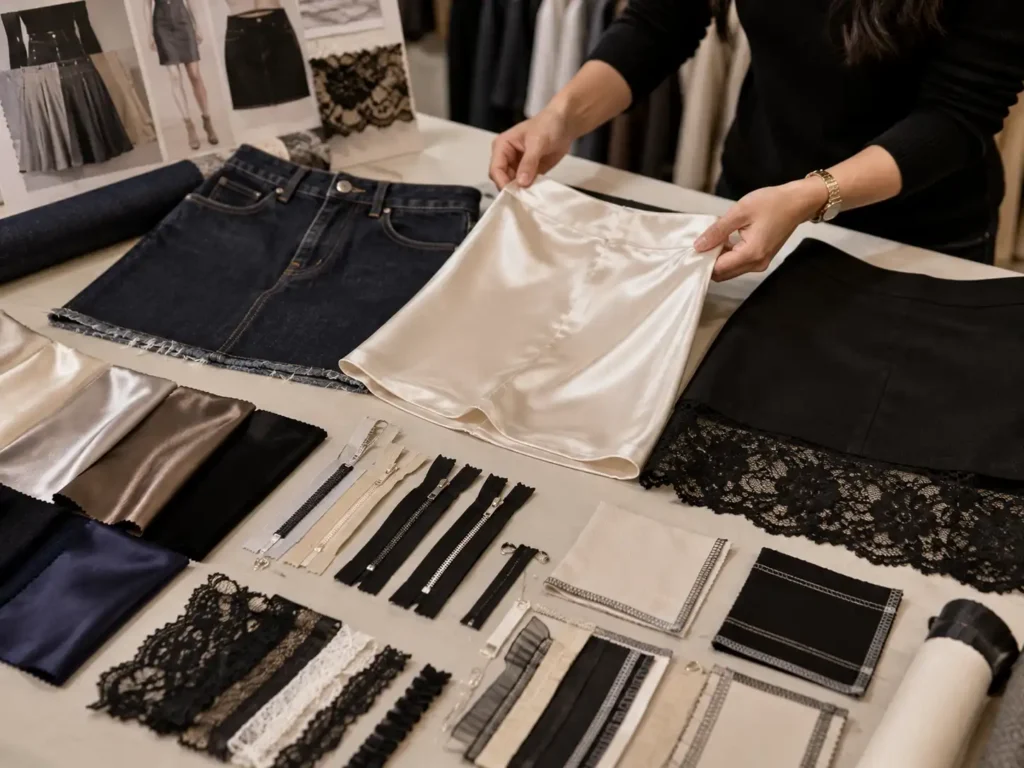
If your collection requires branded labels, custom hardware, coordinated zipper details, structural trims or decorative components, send the garment information together with the trim direction. Jinfeng will review the request in the context of the finished womenswear product rather than quote an isolated component without understanding its application.
For a more useful first review, prepare:
- Garment tech pack, sketch, line sheet or reference image
- BOM or existing trim card
- Logo artwork and approved brand references
- Physical trim or garment reference, if available
- Required material, color, plating or surface finish
- Approximate component dimensions and garment placement
- Quantity per style and color
- Planned size range
- Target launch or delivery window
- Private-label and packing requirements
The review can identify garment compatibility, sourcing or development direction, possible supplier MOQ, sampling requirements and major cost or timing risks before bulk decisions are locked.