
Border Print Dress Manufacturer
Custom border print dress development for global fashion brands, resortwear labels, premium ecommerce collections, sourcing teams, and private-label womenswear programs.
Jinfeng Apparel coordinates print artwork, base fabric, border depth, pattern engineering, size grading, placement cutting, sample approval, bulk sewing, quality control, branded packing, and export delivery. Every program begins with an engineering review because border artwork must remain balanced after seams, hems, gathers, size changes, and fabric shrinkage are introduced.
- 12 Core Silhouettes: Maxi, midi, mini, wrap, tiered, halter, shirt, kaftan, A-line, off-shoulder, slip, and skirt-set directions.
- Sample Timing: Simple structures usually require about 7-10 days; standard dresses about 10-15 days; complex structures or special materials about 15-25 days after material readiness.
- Order Basis: MOQ starts from 200 pcs per style/color; exclusive print, special base fabric, dyeing, trims, and branded packing may carry separate supplier minimums.
- Five QC Stages: Incoming fabric, placement cutting, sewing, finished garment, and packing checks are linked to the approved sample and production files.
Verified Capacity for Print-Led Dress Programs
Since 2008
6 Owned Factories
10+ Production Partners
100,000+ Pcs Monthly
2 Sample Rooms
15+ QC Inspectors
Built for Print-Led Womenswear Collections
Global Fashion Brands
Resortwear Labels
Premium Ecommerce Brands
Sourcing Teams
Product Development Teams
Private Label Programs
From Artwork to Retail-Ready Delivery
Print Brief
Fabric Direction
Artwork Scale
Pattern Development
Print Approval
Sample Review
PP Lock
Bulk Production
Delivery Records
Border Print Dresses We Develop
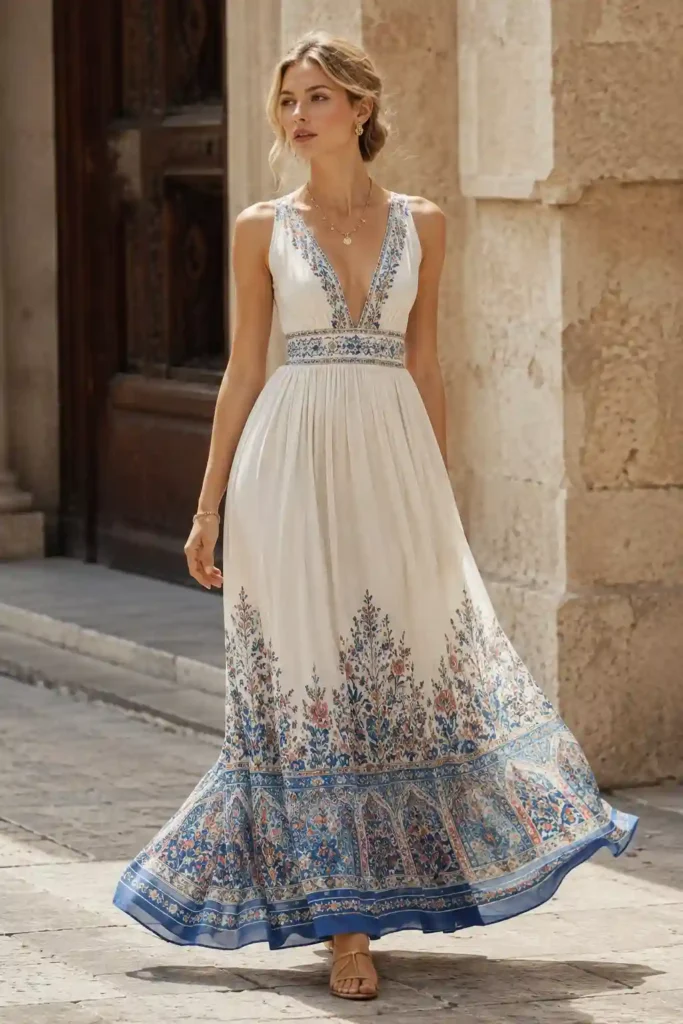
Border Print Maxi

Border Print Midi

Border Print Mini

Tiered Border Dress

Border Wrap Dress

Halter Print Dress

Border Shirt Dress

Border Print Kaftan
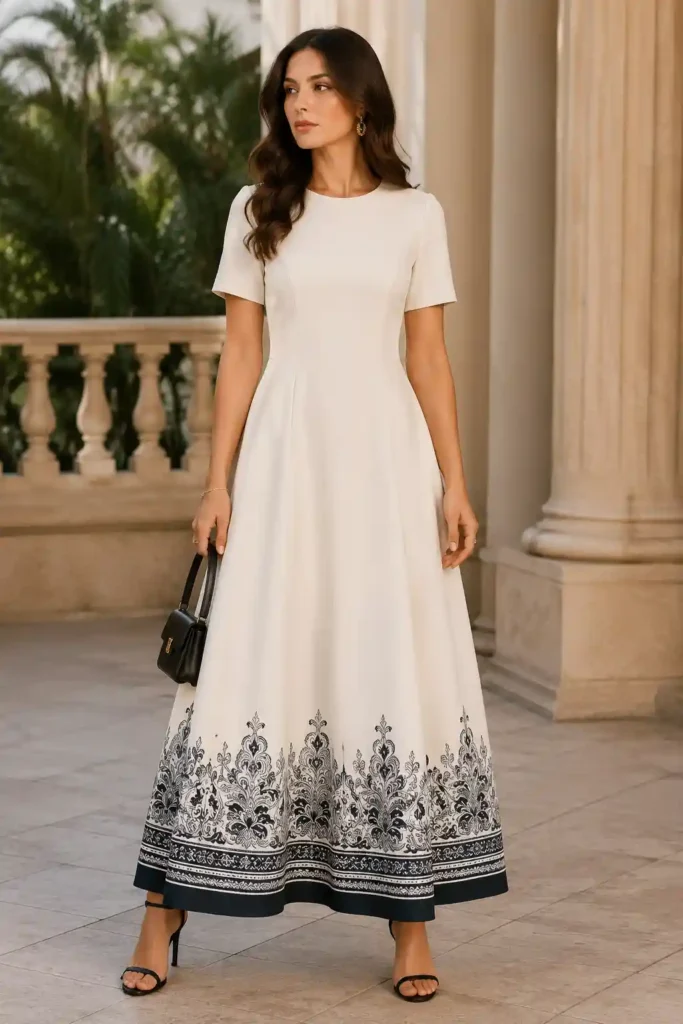
A-Line Border Dress

Off-Shoulder Print

Border Slip Dress

Border Skirt Set
Where Border Prints Can Be Positioned
Border artwork is not limited to a skirt hem. A controlled placement can frame the neckline, sleeve, waist, placket, tier, or ruffle, provided the pattern and size rules are built around the intended visual position.

Hem Border

Neckline Border

Sleeve Border

Waist Panel

Front Placket

Tier or Ruffle
Border Print Development Options
Existing Border Fabric
Custom Digital Print
Screen Print Route
Placement Print
Double Border Print
Exclusive Brand Artwork
Fabrics for Border Print Dress Production
Base fabric controls color expression, drape, transparency, wrinkle behavior, sewing stability, print sharpness, and finished length. Material approval should cover more than appearance; construction and care risks also need review.

Rayon for Fluid Resort Shapes
- Common weight direction: about 100-180 gsm.
- Strength: soft hand feel, fluid drape, strong suitability for maxi, wrap, tiered, and vacation silhouettes.
- Key controls: shrinkage, fabric relaxation, skew, seam slippage, wet handling, border position after pressing, and batch shade.
- Development note: a deep hem border may pull visually if the fabric is too light or the skirt sweep is excessive.

Viscose for Premium Drape
- Common weight direction: about 100-220 gsm.
- Strength: smooth movement and a refined fall for midi, maxi, shirt, and occasion-resort dresses.
- Key controls: shrinkage, width, wrinkle recovery, transparency, lining, seam stability, and dye-lot separation.
- Development note: print scale should be evaluated on a hanging garment, not only on a flat swatch.

Cotton Voile and Poplin
- Common cotton-blend weight direction: about 120-260 gsm; voile options may be lighter and require separate evaluation.
- Strength: crisp or airy structure for shirt dresses, A-line shapes, summer minis, and tiered styles.
- Key controls: opacity, lining, shrinkage, print penetration, creasing, collar support, button placket, and hem finish.
- Development note: a crisp base may display border geometry clearly but can create bulk at gathered tiers.

Chiffon for Layered Movement
- Common weight direction: about 30-90 gsm.
- Strength: light movement for maxi dresses, overlays, flounces, sleeves, and occasion-resort collections.
- Key controls: transparency, lining length, print color strength, fabric slippage, narrow hems, seam puckering, and skirt balance.
- Development note: border artwork on a transparent layer must be reviewed together with lining color.

Crepe for Controlled Flow
- Common weight direction: about 120-250 gsm.
- Strength: balanced drape and surface texture for wrap, midi, shirt, and occasion dresses.
- Key controls: surface grain, color variation, print clarity, pressing temperature, seam appearance, and width.
- Development note: texture can soften fine artwork; motif line weight may need adjustment before print approval.

Linen and Linen Blends
- Common weight direction: about 120-260 gsm.
- Strength: natural resort character for kaftans, shirt dresses, midi dresses, and relaxed sets.
- Key controls: shrinkage, slubs, wrinkle appearance, print coverage, color penetration, lining need, and travel packing.
- Development note: natural texture should be accepted as part of the material character, while excessive distortion or print gaps require control.

Artwork Files Needed Before Print Development
A reference image can start a discussion, yet production accuracy requires measurable artwork and garment information. Missing scale, direction, border depth, or color references causes repeated sample corrections and unreliable costing.
Preferred Artwork Package
- Vector or High-Resolution File: AI, EPS, PDF, PSD, TIFF, or a high-resolution image with clear ownership and usage rights.
- Actual Print Scale: State the intended physical width and height of the motif, not only the visual percentage shown on screen.
- Border Depth: Define the full printed depth from fabric edge to the highest motif point, including any blank margin.
- Repeat Information: Show repeat width, repeat length, half-drop or straight-repeat rule, and any mirrored relationship.
- Print Direction: Mark top, bottom, fabric edge, center line, and orientation for directional motifs.
- Color Standard: Pantone references, physical swatches, approved lab dips, or a clearly defined color target under stated lighting.
- Garment Mockup: Show intended placement on front, back, sleeve, neckline, tier, or hem, including acceptable visual breaks.
- Product Data: Dress type, finished length, size range, quantity per color, target market, lining, trims, labels, packing, and delivery window.
Why a JPG Alone Is Not Enough
A compressed image rarely confirms physical scale, border depth, repeat length, fabric width, color standard, seam position, or grading behavior. Jinfeng Apparel can review a reference image for initial feasibility, but the final print and bulk quotation are prepared after material, dimensions, quantity, color, and garment construction are clarified.
How Border Depth Affects Dress Engineering
Border depth, usable fabric width, garment length, hem sweep, repeat length, and size range form one engineering system. Changing a single variable can alter material use, print position, panel count, and cost.
Fabric Width
Usable width determines whether front, back, sleeve, and skirt panels can face the same direction. Narrow fabric may require additional seams or a different skirt construction. Printed selvage, unprintable margins, and fabric defects reduce the usable area.
Border Depth
A 25 cm border behaves differently on a 78 cm mini, a 118 cm midi, and a 145 cm maxi. The motif can dominate a short silhouette or appear undersized on a long full skirt. Finished hem allowance must be reserved before placement is approved.
Garment Length
Front length, back length, high-low hems, curved hems, and floor clearance affect the visible border line. A straight fabric border may need reshaping or panel planning for curved silhouettes.
Hem Sweep
Full skirts require more fabric across the border. Increasing sweep can create abrupt motif breaks at panel seams or force repeated sections closer together. Marker planning should be completed before bulk print quantity is confirmed.
Pattern Repeat
Repeat length controls whether adjacent panels can align. Large repeats may increase cutting waste. Small repeats may allow easier matching but can look visually dense on wide hems.
Size Range
XS-XL or broader size ranges may require separate marker rules. The border should preserve a consistent relationship to hem, knee, calf, hip, or waist instead of moving freely with graded pattern growth.

Pattern Development Around the Border Artwork
Paper patterns cannot be completed independently from the print. The pattern team reviews how darts, waist seams, gathers, pleats, plackets, zippers, tiers, and hems will alter the motif before a sample is cut.
- Grain and Direction Control
Directional artwork requires fixed grain lines and panel orientation. Turning a back panel, sleeve, or facing to improve marker efficiency may reverse flowers, lettering, scenic elements, or geometric flow. Direction rules are written into the cutting file. - Seam Position Planning
Side seams, center seams, waist seams, yokes, tiers, and ruffles should avoid cutting through the most important artwork area. When a break cannot be avoided, visual height and balance are prioritized over false claims of perfect matching. - Gathering and Pleats
Gathering compresses artwork unevenly. Large motifs can disappear inside folds, while narrow borders may become visually crowded. Gather ratio, pleat placement, and motif density are tested on the sample. - Wrap and Overlap
Wrap dresses hide part of the front panel. Left and right pieces may require separate artwork mapping so the main motif remains visible in the closed wearing position across the intended size range. - Panelled Skirts
Six-panel, eight-panel, godet, and flared constructions create repeated seam lines. Panel count is balanced against print continuity, skirt volume, fabric use, and production consistency. - Pattern Version Control
First pattern, revised pattern, PP pattern, bulk pattern, lining pattern, grading, placement marks, and revision notes are kept as separate controlled records. Only the approved production version enters marker planning.
Placement Cutting and Marker Efficiency
Cutting determines whether an approved print survives bulk production. Border fabric cannot be handled like a non-directional solid because panel rotation, edge loss, defect avoidance, and size bundling influence the finished garment.
Fabric Relaxation
Rayon, viscose, knits, and selected wovens may need controlled relaxation before cutting. Length and width behavior are reviewed so border position is not calculated from unstable fabric.
Face and Direction
Fabric face, print top, print bottom, left border, right border, nap, shine direction, and stretch direction are identified before spreading.
Marker Planning
Each marker considers usable width, border depth, repeat length, panel orientation, seam matching, size ratio, order quantity, and expected waste. Complex programs may require separate markers by size group or silhouette.
Panel Placement
Front and back panels are aligned to approved placement marks. Sleeves, ties, waistbands, facings, and ruffles receive separate direction instructions when the artwork is visible.
Defect Avoidance
Print gaps, color streaks, stains, holes, slubs beyond agreed material character, and distorted borders are marked during incoming inspection and excluded from critical garment areas.
Size Bundling
Cut parts are bundled by style, color, size, and panel set. Placement-cut parts should not be mixed across print positions or fabric batches.
Cut Quantity Audit
Panel counts are checked against the order and cutting plan. Missing mirrored pieces or duplicated directions can create production delays and mismatched garments.
Waste Control
Cost optimization comes from better marker planning, silhouette engineering, color consolidation, and size-ratio planning – not from rotating directional panels or cutting through key artwork.

Dress Construction Options for Border Prints

Tiered Skirt

Wrap Front

Halter Neck

Button Front

Waist Tie

Ruffle Hem

Slit Maxi

Lined Bodice
From Print Strike-Off to First Sample
Artwork Review
Base Fabric Review
Print Scale Approval
Strike-Off Review
Pattern Placement Plan
First Sample
Fit Placement Review
Revised Sample

How Sample Feedback Becomes Bulk Standards
Sample comments must become controlled production records. A message saying “move the print lower” or “make the skirt fuller” is not enough for reliable bulk execution.
- Fit Comments: Bust, waist, hip, shoulder, strap, neckline, armhole, slit, front length, back length, hem, and lining changes are entered into the revised size chart and pattern.
- Print Comments: Scale, border depth, repeat, orientation, color, placement distance, and acceptable seam interruption are updated in the artwork and placement record.
- Fabric Comments: Composition, weight, width, stretch, transparency, hand feel, drape, shrinkage, wrinkle, color, MOQ, cost, and lead-time impact are re-evaluated.
- Construction Comments: Zipper, placket, lining, hem, gathering, ruffle, tier, seam type, stitch density, pressing, and reinforcement instructions are updated.
- Private Label Comments: Label material, label position, care content, hangtag, barcode, polybag, folding, carton ratio, and carton marks enter the packing file.
- PP Sample Lock: The PP sample confirms the final production standard for fabric, print, color, measurements, construction, trims, labels, and packing. A Golden sample or sealed reference supports production and QC. Later changes require a formal impact review covering material, cost, timing, pattern, and quality risk.
Bulk Production for Border Print Dresses
Artwork Lock
Fabric Batch Approval
Marker Planning
Placement Cutting
Sewing Instruction
In-Line Inspection
Pressing Review
Final Inspection
Packing and Shipment

Sewing Details That Protect the Print Design
Workmanship affects the visual border as strongly as printing. Even accurate fabric can look unbalanced when seams twist, gathers shift, hems consume artwork, or pressing distorts the motif.
- Side-Seam Level: The border height should meet at the same level on front and back. Perfect motif matching may be impossible for some artwork, yet vertical position, color flow, and acceptable interruption can be controlled.
- Seam Allowance: Unplanned allowance changes can remove part of the motif or shift placement. Pattern and cutting files define seam allowance before printing or placement cutting.
- Stitch Density: Light chiffon, rayon, viscose, cotton, crepe, and linen blends require different needle, thread, and stitch choices. Excessive density can pucker; insufficient density can weaken seams.
- Hem Treatment: Narrow hem, blind hem, turned hem, binding, facing, or lining finish determines how much border remains visible. Hem allowance is included during placement approval.
- Gather Distribution: Uneven gathering can concentrate motifs on one side. Notches, quarter marks, and controlled feed help distribute artwork consistently.
- Waist-Seam Placement: A strong motif should not be trapped inside seam allowance or cut across the fullest design element. Waistline height and print position are evaluated together.
- Zipper Flatness: Invisible zippers must remain flat without pulling the print out of line. Fabric stability, seam allowance, lining attachment, and pressing influence the result.
- Lining Attachment: Lining should support opacity and movement without dragging the shell or appearing below the border. Chiffon and light printed fabrics require careful lining-color selection.
- Pressing Direction: Steam and pressure can stretch lightweight fabrics or alter shine. Pressing method is confirmed during sampling and transferred to bulk instructions.
Quality Control from Fabric to Packing
Quality control is divided by production stage so print, measurement, workmanship, labeling, and packing risks are found before shipment preparation.

Incoming Fabric QC
Checks color, weight, hand feel, usable width, shrinkage, color fastness, print defects, shade variation, holes, stains, border distortion, and batch quantity.

Cutting QC
Checks pattern version, panel direction, print placement, panel quantity, size bundling, fabric direction, stretch direction, defect avoidance, and cut-part consistency.

Sewing QC
Checks stitch density, seam quality, seam allowance, symmetry, zipper flatness, strap length, gathering placement, lining attachment, slit height, and border level.
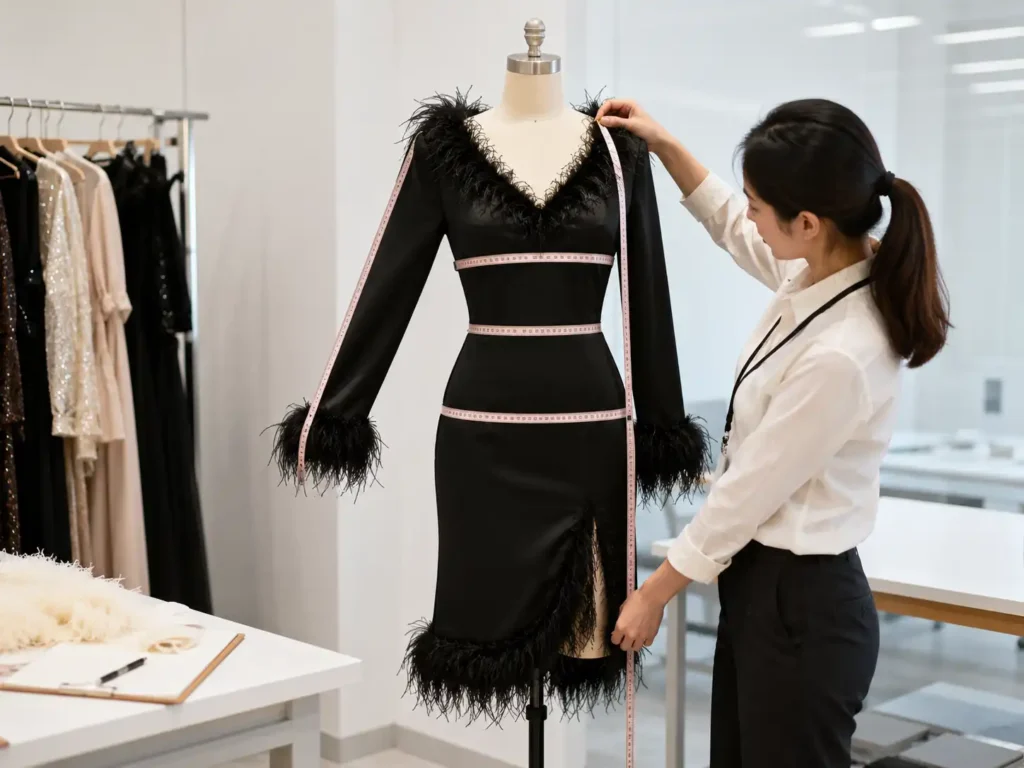
Garment QC
Checks measurements, appearance, fit effect, pressing, color difference, stains, holes, loose threads, zipper function, button strength, label position, and care-label content.

Packing QC
Checks hangtags, barcodes, size stickers, polybags, folding method, carton marks, packing ratio, carton size, carton weight, and style/color/size traceability.

Final Release
AQL inspection or client-nominated inspection can be coordinated according to the order. Inspection scope and acceptance criteria are confirmed before shipment.
Print and Fabric Tests by Project Requirement
Color Fastness
Dimensional Stability
Fabric Width
Print Defects
Seam Performance
Document Review
Private Label and Retail-Ready Packing
Brand presentation continues after sewing. Label artwork, barcode data, folding method, polybag specification, carton ratio, and warehouse rules are managed as production files rather than last-minute accessories.
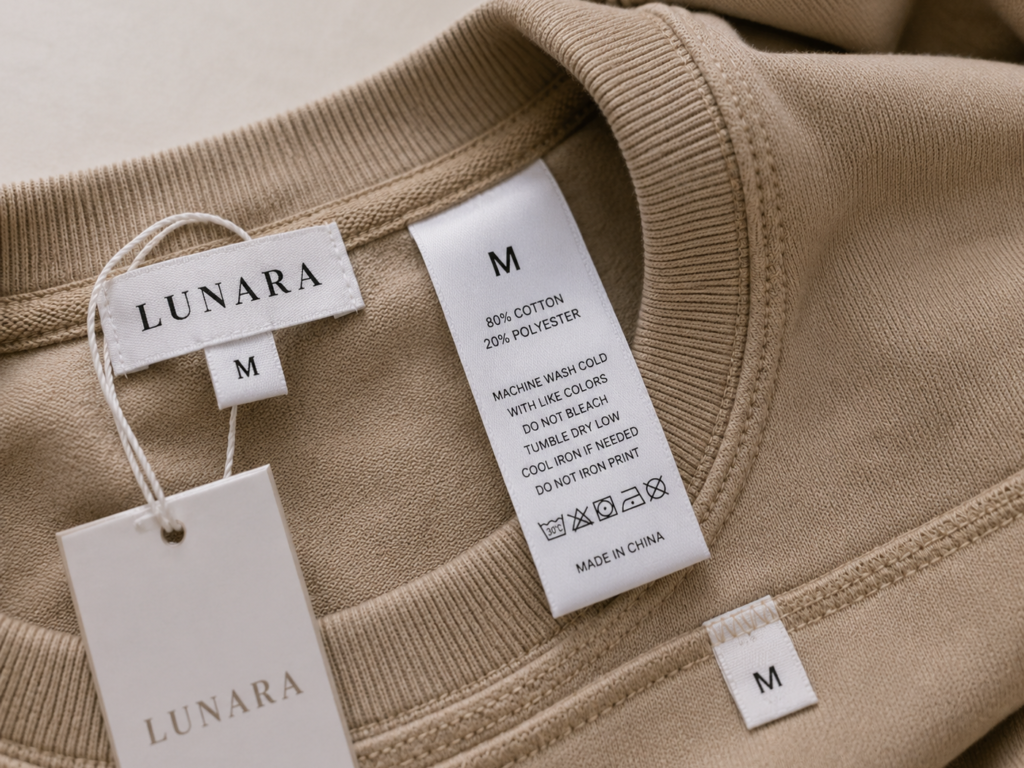
Woven Labels

Care Labels

Hangtags
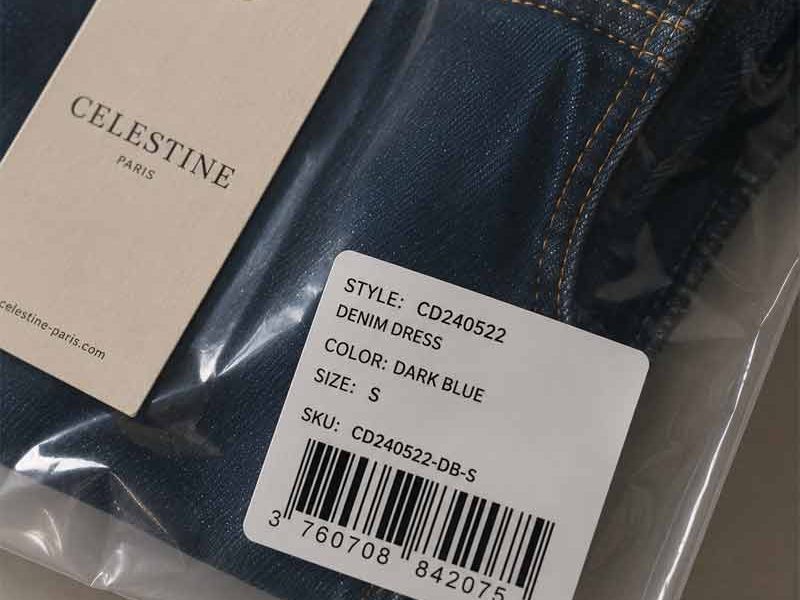
Barcode and SKU

Branded Polybags
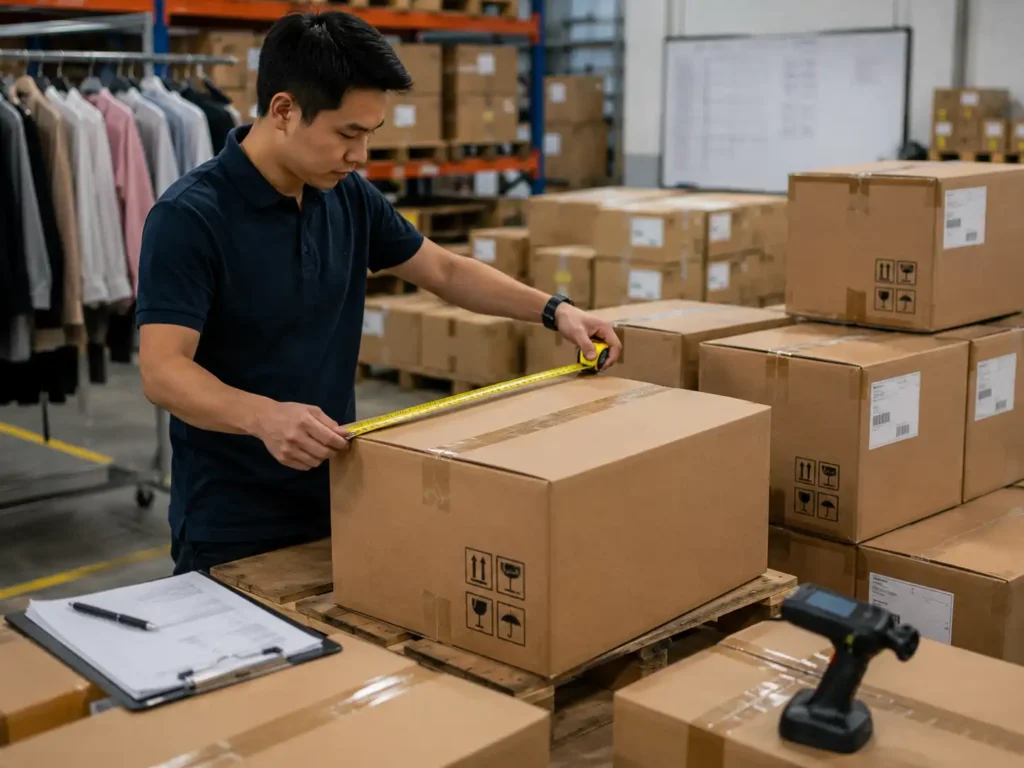
Carton Marks
MOQ and Cost Factors for Custom Border Prints
Jinfeng Apparel’s MOQ starts from 200 pcs per style/color. Custom printing, exclusive artwork, special base fabric, dyeing, private-label materials, and print-mill requirements may create separate minimums. Multiple styles totaling 200 pieces do not equal the standard MOQ.
| Factor | Why It Matters | MOQ Impact | Cost Impact |
|---|---|---|---|
| Base Fabric | Stock, custom-dyed, special composition, width, and supplier availability | Medium to High | Medium |
| Print Method | Digital, screen, placement, border, color separation, and setup | Medium to High | Medium |
| Border Depth | Usable width, panel layout, hem allowance, and waste | Low | Medium |
| Print Scale | Artwork preparation, strike-off, repeat, and placement changes | Low | Low to Medium |
| Fabric Width | Marker efficiency, panel count, skirt sweep, and direction | Low | Medium |
| Color Count | Print preparation, approval rounds, and batch management | Medium | Medium |
| Size Range | Grading, separate markers, measurement checks, and packing ratio | Low | Medium |
| Silhouette | Panel count, lining, tiers, gathers, ruffles, slit, and hem sweep | Low | Medium to High |
| Private Label | Labels, hangtags, barcode stickers, polybags, and cartons | Project Based | Project Based |
Built for Multi-Style Printed Dress Programs
Style and Fabric Grouping
Sample Priority
Revision Tracking
Production Allocation
Team Coordination
NDA and Design Protection
How to Evaluate a Border Print Dress Manufacturer
| Evaluation Area | What a Brand Should Verify |
|---|---|
| Dress Experience | Soft woven, resort, occasion, maxi, midi, mini, wrap, tiered, and private-label capability |
| Print Knowledge | Border depth, repeat, scale, direction, placement, color approval, and base-cloth behavior |
| Artwork Review | Vector files, physical dimensions, color references, mockups, and ownership control |
| Pattern Engineering | Print-to-pattern coordination, seam planning, hem allowance, gathering, and panel layout |
| Size Grading | Placement consistency across sizes, finished length, body landmarks, and marker rules |
| Cutting Control | Direction, batch separation, panel matching, defect avoidance, bundling, and quantity audit |
| Sampling | Strike-off, first sample, fit review, revised sample, PP lock, and Golden sample |
| Bulk QC | Incoming, cutting, sewing, in-line, garment, pressing, packing, and AQL support |
| Testing | Shrinkage, color fastness, width, seam performance, and project-specific reports |
| Capacity | Multi-style scheduling, factory allocation, peak-season review, and repeat-order support |
| Private Label | Labels, care content, hangtags, barcodes, polybags, cartons, and warehouse rules |
| Communication | One project owner, version control, progress updates, issue escalation, and shipment records |
Border Print Dress Development Checklist

Artwork and Print
- Original artwork file
- Physical motif scale
- Border depth
- Repeat width and length
- Top and bottom direction
- Pantone or physical color references
- Placement mockup
- Acceptable seam interruption

Fabric and Garment
- Preferred composition
- Target weight and hand feel
- Required fabric width
- Transparency and lining requirement
- Dress silhouette
- Finished length
- Hem sweep
- Size range
- Quantity per style/color
Border Print Programs Managed with Clear Controls

US Resort Launch - 18 Styles, 36,000 Pieces
- Development Control: Styles were grouped by fabric and hem construction. Hero SKUs entered photo-sample priority, while shared artwork families used coordinated scale and color approvals.
- Engineering Control: Separate marker rules were prepared for mini, midi, and maxi lengths. Border distance from finished hem was recorded on PP samples and cutting references.
- Production Control: Fabric batches were separated, placement-cut panels were bundled by size, and in-line checks focused on border level, side-seam balance, lining length, and zipper flatness.
- Delivery Result: The program moved through two shipment windows, allowing priority sizes and campaign styles to reach the distribution schedule first while the remaining bulk followed under the same packing specification.
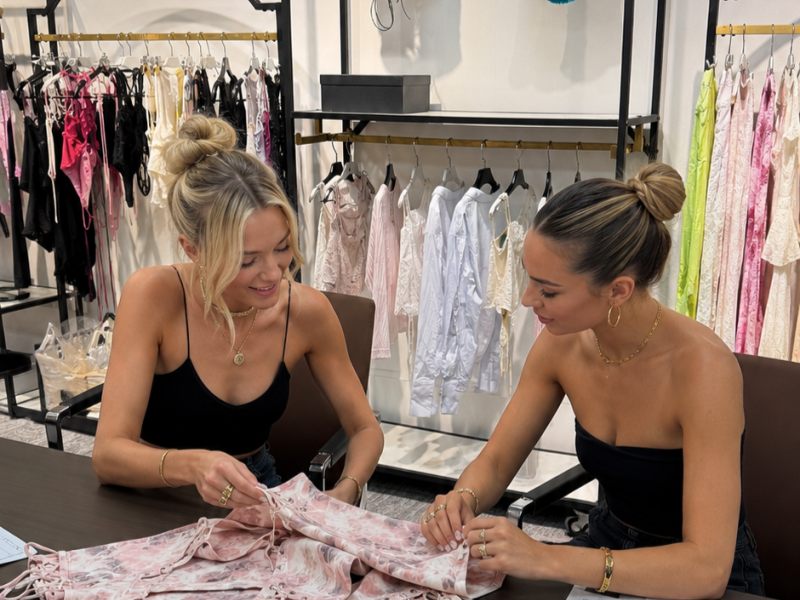
Australian Summer Collection - 24 Styles, 58,400 Pieces
- Material Control: Fabric width, border depth, shrinkage, wrinkle behavior, and lining need were reviewed before pattern completion. Linen-blend visual texture was approved separately from print defects.
- Pattern Control: Wide kaftan and maxi panels received dedicated direction rules. Shirt-dress plackets and collars used controlled motif placement rather than forced full matching.
- Collection Control: Twenty-four styles were divided into fabric groups, sample priorities, revision batches, and production allocations. Shared labels, hangtags, barcode formats, and carton marks were standardized.
- Repeat Development: Approved pattern and packing records supported later color extensions and same-pattern new-print development, with fresh fabric and color confirmation for each repeat.

European Private Label Program - 13 Styles, 22,800 Pieces
- Color Control: Pantone references, physical swatches, lining colors, print colors, and bulk shade approvals were compared under agreed lighting conditions.
- Sample Control: First samples verified structure and drape; revised samples corrected border height, wrap overlap, tier proportion, and lining length; PP samples locked private-label positions and folding.
- QC Control: Incoming inspection covered width, shade, print defects, and hand feel. Final checks focused on measurement, hem balance, border position, transparency, pressing, care labels, and barcodes.
- Packing Control: Maxi folds were defined to reduce hard creases through the primary border area, while SKU stickers and carton ratios followed the receiving manual.
Border Print Dress Frequently Asked Questions

Start Your Border Print Dress Project
Send the development team enough information to evaluate print feasibility, fabric direction, pattern placement, sample timing, MOQ fit, cost drivers, production allocation, and delivery planning. A clear brief helps the team return a useful development route instead of a vague estimate.
- Company name, market, and responsible contact
- Reference image, original sample, sketch, line sheet, or tech pack
- Original print artwork and color references
- Border depth, print scale, repeat, and direction
- Preferred fabric, weight, hand feel, width, and lining requirement
- Dress silhouettes, finished lengths, size range, and quantity per style/color
- Label, hangtag, barcode, polybag, carton, and warehouse requirements
- Target sample date, launch date, delivery window, and shipping destination
- Testing, inspection, audit-document, or nominated-forwarder requirements

