Bodycon Skirt Manufacturer for DTC Brands

Private-label bodycon skirt development built around fit, recovery, launch timing, and repeatable production for established digital fashion labels.

Jinfeng Apparel develops fitted mini, midi, ruched, slit, V-waist, mesh-overlay, and matching-set skirts from fabric direction and pattern work through sampling, bulk production, quality control, branded packing, and export coordination. Every project starts with garment structure, target fit, stretch behavior, launch timing, quantity, and warehouse requirements rather than a generic quotation.

  • 160-320 GSM stretch-fabric working range assessed for coverage, recovery, structure, and season.
  • 9 critical measurement points controlled from waistband height and full hip to hem width and slit position.
  • 5 movement checks covering walking, sitting, stairs, bending, and recovery after wear.
  • MOQ starts from 200 pcs per style/color, subject to fabric, color, trim, and packaging requirements.

Production Capacity for Ongoing DTC Skirt Programs

A bodycon skirt program needs more than sample sewing. Development resources, factory allocation, quality follow-up, and repeat-order records must work together when a collection contains several silhouettes, colors, and delivery windows.

Since 2008

Long-term womenswear manufacturing experience supports pattern decisions, fabric risk reviews, sample correction, production planning, and export delivery. Bodycon products benefit from accumulated knowledge because small differences in stretch, waistband tension, and hip balance can change the fit even when a size chart remains unchanged.

6 Owned Factories

Six owned women’s fashion factories provide a stable production base for dresses, skirts, jumpsuits, matching sets, and private-label collections. Product structure and fabric type guide factory allocation, helping fitted knit skirts, woven-stretch skirts, and matching-set programs move through suitable production resources.

10+ Production Partners

More than ten long-term satellite partners extend capacity for multi-style programs and seasonal peaks. Allocation remains project-based, with fabric, construction, workmanship, quantity, and delivery sequence reviewed before production placement rather than sending every style to one general line.

100,000+ Monthly Capacity

Regular monthly capacity above 100,000 pieces supports scheduled launches, bulk orders, and repeat production. Capacity planning still follows approved materials, confirmed PP samples, color count, size breakdown, packaging, and inspection requirements, so volume never replaces product control.

2 Sample Rooms

Two sample rooms support parallel development for multi-style collections. Key launch styles can receive priority while related silhouettes move through fabric review, pattern work, fitting, revision, and PP approval in controlled groups instead of creating one congested sample queue.

15+ QC Inspectors

More than fifteen QC inspectors support material, in-line, measurement, appearance, packing, and final checks across the manufacturing network. Bodycon skirts receive product-specific attention around stretch recovery, seam stability, waistband behavior, side-seam alignment, and size consistency.

Manufacturing Priorities for Established DTC Fashion Brands

Digital fashion labels sell fit through imagery, reviews, returns data, and repeat purchases. Manufacturing decisions therefore need to protect the first campaign sample, the first bulk delivery, and every later reorder with the same level of discipline.

Launch Calendar Control

A planned drop has separate dates for fitting, campaign shooting, PP approval, warehouse receiving, and online release. Jinfeng Apparel builds milestone calendars around fabric approval, trim approval, sample stages, bulk materials, sewing, QC, packing, and shipment so critical dates remain visible across the project.

Photo-Ready Samples

Campaign samples need retail-level proportions, clean finishing, accurate color, and approved details because visual content sets the sales expectation. A photo sample can support shooting, while PP approval remains a separate production decision covering bulk fabric, measurements, construction, labels, and packing.

Core SKU Continuity

A dependable black or neutral fitted skirt often becomes a year-round core SKU. Pattern files, measurement charts, fabric references, trim specifications, sewing instructions, and packing requirements are retained for repeat production, reducing avoidable redevelopment while allowing current material and price conditions to be reviewed.

Multi-Color Drop Management

Color stories require shade control, lining decisions, barcode accuracy, and balanced quantities by style and size. Dark shades may need rubbing or transfer review, while light shades need opacity and cleanliness control. Every color is treated as a production unit rather than a visual afterthought.

Repeat-Order Readiness

A strong online sell-through can create urgent replenishment pressure. Reorders start from archived development records, but fabric availability, batch shade, elastic, zipper, label stock, quantity, and delivery method are checked again before confirmation. Speed comes from controlled records, not skipped approvals.

Retail-Ready Packing

Ecommerce warehouse delivery requires accurate size labels, barcodes, SKU stickers, polybags, carton marks, and packing lists. Packing instructions are connected to style-color-size data so finished garments can enter warehouse receiving and order fulfillment without preventable relabeling or carton rework.

Bodycon Skirt Risks Driving Returns

Tight silhouettes expose fit and construction errors quickly. A skirt can look acceptable on a hanger yet fail after walking, sitting, washing, or moving across sizes. Early risk review protects product reviews, return rates, and brand trust.

Waistband Roll

A waistband may fold or roll when its width, elastic strength, shell stretch, seam bulk, and body contour are not balanced. Evaluation covers waistband height, layer count, elastic specification, stitch tension, and on-body movement instead of solving the issue by simply adding tighter elastic.

Skirt Ride-Up

Ride-up often comes from excessive negative ease, high fabric friction, insufficient hem width, short length, poor front-back balance, or tension differences between layers. The correction may require pattern, fabric, lining, hem, or waistband changes rather than one isolated measurement adjustment.

Hip Drag Lines

Horizontal drag lines across the front or back can indicate incorrect waist-to-hip distribution, fabric stretch mismatch, poor rise placement, or insufficient length over the seat. Fit comments are converted into pattern and measurement revisions so the symptom is not hidden by pressing.

Fabric Show-Through

Low weight, pale colors, high stretch, and close fit can expose undergarments or create inconsistent opacity across body areas. Control options include higher GSM, double-layer construction, suitable lining, color-specific testing, and revised negative ease. Coverage decisions are confirmed before final costing.

Twisted Side Seams

Side seams can rotate forward or backward when fabric relaxation, grain direction, cutting, sewing tension, or pattern balance is unstable. Knit and jersey materials are reviewed for shrinkage and torque risk, while finished skirts are checked on-body and flat after recovery.

Sample-Bulk Drift

A correct sample can still become inconsistent when bulk fabric stretch, weight, shade, elastic, stitch settings, or operator methods differ. Approved samples, bulk material records, measurement files, sewing instructions, and QC checkpoints create a shared production reference before cutting begins.

Custom Bodycon Skirt Styles for Digital Collections

A focused skirt collection can cover core fit, social-led trends, occasion dressing, and coordinated sets without losing production logic. Each silhouette below has a different fabric, pattern, workmanship, and bulk-control profile.

High-Waist Mini

A high-waist mini needs a secure waist, controlled hip shaping, stable side seams, and a length suited to the target market. Ponte, compact jersey, rib knit, and double-layer stretch jersey are common directions. Development focuses on waistband roll, seat coverage, hem recovery, and consistent visual proportion across sizes.
  • Best for: core colors and repeat programs
  • Control: waist grip, back length, hem stability

Ruched Mini Skirt

Ruching adds volume control and visual shaping but can create uneven length, asymmetric gathers, broken drawcord channels, and side-seam distortion. Development sets gather ratio, ruched-zone length, tie specification, anchor strength, and wearer-adjustment range before bulk sewing instructions are released.
  • Best for: social drops and matching sets
  • Control: gather symmetry and secure anchoring

Bodycon Midi Skirt

A fitted midi carries more friction across the thigh and knee than a mini, increasing ride-up risk. Hem width, back walking ease, slit placement, fabric recovery, and lining construction are assessed together. A polished midi can serve office, occasion, dinner, or capsule collections depending on fabric and finish.
  • Best for: premium core programs
  • Control: movement, hem line, side-seam balance

V-Waist Skirt

A V-shaped waist creates a strong visual line but requires careful point placement, left-right symmetry, clean internal finishing, and secure fit at the side waist. The pattern must maintain the intended V depth across sizes without creating front collapse, waistband gaping, or uneven seam tension.
  • Best for: contour-led fashion drops
  • Control: V-point accuracy and waist stability

Side-Slit Pencil

A side slit improves movement and creates a longer leg line, yet the slit can open too high, twist, flare, or strain at the top. Reinforcement, seam allowance, slit height, hem turn, bar tack positioning, and on-body movement are checked against the approved sample.
  • Best for: midi and evening capsules
  • Control: slit height and stress reinforcement

Low-Rise Fitted

Low-rise silhouettes depend on high-hip fit rather than natural-waist grip. Waistline shape, back rise, front dip, hip ease, and anti-slip behavior need separate review. Low-rise skirts can expose fitting errors quickly because too much looseness causes movement while excessive tension creates drag and ride-up.
  • Best for: trend-led mini programs
  • Control: high-hip contour and wear security

Mesh Overlay Skirt

Stretch mesh can create layered transparency, print effects, ruching, or asymmetric styling. Development covers mesh softness, power, recovery, transparency, lining color, edge finishing, seam visibility, and hole inspection. Outer and inner layers need compatible stretch to prevent bubbling or uneven recovery.
  • Best for: party and clubwear edits
  • Control: layer stretch and transparency

Matching-Set Skirt

A coordinated skirt and top require shared color, fabric batch, trim language, and size logic. Separate SKUs must still appear as one outfit in photography and packing. Development considers mix-and-match sizing, combined margins, pair presentation, and reorder potential for either item independently.
  • Best for: higher basket-value programs
  • Control: color match, SKU pairing, shared fit story

Build a Skirt Collection Around Commercial Roles

A productive assortment gives each style a clear commercial role. Core fits support repeat sales, directional silhouettes create attention, matching sets lift outfit value, and seasonal color stories refresh proven patterns without rebuilding every garment from zero.

Core Fit Program

A core fit program normally starts with one approved silhouette in dependable colors and a fabric capable of repeat sourcing. Pattern, measurements, waistband structure, stitching, labels, and packing are sealed after approval. Later color or fabric extensions are reviewed against the original fit block rather than treated as unrelated styles.

Social Drop Styles

Directional details such as ruching, cut-outs, low-rise shaping, asymmetry, hardware, or mesh overlays can support short campaign windows. Key styles are prioritized for sample photography and feedback. Production risk is reviewed early because a visually strong detail may add sewing time, material loss, or repeat-order constraints.

Matching Set Families

One bodycon skirt can support crop tops, corset tops, bodysuits, bralettes, or fitted jackets.
Shared fabric and color create a coherent outfit, while separate size curves allow more flexible selling. BOM, SKU, barcode, packaging, and replenishment plans remain distinct for each garment.

Seasonal Color Capsules

Proven patterns can move through summer brights, holiday metallics, neutral essentials, or occasion colors. Color approval includes shade, opacity, lining, rubbing risk, print direction, and packaging cleanliness. The same fabric in a new color may behave differently, so every shade receives its own review.

Stretch Fabrics Selected for Shape and Recovery

Fabric choice determines silhouette, comfort, opacity, sewing behavior, and return risk. Jinfeng Apparel compares composition, weight, stretch direction, recovery, hand feel, structure, transparency, shrinkage, and bulk availability before a fabric becomes the basis of an approved pattern. Common working ranges vary by construction, with many fitted skirt fabrics falling between roughly 160 and 320 GSM.

Fabric DirectionTypical GSMStretchStructure / RecoveryCoverageBest Application
Poly-Spandex Jersey180-2802-way or 4-waySmooth, flexible; recovery depends on knit and elastaneMedium; pale shades may need double layerRuched minis, midi skirts, matching sets
Nylon-Spandex Jersey190-300Often 4-wayDense hand, strong contour, good recovery when specified wellMedium to highPremium fitted skirts, sleek core styles
Rib Knit200-320High crosswise stretchTextured, comfortable; growth risk needs reviewMedium to highCasual fitted skirts, coordinated knit sets
Ponte / Roma260-420Controlled stretchFirm structure, smooth recovery, heavier handHighPencil skirts, office capsules, sculpted midi styles
Cotton-Spandex180-300Usually crosswiseNatural hand; shrinkage and recovery require controlMediumCasual core skirts and warm-weather programs
Viscose-Spandex180-280Soft crosswise stretchFluid and soft; dimensional stability needs attentionMedium; lighter colors may show throughSoft drape skirts and comfort-led capsules
Stretch Satin160-260Limited to moderateSmooth shine with lower forgiveness than jerseyVaries by color and weightOccasion minis, elevated matching sets
Stretch Mesh70-1802-way or 4-wayTransparent; power and recovery vary widelyLow without liningOverlay skirts, ruched panels, partywear details

Fabric Approval Before Pattern Lock

A swatch or lab dip is reviewed for color, hand feel, weight, stretch, recovery, transparency, drape, and price before sample construction. Changing weight or stretch can require a new pattern or revised negative ease. A lighter fabric may need lining; a stronger recovery fabric may need more circumference; a softer fabric may need added stabilization at the waist.

Bulk Fabric Before Cutting

Bulk fabric is checked against the approved direction for composition information, usable width, shade, weight, stretch behavior, defects, and relaxation needs. Large color programs may require shade segregation. Fabric approval does not remove bulk checks because supplier batch, dye lot, finishing, and storage can change performance.

Fit Engineering Across Waist, Hip, and Hem

Bodycon does not mean reducing every measurement. A sellable fit balances contour, mobility, fabric recovery, and size progression. Pattern decisions are linked to the chosen material and the intended wearing occasion rather than copied from a generic tight-skirt block.

  • Waist Position
    High-rise, natural-waist, V-waist, and low-rise shapes sit on different body areas and need different contour curves. Waist placement affects perceived torso length, hip volume, comfort, and skirt movement. The approved position is recorded through waistband height, front and back rise relationship, and finished garment measurements.
  • Hip Ease
    Negative ease is calculated alongside stretch and recovery. Too much reduction can create horizontal drag, ride-up, seam strain, and visible underlayer lines. Too little reduction weakens the contour. Fit work compares waist, high hip, full hip, fabric stretch, and wearer movement before final pattern approval.
  • Front-Back Balance
    The back body needs more length over the seat than a flat front panel. When front and back balance is wrong, the hem rises at the back, the side seam rotates, or the waistband tilts. Pattern correction may alter back length, darting, seam shape, or panel distribution without changing the stated skirt length.
  • Hem Geometry
    Hem width influences stride, ride-up, curling, and visual line. A narrow mini hem can grip the thigh, while a midi may need a slit or wider lower sweep. Hem allowance, coverstitch or blind finish, lining connection, and fabric recovery are selected to avoid a stiff, wavy, or rolling edge.

Waistband Structures Designed to Stay Secure

Waistband performance depends on pattern shape, layer count, elastic, fabric recovery, seam bulk, and wearer movement. The right solution changes by rise, fabric, silhouette, and target comfort rather than relying on one universal elastic specification.

Self-Fabric Band

A clean self-fabric waistband suits compact jersey and ponte when the material has enough recovery. Layer direction, interfacing or reinforcement, seam placement, and finished height are reviewed so the band lies flat without stretching out during wear or creating excessive bulk.

Elastic-Supported Band

Internal elastic can add grip and recovery while preserving the outer fabric appearance. Elastic width, stretch force, softness, join method, and shrinkage are matched to the shell. Excessive tension may dig into the waist or pull the skirt upward, while weak tension can cause slipping.

Double-Layer Band

Two fabric layers improve coverage and structure but may increase seam thickness. Grain direction, layer stretch, seam allowance, and elastic placement are planned to avoid rolling. A double layer can also support clean V-waist or fold-over finishes when the inner layer is controlled.

Contoured Waistband

A shaped waistband follows waist-to-high-hip anatomy and often performs better than a straight band on high-rise skirts. The contour must grade correctly across sizes. Excess curve can collapse; insufficient curve can stand away from the body or create pressure at the top edge.

V-Shaped Waist

V-waist construction requires exact center placement, mirrored seams, controlled point depth, and clean internal finishing. The V should keep its shape when stretched and should not buckle across the abdomen. Bulk sewing uses templates, seam references, and inspection points derived from the approved sample.

Low-Rise Finish

Low-rise skirts rely on high-hip contour and friction rather than a narrow natural waist. The top edge may use shaped facing, elastic support, or clean double-layer finishing. Wear tests check sliding, gaping, and back exposure during sitting and bending.

Control Ride-Up, Twisting, and Hem Distortion

Movement testing turns a static fit sample into a wearable product. Five checks reveal different failure modes and help separate pattern problems from fabric, lining, elastic, or workmanship problems before PP approval.

Walking Check

The wearer walks at a normal pace while side seams, hem line, waistband position, and skirt rise are observed. Repeated upward movement may indicate excessive hip tension, friction, narrow hem width, or incompatible lining. The skirt is allowed to recover before a second reading.

Sitting Check

Sitting increases pressure across the abdomen, hip, and back length. Review covers waistband folding, back exposure, zipper stress, horizontal drag, and recovery after standing. A style intended for office, dinner, or extended wear needs more than a standing mirror fit.

Stair Check

Stairs create a larger stride and stronger thigh movement. Midi skirts, pencil silhouettes, and side-slit styles are checked for mobility, slit opening, seam strain, and upward travel. The test helps set hem width and slit height without weakening the intended contour.

Bending Check

Forward bending shows whether a waistband gaps, folds, or slides and whether a mini maintains adequate back coverage. Low-rise styles need special attention. Fit comments may lead to changes in back length, waist contour, elastic, lining, or top-edge construction.

Recovery Check

After movement, the skirt rests briefly and key areas are reviewed for fabric growth, knee or seat bagging, twisted seams, and waistband distortion. Strong recovery should restore the approved silhouette. Persistent growth can require a different fabric or revised pattern reduction.

Wash-Risk Review

When required, shrinkage and dimensional behavior are considered before final size confirmation. A fabric can fit well before washing yet change length, width, torque, or recovery afterward. Care instructions, testing requirements, and final tolerances are linked to material behavior.

Bodycon Skirt Details Developed for Bulk Production

Directional details need more than visual approval. Every feature is reviewed for construction sequence, skin comfort, durability, symmetry, measurement control, material loss, and repeatability across operators and sizes.

Ruching

Ruching is controlled through gather ratio, channel width, gathering length, elastic or drawcord method, anchor points, and left-right symmetry. Bulk instructions define where fullness begins and ends so finished skirts do not vary in length or create one dense and one loose side. QC: gather distribution, channel security, finished length

Side Slit

Side slits improve movement and create a defined leg line. Slit height, top reinforcement, seam allowance, hem junction, and opening angle are confirmed on-body. Bulk checks prevent uneven slit lengths, puckering, weak stress points, or opening beyond the approved position. QC: height, symmetry, reinforcement, clean turn

Front Slit

A front slit attracts attention to center alignment. Pattern balance, grain, zipper placement, lining, and hem need to keep the opening straight while walking. Reinforcement must be secure without forming a visible hard spot at the slit top. QC: center line, opening control, hem balance

Cut-Out Waist

Cut-outs need stable edges, accurate placement, comfortable binding, and enough support around the remaining waist structure. Stretch fabrics can grow around openings, so seam tape, facing, binding, or elastic support may be tested. Size grading must preserve the intended proportion. QC: opening shape, edge recovery, skin comfort

Lace-Up Detail

Lace-up areas require reinforced eyelets, loops, or channels; a suitable cord; safe spacing; and consistent tension. The feature should adjust without distorting the skirt body. Hardware, cord ends, and backing materials are reviewed for durability and contact comfort. QC: spacing, pull strength, backing, cord finish

Mesh Panel

Mesh panels create transparency or contour contrast. Mesh power, direction, seam type, lining transition, and edge finish are matched to the shell fabric. Different stretch levels can produce rippling or pulling, so the panel is tested within the complete garment rather than as a separate swatch. QC: transparency, holes, seam smoothness, stretch match

Invisible Zipper

Invisible zippers need correct tape color, length, smooth operation, seam allowance, waist alignment, and flat insertion. A fitted skirt places tension on the closure, making top-end reinforcement and fabric stabilization important. Bulk checks cover bulging, exposed teeth, and uneven waist edges. QC: flatness, smooth pull, top alignment, color match

Decorative Hardware

Rings, buckles, sliders, chains, and branded metal details are selected by size, weight, finish, color, attachment method, and skin contact. Heavy hardware may pull on stretch fabric, so backing and placement are tested. Custom finishes can affect MOQ, development time, and unit cost. QC: finish, attachment strength, scratching, placement

From Reference File to Approved Production Sample

Sampling converts images, tech packs, original garments, line sheets, fabric swatches, trim cards, and launch dates into production-ready records. Multi-style collections are grouped by priority, fabric, pattern complexity, and campaign needs so key SKUs move first without losing revision control.

Project Review

The team reviews silhouette, fabric direction, target quantity, colors, size range, private-label needs, launch date, and target price. Missing information is identified before detailed costing or formal sampling. Structural risk, material availability, and trim lead time are discussed early.

Fabric and Trim Direction

Swatches, available colors, stretch, recovery, weight, hand feel, opacity, zipper, elastic, lining, and decorative trims are reviewed before pattern lock. A material change can alter fit and cost, so approvals are recorded rather than left in scattered messages.

Pattern Development

Seven-plus senior pattern makers support womenswear pattern development and correction. Bodycon skirt patterns consider waist position, high hip, full hip, front-back balance, seam placement, slit, hem width, and material stretch. Pattern notes connect the design to measurable garment control points.

First Fit Sample

The first fit sample verifies silhouette, proportions, fabric response, waistband, movement, detail placement, and construction feasibility. It is not treated as an automatic bulk standard. Fit comments are organized by category and linked to updated pattern and measurement records.

Revised or Photo Sample

A revised sample confirms corrections. A photo sample may receive campaign-level finishing and approved visual details for shooting. Both are managed separately from PP approval when bulk materials, labels, packing, and production construction still need final confirmation.

PP and Golden Sample

The PP sample locks bulk fabric, trims, measurements, construction, labels, and appearance before production. A sealed reference sample and supporting files guide cutting, sewing, QC, finishing, and packing. Later changes require documented review because they can affect price, schedule, or bulk consistency.

Size Grading Protecting the Bodycon Silhouette

Size grading must preserve the same visual intention across the range while respecting changing body proportions and fabric behavior. A fixed increase applied to every point can create loose waists, tight hips, short back lengths, oversized slits, or unstable hems. Base-size approval comes first, followed by a grading plan tied to the target market and approved fabric.

Measurement PointWhy It MattersMain Control
Finished waistDetermines grip and comfort at the selected risePattern curve, elastic, finished tolerance
High hipControls low-rise security and upper-hip contourGrading step and top-edge shape
Full hipDefines body contour and drag-line riskNegative ease linked to fabric stretch
Front lengthSets coverage and visual proportionMeasured from approved waist position
Back lengthCompensates for seat projection and hem balanceBack-body allowance and pattern balance
Side seam lengthReveals left-right balance and twistCutting direction and seam control
Hem widthAffects stride, ride-up, and edge stabilityGrade separately from full hip
Slit heightControls mobility and coverageMaintain proportion without over-opening
Waistband heightInfluences roll, support, and stylingKeep finished visual ratio across sizes

Size-Set Review

A size set may be requested when the range, fabric, fit sensitivity, or brand standard requires broader confirmation before full production. Review focuses on proportion, comfort, movement, seam location, waistband behavior, slit placement, and finished measurements rather than checking circumference alone.

Tolerance Planning

Finished tolerances are agreed by measurement point and garment type. Tight products need realistic tolerances supported by stable cutting, sewing, and pressing methods. A tolerance should never hide a systematic pattern problem; recurring variance is investigated through material, cutting, seam, and finishing records.

Turn Approved Samples Into Repeatable Bulk Production

Bulk consistency comes from controlled handover. The approved sample, pattern, size chart, fabric record, trim card, sewing instruction, label files, packing standard, and QC points move into production as one connected package.

Material Confirmation

Bulk fabric, lining, elastic, zipper, trims, labels, and packaging are checked against approved records. Supplier MOQ, color, batch, usable width, and arrival timing are monitored before production dates are locked. Substitutions require approval when they affect fit, appearance, cost, or schedule.

Pre-Production Review

Merchandising, production, pattern, and quality teams review style structure, measurements, sewing order, high-risk details, approved sample, label placement, packing, and inspection needs. Risk points such as V-waist symmetry, slit reinforcement, ruching, mesh panels, and zipper flatness receive explicit instructions.

Fabric Relaxation

Knit and stretch materials may need controlled relaxation before cutting so tension introduced during rolling and transport does not distort dimensions. Relaxation requirements depend on fabric behavior. Grain, nap, print direction, and shade grouping are also considered before lay planning.

Cutting Control

Cutting follows approved pattern, grain direction, size marker, shade grouping, and panel identification. Stretch direction must align with the intended fit. Cut parts are checked for size, shape, notches, defects, and paired-panel consistency before bundles enter sewing.

Sewing Control

Sewing methods are selected for stretch, seam recovery, comfort, and appearance. Tension, seam allowance, stitch density, elastic attachment, zipper insertion, slit reinforcement, and hem construction are monitored. In-line inspection catches recurring issues before a full batch accumulates.

Measurement Review

Key points such as waist, high hip, full hip, front length, back length, hem width, slit height, and waistband height are checked during production. Trend readings reveal drift early and support correction before finishing and packing increase rework cost.

Finishing and Pressing

Bodycon skirts need careful pressing because excess heat, pressure, or stretching can distort synthetic and elastic fabrics. Finishing covers thread removal, seam setting, hem appearance, zipper smoothness, stain control, shape recovery, and presentation without flattening intended texture or ruching.

Final Packing Release

Garments move into packing after measurement, appearance, label, barcode, SKU, and private-label checks. Carton contents, size-color breakdown, marks, packing list, and shipment instructions are verified before release. Inspection arrangements follow the agreed project standard.

Quality Control for Stretch Bodycon Skirts

Quality is controlled from fabric arrival through packing. Product-specific checkpoints focus on stretch, fit, side-seam stability, waistband behavior, workmanship, measurements, shade, and SKU accuracy rather than relying on one final visual inspection.

Fabric Weight and Width

Fabric weight, usable width, hand feel, defects, and approved direction are reviewed because changes alter consumption, opacity, fit, and cost. Width also affects marker efficiency and cutting direction. Material records help separate approved variation from production risk.

Shade and Color

Color is checked against approved references and managed by batch when needed. Dark shades may require transfer or rubbing review; light shades need opacity and stain control. Mixed dye lots are not treated as interchangeable when visible shade difference can appear within one shipment.

Stretch and Recovery

Crosswise and lengthwise stretch, recovery, and growth risk are assessed against the approved fabric direction. Recovery matters after sitting and movement. A fabric with excessive growth can loosen at the seat or waist even when initial measurements meet the specification.

Cut Direction

Panels are checked for grain, stretch direction, print direction, nap, left-right pairing, and shade group. Incorrect direction can create asymmetric fit, twisted seams, uneven shine, or mismatched recovery. Bundle identification keeps size and color groups controlled through sewing.

Measurements

Waist, high hip, full hip, lengths, hem, slit, and waistband are measured against approved files and tolerances. Measurements are reviewed in-line and after finishing because pressing and fabric recovery can change final dimensions. Repeated variance triggers root-cause review.

Seam Performance

Stretch seams are checked for cracking, skipped stitches, tunneling, waviness, puckering, and poor recovery. Side seams, waistband seams, slit tops, zipper areas, ruching channels, and mesh joins receive focused attention. Skin-contact areas are reviewed for comfort and abrasive edges.

On-Body Appearance

Approved fit references guide checks for waistband roll, ride-up, drag lines, twisted seams, uneven hem, gaping, and detail placement. Flat measurements alone cannot confirm the complete visual result, especially for fitted styles using high-stretch or layered fabrics.

Packing Accuracy

Main label, size label, care label, hangtag, barcode, SKU sticker, polybag, folding, carton quantity, and carton marks are checked against packing instructions. Size or color mistakes can cause warehouse receiving errors even when the garment itself passes sewing inspection.

Private Label Packing for Ecommerce Fulfillment

Retail-ready delivery connects garment production with warehouse receiving and online fulfillment. Label content, barcode data, packaging dimensions, folding, and carton structure are confirmed before bulk packing so every SKU arrives identifiable and presentation-ready.

Main Woven Label

Brand labels are developed or applied according to approved artwork, size, fold, color, material, and placement. Attachment must remain flat and comfortable. Label approval covers visual match and sewing position because a distorted or off-center main label weakens the branded finish.

Care and Content Label

Care labels carry approved fiber content, care symbols or wording, country information, brand reference, and other market requirements supplied by the brand. Position, orientation, print clarity, softness, and attachment are checked before bulk use. Legal content remains subject to brand and market confirmation.

Size Label

Size identification must match the approved size system and garment. Separate size tabs or combined labels can be used. Packing teams cross-check size labels against finished measurements, hangtags, barcodes, polybag stickers, and carton breakdown to prevent mixed-size fulfillment errors.
4.-Hangtag

Hangtag System

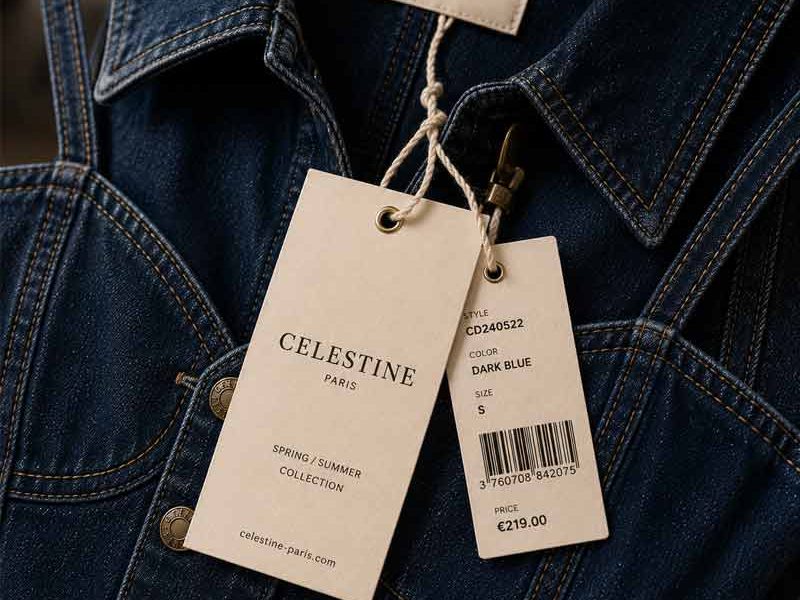
Hangtags may include brand story, product name, size, price, season, barcode, care notes, or campaign information. Paper stock, print, hole position, string, seal, attachment point, and orientation are reviewed. Placement should not damage stretch fabric or interfere with presentation.

Branded Polybag

Polybag size, thickness, print, warning text, adhesive, vent holes, and folding method are selected for the garment and destination. An undersized bag compresses ruching or creates hard folds; an oversized bag increases movement and carton volume. Light garments need strong cleanliness control.

Barcode and SKU

Barcode and SKU labels are generated from approved style-color-size data. Scannability, content, placement, and duplicate risk are checked. Data should match purchase orders, packing lists, carton labels, and warehouse instructions so receiving teams can process stock without manual correction.

Carton Marking

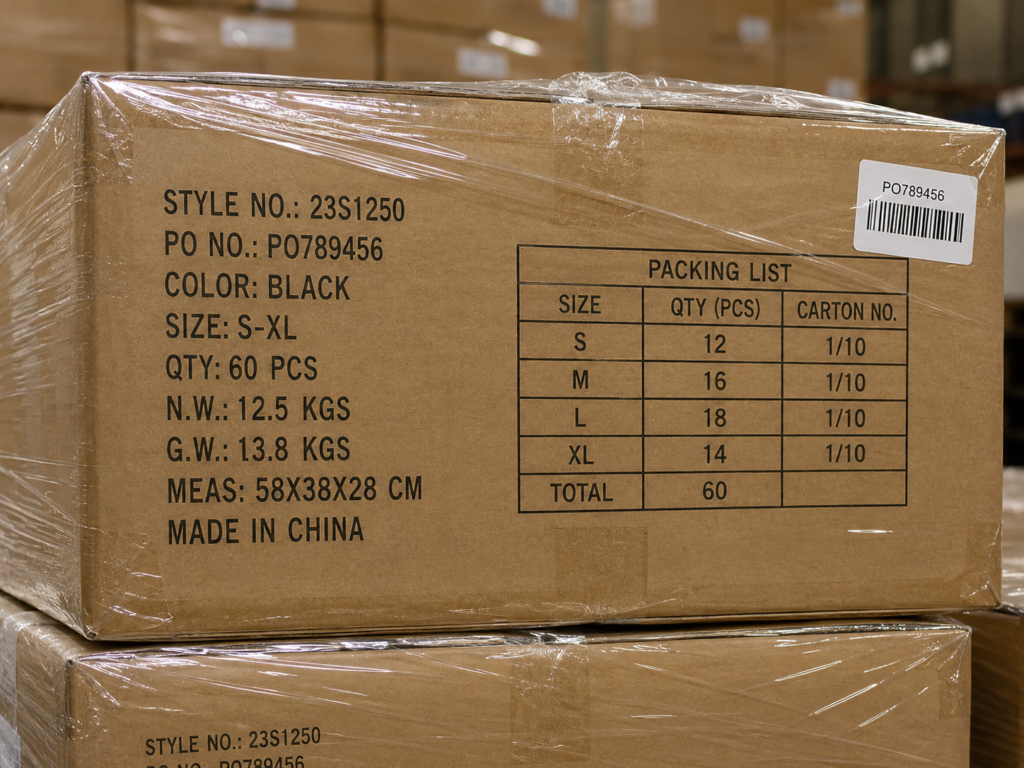
Carton marks can include brand, PO, style, color, size range, carton number, quantity, destination, and warehouse reference. Carton dimensions, gross and net weight, packing quantity, and mark placement are coordinated with logistics and receiving requirements before dispatch.

Warehouse Labels

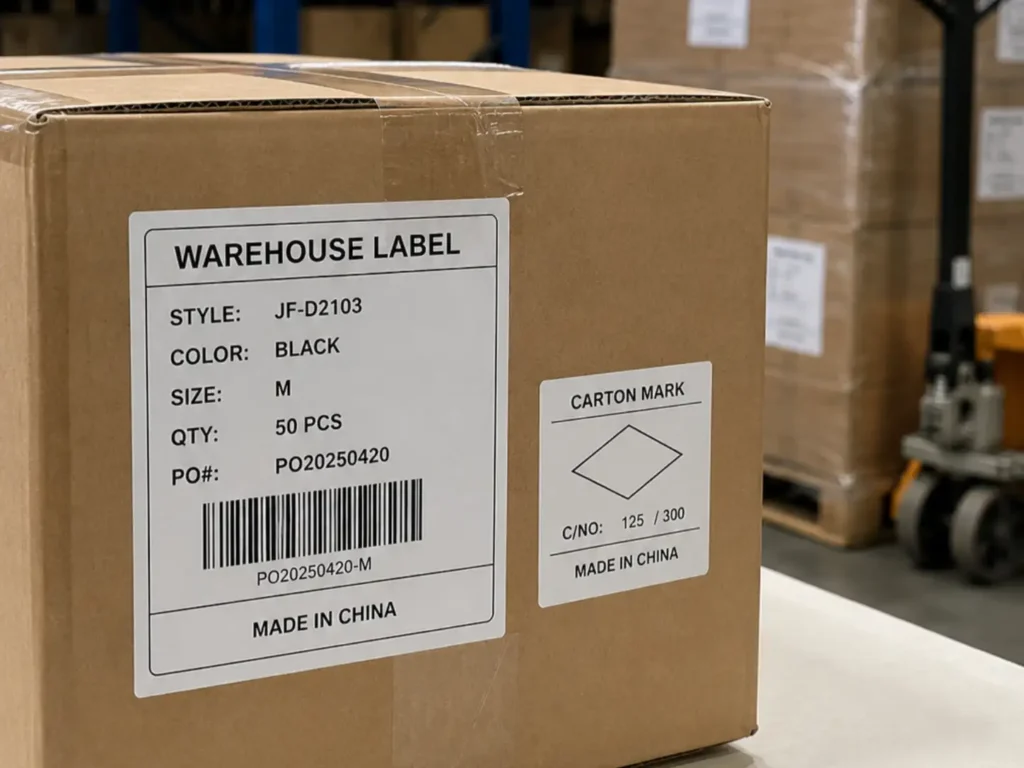
Major ecommerce warehouses and third-party logistics providers may require dedicated routing, pallet, carton, or appointment labels. Requirements are collected before packing. Jinfeng Apparel can coordinate label application, packing lists, carton data, and forwarder pickup instructions by project.

Workmanship Details Behind a Premium Fitted Skirt
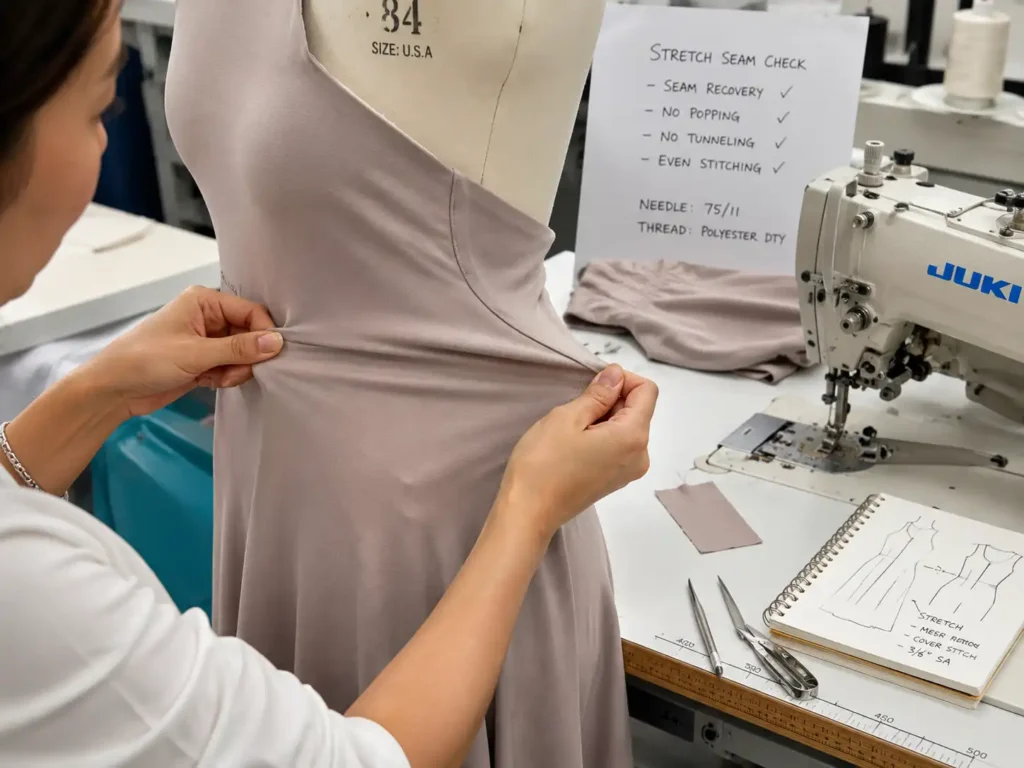
Close-fitting garments make workmanship visible. Seam tension, waist finishing, zipper insertion, slit construction, hem recovery, and pressing all affect the final outline. Clean work must also remain flexible enough for movement and repeated wear.

Stretch Seam Balance

Seams need enough extensibility for dressing and movement without cracking or creating a rigid line. Stitch type, thread, tension, differential feed, seam allowance, and recovery are assessed by fabric. A stable seam should lie smooth, stretch safely, and return without laddering or waviness.

Flat Waist Joining

The join between waistband and skirt body can become bulky or wavy when layer stretch and seam tension differ. Construction is planned to distribute fullness evenly, align side seams, protect V-points, and keep internal elastic flat. Pressing must set the seam without stretching the waist edge.

Clean Zipper Insertion

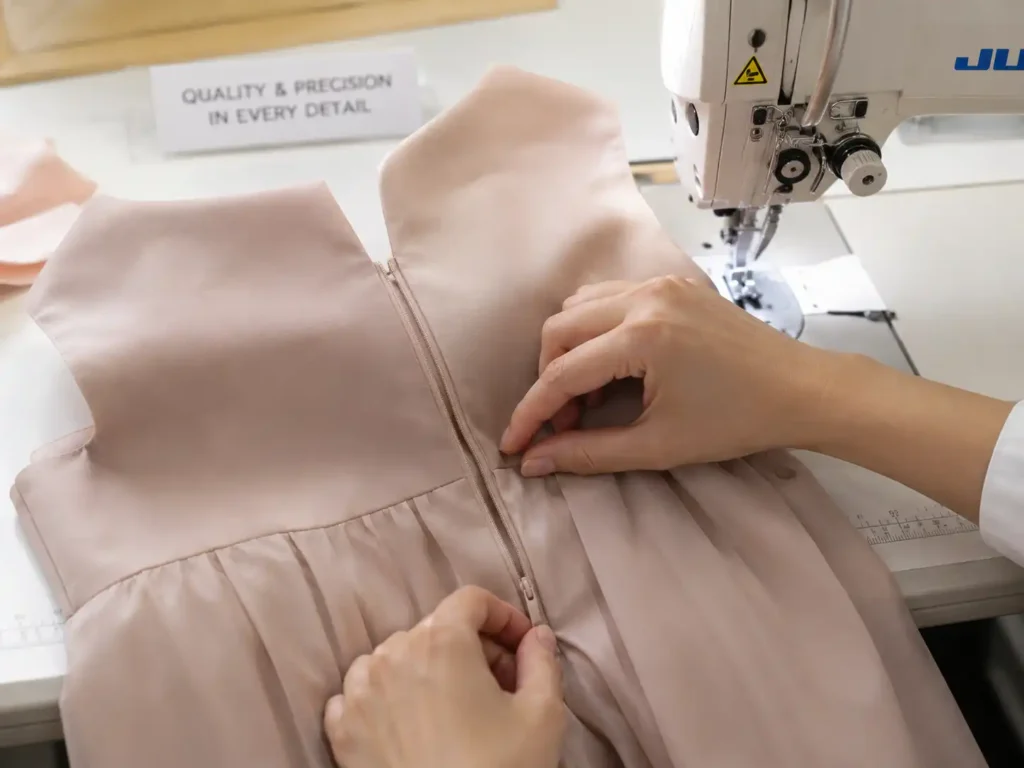
Fitted skirts expose zipper bulging and uneven top edges. The zipper area may need stabilization, accurate seam allowance, matched waist levels, and careful pressing. The slider should move smoothly while the surrounding fabric remains flat under normal body tension.

Reinforced Slit Tops

Slit tops carry repeated stress during walking and sitting. Reinforcement is positioned to protect the seam without creating a visible lump or hard edge. Both sides need equal height, clean corner turning, straight pressing, and a hem transition free from twisting.

Recovering Hem Finish

A hem on stretch fabric must return after movement and handling. Coverstitch, twin-needle, blind hem, narrow turn, or clean lining connection may be selected by fabric and design. The finish is checked for tunneling, flare, stiffness, skipped stitches, and rolling.

Controlled Pressing

Heat-sensitive synthetics, rib textures, mesh, satin, and elastane blends need different pressing conditions. Excess pressure can create shine, seam impressions, flattened texture, or stretched edges. Finishing aims for a clean silhouette while preserving recovery, ruching, and intended surface character.

Capacity Planning for Launches and Repeat Orders

Capacity has value only when linked to material readiness, sample approval, collection priority, QC windows, packing, and shipment. Jinfeng Apparel combines owned factories, long-term production partners, merchandising follow-up, and archived records to support ongoing programs.

Multi-Style Scheduling

Collections containing 10-30 styles are grouped by fabric, pattern family, sewing complexity, trim readiness, and launch priority. Hero SKUs can enter earlier sample and PP paths while related styles progress in parallel. Scheduling prevents one late special trim from blocking every garment in the collection.

Reorder File Control

Approved patterns, size charts, fabric references, trim details, construction notes, labels, packaging, and carton instructions are retained for repeat production. Before a reorder is confirmed, current fabric source, shade, cost, quantity, packaging stock, and delivery window are reviewed again to protect continuity.

Multi-Batch Delivery

Large programs can be planned in batches when launch priorities, warehouse capacity, or transport strategy require staged release. Priority colors, hero styles, or key sizes may move first, while remaining quantities follow under the same approved standards. SKU and carton separation are planned before packing.

MOQ and Quotation Logic for Bodycon Skirts

Jinfeng Apparel starts from 200 pcs per style/color. Final feasibility and price depend on fabric availability, color, lining, elastic, zipper, decorative trims, pattern complexity, size range, private-label materials, quality requirements, and production timing.

Style and Color Unit

MOQ is calculated by style and color, not by total pieces across unrelated garments. One style in one color at 200 pieces forms a standard starting unit. A two-color version normally requires 200 pieces per color. Material suppliers may impose separate requirements for custom dyeing, printing, hardware, or packaging.

Quotation Inputs

Accurate review needs a reference image or tech pack, fabric direction, quantity per style/color, color plan, size range and ratio, trim requirements, label and packaging files, quality standard, target delivery, and trade terms. Limited information can support an initial range review, not a final locked price.

Cost Structure

Pricing reflects shell fabric, lining, elastic, zipper, trims, pattern work, sampling, cutting, sewing time, pressing, QC, packing, wastage, testing, logistics requirements, and order quantity. Cost options are evaluated without weakening the brand-level appearance or approved performance of the garment.

Anonymized DTC Bodycon Collection Case

A U.S. digital womenswear label planned an 18-style coordinated drop built around fitted skirts, matching tops, and bodysuits. The program required a consistent contour language, campaign samples, four color families, five sizes, branded packing, and phased warehouse delivery without exposing the brand name or unreleased designs.

Program Brief

The full order covered 46,800 pieces across 18 styles. Eight skirt styles accounted for 21,600 pieces, including high-waist mini, ruched mini,

V-waist, side-slit midi, low-rise fitted, and mesh-overlay silhouettes. Ten coordinating tops and bodysuits accounted for 25,200 pieces. Per-style quantities ranged from 1,800 to 3,600 pieces across black, chocolate, ivory, and seasonal accent colors.

Development Control

Sampling was organized in three priority groups. Four campaign-led styles moved first, followed by core skirts and then supporting set pieces. Two fitted fabrics and one stretch mesh were shortlisted. The approved direction used a compact jersey for core styles, a softer jersey for ruching, and a matched mesh-lining combination for transparent looks. Two main sample rounds were completed before PP approval, with additional color and label confirmations handled through recorded approvals.

Fit and Quality Corrections

Early fittings identified waistband roll on one high-rise style, back-hem lift on two minis, uneven ruching density, and excess opacity difference between ivory shell and lining.
Corrections included a contoured waistband, revised back length, adjusted negative ease, fixed gather ratios, and a closer lining shade. Bulk QC focused on nine measurement points, V-waist symmetry, slit height, side-seam position, zipper flatness, ruching distribution, color separation, barcode accuracy, and pack ratio.

Production and Delivery Result

Bulk production was released after PP and packing approvals. The program ran through a 38-day manufacturing window after approved materials were available, followed by final inspection and staged shipment preparation. Priority black and chocolate units were packed first for an early warehouse intake, while remaining color quantities followed under the same SKU and carton plan. Pattern, fabric, trim, label, and packaging records were retained for later replenishment review.

Commercial Value

The collection avoided building 18 unrelated products. Shared fit blocks, grouped materials, coordinated color approvals, and aligned packing data reduced development duplication while preserving visible design differences.

The structure also created clear reorder routes: core skirts could be replenished independently, and matching tops could follow sales by size and color without rebuilding the complete program.

Factory Evidence, Compliance Support, and Design Protection

Large fashion programs need traceable process evidence, responsive documentation, and secure handling of unreleased designs. Claims remain tied to verified records and the factory assigned to each project rather than broad promises applied to every order.

Development Records

Pattern notes, measurement charts, fabric approvals, trim cards, revision comments, PP records, and packing instructions create a traceable path from concept to bulk. Records help teams understand why a decision was made and what must remain unchanged during repeat production.

Production Visibility

Project updates can cover material arrival, cutting, sewing, in-line inspection, finishing, packing, and shipment preparation. Image or video evidence should come from authorized project materials. Generic workshop visuals are never presented as verified factory evidence without permission.

Quality Documentation

Inspection reports, measurement records, packing checks, and third-party inspection coordination can be arranged according to the agreed standard. AQL or brand-specific methods are applied by project, with checkpoints linked to product risk and purchase requirements.

Audit Coordination

Factory profile, production process, QC process, packing process, and available audit-related documents can be reviewed during supplier qualification. Any BSCI, Sedex, ISO, or other record is confirmed against the assigned factory, current validity, and project scope before use.

Material Compliance

OEKO-TEX, GOTS, GRS, recycled, organic, or other certified material requests depend on fabric supplier, product type, color, batch, certificate scope, validity, MOQ, and lead time. Available documents are reviewed for the selected material rather than assumed for every fabric.

NDA Protection

Jinfeng Apparel supports NDA-based cooperation and protects tech packs, original samples, patterns, unpublished designs, labels, packaging files, prices, quantities, and brand information. Anonymous cases are used unless written authorization allows a named reference or image release.

Frequently Asked Questions About Bodycon Skirt Manufacturing

The standard starting MOQ is 200 pcs per style/color. Special fabrics, custom-dyed colors, printing, hardware, elastic, labels, or packaging may carry separate supplier requirements. Quantity is reviewed by style and color rather than by combining several unrelated styles into one total.
Yes. Development can begin from a reference image, tech pack, sketch, line sheet, original garment, fabric swatch, or trim card. Clear quantities, target market, size range, fabric direction, label needs, and launch timing help the team assess structure, risk, cost, and sampling more accurately.
Poly-spandex jersey, nylon-spandex jersey, rib knit, ponte, cotton-spandex, viscose-spandex, stretch satin, and stretch mesh are common directions. Suitability depends on weight, stretch, recovery, opacity, hand feel, season, silhouette, lining, and target price rather than fiber name alone.
Control can include a contoured waistband, compatible layer stretch, suitable elastic, balanced seam tension, correct finished height, reduced seam bulk, and movement testing. A tighter elastic is not automatically better because excess tension can reduce comfort and increase skirt ride-up.
Ride-up is reviewed through hip negative ease, fabric friction, recovery, hem width, skirt length, lining, waistband grip, front-back balance, and movement. Corrections can involve the pattern, fabric, hem, lining, or waistband. Walking, sitting, stairs, and recovery checks support approval.
Yes. Matching sets can share fabric, color, trim language, and campaign direction while keeping separate size ratios, barcodes, packing, and reorder plans. Development can include crop tops, corset tops, bodysuits, bralettes, or other fitted upper-body pieces within the approved product scope.
The base size is approved first. Grading then covers waist, high hip, full hip, front and back length, side seam, hem width, slit, and waistband height according to the target market and fabric behavior. A size set may be requested for fit-sensitive or wide-range programs.
Yes. Support can cover woven labels, size labels, care labels, hangtags, barcode and SKU stickers, branded polybags, thank-you cards, cartons, carton marks, and warehouse labels. Artwork, legal wording, data, placement, and packing instructions require brand approval before bulk use.
Yes. Approved patterns, measurements, fabric references, trims, sewing instructions, labels, packing, and carton records are retained. Reorders still require current review of fabric batch, color, cost, quantity, packaging stock, QC, and delivery timing before confirmation.
Yes. NDA-based cooperation is supported for tech packs, samples, patterns, unpublished styles, labels, packaging, pricing, quantities, and brand information. Client names, logos, unreleased products, and commercial data are not disclosed without authorization.

Start Your Bodycon Skirt Development

Send Kelly a reference image, tech pack, line sheet, or original-sample brief for an initial project review. Include enough information to evaluate fabric direction, fit complexity, MOQ, sample requirements, bulk costing, production timing, and retail-ready packing. Clear files help the development team identify risks early and return a more useful plan for sampling and quotation. Jinfeng Apparel can support one focused skirt program or a coordinated 10-30 style collection with pattern development, material sourcing, sample revision, PP approval, bulk production, QC, private-label packing, and export coordination.

  • Reference image, tech pack, sketch, line sheet, or original-sample photos
  • Quantity per style/color and planned size ratio
  • Fabric composition, weight, stretch, hand-feel, or swatch preference
  • Color plan, launch date, campaign-sample date, and target delivery window
  • Main label, care label, hangtag, barcode, polybag, carton, and warehouse requirements
  • Quality manual, testing request, inspection standard, or NDA requirement

Tell Us About Your Dress Project

Share your product details, estimated quantity and development requirements. Our team will review your project and provide practical OEM/ODM production feedback.

Premium Women’s Apparel Production for Fashion Brands

From dress sample development to bulk production, JF Apparel supports fashion brands with confidential OEM/ODM manufacturing, reliable quality control and scalable production support.

START YOUR DRESS PROJECT

Ready to Develop Your Next Dress Collection?

Share your design concept, product requirements or sourcing plans with our team. We’ll review your project and provide practical feedback on development, materials, MOQ and production.

7-10 Days

Sample Development

200 PCS

Starting MOQ

Fast Response

Professional Follow-Up