 Skip to content
What Is the Best Zipper for Bodycon Dresses? Invisible, Coil and Metal Zippers Compared

Your trusted Women’s Apparel Manufacturer from China
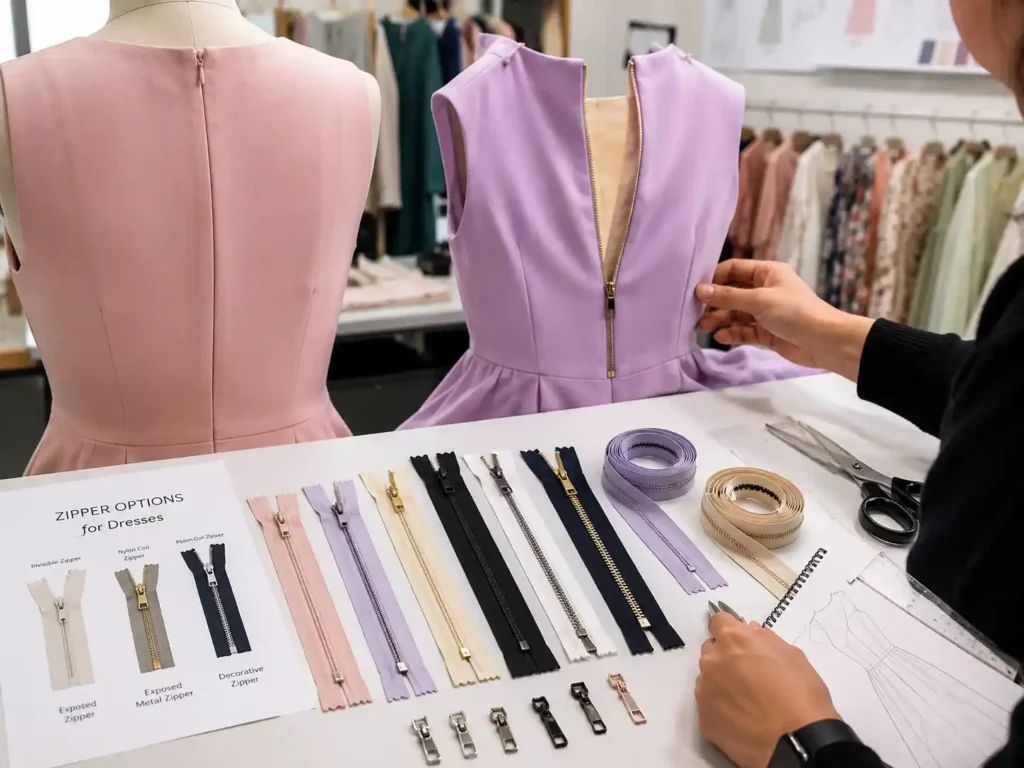
A zipper looks like a small part of a bodycon dress, but on a fitted silhouette it behaves more like a structural line than a simple fastening. The wrong zipper can create a ridge across the lower back, make a side seam rotate, add unnecessary stiffness to stretch satin, or force the wearer to pull too hard when dressing. The right choice starts with the fabric and pattern, then works outward to appearance, comfort, production consistency and long-term use.
For most bodycon dresses that genuinely need a closure, a lightweight invisible coil zipper is the strongest starting point when the goal is a smooth, uninterrupted back or side seam. It is not universal. Fabric stretch and recovery, garment tension, lining, zipper placement, usable opening length and the intended visual effect can make a standard coil, decorative metal-look zipper, metal zipper or zipper-free pull-on construction more suitable.
The useful question is therefore not simply, “Which zipper is strongest?” It is, “Which zipper lets this exact dress keep its intended fit and appearance while still being easy to wear and repeatable in production?” That difference becomes obvious during fitting. A zipper may lie perfectly flat on a cutting table and then buckle as soon as the dress follows a real waist and hip curve. The sections below explain how to make that decision before the issue reaches bulk production.
Which Zipper Is Best for Bodycon Dresses?
For most fitted bodycon dresses that require a closure, an invisible coil zipper is the best default when the design calls for a clean back or side seam. A standard coil zipper is useful when some visibility is acceptable or the construction needs a more conventional closure. Metal and metallic-look zippers suit designs where hardware is intentionally visible, while high-stretch pull-on dresses may not need a zipper at all.
Is an Invisible Zipper the Best Default Choice?
An invisible zipper is usually the first closure worth sampling when the design needs a smooth bodycon silhouette. Its chain sits behind the seam, so the outside of the dress can read as one continuous line rather than a garment interrupted by visible hardware. That is especially useful on fitted satin, cocktail, occasion and clean mini-dress styles. However, “invisible zipper” is not a complete specification. Fine concealed zippers come in different chain sizes and tape constructions, and the correct option must still match fabric weight and expected seam load.
The most important test is how the zipper behaves under real body tension. A dress can look flawless on a hanger yet develop a raised center-back line when the waist or hip is too tight. In that situation, choosing a heavier zipper often treats the symptom rather than the cause. The pattern, negative ease, seam shape and fabric recovery should be reviewed together. In commercial development, the zipper should be approved only after the actual shell, lining, waist seams and fit have been tested as one system.
When Is a Regular Coil Zipper Better?
A standard coil zipper can be a better choice when the closure does not need to disappear completely, when the dress has a sportier or more casual character, or when the construction benefits from a conventional zipper installation. Coil zippers remain comparatively flexible and can follow body curvature without the visual and physical weight associated with traditional metal teeth. They can work well in ponte, heavier double knits, utility-inspired fitted dresses and some front-opening styles where a little visible chain or tape is acceptable.
The trade-off is appearance. A standard coil zipper usually shows more than a concealed zipper, so it should look intentional rather than like a last-minute substitute. During development, sew the candidate zipper into the actual fabric instead of comparing loose zipper samples on a trim card. Check how it crosses waist seams, how the tape sits beside the shell, whether the slider moves smoothly through layered areas, and whether the closure remains flat after sitting and walking. The visually quieter zipper is not always the one that performs best on the body.
When Does a Metal Zipper Make Sense?
A metal zipper makes sense when the closure is part of the fashion language of the dress. Fitted denim, utility silhouettes, corset-inspired minis, moto-influenced styles and certain club dresses can benefit from visible teeth, polished hardware and a strong vertical line. In those cases the zipper is closer to a design trim than a hidden fastening, so element finish, puller shape, tape shade and compatibility with other hardware matter almost as much as basic operation.
Metal is not automatically more suitable because it feels strong in the hand. The chain adds stiffness and weight, which can be excessive on soft jersey, fine mesh or lightweight stretch satin. A long front metal zipper can also change how a dress drapes and bends when the wearer sits. When only the appearance of metal is desired, metallic-look coil or molded options may provide a lighter alternative. The correct choice is the smallest, lightest specification that still delivers the intended visual effect and reliable use in the finished garment.
Do All Bodycon Dresses Need a Zipper?
No. A bodycon silhouette describes close fit, not a required closure type. Many rib knits, jerseys and other high-stretch fabrics work better as pull-on garments because removing the zipper reduces seam bulk, stiffness and one potential failure point. The real question is whether the neckline, waist and hip area can expand enough for comfortable dressing and then recover to the intended finished measurements without permanent distortion. Stretch alone does not answer that question; recovery is equally important.
A useful fitting test is simple: let the wearer put the sample on and take it off normally, without opening seams or pulling the neckline in an unrealistic way. If dressing requires aggressive stretching, the pull-on construction may damage the fabric over time. If the dress uses lining, cups, boning, mesh overlays or a narrow woven waist panel, the shell fabric’s stretch may no longer represent the behavior of the complete garment. In those cases a zipper may still be necessary even when the outer fabric contains elastane.
Closure Option | Typical Bodycon Use | Common Size Direction | Visual Effect | Main Development Check |
Invisible coil | Stretch satin, fitted woven, occasion and cocktail styles | Fine, often #3-class or supplier equivalent | Nearly hidden | Seam ripple, waist/hip load, lining balance |
Standard coil | Ponte, casual fitted styles, sporty constructions | Fine to medium | Low to moderate visibility | Tape appearance, slider travel, body curvature |
Metal zipper | Denim, utility, corset-inspired statement styles | Fine to medium depending on fabric | Highly visible | Weight, stiffness, skin contact, hardware balance |
Metallic-look coil or molded | Party and clubwear | Supplier-specific | Decorative | Finish durability, care process, visual consistency |
No zipper | Rib knit, jersey and other pull-on stretch styles | Not applicable | Cleanest surface | Dressing stretch, neckline recovery, post-wear shape |
How Does Fabric Affect Zipper Choice?
Fabric affects zipper choice because the shell controls stretch, recovery, seam stability, surface visibility and how much tension reaches the closure. Jersey, ponte, stretch satin, mesh and lace can all appear in fitted dresses, yet they react very differently when a stable zipper tape is inserted. The most reliable decision comes from testing the zipper in the actual shell-and-lining combination rather than choosing only by dress category or fiber content.
Which Zipper Works With Jersey and Ponte?
Jersey and ponte are often grouped together because both can be used in stretch dresses, but their zipper behavior can be very different. Soft jersey may extend easily during handling, so even a small amount of pulling during zipper insertion can make the fabric edge temporarily longer than the zipper tape. Once the panel relaxes, the extra length has nowhere to go and can appear as rippling. If the neckline and body opening already provide enough usable stretch, a pull-on construction may be cleaner than adding a closure.
Ponte is generally more stable and substantial, which often makes it a better base for an invisible or standard coil zipper. Even so, a very tight bodycon pattern can overload the zipper area if the garment relies on the closure seam to compensate for insufficient ease. Before approving the zipper, compare waist and hip tension, side-seam position, stretch direction and recovery after the sample is removed. The zipper should support the fit, not become the rigid line around which the rest of the dress is forced to distort.
What Works With Stretch Satin?
Stretch satin combines bodycon performance with a smooth reflective surface, so zipper defects become easier to see. A fine invisible zipper is often the first option for a clean back or side seam, but the fabric must be handled carefully during sewing. If one side is stretched during installation, the finished seam may become wavy when the satin relaxes. If seam allowances are bulky or the lining is attached under tension, the center back can show a visible ridge even when the zipper itself operates correctly.
Color matching also deserves more attention on satin because sheen changes how neighboring shades are perceived. A zipper tape that looks close under flat light can become obvious when the dress catches directional light. During sample approval, review the closure flat on the table, hanging naturally, worn on the body, viewed from the side and after sitting. A useful development decision is based on all of these conditions, because a zipper that photographs well from the back may still feel stiff or pull noticeably during movement.
How Should Mesh and Lined Fabrics Be Handled?
Mesh adds two complications at once: the fabric may be highly extensible, and the zipper tape can remain visible through the outer layer even when the chain is technically concealed. Tape color, lining coverage and seam reinforcement therefore become part of the design. Fine fashion mesh should not be expected to carry repeated opening stress by itself. Depending on the style, the zipper seam may need support from lining, power mesh, a narrow stabilizing tape or another controlled backing that does not create excessive stiffness.
Layered stretch must also be balanced. If the outer mesh stretches much more than the lining, one layer can become longer during sewing and pull against the zipper after assembly. The same issue occurs with lace over stretch lining or double-layer club dresses. Developers should check shell and lining separately, then test them as one garment. Transparency, hole risk, lining tension and stretch direction all affect the closure, so a mesh bodycon dress should never inherit the same zipper method simply because it shares a silhouette with a satin or ponte style.
Does Fabric Stretch Change Zipper Requirements?
Yes. A conventional zipper is relatively stable compared with a stretch body panel, so the greater the difference between those two behaviors, the more carefully the seam must be engineered. A simple workshop screening method is to mark a fixed fabric length, stretch it under a consistent manual test condition, and compare the new length with the original. For example, a 20 cm section that reaches 24 cm shows 20 percent extension using the formula: extension equals the increase in length divided by original length, multiplied by 100.
That number is only a screening tool, not a universal pass-or-fail standard, because test force, knit structure and end use vary. Recovery matters just as much. A fabric that reaches 25 percent extension but does not return close to its original length may create more bodycon problems than a firmer fabric with lower extension and better recovery. The zipper choice should therefore be reviewed alongside the pattern’s negative ease, the dressing route and the behavior of the complete shell-and-lining assembly.
Sample-Screening Observation | What It Often Means | Practical Zipper Question |
Under about 10% extension | Relatively stable shell | Does the dress need a longer opening for comfortable dressing? |
Roughly 10-25% extension | Moderate stretch | Can a fine invisible or standard coil remain flat under fitted tension? |
Above about 25% extension | High-stretch construction | Is a zipper necessary, or would pull-on construction be cleaner? |
Strong extension with weak recovery | Higher fit and bagging risk | Will fabric bubble beside a stable zipper after wear? |
Shell and lining stretch differ greatly | Layer imbalance risk | Will the lining pull, shorten or twist the zipper seam? |
How Do Invisible, Coil, and Metal Zippers Compare?
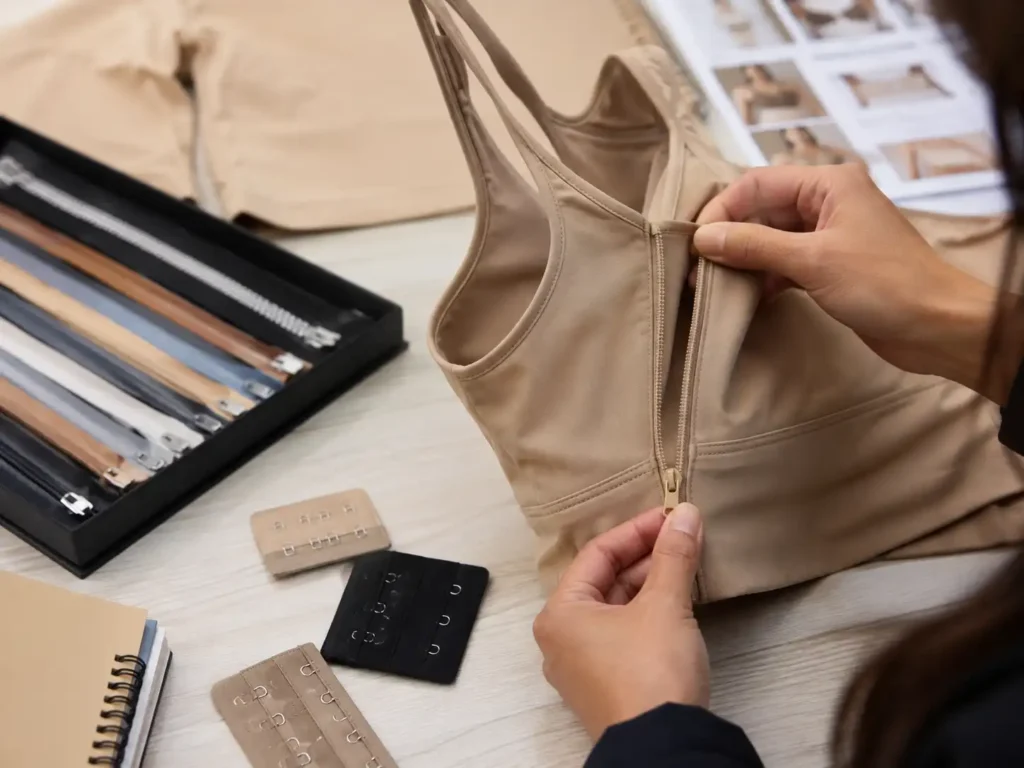
Invisible, standard coil and metal zippers are not simply different strength levels; they solve different garment problems. Invisible zippers prioritize a clean surface, standard coil zippers balance flexibility and function, and metal zippers create visible structure and hardware character. For a bodycon dress, the best comparison looks beyond the loose zipper and asks how each option behaves across body curves, waist seams, lining, repeated opening and the intended photography-ready silhouette.
What Is an Invisible Zipper Best For?
An invisible zipper is best when the fastening should visually disappear into the garment. It is a natural choice for fitted occasion dresses, cocktail styles, satin minis and many clean-lined bodycon designs because the chain sits behind the seam rather than becoming part of the surface. That visual advantage is strongest at center back or along a quiet side seam where the closure can follow an existing construction line without competing with the dress design.
The disadvantage is that concealed zippers expose weak preparation quickly. If the left and right seam edges are different lengths, waist seams will not meet. If the fabric is stretched during sewing, the zipper can ripple. If the pattern carries too much negative ease, the center-back line may stand away from the lower back. A professional sample review therefore checks chain visibility, symmetry, waist-seam alignment, lining clearance, top closure, slider travel and on-body flatness. The zipper is only successful when it remains both discreet and functional after the dress is fitted.
How Does a Coil Zipper Perform?
A standard coil zipper offers a useful middle ground between a concealed fashion closure and a rigid decorative zipper. Because the element is formed as a flexible coil, the closure can follow body curves more naturally than many traditional metal zippers. That makes it useful on ponte, heavier knits, casual fitted dresses and some front or back openings where a little visible chain is acceptable. It can also handle layered areas more comfortably when the sewing method is correctly controlled.
The main question is whether visibility suits the garment. A standard coil zipper may look too technical on a minimalist satin occasion dress but completely natural on a black sporty mini. Developers should decide whether the design goal is invisible, visually quiet or intentionally exposed, because those are different outcomes. The same zipper can be excellent in one collection and wrong in another. Evaluate the closure after pressing, after repeated opening, across the waist seam and while the wearer sits, because flexibility on a loose sample does not guarantee good behavior once the zipper is installed.
Is a Metal Zipper Too Heavy?
For many lightweight bodycon dresses, a traditional metal zipper can be heavier and stiffer than necessary. For structured denim, corset-inspired designs and intentional hardware looks, the same characteristics may be exactly what the garment needs. Size and length matter. A fine short metal closure behaves very differently from a long medium-size zipper running from neckline to hip, so the specification should never stop at the words “metal zipper.” The fabric must be able to support the hardware visually and physically.
Weight is only one concern. Metal teeth can feel hard against the body if the seam or facing does not protect the skin, and the chain can create a strong vertical line that makes twisting more obvious. Hardware finish should also coordinate with rings, strap adjusters, hooks and decorative trims elsewhere on the dress. When only the appearance of metal is needed, lighter metallic-look alternatives may reduce stiffness. The objective is not to select the strongest-looking zipper, but the lightest reliable option that still supports the design concept.
Which Zipper Gives the Cleanest Silhouette?
When the closure should disappear, a well-installed invisible zipper normally gives the cleanest silhouette. Yet zipper type alone cannot create a smooth center back. The human lower back curves inward while the seat projects outward, so the pattern must follow that shape. If the back seam is too straight, the zipper can bridge across the hollow and create a ridge. If the hip is too tight, lateral tension can pull the zipper outward even though the installation itself is accurate.
A clean result therefore depends on several conditions working together: correct back shaping, equal seam lengths, stable seam edges, suitable zipper length, reduced bulk at waist joins, balanced lining and appropriate garment ease. In production, zipper flatness and zipper operation should be inspected as separate points. A zipper can move smoothly and still look poor, or appear perfectly flat on a hanger and jam when the dress is worn. Both appearance and function must be approved before bulk production is released.
Where Should the Zipper Be Placed?
Center back is usually the most practical starting point for a concealed bodycon zipper because it provides a long opening and preserves symmetry. A side zipper can protect a clean or decorative back, while a front zipper works best when the closure is intentionally visible. Placement should follow pattern balance, dressing access and body shaping because each location changes where the garment becomes less stretchable.
Is a Back Zipper Best?
A center-back zipper is often the most reliable starting point for structured and semi-structured bodycon dresses because it gives the pattern team a long, direct opening while leaving the side seams available for fit correction. On a symmetrical dress, it also follows a natural visual line. When an invisible zipper is inserted cleanly, the center back can look almost uninterrupted, which is useful for occasionwear, satin dresses and fitted styles where surface simplicity is part of the premium appearance.
The risk appears at the lower back and hip. The body is not flat, so the center-back seam must curve correctly from waist to seat. A zipper that is perfectly straight on a table can stand away from the body if the pattern is too straight or if the hip carries too much tension. During fitting, inspect the upper back, waist, high hip, fullest seat and zipper end, then take a three-quarter side view. If the zipper is flat above the waist and ridges below it, pattern shape may be the real issue.
When Is a Side Zipper Better?
A side zipper is useful when the center back contains a design feature that should remain uninterrupted. Back cut-outs, low backs, lace panels, ruching, statement seams, one-shoulder shapes and certain strapless constructions can all benefit from moving the closure to the side. This can create a cleaner rear view, but it also moves the stable zipper line into an area that travels over the bust, waist and hip as the wearer moves.
That side location can expose balance problems quickly. If the zipper ends at a high-stress hip point, the stable tape may create a visible transition where the rest of the fabric continues to stretch. If the side seam also carries shaping, poor placement can make the seam rotate forward or backward. The sample should therefore be checked for side-seam verticality, underarm comfort, zipper reach and dressing access. Side placement is not automatically more refined than center back; it works best when the whole pattern has been planned around it.
Can a Front Zipper Work?
A front zipper can work very well when the closure is intentionally part of the design. Fitted denim dresses, utility styles, corset-inspired pieces and clubwear often use the zipper as a strong vertical detail, and front access can make dressing easier because the wearer can see and reach the slider directly. The trade-off is visibility: a center-front line behaves like a ruler, so even a small amount of garment twisting becomes easy to notice.
Bust shaping adds another complication. If the zipper crosses a strongly curved bust or under-bust area, the chain may bow or the surrounding fabric may pull away from the body. The pattern must therefore balance the front carefully, especially when boning, cups or waist reduction are involved. On exposed designs, hardware becomes part of the trim package, so puller shape, element finish and tape color should coordinate with strap adjusters, hooks, chains or rings elsewhere on the dress. Good function alone is not enough when the zipper is one of the first details customers see.
How Does Placement Affect Body Shaping?
Every zipper creates a relatively stable line inside a garment that may otherwise stretch around a three-dimensional body. Moving that line changes how tension is distributed. At center back, waist and hip tension become especially visible. At the side seam, poor balance may rotate the zipper toward the front or back. At center front, bust and abdominal shaping become more obvious. None of these positions is inherently wrong; each simply shifts the area where pattern accuracy matters most.
This is why zipper placement belongs in pattern development rather than final trim selection. During the fit review, check more than circumference measurements. Side seams should stay vertical, the waistline should remain level, the center back should stay centered, the hem should not rotate, and the zipper should not twist after sitting or walking. A closure that behaves correctly only while the wearer stands still is not ready for production. Placement is successful when the stable zipper line supports the body shape instead of fighting it.
How Should Zipper Size and Length Be Chosen?
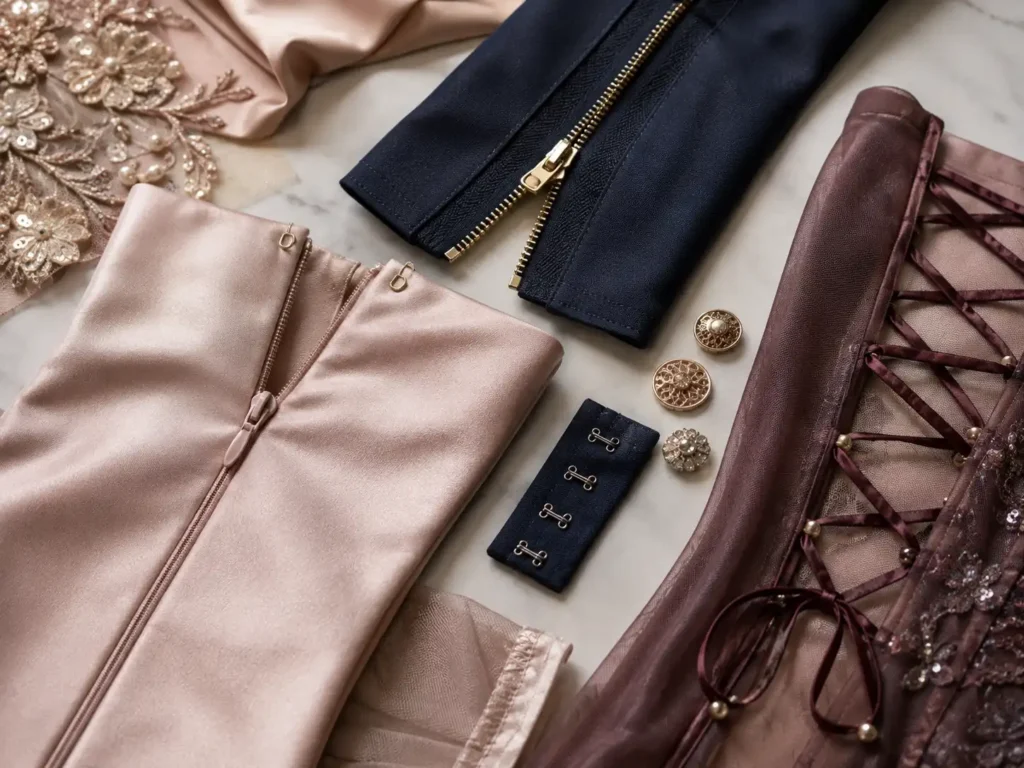
Zipper size and length should come from the actual pattern and dressing route rather than from dress length alone. The closure must create enough usable opening for the wearer to pass the bust, waist or hips without excessive pulling while remaining visually appropriate. The tech pack should record zipper type, size, length, placement, tape color, slider and construction so bulk production does not depend on operator judgment.
What Zipper Length Does a Bodycon Dress Need?
The correct zipper length is the shortest length that still creates a comfortable dressing opening. A mini dress does not automatically need a short zipper, and a midi dress does not automatically need a long one. The determining factor is usually the tightest area the wearer must pass through, such as the bust, waist or hip, combined with how much the shell and lining can safely stretch. The fit sample is the most reliable place to confirm this requirement.
During fitting, watch the dressing process instead of checking only finished garment measurements. If the wearer must pull aggressively even when the zipper is fully open, the opening may be too short or the closure strategy may be wrong. An unnecessarily long zipper is not automatically safer; every extra centimeter adds stable tape to a fitted garment and can increase stiffness. Once approved, finished zipper length and usable opening should be recorded in the BOM or trim sheet so repeat production does not rely on a machinist choosing a length by habit.
Which Zipper Size Should Be Used?
For many lightweight and medium-weight dresses, a fine zipper in the #3-class range or the supplier’s equivalent is a common starting point, particularly for concealed closures. Heavier fabrics or intentionally decorative designs may require a larger system, but size terminology differs among zipper families, so the actual supplier specification should be confirmed. The mistake is assuming that a larger zipper automatically means higher quality. Larger elements increase bulk, stiffness and visual presence, which can be undesirable on fitted fashion garments.
A practical selection method considers four variables together: fabric weight, garment tension, visual requirement and zipper placement. A light stretch-satin mini with a concealed back closure may need the smallest practical system. A fitted denim dress with an exposed front zipper can support a larger decorative option. A corset-bodycon construction should also be reviewed alongside boning, lining and waist reduction because those features change the load carried around the closure. The correct size is the one that passes functional testing without overpowering the garment.
Should Zipper Color Match the Fabric?
For a concealed zipper, the tape should normally match the shell closely enough that any small exposed area near the neckline or seam opening does not interrupt the dress. Color matching becomes especially important on light shades, satin, sheer overlays and monochrome occasionwear because small differences can be obvious in photography. Even when the chain itself is hidden, the slider, tape edge and sewing thread may still appear at close range.
Repeat orders add another layer of control because the same commercial color name can look different across dye lots. Good production records therefore link the approved zipper color with the shell, lining, thread and trim references used for that style. For exposed zippers, contrast can be intentional, but the principle is the same: the relationship should be specified rather than left to interpretation. A tech pack might deliberately call for black tape with silver hardware or matching ivory tape with a gold-tone element. Consistency matters more than whether the zipper matches or contrasts.
What Should Be Listed in the Tech Pack?
A useful zipper specification removes decisions from the sewing line. The document should tell sourcing, sampling, production and quality teams exactly what was approved, including the purchased trim and the way it is installed in the garment. That distinction matters because two factories can buy the same zipper and still create very different results if seam allowance, stabilization, lining attachment or waist-seam matching is handled differently.
For repeat programs, zipper information should remain linked to the approved sample, BOM and sewing instruction. Jinfeng Apparel’s documented process records zipper type, length and color as trim information, while zipper construction and seam details are retained in sewing instructions for repeat production. That kind of record is especially useful when the same bodycon style returns months later in a new color, because the team can reproduce the approved closure instead of rebuilding the method from memory.
Tech-Pack Item | Practical Example | What It Controls |
Zipper type | Invisible coil / standard coil / metal | Basic closure construction |
Size | #3-class or supplier equivalent | Bulk, strength and appearance |
Finished length | Example: 40 cm, 45 cm, 50 cm after fitting confirmation | Dressing opening and stiffness |
Placement | Center back / left side / front | Pattern and sewing method |
Opening type | Closed-end unless design requires otherwise | Correct trim purchase |
Tape and element color | Match approved shell or specified contrast | Visual consistency |
Slider / puller | Approved supplier reference | Function and styling |
Top finish | Hook-and-eye where required | Neckline stability |
Seam allowance | Approved pattern value | Flatness and repeatability |
Lining attachment | Defined method | Prevents catching and pulling |
Match points | Waist seam, panel line, ruching point | Left-right alignment |
Approval reference | PP or sealed sample | Bulk comparison standard |
How Do You Prevent Zipper Problems in Bodycon Dresses?
Most zipper problems in bodycon dresses are prevented before the zipper reaches the sewing machine. Fabric relaxation, correct stretch direction, pattern balance, equal seam lengths, suitable stabilization, controlled lining attachment and realistic fit approval all matter. During production, zipper flatness and zipper function should be checked separately because a closure can operate smoothly yet look distorted, or lie flat on a hanger while jamming under real body tension.
Why Does a Zipper Become Wavy?
A wavy zipper usually means the fabric edge and zipper tape were not the same effective length during sewing. Stretch fabrics are particularly sensitive because the panel can be elongated by hand tension, presser-foot pressure or feeding before the relatively stable zipper tape is attached. Imagine a 40 cm zipper being sewn to a fabric edge that is temporarily stretched to 42 cm. When the shell relaxes, those extra 2 cm cannot disappear, so the fabric forms ripples beside the zipper.
Other causes include insufficient fabric relaxation before cutting, unstable bias sections, unequal left and right seam lengths, overly stiff stabilization, incorrect pressing and lining attached under tension. The solution is not always more interfacing. Excessive stabilization can create a rigid strip that looks almost as bad as rippling. Diagnose the source first: compare the seam edges before installation, check whether the fabric was stretched during sewing and examine whether the wave changes when the garment is worn. In fitted dresses, zipper waves often point to a larger tension problem rather than a defective zipper alone.
Why Does the Zipper Area Bulge?
Bulging is different from fine rippling. It often means the zipper seam is more rigid than the body shape or that the pattern does not follow the lower-back curve correctly. The waist curves inward while the seat projects outward, so a center-back seam that is too straight can bridge between those points and create a visible ridge. A heavier zipper can make the effect stronger, but changing the zipper will not correct a pattern that lacks enough shaping.
Localized bulk is another common cause. Shell fabric, lining, seam allowances, ruching and reinforcement may all meet at a waist seam underneath the zipper. The added thickness can push the chain outward or make the slider hesitate. Development teams should separate four possible sources: pattern shape, construction bulk, excessive garment tension and inappropriate zipper stiffness. If the ridge remains even before the zipper is sewn, the pattern needs attention. If it appears only after assembly, seam grading, lining balance or a lighter closure may solve the issue more effectively.
How Do You Prevent Seam Distortion?
Preventing zipper distortion starts with the two garment panels, not with the zipper itself. Both seam edges should come from the correct pattern version, be allowed to relax, measure equally and carry matching reference points at the waist, hip, panel joins or ruching lines. Stretch direction must also be correct. A panel cut slightly off-grain can twist after fitting even when the zipper installation looks accurate on the table.
During sewing, the operator should not pull the shell to force the zipper into place. If stabilization is required, the material and method should be defined in the approved sewing instruction rather than improvised. A practical sequence is to confirm fabric relaxation, pattern version, grain or stretch direction, seam-edge length and matching notches before insertion; then sew without stretching the shell, verify symmetry, attach lining without tension and press according to fabric type. Production QC should inspect seam allowance, symmetry and zipper flatness before the garment reaches final inspection.
How Should Zipper Function Be Tested?
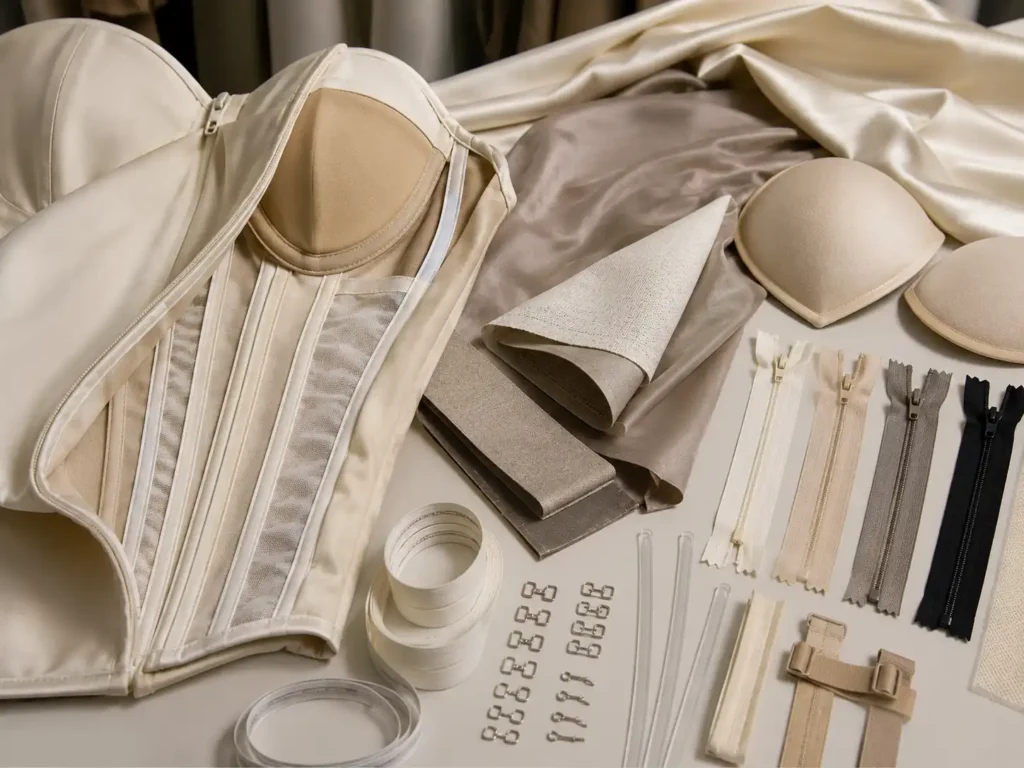
Zipper testing should happen after installation because sewing changes load, alignment and curvature. A zipper that works perfectly in the hand can become difficult when it crosses a thick waist seam or sits under tension on a fitted hip. The finished garment should be opened and closed through its full travel several times, with special attention to waist joins, lining edges, top and bottom stops and any point where the slider hesitates.
The dress should also be tested on a body or suitable form. Close the zipper under realistic fit tension, sit, stand and move, then inspect the seam again. Make sure shell or lining cannot enter the slider path and confirm that any hook-and-eye aligns correctly. In a structured production system, zipper flatness is checked during sewing and zipper operation again during finished-garment inspection. Treating these as separate checkpoints is important because a closure can pass one test and fail the other.
A zipper is successful when it disappears into the garment experience. On a clean bodycon dress, the customer should notice the fit, fabric and silhouette before thinking about the fastening. Reaching that result requires more than selecting an invisible zipper from a trim catalogue. The closure has to match the fabric’s stretch and recovery, follow the pattern’s body shape, create enough dressing access, remain flat through waist and hip tension, and be documented clearly enough to reproduce across sizes, colors and repeat orders.
For brands developing fitted dress collections, the most useful approach is to approve the zipper as part of the complete garment rather than as an isolated component. Sample the actual shell, lining and trim together, watch how the wearer gets into the dress, inspect the closure after movement, and record the final specification once the result is approved. That process may still lead to a fine invisible zipper in many cases, but it also explains when a coil, decorative metal option or zipper-free construction will produce the better dress.
Share This Article :

Jerry Lee
Categories

Latest blogs
Table of Contents
Here, developing your OEM/ODM private label clothing collection is no longer a challenge—it’s an excellent opportunity to bring your creative vision to life.

