 Skip to content
Return Reduction Solutions for Bodycon Dress Collections
Fit-led development for established fashion brands building bodycon collections with tighter control over sizing, stretch behavior and bulk consistency.
Bodycon dresses expose fit and material problems faster than looser silhouettes. Small changes in stretch recovery, negative ease, grading, cutting direction or seam behavior can become complaints such as “too tight,” “rides up,” “see-through” or “doesn’t fit like the sample.” Jinfeng Apparel moves those risks into development, sampling and production control before bulk garments leave the factory.
- 2 sample roomssupporting fit-sensitive development and revisions
- 7+ senior pattern makersworking across structured and stretch womenswear
- 20+ sample machinistssupporting first, fit, revised and PP samples
- 15+ QC inspectorscovering materials, sewing, measurements and finished garments
- Regular dress first samples typically require 10–15 days; complex mesh, corset, strapless or similar structures generally require 15–25 days, subject to materials and construction
- Development structure suited to 10–30-style collection programswith multiple fabrics, colors and size ratios
Development Resources Behind More Consistent Bodycon Fit
2 Sample Rooms
7+ Senior Pattern Makers
20+ Sample Machinists
15+ QC Inspectors
Bodycon Returns Often Start Before Production Begins
Pattern Mismatch
Grading Distortion
Stretch Variation
Opacity Under Tension
Construction Restriction
Bulk Drift
Translate Return Feedback Into Manufacturing Decisions
Return comments become more useful when each complaint leads to a specific development or production review. Not every “wrong size” complaint requires changing the size chart.
| Return Feedback | Likely Product Cause | Manufacturing Review Point |
|---|---|---|
| Feels too tight | Stretch lower than expected, excessive negative ease, grading issue | Fabric extension, recovery, bust-waist-hip pattern |
| Becomes loose after wear | Weak recovery or fabric growth | Recovery, relaxation and pattern reduction |
| Dress keeps riding up | Hip tension, insufficient length balance, fabric friction | Hip shaping, front/back length, hem behavior |
| Side seams twist | Pattern imbalance, grain issue, fabric torque or cutting inconsistency | Pattern balance, grain direction, cutting control |
| Looks see-through | Opacity changes when fabric stretches | Fabric opacity under extension, lining selection |
| Larger size fits differently | Cross-size grading loses proportion | Grade rules, bust coverage, armhole, waist and hip |
| Neckline or cut-out shifts | Tension distributed incorrectly | Pattern shape, edge construction, stretch direction |
| Bulk feels different from sample | Material or production standard drift | PP reference, fabric lot, measurements, construction |
| Feels restrictive when sitting | Static measurements pass but movement balance fails | Wear test, front/back balance, seam extension |
| Shape deteriorates after washing | Shrinkage, growth or poor recovery | Fabric behavior, wash dimensions, measurement review |
Bodycon Styles Create Different Return Risks

Bodycon Mini Dresses
Mini silhouettes combine close hip fit with limited garment length, making hem movement especially sensitive. Excess hip tension may pull the hem upward while sitting or walking, while too little control can weaken the intended fitted shape.
Development should review full-hip tension, seat coverage, front and back length balance and how the hem behaves during movement. A style that looks correct on a stationary form may need adjustment after walking, sitting and turning tests.

Ruched Bodycon Dresses
Ruching changes both visual proportion and local fabric tension. Uneven gathering can pull a side seam forward, shorten one side of the garment or concentrate compression around the waist and hip.
Control requires clear finished garment length, gathering distribution, elastic or drawcord behavior where used, left/right balance and repeatable sewing instructions. Sample approval should define the intended ruched appearance rather than leaving operators to judge fullness individually.

Cut-Out Bodycon Dresses
Cut-outs create fixed openings within a stretch garment, so small changes in tension can alter exposure significantly. Openings may widen, rotate or sit higher or lower across different body proportions.
Pattern review should connect cut-out geometry with bust, waist and hip placement, edge stabilization, stretch direction and movement. Construction cannot make the opening so rigid that surrounding fabric becomes distorted.

Mesh Panel Bodycon Dresses
Mesh panels introduce different stretch, recovery and transparency behavior into one garment. Shell and mesh may respond differently across the body, creating pulling, rippling or distortion along joining seams.
The development team should evaluate panel position, mesh recovery, opacity, seam extension and lining compatibility. Where coverage depends on layered construction, both layers need to work together after stretching rather than being assessed independently.

Strapless Bodycon Dresses
Strapless silhouettes require body tension and upper-body stability without relying on straps. A small error in bust shaping, neckline tension or waist position can become slipping, gaping or restrictive pressure.
Fit development should review bust contour, upper-body circumference, lining, closures, anti-slip components where specified and vertical balance. Support must remain stable without making the garment uncomfortable during normal movement.

Structured Bodycon Dresses
Corset-inspired or partly structured bodycon dresses combine rigid and elastic zones. Boning, cups, lining, zippers and stretch panels can create conflicting forces if the pattern and material system are developed separately.
Approval should consider support, mobility, pressure points, zipper behavior, lining tension and the transition between structured and stretch areas. Greater structure increases the importance of controlled sample revision before bulk approval.
Match Fabric Behavior to the Intended Bodycon Fit
Composition alone does not predict how a fitted dress will wear. Extension, recovery, weight, surface friction, opacity and lining interaction all influence the amount of pattern reduction that can be used safely.
| Fabric Direction | Fit Behavior | Main Return Risk | Development Control |
|---|---|---|---|
| Stretch Jersey | Soft, close fit with variable recovery | Bagging, cling, transparency | Extension, recovery, opacity and shrinkage review |
| Rib Knit | High surface texture and directional stretch | Uneven growth, distortion | Rib direction, recovery, cutting and seam balance |
| Ponte | Firmer support and denser structure | Excess pressure if ease is too low | Weight, stretch, recovery and BWH shaping |
| Stretch Mesh | High extension with transparency | Overexposure, panel distortion | Opacity, recovery, lining and seam compatibility |
| Double-Layer Knit | Added coverage and compression | Excess heat or restricted stretch | Layer interaction, combined stretch and recovery |
| Stretch Lining | Supports coverage and comfort | Shell/lining tension conflict | Matched extension, recovery and attachment method |
| Stretch Satin | Smooth appearance with controlled give | Seam strain, pulling, surface distortion | Grain, stretch direction, seam stability and fit |
Negative Ease Must Follow Fabric and Body Geometry
Bodycon pattern development begins with the relationship between the intended silhouette and the actual behavior of the selected material. A fixed reduction percentage applied across every style, fabric and body zone is not a reliable development method.

Balance Compression Across Bust, Waist and Hip
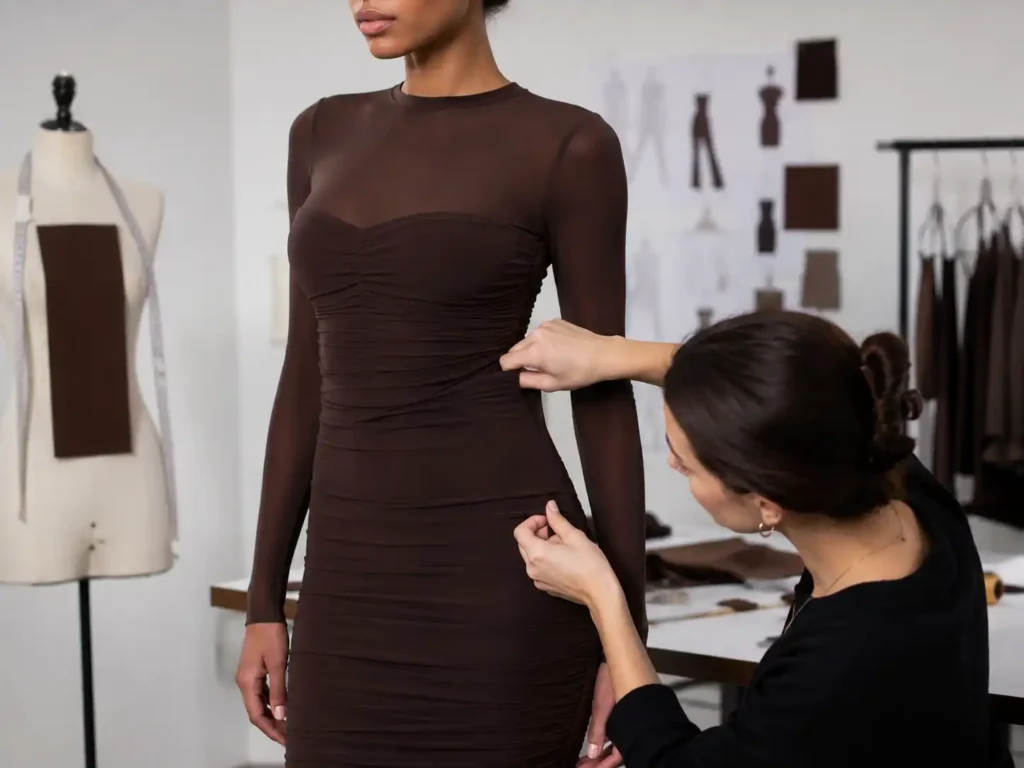
Negative ease describes the difference between body measurement and garment measurement in a fitted stretch garment, but the useful amount depends on more than one number. Bust contour, waist suppression, high-hip transition and full-hip tension can require different treatment within the same pattern.
An aggressive reduction at the hip may create hem ride-up and side-seam distortion. Too little control through the waist can weaken the intended silhouette even when the bust and hip feel correct. A fitted garment therefore needs a balanced relationship between body zones rather than one repeated percentage.
Front and back lengths also matter. Stretching over the bust, seat or abdomen changes the vertical distance available in the garment. A pattern can meet a flat length specification yet appear shorter on the body when horizontal tension consumes vertical length.
Keep Openings Stable After Stretch
Necklines, armholes, straps, slits and cut-outs sit at the edges of a garment where tension becomes highly visible. Poor balance may produce neckline gaping, armhole distortion, strap displacement or slit openings that rise higher than intended.
Pattern work should consider how each opening changes when the garment is worn, not only its flat measurement. Strap position, neckline depth and slit height must remain visually controlled after the bust, waist and hip expand the surrounding fabric.
For asymmetrical, one-shoulder, halter or cut-out designs, local tension can pull the garment away from its intended center line. Early fit review is more effective than trying to correct those issues through sewing tension during bulk production.
Recheck the Pattern When Fabric Changes
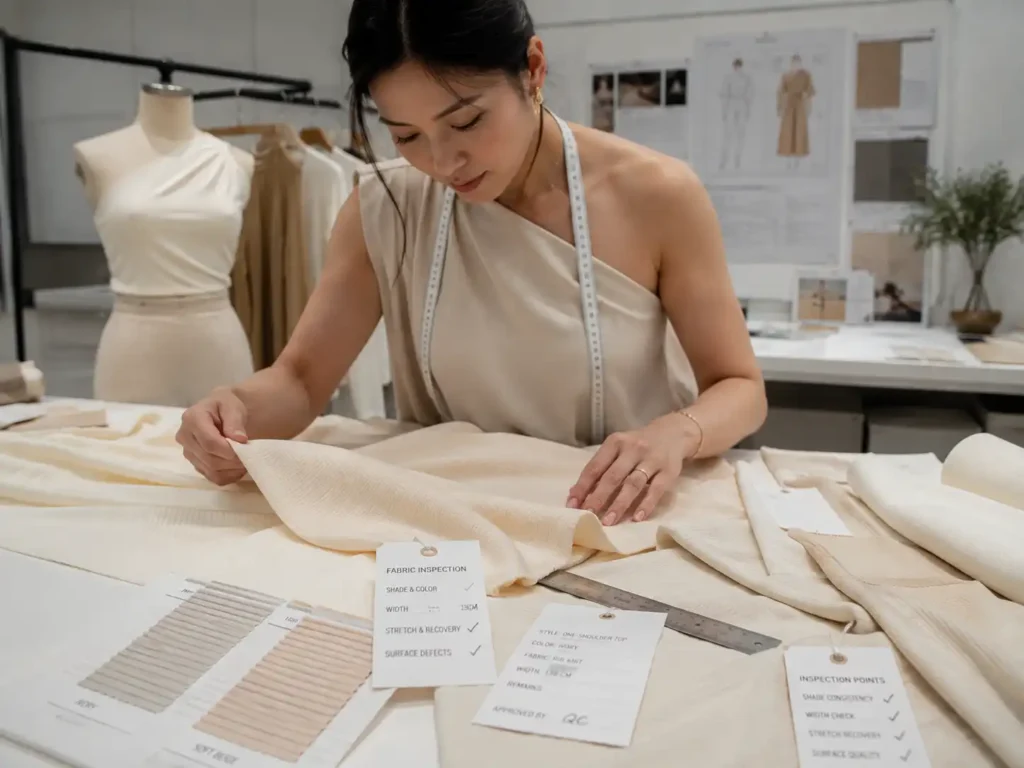
A pattern approved in one jersey should not automatically be transferred to a firmer ponte, softer rib knit or higher-stretch mesh. Even fabrics with similar composition can differ in extension, recovery, weight and surface friction.
When the production fabric changes materially, the relationship between pattern measurement and body fit needs review. The result may require a different reduction level, altered seam position, additional length, changed lining or modified construction.
For repeat programs, retaining approved patterns, fabric references, measurement charts and Golden samples creates a stronger starting point, while new fabric behavior still needs to be confirmed before scaling.
Cross-Size Consistency Goes Beyond Basic Grading
Bust Coverage
Waist Position
High and Full Hip
Armhole and Straps
Garment Length
Slits and Cut-Outs
Validate Bodycon Fit Under Real Movement
Standing and Turning
Sitting and Walking
Arm and Upper-Body Movement
Sampling Turns Fit Problems Into Production Standards
Sampling is not a single garment made for visual approval. Each stage should answer a different development question, record the correction and move the style closer to a repeatable production standard.

First Sample and Fit Sample
The first sample tests whether the design has been interpreted correctly in real materials and construction.
For bodycon styles, early review covers silhouette, fabric behavior, neckline and armhole shape, bust-waist-hip balance, garment length, openings, lining and construction feasibility.
A fit sample then focuses more closely on body balance.
Comments may address hip tension, waist position, bust coverage, side seams, ride-up, strap placement, slit position or the way a selected stretch fabric changes the intended shape.
Regular dress first samples typically require around 10–15 days. Simple structures may be around 7–10 days, while complex mesh, strapless, corset, lace, sequin or similar constructions commonly require around 15–25 days. Material development can extend the schedule.

Revised Sample and PP Sample
A revised sample should demonstrate that agreed corrections have been translated into the updated pattern, measurement chart and construction. Comments need version control so old instructions do not reappear during later sampling.
Revised samples commonly require around 7–15 days, depending on the scope of changes and material availability.
The PP sample has a different purpose. It should represent the standard intended for bulk production using confirmed materials, trims, pattern, measurements and workmanship. Bulk should not begin while critical fit decisions remain open.
PP samples commonly require around 7–15 days once final materials are available. Complex structures or newly developed components may require additional time.

Golden Sample and Production Reference
Once the final approved standard is confirmed, the Golden sample becomes a reference for production, QC, repeat orders and later comparison.
It should work together with the approved pattern version, size chart, BOM, sewing instructions and relevant QC points.
The value of the Golden sample is consistency. Production teams should not be asked to recreate the fit from memory or interpret a series of disconnected email comments.
A documented physical and technical standard gives cutting, sewing, finishing and QC teams a common reference.
For repeat colors or related fabrics, the approved standard remains useful while new material behavior is reviewed separately.
Manage Multi-Style Bodycon Collections as One Program
Group by Fabric Family
Group by Fit Block
Group by Construction
Set Sample Priorities
Track Revisions by Style
Move Approved Styles Forward
Lock Critical Details Before Bodycon Bulk Production
Fabric Reference
Final Pattern
Measurement Chart
Construction Standard
PP Comments
Golden Sample
Stretch-Safe Workmanship Protects Fit During Wear
Bodycon workmanship has to preserve extension, recovery and surface appearance. A visually neat seam can still create returns when it restricts stretch, waves after sewing or changes the balance of the garment.

Seam Extension and Recovery
Seams running across stretch zones need enough extension to move with the fabric without thread breakage, seam popping or uncomfortable restriction.
Stitch selection, seam allowance, thread, needle condition and sewing tension should reflect fabric behavior.
Excess tension can create tunneling or visible waves. Insufficient control can produce unstable seams that grow during wear. A seam should be judged as part of the garment system, not only by how straight it looks when flat.

Lining and Shell Interaction
Lining often improves opacity, comfort and finish, but its stretch characteristics must suit the shell. A lining with substantially lower extension can make a soft bodycon dress feel unexpectedly tight and may pull the outer fabric out of shape.
Attachment points also matter. A lining that is fixed too rigidly around the neckline, armhole, zipper or hem can restrict movement even when both fabrics have suitable stretch independently.
For double-layer bodycon construction, combined tension should be evaluated during sampling rather than assuming two flexible fabrics will automatically work together.
Zippers, Mesh and Ruching
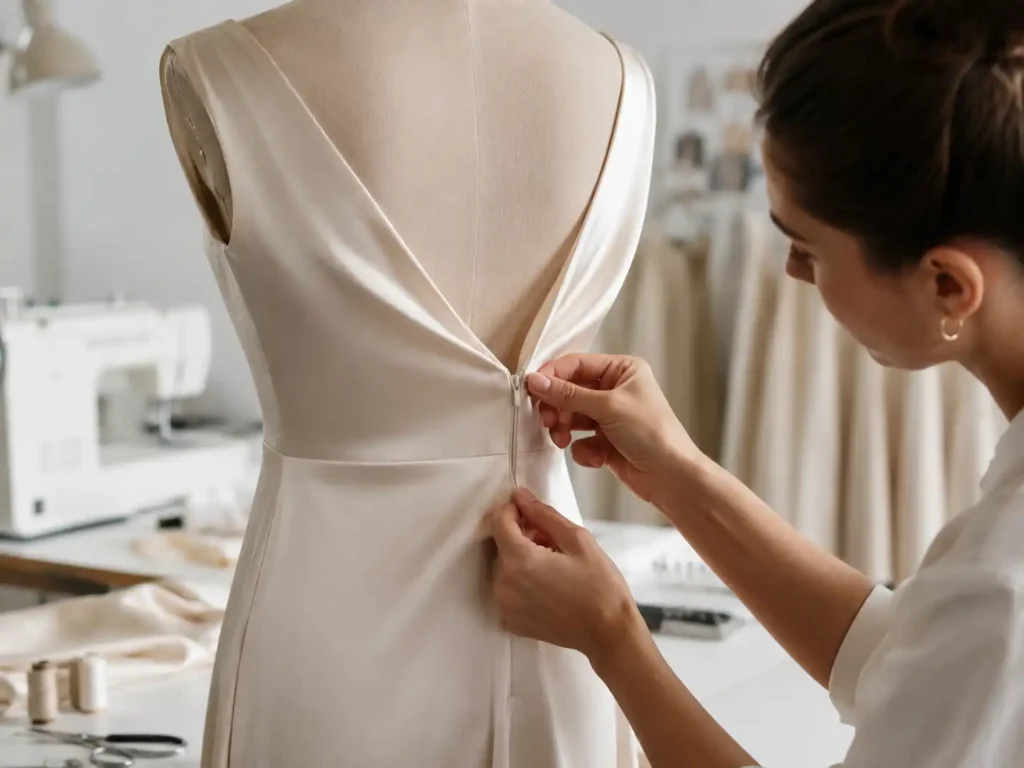
Zippers create a relatively stable vertical zone inside a stretch garment. Poor balance can lead to zipper bulging, pulling or uneven tension along the back or side seam.
Mesh joins introduce another material with its own recovery and transparency. Seam construction needs to preserve the intended stretch without damaging delicate mesh or creating a rigid join line.
Ruching adds controlled fullness and local tension. Gathering distribution, elastic tension where used and seam balance need repeatable production instructions so one operator does not create a materially different silhouette from another.

Edges and Reinforcement
Necklines, armholes, straps, slit ends, cut-outs and other openings often need stability without becoming rigid.
Binding, elastic, reinforcement or facing must support the edge while allowing the garment to maintain its intended fit.
Too much stabilization can create pressure or distortion; too little can produce gaping and shape loss.
The correct solution depends on fabric, design and location rather than one universal construction method.
Keep Approved Fit Consistent From Sample to Bulk
A successful sample proves that one garment can work. Production control has to prove that the same fit logic can be repeated across colors, sizes, sewing lines and thousands of finished pieces.
Control Material Before Cutting
Bulk fabric should be checked against approved references for characteristics that affect appearance and fit.
Stretch direction, recovery, shade, surface condition and other specified properties need attention before cutting.
Relaxation and cutting direction are particularly relevant for knitted bodycon styles. Fabric handled differently from the approved sample can produce dimensional changes even when the pattern itself has not changed.
Cutting must also follow the correct grain and pattern version. A pattern correction has little value if production uses an outdated file or a marker orientation that changes fabric behavior.
Establish a First-Piece Reference
Early production pieces provide a checkpoint before a larger quantity is completed. Measurements, side-seam position, stretch-sensitive construction, neckline shape, garment length and other critical points can be compared against PP and Golden sample references.
The purpose is not to redesign the style on the sewing line. Major fit decisions should already be closed during sampling. First-piece review is designed to catch production interpretation or execution drift while correction remains manageable.
Clear technical references allow problems to be traced back to pattern, cutting, sewing or finishing instead of relying on subjective judgments such as “looks a little different.”
Maintain the Standard Through Production
In-line checks help identify repeat defects before they accumulate. Measurement control is especially important when different sizes, colors and fabric lots move through production.
Finished garments should be compared with the approved specification and physical reference. QC attention can include measurement, side-seam balance, seam condition, lining behavior, visual distortion, finishing and packing requirements according to the style.
A good sample is valuable only when its approved fit can survive the transition into repeatable bulk production.

Bodycon QC Follows the Garment Through Production
Incoming Materials
Fabric Relaxing
Cutting Control
Sewing In-Line
Measurement QC
Finished Garment Review
Packing QC
Pre-Shipment Review
Bodycon Collection Case With Fit-Critical Development
A representative anonymized program shows how bodycon return risk is addressed through material behavior, pattern correction, staged sampling and bulk measurement control rather than relying on final inspection alone.

18 Styles Across Stretch Fabric Families
A premium European womenswear program included approximately 18 bodycon styles and 36,000 pieces, positioned across fitted mini and midi silhouettes using jersey, rib knit and ponte fabric families.
The collection combined multiple colors and size ratios while retaining a consistent fitted visual direction. Development could not rely on one universal bodycon block because each fabric group created a different balance of stretch, recovery, compression and surface behavior.
The most sensitive issues identified during development included:
- stretch recovery after wear
- bust-waist-hip proportion
- side-seam twisting
- hem and dress-length ride-up
- differences in tension between fabric groups
- post-wash dimensional stability
Rather than treating every issue as a measurement-table correction, fabric behavior and pattern balance were reviewed together.

Pattern, Fabric and Sample Corrections
Fabric recovery was evaluated before final pattern decisions. Knit material handling included attention to relaxation and cutting direction so the bulk process would not introduce a different dimensional condition from the approved sample.
Bust, waist and hip relationships were adjusted according to fit observations. Side-seam position and vertical balance were reviewed because excessive horizontal tension can rotate seams and consume apparent garment length.
The development route used first samples, fit review, revised samples and PP approval before the production standard was locked. Comments were transferred into updated patterns, measurements and manufacturing references rather than remaining as informal communication.
The project demonstrated a central Bodycon principle: a garment can meet individual measurements and still need pattern correction when the measurements do not balance correctly on the body.

Bulk Consistency and Follow-On Development
After approval, production focused on maintaining fabric handling, pattern version, cutting direction, measurements and side-seam balance across the collection.
Quality checks compared production against approved references rather than accepting broad visual similarity. Measurement QC was strengthened around fit-critical points, and style differences remained separated even when several products shared related fabrics.
Stable bulk execution created a stronger reference for later developments using related bodycon fit blocks and alternative fabrics. New fabrics still required behavior review rather than automatic transfer of the original pattern.
No fixed return-rate reduction percentage is claimed because retail returns are influenced by product presentation, consumer preference, size selection and other factors outside manufacturing. The manufacturing objective is narrower and more controllable: remove avoidable fit, material and bulk-consistency problems before garments reach the market.
Production Resources for Multi-Style Bodycon Programs
6 Owned Factories
10+ Satellite Partners
100,000+ Pieces Monthly
18+ Sewing Lines
6+ Flexible Lines
12+ Merchandisers
Merchandising and order-follow-up specialists support sample status, materials, approvals, production information, packing requirements and shipment coordination across multi-style projects.
Send the Information That Helps Identify Return Risk
Tech Pack
Reference Sample
Size Chart
Fit Comments
Fabric Reference
Return Reasons
Style Lineup
Launch Requirements
Frequently Asked Questions About Bodycon Returns
No fixed return-rate percentage should be guaranteed from manufacturing alone. Returns can also be influenced by product photography, consumer expectations, size selection, styling preference and retail policy. Manufacturing work can address controllable product causes such as fit, grading, stretch behavior, opacity, workmanship and sample-to-bulk consistency.
Different fabrics can have different extension, recovery, weight, friction, opacity and relaxation even when their composition appears similar. The original negative ease and pattern balance may therefore produce a different fit. A meaningful fabric change should trigger fit review before the style moves directly into bulk.
No. Useful negative ease depends on material behavior, silhouette, desired compression and body zone. Bust, waist and hip relationships may need different treatment, while neckline, armhole, length and openings must remain stable when the garment stretches over the body.
Base-size approval confirms only one point in the size range. Grading can change bust coverage, waist placement, armhole depth, strap position, hip tension, slit height and garment length. Representative lower, core and upper size points should be reviewed where the collection’s size range requires greater fit confidence.
Opacity should be considered under extension rather than only with the fabric lying flat. Bust and hip areas can stretch a knit sufficiently to change coverage. Where lining is required, its extension and recovery also need to suit the shell.
Possible causes include excessive hip tension, insufficient vertical balance, fabric friction, pattern shape and the way horizontal stretch consumes garment length. Movement tests combined with pattern and measurement review provide more information than simply adding length at the hem.
Regular dress first samples generally require around 10–15 days. Simple structures may take around 7–10 days, while complex mesh, corset, strapless, lace, sequin or related constructions commonly require around 15–25 days. Custom materials and special trims can extend development timing.
A PP sample should represent the intended bulk standard using confirmed fabric, trims, pattern, measurements, construction and relevant brand details. Critical fit or material decisions should be closed before bulk cutting rather than left for correction during production.
Production references can include final patterns, measurement charts, BOM details, sewing instructions, PP comments, approved fabric references and a Golden sample. Cutting, first-piece review, in-line checks, measurement QC and final inspection then compare bulk garments against the approved standard.
Brands can provide tech packs, size charts, approved samples, fabric references, fit comments and available return-reason summaries. Jinfeng Apparel can review manufacturing-related areas such as pattern balance, grading, fabric behavior, construction and bulk consistency before the next development or production cycle.

Review Your Bodycon Collection Before the Next Bulk Run
When repeated complaints point to tightness, looseness, ride-up, transparency, inconsistent sizing or a difference between approved samples and bulk garments, the next collection should begin with a technical review rather than another round of identical production.
Send the available development files and describe the problems appearing in current styles. Jinfeng Apparel can review the project from fabric behavior through pattern, sampling and production planning, then identify where additional validation may be useful before bulk approval.
Helpful project information includes:
- Tech pack, sketch, line sheet or reference sample
- Current size chart and known fit comments
- Target fabric or approved fabric reference
- Bodycon styles planned for the collection
- Existing return-reason categories where available
- Target quantities by style and color
- Size and color breakdown
- Private-label and packing requirements
- Required sample stages
- Target launch and delivery window


