 Skip to content
Bodycon Dress Fit Development
Develop a close-fitting silhouette that holds its shape from first sample through size grading and bulk production.
- 7+ senior womenswear pattern makers working on fit-sensitive dress development.
- 2 sample rooms and 20+ sample machinists supporting fit, revised and pre-production samples.
- Fit control focused on bust, waist, hip, length, neckline, side seam, stretch and recovery.
- 15+ QC inspectors supporting measurement, construction and garment checks before shipment.
Built for Fit-Focused Fashion Brands
Product Development Teams
Sourcing and Production Teams
Sourcing teams need a fit standard that can survive the transition from development into larger quantities. A good prototype means little when production pieces begin showing inconsistent waist measurements, twisting side seams, unstable necklines or different lengths between size groups. Production preparation therefore links the approved pattern with the size chart, grade rules, fabric direction, construction requirements, PP sample and measurement QC.
Supplier evaluation can then focus on repeatability instead of judging only one attractive sample.
Premium Fashion Brands
Premium ecommerce, partywear, clubwear and fashion labels often sell fitted silhouettes through imagery where small proportion errors become immediately visible.
Waist looseness, an over-compressed hip, a distorted neckline or a climbing mini hem can change the entire appearance of a design. Fit development should preserve the visual intention while keeping dressing, sitting, walking and normal movement possible. Fabric, lining, neckline, closure and pattern decisions are evaluated together so a close fit does not become uncontrolled tightness.
Fit Development Capability Behind Every Approved Sample
7+ Pattern Makers
2 Sample Rooms
20+ Sample Machinists
15+ QC Inspectors
18+ Sewing Lines
100,000+ Monthly Capacity
Bodycon Fit Across Different Dress Constructions

Jersey Bodycon Dresses
- Review stretch direction before pattern confirmation.
- Check recovery around the waist and hip.
- Observe side-seam movement after fitting.
- Evaluate neckline and armhole stability.
- Consider post-wash dimensional change before bulk approval.

Rib Knit Bodycon Dresses
Rib knit can create strong visual shaping because the rib structure expands around the body while emphasizing vertical lines.
The same structure can also continue growing under tension, making waist definition, body length and hem stability difficult when fabric behavior has not been evaluated early. Development must distinguish useful stretch from uncontrolled growth. Rib direction, garment length, bust-waist-hip relationships and neckline construction are reviewed during sampling. A rib dress should recover after dressing and movement rather than remaining permanently wider in high-stress areas.
- Check rib direction across every pattern panel.
- Evaluate growth at bust, waist and hip.
- Confirm hem shape after hanging.
- Review neckline recovery after dressing.
- Recheck measurements following sample wear.

Ponte and Roma Bodycon
- Balance shaping with movement.
- Keep side seams visually straight.
- Check waist placement on the body.
- Match seam construction to fabric thickness.
- Confirm hem structure and shape retention.

Stretch Mesh Bodycon
- Compare mesh and lining stretch.
- Test transparency under body tension.
- Confirm edge stability around cut-outs.
- Check seam comfort against skin.
- Review panel placement during movement.

Stretch Satin Bodycon
- Confirm stretch direction before cutting.
- Review zipper flatness during fitting.
- Control seam tension and puckering.
- Match lining behavior to the shell.
- Check surface appearance from several angles.

Ruched and Cut-Out Bodycon
- Control ruching position and density.
- Check cut-out placement on-body.
- Stabilize exposed edges where needed.
- Measure left-right symmetry.
- Confirm finished garment length after gathering.
Where Bodycon Dress Fit Usually Goes Wrong

Unstable Bust Fit

Loose Waist Definition

Over-Compressed Hips

Twisting Side Seams

Hem Ride-Up

Neckline Deformation
Fabric Behavior Comes Before Pattern Correction
A bodycon pattern cannot be evaluated separately from the fabric used to make it. Two materials cut from the same pattern can produce noticeably different bust compression, waist definition, hip coverage and garment length. Jinfeng Apparel therefore treats fabric behavior as part of fit development rather than a sourcing decision made after the pattern is complete.
Jersey and Rib Knit Need Recovery Control
Jersey often creates a smoother surface, while rib knit can expand more visibly around body curves. Both materials can deliver excellent bodycon silhouettes when stretch and recovery match the pattern.
Before pattern decisions are locked, the team reviews the direction in which the material stretches, how the fabric behaves under sustained tension and whether areas such as the waist, neckline and hip return after fitting. Fabric relaxing also matters because knit material can change dimensions after being released from rolls.
Pattern correction follows the observed behavior. When a fabric grows easily, simply reducing the pattern can create excessive compression before wear without solving later growth. When recovery is strong, a different amount of close fit may be possible.
Production checks later concentrate on panel direction, side-seam position, garment measurement and signs of distortion. Washing behavior is also relevant for materials where shrinkage or torque may alter the approved silhouette.
Ponte and Scuba Need Compression Balance
Ponte, Roma and some scuba-type fabrics provide greater body and structure. Their thickness can support the waist and smooth the silhouette, but heavier structure also changes comfort and seam behavior.
Fit development evaluates how much shaping the material can provide without making sitting or walking restrictive. The waist line, hip curve, bust area and skirt taper are adjusted around the material rather than using a universal reduction from body measurements.
Seam thickness, zipper installation and hem construction also influence appearance. A fitted pattern may technically measure within specification while still showing bulky seams or a raised zipper area. Fit approval therefore includes visual structure as well as the measurement sheet.
For structured knits, consistency between lots is important because a meaningful change in weight, stretch or recovery can alter the same approved pattern.
Power Mesh and Stretch Satin Need Layer Control
Power mesh can add support or create sheer design zones, while stretch satin offers a smooth partywear surface. Both become more complex when lining, double layers, cut-outs or shaped panels are introduced.
Power mesh must be assessed for stretch direction, recovery, transparency and skin comfort. When used under another material, both layers need compatible movement. An outer shell and lining that stretch differently can pull against one another and alter the fit.
Stretch satin demands additional attention to seam tension and zipper flatness because reflected light exposes rippling easily. Pattern lines, fabric direction and construction need to work together.
For both materials, replacing the fabric during sampling can require renewed fit assessment. A material change affects more than color or hand feel; stretch, recovery, thickness and drape can change the production-ready pattern.

How Stretch and Recovery Affect Bodycon Fit
Stretch should be evaluated together with recovery. A material that extends easily but stays enlarged after tension can gradually change waist definition, neckline shape and garment length. Development therefore compares stretch direction, recovery and expected construction before approving the bodycon pattern.
| Fabric Direction | Typical Fit Behavior | Main Development Risk | Pattern / Construction Focus | Bulk Check |
|---|---|---|---|---|
| Jersey | Soft close fit with moderate structure | Growth, twisting, neckline change | Waist and hip balance, grain/stretch direction | Measurements, side seams, neckline |
| Rib Knit | High visual stretch around curves | Length growth and loss of recovery | Rib direction, garment length, edge recovery | Length, hem, neckline, wash change |
| Ponte / Roma | Firm support and shape retention | Excess compression or bulky seams | Waist shaping, hip ease, seam balance | Measurements, seam stability, shape |
| Power Mesh | High stretch with sheer or supportive effect | Transparency and layer mismatch | Lining compatibility, cut-out edges | Recovery, holes, coverage, seams |
| Stretch Satin | Smooth fitted surface with limited visual tolerance | Rippling, zipper bulging, tension lines | Pattern balance, seam tension, lining | Zipper, seams, measurements, surface |
| Spandex Blend Knit | Flexible fit depending on base structure | Different recovery between fabric lots | Fit matched to actual approved fabric | Stretch direction, recovery, dimensions |
Engineering the Bust Waist and Hip Balance
The signature of a successful bodycon dress comes from proportion, not maximum tightness. Bust support, waist definition and hip coverage must work as one connected shape. Pattern corrections made in one zone can shift seam position, neckline height, skirt length or movement elsewhere.
Bust Fit Starts Above the Bust
Bust development involves more than full-bust circumference. Upper bust, under bust, neckline depth, strap placement and armhole shape influence coverage and stability.
A neckline can gape even when the bust circumference measures correctly. A dress can also feel tight across the chest while remaining loose above it. Pattern analysis therefore looks at the contour and distribution of shape instead of relying on one horizontal measurement.
For sleeveless or strappy bodycon styles, strap position can lift or lower the neckline and alter armhole exposure. Mesh or highly elastic fabric adds another variable because the same measurement can look different under different tension.
Fit samples help isolate the cause. Comments such as “too open at the chest” or “tight across bust” are translated into measurable pattern actions rather than treated as general sewing adjustments.
Waist Shaping Must Survive Wear
The waist gives bodycon dresses much of their visual definition. Over-reducing the waist, however, can create pulling, uncomfortable compression or upward garment movement. Leaving too much room can flatten the intended curve.
The pattern team considers waist circumference together with high-waist and low-waist positions, torso length, fabric recovery and how smoothly the side seam transitions toward the hip.
A sample should be observed after movement and wear. Some knits relax quickly around the waist even when the first fitting looks sharp. When growth rather than pattern shape causes the problem, further pattern reduction may only increase tension elsewhere.
Waist approval therefore combines silhouette, comfort and recovery. The final correction is recorded in the pattern and measurement documentation rather than left as an informal sewing-room adjustment.
Hip Fit Controls Movement and Hem Stability
Hip shaping carries significant tension in a bodycon dress. Excess compression can create horizontal lines, transparency, seam rotation and hem ride-up. Excess room can make the silhouette look loose and inconsistent with the design.
Fit review considers hip measurement, waist-to-hip transition, side-seam balance, back length, skirt taper and material recovery together. Mini styles require particular attention to coverage, while midi designs need enough movement for walking.
Negative ease can be useful, but the correct amount depends on the approved material. A highly stable ponte does not behave like lightweight rib knit or stretch mesh.
A successful fit keeps the hip close without forcing the skirt to migrate upward. Movement checks and revised samples provide stronger evidence than a static mannequin measurement alone.

From Design Input to a Production-Ready Pattern
Jinfeng Apparel can begin from a tech pack, reference photograph, original sample, sketch, size chart or fabric direction. Development becomes more accurate when the intended market, size range, fabric preference and target silhouette are clearly defined before pattern work begins.
Start with the Fit Intention
A reference image communicates visual direction but rarely contains enough information to establish production fit.
Before building the base pattern, the development team identifies the intended bodycon effect: soft fitted, structured fitted, compressive, ruched, lined, mesh layered, cut-out or another construction.
The target market and size system also matter. A pattern intended for a U.S. size range may need a different base measurement structure from a brand using its own established block.
Analyze Structure and Fabric Together
The development team then reviews how the design is expected to behave in the selected fabric. Areas such as neckline, bust, waist, hip, cut-outs, ruching, zipper and hem are checked for fit sensitivity.
A change from ponte to lightweight jersey, for example, can alter compression and recovery even when the visual design remains identical. Stretch mesh may require a lining strategy, while stretch satin can need more attention around zipper and seam tension.
Pattern development therefore follows the approved fabric direction whenever possible. When the exact bulk fabric is not available during an early sample, any difference must be recognized so later confirmation can determine whether the pattern still holds.
Build a Measurable Base Pattern
Pattern development converts the design direction into measurable garment geometry. Bust, upper bust, under bust, waist, high and low waist, hip, front and back length, neckline depth, strap, armhole and other style-specific points can be controlled according to garment construction.
The first pattern is not treated as permanent. Its role is to create a technically coherent first sample that can be evaluated on the body.
Fit comments, measurement results, photographs and fabric behavior then guide subsequent correction. Once the design achieves the approved silhouette and comfort, the pattern becomes the basis for grading and production standards rather than remaining an isolated development file.
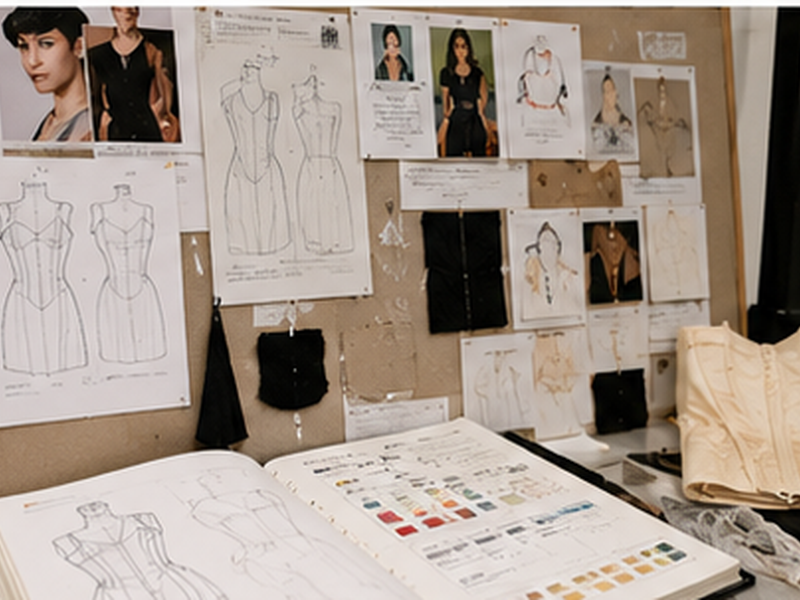
First Sample Fit Sample Revised Sample and PP

First Sample

Fit Sample

Revised Sample

PP and Golden Standard
Key Measurements Checked During Bodycon Fitting
Fit review combines measurement with visual and movement observations. The measurement points below are selected according to design construction; not every bodycon dress requires every point. Jinfeng Apparel’s pattern team works across bust, waist, hip, length, neckline, straps, armholes, slits and other fitted womenswear measurements.
| Measurement / Area | Fit Function | Common Failure | Development Check |
|---|---|---|---|
| Upper Bust | Controls top-body stability | Gaping or excessive compression | Front/side fit and neckline position |
| Full Bust | Controls chest circumference | Pulling, flattening, looseness | Measurement plus wearing appearance |
| Under Bust | Helps shape fitted upper body | Weak contour or poor support | Pattern contour and fabric tension |
| Waist | Defines bodycon silhouette | Gaping or over-compression | Waist contact after movement |
| High / Low Waist | Controls vertical body proportion | Waistline appears misplaced | Compare body position and pattern |
| Hip | Controls lower-body fit | Drag lines, tightness, looseness | Standing and walking review |
| Front Length | Controls front balance | Front hem rises | Compare against side/back balance |
| Back Length | Supports hip and seat balance | Rear hem lifts | Movement and hip fit review |
| Dress Length | Controls coverage and styling | Mini too short or midi unstable | Standing and walking measurement |
| Neckline Depth | Controls appearance and coverage | Exposure or neckline distortion | Front fit and movement |
| Strap Length | Controls bust and armhole position | Low neckline or underarm exposure | Strap angle and fit position |
| Armhole | Controls upper-body coverage | Gaping, cutting or exposure | Front/side movement check |
| Slit Height | Controls mobility and coverage | Restricted movement or exposure | Walking and sitting review |
| Hem Width | Influences movement and ride-up | Skirt climbs during walking | Movement test |
Fit Feedback Becomes Controlled Pattern Correction
Comments such as “waist too loose,” “hip too tight” or “neckline too open” are useful starting points, but they do not identify the production cause by themselves. Jinfeng Apparel records fit comments, reviews the garment and converts confirmed revisions into updated development files.
Diagnose Before Changing the Pattern
A visible fit issue can come from several sources. Side-seam twisting may involve pattern balance, fabric direction or sewing tension. A loose waist may involve the pattern curve or material growth. Hem ride-up can relate to hip compression, skirt taper or fabric friction.
The review can combine:
- Original fit comment
- Garment measurements
- Front, side and back images
- Mannequin observation
- Wearer fitting
- Fabric stretch behavior
- Construction method
- Existing pattern version
Convert the Diagnosis into a Revision
Once the cause is identified, the pattern maker determines which lines, measurements or construction points need to change.
Bust, waist, hip, length, neckline, straps, armholes, slit and lining may be revised according to the issue.
A change in one zone is reviewed for its effect elsewhere. Increasing hip room, for example, can influence side-seam alignment and skirt length. Adjusting a strap may move the neckline and armhole together.
Changes affecting production are recorded, making the revised sample a controlled development version rather than an informal remake.
Update the Production Documents
Important changes should not remain only in email or chat history. Jinfeng Apparel’s documented revision system can update the pattern, size chart, measurement record, BOM, fabric approval, trim approval, sewing instruction, QC checklist and PP comments when those files are affected.
Version control gives production and QC teams one agreed standard after approval. It also helps repeat orders use the latest pattern rather than an early sample version.
Fit development therefore ends with controlled information, not only a better-looking prototype.

Size Grading Without Losing the Bodycon Silhouette
A base-size sample can fit well while adjacent sizes perform poorly. Bodycon grading needs to preserve visual proportion, coverage and movement across the intended size range rather than mechanically enlarging every measurement by the same amount.
Start from an Approved Base Size
Grading becomes more reliable after the base fit has been approved. Developing several sizes from an unresolved sample spreads the same fit problem across the range.
The approved base pattern gives the grading process a stable reference for bust, waist, hip, length, neckline, armhole, strap and other style-specific points. Grade rules are then developed according to the brand’s size chart and target market.
Jinfeng Apparel can support size development for US, UK, EU and AU markets, Alpha sizing such as XS–XL, extended size ranges, plus-size requirements and petite/tall adjustments according to supplied standards.
Grade Proportion Instead of One Number
The bust-waist-hip relationship carries the identity of a fitted silhouette. If every area grows at the wrong rate, larger sizes can become too straight while smaller sizes become overly compressed.
Length also matters. The waist position, neckline depth, armhole, strap length and skirt length may need independent consideration instead of one universal enlargement.
Stretch fabric adds another variable because the same garment measurement can produce a different wearing result depending on material recovery and compression.
Grade-rule review therefore considers shape and fit together rather than treating grading as a purely mathematical enlargement process.
Review Extended Fit Requirements Separately
Plus, petite and tall development should not be treated as adding or subtracting only overall width or dress length.
Depending on brand specification, additional review may involve bust support, waist placement, hip proportion, strap length, armhole coverage, neckline, slit position and garment length.
The same principle applies to extended size ranges: preserve the intended silhouette while maintaining coverage and movement appropriate to the construction.
Before bulk production, graded patterns and size charts are linked with measurement control so deviations can be checked against the approved rules.
Construction Details That Can Change Bodycon Fit

Ruching Control

Cut-Out Placement
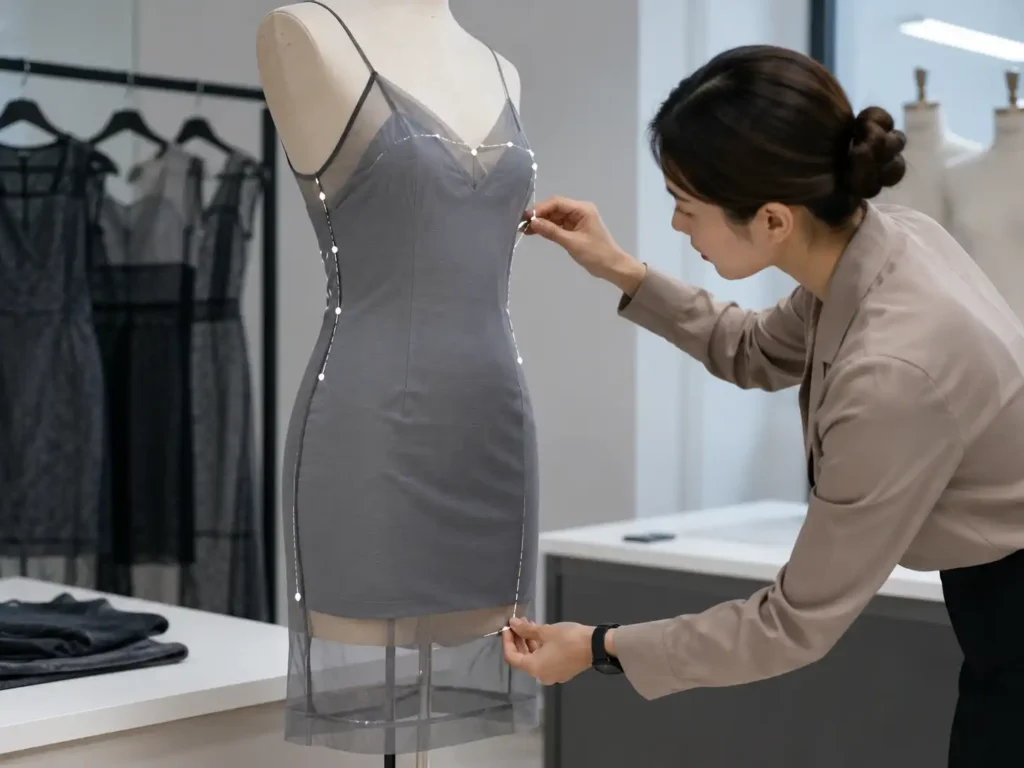
Lining Integration

Zipper Flatness

Neckline and Straps
Neckline depth and strap position affect bust coverage, underarm exposure and visual balance at the upper body.
Small changes can move several fit points at once. Fixed and adjustable straps require different development decisions. Strap length, angle and attachment position are reviewed together with neckline shape and armhole coverage. For highly elastic fabrics, dressing tension also matters. The opening must allow the garment to be worn without permanently stretching the neckline.
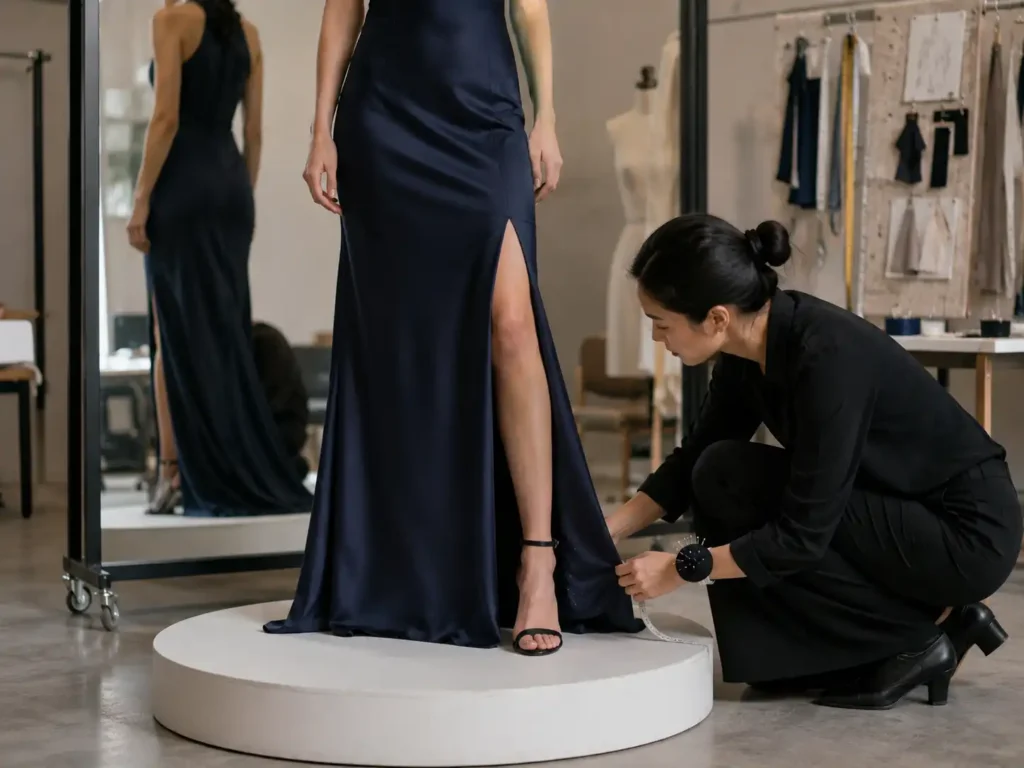
Slit and Hem Balance
Fit Has to Work While the Wearer Moves
Standing Balance
Walking Stability
Sitting and Bending
Dressing and Upper Movement
From Approved Fit to Production-Ready Standard
An approved fit sample is an important milestone, but large-scale consistency depends on translating approval into controlled production information. Jinfeng Apparel uses PP and Golden sample stages alongside updated technical records to reduce interpretation differences between development and manufacturing.
PP Sample Locks the Production Direction
The PP sample comes after major fit, material and construction decisions have been resolved. Jinfeng Apparel’s documented process requires fit, measurements, fabric, color, trims, construction, lining, labels, packaging and other relevant production requirements to be confirmed before the project is treated as ready for PP approval.
The PP stage is therefore not intended for another large redesign. Its value comes from showing what production is expected to reproduce.
For bodycon dresses, the PP review can reconfirm:
- Final bust-waist-hip balance
- Approved fabric and stretch direction
- Dress length
- Neckline and straps
- Side-seam position
Golden Sample Provides a Physical Reference
Once the production direction is confirmed, a Golden Sample can act as the approved physical reference during bulk manufacturing and final comparison.
Patterns and size charts describe measurable standards, while a physical garment also communicates silhouette, hand feel, seam appearance, finishing and construction relationships.
The combination is valuable for fit-sensitive products because two garments can share similar measurements while looking different when seam tension or fabric behavior changes.
Golden sample information can also support later repeat orders when the brand needs to reproduce an established fit.
Approved Revisions Become Controlled Files
A production-ready fit requires aligned records. Pattern version, size chart, grade rules, BOM, sewing instructions and QC requirements must reflect the same approved garment.
Jinfeng Apparel records production-relevant revisions rather than asking sewing teams to interpret development conversations from memory.
When fabric or construction changes after approval, the impact on fit is reviewed before the change is accepted. A meaningful change in stretch can justify renewed sampling because the old fit standard may no longer represent the new material.

Controlling Stretch Fit During Bulk Production
Bodycon fit can drift during bulk production even when the pattern is correct. Fabric relaxation, cutting direction, sewing tension and measurement variation all influence the final garment. Production control therefore protects the approved fit at each stage instead of relying only on final inspection.
Fabric Relaxing and Cutting Direction
Knit and stretch fabrics can retain tension from rolling and handling. Cutting before the material settles can contribute to dimensional changes later.
Fabric direction is equally important. Panels cut with inconsistent stretch orientation may respond differently across garments even when every paper pattern is identical.
Cutting preparation therefore checks approved pattern versions, size bundling, fabric direction and stretch direction. Consistent panel orientation is particularly important for rib knit, jersey and other materials where visual or dimensional behavior follows fabric structure.
The goal is to begin sewing with panels that represent the approved fit conditions rather than introducing variation at the cutting stage.
Sewing Must Preserve Pattern Geometry
Stretch fabric can be distorted while sewing. Excess feeding or pulling changes seam length, produces waves and may shift the side seam after the garment is worn.
Construction control concentrates on seam quality, seam allowance, symmetry, zipper flatness, strap length, lining attachment, slit position and other style-specific details.
Bodycon sewing is not simply about creating a strong seam. The operation needs to maintain the shape established by the pattern.
Finished pieces are compared against measurements and visible fit-sensitive points so deviations can be identified while production is active rather than after every garment is completed.
Production and Shipment Follow the Approved Program
Bulk production timing depends on style complexity, quantity, materials, colors, sizes, packaging and QC requirements, so Jinfeng Apparel confirms the production schedule after PP, materials and order details are established rather than publishing one fixed lead-time promise.
For launch planning, shipment can be coordinated through air freight, sea freight, client-nominated forwarders or split air-and-sea arrangements when suitable.
Transit-time references depend on destination, shipment volume and selected freight route rather than one global delivery number.
Fit consistency remains tied to the approved production records regardless of shipment method.
Bodycon Dress Measurement and Knit Quality Control
Incoming Fabric Check
Cutting and Direction Check
Cutting QC verifies the pattern version, panel direction, size bundling and fabric direction. Stretch direction carries particular importance because rotating a panel can change how the garment expands around the body. Rib alignment, printed placement or other style features are checked when relevant.
Accurate cutting protects the pattern geometry established during sampling and reduces the chance of fit differences originating before sewing begins.
Inline Sewing Control
Garment Measurement
Fit-Sensitive Appearance
A garment can measure correctly and still look wrong. Final review therefore also observes side-seam alignment, neckline shape, zipper appearance, symmetry, hem balance, lining position and visible distortion.
For fitted dresses, these visual points strongly influence the finished silhouette. Garment inspection can also identify stains, holes, loose threads, zipper-function issues and label positioning before packing.
Release and Packing Check
Packing review confirms relevant hangtags, barcodes, size stickers, polybags, carton marks, packing ratios and other order requirements. Bodycon garments should also be folded and packed in a manner appropriate to their fabric and construction. Smooth satin surfaces, structured details or delicate mesh may require different handling from resilient jersey. The full Jinfeng QC chain covers incoming materials, cutting, sewing, garment checks and packing controls.
Bodycon Fit Development for a Multi-Style Program
A representative anonymized U.S. premium fast-fashion program shows how fit development can be managed when a collection includes several bodycon constructions rather than one isolated dress. The program covered 18 styles and approximately 42,000 pieces, within the normal multi-style order scale handled for established brand programs.
18 Styles Across Different Stretch Structures
The assortment included jersey bodycon dresses, rib-knit silhouettes, ponte fitted styles and selected stretch-mesh constructions.
Visual direction remained consistently close fitting, but one fit block could not be applied unchanged across every material.
Development therefore separated the collection by fabric behavior and construction. Jersey styles required close attention to recovery and side-seam stability. Rib styles required more review of garment growth and length. Ponte styles needed a different balance between shaping and movement. Mesh constructions introduced lining, transparency and edge-stability considerations.
The objective was not to make eighteen unrelated patterns. Development aimed to retain a recognizable brand fit while adapting each pattern to the fabric and construction actually being produced.
Fit Problems Identified During Sampling
Early sample reviews concentrated on five recurring areas:
- Bust-waist-hip proportion
- Stretch and recovery
- Side-seam position
- Mini and midi hem ride-up
- Post-wear and post-wash dimensional stability
Several comments initially appeared to be simple measurement problems. Further review separated pattern issues from fabric-growth issues so corrections could be directed to the correct cause.
Fit, revised and PP stages were used according to style needs. Meaningful changes were carried into updated pattern and measurement records before production rather than relying on verbal approval.
Moving 42,000 Pieces into Controlled Production
After fit direction was approved, the program shifted from development decisions to repeatability. Final pattern versions, size information, material direction and garment measurement requirements became production references.
Fabric relaxing and cutting direction were important for the knit styles, while inline inspection watched side seams, neckline shape, ruching and zipper areas according to construction. Garment measurement then checked whether production remained aligned with the approved size standard.
No single QC action was expected to create consistency. Stability came from carrying the same fit logic from fabric review and pattern correction through sampling, PP approval, production and garment measurement.
The project model also supported later use of retained pattern and technical records when related fitted styles were developed, reducing the need to rebuild an established fit direction from zero.

Frequently Asked Questions About Bodycon Fit Development

Start Your Bodycon Fit Development Project
A strong bodycon program starts with clear design information and an agreed fit direction. Send Jinfeng Apparel the materials already available for your project, whether the starting point is a full tech pack, an existing bodycon sample, a reference style or an early design concept. Our team can review the product structure, fabric direction, target measurements, size range and production requirements before defining the next development step.
For a more focused review, include as much of the following information as available:
- Tech pack, sketch or reference images
- Original garment sample, if available
- Existing size chart or fit block
- Target market and size range
- Preferred jersey, rib, ponte, mesh, satin or other fabric
- Intended bust, waist and hip fit
- Dress length and key construction details
- Lining, zipper, ruching, cut-out or support requirements
- Planned colors and total quantity
- Target launch date
- Private-label or packing requirements where relevant


