 Skip to content
Bodycon Clubwear Development
Fit-led clubwear development for fashion brands building bodycon, mesh, corset, ruched, cut-out and going-out collections.
- 2 sample rooms, 7+ senior womenswear pattern makers and 20+ sample machinists support pattern correction, fit samples, revised samples and production-ready standards.
- Bodycon development covers stretch direction, recovery, bust-waist-hip proportion, side seam stability, skirt ride-up, lining and size consistency.
- Clubwear development covers mesh transparency, cut-out placement, strapless stability, corset support, ruching, mini-length safety, sequin protection and movement comfort.
- MOQ starts from 200 pcs per style/color; material, trim, construction and packaging requirements are reviewed before the production plan is locked.
Development Capacity Built Around Fitted Womenswear
Since 2008
2 Sample Rooms
7+ Pattern Makers
20+ Sample Machinists
18+ Sewing Lines
6+ Flexible Lines
Built for Brands Developing Commercial Clubwear Collections
Partywear Labels
Premium Ecommerce
Sourcing Teams
Three Failure Points Decide Whether Clubwear Sells Well
Fit Failure
Poor recovery, wrong stretch direction, incorrect waist-hip proportion, side seam twisting or unstable hem length can change the intended silhouette after movement or wear.
Exposure & Support
Backless, deep-V, strapless, mesh and cut-out products need clear decisions on where to expose, where to support and where to cover.
Sample-to-Bulk Drift
Bodycon Clubwear Styles Developed for Real Collections

Bodycon Mini Dress
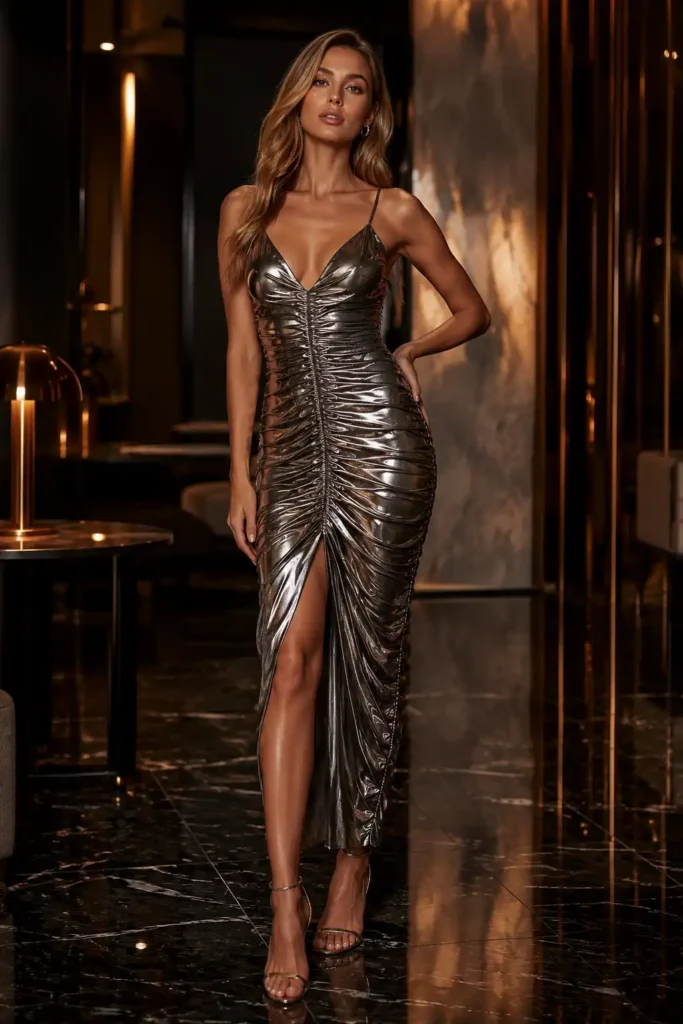
Ruched Bodycon Dress

Mesh Bodycon Dress

Corset Mini Dress

Cut-Out Dress

Strapless Club Dress

Backless / Halter Dress

Clubwear Two-Piece Set

Fabric Direction Controls Fit Before the Pattern Is Final
Fitted clubwear cannot be developed from silhouette alone. Fabric stretch, recovery, weight, opacity, surface, drape and seam behavior change the amount of negative ease, lining strategy, zipper choice and construction method. Jinfeng reviews fabric direction before the sample standard is treated as production-ready.
- Jersey and Spandex Blends
Jersey is efficient for close-fitting mini and midi styles, but elastic behavior varies widely by fiber blend, knit density and finishing. Development checks stretch direction, recovery, hand feel, opacity at the hip, neckline stability and post-wash size behavior. Fabric should recover after body movement without leaving a bagged waist, seat or knee area. Cutting direction and fabric relaxing also matter because an unstable knit can create side seam rotation even when the paper pattern is correct.
- Rib Knit and Ponte
Rib supports a young fitted look and can visually shape the body through vertical texture, while ponte provides more structure and a cleaner surface. Rib width, recovery and growth influence body length and hem behavior. Ponte weight and firmness can reduce show-through but may require different seam tension or zipper decisions. A style approved in soft jersey should not automatically use the same pattern after switching to ponte or a firmer rib.
- Stretch Mesh and Power Mesh
Stretch mesh is used for sheer panels, full-body layering, cut-outs and fitted club dresses. Power mesh can add controlled support inside corset or shaping areas. Development checks transparency under normal light and stronger photography light, mesh recovery, hole risk, edge finishing, lining boundaries and seam stretch. Double-layer mesh may improve coverage, but the added layers change tension and can alter the bodycon fit.
- Stretch Satin and Sequin Bases
Stretch satin gives bodycon and corset clubwear a stronger evening surface, but shine direction, zipper flatness, seam tension and recovery require tighter control than standard knit. Sequin cloth or sequins on mesh add weight, seam thickness and abrasion risk. Soft lining, edge protection and packing method become part of the product specification, not an afterthought.
Bodycon Fit Engineering Starts With Fabric Behavior
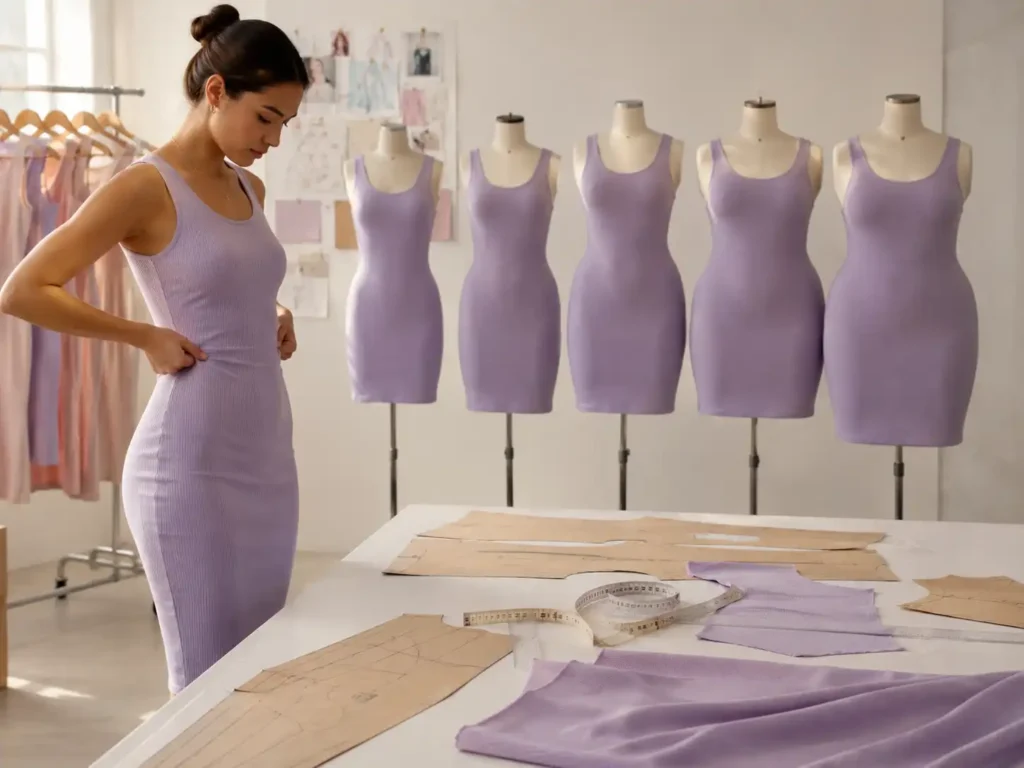
The target is not simply a tighter dress. A commercial bodycon silhouette needs controlled compression, balanced proportions, secure coverage and enough movement for standing, walking and sitting. Jinfeng develops fitted styles around measurable points and repeatable pattern decisions rather than relying on appearance alone.
- Stretch Direction and Recovery
Stretch percentage only tells part of the story. The same nominal stretch can behave differently when recovery is weak, when the fabric stretches mainly crosswise, or when two layers are combined. Jinfeng reviews direction, recovery and hand feel before final fit decisions. A fabric with strong stretch but weak recovery may look good during the first fitting and then relax at the waist, hip or neckline after movement.
- Bust-Waist-Hip Proportion
Bodycon development depends on how the garment distributes tension across bust, underbust, waist and hip. Over-reducing the waist can pull the side seam forward; over-reducing the hip can force the skirt upward; too much bust tension can open an armhole or distort a neckline. Fit review uses front, back and side views plus garment measurements to decide whether the intended silhouette can be repeated across the approved size range.
- Side Seam and Length Stability
Side seam twisting is often a combined fabric, cutting and fit issue. Jinfeng checks fabric relaxing, grain or knit direction, cutting direction, seam balance and body tension before adjusting the pattern. Front and back length also need separate attention because the hip can consume additional back length. Mini dresses are reviewed for ride-up and coverage instead of relying on a flat measurement only.
- Movement Before Approval
A fitted dress must hold its look during movement. Depending on the style, sample review can include standing, walking, sitting and simple body movement to check hem position, neckline security, strap tension, cut-out stability and side seam behavior. When the on-body result misses the target, the correction is transferred into the pattern and measurement files before PP approval.

Clubwear Needs a Clear Exposure and Support Strategy
Visual impact comes from controlled exposure, not uncontrolled openness. Backless, deep-V, strapless, mesh and cut-out styles create new tension points around the bust, side body, waist and neckline. Development should define where the garment can open, where it must hold, and where lining or support is needed for movement.
- Bust Coverage and Neckline Security: Low necklines and strapless styles are reviewed for upper-bust fit, side coverage, underarm height, cup placement and anti-slip support. A neckline can look correct on a mannequin but open during movement or feel unstable on a real body. Cup, boning, lining and seam placement are adjusted according to the product structure rather than added automatically.
- Cut-Out Position and Grading: A cut-out is part of the pattern structure. Waist openings, side openings and bust cut-outs can shift visually when the garment is graded. Jinfeng reviews opening position relative to waist, bust and hip reference points, then checks edge stability and coverage in the revised sample. Grading rules should preserve the intended proportion instead of enlarging the opening mechanically.
- Mesh Transparency and Lining Boundaries: Sheer clubwear needs a deliberate transparency plan. Stretch mesh, soft mesh and power mesh can look different under studio light, flash and indoor nightlife lighting. Lining color, height and shape influence both coverage and visual design. Sample approval should identify which areas remain sheer, which areas are double-layered, and where lining edges must stay invisible from the outside.
- Backless and Halter Tension: Removing the back or changing the shoulder structure transfers tension into straps, necklines and side seams. Halter pressure, side-bust coverage, back height, strap anchor points and zipper location are reviewed together. A secure structure should hold the intended silhouette without excessive neck pressure or visible pulling.
Construction Details Decide the Final Clubwear Effect

Ruching Control

Corset Support

Anti-Slip Structure

Mesh Edge Finish
Cut mesh edges and joined mesh panels need clean finishing without excessive stiffness, holes or stretching. Edge method depends on fabric weight and design intent.

Zipper Stability

Sequin Protection

Pattern Development Turns a Visual Idea Into Measurable Fit
A reference image can communicate proportion and mood, but it cannot define a production pattern by itself. Jinfeng develops bodycon and clubwear patterns from the available tech pack, size chart, original sample, reference image and target fit, then records approved corrections for grading and bulk QC.
Base Pattern and Target Proportion
- Key points include bust, upper bust, underbust, waist, high or low waist, hip, front length, back length, neckline depth, armhole, strap length, slit height and lining coverage. The relevant points change by style. A bodycon mini may prioritize waist-hip and length balance, while a corset mini needs additional cup, boning and upper-bust control.
Fit Correction Before Grading
- Grading should begin after the base size fit is approved. If the waist is misplaced, the hip pulls forward or the neckline is unstable, multiplying those errors through the size range only increases inconsistency. Revised pattern work follows fit photos, measurements and construction feedback, then the final grade rule is linked to the approved standard.
Size Range Consistency
- A fitted silhouette should keep a similar visual proportion across the selected size range, but not every point grows at the same rate. Neckline depth, cut-out position, strap width, hem length and support details may need controlled rules rather than simple percentage enlargement. Bulk measurement QC then checks the approved critical points by size.
Pattern Records for Reorders
- Final patterns, size charts, BOMs, fabric references, trim specifications, sewing instructions and Golden sample records shorten the learning curve for repeat production. The record also supports new colors or same-pattern fabric extensions, provided the new fabric is re-evaluated for stretch, recovery and fit impact.
Sample Development Is a Technical Decision Process
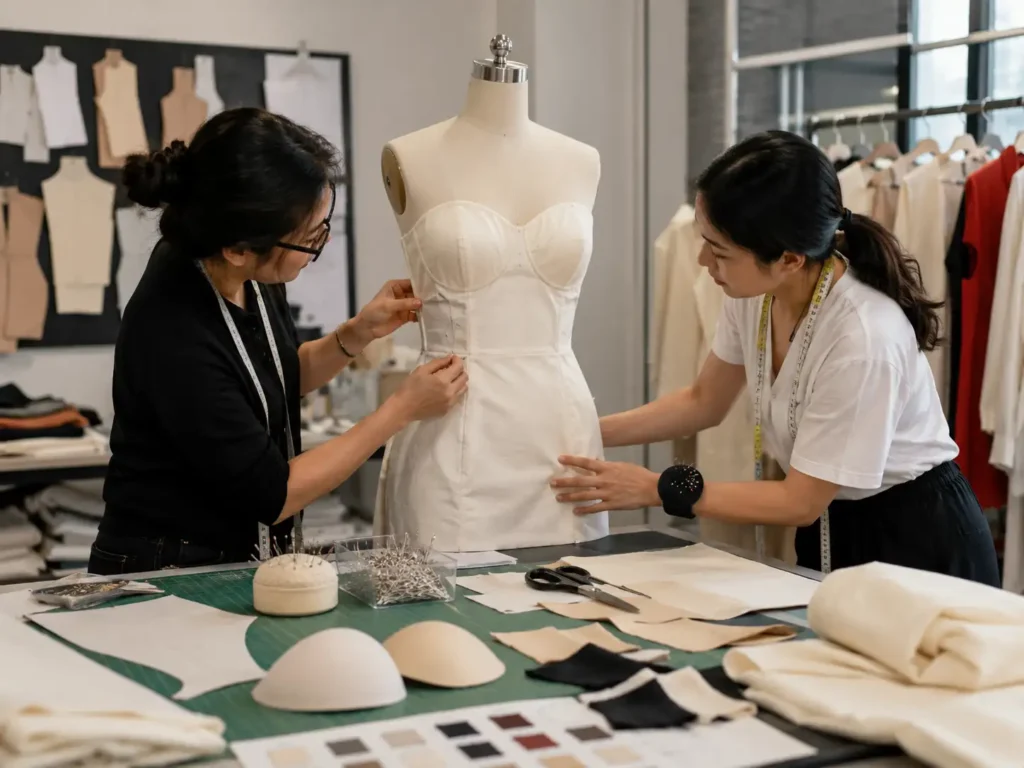
First Sample

Fit / Revised Sample

Photo-Ready Sample
Used when a launch, lookbook or campaign needs a strong visual sample. Any differences from the planned bulk fabric, trims or construction should be documented before production approval.

PP / Golden Sample

Sample Revisions Must Become Production Files
A professional revision process does more than say “we can change it.” Each issue is classified, the cause is identified, the fit or construction is corrected, and every bulk-relevant change is transferred into working documents before the style moves to PP approval.
Diagnose Before Altering
- Fit complaints can come from pattern proportion, fabric recovery, construction tension, lining, strap length, neckline depth or simply a mismatch between the chosen material and the intended silhouette. Jinfeng reviews garment measurements, front/back/side fit views, fabric behavior and construction before deciding whether to alter the pattern, replace fabric, change support or revise sewing.
Document the Change
- Approved revisions are converted into updated patterns, size charts, BOMs, fabric and trim records, sewing instructions, QC checkpoints and packing instructions when relevant. The version history should show what changed, why it changed, and whether the action affects sample cost, material MOQ, unit cost or the production schedule.
Re-Sample High-Risk Changes
- A major pattern change, new fabric, new corset structure or significant construction change normally needs a revised sample. Moving directly from an unstable first sample to bulk may save one sample round but creates much larger risk across thousands of pieces. Complex bodycon clubwear is treated as a product-development project, not a one-pass copy exercise.
Lock the PP Standard
- PP is the stage for confirming the final production standard, not for uncontrolled redesign. Fit, fabric, color, trims, construction, lining, decoration, labels, packing, cost, MOQ, delivery plan and formal production documents should be aligned before bulk cutting begins. The final standard then supports in-line inspection, finished-garment measurement and repeat-order comparison.
Develop a Clubwear Capsule as One Commercial Program
Hero Styles
Commercial Bodycon
Fabric Families
Color Planning
SKU Coordination
Style, color, size, label, barcode and packing requirements are organized before bulk packing so a multi-style launch does not become a warehouse sorting problem.
Reorder Path

Bulk Production Is Allocated by Product Risk
Bodycon clubwear should not be pushed through one generic production route. Knit bodycon, mesh and sequin partywear, stretch satin and corset structures need different sewing experience, material handling and inspection emphasis. Jinfeng allocates styles according to fabric, construction and repeatability requirements.
- Knit and Stretch Bodycon
Jersey, rib, ponte and other stretch styles require fabric relaxing, controlled cutting direction, stretch-aware seam handling and frequent measurement checks. Side seam twist, neckline deformation, waist growth and post-wash size stability are monitored according to the approved sample and measurement file. - Mesh and Detail-Heavy Clubwear
Mesh, cut-out, corset and sequin styles need slower, detail-focused control around lining, openings, cups, boning, edge finish, decorative materials and abrasion points. In-line review is used to catch construction problems before they multiply across the order. - Multi-Style Production Planning
Jinfeng operates 18+ sewing lines and 6+ flexible production lines across a structured womenswear production system. Multi-style programs can be allocated by category and production difficulty, with common project standards for sample versions, QC, private-label packing and shipment coordination. - Production Schedule by Project
Bulk timing is issued after PP approval, material and trim confirmation, quantities, colors, size ratios, packing requirements and QC expectations are clear. Special-dyed materials, sequins, custom trims and complex private-label packaging can extend material preparation, so launch planning should account for those dependencies before the line is booked.
Bodycon Clubwear QC Follows the Product Risk
Quality control covers incoming materials, cutting, sewing, in-line checks, finished garments, pressing, packing and pre-shipment inspection. Fitted clubwear adds category-specific checkpoints because a small tolerance, weak recovery or unstable opening can change the on-body result.
| Control Area | Typical Risk | Sample / Pre-Production Check | Bulk QC Focus |
|---|---|---|---|
| Fabric | Weak recovery, opacity change, shade variation, snagging | Confirm weight, hand feel, stretch direction, recovery, transparency, color and lining match | Incoming color/weight/feel, defects, stretch direction, shade, mesh damage, sequin loss |
| Fit | Waist-hip imbalance, ride-up, twisting | Front/back/side fit review, garment measurements, movement check | Critical bust/waist/hip/length points, side seam position, neckline and hem stability |
| Exposure | Cut-out shift, low coverage, strapless slipping | Check opening position, side coverage, neckline security, anti-slip or support plan | Opening dimensions, neckline/armhole height, lining coverage, strap and support placement |
| Construction | Ruching variation, zipper bulge, boning/cup errors | Confirm gathering amount, zipper method, cup/boning placement, mesh edge finish | Seam quality, symmetry, zipper flatness, ruching location, lining attachment, support components |
| Appearance | Wrinkles, shine direction, asymmetry, loose sequins | Approve pressing effect and front/back appearance | Color difference, stains, holes, snags, loose threads, symmetry, sequin/mesh condition |
| Packing | Wrong SKU, label, barcode or protective method | Confirm private-label and packing instruction | Hangtags, barcodes, size stickers, polybags, folding, carton marks, ratios and protection |
MOQ and Cost Depend on the Development Choices
Jinfeng Apparel’s standard MOQ starts from 200 pcs per style/color. Final MOQ, sample cost and unit cost depend on fabric availability, custom color, trims, construction complexity, packaging and production scheduling. The goal is to control cost without weakening the intended clubwear appearance or essential QC.
| Development Factor | Typical Impact on Product | MOQ / Cost Effect | Planning Note |
|---|---|---|---|
| Stock jersey / ponte | Stable base for commercial bodycon | Usually closest to standard MOQ | Confirm weight, stretch and recovery before locking pattern |
| Custom-dyed fabric | Controls collection color direction | Supplier MOQ and lead time may increase | Lab dip / color approval should happen before bulk scheduling |
| Stretch mesh / power mesh | Creates sheer or support zones | Layering and special colors can change material requirement | Confirm transparency, lining boundaries and recovery |
| Corset structure | Adds support and waist shaping | More pattern, sample, trim and sewing work | Cups, boning, anti-slip, lining and zipper must be specified |
| Sequin / rhinestone detail | Raises visual impact | Higher sewing time, protection and inspection cost | Check abrasion, seam thickness and packing protection |
| Multi-color / wide size split | Expands SKU count | Smaller quantity per SKU can reduce production efficiency | Plan realistic style/color quantities and packing ratios |
| Private-label packing | Creates retail/ecommerce-ready delivery | Custom labels, bags and cartons may have independent MOQ | Confirm artwork, barcodes, carton marks and warehouse rules early |
Private Label Delivery Should Be Ready for the Sales Channel
Private Label
SKU & Packing
Barcode stickers, color/size identifiers, polybags, folding method, carton ratios and carton marks support retail-ready or ecommerce-ready order handling.
Shipment Coordination
Development Proof From Multi-Style Fitted Programs

US Clubwear Capsule - 20 Styles / 42,000 Pieces

European Bodycon Program - 24 Styles / 56,000 Pieces
An anonymous European premium fitted-womenswear label developed a 24-style program of jersey, rib, ponte, stretch satin and mesh bodycon dresses totaling about 56,000 pieces. The development team focused on stretch recovery, side seam twisting, front/back length balance, neckline stability and consistency across the approved size range. Several first samples looked correct when standing but changed after walking or sitting, so the fit review added movement checks before final pattern approval. Fabric relaxing and cutting direction were controlled for knit styles, while stretch satin styles received separate zipper and seam-tension checks. Once PP standards were confirmed, bulk QC emphasized bust-waist-hip measurements, side seam position, hem stability, garment appearance and packing accuracy. Pattern, fabric and Golden sample records were retained for new-color and repeat-order evaluation.
Reorders Start From Records, Not From Memory
Same-Style Repeat
New Color Extension
Same Pattern, New Fabric
Frequently Asked Questions About Bodycon Clubwear Development
Yes. Jinfeng can review a reference image for silhouette, construction, fabric direction, sizing points and likely development risk. A reference image alone is not enough for a final bulk quotation. Fabric, measurements, quantity, colors, trims, packaging and target delivery requirements still need confirmation.
Standard MOQ starts from 200 pcs per style/color. Custom-dyed fabrics, special mesh, sequin materials, custom trims, complex structures and private-label packaging may carry separate supplier or production MOQ requirements.
Simple styles can be around 7-10 days, standard dresses commonly around 10-15 days, and complex corset, mesh, lace or sequin styles commonly around 15-25 days depending on material readiness and construction. Major fit or fabric changes may require a revised sample and a new schedule.
Jinfeng reviews fabric recovery, hip tension, front/back length, side seam position, hem length and movement. A skirt that looks correct while standing can still climb during walking, so the correction may involve both pattern balance and fabric choice.
Transparency is reviewed together with mesh type, layer count, lining color and lining boundary. Stretch mesh, soft mesh and power mesh can behave differently under studio light and flash, so the approved sample should define where the garment remains sheer and where coverage is required.
Yes. Development can cover cup placement, boning, lining, upper-bust fit, anti-slip support, zipper position and waist shaping. Complex structure normally needs more sample validation than a standard jersey bodycon style.
Fit issues are classified before correction. Jinfeng can review bust-waist-hip proportion, neckline, armhole, strap, length, side seam, fabric behavior and on-body effect, then update the pattern, size chart, BOM, sewing instruction and QC points before a revised sample is made.
Yes. Multi-style programs can include bodycon dresses, mesh styles, corset minis, cut-outs, ruched dresses, sets, bodysuits and related fitted pieces. Sample priority, fabric groups, style difficulty, SKU count, PP approval and bulk allocation are managed by project.
Bulk preparation uses the approved PP sample, final pattern, size chart, BOM, fabric and trim approvals, sewing instruction, QC checklist, packing instruction and Golden sample record. Incoming, cutting, sewing, garment and packing inspections then check the production against those references.
Jinfeng supports NDA-based cooperation and protects tech packs, patterns, samples, labels, packing files and unreleased designs. Anonymous project descriptions can be used without exposing brand names, original design files, unpublished samples or proprietary packaging information.

Send Your Bodycon Clubwear Development Brief
A useful first review starts with the product information that changes fit, sampling and production planning. Share the materials already available; a complete tech pack is helpful, but a clear line sheet, reference image or original sample can also be used for an initial development review. Jinfeng Apparel will assess product structure, fabric direction, sampling needs, MOQ fit and major production risks before the next step is confirmed. Mature multi-style projects can be organized by sample priority so the most complex or launch-critical pieces are reviewed first.
- Style images, tech packs, sketches, line sheets or original sample photos
- Planned style count and quantity per style/color
- Fabric direction, color plan and any required trims or support structure
- Target size range and existing size chart, if available
- Private-label, barcode, polybag, carton or warehouse packing requirements
- Target launch or delivery window and preferred shipment arrangement


