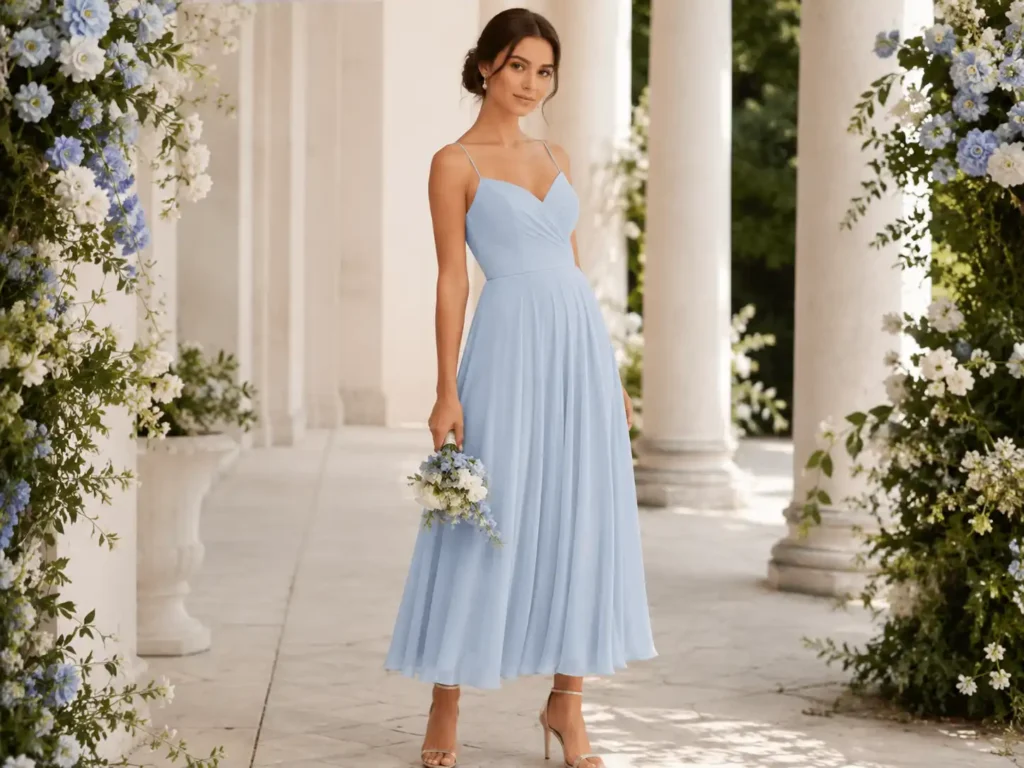
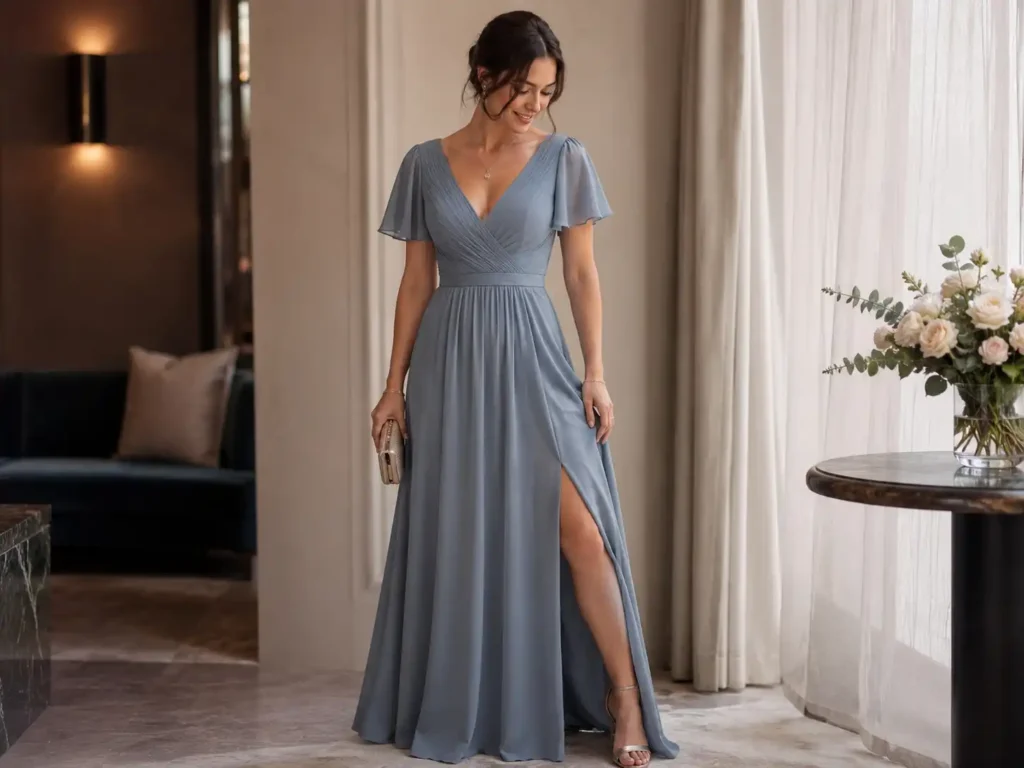
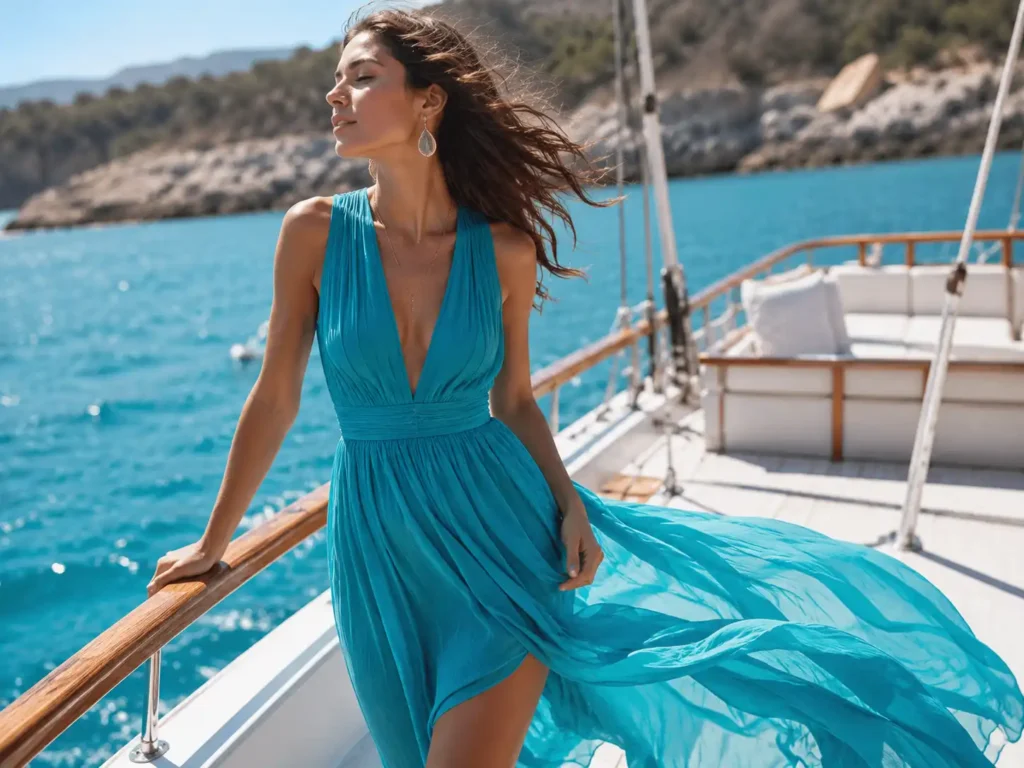
...

Blue Dress Manufacturer

Custom blue dress development for established fashion brands requiring controlled color, refined fit, stable bulk quality, and private-label delivery.

  • 8 commercial blue shade directions, from powder and dusty blue to cobalt, royal, sapphire, and navy.
  • 5-stage color control: reference standard, lab dip, fabric approval, PP sample, and bulk shade release.
  • 6 shade-critical components reviewed per style: shell, lining, lace or mesh, thread, zipper, and trims.
  • MOQ starts from 200 pcs per style/color, with standard dress samples commonly developed in 10-15 days and complex structures in 15-25 days.

Blue Dress Development Backed by Scalable Manufacturing

A strong blue dress program needs more than available sewing capacity. Pattern, sampling, material allocation, quality inspection, and delivery planning must work as one controlled manufacturing system.

Since 2008

Jinfeng Apparel has focused on custom women’s fashion manufacturing since 2008. Long-term dress experience supports early risk recognition across fit, fabric behavior, color coordination, finishing, and bulk execution. Development decisions are based on how a garment will wear, photograph, pack, and repeat in later production runs.

Six Owned Factories

Six owned women’s fashion factories provide structured production coverage for dresses, skirts, jumpsuits, matching sets, and related womenswear. Orders are allocated by fabric type, construction difficulty, delivery window, and inspection needs rather than forcing every style through one production route.

100,000+ Monthly Capacity

Regular monthly capacity exceeds 100,000 garments across the production network. Capacity planning is completed by style complexity, color count, size breakdown, fabric arrival, and required delivery date. A complex satin corset dress and a casual jersey dress receive different line planning, timing, and quality checkpoints.

Two Sample Rooms

Two sample rooms support parallel development for seasonal collections, photo samples, fit revisions, and PP approvals. Separate tracking for first sample, revised sample, and production sample keeps color, measurements, construction notes, and material approvals aligned before bulk cutting begins.

Seven Pattern Makers

More than seven senior women’s pattern makers handle bust, underbust, waist, hip, neckline, strap, slit, hem, rise, and balance adjustments. Pattern corrections are documented by version so approved fit can be transferred into grading, size sets, bulk measurement charts, and repeat orders.

Fifteen QC Inspectors

More than fifteen QC inspectors cover fabric arrival, cutting, sewing, measurements, finishing, appearance, labels, packing, and shipment preparation. Blue dress inspection includes shade grouping, surface marks, shine damage, snagging, lining exposure, trim coordination, and color-size-SKU accuracy.

Built for Established Fashion Programs

Manufacturing support is designed for teams managing seasonal launches, multiple silhouettes, branded packaging, controlled quality standards, and repeatable production across more than one delivery cycle.

Global Fashion Brands

Structured development supports brands with defined design direction, fit standards, fabric expectations, and launch calendars. Blue dress projects can be managed as a single hero style, a color capsule, or a multi-category seasonal program covering mini, midi, maxi, occasion, resort, and partywear silhouettes.

Sourcing Teams

Clear project files help sourcing teams compare fabric options, color routes, MOQ conditions, sample timing, production allocation, inspection stages, and logistics. Early visibility over risks makes internal supplier qualification and order approval easier to manage.

Product Developers

Reference images, tech packs, original samples, line sheets, and measurement charts can enter a documented development process. Pattern comments, color approvals, trim cards, BOM updates, and sample revisions are consolidated before PP approval.

Occasionwear Labels

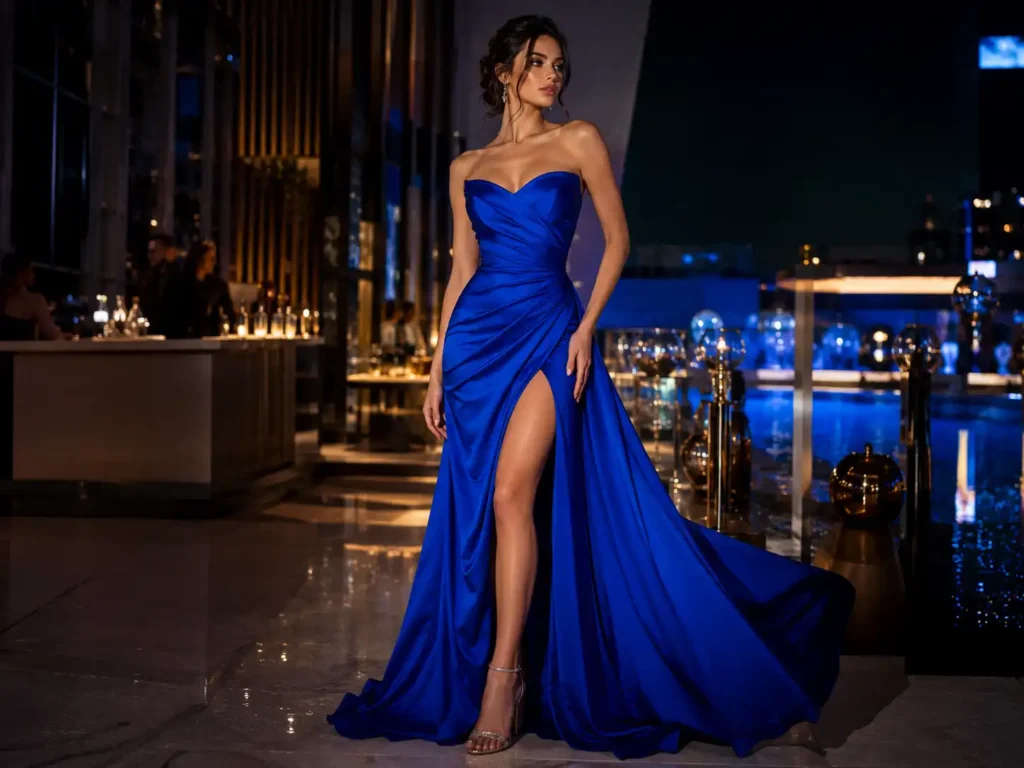
Royal blue satin, dusty blue chiffon, navy lace, cobalt mesh, and sapphire sequin dresses require close control over shade, support structure, lining, fit, pressing, and surface handling. Development can be organized around event calendars and campaign sample deadlines.

Ecommerce Fashion Teams

Online fashion programs depend on accurate product appearance, stable measurements, clean finishing, color consistency, and SKU-ready packing. Photo samples and bulk garments are reviewed against approved construction and shade references to reduce visual and fit variation.

Retail Programs

Retail programs often require multiple sizes, controlled carton ratios, barcodes, care labels, warehouse marks, inspection documents, and staged deliveries. Production and packing data are prepared around the approved assortment and receiving requirements.

Blue Dress Styles Built for Commercial Collections
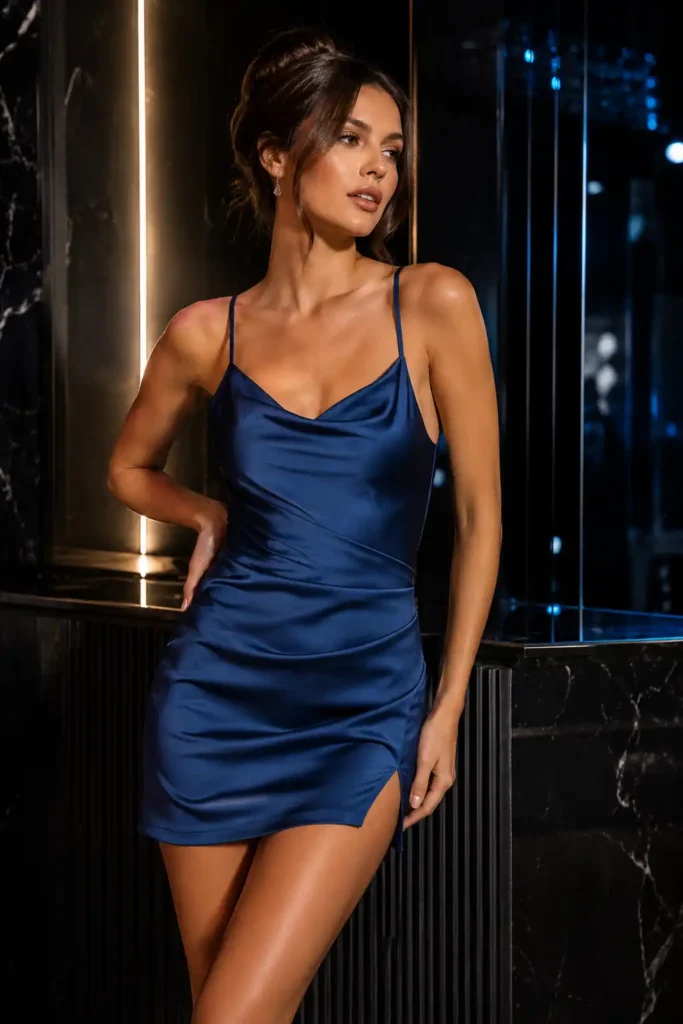
Blue dresses can move from casual daytime products to high-impact occasionwear. Each silhouette requires a different balance of fabric, fit, support, movement, finishing, and bulk control.

Blue Mini Dresses

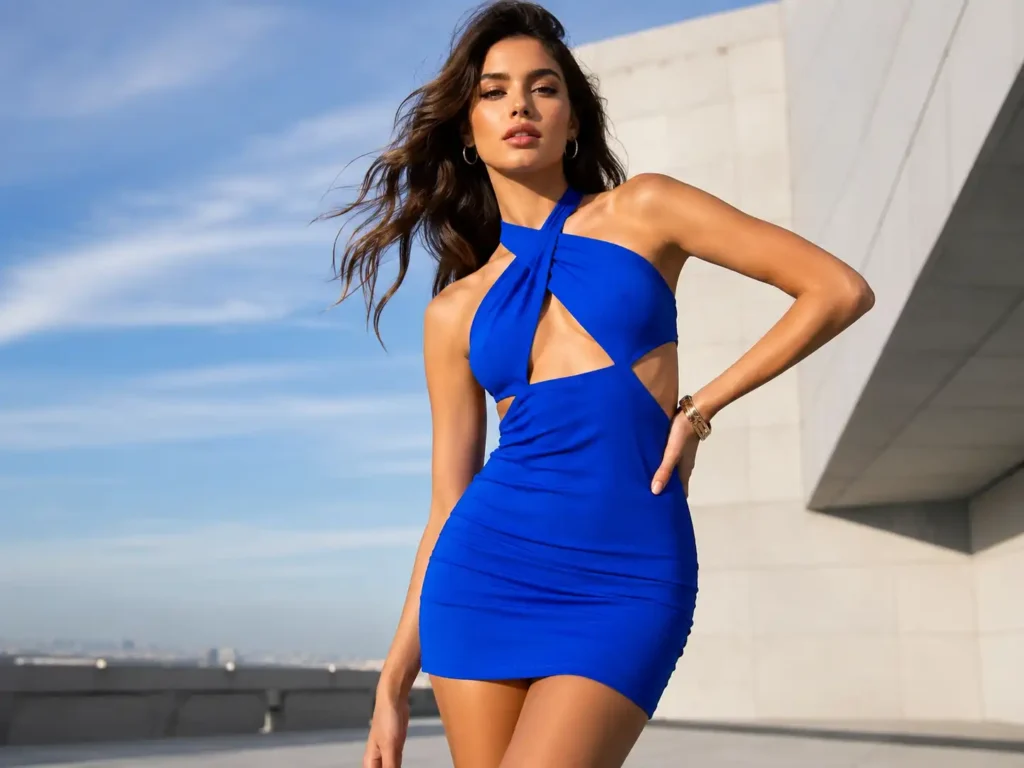
Blue mini dresses are developed around hem balance, sitting coverage, waist position, and movement. Bodycon styles need controlled stretch and recovery, while woven minis need clean shaping through darts, princess seams, or panel construction. Satin and structured woven options require careful pressing to avoid shine marks. Mesh or lace inserts need stable edges and consistent placement across sizes. Bulk inspection focuses on finished length, side-seam balance, zipper behavior, lining coverage, and left-right symmetry.
  • Best for party, club, birthday, and trend-led drops.
  • Common fabrics: satin, jersey, mesh, lace, crepe, and sequin bases.
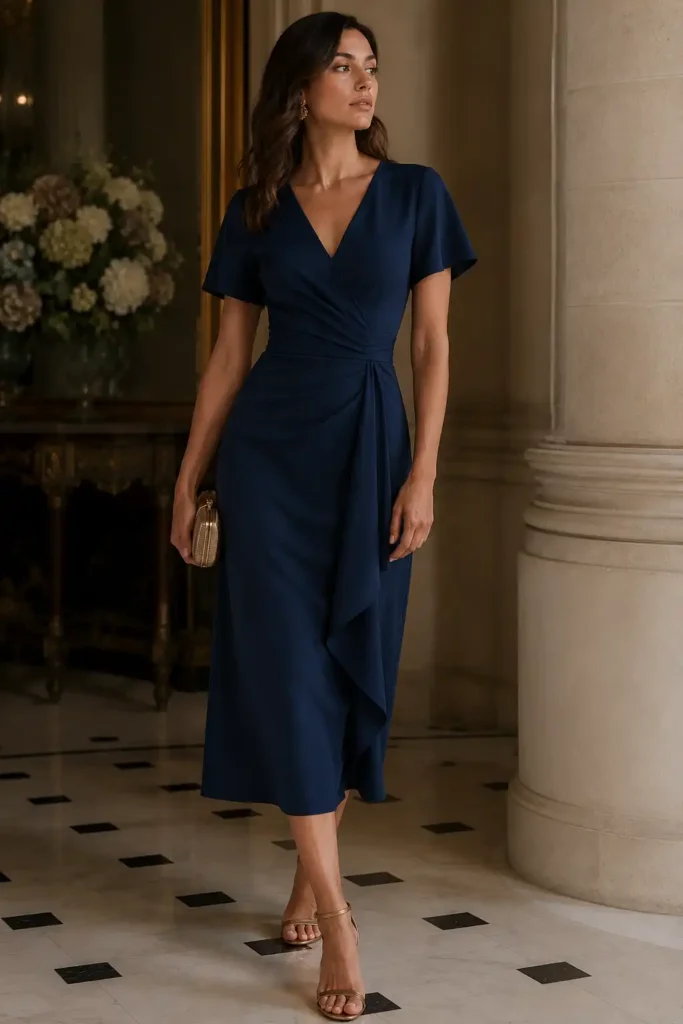
Blue Midi Dresses

Midi dresses work across occasionwear, office, wedding guest, and premium ecommerce collections. The pattern must control waist position, hip ease, slit height, skirt sweep, and calf balance. A navy tailored midi may need stronger internal structure, while a dusty blue chiffon midi needs softer drape and controlled transparency. Grading receives close attention because a small shift in waist seam or slit position becomes visible across extended sizes.
  • Best for refined day-to-evening collections.
  • Common fabrics: crepe, satin, chiffon, ponte, suiting, and lace.
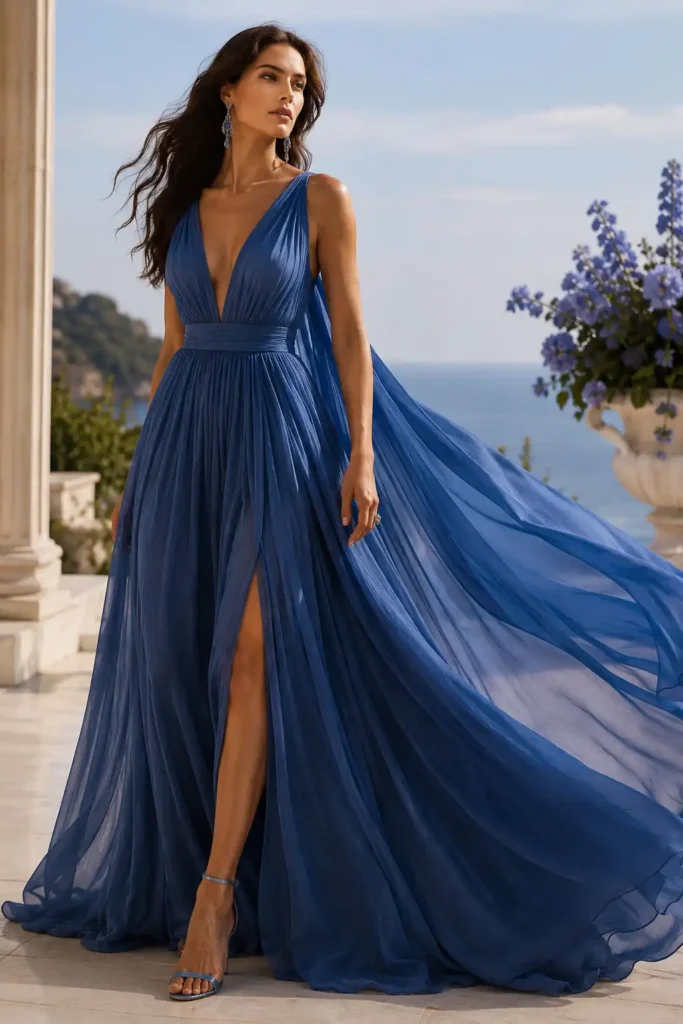
Blue Maxi Dresses

Maxi development is driven by length, weight distribution, skirt volume, train control, and walking clearance. Chiffon and mesh maxis may need layered skirts, stable waist seams, and carefully matched lining. Satin maxis require grain control, smooth seams, and pressing discipline. Size specifications should define high-point shoulder length, front and back length, slit placement, and hem tolerance. Packing methods must limit deep creasing before warehouse receipt.
  • Best for resort, evening, wedding guest, and eventwear.
  • Common fabrics: chiffon, satin, mesh, crepe, lace, and soft jersey.
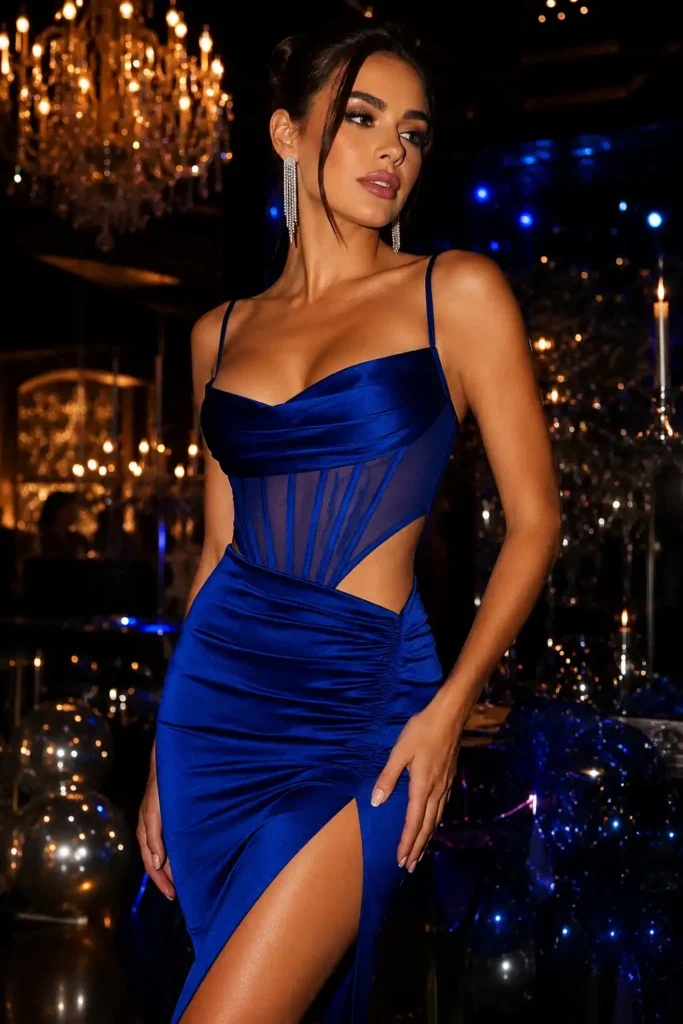
Blue Party Dresses

Party dresses combine strong visual impact with secure fit. Royal blue, cobalt, and sapphire shades are often paired with satin sheen, mesh panels, ruching, cut-outs, sequins, or corset construction. Pattern engineering must protect bust coverage, waist shaping, strap position, and movement. Decorative materials are checked for skin contact, snagging, shedding, and uneven reflection. Bulk control covers embellishment density, seam smoothness, fastening strength, and color coordination across every visible component.
  • Best for nightlife, holiday, birthday, and social campaigns.
  • Common fabrics: satin, mesh, sequin, velvet, jersey, and lace.
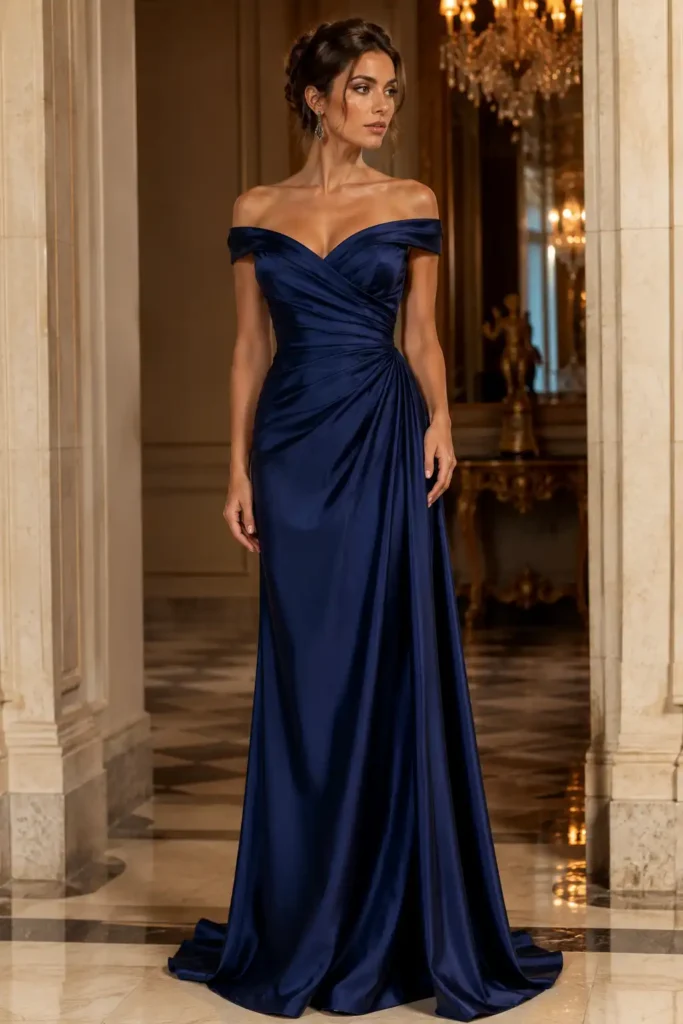
Blue Evening Dresses

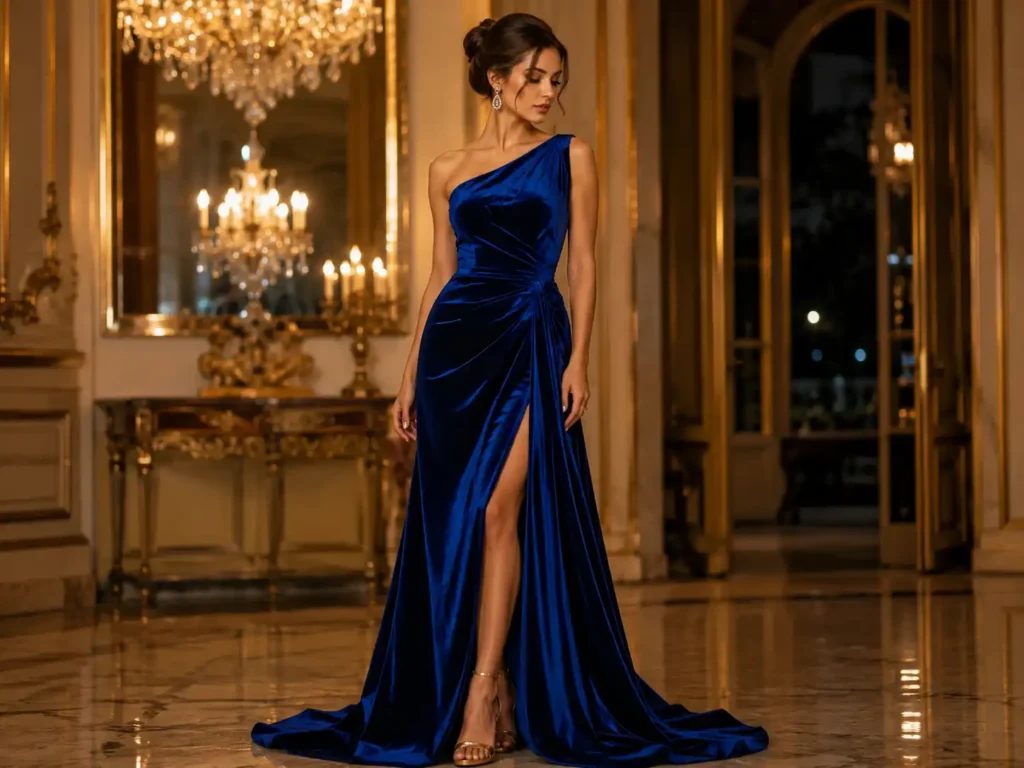
Evening dresses need controlled structure, polished finishing, and a consistent floor-length silhouette. Navy and sapphire shades create depth, while royal blue delivers stronger camera impact. Internal cups, boning, waist stays, underlining, or full lining may be required according to neckline and fabric. Sample fitting should test standing, walking, sitting, and arm movement. Bulk garments are checked for neckline stability, train shape, seam visibility, zipper flatness, and pressing quality.
  • Best for formal, gala, prom, and premium occasion programs.
  • Common fabrics: satin, chiffon, velvet, mesh, lace, and embellished bases.
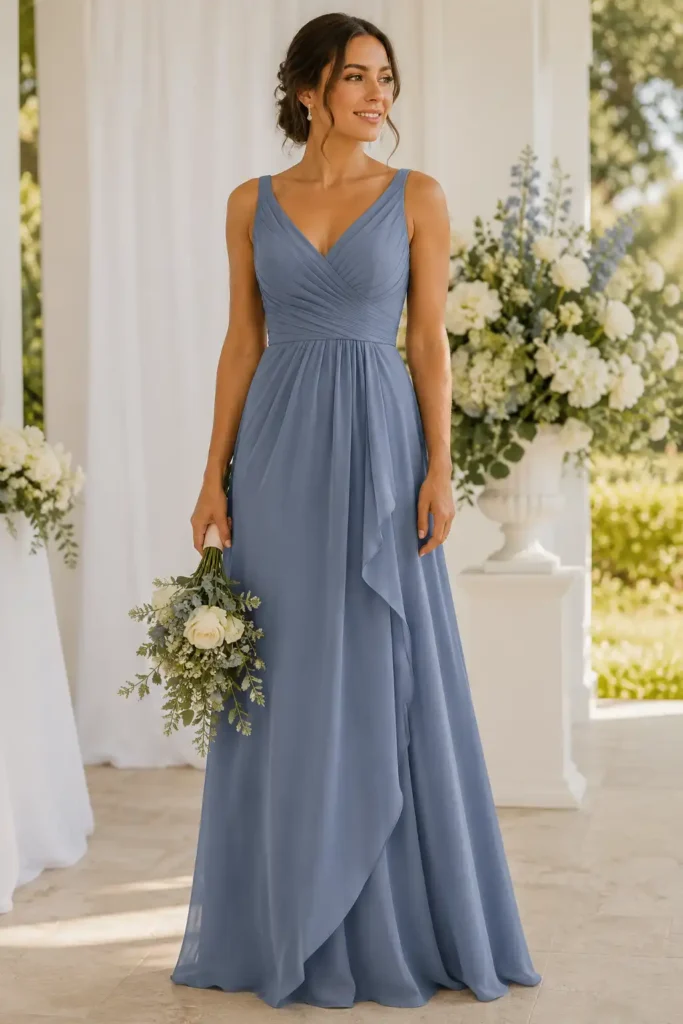
Blue Bridesmaid Dresses

Bridesmaid programs require consistent shade, reliable size grading, repeatable length, and stable replenishment records. Dusty blue, powder blue, slate blue, and navy can appear different under daylight, studio lighting, and indoor warm light, so fabric approval must use an agreed physical standard. Multi-style programs should coordinate shell, lining, chiffon layers, lace, thread, and zippers. Size sets are reviewed before bulk to protect bust, waist, armhole, and hem consistency.
  • Best for coordinated multi-style collections.
  • Common fabrics: chiffon, satin, crepe, lace, and soft mesh.
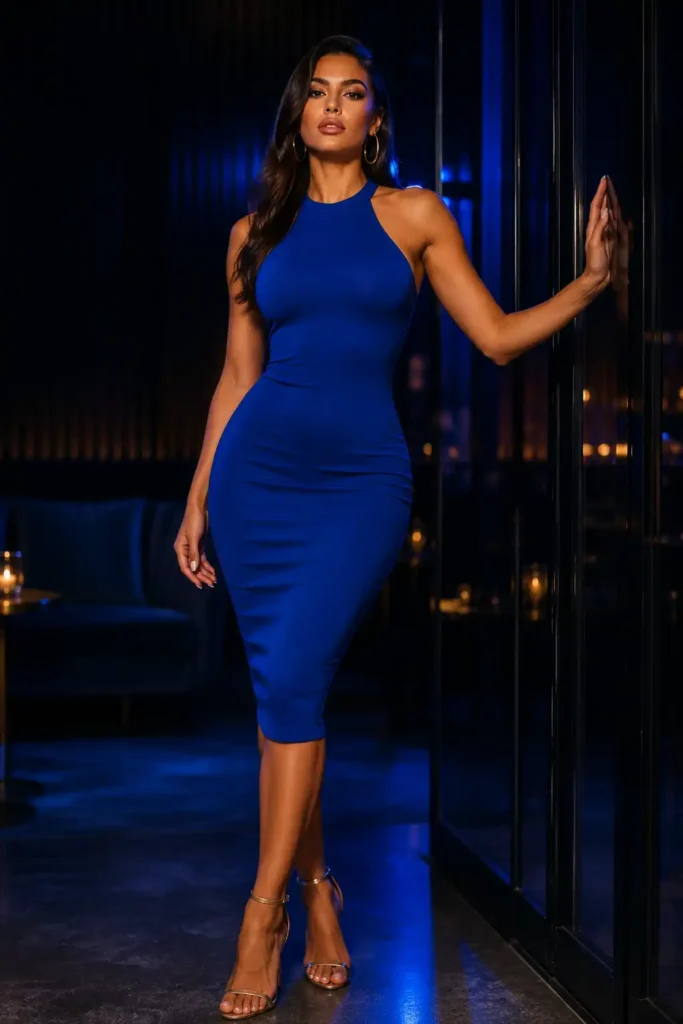
Blue Bodycon Dresses

Bodycon dresses depend on stretch direction, recovery, compression, lining choice, and accurate negative ease. A cobalt jersey mini may need stronger recovery than a navy ponte midi. Seams should sit straight without twisting, puckering, or excessive tension. Pattern review covers bust, waist, high hip, full hip, thigh, hem, and movement. Fabric relaxation, cutting direction, seam type, and measurement method are documented before bulk production begins.
  • Best for clubwear, partywear, and sculpted fashion collections.
  • Common fabrics: jersey, ponte, power mesh, stretch satin, and rib knit.
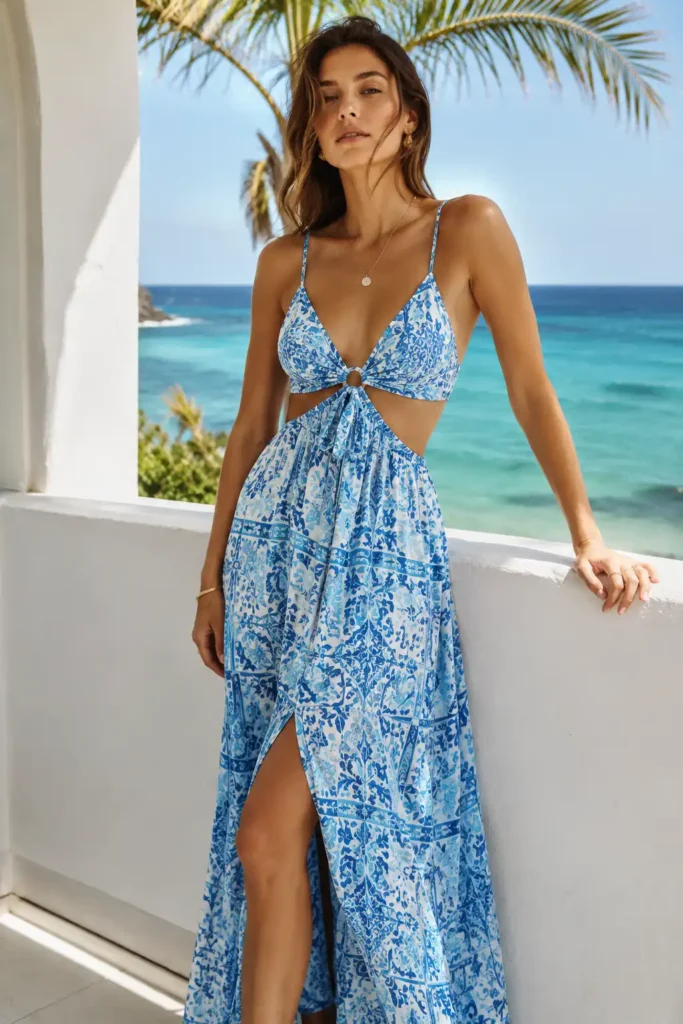
Blue Resort Dresses

Resort dresses need visual ease without losing production control. Sky blue, ocean blue, printed blue, and denim-inspired tones work well with relaxed silhouettes, cut-outs, tie details, open backs, and fluid skirts. Fabric selection should consider travel creasing, transparency, shrinkage, colorfastness, and packing recovery. Adjustable straps, elastic channels, tie lengths, and skirt volume are checked across sizes. Repeat orders benefit from saved color, fabric, trim, and pattern references.
  • Best for vacation, cruise, beach club, and summer launches.
  • Common fabrics: rayon, linen blends, cotton, chiffon, and lightweight jersey.

Blue Shades for Distinct Brand Stories
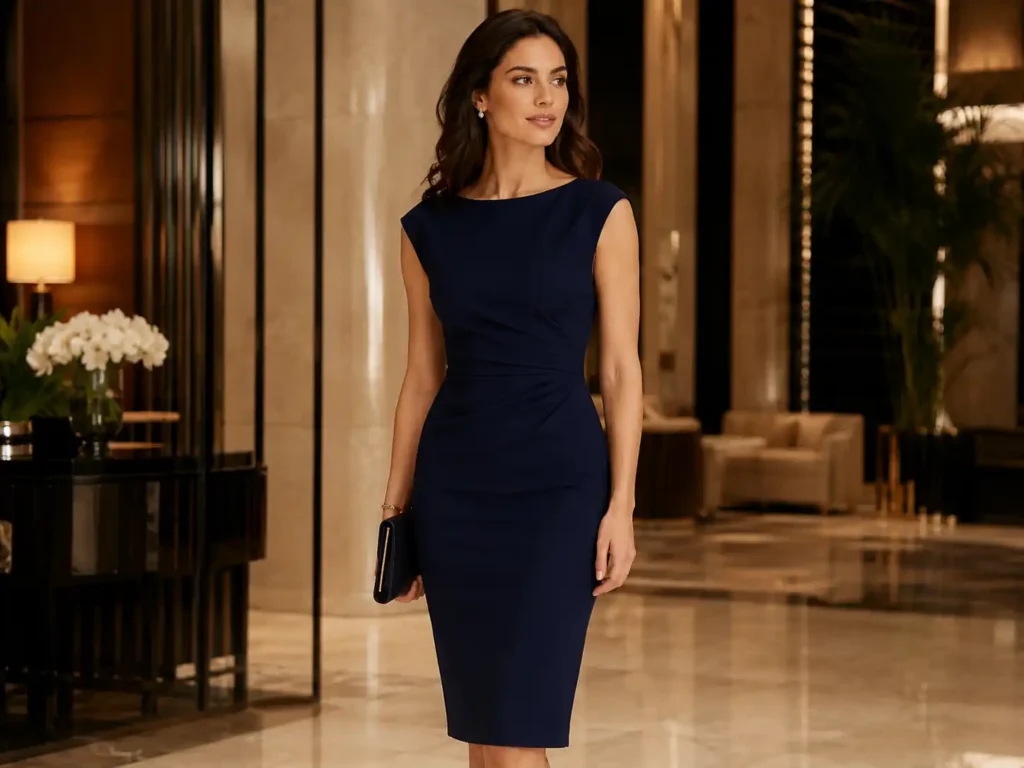
Shade selection changes the mood, fabric response, photography, trim coordination, and commercial use of a dress. Approval should be based on physical material under agreed lighting rather than screen appearance alone.

Navy Blue

Navy supports formal, office, evening, and core wardrobe programs. The shade can appear nearly black on velvet or dense satin and lighter on chiffon or open lace. Development should define the acceptable depth, undertone, and lighting condition. Matching thread and zipper tape requires close review because slightly warmer or cooler components become visible beside a deep shell fabric.

Royal Blue

Royal blue creates strong visual impact for party, prom, occasion, and social-media-led collections. Satin intensifies reflection, while matte crepe produces a more controlled tone. Lab dip review should consider both face and reverse sides of the fabric. Bulk lots need clear shade grouping because minor differences become obvious when garments are displayed together.

Cobalt Blue

Cobalt feels modern and energetic, especially in mini, bodycon, cut-out, and resort silhouettes. The tone is sensitive to lighting and camera settings, so physical approval should be paired with garment review. Mesh, lining, zipper, and thread may require separate sourcing because standard components often lean too purple or too green.

Sapphire Blue

Sapphire blue works well for evening, velvet, sequin, and premium satin dresses. Reflective surfaces can shift from blue to violet under warm light. Material selection should evaluate pile direction, sequin reflection, fabric face, and pressing response. A coordinated trim card protects consistency across shell, lining, zipper, thread, cups, and decorative elements.

Sky Blue

Sky blue supports resort, spring, daytime, and soft occasion collections. Pale woven fabrics may show transparency, seam allowances, or internal construction, making lining and underlining decisions important. Fabric defects and stains are more visible than on dark shades. Bulk review should include light-box or daylight assessment and careful finishing inspection.

Powder Blue

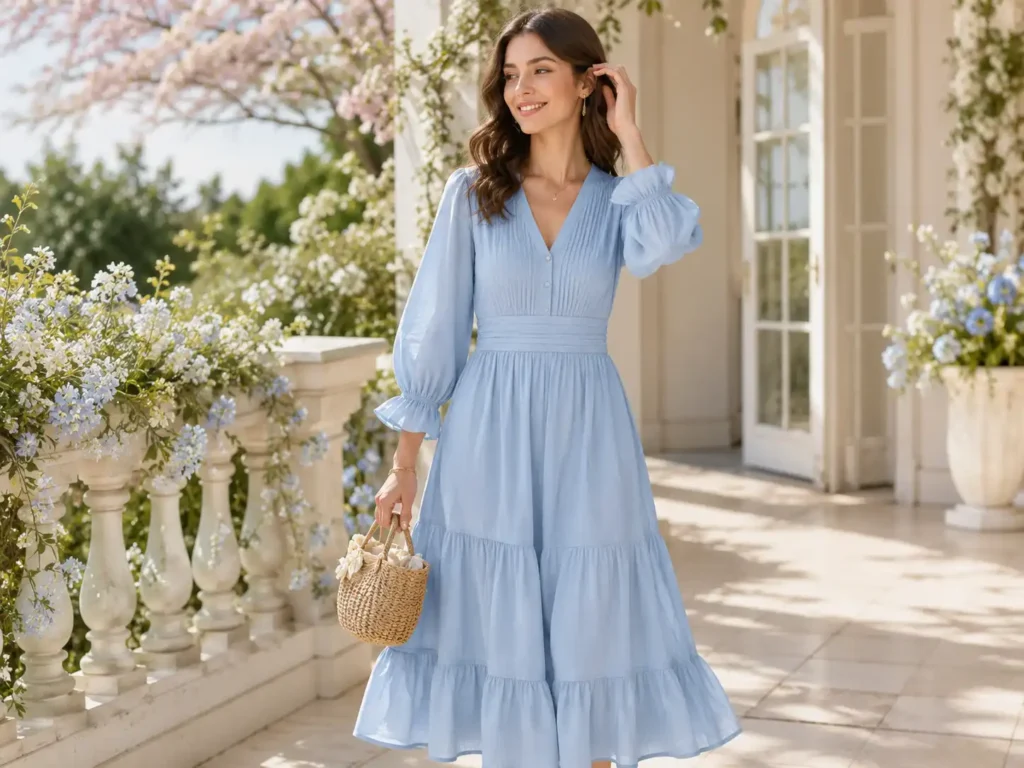
Powder blue offers a clean, delicate appearance for bridesmaid, graduation, and feminine midi or maxi styles. Undertone control matters because a grey, green, or lavender shift changes the final mood. Chiffon layers can deepen the tone, while satin reflection can lighten selected areas. Shell-and-lining approval should be completed as a combination.

Dusty Blue

Dusty blue combines muted blue with grey undertones and is widely used for bridesmaid, occasion, and premium soft tailoring. Dyeing variation can change the balance between blue and grey. Physical standards should define the acceptable range, and later repeat orders should reference saved bulk swatches rather than relying only on a Pantone number.

Ocean Blue

Ocean blue can range from clear aquatic tones to deeper teal-blue directions. The chosen undertone should be defined early because available fabrics, matching trims, and print colors vary widely. Resort, cruise, and summer collections can combine ocean blue solids with tonal prints, lightweight textures, and coordinated sets while maintaining one approved color story.

Fabric Options Engineered for Blue Dresses
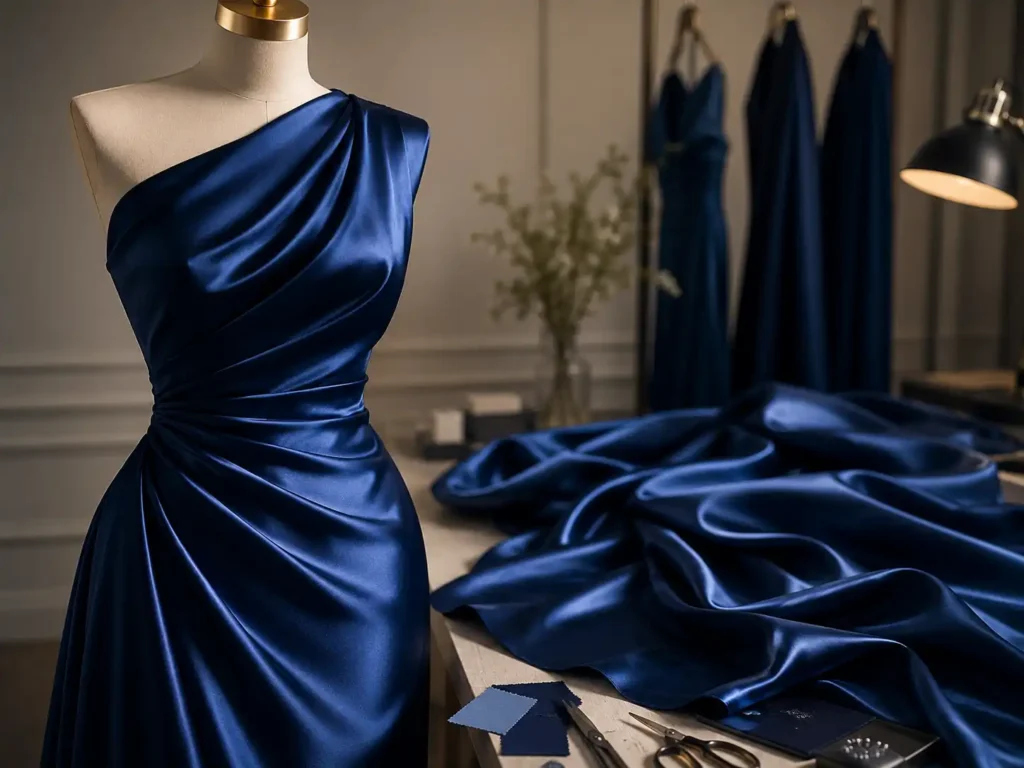
Blue color behaves differently on glossy, matte, transparent, textured, stretch, and embellished surfaces. Fabric approval must consider shade, hand feel, structure, lining, care, production loss, and repeat availability together.

Blue Satin

Satin gives blue dresses depth and strong light reflection, making it ideal for slip, corset, bridesmaid, party, and evening styles. The same shade can appear lighter on highlights and darker in folds. Development checks grain direction, face quality, snagging, seam puckering, pressing marks, and color migration. Bias-cut styles require fabric relaxation and controlled handling. Shell, lining, thread, and zipper are reviewed together because satin reveals even small color differences.
  • Key controls: GSM, weave, luster, width, dye lot, snag resistance.
  • Production focus: smooth seams, clean pressing, protected surface handling.
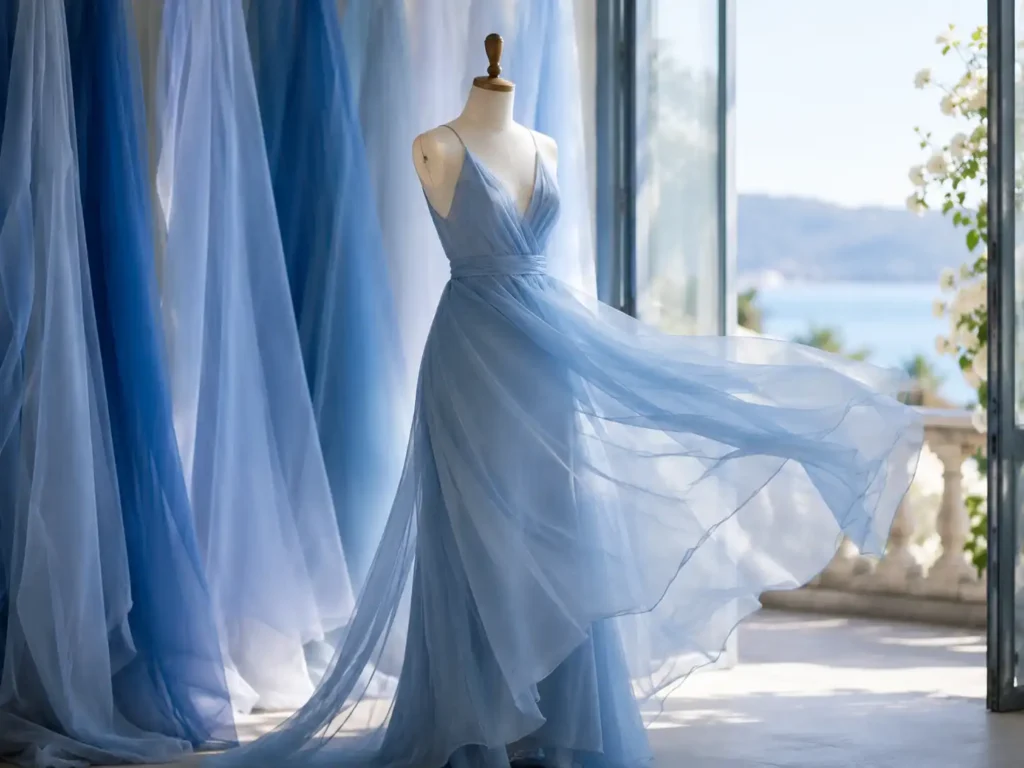
Blue Chiffon

Chiffon creates fluid movement for maxi, bridesmaid, resort, and layered occasion dresses. Transparency means the final color depends on layer count and lining shade. A single layer may look pale, while three gathered layers appear much deeper. Development should approve the full fabric combination, not a loose swatch alone. Cutting requires grain control and panel stability. Hem finish, gathering ratio, seam visibility, and static behavior are reviewed during sampling.
  • Key controls: transparency, layer count, lining, color depth, shrinkage.
  • Production focus: balanced panels, clean narrow hems, controlled gathering.
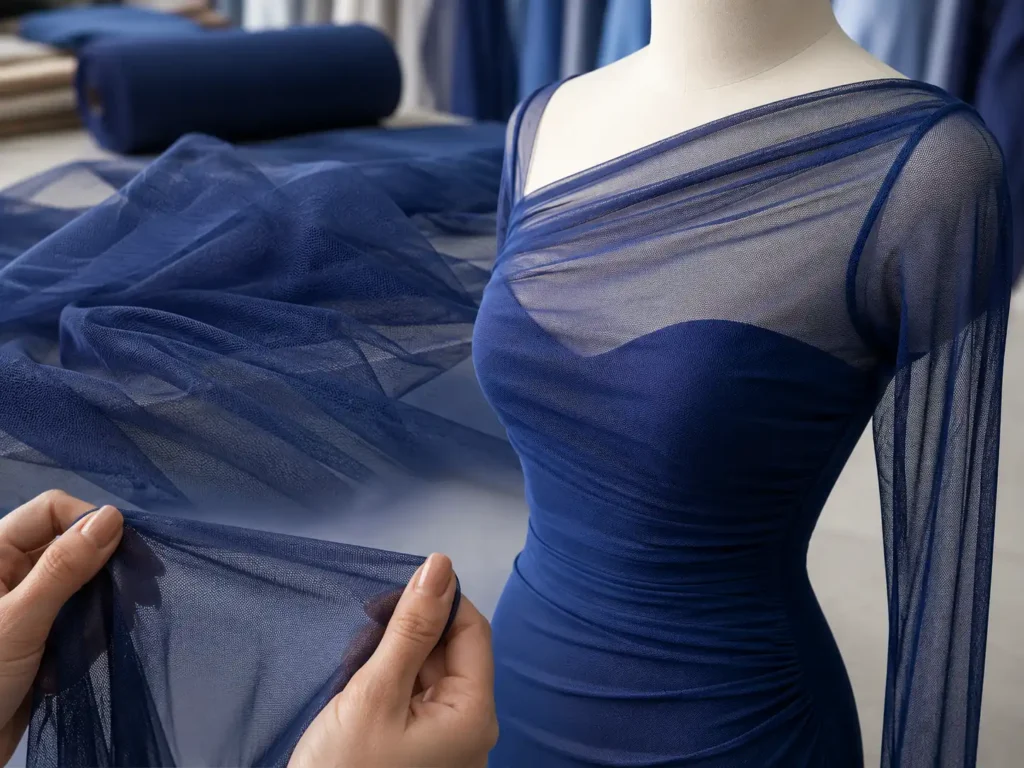
Blue Mesh

Mesh supports bodycon, ruched, corset, cut-out, and layered party dresses. Color appearance changes over skin, lining, power mesh, or multiple layers. Development should define stretch direction, recovery, transparency, edge finish, and the approved underlayer. Seams and needle selection must protect the open structure. Bulk inspection checks holes, pulled yarns, seam tunneling, uneven ruching, and shade differences between shell mesh and support mesh.
  • Key controls: stretch, recovery, transparency, layer count, surface strength.
  • Production focus: secure edges, stable ruching, matched support materials.
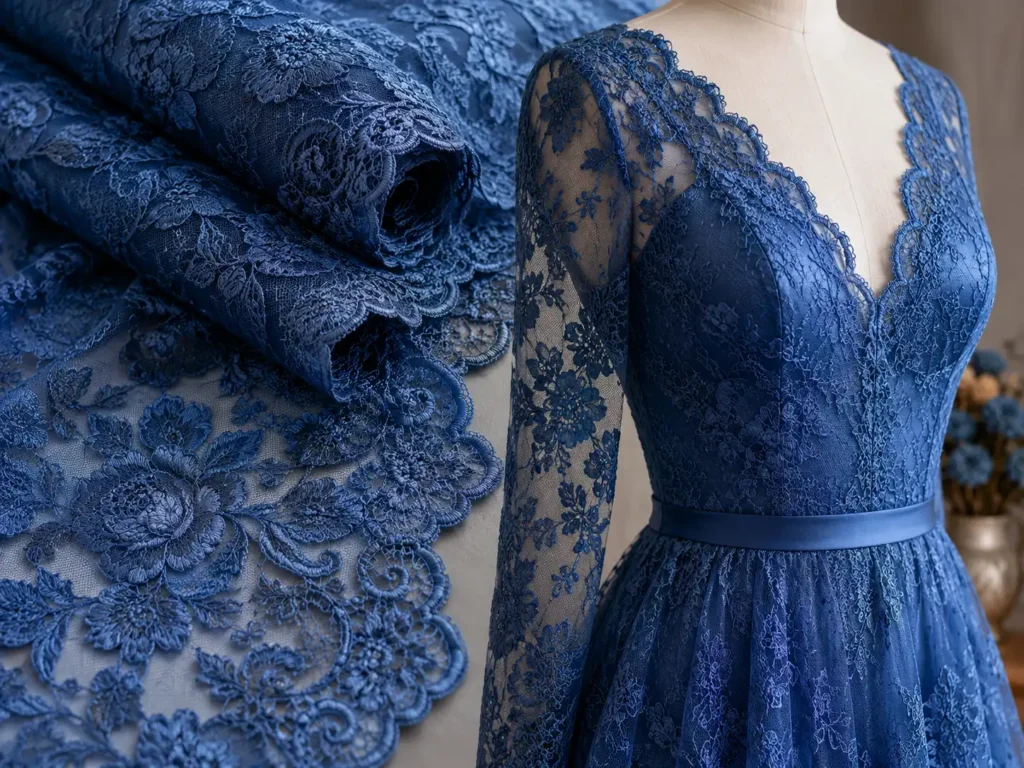
Blue Lace

Lace adds texture and premium detail to occasion, evening, bridesmaid, and corset dresses. Blue tone changes with motif density, ground mesh, cord, embroidery thread, and lining color. Approval should include complete lace placement over the intended lining. Pattern engineering may require motif matching, scallop placement, mirrored panels, or hand positioning. Bulk control covers motif direction, panel symmetry, color lots, seam joins, loose threads, and damage around delicate edges.
  • Key controls: motif scale, ground color, cord color, lining, repeat size.
  • Production focus: placement, symmetry, scallop use, clean joining.
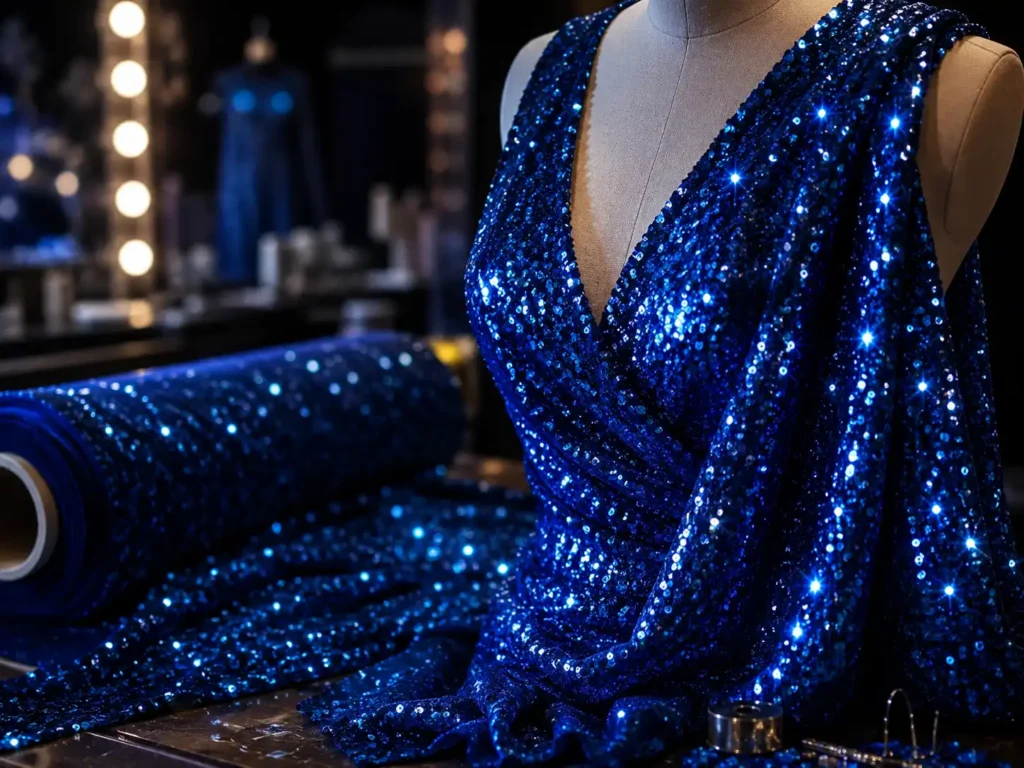
Blue Sequin

Sequin fabric creates high-impact sapphire, royal, navy, and holographic blue dresses. Reflection can shift under daylight, warm light, flash, and video. Development should approve both the base fabric and sequin surface. Pattern placement, nap direction, seam clearing, skin contact, lining, and weight support are planned before cutting. Bulk inspection checks missing sequins, loose threads, sharp edges, seam bulk, reflection direction, and appearance after packing.
  • Key controls: sequin direction, base shade, density, weight, shedding.
  • Production focus: cleared seams, protected skin contact, consistent reflection.
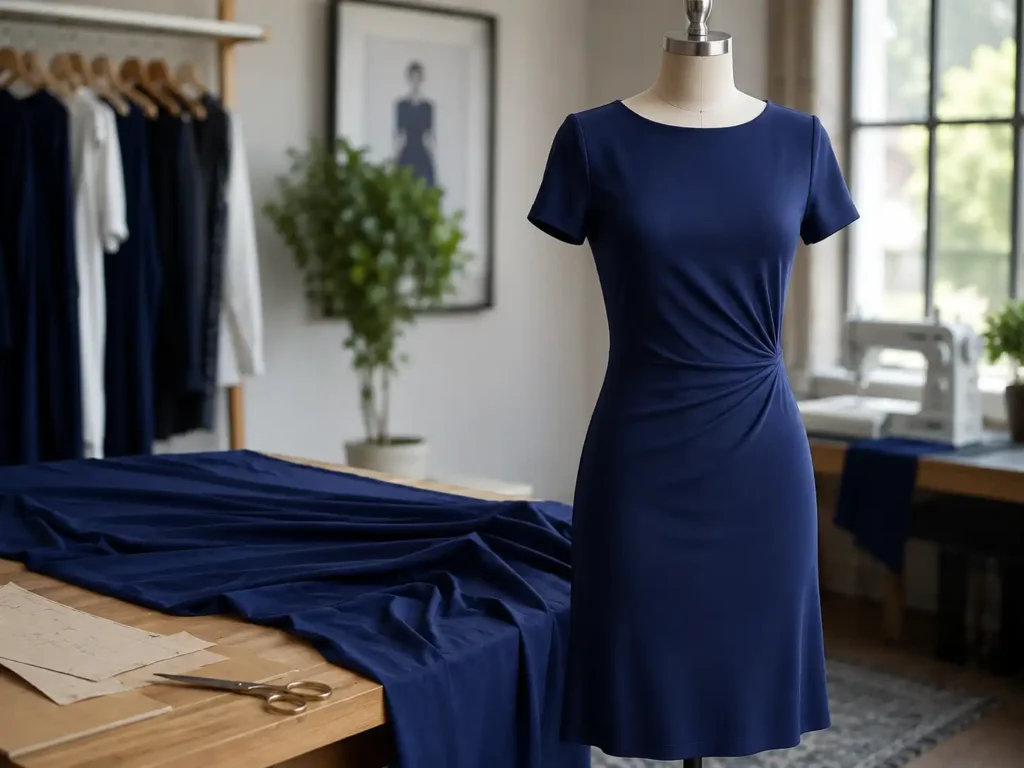
Blue Jersey

Jersey and ponte are suited to bodycon, midi, casual, ruched, and sculpted blue dresses. Shade can vary according to fiber content, knit construction, and finishing. Development should measure stretch and recovery in both directions, fabric relaxation, shrinkage, spirality, and opacity. Pattern ease is adjusted to the approved material rather than copied between fabrics. Bulk cutting follows one direction when surface or shade variation is visible.
  • Key controls: stretch percentage, recovery, GSM, opacity, shrinkage.
  • Production focus: stable seams, straight side lines, controlled measurements.
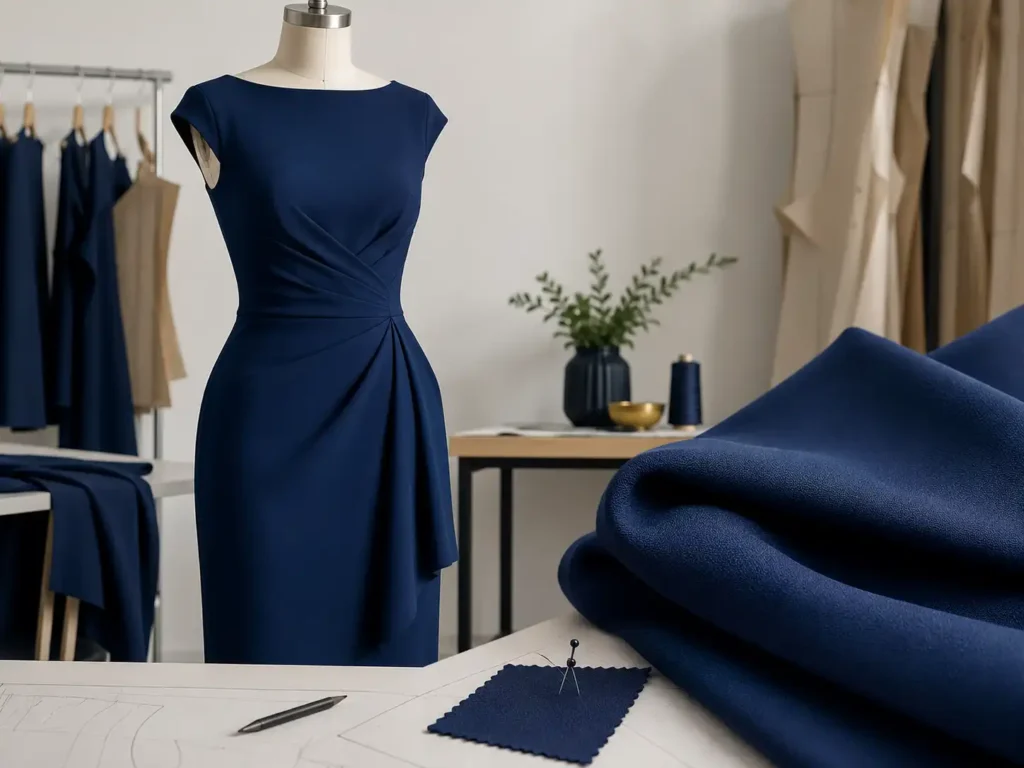
Blue Crepe

Crepe and structured woven fabrics create clean lines for midi, tailored, one-shoulder, wrap, and formal dresses. Matte surfaces make blue color appear more stable than glossy satin, although dye lots still require approval. Development reviews body, drape, wrinkle recovery, seam appearance, and pressing response. Darts, panels, waist seams, vents, and hems should hold shape without stiffness. Lining is selected according to opacity, comfort, and structure.
  • Key controls: weight, drape, surface texture, wrinkle recovery, color depth.
  • Production focus: accurate shaping, crisp seams, clean pressing.
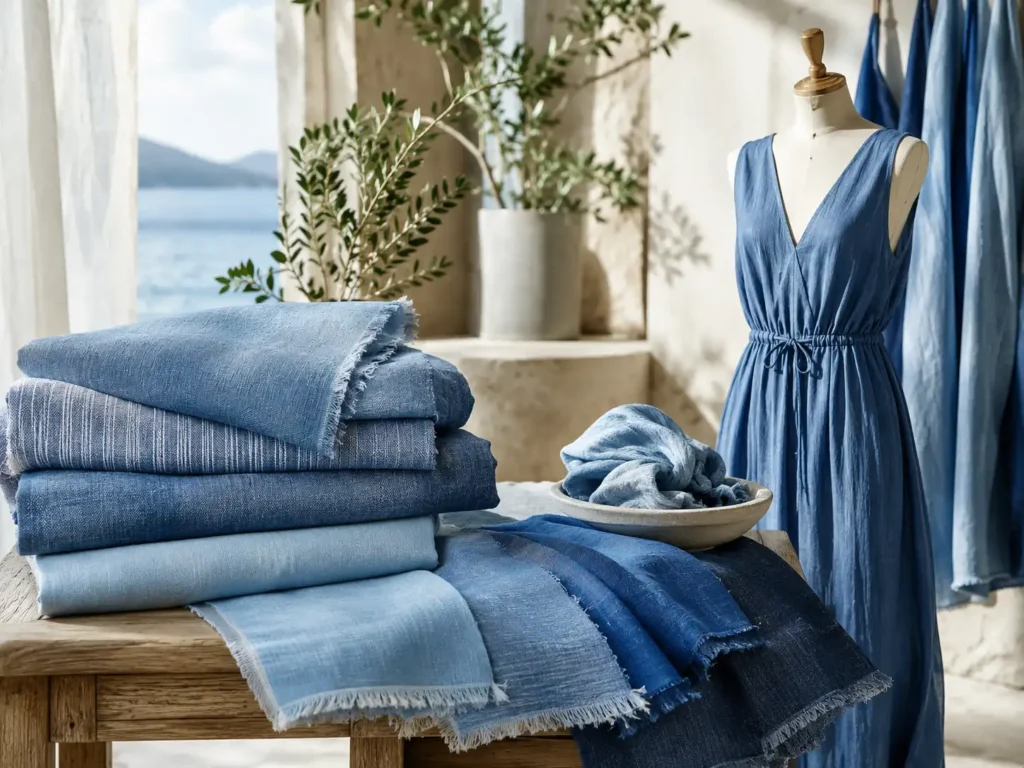
Blue Natural Blends

Rayon, cotton, linen blends, and denim-inspired fabrics work well for resort, casual, day, shirt, and utility blue dresses. Fiber content affects shade uptake, wash appearance, shrinkage, and surface texture. Garment-washed or denim effects need approved wash standards and tolerance ranges. Lightweight rayon may require stabilization, while linen blends need shrinkage and wrinkle evaluation. Repeat orders should reference saved fabric and wash standards.

  • Key controls: composition, shrinkage, wash effect, colorfastness, hand feel.
  • Production focus: stable dimensions, approved wash tone, repeatable finish.

How Custom Blue Colors Move Into Production

Color approval becomes reliable when every decision is tied to a physical standard, a named material, a controlled lighting method, and a recorded production reference.

Stock Fabric Review Before Sampling

Stock blue fabric can shorten development when the selected material already meets the required shade, hand feel, weight, width, stretch, and surface quality. Availability alone is not enough. The review begins with supplier stock status, lot quantity, repeat availability, composition, usable width, shrinkage, colorfastness, and visible defects. A stock navy satin suitable for 300 dresses may not support a 20-style program or later replenishment.

Fabric swatches are reviewed beside the design reference and intended trims. Gloss, transparency, pile, texture, and layer count can change perceived color even when a supplier uses the same shade name. A sky blue chiffon over white lining may look very different from the same chiffon over tonal lining. A cobalt stretch mesh can shift when doubled over a bodycon panel.

A stock route is recommended when the brand accepts an available shade and the quantity can be secured from one controlled lot. Material reservation should follow approval quickly. Mixed dye lots are separated, identified, and assigned by style or delivery batch when a single lot cannot cover the full program. A physical bulk swatch is saved for later inspection and repeat-order comparison.

Pantone and Lab Dip Approval

Custom blue development starts with a clear reference. A Pantone code can provide direction, although a physical fabric sample or approved garment often gives a more reliable target because fiber, weave, knit, luster, and finish change color appearance.

The chosen standard should state the reference system, material, viewing condition, and acceptable undertone.

The selected fabric mill prepares lab dips or strike-offs on the actual base material whenever possible. Review covers hue, depth, saturation, undertone, face-to-back variation, and behavior under daylight and indoor light. Royal blue may lean purple under warm lighting; dusty blue may become too grey; navy may become too black on dense satin. Comments should use measurable direction such as deeper, cleaner, less violet, or more neutral rather than relying on screen screenshots.

Approval records include the accepted lab dip, fabric description, supplier, date, and relevant style group. Custom dyeing may increase minimum fabric quantity, development time, and production risk, especially when several blue shades are divided across many styles. A consolidated color plan can protect cost and reduce unnecessary lot variation.

Bulk Shade Release and Records

Bulk dyeing is not released only because a lab dip was approved. The first bulk lot is compared with the approved standard on the actual production fabric.

Review includes face color, reverse color, selvage-to-center variation, roll-to-roll variation, and the effect of finishing. Shade bands can be created when controlled variation exists within an agreed range.

Approved rolls are grouped and marked. Cutting plans avoid mixing visibly different lots within one garment. Shell, lining, lace, mesh, thread, zipper tape, cups, and decorative components are compared as a complete color set.

Exact optical matching is not always possible across different fibers and surfaces, so the goal is an intentional, commercially balanced combination approved before bulk assembly.

Final records can include the accepted lab dip, bulk swatch, trim card, PP sample, dye-lot map, and inspection notes. Those references support bulk release, complaint review, and future repeats. Repeat orders still require material availability and fresh bulk approval, yet saved standards reduce uncertainty and shorten the route back to an established blue direction.

Controlling Blue Across Every Visible Component

One approved blue cannot be copied mechanically across different fibers and surfaces. A coordinated component set is reviewed for visual harmony, performance, and repeatability before bulk production.

ComponentCommon Color RiskApproval MethodBulk Control
Satin shellLuster changes apparent depth; pressing can create light marks.Lab dip, full-width swatch, garment panel, and PP sample.Separate dye lots, protect fabric face, inspect under agreed light.
Chiffon layerTransparency and layer count alter the final shade.Layered swatch over approved lining and sample garment.Control layer count, gathering ratio, lining, and roll grouping.
Mesh or power meshSkin, lining, stretch, and double layers change color.Mesh-over-lining combination and stretch review.Use approved support mesh, control layer placement and tension.
LaceMotif density, cord, ground mesh, and lining affect tone.Full lace repeat over intended lining.Control motif direction, lot, panel placement, and symmetry.
Thread and zipperSmall undertone differences remain visible beside deep blue.Trim card beside shell under daylight and indoor light.Purchase by approved code and verify at line issue.
Cups, boning, elasticsInternal components can show through pale or sheer fabrics.Coverage review on sample and under lighting.Use approved covered components and inspect exposure.
Sequin or embellishmentReflection shifts hue across light sources and directions.Flat swatch, draped sample, flash, and video review.Control nap, batch, density, seam clearing, and packing direction.

Fit and Silhouette Control for Blue Dresses
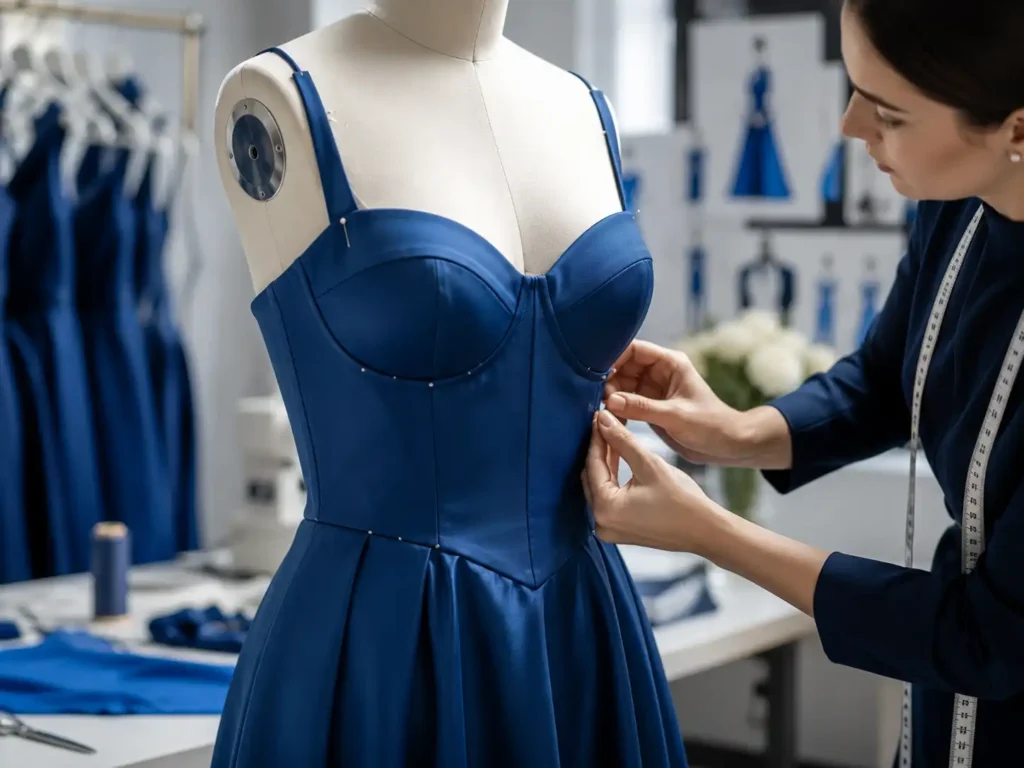
Color attracts attention, while fit determines whether a dress can be photographed, sold, worn, and reordered with confidence. Pattern decisions are linked to fabric behavior and intended use.

Bust and Underbust

Bust fit is controlled through cup shape, dart position, princess lines, neckline tension, internal support, and fabric stretch. Corset and strapless dresses may require cups, boning, underbust shaping, grip elastic, or a waist stay. Slip and deep-neck styles need coverage checks during movement. Sample comments are translated into pattern changes with measured reference points rather than general requests to make the top tighter or looser.
  • Review points: bust circumference, cup depth, apex position, neckline opening.
  • Bulk checks: symmetry, support placement, seam balance, fastening security.
Waist and Hip

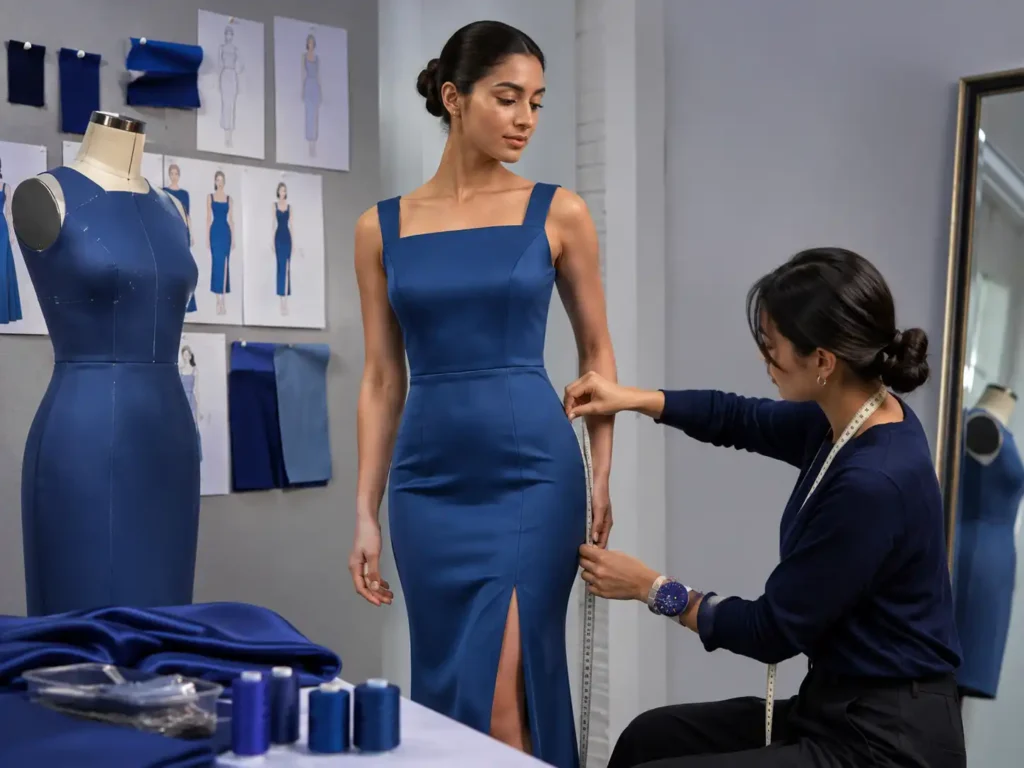
Waist and hip balance determines silhouette, comfort, and side-seam position. Bodycon styles use material-specific negative ease; woven dresses rely on darts, panels, seam shaping, or controlled ease. High hip and full hip are reviewed separately when the silhouette is fitted. Grading rules protect proportion across sizes, especially when the collection extends from XS through 3XL.
  • Review points: natural waist, high hip, full hip, ease, rise, side seam.
  • Bulk checks: measurement tolerance, twisting, pulling, and seam alignment.
Neckline and Straps

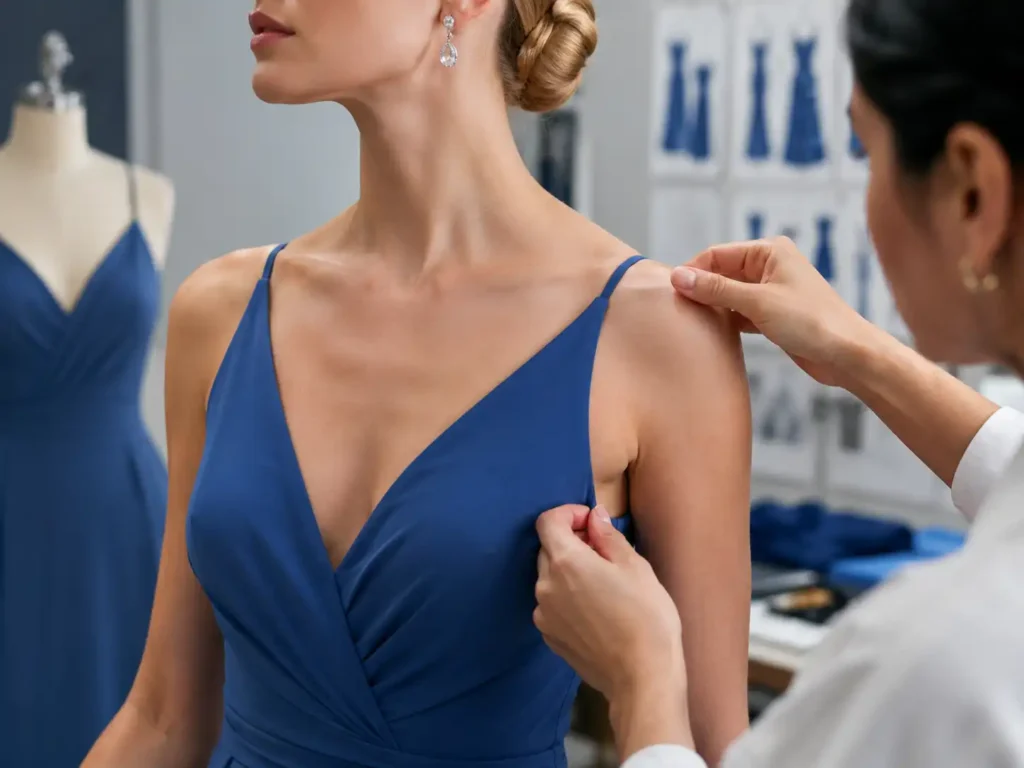
Necklines and straps must hold position without gaping, cutting, twisting, or exposing internal construction. Halter, one-shoulder, off-shoulder, cowl, square, and deep V shapes each require different stabilization. Strap length, attachment angle, elastic recovery, facing, tape, and lining are tested during fitting. Adjustable hardware is selected for strength, scale, and color coordination.
  • Review points: neckline shape, gaping, strap angle, armhole, shoulder movement.
  • Bulk checks: paired strap length, attachment strength, symmetry, top-edge stability.
Slit and Movement

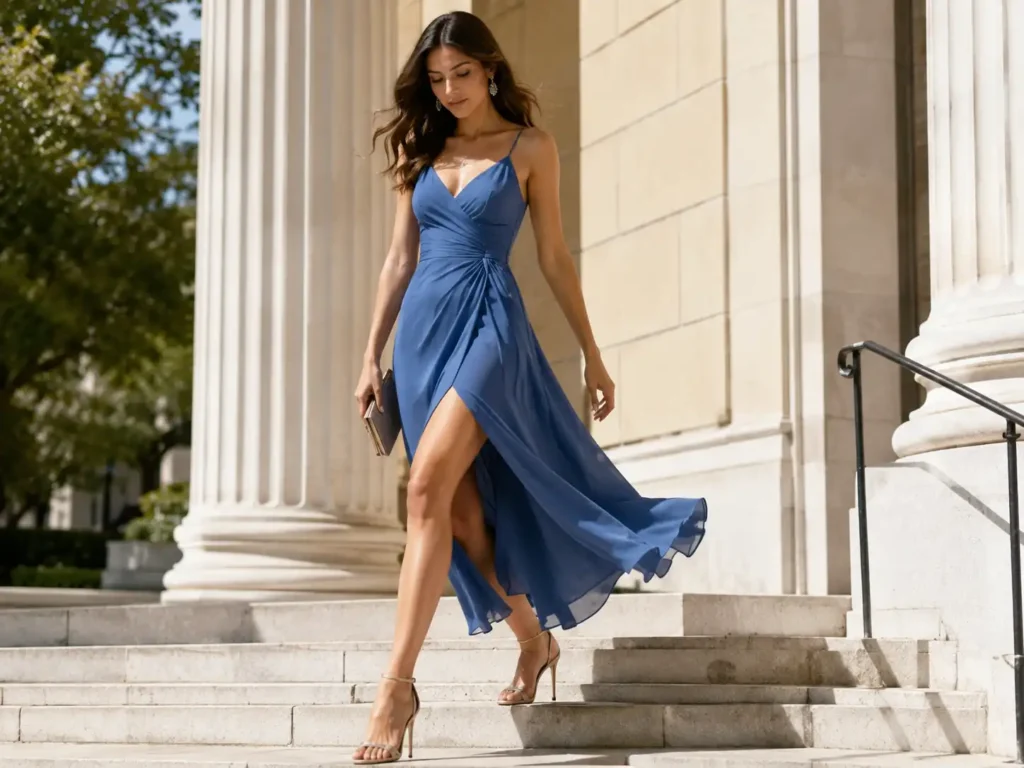
Slit height should support the design without creating uncontrolled opening during walking or sitting. Placement is checked against hip position, lining construction, seam allowance, and size grading. Maxi and midi dresses may require bartacks, reinforcement, or lining openings. Movement tests cover steps, sitting, turning, and stair use. Bulk inspection confirms slit length, left-right placement, reinforcement, and clean pressing.
  • Review points: slit start, overlap, lining opening, reinforcement, mobility.
  • Bulk checks: finished length, seam straightness, bartack strength, symmetry.
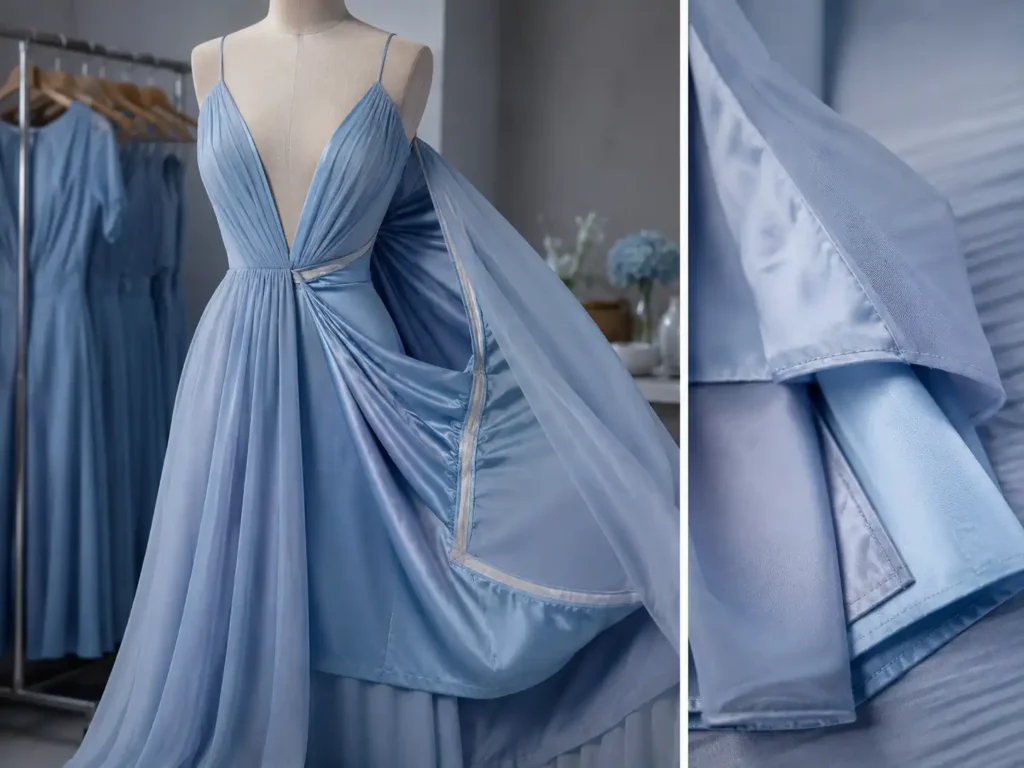
Lining and Coverage

Lining affects opacity, comfort, structure, color depth, and garment recovery. Pale sky blue and powder blue often need coverage review under strong light. Mesh and chiffon may use tonal, nude, or contrast layers according to the design. Lining ease, hem length, attachment points, stretch, and static behavior are tested. Internal construction should remain hidden without restricting movement.
  • Review points: opacity, color combination, ease, hem position, seam visibility.
  • Bulk checks: lining twist, exposure, tension, attachment, and cleanliness.
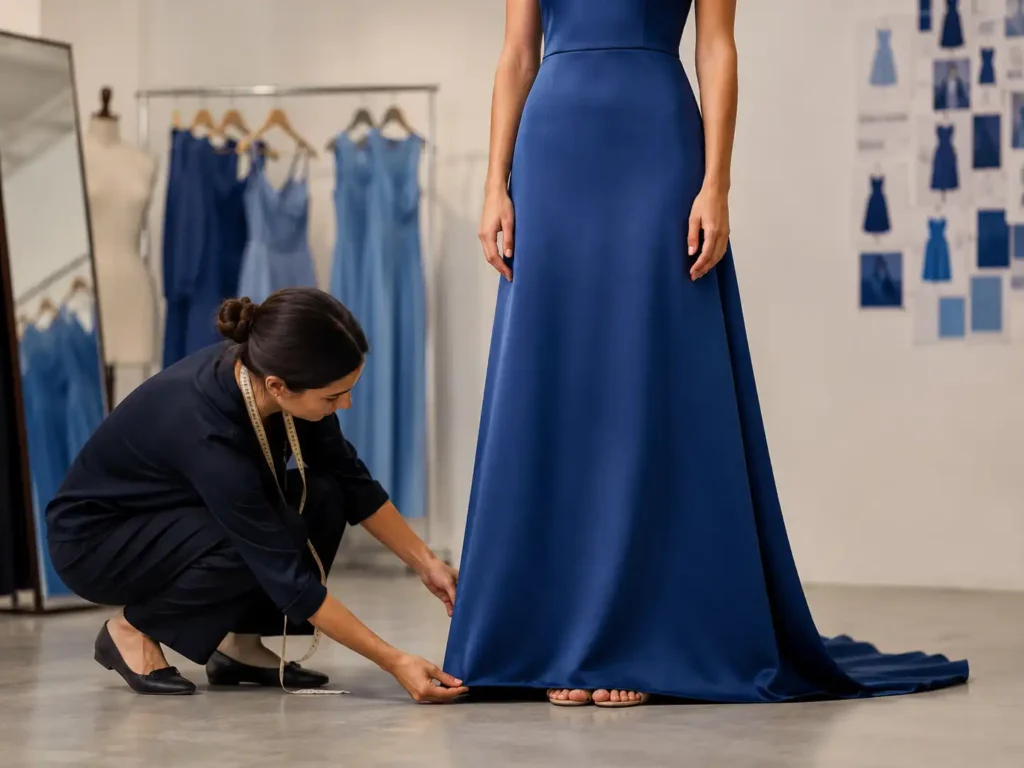
Hem and Length

Dress length is measured from defined reference points and reviewed with the intended footwear and silhouette. Mini styles need sitting coverage; midi styles need calf balance; maxi styles need walking clearance and an even sweep. Bias, chiffon, and stretch fabrics may require hanging or relaxation before hemming. Size grading and production tolerance are recorded so bulk lengths remain consistent.
  • Review points: high-point shoulder length, waist-to-hem, front-back balance, sweep.
  • Bulk checks: level hem, tolerance, stretch drop, pressing, and packing creases.

Construction Details Protecting the Design

A visually strong blue dress can fail when support, seam engineering, edge finishing, or material handling is weak. Construction details are defined during sampling and converted into production checkpoints.

Ruched Construction

Ruching must follow an approved direction, density, span, and balance. Mesh and jersey ruching can hide fit variation, yet uncontrolled gathering creates uneven side seams, twisted hems, and inconsistent body length. The pattern identifies the ruched panel, finished measurement, elastic length, and anchor points. Sample photos and measurements become line references. Bulk checks compare left-right balance, gathering density, seam tension, and finished silhouette.
  • Design control: direction, density, anchor points, finished length.
  • Quality control: symmetry, seam tension, elastic recovery, smooth lining.
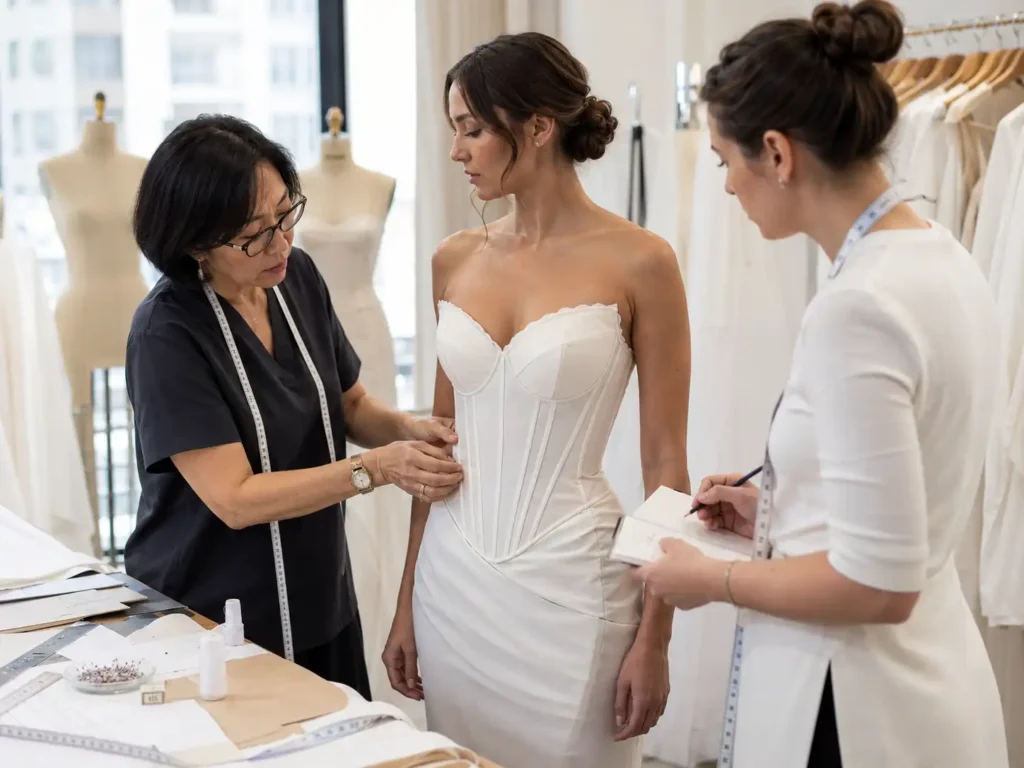
Corset and Boning

Corset dresses require a coordinated system rather than decorative seam lines alone. Cup volume, boning channels, underbust position, waist shaping, top-edge support, zipper, lining, and seam allowance all influence fit. Boning type and length are selected according to garment structure and comfort. Sample fitting tests support, breathing, sitting, and movement. Bulk checks confirm cup placement, channel alignment, bone ends, symmetry, and fastening strength.
  • Design control: cup, underbust, boning map, waist stay, top edge.
  • Quality control: symmetry, support, comfort, channel finish, zipper flatness.
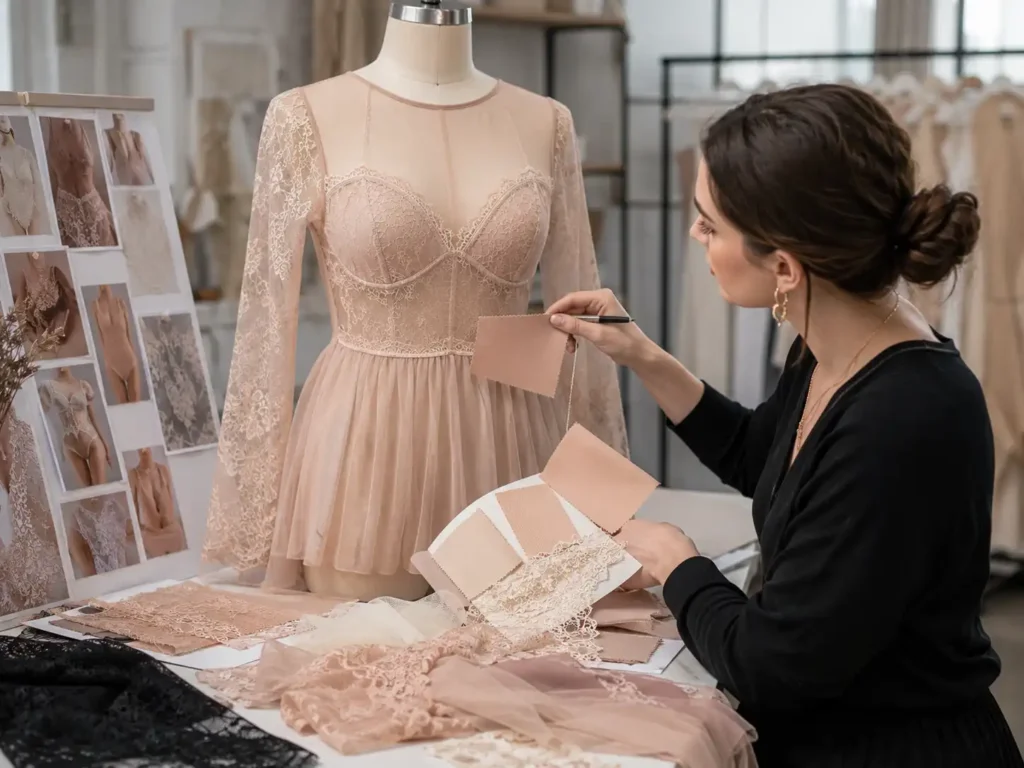
Lace and Mesh Joining

Lace and mesh joins must protect delicate edges while preserving the intended transparency. Seam type, tape, binding, overlap, applique, motif placement, and lining attachment are selected according to material strength. Open mesh can stretch during sewing, while lace motifs may require hand positioning. Bulk checks look for holes, distorted edges, motif mismatch, visible seam allowances, loose threads, and uneven tension.
  • Design control: motif map, seam type, edge finish, underlayer.
  • Quality control: damage, alignment, tension, cleanliness, symmetry.

Zipper Installation

Invisible zippers should close smoothly without rippling, exposed tape, uneven waist seams, or top-edge mismatch. Thick seams, sequins, lace, boning, and stretch fabrics require different preparation. Zipper length, tape color, slider, seam allowance, and reinforcement are approved during sampling. Bulk checks cover operation, alignment, seam smoothness, bartacks, hook-and-eye placement, and surrounding fabric damage.
  • Design control: zipper type, length, color, opening position, reinforcement.
  • Quality control: smooth action, flat seam, matched waist, secure top finish.
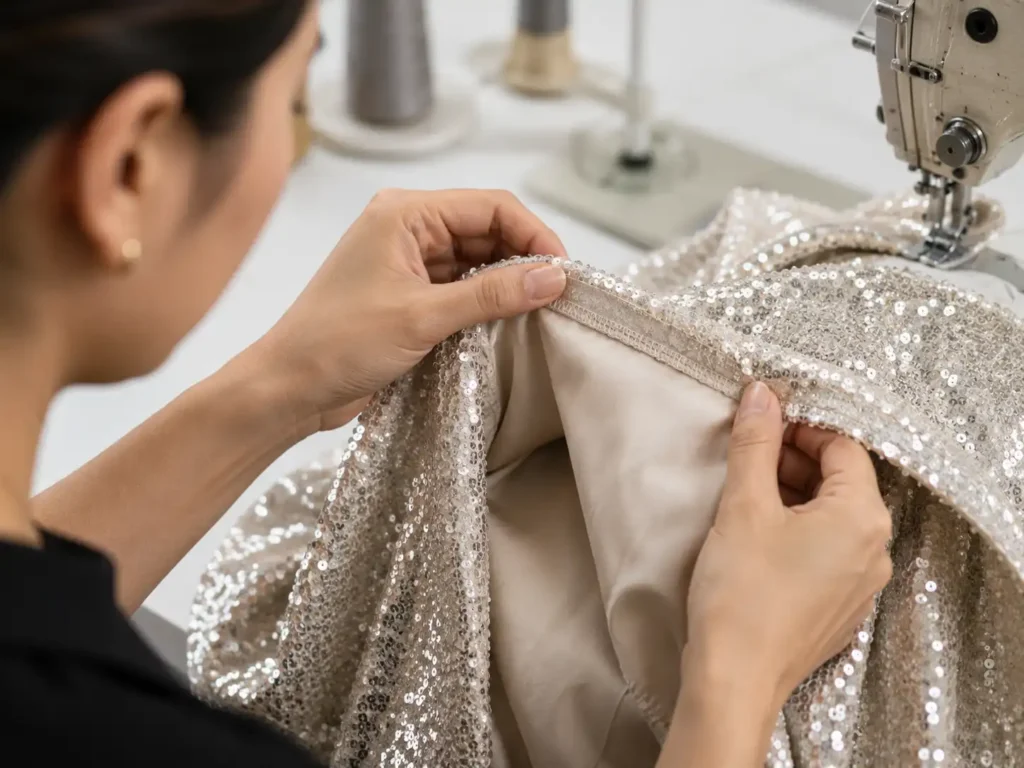
Clean Internal Finish

Internal finishing protects comfort, appearance, and durability. Facing, binding, lining, overlock, clean-finish seams, cups, elastic, boning, and labels should form one organized interior. Pale and sheer blue fabrics may reveal bulky allowances or dark components. Sample review considers skin contact, seam thickness, label position, and care requirements. Bulk inspection verifies trimmed threads, covered edges, secure attachments, and a clean inside appearance.
  • Design control: lining plan, seam finish, label position, covered components.
  • Quality control: comfort, thread trimming, exposed edges, secure attachments.

Sequin and Surface Care

Reflective and delicate surfaces need controlled handling from cutting through packing. Sequin direction, velvet pile, satin face, metallic threads, and coated fabrics can show scratches, pressure marks, or shade shifts. Work instructions define orientation, seam clearing, needle choice, pressing limits, protective layers, and packing direction. Bulk checks compare reflection, surface condition, missing decoration, seam bulk, and recovery after packing.
  • Design control: direction, seam clearing, pressing limit, protection method.
  • Quality control: scratches, shine marks, missing decoration, pressure damage.

Blue Dress Sampling and Approval Workflow

Sampling converts a design into measurable production standards. Color, fit, fabric, trims, construction, finishing, and packing are resolved through recorded versions before bulk release.

Project Review and First Sample

Development can begin from a tech pack, reference image, original garment, sketch, line sheet, or measurement chart. The first review identifies silhouette, key measurements, fabric behavior, blue shade route, support structure, trims, expected quantity, size range, packaging, and launch date. Risks are discussed before material booking when a design combines satin, mesh, lace, sequins, complex cups, deep necklines, or tight delivery windows.

A fabric direction is selected before the pattern is finalized. Stock fabric can support faster sampling, while custom dyeing requires lab dip approval and a longer material route. Pattern development then converts design intent into seam lines, shaping, ease, support, and construction. A first sample commonly takes 10-15 days for a standard dress after materials and specifications are clear. Complex corset, lace, mesh, sequin, or structured styles commonly require 15-25 days.

The first sample is evaluated for silhouette, fit, proportions, color direction, fabric response, construction, and production feasibility. The goal is not to present a perfect bulk standard at the first attempt. The goal is to reveal the changes needed for a reliable production-ready garment.

Fit Review and Revision Control

Fit comments should identify the location, measured result, desired result, and visual effect.

Photos can support comments, although measurements and marked reference points are needed for precise pattern correction. Bust, underbust, waist, high hip, full hip, strap, neckline, armhole, slit, dress length, lining, and movement are reviewed according to silhouette.

Revision records are consolidated into an updated pattern, measurement chart, BOM, material notes, and construction instructions. A revised sample commonly takes 7-15 days after comments, materials, and final direction are confirmed.

More than one revision may be needed when major fabric changes, new support construction, or extended size requirements are introduced.

Blue color review runs alongside fit review. A sample may have correct proportions but an unsuitable undertone or poor shell-lining combination. Color comments are tied to a physical reference and the exact material. The approved fit should not be copied onto a different fabric without checking stretch, drape, weight, or shrinkage because the silhouette may change.

PP Sample and Golden Standard

A PP sample is prepared with approved or bulk-intent materials, final measurements, trims, labels, construction, and finishing.

Review confirms whether the production route can reproduce the approved design. The PP sample is compared with the latest pattern, measurement chart, fabric approval, trim card, artwork, and packing requirements.

Final checks include blue shade, shell-lining coordination, zipper and thread color, surface quality, fit, measurement, construction, pressing, labels, barcode placement, polybag, and carton instructions. Any remaining change must be documented before bulk cutting.

Verbal approvals and scattered chat comments are not enough for multi-style production.

An approved PP sample or Golden sample can be retained as a physical reference with the final pattern version, BOM, color records, and QC checkpoints. Later repeats use the saved standard as a starting point, while fresh fabric lots still require approval. The record system protects continuity across seasons, replenishment orders, and multi-batch deliveries.

Managing Multi-Style Blue Dress Collections

A collection containing 10-30 styles needs coordinated priorities, shade groups, fabric routes, sample deadlines, production allocation, and packing data. One timeline cannot treat every style as equally difficult.

Hero SKU Priority

High-revenue, campaign, or technically difficult styles are identified first. Early sampling protects photo deadlines and gives more time for corset, satin, lace, mesh, sequin, or custom-color revisions. Simpler styles can follow once the collection color direction and base fit standards are stable.
  • Inputs: sales priority, campaign date, technical risk, fabric lead time.
  • Output: approved sample sequence and escalation list.

Shade Architecture

Blue families are organized into named commercial shades with approved references. A collection may use navy as a core, royal as a campaign color, powder blue for soft occasionwear, and cobalt for statement pieces. Consolidating styles around fewer controlled lots can improve consistency and material efficiency.
  • Inputs: color story, style count, material groups, quantity by shade.
  • Output: shade map, approved references, and lot plan.

Fabric Grouping

Styles are grouped by satin, chiffon, mesh, lace, jersey, crepe, or embellished bases. Shared materials can reduce unnecessary development and simplify replenishment. Each fabric group receives separate controls for shade, shrinkage, stretch, transparency, lining, pressing, and finishing.
  • Inputs: fabric specification, style use, total meters, repeat potential.
  • Output: material matrix and approval route.

Sample Calendar

First samples, fit samples, photo samples, PP samples, and size sets are placed on one working calendar. Approval deadlines are linked to fabric booking, campaign shoots, production start, QC windows, and warehouse delivery. Late comments are evaluated against the remaining critical path.
  • Inputs: launch date, shoot date, material lead time, revision risk.
  • Output: milestone calendar and decision deadlines.

Factory Allocation

Styles are assigned according to material, construction, capacity, delivery, and QC requirements. A satin corset, mesh bodycon, chiffon maxi, and jersey midi may follow different production routes. Allocation is confirmed only after technical review and material planning.
  • Inputs: complexity, fabric, quantity, line suitability, delivery window.
  • Output: production map and capacity reservation.

Repeat Records

Approved patterns, measurements, fabric references, trim details, labels, packaging, and QC notes are archived for replenishment. Repeat production starts from the latest approved version rather than rebuilding the product from memory. New dye lots and material substitutions still receive fresh approval.
  • Inputs: Golden sample, pattern version, BOM, bulk swatch, packing file.
  • Output: faster repeat setup and controlled continuity.

Blue Dress Quality Control by Production Stage

Quality inspection focuses on the failure modes most likely to affect blue dresses: shade variation, visible surface damage, fit drift, trim mismatch, seam distortion, and packing errors.

QC StageBlue Dress Inspection FocusRecorded Output
Fabric arrivalShade, lot, width, stains, holes, snagging, shine, stretch, transparency, and supplier quantity.Inspection record, lot grouping, accepted and held rolls.
CuttingDirection, pattern version, grain, motif placement, paired panels, shade separation, and bundle identity.Cut-panel check and lot-marked bundles.
Sewing setupPP reference, operation method, seam type, cup and boning map, zipper, lining, ruching, and trims.Approved first output and line instructions.
Inline inspectionMeasurements, seam balance, symmetry, tension, shade mixing, puckering, damage, and construction accuracy.Issue log, correction action, and recheck.
FinishingPressing marks, wrinkles, hem level, surface damage, sequin loss, thread trimming, and garment recovery.Finishing check and repair status.
Final measurementBust, waist, hip, strap, neckline, slit, body length, lining length, and size tolerance.Measurement report by sampled size and color.
Appearance and functionColor harmony, zipper operation, hooks, straps, cups, lining coverage, comfort, and left-right balance.Final garment inspection result.
Packing releaseColor-size label, barcode, SKU, polybag, carton ratio, carton marks, packing list, and shade-group separation.Packing audit and shipment release record.

MOQ and Cost Planning for Blue Dress Programs

MOQ starts from 200 pcs per style/color. Final feasibility depends on fabric availability, custom dyeing, trims, construction, size-color breakdown, packaging, and production schedule.

Stock Blue Fabrics

Available blue fabric can support faster development when the lot quantity covers sample, bulk, production loss, and reserve needs. Stock does not guarantee continuity for later repeats, so supplier quantity and replenishment status are checked before approval. Cost planning includes fabric price, usable width, consumption, shade consistency, lining, trims, and expected loss. A single approved lot is preferred when garments will be displayed together.
  • Typical route: fabric swatch, stock confirmation, sample, PP approval, bulk reservation.
  • Main risk: insufficient lot quantity or mixed shades.

Custom-Dyed Blue

Custom dyeing is used when available shades do not meet the brand direction. The route may include base-fabric confirmation, lab dips, approval, bulk dyeing, shade review, and lot release. Fabric-mill minimums, color count, total meterage, and dyeing loss influence the garment MOQ and cost. Consolidating several styles around one blue shade can improve material efficiency and reduce unnecessary lot variation.

  • Typical route: physical standard, lab dip, approval, bulk dye, shade band.
  • Main risk: added lead time, mill minimums, and repeat-lot variation.

Complex Construction

Corsetry, lace placement, mesh layering, sequins, beading, custom hardware, special lining, and retail-ready packing add labor, material, and inspection requirements. Cost is built from the approved BOM and construction rather than from a reference image alone. A quote becomes more accurate when style quantity, color plan, size range, fabric direction, trims, labels, packing, and delivery terms are provided together.

  • Typical route: technical review, sample costing, PP confirmation, bulk quotation update.
  • Main risk: missing specifications or late design changes.

Private Label and Retail-Ready Blue Dress Packing

A finished garment becomes a sellable SKU only after labels, care information, barcodes, color codes, packaging, carton ratios, and warehouse requirements are aligned with the approved assortment.

Brand Label System

Woven labels, printed labels, size labels, care labels, and origin information are reviewed against the approved artwork and placement. Label size, fold, edge, color, sewing position, and skin contact are checked during sampling. Blue garments with sheer or open backs may need alternative placement so labels remain secure without showing through the design.
  • Control points: artwork version, size, placement, stitch method, color.
  • Release record: approved label sample and placement photo.
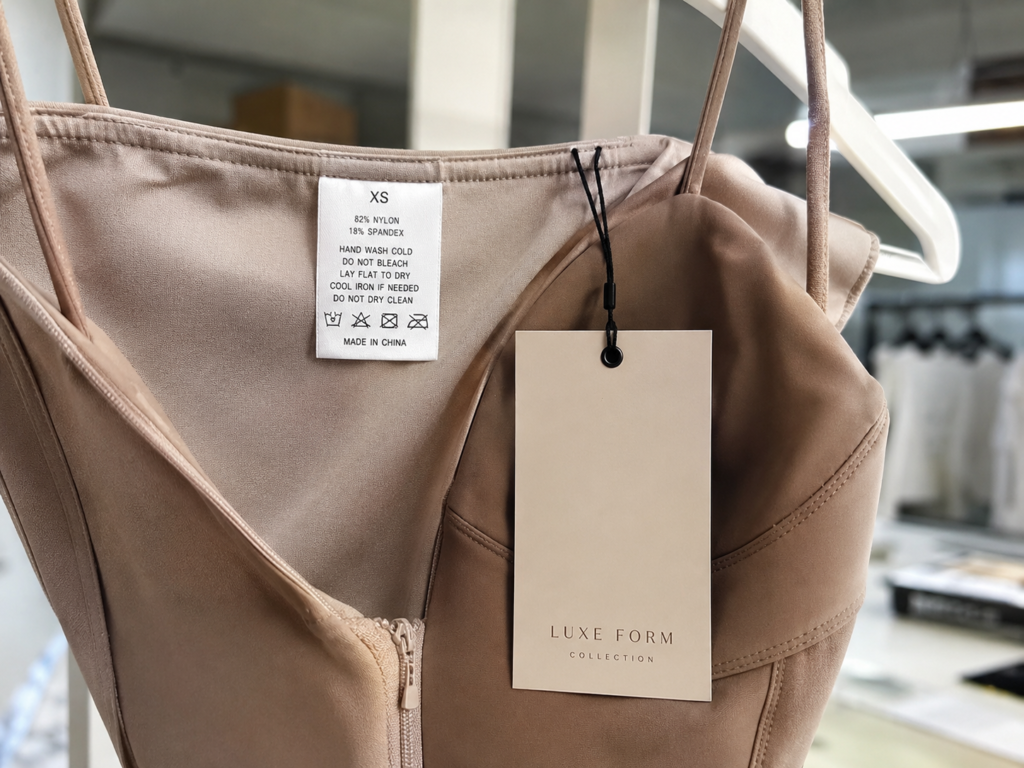
Hangtags and Tickets

Hangtags can include brand identity, product name, color, size, barcode, price, care, or campaign information. String, pin, seal, and attachment position are selected to avoid marking satin, mesh, lace, or delicate surfaces. Ticket data are cross-checked with the SKU list before bulk attachment.
  • Control points: artwork, print color, barcode, attachment, data match.
  • Release record: approved tag and SKU mapping.

Color and SKU Control

Blue shade names and internal color codes should remain consistent across order files, labels, barcodes, polybags, cartons, and packing lists. Navy, royal, cobalt, powder, and dusty blue cannot be treated as one generic color. Size-color ratios are checked before packing, and separate shade lots can receive controlled identifiers when needed.
  • Control points: style code, color code, size, barcode, quantity.
  • Release record: packing matrix and scan check.
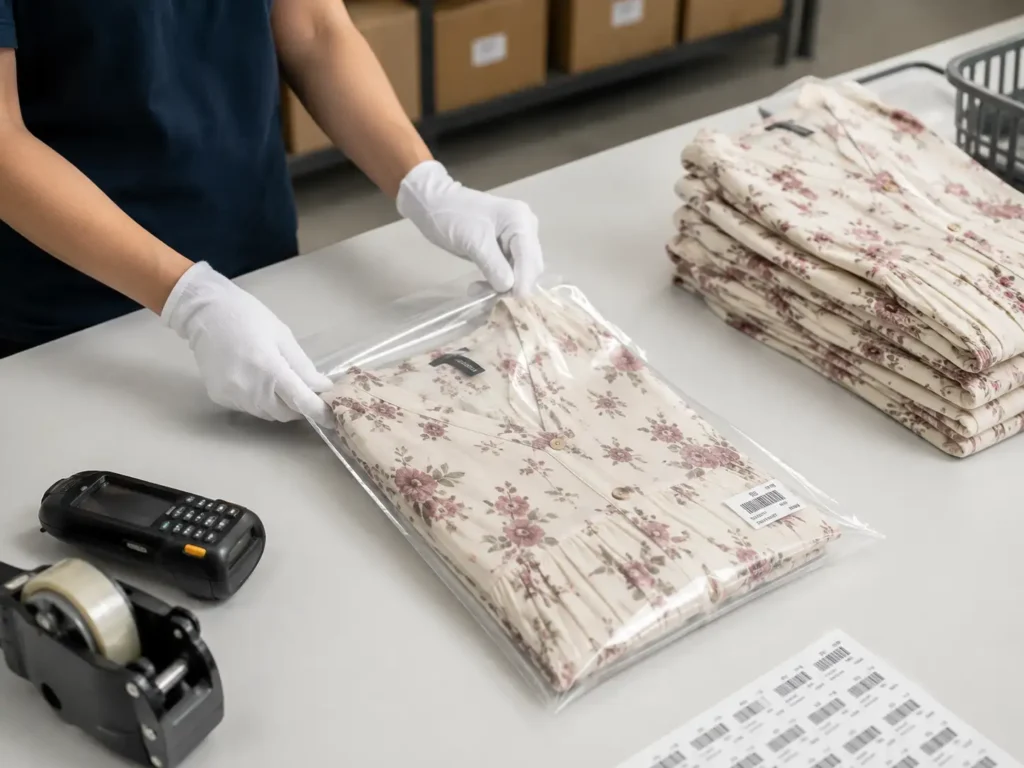
Polybags and Cartons

Packing protects appearance during storage and transit. Satin, sequin, velvet, and embellished dresses may need tissue, protective layers, hanging methods, or limited compression. Polybag warnings, size stickers, carton marks, carton ratios, and warehouse labels are prepared according to the approved packing file. Carton planning considers garment volume, wrinkle risk, and shipping route.
  • Control points: fold method, protection, labels, ratio, carton mark.
  • Release record: packing sample, carton plan, and final audit.

Production Scheduling and Global Delivery Support

Sampling, bulk production, inspection, packing, and freight are planned backward from campaign, warehouse, or launch dates. Delivery decisions reflect quantity, urgency, garment volume, and risk.

Sample and Air Freight

Samples, photo pieces, sales samples, and urgent replenishment can move by express or air freight. Timing depends on destination, customs, package size, and service level. Delicate dresses receive packing suited to satin, sequins, structure, or long hems so garments arrive ready for review or controlled steaming.

Bulk Sea Freight

Sea freight supports larger programs where cost and garment volume matter more than speed. Production completion, final inspection, booking, cutoff, documentation, transit, customs, and warehouse receiving are included in the delivery plan. Carton dimensions and packing density are balanced against wrinkle and surface-damage risk.

Split Deliveries

Air-sea split or multi-batch delivery can support campaign stock, launch stock, and later balance quantities. The order is divided by approved style, color, size, and shipment plan. Packing lists and carton marks identify each batch clearly. EXW, FOB, CIF, DAP, and project-evaluated DDP arrangements can be discussed according to destination and responsibility.

Blue Occasionwear Collection Case

A representative North American occasionwear program shows how color, fit, material, production, and packing controls can be coordinated across a large multi-style order while protecting confidential brand information.

Brief, Scale, and Risk Map

The program covered 18 blue dress styles and 46,800 garments across six commercial shades: navy, royal, cobalt, sapphire, powder, and dusty blue.

The assortment included satin corset minis, mesh bodycon dresses, chiffon maxis, lace midis, sequin party dresses, and structured crepe styles. Sizes ran from XS to 3XL, with separate retail and ecommerce packing ratios.

Four fabric groups and multiple visible components created the main risk. Satin, chiffon, mesh, lace, lining, zipper tape, thread, cups, boning covers, and sequins needed coordinated color rather than one unsupported shade name.

Several campaign styles had fixed photo deadlines, while later commercial styles allowed a longer approval path. The total order sat within a typical 20,000-80,000 garment program, yet complexity varied widely by style.

The project team created a style-priority map, shade architecture, material matrix, and sample calendar.

Seven technically difficult styles entered development first. Eleven lower-risk styles followed after the core color standards and fit direction were established. The approach protected campaign timing without releasing unfinished standards into bulk production.

Development and Approval Actions

Physical shade references and lab dips were organized by fabric group. Satin and crepe received separate approvals because gloss changed perceived depth.

Chiffon was approved over the intended lining at the final layer count. Mesh was approved over support mesh and lining. Lace was reviewed as a complete motif-and-lining combination. Sequin styles were assessed under daylight, indoor light, flash, and video.

The first fit round identified five recurring issues: strap angles on the satin corset group, high-hip tension on mesh bodycon styles, slit opening on chiffon maxis, neckline gaping on structured midis, and lining exposure on pale powder-blue dresses. Pattern corrections were documented across the relevant style families rather than handled as isolated comments. Seven complex styles required three sample rounds; the remaining eleven styles were approved in two rounds.

PP samples included final-intent fabric, trims, labels, construction, and packing. A shade card linked every shell material with its lining, thread, zipper, and visible trim. The approved files included measurement charts, BOMs, pattern versions, color references, construction notes, and QC checkpoints for each style.

Bulk Control and Delivery Result

Bulk production was allocated by fabric and construction. Satin corset and structured occasion styles followed dedicated support and pressing controls. Mesh and jersey bodycon styles followed stretch, relaxation, and measurement controls. Chiffon and lace styles received panel, layer, motif, and hem checks. Sequin styles followed direction, seam-clearing, surface-protection, and packing instructions.

Bulk fabric was grouped by dye lot before cutting. Inline inspection focused on shade mixing, bust and waist measurements, strap length, zipper flatness, slit height, lining coverage, ruching balance, and surface damage. Final inspection included appearance, measurement, function, label, barcode, size-color ratio, and carton marks.

The 46,800 garments were completed across three coordinated shipment waves over a 42-day bulk production and finishing window after material readiness. Campaign quantities moved first, followed by core launch stock and the final balance. The brand retained the approved patterns, material references, shade records, packing files, and QC notes for a later repeat program. Brand name, original designs, commercial pricing, and proprietary files remained confidential.

Why Brands Qualify Jinfeng Apparel

Supplier qualification depends on evidence across product specialization, development, capacity, quality, branding, delivery, and repeat-order control. Jinfeng Apparel presents each area through documented manufacturing facts.

Dress Specialization

Core production focuses on dresses, skirts, jumpsuits, matching sets, tops, and private-label womenswear. Strong dress categories include party, occasion, bodycon, corset, satin, mesh, lace, sequin, resort, mini, midi, and maxi styles.

Color Development

Blue programs can follow stock-fabric review, physical standards, lab dips, bulk shade approval, component matching, dye-lot grouping, PP confirmation, and saved repeat references according to the selected material route.

Sampling Capability

Two sample rooms, more than seven senior pattern makers, and more than twenty sample machinists support first samples, fit samples, revised samples, photo samples, PP samples, and Golden standards for multi-style development.

Scalable Production

Six owned women’s fashion factories and more than ten long-term satellite production partners support style allocation by product, fabric, construction, quantity, timing, and QC needs. Regular monthly capacity exceeds 100,000 garments across the network.

Product-Specific QC

More than fifteen QC inspectors cover fabric, cutting, sewing, measurement, finishing, appearance, packing, and shipment release. Inspection points are adjusted for satin, mesh, lace, sequin, jersey, chiffon, and structured dresses.

Long-Term Records

NDA-based cooperation protects tech packs, patterns, samples, labels, packaging, unpublished designs, and order information. Approved patterns, fabric references, trims, measurements, packing files, and QC notes can support seasonal development and repeat production.

Download the Blue Dress Approval Checklist

A structured approval checklist helps product, sourcing, merchandising, and quality teams confirm the same color, fit, construction, bulk, and packing standards before production release.

Color and Material Checks

The downloadable checklist can cover Pantone or physical color standard, fabric specification, stock quantity, lab dip, bulk swatch, lighting review, shell-lining combination, thread, zipper, lace, mesh, sequin, dye-lot grouping, and repeat-order reference. Each approval includes a responsible person, date, file or sample reference, and current status.
  • Use before fabric release and PP approval.
  • Keep physical and digital references aligned.

Product and Bulk Checks

The checklist can also cover pattern version, measurement chart, fit comments, construction, trims, PP sample, Golden sample, size set, bulk inspection points, barcode, SKU, labels, packing ratio, carton marks, delivery plan, and shipment documents. A completed record helps separate unresolved issues from approved production standards.
  • Use before cutting and shipment release.
  • Archive the final record for repeat production.

Blue Dress Manufacturing Frequently Asked Questions

MOQ starts from 200 pcs per style/color. Final MOQ depends on fabric availability, custom dyeing, color count, trims, construction, size breakdown, packing, and production schedule. Custom fabric or special embellishment may require a higher quantity because material suppliers set separate minimums.

Yes. A Pantone reference can guide color development, although approval should be made on the selected physical fabric. Fiber, weave, knit, luster, transparency, and finishing affect appearance. A physical garment or fabric standard may provide a stronger target when exact brand continuity is required.

Lab dips can be arranged for custom-dyed fabric after the base material and color direction are confirmed. Review covers hue, depth, saturation, undertone, and lighting response. Lab-dip timing and minimum fabric quantity depend on the mill, material, color, and production schedule.

Yes. Stock fabric can shorten development when shade, composition, weight, hand feel, width, stretch, performance, lot quantity, and repeat availability meet the program requirements. Material should be reserved after approval because stock can change before bulk booking.

Suitable options include satin, chiffon, mesh, lace, sequin bases, jersey, ponte, crepe, velvet, rayon, cotton, linen blends, and denim-inspired fabrics. Selection depends on silhouette, use, shade, opacity, support, movement, care, cost, and expected order quantity.

A standard dress commonly takes 10-15 days after specifications and materials are clear. Complex corset, lace, mesh, sequin, or structured styles commonly take 15-25 days. Revised and PP samples often require 7-15 days according to changes and material readiness.

Control can include approved physical standards, lab dips, bulk swatches, shade bands, roll grouping, dye-lot identification, cutting separation, component matching, PP sample approval, and final inspection. Exact procedures depend on fabric type, supplier, order quantity, and accepted tolerance.

Yes. Shell, lining, lace, mesh, thread, zipper, cups, elastics, and visible trims can be reviewed as a coordinated set. Different fibers and surfaces may not produce an identical optical match, so the approved goal is a balanced combination under agreed lighting.

Yes. Support can include woven labels, size labels, care labels, hangtags, barcodes, SKU stickers, polybags, carton marks, packing ratios, and warehouse labels. Final scope depends on artwork, local requirements, packaging specifications, quantity, and delivery terms.

Saved lab dips, bulk swatches, trim cards, PP samples, patterns, BOMs, and QC notes provide a strong repeat reference. New fabric lots still require approval because dyeing and raw materials can vary. Early repeat planning improves the chance of securing the same base fabric and supply route.

Start Your Blue Dress Manufacturing Project

Send the product information needed for an accurate development and production review. A complete brief allows Jinfeng Apparel to evaluate silhouette, blue shade route, fabric availability, pattern risk, sample cost, MOQ, bulk timing, private-label packing, and delivery planning before commercial commitments are made.

Use useful files include a tech pack, reference image, original sample photos, measurement chart, line sheet, color standard, fabric preference, trim artwork, label files, packing guide, and launch calendar.

Kelly will coordinate the initial review with the relevant development, pattern, sampling, merchandising, and production teams.

  • Product type and reference image or tech pack
  • Pantone number, physical shade standard, or blue color direction
  • Fabric preference and visible trims
  • Quantity per style/color and planned size range
  • Sample type, fit standard, and campaign deadline
  • Private-label, barcode, packaging, and warehouse requirements
  • Target delivery date, destination, and preferred shipping terms
  • File upload: tech pack, line sheet, measurement chart, artwork, or packing guide
Textile factory workers sewing clothes beside piles of gray fabric.

Tell Us About Your Dress Project

Share your product details, estimated quantity and development requirements. Our team will review your project and provide practical OEM/ODM production feedback.

Premium Women’s Apparel Production for Fashion Brands

From dress sample development to bulk production, JF Apparel supports fashion brands with confidential OEM/ODM manufacturing, reliable quality control and scalable production support.

START YOUR DRESS PROJECT

Ready to Develop Your Next Dress Collection?

Share your design concept, product requirements or sourcing plans with our team. We’ll review your project and provide practical feedback on development, materials, MOQ and production.

7-10 Days

Sample Development

200 PCS

Starting MOQ

Fast Response

Professional Follow-Up