Blazer Dress Manufacturer
- 8 product-critical control zones: shoulder, collar, lapel, front edge, bust, waist, sleeve and hem.
- 3 approval gates before bulk: fit sample, PP sample and size-set confirmation.
- MOQ starts from 200 pcs per style/color, subject to fabric, trim, color and construction requirements.
- Multi-style programs can be grouped by fabric, fit risk and launch priority for clearer development and production control.
Jinfeng Apparel develops blazer dresses from tech packs, reference images or original samples. Pattern, shell fabric, lining, interlining, buttons, shoulder shape, fit, pressing and private-label packing are reviewed as one connected product system. The aim is not merely to sew a longer blazer. The aim is to produce a dress with a clean tailored line, controlled body proportion, secure movement and repeatable bulk standards.
Manufacturing Capacity Built for Structured Womenswear
Since 2008
6 Owned Factories
10+ Long-Term Partners
2 Sample Rooms
7+ Pattern Makers
15+ QC Inspectors
Built for Fashion Brands with Structured Collections
Global Fashion Brands
Occasionwear Labels
Occasion blazer dresses may combine tuxedo lines, satin lapels, rhinestone trims, feather details or strong waist shaping.
Development focuses on visual impact without losing comfort, movement or bulk repeatability.
Premium Ecommerce Brands
Photography, fit consistency and return risk matter strongly.
Sample review therefore covers front opening, sitting coverage, arm movement, shoulder proportion, garment length and how the dress holds its shape after packing.
Contemporary Officewear
Product Development Teams
Private Label Programs
From Design File to Retail-Ready Delivery
Project Review
Fabric Direction
Pattern Development
First Sample
Fit Revision
PP and Size Set
Bulk Production
QC and Delivery
A Blazer Dress Is Not a Longer Blazer
Blazer dresses combine tailored upper-body architecture with dress-level fit, movement and coverage. The strongest result comes from balancing both systems from the first pattern rather than correcting appearance at the final pressing stage.
Tailored Upper Structure
The upper body must hold a clear line without feeling board-like. Shoulder width, shoulder-pad thickness, sleeve-head support, front interlining, collar stand, lapel roll and front-edge stability all influence the same visual area. A lightweight crepe mini dress may require localized reinforcement, while a wool-blend tuxedo dress can support a broader internal structure. Using one standard interlining across both fabrics would create different failures: the crepe may look heavy and bubbled, while the wool blend may remain too soft.
Pattern and material choices are reviewed together. The front body must close without strain, the lapel must roll at the intended point, and the collar must sit close to the neck. The shoulder line also affects how the waist and skirt appear. An extended shoulder can create a sharper fashion proportion, but excessive extension makes the waist look narrow only in a static pose and often reduces arm movement.
Feminine Body Proportion
A women’s tailored dress needs controlled bust volume, waist suppression and hip ease. The front pattern cannot simply be lengthened from a blazer because the garment continues over the pelvis and must remain balanced during walking and sitting. Princess seams, darts, panel lines or waist seams may be used to shape the body, but each method produces a different line and cost.
The fitting review checks where the waist appears on the body, whether the front edge pulls across the bust, whether the side seam remains vertical and whether the hem stays level. For body-skimming styles, negative or close ease must be balanced against shell-fabric stretch and lining behavior.
For straighter silhouettes, enough internal room is needed so the dress does not hang from the bust and collapse through the hip.
Dress-Length Movement
Mini, above-knee and midi blazer dresses create different movement demands. A mini style needs sitting coverage, front-opening security and hem control. A midi style often needs a vent or slit, yet the opening must be positioned so the garment walks comfortably without twisting. Sleeve length, shoulder width and garment length also affect visual balance.
Movement checks should include sitting, walking, raising the arms, fastening all buttons and wearing the dress over the intended undergarment. A strong flat-lay appearance is not enough. The approved fit must work on the body and remain manufacturable across the size range.

Custom Blazer Dress Styles We Develop

Double-Breasted Dress

Single-Breasted Dress
Single-breasted construction creates a cleaner front but exposes any imbalance around the bust and waist.
One-button, two-button and three-button plans change the roll line and visual waist.
The style works well for office-to-evening and contemporary collections using crepe, TR suiting, ponte or wool blends.

Blazer Mini Dress
Mini styles need strong proportion and secure coverage.
The review checks center-front opening, back length, side-seam angle, sitting coverage and whether the front hem rises when fastened.
Fashion options include strong shoulders, contrast buttons, waist cut-outs, belt details and asymmetric hems.

Midi Blazer Dress
Midi versions depend on front-back balance, vent placement and walking ease.
A longer front panel can twist when the shell, lining and interlining shrink differently.
Crepe, wool blends, satin-backed crepe and fluid suiting are common directions for premium office, event and evening collections.

Belted Blazer Dress
A belt can define the waist but may also crush the lapel line or distort pocket placement.
Belt width, buckle weight, waist-loop position and tie length are planned around the garment’s structure. Wrap-style versions need enough underlap and an internal security closure.

Sleeveless Blazer Dress
Sleeveless styles expose armhole shape and internal finishing. The shoulder must remain intentional without a sleeve to support it.
Armhole depth, bra coverage, lining finish and extended-shoulder balance are checked during fitting. The category suits warm-season officewear, resort tailoring and evening capsules.

Tuxedo Blazer Dress
Tuxedo styles often use satin or contrast lapels, covered buttons and a cleaner evening line. Shine direction, lapel edge, collar roll and pressing marks require close control.
Black, ivory, chocolate and jewel tones are common for occasion, holiday and formal collections.

Embellished Blazer Dress
Blazer Dresses for Different Fashion Markets

Office to Evening

Cocktail and Occasion

Party and Night-Out

Holiday Collections

Premium Ecommerce

Contemporary Tailoring
Customize Every Blazer Dress Design Element
Lapel Shape
Shoulder Direction
Sleeve Design
Closure Layout
Waist Shaping
Dress Length
Pocket Construction
Decorative Finish
Blazer Dress Fabrics and Production Behavior
| Fabric | Best Use | Structure Level | Main Production Risk | Recommended Support |
|---|---|---|---|---|
| Crepe | Office, cocktail, clean mini and midi styles | Medium | Seam puckering, front-edge waviness, shade variation | Localized interlining, full or partial lining, controlled pressing |
| TR Suiting | Commercial tailored collections and repeat programs | Medium to high | Shine, pilling, lot variation | Front-body support, shoulder pad matched to weight, fabric-lot approval |
| Wool Blend | Fall/winter tailoring and premium tuxedo dresses | High | Bulk thickness, shrinkage, pressing marks | Structured front, stable lining, shrinkage review, careful cooling |
| Tweed | Statement mini dresses and heritage-inspired collections | Medium to high | Fraying, seam bulk, pattern alignment | Edge stabilization, full lining, reinforced pockets and button areas |
| Ponte | Comfort-led structured dresses and officewear | Medium | Stretch growth, heavy seams, shape loss | Reduced interlining, recovery testing, seam stabilization |
| Velvet | Holiday and evening blazer dresses | Medium | Pile direction, pressure marks, shade effect | Directional cutting, low-pressure handling, protective packing |
| Satin | Tuxedo lapels, evening dresses and contrast panels | Low to medium | Snagging, shine-direction mismatch, pressing impressions | Fine interlining, soft lining, low-pressure pressing, surface protection |
| Jacquard | Premium statement tailoring | Medium to high | Pattern mismatch, thickness and fraying | Pattern planning, stable seam allowances, selective reinforcement |
| Linen Blend | Resort tailoring and warm-weather dresses | Low to medium | Wrinkling, seam slippage, shrinkage | Lightweight support, pre-production shrinkage review, relaxed structure |
| Suiting Polyester | High-volume fashion programs and color ranges | Medium | Heat shine, static, lot inconsistency | Heat-control pressing, antistatic lining options, lot approval |

Lining and Interlining Define the Final Structure
Internal materials determine how the blazer dress sits, moves, closes and recovers after packing. A polished outer appearance often depends on decisions hidden inside the garment.
- Full Lining
Full lining creates a cleaner interior, improves dressing comfort and supports structured silhouettes. The lining needs enough movement allowance through the back, sleeve and hip. A lining cut too tight pulls the shell and restricts movement; too much allowance creates folds at the hem or vent. Static, opacity, hand feel and color also matter, especially for sleeveless or deep-neck styles. - Partial Lining
Partial lining can reduce weight in warm-season products, but exposed seams must remain clean. Bodice-only lining, front-panel lining or skirt lining may work for linen blends, ponte or lightweight suiting. The transition between lined and unlined areas needs secure finishing so the garment does not twist or show internal edges. - Fusible Interlining
Interlining can support lapels, collars, front edges, button zones, pocket openings and hems. Selection depends on shell weight, stretch, surface and care method. Bond temperature, pressure and time should suit both materials. Over-fusing can create strike-through, stiffness or shine; weak bonding can lead to bubbling after wear or cleaning. - Local Reinforcement
Not every area needs full coverage. Shoulder seams, buttonholes, pocket ends, vent tops and waist-belt points may require localized tape or reinforcement. Targeted support keeps the dress stable while preserving drape and comfort. Reinforcement locations are recorded in the production file so bulk operators follow the approved standard.
Pattern Engineering for a Feminine Tailored Silhouette
Pattern work turns a design into measurable body proportion. Blazer dress development focuses on shoulder-to-waist balance, bust shaping, hip movement and front-back balance before decorative details are added.
Bust and Front Balance
The front pattern carries lapel width, neckline depth, button placement and bust volume in a confined area. If the bust dart, princess seam or side-front shaping is weak, the front edge may gap or the lapel may flare. If shaping is too aggressive, the garment can pull across the chest and distort button spacing. Review includes bust-point position, cross-front width, front length, under-bust shaping and closure stress.
Different bra types and intended neckline depth should be considered during fitting. A deep-V tuxedo dress may need an internal snap, hook or modesty solution. A higher officewear neckline may need more front ease so the collar stays close without pressure.
Waist and Hip Shaping
Waist suppression can be created through darts, princess seams, side seams, waist panels or a belt. Each method affects sewing time, fabric behavior and grading. The hip requires enough ease for sitting and walking, especially when the dress is fully lined. Side seams should remain vertical rather than swinging forward or backward.
For close-fitting mini styles, the review also checks whether fastening the dress lifts the front hem.
A balanced pattern distributes shaping across multiple seams instead of forcing all reduction into the side seam.
Silhouette Replication
The approved silhouette must survive grading and bulk production. Key ratios – shoulder width to waist width, lapel width to chest width, button spacing to torso length and garment length to sleeve length – are reviewed across selected sizes. Large sizes may need additional front length or altered dart distribution rather than a simple scale increase.
The final pattern is linked to the approved measurement chart, seam allowances, notch positions and construction notes. Pattern records support repeat orders, but any new shell fabric or major trim change still requires validation because fabric behavior can alter the same pattern.

Lapel, Collar and Front Closure Precision
The lapel area is the first place where poor tailoring becomes visible. Geometry, interlining, edge control and pressing must agree with the pattern.
Lapel Roll Line
The roll line determines where the lapel turns and how the neckline opens. Break point, button position and interlining direction influence the roll. A lapel forced flat by heavy fusing will look lifeless; weak support can make it collapse. Sample approval checks both fastened and open views.
Collar Balance
The collar must meet the lapel cleanly and sit close to the back neck. Excess collar length creates a gap; insufficient length causes pulling. Collar stand height, seam allowance and pressing affect the final shape. Symmetry is checked from front, back and side angles.
Front Edge Stability
Front edges need a straight, clean line without rippling or turning outward. Shell stretch, grain direction, tape, interlining and lining tension all contribute. Double-breasted fronts also need consistent overlap from neckline to hem. Edge stability is reviewed before buttons are set permanently.
Button Placement
Button position should be tested on the fit sample because artwork does not reflect bust and waist stress. Double rows must remain level and parallel. Button size and weight should suit the front structure. Buttonholes need clean opening, stable density and correct direction. Spare-button requirements can be integrated into packing.

Fit Control from Waistline to Hem
A blazer dress should keep its tailored line while allowing sitting, walking and normal arm movement. Lower-body fit requires measured control rather than visual guessing.
- Waistline Position
The waist can be natural, raised, dropped or shaped through a belt. Its position changes torso length, lapel proportion and skirt balance. Fit review checks the waist from front, side and back, not only the waist circumference. - Hip Ease
Hip allowance depends on silhouette, shell stretch, lining and length. A close mini style may need carefully distributed ease; a straight midi style needs enough room to walk without pulling the front edge. Side seams and back seams should remain vertical. - Length and Coverage
Mini styles are checked while standing, walking and sitting. Center-front opening, back length and side seam shape affect coverage. The length plan should identify whether grading keeps the same hem position or adds length by size. Lining must stay hidden during movement. - Vents and Slits
Vents improve movement but require reinforcement and balanced lining. Slit height should match garment length and market positioning. The top of the slit is a stress point that needs secure construction. QC checks opening length, symmetry, reinforcement and pressing.
Functional Trims That Support the Design
Main Buttons
Buttonholes
Hidden Zippers
Hooks and Snaps
Belt Systems
Pocket Construction
What We Review Before Sampling Begins
Tech Pack Development
- Technical drawing and reference photos
- Measurement chart with tolerances
- Shell, lining and interlining specifications
- Button, zipper, label and packing details
- Target quantity by style and color
- Size range and ratio
- Target launch and delivery dates
Reference-Based Development
A project can also begin from an original sample, sketch, mood board or reference image. The development team identifies likely construction, fit direction, material options and unknown points. A new pattern is built for the approved project rather than copying protected third-party intellectual property. Useful reference information:
- Intended market and retail position
- Desired fit and model measurements
- Fabric hand feel or swatch
- Details to keep and details to change
- Color plan and target quantity
- Private-label and warehouse requirements
Blazer Dress Sample Development Timeline
Initial Review
Material Preparation
First Sample
Fit Revision
PP Sample
Size Set
Bulk Production
Transit Planning
How We Correct Blazer Dress Sample Issues
Shoulder Too Wide
Lapel Does Not Roll
Front Opening Gapes
Waist Lacks Shape
Sleeve Movement Restricted
Hem or Slit Imbalanced
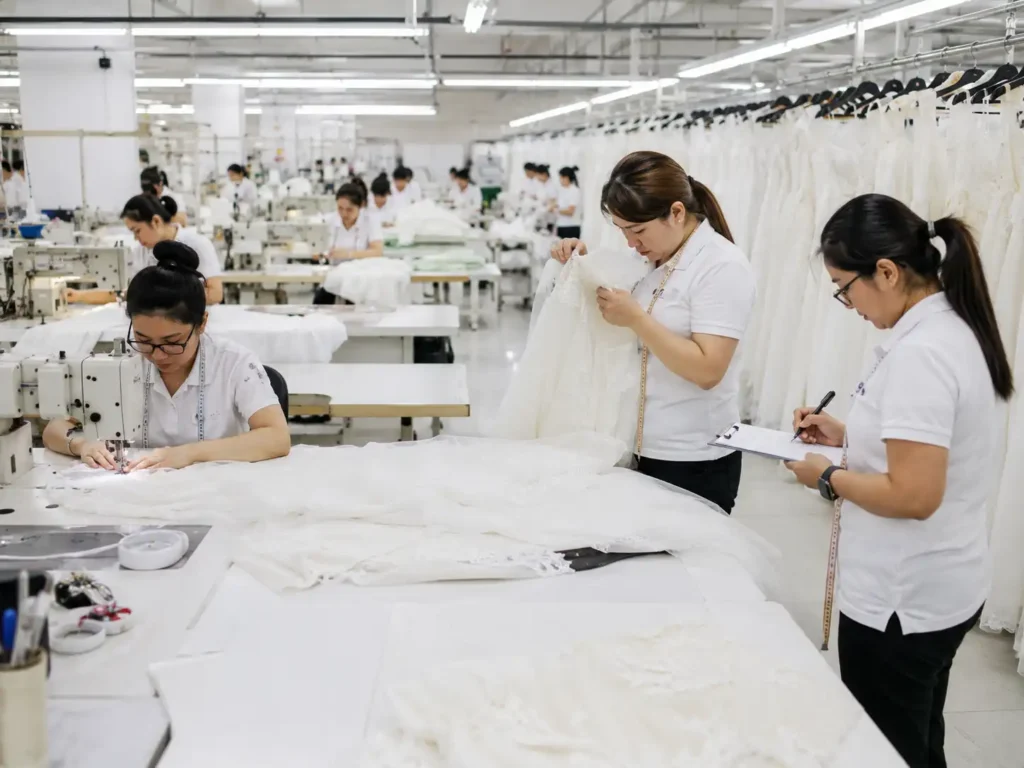
Locking the Standard Before Bulk Production
Bulk production begins only after materials, measurements, workmanship and packing are aligned around an approved standard.
- Approved PP Sample
The PP sample represents the approved appearance and construction using bulk-intent materials. Any open comment should be closed before production release. The sample is sealed and referenced during cutting, sewing, pressing and final inspection.
- Approved Material Set
Shell fabric, lining, interlining, buttons, zippers, hooks, labels and packaging are confirmed through swatches, trim cards, artwork and supplier references. Substitutions require review because small material changes can alter lapel roll, front weight or overall drape.
- Approved Measurement File
The measurement chart includes points of measure, target values and tolerances. Critical blazer dress measurements include shoulder width, cross chest, bust, waist, hip, sleeve length, upper arm, front length, back length, lapel width, button position and slit length.
- Approved Production File
The production file combines pattern version, BOM, sewing notes, interlining locations, trim placement, pressing notes, label positions, packing method and QC checkpoints. A clear file reduces interpretation differences across production teams.

Size Grading for Consistent Blazer Dress Proportions
Grading should preserve the intended silhouette, not simply enlarge every line at the same rate. Structured dresses need controlled growth through shoulder, bust, waist, hip, sleeve and length.
- Core Measurement Map
Primary measurements include shoulder width, across chest, bust, waist, hip, armhole, bicep, sleeve length, front length, back length, garment length, lapel width, button position and vent height. Each point should have a defined measurement method to reduce interpretation differences. - Proportional Grading
Lapel width, button diameter and pocket size may remain fixed or change more slowly than body measurements. Shoulder growth is often smaller than bust and hip growth. Large sizes may need extra front length or different dart distribution to maintain closure and hem balance. - Size-Set Review
A selected size set allows the team to confirm small, middle and larger sizes before bulk cutting. Review points include front fastening, shoulder line, sleeve movement, waist position, hip ease, dress length and slit height. Construction details such as pocket placement and button spacing are also checked for visual proportion. - Tolerance Strategy
Tolerances should reflect product function. A small shift in button position or shoulder width may be more visible than the same shift in hem sweep. Critical points receive tighter control, while less sensitive measurements can use normal garment tolerances.
Blazer Dress Sewing and Workmanship Standards
Tailored appearance comes from repeatable workmanship at every seam. Internal cleanliness matters because the shell, lining and support layers influence one another.
Seam Construction
Seam type and allowance are chosen by fabric fraying, thickness, stretch and lining plan. Crepe and lightweight suiting need pucker control. Tweed needs edge stabilization. Ponte needs stretch-compatible seams without heavy ridges. Seam allowances must remain consistent so pressing and grading stay stable.
Princess Seam Shaping
Princess seams form bust and waist shape and should remain smooth without points or hollow areas. Notches, easing and pressing sequence guide the curve. Bulk inspection checks left-right symmetry, seam smoothness and whether the curve matches the approved silhouette.
Sleeve Setting
The sleeve cap should appear smooth while preserving movement. Excess fullness creates puckers; too little fullness creates a flat or twisted crown. Sleeve pitch, notch matching and sleeve-head support are controlled against the PP sample.
Pocket Finishing
Welt corners, flap alignment and pocket-bag size require accurate marking. Reinforcement is added at stress points. Functional pockets should open cleanly and lie flat when empty. Decorative pockets must remain symmetrical and sealed according to the design.
Lining Attachment
The lining needs movement ease at the center back, sleeve and hem. It should not pull the shell, show below the hem or twist around vents. Armhole, shoulder and sleeve-lining attachment points are checked for comfort and stability.
Hem and Vent Finishing
Hem depth, blind stitching, vent overlap and reinforcement affect the final line. Pressing should remove construction marks without creating shine. The vent should open and return cleanly while the lining remains controlled.

Controlling Consistency from PP Sample to Bulk
Bulk consistency depends on controlled inputs and documented checkpoints. A beautiful sample is useful only when the approved result can be repeated across colors, sizes and production batches.
- Material Batch Control
Fabric rolls are reviewed for color, width, surface, defects and relevant shrinkage behavior. Lining and interlining lots are matched to the approved set. Trim batches are checked for color, size, finish and function before line issue. - Cutting and Bundle Control
Patterns, markers and grain direction follow the approved file. Directional fabrics such as velvet, satin and certain jacquards need controlled lay direction. Cut parts are bundled by size, color and style to prevent mixing. - First-Piece Approval
The first garment from production is checked before the line advances. Shoulder shape, lapel, front closure, measurements, pockets, lining, hem and pressing are compared with the PP sample. Corrections are issued before volume increases. - In-Line Quality Control
In-line checks focus on measurements, seam quality, symmetry, trim placement and emerging defects. Early correction prevents the same issue from spreading across the order. High-risk operations receive targeted inspection rather than waiting for final QC. - Final and Packing Control
Finished garments are reviewed for appearance, measurements, pressing, labels, barcodes and packing. Carton quantities, size ratios, marks and shipment documents are checked against the packing instruction.
Blazer Dress Quality Control Checklist
| Inspection Area | Key Checkpoint | Common Risk | Control Stage |
|---|---|---|---|
| Shell Fabric | Color, width, hand feel, surface and lot consistency | Shade variation, defects, wrong weight | Incoming material |
| Interlining | Adhesion, stiffness and placement | Bubbling, strike-through, excessive hardness | Material test and first piece |
| Shoulder | Width, angle, pad position and symmetry | Uneven shoulder, ridge, collapse | First sample, in-line and final |
| Collar and Lapel | Roll line, notch, width and left-right balance | Flare, gap, mismatch, flat roll | Sample, first piece and final |
| Front Edge | Straightness, overlap and closure balance | Waviness, gaping, twisting | Fit review, in-line and final |
| Buttons | Position, spacing, color and attachment | Misalignment, loose button, plating variation | Trim check and final |
| Buttonholes | Length, density, opening and direction | Fraying, tight opening, uneven placement | First piece and final |
| Pockets | Position, symmetry, opening and reinforcement | Uneven flaps, weak corners, distortion | In-line and final |
| Sleeves | Pitch, cap smoothness, length and movement | Twisting, puckering, restricted movement | Fit sample, size set and final |
| Measurements | Shoulder, bust, waist, hip, length and sleeve | Out-of-tolerance fit and proportion | In-line and finished garment |
| Hem and Vent | Level hem, slit length and reinforcement | Uneven hem, weak slit top, lining exposure | Finishing and final |
| Lining | Ease, attachment, opacity and hem position | Pulling, twisting, visible lining | In-line and final |
| Pressing | Shape, shine, marks and cooling | Flattened lapel, heat shine, seam impressions | Pressing review |
| Labels and Barcode | Content, size, placement and scan accuracy | Wrong size, wrong SKU, misplaced label | Packing QC |
| Packing | Folding, shoulder protection, polybag and carton ratio | Creasing, crushed lapel, mixed sizes | Packing and pre-shipment |
Testing and Compliance Support by Project
Fabric Performance
Seam and Closure
Shade and Appearance
Label Accuracy
Third-Party Inspection
Factory Review Support
Blazer Dress MOQ and Cost Factors
Shell Fabric
Internal Materials
Pattern Complexity
Buttons and Trims
Quantity and Color Split
Packing and Testing

Private Label Service
Brand presentation continues after sewing ends. Labels, barcodes, packing and carton data need the same version control as the garment.
- Brand Identification
Private-label support can include woven main labels, size labels, care labels, hangtags, hang strings and spare-button bags. Artwork, fiber content, care wording, languages, size system and placement should be approved before production. Label proofs are checked before mass printing whenever needed. - Ecommerce and Retail Packing
Packing options include barcode stickers, SKU labels, polybags, tissue, garment hangers, protective shoulder inserts and carton assortment. Blazer dresses need specific protection around lapels, buttons, embellishment and shoulder shape. Fold lines should avoid the lapel roll and major front details. - Warehouse and Export Delivery
Carton ratio, carton marks, dimensions, gross and net weight, packing lists, commercial invoices and forwarder instructions are coordinated before pickup. Orders can be separated by style, color, size ratio, warehouse or shipment priority when the production and logistics plan allows. Express, air, sea and air-sea split solutions can be reviewed by launch date, cost and warehouse receiving plan. Transit schedules remain route-, carrier-, customs- and season-dependent.
Blazer Dress Development Case Studies

United States Ecommerce Program

United Kingdom Occasionwear Program
Project scope: 18 styles, 43,200 pieces, including satin-lapel tuxedo dresses, velvet blazer minis, crystal-button styles and long-sleeve evening silhouettes. Main challenge: the original material direction created lapel impressions and shine marks during pressing. Velvet styles also showed inconsistent pile direction across early trial cuts.
Development action: interlining weight was reduced for satin-lapel styles, pressing pressure was lowered, protective pressing cloth was specified and a cooling step was added. Velvet marker plans locked nap direction, while trim cards controlled crystal-button finish and spare-button packing.
Production result: three material groups were scheduled separately to protect workmanship and pressing standards. In-line checks targeted surface marks, lapel roll, button finish and lining position.
The complete order was shipped in two batches to match warehouse intake capacity.
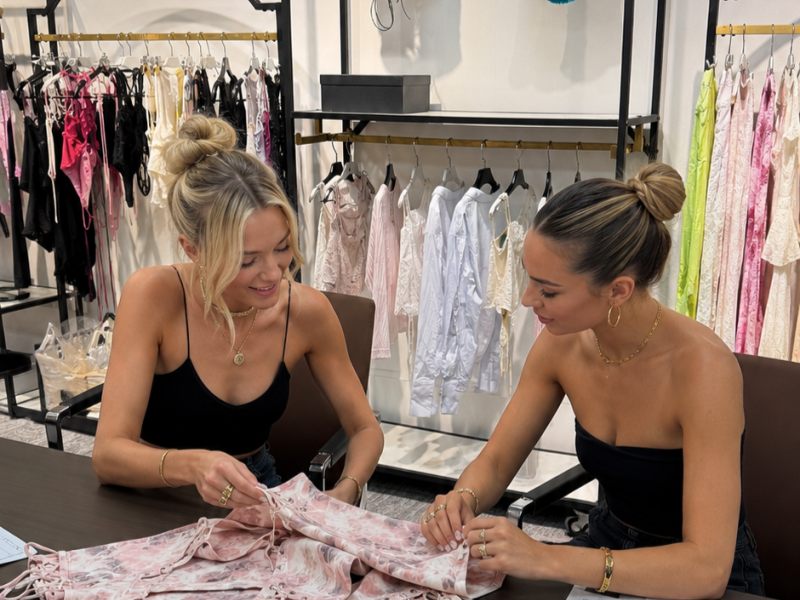
Australian Contemporary Collection
Project scope: 24 styles, 72,000 pieces, including sleeveless blazer dresses, linen-blend belted dresses, clean crepe minis and lightweight office-to-evening styles. Main challenge: the collection used six colors and a broad size range. Lightweight fabrics risked weak shoulders, while the larger sizes needed extra front balance without widening the lapel excessively. Development action: styles were grouped by shell weight and shoulder direction. Lightweight pieces used localized reinforcement instead of full heavy fusing. Grading rules separated body growth from lapel, pocket and button growth. Selected size sets were checked for armhole coverage, waist position, hip ease and hem length. Production result: sampling was prioritized by launch importance, with key styles approved before secondary colors. Factory allocation followed fabric and workmanship group.Final inspection focused on shoulder shape, front closure, grading consistency, color separation and barcode accuracy.
Blazer Dress Manufacturing Frequently Asked Questions

Start Your Blazer Dress Project
Send enough information for a useful review rather than a vague price guess. Jinfeng Apparel can evaluate blazer dress structure, fabric direction, sampling route, MOQ fit, cost drivers, production risk and delivery planning after receiving the core project details. Tech packs are ideal, but reference images, an original sample or a clear line sheet can also start the discussion.
Please include:
- Reference images, tech pack or original sample details
- Target quantity by style and color
- Planned size range and size ratio
- Preferred shell fabric, lining and interlining direction
- Button, zipper, belt, pocket and decoration requirements
- Main label, care label, hangtag and barcode needs
- Packing method and warehouse instructions
- Target sample date, launch date and delivery market