Skip to content
Bias-Cut Dress Development
Develop fluid, body-skimming dresses with stronger control over fabric behavior, pattern balance, sample fit and bulk consistency.
- Since 2008 in custom womenswear development and manufacturing.
- 2 sample rooms supported by 7+ senior pattern makers and 20+ sample machinists.
- Development support for satin, stretch satin, crepe, chiffon, rayon, viscose and related womenswear fabrics.
- First sample, revised sample, PP sample and Golden sample stages available according to project requirements.
- MOQ starts from 200 pcs per style/color, subject to fabric, color, trims, construction and production planning.
- Built for established fashion brands, sourcing teams and mid-to-large apparel programs requiring development followed by repeatable production.
Development Resources Behind Your Bias-Cut Dress Program
Since 2008
2 Sample Rooms
7+ Pattern Makers
20+ Sample Machinists
15+ QC Inspectors
200 PCS MOQ
Built for Established Fashion and Product Development Teams
Fashion Brands
Product Development Teams
Sourcing Teams
Occasionwear Brands
Resortwear Brands
Mid-to-Large Ecommerce Brands
What Makes Bias-Cut Dress Development Different
A bias-cut silhouette reacts differently from a conventional straight-grain garment. The final result depends on the relationship between fabric structure, panel direction, pattern proportions, garment weight and construction. Development therefore needs to validate the physical garment rather than treating the original pattern as the final answer.
Fabric Direction Changes the Silhouette
Bias cutting uses the fabric away from the conventional straight grain, often near a diagonal relationship to the warp and weft depending on the design and material. The resulting garment can gain more fluidity and conform more closely to body contours without relying on the same type of stretch used in knitted bodycon garments.
The effect is also less predictable than simply rotating a conventional pattern. Different satin, crepe, rayon and viscose constructions can behave differently even when two fabrics appear similar on a hanger. Weight, weave, yarn structure, surface finish and stretch all influence how the finished garment falls.
For development, fabric direction therefore needs to be considered together with silhouette. A cowl-neck slip dress requires a different balance from a structured fitted midi. A long skirt can place more vertical weight on the body than a short slip dress. A heavier material can create a more controlled fall, while a lighter material may expose seam, neckline or hem instability more easily.
Jinfeng evaluates womenswear fabrics according to factors including hand feel, drape, stretch, transparency, lining requirement, shrinkage, wrinkle behavior, color risk, cost, MOQ and bulk-production risk. Fabric changes during sampling are re-evaluated because a material change can also require pattern, lining, costing or schedule adjustments.
Drape Can Change Fit Perception
A bias-cut dress can appear correct when laid flat but behave differently once worn.
The weight of the garment acts through the fabric, while the bust, waist, hip and lower skirt create different tension zones.
As a result, development must consider visual proportion and movement in addition to static measurements.
Neckline depth, cowl volume, side seam balance, waist position, hip ease, strap length and overall dress length can all influence the final impression.
A neckline that looks clean on a hanger may open too much on the body. A skirt that appears even before fitting may show a different visual balance when the garment settles under its own weight.
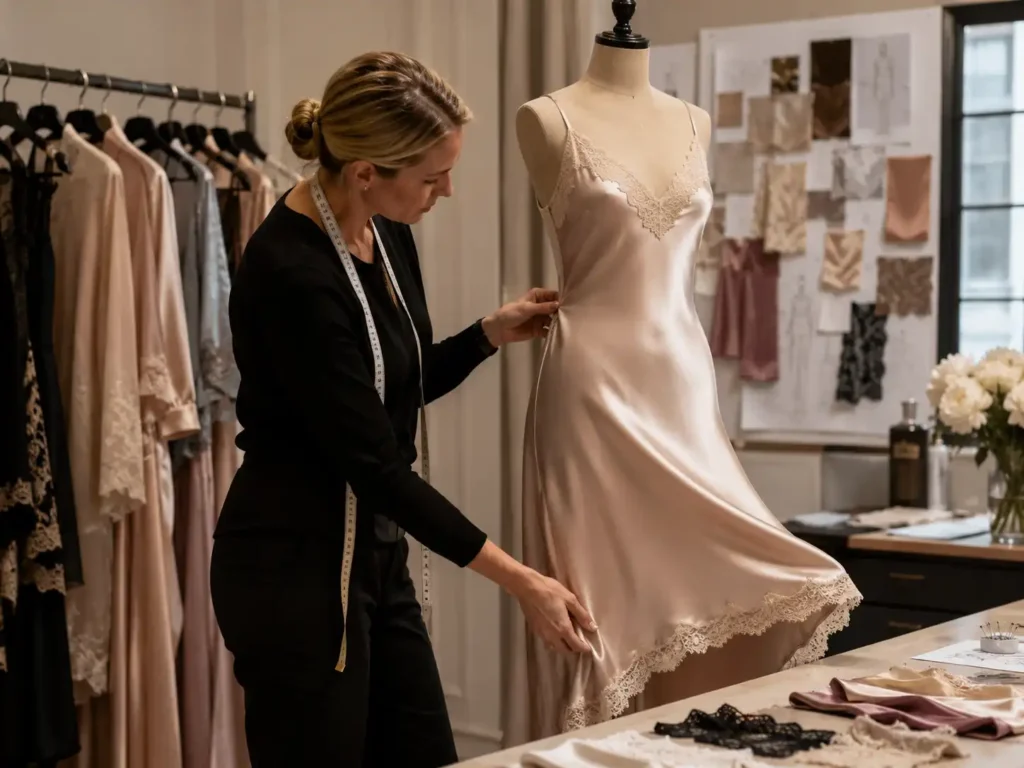
For Jinfeng development projects, fit feedback can be reviewed through size measurements, front/side/back fitting images, mannequin checks, client comments and comparison against the original reference or tech pack. Where corrections affect bulk production, changes are converted into updated patterns, size charts, BOM records, sewing instructions and QC references rather than remaining only in email or chat comments.
Pattern and Fabric Need to Evolve Together
Pattern correction is especially important when a development fabric is changed. Switching from one satin to another, moving from satin to crepe, or replacing a rayon quality can change hand feel, drape, transparency, stretch, shrinkage and visual weight.
A well-managed development process therefore does not treat the pattern as permanently locked after the first sample. First samples validate direction. Revised samples resolve fit, fabric, trim or construction issues. PP samples confirm the production-ready combination. Golden samples can then act as the final physical standard for bulk execution and later repeat orders.
The goal is not to make bias-cut development unnecessarily complicated. The goal is to identify the variables early enough that a visually sensitive dress can move into production with fewer unresolved questions.
How to Evaluate a Bias-Cut Dress Development Supplier
Strong bias-cut development depends on several connected capabilities. A supplier may produce attractive samples but still struggle when the same style moves into graded sizing, multiple colors and thousands of bulk garments.
| Capability | Why It Matters | What to Verify |
|---|---|---|
| Fabric evaluation | Drape starts with the material | Weight, hand feel, stretch, transparency, shrinkage and bulk availability |
| Pattern development | Controls proportion and balance | Bust, waist, hip, neckline, side seam, length and grading logic |
| Sample revision | First samples rarely answer every variable | Clear revision records and updated production files |
| Cutting control | Panel direction influences final appearance | Pattern direction, fabric face, shade and cutting references |
| Sewing control | Fluid surfaces reveal distortion easily | Seam appearance, lining, neckline, straps, zipper and hem |
| PP approval | Turns development into a production standard | Final fabric, trims, measurements, construction and packing |
| Bulk QC | Protects the approved appearance at scale | Fabric, cutting, inline sewing, measurements, final garment and packing |
| Production planning | Important when a style scales quickly | Suitable lines, fabric availability, QC plan and delivery schedule |
Bias-Cut Dress Styles We Can Develop

Bias Slip Dresses

Cowl-Neck Dresses
Bias Midi Dresses

Bias Maxi Dresses

Satin Occasion Dresses

Resort Bias Dresses
Fabric Behavior Shapes Every Bias-Cut Dress
Bias development begins with material behavior. A fabric may match a reference image in color and shine but still produce a completely different silhouette if weight, drape, weave, stretch or surface characteristics are different.
Satin and Stretch Satin
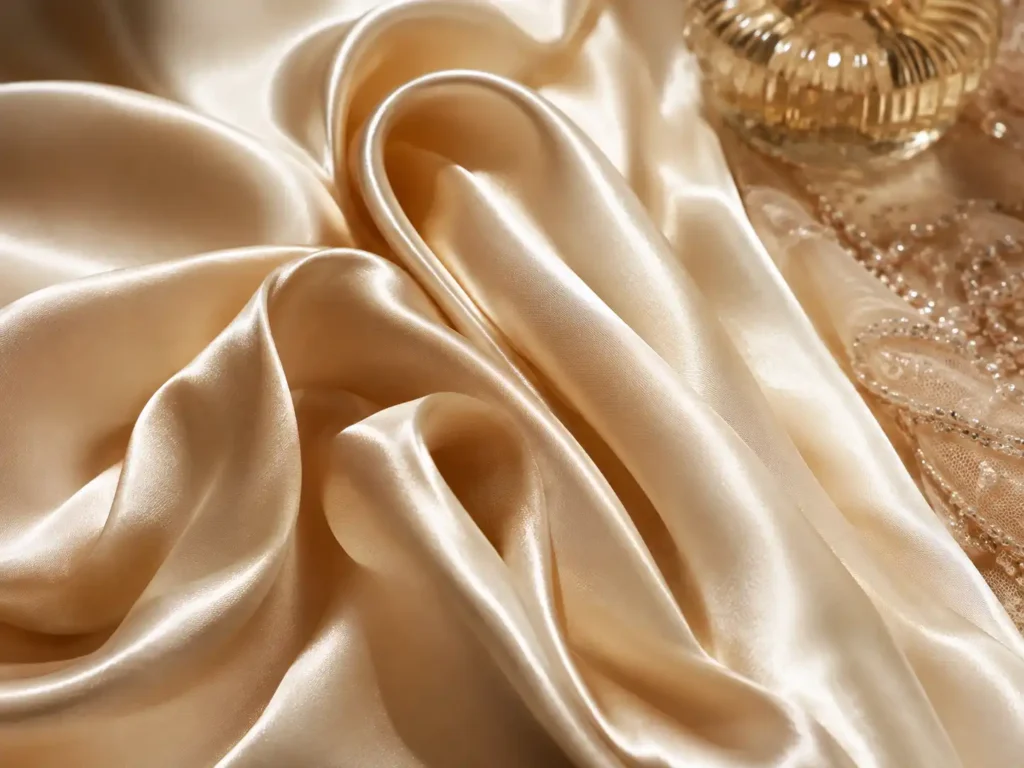
Satin is frequently selected for slip, cowl, occasion and evening dresses because its surface and drape create a strong visual effect. Development requires more than choosing a matching color. Fabric weight influences how the skirt falls; shine changes how seams and wrinkles appear under photography; transparency can determine lining requirements; stretch changes fit behavior; and surface sensitivity can affect cutting, sewing, pressing and packing.
Jinfeng’s fabric system includes satin and stretch satin, with project review covering hand feel, drape, stretch, transparency, lining, shrinkage, wrinkle behavior, color risk and bulk availability. When a satin quality is changed during sampling, the pattern and construction may need to be reviewed again rather than assuming the first sample standard can be transferred unchanged.
For lighter satin styles, neckline, side seam and hem appearance deserve particular attention. For heavier satin occasionwear, garment weight, lining and longer skirt proportions can become more influential.
Crepe
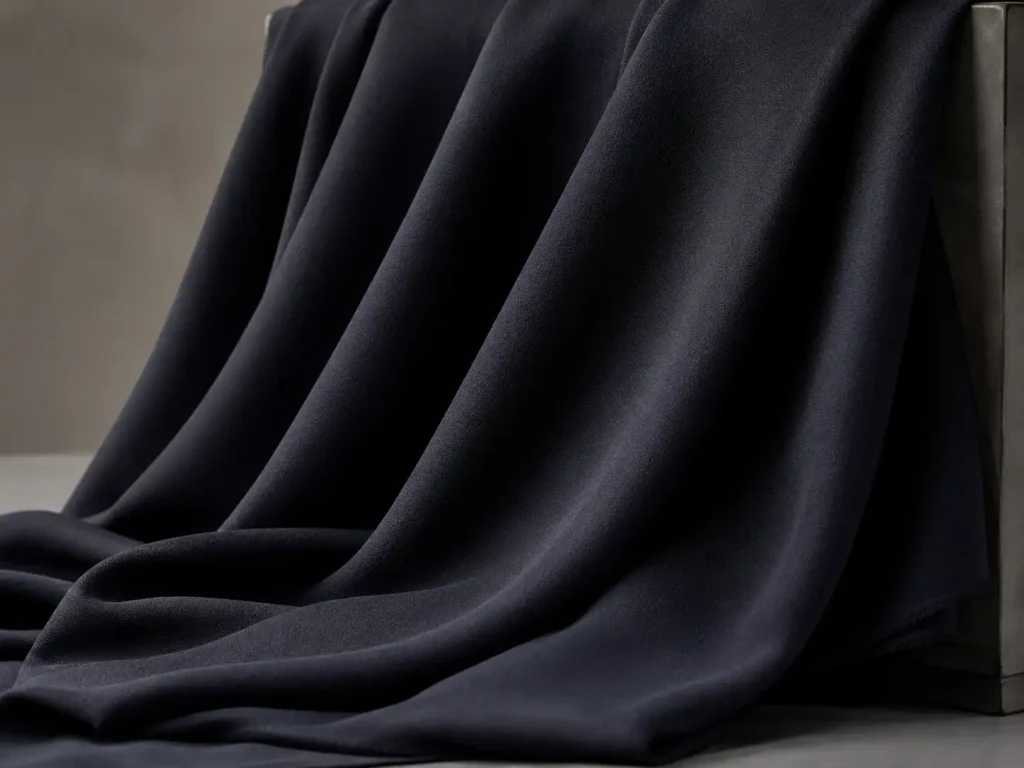
Crepe offers a less reflective surface and can provide a more controlled visual fall than highly lustrous satin. It can work well for midi, maxi, occasion and contemporary silhouettes where movement is required without an extremely glossy appearance.
Not all crepe behaves the same way. Fiber composition, weight and construction change how the fabric hangs, recovers from packing and responds around curved areas of the body. A crepe with more structure may support cleaner skirt lines; a softer quality may follow the body more closely. Development should therefore compare the intended silhouette against actual fabric behavior rather than choosing only from composition or appearance.
Jinfeng can support fabric recommendation and substitution based on product direction, hand feel, drape, stretch, transparency, cost, MOQ and production risk. Any substitution affecting fit or appearance should be validated through sample review before bulk approval.

Rayon and Viscose
Rayon and viscose are often considered for fluid dresses because of their soft hand feel and movement. They can be especially suitable for resort, vacation and relaxed feminine collections. Their behavior, however, can vary significantly depending on weave, yarn, weight and finishing.
Development should consider shrinkage, wrinkle behavior, transparency, print or color performance and the way the selected quality responds to the finished garment weight. A lightweight rayon maxi dress does not behave like a short satin slip even when both are designed to look fluid.
Where a rayon or viscose option changes after first sampling, Jinfeng rechecks material characteristics and reviews whether the pattern, lining, costing, MOQ or timing needs adjustment.
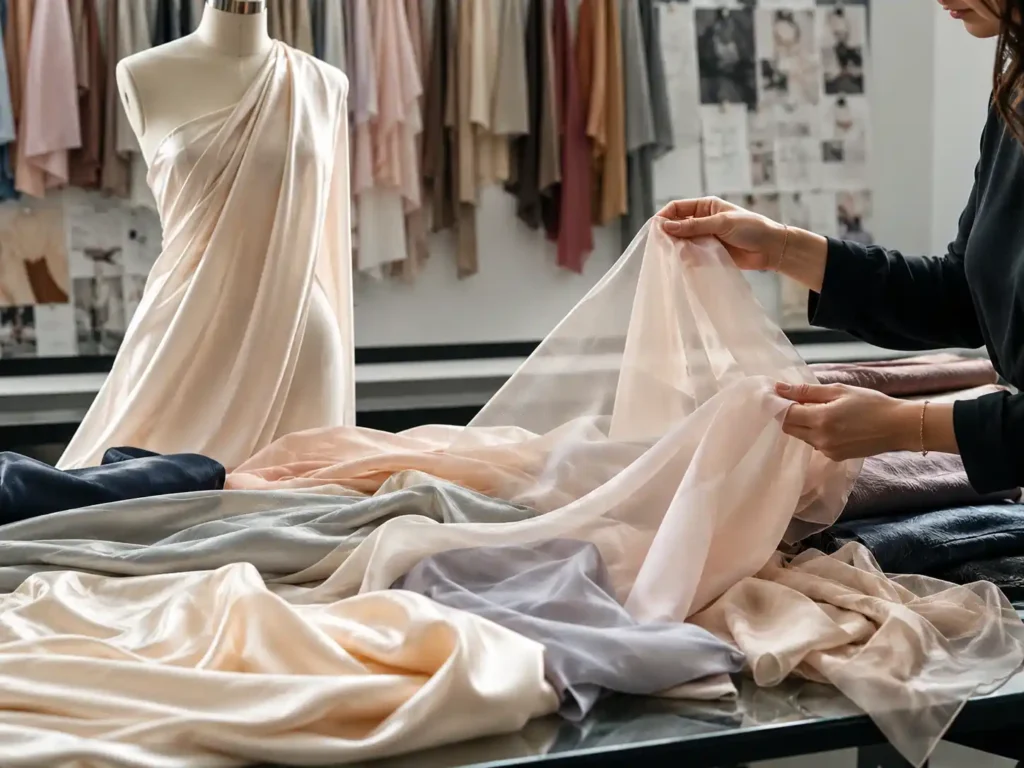
Chiffon and Lightweight Wovens
Chiffon and other lightweight woven fabrics are useful when a collection needs softness, layered movement or an airy appearance. They also introduce transparency, slipping and lining questions that are different from satin and crepe.
For a bias-inspired chiffon silhouette, pattern shape and lining interaction should be reviewed together. An inner layer that is too short, too heavy or too rigid can change the outside appearance. The final design may also require careful consideration of seam visibility, hem treatment and color relationship between shell and lining.
Jinfeng supports chiffon development with attention to transparency, drape, lining, surface condition and bulk fabric inspection before cutting.
Pattern Engineering for Stable Bias-Cut Fit
A successful bias-cut dress should look fluid without appearing uncontrolled. Pattern development needs to manage body proportion, neckline behavior, side seam balance and finished length while leaving enough flexibility for the selected fabric to create the intended movement.

Bust, Neckline and Upper-Body Balance
The upper body is often the first place where a bias-cut dress succeeds or fails. Slip dresses, cowls, low backs and narrow straps create fewer structural elements to hide fit problems. Bust coverage, neckline depth, strap position, armhole shape and back opening therefore need to work as one system.
During development, Jinfeng can review bust, waist, hip, strap, armhole, neckline, dress length and related fit points against the supplied size chart, reference image or original sample information. Front, side and back fitting images can help identify whether a problem comes from pattern proportion, fabric behavior or construction.
A cowl neckline may need more than a simple neckline measurement adjustment. Changing the depth can influence bust coverage and overall front balance. Strap changes can affect both neckline position and armhole exposure. When significant corrections are required, updated patterns and revised samples are used before PP approval rather than relying on verbal instructions at the production stage.

Waist, Hip and Side Seam Balance
Bias-cut dresses commonly follow the body more closely through the waist and hip while remaining visually softer than a stretch bodycon garment. The intended relationship between bust, waist and hip therefore needs to be defined clearly.
Too little room through the hip can change the skirt fall and pull the side seam. Too much room can lose the intended body-skimming effect. Waist placement can also alter the perceived leg length and overall proportion of midi and maxi styles.
Side seams provide a useful visual reference during fitting. Their position can indicate whether front and back balance, body proportion or fabric behavior needs further review. Jinfeng’s sample correction process records changes affecting measurements and patterns so approved modifications can later be transferred into production documents.
Grading also matters. A silhouette approved in one base size must be translated according to the brand’s size chart and grade requirements rather than assuming identical visual behavior across the entire range.

Dress Length and Hem Balance
Length is especially important for fluid midi and maxi dresses. A pattern measurement alone does not always describe how a finished garment will appear once worn because the selected fabric and garment weight influence visual fall.
Development should therefore review center front, side and back appearance as part of the overall fitting process. For asymmetric designs, high-low hems or side slits, additional reference points may be needed to preserve the intended line.
Jinfeng reviews dress length, slit position, lining length and body proportion during sample evaluation. If client fitting feedback shows a balance problem, the team can recheck pattern and measurements before a revised sample or PP sample is approved.
The production goal is a clear final standard: approved pattern, size chart, construction, fabric and QC measurement references that can be followed by the bulk team.
Construction Details That Protect the Intended Drape

Neckline Construction

Side Seam Control

Lining Strategy

Strap Attachment

Zippers and Closures

Hem Finishing
From Tech Pack to the First Development Sample
Tech Pack Review
Reference Image Review
Size Chart Review
Fabric Direction
Construction Review
Quantity and Launch Plan
Bias-Cut Sampling and Fit Correction Process
Sampling is where fabric behavior, pattern decisions and construction become a physical garment. The objective is not to force every style through a single sample round; the objective is to resolve the issues that would become expensive when multiplied across bulk production.

First Sample Establishes the Direction
The first sample is used to evaluate whether the selected fabric, pattern and construction can create the intended silhouette. For a bias-cut dress, review should focus on more than whether the garment resembles a reference image.
Key areas can include bust coverage, neckline position, strap length, waist level, hip relationship, side seam appearance, dress length, slit height, lining, fabric fall and overall body proportion. Photos, measurements and fitting comments provide more useful development information than a simple “approved” or “not approved” response.
Jinfeng’s reference sample timing depends on complexity. Simple first samples can take around 7–10 days, ordinary dresses around 10–15 days, medium-complexity dresses approximately 12–18 days, while more complex constructions or material requirements can extend to approximately 15–25 days. Projects requiring custom fabric or special trims may take longer according to supplier schedules.
These ranges are development references rather than universal promises because fabric sourcing, trim availability, complexity and feedback speed all influence the actual schedule.

Revised Samples Turn Feedback Into Production Information
When the first sample requires changes, Jinfeng classifies the issue before revising it.
Feedback may involve fit, fabric, workmanship, on-body effect, color, trims, measurements, design accuracy, details, packing or commercial targets.
For fit-related concerns, the team can recheck bust-waist-hip proportion, dress length, straps, armholes, neckline and slit position.
Fabric concerns can be compared through weight, hand feel, stretch, recovery, drape, transparency, shine, shrinkage, wrinkle behavior, cost, MOQ and timing.
Approved changes are transferred into formal records such as updated patterns, size charts, BOMs, fabric records, trim records, sewing instructions and QC checklists. Revised samples are commonly around 7–15 days after the required materials and decisions are available, depending on the extent of the change.
Major pattern, material or structural changes can require a new sample evaluation rather than being treated as a minor correction.
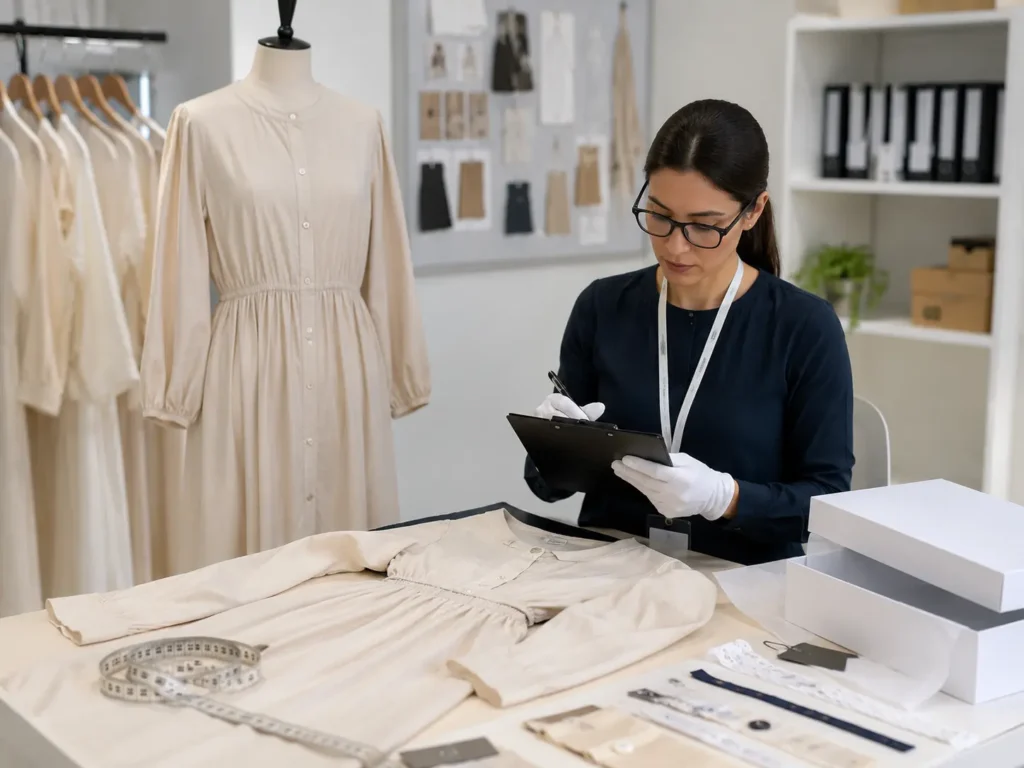
PP and Golden Samples Lock the Bulk Standard
Once core fit, material, trims and construction are confirmed, the project can move toward a PP sample.
A PP sample is not simply another visual sample; it represents the combination intended for production.
Jinfeng generally prepares PP samples after the main construction, measurements, fabric, color, trims, packing, cost, MOQ and production plan are sufficiently confirmed.
Reference timing is commonly around 7–15 days after final materials and required approvals are available.
The Golden sample can then serve as the highest-priority physical reference for bulk production, QC and repeat orders.
Final pattern information, measurement standards, fabric approvals, trims, sewing instructions and packaging requirements are aligned around the approved standard.
For established brands, this disciplined transfer is often more valuable than rushing directly from an attractive first sample into production.
Turning the Approved Sample Into Production Standards
Final Pattern
Size Chart
Fabric Approval
Trim and BOM Records
Sewing Instructions
PP and Golden Reference
Cutting, Sewing and QC for Fluid Dress Production
Production control begins before sewing. Bias-cut and other fluid dresses can expose mistakes in fabric selection, panel direction, measurements and construction very quickly, so quality needs to be managed as a sequence of checks rather than a final inspection alone.
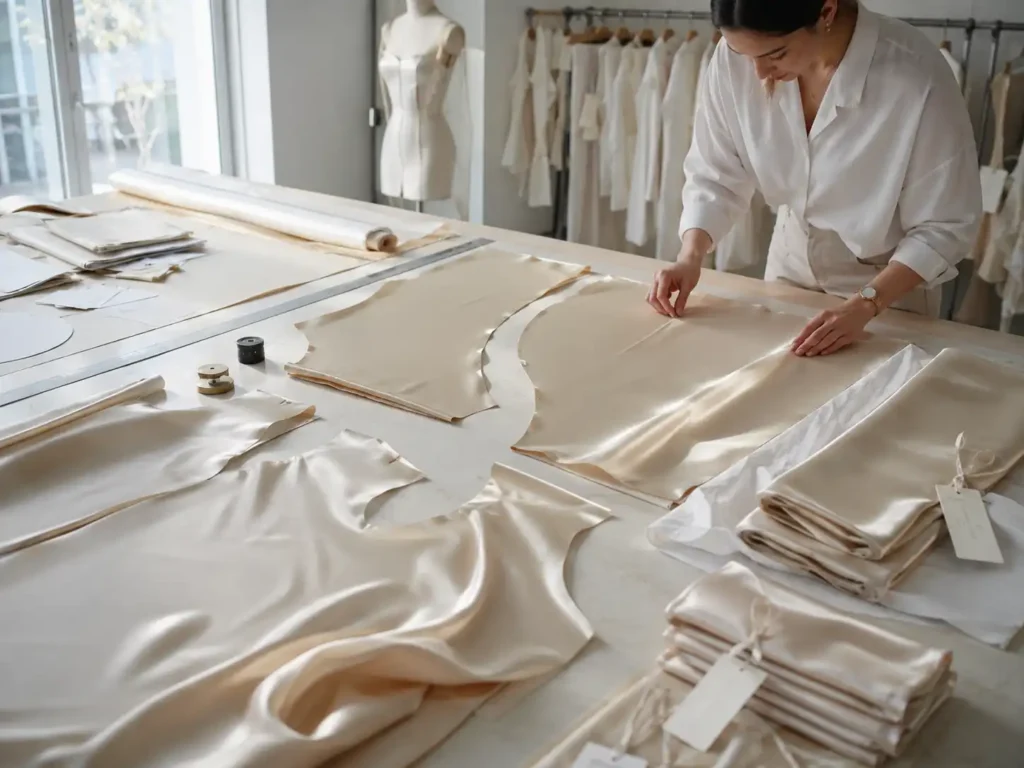
Material and Cutting Preparation
Before cutting, production preparation can include approved pattern references, fabric specifications, fabric width, shrinkage information, shade or surface review, cutting direction and marker planning. Jinfeng’s incoming material QC can review color, hand feel, weight, width, shade differences, stains, holes, surface damage and relevant shrinkage risks according to fabric type.
Cutting is a high-impact stage because later sewing cannot fully correct a panel cut from the wrong direction or an incorrect pattern version. Cutting QC therefore checks pattern reference, fabric face or direction where relevant, size bundling, cut quantities and visible material defects before components move forward.
For satin and other visually sensitive materials, the appearance of the surface also matters. Shade or shine differences can become obvious once panels are assembled, particularly under studio lighting. Production teams therefore need an approved fabric and cutting reference instead of relying on general color names.
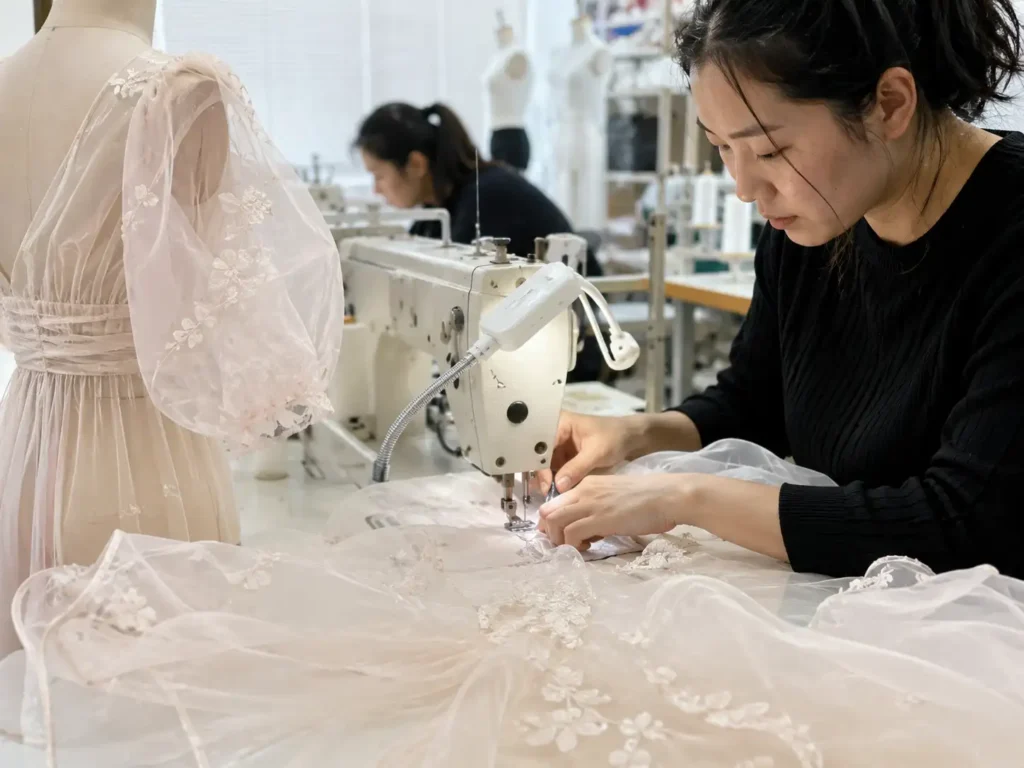
Sewing and Inline Inspection
Sewing instructions translate the approved sample into repeatable construction.
Depending on the style, relevant areas can include neckline, straps, side seams, zipper position, lining, slit, seam allowance, thread color and hem construction.
Jinfeng uses inline inspection as part of its QC process so problems can be identified while production is running rather than only after all garments are finished.
Areas such as neckline appearance, strap position, zipper behavior, waistline, lining exposure, slit, symmetry, stitching and material damage can be checked according to the product.
For a visually fluid dress, the inspection objective is not to create a rigid garment.
It is to preserve the approved relationship between fit, fabric and construction while maintaining acceptable workmanship across the production run.

Measurement, Finishing and Final Garment Review
Finished garments are checked against approved references instead of being judged only by appearance.
Measurement review can include bust, waist, hip, dress length, strap length, armhole, neckline depth, slit height and other points defined by the style and size chart.
Finishing also matters for satin, crepe and fluid dresses because pressing can influence surface appearance, seam presentation and the overall visual line.
Packing should then protect the finished garment without introducing avoidable damage, incorrect labels or SKU errors.
Jinfeng’s QC structure includes 15+ QC inspectors covering material, cutting, inline production, garment inspection and packing-related checks.
Final inspection and client or third-party inspection requirements can be coordinated according to the project.
Scaling an Approved Bias-Cut Style Into Bulk Production
6 Owned Factories
10+ Satellite Partners
100,000+ PCS Monthly
18+ Sewing Lines
6+ Flexible Lines
15+ QC Inspectors
Bias-Cut Dress Cost and MOQ Factors
Bias-cut dress pricing should be reviewed from the full product specification rather than fabric price alone. Material consumption, construction, lining, size range and quantity can all change the commercial result.
| Cost Factor | How It Influences the Project |
|---|---|
| Fabric composition and quality | Silk-like hand feel, premium satin, crepe and other materials can sit at very different cost levels |
| Fabric width | Influences marker efficiency and material consumption |
| Drape and fabric construction | May affect pattern direction, development and production handling |
| Dress length | Maxi styles generally require more material than mini or shorter midi styles |
| Panel construction | More panels, asymmetry and design details increase cutting and sewing work |
| Lining | Full, partial or specialty lining affects material and labor |
| Neckline and straps | Cowls, low backs, narrow straps and special finishing can add development complexity |
| Zippers and trims | Closure type, lace, decorative trims and branded components affect cost and MOQ |
| Color quantity | Multiple colors can create separate material, cutting and SKU requirements |
| Size range | Grading, size ratio and order distribution affect production planning |
| Order quantity | Influences material purchasing, production efficiency and packaging allocation |
| Private-label packing | Labels, hangtags, barcodes, polybags, carton marks and warehouse requirements add project-specific cost |
Brand Protection, Private Label and Export Support
NDA Support
Pattern Records
Private Labels
Retail Packing
Export Coordination
Repeat Orders
Development Evidence Brands Can Review
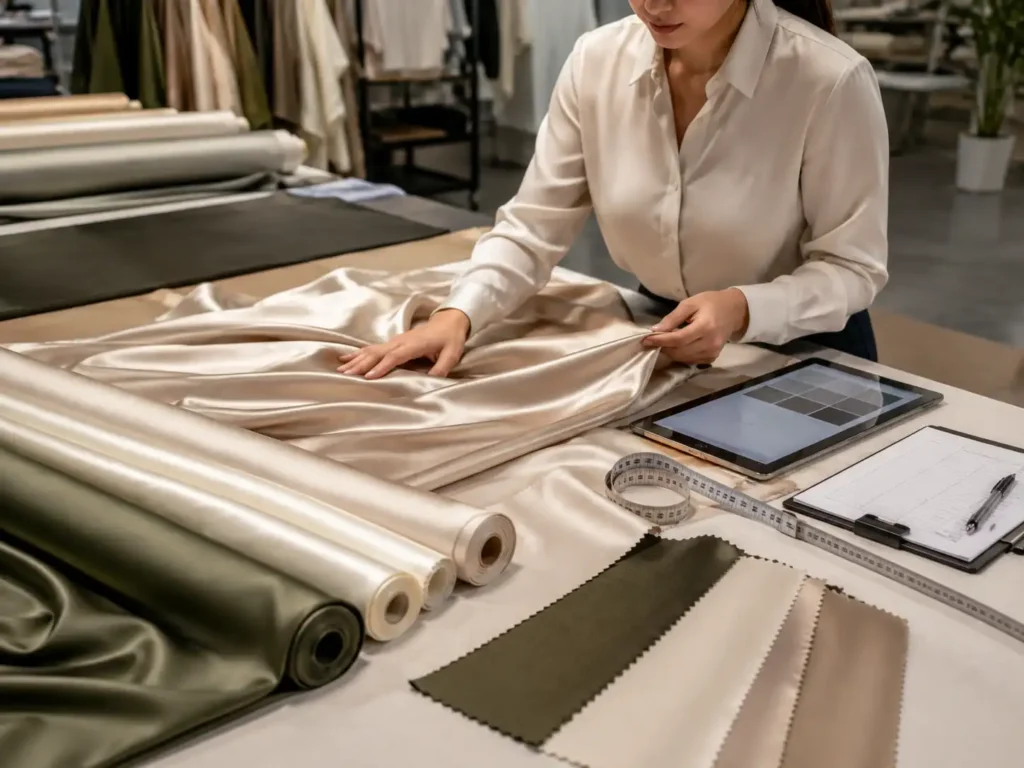
Fabric Review

Pattern Development

Sample Comparison

Measurement Review

Production Process
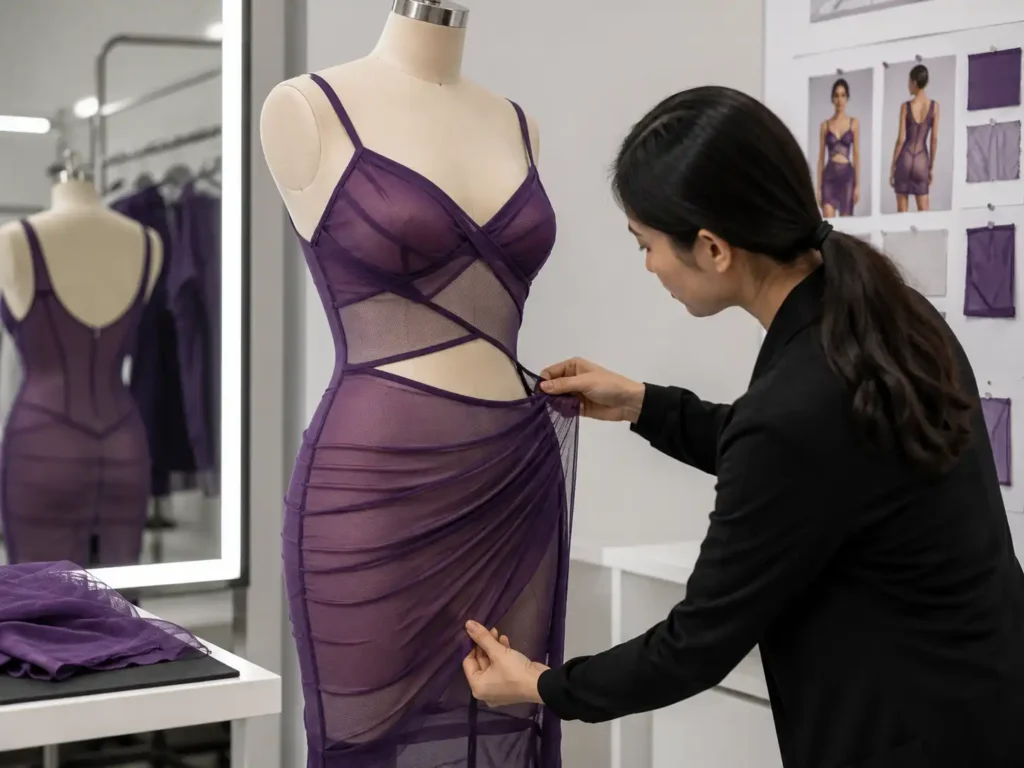
Final QC and Packing
Frequently Asked Questions About Bias-Cut Dress Development

Start Your Bias-Cut Dress Development Project
Jinfeng Apparel works with established fashion brands, sourcing teams and mid-to-large womenswear programs that need more than a one-off sample.
A strong development brief allows the team to review fabric direction, pattern requirements, fit risks, sampling steps, MOQ feasibility, bulk-production planning and private-label requirements before the project moves forward.
For a more useful initial review, send the information already available for your collection:
- Tech pack, sketch or reference images
- Target fabric or preferred material direction
- Quantity per style and color
- Planned colorways
- Size range and size chart
- Important neckline, fit or construction requirements
- Label and packaging specifications
- Target market
- Required delivery window
- Existing sample photos or original garment information, where available