 Skip to content
Beading and Rhinestone Quality Control
Built for fashion brands and sourcing teams that need embellished womenswear to hold the approved look from sample development through bulk production, QC and delivery.
- 15+ QC inspectors support incoming, in-line, garment and packing inspection across custom womenswear orders.
- 2 sample rooms and 20+ sample machinists support fit, placement and construction validation before bulk production.
- Rhinestone and bead-chain specifications are reviewed by color, size, pattern, attachment, comfort, weight and packing risk.
- 30+ finishing and packing workers support final appearance checks and protection for high-risk embellished garments.
Where Beading and Rhinestone Quality Usually Fails
Visual Accuracy
Attachment Reliability
Bulk Repeatability
Six Defects That Can Turn a Statement Dress Into a Return
Missing or Loose Stones
Pattern Misalignment
Shade and Brilliance Variation
Skin Contact Problems
Base Fabric Damage
Packing and Transit Damage
Trim Approval Before Any Embellishment Enters Production
Rhinestones and beads should be treated as controlled production materials. Before bulk application, the approved specification needs to define what the decoration is, how it should look, where it is used and which risks require inspection. Special colors, patterns and custom trims may also carry separate supplier MOQ and lead-time requirements.
Trim Type | What Must Be Approved | Main Bulk Risk | QC Focus |
Hotfix Rhinestone | Color, size, brilliance, backing, pattern, placement | Weak bonding, missing stones, visible adhesive, fabric marking | Appearance, placement, bonding condition, missing stones |
Sewn-On Rhinestone | Stone shape, hole position, thread route, placement | Loose thread, rotation, fabric stress, uneven orientation | Thread security, orientation, symmetry, fabric condition |
Prong-Set Rhinestone | Stone size, setting style, backing, placement | Sharp contact, loose setting, snagging, weight | Setting security, edge condition, skin contact, fabric stress |
Hand Beading | Bead type, color, stitch route, density, motif | Loose beads, uneven spacing, broken thread, excessive weight | Stitch consistency, bead integrity, spacing, comfort |
Bead Chain | Length, bead type, connection method, color | Breakage, dropped beads, unstable strap, scratching | Connection points, length, weight, surface, comfort |
Mixed Embellishment | Artwork, sequence of application, material combinations | Visual inconsistency, conflicting attachment methods, packing damage | Approved reference, process order, final appearance, packing protection |
Match the Application Method to the Garment Structure
No single attachment method is correct for every embellished style. The decoration, base fabric, silhouette, stretch, stress point and care requirement need to be reviewed together before a sample becomes a production standard.

Hotfix Rhinestones Need Fabric-Compatible Bonding
Hotfix decoration can create a clean, lightweight surface and works well for many party, festival and statement styles, but bonding quality depends on the full material combination. A stone that performs well on one woven surface may behave differently on stretch mesh, lace, satin or a coated fabric. Development should confirm whether the base fabric can tolerate the application process without shine marks, distortion, surface damage or reduced stretch.
The approved sample needs to establish placement, appearance and bonding behavior before the method is released to bulk. Quality review should look for weak edges, partial contact, visible adhesive, inconsistent orientation and damage around the applied area. A bulk process should also keep trim lots and base-fabric lots identifiable so unexpected variation can be isolated instead of spreading through the order.
Jinfeng does not use a universal temperature, pressure or time claim for every style. Application conditions must follow the selected rhinestone, fabric construction and project requirement. The goal is a stable decoration without sacrificing hand feel, stretch, drape or surface finish.

Sewn-On and Prong-Set Stones Need Structural Control
Sewn-on and prong-set decoration creates mechanical attachment rather than relying only on adhesive. The advantage is not simply “stronger” attachment; the method changes how stress moves through the garment. Thread tension, stitch path, backing, hole position and the number of attachment points can affect the surrounding fabric. On thin satin or mesh, an attachment that is too tight may distort the surface. On structured partywear, insufficient support can allow a heavier stone to rotate or pull.
QC should review security together with garment appearance. Stone orientation, left-right symmetry, fabric flatness and edge condition are all part of the standard. Prong settings also require attention wherever they may touch the skin or catch adjacent material. Lining, backing or localized protection can be considered when the design places hardware near underarms, necklines or the waist.
A visually correct stone is not automatically a pass if the attachment creates discomfort, snagging or fabric stress. Final approval should reflect both appearance and wearing performance.

Hand Beading Requires Repeatable Stitch and Spacing Standards
Hand beading is valuable when a design needs fine detail, controlled density or a premium handcrafted effect that cannot be achieved with a simple trim. Its main production challenge is variation. Without a clear map, bead sequence, spacing reference and stitch route, individual operators can produce slightly different results even when each piece looks acceptable on its own.
The sample should define the motif, bead order, spacing, density, start and finish points, thread treatment and any reinforced areas. Bulk QC then compares production against the approved reference rather than relying on a general description such as “same as sample.” Loose thread ends, missing beads, inconsistent density, twisted motifs and excessive tension need to be identified early because they become costly to repair after the garment is fully assembled.
Weight also matters. Dense beading can pull on straps, necklines and delicate panels, so the garment structure needs enough support to hold the decorative load without changing fit or drape.

Bead Chains and Rhinestone Straps Must Carry Real Wearing Load
Decorative chains and rhinestone straps are both visual details and functional components when they support a neckline or shoulder. Length, connection method, bead or stone integrity, metal parts, weight and skin contact should be evaluated together. A chain that looks correct while the garment is flat may sit differently once body movement and garment tension are introduced.
Development should confirm connection points, reinforcement, strap length and the relationship between decorative weight and the supporting fabric. Bulk inspection should look for broken links, missing beads, uneven lengths, weak connection points, sharp surfaces and damage where the chain meets the garment. Where a decorative strap carries load, fit review becomes part of quality control because an unstable strap can change bust position, neckline coverage and overall wearing safety.
Packing also needs a separate solution. Chains should not be trapped under heavy folds or allowed to rub directly against delicate satin, mesh or other embellished surfaces during shipment.
Base Fabric Changes Every Rhinestone Quality Decision

Satin and Stretch Satin

Mesh and Power Mesh
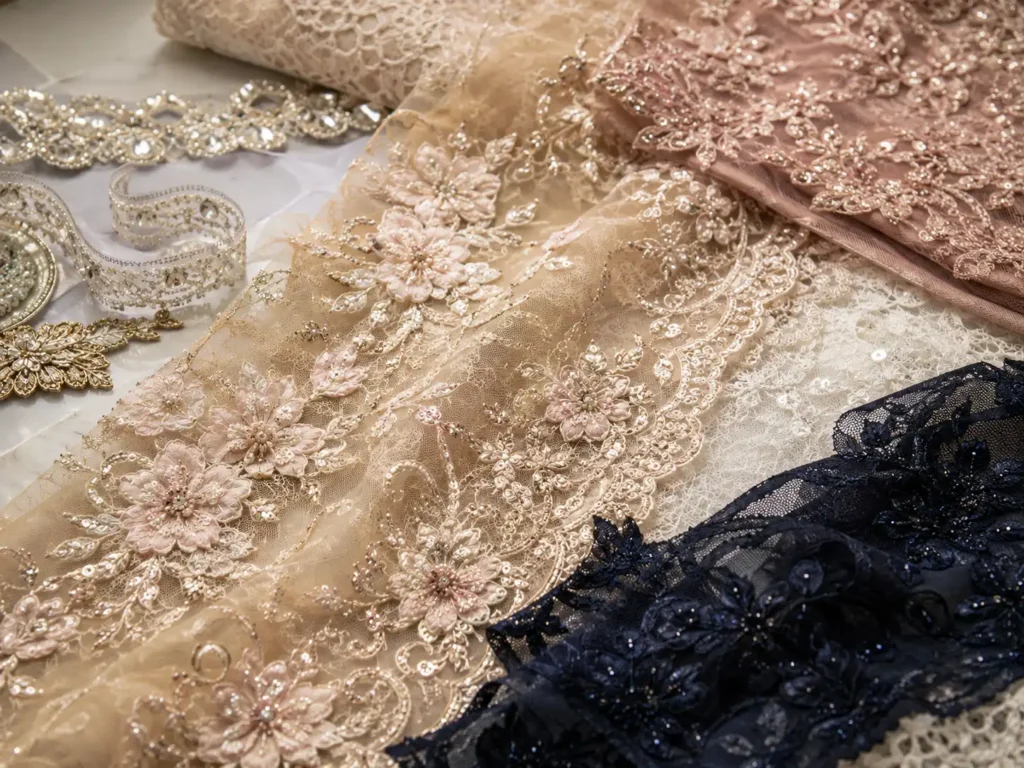
Lace and Tulle
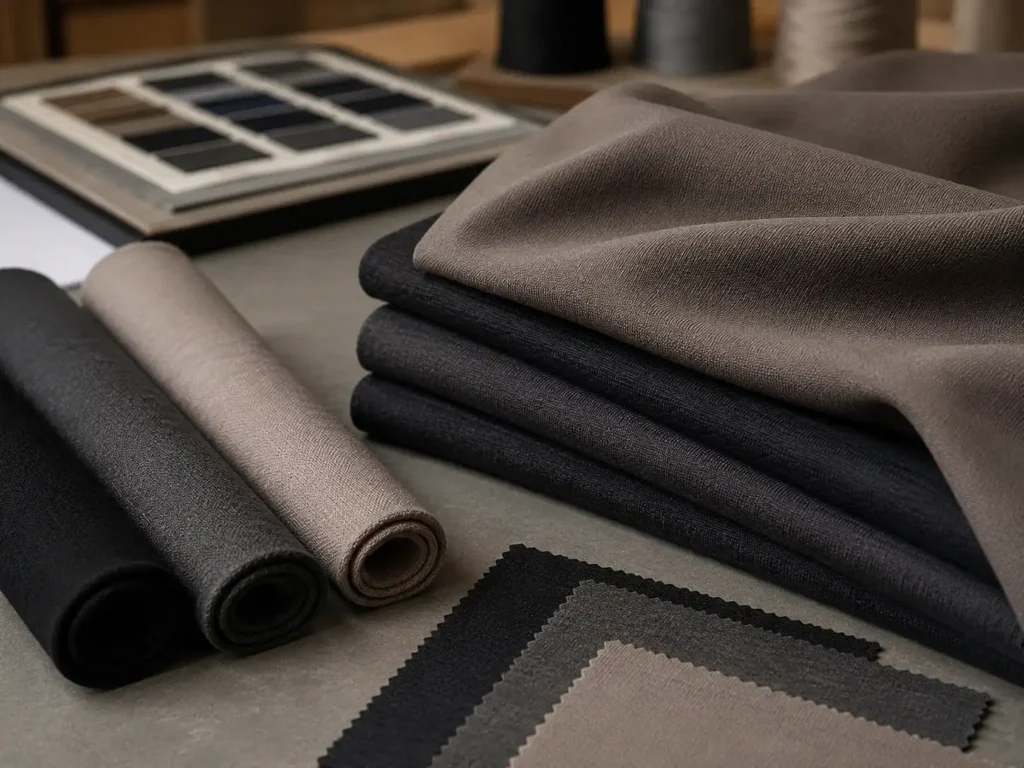
Jersey and Ponte
Placement Accuracy Is a Production Standard, Not a Styling Note
A rhinestone motif can be securely attached and still fail if the position is wrong. Placement control converts creative artwork into repeatable garment reference points that remain understandable across sampling, grading, production and inspection.
Build Placement From Garment Reference Points
A production-ready embellishment plan should connect decorative artwork to measurable garment locations. Neckline edges, center front, princess seams, waist seams, cup lines, side seams, straps, cut-out edges and hem references can all serve as anchors depending on the style. The objective is not to overload the garment with measurements; it is to remove ambiguity around the details that define the visual result.
For a curved rhinestone neckline, for example, a reference needs to control the starting point, end point, distance from the neckline edge, center-front relationship and left-right balance. A waist motif may require a center position plus clear vertical and horizontal references. A rhinestone strap needs length, connection position and a relationship to neckline and armhole geometry.
Artwork, trim card, sample photographs and the approved garment can be used together. No single document should be expected to carry the entire standard when the design is three-dimensional and body-sensitive.
Control Symmetry, Spacing, Density and Direction
Many embellished dresses are sold through close-up product photography, so small visual differences become commercial defects. Symmetry is especially important around bust lines, one-shoulder details, corset panels, waist motifs and mirrored side decorations. Spacing and density need similar attention because a cluster that is only slightly more open or dense can appear as a different design under flash or studio lighting.
The approved standard should define the areas where exact matching matters most. Straight rows need consistent direction. Gradient patterns need a controlled transition rather than random density. Mixed-size stones need a clear sequence or visual reference. Hand-beaded motifs need repeatable start and finish points, with any intentional irregularity documented so it is not mistaken for poor workmanship.
Inspection should compare the full visual pattern before focusing on individual stones. A garment with every stone securely attached can still be rejected if the motif is shifted, asymmetrical or visually unbalanced.
Recheck Placement After Grading and Body Movement
Placement developed on one sample size does not always scale cleanly across a full size range. A motif positioned near the bust, waist, hip, slit or cut-out may need a grading rule so the decoration keeps the same visual relationship to the body rather than simply moving with one pattern point. Stretch garments add another challenge because body expansion can change spacing, angle and density when the garment is worn.
Fit and embellishment therefore need to be reviewed together on body-sensitive styles. If a rhinestone panel crosses a stretch zone, sample evaluation should check whether the pattern opens, distorts or pulls. If beading sits near a seam or zipper, grading should not push the decoration into a construction area. If a decorated strap supports the garment, its length and attachment position need to remain functional across sizes.
The final placement standard should reflect the approved size chart and garment structure, not only the artwork file.

Sampling Turns Embellishment Ideas Into Measurable Bulk Standards

Trim and Artwork Review

First Sample

Revised or Photo Sample

PP Sample and Golden Standard
Lock Rhinestones, Beads and Placement Before Bulk Starts
Bulk quality becomes easier when the approved standard is difficult to misunderstand. A trim approval record, PP garment and controlled change process keep decorative details from drifting after sampling.
Use a Trim Approval Record
A trim approval record should identify the rhinestone or bead reference used for the approved sample and link it to color, size, pattern, placement and attachment information. For bead chains, length, bead type and connection method are also important. The purpose is not paperwork for its own sake. The record gives sourcing, merchandising, production and QC teams one reference when bulk materials arrive.
Special trims can have separate supplier MOQ, color availability and lead times. A custom stone, bead, chain or finish should therefore be confirmed before the order reaches the point where a late substitution would change the design. If an approved trim becomes unavailable, the replacement should return to visual and functional review rather than being treated as an invisible purchasing change.
Treat PP Approval as a Production Lock
PP approval should lock the elements that affect the bulk result: base fabric, color, rhinestone or bead specification, decoration map, attachment method, garment construction, key measurements, labels and packing. A production line should not need to guess which version of a sample or artwork is current.
For embellished styles, the PP garment is particularly valuable because it shows three-dimensional relationships that a flat artwork cannot fully describe. It shows how the motif sits on the body, how chains hang, where stones meet seams, whether beading affects drape and how decorated surfaces should look after pressing and finishing.
Manage Changes Without Losing Traceability
Fashion programs change. A brand may add a color, change a stone, reduce density, adjust a neckline or request a new packing method after the first approval. The important control is not to forbid changes; it is to separate the new instruction from the old one and confirm the downstream impact.
A change can affect trim ordering, sample appearance, application time, garment weight, cost, QC criteria and delivery schedule. Revised artwork or sample comments should be connected to the correct style and version. When a change affects the visible embellishment standard, reapproval may be more efficient than allowing production to interpret the change informally.

Transfer the Approved Sample Without Losing the Embellishment Standard
The handover from sample room to production is one of the highest-risk moments in an embellished program. Jinfeng treats the approved sample as a controlled production reference supported by documents, trim records and QC checkpoints.
Build a Production Handover Pack
The production team needs more than a garment hanging on a rack. The handover should connect the final pattern, size chart, fabric reference, BOM, trim record, decoration artwork, placement notes, construction instructions, labels, packing requirements and QC checklist. A beaded or rhinestone style also benefits from clear close-up references for the areas where placement, density, connection or surface appearance is difficult to communicate in text.
A controlled handover reduces the risk of the sample team and bulk team working from different assumptions. It also gives QC a reference before finished garments appear. If a motif has five critical reference points, those points can be checked during production instead of waiting until the final inspection to discover that the whole pattern has shifted.
Verify Early Bulk Before Production Volume Builds
Early production is where application settings, operator interpretation and trim variation become visible. The objective is to compare initial bulk work against the approved PP standard while correction is still manageable. Important checks include stone or bead identity, motif position, symmetry, attachment appearance, base-fabric condition, seam interaction and any structural areas carrying decorative weight.
A discrepancy at this stage should be treated as a process signal. If several garments show the same shift, the placement guide or execution method may need correction. If only one trim lot looks different, material segregation may be required. Early verification prevents a small misunderstanding from becoming a large rework problem.
Keep Bulk Lots and Standards Traceable
Rhinestones, beads and decorative components may arrive in more than one lot, especially on multi-style or multi-color programs. Traceability helps production and QC identify whether appearance changes are connected to a material lot, style group or process stage. The same logic applies to base fabric because surface and stretch differences can change application behavior.
Jinfeng keeps trim records as part of repeat-order management and links bulk execution back to approved samples, BOM information and QC records. The result is a clearer route for troubleshooting if a later inspection finds color variation, missing decoration, connection weakness or packing damage.

Quality Control Must Follow the Garment Through Production
Incoming Trim QC
Fabric and Cutting QC
First Application Check
In-Line Inspection
Finished Garment Review
Packing QC
Incoming Trim Inspection Stops Problems Before They Reach the Garment
Once a poor trim has been applied to hundreds of garments, replacement becomes slow and expensive. Incoming inspection creates a release point before rhinestones, beads or chains enter production.
Confirm Specification, Color and Surface Appearance
Incoming trim should be compared with the approved reference, not with a generic purchasing description. Rhinestone color, size, brilliance, surface condition and backing need visual consistency. Beads should match the approved type, color and finish, while bead chains need the correct length, appearance and connection design. Broken pieces, chipped stones, cloudy surfaces, obvious color variation and incomplete components should be separated before the material reaches the line.
Mixed-size or multi-color motifs require extra discipline because the wrong component can still look “close” until the full pattern is assembled. Clear labeling and lot separation help keep the right materials with the right style and color. If a supplier lot differs visibly from the approved sample, the issue should be resolved before it becomes a garment defect.
Check Connection, Weight and Wearing Risk
Decorative quality includes the parts that are less visible.
Bead-chain links, stone settings, backing, attachment holes and any metal connection points should be reviewed for damage and obvious weakness.
Weight matters on straps, necklines and delicate panels because a heavier replacement trim can change fit or load the base fabric differently from the sample.
Comfort also belongs at this stage. Sharp edges, rough backing or exposed connection points can create scratching once they are installed.
Identifying these risks before application gives development and production more options, including reinforcement, lining, backing or a trim change.
Release Materials by Approved Lot
Incoming QC should end with a clear material status: approved for production, held for review or rejected for replacement. The purpose is to stop questionable trims from being mixed into normal stock. On multi-style programs, traceable trim lots also make later troubleshooting faster because a defect can be connected back to the materials used.
For repeat orders, Jinfeng reviews whether the original rhinestone or bead-chain reference is still available. When the supplier, lot or specification changes, the new material can be compared against the retained record and approved garment standard before bulk use.

Inline Embellishment QC Prevents Small Errors From Becoming Thousands
Final inspection is too late to discover a repeating placement or attachment problem across a large order. In-line control checks the process while correction is still possible and keeps the production standard visible to the teams applying and inspecting the decoration.
Start With an Early Production Comparison
The first decorated bulk pieces should be compared directly with the approved sample, artwork and trim reference. The inspection focuses on the areas most likely to drift: starting and ending points, center alignment, left-right balance, spacing, stone orientation, bead density, chain length and connection location. Base-fabric condition is checked at the same time because a correctly placed motif is still unacceptable if the application has puckered satin, opened mesh holes or distorted stretch.
Early comparison also confirms whether production can repeat the sample method at bulk pace. If the sample depended on an unusually slow hand process, the line may need a clearer fixture, reference or work sequence. The objective is not to reduce craft quality; it is to make the approved craft standard repeatable.
Inspect Pattern and Attachment as Separate Risks
Placement and attachment should not be treated as one pass/fail question. A stone can be secure but wrongly positioned. A motif can be perfectly aligned but contain weak edges. A bead chain can match the length standard but have an unstable connection point. Separating these checks helps identify the actual cause of a defect and prevents unnecessary rework.
In-line QC can therefore review visual pattern first, then attachment condition, base-fabric response and garment structure. On multi-color or mixed-stone styles, material identity and brilliance should be included so incorrect components do not continue through production unnoticed.
Contain, Rework and Recheck Before Release
When a repeating defect appears, affected pieces should be isolated from accepted production. The team then compares the problem against the approved standard, identifies whether the cause is material, placement, application or garment construction, and defines the correction. Reworked pieces return to inspection rather than moving directly to finishing.
The same finding should also be used to protect the remaining order. A corrected reference, clearer placement point or material segregation can prevent recurrence. Jinfeng’s QC approach includes in-line inspection as part of the broader garment control system, so defect handling is connected to production rather than left only to end-of-line sorting.

Finished Garment Inspection for Beaded and Rhinestone Styles
Final inspection confirms whether the completed garment matches the approved visual and functional standard after sewing, finishing and decoration. The review covers the embellishment itself, the base fabric around it, fit-sensitive areas and the packing condition required for release.
| Check Point | What Is Reviewed | Typical Action When Out of Standard |
|---|---|---|
| Missing / Loose Decoration | Missing stones or beads, loose edges, broken thread, weak links | Hold affected pieces, rework and recheck |
| Placement | Position, center line, edge distance, motif direction | Compare with approved reference; correct if outside approved standard |
| Symmetry / Spacing | Left-right balance, row consistency, density | Rework visible imbalance before release |
| Color / Brilliance | Mixed shade, dull stones, incorrect components | Segregate affected lot and review trim source |
| Surface Cleanliness | Visible adhesive, stains, marks, residue | Clean or rework without damaging fabric |
| Base Fabric | Snagging, holes, puckering, distortion, shine marks | Repair if acceptable; otherwise hold garment for review |
| Bead Chain / Strap | Length, connection, missing beads, surface condition | Reinforce, replace or rework and recheck fit |
| Skin Contact | Sharp points, rough backing, exposed settings | Add approved protection or replace defective component |
| Finished Appearance | Fit-related distortion, drape, lining exposure, pressing quality | Correct finishing or return for garment rework |
| Packing Readiness | Protection, folding, decorated surfaces, labels | Repack before carton release |
Durability and Wearing Safety Matter as Much as Sparkle

Attachment Security

Care and Wash Compatibility

Skin Comfort
Weight and Garment Structure
Packing Is the Final Rhinestone Quality-Control Step
Separate High-Risk Surfaces
Protect Chains and Decorative Straps
Control Folding and Pressure
Complete Packing QC Before Carton Release
The Jinfeng Teams Behind Embellishment Quality Control
15+ QC Inspectors
2 Sample Rooms
7+ Senior Pattern Makers
20+ Sample Machinists
12+ Merchandisers
30+ Finishing and Packing Workers
Review Packing Method
A strong first order is only part of a long-term program. Repeat quality depends on retained references and a fresh review of anything that may have changed between the first production lot and the next replenishment.
Retain the Approved Embellishment Standard
Jinfeng’s repeat-order records can include the golden sample, bulk pattern, size chart, BOM, fabric record, color record, trim record, sewing instruction, QC checklist, packing instruction and previous production feedback. Trim records include rhinestones, bead chains and related decorative components so the next order does not begin with a generic description such as “same crystal as last time.”
The value is not only speed. A retained reference helps identify whether a new supplier lot, color or substitute actually matches the original design. Close-up photographs can support the record, but the approved physical and document references remain more useful when brilliance, weight, surface feel or chain construction is difficult to judge on screen.
Recheck What Can Change Between Batches
Repeat production can differ because fabric dye lots change, an original rhinestone becomes unavailable, a bead-chain supplier changes, the brand adds a color, the size mix shifts or the previous bulk generated feedback that needs correction. Before replenishment, the order should confirm whether the original fabric, trim, placement and packing standard can still be repeated.
If a replacement rhinestone has a different weight or brilliance, it may require a new appearance review. If a chain finish changes, skin contact and color coordination may need confirmation. If the base fabric lot behaves differently, application performance can also change even when the trim is identical.
Use Previous Bulk Feedback to Improve the Next Order
Repeat orders should not blindly reproduce a problem. Previous QC findings, after-shipment comments and repair history can be reviewed before the next PP or bulk release. A placement reference may need clarification, a packing layer may need adjustment, or a fragile connection point may need reinforcement.
The goal is controlled continuity: keep what was approved, revalidate what changed and improve any point that created avoidable risk. This approach is especially valuable for seasonal partywear, holiday drops and bestselling embellished styles that return in new colors or modified versions.

Frequently Asked Questions About Beading and Rhinestone Quality Control
The method depends on the stone type, base fabric and attachment system. Jinfeng reviews trim specification, fabric compatibility, sample performance, application appearance and in-line quality before final garment inspection. Loose edges, weak thread, unstable settings or repeated defects are corrected before release. Project-specific durability or wash requirements can also be arranged when the garment specification calls for them.
Placement is transferred from the approved sample into artwork, reference points, trim records, PP standards and QC checks. Critical areas such as center front, neckline, waist, straps or mirrored motifs receive clear visual or measurement references so production does not rely on memory alone. In-line inspection catches pattern drift before it spreads through the order.
No. Both need placement and appearance control, but the attachment risks differ. Hotfix decoration focuses more on bonding condition and fabric reaction, while sewn-on or prong-set stones require checks on thread or setting security, orientation, fabric stress and skin contact. The garment construction and care requirement also influence the final QC plan.
Sampling checks stretch direction, holes, recovery, transparency, lining and fabric distortion around the decorated area. Heavy or dense embellishment may need lower weight, adjusted placement or reinforcement so the garment can still move and recover. Bulk inspection watches for enlarged holes, seam deformation, restricted stretch and placement changes when the fabric is under tension.
Color, size, brilliance, surface condition, backing or setting, pattern requirement, placement and compatibility with the selected fabric are reviewed. Special colors, patterns or custom trims may have separate supplier MOQ and lead-time requirements. The approved reference is then retained for incoming trim inspection and bulk comparison.
Bead-chain or decorative straps are reviewed for length, connection points, bead integrity, weight, surface condition and skin contact. Fit matters because a strap may also support the neckline or bust. Sampling checks whether the decorative load changes garment position, while bulk QC checks repeated length, connection security and visible damage.
Yes, rhinestones can be developed by color, size, pattern and arrangement, subject to supplier availability, MOQ, cost and lead time. The project should confirm these details early because a late change can affect sampling, bulk purchasing and delivery. Custom trim approval is completed before the specification is treated as a production standard.
Packing can use protective separation, controlled folding, chain positioning, tissue or other approved protection where needed. The method depends on decoration height, base fabric, garment structure and shipping risk. Packing QC checks the decorated area after folding and confirms that chains, stones or beading are not trapped in pressure points likely to scratch or crush the garment.
Repeat-order records can retain the golden sample, BOM, trim record, fabric and color records, sewing instructions, QC checklist and packing standard. Before replenishment, Jinfeng checks whether the original rhinestone, bead chain or fabric is still available and whether any previous QC or after-shipment feedback requires an update.
A tech pack or reference image is a good start. For a faster review, include embellishment artwork, close-up trim photos, fabric direction, sample photos, expected quantity per style and color, size range, care requirement, packing needs and target delivery window. If the project is moving from another supplier, defect photos can also help identify the main production risk.

Send Us Your Embellishment Details for a Production Review
- Style image, tech pack, sketch or original sample photos
- Rhinestone, bead or bead-chain reference and preferred color / size
- Placement artwork or close-up reference images
- Main fabric and lining direction
- Order quantity by style and color
- Size range and any fit-sensitive areas
- Required labels, hangtags, barcode or packing instructions
- Target delivery window and shipping plan
- Existing defect photos if the project is changing suppliers


