Balloon Sleeve Dress Manufacturer

Custom balloon sleeve dress development for global fashion labels, sourcing teams, and multi-style womenswear programs requiring controlled volume, balanced fit, and repeatable bulk results.

  • Balloon sleeve volume is engineered through sleeve-cap height, bicep width, gathering ratio, cuff opening, and fabric support rather than visual guesswork.
  • Regular first samples for standard balloon sleeve dresses are commonly planned within 10-15 days after fabric, trims, measurements, and construction are confirmed.
  • Development is supported by 2 sample rooms, 7+ senior pattern makers, and 20+ sample machinists.
  • Bulk programs are coordinated through 6 owned women’s fashion factories, 10+ long-term production partners, 18+ sewing lines, and 100,000+ pieces of regular monthly capacity.

Jinfeng Apparel develops mini, midi, maxi, resort, party, wedding guest, and private-label balloon sleeve dresses from reference image or tech pack through pattern development, fit review, PP approval, bulk production, product-specific QC, packing, and export delivery.

Manufacturing Capacity Behind Balloon Sleeve Collections

Balloon sleeve programs need more than a general dress line. Development, pattern work, material coordination, production allocation, and product-specific inspection must operate as one connected system.

Since 2008

Jinfeng Apparel has focused on custom women’s fashion manufacturing since 2008. Long-term dress development experience supports early risk review across sleeve volume, shoulder balance, cuff construction, lining, fit, and bulk repeatability. A fashion concept is reviewed as a production project, not only as a sample request.

Six Owned Factories

Six owned women’s fashion factories provide production control across woven dresses, occasionwear, resort dresses, structured silhouettes, and private-label collections. Factory allocation is based on fabric behavior, sewing complexity, order quantity, quality level, and delivery sequence rather than assigning every style to one line.

Ten Plus Partners

More than 10 long-term satellite production partners extend capacity for multi-style programs and seasonal demand. Production partners are matched by garment category and process capability, while project files, approved samples, sewing instructions, measurement standards, and QC checkpoints remain controlled by the Jinfeng team.

Two Sample Rooms

Two sample rooms support first samples, fit samples, revised samples, photo-ready samples, PP samples, and golden samples. Separate sample capacity helps multi-style programs move in priority order, with key launch styles developed first and lower-priority extensions scheduled around fitting and material readiness.

Seven Pattern Makers

Seven or more senior pattern makers handle sleeve-cap height, armhole shape, shoulder width, bicep ease, cuff opening, dress balance, grading, and fit corrections. Balloon sleeve development often requires several linked pattern adjustments; changing only sleeve width rarely produces a stable result.

Fifteen QC Inspectors

Fifteen or more QC inspectors support incoming material checks, cutting inspection, sewing checks, inline inspection, garment measurement, finishing review, packing checks, and shipment inspection coordination. Balloon sleeve checkpoints are added to the standard dress QC file for each approved style.

Built for Established Fashion and Sourcing Teams

Jinfeng Apparel supports brands and apparel teams managing defined product direction, professional sampling, planned bulk quantities, private-label requirements, and repeat-order potential.

Fashion Brand Teams

Design, merchandising, and production teams can develop balloon sleeve capsules across mini, midi, and maxi lengths while retaining one recognizable sleeve language. Pattern records, fabric references, color approvals, cuff specifications, measurement files, labels, and packing details are maintained for later colors, repeat orders, and seasonal extensions.

Occasionwear and Resort Labels

Occasionwear and resort collections often require stronger visual volume, lighter materials, statement cuffs, embroidery, print placement, or layered sleeves. Jinfeng coordinates material behavior with sleeve geometry so a dramatic silhouette remains wearable, photographable, and suitable for planned retail positioning.

Sourcing and Product Teams

Sourcing offices and product development teams receive structured project review covering design feasibility, fabric direction, construction risk, sample route, MOQ, costing inputs, quality checkpoints, packaging, and shipment planning. Clear records reduce information loss across design, sampling, production, and final delivery.

Why Balloon Sleeve Dress Development Often Fails

A balloon sleeve can look impressive in a sketch and still fail during fitting or bulk sewing. Most failures come from linked decisions across material, pattern, gathering, cuff, and shoulder structure.

Volume Collapses

Soft viscose, rayon, chiffon, or lightweight satin may fall close to the arm even when a flat pattern contains generous width. Greater width alone adds fabric weight and can worsen collapse. Better control may require a revised sleeve shape, gathered distribution, cuff proportion, layering, or a fabric with stronger body.

Shoulder Pulls Up

An oversized sleeve can pull the shoulder seam upward when sleeve-cap height, armhole shape, bicep ease, and garment balance are not coordinated. The dress may rise during arm movement, the neckline may shift, and the waistline may move out of position. Fit correction must review the whole upper body.

Cuff Feels Tight

A narrow elastic length may create a strong balloon shape on a mannequin but become uncomfortable during wear. Wrist circumference, forearm passage, cuff width, elastic stretch, recovery, seam bulk, and closure method all affect comfort. A cuff must hold volume without creating pressure marks or difficult dressing.

Sleeves Look Uneven

Left and right sleeves can differ when gathering marks are unclear, operators distribute fullness by eye, slippery fabrics move during sewing, or cuff attachment points drift. Pattern notches, measured gathering sections, paired bundle control, inline comparison, and pressing standards reduce visible asymmetry.

Size Grading Distorts

Mechanical grading can make large sizes excessively wide and small sizes visually flat. Sleeve volume needs a controlled grading rule linked with shoulder width, armhole, bicep, sleeve length, and cuff opening. Fit review across core sizes is more reliable than assuming one sample confirms every size.

Bulk Loses Sample Shape

A beautiful development sample can fail in bulk when fabric batches differ, sewing instructions are incomplete, pressing changes the silhouette, or production starts without a locked PP sample. Approved pattern, approved material, construction notes, measurements, and sleeve-specific QC points must move together into production.

Balloon Sleeve Dress Styles We Develop
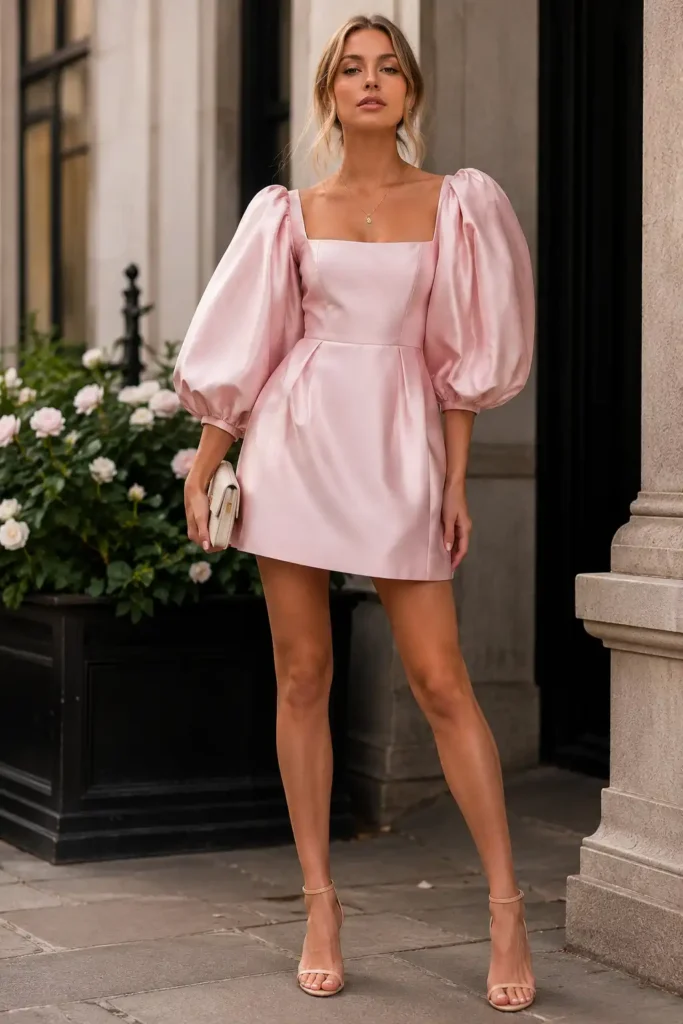
A strong sleeve concept can serve several price points and wearing occasions. Each style below requires a different relationship among sleeve volume, dress length, fabric body, neckline, waist position, lining, and finishing.

Balloon Sleeve Mini Dress

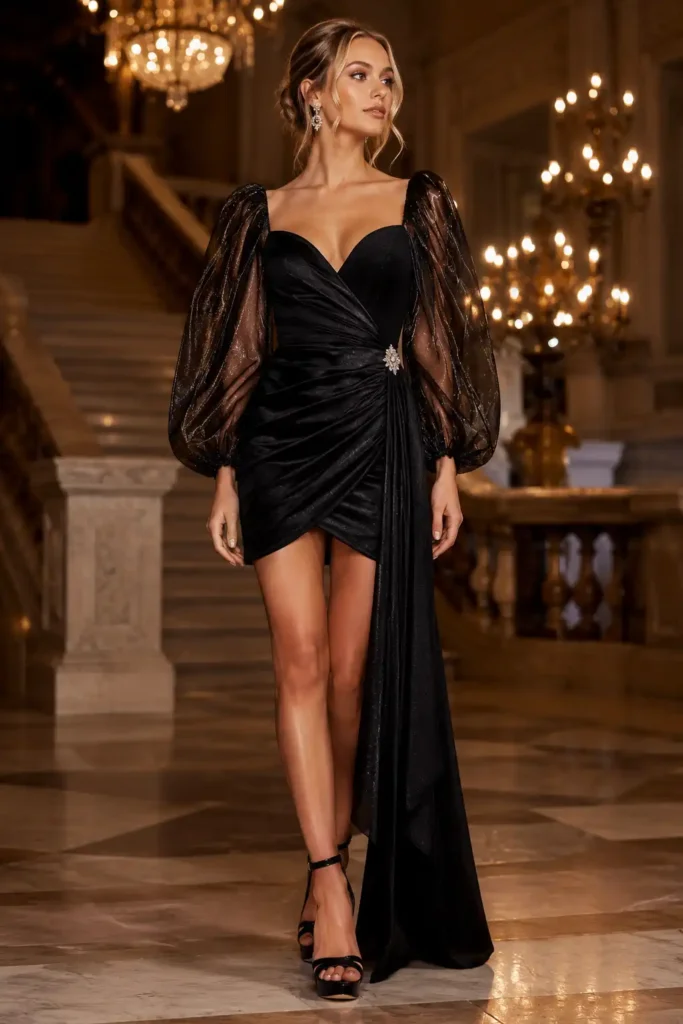
Mini dresses use short garment length to amplify sleeve volume, making proportion control especially important. Jinfeng reviews hem safety, waist position, shoulder balance, neckline coverage, and movement before locking the pattern. Cotton poplin, satin, crepe, organza, and embroidered woven fabrics support party, graduation, birthday, and social-content collections. Bulk inspection focuses on sleeve symmetry, dress length, cuff opening, neckline stability, and pressing shape.

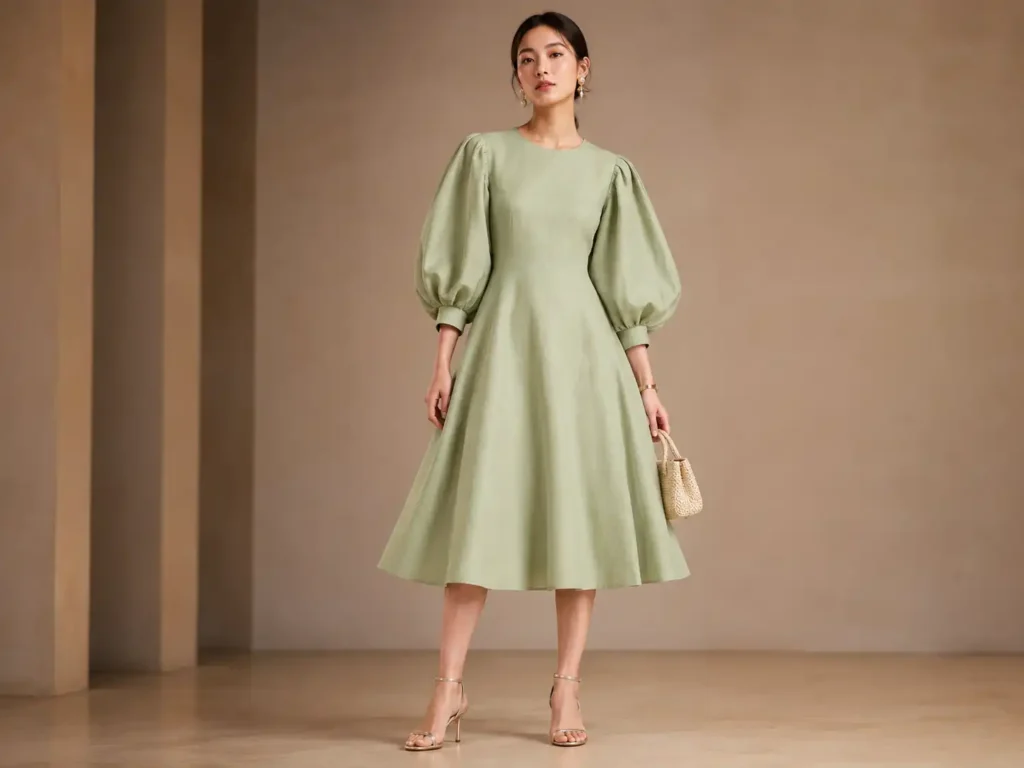
Balloon Sleeve Midi Dress

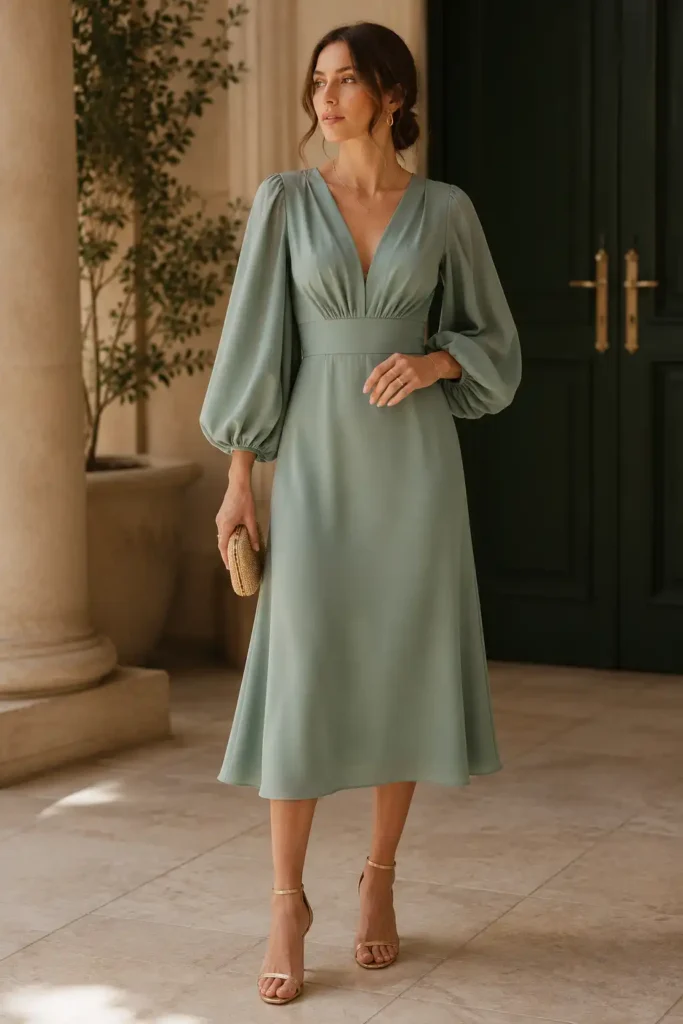
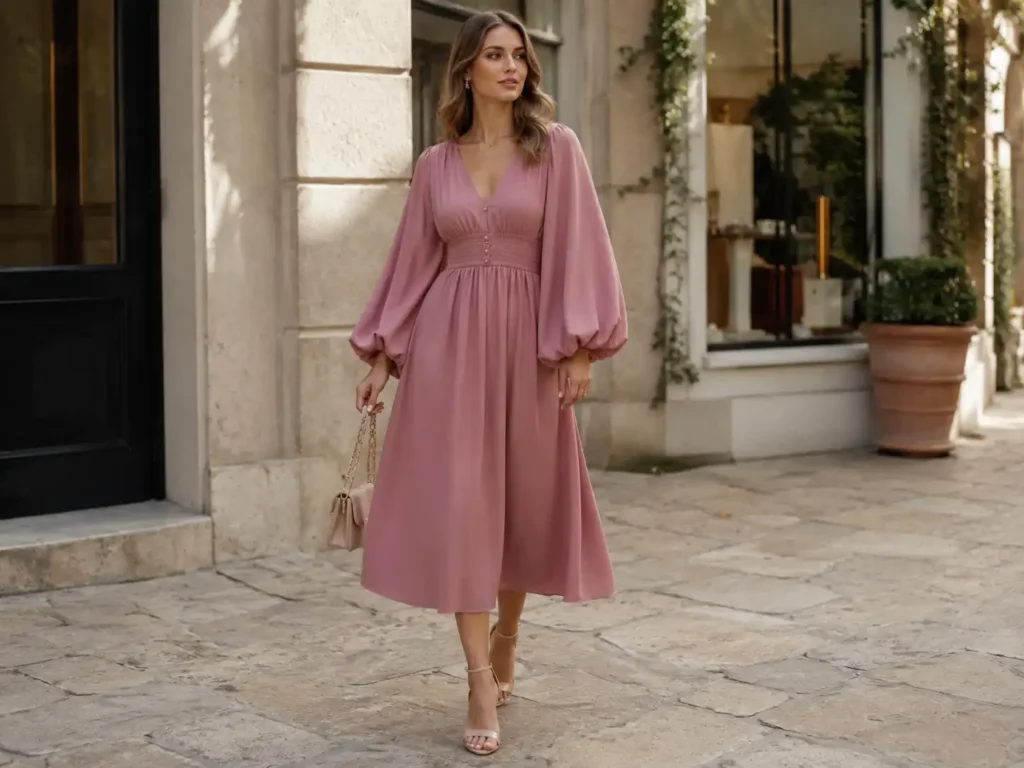
Midi length provides room for statement sleeves without making the silhouette visually top-heavy. Suitable directions include wedding guest, cocktail, brunch, premium ecommerce, and transitional occasionwear. Crepe, satin, chiffon, printed woven, and viscose blends can be used according to desired structure. Pattern development balances sleeve fullness with waist definition, skirt sweep, shoulder width, and body movement.

Balloon Sleeve Maxi Dress

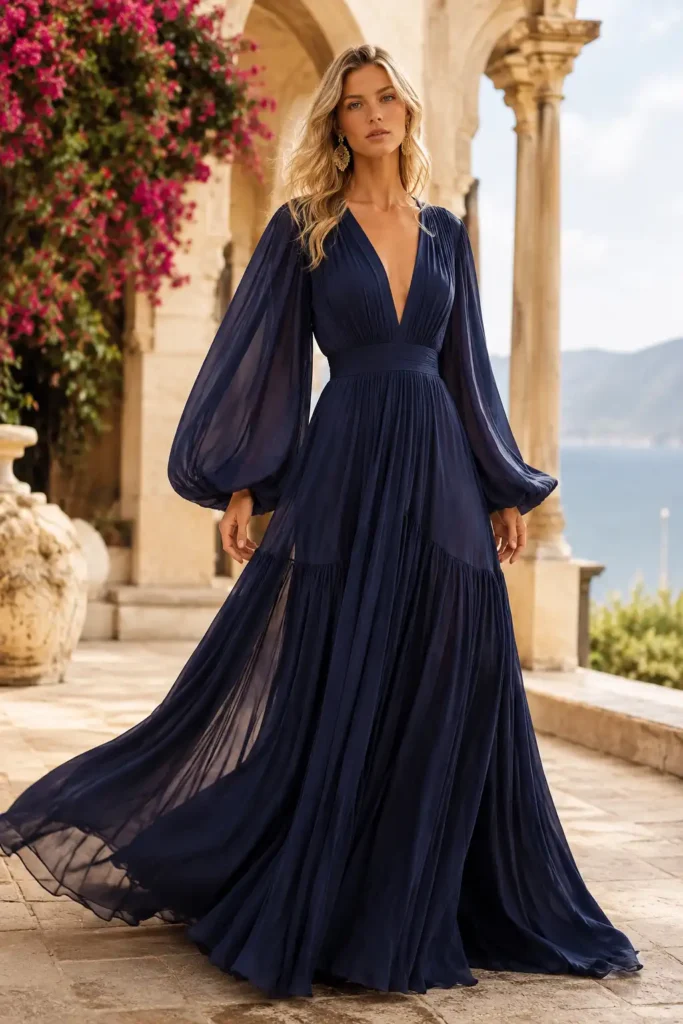
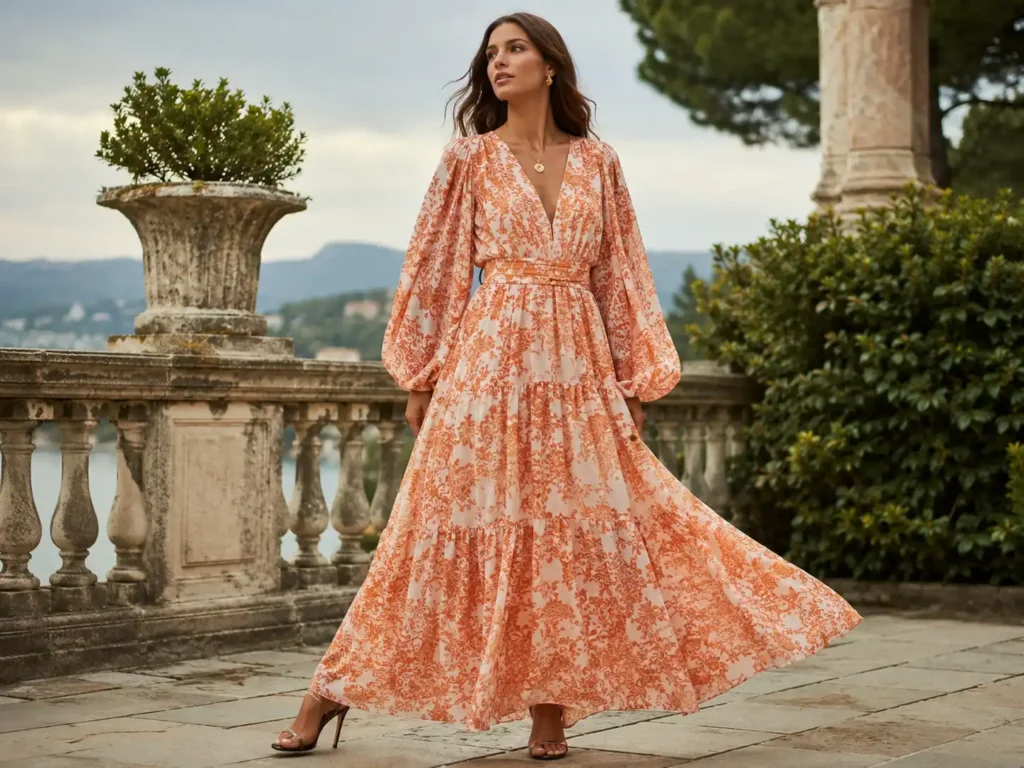
Maxi styles combine large sleeve volume with longer fabric panels, increasing total garment weight and movement. Jinfeng checks shoulder load, bodice support, waist seam stability, skirt balance, lining length, and packing recovery. Printed rayon, chiffon, crepe, cotton voile, and satin can serve resort, vacation, evening, and seasonal collections when sleeve structure is adjusted for each fabric.

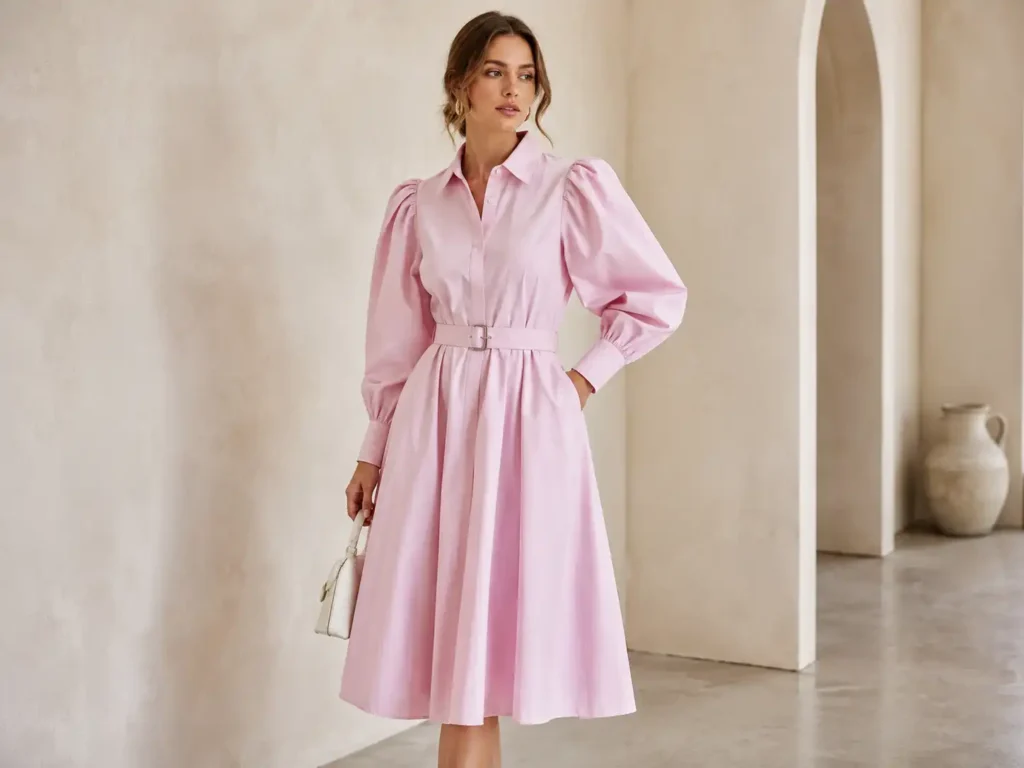
Balloon Sleeve Shirt Dress

Shirt-dress construction brings collar, front placket, cuff, button spacing, shoulder line, and sleeve volume into one precise structure. Cotton poplin, cotton blends, linen blends, and stable printed woven fabrics work well. Development must control front placket gaping, cuff alignment, sleeve gathering, collar shape, waist tie position, and hem balance. Bulk production benefits from clear matching and button-placement standards.

Balloon Sleeve Party Dress

Party styles may combine satin, velvet, organza, mesh, sequin fabric, corset-inspired bodices, cut-outs, or fitted skirts. A dramatic sleeve must not interfere with dancing, arm movement, or neckline stability. Jinfeng evaluates lining, seam comfort, cuff closure, sleeve support, zipper operation, embellishment protection, and final pressing so visual impact remains compatible with wearability.

Balloon Sleeve Resort Dress

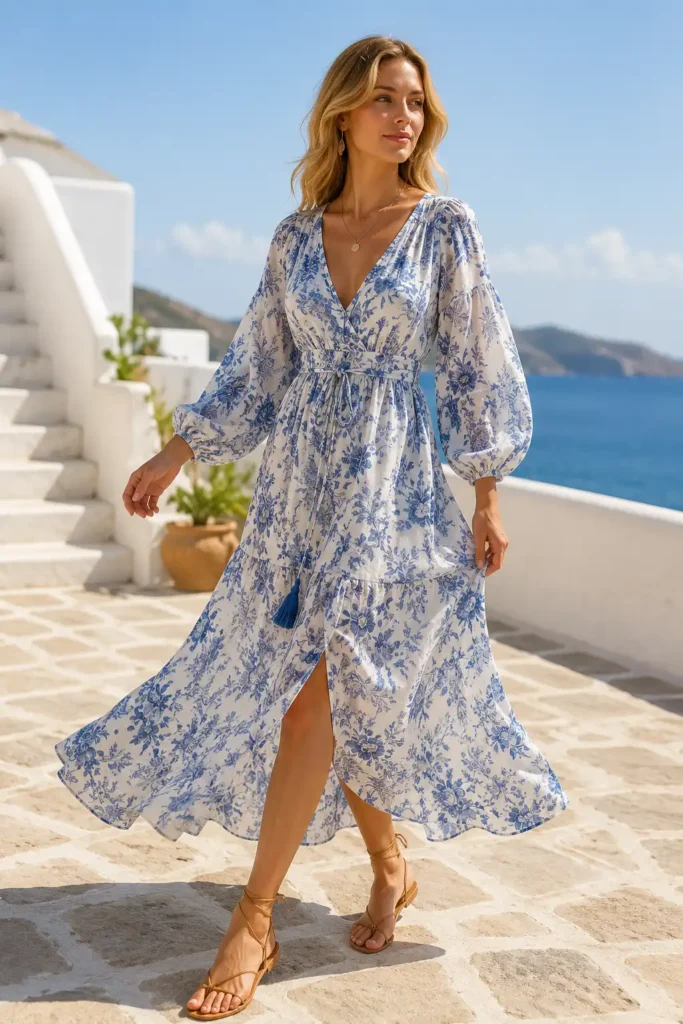
Resort styles favor light movement, print, breathability, and travel-friendly packing. Rayon, viscose, cotton voile, linen blends, chiffon, and printed polyester woven fabrics offer different combinations of drape and recovery. Jinfeng adjusts sleeve geometry to prevent soft materials from hanging flat, while reviewing shrinkage, colorfastness, lining, seam strength, wrinkle behavior, and packing method.

Wedding Guest Dress

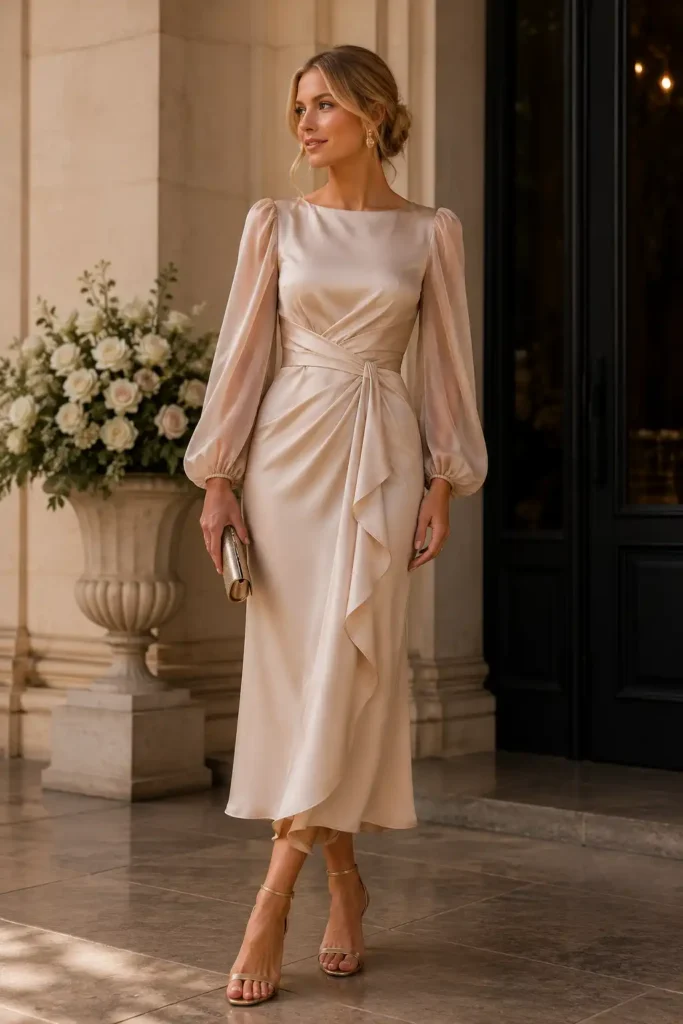
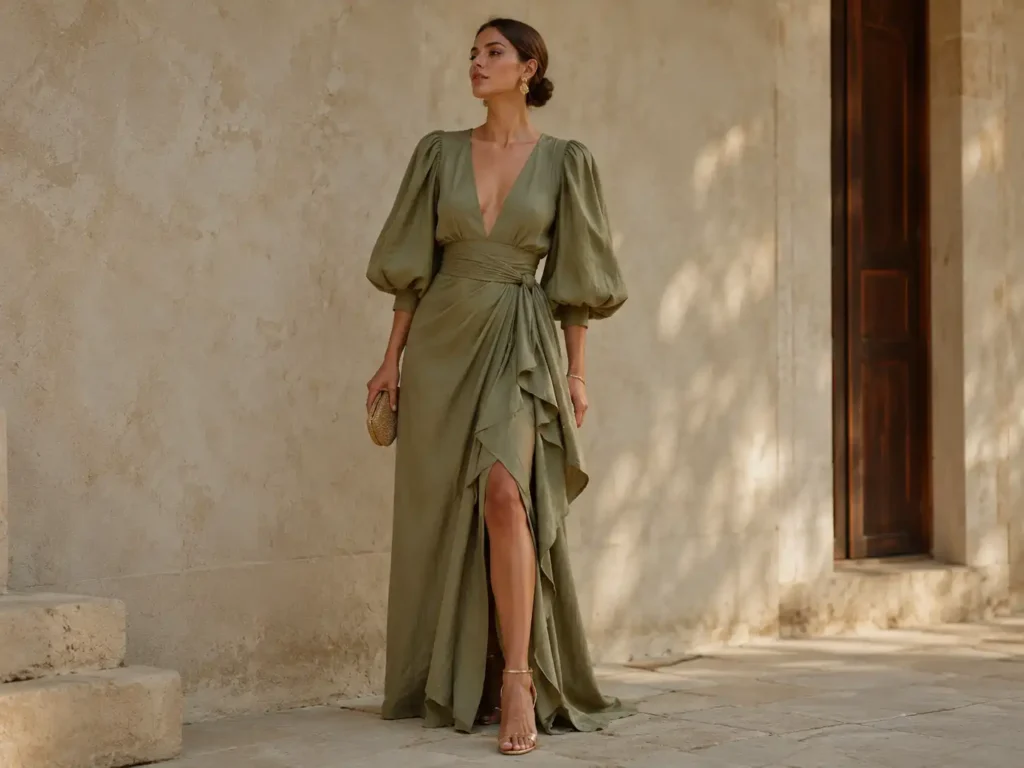
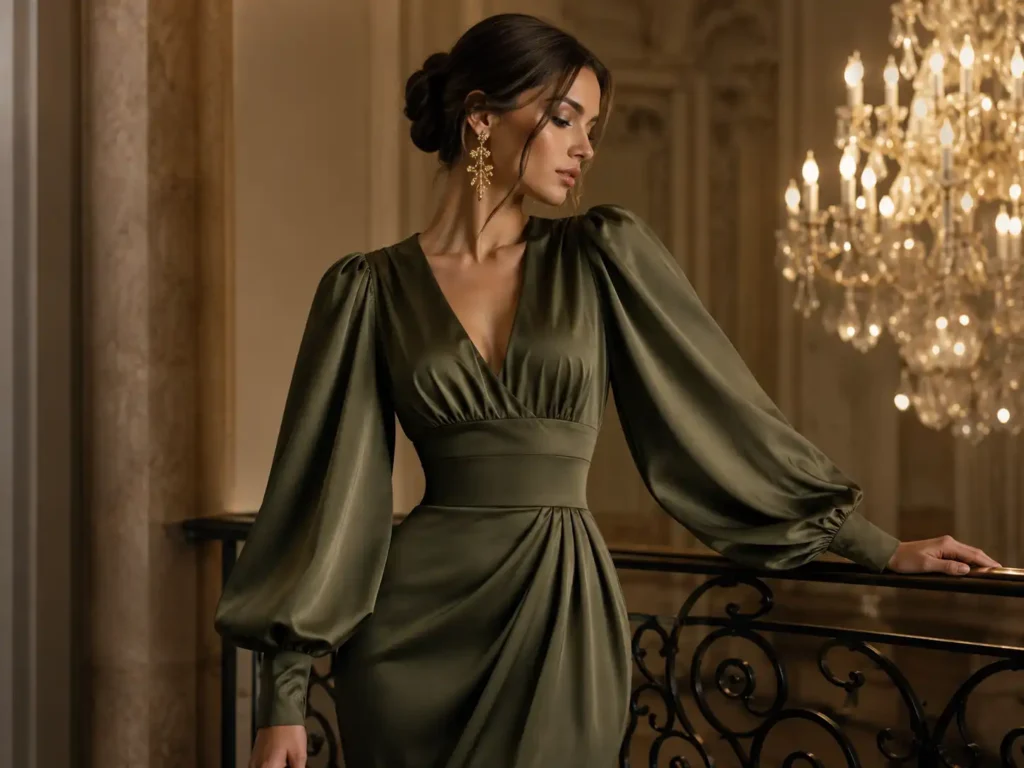
Wedding guest collections often require refined volume, balanced coverage, elegant fabric, and strong photographic performance. Satin, crepe, chiffon, lace, organza, and jacquard may be combined with square necklines, fitted waists, wrap fronts, or layered skirts. Fit review covers upper-body stability, sleeve movement, waist placement, dress length, lining coverage, and shade consistency.

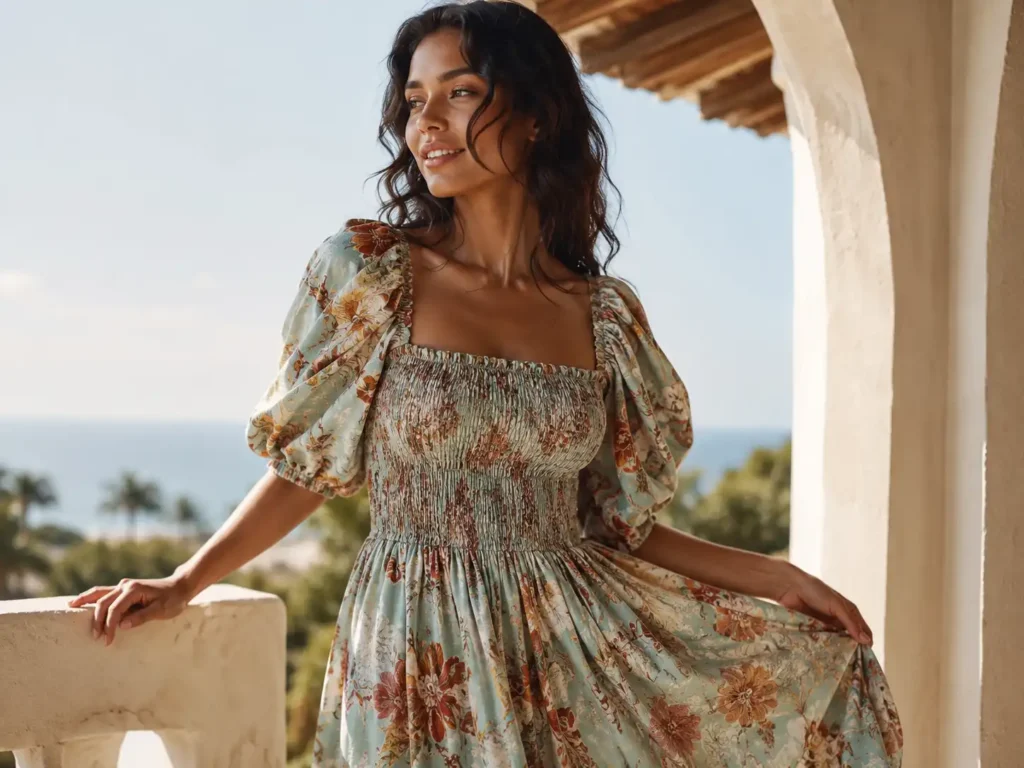
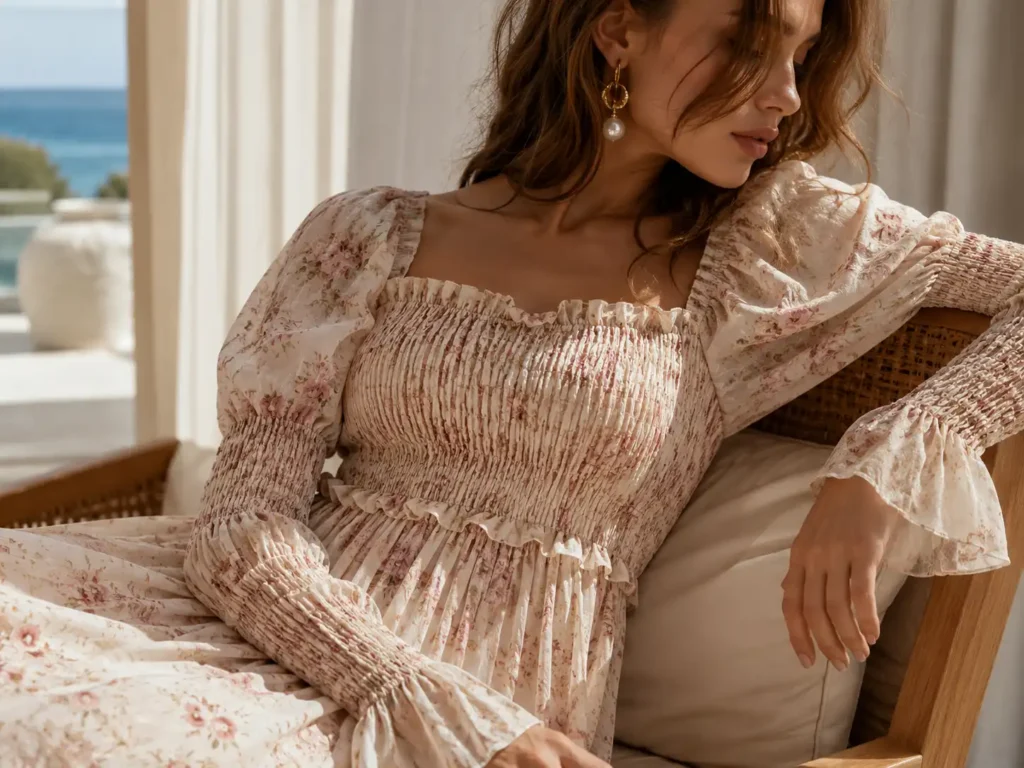
Smocked Balloon Dress

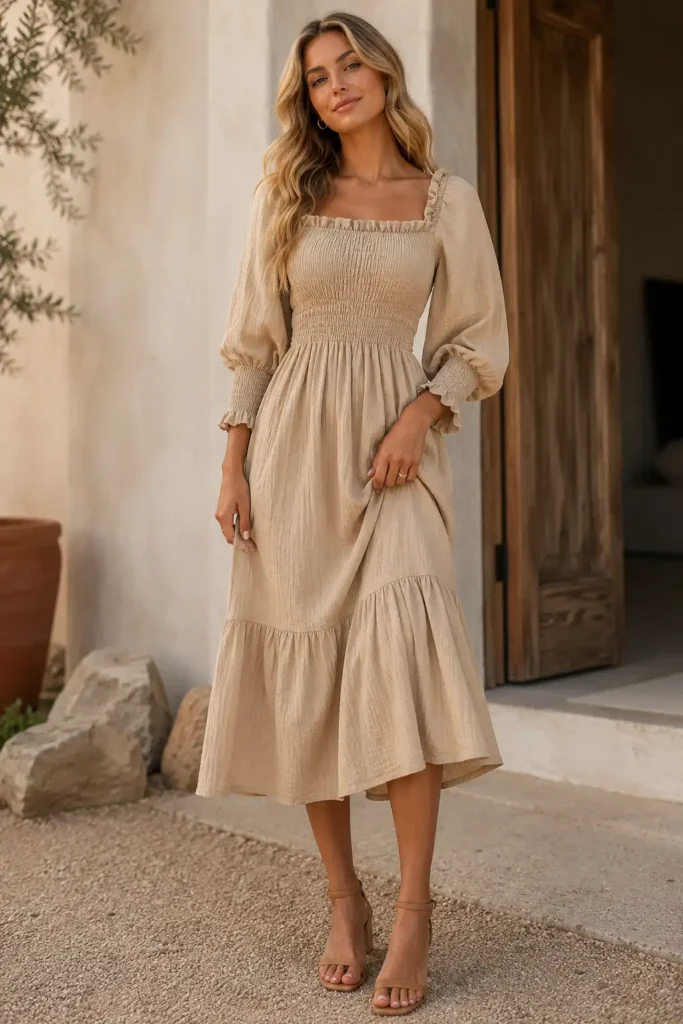
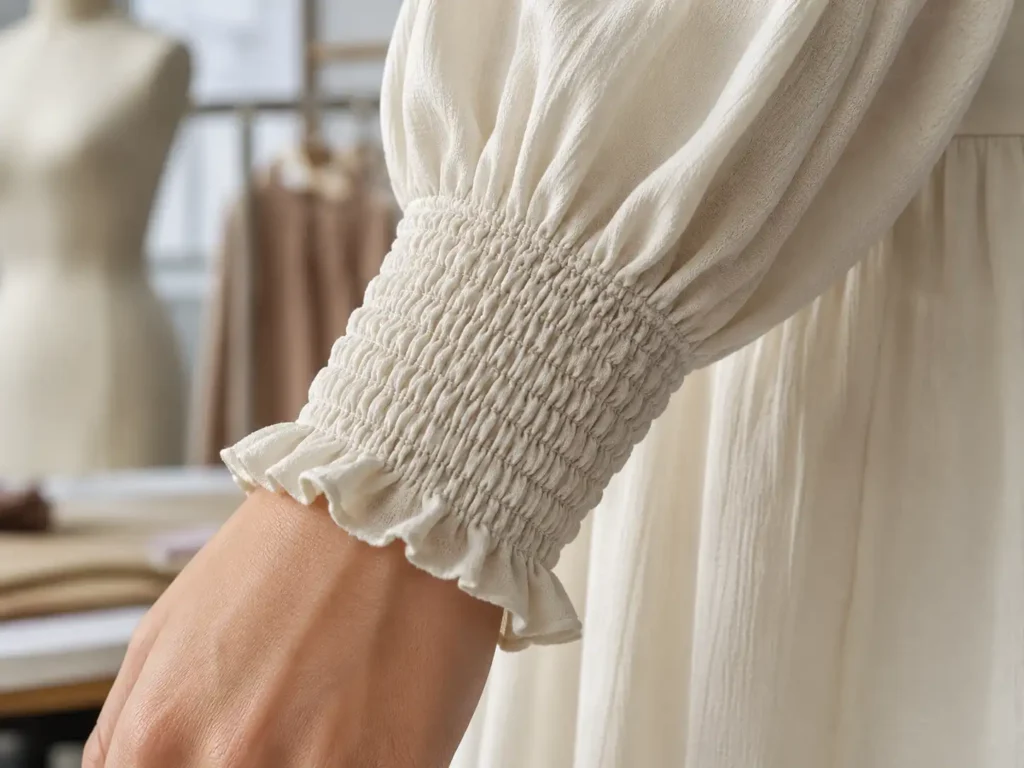
Smocked bodices or cuffs add stretch and texture but require controlled thread tension, panel dimensions, recovery, and symmetry. Jinfeng reviews stretch before and after smocking, neckline stability, sleeve attachment, cuff recovery, waist expansion, and size grading. Production checks compare panel width and recovery so one garment does not fit noticeably tighter than another.

Balloon, Puff, Bishop, and Billow Sleeves
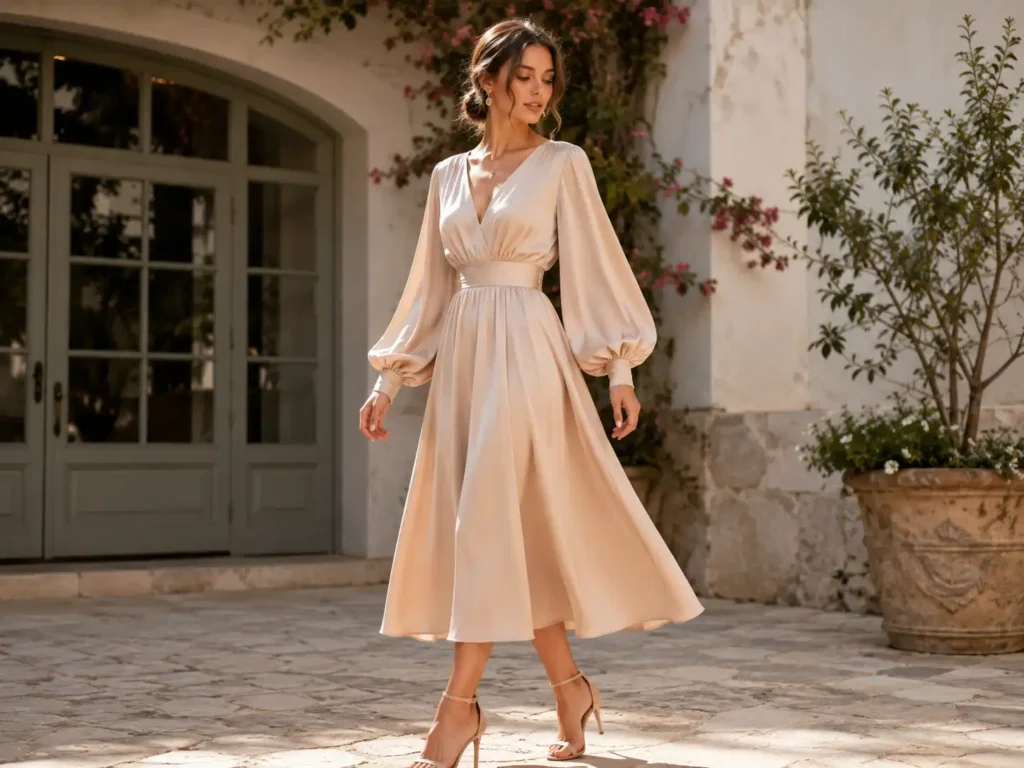
Related sleeve names are often used interchangeably, yet each construction creates a different visual result. Clear terminology prevents sampling errors and helps pattern makers interpret reference images accurately.

Balloon Sleeve

A balloon sleeve carries noticeable volume through a large section of the sleeve and closes into a narrower cuff or elastic opening. Fullness may begin near the shoulder or develop lower on the arm. Fabric body, sleeve length, and cuff position determine whether the result looks sculptural, romantic, relaxed, or oversized.

Puff Sleeve

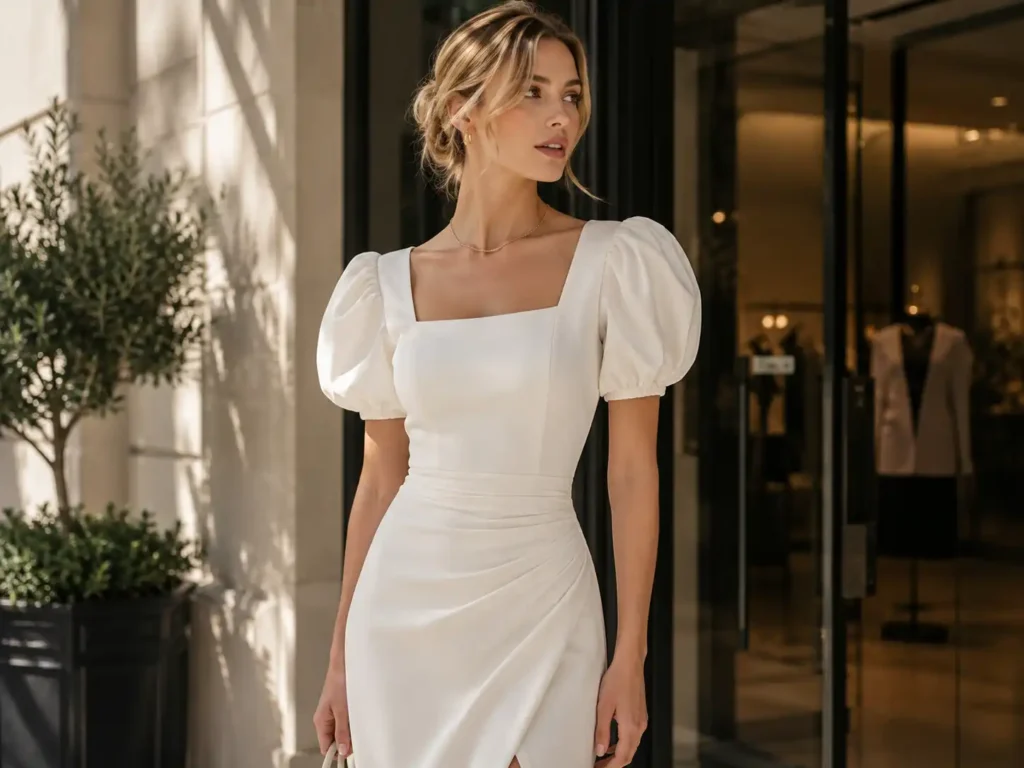
A puff sleeve often concentrates fullness at the sleeve head, lower edge, or both, and may be short or long. Compared with many balloon sleeves, the puff can be more localized. A reference image should be reviewed for sleeve-cap lift, underarm length, bicep width, and where visible gathering begins and ends.

Bishop Sleeve

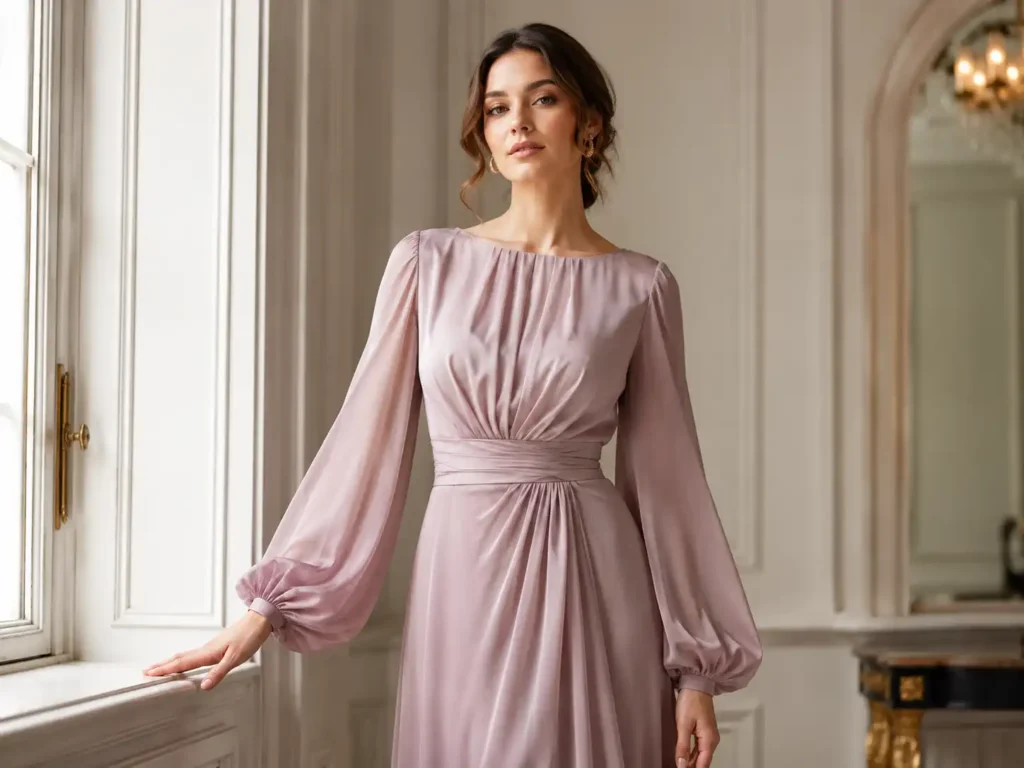
A bishop sleeve usually remains smoother near the shoulder and expands toward the lower sleeve before gathering into a cuff. Soft draping fabrics are common because downward volume creates the signature shape. Sleeve length, cuff width, and lower-sleeve fullness are more influential than a highly raised sleeve cap.

Billow Sleeve

Billow sleeve is a broad commercial term for loose, flowing sleeve volume. Construction may resemble a soft balloon or bishop shape depending on the reference. Before pattern work, Jinfeng identifies the intended volume zone, shoulder treatment, cuff structure, and fabric behavior rather than relying only on the product name.

From Mini Drops to Maxi Occasionwear

Dress length changes the visual weight of a balloon sleeve. Sleeve proportion should be reviewed against garment length, waist placement, skirt volume, footwear, and expected selling occasion.

Mini Length

Mini silhouettes create immediate visual contrast between a short hem and generous sleeves. A fitted waist, A-line skirt, or straight body can each support the look. Key controls include safe hem length, upper-body balance, sleeve-to-body ratio, and movement. Strong options include party, birthday, graduation, and fashion-led ecommerce drops.

Midi Length

Midi dresses provide balanced commercial versatility for wedding guest, cocktail, brunch, and premium day-to-evening collections. Sleeve size can remain expressive without overpowering the full garment. Fabric drape, waist definition, skirt sweep, and cuff placement need coordinated review to keep the silhouette refined.

Maxi Length

Maxi dresses add fabric weight, larger visual area, and greater movement. Sleeve volume may need moderation when the skirt is already full, tiered, or gathered. Jinfeng evaluates shoulder load, waist support, lining, hem balance, travel packing, and recovery after unpacking for resort and occasion programs.

Floor Length

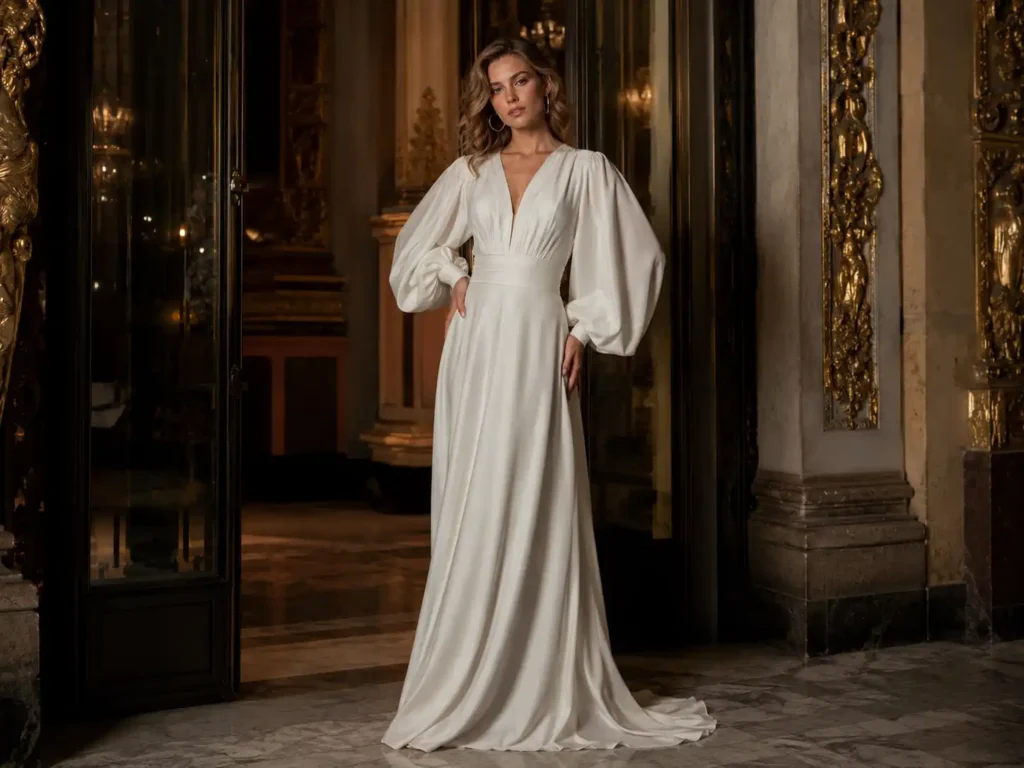
Floor-length styles require careful dress-length grading, heel allowance, hem control, and event movement. Statement sleeves can support formal, editorial, and evening positioning, but the upper body must remain stable. Fabric shine, sleeve shape, skirt flow, and final pressing should be assessed together under photo and natural lighting.

How Balloon Sleeve Volume Is Engineered

Balloon volume comes from controlled geometry rather than unrestricted fabric width. Jinfeng links sleeve-cap shape, bicep room, lower-sleeve volume, gathering placement, cuff structure, and material behavior before confirming a production-ready pattern.

Sleeve-Cap Height

Sleeve-cap height influences how the sleeve rises from the shoulder and how smoothly it enters the armhole. A higher cap can create a stronger shoulder statement but may reduce movement or create drag lines when the armhole and shoulder are not adjusted. A lower cap can feel relaxed but may lose the desired elevated shape. Pattern review compares cap height with shoulder width, armhole depth, fabric stiffness, and intended gathering at the sleeve head.

During fitting, Jinfeng checks the shoulder seam, neckline position, front and back armhole, underarm comfort, and garment lift when arms move. Corrections may involve the cap curve, sleeve pitch, armhole shape, bicep ease, or shoulder balance. Adding more gathers cannot solve a cap or armhole mismatch.

Bicep Width and Fullness

Bicep width creates space for visual volume and movement. Excess width may produce heavy folds, extra fabric cost, difficult cuff gathering, and inconsistent bulk sewing. Insufficient width produces a narrow puff rather than a balloon. Jinfeng sets fullness according to fabric weight, sleeve length, desired silhouette, and dress proportion.

A cotton poplin sleeve may hold a defined curve with moderate width, while chiffon may need additional volume, layered construction, or a revised lower-sleeve shape. Satin requires attention to seam marks and weight. Organza can hold volume strongly but may need comfort review at seams and cuffs. Fullness is tested in the real fabric whenever possible.

Gathering Distribution

Gathering can be placed at the sleeve head, cuff, both ends, or selected zones. Distribution determines where volume begins and where folds settle. Pattern notches divide the sleeve into controlled sections so operators do not spread fullness by eye. Jinfeng records gathering direction, section length, seam position, and approved appearance from the PP sample.

Uneven distribution may twist the sleeve, create one heavy fold, pull the shoulder, or make left and right sleeves look different.

Inline inspection compares sleeve pairs before final garment completion, allowing correction before the same issue spreads across the full order.

Sleeve Length

Sleeve length affects where the balloon reaches maximum visual volume.

A bracelet-length sleeve can feel modern and light, while a full-length sleeve creates more drama and requires a larger cuff passage.

Longer sleeves also add fabric weight and increase the risk of collapsing or covering the cuff. Jinfeng checks sleeve length with the arm relaxed and bent, along with garment size grading and target market fit.

Cuff Opening

The cuff is the anchor for the balloon shape. Elastic cuffs, button bands, ties, smocking, or clean gathered bands create different levels of control and comfort. Opening measurements must allow dressing and movement while remaining narrow enough to retain volume. Elastic specification includes width, stretch, recovery, hand feel, casing allowance, and finished opening.

Button cuffs require overlap, button position, buttonhole quality, and forearm passage checks.
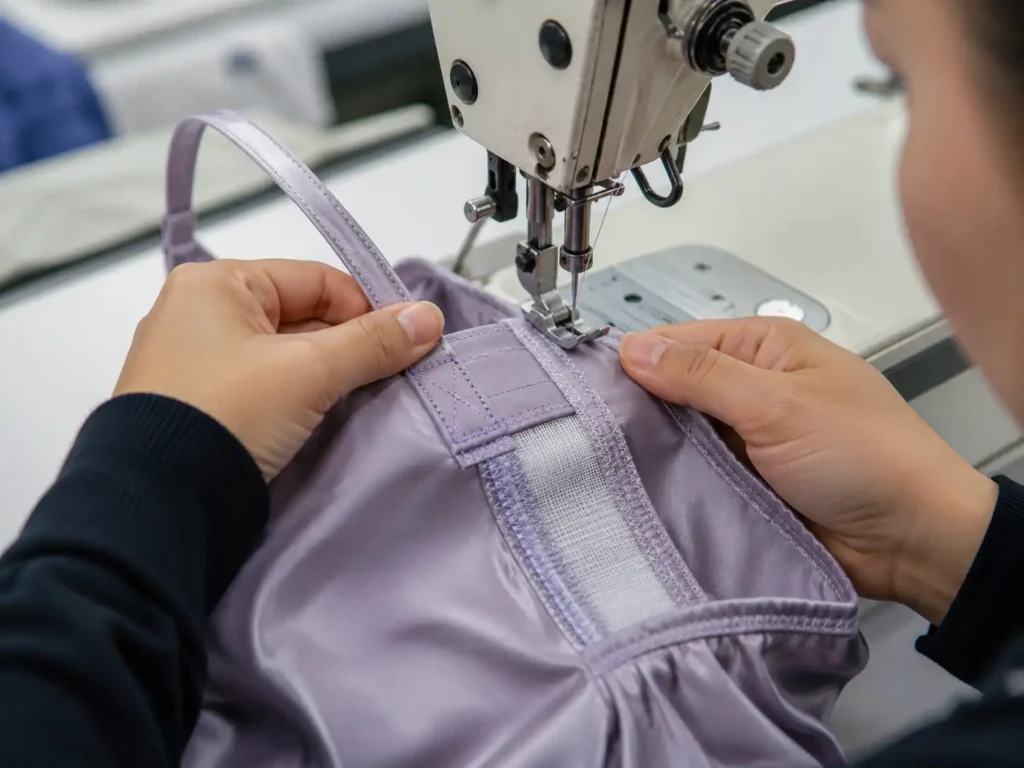
How Fabric Changes Sleeve Shape and Movement

One sleeve pattern cannot produce the same silhouette in every fabric. Weight, body, drape, transparency, stretch, surface friction, shrinkage, and pressing response all change the final result.

FabricCommon Weight DirectionVolume SupportDrapeTransparencyStrong ApplicationsMain Production Risk
Cotton Poplin100-180 gsmHighLowLowShirt dresses, mini dresses, clean resort stylesExcess stiffness, bulky gathering
Organza25-80 gsmVery highLowHighStatement sleeves, occasionwear, layered effectsScratchy seams, crushing, visible seam bulk
Chiffon50-120 gsmLowHighHighSoft occasion sleeves, layered maxi dressesShape collapse, seam slippage, transparency
Satin80-220 gsmMediumHighMediumParty, cocktail, wedding guest dressesSnagging, seam marks, shine variation
Crepe100-250 gsmMediumMediumLow-mediumMidi, cocktail, refined occasion stylesWeight imbalance, pressing shine
Linen Blend120-240 gsmMediumMediumLow-mediumResort, vacation, day dressesWrinkling, shrinkage, seam puckering
Tulle20-100 gsmHighLowHighLayered sleeves, formal statement volumeSkin comfort, seam bulk, tearing
Rayon or Viscose90-200 gsmLowHighLow-mediumRelaxed resort and printed maxi dressesShrinkage, shape collapse, distortion

Shoulder and Armhole Fit Control Sleeve Balance

A statement sleeve can alter the balance of the full upper body. Jinfeng reviews shoulder width, armhole shape, sleeve pitch, chest width, bodice ease, neckline stability, and lining together rather than correcting the sleeve in isolation.

Shoulder Width Sets the Frame

A narrow shoulder can push sleeve volume inward, creating crowding near the neckline and making the upper body appear compressed. An overly wide shoulder may drop the sleeve away from the intended point and weaken the balloon profile. Jinfeng compares the reference image with body measurements, target fit, fabric body, and sleeve-cap volume before setting the shoulder line.

For square-neck, wrap, off-shoulder, or fitted-bodice designs, shoulder width also affects neckline security. Fit samples are checked from front, side, and back to verify visual alignment and movement. A balanced shoulder lets the sleeve remain expressive without pulling the neckline or changing the waist position.

Armhole Shape Controls Movement

Armhole depth and curve determine how the sleeve moves with the body. A deep armhole can feel relaxed but may lift the dress when the arm rises. A high armhole can improve mobility when shaped correctly, yet a tight curve can cut into the underarm. Jinfeng reviews front and back armhole balance, underarm seam position, sleeve pitch, and bicep ease during fitting.

Movement checks include lifting both arms, reaching forward, bending the elbow, sitting, and wearing the dress under a light outer layer. Fit comments are converted into pattern changes and recorded before a revised sample or PP sample is approved.

Bodice Fit Stabilizes the Sleeve

Balloon volume adds visual and physical weight around the upper body. A loose bodice may shift under the sleeve, while an overly fitted bodice may transfer tension into the armhole. Bust, upper bust, waist, side seam, dart position, lining, and closure are reviewed according to the dress structure. Fitted waists, corset-inspired bodies, smocked panels, wrap fronts, and relaxed shirt dresses each need different control.

Lining Changes Construction

A lined bodice can improve stability, coverage, seam comfort, and garment recovery, but lining also changes thickness around the armhole. Sleeve lining can support transparency or volume, yet it may restrict movement when cut too narrow. Jinfeng checks shell and lining dimensions together, especially for chiffon, organza, lace, mesh, satin, and light-colored fabrics.

Cuffs and Closures Shape the Final Sleeve
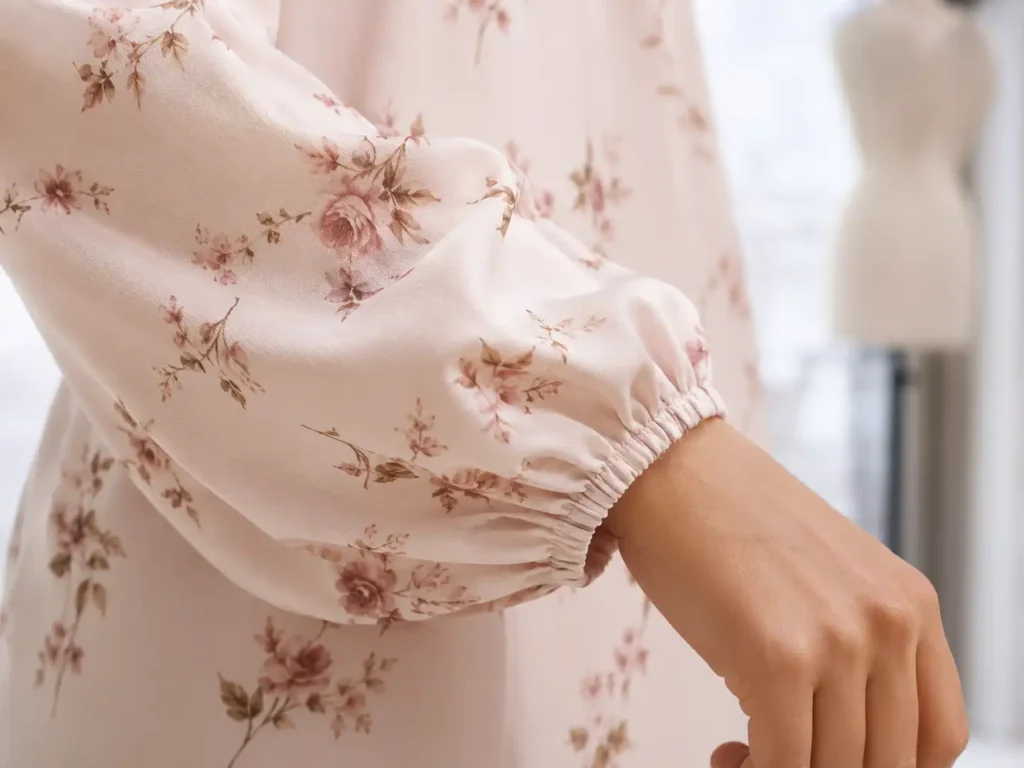
Cuff design determines how volume is held, how easily the sleeve is worn, and how polished the finished garment looks. Every option needs its own measurement, material, sewing, and inspection standard.

Elastic Cuff

Elastic cuffs create a clean closed opening and work across casual, resort, party, and printed dresses. Jinfeng reviews finished opening, elastic width, stretch, recovery, casing allowance, seam bulk, and skin comfort. Samples are checked after repeated stretch so the opening does not become loose or remain uncomfortably tight.

Button Cuff

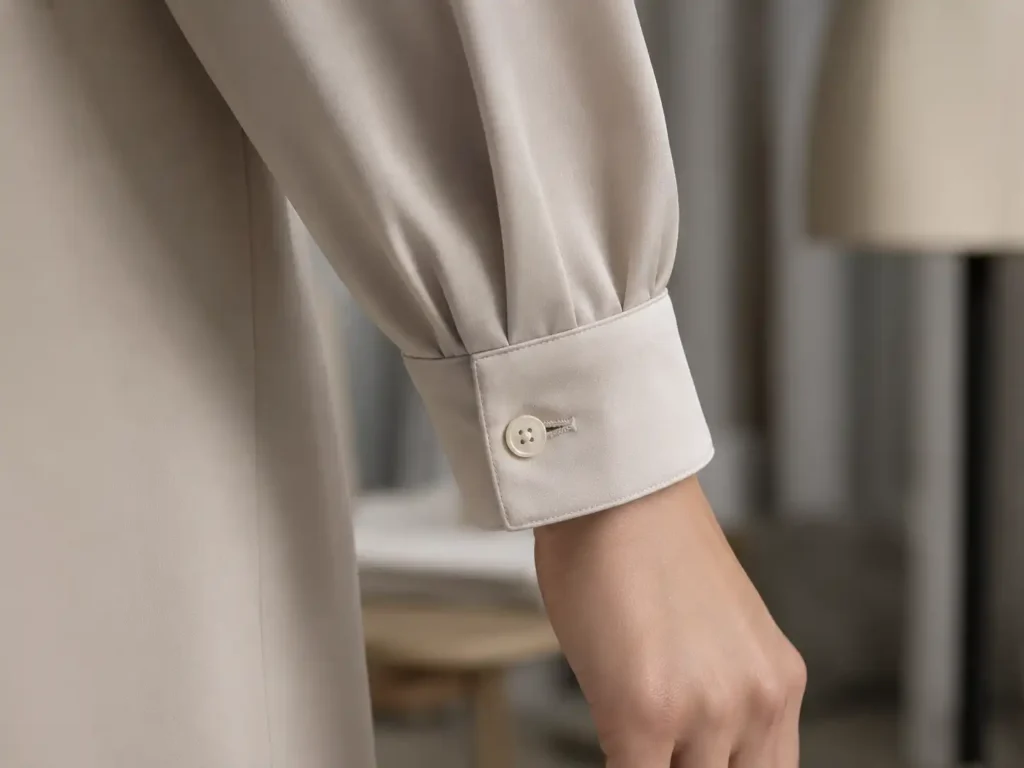
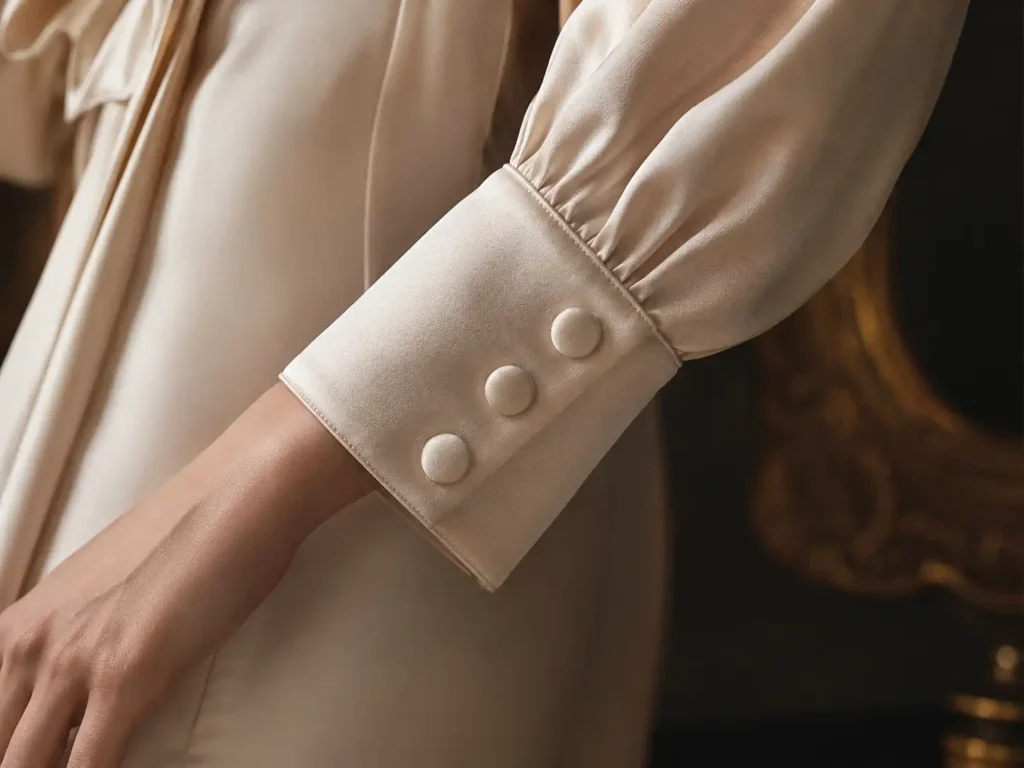
Button cuffs provide a tailored finish and allow a narrower closed opening with easier dressing. Construction includes cuff width, overlap, button position, buttonhole length, interlining, forearm passage, and seam alignment. Bulk checks confirm button security, cuff symmetry, closure function, and color coordination.

Covered Button Cuff

Fabric-covered buttons create a refined occasionwear finish, especially in satin, crepe, velvet, and jacquard. Button diameter, fabric thickness, loop size, spacing, and attachment strength must be tested. Delicate surface fabrics also need protection from pulling, fraying, or visible handling marks.

Tie Cuff

Tie cuffs offer adjustable fit and a softer visual direction for resort, bohemian, and romantic collections. Tie length, width, seam turning, end finish, and attachment strength affect both appearance and durability. Jinfeng checks whether the tie remains secure during wear and whether loose ends interfere with movement.

Smocked Cuff

Smocked cuffs combine stretch with textured detail. Thread tension, row spacing, panel width, recovery, and finished opening must remain consistent across sizes and garments. Over-tight smocking causes pressure; weak recovery causes the sleeve to fall. Measurements are recorded before and after stretch.

Gathered Band

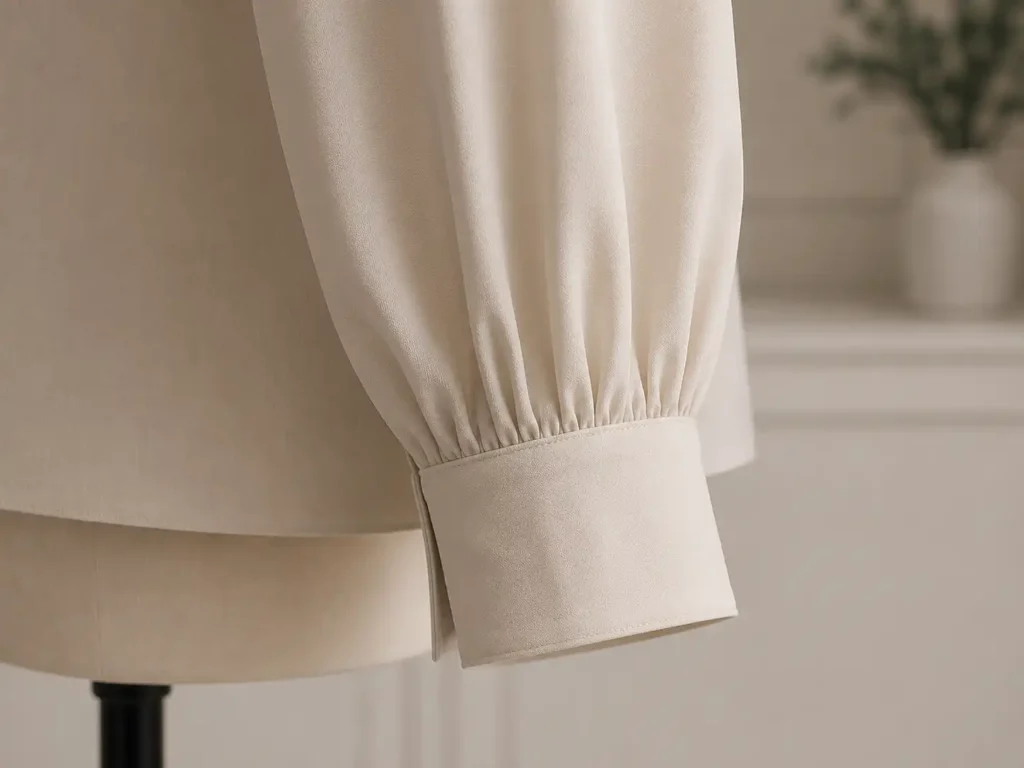
A clean gathered band uses a fixed cuff without visible elastic. The opening may include a slit, button, or concealed closure. Gathering distribution, band thickness, seam finish, and opening length need precise control. The result suits elevated day dresses, wedding guest collections, and structured cotton styles.

Movement Testing Protects Fit and Wearability

A dramatic sleeve should remain comfortable during normal movement. Jinfeng uses fitting actions to reveal shoulder tension, armhole restriction, cuff pressure, garment lift, sleeve twist, and lining interference.

Arms Relaxed

The first check reviews natural shoulder position, sleeve hang, volume distribution, cuff level, and symmetry. Folds should settle according to the approved silhouette without one side appearing heavier. Neckline, waistline, and side seams should remain level.

Arms Raised

Raising both arms reveals whether the armhole or sleeve pulls the full dress upward. Excess lift may expose the waist, distort the neckline, or create underarm pressure. Pattern correction can involve armhole shape, sleeve cap, bicep ease, bodice width, or sleeve pitch.

Reach Forward

Forward reach tests back width, rear armhole, shoulder mobility, and sleeve rotation. A dress can appear correct while standing and still restrict natural movement. Pull lines across the back or neckline shift indicate a balance issue rather than a simple sleeve-width problem.

Bend the Elbow

Full-length balloon sleeves need enough length and lower-arm room for bending. Cuffs should remain comfortable without pulling the sleeve excessively upward. Button cuffs, fixed bands, and narrow elastic openings receive extra attention during the movement review.

Sit and Walk

Sitting and walking reveal whether bodice movement transfers into the sleeve and whether the sleeve catches against the body, skirt, or handbag. Occasion and event styles are checked for realistic wear rather than mannequin appearance alone.

Layer Under Outerwear

Selected seasonal styles may need to sit under a blazer, coat, or jacket. Extremely large volume can create bunching and discomfort. For transitional collections, Jinfeng can review a moderated sleeve profile or softer fabric direction while preserving the intended visual identity.

Necklines and Silhouettes for Statement Sleeves
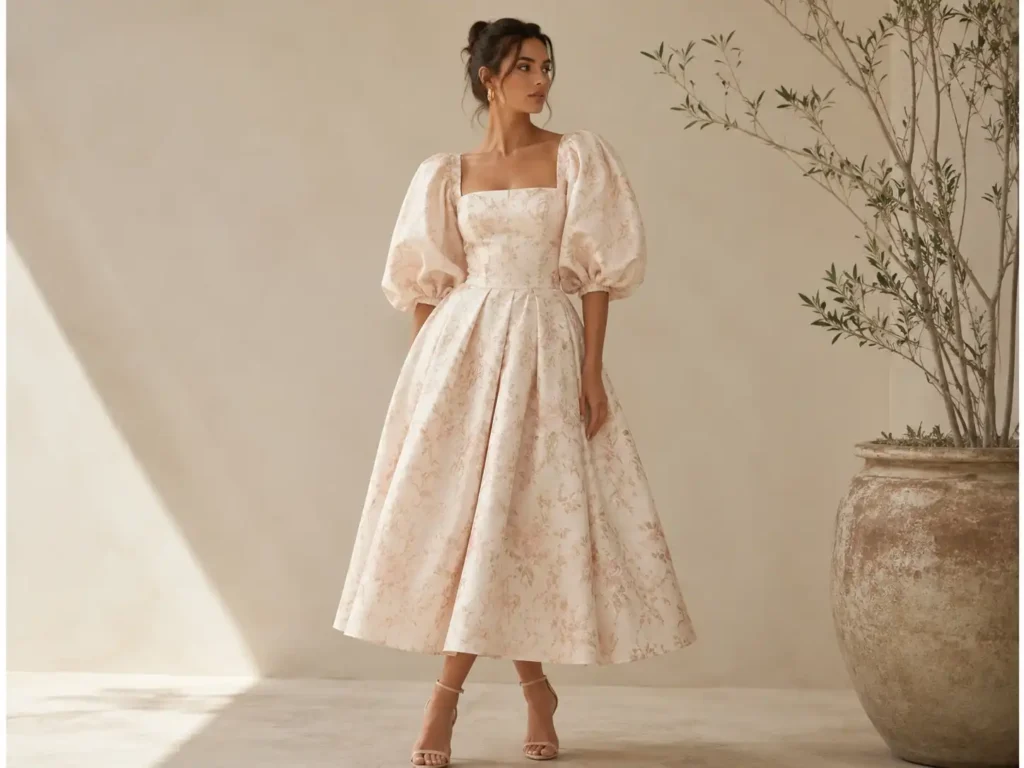
Balloon sleeves work best when neckline, bodice, waist, and skirt create a deliberate visual balance. Product development should define the full silhouette before sleeve volume is finalized.

Square Neckline

A square neckline creates a structured frame and works well with gathered sleeves, fitted waists, smocked bodies, and romantic midi dresses. Development focuses on corner stability, chest coverage, shoulder width, lining, and sleeve attachment so the neckline does not spread or lift.

V-Neckline

V-necks lighten the upper body and can balance generous sleeves. Neck depth, wrap overlap, bust coverage, facing, lining, and front stability need review. Soft chiffon, crepe, viscose, and satin suit wedding guest, resort, and occasion directions.

Off-Shoulder Neckline

Off-shoulder balloon sleeves create strong visual impact but require secure elastic, neckline recovery, arm movement, and bodice support. The sleeve may attach to the neckline or sit separately. Fitting checks prevent rolling, slipping, excessive pressure, and restricted movement.

Shirt Collar

A shirt collar and front placket add structure to cotton poplin, linen blend, printed woven, and denim-inspired dresses. Collar shape, shoulder line, sleeve head, cuff, button spacing, and placket alignment should read as one precise design system.

Smocked Bodice

A smocked bodice supports flexible fit and romantic volume. Smocking recovery, panel height, neckline stretch, sleeve attachment, waist expansion, and size grading require measurement control. Soft woven fabrics and printed resort materials are common choices.

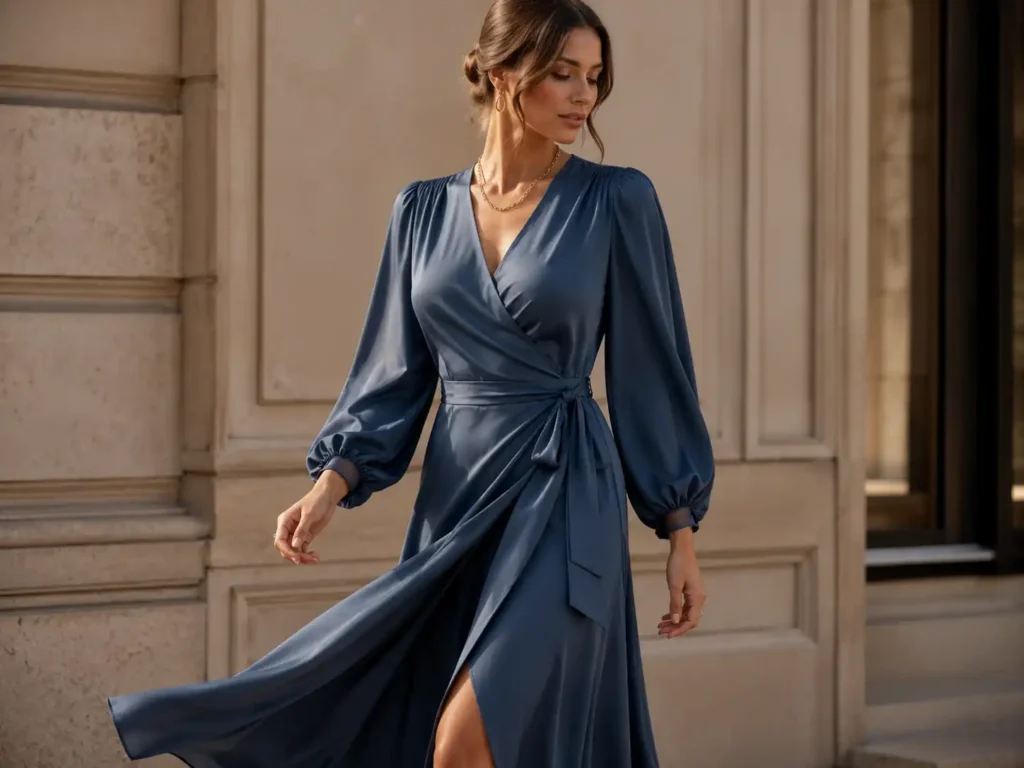
Wrap Dress

Wrap construction balances sleeve volume with an adjustable waist and diagonal neckline. Development reviews overlap, bust coverage, tie position, waist seam, skirt opening, and sleeve movement. Fabric drape must support both wrap behavior and balloon shape.

A-Line Dress

A-line bodies create broad commercial appeal and keep attention on the sleeves without requiring a tight fit. Shoulder balance, bust ease, waist shaping, hem sweep, and length are adjusted according to mini, midi, or maxi direction.

Fitted Waist

A fitted waist creates contrast against generous sleeves and can strengthen party or occasion positioning. Dart shape, waist seam, zipper, lining, bust fit, and skirt transition require accurate fitting. The upper body must remain stable while arms move.

Custom Details for Distinctive Sleeve Collections
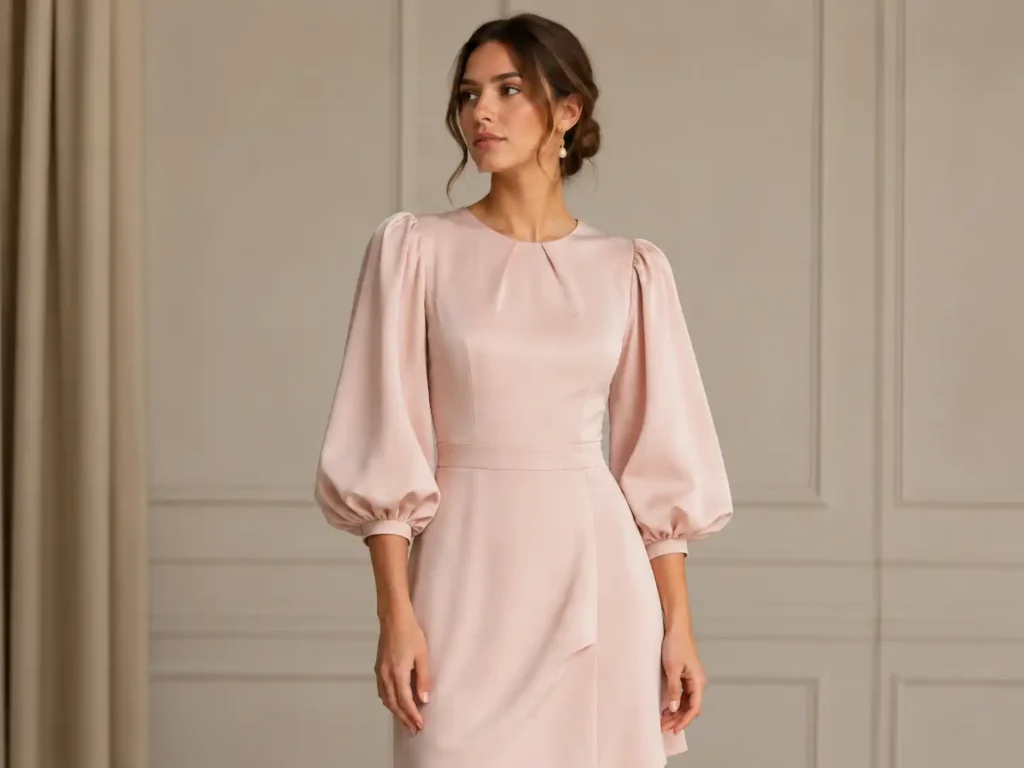
Design details can turn one sleeve foundation into a full seasonal range. Every added feature affects material use, sewing time, MOQ, sample route, quality checks, and bulk repeatability.

Sleeve Length

Short, elbow, bracelet, three-quarter, and full-length options change the volume zone and wearing season. Length is reviewed with cuff position, arm movement, fabric weight, and size grading rather than adjusted by a simple straight extension.

Cuff Width

Narrow cuffs sharpen the balloon contrast; wider cuffs create a tailored or vintage direction. Finished width affects interlining, button placement, seam bulk, comfort, and visual scale. Cuff width is checked against sleeve volume and wearer proportions.

Gathering Placement

Fullness can concentrate at the shoulder, cuff, center sleeve, or selected panels. Placement determines how the sleeve photographs and moves. Pattern notches and sewing instructions preserve the intended distribution in bulk.

Pleated Volume

Knife pleats, box pleats, or controlled tucks can replace soft gathering for a more architectural result. Pleat depth, direction, symmetry, pressing, and grading require precise pattern work and stable fabric.

Smocking

Smocking may appear at the cuff, shoulder, upper sleeve, or bodice. Thread tension, row count, recovery, and panel dimensions need consistent control. Decorative smocking can also affect sleeve stretch and comfort.

Embroidery

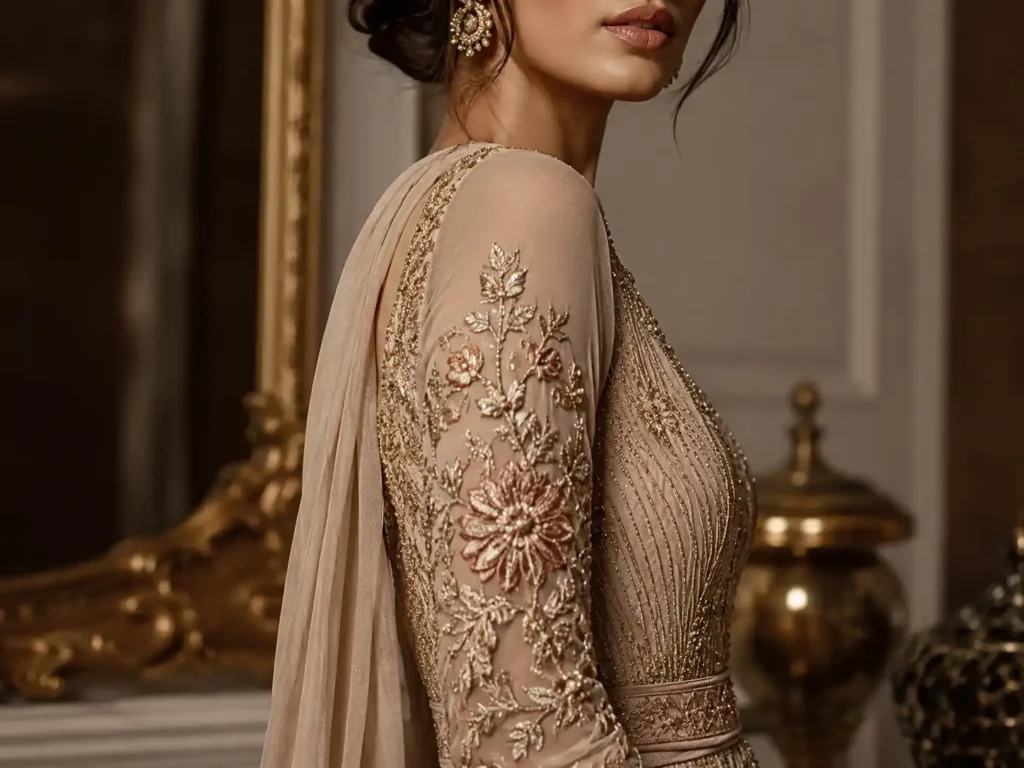
Embroidery can be placed on the sleeve, cuff, shoulder, or full garment. Artwork scale, stitch density, backing, thread color, shrinkage, fabric distortion, and skin comfort are reviewed before sample approval. Embroidery position must remain aligned across sizes.

Lace Inserts

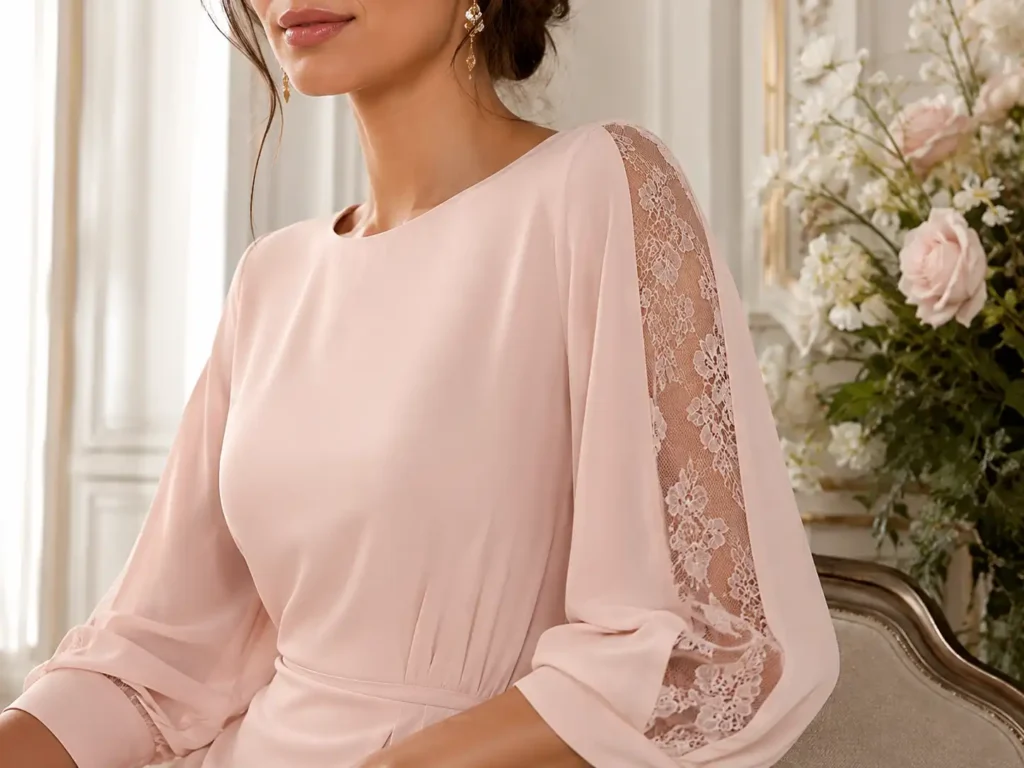
Lace panels add transparency and texture but introduce alignment, edge finishing, hole, color, and lining risks. Placement near gathered seams needs careful seam allowance and reinforcement so delicate lace does not distort.

Contrast Panels

Contrast fabric can emphasize sleeve volume or connect the sleeve with a collar, cuff, belt, or skirt panel. Weight, shrinkage, colorfastness, and surface compatibility are checked so two materials behave predictably in wear and cleaning.

Covered Buttons

Covered buttons coordinate with satin, crepe, velvet, jacquard, and printed fabric. Button size, loop length, fabric thickness, attachment strength, spacing, and opening function are confirmed during sampling.

Information Needed for Accurate Project Review

Complete project files allow Jinfeng to assess fabric direction, pattern difficulty, sample route, MOQ, price structure, quality risks, packing, and delivery planning with fewer assumptions.

Reference Image or Sketch

Clear front, side, back, and sleeve references help identify volume zone, sleeve length, neckline, cuff, dress length, and overall proportion. Several images are useful when one reference does not show the full construction.

Tech Pack

A tech pack can include flat sketches, construction notes, measurements, tolerances, fabric, trims, labels, artwork, and packing instructions. Jinfeng reviews contradictions or missing information before pattern work begins.

Size Chart

Size range, base size, body standard, garment measurements, grading rules, and tolerance expectations guide pattern development. Sleeve measurements should include length, bicep, opening, cuff width, and relevant armhole points.

Fabric Direction

A swatch, fabric composition, weight, reference quality, hand-feel target, color standard, or approved supplier reference improves material matching. Transparency, stretch, recovery, wrinkle behavior, and lining needs are reviewed.

Quantity and Colors

Quantity should be listed by style, color, and size ratio. MOQ starts from 200 pieces per style and color, while special fabrics, custom dyeing, printing, trims, and packaging may carry separate supplier minimums.

Labels and Launch Date

Main label, size label, care label, hangtag, barcode, polybag, carton mark, shipment route, destination, and required delivery window should be shared early. Private-label development can add 7-20 days for selected items depending on artwork, material, and supplier readiness.

From Sleeve Concept to Production-Ready Sample

Sampling converts visual direction into measurable, wearable, and repeatable garment standards. Jinfeng separates sample stages so fit, material, construction, photography, and bulk approval are not confused.

Design Review

The development team checks sleeve type, silhouette, neckline, dress length, construction, target market, quantity, price direction, and delivery window. Early comments identify missing measurements, incompatible materials, complex trims, or construction risks.

Fabric Direction

Available fabrics are reviewed for body, drape, transparency, stretch, color, shrinkage, wrinkle, surface risk, and MOQ. Swatches or substitute options may be presented before the first sample when the requested material is unavailable or unsuitable.

Construction Review

Pattern and sewing teams consider sleeve cap, armhole, gathering, cuff, lining, closure, seams, embroidery, lace, smocking, or other details. Construction choices are aligned with intended appearance, comfort, price, and bulk stability.

Pattern Development

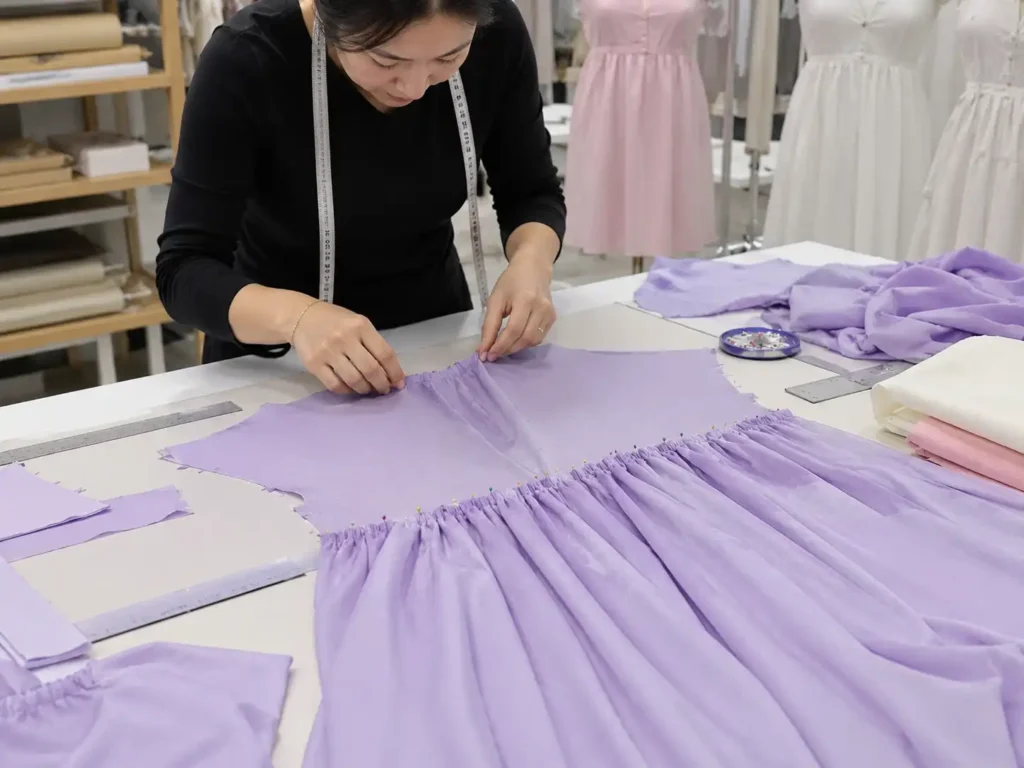
The base pattern establishes shoulder width, armhole, sleeve cap, bicep ease, sleeve length, cuff opening, bodice fit, waist, skirt, and dress length. Pattern notes record special notches, gathering zones, seam allowance, and attachment direction.

First Sample

A regular balloon sleeve dress first sample is commonly planned within 10-15 days after required fabric, trims, measurements, and construction are confirmed. More complex layered, embroidered, lace, mesh, sequin, or special-material styles may require 15-25 days or longer.

Fit Review

The sample is measured and reviewed on body or fitting form. Front, side, back, relaxed-arm, raised-arm, and forward-reach views help identify sleeve and upper-body balance. Comments are organized by pattern, material, construction, measurement, and appearance.

Revised Sample

Revised samples are commonly planned within 7-15 days depending on correction scope and material readiness. Pattern changes, measurement changes, fabric replacements, cuff adjustments, and construction updates are recorded rather than passed through informal memory.

PP Sample Approval

The PP sample uses approved fabric, trims, color, labels, construction, measurements, and packing direction. PP timing is commonly 7-15 days after final materials are ready. Bulk production begins after the required approval standard and production file are locked.

Controlled Bulk Production From Fabric to Packing

Bulk production follows approved materials, pattern, measurements, construction, labels, and packing requirements. Balloon sleeve checkpoints are built into each stage so volume and symmetry do not depend on final inspection alone.

Fabric Inspection

Fabric is reviewed for color, shade, width, surface marks, holes, print quality, stretch, hand feel, and other project-specific risks before cutting. Delicate or shiny materials receive handling instructions. Shade grouping helps prevent visible color differences within one garment or shipment.

Relaxing and Cutting

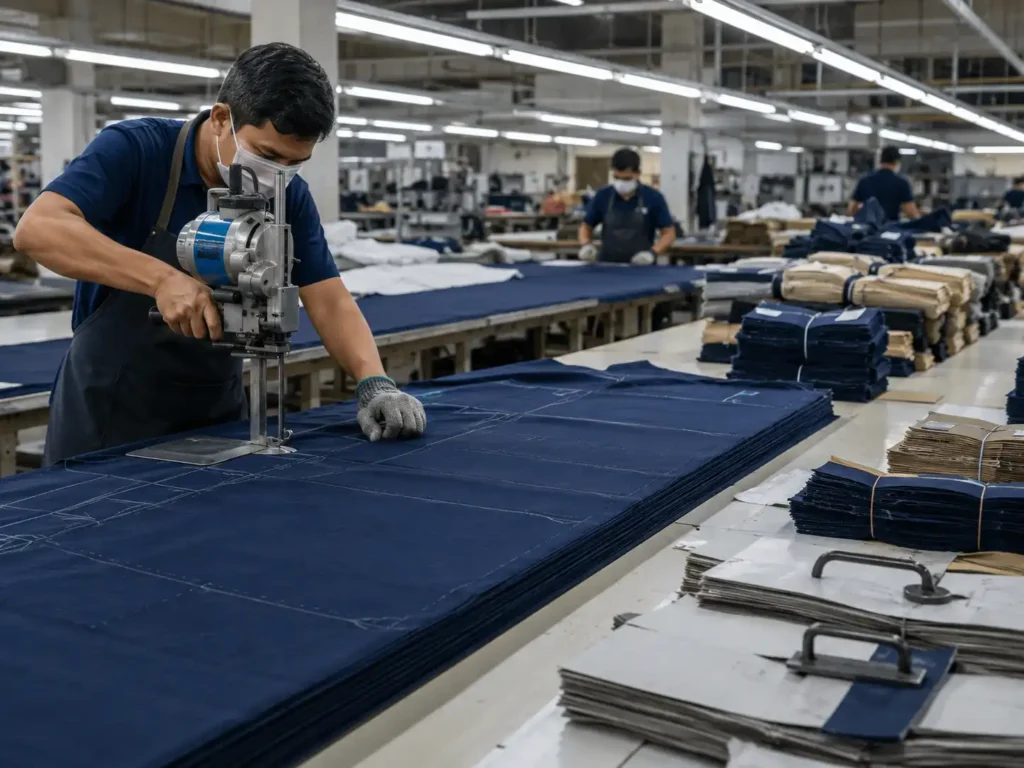
Materials requiring relaxation are prepared before cutting according to fabric behavior. Marker direction, nap, shine, print placement, grain, sleeve orientation, and size quantities are checked. Sleeve pieces are marked clearly to protect left-right orientation and gathering references.

Bundle Control

Cut panels are grouped by style, color, size, shade, and garment set. Sleeve pairs remain connected with the corresponding body bundle. Bundle control reduces mixed sizes, reversed sleeves, shade mismatch, and missing components across multi-style production.

Gathering Preparation

Sleeve gathering sections are prepared from pattern notches and production instructions. Fullness distribution, temporary holding, pleat or gather direction, cuff edge, and sleeve-head orientation are checked before the sleeve is attached to the bodice.

Sewing and Inline Checks

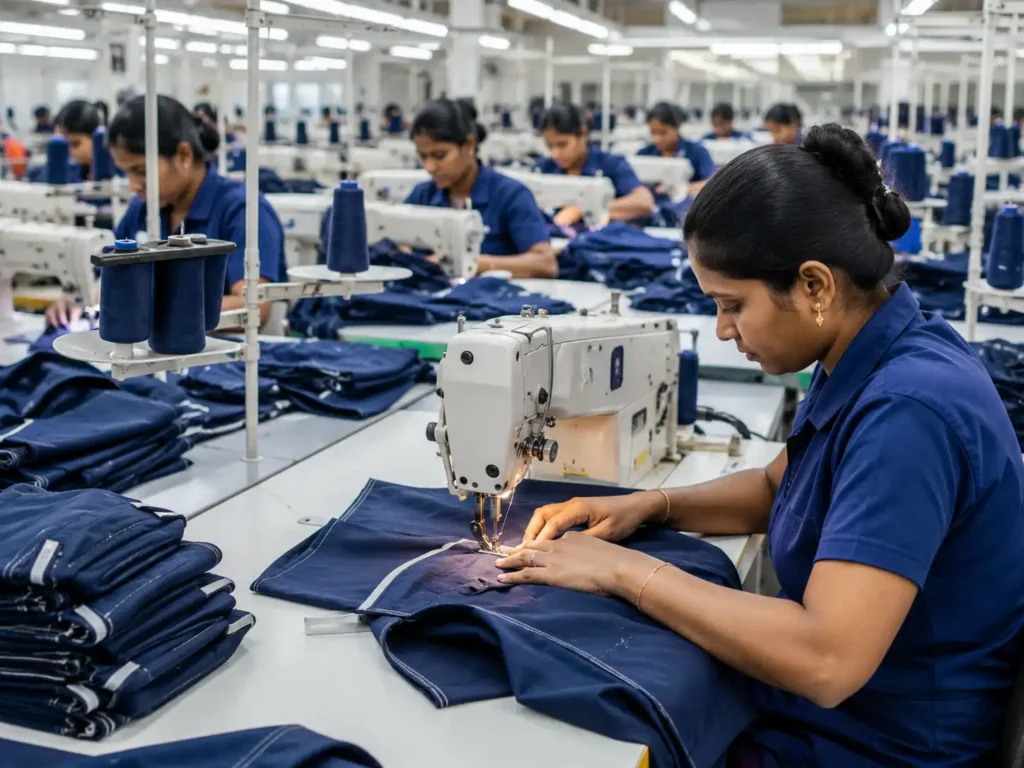
Sewing checks cover sleeve symmetry, armhole seam, cuff opening, elastic recovery, sleeve length, gathering balance, shoulder line, neckline, zipper, lining, and overall garment measurements. Problems are corrected while production is active rather than after the full quantity is finished.

Pressing and Finishing

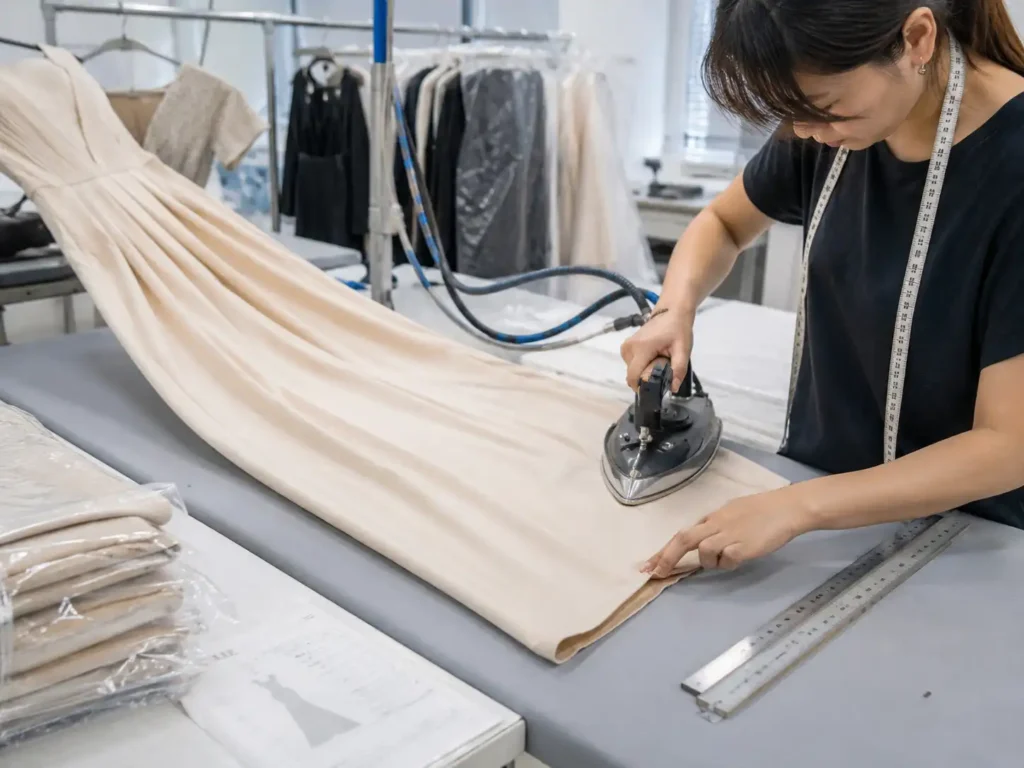
Thread trimming, stain review, seam shaping, surface protection, final pressing, and garment recovery are completed according to material. Satin, velvet, organza, chiffon, and embellished fabrics require different handling to prevent shine, crushing, snagging, or distortion.

Final Garment Inspection

Finished garments are checked against the approved sample, measurement chart, construction file, color standard, labels, and appearance requirements. Product-specific sleeve checks remain part of the final garment review.

Packing and Shipment Preparation

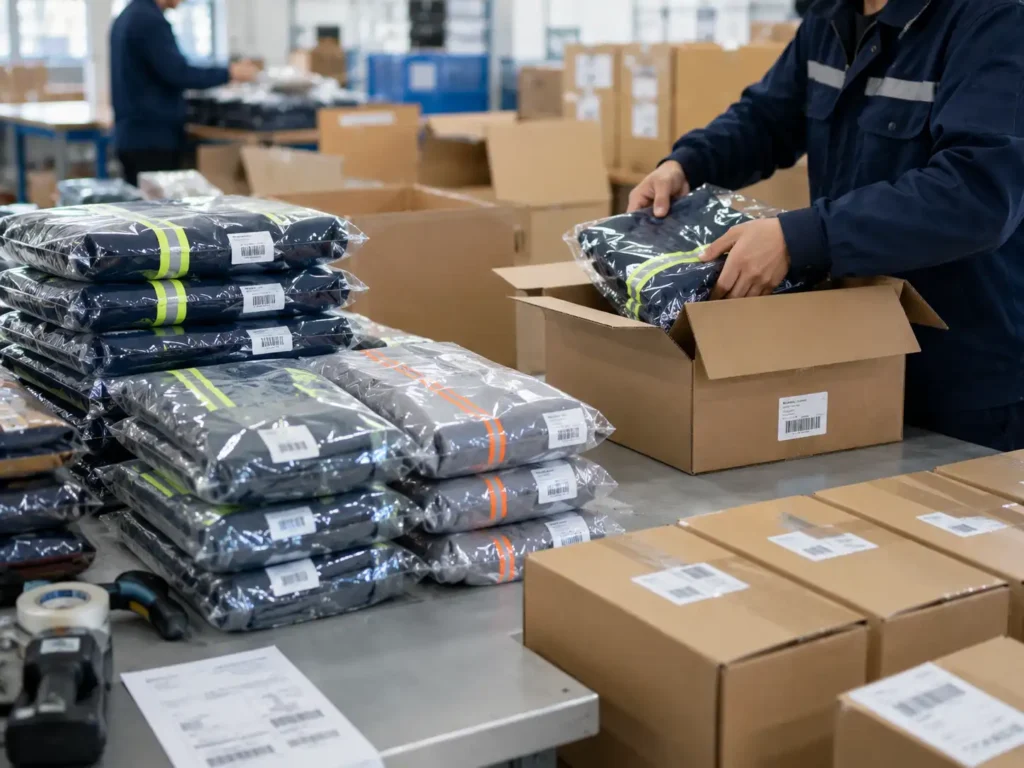
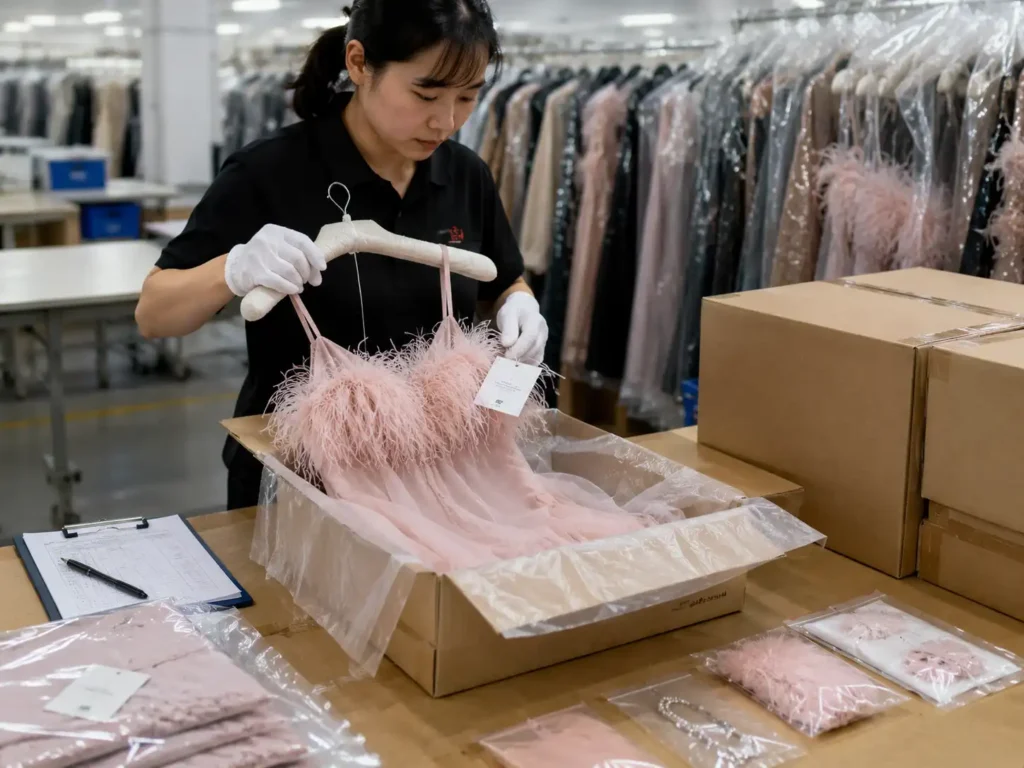
Labels, size identification, hangtags, barcodes, polybags, folding, carton quantities, carton marks, and shipment documents are checked before dispatch. Sleeve volume and fabric sensitivity influence folding, tissue use, hanger packing, or recovery instructions.

Quality Checks Built Around Sleeve Consistency

General garment inspection is not enough for a statement sleeve. Jinfeng adds sleeve-specific checkpoints to material, cutting, sewing, measurement, finishing, and packing controls.

Sleeve Symmetry

Left and right sleeves are compared for cap height, visible fullness, length, cuff level, seam direction, and overall silhouette. Differences are reviewed before packing, with earlier inline checks used to prevent repeated imbalance.

Gathering Distribution

Inspectors review whether fullness follows approved zones and whether large folds, flat gaps, twists, or uneven concentration appear. Comparison with the PP sample helps separate intentional shape from sewing variation.

Sleeve Length

Sleeve length is measured from the agreed reference point and checked against tolerance. Full sleeves also receive movement review so bending the elbow does not create excessive pull at the cuff or shoulder.

Bicep Width

Bicep width supports both volume and mobility. Measurements are taken consistently according to the size chart. Tightness, excess fabric weight, and left-right variation are reviewed across selected garments.

Cuff Opening

Fixed and elastic cuff openings are checked for finished measurement, comfort, passage, closure function, and symmetry. Elastic recovery is reviewed after stretch; button cuffs are checked for overlap, buttonhole, and button security.

Shoulder Balance

The shoulder seam, armhole, neckline, and sleeve pitch are reviewed together. Pulling, rotation, neckline movement, or one sleeve sitting forward can indicate an upper-body balance issue.

Arm Movement

Selected garments are checked through raised-arm, forward-reach, and elbow-bend actions. Product risk determines the depth of movement review. Movement findings can reveal restriction not visible during flat measurement.

Surface and Pressing

Shine, crush marks, snags, wrinkles, needle marks, stains, and seam impressions are checked according to fabric. The sleeve should retain the approved shape after finishing and normal handling.

Packing Shape

Folding and packing should not create severe creases or permanently flatten the sleeve. Packaging is reviewed against fabric sensitivity, garment length, retail presentation, and shipment method.

Capacity for Multi-Style Seasonal Dress Programs

Many established labels develop balloon sleeves as one theme across a broader collection rather than ordering one isolated dress. Jinfeng coordinates style priorities, materials, samples, factories, QC, packing, and shipment sequence across multi-style programs.

Multi-Style Development

A collection may include 10-30 styles across different sleeve lengths, necklines, fabrics, colors, and garment lengths. Development priorities are arranged around photo dates, sales meetings, launch windows, and fabric readiness. Shared sleeve language can be retained while each dress receives its own pattern and risk review.

Factory Allocation

Six owned factories and more than 10 long-term production partners allow style allocation by fabric, construction, quality requirement, quantity, and timing. Complex occasion styles, stable cotton dresses, soft resort fabrics, and repeat orders can be assigned to the most suitable production route.

Line Planning

Eighteen or more sewing lines support regular capacity planning, while flexible production resources help manage selected multi-style orders and repeat runs. Line planning begins after PP approval, material arrival, production files, and required quality standards are ready.

Monthly Capacity

Regular monthly capacity exceeds 100,000 pieces across the women’s fashion manufacturing system. Available capacity for one order depends on style complexity, material readiness, number of colors, size range, finishing, packing, inspection, and required delivery sequence.

Project Coordination

Merchandising, development, production, QC, packing, and logistics roles follow shared files and milestone updates. A multi-style order needs a clear status by style rather than one general production percentage.

Split Delivery

Selected programs can be reviewed for phased production or split shipment according to launch priority, material arrival, warehouse plan, and transport method. Split delivery needs early agreement on quantities, packing, documents, cost, and inspection arrangements.

What Determines MOQ and Unit Pricing

MOQ starts from 200 pieces per style and color. Final MOQ and pricing depend on fabric sourcing, color development, trims, sleeve construction, quantity, size ratio, labels, packing, testing, production timing, and shipment terms.

Cost FactorWhy It MattersCommon Cost DirectionDevelopment Response
Sleeve FullnessGreater width raises fabric use and gathering timeMedium to highAdjust fullness without losing visual identity
Layered SleeveShell, lining, tulle, or organza add cutting and sewing stepsHighConfirm required support and transparency
Special FabricSatin, organza, lace, embroidery, or custom print can carry supplier minimumsMedium to highReview stock options or approved alternatives
Cuff ConstructionElastic, smocking, covered buttons, ties, or fixed bands use different trims and laborLow to mediumSelect closure by look, comfort, and volume
Color CountEvery color can affect fabric, lining, thread, zipper, trim, and label quantitiesMediumConsolidate colors or plan supplier minimums
Size RatioHighly fragmented ratios reduce cutting and production efficiencyMediumUse balanced commercial size breakdowns
Embroidery or LaceArtwork, placement, backing, alignment, and QC add development workHighLimit placement or simplify stitch coverage
Private Label PackingLabels, hangtags, barcodes, polybags, and carton marks add supplier lead timeLow to mediumConfirm artwork and SKU data early

Private Label Dresses Ready for Retail Channels
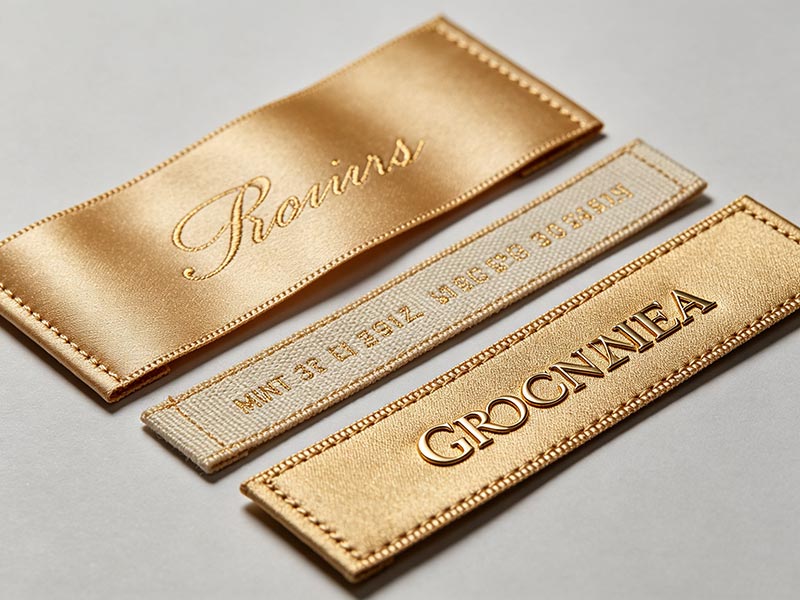
Private-label delivery covers more than sewing a logo into a garment. Label content, size system, care information, barcode, packing, carton marks, and SKU accuracy must match the final garment and selling channel.

Woven Main Labels

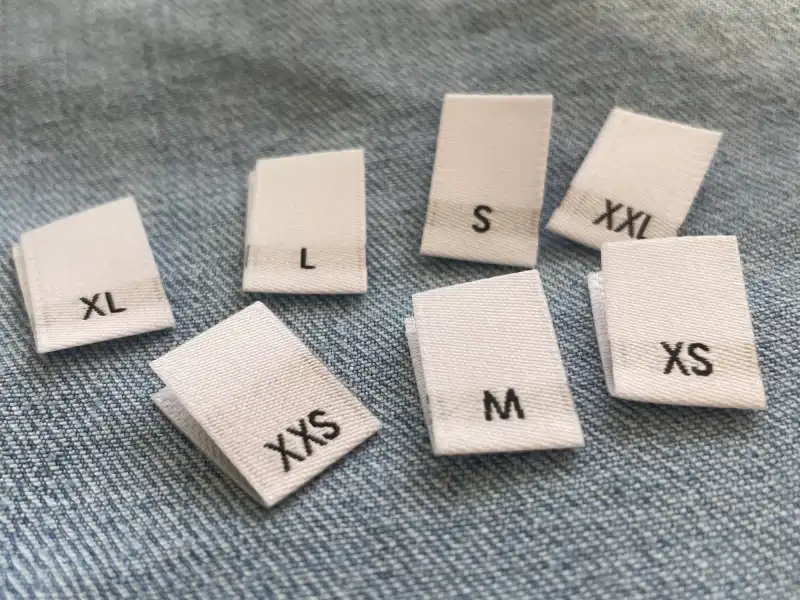
Main labels can be developed in woven, satin, printed, or heat-transfer formats according to brand direction and comfort. Artwork, dimensions, fold, color, material, position, and attachment are confirmed before bulk use. Selected custom labels commonly require 500-1,000 pieces and around 7-15 days.

Size Labels

Size labels must match the garment, hangtag, barcode, polybag sticker, carton quantity, and order file. Jinfeng checks size content and placement to reduce mixed-size and warehouse errors across multi-size programs.
Care Labels

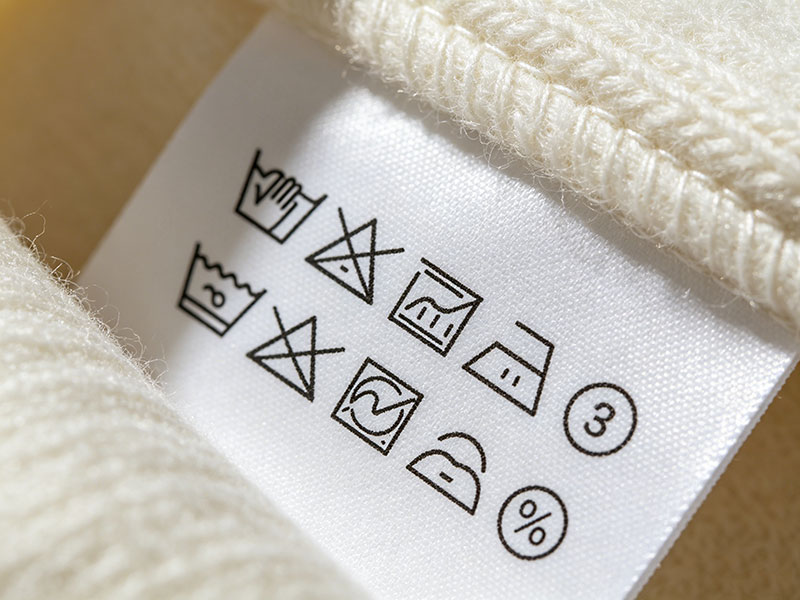
Care labels can include composition, care instructions, size, origin, brand details, or market information supplied and approved by the brand. Final text responsibility remains with the brand, while placement, print quality, durability, and garment matching are checked in production.

Hangtags

Hangtags can use different paper weights, finishes, embossing, foil, string, and attachment. Artwork, copy, color, hole position, barcode area, and style matching should be confirmed before production. Selected custom hangtags commonly require 7-20 days.

Barcode and SKU Labels

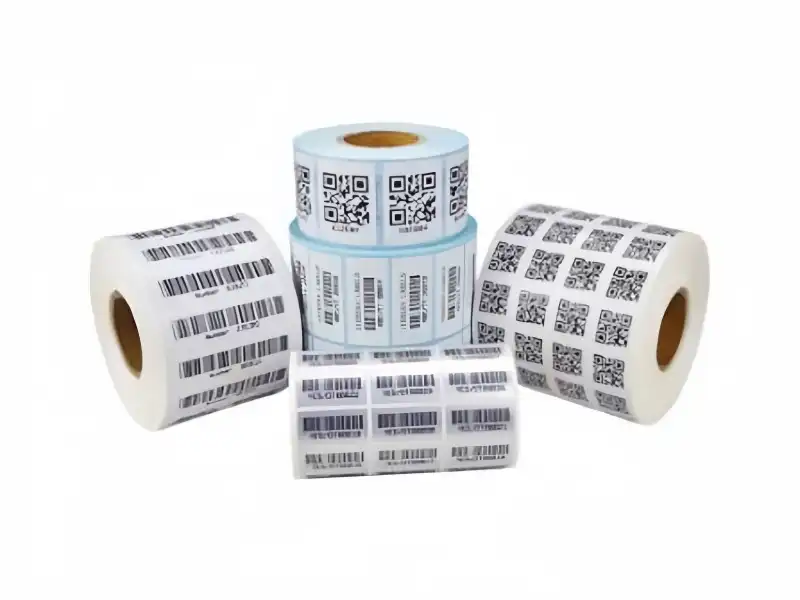
Barcode, SKU, color, size, style number, price, and warehouse labels must match the order matrix. Jinfeng can follow brand-provided data and packing instructions, with final checks across garment, polybag, carton, and packing list.

Polybags

Polybags are selected by garment dimensions, folding method, warning requirements, print, thickness, and channel. Large balloon sleeves may require wider folds or protective tissue to reduce hard creases. Selected custom-printed polybags commonly require 500-1,000 pieces and 7-20 days.

Carton Marks

Carton marks can include style, color, size, quantity, destination, purchase order, carton number, and handling details according to approved instructions. Carton size and weight are reviewed with garment volume and transport method.

Ecommerce or Retail Packing

Ecommerce programs may need individual SKU labels, compact folds, and warehouse-ready identification. Retail programs may need hangers, size clips, protective covers, or presentation rules. Packing method is confirmed before the PP or packing sample stage when required.

Protected Designs and Coordinated Export Delivery

Jinfeng supports confidential development and structured shipment preparation for custom women’s fashion programs. Project files and brand materials are handled only for the corresponding order and authorized team.

Design and Project Protection

NDA-based cooperation can cover brand identity, tech packs, line sheets, reference garments, patterns, grading files, size charts, fabric direction, trim cards, labels, packaging, barcodes, quantities, prices, launch plans, and unreleased styles. Client-owned patterns are not shared, sold, or reused for another brand without authorization. Public case content remains anonymous unless written permission is provided.

Internal access is limited to roles involved in development, sampling, material sourcing, production, QC, packing, and delivery. Sample photography can be controlled to avoid exposed labels, barcodes, or unreleased design details. Repeat-order files remain available for the corresponding brand while confidentiality continues.

Export and Delivery Coordination

Sample shipments can move by express. Bulk orders can be planned through air, sea, or brand-nominated freight channels according to quantity, destination, launch date, cost, and required documents. EXW, FOB, CIF, or DDP can be reviewed by project and destination rather than assumed for every route.

Shipment preparation may include commercial invoice, packing list, carton marks, style and quantity details, forwarding coordination, inspection timing, and warehouse labels supplied by the brand.

Split shipment, air-sea combinations, or priority style dispatch can be assessed when launch timing and cost justify the structure.

Balloon Sleeve Projects Solved Through Development Control

The following anonymous project profiles show realistic order structures for established fashion labels. Brand identities, original tech packs, prices, and unreleased designs remain confidential.

United States Occasionwear Program

A United States occasionwear label planned 18 styles across balloon sleeve midi dresses, fitted mini dresses, and wedding guest silhouettes. The confirmed bulk program reached 42,000 pieces across satin, crepe, chiffon, and organza, with several styles sharing coordinated color families and private-label packing.

Early satin samples showed sleeve collapse near the lower arm and visible pulling at the shoulder when both arms were raised. The original sleeve width was generous, yet the cap and armhole relationship created tension while fabric weight dragged the volume downward. Jinfeng revised the sleeve-cap curve, redistributed gathering toward the cuff, adjusted bicep ease, and corrected the front and back armhole balance. A lighter supporting inner layer was tested for selected styles rather than adding unrestricted shell width.

Fit review used front, side, back, raised-arm, forward-reach, and elbow-bend views. Cuff openings were adjusted by size, and satin seam handling was revised to reduce puckering. PP samples established sleeve shape, gathering zones, measurement points, pressing direction, and packing recovery. Bulk inline checks compared sleeve pairs before full garment completion, while final review included cuff opening, shoulder balance, sleeve length, symmetry, and surface marks.

Australian Resort Collection

An Australian resortwear label developed 24 styles with a total bulk quantity of 58,000 pieces. The range included printed rayon maxi dresses, cotton-blend midi dresses, wrap dresses, and relaxed balloon sleeve minis. Soft hand feel and travel-friendly movement were commercial priorities.

Several rayon and viscose references produced attractive drape but failed to hold the desired sleeve profile. Increasing width added weight and made the sleeves hang closer to the arm. Jinfeng reviewed fabric alternatives, shrinkage risk, print placement, sleeve geometry, cuff size, and selected partial support options. Pattern revisions moved fullness toward the lower sleeve, moderated the cap, and changed cuff proportion so the shape looked intentional without becoming rigid.

Development also addressed wash-related shrinkage, print direction, lining, waist position, and maxi hem balance. Revised samples were measured after material review, and the approved collection file separated soft billow styles from stronger balloon silhouettes. Production was allocated by material and construction. Packing trials considered wrinkle recovery and sleeve folding for ecommerce delivery. Repeat-order records preserved pattern, print direction, cuff specification, size chart, sewing notes, and packing method.

United Kingdom Ecommerce Drop

A United Kingdom ecommerce label placed a 12-style program totaling 26,000 pieces across cotton poplin mini dresses, embroidered midi dresses, and shirt dresses. Strong photography, crisp sleeve volume, accurate SKU packing, and a scheduled launch window were central requirements.

The first cotton samples held volume well, but left-right gathering varied after production simulation. The root issue involved broad gathering sections and insufficient visual references for sleeve orientation. Jinfeng added pattern notches, divided sleeve-head and cuff fullness into measured zones, paired sleeve bundles, and created an inline comparison point before armhole attachment. Embroidered styles received placement checks so sleeve motifs aligned consistently across sizes.

Size grading was reviewed for shoulder width, armhole, bicep, sleeve length, and cuff opening. Larger sizes received controlled fullness growth rather than unrestricted width increases. Private-label work included main labels, care labels, hangtags, barcode stickers, polybags, carton marks, and SKU matching. Production status was tracked by style, and priority launch styles completed packing first under an agreed shipment sequence.

What Established Brands Should Verify in a Manufacturer

Supplier selection should evaluate development depth and bulk control rather than product photos alone. A balloon sleeve dress manufacturer should be able to explain how the approved silhouette will be measured, sewn, inspected, packed, and repeated.

Dress Specialization

Ask whether the manufacturer regularly develops fashion dresses across different fabrics, necklines, lengths, linings, closures, and fit levels. A general cut-and-sew facility may complete basic assembly without understanding dress balance or occasionwear risks.

Sleeve Pattern Capability

Request evidence of sleeve-cap, armhole, bicep, gathering, cuff, and grading knowledge. A strong team should explain why one reference needs a high cap, a lower cap, more lower-sleeve volume, or a different fabric rather than promising every image can be copied unchanged.

Fabric-to-Shape Knowledge

Ask how cotton poplin, organza, chiffon, satin, crepe, linen blend, tulle, and viscose will change the same sleeve concept. Reliable development includes material limits, lining, support, seam behavior, pressing, and bulk risk.

Traceable Sample Revisions

Confirm how fit comments, pattern changes, measurements, fabric replacements, trim changes, and approvals are recorded. Informal messages alone are weak protection for multi-round development and multi-style orders.

Bulk Consistency Controls

Review PP sample requirements, production file, gathering instructions, paired sleeve control, inline checks, measurement process, final inspection, and packing review. A final inspection cannot correct a repeated operation error across a full order.

Scalable Brand Delivery

Assess factory system, sample capacity, pattern team, QC team, labels, barcodes, packing, shipment documents, confidentiality, repeat-order records, and multi-style coordination. The strongest fit is a manufacturer able to support the full collection lifecycle.

Frequently Asked Balloon Sleeve Manufacturing Questions

MOQ starts from 200 pieces per style and color. Fabric suppliers, custom dyeing, printing, embroidery, special trims, labels, or packaging may carry separate minimums. A quantity plan by style, color, and size is needed for accurate review.

Yes. Clear front, side, back, and sleeve references improve interpretation. A reference image supports initial structure analysis, while measurements, fabric direction, quantity, labels, and delivery requirements are still needed before a final quotation or production-ready sample.

Yes. Tech packs are reviewed for flat sketches, measurements, tolerance, fabric, lining, trims, construction, labels, artwork, and packing. Missing or conflicting information is clarified before pattern and sample work.

Cotton poplin, organza, tulle, stable jacquard, and selected structured woven fabrics provide stronger support. Crepe, satin, chiffon, rayon, and viscose create softer results and may require pattern changes, layering, or moderated expectations.

Yes, but chiffon creates soft movement rather than a rigid sculptural shape. Volume, layering, cuff design, lining, seam method, and transparency need review. More width alone may increase weight and reduce visible shape.

Control starts with pattern notches, measured gathering zones, sleeve orientation, paired bundle management, and approved visual references. Inline comparison catches imbalance before the full garment is completed.

Yes. Options include elastic cuffs, button cuffs, covered buttons, ties, smocking, fixed gathered bands, and selected concealed closures. Comfort, opening size, material, sewing, and volume control are tested during sampling.

Yes, although garment length, waist placement, skirt volume, fabric weight, and overall proportion can require sleeve adjustments. A direct copy across lengths may make one style visually top-heavy or underdeveloped.

Yes. Main labels, size labels, care labels, hangtags, barcodes, SKU labels, polybags, carton marks, and channel-specific packing can be coordinated according to approved artwork and order requirements.

Yes. Photo samples can be planned after design and fit direction are sufficiently stable. A photo-ready sample is not automatically the PP standard; final bulk materials, measurements, construction, labels, and packing still require approval.

A PP sample is required for standard bulk control. It confirms final fabric, trims, color, pattern, measurements, construction, labels, and relevant packing direction before production begins.

A regular dress first sample is commonly planned within 10-15 days after materials and project details are confirmed. Medium-complexity styles may require 12-18 days. Complex layered, lace, mesh, sequin, or special-material styles may require 15-25 days or longer. Revised and PP samples are commonly planned within 7-15 days according to changes and material readiness.

Grading links shoulder, armhole, sleeve cap, bicep, sleeve length, fullness, and cuff opening. Fullness growth is controlled so larger sizes do not become excessive and smaller sizes retain the approved visual identity.

Fabric type and use, sleeve fullness, lining, layers, embroidery, cuff construction, trims, color count, size ratio, quantity, labels, packing, testing, production timing, and delivery terms all influence pricing.

Yes. NDA-based cooperation can protect tech packs, samples, patterns, materials, labels, packaging, quantities, prices, and launch plans. Public use requires authorization.

Yes. Approved patterns, measurements, material references, sleeve specifications, sewing notes, labels, packing, and QC records can support repeat production. New fabric batches, colors, or changed components still require confirmation.

Send Your Balloon Sleeve Dress Project for Review

A focused project review starts with enough information to evaluate sleeve structure, fabric behavior, fit, MOQ, sample route, bulk risk, private-label work, and delivery planning.

Kelly coordinates initial communication and routes technical details to the relevant development, material, pattern, production, and QC teams.

Please prepare the following information where available:

  • Reference images, sketches, original garment, or tech pack
  • Planned styles, colors, and quantity per style and color
  • Size range, base size, measurements, and tolerance requirements
  • Fabric composition, weight, swatch, color standard, or hand-feel direction
  • Sleeve length, fullness, cuff type, gathering, lining, and special details
  • Main labels, care labels, hangtags, barcodes, polybags, and carton marks
  • Target market, launch date, required delivery window, destination, and trade term
  • Testing, inspection, NDA, packing, warehouse, or shipment requirements

Two people walking and talking inside a modern garment factory.

Tell Us About Your Dress Project

Share your product details, estimated quantity and development requirements. Our team will review your project and provide practical OEM/ODM production feedback.

Premium Women’s Apparel Production for Fashion Brands

From dress sample development to bulk production, JF Apparel supports fashion brands with confidential OEM/ODM manufacturing, reliable quality control and scalable production support.

START YOUR DRESS PROJECT

Ready to Develop Your Next Dress Collection?

Share your design concept, product requirements or sourcing plans with our team. We’ll review your project and provide practical feedback on development, materials, MOQ and production.

7-10 Days

Sample Development

200 PCS

Starting MOQ

Fast Response

Professional Follow-Up