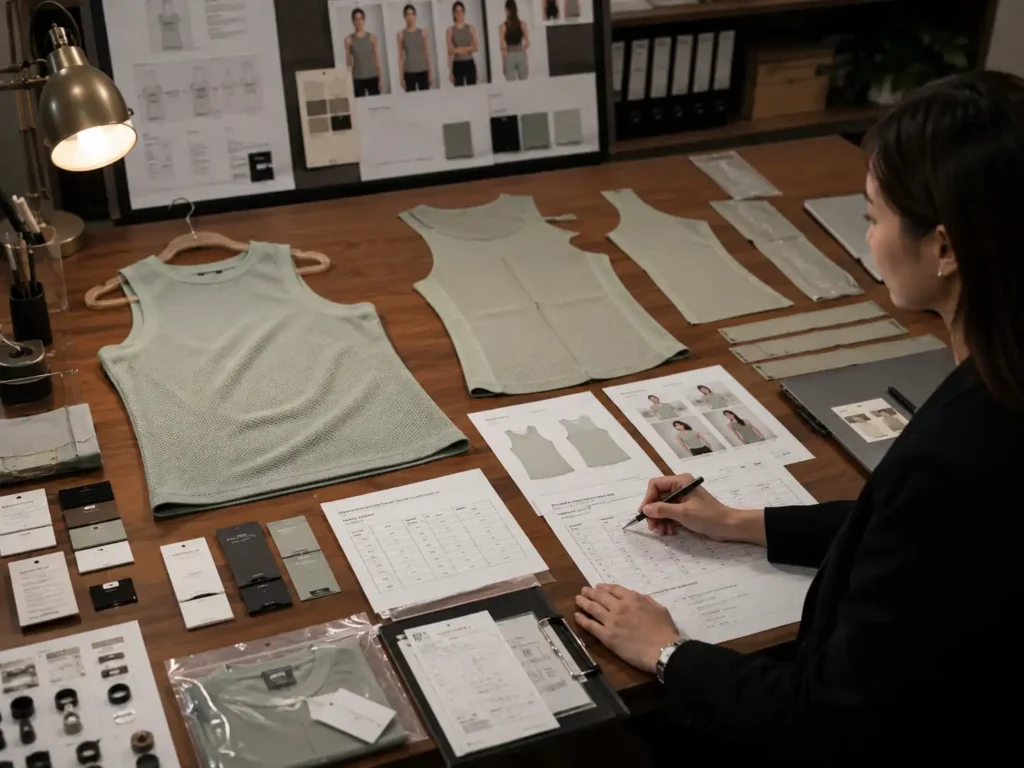
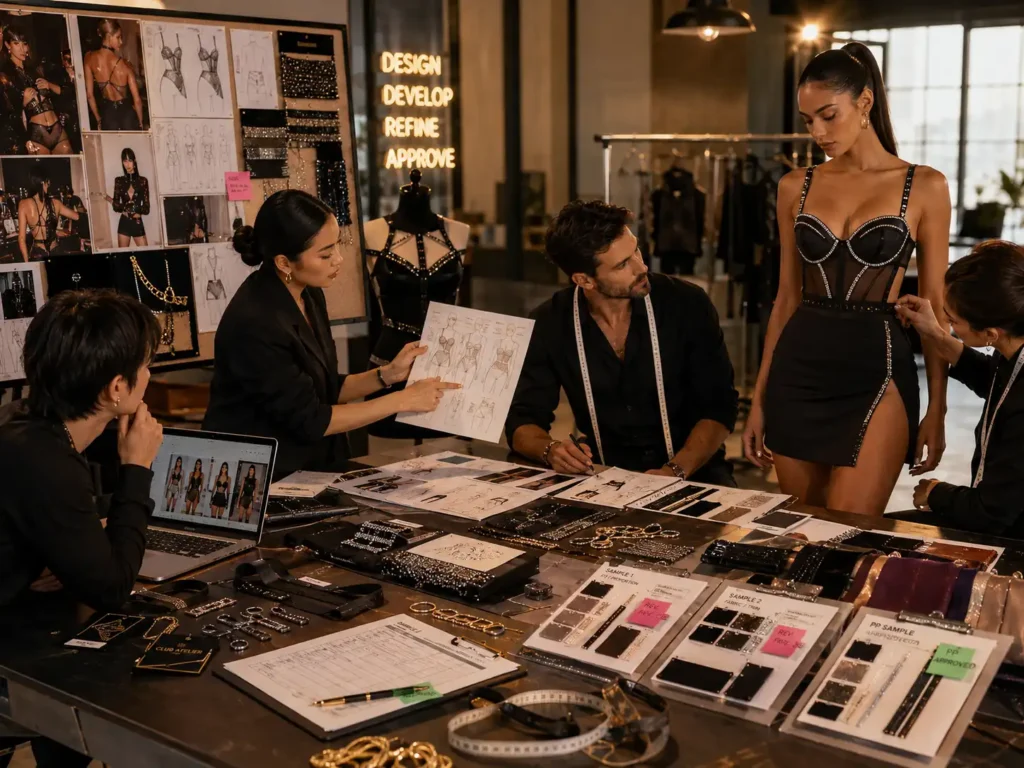
...

Asymmetric Dress Pattern Development

Turn one-shoulder, diagonal, draped, cut-out and uneven-hem concepts into balanced production patterns built for fitting, grading and repeatable manufacturing.

Jinfeng Apparel develops asymmetric dress patterns from tech packs, sketches, reference images, original samples and size specifications. Pattern work focuses on visual proportion, load balance, fabric behavior, fit correction and construction stability before bulk production begins.

  • 7+ senior pattern makers for women’s fashion development
  • 2 dedicated sample rooms for pattern-to-sample verification
  • 20+ sample machinists supporting development and revisions
  • Typical sampling: 10–15 days for regular dresses; 15–25 days for complex constructions, subject to fabric and trim readiness

What Makes Asymmetric Dress Pattern Development Different?

An asymmetric dress looks intentionally uneven, but the underlying pattern cannot be uncontrolled. The strongest development work creates a stable relationship between neckline, shoulder, bust, waist, side seams, grain direction and hem so the design keeps its intended character on a moving body.

Uneven Structural Load

A one-shoulder neckline, diagonal cut-out or offset drape moves support away from the positions used in a symmetrical block. One side may carry more fabric weight, while the opposite side relies on neckline tension, bust shaping, lining or internal stabilization. Pattern development has to account for those load paths before the first sample is cut. When the load is ignored, common failures include shoulder slipping, neckline gaping, side-bust exposure, a rotating bodice or a hem that pulls toward one side. Jinfeng reviews where the garment is supported, where it is intentionally open, and where hidden structure is needed to keep the silhouette controlled.

Controlled Pattern Balance

Visual asymmetry still needs technical balance. Full-front and full-back development is often required because half-pattern mirroring cannot describe an offset neckline, diagonal seam, one-sided ruching or uneven hem. Bust shaping, dart transfer, side-seam position, waist level and grain direction must work together after the design lines move away from center. A successful pattern does not make both sides equal; it makes the different sides behave predictably. Jinfeng evaluates pattern balance around body landmarks and seam relationships so the finished garment can look deliberately asymmetric without appearing twisted, stretched or accidentally uneven.

Production Repeatability

A beautiful first sample is only one checkpoint. A commercial pattern must also survive size grading, fabric variation, cutting, sewing, pressing and repeated assembly across a production run. Small changes in neckline length, grain direction, seam allowance, gathering ratio or cut-piece orientation can create visible differences from garment to garment. Development therefore continues until approved measurements, pattern version, construction method and inspection points are aligned. Jinfeng treats pattern development as part of production engineering, not as an isolated drafting service, so approved fit can be translated into controlled sewing instructions and bulk quality checks.

Asymmetric Dress Structures We Develop for Fashion Collections
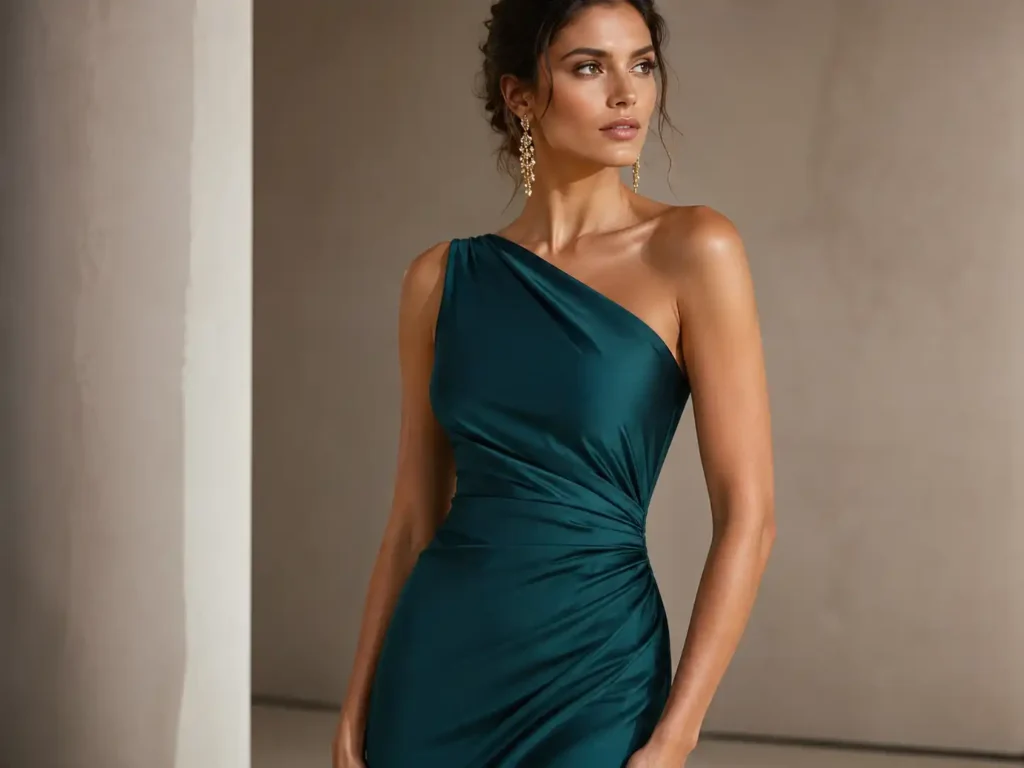
Different asymmetric concepts fail for different reasons. Development begins by identifying the design mechanism – support, diagonal balance, drape, gathering, cut-out placement, grain direction or hem geometry – then building the pattern and sample around the highest-risk areas.

One-Shoulder Dresses

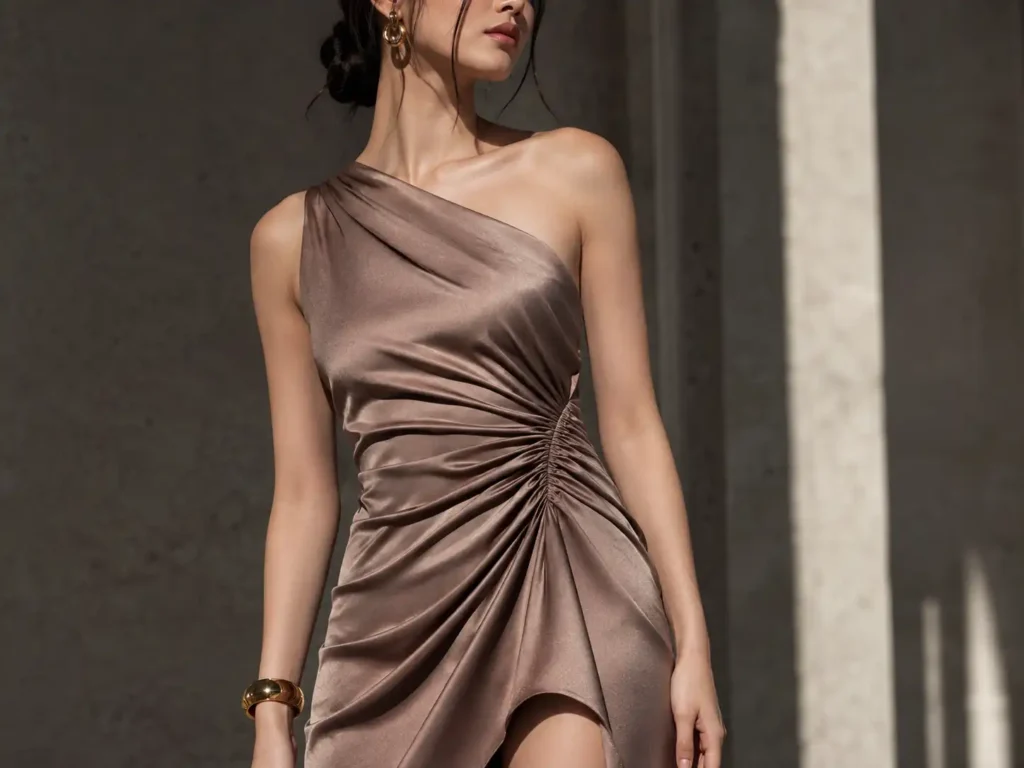
One-shoulder dresses place most upper-body support on one side, making shoulder angle, neckline tension and bust containment central to fit. Pattern work may involve a full front and back, repositioned darts, an altered armhole, internal elastic, grip tape, lining or structured support depending on fabric and silhouette. Jinfeng checks whether the open side remains secure during movement and whether the supported side carries the garment without pulling the waist or rotating the side seams. Bodycon, satin, mesh, sequin, cocktail and evening versions each require different ease and reinforcement decisions before the sample can be approved.

Diagonal Necklines
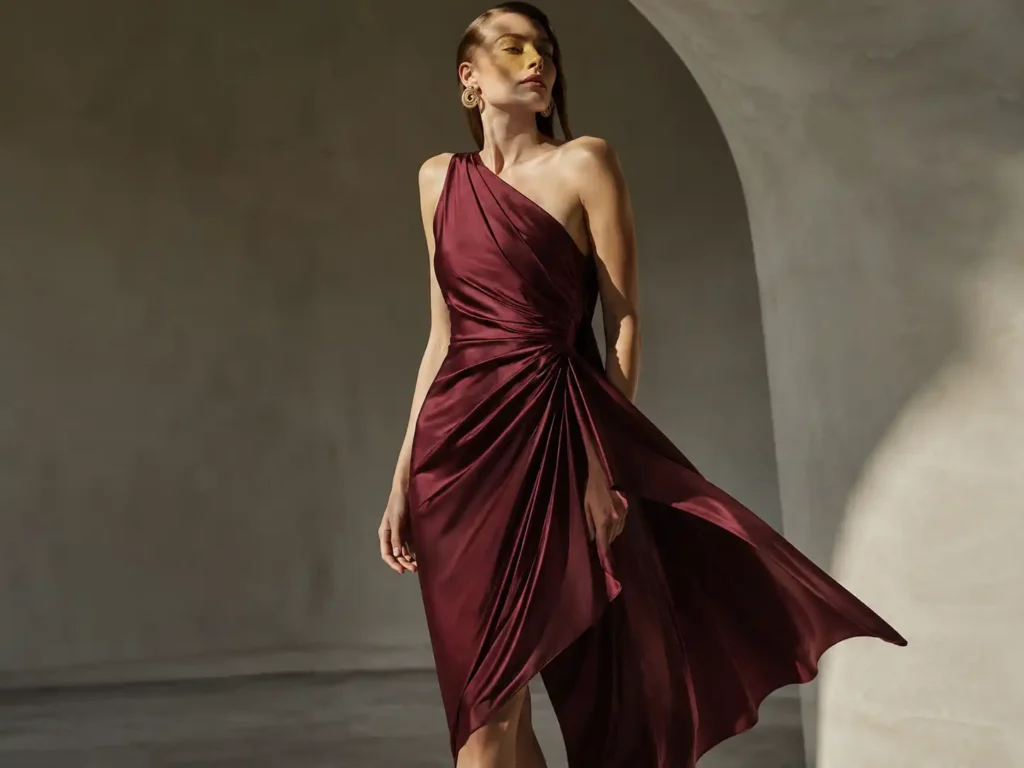
A diagonal neckline changes edge length across the chest and can quickly develop gaping, drag lines or uneven pressure if the curve is drafted from appearance alone. Pattern development controls the neckline from shoulder or upper-bust anchor points through the bust and underarm area, then coordinates facing, lining or stabilization with the outer fabric. Stretch direction and bias behavior are especially important because a diagonal edge may lengthen after cutting, sewing or hanging. Jinfeng reviews neckline length, seam direction, bust coverage and underarm comfort together so the visual angle stays sharp while the edge remains close to the body.

Draped Asymmetry

Asymmetric draping is controlled volume, not random excess. The pattern has to define where fabric is released, where it is anchored and how the folds travel across the body. Too much volume can collapse the waist or hide the intended shape; too little can create tight diagonal drag lines. Development may use slash-and-spread, rotated darts, extended panels or a combination of pattern and drape evaluation. Jinfeng checks drape direction on the actual fabric, since satin, jersey, chiffon and mesh produce very different fold depth, recovery and edge behavior even when the design drawing appears identical.

Ruched Asymmetry

One-sided ruching changes both visual volume and local garment length. A ruched side seam, hip panel or diagonal bodice needs a defined gathering ratio and clear anchor points so fullness remains in the intended zone instead of migrating during sewing or wear. Pattern pieces may require controlled extension, elastic channels, gathering guides or separate lining behavior. Jinfeng develops the shell and support layer together, checking whether ruching changes bust, waist or hip tension after the fabric is gathered. Bulk instructions then need reference points so operators distribute volume consistently instead of relying only on appearance.

Asymmetric Cut-Outs

Cut-outs remove fabric from an area that may still be carrying tension. Development therefore starts by identifying the remaining structural path around the opening. Waist cut-outs, side-bust openings, diagonal midriff shapes and shoulder openings each affect fit differently. Edge finish, lining, facing, elastic, stay tape or seam positioning may be needed to prevent the opening from stretching or standing away from the body. Jinfeng also checks placement against bust, waist and hip landmarks across the size range, since a cut-out that looks balanced in one size can shift visually when standard grading is applied without correction.

Diagonal Panel Dresses

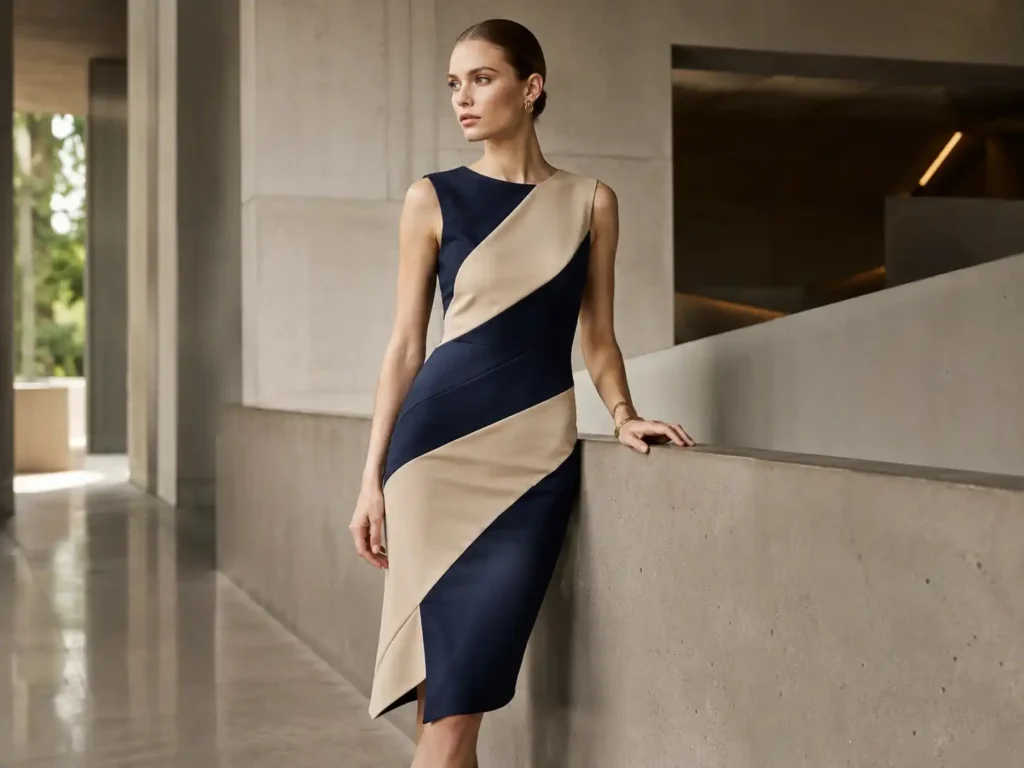
Diagonal seams can shape the body, create contrast panels or support mixed fabrics, but they also cross the grain at changing angles. Pattern development must control seam length, notches, easing and grain direction so the joined panels do not ripple or torque. When fabrics have different stretch or weight, the risk becomes higher because one panel can grow while the adjacent panel stays stable. Jinfeng reviews panel interaction before approval and can separate construction rules for shell, lining and contrast sections. The goal is a clean diagonal line that remains visually consistent after sewing, pressing and normal garment movement.

High-Low Hem Dresses

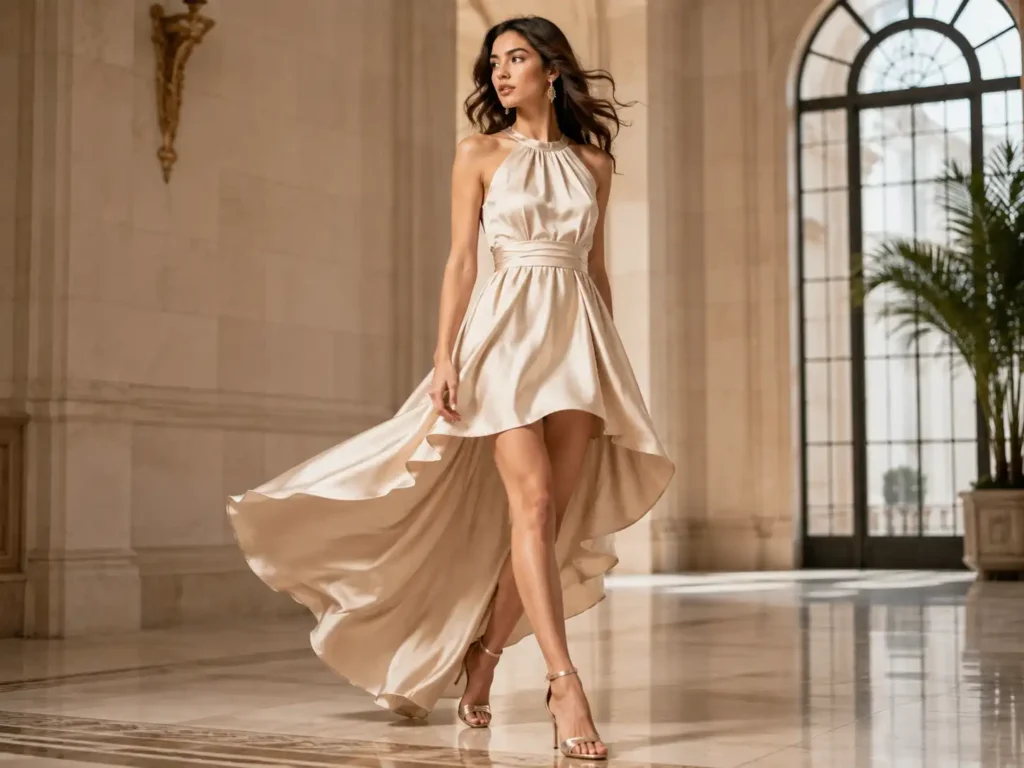
An uneven hem is more than a different front and back length. The transition line, flare, grain direction, seam placement and fabric weight determine how the hem hangs around the body. Chiffon and satin can drop on bias sections, while heavier fabrics may hold an unintended point or ridge. Jinfeng develops high-low and irregular hems with hanging behavior in mind, then reviews the sample after the fabric has relaxed. Hem finishing is considered early because narrow rolled hems, lining, binding or faced edges can change weight and fall. Final length control is checked against approved footwear and fit standards when provided.

Bias Asymmetry

Bias-cut asymmetric dresses combine two high-sensitivity systems: diagonal design and off-grain fabric behavior. The pattern may stretch vertically, narrow across the body or change length after hanging, especially in satin, rayon and other fluid woven fabrics. Seam direction, panel placement, cutting rest time, lining compatibility and zipper insertion all influence final fit. Jinfeng evaluates grain and bias orientation before locking the pattern, then reviews growth and recovery during sampling. A production-ready solution may require revised lengths, controlled seam reinforcement or different handling instructions rather than simply copying measurements from a straight-grain style.

Overlay and Flounce

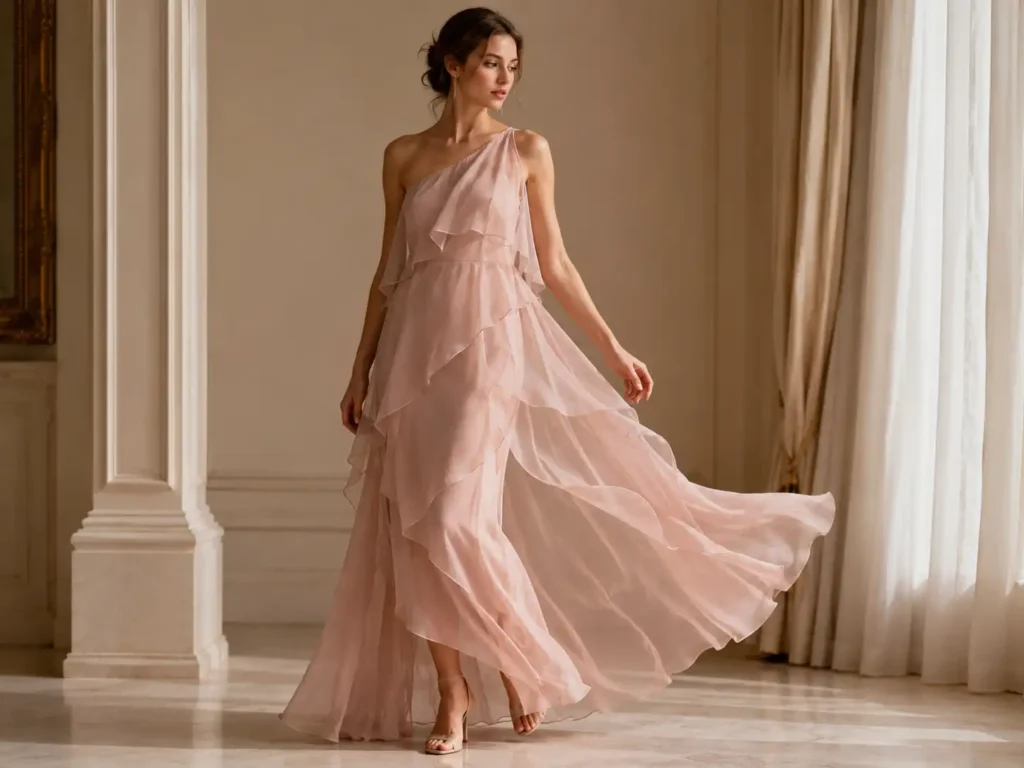
Asymmetric overlays, waterfall panels and flounces depend on the relationship between base garment and added volume. The base must remain balanced even when the overlay is deliberately uneven. Circular or partial-circle flounces require correct inner-edge length, flare ratio and grain placement; layered overlays need secure anchor points without pulling the neckline, waist or side seam. Jinfeng checks whether the decorative layer changes weight distribution, transparency, hem movement or pressing requirements. Development can include separate pattern pieces for shell, lining and overlay so the visual movement remains controlled and the construction can be repeated during production.

How We Balance an Asymmetric Dress Pattern

Pattern balance is built around the body, fabric and construction method. Jinfeng reviews the areas carrying tension, the areas intentionally released, and the seam relationships that control how the dress hangs before approving a production pattern.
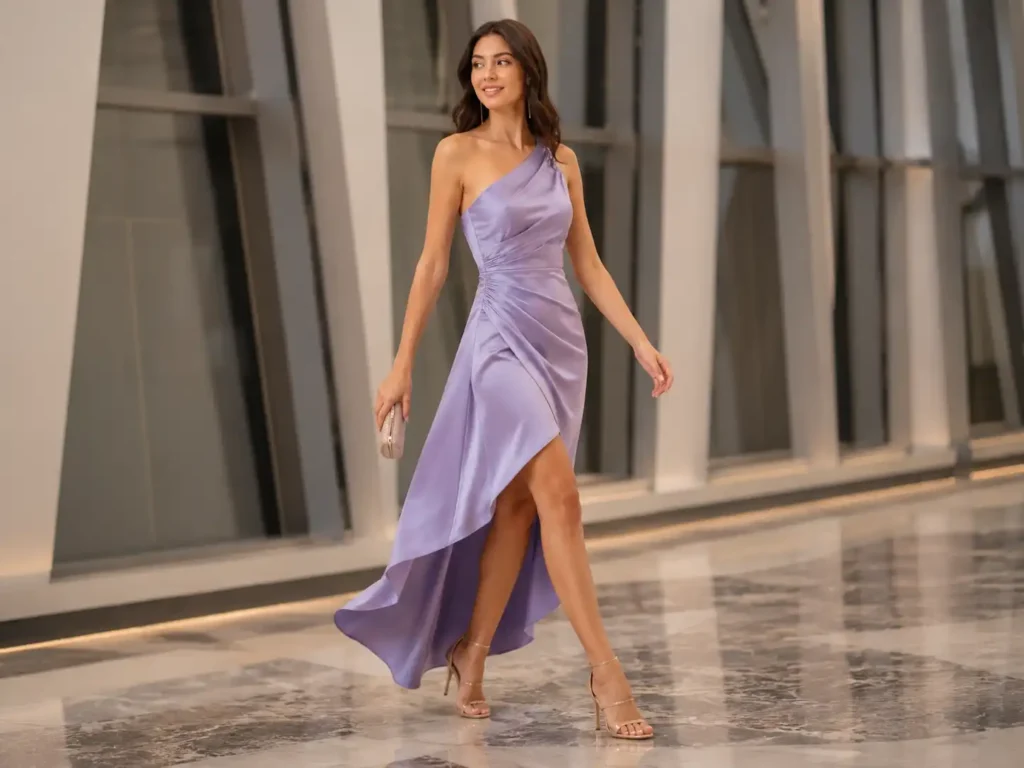
Upper-Body Balance Starts with Support and Edge Control

Asymmetric upper bodies often fail at the shoulder, neckline and bust long before problems become visible at the waist. A one-shoulder dress concentrates support on one side; a diagonal neckline creates unequal edge lengths; a side cut-out can remove fabric from a zone that previously controlled bust stability. Pattern development begins by identifying the anchor points that keep the garment in position during standing, walking and arm movement.

Shoulder angle is reviewed together with neckline length rather than as a separate measurement. A neckline can look correct on a flat pattern and still gape after the supported shoulder lifts the opposite side. Bust shaping also changes when darts are rotated into diagonal seams, gathers or drape. Jinfeng checks whether the bust apex remains correctly positioned and whether the open side still has enough coverage after fabric stretch and body movement are introduced.

Construction decisions are coordinated with pattern geometry. Lining can carry part of the load, while facing, elastic stabilization, grip tape, boning or internal support may be used when the design requires more control. None of those additions can compensate for a fundamentally unbalanced pattern, so reinforcement is selected after the main geometry is working.

Fit review records the problem by location and cause: shoulder slip, neckline gap, side-bust opening, armhole distortion, diagonal drag line or twisting. Corrections are then transferred back into the pattern and measurement specification instead of being left as sewing-room knowledge.

Waist and Side Seams Control Rotation Through the Torso

A dress can have a stable neckline and still rotate around the body when waist shaping, side-seam position or asymmetric volume is poorly distributed.

Rotation is especially common in one-sided ruching, diagonal seams, cut-outs and fitted bodycon silhouettes because different parts of the pattern are carrying different amounts of tension.

Jinfeng checks the relationship between bust, waist and hip rather than correcting each circumference independently. If a ruched panel adds length to one side, the opposite side may need a different balance point so the waist does not rise.

If a diagonal seam crosses the torso, the seam must reach the same anatomical landmarks on the body that were approved in the design. Side seams should remain intentionally positioned instead of drifting toward the front or back after the garment is worn.

Stretch fabrics add another variable. Negative ease, recovery and stretch direction influence how strongly each section pulls on adjacent pattern pieces.

A highly elastic jersey may tolerate a smaller difference between sides, while a woven satin or crepe often needs more exact shaping and internal control. Jinfeng reviews fabric performance during sampling before finalizing the waist and hip balance.

Pattern changes are documented by version. A revised side-seam curve, ruching extension, cut-out edge or dart transfer should appear in the updated production pattern, not only in a fit comment. Keeping corrections traceable is essential when several asymmetric styles are developed in parallel.
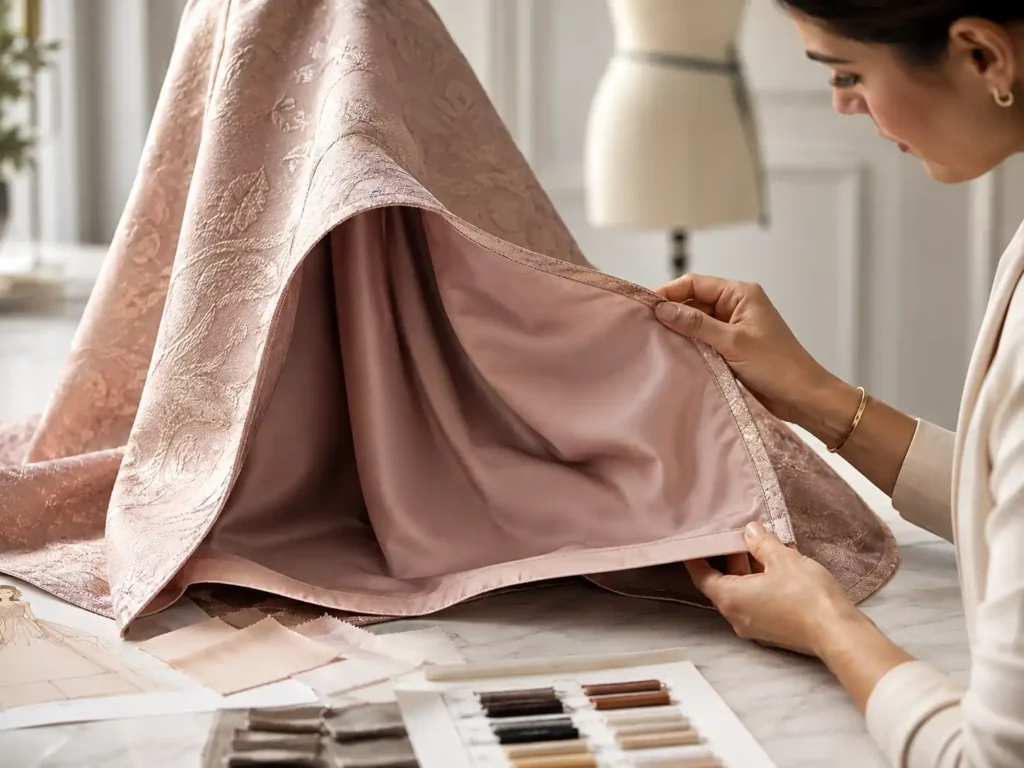
Grain, Hem and Drape Decide How the Design Hangs

Asymmetric design lines frequently cross the fabric grain, so the final appearance depends on more than pattern shape.

A panel cut close to bias can grow differently from a neighboring straight-grain panel. Fluid satin can lengthen through an uneven hem; chiffon can shift while sewing; stretch mesh can distort around a diagonal seam if stabilization is inconsistent.

Jinfeng marks and reviews grain direction at pattern-piece level. Grain choice is based on the intended drape, stretch and surface effect rather than habit.

Bias sections are evaluated for growth, and long asymmetric hems are checked after the fabric has had time to relax. When shell and lining behave differently, each layer can require its own pattern correction so the lining does not pull the outer dress upward or restrict the intended drape.

Hem geometry is checked in three dimensions. A high-low hem, handkerchief point, curved asymmetric skirt or waterfall overlay may look balanced on a table but change once gravity acts on the garment. Seam weight, zipper position, lining attachment and finishing method can all shift the hang. For fluid dresses, development may include length adjustment after the sample settles.

Production instructions then carry the critical controls forward: grain arrows, cut direction, panel identification, notches, hanging or relaxation requirements when needed, and hem checkpoints. The goal is not symmetry; the goal is a controlled asymmetric result that can be repeated across approved units.

Common Asymmetric Pattern Problems and Their Causes

Fit failures on asymmetric dresses often appear far from the original pattern error. A twisting hem may start at the waist, while neckline gaping may come from shoulder angle or fabric stretch. Risk mapping helps the development team test the likely cause instead of repeatedly altering the visible symptom.

Design AreaCommon Sample ProblemLikely Pattern or Construction CauseDevelopment Check
One shoulderSupported side slipsIncorrect shoulder angle or insufficient holdShoulder position, neckline tension, internal support
Diagonal necklineEdge gaps from bodyExcess edge length or stretch growthNeckline length, stay method, fabric direction
BustSide coverage opensShaping or tension placed incorrectlyBust apex, dart transfer, open-side coverage
Side seamGarment rotatesUneven torso balanceWaist/hip shaping, seam position, stretch direction
RuchingFullness looks inconsistentVolume or anchor points not controlledExtension amount, gathering ratio, reference notches
Cut-outOpening distortsRemaining edge lacks stabilityEdge finish, elastic/facing, local tension
Bias panelPanel grows or dropsGrain behavior not allowed forGrain direction, rest time, seam reinforcement
Asymmetric hemLength looks unstableDrape, bias growth or seam weightHanging balance, hem finish, lining interaction

Fabric Behavior Changes the Pattern Before Sewing Starts
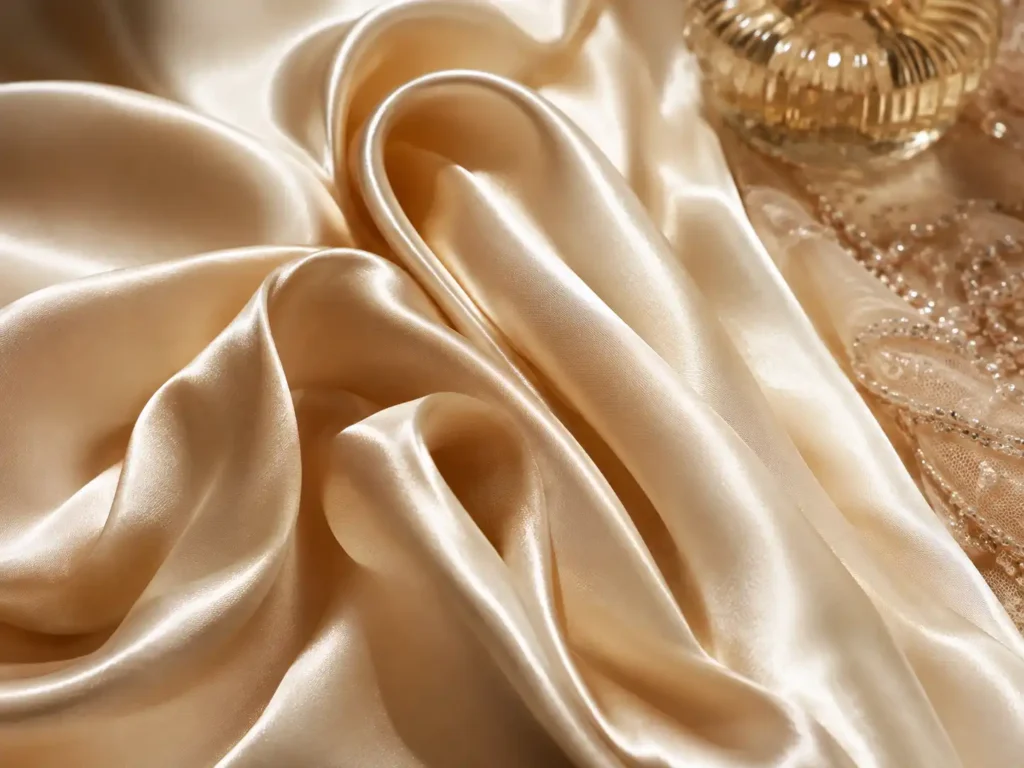
The same asymmetric drawing can require a different pattern in satin, jersey, mesh, chiffon, lace or sequin. Fabric weight, stretch, recovery, friction, transparency and bias growth affect where support is needed and how much ease or stabilization can be used.

Satin

Satin highlights every balance error because the surface reflects light along seams, folds and pressed areas. Fluid satin can also grow on bias, making diagonal necklines, bias panels and irregular hems especially sensitive. Jinfeng reviews grain direction, seam placement, lining, zipper flatness and hem behavior during sampling. Neckline and armhole edges may require stabilization before they are stretched by handling. Pattern corrections can include adjusted edge length, revised seam shape or controlled lining dimensions. Pressing is treated as part of development because over-pressing, puckering or distorted seam allowances can change the visual line even when the measurements are technically correct.

Stretch Jersey

Jersey can make asymmetric silhouettes comfortable and close-fitting, but stretch direction and recovery control the real shape more than flat pattern measurements alone. One-sided ruching, cut-outs and diagonal necklines can create unequal tension zones that pull the dress around the body. Jinfeng checks fabric stretch and recovery before deciding negative ease, neckline length and local reinforcement. Fit review focuses on bust-waist-hip distribution, side-seam rotation and whether an opening remains stable after movement. A pattern approved in a firm ponte may need meaningful revision in a softer jersey even when fiber content appears similar, so fabric substitution is reviewed before bulk cutting.

Mesh

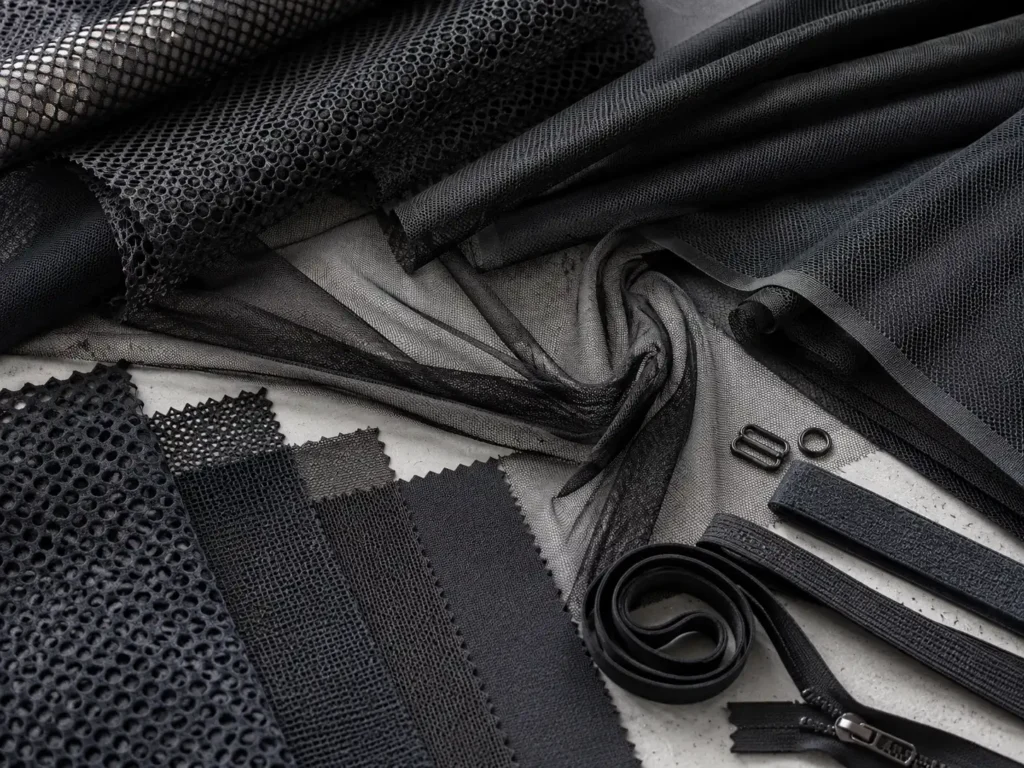
Mesh introduces transparency, stretch and edge instability at the same time. An asymmetric mesh dress may combine a fitted lining with an outer layer that has different recovery and seam behavior. Jinfeng develops shell and lining as a system, checking whether the lining supports the shape without restricting drape or creating visible drag lines. Necklines, cut-outs and open-side armholes are reviewed for distortion, and seam placement is planned to avoid weak or highly visible stress points. Stretch mesh may need stabilized edges or controlled seam allowances, while non-stretch mesh requires more precise shaping because it cannot rely on recovery to hold the body.

Chiffon

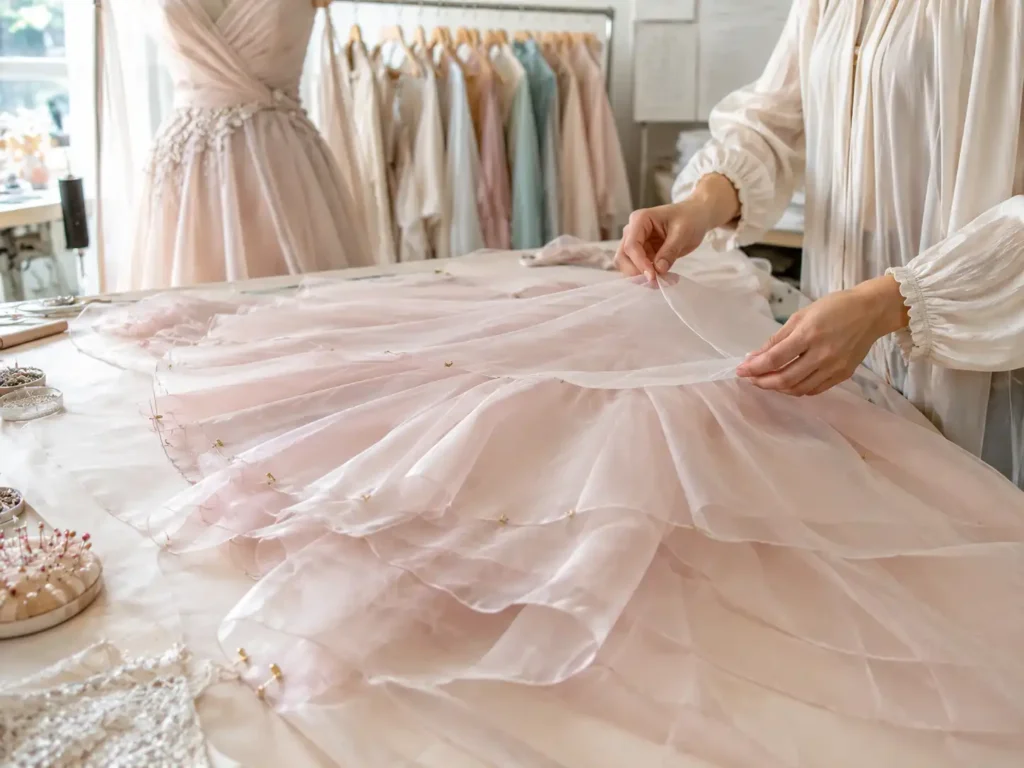
Chiffon works well for asymmetric overlays, high-low hems, flounces and soft drape, but its low weight makes cutting and seam control more sensitive. Grain can shift during handling, and long bias sections may drop after hanging. Jinfeng checks pattern-piece orientation, seam length matching, lining interaction and hem finishing before final approval. Draped volume is evaluated on the intended fabric because chiffon can create more movement with less added width than heavier materials. For layered designs, the base dress carries fit while chiffon provides motion; keeping those functions separate prevents the overlay from pulling the main garment out of balance.

Lace

Lace adds motif placement, open structure and edge decisions to the pattern-development process. An asymmetric neckline or panel can expose uneven motifs if pattern pieces are placed only for material efficiency. Jinfeng reviews motif direction, seam placement, lining coverage and edge finish alongside the main pattern. Depending on lace construction, sections may need backing, appliqué joining or controlled overlap rather than a conventional seam. A cut-out bordered with lace also requires enough structural support around the opening. Pattern planning therefore considers both body fit and visual motif continuity so the asymmetry looks designed rather than caused by random fabric placement.

Sequin

Sequin fabrics add weight and surface bulk, which can exaggerate imbalance on a one-shoulder or diagonally cut dress. Pattern development considers direction of the sequin base, seam bulk, lining protection, zipper area and the added load carried by a single shoulder or narrow strap. Jinfeng reviews whether seam allowances need clearing, whether support should be added internally, and how neckline or armhole edges will be finished without scratching or distorting. Heavy embellished panels may require a different balance from an unembellished sample, so final development should use the approved production fabric or a technically equivalent material whenever possible.

Construction Details That Keep Asymmetric Dresses Stable
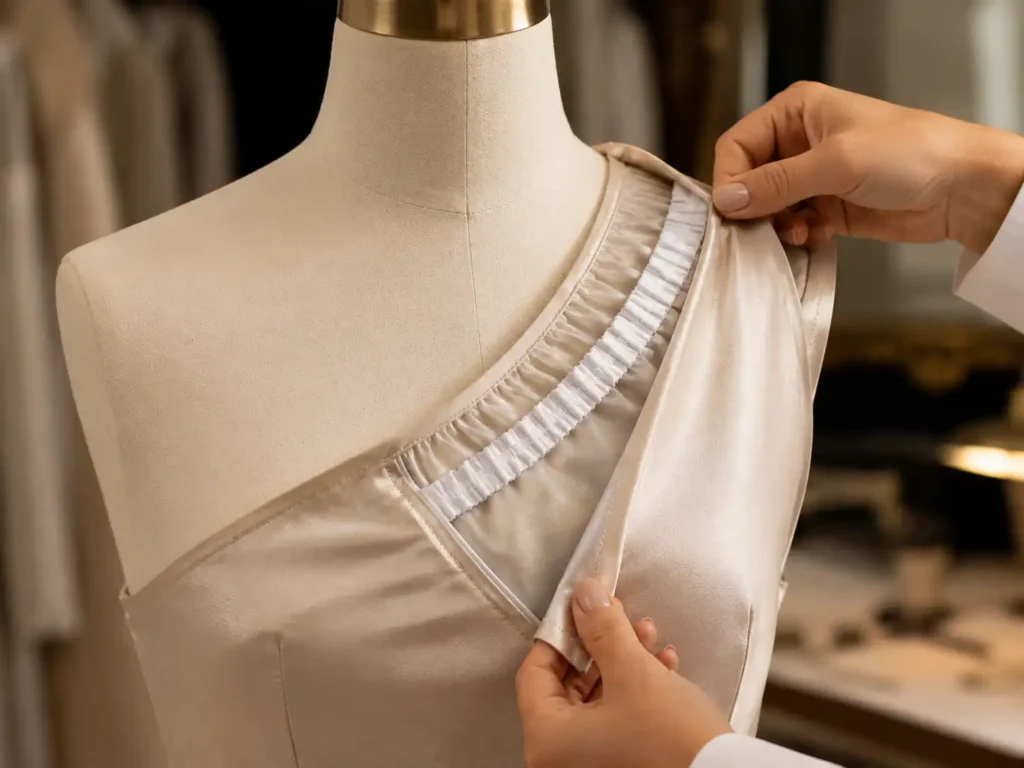
Pattern geometry creates the fit, while construction details preserve it through wear and production. Support components are selected only where they solve a defined stability problem, keeping the outside appearance clean and consistent with the intended design.

Internal Support

Internal support can redistribute load when an asymmetric neckline removes a conventional shoulder or when a fitted bodice needs stronger control around the bust. Support may come from the lining structure, internal elastic, a waist stay or localized reinforcement depending on the dress. Jinfeng develops the outer pattern and support layer together because an internal piece with the wrong length can distort the shell. Fit review checks whether support works during movement without creating visible ridges, pulling the neckline or restricting breathing. The objective is controlled shape with the least intrusive construction needed for the approved silhouette.

Boning

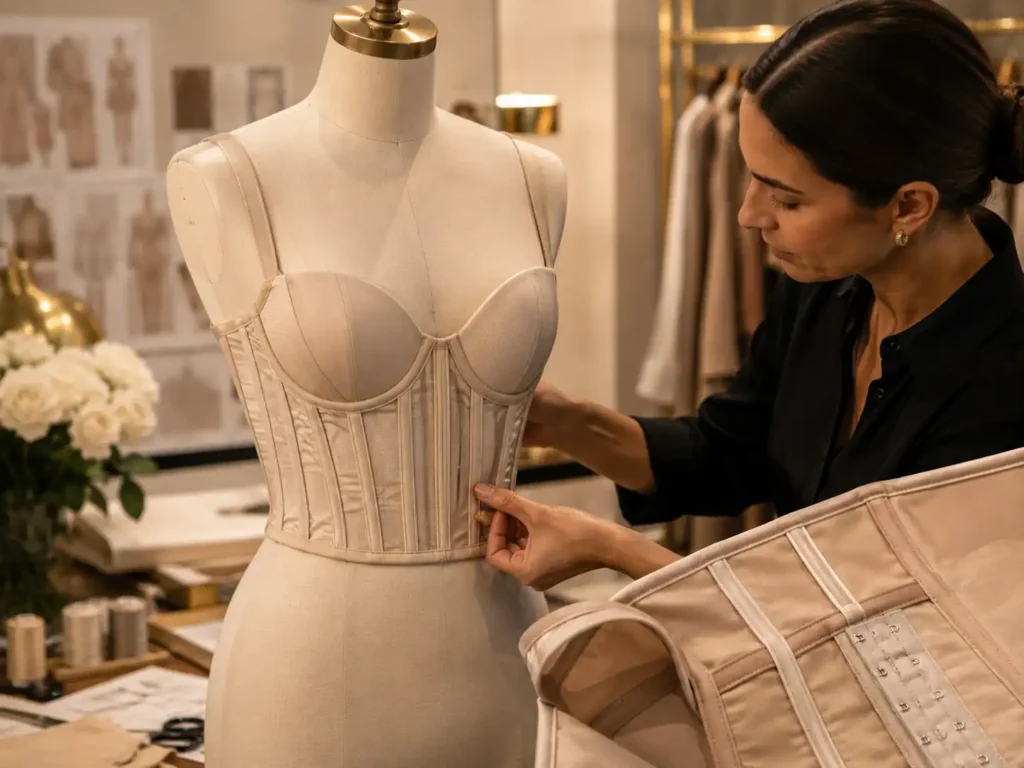
Boning is useful for asymmetric corset, strapless-influenced or sculpted bodices where vertical support must compensate for reduced shoulder coverage. Placement follows seam and body structure rather than a fixed recipe. Jinfeng reviews boning length, channel position, bust shaping and waist pressure during sampling. Too much stiffness can push an asymmetric neckline away from the body, while insufficient support can allow the bodice to collapse or rotate. Pattern and boning are revised together until the support follows the intended torso shape. Bulk instructions then define location and handling so the support system stays consistent across production.

Silicone Grip

Silicone or anti-slip tape can help stabilize one-shoulder, strapless-influenced and open-neckline designs, but it should not be used to hide poor pattern balance. Jinfeng first corrects neckline length, shoulder angle and bust fit, then evaluates whether grip support adds useful security. Tape width, placement and stretch compatibility are considered because excessive tension can create a visible ridge or distort the neckline. Fit review includes arm movement and normal body motion to confirm the edge remains close without discomfort. When approved, placement needs a clear sewing reference so grip tension does not vary widely between operators.

Lining

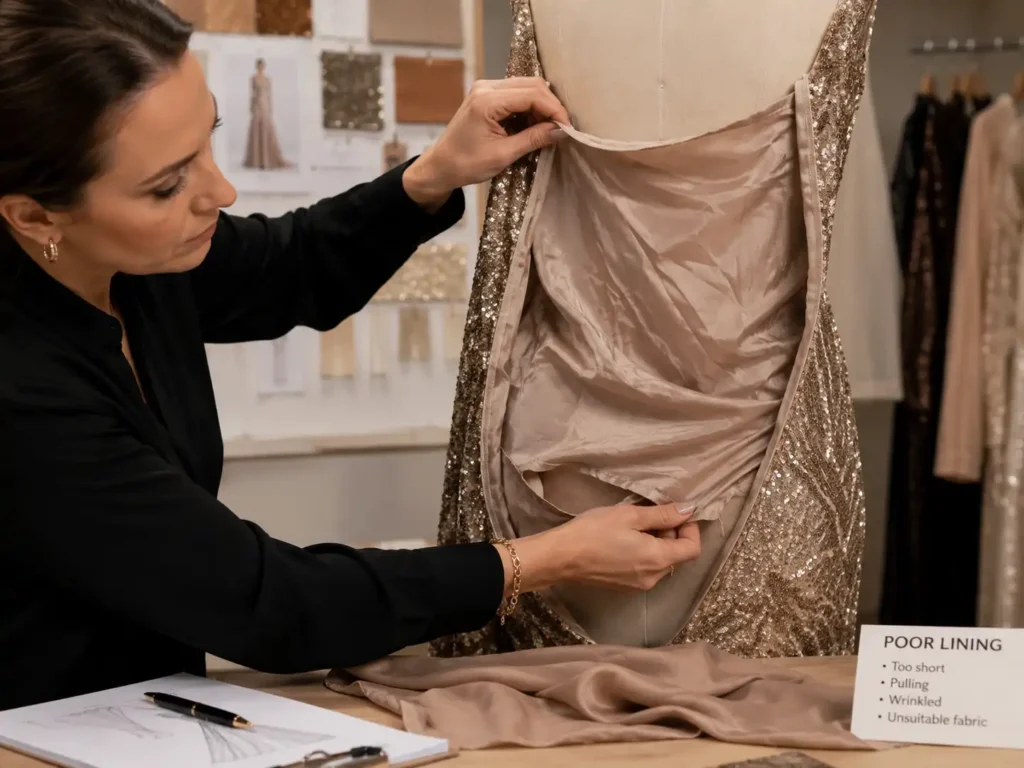
Lining can control transparency, improve comfort, protect embellishment and contribute to structural stability. On asymmetric dresses, lining dimensions require particular attention because shell and lining may run on different grain directions or have different stretch. Jinfeng checks whether the lining supports the neckline and cut-outs without pulling on draped or bias sections. Separate pattern corrections may be needed when shell fabric grows more than the lining. Attachment points around zippers, armholes, shoulders and hems are planned to allow the outer dress to hang naturally. A stable lining should support the garment while remaining visually quiet from the outside.

Facing and Stay Tape

Facing and stay tape are often used around diagonal necklines, cut-outs and armholes where raw pattern edges are vulnerable to stretch. Their dimensions have to match the intended edge behavior. A facing that is too long can cause gaping; one that is too short can create puckering or roll. Jinfeng checks edge length after fabric handling and sample sewing, then adjusts facing, interfacing or stay placement accordingly. Diagonal areas are especially sensitive because cutting angle can change stretch even within the same fabric. Construction instructions define where stabilization begins and ends so the asymmetric line stays clean without becoming rigid.

Invisible Zipper

Zipper position can influence balance on fitted asymmetric dresses because one side seam or center-back line may already be carrying unequal tension. Jinfeng reviews zipper placement together with seam direction, lining and waist/hip shaping. Satin and other smooth fabrics require particular attention to flatness, while heavily ruched or sequin areas may need the zipper moved away from high-bulk zones. Pattern allowances around the zipper are checked after sampling so the closure does not shorten one side or create rippling. Bulk workmanship standards then focus on zipper alignment, top-edge matching and smooth opening without twisting the garment.

Elastic Stabilization

Elastic can stabilize cut-outs, mesh edges, one-sided ruching and fitted openings where recovery is needed. The correct elastic length depends on fabric stretch, body position and desired hold. Jinfeng tests local tension rather than applying one percentage to every style. Too much reduction can create puckering or indentation; too little can allow an opening to stand away from the body. Pattern edge length and elastic specification are reviewed together, with reference points added where distribution matters. For gathered designs, elastic may also control the final finished length, making accurate attachment and stretch consistency important during production.

Ruching Anchors

Asymmetric ruching needs fixed reference points so added volume does not drift across the garment. Anchors can be seam notches, elastic endpoints, drawcord channels, internal tacks or marked gathering zones depending on the construction. Jinfeng determines the amount of pattern extension, finished gathered length and start/end position during sampling. Fit review checks whether the gathering increases pressure around the bust, waist or hip and whether the fullness reads consistently from different viewing angles. Production instructions should let sewing teams reproduce the approved volume distribution without relying on subjective visual judgment alone.

What We Need Before Pattern Development Begins

Strong development starts with enough information to identify design intent, fit standard and commercial constraints. A complete tech pack is useful but not mandatory; Jinfeng can begin from several types of reference material and close missing technical details during project review.

Tech Pack

A tech pack gives the pattern team the clearest starting point when it includes flat sketches, measurements, construction notes, fabric information and trim details. Jinfeng reviews the document for conflicts before drafting begins, especially around asymmetric neckline points, one-sided seams, cut-out dimensions and finished lengths. Missing measurements are flagged rather than guessed. When the design changes during sampling, affected specifications should be updated together with the pattern so the technical file continues to match the approved garment. Clean document control becomes more important when several related asymmetric styles are developed in one collection.

Design Reference

A sketch, CAD, reference image or line-sheet image can provide enough information to begin feasibility review when no finished tech pack exists. Jinfeng breaks the visual concept into pattern functions: support points, seam lines, openings, drape zones, gathering, hem shape and likely fabric behavior. Areas hidden in the reference are identified before drafting because a front image alone may not explain back neckline, closure or internal structure. The goal is to preserve the recognizable design language while converting the concept into construction choices that can be sampled and measured.

Size Specification

A size chart or brand measurement standard keeps development aligned with the intended market. Jinfeng can work with US, UK, EU and AU sizing references and can develop XS-XL plus extended, petite, tall or other ranges when supplied by the brand. Asymmetric designs need more than bust, waist and hip; neckline points, shoulder positions, cut-out locations, slit heights and total lengths may become critical control dimensions. If the brand provides a fit model standard or approved base block, those references should be shared before the first pattern is created.

Fabric Direction

Fabric information helps the pattern team decide ease, grain, support and construction before sampling. Useful inputs include fabric composition, weight, stretch direction, recovery, surface finish, transparency and an approved swatch when available. Jinfeng can also support fabric sourcing by project when the material has not been finalized. For asymmetric dresses, a change from woven satin to stretch jersey can alter neckline length, waist tension and side-seam balance enough to require pattern revision, so fabric direction should be treated as part of fit development rather than a late purchasing decision.

Construction Requirements

Specific requirements for lining, cups, boning, grip tape, elastic, zippers, seam finish, cut-out edges, ruching method or adjustable details should be shared early. Jinfeng checks whether the requested construction supports the design and whether any element conflicts with fabric behavior or fit. A heavily draped neckline may need a lighter support solution than a sculpted corset bodice, while a sequin one-shoulder dress may need stronger internal structure than an unembellished jersey version. Early clarity reduces avoidable sample revisions caused by construction changes after the first fitting.

Quantity Plan

Approximate quantity by style and color helps development decisions stay aligned with the intended production program. Jinfeng’s production MOQ starts from 200 pieces per style per color, while fabric, custom dyeing, printing, trims or packaging can carry separate supplier minimums. Knowing expected volume also helps evaluate whether a complex technique is suitable for repeat production and whether fabric allocation needs to be planned across several styles. For multi-style collections, sharing a preliminary style matrix can improve fabric grouping, sample priority and production-risk planning before individual patterns are finalized.

Target Cost

Target cost gives the development team a commercial boundary for fabric, construction and finishing choices. Jinfeng breaks cost influence into fabric, trims, pattern and sampling work, cutting, sewing labor, pressing, QC, packaging, wastage, testing when required, logistics and reasonable manufacturing margin. The objective is not to remove necessary support from a difficult asymmetric design. A better approach may be adjusting fabric specification, simplifying a hidden construction step or redesigning an internal component while preserving the brand-level visual effect and approved fit.

Launch Timing

Launch timing helps determine sample priority, fabric sourcing sequence and when key approvals need to be completed. Jinfeng’s typical sample cycle is about 7-10 days for simple styles, 10-15 days for regular dresses and 15-25 days for complex constructions, with special fabrics or trims depending on supplier readiness. Bulk lead time is confirmed by project after fabric, quantity, construction, packaging and PP approval are clear. Sharing the target launch date early allows the development plan to focus first on long-lead materials and high-risk asymmetric structures.

From Design Review to a Production-Ready Pattern

A controlled development sequence keeps design decisions, fit changes and production information connected. Each stage closes a specific risk before the next stage begins, reducing the chance of carrying an unresolved pattern problem into bulk production.

Design Review

Jinfeng reviews the supplied tech pack, sketch, reference image or sample to identify design intent and missing information. The first discussion focuses on silhouette, asymmetric feature, intended fit, fabric direction, closure, lining and target market. High-risk areas are marked before drafting begins, such as a one-sided bust opening, a deep diagonal neckline, heavy one-shoulder embellishment or a bias section crossing the hip. Early review also checks whether the requested construction can be repeated efficiently during production or whether an alternative method would preserve the appearance with stronger control.

Structure Analysis

The design is translated into functional zones: support, shaping, opening, drape, stretch, closure and hem. Jinfeng decides whether a full-front/full-back pattern is required and where asymmetry prevents conventional mirroring. Dart transfer, panel seams, cut-out edges, gathering volume and internal support are mapped before the first pattern is drafted. Structure analysis also identifies which measurements must be added to the specification, such as one-sided neckline depth, cut-out width, shoulder position or high-low hem points. Clear technical definitions make later fit comments more objective.

Fabric Review

Fabric behavior is reviewed before final ease and support decisions are made. Stretch, recovery, weight, bias growth, transparency and surface sensitivity can change pattern requirements substantially. Jinfeng checks whether the proposed fabric can achieve the drape and support shown in the design, then aligns lining, interfacing, elastic or other internal elements as needed. When the fabric is still being sourced, development can begin with an appropriate reference material, but final pattern approval should be confirmed on the production fabric or a technically equivalent option before bulk cutting.

First Pattern

The first pattern converts the agreed design into measurable pieces with grain direction, seam relationships, notches and construction allowances. Asymmetric styles often require complete left/right pieces rather than mirrored halves. Jinfeng builds the pattern around the brand’s size reference and intended fabric, then checks critical relationships before the sample room begins sewing. The first pattern is treated as an engineering hypothesis: it should be accurate enough to test the concept, but it remains open to correction after the garment is fitted and the actual material behavior becomes visible.

First Sample

The first sample verifies silhouette, balance, fit and construction in three dimensions. Jinfeng reviews neckline behavior, shoulder stability, bust coverage, waist and hip tension, side-seam position, cut-out shape, ruching distribution, hem level and garment movement according to the design. Fabric handling issues are recorded as part of development rather than separated from pattern work. Photos, videos and measurement records can support review when the brand team is not present. Any issue is categorized by likely cause before a correction is made.

Fit Review

Fit review compares the sample with the approved design, measurement standard and intended wearing condition. Jinfeng separates pattern errors from sewing variation, fabric behavior and construction limitations because each requires a different fix. For example, neckline gaping may come from excess edge length, stretch growth or insufficient stabilization; shortening the pattern without identifying the cause can create a new problem elsewhere. Fit comments are converted into measurable actions so revisions can be traced and repeated rather than interpreted differently by each team member.

Pattern Revision

Approved fit comments are transferred back into the pattern, measurement chart, construction notes and related development records. Jinfeng may revise neckline length, shoulder angle, bust shaping, armhole curve, side-seam balance, waist/hip ease, ruching extension, cut-out geometry, slit or total length depending on the fitting result. When a fabric or construction change is introduced, the impact is reviewed across connected pattern pieces. Revised samples are used when needed until the fit and appearance are ready for PP confirmation.

Production Pattern

The production pattern reflects the approved fit, fabric and construction rather than the earliest design draft. Pattern pieces, grain direction, notches, seam allowances, size grading and version identification are aligned with the PP sample and sewing instructions. Jinfeng treats the approved pattern as a controlled manufacturing reference. Before bulk cutting, fabric and trims, color, size range, packaging and other order details are confirmed by project so production starts from a stable technical baseline rather than a collection of informal comments.

First Sample and Pattern Revision Are Where Fit Is Built

Complex asymmetric dresses rarely become production-ready through flat drafting alone. Sampling shows how the pattern behaves on the body and in the chosen fabric, while revision turns visible fit problems into controlled technical changes.

First Sample Tests the Engineering, Not Only the Look

The first sample is where the pattern meets gravity, movement, fabric recovery and real construction. Jinfeng uses the stage to test whether the asymmetric idea has been converted into a garment that can hold its position rather than simply resemble the sketch on a mannequin.

For a one-shoulder dress, the review includes shoulder angle, supported-side tension, open-side bust coverage, neckline position and whether the bodice rotates after arm movement. For a diagonal neckline, edge length and stabilization are checked together. For ruched or draped styles, the team evaluates where volume sits after sewing and whether added fullness changes waist or hip balance. Cut-outs are reviewed for placement, edge stability and strain around the remaining fabric. Bias sections and irregular hems are observed for growth and hanging change.

Jinfeng also checks sewing feasibility during the first sample. A construction that can be achieved only by one highly experienced sample machinist may require clearer guides, notches or a revised method before production. Sample feedback therefore covers fit, pattern and workmanship together.

Typical timing depends on complexity and material readiness: about 7-10 days for simple styles, 10-15 days for regular dresses and 15-25 days for complex constructions. Special fabrics and trims follow supplier availability. Development timing is planned around the actual style rather than a blanket promise.

Fit Review Separates the Visible Problem from the Real Cause

A useful fitting comment explains cause and correction, not only appearance. “Neckline gaps” describes a symptom. The development team still needs to determine whether the problem comes from excess pattern length, shoulder angle, stretch growth, incorrect facing, weak stabilization or bust shaping. Each cause leads to a different revision.

Jinfeng reviews asymmetric samples through connected fit zones. Shoulder and neckline are assessed together; bust coverage is related to underarm and side-seam position; waist and hip tension are checked for rotation; hem behavior is traced back to grain and upper-body balance. Measurements are compared with the brand standard, but visual and movement checks remain important because many asymmetric issues are directional rather than purely circumferential.

Fabric is part of the diagnosis. A jersey neckline may recover after wear while a bias satin edge may continue growing. Mesh can distort at a cut-out even when the base lining is stable. Sequin weight can pull a supported shoulder down. Recording those material effects prevents the pattern team from over-correcting dimensions to compensate for a fabric-handling problem.

Photos, video, pinned corrections and written comments can all be used during review. Final changes are converted into pattern and specification updates before the next sample is made.

Revision Must Update the Pattern, Specifications and Sewing Method

A revised sample is valuable only when the correction becomes repeatable. Jinfeng updates the affected pattern pieces after fit approval and carries connected changes into the size chart, BOM, sewing instructions, QC checkpoints and packing notes when relevant. Pattern version control avoids confusion when several revisions or related styles are active at the same time.

Common changes include shortening a diagonal neckline, shifting a shoulder point, increasing side-bust coverage, balancing armhole depth, changing negative ease, redistributing ruching, moving a cut-out, revising lining length or correcting a high-low hem after hanging. A change in one zone is checked against the pieces that join it. Moving a neckline may alter facing length; changing a side seam can affect zipper placement; reducing gathering can change elastic or drawcord requirements.

Simple styles may need a first sample and one revision, while medium-complexity dresses often use one or two revised samples. Corset, strapless, lace, mesh, sequin and other structure-heavy styles may require around two revisions depending on the design. A meaningful redesign or fabric change can trigger a fresh evaluation rather than being treated as a minor correction.

The goal is an approved technical package that production teams can follow without relying on memory from the fitting room.
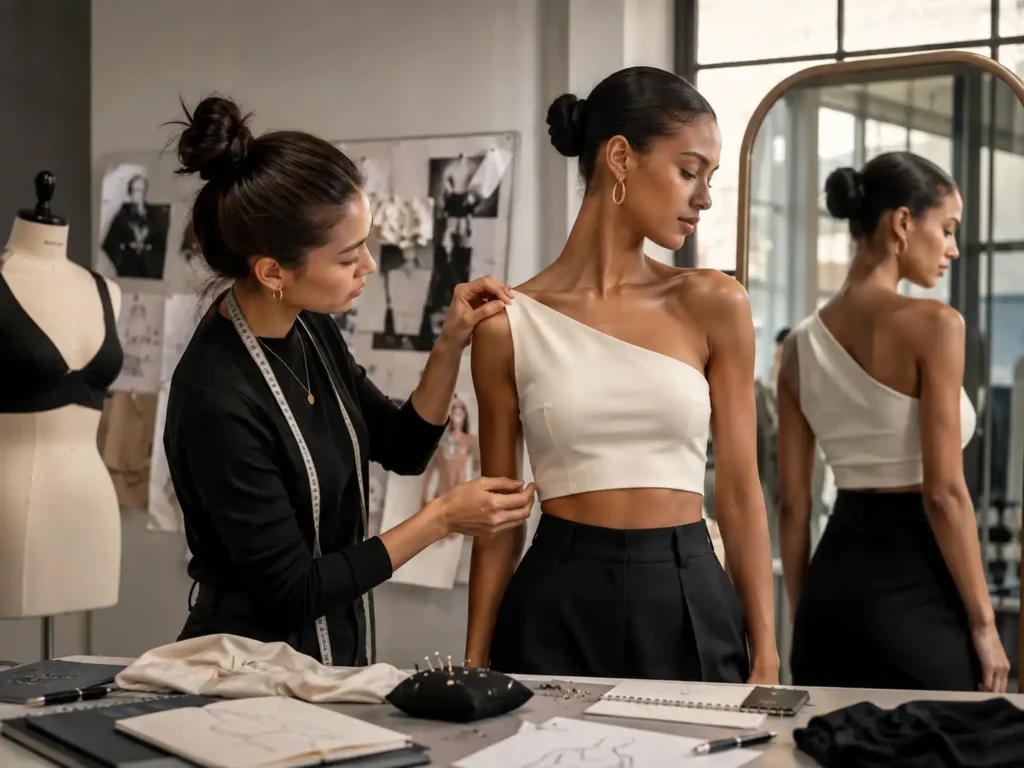
Fit Checkpoints for Complex Asymmetric Dress Development

Fit review works best when each risk area has a defined question. Jinfeng checks the following zones according to the style, fabric and intended fit, with extra attention given to any side carrying more tension or less coverage.

Shoulder Position

The supported shoulder should sit at the approved angle without sliding toward the neck or outer arm. Jinfeng checks how the shoulder behaves when the wearer raises and lowers the arm, because a static fit can hide load problems. Seam position, strap width, internal support and neckline tension are reviewed together. A small shoulder correction can change bust coverage or side-seam balance on the opposite side, so adjustments are evaluated across the full upper body instead of being isolated to one pattern point.

Neckline Control

Diagonal and uneven necklines are checked for gaping, rolling, over-tension and visible distortion. Jinfeng compares the shell edge with facing, lining or stabilization and reviews whether the fabric has stretched during cutting or sewing. A smooth neckline should follow the approved shape while remaining comfortable in motion. Edge control becomes more sensitive in satin, jersey and mesh because each material reacts differently to diagonal grain and handling. Final correction can involve pattern length, shoulder angle, internal support or construction method depending on the diagnosed cause.

Bust Coverage

Asymmetric openings frequently reduce coverage on one side, so bust position and edge placement need careful review. Jinfeng checks apex position, side-bust containment, neckline depth, underarm opening and movement. Corset-style or structured designs may also require cup, boning or pad alignment with the outer pattern. The goal is to achieve the intended open appearance without accidental exposure or diagonal pulling. Size grading later uses the approved coverage relationships rather than assuming a standard symmetrical growth rule will preserve the same visual proportion.

Armhole Comfort

One-shoulder and cut-out designs often create two different armhole conditions. The covered side may have a conventional armhole, while the open side behaves more like a neckline edge. Jinfeng checks depth, front/back balance, edge tension and freedom of movement for each side separately. Too much depth can expose the body; too little can cut into the underarm or pull the neckline. Lining and facing are reviewed because they can change the finished opening even when the shell pattern appears correct.

Waist Balance

The waist provides a useful horizontal reference on a visually asymmetric garment. Jinfeng checks whether the intended waistline remains level or follows the designed angle without being pulled upward by a one-sided seam, ruching or drape. Fitted dresses are reviewed for pressure distribution around the torso, especially when stretch differs across panels. A waist that shifts during wear is often a sign of imbalance elsewhere, so the team traces the pull back to shoulder, bust, side seam, grain direction or hip tension before changing the waist measurement itself.

Hip Tension

Bodycon and fitted asymmetric dresses can rotate when one hip carries more tension than the other. Jinfeng checks ease, stretch recovery, diagonal seams and ruching around the hip while the wearer stands and moves. A cut-out or high slit can also change local tension because the pattern no longer has equal continuity on both sides. Corrections may involve side-seam shape, panel width, negative ease or gathering distribution. The approved pattern should hold the intended silhouette without relying on the wearer to repeatedly pull the garment back into position.

Side-Seam Position

Side seams reveal torsion quickly. Jinfeng checks whether seams stay close to their approved position from armhole through waist and hip or intentionally follow a designed diagonal line. Rotation can originate from uneven pattern width, grain direction, stretch mismatch or one-sided volume. Seams are also checked against zipper position, lining and cut-out edges. During bulk production, visible seam drift becomes an efficient QC signal because it can indicate upstream cutting, sewing or fabric problems before the garment is fully finished.

Hem and Slit

Asymmetric hems, high-low shapes and uneven slits are reviewed after the garment has hung long enough for the fabric to settle. Jinfeng checks total length, transition curves, side points, slit height, lining relationship and whether any bias section has dropped. Hem finish is included in the evaluation because binding, rolled hems or facing can change weight and fall. For long dresses, the brand’s intended footwear or fit reference can be used when provided. Production measurements identify the critical hem points instead of relying on one center-front length alone.

Size Grading Without Losing the Asymmetric Design Language

Grading an asymmetric dress requires more than increasing bust, waist and hip. Design points need controlled movement so the neckline angle, cut-out placement, drape and overall visual proportion remain consistent across the approved size range.

Protect Critical Anchor Points

Not every design point should move by the same amount during grading. Jinfeng identifies anchors such as the supported shoulder, neckline intersection, bust coverage point, cut-out edge, waist seam, gathering start and slit position. Those points are related to body landmarks and design intent before grade rules are applied. A one-shoulder neckline that simply expands outward can become too open in larger sizes, while a fixed cut-out can become visually smaller as the body measurement grows. Controlled anchor-point grading helps preserve both fit and the recognizable shape of the original design.

Grade Fit Growth by Zone

Bust, waist and hip growth affects asymmetric tension differently across the garment. Jinfeng grades the pattern with attention to the zones carrying structure, stretch or opening.

Stretch jersey may allow a different growth strategy from woven satin; a lined mesh cut-out may need separate shell and lining grade rules; a corset-inspired bodice may require cup and support positions to move differently from outer seam lines.

Size ranges can follow the brand’s US, UK, EU or AU standard, including extended, petite or tall development when specifications are provided.

Preserve Visual Proportion

A successful grade keeps the design looking like the same style in every approved size.

Jinfeng reviews diagonal neckline angle, one-sided drape, ruching density, cut-out scale, asymmetric hem transition and slit position after grading rather than checking measurements alone.

Some decorative distances may need controlled proportional growth while others remain linked to anatomical landmarks. Fit samples or size-set review can be used according to project requirements before bulk approval. The objective is consistent design language, not mathematical enlargement without visual review.

From Approved Sample to a Controlled Production Pattern

An approved fit sample establishes the shape; production engineering makes the approval repeatable. Pattern version, measurements, fabric, construction and inspection points must be aligned before bulk cutting starts.

Lock Measurements, Pattern Version and Material Assumptions

PP approval should close the main fit and construction decisions. Jinfeng confirms the approved pattern version together with the corresponding measurement chart, fabric, trims, lining and key support components. Keeping those items synchronized is important because an apparently small substitution can change asymmetric balance. A new stretch percentage, heavier sequin base, different satin weight or altered elastic can affect neckline hold, drape and garment rotation even when pattern dimensions remain unchanged.

Critical measurements are selected around the design. Beyond bust, waist, hip and total length, the production specification may include shoulder position, diagonal neckline depth, open-side coverage, cut-out width, ruching finished length, slit height, high-low hem points or other style-specific controls. Measurement methods are written so inspection teams use the same landmarks that were used during development.

The pattern carries grain direction, notches, seam allowances and piece identification. Full left/right pieces are retained where mirroring would create an error. When a style uses several similar asymmetric panels, clear naming reduces the risk of cut pieces being reversed or paired incorrectly.

PP approval is not treated as permission to continue changing the design casually. Any meaningful material, fit or construction change after approval is reviewed for technical impact before bulk production proceeds.

Convert Approved Construction into Clear Sewing Instructions

A sample room can solve complex details through experience, but bulk lines need repeatable instructions. Jinfeng converts approved construction into sewing references that identify sequence, key seam relationships, stabilization, gathering distribution, zipper handling, lining attachment and high-risk checkpoints.

Asymmetric garments benefit from reference notches because left and right pieces often do not provide the familiar visual cues of symmetrical construction. Ruching zones need start/end points and finished-length control. Diagonal panels need seam matching and grain awareness. Cut-out edges may require a specific stabilization order before the garment is joined elsewhere. One-shoulder bodices may need internal support installed before final neckline closure.

Workmanship standards are also connected to fabric. Satin seams are monitored for puckering, color variation, zipper flatness and pressing marks. Mesh and lace require checks for holes, transparency and lining alignment. Sequin construction needs attention to shedding, scratch protection, needle risk and packing protection. Those material-specific controls belong in the production plan when they affect the approved asymmetric appearance.

Clear instructions reduce dependence on individual interpretation and make in-line QC more meaningful because inspectors know which technical relationships are critical to the style.

Use PP and Golden Sample References for Bulk and Repeats

The PP sample provides the final pre-bulk reference after pattern, fit, fabric and construction are approved. Where a Golden sample is used, it becomes a physical benchmark for sewing, inspection, repeat orders and dispute prevention. Jinfeng can retain development records so a successful asymmetric style is not rebuilt from memory when the brand places a later replenishment or seasonal extension.

Repeat-order records can include pattern version, measurement chart, approved fabric and color, trim details, construction notes, packaging requirements, QC observations and the Golden sample reference. Such continuity matters for asymmetric dresses because small differences in neckline tension, gathering or panel orientation can change the look more visibly than on a basic symmetrical style.

For collection development, related styles can share a base fit while carrying different asymmetric design elements. Retaining the approved technical history helps the next style start from known fit information instead of restarting from a generic block. The same discipline supports repeat colors, fabric updates and bestseller replenishment when the brand needs consistent fit across seasons.

The production pattern therefore becomes part of a controlled product record, not merely a set of paper or digital pieces.

Keeping Asymmetric Fit Stable Through Bulk Production

Bulk stability depends on controlling the same variables discovered during development. Cutting direction, panel identification, sewing tension, gathering distribution, pressing and final measurements all influence whether an approved asymmetric fit can be reproduced at scale.

Cutting Control Protects Grain, Direction and Piece Identity

Asymmetric garments are less forgiving of cutting errors because left and right pieces may be intentionally different. Jinfeng begins bulk production after PP approval and confirmed fabric, trims, sizes, colors and packing requirements.

Incoming materials are checked before cutting, and fabric behavior identified during sampling is carried into the cutting plan.

Full asymmetric pattern pieces need clear identification so mirrored cutting does not accidentally reverse the design. Grain arrows are especially important on diagonal panels, bias sections and high-low hems.

Directional satin, lace motifs, sequins or printed fabrics may require additional orientation rules. When fabric needs relaxation or careful handling before cutting, the production method is set according to material behavior rather than using one fixed rule for every style.

Cut-piece checks focus on shape, notches, pair matching and high-risk edges before pieces reach the sewing line. Catching a reversed panel or stretched diagonal edge at cutting is far less costly than discovering the problem after lining, zipper and finishing have been added.

Jinfeng uses cutting QC as the first production checkpoint for pattern accuracy. The purpose is to protect the approved geometry before sewing introduces further variables.

Sewing and In-Line Control Stop Small Imbalances from Spreading

Asymmetric styles often contain operations where a few millimeters of repeated variation can become visually obvious: diagonal neckline joining, one-sided shoulder assembly, cut-out stabilization, zipper insertion, gathering distribution and matching diagonal panels. Jinfeng uses sewing instructions and in-line inspection to check those relationships before a full batch accumulates the same error.

In-line review compares workmanship with the approved reference and monitors style-specific points. A ruched dress may require finished gathering length and anchor placement checks. A one-shoulder satin dress may focus on neckline flatness, shoulder stability, zipper alignment and side-seam position. Mesh cut-outs may need edge stretch and lining alignment checked before final closing. Bias garments are watched for seam growth or twisting during assembly.

When an issue appears, the team determines whether the source is cutting, sewing method, machine handling, fabric behavior or pattern. Correcting the source matters more than repeatedly repairing finished garments. Production feedback can also be returned to the technical record if a minor instruction clarification improves repeatability without changing the approved fit.

Jinfeng has 18+ sewing lines and 6+ flexible production lines available across its women’s fashion manufacturing resources, allowing production planning to consider style complexity rather than treating every dress as the same operation flow.

Finishing and Final Review Protect the Approved Visual Balance

Pressing, hanging and packing can change the appearance of an asymmetric dress even after sewing is complete. Satin can show pressure marks or seam distortion; chiffon and bias sections may continue to drop; sequins can create bulk; long high-low hems can crease or shift during packing. Jinfeng includes pressing review, garment inspection and packing QC within the production process.

Final garment review checks the measurements and visual relationships most important to the design. Depending on style, inspection can include shoulder position, neckline shape, bust coverage, side-seam position, cut-out dimensions, ruching distribution, total length, slit height, lining alignment and overall hang. AQL or client inspection support can be arranged by project, while AQL sampling is not presented as the same thing as inspecting every single unit.

Packing is aligned with the garment construction. Protective measures can be added when embellishment, delicate surfaces or structured areas need them. Private-label packing can include main labels, size labels, care labels, hangtags, barcode/SKU labels, polybags and carton marks according to the order.

The objective is controlled repeatability from approved PP reference to packed garment, with traceable checkpoints instead of relying on final inspection alone.
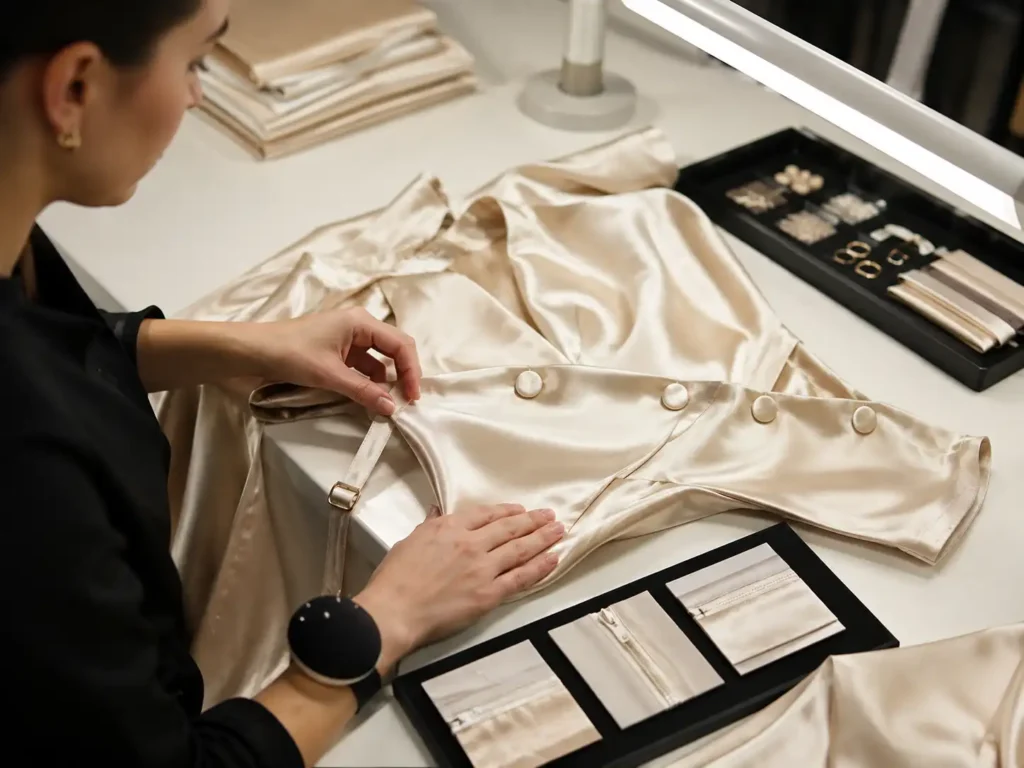
MOQ, Sampling Time and Main Cost Drivers

Commercial planning is clearest when pattern complexity, fabric, construction and order structure are reviewed together. Jinfeng confirms quotation and bulk timing by project after the technical requirements are understood rather than using one fixed figure for every asymmetric dress.

Planning ItemJinfeng Working ReferenceWhat Can Change It
Production MOQStarts from 200 pcs per style per colorFabric, trims, custom dye/print, certification or packaging supplier minimums
Simple sampleTypically 7-10 daysFabric/trim readiness and revision scope
Regular dress sampleTypically 10-15 daysConstruction complexity and material sourcing
Complex dress sampleTypically 15-25 daysCorset support, drape, lace, mesh, sequin, special trims or multiple revisions
Special materialsBased on supplier cycleCustom colors, development fabrics, trims or finishing
Sample feeQuoted separatelyComplexity, fabric, trims and number of development operations
Bulk lead timeConfirmed by project after approvalsQuantity, fabric availability, style complexity, QC, packing and PP approval date
Main cost driversFabric, trims, pattern/sampling, cutting, sewing, pressing, QC, packaging, wastage and logisticsAsymmetric construction, support components, embellishment and material yield

Jinfeng Resources Behind Asymmetric Pattern Development

Pattern work needs enough technical and production resources to move from idea to approved sample and then into manufacturing. Jinfeng combines dedicated development staff with women’s fashion production capacity so pattern decisions can be tested against real sewing and bulk requirements.

16+ Years in Womenswear

Jinfeng has worked in women’s fashion manufacturing since 2008, with experience across dresses, skirts, jumpsuits, matching sets and related private-label womenswear. Asymmetric development benefits from category familiarity because fit problems are often connected to silhouette, fabric and occasion. A fitted party dress, fluid resort dress and structured evening style may use the same visual asymmetry but require very different pattern, support and sewing decisions. Long-term womenswear focus gives the development team a larger base of comparable constructions when evaluating risk before sampling begins.

2 Sample Rooms

Two sample rooms support development work before bulk production. Dedicated sample capacity matters for asymmetric styles because first patterns frequently need fit review, construction adjustment and revised samples before PP approval. Sample rooms allow the team to test details such as diagonal necklines, one-sided support, ruching, cut-outs, bias seams and lining behavior without treating development like a production-line interruption. Samples can be reviewed with measurements, photos and video feedback, then corrected pattern data is returned to the technical record for the next iteration.

7+ Senior Pattern Makers

Jinfeng has 7+ senior pattern makers supporting women’s fashion development. The team works with brand specifications, tech packs, reference images, original samples and size charts to build and revise patterns around the intended fit. Asymmetric styles often require full left/right development, controlled dart transfer, non-mirrored grading and careful alignment between shell and lining. Senior pattern input becomes particularly important when a visible symptom has several possible causes, such as neckline gaping caused by edge length, shoulder angle, fabric growth or internal construction.

20+ Sample Machinists

More than 20 sample machinists support the transition from pattern to physical garment. Skilled sample sewing matters because a technically correct pattern can still be misread if the construction sequence, stabilization or gathering method is not clear. Sample machinists help expose sewing risks before the style reaches bulk lines. For asymmetric dresses, the sample stage can test how diagonal seams feed, whether a cut-out edge stays flat, how much one-sided ruching is manageable and whether internal support can be assembled cleanly without changing the external silhouette.

18+ Sewing Lines

Jinfeng’s women’s fashion manufacturing resources include 18+ sewing lines, along with 6+ flexible production lines. Production capacity is planned according to style complexity, fabric and schedule rather than treated as unlimited. Asymmetric garments may require more controlled operations than a basic dress, especially when they include lining, boning, mesh, lace, sequins, draping or complex ruching. Development teams can consider production feasibility while the pattern is still being refined, helping avoid details that are visually attractive in a sample but difficult to reproduce consistently at commercial scale.

15+ QC Inspectors

Jinfeng has 15+ QC inspectors supporting material, cutting, sewing, in-line, garment, pressing and packing control across production. For asymmetric dresses, QC points are linked to the approved design rather than limited to general measurements. Neckline position, shoulder stability, cut-out dimensions, seam rotation, gathering distribution, hem level and lining alignment can become style-specific checkpoints. Third-party inspection or testing support can also be coordinated by project where required, with the exact inspection standard confirmed according to the order and brand requirements.

Asymmetric Dress Development Case

Brand names, unreleased designs and original technical files remain confidential. The following anonymized project profile uses a representative order structure within Jinfeng’s established-brand cooperation range to show how a multi-style asymmetric program can be organized from development through bulk handoff.

18 Styles / 42,600 Pieces

A US occasionwear program is structured around 18 dress styles with a combined order quantity of 42,600 pieces. The range includes one-shoulder satin dresses, ruched stretch dresses, lined mesh cut-out styles, diagonal-panel midi dresses and high-low occasion silhouettes. Several styles share color families and trims, but each pattern keeps its own fit and construction record. Development starts by grouping the 18 styles by structural risk instead of processing them only in merchandising order. The highest-risk one-shoulder, bias and cut-out designs move into pattern and fabric review first so corrections can be resolved before the wider collection reaches PP approval.

Risk-Based Sample Control

The sample plan separates regular dresses from complex structures. Styles with standard asymmetric seams follow the regular dress sampling window of roughly 10-15 days when materials are ready, while structure-heavy designs with bias, mesh, sequin, internal support or difficult drape are planned around the 15-25 day complex-style window. Fit comments are consolidated by pattern family so repeated issues – such as neckline tension or side-seam rotation – can be corrected across related styles without blindly copying the same numeric change. Each approved revision updates the pattern and connected technical information before the style moves to PP review.

Bulk Handoff by Approved Reference

Before bulk cutting, each style is tied to an approved pattern version, PP sample, fabric and trim confirmation, size information, construction notes and style-specific QC points. The 42,600-piece program is then managed as 18 controlled products rather than one generic dress order. Cutting instructions distinguish non-mirrored pieces and directional fabrics; in-line checks focus on neckline, shoulder, cut-out, ruching and seam balance according to style. Brand identity, original tech packs and unreleased design information remain protected, while repeat-order records can retain approved pattern and quality references for replenishment or later color extensions.

Built for Established Fashion Programs and Confidential Development

Jinfeng’s pattern-development service is organized for brands and sourcing teams that need technical control from concept through commercial production. Project information can be handled under NDA, with development records kept focused on the approved brand program.

Best-Fit Development Programs

Jinfeng is well suited to established fashion brands, occasionwear labels, premium ecommerce fashion businesses, designer collections, regional leading brands, sourcing offices and buying teams managing repeat or multi-style programs. The strongest fit is a project where design intent, target quantity, fit expectations and launch planning need to be connected with fabric sourcing, sample revision, PP approval, private-label production and quality control. Seasonal collections with 10-30 styles can also benefit from shared base-fit knowledge, fabric grouping and repeat-order records, especially when several asymmetric constructions need to be developed in parallel without losing individual style control.

Confidential Design Protection

NDA protection can cover brand names, tech packs, line sheets, reference images, original samples, patterns, size charts, fabric and trim plans, labels, hangtags, packaging, barcodes, order quantities, target prices, launch plans, unreleased styles and supply-chain information. Jinfeng does not need to publish brand identity or confidential design files to demonstrate development capability. External case material can use anonymized project information, authorized images or self-developed examples. Keeping technical records controlled also helps repeat orders because the approved pattern, measurements, construction and packaging references can be retained without exposing the brand’s private development work.

Frequently Asked Questions About Asymmetric Dress Pattern Development

It is the process of converting an intentionally uneven dress design into balanced pattern pieces that can be fitted, graded and manufactured. Work may include full left/right pattern development, dart transfer, diagonal seams, one-shoulder support, cut-outs, draping, ruching, grain direction, lining and hem control. The final goal is a production-ready pattern linked to approved measurements and construction, not only a visually similar first sample.
Yes. Development can begin from reference images, sketches, original samples, tech packs, size charts or a combination of materials. A reference image is reviewed for silhouette, asymmetric design lines, support points, openings, fabric behavior and likely construction. Hidden areas or missing measurements are clarified during technical review before the pattern is finalized. More complete information usually reduces avoidable revision rounds.
Yes. An original sample can be used as a fit, construction or visual reference when the brand has the right to use it. Jinfeng can review measurements, pattern relationships, fabric behavior and workmanship, then develop a new pattern according to the required size standard and design changes. Confidential samples and related technical information can be protected under NDA according to the project.
Neckline gaping is diagnosed by cause rather than corrected with one standard reduction. Jinfeng checks shoulder angle, neckline length, bust shaping, fabric stretch or bias growth, facing or lining length, stabilization and internal support. The correct change may involve the main pattern, construction method or both. Fit review on the intended fabric is important because diagonal edges can behave very differently across satin, jersey, mesh and other materials.
Often, yes. Stretch, recovery, weight, drape, transparency and grain behavior affect ease, edge length, support and hem balance. A pattern developed in firm woven fabric may not transfer directly to jersey, while a bias satin section may grow more than a straight-grain version. Jinfeng reviews fabric during sampling and can revise pattern or construction before production approval when the material changes.
Revision count depends on design complexity, fabric and how much information is available at the start. Simple dresses may use a first sample plus one revision. Medium-complexity dresses often need one or two revisions. Corset, strapless, mesh, lace, sequin or other structure-heavy styles may need around two revisions depending on fit and construction. Major redesigns or fabric changes can require a new evaluation.
Yes. Jinfeng can grade according to supplied US, UK, EU or AU sizing standards and other brand specifications. Asymmetric grading reviews anchor points such as shoulder position, diagonal neckline, bust coverage, cut-out placement, ruching zones, slit height and hem geometry. Grade rules are adjusted so visual proportion and fit are preserved instead of enlarging every design point in the same way.
Jinfeng’s production MOQ starts from 200 pieces per style per color. The MOQ is calculated by style and color rather than across an entire mixed order. Fabric mills, custom dyeing, printing, trims, packaging or certification-related materials can have separate supplier minimums. A project review can identify those constraints before sampling and quotation are finalized.
Yes. NDA protection can cover brand identity, tech packs, patterns, samples, size charts, fabric and trim plans, packaging, pricing, order quantities, launch plans and unreleased styles. Confidential information is not used as public proof without permission. Anonymous case structures or authorized materials can be used instead when development capability needs to be demonstrated.
Yes. Jinfeng supports fabric sourcing, pattern development, sample sewing, fit revision, PP sample approval, production patterns, bulk manufacturing, in-line QC, garment inspection, private-label packing and shipping coordination by project. Moving development and production through one technical record helps preserve approved fit and construction as the style progresses from sample to repeatable manufacturing.

Send Your Asymmetric Dress Project for Technical Review

Share the design information already available, and Jinfeng can review the style from pattern, fabric, fit and production perspectives before the next development step is agreed.

A complete tech pack is helpful, but a project can also begin from a sketch, reference image, original sample or size chart. The review focuses on the areas most likely to affect asymmetric balance – neckline, shoulder, bust, cut-outs, ruching, grain direction, lining, hem and construction support – together with sampling requirements and intended production quantity.

When fabric or trim choices are still open, the team can identify sourcing considerations that may affect pattern behavior, supplier minimums or development timing. For collection programs, send the full style list when possible so related fabrics, base fits and high-risk styles can be planned together rather than evaluated one by one.

Please include where available:

  • Tech pack, sketch or reference images
  • Size chart or fit standard
  • Fabric preference or swatches
  • Colorways and quantity by style/color
  • Construction and trim requirements
  • Target cost range
  • Intended launch timing
  • Private-label and packaging requirements

Tell Us About Your Dress Project

Share your product details, estimated quantity and development requirements. Our team will review your project and provide practical OEM/ODM production feedback.

Premium Women’s Apparel Production for Fashion Brands

From dress sample development to bulk production, JF Apparel supports fashion brands with confidential OEM/ODM manufacturing, reliable quality control and scalable production support.

START YOUR DRESS PROJECT

Ready to Develop Your Next Dress Collection?

Share your design concept, product requirements or sourcing plans with our team. We’ll review your project and provide practical feedback on development, materials, MOQ and production.

7-10 Days

Sample Development

200 PCS

Starting MOQ

Fast Response

Professional Follow-Up