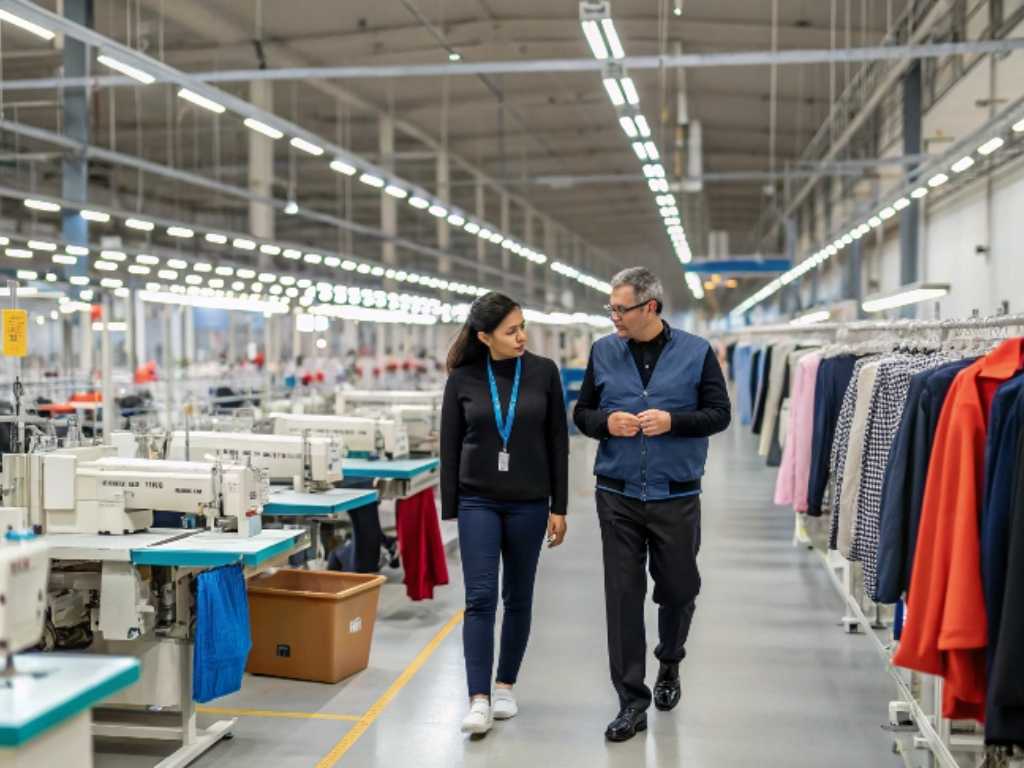
Asymmetric Dress Manufacturer
Custom one-shoulder, asymmetric-neckline, draped, ruched, layered, and high-low dresses developed for established fashion, occasionwear, partywear, and premium ecommerce brands.
- Pattern control for shoulder tension, neckline angle, bust coverage, drape position, side-seam balance, and uneven hem points.
- 7+ senior womenswear pattern makers, 2 sample rooms, and 20+ sample machinists for structure-led development and revision.
- MOQ starts from 200 pcs per style/color, with multi-style programs commonly planned across 10-30 styles.
- 6 owned women’s fashion factories, 10+ long-term production partners, and 100,000+ pcs monthly capacity for coordinated bulk production.
Built for Complex Asymmetric Dress Programs
Since 2008
7+ Pattern Makers
2 Sample Rooms
20+ Sample Machinists
15+ QC Inspectors
100,000+ PCS Monthly
Developed for Established Fashion Teams
Occasionwear Brands
Partywear Labels
Premium Ecommerce Brands
Product Development Teams
Sourcing and Vendor Teams
Private Label Programs
Confirming the Right Manufacturing Fit
Strong Project Fit
- A tech pack, reference image, original sample, sketch, or line sheet defines the product direction.
- Quantity planning starts from 200 pcs per style/color, subject to fabric, trims, color, construction, and packing.
- The size range, launch window, target market, fabric direction, and private-label requirements are available for review.
- Sampling and PP approval are treated as production controls, not optional presentation steps.
- The program has repeat-order, seasonal collection, or multi-batch potential.
Information Needed First
- Style images or technical drawings showing front, back, and asymmetric detail placement.
- Target quantity by style and color rather than only one total collection quantity.
- Intended fabric, lining, stretch, transparency, weight, and surface requirements.
- Size chart or target fit reference, including one-shoulder length and high-low hem points where applicable.
- Label, barcode, packing, warehouse, testing, and target delivery requirements.

Where Asymmetric Dresses Commonly Fail
Shoulder Slippage
Twisted Side Seams
Uncontrolled Bust Coverage
Uneven Drape Placement
Distorted High-Low Hems
Sample-to-Bulk Drift
Asymmetric Dress Styles We Manufacture
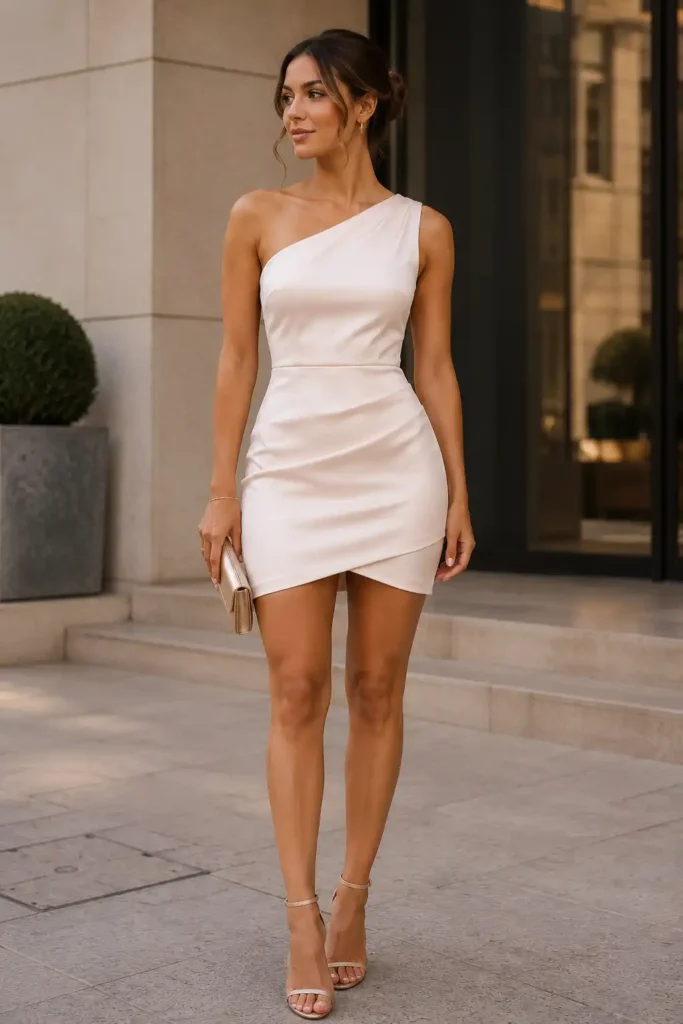
One-Shoulder Mini Dress
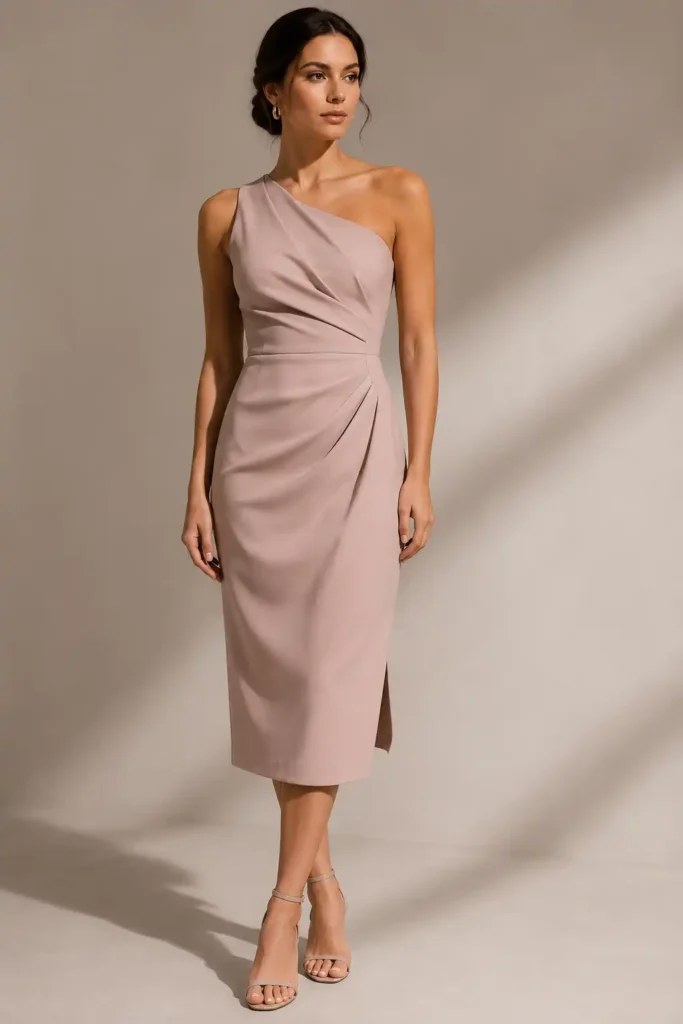
Asymmetric Neckline Dress
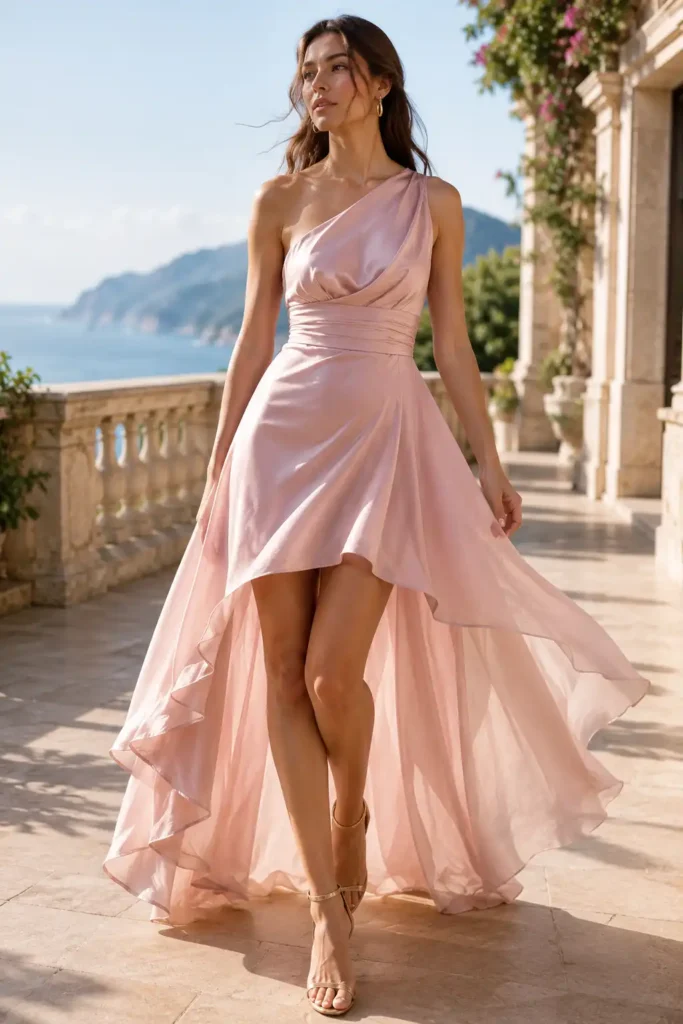
High-Low Hem Dress
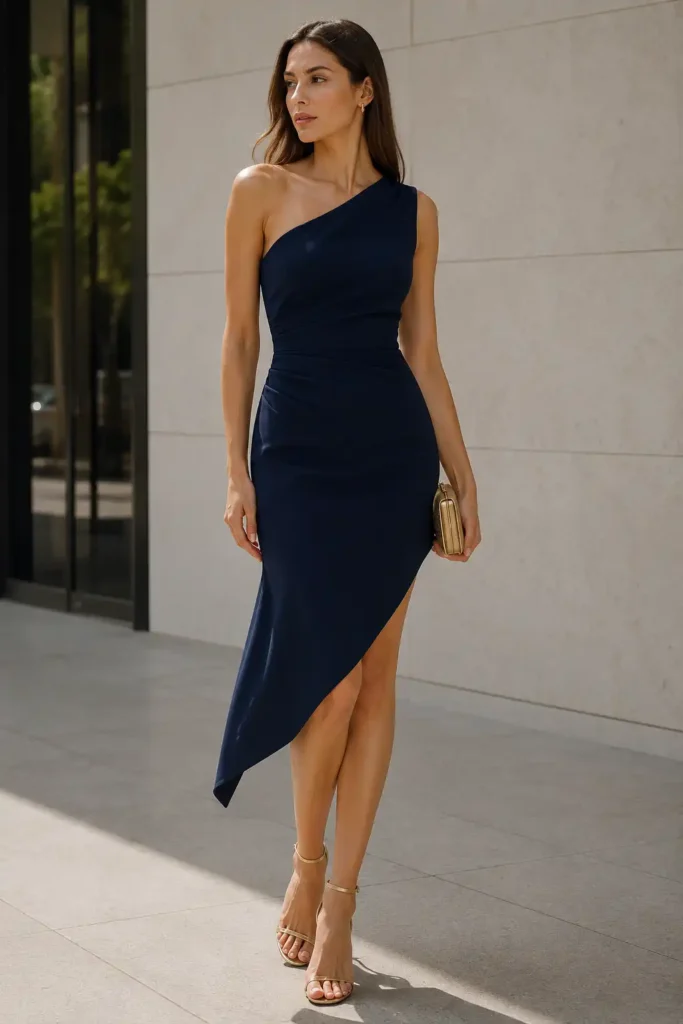
Diagonal Hem Dress
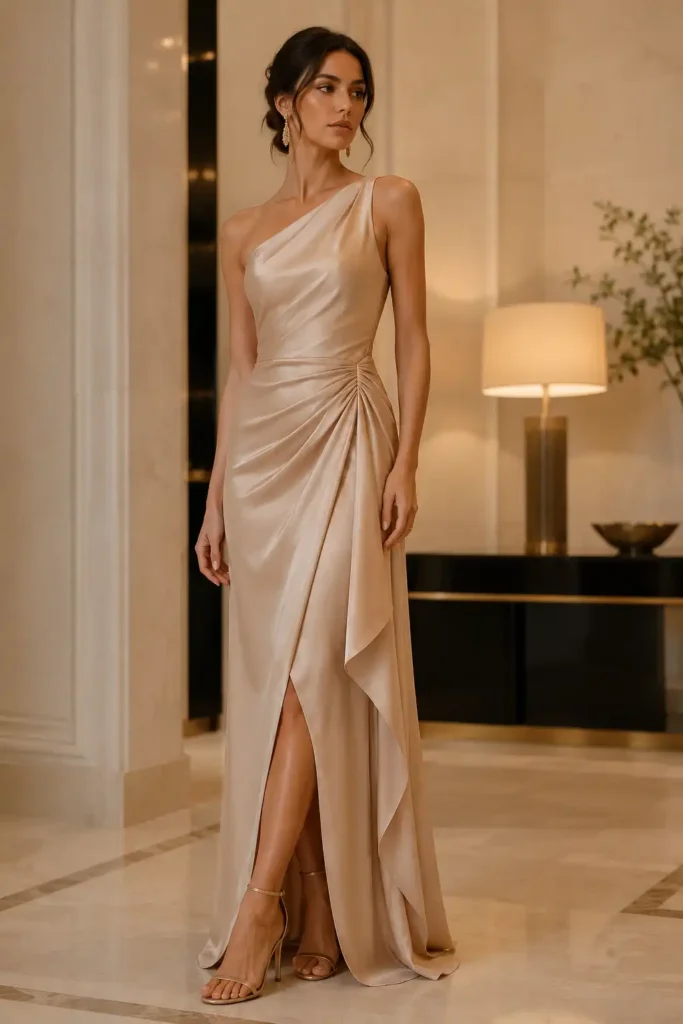
Draped Asymmetric Dress
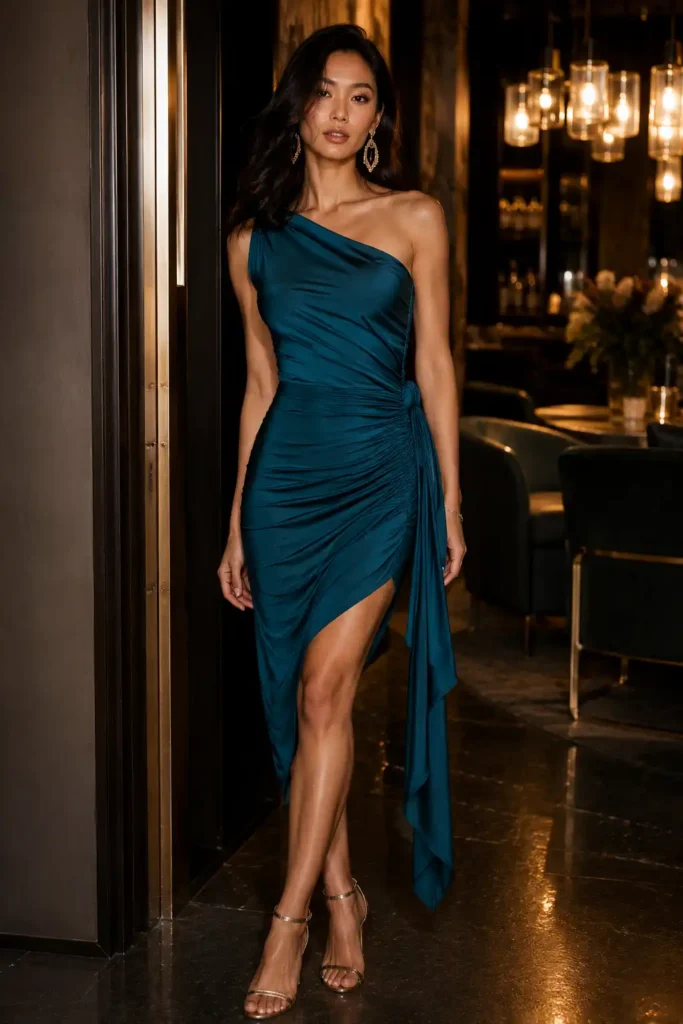
Ruched Asymmetric Dress
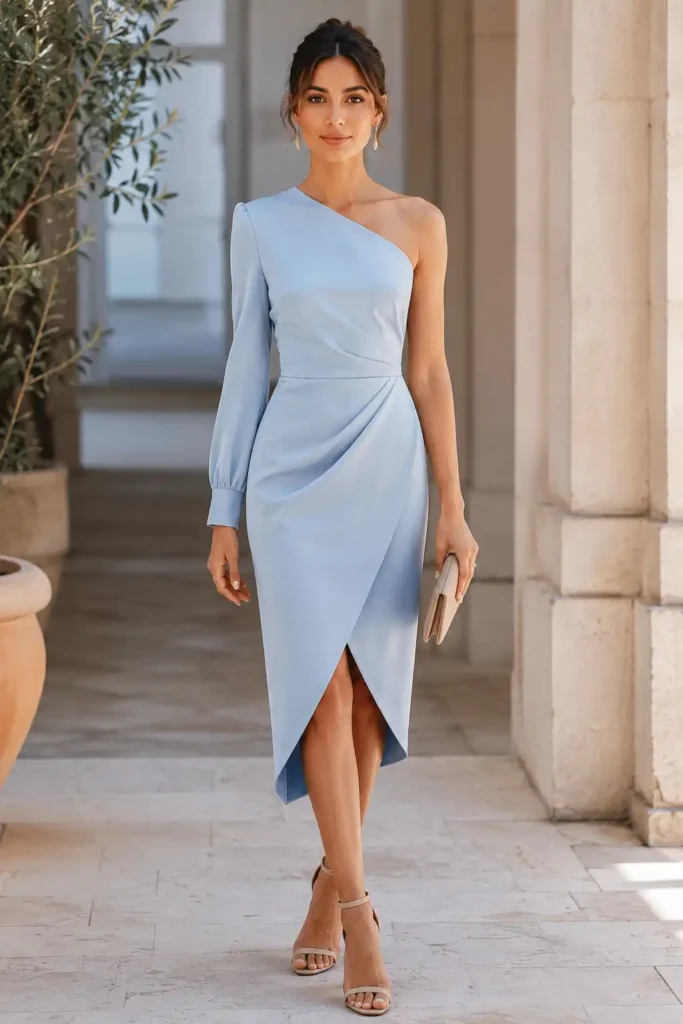
One-Sleeve Dress
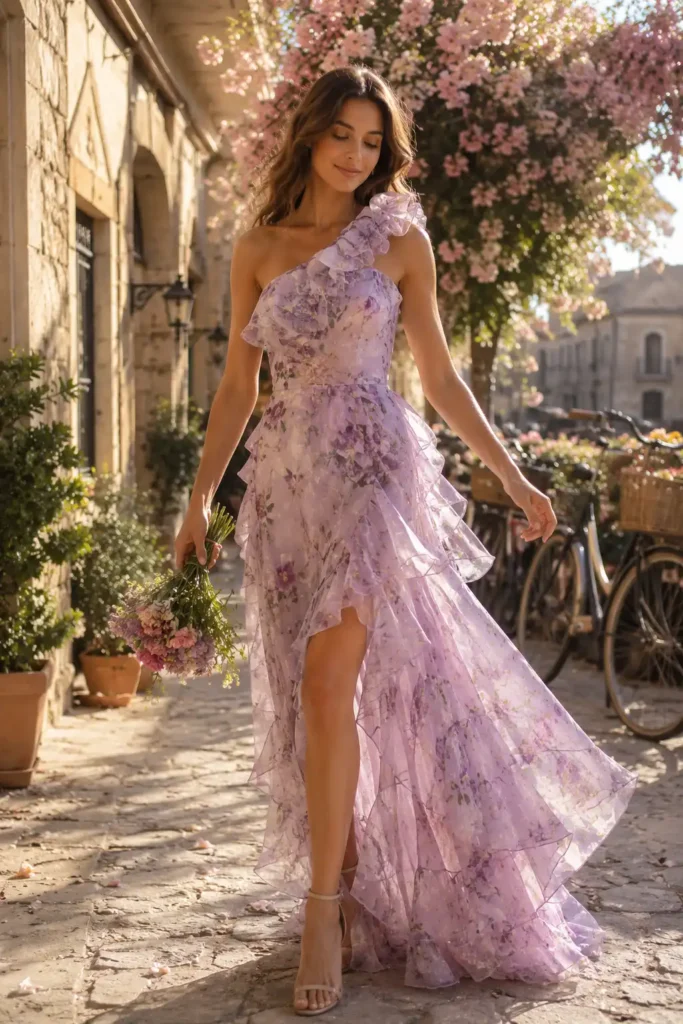
Asymmetric Ruffle Dress
Ruffles can follow necklines, shoulders, waists, side seams, or hems. Pattern length, width, fullness, grain, edge finish, seam weight, and directional placement affect the final result. Chiffon and organza need light, clean edges; satin and velvet need careful handling to prevent heavy or uneven fall.
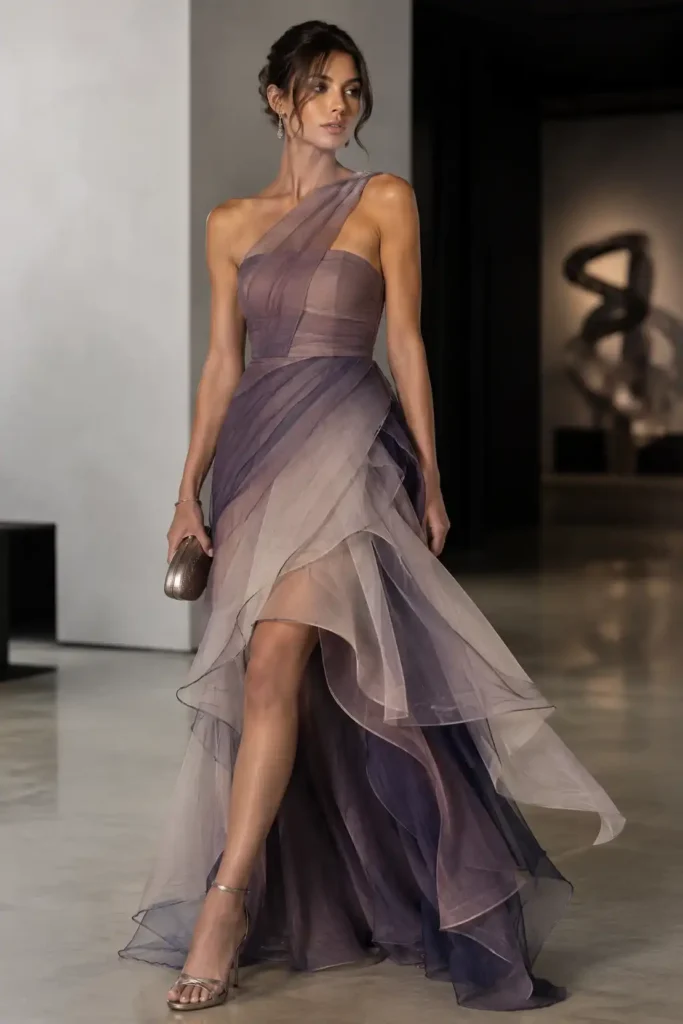
Layered Asymmetric Dress

Asymmetric Bodycon Dress

Asymmetric Sequin Dress

Asymmetric Evening Gown
Designed for Distinct Commercial Collections

Occasionwear Collections

Partywear Collections

Premium Ecommerce Drops
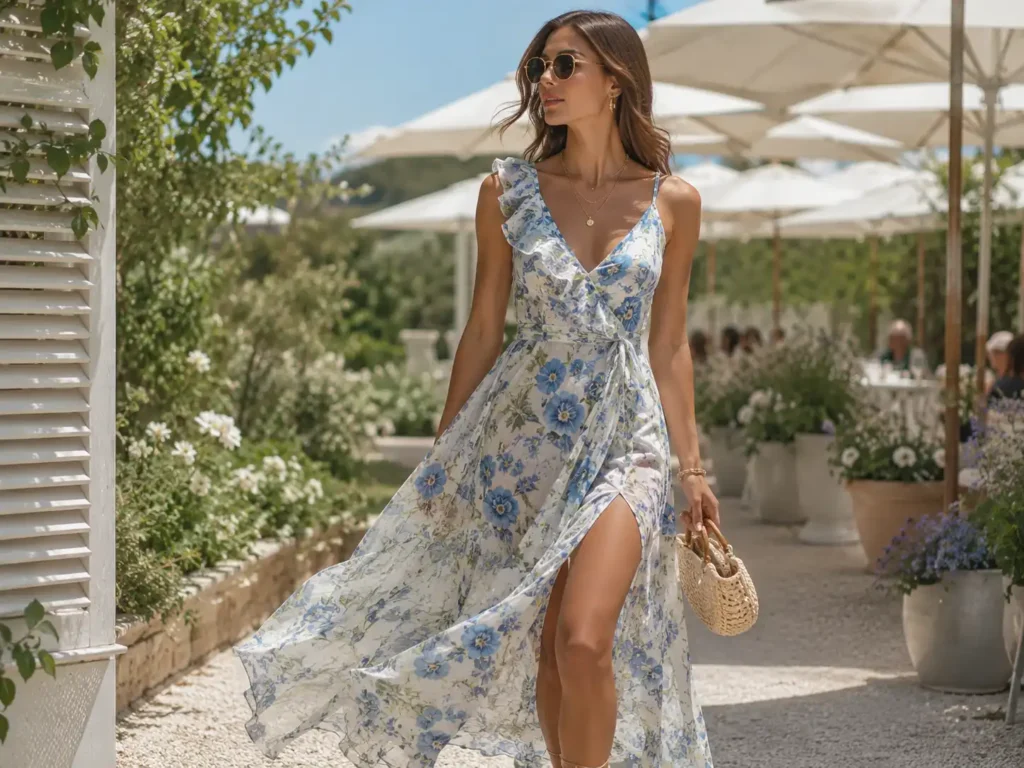
Resort and Vacation Lines
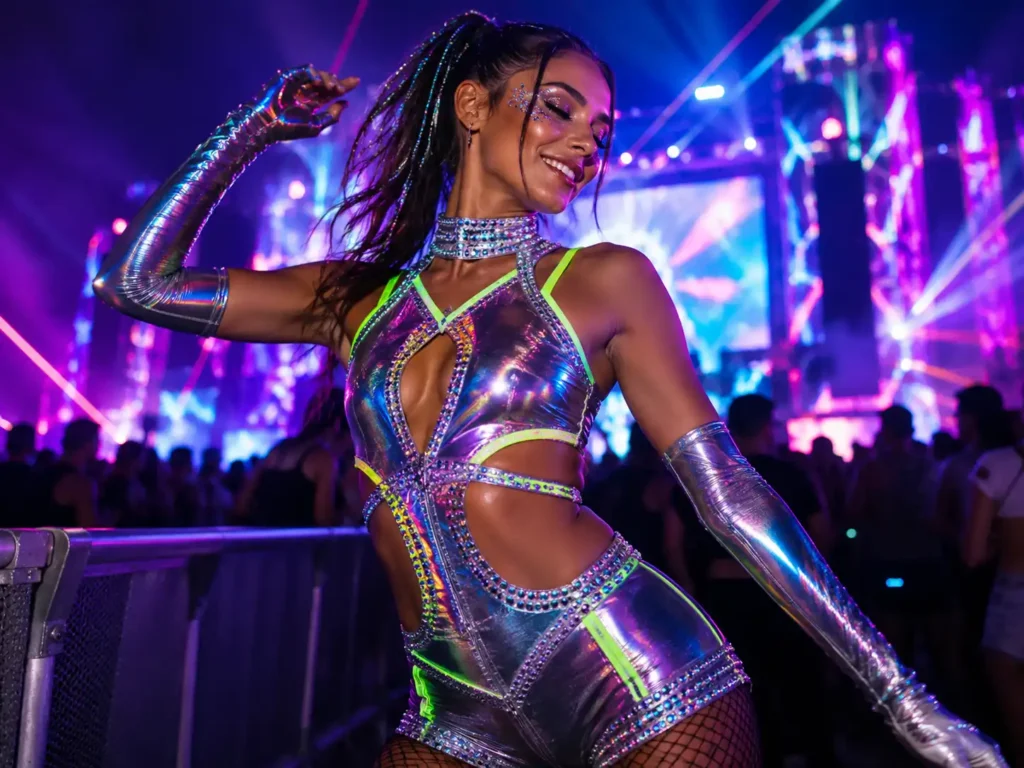
Club and Date-Night Lines

Evening and Statement Lines
Mapping Every Asymmetric Design Zone
Neckline Asymmetry
Shoulder Asymmetry
Sleeve Asymmetry
Waist Asymmetry
Drape Asymmetry
Layer Asymmetry
Slit Asymmetry
Hem Asymmetry
One-Shoulder Pattern Engineering and Fit Control
One-shoulder dresses look simple on a sketch but create unequal load across the bodice. Development must balance security, comfort, clean visual lines, and repeatable size grading without making the garment rigid.
Shoulder Tension and Bodice Stability
Shoulder length is not an isolated measurement.
It interacts with neckline angle, upper-bust circumference, underarm height, back neckline, lining tension, zipper position, fabric stretch, and garment weight.
Tightening the shoulder alone can raise one side seam, distort the waist, or cut into the wearer.
Jinfeng Apparel begins by identifying the load-bearing path from the shoulder to the opposite underarm and waist.
Structured crepe, heavy satin, velvet, or sequin may need reinforcement, tape, cups, boning, or stable lining. Stretch mesh and jersey need controlled recovery so the shoulder does not grow after wear.
Fit review includes arm movement, sitting, turning, and light pulling at the neckline.
Key control points:
- One-shoulder seam length and position.
- Supported and unsupported underarm height.
- Upper-bust fit and neckline contact.
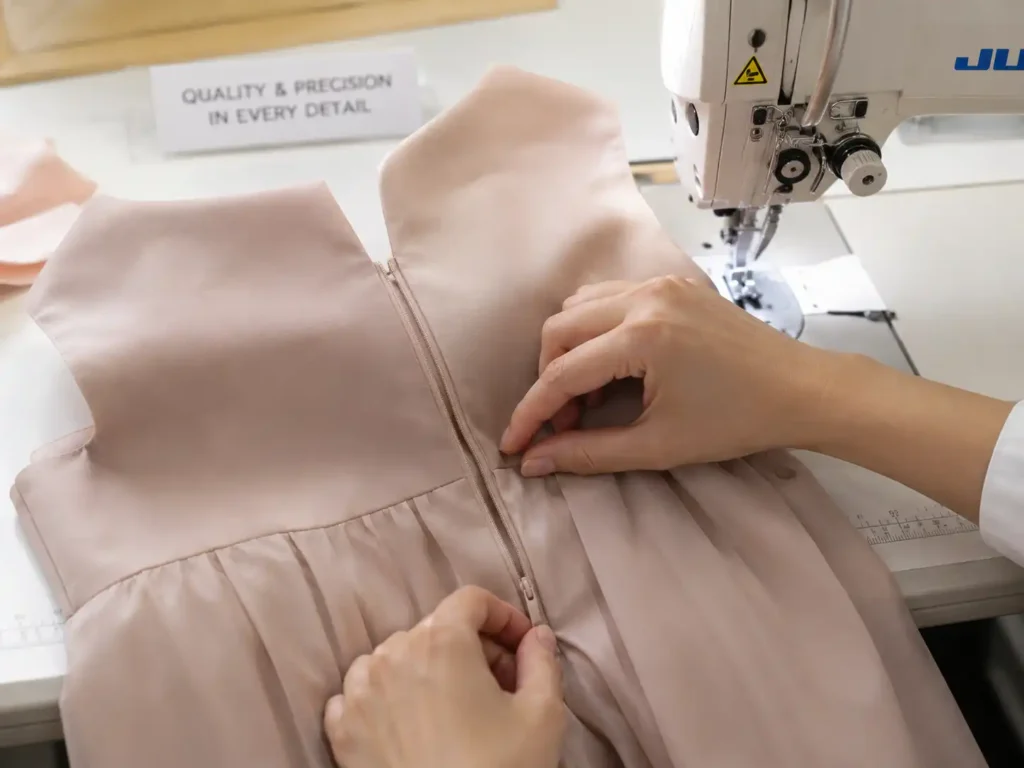
- Back neckline level and zipper pull.
- Side-seam direction during movement.
- Internal reinforcement and lining tension.
Bust Coverage and Unsupported-Side Security
The lower side of an asymmetric neckline often creates the greatest exposure risk. Coverage is influenced by cup shape, bust dart or princess seam location, neckline depth, underarm curve, fabric stretch, lining, and support trims. A dress can match the sketch while still feeling unsafe on the body.
Sample review checks both standing appearance and movement. Anti-slip tape may improve edge contact, but it cannot correct a poor pattern. Cups, boning, underwire, elastic support, or internal mesh can be introduced when suitable for the silhouette. The selected method must remain comfortable, invisible from the outside, and compatible with the fabric weight.
Size grading receives separate attention. Larger bust sizes may require more coverage and shaping while preserving the same visual neckline angle. Grade rules are therefore applied to functional points, not only general width increments.
Key control points:
- Upper-bust and full-bust relationship.
- Unsupported-side neckline depth.
- Armhole exposure and side coverage.
- Cup or internal support position.
- Edge contact without compression marks.
- Coverage consistency across the size range.
Controlling Drapes, Ruching, and Ruffles
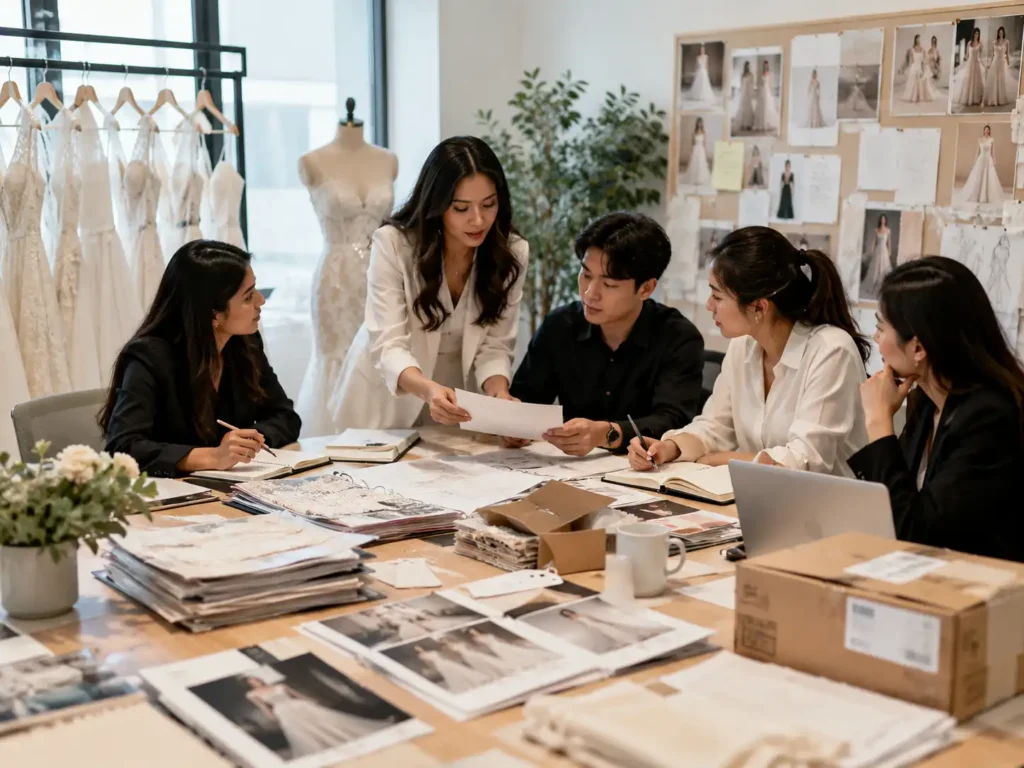
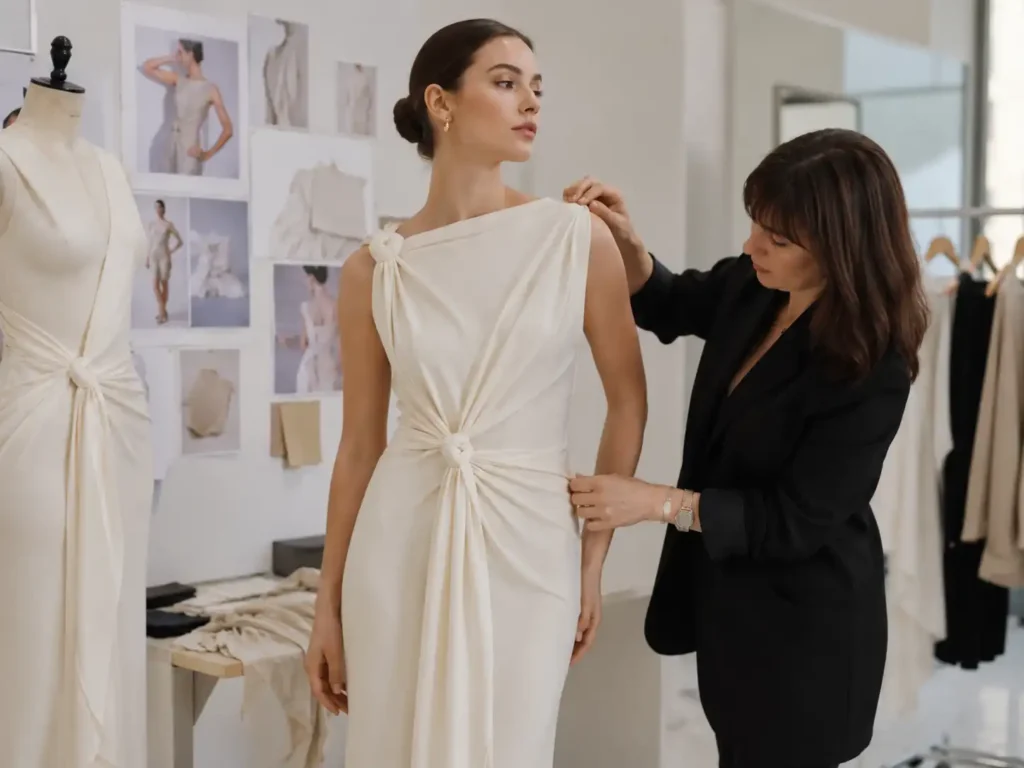
Soft volume creates much of the visual identity in asymmetric dresses. Approved folds and gathers must be translated into measurable pattern shapes, anchor points, ratios, and sewing instructions before bulk production.

Draping with Controlled Visual Weight
Draping can cross the neckline, bust, waist, hip, or skirt. Each location changes how fabric weight is distributed. Satin creates smooth reflective folds, jersey forms softer continuous lines, mesh creates light layered volume, crepe gives controlled fall, and velvet adds weight and directional shading.
Development begins by defining where the drape starts, where it ends, and which body zone carries the volume. Pattern pieces are reviewed for grain direction and excess fabric. Internal stay points may be used to hold a fold without visible topstitching. Lining must support the outer layer without flattening it or pulling it out of position.
Approved sample records can include photographs, marked pattern references, fold direction, attachment points, and finished depth. During bulk production, the goal is not to force every fold into an artificial identical shape, but to keep the intended placement, volume range, and silhouette consistent.
Ruching Ratios and Body Shaping
Ruching can visually shape the waist and hip, but excessive or misplaced gathering creates bulk.
The development team defines the ruched section length, base panel length, gathering ratio, elastic or drawcord method, start and stop positions, seam location, and grade behavior.
Stretch mesh and jersey require recovery review so the ruched zone does not relax after wear. Woven satin and crepe may need hand-distributed gathering, internal tape, or controlled channel construction. Asymmetric side ruching also adds directional pull, which can rotate side seams or lift one side of the hem.
QC checks focus on location, distribution, finished length, side-seam direction, and visual balance.
One approved sample image is not enough; measurements and sewing references are needed for production.

Ruffles without Unwanted Weight
Ruffle appearance depends on finished width, cutting direction, fullness ratio, edge finish, attachment curve, and fabric.
A wide satin ruffle can overload one shoulder, while a narrow chiffon ruffle can collapse if the edge finish is too heavy.
The pattern team reviews ruffle length and placement against the base garment.
Layer intersections, zipper crossings, neckline edges, and high-low hems require clean transitions. Rolled hems, narrow hems, binding, raw-edge treatments, or lined ruffles are selected according to the fabric and brand appearance.
Bulk inspection checks width, direction, attachment security, edge quality, and left-right garment consistency. Intentional asymmetry still requires controlled repetition.
High-Low and Irregular Hem Control
Uneven hems require more measurements, not fewer. Fabric behavior, grain direction, settling, lining, pressing, and trimming standards determine whether a dramatic hem appears refined or uncontrolled.
Establishing Measurable Hem Points
A high-low dress may include front center length, back center length, side length, shortest point, longest point, transition points, slit height, train length, lining length, and floor clearance. A diagonal mini may need high and low side points plus hip-coverage checks. Handkerchief hems can require multiple corner references.
The measurement chart should identify the body reference and measurement method. Measuring from high shoulder point, waist seam, side seam, or center line produces different numbers. Jinfeng Apparel aligns the pattern, sample, PP sample, and QC method so production teams measure the same way.
Managing Bias Growth before Hemming
Chiffon, soft satin, rayon blends, and other drapey fabrics can lengthen along bias sections after cutting or hanging. Hemming too early may create new unevenness after the garment settles. Sample development helps determine whether hanging, rechecking, and trimming are needed before final hemming.
Lining can create a second problem when its grain, weight, or attachment pulls the outer layer. Lining length is set to remain covered during movement without catching or changing the hem fall.
Choosing the Correct Edge Finish
Rolled hems suit many light fabrics, but thread tension, stitch density, and curve handling affect waviness. Narrow turned hems suit selected woven fabrics but may become bulky on tight curves. Binding, facing, raw-edge treatments, or horsehair support may be used for certain designs, subject to the approved appearance.
Final inspection reviews hem measurement, transition smoothness, pressing, loose threads, puckering, and movement on a hanger or form. Long styles also receive packing guidance to reduce creasing and edge distortion.
Fabrics Selected for Asymmetric Dress Performance
Fabric selection controls drape, stability, transparency, stretch, surface appearance, sewing behavior, cost, MOQ, and packing. Jinfeng Apparel evaluates fabric against the asymmetric structure rather than selecting by color and hand feel alone.
Fabric Direction | Best-Fit Asymmetric Styles | Development Focus | Bulk and Packing Risks |
Satin | One-shoulder, draped, cocktail, evening, high-low | Grain and shine direction, seam puckering, neckline stabilization, lining, pressing | Shade variation, snagging, zipper bulging, pressure marks, fold creases |
Stretch Satin | Bodycon, ruched, one-shoulder mini, cut-out | Stretch direction, recovery, bust coverage, seam stability, lining compatibility | Side-seam rotation, shine change, needle marks, inconsistent recovery |
Chiffon | Layered high-low, ruffle, resort, evening | Opacity, layer count, grain, rolled hem, gathering, lining weight | Fraying, seam slippage, hem growth, static, crushing during packing |
Crepe | Structured one-shoulder, midi, cocktail, draped | Weight, recovery, clean edges, dart shaping, pressing | Surface shine from pressing, seam impression, color-batch variation |
Jersey | Ruched, bodycon, draped, one-sleeve | Stretch percentage, recovery, negative ease, seam support, grading | Growth after wear, twisted seams, uneven gathering, measurement drift |
Stretch Mesh | Layered, ruched, bodycon, cut-out, partywear | Transparency, mesh density, stretch, lining, edge stability | Snagging, holes, over-stretch, inconsistent opacity, rough seams |
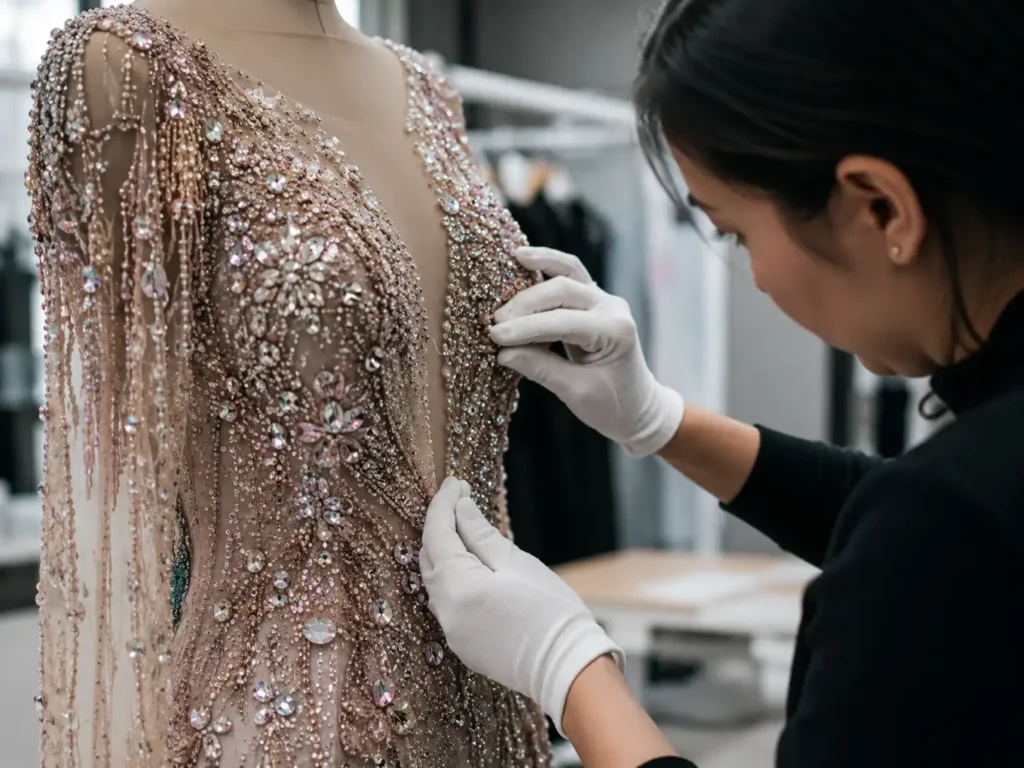
Sequin Fabric | Party, statement mini, evening, one-shoulder | Sequin direction, weight, seam clearance, lining, support | Missing sequins, scratching, needle damage, seam bulk, surface abrasion |
Velvet | Winter party, evening, draped, one-shoulder | Nap direction, weight, seam handling, pressing, support | Shade change by direction, marking, crushing, difficult re-pressing |
Matching Fabric Behavior to Design Intent
A reference image does not define fabric performance. The same silhouette can become fluid, sculpted, close-fitting, transparent, or heavy depending on the material. Sampling begins after the required visual and wearing result is translated into measurable fabric behavior.

Fluid Drapes and Moving Hems
Soft satin, chiffon, rayon blends, lightweight crepe, and selected jerseys support fluid asymmetric movement. Development focuses on drape depth, bias growth, hem recovery, static, opacity, and lining weight. Lightweight fabrics can make the design elegant, but they also expose seam tension, uneven edges, and internal construction more clearly.
Recommended information to provide:
- Desired surface: matte, soft shine, or high shine.
- Required movement: floating, close drape, or structured fall.
- Transparency tolerance and lining preference.
- Target garment weight and wearing season.
- Color, print, and photography requirements.

Close-Fitting Ruched Structures
Stretch mesh, jersey, ponte, and stretch satin can support bodycon asymmetric shapes.
Fabric selection is based on stretch direction, elongation, recovery, thickness, compression, transparency, and surface durability.
A fabric with high stretch but weak recovery may fit the first sample and lose shape during wear.
Pattern ease and grading are adjusted around the tested fabric.
Changing the material after fit approval may require a new sample because the same pattern can produce different neckline contact, bust coverage, hip tension, ruching density, and dress length.

Structured One-Shoulder Bodices
Crepe, heavier satin, ponte, velvet, and selected woven fabrics support cleaner asymmetric lines.
Structure can improve neckline stability but increases pressure at the shoulder and seam intersections.
Cups, boning, underwire, stable lining, reinforcement tape, or anti-slip materials may be reviewed according to the silhouette.
The final fabric decision considers pattern support, sewing method, pressing, comfort, cost, MOQ, available colors, and bulk consistency.
A visually luxurious fabric is not automatically suitable for the construction.
Lining, Support, and Trim Engineering
Lining Strategy
Cups and Bust Support
Boning and Reinforcement
Anti-Slip Control
Closures and Adjusters
Decorative Trims
Measurement and Size Grading Standards
| Measurement Zone | Typical Control Points | Why It Matters |
|---|---|---|
| Upper Body | Bust, upper bust, under bust, neckline depth, asymmetric neckline angle | Controls coverage, diagonal edge contact, and bust shaping |
| Shoulder and Armhole | One-shoulder length, shoulder point, supported armhole, unsupported armhole, sleeve length | Prevents slippage, underarm exposure, and torso rotation |
| Waist and Hip | Waist, high waist, low waist, hip, diagonal waist seam | Protects proportion and side-seam direction across sizes |
| Drape and Ruching | Start point, end point, gathered section length, finished ruched length | Keeps volume and body-shaping effect in the approved zone |
| Hem and Slit | Front length, back length, shortest point, longest point, side drop, slit height | Controls high-low proportion, movement, and floor clearance |
| Lining | Lining neckline, armhole, side length, hem length, slit opening | Prevents exposure, pulling, and lining visibility during movement |
From Design Review to PP Approval
Design Review
Fabric Direction
Pattern Development
First Sample
Fit Review
Revised Sample
PP Sample
Golden Sample
Sample Corrections That Protect Bulk Production
Shoulder Correction
Bust Coverage
Neckline Angle
Drape Placement
Hem Balance
Lining Adjustment
Workmanship Standards for Asymmetric Dresses
Stay Stitching

Clean Neckline Finishing
Concealed Zipper Control

Satin Seam Handling

Mesh Seam Stability
Sequin Seam Clearance
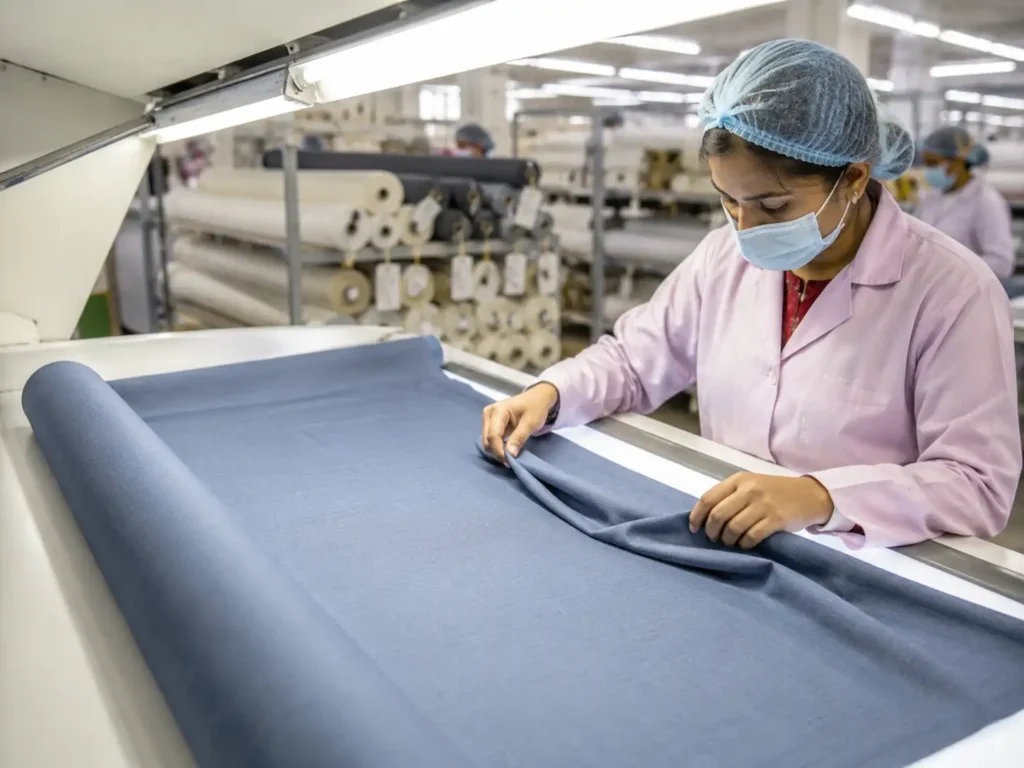
Controlled Ruching

Narrow and Rolled Hems

Reinforced Stress Points
Asymmetric Dress Quality Control Checkpoints
Fabric Inspection
Cutting Inspection
Sewing Inspection
Measurement Inspection
Appearance Inspection
Packing Inspection
Capacity Managed by Style Complexity
6 Owned Factories
10+ Production Partners
18+ Sewing Lines
6+ Flexible Lines
12+ Merchandisers
30+ Finishing Staff
Private Label Packing and Export Delivery
Brand Labels
Surface Protection
Ecommerce Packing
Retail Packing
Shipping Options
Export Records
Asymmetric Dress Manufacturer Case Studies
The following programs illustrate how multi-style orders can be organized around structure, fabric, fit, QC, and launch timing. Brand identities and proprietary design files remain confidential.

United States Occasionwear Program - 18 Styles, 36,400 PCS
A US occasionwear label developed 18 asymmetric cocktail and wedding guest styles across satin, stretch satin, crepe, and mesh. The total order covered 36,400 pieces in 3-5 colors per selected style, with XS-XL sizing and several hero styles requiring early photo samples.
Main challenge:
- One-shoulder bodices showed different neckline contact across fabrics.
- The unsupported side gaped on larger bust sizes.
- Several high-low skirts changed length after hanging.
- Satin color and shine direction needed batch control.
Development action:
- Pattern makers separated structured and stretch bodice blocks.
- Upper-bust and underarm points were revised by size group.
- Anti-slip support and selected internal reinforcement were added only where needed.
- Hem points were documented at front, back, sides, and lowest transition areas.
- Hero styles moved first through photo sample and PP approval while remaining styles followed a grouped sampling tracker.
Production result:
The collection entered bulk through two planned production waves. Key style measurements and high-low hem points were checked during inline and final inspection. Priority colors shipped first for campaign and warehouse launch, while the remaining balance followed the agreed delivery plan.

United Kingdom Ecommerce Program - 24 Styles, 58,800 PCS
A UK premium ecommerce label planned 24 ruched, mesh, bodycon, one-sleeve, and diagonal-hem dresses totaling 58,800 pieces.
The program used repeated fabric groups to control color, stretch, lining, and cost while maintaining different visual silhouettes.
Main challenge:
- Stretch mesh transparency varied by color.
- Side ruching migrated during early samples.
- Side seams rotated on high-stretch styles.
- Barcode and SKU accuracy was critical across style-color-size combinations.
Development action:
- Mesh density, stretch, recovery, and lining color were reviewed by color group.
- Ruching start and stop points, gathered lengths, and finished lengths entered the measurement records.
- Selected styles received revised negative ease and seam stabilization.
- Sample feedback was transferred into updated patterns, size charts, sewing instructions, and QC checkpoints.
- Packing data linked each garment to the correct care label, size label, barcode, SKU sticker, and carton breakdown.
Production result:
The order was managed in style groups by fabric and construction. Inline checks focused on ruching placement, side-seam direction, neckline coverage, and finished length.
Separate packing verification reduced SKU mixing risk before warehouse delivery.

Australia Partywear Program - 12 Styles, 22,600 PCS
An Australian partywear label developed 12 high-low sequin, velvet, and draped evening styles totaling 22,600 pieces. The collection included one-shoulder dresses, asymmetric ruffles, thigh slits, and floor-length hems for a seasonal event launch.
Main challenge:
- Sequin weight pulled several one-shoulder samples off balance.
- Ruffle edges appeared heavy in the first fabric direction.
- Long hems needed stable floor clearance.
- Surface damage risk increased during pressing and packing.
Development action:
- Shoulder stress paths and internal support were revised.
- Lighter ruffle construction and edge finishing were selected for selected styles.
- Floor-length and high-low measurement points were expanded in the size chart.
- Sequin seam zones, lining contact, missing-sequin checks, and protective packing were added to the production standard.
- Priority styles were scheduled around material readiness and campaign deadlines rather than releasing all styles together.
Production result:
The collection completed final inspection with additional surface and hem checks.
Dresses were packed with garment-specific protection to reduce sequin abrasion, velvet crushing, and ruffle distortion.
Shipment planning separated launch-priority styles from the remaining bulk.
Repeat Orders and Seasonal Collection Continuity
Pattern Records
Material Records
Measurement Records
Workmanship Records
Private Label Records
Multi-Batch Planning
Asymmetric Dress Manufacturing Frequently Asked Questions
Jinfeng Apparel develops one-shoulder, asymmetric-neckline, one-sleeve, draped, ruched, ruffled, layered, diagonal-hem, high-low, bodycon, sequin, cocktail, party, resort, and evening dresses. Feasibility depends on fabric, structure, trims, size range, quantity, target appearance, and delivery plan.
Yes. A clear front and back reference can support an initial feasibility review. More accurate development requires measurements, fabric direction, quantity, size range, detail views, and intended fit. A tech pack or original sample reduces interpretation risk and supports more accurate costing.
Control starts with the pattern rather than anti-slip tape alone. Shoulder length, neckline angle, upper bust, underarm height, side seams, zipper position, lining tension, fabric stretch, garment weight, cups, boning, reinforcement, and anti-slip support are reviewed together during fitting.
The measurement chart can include front center, back center, side length, shortest point, longest point, transition points, slit height, lining length, and floor clearance. The method and body reference are confirmed so sampling, production, and QC use the same points.
Satin, stretch satin, chiffon, crepe, jersey, stretch mesh, sequin fabrics, velvet, lace, and selected blends can be used. Selection depends on desired drape, structure, stretch, opacity, support, surface, cost, MOQ, sewing behavior, and packing risk.
MOQ starts from 200 pcs per style/color. Special fabrics, custom dyeing, custom weaving, printing, certified material requirements, special trims, complex embellishment, and custom packaging may carry separate minimums.
Timing is confirmed after style complexity, fabric availability, trims, pattern work, size requirements, and sample type are reviewed. A first sample, revised sample, photo sample, and PP sample serve different purposes. Complex one-shoulder, sequin, layered, or supported bodices need more review than a simple jersey style.
The final pattern, grade rule, measurement chart, BOM, fabric reference, trim card, sewing instruction, label placement, packing instruction, PP comments, Golden sample, and QC checklist are transferred together. Production does not rely on the sample garment alone.
Yes. Woven labels, size labels, care labels, hangtags, barcode stickers, SKU labels, polybags, stickers, thank-you cards, cartons, carton marks, and warehouse labels can be coordinated according to approved files and project requirements.
Yes. NDA-based cooperation is supported. Tech packs, original samples, patterns, labels, packaging files, unpublished styles, pricing, order data, and brand information are not publicly disclosed without authorization.

Start Your Asymmetric Dress Program
Send your asymmetric dress references, tech packs, original sample photos, line sheet, size chart, fabric direction, quantity by style/color, label artwork, packing requirements, and target launch window.
Kelly and the project team will review style complexity, shoulder and neckline risk, fabric suitability, lining and support needs, sample sequence, MOQ fit, quotation inputs, production checkpoints, and delivery planning.
For a faster and more accurate review, prepare:
- Front, back, and close-up images of the asymmetric features.
- Quantity by style and color, plus expected size ratios.
- Fabric, lining, stretch, opacity, color, and surface requirements.
- Bust, shoulder, underarm, waist, hip, hem, slit, and lining measurements where available.
- Main label, size label, care label, hangtag, barcode, SKU, polybag, carton, and warehouse instructions.
- Target sample use, campaign date, PP approval deadline, bulk delivery window, and destination.