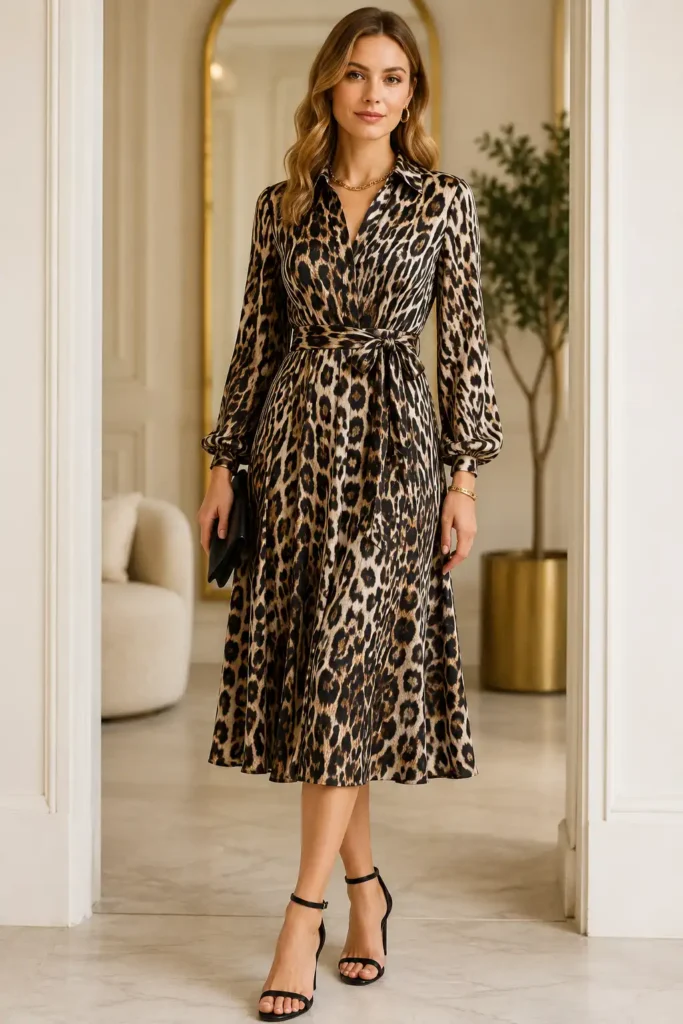
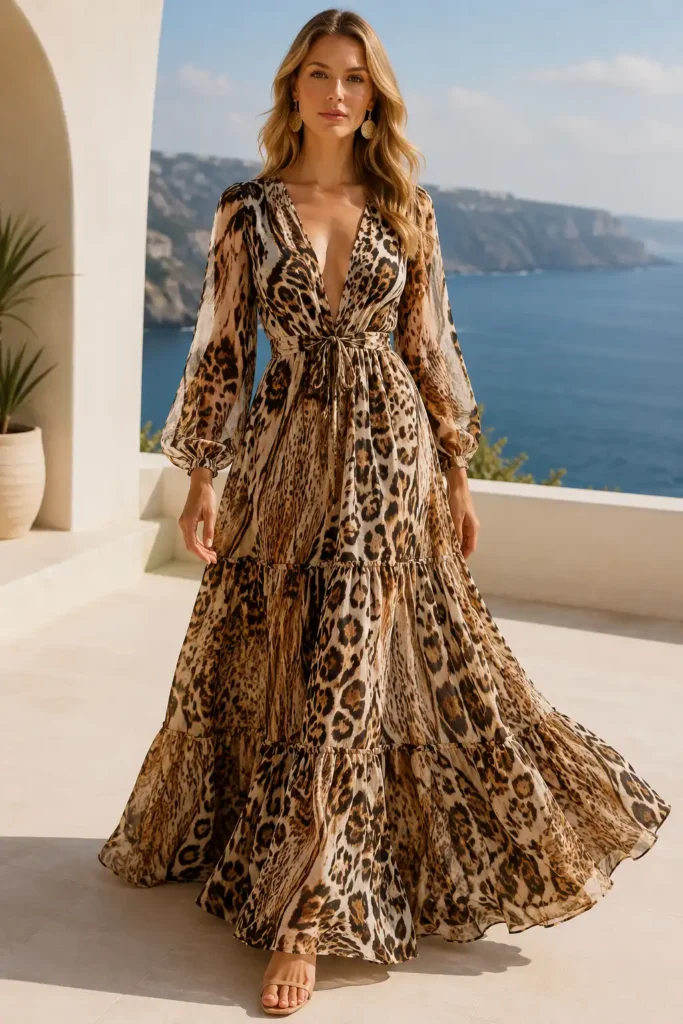
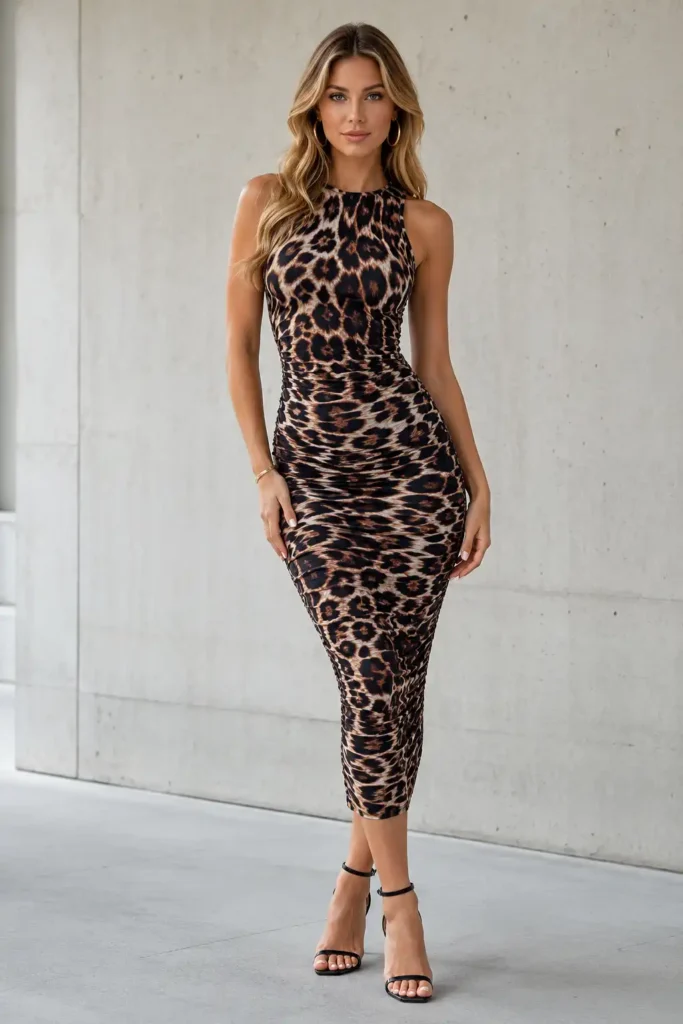
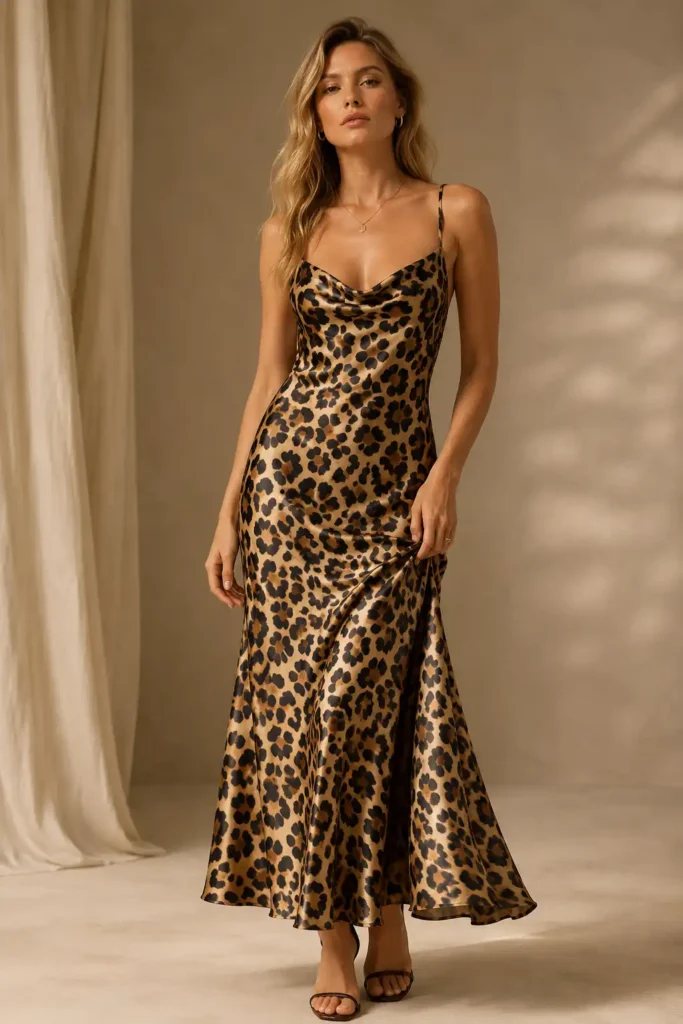
Animal Print Dress Manufacturer

Custom animal print dresses developed around print scale, fabric behavior, fit, production consistency and retail-ready private-label delivery.

  • 16+ years of women’s apparel manufacturing experience since 2008, with 6 owned fashion factories and 10+ long-term production partners.
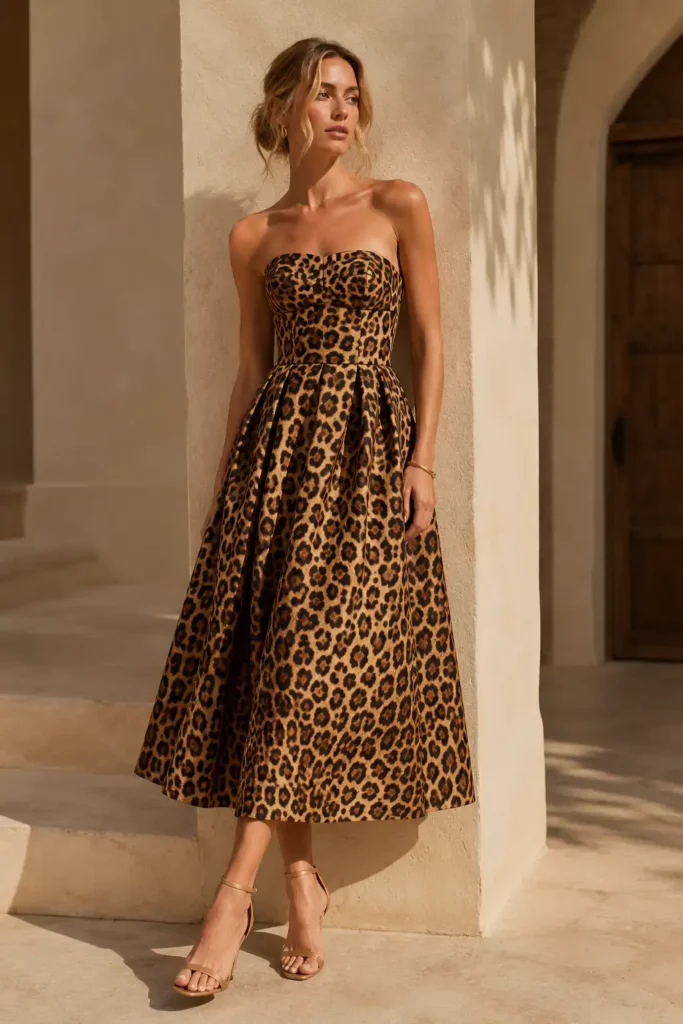
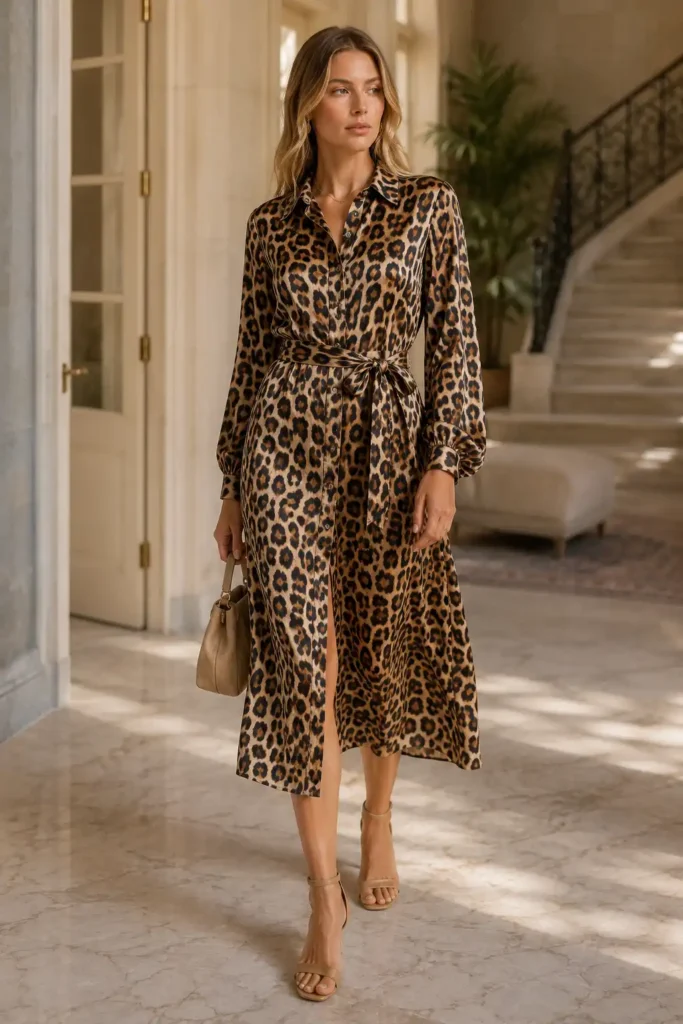
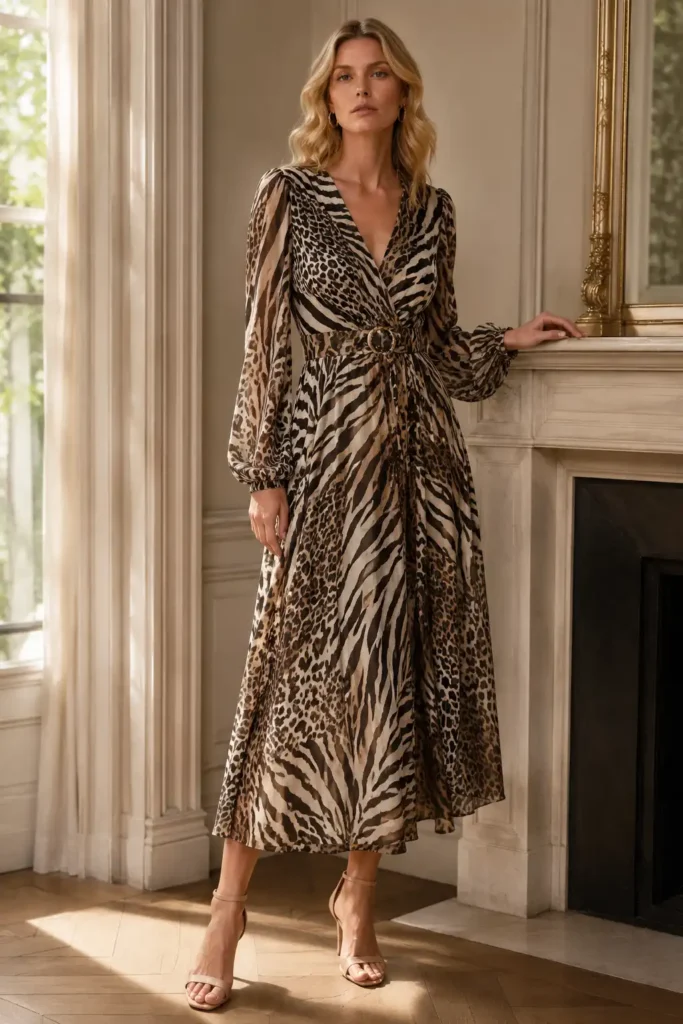
  • Print-led development for leopard, zebra, snake, tiger, cow, cheetah and abstract animal patterns across mini, midi, maxi, bodycon, slip, corset, party and resort silhouettes.
  • 2 sample rooms, 7+ senior pattern makers and 20+ sample machinists support fit, print proportion, construction and PP approval before bulk cutting.
  • Multi-style programs can be planned across 10-30 styles and 20,000-80,000 garments, with print-version control, measurement records, QC checkpoints and private-label packing.

Manufacturing Facts for Print-Led Dress Programs

Large dress programs need more than attractive print swatches. Development capacity, pattern control, quality staffing and scalable production determine whether a collection remains consistent from first sample through packed bulk.

Since 2008

More than 16 years focused on women’s fashion development, sampling, production, quality control and export coordination for international apparel programs.

6 Owned Factories

Owned production capacity supports planned allocation by silhouette, fabric behavior, workmanship level, order volume and approved delivery schedule.

10+ Production Partners

Long-term satellite factories expand scheduling flexibility for multi-style collections while Jinfeng retains development, specification, QC and packing coordination.

2 Sample Rooms

Dedicated sample rooms allow parallel development of print swatches, first samples, fit samples, revised samples, photo samples and PP samples.

7+ Pattern Makers

Senior pattern specialists review bust, waist, hip, neckline, armhole, dress length, stretch direction, print placement and grading requirements.

15+ QC Inspectors

Quality staff cover incoming fabric, cutting, sewing, inline checks, measurements, finishing, packing, AQL support and shipment preparation.

Built for Established Fashion Brands and Sourcing Teams

Animal print dresses serve different selling models. Product direction, fit standards, packaging systems and launch calendars vary by brand channel, so development should begin with the commercial role of the collection.

Global Fashion Brands

Seasonal ranges often involve multiple silhouettes, coordinated colorways and strict approval records. Jinfeng manages patterns, print versions, samples, PP standards, production files, quality checkpoints and packing instructions across the collection.

Premium Ecommerce Brands

Online sales depend on photo-ready proportions, dependable sizing, controlled transparency and clean packaging. Development focuses on on-body effect, return-risk points, SKU accuracy, barcodes, individual packing and repeat-order consistency.

Partywear Brands

Bodycon, corset, cut-out, ruched, mesh and satin animal print dresses require careful stretch direction, bust support, lining coverage, zipper flatness and seam stability. Sampling validates both visual impact and wearing security.

Resortwear Brands

Resort capsules need lightweight fabrics, balanced maxi lengths, controlled transparency, print direction and travel-conscious packing. Rayon, viscose, chiffon and printed woven options are reviewed against shrinkage and drape.

Private Label Programs

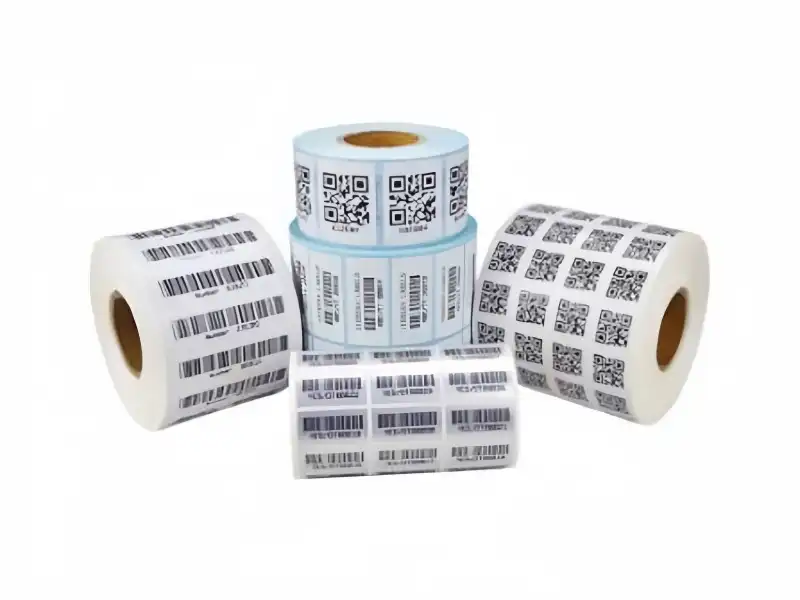
Brand labels, care labels, hangtags, barcode stickers, SKU labels, polybags, carton marks and warehouse instructions can be incorporated after artwork, content, placement and supplier MOQ are approved.

Sourcing Teams

Sourcing and development teams need traceable files rather than informal promises. Jinfeng supports project requirements, BOM review, sample records, production schedules, QC feedback, packing confirmation and shipment documentation.

Why Animal Print Dress Programs Fail in Bulk

A strong sample can still turn into an unstable production run when artwork, fabric, pattern and cutting rules are not locked together. Six failure points deserve attention before fabric booking and bulk cutting.

Scale Looks Wrong

A leopard repeat developed for a swatch may appear oversized on a fitted mini dress or too small on a flowing maxi. Print scale should be reviewed on the actual silhouette, base size and key panels before approval.

Color Shifts

Animal prints often combine warm beige, brown, black and accent colors. Fabric shine, base color, print route, lighting and batch variation can shift the final appearance. Physical standards are more reliable than screen images.

Direction Reverses

Zebra stripes, snake scales and elongated tiger marks can appear upside down or visually broken when cutting direction is not stated. Directional markers and panel instructions reduce reversed motifs across sleeves, bodices and skirts.

Stretch Distorts Motifs

Jersey and stretch mesh can widen spots or bend stripes over bust, waist and hip areas. Pattern ease, fabric recovery and print behavior should be reviewed together, especially for bodycon and ruched styles.

Fit Breaks Visual Balance

Uneven waistlines, twisted side seams or unstable necklines become more visible on bold prints. Pattern corrections need measurement records and fit feedback rather than cosmetic adjustments alone.

Reorders Lose Identity

A repeat order can drift when artwork versions, color approvals, fabric references, trim records or golden samples are missing. Reorder preparation should preserve production records while rechecking current fabric and print availability.

From Print Concept to Retail-Ready Dresses

A clear approval route prevents print work, pattern work and production work from moving on separate tracks. Every stage should create a record used by the next team.

Design Intake

Reference images, tech packs, line sheets, original samples, target quantities and launch timing are reviewed before development starts.

Artwork Review

Print repeat, scale, direction, color references, file quality and placement requirements are checked for production readiness.

Fabric Direction

Base fabric is selected around drape, weight, stretch, shine, transparency, print clarity, shrinkage and target price.

Print Sampling

A print swatch or strike-off is reviewed for scale, color, clarity, handfeel and compatibility with the selected fabric base.

Pattern Development

The pattern is built or corrected around silhouette, measurements, stretch direction, lining, seam position and motif behavior.

First Sample

The first garment tests overall proportion, fabric response, print scale, main construction and initial fit.

Fit Revision

Bust, waist, hip, length, neckline, armhole, straps, slit and print distortion are corrected from recorded feedback.

PP Approval

Approved fabric, print standard, pattern, measurements, trims, labels, workmanship and packing requirements are locked before bulk.

Material Inspection

Bulk fabric and printed lots are checked against approved standards for color, clarity, flaws, width and usable quantity.

Bulk Production

Cutting instructions, bundle control, sewing methods, inline checks and measurement standards guide production execution.

Final QC

Appearance, workmanship, measurements, print issues, labels, barcodes, packing and carton information are inspected before release.

Delivery Support

Packing lists, carton details, commercial documents, shipment photos and forwarder coordination support export handover.

Animal Print Directions We Can Develop
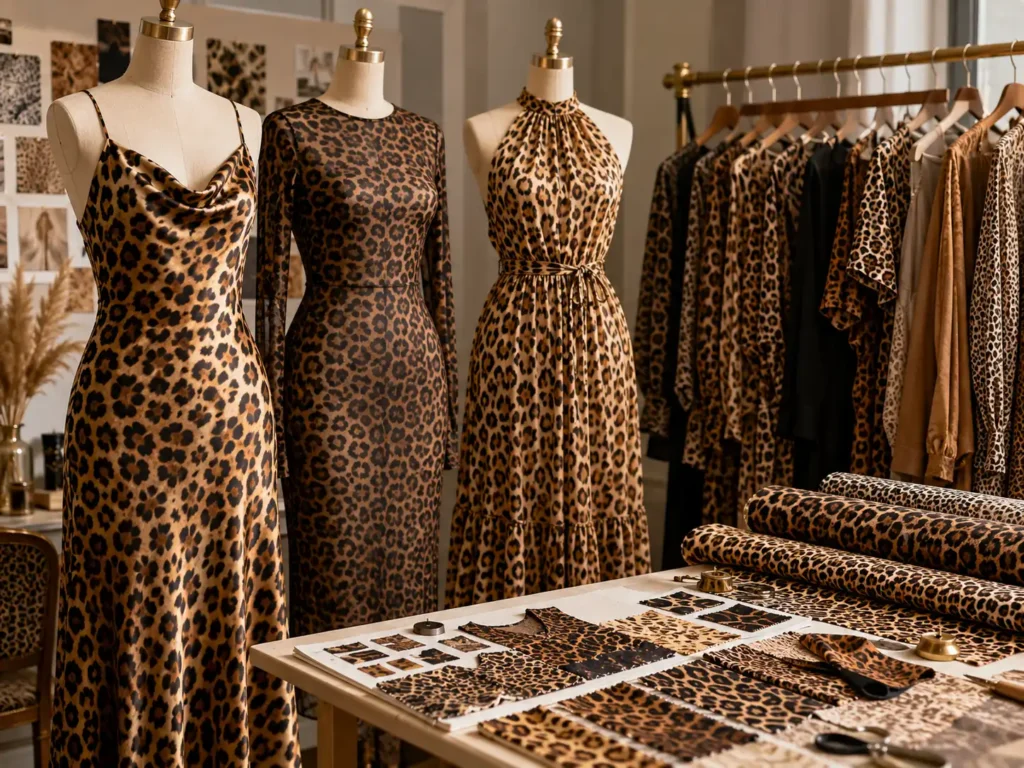
Animal print is a broad design language rather than one fixed leopard pattern. Each direction has different visual scale, cutting behavior, fabric needs and product positioning.

Leopard Print

  • Works across satin slips, mesh bodycon dresses, rayon maxis and commercial mini styles.
  • Control points: spot scale, warm-neutral balance, dark-edge clarity, print repeat and replenishment records.
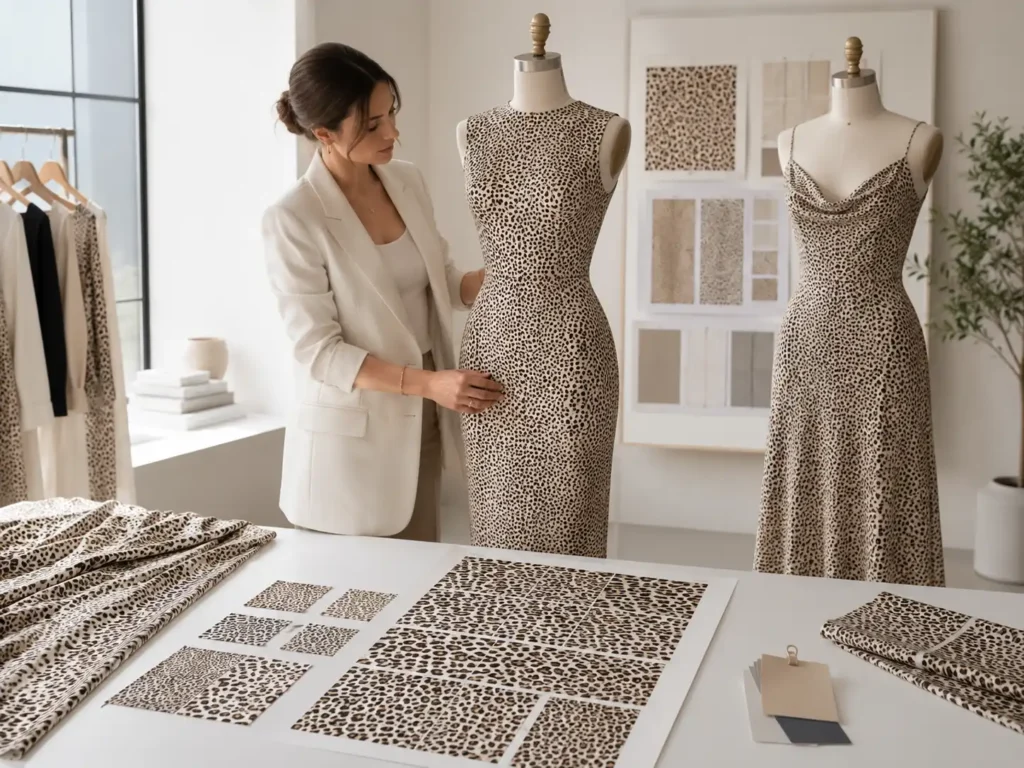
Cheetah Print

  • Smaller, cleaner spot structures suit fitted silhouettes and refined day-to-evening collections.
  • Control points: spot density, negative space, repeat visibility and color consistency across panels.

Zebra Print

  • High-contrast stripes create strong movement on bodycon, halter, wrap and maxi dresses.
  • Control points: stripe direction, seam interruption, stretch distortion, symmetry and cutting orientation.
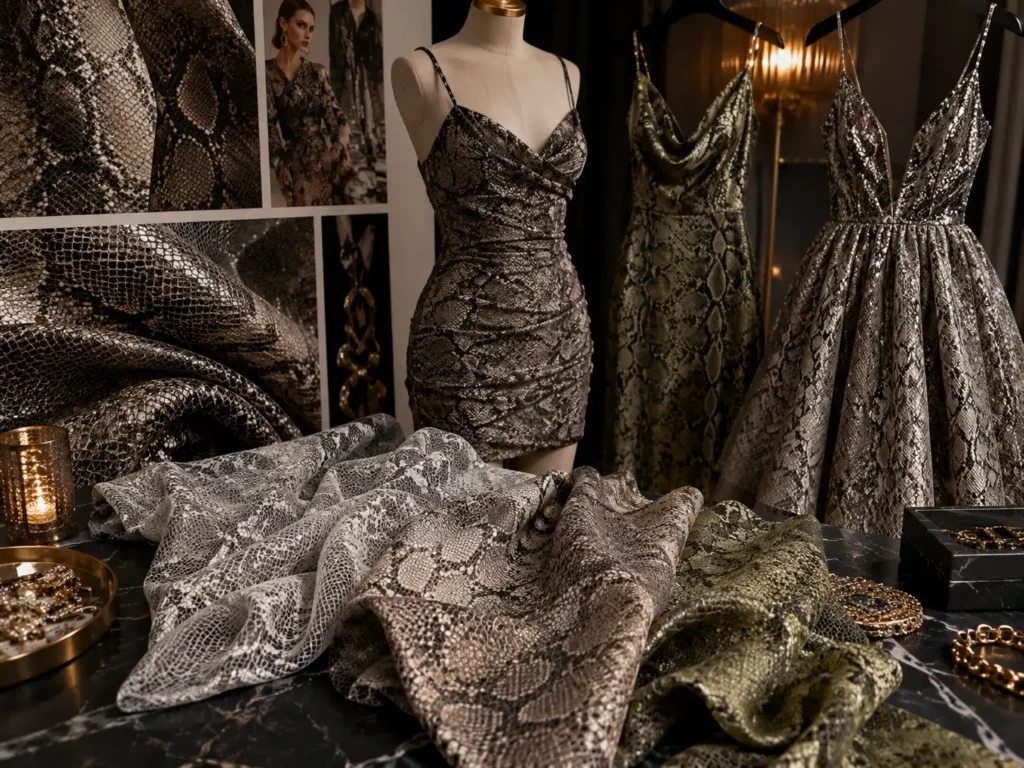
Snake Print

  • Fine-scale textures work for mesh overlays, fitted minis, slips and statement party dresses.
  • Control points: small-detail clarity, color gradation, base-fabric texture, panel continuity and print resolution.
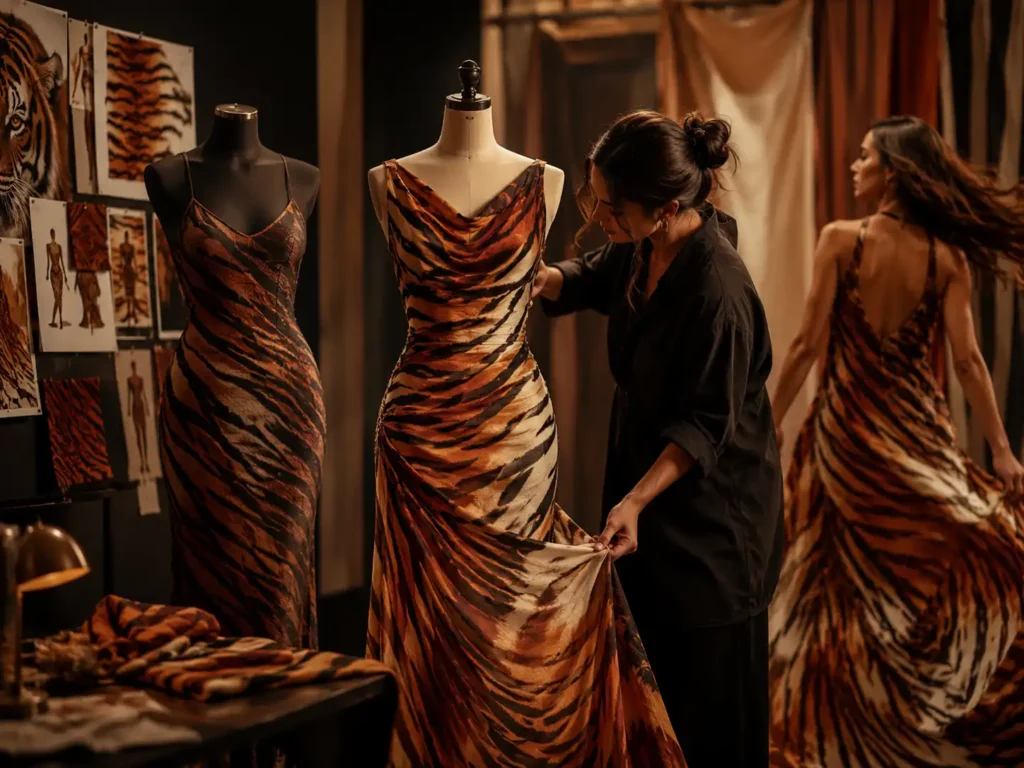
Tiger Print

  • Elongated marks add energy to jersey, mesh and draped silhouettes.
  • Control points: one-way direction, stripe angle, visual balance over bust and hip, and repeat alignment.
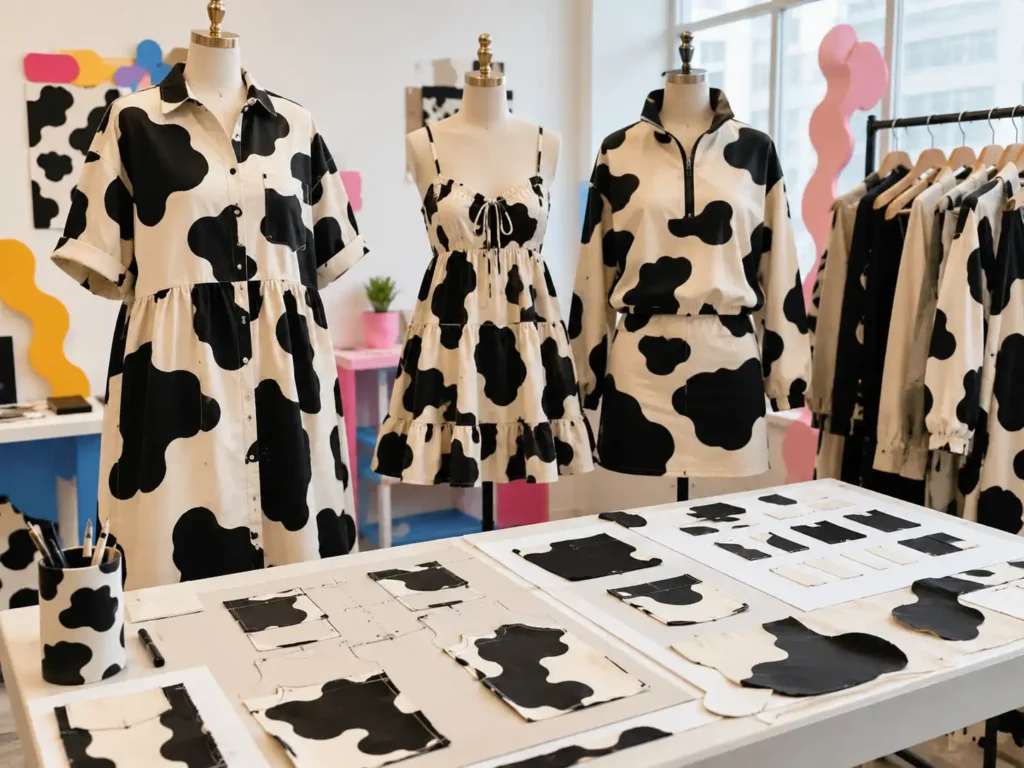
Cow Print

  • Large irregular blocks suit casual shirt dresses, minis and graphic capsule collections.
  • Control points: motif placement, panel balance, large blank areas, pocket placement and scale by size.
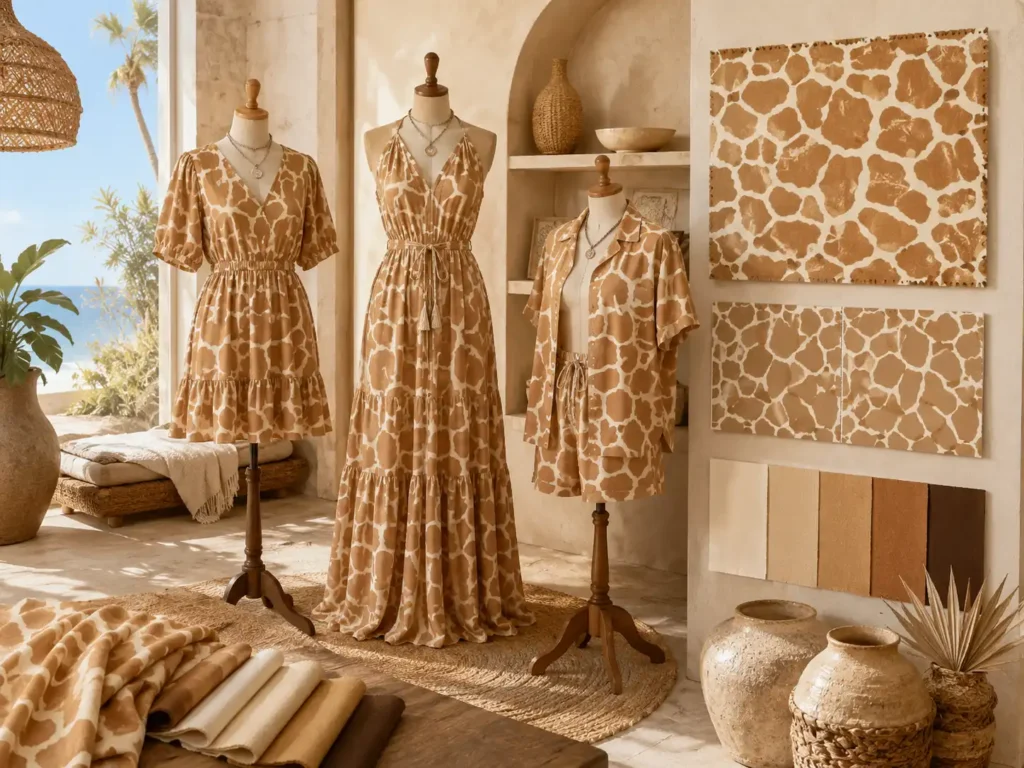
Giraffe Print

  • Geometric organic shapes work well on woven day dresses, resort styles and coordinated sets.
  • Control points: repeat joins, color contrast, print density and balance across long skirt panels.
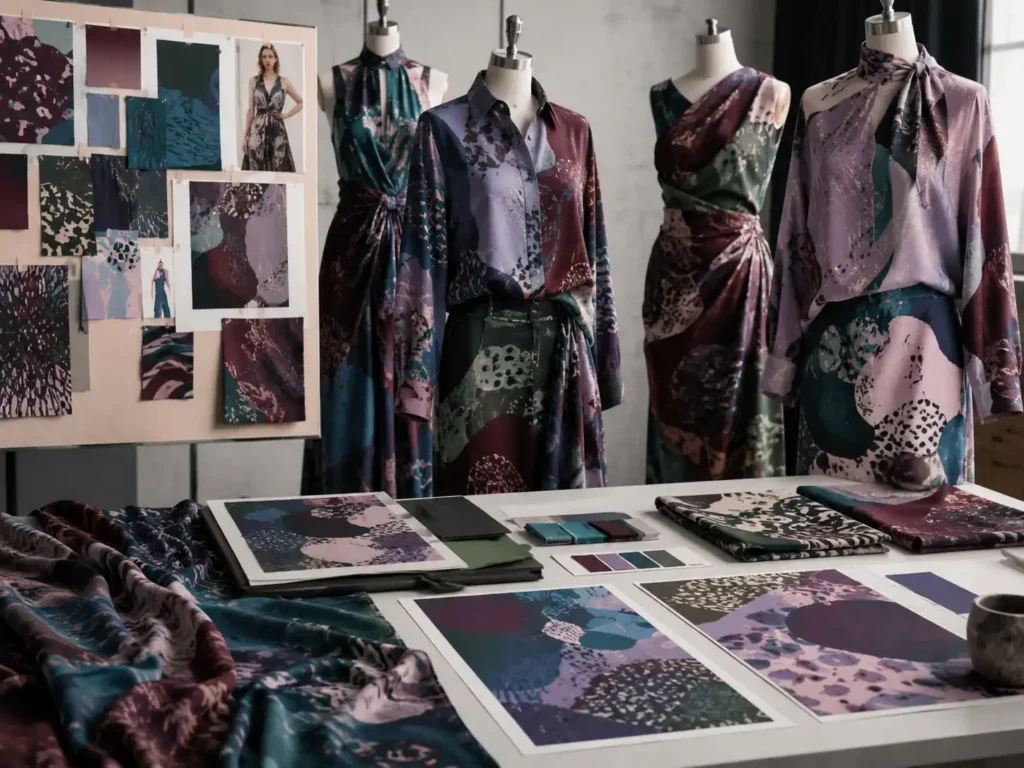
Abstract Animal

  • Recolored or deconstructed patterns create distinctive brand signatures beyond natural animal tones.
  • Control points: exclusive artwork ownership, repeat construction, color approval, file version and future reuse across categories.

Custom Animal Print Dresses for Complete Collections
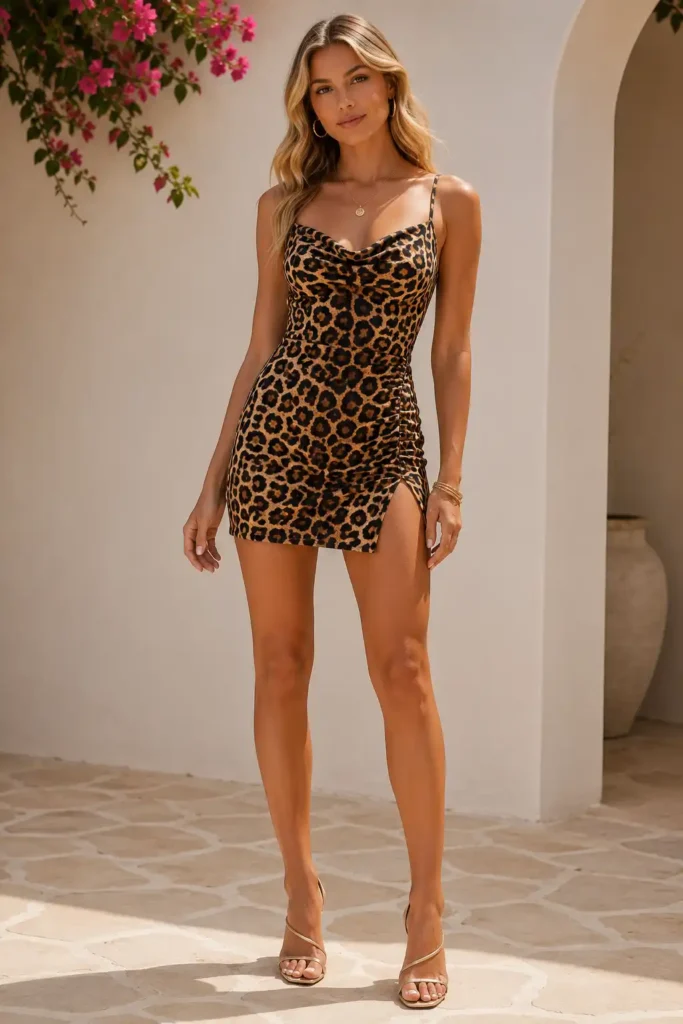
A print-led collection needs silhouettes with distinct commercial roles. Product cards below connect garment shape, suitable fabric, fitting risk and selling occasion instead of treating every dress as the same construction.

Printed Mini Dress

Best for fast fashion drops, parties and summer capsules. Common bases include crepe, woven polyester, satin and stretch mesh. Key controls are safe length, waist position, neckline stability and balanced motif placement.

Printed Midi Dress

A versatile format for day-to-evening, occasion and ecommerce ranges. Fabric drape, waist shaping, slit height, sleeve balance and print scale should remain proportional across sizes.

Printed Maxi Dress

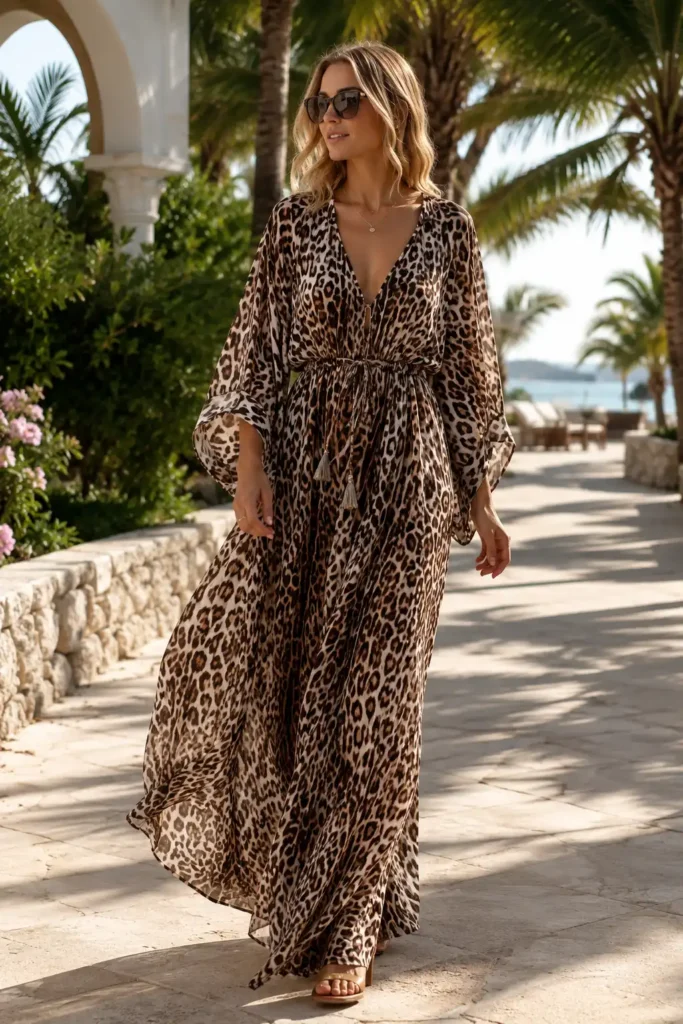
Suitable for resort, vacation and statement collections. Long panels magnify direction errors, shade variation and hem imbalance. Rayon, chiffon and printed woven fabrics require shrinkage and length control.

Bodycon Print Dress

Jersey, ponte and stretch mesh create fitted silhouettes, but motif distortion can increase over bust, waist and hip. Stretch recovery, side-seam balance and measurement tolerances need close control.

Animal Slip Dress

Satin or lightweight woven bases support refined leopard and snake patterns. Bias or near-bias structures require drape evaluation, strap adjustment, neckline control, seam smoothness and careful pressing.

Printed Wrap Dress

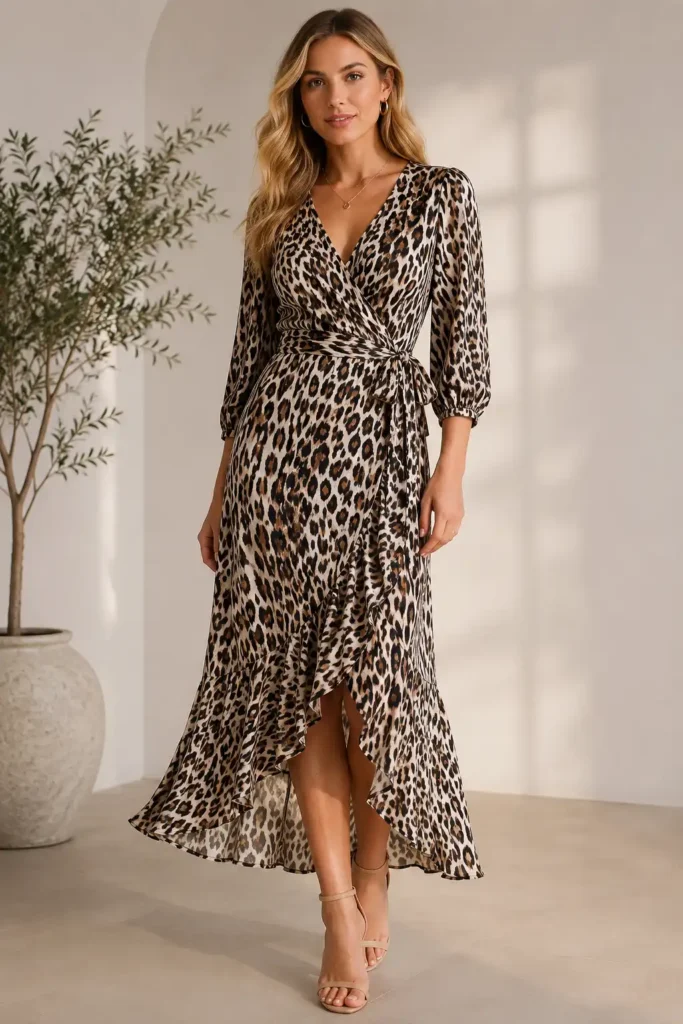
Wrap shapes fit broad selling occasions and allow visual movement across prints. Overlap coverage, tie position, neckline security, waist placement and print direction determine wearability.

Corset Print Dress

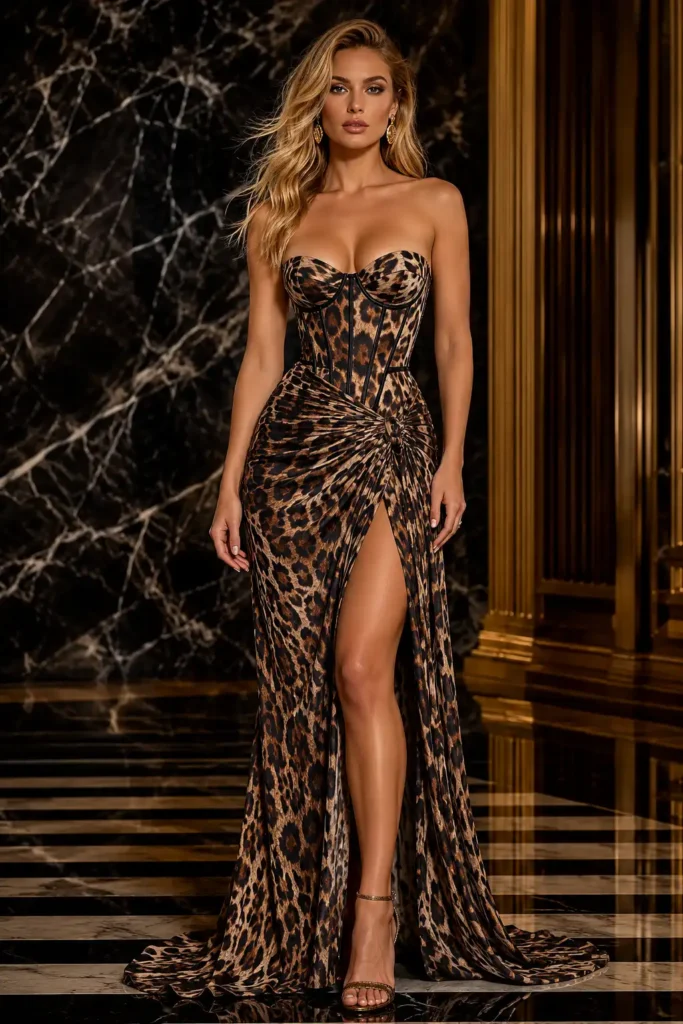
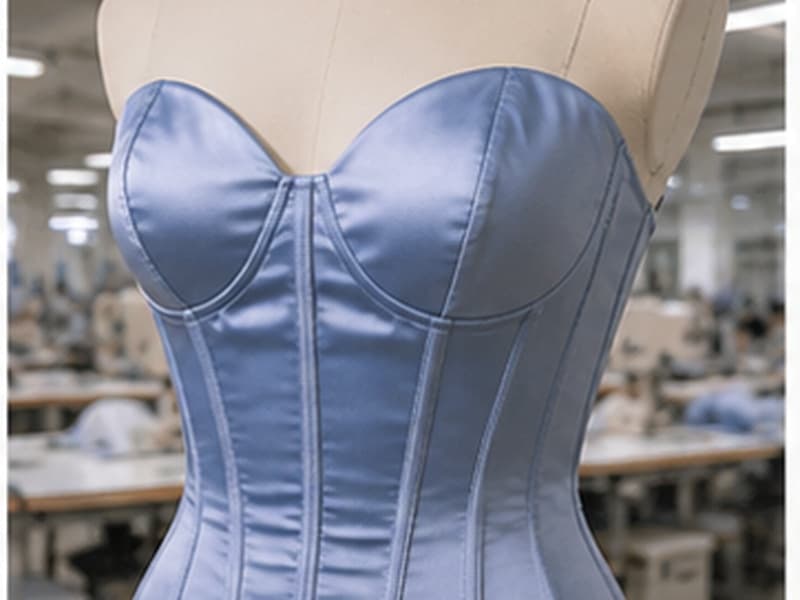
Printed satin, structured woven or mesh overlays create high-impact party styles. Cup shape, boning, support, anti-slip details, lining and motif placement around panel seams require sample validation.

Ruched Print Dress

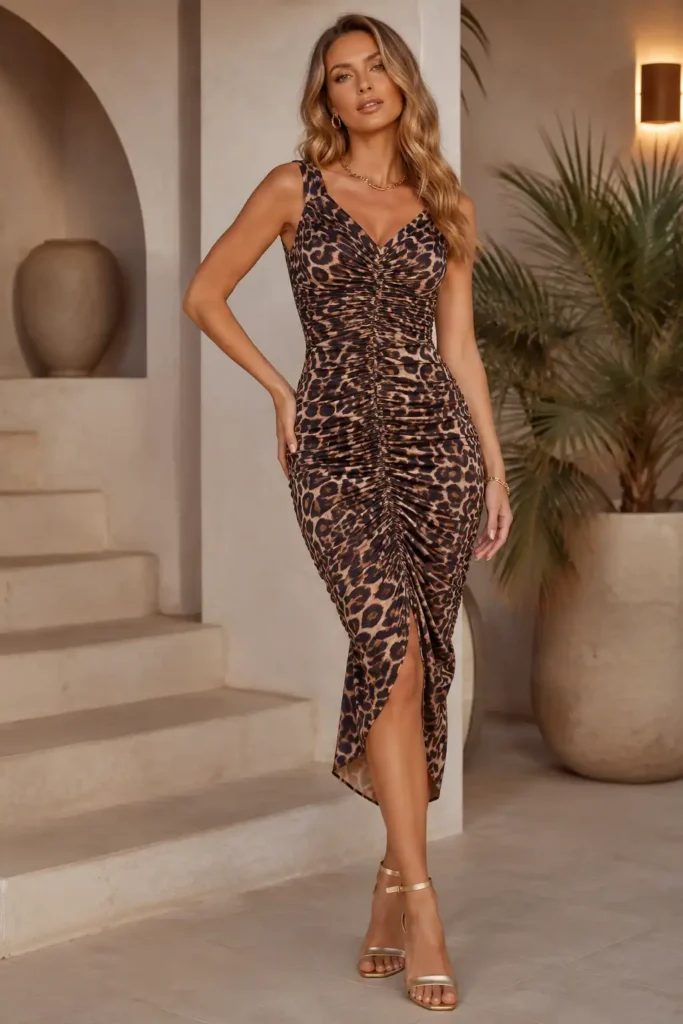
Ruching adds texture and can soften print scale, yet uneven gathering creates visible imbalance. Stitch tension, elastic behavior, seam strength, drawcord placement and left-right consistency are checked.

Halter Print Dress

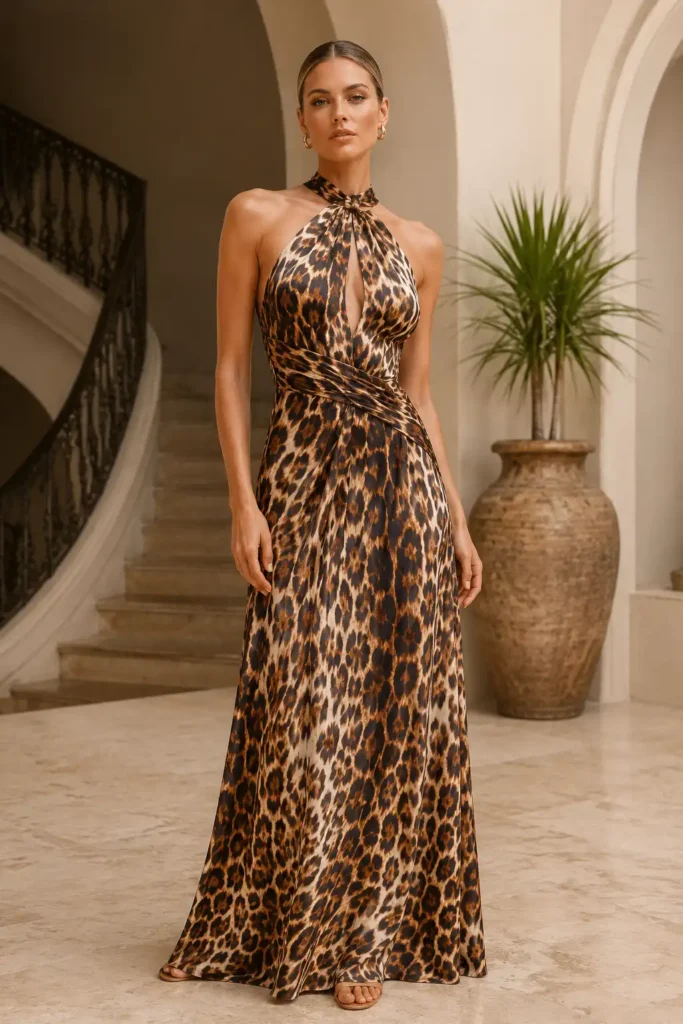
Halter silhouettes suit resort and party ranges. Neck tension, armhole coverage, back support, tie construction and upper-body print placement need fit review across the size range.

Strapless Print Dress

Bold motifs support statement strapless styles, while upper-bust fit remains critical. Anti-slip tape, boning, internal support, neckline shape and print symmetry should be approved before bulk.

Cut-Out Print Dress

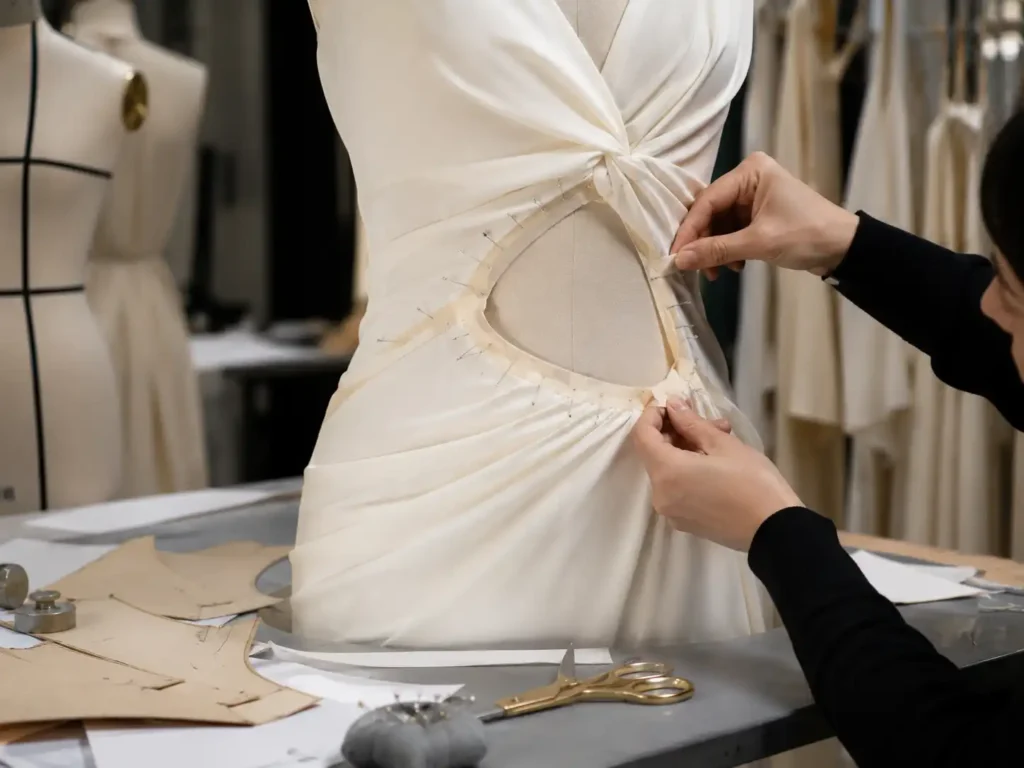
Cut-outs interrupt motifs and place stress around openings. Edge stabilization, lining coverage, reinforcement, seam placement and secure fit are evaluated during first and revised samples.

Shirt Print Dress

Leopard, cow and abstract patterns work well on casual woven dresses. Placket alignment, button placement, collar balance, pocket motifs, sleeve direction and hem stability guide production.
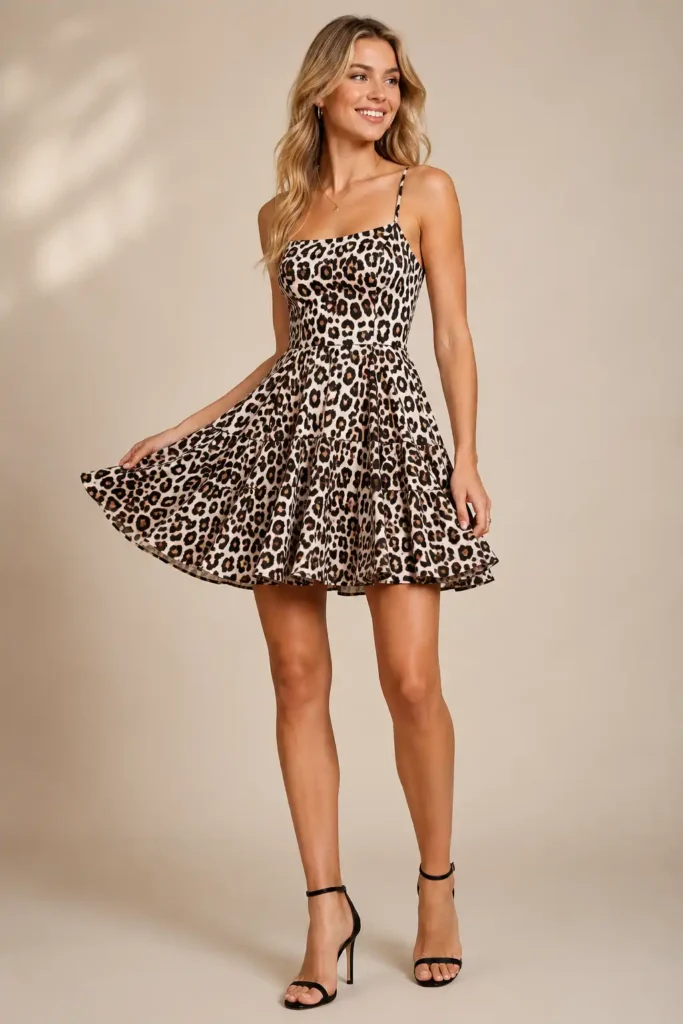
Skater Print Dress
A fitted bodice and flared skirt suit commercial young-fashion ranges. Waist seam level, skirt flare, print distribution, zipper flatness and hem balance should stay consistent across sizes.

Resort Print Dress

Lightweight chiffon, rayon, viscose and linen blends support beach-to-dinner capsules. Transparency, lining, shrinkage, maxi balance, print direction and travel packing receive early review.

Party Print Dress

Mesh, satin, jersey and sequin-accented bases create high-impact nightlife products. Bust-waist-hip fit, zipper performance, lining, stretch direction and surface protection shape bulk control.

Long-Sleeve Print Dress

Sleeve panels introduce extra directional risk. Arm mobility, cuff or sleeve opening, stripe orientation, seam alignment and pattern continuity should be checked on the approved size range.

Animal Print Collections Built for Selling Scenarios

Product development becomes clearer when each style has a role in the launch plan. Fabric, fit, sample type, packaging and replenishment strategy can then follow the selling scenario.

Party and Club

Mini, bodycon, ruched, corset and cut-out dresses rely on visual impact and secure fit. Development prioritizes stretch direction, bust-waist-hip proportions, lining coverage, zipper flatness, photo-ready samples and surface-safe packing.

Resort and Vacation

Maxi, wrap, halter and lightweight mini dresses need flowing fabrics, controlled transparency, balanced length and travel-conscious folding. Printed rayon, viscose, chiffon and woven polyester are reviewed for shrinkage, drape and print direction.

Occasion Statements

Midi, satin slip, corset and structured dresses need refined finishing, stable necklines, lining, clean pressing and controlled color. Packaging should protect shine and prevent deep folds before retail presentation.

Social Media Drops

Short launch windows favor photo-ready samples, strong print scale and coordinated colorways. SKU planning, hero-style prioritization, barcodes and split delivery can support content, presale and replenishment schedules.

Seasonal Transitions

Animal prints can bridge late summer, fall and holiday ranges through color and fabric changes. Repeat artwork may move from rayon to satin, jersey or velvet-look bases, but each fabric change requires new fit and print evaluation.

Private Label Capsules

A coordinated set of dresses, skirts, tops or jumpsuits can use one print family across several silhouettes. Label artwork, hangtags, SKU labels, individual packing and carton ratios are planned alongside the style assortment.

Every Element Can Follow Your Brand Direction

A finished animal print dress combines artwork, fabric, silhouette, construction and retail information. Coordinated development avoids a print-led design feeling disconnected from the garment or brand identity.

Original Artwork

Develop from approved brand artwork, a repeat file or a reference direction. File ownership, version control and intended product use should be confirmed before sampling.

Print Colorways

Natural brown, monochrome, blue, red, pastel, metallic-look and seasonal palettes can be evaluated against fabric base, print route and physical color references.

Fabric Base

Satin, chiffon, rayon, viscose, woven polyester, jersey, stretch mesh, crepe and cotton blends create different shine, drape, transparency and print definition.

Dress Silhouette

Mini, midi, maxi, bodycon, slip, wrap, corset, halter, strapless, ruched and shirt-dress structures can be matched to print scale and selling scenario.

Neckline and Sleeve

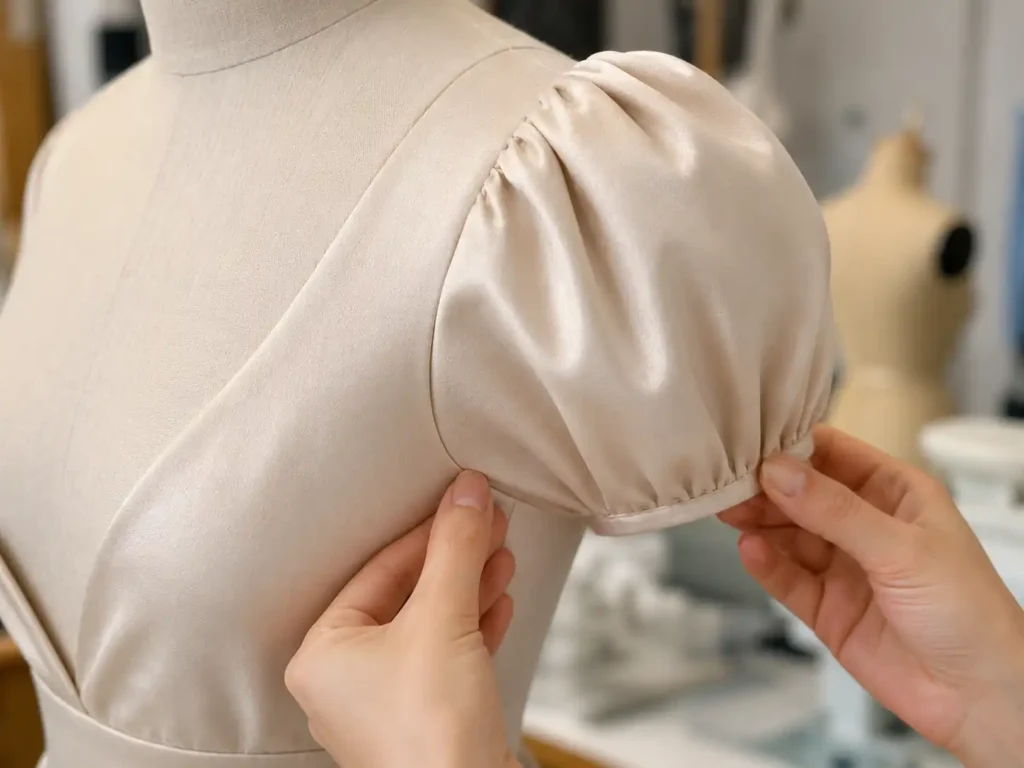
Square, sweetheart, halter, cowl, off-shoulder, one-shoulder, long sleeve and puff sleeve options change pattern placement, support and material consumption.

Lining and Coverage

Full lining, partial lining, double mesh, bodice lining and skirt lining are selected around transparency, skin comfort, structure and target retail appearance.

Labels and Trims

Woven labels, care labels, size labels, zippers, sliders, cups, boning, elastics and decorative trims are matched for color, comfort, durability and bulk availability.

Retail Packaging

Hangtags, barcode stickers, SKU labels, individual polybags, size stickers, carton marks and warehouse labels support receiving, inventory and retail presentation.

Matching Prints, Fabrics and Dress Structures

Print DirectionRecommended Fabric BasesSuitable Dress StructuresMain Development Controls
LeopardSatin, crepe, rayon, stretch meshSlip, midi, maxi, bodycon, partySpot scale, warm-neutral balance, shine, seam visibility, reorder color
CheetahCrepe, woven polyester, jerseyMini, midi, wrap, skaterSmall-spot clarity, repeat density, negative space, stretch response
ZebraJersey, ponte, stretch mesh, woven polyesterBodycon, halter, wrap, maxiStripe direction, symmetry, stretch distortion, cutting orientation
SnakeMesh, satin, lightweight polyester, jerseyMini, slip, corset, partyFine-detail resolution, color gradation, panel seams, print clarity
TigerJersey, rayon, mesh, crepeRuched, bodycon, maxi, long sleeveOne-way layout, stripe angle, bust and hip distortion, sleeve direction
CowCotton blend, twill, woven polyesterShirt dress, mini, skaterLarge motif placement, pockets, placket, blank-area balance
Abstract AnimalChiffon, viscose, satin, crepe, printed wovenResort, occasion, wrap, maxiArtwork ownership, repeat, exclusive colorway, cross-category use


Stock Prints or Exclusive Artwork: Choose Deliberately

Both routes can support successful collections, but they involve different timelines, originality, supplier dependencies and reorder risks. A clear route prevents late changes after sampling begins.

Stock Print Route

Stock printed fabric can shorten early development when the base cloth, colorway and usable quantity are available. Selection should still verify fabric composition, weight, width, handfeel, transparency, shrinkage, colorfastness direction and batch continuity. A sample cut from one roll does not guarantee matching replenishment months later. Recommended checks include available yardage, dye or print lot, supplier reorder conditions, minimum fabric purchase, expected wastage and whether another brand can access the same pattern. Stock prints work best when speed and proven fabric availability matter more than print exclusivity.
  • Confirm actual stock before sample approval.
  • Keep a physical fabric reference.
  • Recheck availability before repeat orders.
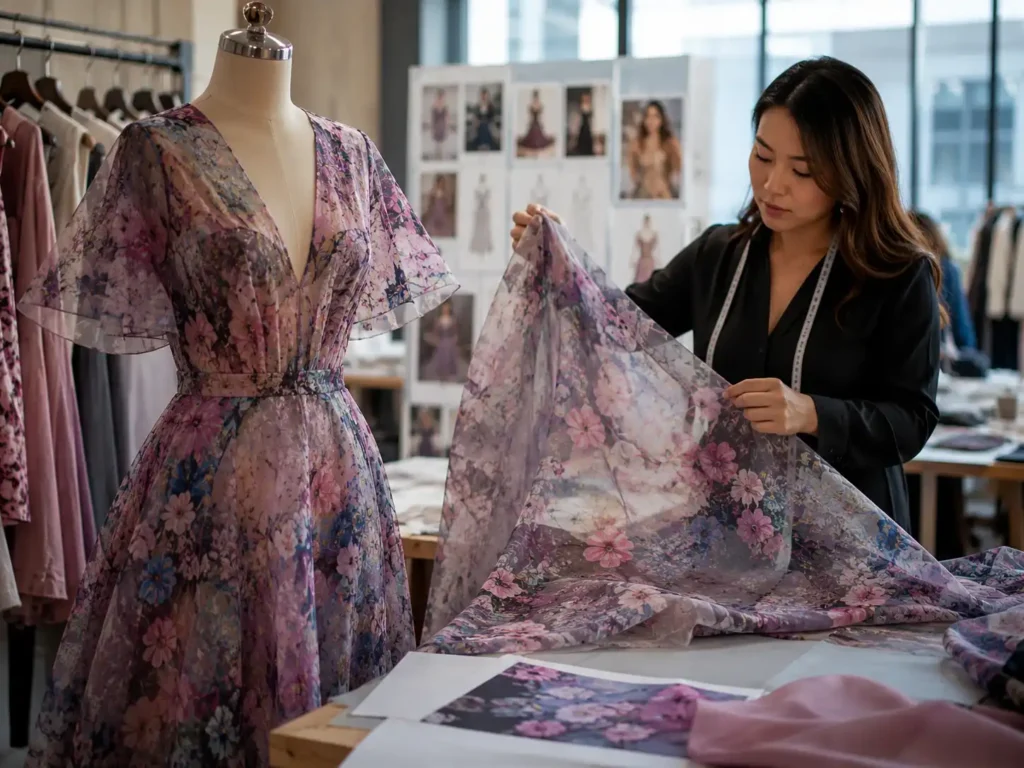
Exclusive Print Route

Exclusive artwork gives a collection stronger visual ownership and allows controlled scale, repeat and colorway development. Production preparation may involve repeat construction, file cleaning, color separation, base-fabric testing, print sampling and supplier minimums before garment sampling. Artwork version, physical color reference, approved print swatch and intended product categories should be recorded. Exclusive prints are most valuable when the pattern can extend across dresses, skirts, tops or future seasons rather than serving one isolated style.
  • Prepare production-quality artwork.
  • Approve repeat, scale and color physically.
  • Protect files under NDA-based cooperation.

Selecting a Printing Route for Each Program

Jinfeng evaluates and coordinates suitable print solutions according to artwork complexity, fabric composition, quantity, handfeel, color requirements and garment structure. Final feasibility depends on the selected print partner and approved base fabric.

Digital Printing

Well suited to multicolor gradients, fine snake textures, photographic effects and frequent artwork changes. Digital routes can support complex color without separate screens, while bulk color, penetration, handfeel and repeat accuracy still require physical approval.

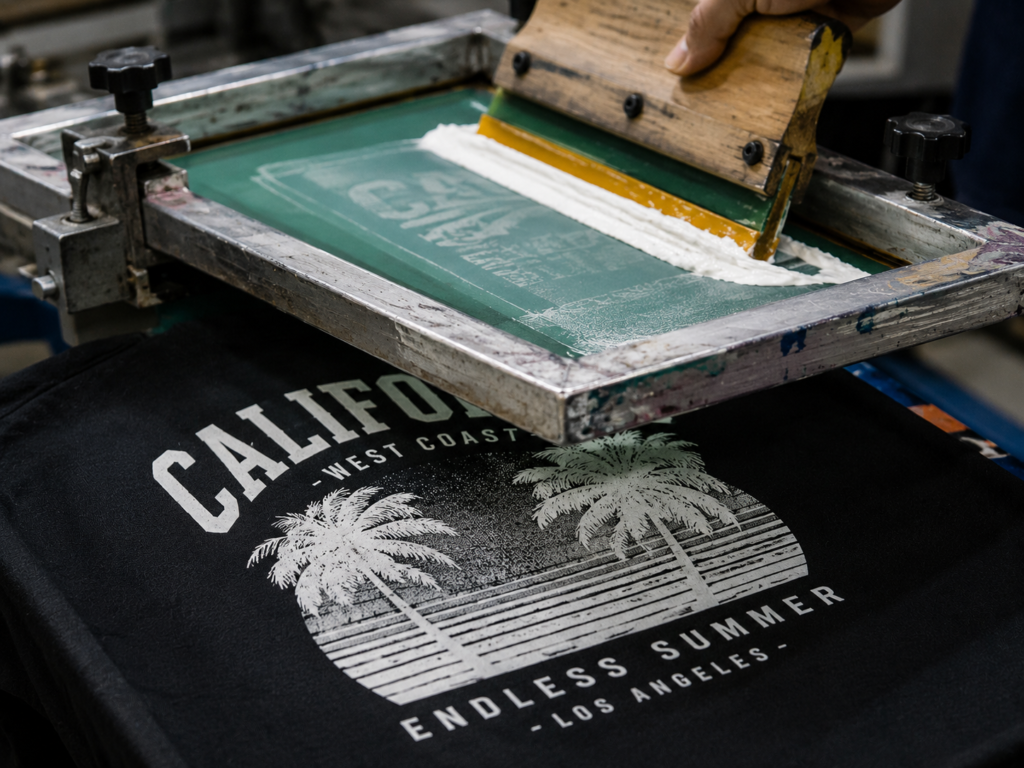
Screen Printing

Useful for repeat programs with controlled color counts and commercial quantities. Screen setup, color separation, registration and minimum print runs influence cost and timing. Bold leopard, zebra or simplified animal patterns may suit the route.

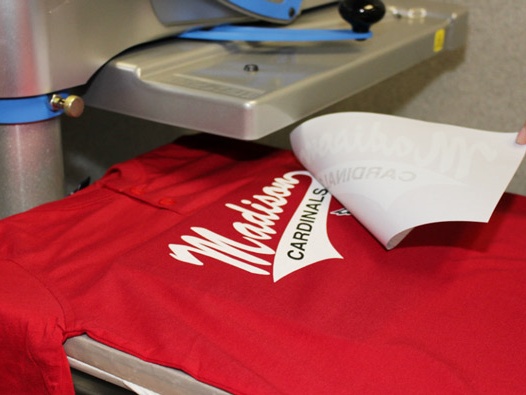
Heat Transfer

Often matched with polyester bases for sharp color and strong surface definition. Heat behavior, stretch response, migration risk and handfeel should be evaluated before garment sampling, especially on fitted or light-colored products.

Placement Printing

Designed for a motif positioned on a specific bodice, skirt or panel rather than repeated across the full fabric width. Pattern dimensions, print area, cutting tolerance and size grading need coordinated development.

Approving Print Color Before Bulk Production

Color approval should follow physical fabric, controlled references and documented decisions. Animal prints often combine several neutrals, making small shifts visible across large garment areas.

Define Standard

Provide Pantone numbers, a physical swatch, an original garment or an approved printed reference. Record which source has priority when references differ.

Select Base Fabric

Base color, fiber, weave, shine and surface texture affect printed appearance. A color approved on matte crepe cannot be assumed identical on satin or mesh.

Develop Print Swatch

The selected print partner prepares a strike-off or print swatch at the intended repeat and scale. The swatch should use the planned bulk fabric whenever possible.

Review Lighting

Evaluate under daylight and indoor lighting. Warm beige, chocolate, black and gray can shift visibly, while satin reflection may change perceived depth.

Record Approval

Keep the approved swatch, artwork revision, print scale, base fabric and review date together. Photos support communication but do not replace the physical standard.

Verify Bulk Lot

Incoming printed fabric is compared against the approved standard for shade, clarity, repeat, flaws and batch consistency before cutting begins.

Controlling Print Direction and Motif Placement

Not every all-over print requires exact matching, but every print needs a declared cutting rule. Direction, scale and garment structure determine where control adds value and where random placement remains acceptable.

Front Bodice

Feature motifs near the neckline or bust can dominate the product image. Placement is reviewed for balance, symmetry requirements and the effect of darts, cups or princess seams.

Waist Seam

A cut waist interrupts stripes and scales. Designers may prefer continuity, deliberate contrast or random alignment. The decision should appear in the technical file.

Side Seams

Strict matching can raise fabric consumption. For many leopard prints, controlled direction and balanced density matter more than exact spot matching; zebra stripes may need closer visual review.

Center Back

Back zippers can split a major stripe or feature motif. Pattern layout and zipper allowance are reviewed where centered visual balance matters.

Sleeve Direction

Long and puff sleeves can expose reversed one-way prints. Sleeve grain, direction arrows and cuff orientation should be clear before marker making.

Skirt Panels

Maxi and flared skirts use wide or multiple panels. Print clusters, blank zones and directional lines are reviewed across front, side and back views.

Pockets and Plackets

Shirt dresses and casual styles need a choice between matched pockets, deliberate contrast or random placement. Button plackets also affect stripe or block continuity.

Graded Sizes

A placement looking balanced in the base size may shift in larger or smaller sizes. Engineered placement requires graded print or pattern planning rather than one fixed position for every size.

Fabric Bases Transforming Animal Prints

The same artwork can feel refined, fluid, sporty or provocative depending on the base cloth. Fabric selection should connect print clarity with drape, stretch, transparency, comfort, sewing behavior and intended retail position.

Satin

Creates shine and color depth for slip, midi, corset and occasion dresses. Risks include snagging, press marks, seam puckering, shade perception and fold creases. Matte, stretch and heavier satin options produce different results.

Chiffon

Supports flowing maxi, wrap and resort dresses. High transparency usually requires lining. Print direction, color penetration, shrinkage, hem balance and seam finish need control on lightweight constructions.

Rayon and Viscose

Offer soft drape and breathable handfeel for resort and day dresses. Shrinkage, dimensional change, skew and wet handling should be reviewed, while fabric relaxation and pre-production testing support length stability.

Polyester Woven

Provides broad print compatibility and commercial durability across mini, midi, shirt and wrap dresses. Weight, density, surface finish, static, drape and colorfastness determine the final level.

Jersey

Adds stretch and comfort to fitted or casual silhouettes. Spot and stripe shapes can widen over curves, so stretch percentage, recovery, pattern ease, seam wave and shrinkage are reviewed.

Stretch Mesh

Creates layered, sheer and bodycon effects. Print clarity varies with openness and stretch. Transparency, recovery, hole risk, edge finish, lining coverage and label placement receive close attention.

Crepe

A matte textured surface gives animal prints a more refined, less glossy appearance. Crepe works for midi, wrap and occasion silhouettes, with drape, opacity, snag risk and seam quality depending on weight and construction.

Cotton Blend

Supports casual minis, shirt dresses and daywear with a natural handfeel. Print penetration, shrinkage, crease behavior, wash performance and surface smoothness influence finished quality.

Fabric Performance Checks for Printed Dresses

Testing scope depends on fabric, color, market, care claim and brand requirements. Early review identifies risks before a full production lot is cut into garments.

Fabric Weight

GSM or linear weight affects drape, opacity, stretch and garment support. Bulk fabric should remain within an agreed range suitable for the approved sample.

Usable Width

Printed width influences marker efficiency, motif placement and material consumption. Narrower usable width can increase cost or change panel layout.

Shrinkage

Wash or steam shrinkage can alter bust, waist, hip, dress length and hem level. Rayon, viscose and cotton-rich fabrics need particular attention.

Stretch Recovery

Jersey and mesh should recover after extension. Weak recovery can produce bagging, distorted motifs and unstable neckline or side seams.

Transparency

Opacity is checked in normal lighting and on the body. Lining coverage, color and length are selected around the final wearing standard.

Wash Fastness

Printed colors should be reviewed against the intended care method. Testing requirements can be coordinated according to the brand program and market needs.

Rubbing Fastness

Dark animal prints may transfer onto light linings, labels, accessories or skin-contact areas. Dry and wet rubbing risk is evaluated where relevant.

Surface Durability

Snagging, pilling, abrasion or print damage may appear during wear, pressing and packing. Fabric type and end use determine the appropriate review.

Why Print Direction Changes Fabric Consumption

Fabric cost depends on more than price per meter. Width, garment length, motif direction, matching requirements, lining and cutting loss can materially change consumption across the same basic silhouette.

Random All-Over Prints

Non-directional leopard or abstract repeats can often use efficient marker layouts because pieces may rotate within approved grain rules. Efficiency still depends on fabric width, pattern shape, defects and size ratio.
  • Lower matching demand
  • More flexible marker planning
  • Suitable for broad commercial programs

Directional Prints

Zebra, tiger and elongated snake motifs may require every pattern piece to face one direction. Marker flexibility drops, especially with long sleeves, maxi panels or asymmetrical pieces.
  • One-way cutting
  • Higher potential wastage
  • Direction arrows required

Matched or Symmetrical Prints

Matching stripes, major motifs or mirrored bodices can increase consumption because pattern pieces must be positioned rather than nested only for efficiency. Exact expectations should be limited to commercially important areas.
  • Placement zones defined
  • Tolerance agreed before sampling
  • Consumption reviewed by style

Long and Complex Structures

Maxi length, full skirts, ruffles, double layers, lining, cut-outs, corset panels and large sleeves add material. Placement print may require separate panels or print areas tied to pattern dimensions.
  • Length and sweep matter
  • Lining adds separate consumption
  • Complexity affects cutting time

Fit Engineering for Bold Printed Silhouettes

Animal prints make fit deviations easier to see. Pattern work should protect both body proportion and motif flow, supported by measurement records, fitting feedback and controlled grading.

Bust Balance

Bust circumference, upper bust, cup volume, neckline depth and side coverage influence how motifs stretch or shift. Corset and bodycon structures may need cups, boning, lining or pattern reshaping.

Waist Position

High, natural and dropped waistlines change print distribution and body proportion. Uneven waist seams become highly visible on stripes or large motifs, especially across front and back panels.

Hip Ease

Too little ease distorts motifs and pulls side seams; too much ease weakens a fitted silhouette. Fabric stretch, recovery and target fit guide the measurement allowance.

Neckline Stability

Cowl, halter, sweetheart, strapless and deep-V necklines need structure suited to fabric weight and stretch. Stability is reviewed on the body, not only on a flat garment.

Armhole Coverage

Armhole depth and shape affect side exposure, movement and print interruption. Sleeveless styles are checked for bra coverage and balanced front-back fit.

Dress Length

Mini safety, midi proportion and maxi floor clearance should be defined by base size and grading rules. Shrinkage and fabric relaxation can alter final length.

Side Seam Balance

Twisted side seams disrupt stripes and visual flow. Grain direction, pattern balance, fabric skew and sewing tension are reviewed when distortion appears.

Size Grading

Grades should preserve neckline, armhole, waist, slit and motif balance across sizes. A larger size is not created by adding equal width everywhere; product-specific rules are needed.

Construction Details Behind Sellable Printed Dresses

Print creates first impact, while construction determines fit, durability, comfort and repeatability. Detailed approvals turn a visual concept into a production-ready garment.

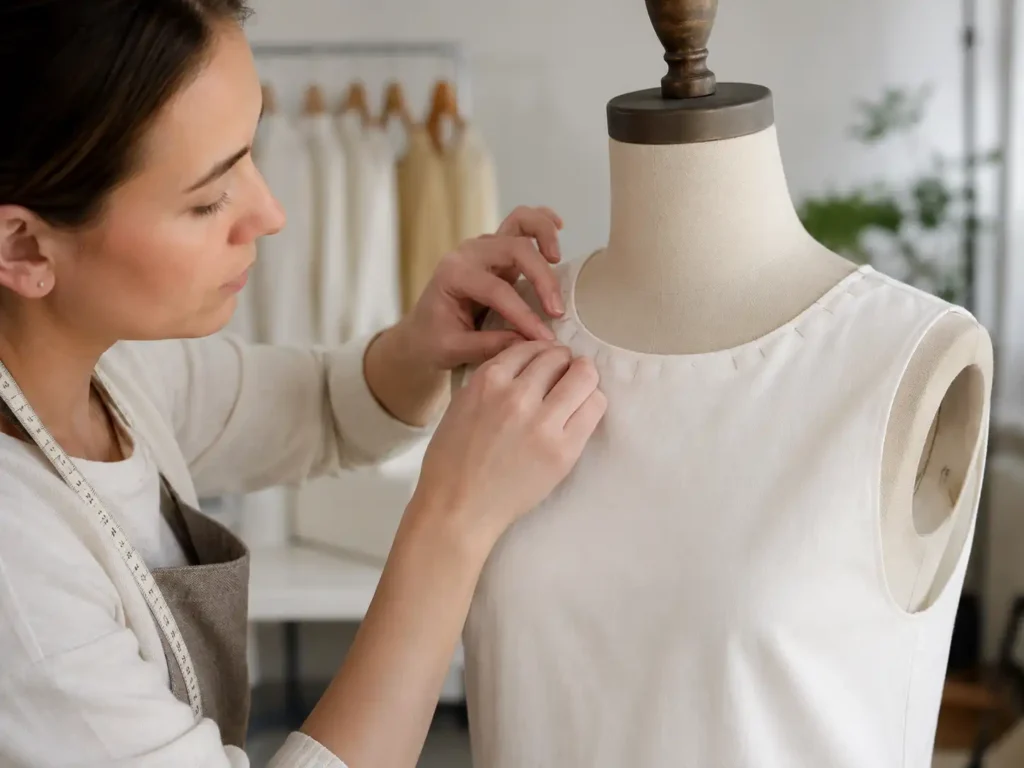
Neckline Stabilization

Stay tape, lining, facing, elastic or controlled seam construction can support necklines depending on fabric and shape. Printed mesh and lightweight woven necklines need protection from stretching.

Lining Coverage

Lining may cover the full garment, bodice, skirt or selected panels. Coverage should protect modesty and comfort without creating visible edges under stretch mesh or lightweight fabric.

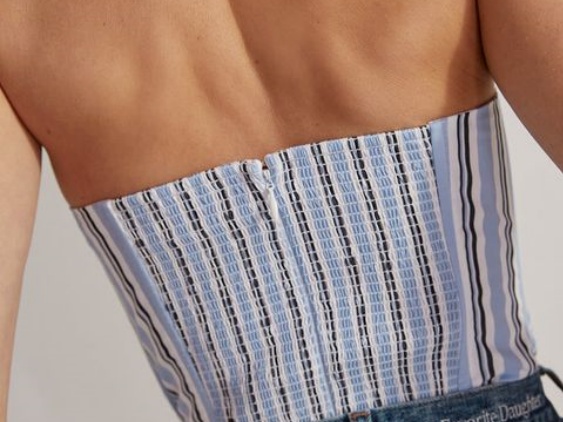
Invisible Zipper

Zip length, tape color, seam allowance, top finish and installation tension affect flatness. Bold stripes or spots can highlight zipper rippling and center-back imbalance.

Ruched Seams

Gather ratio, elastic length, stitch security and left-right balance control the finished texture. Print density changes visually when fabric is compressed, so sample approval should show the intended effect.

Corset Support

Cup shape, boning type, channel position, anti-slip support and lining work together. Printed panels need careful motif placement because each seam divides the artwork.

Cut-Out Reinforcement

Openings need stable edges, correct seam allowance, lining or binding and stress-point reinforcement. Print placement should avoid accidental focal points at sensitive openings.

Slit Control

Slit height, overlap, reinforcement and lining shape influence movement and coverage. Long directional prints can make uneven slit placement especially obvious.

Hem Finishing

Narrow hem, baby hem, blind hem or cover finish is selected by fabric and silhouette. Maxi hems are checked for balance after hanging, pressing and final measurement.

What We Review Before the First Sample

Complete inputs shorten clarification loops and improve sample accuracy. Missing information can be discussed, but measurement, print and construction decisions must be confirmed before bulk approval.

Front and Back Views

Technical front and back drawings reveal seam lines, openings, closures, lining zones, print direction and details not visible in one reference image.

Base Measurements

Bust, waist, hip, dress length, strap length, armhole, neckline depth, slit height and hem width establish the fit target for the sample size.

Size Chart

Finished-garment measurements and tolerances should be separated from body measurements. Size names alone do not provide a production standard.

Grade Rules

Rules explain how critical points change from size to size. Neckline, armhole, waist, length and slit grading may need product-specific control.

Print Artwork

Files should include repeat, scale, direction, color references and placement notes. Artwork names and revision numbers prevent version confusion.

Fabric Preference

Fiber, weight, stretch, shine, drape, transparency and target handfeel guide sourcing or alternatives. A visual reference alone may not define performance.

Lining Requirements

Coverage, color, stretch, handfeel and attachment method should be stated, especially for chiffon, mesh, light satin and cut-out structures.

Trim Details

Zippers, sliders, cups, boning, elastic, buttons, hooks and decorative trims require material, color, size, quality and position information.

Label Artwork

Woven labels, care labels, size labels and hangtags need approved artwork, content, dimensions, material and placement.

Packaging Files

Barcode list, SKU table, polybag details, stickers, carton marks and warehouse instructions should enter review before PP approval.

Quantity Plan

Quantity by style, color and size affects material sourcing, print MOQ, marker planning, production allocation, packing and quotation.

Launch Calendar

Photo sample, PP approval, bulk completion, inspection, shipment and warehouse dates are planned backward from the selling schedule.

From First Sample to Approved Print Dress

Sample stages answer different questions. A photo-ready garment is not automatically the PP standard, and a fit-approved sample may still need final print, trim or packing approval.

First Sample

Tests overall design, base pattern, main construction, fabric direction and initial print scale. Regular dress samples normally require about 10-15 days after materials and details are ready; complex corset, mesh, lace or special-print styles often require 15-25 days or project confirmation.

Fit Sample

Focuses on bust, waist, hip, neckline, armhole, straps, dress length, slit and wearing balance. Fit feedback is converted into measured pattern changes rather than visual comments alone.

Revised Sample

Confirms recorded corrections to pattern, measurements, fabric, print, trims and workmanship. Revision status should clearly show resolved points and any remaining decision.

Photo Sample

Prepared for campaign imagery or ecommerce content when required. Appearance, pressing, labeling and visual finish are prioritized, while bulk standards still need PP approval.

PP Sample

Represents the intended bulk specification using approved fabric, print, trims, pattern, measurements, construction and packing information. Bulk cutting begins only after approval and file lock.

Golden Sample

Kept as a comparison reference for workmanship, appearance, measurements and finishing. Repeat orders can use the record, while new fabric or print lots still require rechecking.

What Must Be Approved Before Bulk Cutting

Bulk stability depends on a locked reference. Print, garment and packing standards should be approved together so production, QC and finishing teams work from one consistent specification.

Print Standard

Approved artwork revision, repeat, physical scale, colorway, base fabric, print direction, placement rules and physical swatch form the print standard. Bulk printed fabric is compared against the approved reference before cutting.
  • Artwork filename and revision
  • Repeat and scale
  • Color reference
  • Direction and placement
  • Approved fabric swatch

Garment Standard

The PP sample and production file should lock the pattern, base measurements, tolerances, size grading, lining, trims, stitch methods, workmanship and pressing condition. Later changes require formal review because they affect material, time and consistency.
  • Approved PP sample
  • Measurement chart
  • BOM and trim card
  • Sewing instruction
  • QC checkpoints

Packing Standard

Brand labels, care content, hangtags, barcodes, SKU stickers, folding, polybags, size labels, carton ratios, carton marks and warehouse rules are checked before packing materials are fully released.
  • Label artwork
  • Barcode and SKU list
  • Packing instruction
  • Carton breakdown
  • Warehouse guide

Bulk Production Built Around Approved Standards

Production starts after PP approval, material confirmation and file release. Steps below protect print direction, garment measurements, workmanship and packing accuracy through the full order.

Fabric Inspection

Printed lots are reviewed for shade, clarity, repeat issues, flaws, width and usable quantity against the approved standard. Problems affecting cutting are separated or escalated.

Fabric Relaxing

Stretch and selected woven fabrics are allowed to relax according to material behavior before cutting. Relaxation supports dimensional stability and reduces shape change after spreading.

Marker Planning

Markers follow grain, one-way direction, motif requirements, size ratio and fabric width. Matching expectations and acceptable random placement areas are stated in cutting instructions.

Cutting Control

Cut panels are checked for direction, flaws, notches, size identification and critical motif placement. Bundle control prevents size or color mixing.

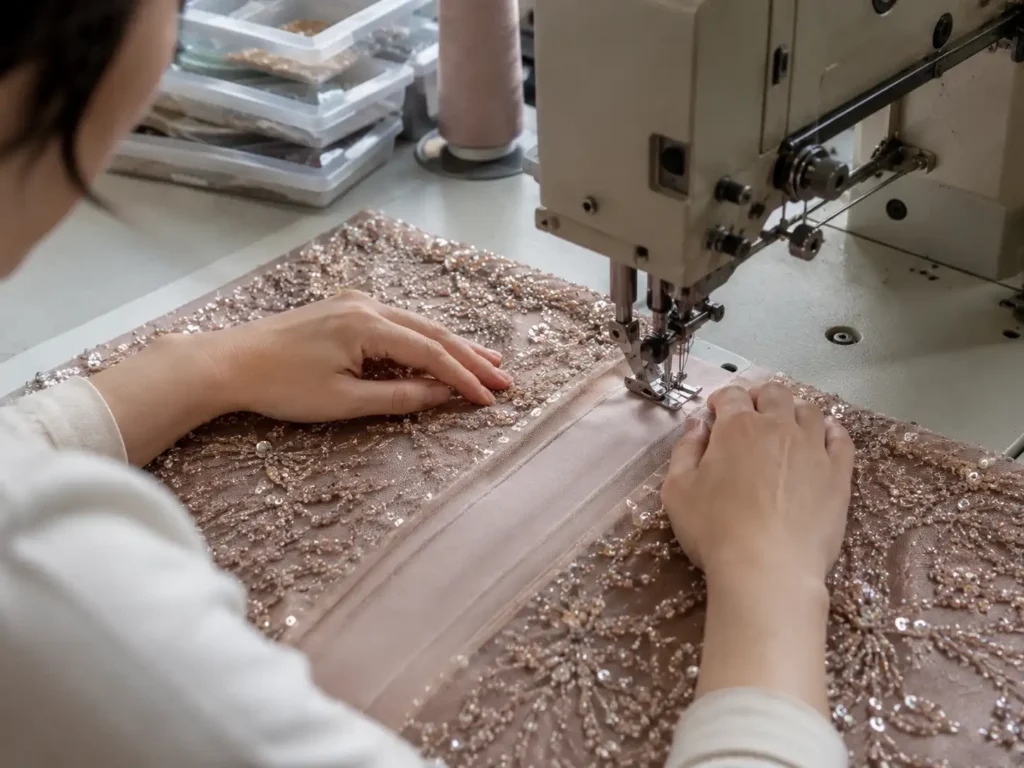
Sewing Production

Line instructions cover seams, stretch handling, lining, zippers, ruching, support components, openings and label placement. First pieces are reviewed before volume continues.

Inline Inspection

Workmanship, measurements, print orientation, seam balance and critical construction are checked during sewing so corrections occur before the full lot is completed.

Finishing and Pressing

Loose threads, stains, seam shape, zipper appearance, hem level, pressing marks and fabric shine are reviewed. Satin and lightweight printed fabrics receive surface-conscious handling.

Packing Release

Final inspection, measurement records, AQL support, label checks, barcode verification, folding, polybags, carton ratios and carton marks are completed before shipment release.

Workmanship Details We Inspect on Printed Dresses

Bold prints attract attention to every construction line. Close-up workmanship control protects the intended visual effect and prevents small defects from becoming obvious in product photography or retail handling.

Balanced Neckline

Left and right neckline shapes should remain even, with stable edges and no gaping. Printed lines near the neckline help expose asymmetry quickly.

Flat Side Seams

Side seams should hang vertically without twisting, roping or excessive stretch. Distorted motifs often reveal tension or grain problems before measurements alone do.

Smooth Zipper

Invisible zippers should operate smoothly, sit flat and finish cleanly at the top. Center-back motifs and waist seams are reviewed for visual balance.

Controlled Ruching

Gathering should follow approved density and placement. Uneven elastic, broken stitches or inconsistent draw length can change both fit and print appearance.

Stable Cut-Outs

Cut-out edges should remain clean, reinforced and symmetrical. Lining or binding should not roll outward, and openings should retain approved coverage.

Secure Lining

Lining should stay inside the garment, support transparency control and move without pulling the shell. Hem and slit relationships are checked.

Reinforced Slits

Slit tops need secure reinforcement and balanced height. Printed maxi styles are checked for front-back length, side seam level and safe movement.

Clean Hemline

Hems should remain even after hanging and pressing. Lightweight chiffon or rayon may require time for the garment to settle before final leveling.

Surface Finish

Stains, snags, press shine, needle marks, loose threads and print damage are checked under suitable lighting before packing.

Quality Control from Printed Fabric to Packing

QC StageInspection FocusMain RiskControl Record
Incoming FabricColor, clarity, repeat, flaws, width, quantityBatch variation, print defects, unusable areasFabric inspection notes and photos
CuttingDirection, motif placement, size, notches, defectsReversed panels, mixed sizes, visible flawsCutting instruction and panel check
Sewing StartFirst pieces, construction, print orientation, measurementsWrong method repeated through the lineFirst-piece review and correction
Inline SewingSeams, zipper, ruching, lining, symmetry, critical measurementsAccumulated workmanship or fit deviationInline QC feedback and repair follow-up
Finished GarmentAppearance, full measurements, stains, snags, hem, pressingSize inconsistency, surface damage, imbalanceMeasurement sheet and garment inspection
PackingLabels, care content, barcode, SKU, folding, polybag, ratioWarehouse errors, wrong identity, packing damagePacking checklist and carton photos
Final ReleaseOrder quantity, AQL support, carton marks, documentsShipment claim or receiving rejectionFinal report and shipment file

Managing Multi-Style Print Collections at Scale

A 10-30 style program can involve several prints, fabrics, colorways, size ranges and packaging sets. File discipline and production allocation are necessary to prevent cross-style errors.

Style Matrix

Each style is linked to silhouette, fabric, print file, colorway, size range, quantity, sample status, PP status and delivery target.

Print Version Control

Artwork filenames, revision dates, repeat size and approved swatches are recorded so an outdated colorway or scale does not enter production.

Fabric Grouping

Styles sharing a fabric base or printed lot can be grouped for purchasing, testing and shade management, while different constructions remain separately controlled.

Sample Tracking

First, fit, revised, photo and PP samples receive clear status, comments and approval records. Open decisions are not hidden inside informal message threads.

Production Allocation

Owned and long-term partner factories are matched by silhouette, fabric, construction, quantity and schedule. Development and quality standards remain centrally coordinated.

Size and SKU Control

Color-size breakdowns, labels, barcodes, polybags and carton ratios are linked to the approved order file. Multi-style packing requires disciplined SKU separation.

Delivery Phasing

Photo samples, launch quantities, hero styles or priority sizes can be planned separately when the approved logistics and production schedule support staged delivery.

Reorder Records

Patterns, measurements, fabric references, print files, trims, workmanship, QC notes and packing requirements are retained to support faster evaluation of repeat orders.

Animal Print Dress Programs for Global Markets

The anonymized programs below reflect the scale and coordination expected from established fashion operations. Brand identities and proprietary artwork remain protected.

United States Ecommerce Program

Program scope: 24 animal print and coordinated solid-color dress styles, 46,800 garments across mini, bodycon, ruched, corset and mesh-overlay silhouettes. The assortment used four print families and multiple size ratios for a high-frequency online launch calendar.

Challenge: stretch mesh and jersey changed motif shape over bust and hip areas, while several corset panels interrupted print flow. Barcode, SKU and polybag information also varied across style-color-size combinations.

Manufacturing response: print scale was reviewed on pattern views before sample release; fit comments were translated into bust-waist-hip pattern corrections; PP standards locked print, support structure, labels and packing. Production files separated each artwork revision and colorway.

Result: 24 styles moved through sample, PP, bulk QC and staged packing under one coordinated collection file. Priority launch styles were prepared first, while remaining styles followed the approved shipment plan.

  • Market: United States
  • Styles: 24
  • Order quantity: 46,800 pcs
  • Core control: stretch distortion, corset panels, SKU accuracy

United Kingdom Occasion Program

Program scope: 16 printed midi, slip, wrap and structured occasion dresses totaling 32,400 garments. Fabrics included satin, crepe, lightweight woven polyester and lined mesh in leopard, snake and abstract animal directions.

Challenge: satin reflection altered perceived color, center-back zippers divided feature motifs, and long hems needed consistent balance after pressing. Several styles required refined neckline and lining coverage for ecommerce imagery.

Manufacturing response: physical print standards were reviewed by fabric base; zipper and waist-seam placement were checked on PP samples; hem leveling followed fabric settling; packaging reduced deep fold pressure on satin surfaces.

Result: the range achieved a consistent color and finishing standard across four fabric categories, with measurement, packing and carton records organized for retail receiving and later repeat-order evaluation.

  • Market: United Kingdom
  • Styles: 16
  • Order quantity: 32,400 pcs
  • Core control: satin color, motif interruption, hem balance

Australian Resort Program

Program scope: 21 printed maxi, halter, wrap and relaxed mini dresses totaling 58,600 garments. The range used rayon, viscose, chiffon and printed woven bases across leopard, zebra and recolored abstract prints.

Challenge: long directional panels increased material use, rayon shrinkage affected final length, and light chiffon required lining and transparency decisions. Travel packing needed to limit severe creasing before warehouse receipt.

Manufacturing response: fabric width and one-way cutting were included in consumption planning; shrinkage and length were reviewed before grading; lining coverage was approved by style; folding and polybag dimensions were confirmed before bulk packing.

Result: 21 styles were coordinated through print, fit, PP, bulk and packing records, supporting a resort launch with multiple delivery groups and repeat-ready production files.

  • Market: Australia
  • Styles: 21
  • Order quantity: 58,600 pcs
  • Core control: direction, shrinkage, transparency, travel packing

Private Label Dresses Prepared for Retail

A finished garment must carry correct brand, care, SKU and warehouse information. Packaging development should begin before PP approval, not after bulk sewing is complete.

Woven Label

Logo, dimensions, color, weave quality, fold type, skin comfort and placement are approved before bulk attachment. Supplier MOQ may differ from garment MOQ.

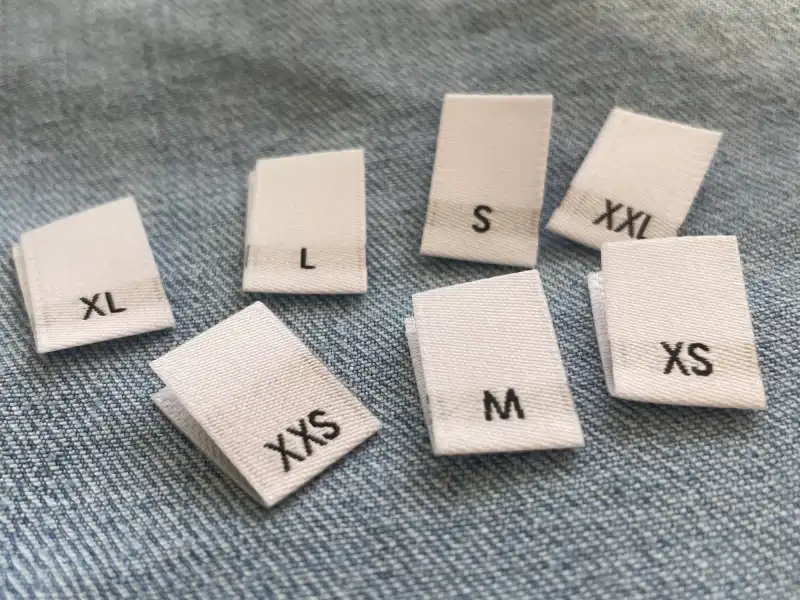
Size Label

Size naming should match the brand system and size chart. Placement needs to remain readable without creating discomfort or showing through sheer areas.

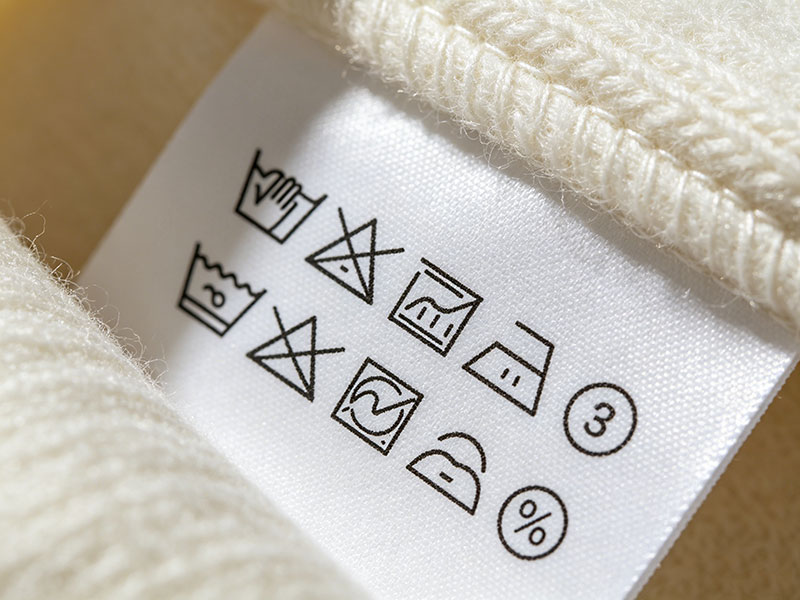
Care Label

Fiber content, care instructions, country of origin and market-specific information are prepared from approved content. Final compliance wording remains subject to brand or local-advisor confirmation.

Hangtag

Artwork, paper, finish, string, attachment point and style information should match the product level. Style numbers and color names require careful proofreading.

Barcode Sticker

Barcode files, SKU mapping, sticker size, scan quality and placement are checked before packing. A visually correct code still needs to scan reliably.

Individual Polybag

Bag size, thickness, closure, warning information, ventilation and sticker placement are selected around garment size, fabric surface and warehouse requirements.

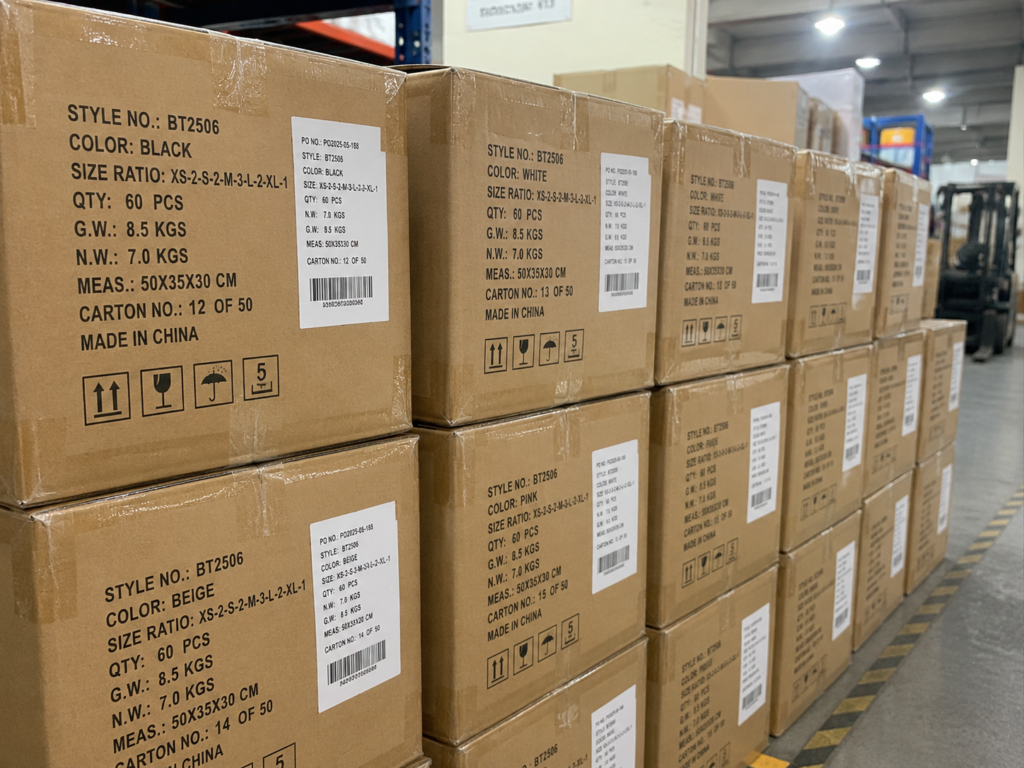
Carton Mark

PO, style, color, size ratio, carton number, destination and handling information should follow the approved warehouse or forwarder template.

Packing Ratio

Solid-size or mixed-size cartons follow the confirmed breakdown. Packing staff use SKU, size and quantity records to prevent receiving discrepancies.

Protecting Exclusive Prints and Repeat-Order Records

Brand-owned artwork and unpublished styles require controlled handling. Repeat orders also need accurate records, while current material availability and production conditions still require new confirmation.

Design Protection

Jinfeng supports NDA-based cooperation for brand names, tech packs, line sheets, original samples, print artwork, patterns, measurements, trim plans, labels, packaging, order quantities and unpublished launch information. Client identity and proprietary files are not used publicly without authorization. Anonymous process examples may be shared only when they do not disclose brand identity, exclusive artwork, price or unreleased product details.
  • NDA support
  • Restricted project use
  • No unauthorized brand disclosure
  • Protected unpublished artwork

Repeat-Order Control

Patterns, measurement charts, approved print files, fabric references, trim cards, sewing instructions, golden samples, QC notes and packing records can be retained for future programs. Records reduce redevelopment time and communication loss. Same-style reorders still require confirmation of fabric stock, new print lot, shade, supplier MOQ, current costs and available production schedule. New colors, new fabrics or revised silhouettes are treated as updated development rather than automatic copies.
  • Pattern and measurement record
  • Print and fabric reference
  • Trim and packing record
  • New lot re-approval

Frequently Asked Questions About Animal Print Dresses

Yes. Brand teams can provide completed production artwork, a repeat file or a reference direction. Jinfeng can review file quality, repeat, physical scale, color references, fabric base and print feasibility with suitable supply partners. Artwork ownership and approved use should be clear before development.

Editable AI, PSD or layered PDF files are preferred. High-resolution TIFF artwork can also be reviewed. Include repeat size, physical scale, direction, color references and placement notes. Compressed screenshots or web images usually require rebuilding before print production.

A reference garment can guide color, scale and style direction, but ownership and legal use must be confirmed by the brand. A physical sample may also require artwork rebuilding, repeat construction and color review before a reliable print file is available.

Jinfeng evaluates and coordinates print routes according to artwork, fiber, fabric surface, order quantity, handfeel and color needs. Digital, screen, heat-transfer or placement routes may be considered through suitable print partners after technical review.

Yes, where the artwork and garment construction support controlled placement. Direction, symmetry, feature motifs, waist seams, zippers, sleeves, pockets and skirt panels can be marked in the technical file. Exact matching may increase fabric consumption.

Common options include satin, chiffon, rayon, viscose, woven polyester, jersey, stretch mesh, crepe and cotton blends. Selection depends on silhouette, drape, stretch, transparency, print clarity, care performance, target price and retail position.

Color approval can use Pantone references, physical fabric swatches, an original garment or a printed standard. A print swatch or strike-off is reviewed on the intended base fabric, then retained with the approved artwork revision and scale.

MOQ starts from 200 pcs per style/color. Different styles cannot normally be combined to reach one 200-piece minimum. Custom printing, dyeing, special fabrics, trims, labels or packaging may carry separate supplier minimums.

Yes. The confirmed quantity for one style/color can be distributed across multiple sizes according to the approved size ratio. A finished-garment size chart, grade rules, size labels and carton breakdown are required for accurate production and packing.

Regular dresses normally require about 10-15 days after details and materials are ready. Complex corset, mesh, lace, special-print or structured styles commonly require 15-25 days or project confirmation. Revisions, custom materials and print swatches can extend timing.

No. A photo sample may be prepared for content or campaign use. A PP sample represents the intended bulk standard with approved fabric, print, pattern, measurements, trims, workmanship, labels and packing information.

Yes. Woven labels, care labels, size labels, hangtags, barcode stickers, SKU labels, polybags, carton marks and warehouse labels can be coordinated. Each item needs approved artwork, content, placement and supplier MOQ review.

Jinfeng can retain patterns, measurements, print files, fabric references, trim records, workmanship notes, QC feedback and packing requirements. New fabric or print lots still require availability, shade, cost and schedule confirmation before production.

Testing can be coordinated according to fabric, color, market and brand requirements. Scope, laboratory, sample quantity, cost, timing and applicable standards must be confirmed for each program. No blanket claim covers every fabric or order.

Start Your Animal Print Dress Program

Send enough information for a focused development and production review. Kelly will coordinate the initial assessment with the relevant product, fabric, pattern and project teams.

For a quotation or sample plan, share your tech pack, reference images, print artwork or direction, target fabric, quantity per style/color, size range, labels, packaging requirements and launch timing. Jinfeng will review print feasibility, fabric behavior, pattern complexity, MOQ, sample scope, production risk and the information needed before a formal offer.Files remain limited to project evaluation, development, production, QC, packing and delivery coordination.

NDA-based cooperation is available for exclusive prints, unpublished designs and private-label information.

  • Tech pack, line sheet or clear front/back references
  • Editable print artwork, repeat size and color references
  • Target fabric, lining and key trim requirements
  • Quantity by style, color and size range
  • Woven label, care label, hangtag and barcode files
  • Target sample date, launch date and destination market
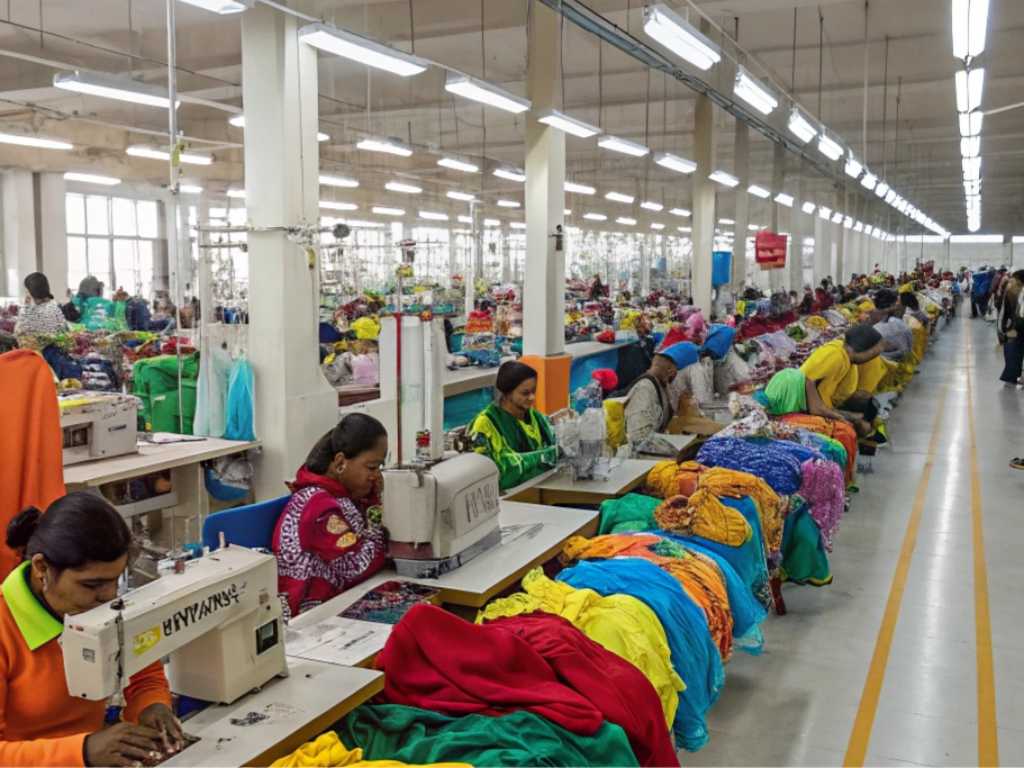
Textile factory workers sewing multicolored fabrics on machines.

Tell Us About Your Dress Project

Share your product details, estimated quantity and development requirements. Our team will review your project and provide practical OEM/ODM production feedback.

Premium Women’s Apparel Production for Fashion Brands

From dress sample development to bulk production, JF Apparel supports fashion brands with confidential OEM/ODM manufacturing, reliable quality control and scalable production support.

START YOUR DRESS PROJECT

Ready to Develop Your Next Dress Collection?

Share your design concept, product requirements or sourcing plans with our team. We’ll review your project and provide practical feedback on development, materials, MOQ and production.

7-10 Days

Sample Development

200 PCS

Starting MOQ

Fast Response

Professional Follow-Up