Skip to content
Abstract Print Dress Manufacturer
Original artwork developed into well-fitted, production-ready dresses for established fashion labels, seasonal collections, and multi-style private-label programs.
- Artwork, repeat, scale, and placement reviewed before fabric printing begins.
- Print strike-offs, base fabric, pattern shape, and garment fit approved through a controlled sampling path.
- Programs can combine 10-30 styles and 20,000-80,000 total pieces across coordinated mini, midi, maxi, resort, party, and occasion dresses.
- Six owned women’s fashion factories, more than 10 long-term production partners, two sample rooms, seven-plus pattern makers, and 15-plus QC inspectors support development and bulk execution.
Manufacturing Facts Behind Complex Printed Dress Programs
Since 2008
6 Owned Factories
10+ Production Partners
2 Sample Rooms
7+ Pattern Makers
15+ QC Inspectors
Built for Established Fashion Labels and Structured Collections
Best Program Fit
- A strong fit includes fashion labels, product development teams, merchandising teams, sourcing departments, premium ecommerce operations, resortwear labels, occasionwear labels, and private-label programs planning coordinated collections.
- Projects normally include defined silhouettes, artwork direction, a size range, quantity planning, branding requirements, and a launch window.
- Multi-style programs benefit most because print, fabric, pattern, approval, and packing standards can be managed under one structured workflow.
Outside Core Scope
- The manufacturing model is not designed for ready-stock purchasing, dropshipping, one-piece fulfillment, no-MOQ requests, or informal orders without a production plan.
- A custom abstract print program requires artwork preparation, print approval, fabric booking, pattern development, sample review, and bulk quality control.
- Clear files and realistic quantities allow the development team to assess cost, timing, print feasibility, and garment construction before commitments are made.

Why Abstract Print Dresses Fail Before Bulk Production
Artwork Loses Clarity
Color Shifts on Fabric
Motifs Hit Seams
Sizes Look Different
Sample and Bulk Drift
Wrong Silhouette Pairing
One Manufacturing System from Artwork to Finished Dresses
Artwork Review
Fabric Direction
Print Development
Pattern Planning
Sample Making
Revision Control
PP Approval
Bulk Production
QC and Delivery
What to Send for Print and Production Review
Original Artwork
Artwork Dimensions
Dress Reference
Fabric Direction
Color Standards
Size Range
Quantity Plan
Launch Window
Abstract Print Dresses Developed for Complete Collections

Printed Mini Dress

Printed Midi Dress

Printed Maxi Dress

Printed Slip Dress

Printed Bodycon Dress

Printed Wrap Dress
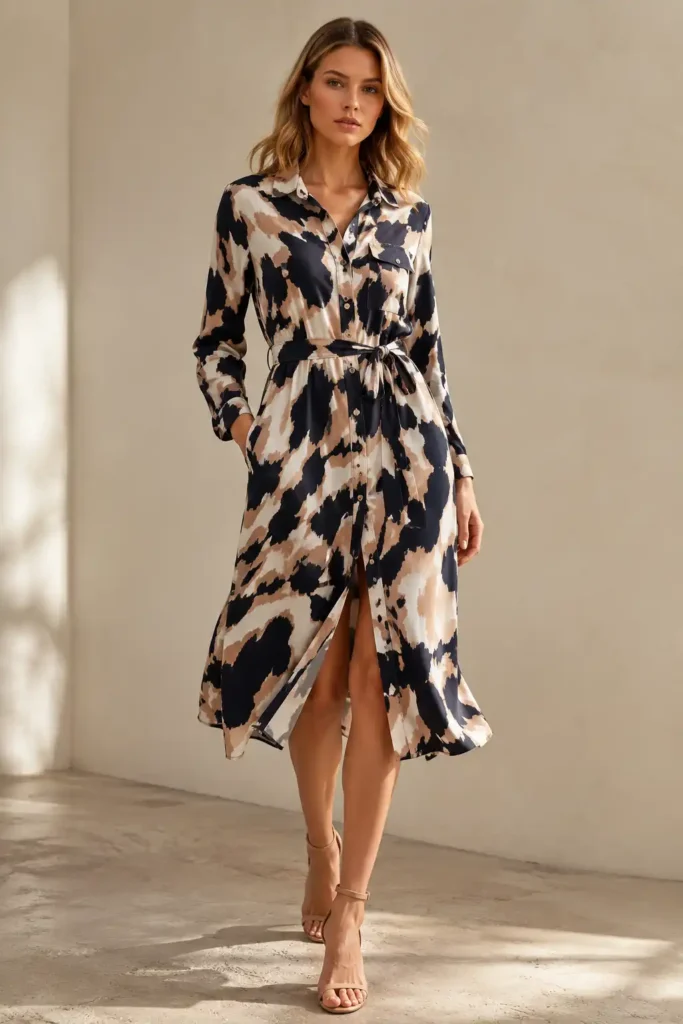
Printed Shirt Dress
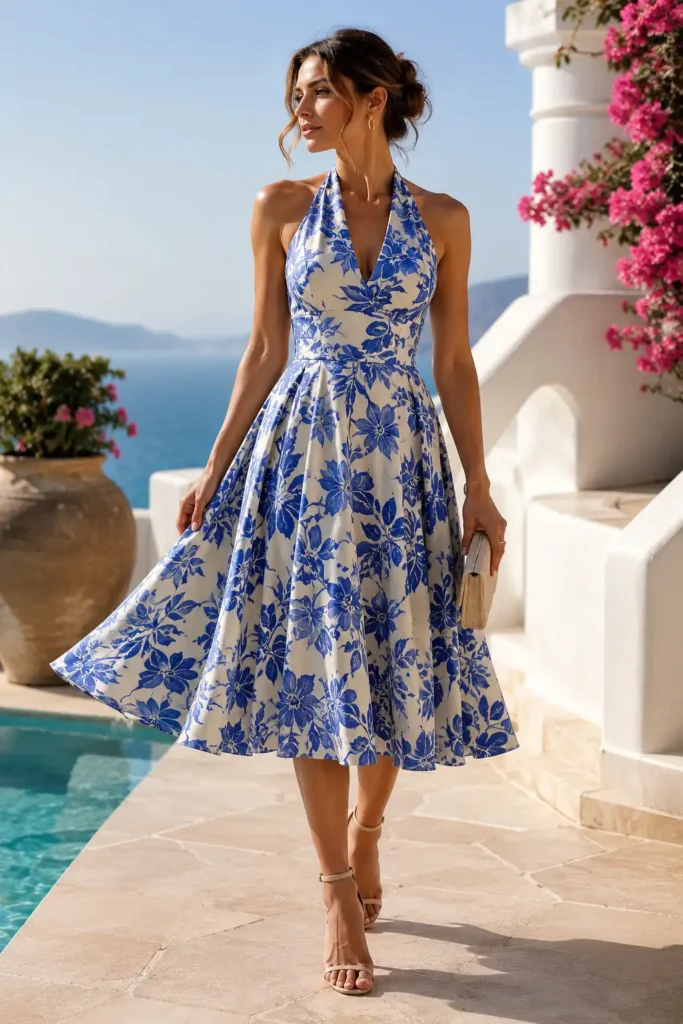
Printed Halter Dress
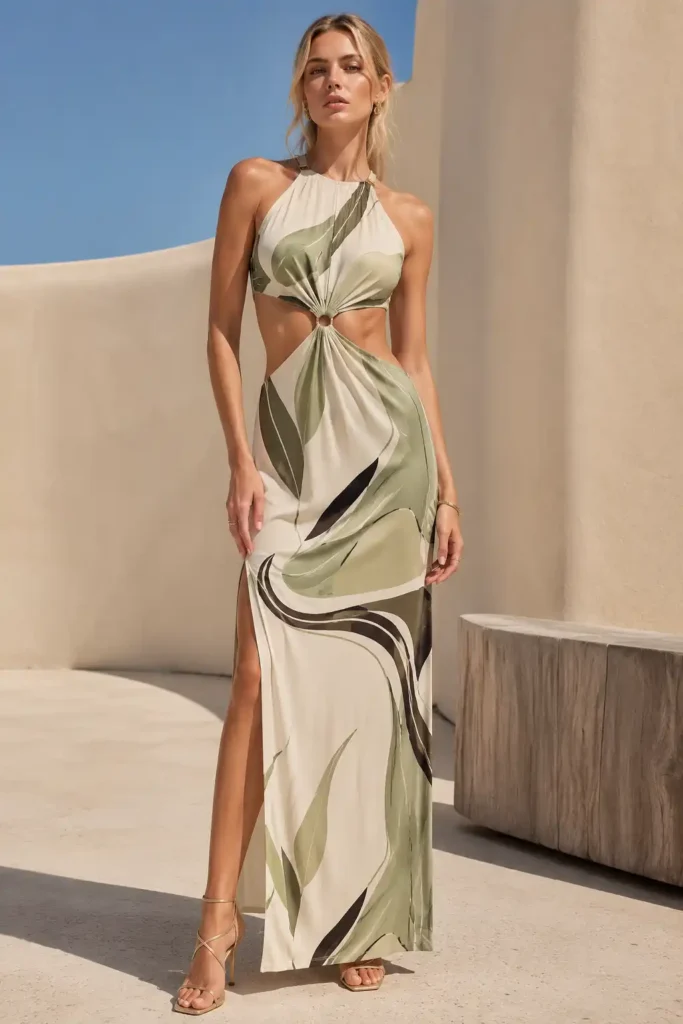
Printed Cut-Out Dress
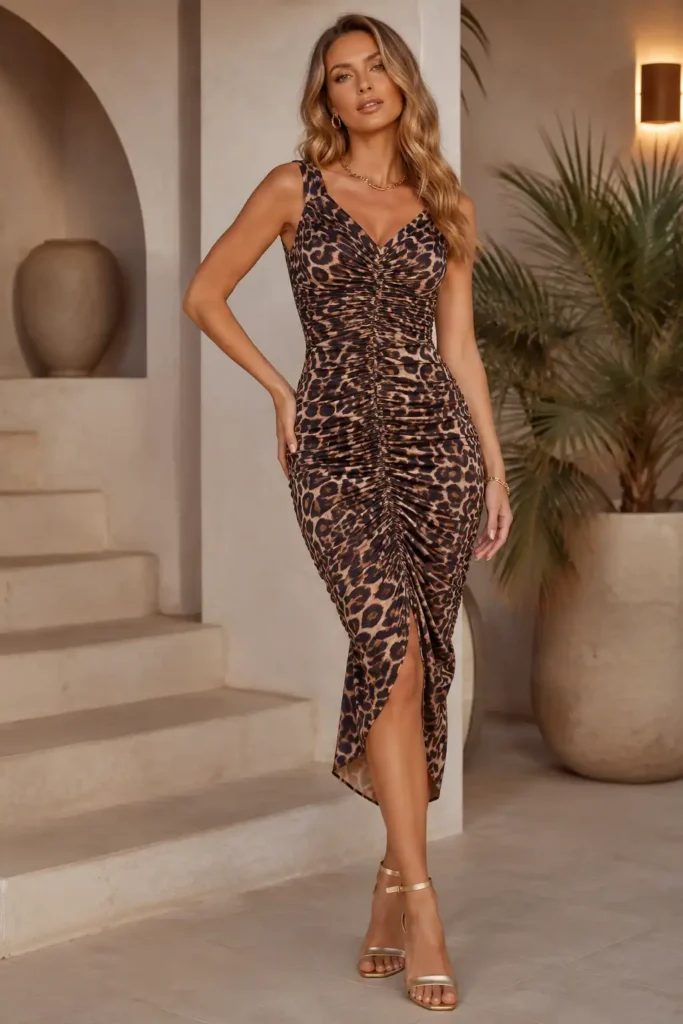
Printed Ruched Dress
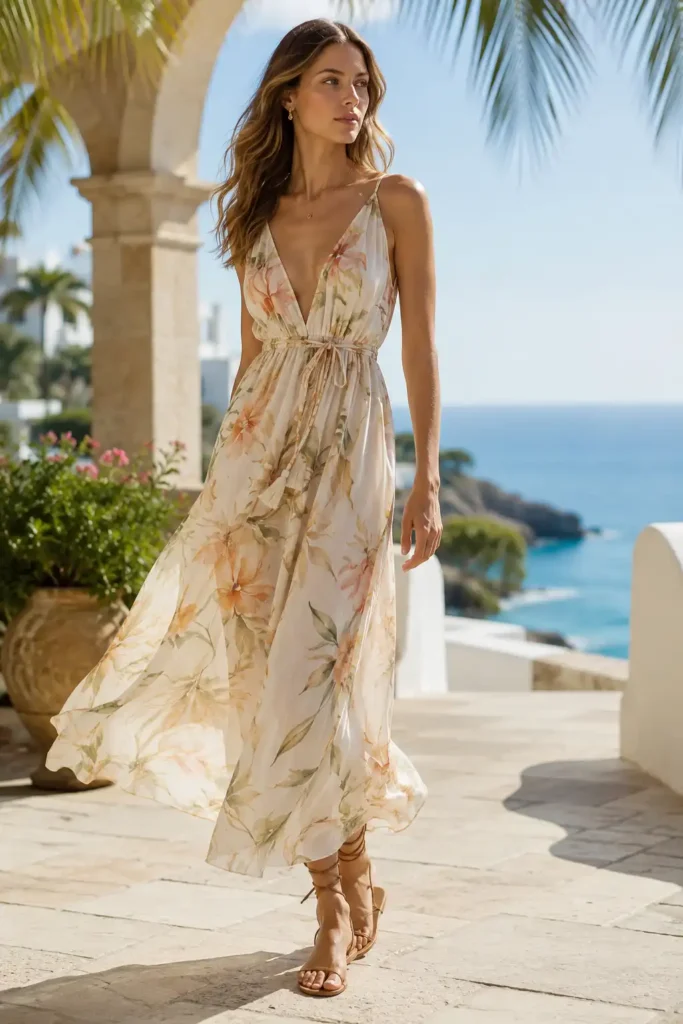
Printed Resort Dress

Printed Occasion Dress
Abstract Print Directions for Distinct Fashion Collections
Painterly Brushstroke
Watercolor Abstract
Geometric Abstract
Marble and Swirl
Organic Shape Print
Gradient Abstract
Retro Abstract
High-Contrast Graphic
Matching Print Scale with Dress Length and Silhouette
Print scale is a garment engineering decision, not only a graphic preference. The same artwork can look premium, crowded, unbalanced, or distorted depending on pattern shape, body contour, gathers, and garment length.
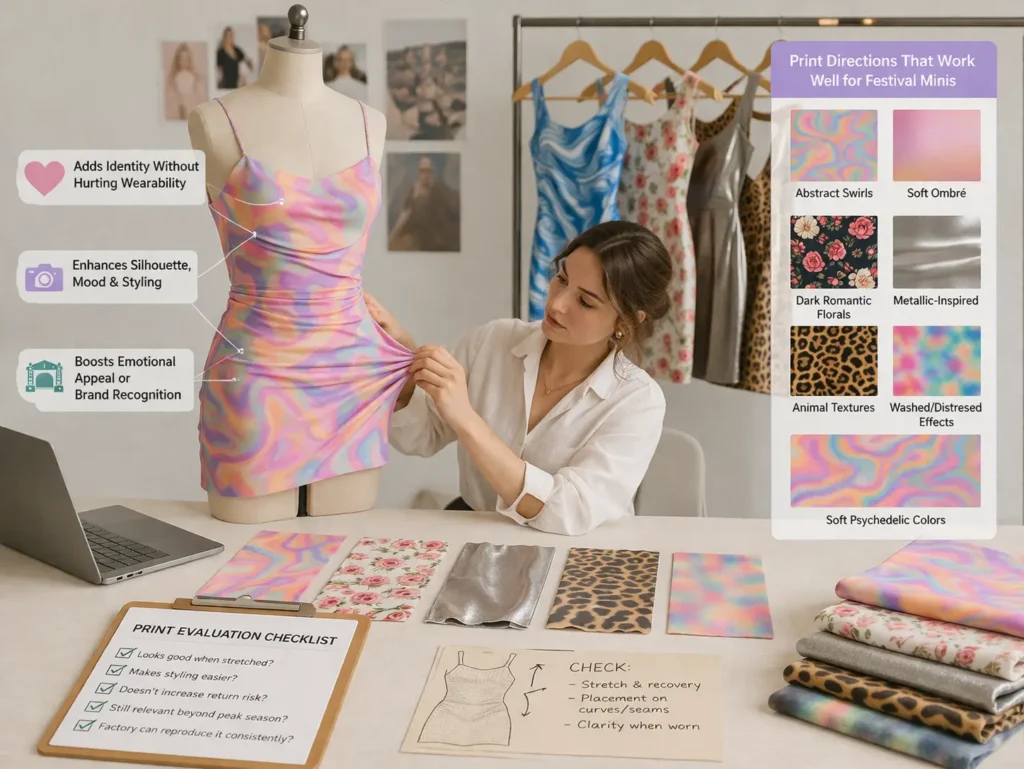
Mini and Short Silhouettes
- Scale control: Short panels may capture only one section of a large repeat, creating visible variation between garments. Smaller or medium repeats often provide more consistent results.
- Body placement: Avoid isolated motifs landing directly on the bust, crotch line, or center hip unless intentionally designed.
- Length control: A few centimeters of length change can alter the artwork crop, especially when a border or gradient is present.
- Recommended review: Print simulation on the base-size pattern, followed by a sample and size-set comparison.
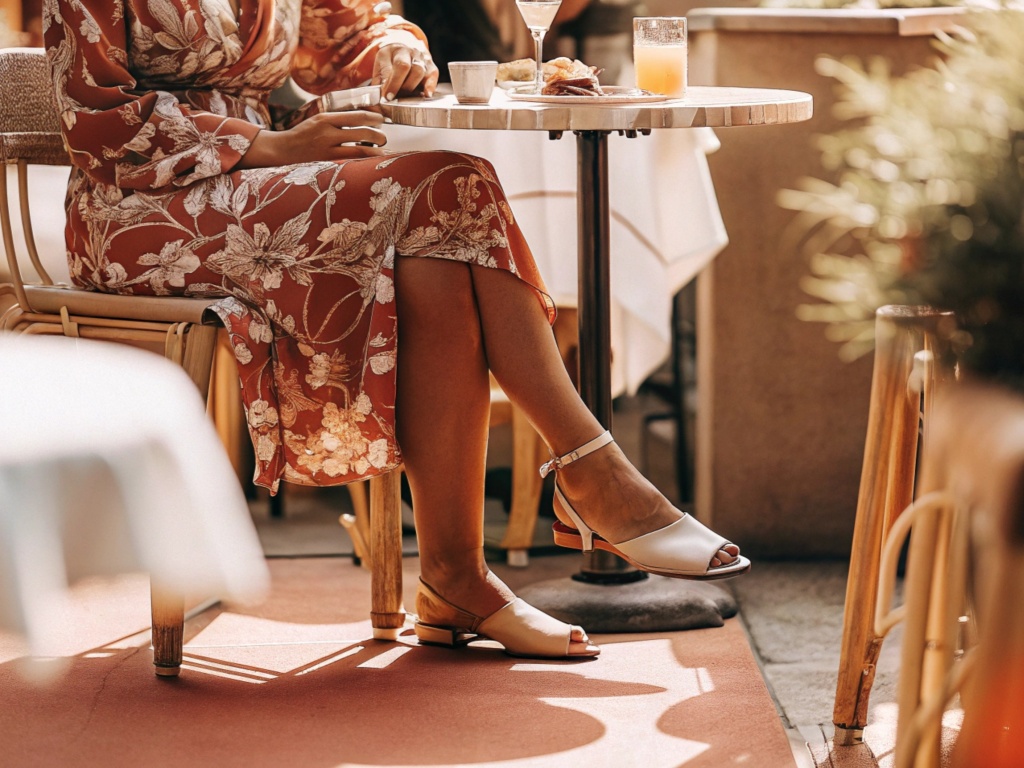
Midi and Balanced Proportions
- Scale control: Midi dresses can support medium-to-large repeats while preserving enough negative space.
- Waist position: Seam or waistline placement should not break the main visual story.
- Silhouette choice: A-line and column shapes display prints differently; flared skirts widen motif spacing toward the hem.
- Recommended review: Front, back, side, and movement views during fit approval.
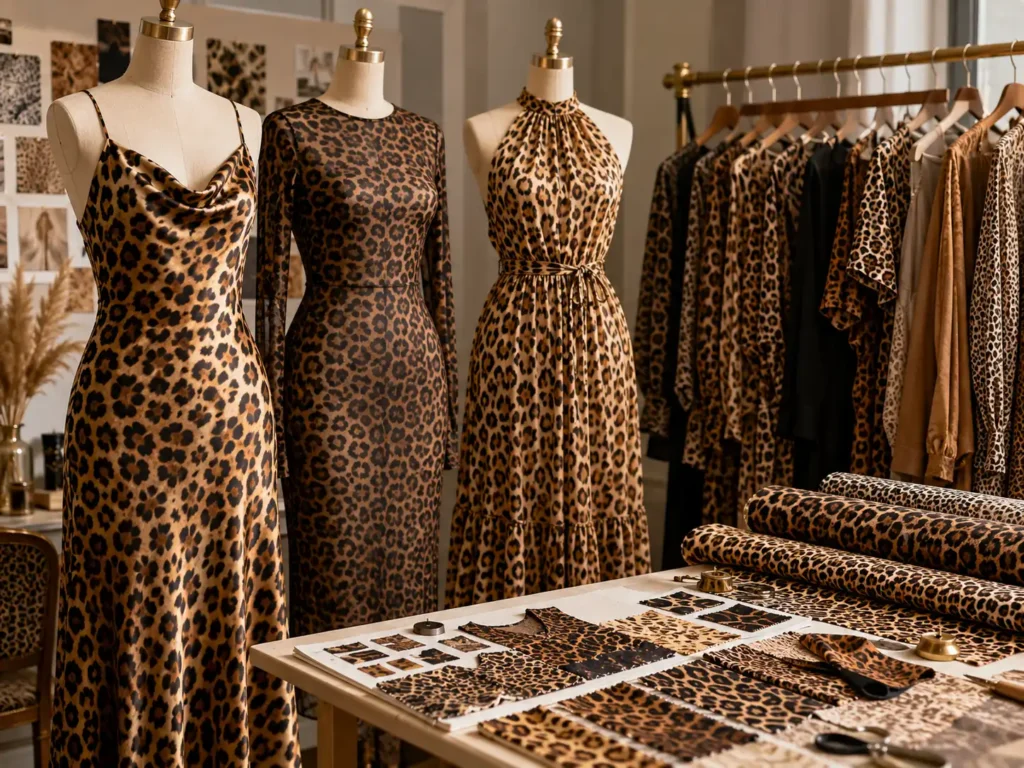
Maxi and Full-Length Panels
- Scale control: Long panels suit painterly, gradient, border, and oversized organic designs.
- Panel risk: Large motifs may differ noticeably from garment to garment unless placement is engineered.
- Hem control: Border and ombre effects require a stable finished length and careful cutting.
- Recommended review: Full-length strike-off or production layout where scale and color transition are critical.
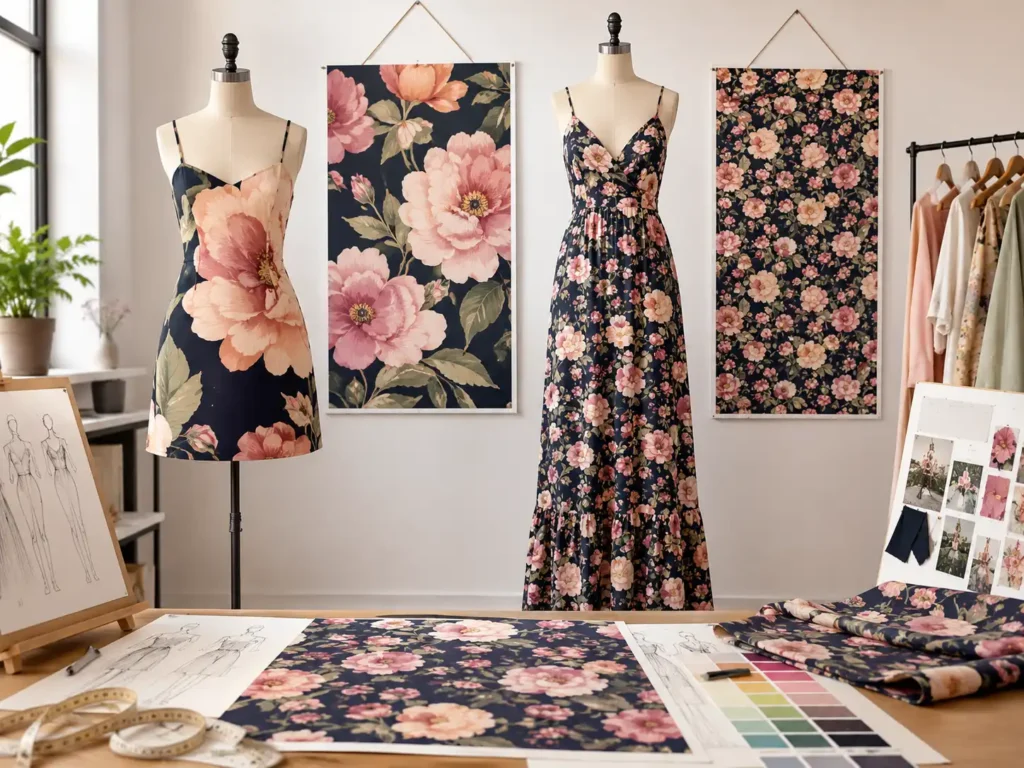
Fitted, Ruched, and Wrap Shapes
- Stretch effect: Bodycon fabrics can widen motifs across the body and recover differently after wear.
- Ruching effect: Gathered areas compress color and shape, often making a large motif unreadable.
- Wrap effect: Overlapping fronts create a moving visual boundary and may hide major artwork elements.
- Recommended review: Worn sample photographs, garment measurements, and panel-specific placement notes.
Base Fabrics That Change How Abstract Prints Perform

Chiffon

Satin
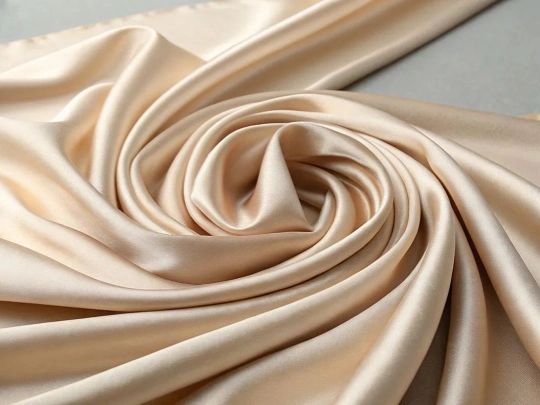
Viscose
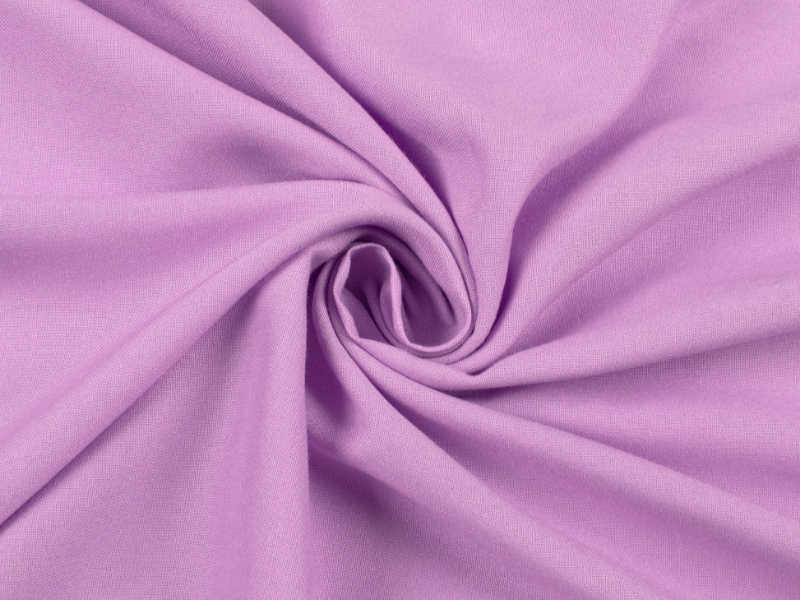
Rayon

Polyester Crepe
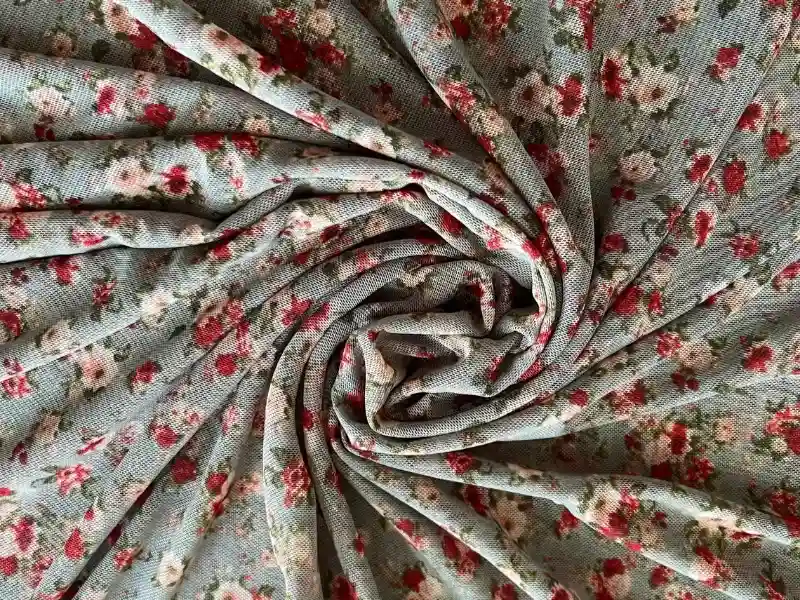
Printed Mesh

Printed Jersey
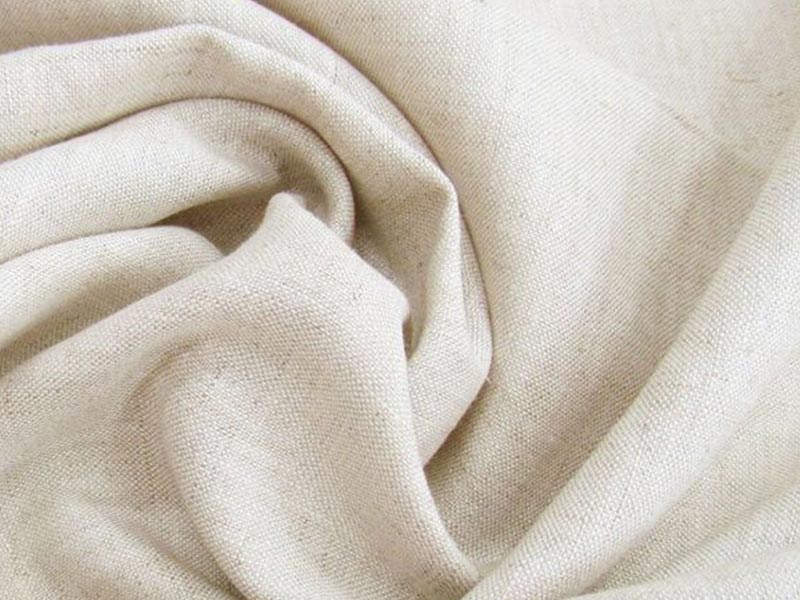
Linen Blend
Choosing the Right Printing Method for Each Program
Abstract describes the artwork direction; digital, screen, sublimation, placement, and border printing describe production methods. Method selection depends on fiber, color count, quantity, repeat structure, placement needs, and approval risk.
| Method | Best Use | Color and Detail | Commercial Effect | Main Control Point |
|---|---|---|---|---|
| Digital Print | Multi-color artwork, gradients, watercolor, small-to-medium production runs | High color range and fine detail | Lower screen setup; cost depends on base fabric, coverage, and quantity | Strike-off color, ink-fabric compatibility, repeat accuracy |
| Screen Print | Repeated artwork with controlled color count and larger volume | Strong flat color; detail depends on screen and mesh | Setup rises with color count; efficient at suitable volume | Color separation, screen registration, repeat joins |
| Sublimation | Polyester-based fabric and vivid all-over artwork | Bright color and good detail on suitable polyester | Efficient for selected synthetic bases | Fiber suitability, heat response, shade consistency |
| Placement Print | Engineered motifs positioned on specific pattern areas | High visual control when layout is approved | More artwork, cutting, and panel-management work | Panel alignment, size grading, cutting identification |
| Border Print | Hem, sleeve, neckline, or edge-focused artwork | Strong directional effect | Fabric layout and garment length influence yield | Finished length, grain direction, border level |
Preparing Abstract Artwork for Fabric and Garment Development
Production-ready artwork combines creative intent with measurable information. Editable files, dimensions, repeat rules, and color standards allow a reliable strike-off and reduce interpretation during sampling.
File Structure and Resolution
- Preferred files: Editable AI, PSD, layered PDF, TIFF, or another agreed production format.
- Resolution: Raster artwork needs enough resolution at actual print size. Enlarging a small internet image usually creates soft edges and visible pixels.
- Linked assets: Include placed images, fonts, profiles, and any external elements needed to reproduce the artwork.
- Ownership: Original and licensed artwork should be confirmed before development begins.
Repeat and Direction
- Repeat unit: Define exact width and height in centimeters.
- Repeat type: Straight, half-drop, mirror, engineered, or non-repeating placement.
- Direction: Confirm one-way, two-way, or non-directional layout. Direction affects cutting efficiency and visual consistency.
- Seam allowance: Important motifs should remain away from cutting and joining zones unless engineered to cross them.
Color and Physical Standards
- Color references: Pantone codes help communication but do not replace a physical printed approval.
- Base color: White, ivory, black, or colored ground changes the visible result.
- Lighting: Review strike-offs under agreed daylight and indoor conditions where relevant.
- Approval record: Comments should identify exact color areas, desired adjustment, and approved version.
Garment Placement Intent
- Scale: State the desired motif dimension on the body, not only a screen percentage.
- Focus area: Identify any motif intended for center front, shoulder, waist, hip, sleeve, or hem.
- Avoid areas: Mark positions where a face, circle, dark block, or high-contrast feature should not land.
- Size range: Confirm whether placement remains fixed, proportional, or allowed to vary by size.
Preparing Abstract Artwork for Fabric and Garment Development
Production-ready artwork combines creative intent with measurable information. Editable files, dimensions, repeat rules, and color standards allow a reliable strike-off and reduce interpretation during sampling.
File Structure and Resolution
- Preferred files: Editable AI, PSD, layered PDF, TIFF, or another agreed production format.
- Resolution: Raster artwork needs enough resolution at actual print size. Enlarging a small internet image usually creates soft edges and visible pixels.
- Linked assets: Include placed images, fonts, profiles, and any external elements needed to reproduce the artwork.
- Ownership: Original and licensed artwork should be confirmed before development begins.
Repeat and Direction
- Repeat unit: Define exact width and height in centimeters.
- Repeat type: Straight, half-drop, mirror, engineered, or non-repeating placement.
- Direction: Confirm one-way, two-way, or non-directional layout. Direction affects cutting efficiency and visual consistency.
- Seam allowance: Important motifs should remain away from cutting and joining zones unless engineered to cross them.
Color and Physical Standards
- Color references: Pantone codes help communication but do not replace a physical printed approval.
- Base color: White, ivory, black, or colored ground changes the visible result.
- Lighting: Review strike-offs under agreed daylight and indoor conditions where relevant.
- Approval record: Comments should identify exact color areas, desired adjustment, and approved version.
Garment Placement Intent
- Scale: State the desired motif dimension on the body, not only a screen percentage.
- Focus area: Identify any motif intended for center front, shoulder, waist, hip, sleeve, or hem.
- Avoid areas: Mark positions where a face, circle, dark block, or high-contrast feature should not land.
- Size range: Confirm whether placement remains fixed, proportional, or allowed to vary by size.
Controlling Print Repeat, Scale, and Visual Rhythm
A successful repeat looks intentional across fabric width, dress panels, body movement, and the full size range. Development decisions need measurable references rather than visual guesswork.
Repeat Geometry
- Straight repeats create a visible grid when motif spacing is not balanced.
- Half-drop repeats can soften alignment and create a more organic flow.
- Mirrored repeats may expose obvious symmetry around center front or side seams.
- Non-directional repeats improve cutting flexibility when artwork allows rotation.
Motif Scale in Centimeters
- Small scale supports gathered, ruched, tiered, and compact mini silhouettes.
- Medium scale provides broad commercial use across midi, wrap, and shirt dresses.
- Large scale needs enough panel area and may require planned placement to avoid random cropping.
- Scale should be reviewed on a body-size printout or digital pattern simulation before strike-off.
Negative Space and Density
- Dense artwork can feel heavy after gathers, overlap, or lining.
- Open negative space helps fitted garments breathe visually but may expose random blank areas.
- Dark coverage influences hand feel, show-through, heat, and perceived weight on some bases.
- A balanced density supports collection consistency across different silhouettes.
Cross-Size Visual Control
- Fixed repeats naturally produce variation across sizes.
- Placement artwork may require separate layouts for size groups.
- Border prints need a stable hem and clear grading rule.
- Size-set samples help define acceptable variation before bulk cutting.

Planning Print Placement Across Every Pattern Piece
Placement engineering connects artwork to paper patterns. Front, back, sleeve, collar, waistband, lining, and skirt panels need a defined visual relationship before bulk printed fabric is cut.
Front Bodice and Bust
- Keep key motifs away from bust darts, princess seams, cup seams, and center-front zippers unless the interruption is intentional.
- Review how curved body volume changes the apparent shape of circles, faces, lines, and gradients.
- Use base-size pattern overlays to assess visual focus before the first garment sample.
Waist, Hip, and Side Seams
- Strong horizontal lines can make waist joins or hip areas look uneven when panels are misaligned.
- Side seam matching may be full, partial, or commercially unnecessary depending on artwork and price position.
- Wrap fronts and ruching need extra allowance because movement changes visible placement.
Sleeves, Ruffles, and Skirts
- Directional artwork should run consistently on both sleeves.
- Ruffles can flip, curve, and compress motifs, requiring smaller scale or controlled cutting.
- Tiered skirts need a planned relationship between upper and lower panels rather than random repeat breaks.
Borders, Gradients, and Hemlines
- Border level depends on finished garment length, hem allowance, and size grading.
- Gradient direction should be consistent from garment to garment.
- Maxi and asymmetrical hems may need separate marker planning to preserve the intended transition.
Approving Color Before Printed Fabric Enters Bulk
Set Color Targets
Confirm Base Fabric
Print Strike-Off
Review Under Light
Record Corrections
Approve Bulk Standard
Print Quality Checks Before Dress Production Begins
Wash Colorfastness
Rubbing Colorfastness
Shrinkage and Skew
Print Clarity
Shade Variation
Fabric Surface
Construction Details That Protect Print and Fit

Ruching
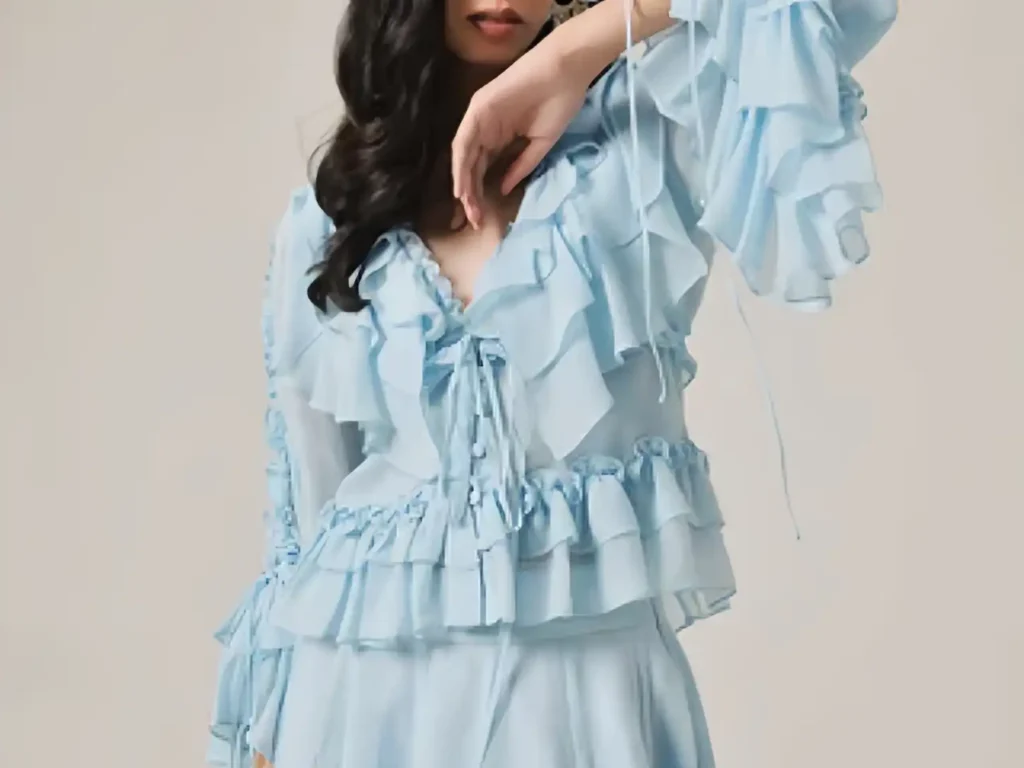
Ruffles
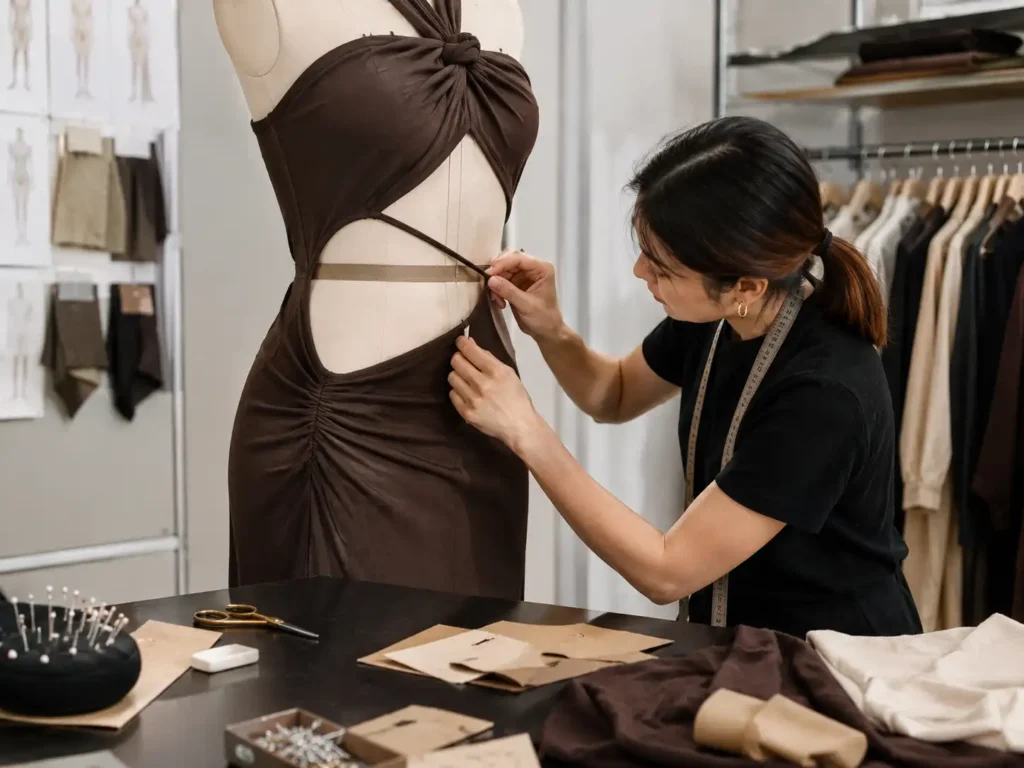
Cut-Outs

Halter Neck

Backless Shape

Wrap Front

Slits

Lining and Binding
Why Tech Packs Matter Before Printed Dress Sampling
Print files describe artwork; a tech pack defines the garment. Both are needed to convert creative direction into measurable sample and bulk standards.
| Tech Pack Area | Required Information | Reason for Print Dress Development |
|---|---|---|
| Flat Sketch | Front, back, side, close-up views | Shows seams, panels, openings, gathers, and areas affecting artwork |
| Measurements | POM list, base size, tolerances, size range | Controls fit, border level, placement, and grading |
| Fabric | Composition, weight, stretch, hand feel, opacity | Guides print method, color result, drape, and lining |
| Artwork | File name, scale, repeat, colorway, placement | Links creative files with garment pattern pieces |
| Construction | Seams, stitches, lining, zipper, binding, hem | Defines how artwork will be cut, joined, and finished |
| Trims | Zipper, elastic, ties, buttons, labels, thread | Protects color coordination and bulk consistency |
| Branding | Main label, size label, care label, hangtag | Supports private-label delivery and legal information |
| Packing | Fold, polybag, barcode, ratio, carton marks | Prevents final-stage SKU and warehouse errors |
Sampling Abstract Print Dresses Before Bulk Commitment
Print Strike-Off
First Sample
Fit Sample
Revised Sample
Photo Sample
PP Sample
MOQ and Cost Factors for Custom Abstract Prints
Garment MOQ
Fabric MOQ
Print Setup
Colorway Count
Garment Complexity
Waste and Yield
How Abstract Print Dresses Move into Bulk Production
Bulk execution protects the approved visual and fit standard across printed fabric batches, pattern sizes, sewing lines, quality checkpoints, labels, and cartons.
Bulk Material Booking and Inspection
- Book approved base fabric and print method against confirmed quantities and colorways.
- Identify rolls and batches for shade control.
- Check usable width, print direction, repeat, defects, stains, snags, holes, and color variation.
- Relax fabric where construction and fiber behavior require stabilization before cutting.
Marker Planning and Cutting
- Confirm pattern version, size ratio, grain direction, print direction, and placement requirement.
- Group engineered panels and size sets carefully.
- Map defects and protect major motifs from seam or zipper zones.
- Bundle cut pieces by style, color, size, and placement group before sewing.
Sewing Instruction and Line Start
- Release PP sample, sewing instruction, seam allowance, stitch type, thread, trim, lining, label, and pressing notes.
- Review first pieces from the line before volume continues.
- Check print direction, seam interruption, ruching, zipper, neckline, and panel balance early.
- Correct repeated issues before they spread across bulk.
Inline QC and Finishing
- Measure key points during production, not only at final inspection.
- Inspect placement, shade pairing, seam quality, symmetry, lining, openings, and surface damage.
- Control pressing temperature and method according to fabric and print.
- Separate defects for repair, replacement, or documented disposition.
Packing and Shipment Preparation
- Verify main label, size label, care label, hangtag, barcode, SKU sticker, and polybag.
- Follow size and color packing ratios.
- Check carton marks, carton numbers, quantities, weights, and destination information.
- Prepare packing list, commercial invoice support, and agreed shipment coordination.
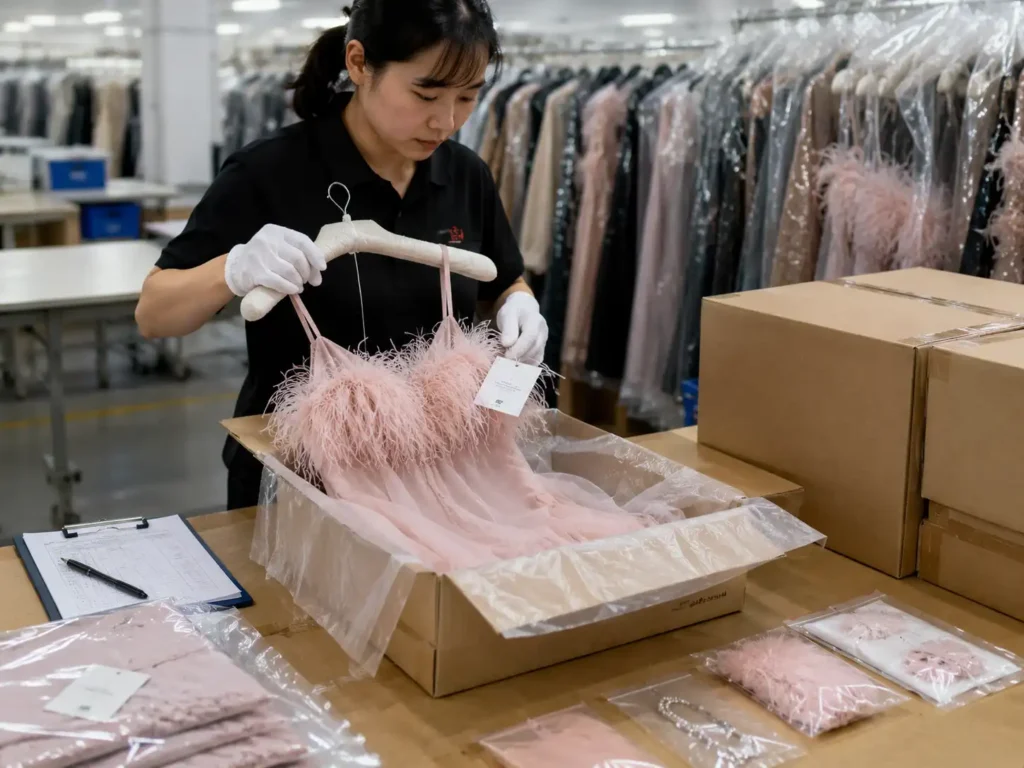
Quality Control for Print, Fit, and Bulk Consistency
Quality control starts with printed fabric and continues through cutting, sewing, measurements, pressing, branding, packing, and shipment preparation. The goal is to stop repeated defects before volume grows.
Incoming Printed Fabric
- Book approved base fabric and print method against confirmed quantities and colorways.
- Identify rolls and batches for shade control.
- Check usable width, print direction, repeat, defects, stains, snags, holes, and color variation.
- Relax fabric where construction and fiber behavior require stabilization before cutting.
Cutting and Placement
- Confirm front and back side, grain, print direction, pattern version, and size.
- Check major motif position, border level, panel grouping, and defect avoidance.
- Bundle engineered placement pieces to prevent mixing.
- Review first cut groups against the approved plan.
Sewing and Workmanship
- Check seam allowance, stitch density, thread color, zipper position, lining method, ties, straps, ruching, and opening reinforcement.
- Watch for print damage, needle marks, seam puckering, twisting, and mismatch.
- Use inline feedback to prevent repeated errors.
- Compare line output with the PP or Golden sample.
Measurement and Fit
- Measure bust, waist, hip, dress length, strap length, armhole, neckline depth, slit height, hem width, and style-specific points.
- Compare results with the approved size chart and tolerances.
- Investigate repeated trends rather than treating every outlier separately.
- Correct pattern, sewing, or pressing causes before completion.
Appearance and Pressing
- Inspect color, placement, symmetry, seam balance, lining visibility, stains, marks, snags, holes, and overall presentation.
- Control heat, pressure, and direction according to printed fabric.
- Protect satin and sensitive surfaces from shine marks and pressure lines.
- Allow garments to cool and settle before final measurement where needed.
Labels and Packing
- Verify style, color, size, composition, care information, barcode, SKU, hangtag, and packaging.
- Check folding method, protective materials, polybag warning, and carton ratio.
- Match carton marks with packing lists and physical contents.
- Support agreed AQL or brand-appointed inspection before shipment.
Private-Label Dresses Ready for Retail and Ecommerce

Main and Size Labels
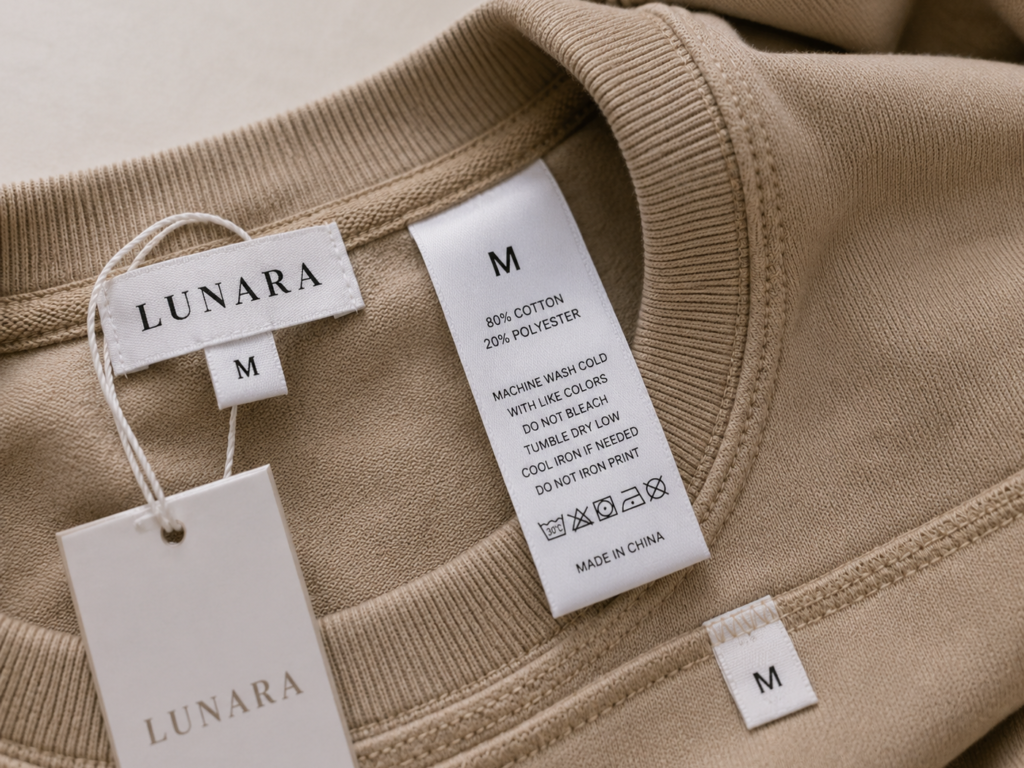
Care and Composition

Hangtags
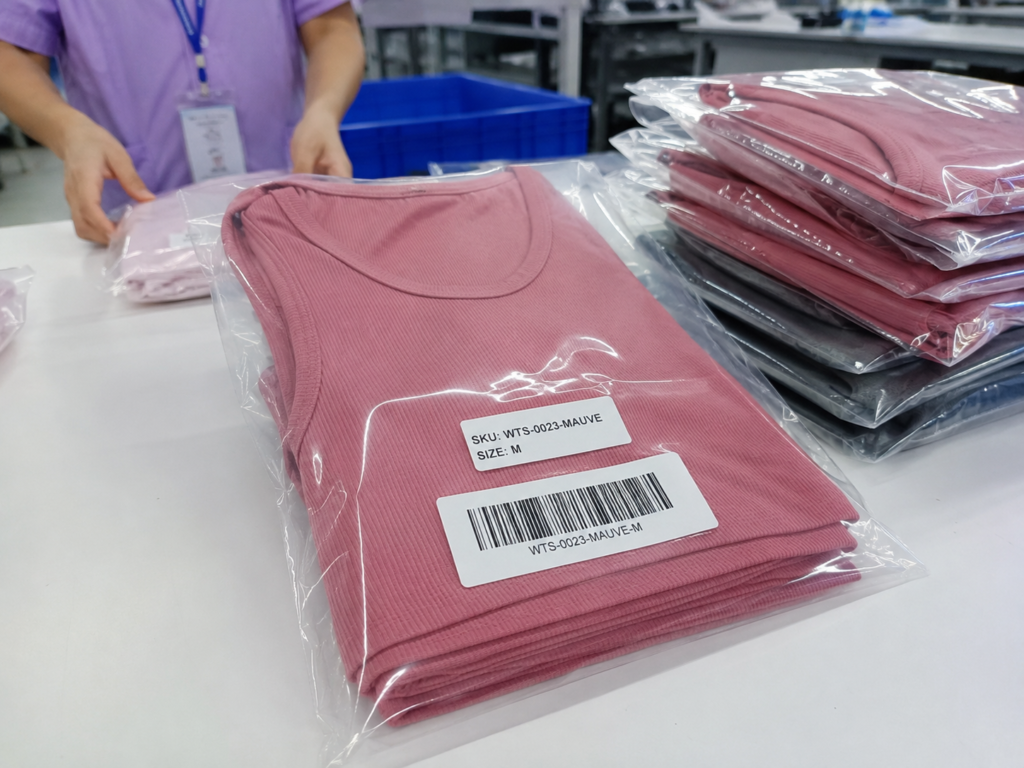
Barcode and SKU

Protective Packing
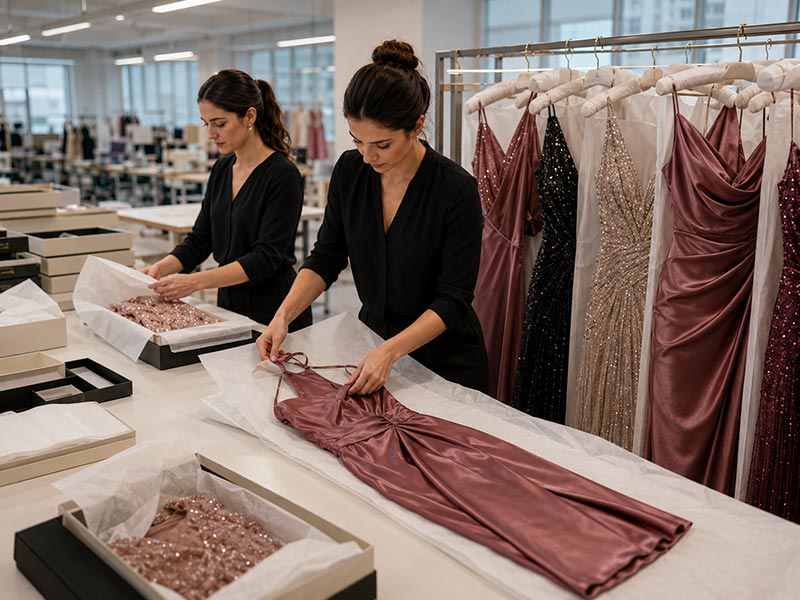
Folding Method
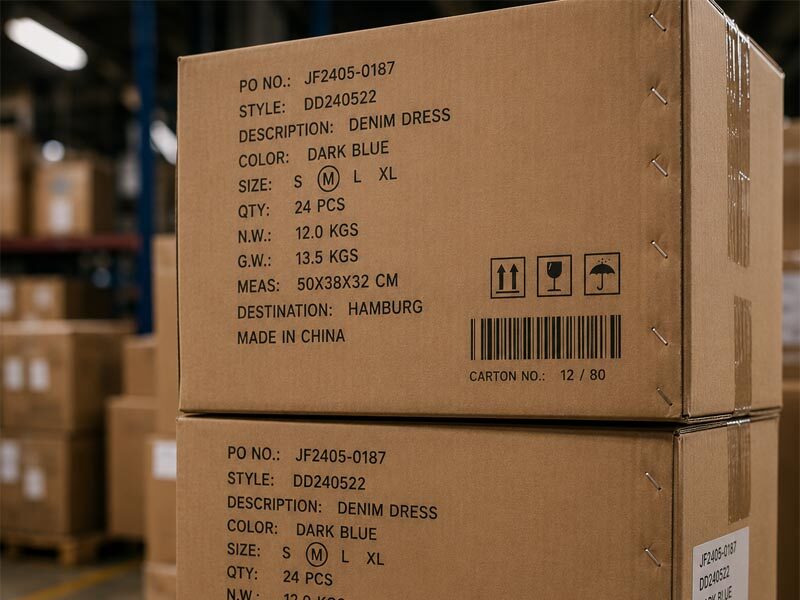
Carton Marks

Shipment Coordination
A Structured Manufacturing Team Behind Every Print Program
Development Coordination
Pattern and Sampling
Production Allocation
Quality Coordination
Packing and Delivery
NDA and Design Protection
More Than a Print Supplier or Basic Dress Factory
Print-Only Supplier
General Dress Factory
Jinfeng Project Model
Abstract Print Dress Programs for Global Fashion Markets
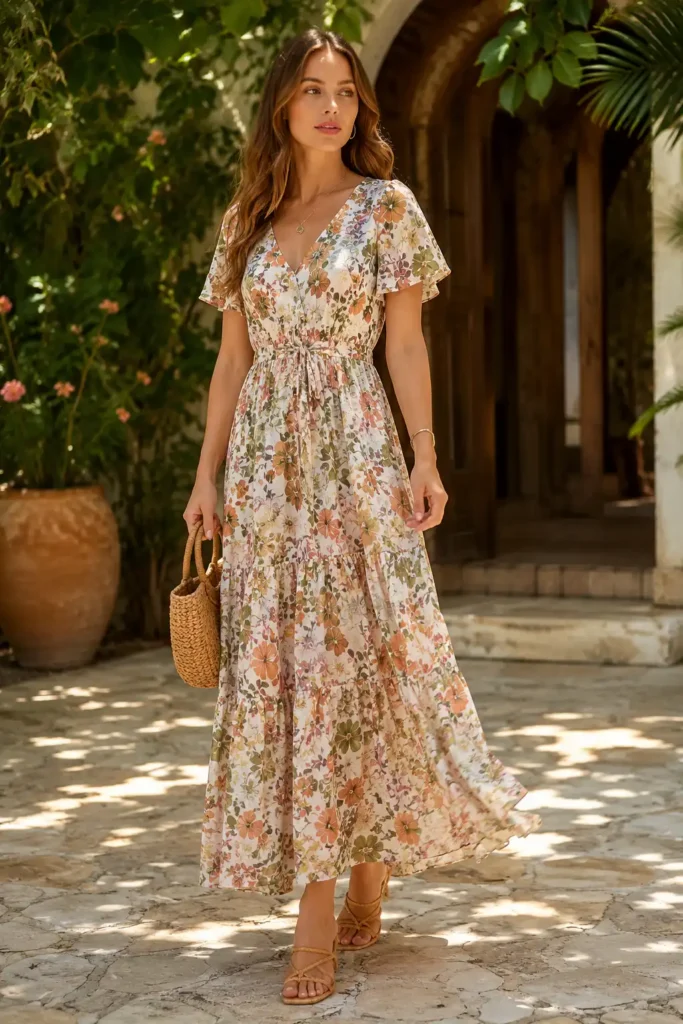
United States Resort Collection
An established US resortwear label developed 18 styles across abstract watercolor maxi dresses, wrap midis, halter dresses, and lightweight shirt dresses. The initial order totaled 36,800 pieces across four coordinated color stories, with viscose, chiffon, and polyester crepe selected by silhouette. The main challenge involved applying one artwork family across very different panel shapes without losing visual rhythm. Jinfeng reviewed repeat scale by style group, reduced motif size for gathered bodices, protected the primary brushstroke on front panels, and aligned lining colors with pale printed areas. The program moved through strike-off, first sample, fit sample, revised sample, size-set, and PP approval. Bulk control focused on shrinkage, shade grouping, print direction, waist placement, hem balance, and anti-crease packing for long dresses.

United Kingdom Ecommerce Drop
A UK premium ecommerce label planned 14 styles of geometric abstract mini, midi, bodycon, and cut-out dresses, totaling 24,600 pieces. The artwork used high-contrast curves and color blocks, making side seams, zippers, ruching, and body stretch visually sensitive.
Jinfeng created placement overlays for the base-size patterns, grouped sizes for engineered areas, adjusted bodycon patterns after recovery testing, and set inline checkpoints for side seam balance and motif interruption. The sample path included print strike-off, first fit, revised fit, photo sample, PP sample, and Golden sample. Bulk inspection emphasized dark-color transfer, stretch distortion, zipper flatness, cut-out symmetry, dress length, label accuracy, and ecommerce barcode control.
Australian Vacation Program
An Australian vacation and eventwear label developed 26 styles using organic abstract, marble, and gradient prints across resort maxi dresses, slip dresses, tiered midis, and event silhouettes. The program totaled 62,400 pieces in five color families. Key risks included fabric skew, gradient direction, border level, transparency, and travel creasing. Jinfeng separated viscose, satin, mesh, and crepe styles into suitable production groups, defined print and cutting directions, reviewed long-panel color transitions, adjusted lining coverage, and built packing instructions by fabric type. PP approval locked size charts, hem levels, placement notes, labels, and carton ratios. Final checks covered roll shade, panel direction, measurements, pressing marks, fold lines, and multi-SKU packing accuracy.
Frequently Asked Questions About Abstract Print Dress Manufacturing
Yes. Jinfeng can review original artwork together with the intended dress styles, base fabric, print scale, color references, size range, quantities, and launch timing. Editable production files are preferred. When only a low-resolution reference exists, the team first assesses whether artwork reconstruction or new design work is needed before print development.
Editable AI, PSD, layered PDF, TIFF, or another agreed production format is preferred. Files should include linked images, fonts, layers, color references, repeat information, and actual dimensions. Raster artwork must have sufficient resolution at production size. A screenshot can support visual discussion but may not be suitable for strike-off preparation.
Yes, but scale and placement may need adjustment by silhouette. A maxi dress, mini bodycon, wrap midi, and ruched dress use fabric in very different ways. Jinfeng reviews panel dimensions, gathering, stretch, seam locations, and visual focus before confirming whether one repeat can be shared or separate versions are advisable.
Color is reviewed through a physical strike-off on the selected or technically equivalent base fabric. Pantone references, physical swatches, approved garments, or other standards guide adjustment. Lighting, fabric ground, shine, transparency, lining, and ink behavior can change the result. The approved strike-off becomes the bulk comparison reference.
Jinfeng can manage projects requiring engineered motif placement, panel-specific artwork, border control, or defined front-and-back positions through coordinated artwork, pattern, sampling, cutting, and QC work. Feasibility depends on garment structure, size range, print method, fabric width, quantities, and acceptable placement tolerance.
The team reviews graded panel dimensions and decides whether placement may vary naturally, remain proportional, or use separate size-group layouts. Border prints, center motifs, gradients, and engineered color zones need closer planning. Size-set review helps confirm the visual rule before bulk cutting.
MOQ starts from 200 pieces per style and color under suitable conditions. Custom printed fabric, special colorways, screen setup, placement artwork, borders, unique trims, detailed size splits, and private-label packaging can raise the workable quantity. Final MOQ is confirmed after artwork, fabric, style, and quantity review.
A standard first sample often requires about 7-15 working days after artwork, fabric direction, measurements, and construction details are sufficiently confirmed. Special printed fabric, complex placement, trim development, structured silhouettes, or multiple revision rounds may extend the schedule. A project calendar is prepared around the actual approval path.
A first sample reviews initial silhouette, fit, fabric direction, print effect, and construction feasibility. A PP sample locks the final bulk standard after revisions. The PP stage should reflect approved printed fabric, pattern, measurements, construction, trims, labels, and packing details used for production.
Yes. Support can include main labels, size labels, care labels, hangtags, barcode and SKU stickers, polybags, folding methods, carton ratios, carton marks, and warehouse labels. Requirements should be provided early because packaging materials, label approvals, barcode files, and warehouse guides affect timing and accuracy.
Jinfeng supports NDA-based cooperation and protects artwork, tech packs, patterns, samples, trims, private-label details, packaging, quantities, and unpublished launch information. Confidential designs and brand identities are not used publicly without permission. Internal access should remain limited to teams involved in development and production.
Yes. Six owned factories, more than 10 long-term production partners, two sample rooms, pattern teams, production coordinators, and QC resources support multi-style programs. Style allocation depends on fabric, construction, quantities, approval status, delivery window, and quality needs. A collection schedule is built before bulk commitments.
Provide style images or tech packs, artwork, intended fabric, quantity per style and color, size range, colorway plan, labels, packaging, destination, and delivery target. Early pricing may remain a range when materials or construction are not confirmed. Final pricing requires approved specifications and a clear production basis.
Yes. Jinfeng can prepare for agreed AQL inspection, brand quality review, or third-party inspection according to confirmed standards and timing. Inspection scope, sampling level, defect classification, measurement requirements, packing status, and report format should be agreed before the planned inspection date.
Jinfeng can retain pattern versions, measurements, fabric references, trim details, sewing instructions, labels, packing requirements, Golden samples, and QC notes for future production. New fabric batches, changed colors, replaced trims, or updated regulations still need review before a repeat order is released.

Start Your Abstract Print Dress Project
Send the development team enough information to review artwork, fabric, garment construction, quantity, timing, and commercial feasibility. A complete brief supports a clearer sample path and a more reliable quotation.
Jinfeng Apparel can begin from a tech pack, original sample, line sheet, flat sketch, or well-organized reference package. Kelly coordinates initial file review and routes the project to the relevant development, pattern, sourcing, production, and quality teams.
- Abstract artwork in editable format, including repeat, scale, and color references
- Dress sketches, tech packs, original samples, or front-and-back references
- Preferred fabric, hand feel, weight, stretch, opacity, and lining direction
- Quantity per style and color, size range, and planned size ratio
- Main label, care label, hangtag, barcode, packaging, and carton requirements
- Sample deadline, launch date, delivery destination, and preferred shipping plan
- NDA or confidentiality requirements for unreleased artwork and collections