...

Contrast Panel Dress Manufacturer

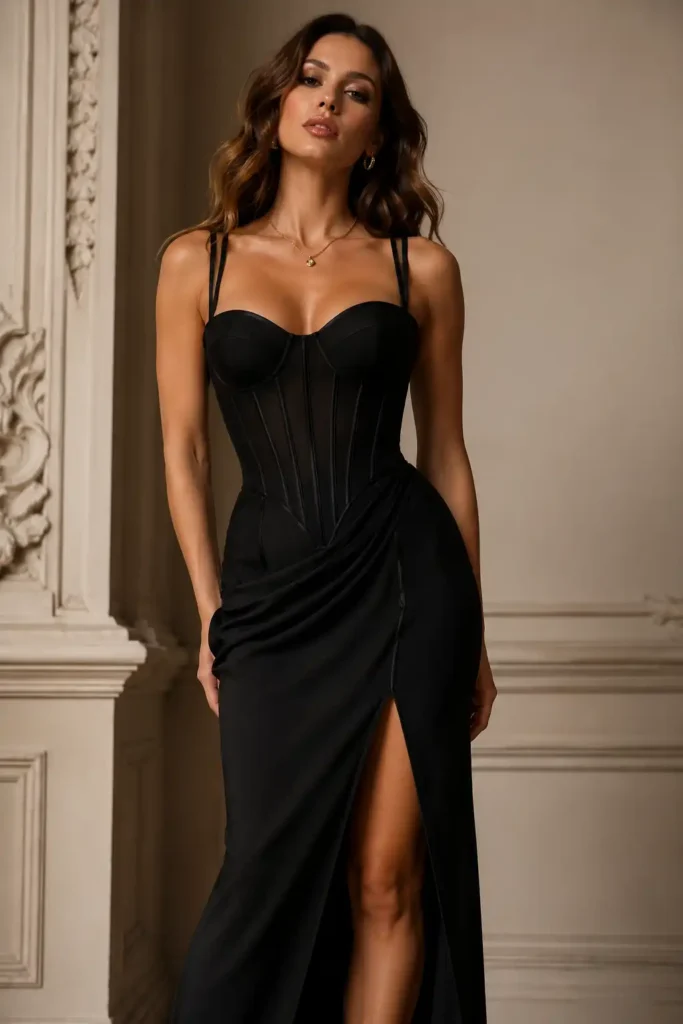
Custom color-block, mesh-insert, lace-panel, satin-panel, and contour-panel dresses developed for established fashion labels and multi-style collection programs.

  • Panel geometry reviewed across 3 critical fit zones: bust, waist, and hip.
  • Left-right symmetry checked at 4 visible anchors: neckline, waistline, hip line, and hem.
  • Mixed materials assessed for stretch, recovery, shrinkage, transparency, pressing response, and color migration.
  • MOQ starts from 200 pcs per style/color, subject to fabric, trim, construction, and schedule review.

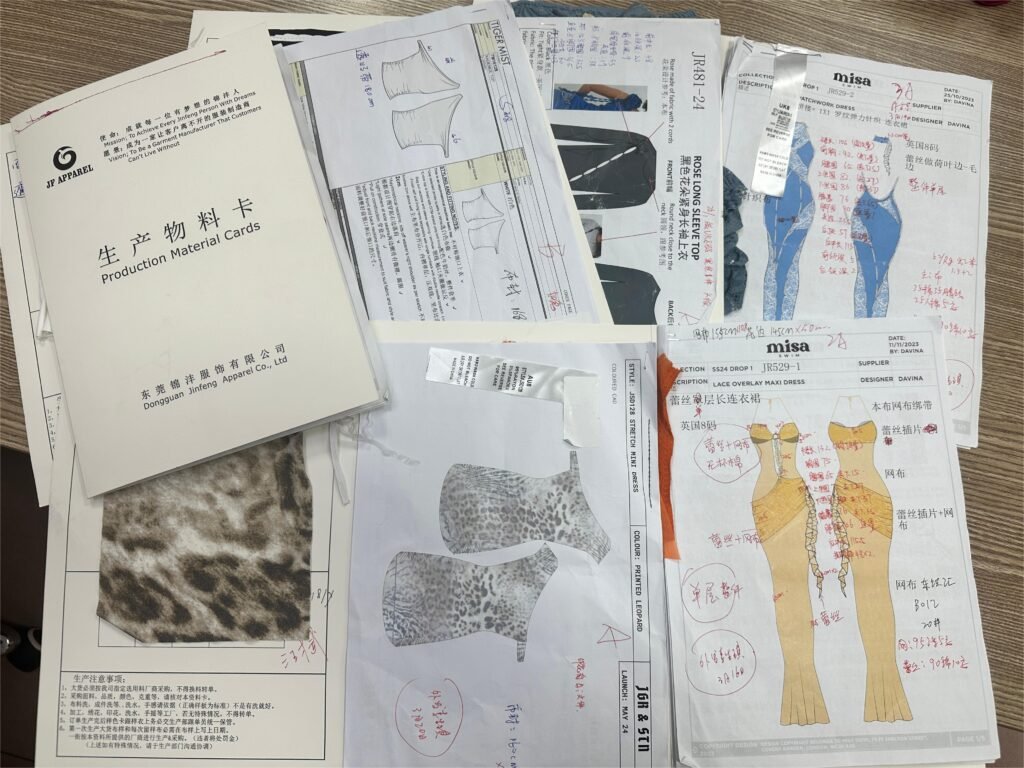
Jinfeng Apparel turns reference images, original samples, sketches, line sheets, and tech packs into production-ready contrast panel dresses. Development covers fabric direction, pattern engineering, first samples, fit correction, PP approval, bulk sewing control, private-label packing, and export delivery. The goal is not merely to join two colors. Every panel must hold the intended proportion, follow the body cleanly, remain balanced through grading,

Development Capacity for Complex Panel Dresses

Contrast panel programs depend on pattern accuracy, sample-room judgment, controlled sewing, and disciplined handover into production. Jinfeng Apparel supports each stage with dedicated teams and a multi-factory production structure.

Since 2008

Long-term womenswear manufacturing experience supports product decisions beyond basic cut-and-sew execution. Pattern correction, fabric substitution, fit review, private-label packing, and repeat-order records are managed as connected parts of one development program.

2 Sample Rooms

Two womenswear sample rooms support first samples, fit samples, revised samples, photo-ready samples, PP samples, and Golden sample management. Complex mesh, lace, satin, bodycon, corset-inspired, and multi-panel constructions can be tested before production allocation.

7+ Pattern Makers

Senior womenswear pattern makers work around bust, upper bust, under bust, waist, high waist, low waist, hip, neckline, armhole, dress length, slit height, lining coverage, and panel termination points.

20+ Sample Machinists

Sample machinists test curved joins, mesh insertion, lace edges, narrow panel points, concealed zippers, lining connections, stabilizing tapes, and mixed-fabric feeding before production standards are released.

15+ QC Inspectors

Quality control covers incoming materials, cutting preparation, sewing alignment, measurement checks, garment appearance, pressing, labeling, packing, and shipment preparation.

100,000+ Pcs Monthly

Regular monthly capacity exceeds 100,000 pieces across the broader womenswear production system. Final allocation depends on panel complexity, fabric behavior, order mix, color count, size range, and confirmed PP standards.

Built for Structured Fashion Collection Programs

A contrast panel program works best when product direction, sample standards, quantity planning, and launch requirements are already defined. Jinfeng Apparel is structured for brands seeking repeatable development rather than one-off garment sourcing.

Strong Project Fit

Established womenswear labels, premium ecommerce brands, occasionwear teams, partywear collections, product development departments, sourcing offices, and multi-style seasonal programs gain the most value. Suitable projects normally include a reference image, original garment, sketch, line sheet, tech pack, target quantity, size range, fabric direction, or planned launch window. Jinfeng Apparel can begin with incomplete development files, but accurate costing and production planning require measurable construction details before sampling proceeds.

Clear Production Boundaries

The manufacturing model focuses on custom development, professional sampling, bulk production, private-label delivery, and repeat-order support. Ready-stock purchasing, one-piece fulfillment, personal tailoring, extremely fragmented quantities, and price-only sourcing do not match the production structure. Clear boundaries protect pattern work, material preparation, sewing control, inspection time, and delivery planning across every approved style.

Contrast Panel Dress Styles We Develop
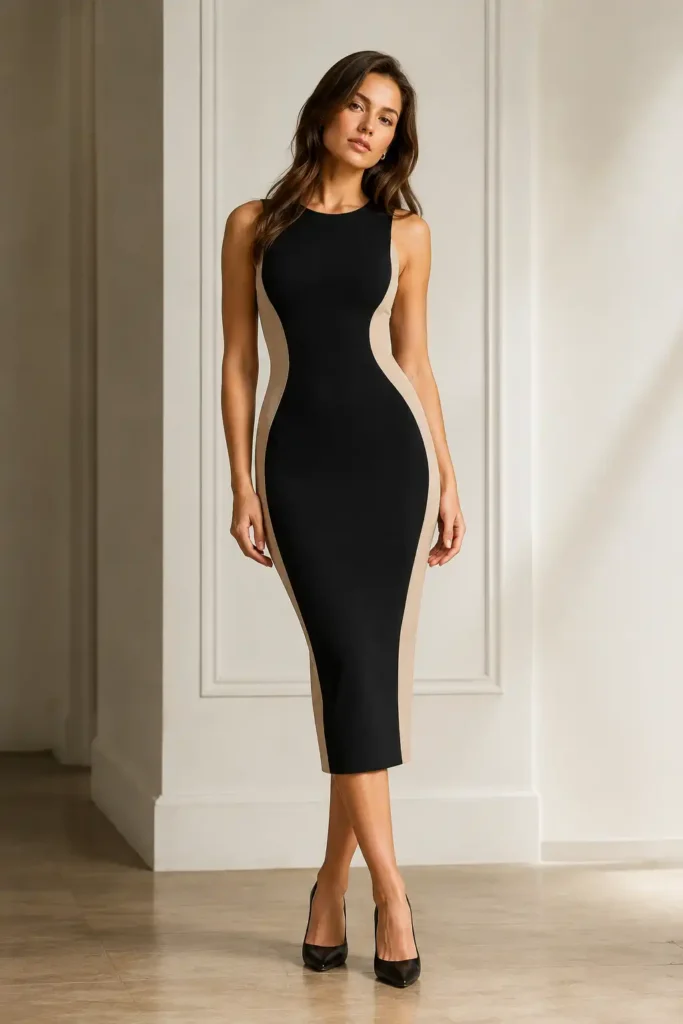
Jinfeng Apparel develops contrast panel dresses across fitted, occasion, contemporary, and event-led collections. Each direction requires different fabric choices, pattern controls, seam methods, and fitting priorities.

Side Panel Bodycon

Vertical or curved side panels create a narrower visual waist and stronger hip definition. Ponte, jersey, rib knit, stretch crepe, and power mesh are common options. Development focuses on stretch recovery, negative ease, side-seam balance, hip movement, and panel width through XS-XL grading.

Mesh Panel Party

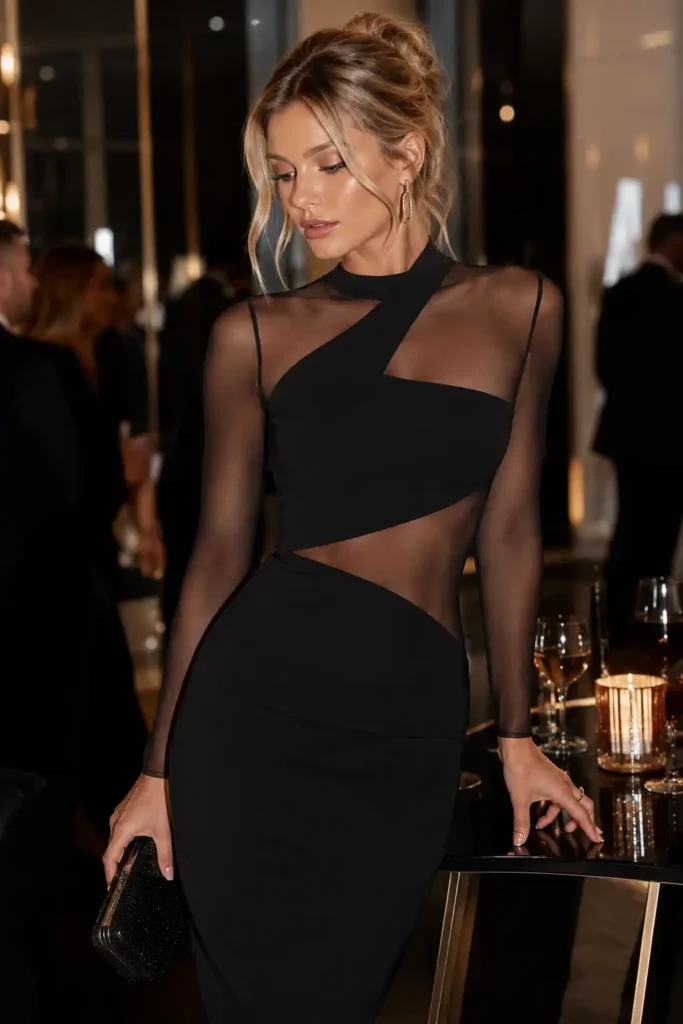
Opaque fabric combined with mesh creates controlled exposure around the waist, neckline, side body, sleeves, or back. Key checks include transparency, lining edge visibility, mesh recovery, seam reinforcement, and distortion near zipper or hook closures.

Lace Insert Midi

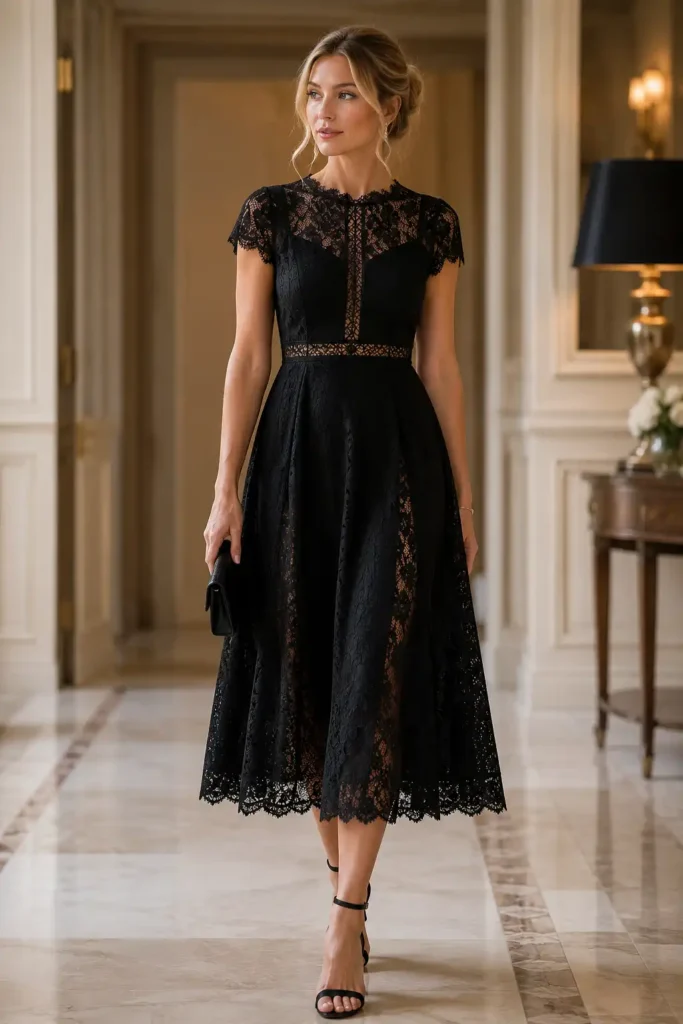
Lace inserts add texture and occasion value to midi silhouettes. Motif direction, edge treatment, lining coverage, seam bulk, and color matching need early approval. Scalloped lace may require placement planning rather than standard straight cutting.

Color Block Mini

High-contrast mini dresses depend on accurate panel alignment and secure length. Development covers neckline-to-waist geometry, hem balance, opacity, lining length, zipper placement, and visual proportion across the size range.

Satin Contrast Dress

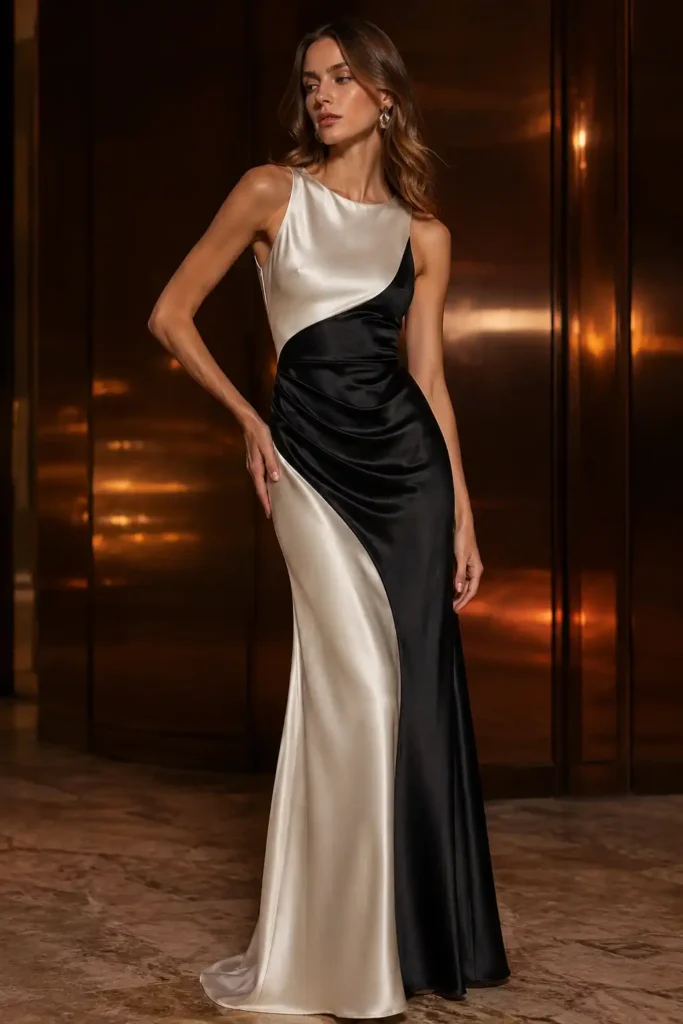
Satin panels introduce shine and fluidity but also reveal puckering, needle marks, pressing damage, and shade variation. Panel direction, grainline, underlining, seam tension, and protective packing require tighter control.

Godet Panel Maxi

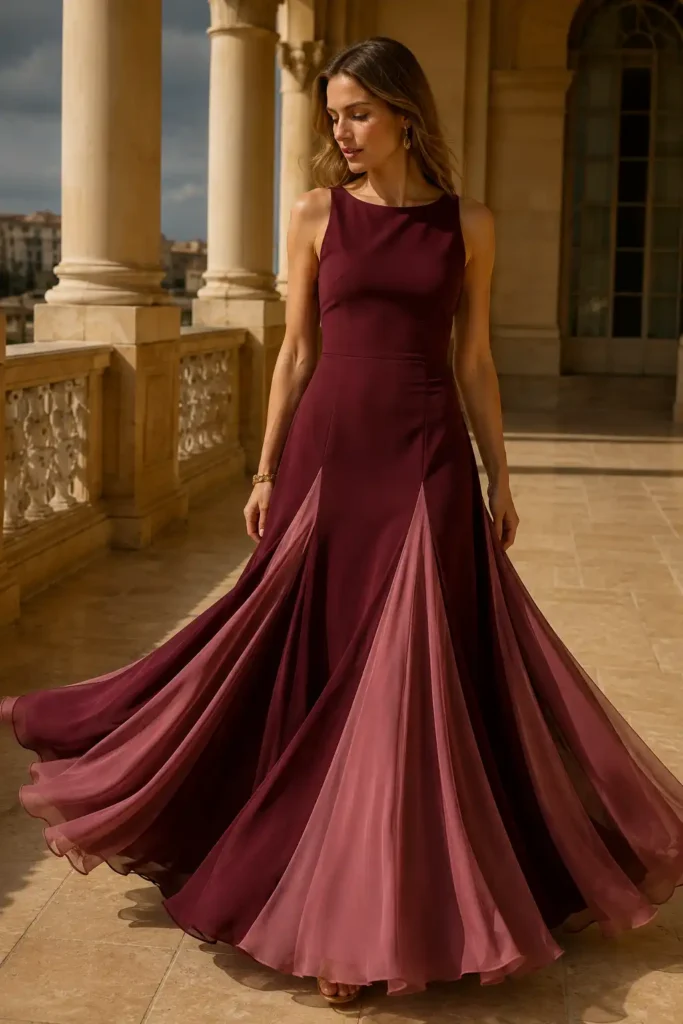
Godet inserts add movement, flare, and color contrast to maxi dresses. Cutting direction, insert height, hem sweep, seam length, hanging balance, and final leveling affect whether the skirt moves evenly.

Corset Panel Dress

Corset-inspired panels can combine satin, structured woven fabric, mesh, lace, lining, boning, cups, and anti-slip components. Bust shaping, under-bust control, waist compression, closure strength, and panel symmetry require multiple sample checkpoints.

Geometric Panel Dress

Angular panels, chevrons, diagonal sections, and asymmetric color blocking create strong visual identity. Sharp points need precise notches, controlled seam allowance, accurate pressing, and sewing sequences designed to avoid twisting or blunted corners.

How Panel Placement Shapes the Silhouette

Panel position changes perceived proportion, wearing comfort, and grading behavior. Good placement follows the body while preserving the original design direction across all approved sizes.

Side Panels and Waist Definition

Side panels are widely used in bodycon, midi, and occasion dresses because they can visually narrow the torso and guide the eye through the hip line. The effect depends on width, curvature, color value, and panel endpoint. A panel ending above full hip can shorten the figure; a panel widening too early can add visual volume rather than reduce it.

Pattern work begins with fixed references at underarm, natural waist, high hip, full hip, and hem. Panel widths should be measured at several heights rather than described only as “slim side panel.” When the main fabric and panel fabric have different stretch, the pattern may need unequal seam lengths or adjusted ease. Fit review also checks whether the panel twists toward front or back during movement.

For bulk production, left and right pieces are paired and marked. Inline inspection compares seam paths, waist intersections, and hem widths before large quantities move to finishing.

Princess Panels and Bust Shape

Princess-style panels pass through or near the bust apex and can create a fitted, sculpted silhouette without excessive darts. Contrast color or texture makes the seam highly visible, so bust shape, seam smoothness, and apex position must remain controlled. A seam crossing too far inside or outside the apex can flatten the bust or create pointed shaping.

Development considers upper bust, full bust, under bust, neckline depth, armhole, cup position, and intended support. Mesh or lace in the princess section may require lining, tape, or cup integration. Satin or crepe may need careful pressing to avoid ridge marks. During grading, apex movement and panel curvature should follow body growth rather than expand uniformly.

Fit samples are reviewed from front, side, and three-quarter angles. Internal seam bulk, lining pull, and zipper influence are checked before panel lines are locked.

Waist and Cutout Panels

Waist inserts can create an hourglass effect, connect bodice and skirt sections, or introduce a sheer cutout zone. Position is often more important than width. A waist panel placed 15-20 mm too low can change leg proportion and create folding when sitting. A panel placed too high can restrict the ribcage or distort under-bust shaping.

Construction depends on function. A decorative woven insert may need interfacing. A power-mesh insert needs recovery and secure seam reinforcement. A sheer waist panel needs clean internal finishing and controlled lining boundaries. Curved panels may require clipping, understitching, tape, or reduced seam allowance to lie flat.

Measurements should define the panel from HPS, center front, waist seam, or another fixed point. Vague notes such as “place at waist” are not sufficient for repeatable bulk production.

Skirt Panels and Godet Movement

Contrast skirt panels can create vertical length, flare, color rhythm, or movement. Godets may start at thigh, knee, or lower skirt depending on the desired silhouette. Insert height and width affect walking ease, sweep, and fabric consumption. Bias-cut godets behave differently from straight-grain skirt panels and may drop after hanging.

Sampling includes hang testing, seam balance, and final hem leveling. Satin, rayon, chiffon, and viscose may require relaxation before final length is judged. Lace or mesh inserts need edge stability and lining decisions. A fitted bodice with a flared panel skirt also requires waist seam balance so added skirt weight does not pull the bodice downward.

Bulk cutting keeps grain direction, nap direction, and mirrored panel sets organized by size and shade lot.

Fabric Combinations for Contrast Panel Dresses

Material compatibility controls seam appearance, fit, recovery, color stability, and care performance. Jinfeng Apparel evaluates each combination as one garment system rather than two unrelated fabrics.

Stretch Main Fabric With Mesh

Jersey, rib knit, ponte, or stretch crepe combined with mesh is common in fitted party and bodycon dresses.

The main risk is unequal stretch and recovery.

Soft fashion mesh may stretch easily but fail to return, while power mesh offers stronger recovery and compression. A mismatch can create rippling, tight seam lines, or panel sagging after wear.

Review includes stretch direction, percentage, recovery, weight, transparency, hand feel, and seam response. Narrow seam trials compare overlock, lockstitch, elastic reinforcement, and stabilizing tape. Pattern ease may be distributed differently between the main body and mesh insert. A sheer panel close to a zipper or high-stress waist seam may need added reinforcement.

Wash and wear tests help reveal growth, twisting, and seam distortion. Approved sample fabric references should be retained for bulk comparison.

Satin With Lace

Satin and lace are widely used for cocktail, occasion, wedding guest, and evening dresses.

Satin provides shine and drape; lace adds surface detail and transparency.

Sewing behavior can vary sharply. Satin shifts and marks easily, while lace may stretch, catch, or change width according to motif structure.

Fabric direction is critical. Satin grain and shine must remain consistent across mirrored pieces. Lace motif placement may need matched cutting around neckline, waist, or center front. Seam allowance behind transparent lace should be reduced and finished cleanly. Scalloped edges can be appliqued, shaped, or used as a natural finish depending on design.

Pressing temperature is tested before production. Excess heat can glaze satin, flatten lace texture, or distort synthetic fibers. Packing also needs protection from snagging and hard fold lines.

Knit With Woven Panels

Rib knit, jersey, or ponte combined with poplin, suiting, crepe, or satin creates modern day-to-evening silhouettes. Knit and woven materials grow differently during wear and shrink differently during care. A woven waist or side insert can restrict movement if the knit pattern is used without adjustment.

Development compares fabric width, weight, stretch, shrinkage, drape, and recovery. Pattern pieces may need added ease, seam shaping, or closure support around the non-stretch area. Waist seams and underarm joins receive special attention because body movement concentrates pressure in those zones.

Pre-shrink review is recommended when care instructions include washing. When dry cleaning is intended, pressing and dimensional stability still require evaluation.

Velvet With Sheer Panels

Velvet combined with mesh, lace, or tulle creates strong evening and holiday presentation. Velvet nap direction changes color depth and must remain consistent across all panels. Pressure from seams, pressing, clips, or packaging can leave marks. Mesh panels beside velvet may also reveal uneven seam thickness.

Cutting plans keep nap direction fixed. Sample sewing evaluates needle choice, feed pressure, seam support, and pressing method. Velvet should be protected from direct hard pressing, while sheer fabric edges need a clean finish. Dark velvet beside pale mesh requires contamination control during handling.

Garments may need tissue support, hanger packing, or reduced folding depending on length, embellishment, and destination requirements.

Fabric Compatibility Matrix for Panel Construction

Material CombinationMain RiskDevelopment CheckSuitable Dress DirectionBulk Control Focus
Ponte + Power MeshUnequal recoveryStretch, recovery, seam trialBodycon, contour panelPanel tension, waist recovery
Jersey + Fashion MeshMesh growthWear test, seam stabilizationParty, sheer insertRippling, panel sagging
Satin + LacePuckering, snaggingNeedle, motif, pressing trialOccasion, cocktailLace placement, satin marks
Stretch Satin + MeshShine and stretch mismatchGrain, recovery, transparencyFitted eveningSeam wave, zipper balance
Crepe + SatinDifferent drapeHanging test, seam pressMidi, color blockShade, surface smoothness
Rib Knit + WovenMovement restrictionEase and shrinkage reviewContemporary miniWaist stress, seam opening
Velvet + MeshNap and pressure marksDirection, pressing testHoliday, eveningNap consistency, fold marks
Suiting + KnitShape imbalanceStructure and stretch mappingOffice-to-eveningPanel distortion, pressing
Dark + Light FabricsColor migrationWet/dry rub and wash reviewMonochrome color blockHandling, packing separation
Lace + Tonal LiningTransparency mismatchLining shade and coverageWedding guest, formalLining edge, motif consistency

Controlling Color Contrast in Bulk Production

High-contrast garments expose shade variation, contamination, and alignment errors more quickly than tonal dresses. Color control begins before cutting and continues through sewing, pressing, packing, and shipment preparation.

Shade Approval and Lot Control

Approved lab dips, swatches, or supplier shade references define the intended relationship between panels.

Bulk rolls are reviewed by lot because black, navy, ivory, nude, red, and fashion colors can vary between dye batches. Two materials described with the same color name may still differ in undertone, depth, or light reflection.

Shade grouping helps prevent one garment from combining noticeably different lots. Reflective fabrics such as satin and velvet should be checked from several angles because surface direction changes perceived color. Lace and mesh require review over the approved lining or skin-tone backing, not only against a white table.

Migration and Contamination Control

Dark sections beside white, ivory, nude, or pastel panels create migration risk during washing, steaming, storage, and transport. Wet and dry rubbing review, wash testing by project, and material supplier information help identify risk before bulk use. A dark fabric passing dry rubbing may still transfer under moisture, heat, or long compression.

Production handling separates pale panels from lint, loose fibers, marker residue, machine oil, and dark cut pieces. Work surfaces, bundling, and packing materials require clean management. Protective tissue or separate folding layers may be used when dark and light surfaces remain in direct contact during shipment.

Pressing and Final Appearance

Pressing can change shade, shine, seam shape, and panel edge definition. Excess temperature may glaze synthetic fabric, flatten velvet, yellow pale sections, or reveal seam allowance impressions. Pressing tests establish suitable heat, pressure, steam, and protective cloth conditions.

Final appearance review checks panel edges under consistent lighting. Inspectors look for shade mismatch, oil marks, shine variation, color transfer, distorted seam lines, and pale fabric contamination. Garments with white or ivory panels receive extra handling protection before individual packing.

Size Grading and Panel Proportion Control

Contrast panels must preserve visual intent while body dimensions increase through the size range. Uniform enlargement rarely works. Each seam path needs a grading rule linked to fit, proportion, and fabric behavior.

Control PointBase-Size InstructionGrading DecisionSample VerificationBulk QC Evidence
Neckline intersectionDistance from HPS or center frontMaintain design angle and coverageFront and side fit photosPlacement measurement
Bust panel widthWidth at apex levelFollow bust growth, not uniform scaleBust shape and seam smoothnessLeft-right width check
Waist panel widthWidth at natural waistProtect visual waist definitionStanding and sitting reviewWaist intersection check
High-hip transitionDistance below waistAdjust curve for body growthSide and back fit reviewSeam path inspection
Full-hip panel widthWidth at full hipBalance movement and visual contourWalking and sitting testHip width measurement
Mesh insert heightVertical panel depthMaintain coverage and recoveryTransparency and stretch reviewInsert height check
Godet start pointDistance from waist or hemProtect movement and silhouetteWalk test and hang testStart-point alignment
Hem panel widthFinished width at hemKeep flare and left-right balanceHanging and hem-level reviewFinished hem comparison

Linings, Closures, and Structural Support

Panel dresses often need hidden support to keep visible lines clean. Lining coverage, closures, tapes, cups, boning, and elastic components are selected around fabric, silhouette, wearing comfort, and intended level of support.

Full or Partial Lining

Full lining improves opacity, comfort, and internal cleanliness. Partial lining preserves transparency where mesh or lace must remain visible. Coverage boundaries should be mapped during sampling so lining does not show above waist inserts, neckline panels, armholes, or side cutouts.

Invisible Zippers

Invisible zippers are common in fitted mini, midi, and occasion dresses. Zipper tape can distort mesh, stretch fabric, or curved back panels when unsupported. Stabilizing tape, seam preparation, and balanced left-right panel alignment help maintain a smooth closure.

Power Mesh Support

Power mesh can provide recovery, compression, or internal support behind softer outer panels. Weight and stretch must match the fit goal. Excessively firm mesh can create edge lines; weak mesh may fail to hold shape after wear.

Boning and Cups

Corset-inspired panel dresses may use boning, bra cups, underwire, or shaped lining. Position affects bust support, waist shaping, neckline security, and comfort. Every component should be confirmed through fit samples before PP approval.

Stay and Elastic Tapes

Stay tape, clear elastic, woven tape, or anti-slip tape can stabilize neckline, waist, cutout, zipper, and shoulder areas. Tape strength and recovery must suit the outer fabric. Over-stabilization may create a rigid edge or visible ridge.

Brand and Care Trims

Woven labels, size labels, care labels, hangtags, barcode stickers, and SKU labels are confirmed with placement and attachment methods. Label seams should not pull against delicate mesh, lace, or thin lining.

Tech Pack Details Needed Before Sampling

Clear technical information shortens review time, protects design intent, and gives pattern, sample, costing, and QC teams one consistent reference. Panel dresses need more placement data than a standard dress.

Technical Flats

Front, back, and side views should show every panel boundary, seam, opening, lining edge, zipper, slit, and trim position. Enlarged detail drawings are useful for sharp corners, cutouts, sheer sections, and layered panels.

Panel Measurements

Define panel widths and heights from fixed references. Useful points include HPS, center front, underarm, natural waist, high hip, full hip, zipper top, slit start, and hem. Measurements at bust, waist, and hip reduce interpretation differences.

Fabric Allocation

Identify the fabric used for every section, including main fabric, contrast fabric, mesh, lace, lining, support layer, and stabilizing components. Add composition, weight, stretch direction, color, transparency, and approved supplier reference when available.

Construction Notes

Specify seam type, seam allowance, topstitching, binding, edge finish, lining connection, zipper method, reinforcement, boning, cups, elastic, and pressing expectations. Reference photos should support written notes rather than replace them.

Size and Fit Data

Provide a size chart, base size, grade rule, measurement tolerances, intended fit, model measurements where relevant, and panel-specific control points. Fitted designs need bust, waist, hip, length, neckline, armhole, and panel-width guidance.
Fashion design draft data package

From Design Review to Approved Sample

Contrast panel sampling is a structured development process. Each stage removes a different risk before fabric, trims, labor, and capacity are committed to bulk production. Complex contrast panel dresses involving mesh, lace, satin, corset structure, geometric joins, or special trims commonly require 15-25 days for the first sample. Specially developed fabrics or trims may extend the schedule according to supplier lead time.

Design Review

Reference images, sketches, original samples, line sheets, and tech packs are reviewed for panel structure, fit direction, material allocation, closure, lining, and production feasibility.

Fabric Review

Main and contrast materials are compared for stretch, recovery, weight, drape, transparency, shrinkage, color, pressing response, and seam compatibility. Swatches or substitute options can be reviewed before sample cutting.

Pattern Development

Pattern makers convert panel artwork into measurable seams, grainlines, notches, seam allowances, and fit rules. Bust, waist, hip, length, and key panel widths are defined.

First Sample

A first sample tests silhouette, panel proportion, material relationship, sewing method, transparency, closure, and initial measurements. It is a development garment, not the final production standard.

Fit Review

Fit comments cover bust shape, waist position, hip ease, neckline, armhole, zipper balance, dress length, lining, movement, panel placement, and seam appearance.

Revised Sample

Approved comments are converted into updated patterns, measurements, fabric decisions, trim notes, sewing instructions, and a revised garment. Revised samples commonly take 7-15 days, subject to modification scope and material readiness.

PP Sample

The PP sample uses final or production-approved fabric, color, trims, construction, measurements, labels, and packing direction. A standard PP sample normally requires 7-15 days after final materials are ready.

Golden Sample

The approved Golden sample supports bulk sewing, QC comparison, repeat orders, and dispute prevention. It should remain protected and linked to final production files.

Bulk Production Flow for Panel Dresses

Bulk production begins only after PP standards, materials, pattern files, quantities, labels, packing, and schedule are confirmed. Each operation protects the approved sample from being diluted during scale-up. Bulk timing is confirmed after PP approval, material readiness, style count, quantity, color split, size range, production allocation, QC window, packing requirement, and shipment plan are known. Blind promises are avoided because complex panel programs require coordinated material and sewing control.

Material Arrival

Main fabric, contrast fabric, lining, zippers, tapes, labels, hangtags, polybags, and cartons are checked against order requirements.

Shade Grouping

Fabric rolls are reviewed and grouped by dye lot or shade. High-contrast combinations receive added attention because small differences remain visible.

Fabric Relaxation

Stretch and knitted materials are allowed to relax according to fabric needs before cutting, helping reduce size change and panel distortion.

Pattern Release

Final patterns, grading, panel codes, notches, grainlines, and size information are released against PP-approved files.

Marker Planning

Marker plans control fabric direction, nap, shine, mirrored pieces, panel quantity, and material consumption.

Cutting

Panels are cut by size, color, fabric lot, and direction. Pale and dark materials may be handled separately to reduce contamination.

Bundle Control

Left-right sets, front-back sections, lining, and matching inserts are bundled with clear style, color, and size identification.

Sewing Instruction

Operators receive seam sequence, construction notes, stitch requirements, reinforcement points, and approved sample references.

Line Production

Panel joins, closures, lining, support components, hems, and trims are assembled in controlled order.

Inline Inspection

Inspectors review symmetry, alignment, seam appearance, measurements, damage, and workmanship while correction remains manageable.

Finishing and Pressing

Threads, marks, seam shape, pressing, label placement, and overall appearance are checked before final inspection.

Packing and Release

Approved garments move through individual packing, carton breakdown, carton marks, documents, and shipment preparation.

Preventing Panel Errors During Production

Early inspection prevents a small cutting or sewing error from spreading across thousands of garments. Contrast panel programs need visible controls at cutting, bundling, and inline sewing stages.

Cutting Preparation

Cutting preparation confirms final pattern version, fabric width, shrinkage information, grain direction, stretch direction, nap, shine, shade group, defects, panel codes, quantity, and marker plan. Mirrored side panels must be identified clearly. Mesh, lace, satin, velvet, and pale fabrics may require separate handling rules. A wrong grainline can change drape and recovery. A reversed velvet panel changes color depth. A mirrored piece cut twice in the same direction creates an unusable set. Prevention starts before the cutter begins.

Bundle and Pair Control

Each bundle links style, color, size, fabric lot, panel position, and quantity. Left and right sections are paired where symmetry matters. Long curved seams, geometric points, lace motifs, and godet inserts receive match-point references.

Bundle control also reduces shade mixing. Main and contrast materials approved as one combination should stay linked through sewing. Any replacement piece needs verification against the original lot and position.

Inline Sewing Inspection
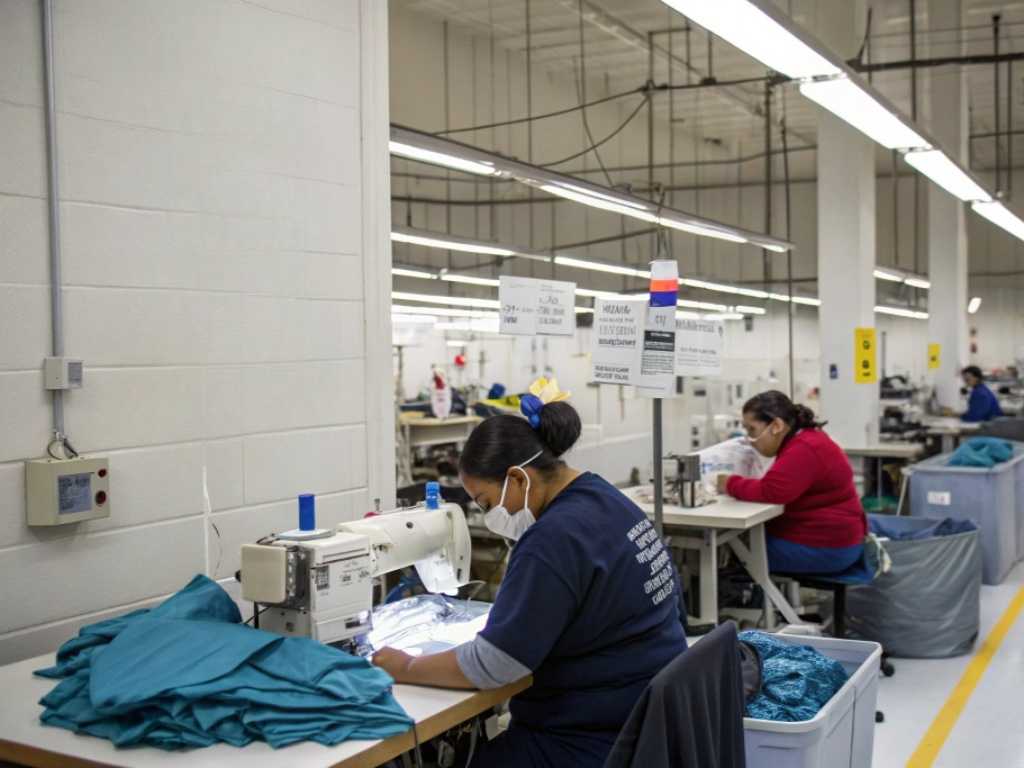
Inline review checks panel width, seam path, left-right balance, waist intersection, hip transition, neckline alignment, zipper position, puckering, skipped stitches, mesh damage, satin marks, lining exposure, and measurement. Problems are corrected while operators, bundles, and pattern references remain available. Inspection frequency can be adjusted according to style risk, production stage, and issue history. A complex geometric or mesh-panel style deserves closer early-line review than a simple two-color straight-seam design.
Female garment workers sewing blue fabric at industrial sewing machines.

Quality Control for Contrast Panel Dresses

Quality checks follow the risks created by panel geometry, mixed fabrics, fitted silhouettes, visible seam lines, private labels, and high-contrast colors. Every checkpoint links back to the approved PP and production files.

Fabric Inspection

Review fabric type, color, shade, width, visible defects, stretch direction, hand feel, surface damage, and approved reference. Mixed materials are checked as a planned combination.

Color Review

Check shade relationship between main and contrast sections, lot consistency, dark-light transfer risk, pale-panel cleanliness, lining shade, and pressing response.

Cutting Accuracy

Confirm grainline, mirrored pieces, panel codes, notches, direction, nap, quantity, size, and defect removal. Cutting errors cannot be repaired through better sewing.

Panel Symmetry

Compare left-right width, seam curves, neckline intersections, waist position, hip transition, godet start points, and hem sections. Visible asymmetry receives immediate correction.

Seam Appearance

Inspect puckering, waving, twisting, skipped stitches, thread tension, corner definition, lace edge quality, mesh damage, satin marks, seam allowance visibility, and reinforcement.

Measurement Control

Measure bust, waist, hip, dress length, neckline depth, armhole, strap length, slit height, panel width, insert height, and other approved control points according to style.

Pressing Review

Check shine, scorch, water marks, seam impressions, velvet crushing, stretched mesh, distorted panel curves, and final garment balance after cooling.

Packing Inspection

Confirm labels, size, barcode, SKU, folding, protective tissue, polybag, quantity, carton breakdown, carton marks, and pale-panel protection.

Production Capacity for Multi-Style Programs

Large collections need more than headline capacity. Style complexity, fabric type, color split, size breakdown, sample approval, factory allocation, and packing rules determine how capacity becomes a reliable delivery plan.

6 Owned Factories

Owned women’s fashion factories support coordinated development and production across dresses, skirts, jumpsuits, sets, partywear, occasionwear, and private-label programs.

10+ Production Partners

Long-term satellite production partners add flexibility for style mix, fabric specialization, peak-season allocation, repeat orders, and multi-batch delivery. Allocation remains project-based rather than automatic.

18+ Sewing Lines

aSewing lines support regular womenswear production. Complex mesh, lace, satin, corset, or geometric-panel styles may require selected lines, added training, and closer inline inspection.

6+ Flexible Lines

Flexible lines help manage multi-style programs, development-to-bulk transitions, smaller style groups within larger orders, and repeat-order changes.

12+ Merchandisers

Merchandising and order follow-up teams coordinate files, materials, sample versions, quantities, factory progress, QC feedback, packing, and shipment information.

30+ Packing Staff

Finishing and packing teams support thread cleaning, pressing review, labels, barcodes, polybags, carton breakdown, warehouse marks, and shipment preparation.

OEM, ODM, and Private Label Options

Jinfeng Apparel supports different development entry points while keeping one production discipline: measurable specifications, approved samples, controlled materials, documented construction, QC, and brand-ready delivery.

OEM Production

For established technical packages, Jinfeng Apparel reviews patterns, measurements, fabrics, trims, sewing methods, labels, packing, and quantity plans before sampling. Questions and risks are raised before bulk commitments are made.

ODM Development

A reference image, original sample, sketch, brand direction, target retail position, fabric preference, or price direction can begin an ODM review. Product structure, material options, pattern approach, sample path, and manufacturing risks are clarified before formal development.

Private Label Delivery

Private-label support includes woven labels, size labels, care labels, hangtags, barcode stickers, SKU labels, polybags, carton marks, warehouse labels, packing lists, and shipment coordination. Material MOQ and lead time for labels or packaging are reviewed separately from garment MOQ.

MOQ and Cost Factors for Panel Dresses

MOQ starts from 200 pcs per style/color for suitable stock-fabric programs. Final quantity and price depend on material source, color development, panel complexity, sewing time, size breakdown, labels, packing, and production schedule.

Quantity Structure

One style in one color at 200 pieces forms a standard evaluation unit. Two colors at 100 pieces each do not normally equal 200 pieces per color. Multi-style collections should provide quantity by style, color, and size so fabric orders, cutting efficiency, line allocation, QC, and carton planning can be assessed correctly. Stock chiffon, satin, regular knit, ponte, and standard mesh can often support the starting MOQ. Special lace, sequin fabric, thick satin, custom dyeing, custom printing, certified materials, exclusive hardware, or specially printed packaging may require higher quantities according to supplier requirements.

Cost Structure

Quotation considers main fabric, contrast fabric, lining, trims, pattern work, sample development, cutting, panel count, sewing time, reinforcement, pressing, inspection, wastage, labels, packing, testing, logistics requirements, and order quantity. Geometric joins, sharp points, mixed stretch, lace motif placement, pale-panel protection, and multiple material lots add labor or risk. Cost optimization may include a compatible stock fabric, simplified internal structure, shared materials across several styles, consolidated colors, efficient size ratios, revised panel geometry, alternative trims, or split shipment planning. Visual identity should remain protected while unnecessary cost is removed.

Private Label Packing and Export Delivery

Packing protects panel alignment, pale sections, delicate surfaces, labels, and brand presentation from finishing through warehouse receipt. Delivery planning can use client-nominated or factory-recommended forwarders.

Label System

Woven labels, printed labels, size labels, care labels, country information, and brand marks are checked for artwork, color, material, placement, seam method, and required wording.

Barcode and SKU

Barcode stickers, SKU labels, size-color identification, PO references, and warehouse labels are matched to packing instructions. Scannability and correct style-color-size mapping matter as much as visual appearance.

Garment Protection

Pale contrast panels may need tissue separation. Satin needs protection from hard folds and abrasion. Velvet may need reduced pressure. Mesh, lace, sequins, and hardware need snag prevention. Folding method follows silhouette and material.

Carton Planning

Carton quantity, gross weight, net weight, dimensions, CBM, style breakdown, color breakdown, size ratio, carton marks, and warehouse routing are recorded for freight and receiving preparation.

Freight Options

Express supports samples and urgent documents. Air freight supports launch-sensitive quantities. Sea freight supports regular larger programs. Air-sea split shipment can move selected launch-critical SKUs first while balancing freight cost.

Export Coordination

Support can include commercial invoice, packing list, carton marks, bill of lading or air waybill coordination, certificate of origin by request, shipment photos, client forwarder communication, and DDP evaluation by project.

Contrast Panel Dress Development Case Studies

Anonymous project records demonstrate how panel geometry, fabric behavior, size control, and production management connect in real multi-style programs. Brand identities and unpublished designs remain protected.

United States Going-Out Collection

An anonymous US going-out fashion label developed 18 contrast panel styles with a total order of approximately 36,000 pieces. The assortment included bodycon minis, mesh-waist midis, curved side-panel dresses, and corset-inspired party styles in black, ivory, wine, and seasonal accent colors. The primary challenge came from pairing stretch jersey and ponte with mesh sections offering different recovery. Early samples showed light rippling at the waist insert and visual width changes between left and right side panels. Jinfeng Apparel adjusted panel curvature, redistributed ease, changed reinforcement around the mesh join, and added panel-width measurements at bust, waist, and hip. Fit samples were reviewed in base size and extended through grading checks before PP approval. Bulk control focused on shade grouping, mirrored cutting, bundle pairing, inline panel measurement, zipper balance, and pale-panel cleanliness. Approved patterns, fabric references, trims, and packing records were retained for repeat colors.

United Kingdom Occasionwear Program

An anonymous UK occasionwear label placed a 12-style program totaling around 24,000 pieces. Styles combined stretch satin, crepe, lace, and sheer mesh across midi and evening silhouettes. Several designs used lace princess panels, transparent waist sections, and contrast godets. The main risks involved lace motif placement, satin puckering, lining exposure through mesh, and uneven godet drop after hanging. Jinfeng Apparel reviewed lace direction, mapped lining coverage, tested needle and pressing settings, revised godet grainlines, and allowed hanging before final hem leveling. The PP standard included panel placement points, lace edge references, final lining boundaries, zipper method, pressing instructions, and packing protection. During production, lace and satin were grouped by lot, panel sets were bundled by size, and inline inspection concentrated on waist intersections, lace symmetry, seam smoothness, and hem balance. The program moved into private-label packing with barcode and SKU control.

Australian Ecommerce Collection

An anonymous Australian premium ecommerce label developed 22 mini, midi, and resort-led contrast panel dresses totaling approximately 58,000 pieces. The assortment included geometric color blocking, tonal texture panels, mesh backs, and flared skirt inserts across several launch groups. The largest challenge was preserving panel proportion from XS through XL while coordinating multiple colors and staggered launch dates. Jinfeng Apparel established base-size anchor measurements, panel-width rules at four vertical points, size grading notes, and separate shade references for each material pair. A geometric mini required corner construction trials to prevent blunted points and seam bulk. A resort midi required revised hanging and hem control because one contrast fabric dropped more than the main fabric. Production was divided by style family and launch priority. Selected urgent quantities moved by air while remaining goods followed a sea-freight plan. Pattern, color, trim, QC, barcode, and packing records supported later replenishment and new-color review.

Contrast Panel Dress Frequently Asked Questions

MOQ starts from 200 pcs per style/color for suitable regular materials and standard production conditions. Special lace, sequin fabric, thick satin, custom-dyed colors, custom prints, certified materials, exclusive trims, or highly fragmented size and color plans may require higher quantities. Send quantity by style, color, and size for review.

Yes. A reference image, sketch, original sample, line sheet, or partial tech pack can begin an initial review. Pattern, fabric, lining, closure, panel measurements, size range, and construction details still need clarification before an accurate sample and quotation can be prepared.

Yes, after compatibility review. Stretch percentage, recovery, weight, shrinkage, seam stress, movement, and closure design determine whether the combination works. Pattern ease or panel shape may need adjustment to prevent pulling, rippling, restricted movement, or seam failure.

Flat seams depend on fabric pairing, accurate cutting, matching notches, controlled feeding, suitable needle and thread, balanced tension, correct seam allowance, reinforcement, and tested pressing. Seam trials during sampling establish the method used for bulk production.

Yes. Jinfeng Apparel develops mesh, power mesh, lace, organza, tulle, and lined or unlined transparent sections. Transparency, recovery, motif direction, lining boundary, seam visibility, reinforcement, and skin comfort are checked during sampling.

Pattern pieces are mirrored, cutting sets are paired, matching notches are defined, and visible anchors such as neckline, waist, hip, godet start, and hem are checked. Inline inspection catches width or alignment differences before large quantities proceed.

Panel widths and seam paths are linked to body growth, fabric stretch, and visual design. Bust, waist, hip, insert height, seam endpoints, and hem width may use separate grade rules. Uniform enlargement is avoided when it weakens silhouette or coverage.

A complex first sample commonly takes 15-25 days. Revised samples normally take 7-15 days. PP samples normally take 7-15 days after final materials are ready. Special fabrics, trims, multiple fit rounds, or delayed feedback can extend the schedule.

Yes. Support includes woven labels, size labels, care labels, hangtags, barcodes, SKU stickers, polybags, carton marks, warehouse labels, packing lists, and shipment coordination. Label and packaging MOQ may differ from garment MOQ.

Send the style image or tech pack, quantity per style/color, size range, fabric direction, color plan, lining, closure, trims, label and packing requirements, target delivery window, destination country, and any testing or warehouse instructions. More complete data produces a more reliable quotation.

Start Your Contrast Panel Dress Project

Send a tech pack, reference image, original sample photos, line sheet, or early design brief to Kelly for an initial manufacturing review.

Jinfeng Apparel will assess panel geometry, fabric compatibility, fit risk, pattern complexity, sampling path, MOQ, cost drivers, private-label needs, production allocation, QC requirements, and delivery planning before formal development begins.
Useful project information includes:

  • Style image, sketch, or technical flat
  • Quantity per style and color
  • Fabric preference or target hand feel
  • Main and contrast color plan
  • Size range and size ratio
  • Target market and intended wearing occasion
  • Lining, zipper, mesh, lace, cups, boning, or support details
  • Label, barcode, packaging, and warehouse requirements
  • Sample destination and target launch window
  • Testing, inspection, or nominated-forwarder requirements

Two people walking and talking inside a modern garment factory.

Tell Us About Your Dress Project

Share your product details, estimated quantity and development requirements. Our team will review your project and provide practical OEM/ODM production feedback.

Premium Women’s Apparel Production for Fashion Brands

From dress sample development to bulk production, JF Apparel supports fashion brands with confidential OEM/ODM manufacturing, reliable quality control and scalable production support.

START YOUR DRESS PROJECT

Ready to Develop Your Next Dress Collection?

Share your design concept, product requirements or sourcing plans with our team. We’ll review your project and provide practical feedback on development, materials, MOQ and production.

7-10 Days

Sample Development

200 PCS

Starting MOQ

Fast Response

Professional Follow-Up