Lined Sheer Dress Manufacturer

Custom sheer dresses engineered around coverage, stretch, fit, lining balance, and repeatable bulk production for global fashion labels.

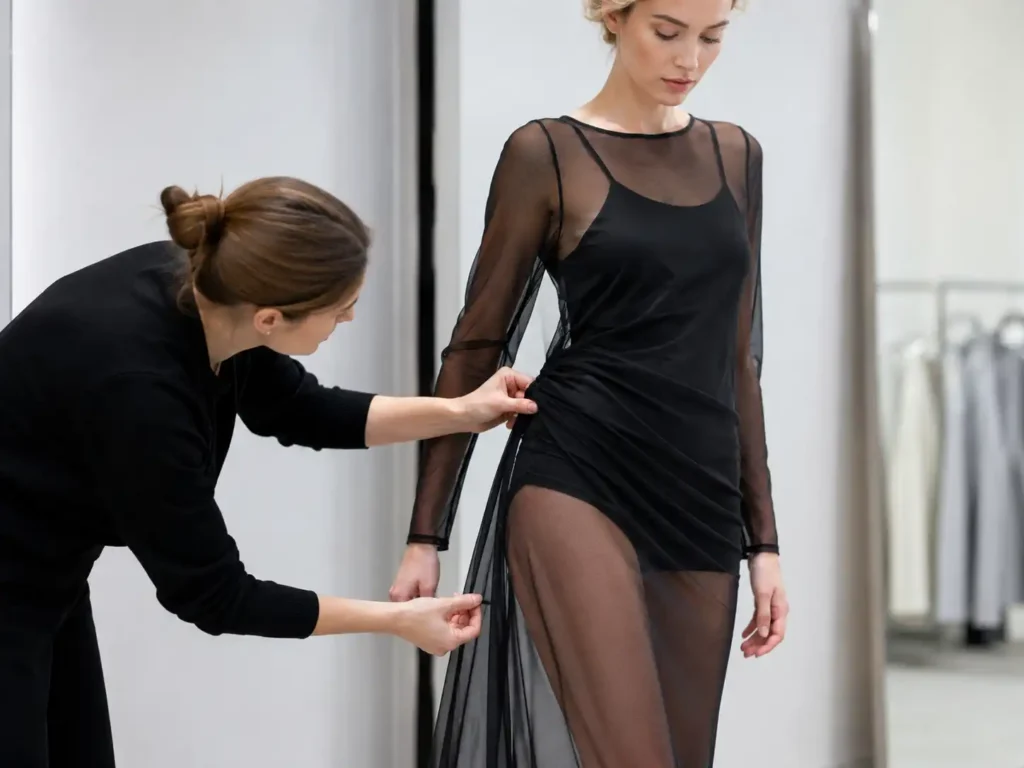
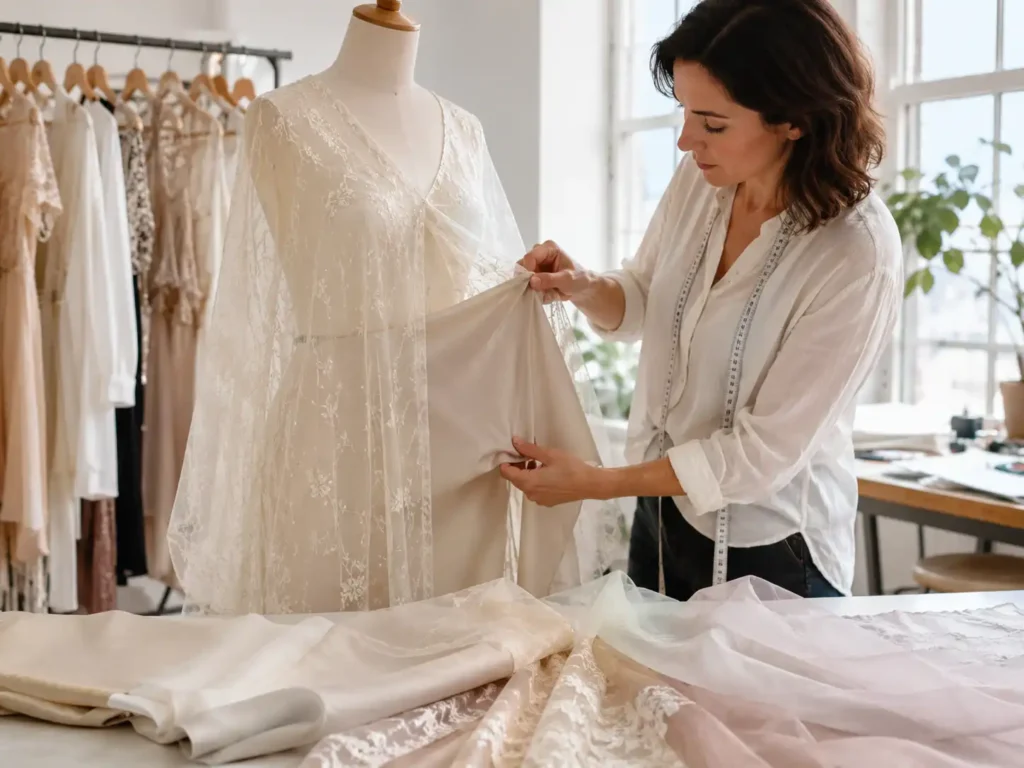
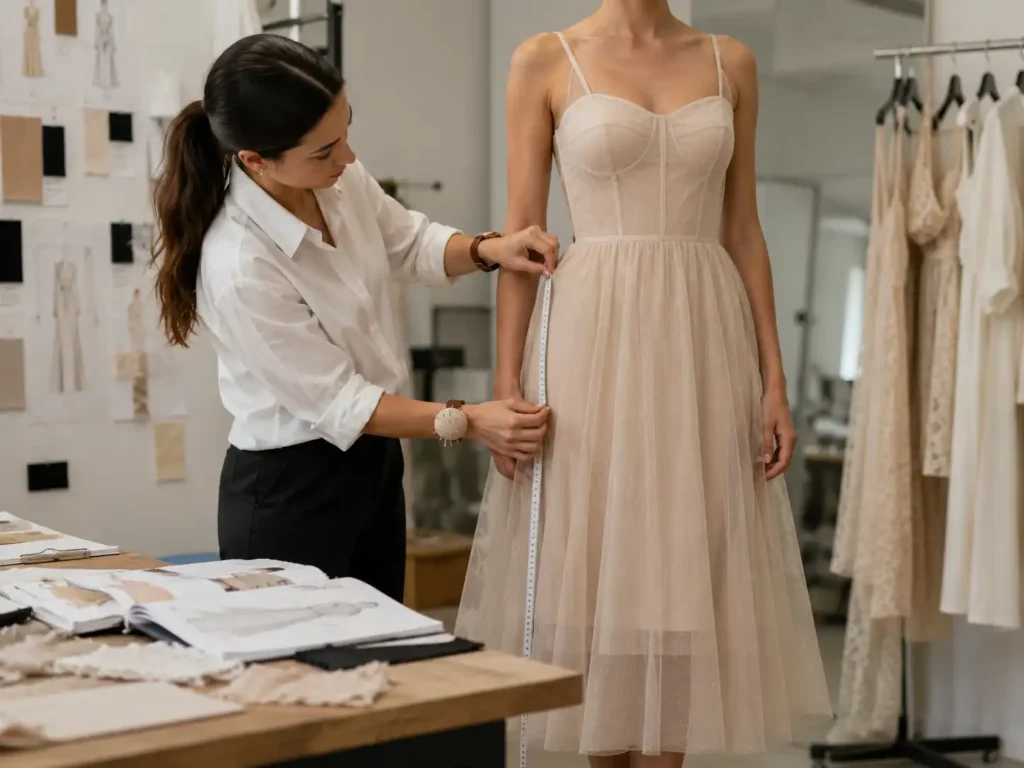
Jinfeng Apparel develops lined sheer dresses from fabric direction and coverage mapping through pattern making, sample revision, PP approval, bulk production, quality control, private-label packing, and export coordination. Each program begins by defining how the outer layer should reveal, soften, or conceal the body while the lining protects fit, movement, comfort, and commercial wearability.

  • 3 coverage levels can be specified: opaque, semi-sheer, and fully sheer.
  • 2 pattern systems are reviewed separately: outer shell and inner lining.
  • 9 fit and coverage points receive focused review: bust, waist, hip, neckline, armhole, back, slit, shell length, and lining length.
  • MOQ starts from 200 pcs per style/color, subject to fabric, trims, construction, and production planning.

Development Capacity Built for Layered Sheer Dress Programs

Layered garments require stronger development control than single-layer dresses. Jinfeng Apparel combines pattern, sample, merchandising, and QC resources around measurable shell-and-lining standards before bulk release.

Pattern and Sample Depth

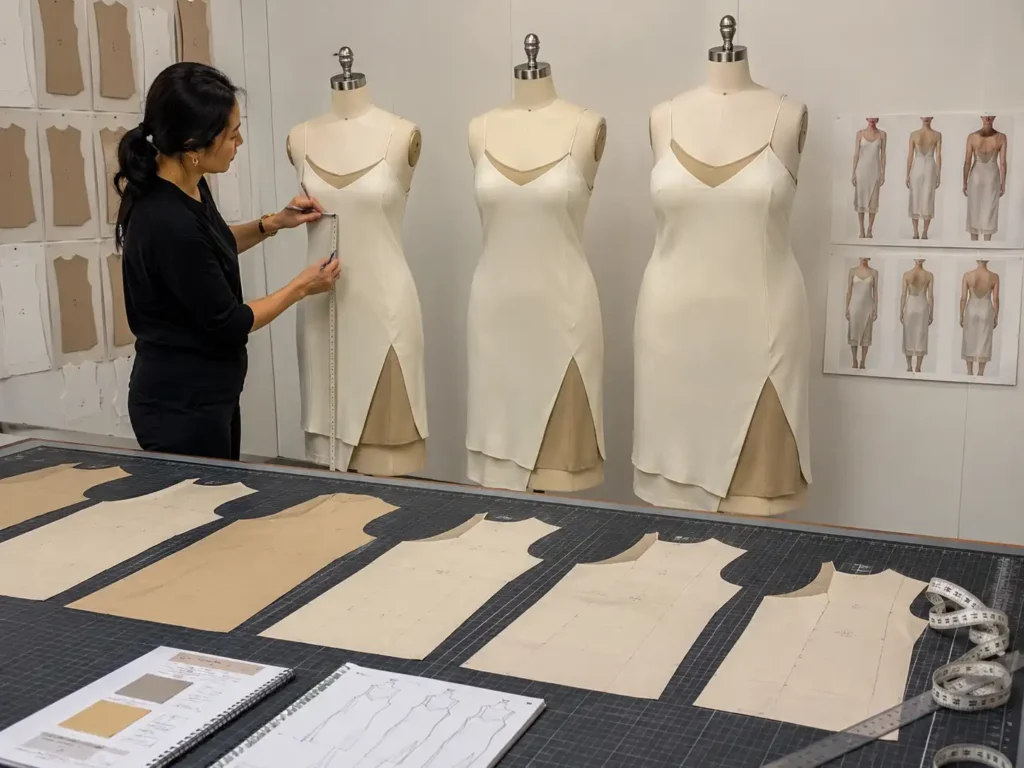
Two sample rooms, 7+ senior pattern makers, and 20+ sample machinists support lined mesh, lace, tulle, chiffon, corset, bodycon, and occasionwear development. Shell fit and lining fit can be corrected independently before both layers are locked into one approved construction.

Production Coordination

Six owned women’s fashion factories and more than 10 long-term satellite production partners allow production allocation by fabric behavior, construction complexity, order quantity, and launch schedule. Allocation follows confirmed PP standards rather than a generic dress workflow.

Quality and Follow-Up

Twelve-plus merchandisers and 15+ QC inspectors support version control, material follow-up, production checkpoints, measurement review, lining coverage checks, label verification, packing confirmation, and repeat-order records across multi-style programs.

Made for Established Fashion Teams with Clear Collection Plans

The strongest fit comes from fashion organizations with defined product direction, professional sampling needs, planned quantities, launch calendars, and repeat-order potential.

Fast Fashion Labels

Develop trend-led mesh, lace, tulle, and chiffon dresses across mini, midi, and maxi lengths. Production planning can cover multiple styles, colors, sizes, and drops while keeping lining placement and opacity consistent.

Occasionwear Collections

Build refined sheer dresses for weddings, cocktail events, evening launches, graduation seasons, and formal programs. Coverage, support, hand feel, decoration, and photo performance receive greater attention than on basic fashion dresses.

Partywear Brands

Create bodycon, corset, ruched, cut-out, and slit silhouettes with controlled transparency. Stretch recovery, bust support, hip fit, inner-layer stability, and zipper flatness are treated as production requirements.

Premium Ecommerce

Support image-led collections where studio lighting, flash photography, fit consistency, return-risk control, SKU labels, barcode packing, and fast replenishment influence commercial performance.

Sourcing Organizations

Manage multi-style developments through tech packs, BOM files, sample version records, PP approvals, production progress, QC feedback, packing instructions, and shipment coordination.

Brand Groups

Coordinate seasonal programs with repeated blocks, shared fabrics, color stories, private-label standards, and archived production records. Long-term records reduce repeated development work on replenishment and later collections.

Why Lined Sheer Dresses Fail During Bulk Production
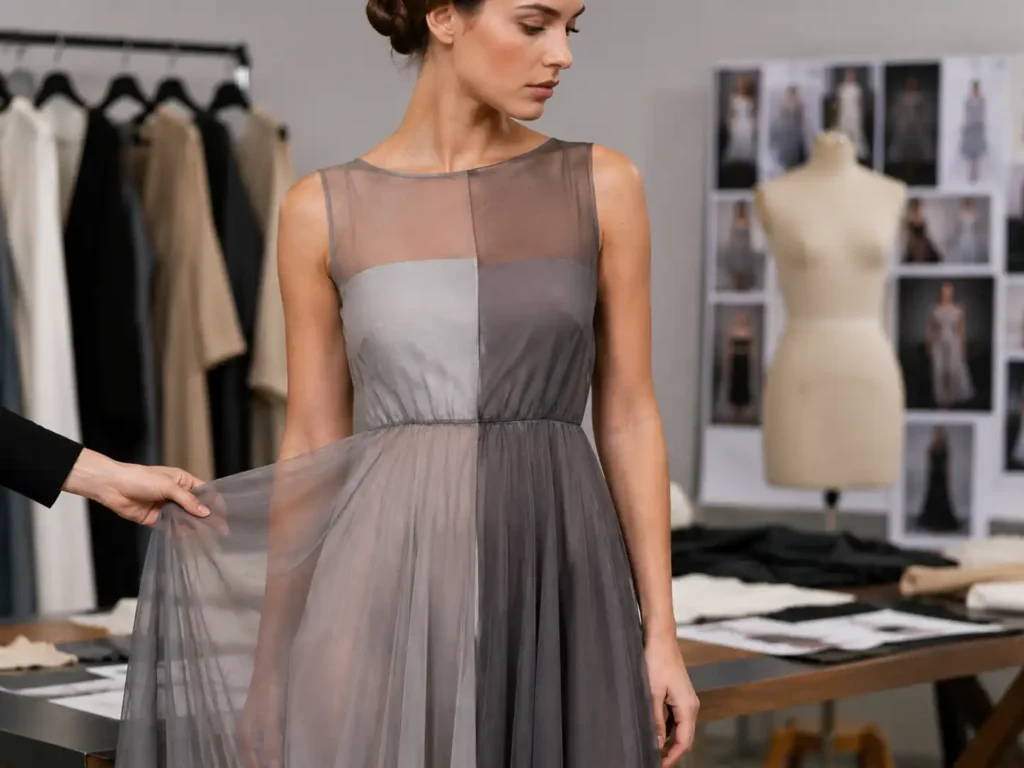
A visually strong sample can become commercially weak when opacity, tension, alignment, or measurements drift in production. Six failure patterns deserve control before cutting begins.

Opacity Shifts

The outer fabric may look balanced over one lining color yet become too revealing or too dense over another. Dye lot, fabric weight, mesh opening, light direction, lining shade, and layer count all affect the final visual result.

Lining Rides Up

A lining cut too tight, too short, or with poor recovery can climb at the hip and waist during movement. The problem becomes more visible in bodycon shapes, high slits, and short inner skirts beneath long sheer shells.

Twisted Side Seams

Shell and lining fabrics often stretch and relax at different rates. Incorrect grain direction, uneven feeding, or mismatched ease can rotate side seams, pull the hem, and distort the silhouette after wear.

Zipper Rippling

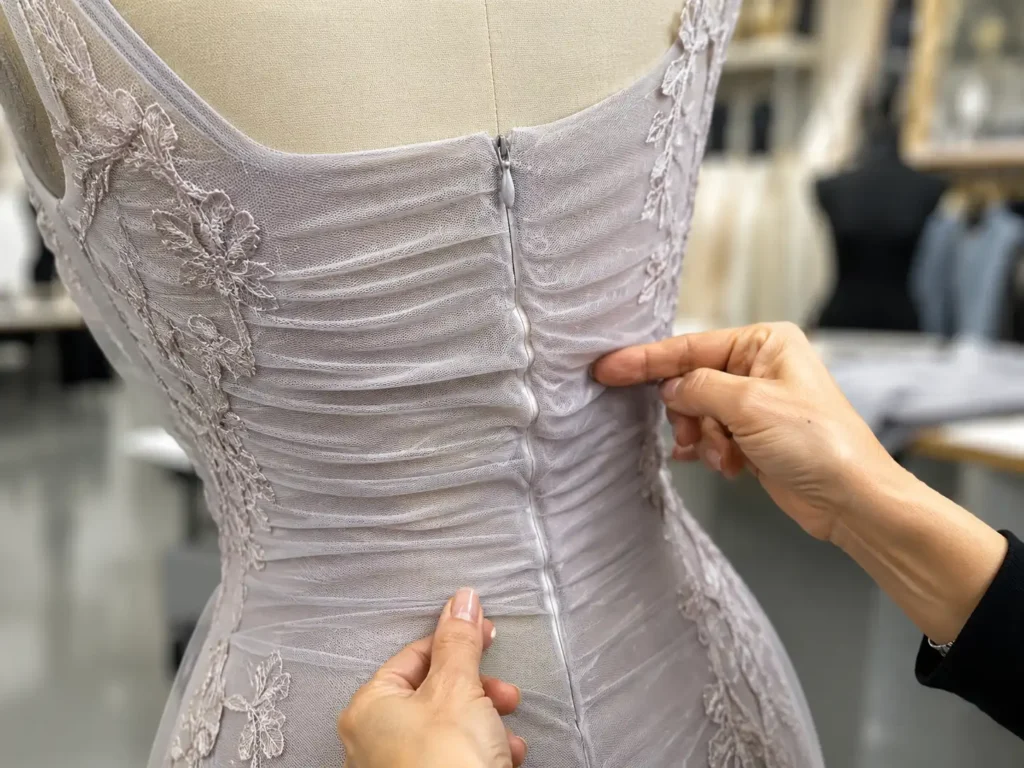
A concealed zipper can become wavy when mesh, lining, seam tape, and zipper tape carry different tension. Stabilization, seam allowance, pressing, and sewing sequence must be defined in the approved sample.

Slit Exposure

The lining may appear through a high slit when its width, attachment, or hem position is not coordinated with the outer shell. Movement tests should confirm front, side, and seated coverage before PP approval.

Size-Range Drift

A coverage position accepted in the base size may shift during grading. Neckline depth, bust coverage, bodysuit rise, mini-lining length, and slit height need controlled grade rules rather than simple proportional enlargement.

Custom Lined Sheer Dress Styles We Manufacture
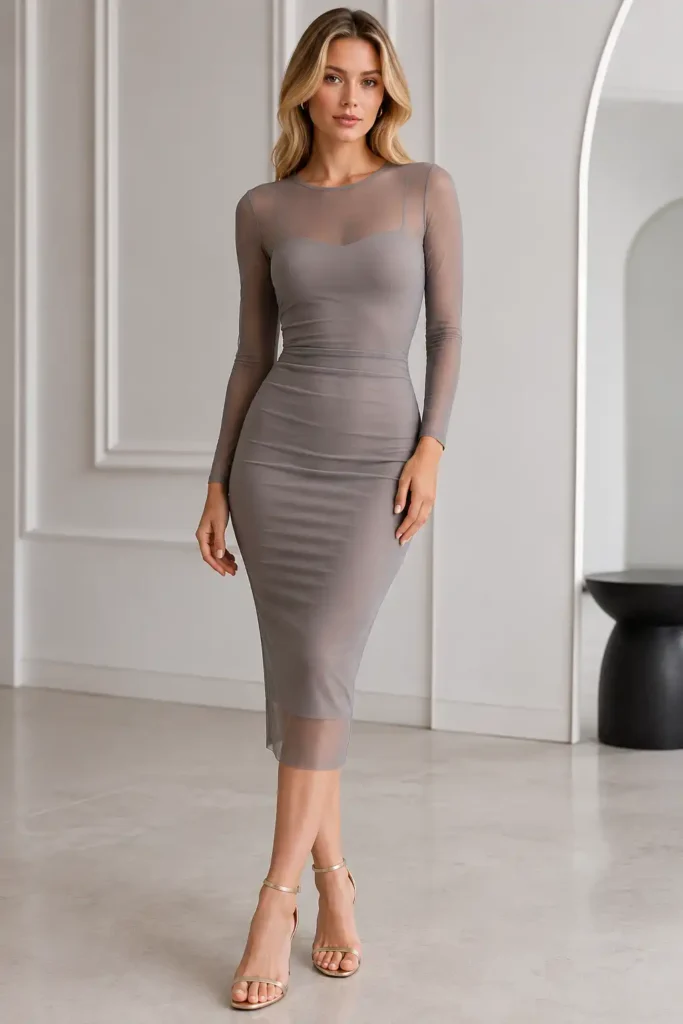
Each silhouette uses a different relationship between exposure, support, movement, and internal construction. Product development begins with the intended retail image and ends with measurable production standards.

Lined Mesh Bodycon

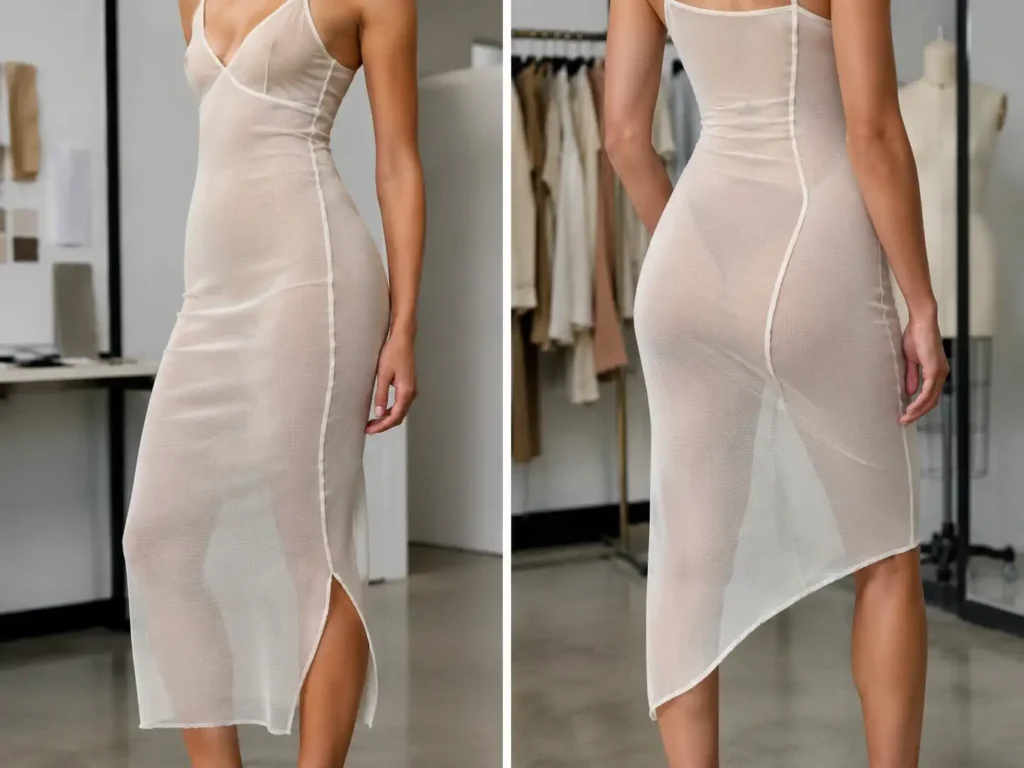
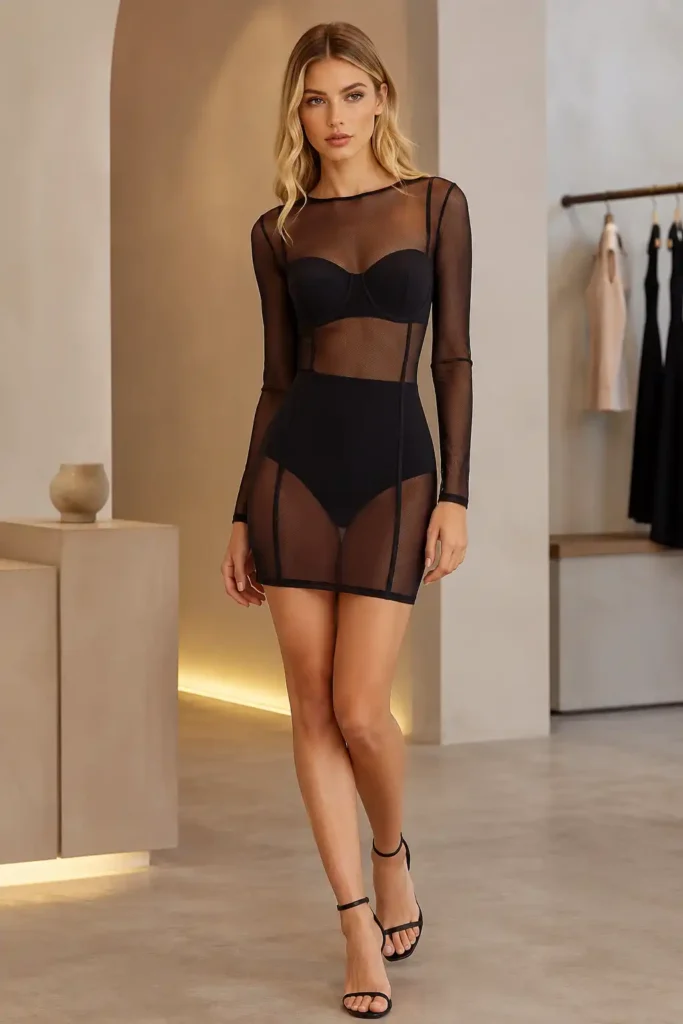
Stretch mesh over stretch lining creates a close silhouette while reducing uncontrolled transparency. Pattern work focuses on negative ease, bust-waist-hip balance, seam recovery, hem stability, and lining length. Double-layer mesh can soften the body outline without adding a separate opaque lining.

Sheer Maxi Mini-Lined

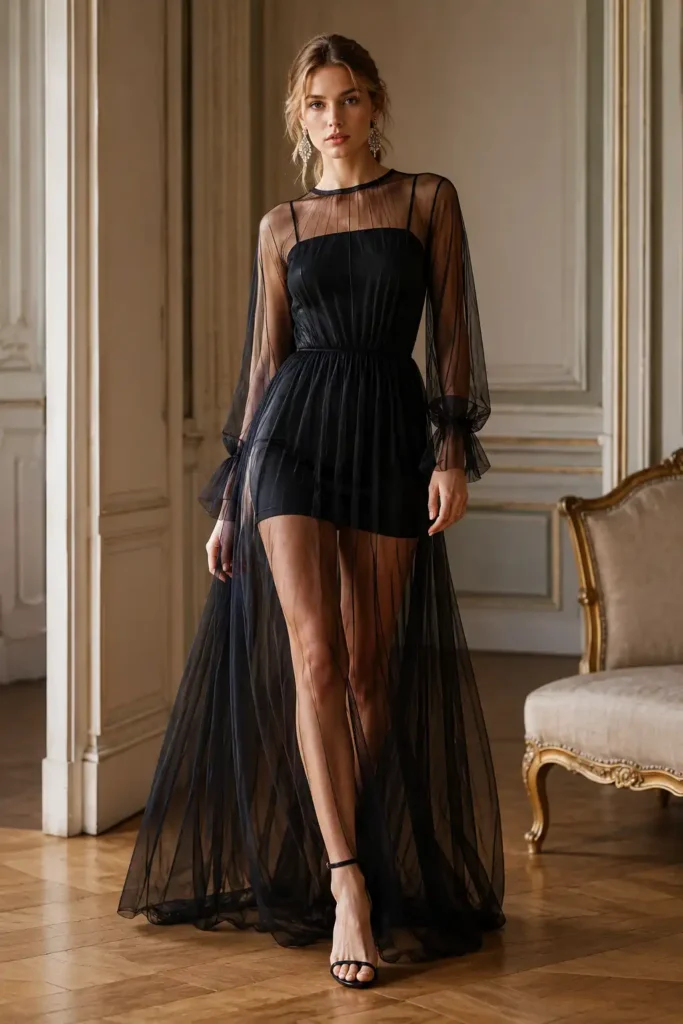
A short inner dress under a full-length sheer shell creates a clear fashion contrast. The mini lining must remain level, cover the hip during movement, stay hidden at the slit, and avoid pulling the maxi shell upward. Shell and lining hems are measured separately.

Partially Lined Mini

Strategic lining can cover the bust and hip while leaving sleeves, waist panels, back sections, or lower skirt areas sheer. Coverage maps, seam placement, facing widths, and clean internal edges are essential because every connection line remains visible through the outer layer.

Built-In Bodysuit Dress

A fitted bodysuit beneath a sheer dress can improve movement and prevent lining migration. Development must control torso length, leg opening, snap position, bra support, waist seam, stretch recovery, bathroom access, and the connection between bodysuit and shell.

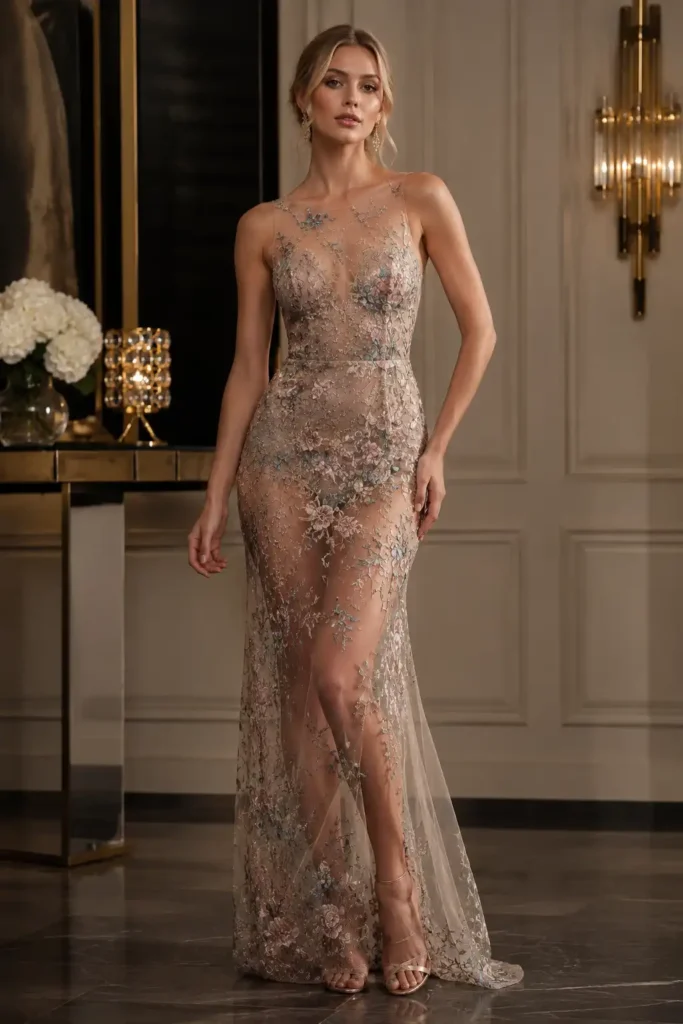
Lined Lace Dress

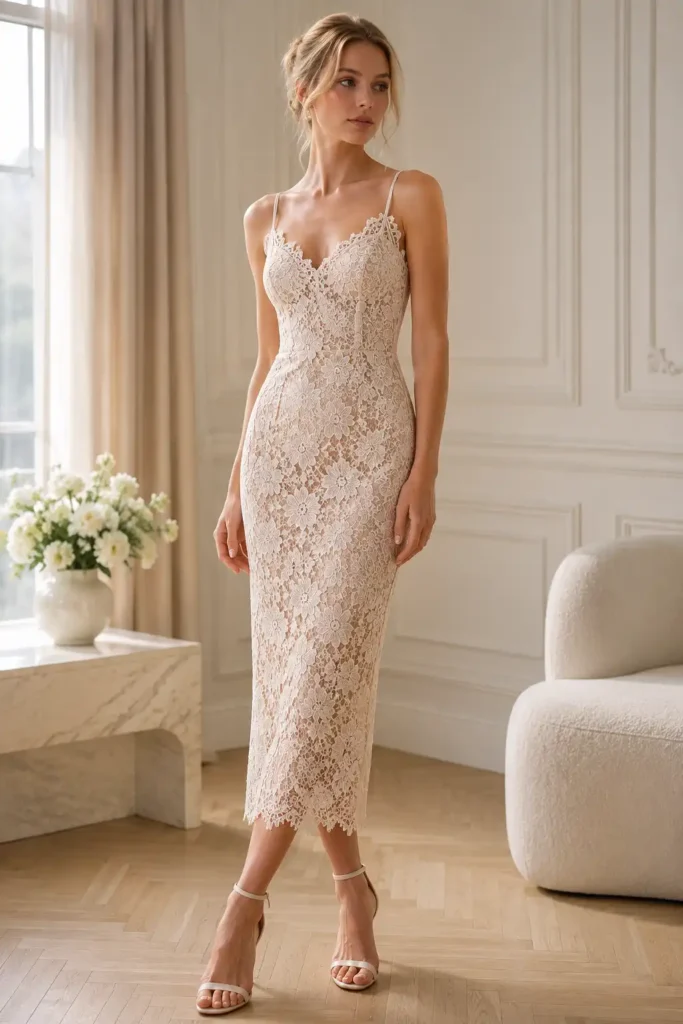
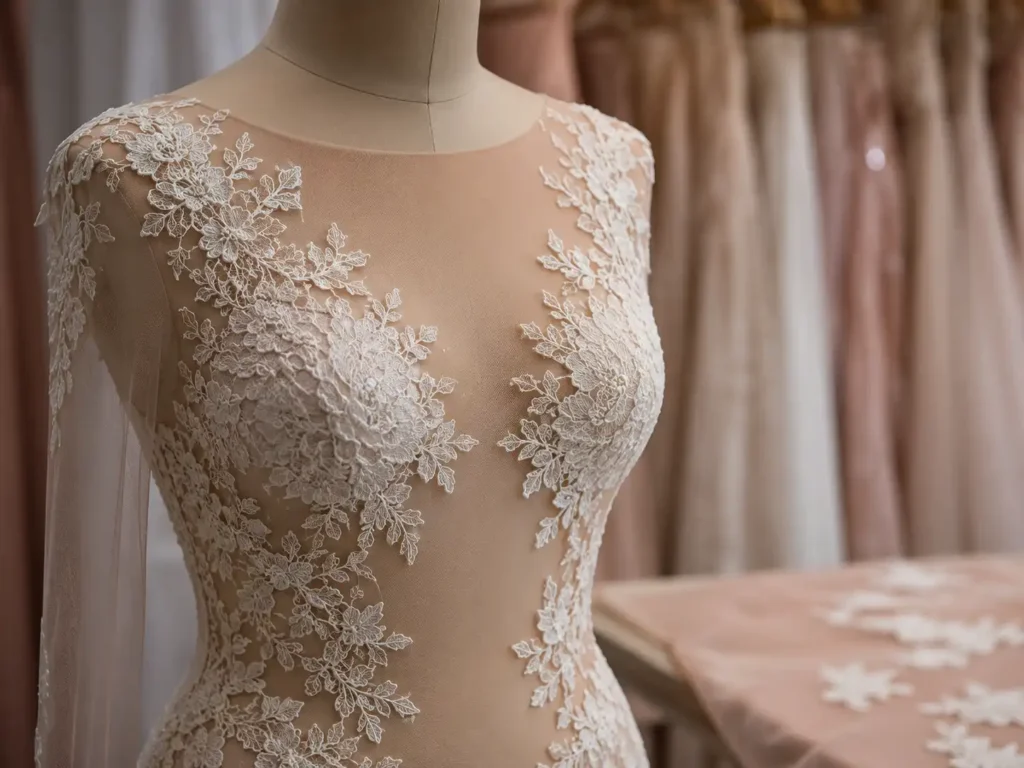
Lace motifs remain visible over tonal, nude, or contrast lining. Pattern placement, motif balance, edge finishing, lining shade, seam alignment, and softness against the skin determine whether the final garment looks refined or visually uneven.

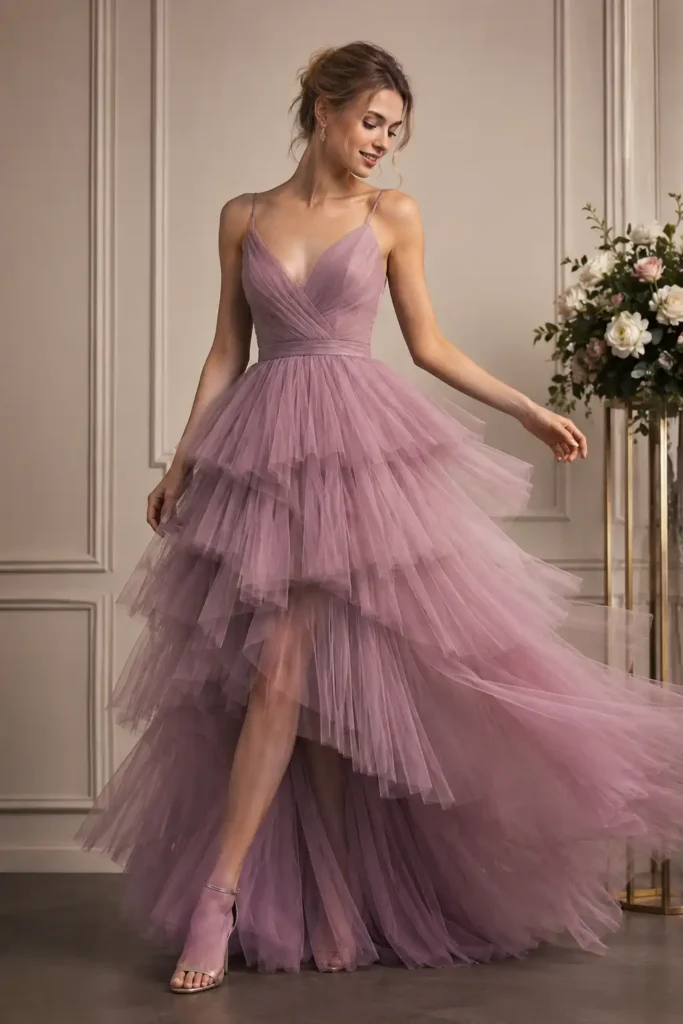
Layered Tulle Dress

Soft tulle and structured tulle behave differently. Layer count, gathering ratio, skirt volume, seam bulk, lining drape, waist attachment, and packaging recovery affect the final silhouette. Formal and party versions may require different support and pressing methods.

Embroidered Mesh Dress

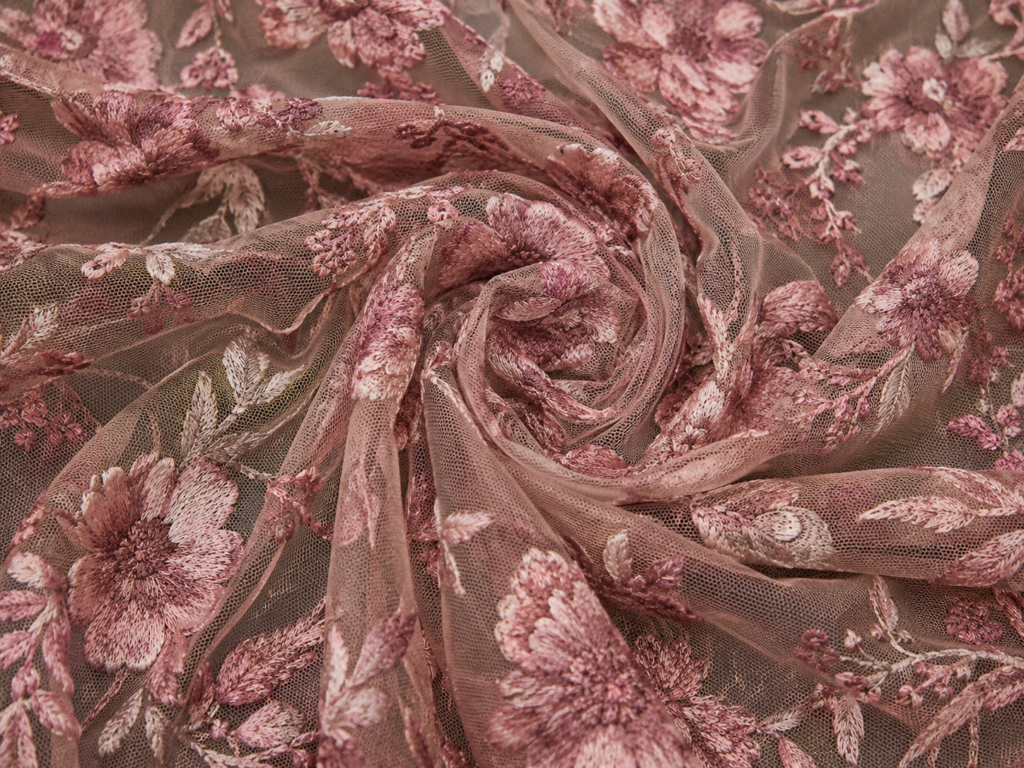
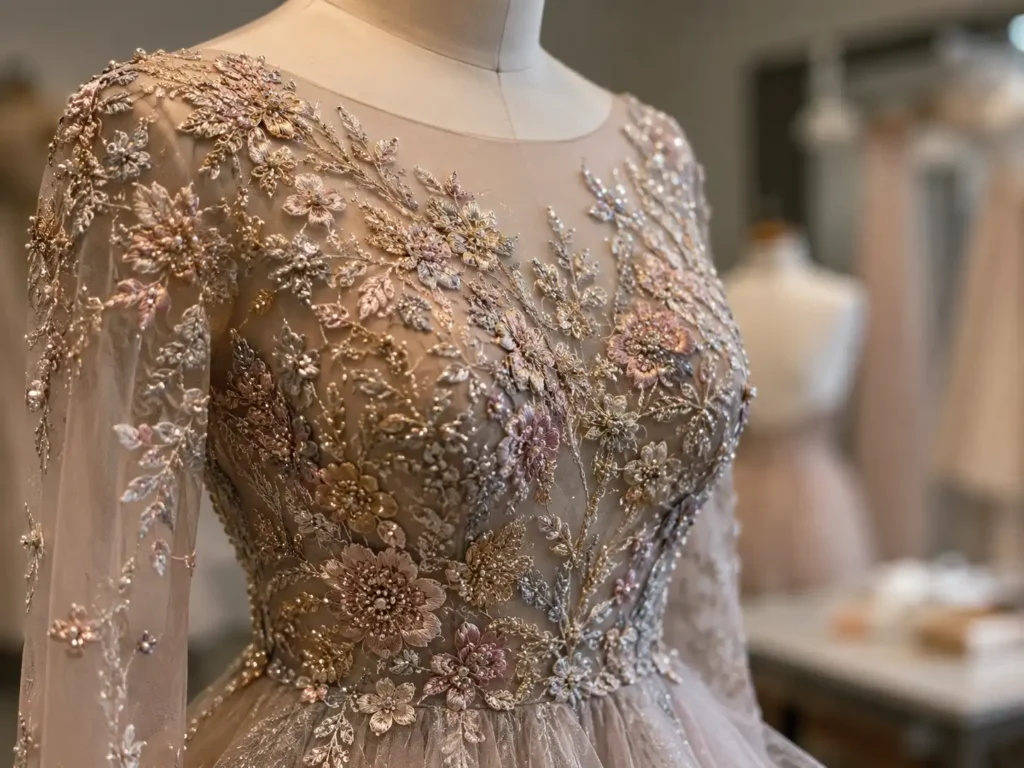
Embroidery adds weight and directional detail to transparent mesh. Cutting plans need motif placement, seam clearance, thread protection, lining color, decoration balance, and panel matching. Heavy embroidery may require additional support around shoulders, waist, or zipper seams.

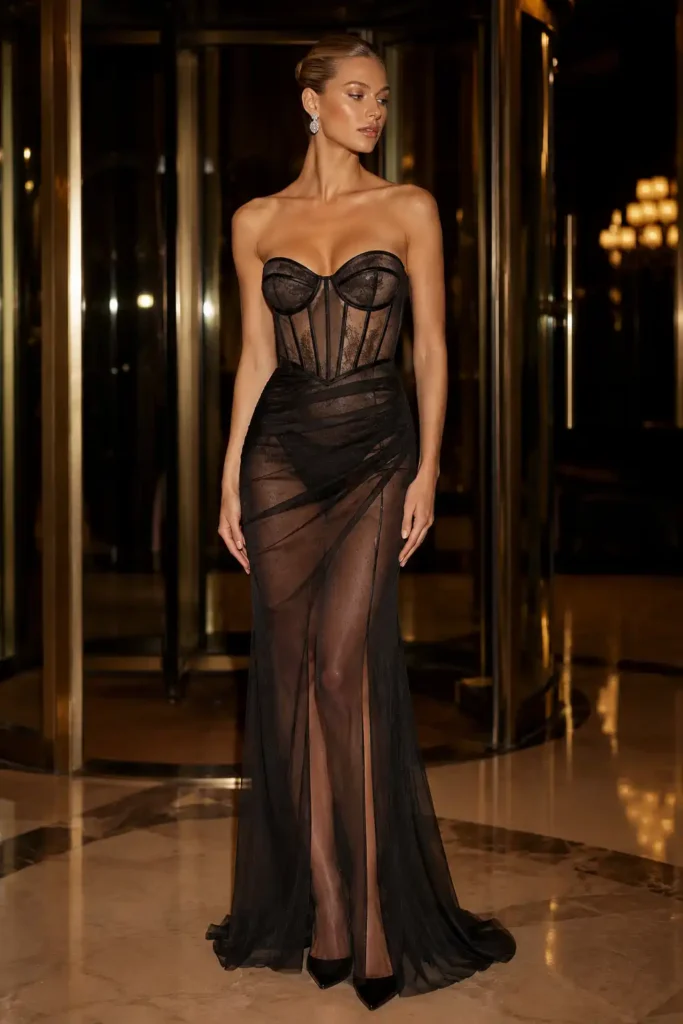
Sheer Corset Dress

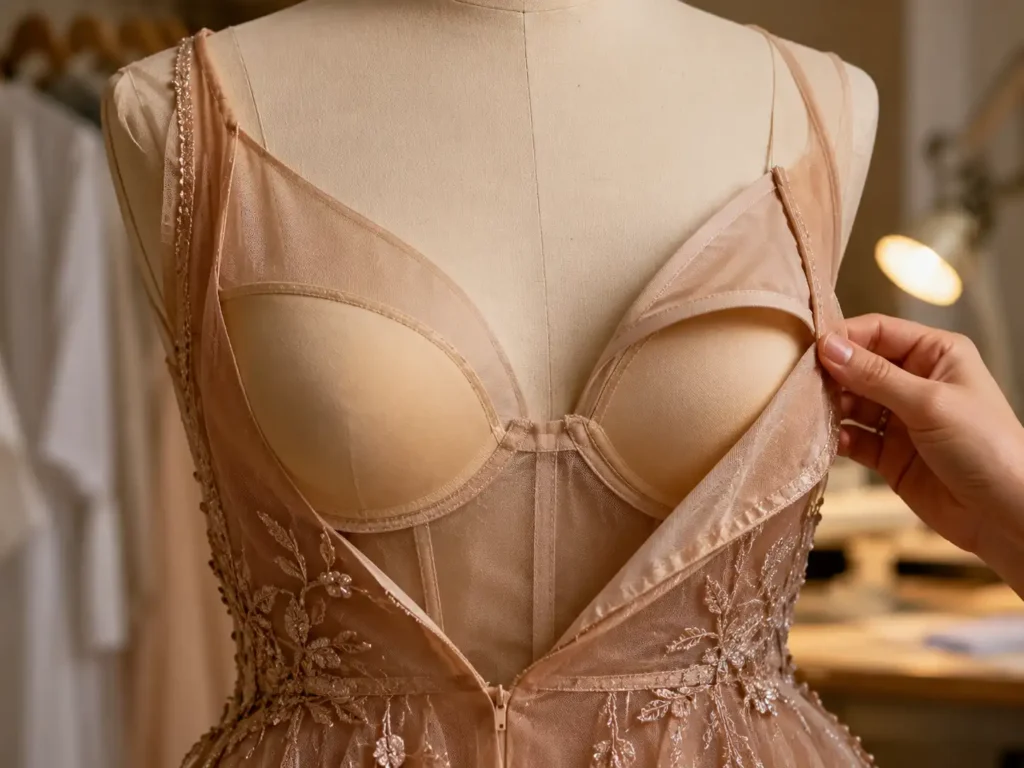
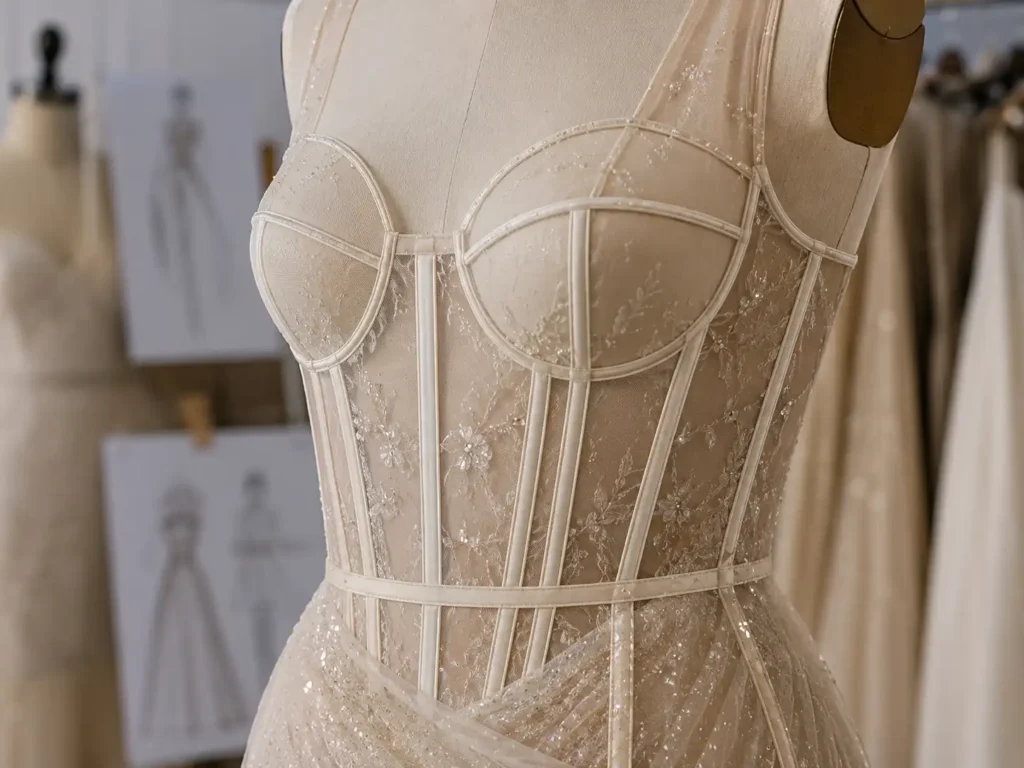
Corset styling combines transparency with structure. Cups, boning, seam channels, modesty panels, power mesh, lining, anti-slip support, and zipper construction must work together without exposing harsh internal edges or limiting movement.

Choose a Lining Structure Around Coverage and Movement

Lining is not an afterthought. Its shape, length, fabric, color, stretch, and attachment determine comfort, visual balance, fit, and production repeatability. Compare Lining Options Map Coverage Zones

Full Garment Lining

The lining follows most of the shell body and provides broad coverage. It suits lace, chiffon, fine mesh, and occasion dresses where transparency must remain controlled. The lining may stop below the neckline, sleeve, back, or lower skirt to preserve selected sheer zones.

Partial Body Lining

Separate bust, torso, hip, or skirt panels protect specific areas while leaving the remaining design transparent. Clean seam transitions matter because lining edges may be visible through mesh. Placement must be defined on front, back, and side views.

Mini Slip Lining

A lightweight mini dress beneath a long sheer shell gives movement and contrast. The slip can be attached or removable. Attached versions improve alignment; removable versions offer styling flexibility but require hanger loops, stable straps, and clear packing control.

Built-In Bodysuit

A bodysuit supports highly transparent shells, dance-oriented dresses, and high-slit silhouettes. Torso length and leg opening shape are critical. Too short creates upward pull; too loose creates wrinkles visible through the shell.

Double Mesh Layer

Two mesh layers can reduce transparency while keeping an airy hand. Matching stretch direction and recovery is vital. Layer rotation, color interaction, static, and seam thickness require sample review under natural and strong light.

Modesty Panels

Small opaque or semi-opaque panels can protect bust, side-bust, lower back, hip, or slit areas without changing the entire dress. Panel edges, bonding or stitching method, color, and comfort should be defined before final pattern approval.

Sheer Outer Fabrics Selected for the Intended Silhouette
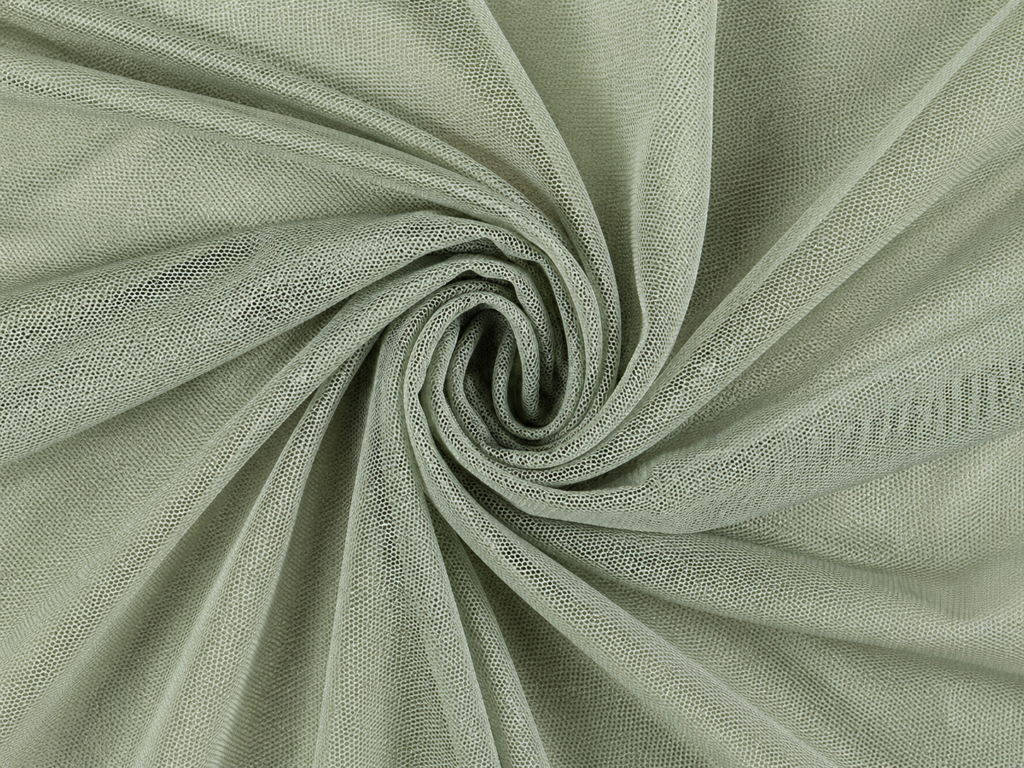
Fabric selection starts with visual effect, then moves into stretch, recovery, weight, drape, surface, seam behavior, transparency, care, and repeat-order availability.

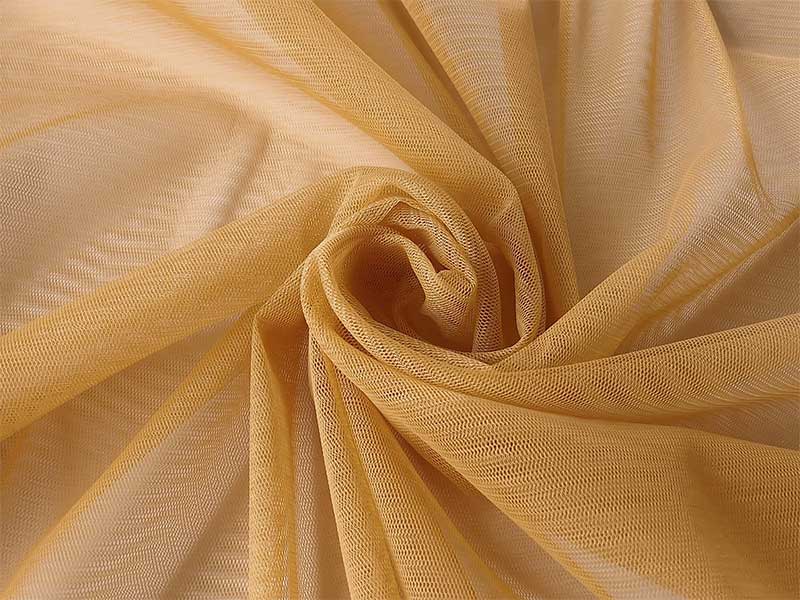
Stretch Mesh

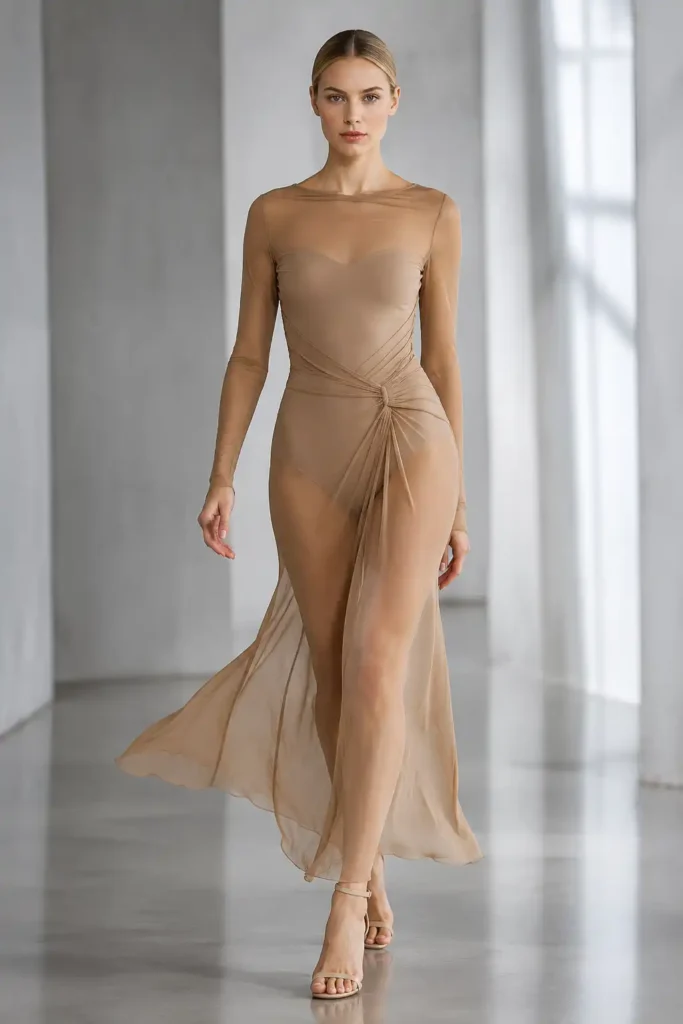
A common direction for bodycon, ruched, cut-out, and party dresses. Review two-way or four-way stretch, mesh opening, recovery, hand feel, edge curl, seam growth, and color interaction with the lining.

Power Mesh

Higher recovery and firmer support suit shaping panels, corset interiors, fitted bodices, and structured sheer sections. Compression must remain comfortable, especially around underarm, waist, and leg openings.

Soft Tulle

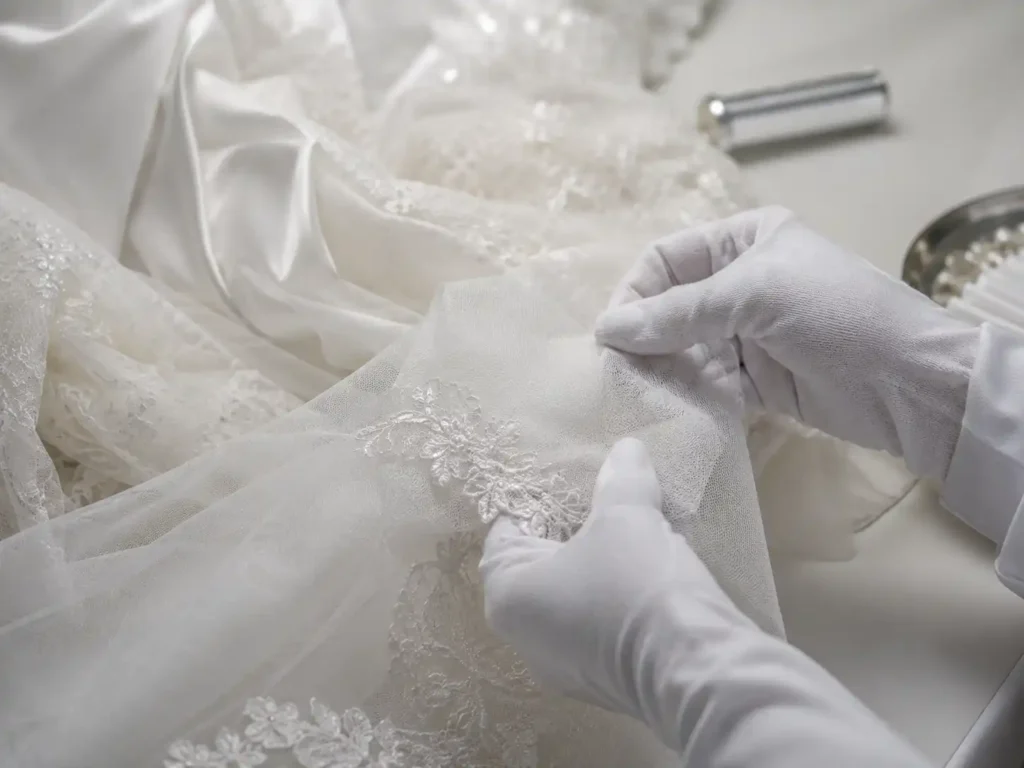
Fine soft tulle creates light volume and delicate transparency for layered skirts, sleeves, overlays, and romantic occasionwear. Risks include snagging, uneven gathering, static, and crushed volume during packing.

Structured Tulle

A firmer hand builds skirt volume, ruffles, sculpted sleeves, and architectural details. Seam bulk, skin contact, edge finish, and package recovery need early review because rigid tulle can scratch or hold unwanted creases.

Lace Fabric

All-over lace adds motif, texture, and visual value. Selection considers motif scale, direction, scalloped edge, stretch, hole risk, softness, dye lot, seam placement, and compatibility with lining color.

Chiffon

Chiffon creates floating layers and soft movement. Cutting slippage, transparency, seam puckering, rolled hems, static, snagging, and lining balance must be managed. Bias behavior can alter hem level after hanging.

Organza

Organza offers crisp transparency for overlays, sleeves, peplums, and structured skirts. The fabric can crease, show needle marks, and feel sharp at seams. Seam finish and pressing require careful definition.

Embroidered Mesh

Embroidery changes weight, stretch, and cutting yield. Motif placement, thread density, backing removal, skin comfort, seam clearance, and lining color influence both appearance and production cost.

Lining Fabrics Matched to Stretch, Weight, and Drape
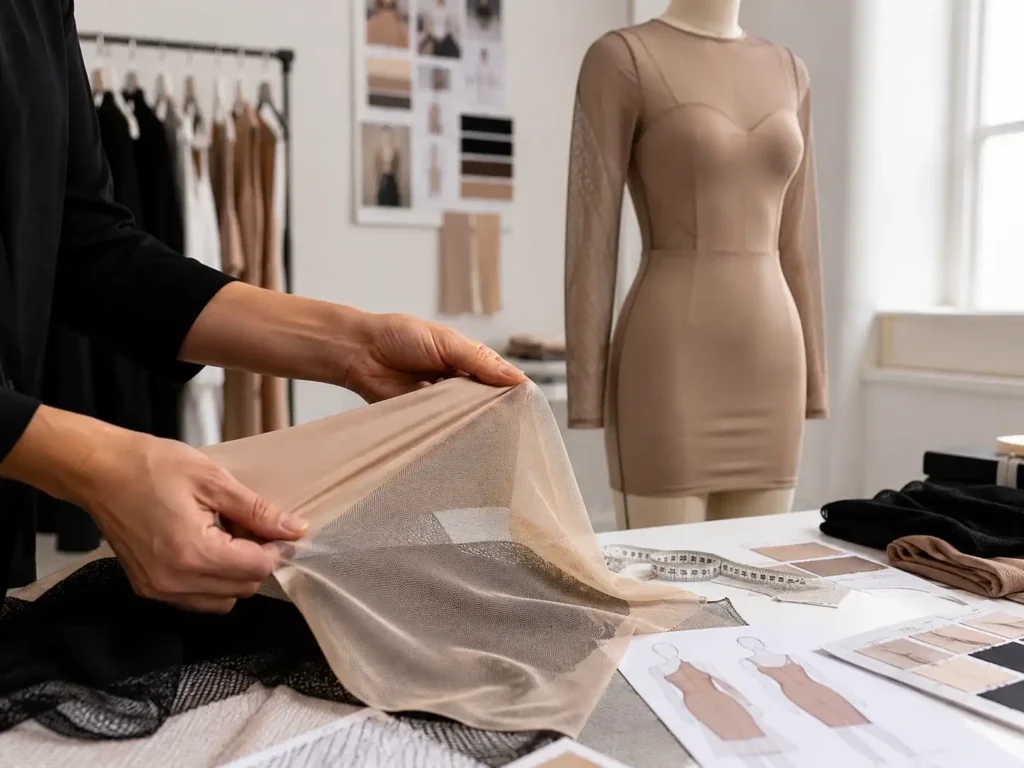
A suitable lining moves with the shell instead of fighting it. Selection balances opacity, recovery, breathability, softness, color, weight, seam thickness, and care performance. Select Lining Fabric Request Layer Swatches

Stretch Tricot

Lightweight stretch tricot works with many mesh bodycon and party dresses. It offers smooth recovery and low bulk, yet opacity varies by color and weight. Pale shades should be checked under flash and strong backlight.

Lightweight Jersey

Jersey provides softness and body coverage for fitted and semi-fitted silhouettes. Fiber blend, GSM, recovery, pilling risk, edge curl, and shrinkage should be tested against the outer shell.

Poly Knit Lining

Polyester knit lining can provide stable stretch and smooth dressing comfort. It suits many occasion and party styles, but excessive shine or static may affect the visual quality under transparent shells.

Rayon Stretch Lining

Rayon-spandex options can feel cooler and softer against the skin. Moisture response, shrinkage, recovery, colorfastness, and weight need review before combining with delicate mesh or lace.

Stretch Satin Lining

Stretch satin adds a smooth, elevated inner appearance for premium occasion dresses. Shine direction, weight, seam puckering, stretch balance, and bulk at zipper seams need careful control.

Light Woven Lining

Non-stretch or low-stretch woven lining suits chiffon, organza, lace, and looser silhouettes. It should not be paired with a highly fitted stretch shell unless movement and wearing ease are engineered into the pattern.

Control Transparency Without Losing the Sheer Effect

Commercial wearability comes from planned exposure, not random transparency. Front, back, and side coverage must remain stable in standing, walking, seated, and photographed positions.

Define Three Zones

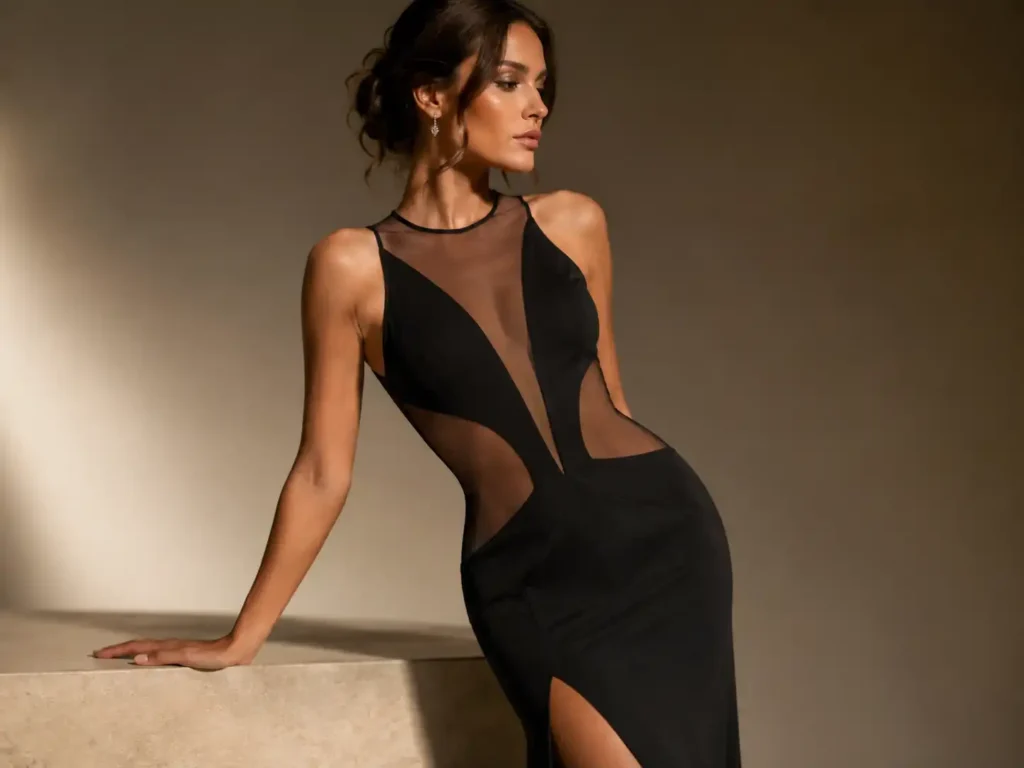
Opaque zones protect areas requiring full coverage. Semi-sheer zones soften the body line while retaining layered depth. Fully sheer zones create the intended design statement. A front, back, and side coverage map should identify each zone before pattern development.
  • Mark bust, under-bust, waist, hip, upper thigh, back, and slit areas.
  • State whether transparency changes by colorway.
  • Confirm whether undergarments may remain visible.

Review Multiple Lights

A fabric combination can appear safe indoors yet become highly transparent under sunlight or flash. Sample review should include natural light, indoor light, and strong backlight or studio flash when the garment is intended for campaigns, nightlife, or event photography.
  • Use the intended lining color.
  • Review pale and dark colorways separately.
  • Check wet-look or high-shine surfaces for visual amplification.

Balance Lining Length

Mini linings beneath midi or maxi shells create a strong contrast, but their hem must remain level and stable. The lining should cover the hip during movement without dropping so low that the sheer proportion loses visual impact.
  • Measure shell and lining from fixed landmarks.
  • Check front, back, and side hem balance.
  • Confirm lining visibility through slits and vents.

Lock Approval Standards

Opacity approval should be documented through fabric references, lining references, approved color, coverage maps, sample photographs, PP sample, and Golden sample. A description such as “not too sheer” is not precise enough for a multi-style bulk program.
  • Record shell and lining article references.
  • Keep approved swatches with the production file.
  • Use consistent lighting for production comparison.

Pattern Engineering for Two-Layer Dress Construction

Outer shell and inner lining may share a silhouette without sharing identical pattern dimensions. Independent pattern logic prevents twisting, pulling, exposure shifts, and poor movement.

Separate Ease Rules

A stretch shell may use negative ease while its lining requires different reduction. A loose chiffon shell may float over a closer slip. Pattern decisions follow fabric stretch, recovery, drape, and the intended visual relationship between layers.

Control Bust and Neckline

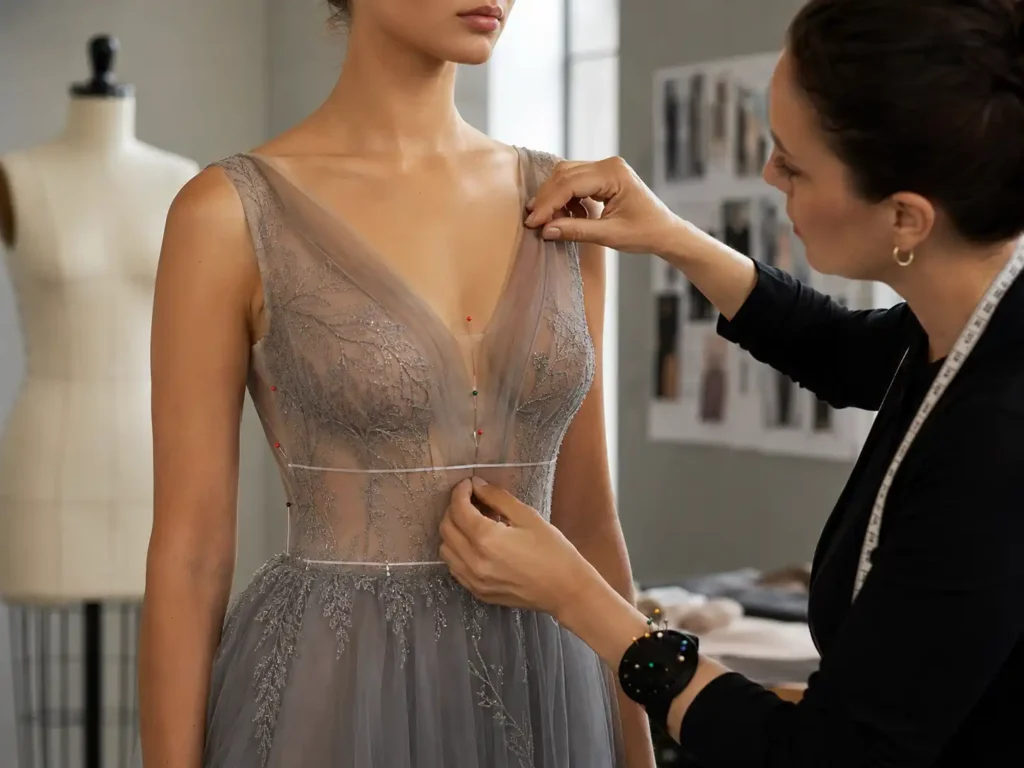
Sheer bodices expose every alignment error. Bust coverage, cup position, neckline depth, armhole, side-bust, under-bust seam, and center-front balance should be reviewed on the body rather than judged only from flat measurements.

Engineer Hip Movement

The lining must cover the hip without climbing when walking or sitting. Hip ease, skirt opening, side-seam shape, slit position, and lining hem circumference need movement review across the intended size range.

Set Layer Lengths

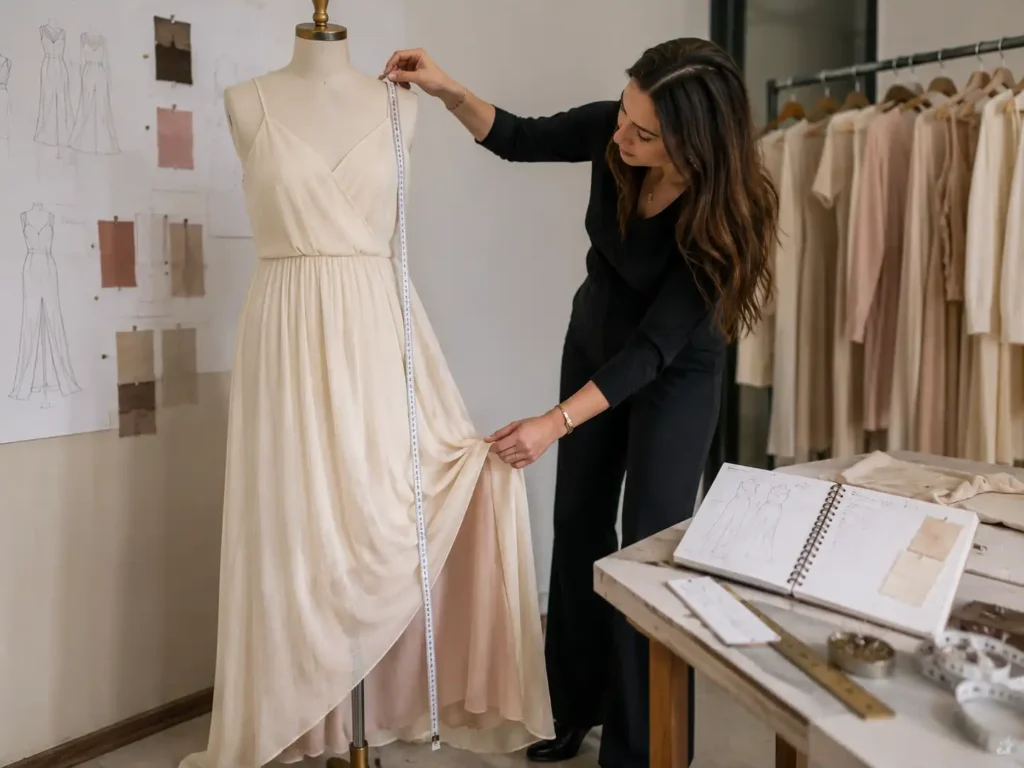
Shell length and lining length should be measured independently from the same landmarks. Maxi shells may require hang-time review before final hemming, especially in chiffon or bias-influenced constructions.

Place Attachment Points

Layers can be joined at shoulders, neckline, armholes, waist, zipper, side seams, or selected tacks. Too many attachment points restrict movement; too few allow rotation. The approved sample should define exact positions.

Grade Coverage Safely

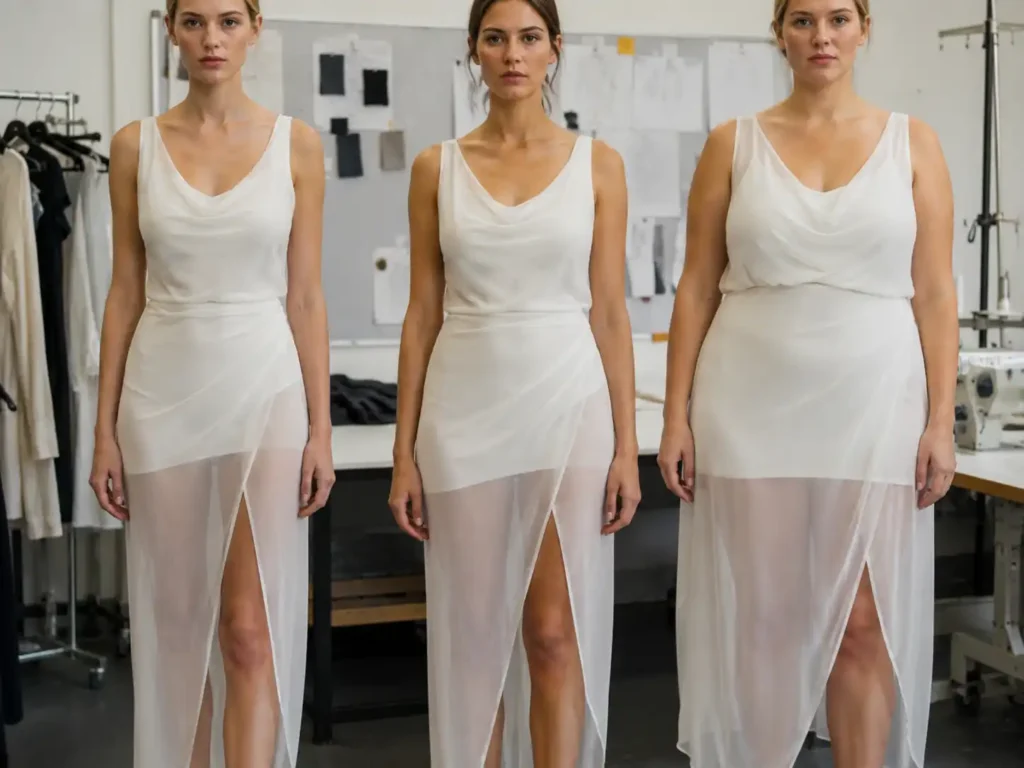
Grading must protect neckline, bust, bodysuit rise, slit height, mini-lining length, and back coverage. A simple proportional grade can expose larger sizes or over-cover smaller sizes. Brand size standards guide the final grade rules.

Construction Details That Keep Sheer and Lining Layers Stable

Visible craftsmanship comes from hidden construction. Seam type, attachment, reinforcement, pressing, edge finishing, and internal comfort influence the finished garment more than broad quality claims.

Neckline Finish

Clean facings, narrow binding, folded mesh, lining turn-back, or stabilized seams can be used according to opacity and design. The finish must lie flat without creating a dark heavy line under transparent fabric.

Armhole Control

Sheer armholes reveal uneven seam allowances and lining edges. Shape, binding width, stretch, underarm comfort, and side-bust coverage should remain consistent between the sample and production.

Shoulder Attachment

Shoulder seams often carry both layers and may also support straps, sleeves, embroidery, or heavy skirts. Reinforcement must remain discreet while preventing stretching and layer separation.

Waist Stabilization

Waist seams can anchor shell and lining, especially in gathered or fitted styles. Stabilization should prevent seam growth without creating a rigid line visible through delicate mesh or lace.

Zipper Integration

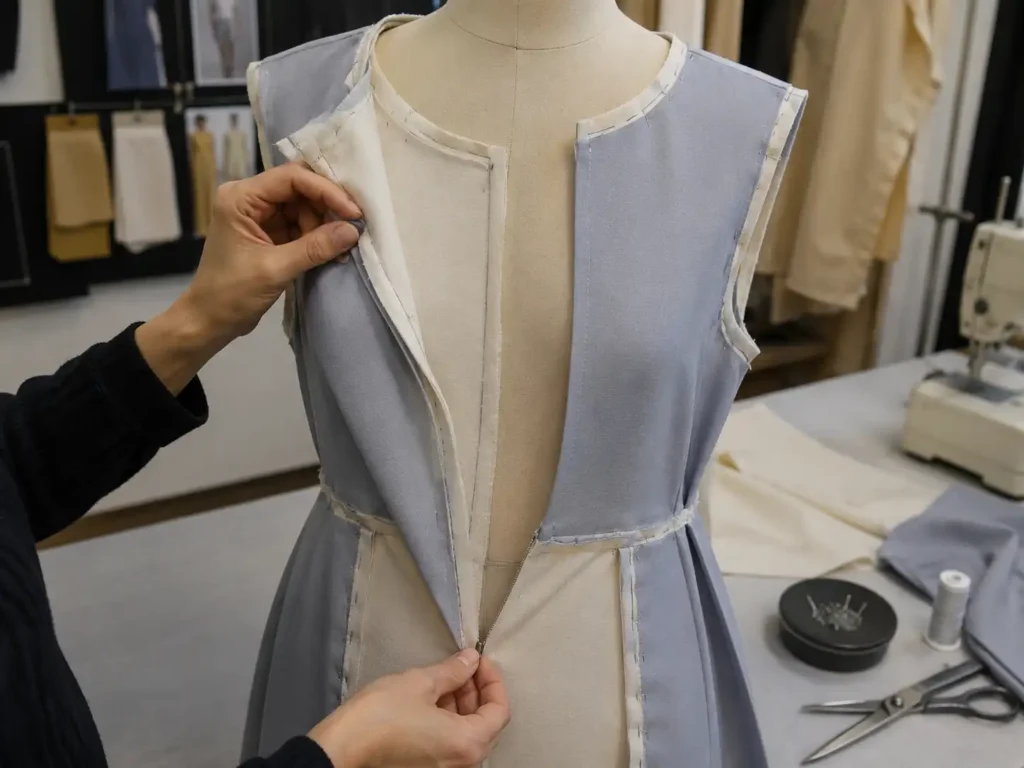
The zipper may connect both layers or close the lining and shell through a shared seam. Seam tape, zipper length, top finish, lining clearance, and pressing determine whether the back remains flat.

Slit Construction

Slit height, underlap, lining opening, seam reinforcement, and movement coverage must work together. The lining should not pull across the slit or appear as an unintended block of color.

Hem Relationship

Shell and lining hems may be level, staggered, curved, asymmetric, or intentionally exposed. Hem method must suit fabric weight and transparency while avoiding bulky lines or uneven drop.

Internal Comfort

Scratchy lace, tulle, sequins, zipper ends, boning tips, hook-and-eye edges, and label placement can cause complaints. Soft guards, lining extensions, seam covers, and position corrections are reviewed during sampling.

Design Details Developed for Commercial Sheer Dress Collections
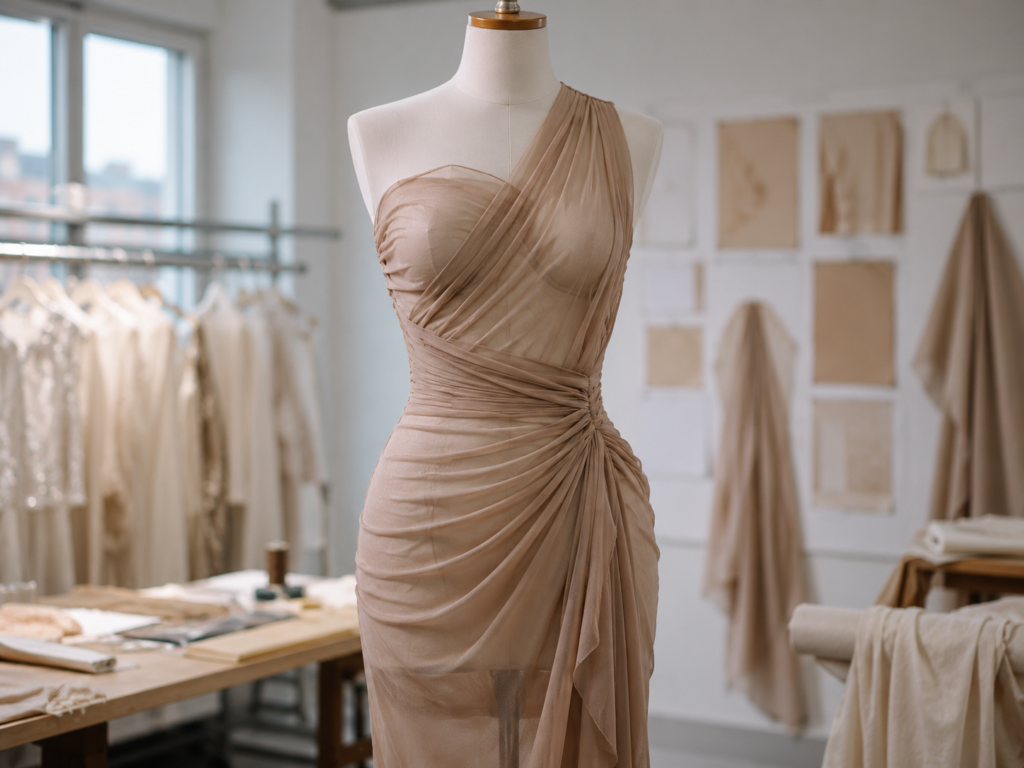
Fashion value rises when design features are engineered around the lining system. Each feature changes coverage, support, sewing sequence, material use, and bulk inspection.

Ruching and Draping

Ruching can soften transparency and shape the waist or hip. Gathering ratio, elastic tension, lining freedom, seam bulk, and left-right balance need written standards to avoid uneven production.

Illusion Panels

Transparent panels create cut-out effects without fully open skin exposure. Panel shape, seam line, lining boundary, mesh color, stretch, and skin-tone relationship influence the illusion.

Corset Boning

Boning adds structure to sheer bodices. Cup position, channel width, boning hardness, tip protection, lining layer, waist length, and zipper strength must be coordinated for support and comfort.

Bra Cups

Fixed or removable cups affect bust shape, neckline height, and opacity. Cup size, thickness, softness, spacing, angle, and attachment should be tested on the intended fit model.

Lace Placement

Placed lace or appliqué can cover selected areas while leaving mesh visible. Motif balance, mirrored placement, edge security, color, and seam integration should be marked in artwork or placement files.

Embroidery

Embroidery provides coverage and surface value, yet it adds weight and reduces stretch. Stitch density, backing, thread color, edge comfort, and motif position need approval.

Sequins and Beads

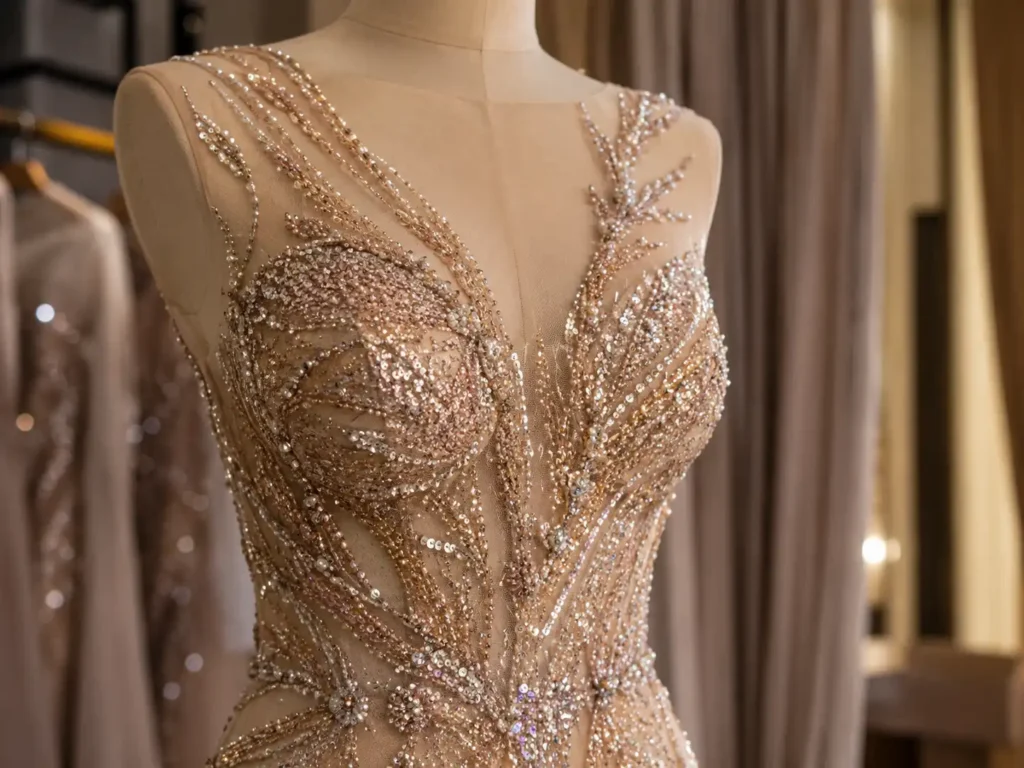
Decorative surfaces can increase abrasion, seam thickness, needle breakage, and packing risk. Lining protects skin, while decoration-free seam allowances improve construction.

Printed Mesh

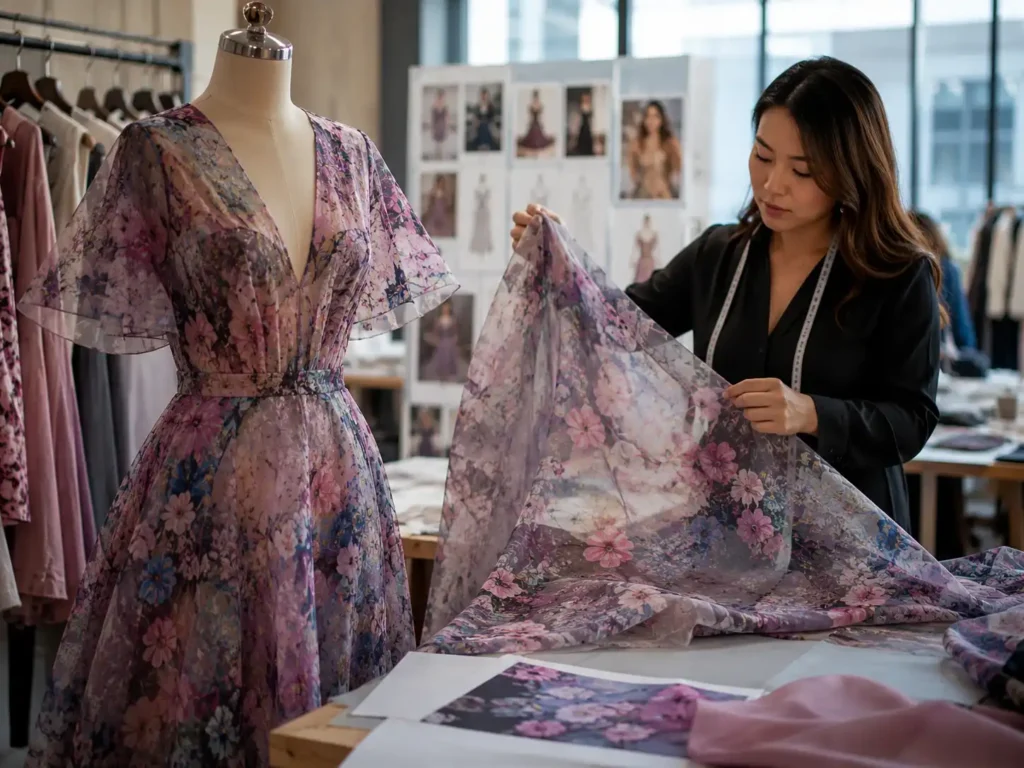
Placement or all-over prints can reshape perceived transparency. Print registration, stretch distortion, color density, lining color, and panel matching should be checked before bulk printing.

What a Production-Ready Tech Pack Must Define

Clear files convert a visual concept into measurable shell, lining, fit, sewing, label, and packing instructions. A reference image alone cannot lock bulk standards.

Fabric Specifications

State shell and lining names, composition, weight or target hand, stretch direction, recovery, color, transparency, finish, and approved reference. Include alternatives only when substitution is permitted.
  • Identify face and reverse side.
  • Mark grain or stretch direction.
  • Record approved swatch reference.

Coverage Mapping

Provide front, back, and side drawings showing opaque, semi-sheer, and fully sheer areas. Mark lining edges, bodysuit boundaries, modesty panels, slit exposure, and any color-dependent coverage changes.
  • Use clear color coding.
  • Add notes for movement-sensitive areas.
  • Confirm undergarment assumptions.

Layer Measurements

List shell and lining lengths separately. Include bust, waist, hip, neckline depth, armhole, strap, back height, slit height, lining hem, bodysuit rise, and other style-specific points.
  • Define POM codes.
  • Set tolerances by measurement.
  • State base size and size range.

Construction Details

Show seam types, seam allowances, clean finishes, binding, zipper, hook-and-eye, boning, cups, elastic, attachment points, hem methods, label placement, and internal comfort protection.
  • Add enlarged detail drawings.
  • Reference approved sample comments.
  • Separate shell and lining instructions.

BOM and Trims

List fabric consumption basis, lining, zipper, elastic, cups, boning, lace trim, appliqué, sequins, labels, hangtags, barcodes, polybags, and cartons. Each item needs color, size, supplier status, and approval record.
  • Confirm material MOQ.
  • Record substitute rules.
  • Track arrival timing.

Packing Instructions

Define folding, tissue, garment protection, hanger or flat pack, individual polybag, warning text, barcode, SKU label, size sticker, assortment, carton mark, and carton-level quantity.
  • Protect snag-sensitive surfaces.
  • Separate embellished garments when needed.
  • Match barcode to SKU and size.

Measurement and Grading for Reliable Size Runs
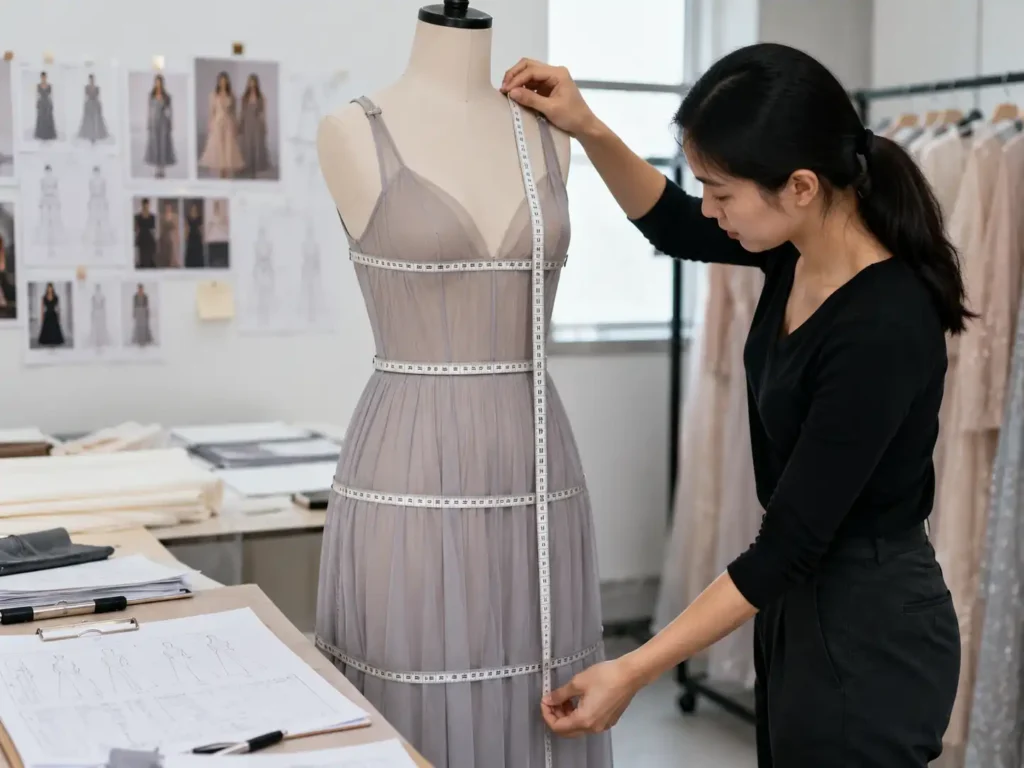
Lined sheer dresses need more than a standard bust-waist-hip chart. Coverage, support, and layer position must remain correct as sizes change.

Base-Size Measurement

The base sample is checked against the approved size chart for bust, waist, hip, dress length, shell length, lining length, strap, armhole, neckline depth, back height, slit height, and hem width. Style-specific points are added for cups, boning, bodysuit rise, and cut-out panels.
  • Measure shell and lining separately.
  • Record relaxed and stretched measurements when required.
  • Use the approved fit model or brand block.
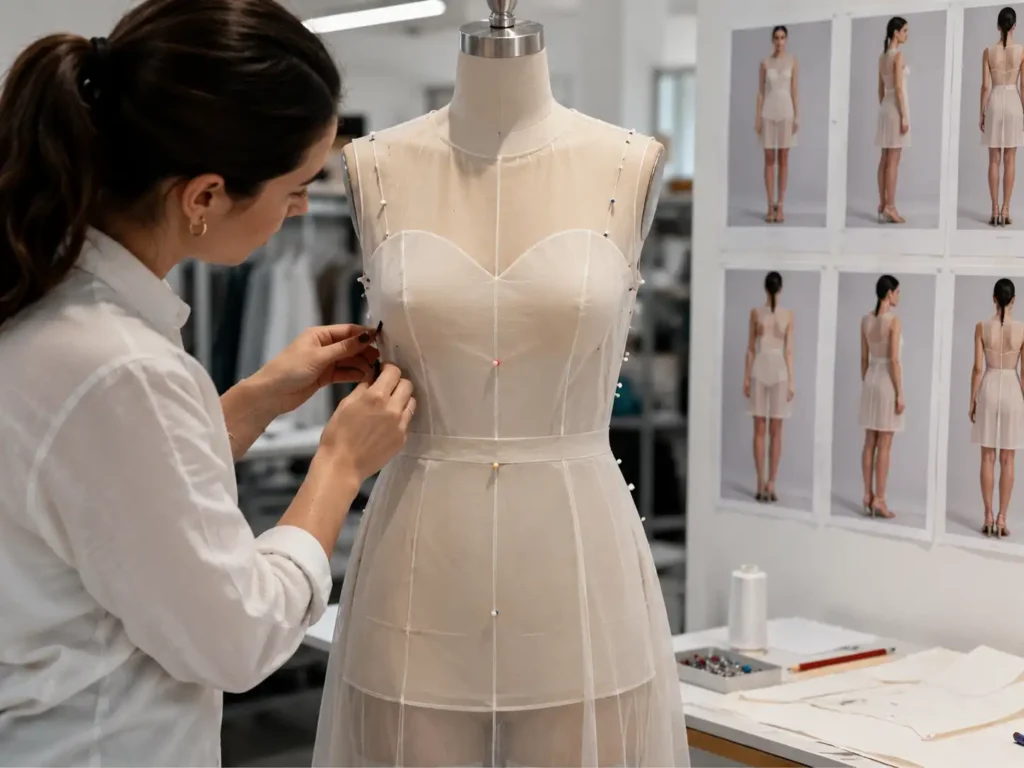
Coverage Grade Rules

Lining boundaries should not shift into unsafe positions when sizes increase. Bust panels, mini linings, modesty panels, bodysuit leg lines, and back coverage may require controlled positional grading rather than equal growth in every direction.
  • Protect minimum bust coverage.
  • Control slit height by size.
  • Review neckline and armhole exposure.

Size-Ratio Planning

MOQ starts from 200 pcs per style/color and can be divided across sizes using a commercially workable ratio. Excessive fragmentation increases cutting, bundle control, measurement, label, packing, and inventory complexity.
  • Submit XS-XL or numeric ratios early.
  • Confirm extended sizes against separate specifications.
  • Match size labels and carton breakdowns.
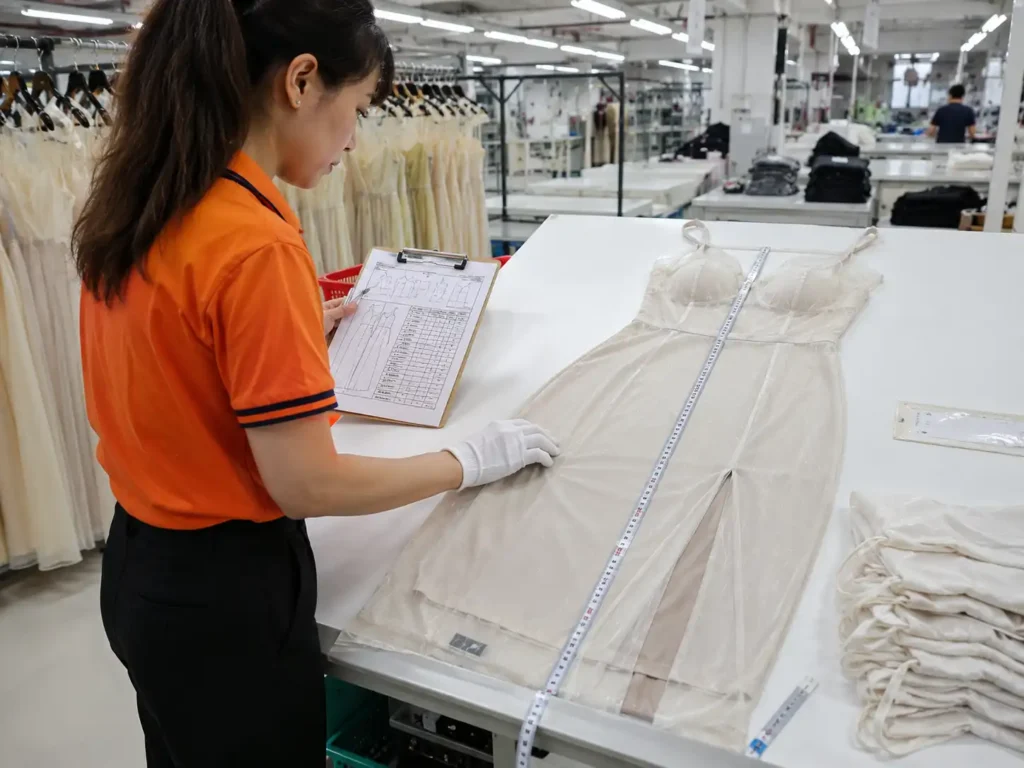
Production Measurement

Inline and final checks compare garments with the approved measurement chart and tolerance. High-risk points include bust, waist, hip, shell length, lining length, strap, neckline, and slit because small errors can change coverage and visual proportion.
  • Record out-of-tolerance findings.
  • Correct pattern or sewing causes, not only finished pieces.
  • Keep approved measurement files for repeat orders.

From First Sample to Approved PP Sample

Sampling converts fabric and coverage decisions into a fit-tested, measurable production standard. Complex lined sheer dresses commonly require more review than ordinary single-layer styles.

Project Review

Reference images, tech pack, size chart, target quantity, fabrics, colors, labels, packaging, and launch timing are reviewed. Missing information is listed before pattern work begins.

Fabric Direction

Shell and lining options are compared for color interaction, stretch, recovery, weight, opacity, drape, comfort, availability, MOQ, and bulk stability.

Pattern Development

Outer and inner patterns are prepared with separate ease, coverage, length, slit, attachment, and grade considerations. Construction risks are marked before cutting.

First Sample

Complex corset, lace, mesh, or sequin styles generally require 15-25 days for a first sample, depending on material readiness, pattern difficulty, trims, and decoration.

Fit Review

Fit, movement, transparency, layer alignment, neckline, bust, waist, hip, slit, shell length, lining length, and internal comfort are reviewed through measurements, photos, video, and comments.

Revised Sample

Revised samples commonly require 7-15 days, with timing based on the extent of pattern, material, construction, trim, and coverage changes. Every revision is recorded.

PP Sample

The PP sample uses final or approved bulk materials and confirms fabric, color, trims, construction, measurements, labels, packing, and QC standards. A typical PP sample window is 7-15 days after materials are ready.

Golden Sample

The approved reference is retained for production, QC, packing, repeat orders, and dispute review. Bulk cutting does not begin before essential PP standards are confirmed.

Validate Fit, Coverage, Movement, and Photo Performance

A lined sheer dress should be judged on the body, in motion, and under the lighting used for sales content. Flat appearance alone cannot reveal all risks.

Fit and Balance Review

Check front, side, and back balance on the intended fit model or approved mannequin. Review bust position, waist level, hip shape, shoulder stability, side seams, shell drape, lining hem, and zipper line. Adjustments are recorded before a revised sample.
  • Compare with the brand size chart.
  • Photograph key angles consistently.
  • Measure before and after fitting.

Movement Testing

Walking, sitting, raising arms, turning, and stepping through the slit reveal ride-up, twisting, exposure, restricted movement, loose straps, bodysuit pull, and lining migration. Styles intended for events or nightlife need stronger movement review than static showroom samples.
  • Check seated hip coverage.
  • Review slit opening during stride.
  • Confirm arm movement and neckline security.

Lighting Review

Natural light, indoor light, strong backlight, and flash can produce very different transparency. Pale lining, nude mesh, fine lace, and double mesh should be reviewed in the intended campaign and wearing environment before approval.
  • Use approved underwear or styling assumptions.
  • Review every colorway.
  • Keep reference images with sample records.
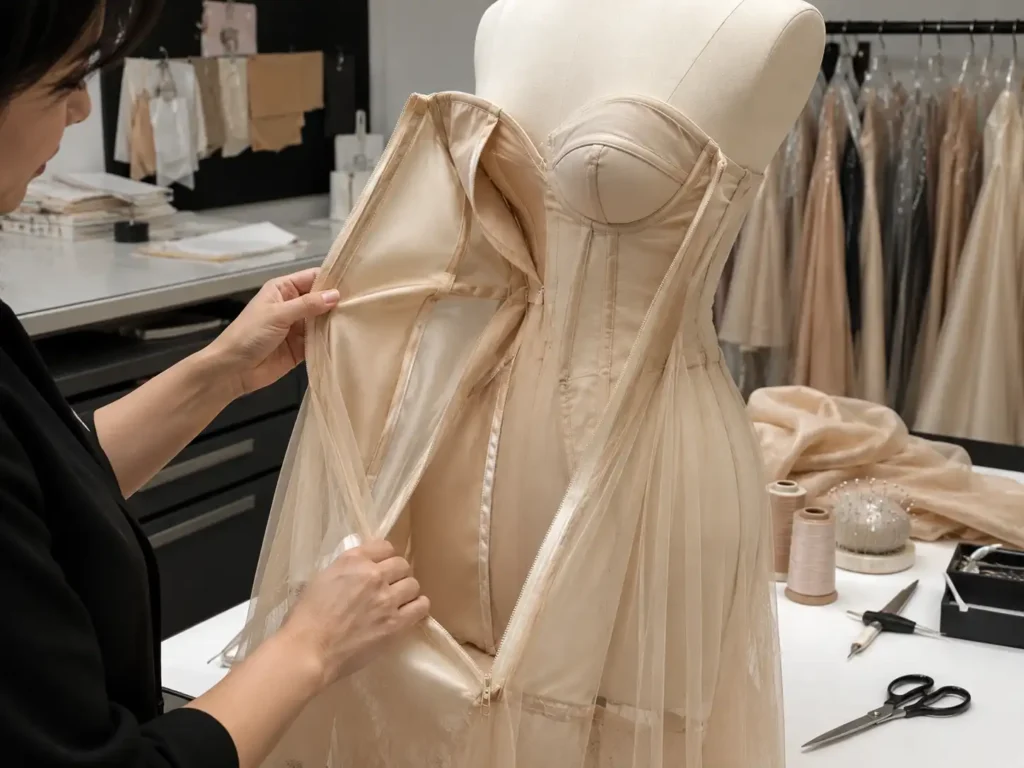
Inside Construction Review

Turn the sample inside out to inspect seam allowances, lining edges, tacks, zipper clearance, boning tips, cup attachment, elastic, label position, loose threads, and scratch points. Internal finishing affects both wear comfort and repeatability.
  • Check visible seam shadows.
  • Protect sharp decoration backs.
  • Confirm care and composition labels.

Bulk Production Workflow for Layered Sheer Dresses

Bulk scheduling begins after PP standards, materials, quantity, colors, sizes, labels, packing, and QC requirements are confirmed. A production timeline is issued according to program complexity and readiness.

Material Approval

Bulk shell, lining, trims, labels, and packaging are checked against approved references. Color, hand, stretch, opacity, width, and quantity are recorded before release.

Fabric Inspection

Mesh holes, lace damage, embroidery defects, shade variation, width, stretch, recovery, and contamination are reviewed. Dye lots are separated when required.

Relaxing and Preparation

Stretch and delicate fabrics may require controlled relaxing or handling before cutting. Fabric direction, face side, shrinkage risk, and lay method are confirmed.

Cutting and Bundling

Shell and lining pieces are cut, counted, labeled, and bundled by style, color, size, and section. Matching identifiers prevent layer mixing.

Sewing Instruction

Production teams receive the approved sample, pattern, BOM, measurement chart, seam requirements, lining attachment, zipper, slit, labels, and key risk points.

Inline Inspection

Early and mid-production checks focus on transparency, layer alignment, seam recovery, measurements, zipper flatness, slit exposure, and visible construction.

Finishing and Final QC

Thread trimming, pressing, appearance, measurements, labels, barcodes, packing, and carton data are checked. Delicate surfaces receive suitable handling.

Packing and Shipment

Garments are folded or hung according to instructions, protected from snagging, packed by SKU and size ratio, and coordinated with express, air, sea, or nominated forwarders.

Cutting Control for Mesh, Lace, Tulle, and Chiffon
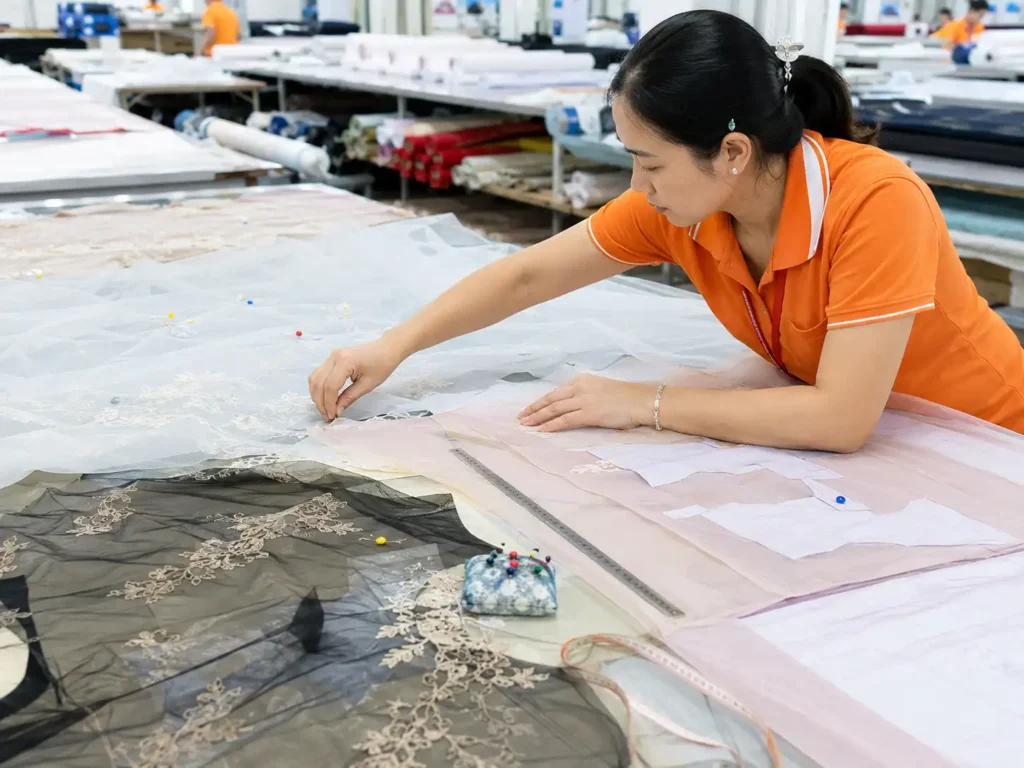
Cutting errors cannot be hidden by later sewing. Transparent and layered fabrics require disciplined direction, matching, identification, and damage control.

Direction and Stability

Stretch direction, grain, face side, pile or shine direction, embroidery orientation, print direction, and lace motif are marked before laying. Mesh and chiffon can shift during cutting, so the lay method and piece identification must prevent distortion. Shell and lining pieces are controlled independently.
  • Verify marker direction before cutting.
  • Avoid excess tension in the fabric lay.
  • Separate dye lots and approved color batches.
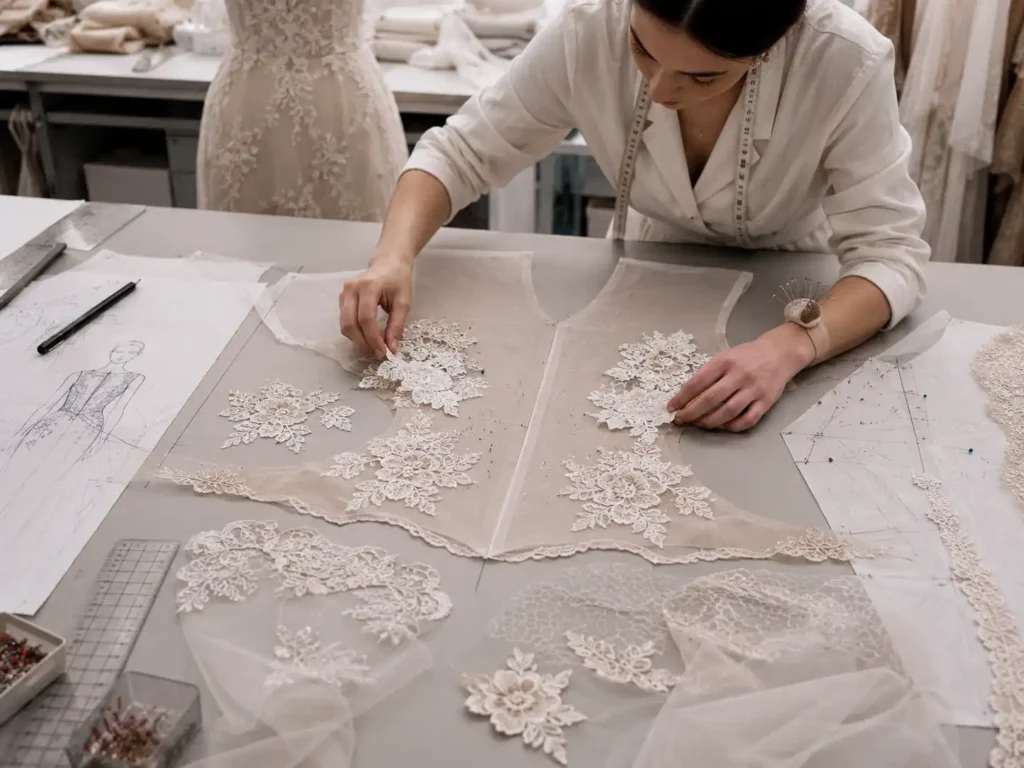
Motif and Panel Placement

Lace, embroidered mesh, appliqué, and placement print may need mirrored or centered positions. Seam lines should avoid cutting through important motifs unless approved. Coverage panels must align with the design and remain consistent across sizes.

  • Mark center-front and bust reference points.
  • Reserve scalloped lace edges when required.
  • Check left-right balance before bulk cutting.
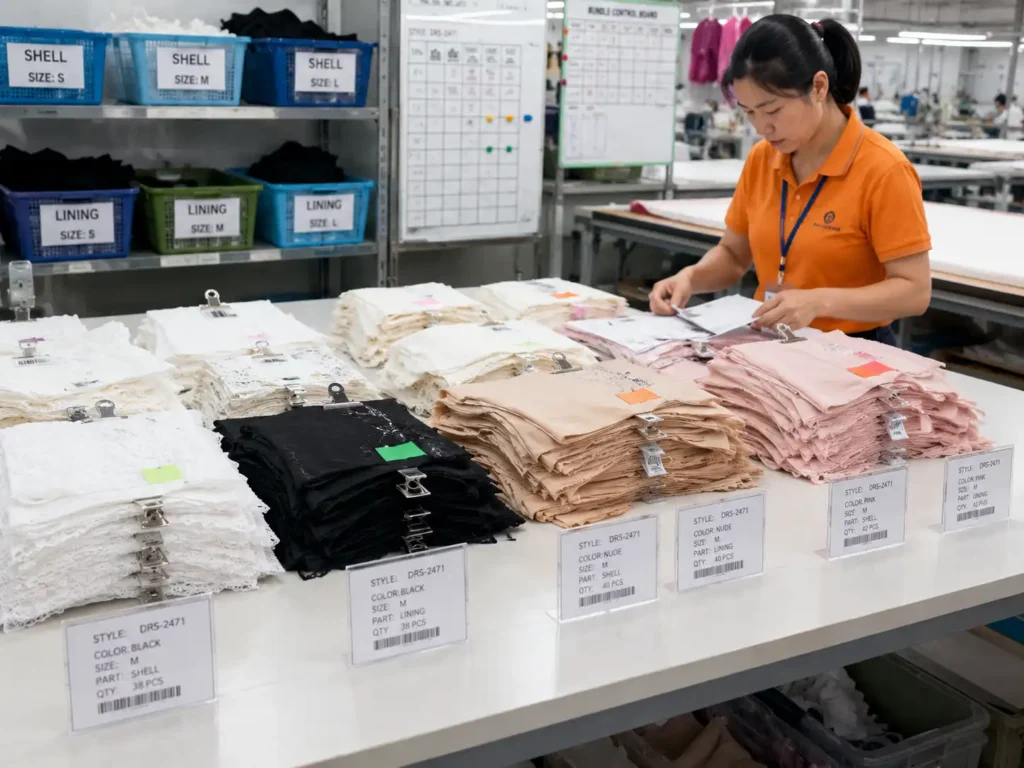
Bundle Identification

Every cut bundle should identify style, color, size, shell part, lining part, and quantity. Similar nude shades or multiple mesh qualities can be easily mixed. Clear bundle control protects opacity, color, fit, and packing accuracy throughout production.

  • Count shell and lining parts separately.
  • Use clear size and color identification.
  • Report damaged or missing cut panels before sewing.

Sewing Instructions for Sheer Shells and Inner Layers

The approved construction must be translated into line-level instructions. Needle, thread, seam allowance, feeding, stabilization, attachment, and pressing affect visible quality.

Seam and Needle Control

Needle size, point type, thread, stitch density, seam allowance, and seam finish are selected around fabric weight and stretch. Fine mesh can ladder or wave; chiffon can pucker; lace can fray or tear at open motifs.
  • Run seam trials on bulk fabric.
  • Check recovery after stretching.
  • Avoid heavy seam shadows under transparent areas.

Layer Feeding

Uneven feeding causes one layer to grow while the other contracts. Sewing sequence, handling, basting, temporary fixation, and operator guidance should maintain aligned notches, waist seams, zipper points, and hems.
  • Match pattern notches.
  • Control shell and lining tension separately.
  • Inspect side-seam rotation early.

Attachment and Openings

Neckline, armhole, shoulder, waist, zipper, slit, and hem attachments are defined in the PP standard. Lining needs enough freedom to move without turning out, sagging, or pulling the shell.
  • State exact tack locations.
  • Protect zipper ends and boning tips.
  • Keep lining clear of closure teeth.

Quality Control for Every Visible and Hidden Layer

Inspection covers visual effect, measurements, movement, construction, materials, labels, and packing. The goal is stable commercial output across styles, colors, sizes, and production batches.

Review QC Plan Set Inspection Points

Transparency Level

Compare shell and lining under consistent light with the approved sample. Check pale colors, bust, hip, back, and slit zones for unexpected exposure or excessive opacity.

Lining Coverage

Confirm bust, waist, hip, mini-lining hem, bodysuit, and modesty-panel positions. Coverage should remain stable across sizes and during movement.

Layer Alignment

Review center lines, side seams, waist seams, zipper, motifs, and hems. Twisting, sagging, or unequal layer tension should be corrected at source.

Stretch Recovery

Stretch seams and fabric within the intended range, then check recovery, seam opening, waviness, thread breakage, and permanent growth.

Seam Stability

Inspect holes, laddering, puckering, fraying, seam shadows, skipped stitches, uneven seam allowances, and rough edges visible through transparent fabric.

Zipper Flatness

Check opening and closing, top alignment, seam rippling, lining clearance, zipper color, and end finishing. The back should remain smooth when worn.

Slit and Movement

Confirm slit height, reinforcement, lining opening, underlap, seated coverage, walking exposure, and hem balance.

Final Appearance

Review symmetry, drape, pressing, decoration, loose threads, labels, barcodes, folding, snag protection, polybag, SKU, and carton marks before shipment.

Keep Coverage Stable Across the Full Size Range

Size consistency is a coverage issue as well as a measurement issue. Every grade should preserve the design line without exposing or over-covering the body.

Pattern Version Control

Approved pattern versions are linked to the latest size chart and sample comments. Bust, waist, hip, neckline, strap, back, lining length, shell length, and slit changes are recorded before grading. Old files should not return to production after a revision.
  • Identify pattern version and approval date.
  • Link revisions to the PP sample.
  • Archive final files for repeat orders.

Shell and Lining Measurements

Both layers are measured at relevant points. A correct outer measurement cannot compensate for a lining that is too tight, too short, or placed incorrectly. Measurement records should identify whether a point belongs to the shell, lining, or both.
  • Use separate POM references where needed.
  • Measure relaxed and stretched points consistently.
  • Check lining hem against the coverage map.

Extended Size Review

Extended, plus, petite, or tall size ranges can be developed according to the supplied brand standard. Coverage and support may require additional fit review because the base-size relationship between neckline, bust, waist, hip, and length does not always scale evenly.
  • Use market-specific size charts.
  • Confirm fit models or reference blocks.
  • Review support components by size.

Production Sampling

Size-set or selected production samples can be checked before or during bulk runs according to project requirements. High-risk styles benefit from reviewing key sizes rather than relying only on one base size.
  • Prioritize smallest, base, and largest sizes.
  • Check colorways with different opacity.
  • Correct root causes before full completion.

Control Color, Opacity, and Layer Interaction in Bulk

The visible color of a sheer dress comes from the combined shell, lining, skin tone, light, decoration, and surface finish. Shell color approval alone is incomplete.

Shell and Lining Color

Tonal lining deepens the outer shade, nude lining changes the relationship with skin, and contrast lining creates a deliberate two-color effect. The approved pair should be reviewed together rather than as separate swatches.
  • Confirm Pantone or physical standards.
  • Approve paired swatches.
  • Review under agreed lighting.

Dye Lot Management

Different dye lots can change shade, mesh opening visibility, and transparency. Incoming materials are reviewed by batch, and lots may need separation in cutting and production. Repeat orders require new approval when the original fabric batch is unavailable.
  • Record supplier and batch references.
  • Compare shell and lining together.
  • Avoid mixing visibly different lots in one garment.

Trim Color Coordination

Thread, zipper, elastic, cups, boning channels, labels, lace trim, and decoration can become visible through sheer fabric. Color choices should support the intended illusion instead of creating unintended dark lines or bright points.
  • Use approved thread and zipper references.
  • Check under tension and flash.
  • Review internal components on pale colorways.

Bulk Color Approval

Lab dips, bulk fabric, lining, printed or embroidered elements, and finished samples are reviewed before release. Surface shine, mesh density, and lighting can make an approved Pantone appear different, so physical approval remains important.
  • Keep approval records.
  • Photograph only as supporting evidence.
  • Use physical references for final comparison.

MOQ, Cost Drivers, and Quotation Logic

MOQ starts from 200 pcs per style/color. Final feasibility and price depend on material availability, color development, construction, size breakdown, decoration, packing, sampling, QC, and production scheduling.

Cost Driver

Why Cost Changes

Cost-Control Direction

Approval Needed

Outer fabric

Weight, width, stretch, decoration, yield, supplier MOQ

Use stable stock qualities or consolidate fabrics across styles

Fabric swatch and bulk availability

Lining system

Full lining, bodysuit, double mesh, partial panels, multiple colors

Select coverage architecture around real wear needs

Coverage map and lining sample

Pattern complexity

Corset, cut-outs, asymmetry, multiple panels, fitted layers

Simplify hidden seams or share approved blocks

Pattern and fit approval

Sewing time

Ruching, narrow binding, lace placement, boning, cups, handwork

Prioritize visible value and simplify low-impact operations

Construction sample

Color quantity

Each color may carry separate fabric and trim MOQ

Consolidate launch colors or use available color families

Color plan by style

Size quantity

Wide size ranges increase grading, cutting, labels, QC, and packing

Use a workable ratio and clear size chart

Size breakdown

Decoration

Embroidery, sequins, beads, appliqué, print placement

Adjust density, coverage, or placement without losing the design focus

Artwork and strike-off

Private label

Labels, hangtags, printed bags, boxes can carry independent MOQ

Stage packaging upgrades around order scale

Packaging specification

Testing and documents

Market or retailer requirements vary by material and destination

Confirm requirements before material booking

Test scope and destination

Timeline

Special fabric, dyeing, custom trims, complex samples, and late changes extend scheduling

Lock PP sample, materials, and packaging before bulk release

Confirmed production calendar

Private Label and Retail-Ready Packing for Delicate Dresses

Private-label delivery connects the approved garment with correct brand identity, SKU data, surface protection, carton accuracy, and warehouse requirements. Plan Private Labels Review Packing Specs

Brand Label

Woven, satin, printed, or heat-transfer labels can be developed according to artwork, comfort, placement, size, color, and material requirements. Transparent fabrics need discreet attachment.

Size Label

Size labels must match garment measurements, order ratios, barcode data, polybag stickers, and carton records. Placement should avoid visible shadows through sheer sections.

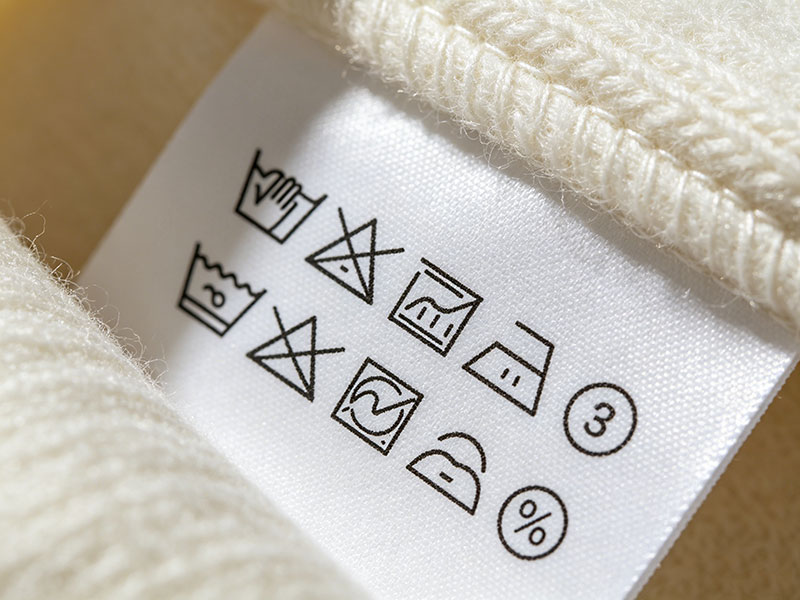
Care Label

Composition, care symbols, country information, language, and placement are confirmed against the final shell, lining, decoration, and destination requirements.

Hangtag System

Hangtags, strings, seals, price labels, and promotional cards are checked for artwork, color, hole position, attachment point, and quantity.

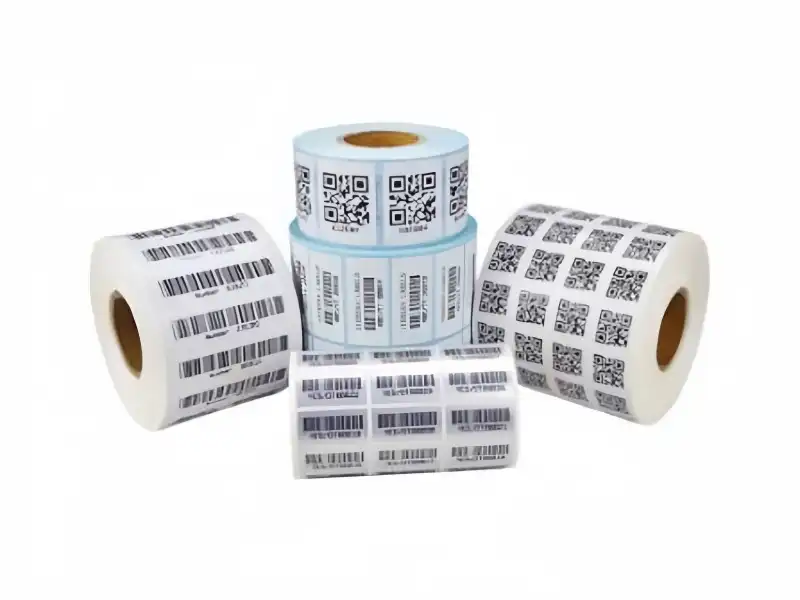
Barcode and SKU

Each garment can be packed with the correct barcode, SKU, color, size, and order information. Scan checks and reconciliation reduce warehouse receiving errors.

Snag Protection

Mesh, lace, tulle, embroidery, sequins, hooks, and zippers may need tissue, protective sleeves, turned-in hardware, or separation to prevent abrasion and snagging.

Polybag and Folding

Bag size, thickness, warning text, ventilation, sealing, folding method, tissue, and garment orientation are selected around dress length, structure, and decoration.

Carton Accuracy

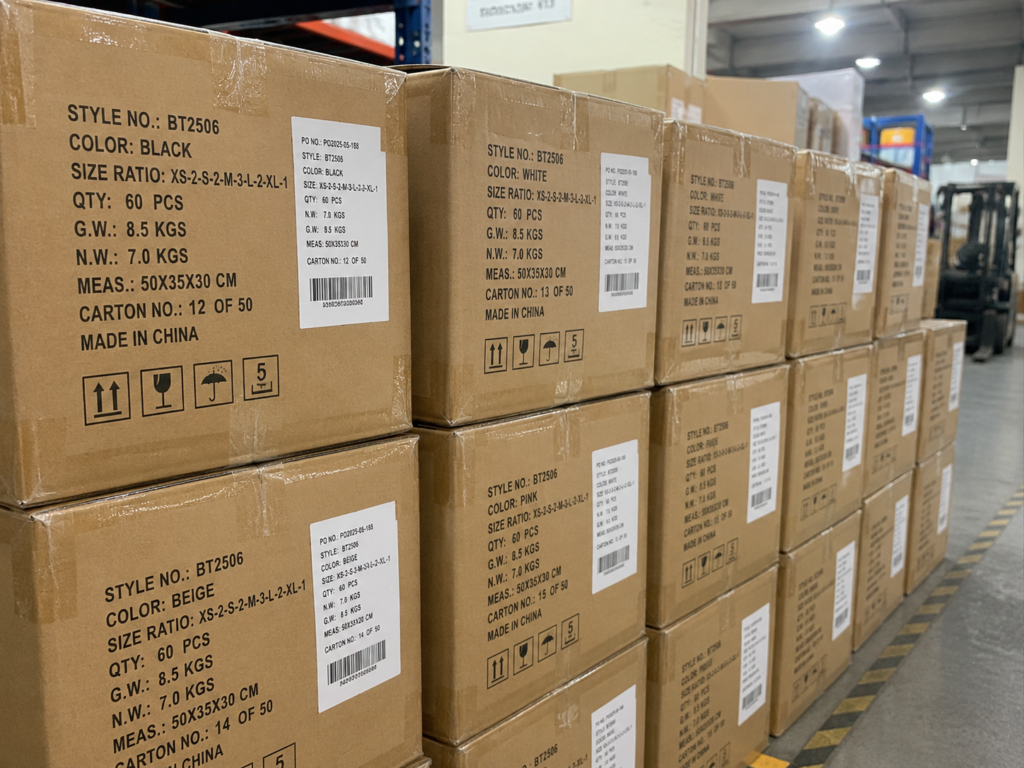
Carton quantity, size ratio, SKU, color, net weight, gross weight, dimensions, carton marks, and packing list data are checked before shipment.

Lined Sheer Dress Case Studies

The following project structures reflect the scale, complexity, and decision patterns common in established fashion programs. Brand identity and confidential design files remain protected.

United States Partywear Program

  • Project profile: 18 styles, 46,800 pieces total, with bodycon minis, ruched midis, sheer corset dresses, and maxi shells over short linings. The range used black, wine, cocoa, and selected nude tones across XS-XL.
  • Challenge: the first fabric direction produced inconsistent opacity between black and nude colorways, while several mini linings climbed at the hip during walking.
  • Development action: shell-and-lining pairings were separated by color, mini-lining ease and hem circumference were revised, slit exposure was reviewed in motion, and zipper seams were stabilized.
  • Production control: color-pair approval, size-set review, shell/lining bundle identification, inline opacity checks, and SKU packing verification were added to the production file.
  • Result: the collection moved into coordinated bulk production only after PP standards were locked for each fabric pairing; pattern, BOM, packing, and color references were retained for replenishment.

European Occasionwear Collection

  • Project profile: 12 styles, 27,600 pieces total, combining lined lace, embroidered mesh, soft tulle overlays, long sheer sleeves, and corset-inspired bodices. Orders were distributed across two seasonal delivery windows.
  • Challenge: lace motif position and nude lining shade changed the apparent symmetry and coverage of the bodice, while embroidered mesh added uneven weight around the neckline.
  • Development action: motif landmarks were placed on patterns, lining shades were compared under indoor and natural light, shoulder support was reinforced, and decoration-free seam allowances were defined.
  • Production control: incoming lace and embroidery were checked by lot, cutting used placement references, bodice support points received inline inspection, and delicate surfaces received anti-snag packing.
  • Result: the range was organized around shared lining families and repeated bodice blocks, reducing unnecessary variation while preserving distinct visible designs.

Australian Ecommerce Launch

  • Project profile: 24 styles, 62,400 pieces total, covering printed mesh, double-layer mesh, sheer maxi dresses with built-in bodysuits, and lightweight resort silhouettes across multiple online drops.
  • Challenge: campaign photography required controlled flash transparency, while launch timing required selected SKUs to arrive earlier than the balance of the collection.
  • Development action: each colorway was reviewed under natural light and flash, bodysuit rise and leg openings were adjusted by size, and photo-ready samples were separated from PP approval when materials differed.
  • Production control: barcode and SKU packing were linked to size ratios, urgent launch quantities were prioritized, and a split-shipment plan assigned selected quantities to air freight with the remaining bulk moving by sea.
  • Result: production records linked approved fabric pairs, size files, color approvals, labels, packing, and shipment allocation for later repeat-order review.

Support Repeat Orders, Replenishment, and Seasonal Drops

Repeatability depends on controlled records, current material availability, and disciplined approval. Previous standards are retained, but every repeat program still requires supply and color confirmation.

Seasonal Collection Records

Patterns, size charts, measurement files, fabric references, lining references, trims, construction notes, labels, packing, and approved samples can be archived for later collections.

Shared blocks and material families help organize 10-30 style programs without making every style unrelated.

  • Keep style-level version records.
  • Link colorways to approved shell-and-lining pairs.
  • Preserve NDA-protected files.

Replenishment Review

Repeat orders begin by checking material availability, dye lot, trim supply, packaging stock, current pricing, quantity, and requested delivery.

A former fabric may require a new swatch or replacement when supply changes.

  • Reconfirm bulk color.
  • Review size ratio and hot SKUs.
  • Update quotation when materials change.

Launch and Shipment Planning

Programs can be arranged around launch dates, photo samples, sales samples, PP approval, production windows, packing, and freight. For launch-sensitive orders, selected SKUs or 10-30% of urgent quantity may be planned by air while the balance moves by sea, subject to project confirmation.

  • Prioritize hero styles and key sizes.
  • Separate invoices and packing lists when required.
  • Confirm warehouse and forwarder instructions.

Frequently Asked Questions About Lined Sheer Dress Manufacturing

A lined sheer dress combines a transparent or semi-transparent outer fabric with an inner layer that controls coverage, comfort, support, color, and movement. The lining may cover the full body, selected zones, a short inner skirt, or a built-in bodysuit.

Yes. Full lining, partial lining, mini-slip lining, double mesh, built-in bodysuits, and modesty panels can be developed according to the silhouette, target coverage, selling occasion, and fabric behavior.

Stretch direction, percentage, recovery, weight, and hand are compared. The shell and lining do not always need identical stretch, but their relationship must allow movement without twisting, ride-up, sagging, or restricted fit.

Yes. Nude, tonal, contrast, and color-matched linings can be reviewed. Skin-tone descriptions vary across markets, so Pantone, physical swatches, color cards, or approved fabric references are preferred.

Yes. Built-in bodysuits can be developed with controlled torso length, leg opening, snap closure, cups, lining, stretch, waist connection, and coverage. Fit testing is especially important across the size range.

Reference images can support an initial structure review. Accurate sampling and quotation improve when the project also includes measurements, size range, fabric direction, coverage notes, quantity, colors, labels, packing, and target launch date.

Include front, back, and detail drawings; shell and lining specifications; coverage maps; measurements; grade rules; construction; zipper, cups, boning, elastic, labels, packing, colors, and quantity. A BOM helps control every material.

Complex corset, lace, mesh, or sequin first samples commonly require 15-25 days depending on materials and construction. Revised samples commonly require 7-15 days. PP samples commonly require 7-15 days after final materials are ready.

MOQ starts from 200 pcs per style/color. Fabric supplier MOQ, custom dyeing, embroidery, special trims, decoration, packaging, and production scheduling can increase the required quantity.

A production schedule is provided after PP sample, materials, trims, colors, sizes, labels, packing, order quantity, QC requirements, and payment terms are confirmed. Complex materials or late changes extend the schedule.

Pattern ease, hip circumference, lining length, fabric recovery, hem opening, attachment points, and movement tests are reviewed. The lining should remain stable without pulling the outer shell.

Bulk shell and lining are checked as a pair under agreed lighting. Coverage maps, approved swatches, PP sample, Golden sample, dye-lot records, inline checks, and final appearance review support consistency.

Yes. Jinfeng Apparel supports brand labels, size labels, care labels, hangtags, barcodes, SKU labels, polybags, carton marks, individual garment packing, and repeat-order packing records.

Yes. NDA-based cooperation and design protection can cover tech packs, samples, patterns, fabrics, trims, labels, packaging, order information, and unpublished styles throughout development and production.

Start Your Lined Sheer Dress Project

Send enough information for a focused development and quotation review.

A complete submission helps the team evaluate fabric compatibility, lining structure, pattern risk, sample timing, MOQ, cost drivers, private-label requirements, and production planning without relying on assumptions. Reference images are welcome, while a tech pack, size chart, or original sample provides stronger control for complex layered styles.

  • Reference image, sketch, original sample, or tech pack
  • Outer sheer fabric direction and preferred lining structure
  • Coverage requirement for front, back, sides, sleeves, slit, and hem
  • Target quantity per style/color and planned size ratio
  • Color plan, Pantone references, or physical color standard
  • Brand labels, hangtags, barcode, SKU, polybag, and carton requirements
  • Target launch date, delivery market, and preferred freight arrangement
  • Testing, documentation, or factory-audit requirements for the program
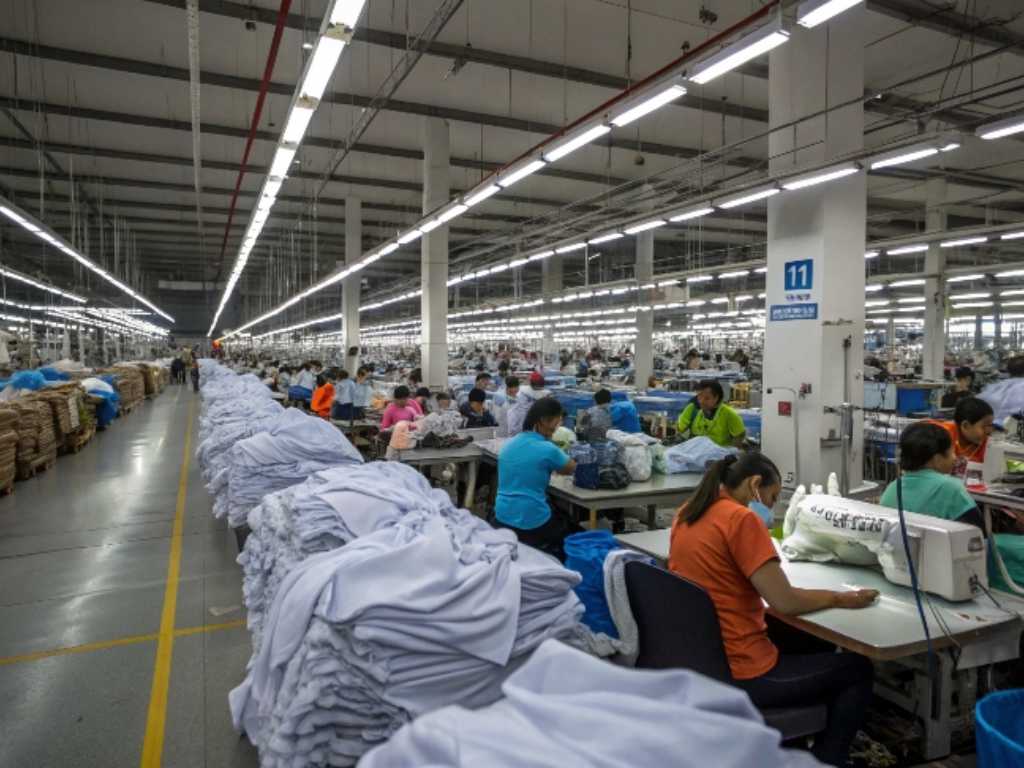
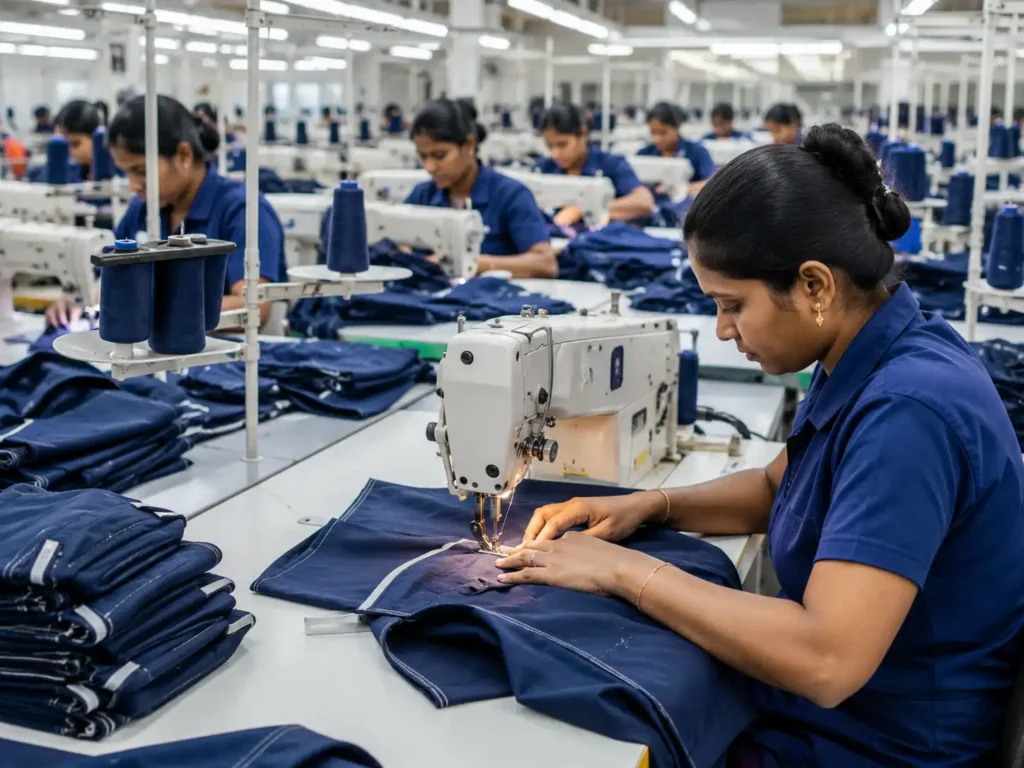
Large garment factory with rows of workers sewing clothing at machines.

Tell Us About Your Dress Project

Share your product details, estimated quantity and development requirements. Our team will review your project and provide practical OEM/ODM production feedback.

Premium Women’s Apparel Production for Fashion Brands

From dress sample development to bulk production, JF Apparel supports fashion brands with confidential OEM/ODM manufacturing, reliable quality control and scalable production support.

START YOUR DRESS PROJECT

Ready to Develop Your Next Dress Collection?

Share your design concept, product requirements or sourcing plans with our team. We’ll review your project and provide practical feedback on development, materials, MOQ and production.

7-10 Days

Sample Development

200 PCS

Starting MOQ

Fast Response

Professional Follow-Up