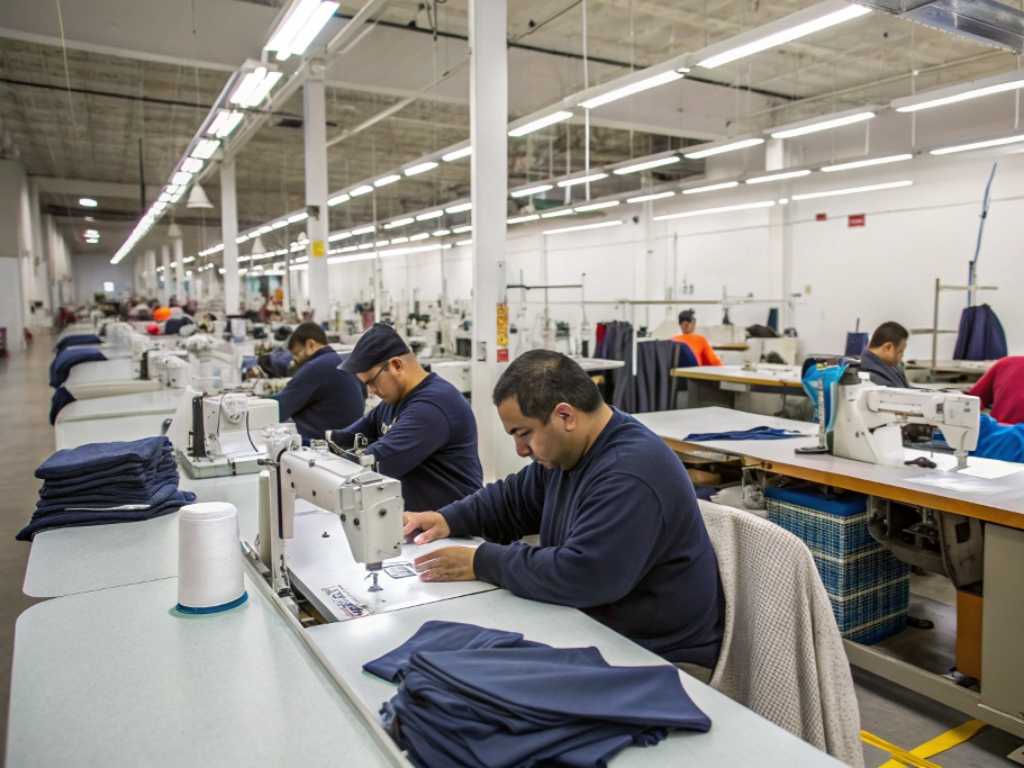
Sheer Panel Dress Manufacturer
Custom sheer panel dresses for global fashion brands that require controlled transparency, clean panel placement, stable fit, production-ready samples and consistent bulk execution.
- Sheer fabric, shell fabric and lining are reviewed as one construction system before pattern work begins.
- Eight high-risk panel zones can be evaluated: bust, waist, side torso, back, hip, thigh, hem and shoulder or sleeve.
- Four fit zones receive close control: upper bust, bust, waist and hip.
- MOQ starts from 200 pcs per style/color, subject to fabric, color, trim and construction requirements.
- Pattern development, sample revision, PP sample approval, bulk production, product-specific QC, private-label packing and export coordination are managed in one project flow.
- Jinfeng Apparel operates 2 sample rooms with 7+ senior pattern makers and 20+ sample machinists for complex womenswear development.
Sheer Panel Dress Manufacturing Facts
Since 2008
2 Sample Rooms
7+ Pattern Makers
20+ Sample Machinists
15+ QC Inspectors
100,000+ Pcs Monthly
Built for Structured Fashion Programs
Best Fit For
- Global womenswear brands, premium ecommerce labels, partywear and occasionwear collections, sourcing offices, product development teams and multi-style private-label programs.
- Strong project inputs include a tech pack, reference image, original sample, line sheet, size chart, quantity plan, fabric direction or launch calendar.
- Seasonal programs with 10-30 styles can be grouped by fabric family, construction level, sampling priority and planned delivery window.
Working Boundary
- Production starts from 200 pcs per style/color. Special mesh, custom dyeing, exclusive trims, printed fabrics and custom packaging may carry separate material minimums.
- Jinfeng Apparel is not positioned as a ready-stock wholesaler or single-piece fulfillment operation. The focus remains custom womenswear manufacturing for planned brand orders.
- A clear quantity plan, development budget and approval process help the team allocate pattern, sampling, production and QC resources correctly.
Why Sheer Panel Dresses Fail
Panel Misplacement
Excess Transparency
Wavy Seams
Weak Recovery
Visible Lining Edges
Distorted Grading
Send Complete Development Information
Reference Image
Tech Pack
Quantity Plan
Fabric Direction
Color Plan
Size Range
Brand Packing
Launch Window
Sheer Panel Dress Styles We Manufacture
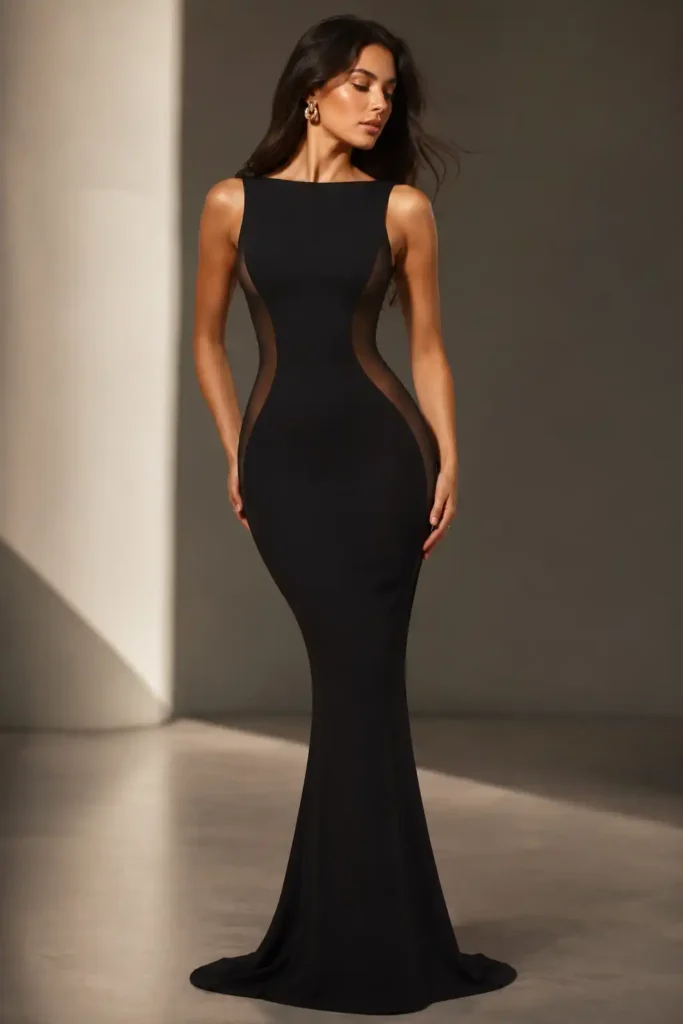
Sheer Side Panel Dress
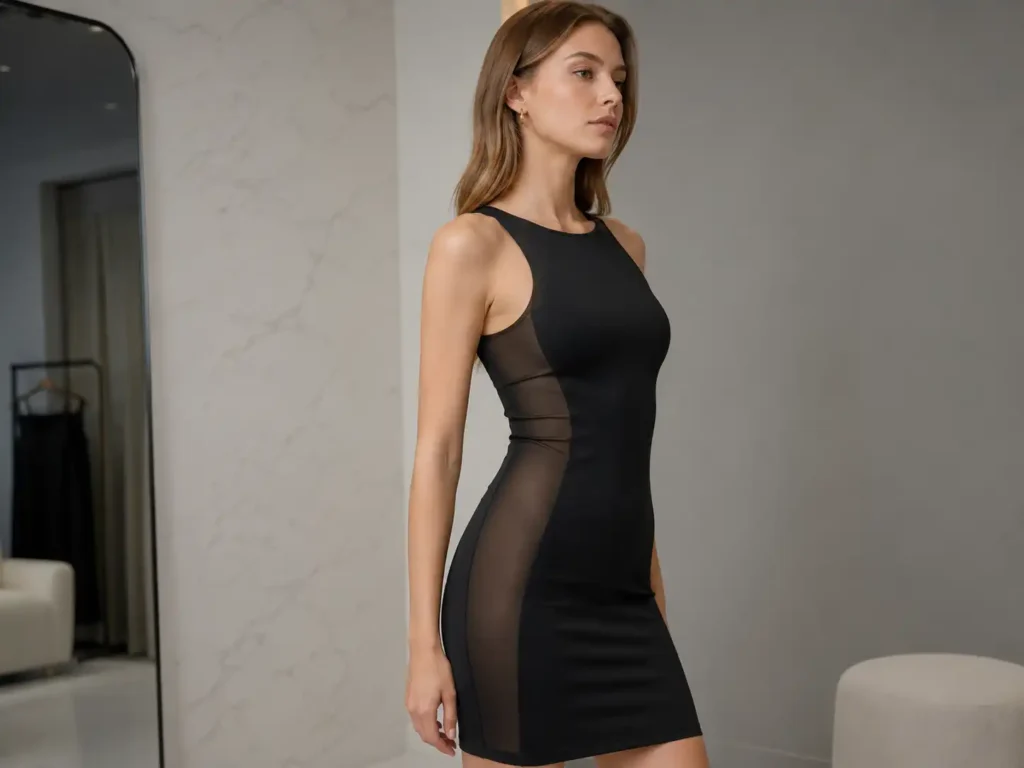
- Side panels visually narrow the waist and lengthen the torso. Curved seams must follow body lines without pulling toward the front or back.
- Recommended directions include stretch mesh with jersey, ponte or stretch woven shells. Panel width should be checked at under-bust, waist and high-hip levels.
- Bulk checks focus on left-right symmetry, seam flatness, lining boundaries and consistent distance from the side seam.
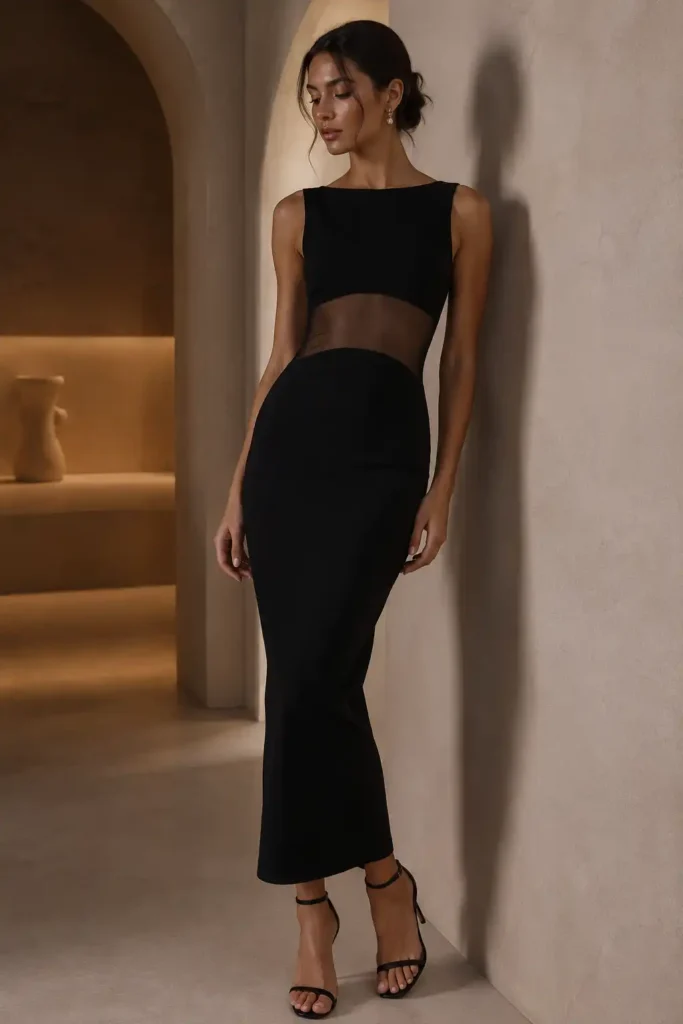
Sheer Waist Panel Dress
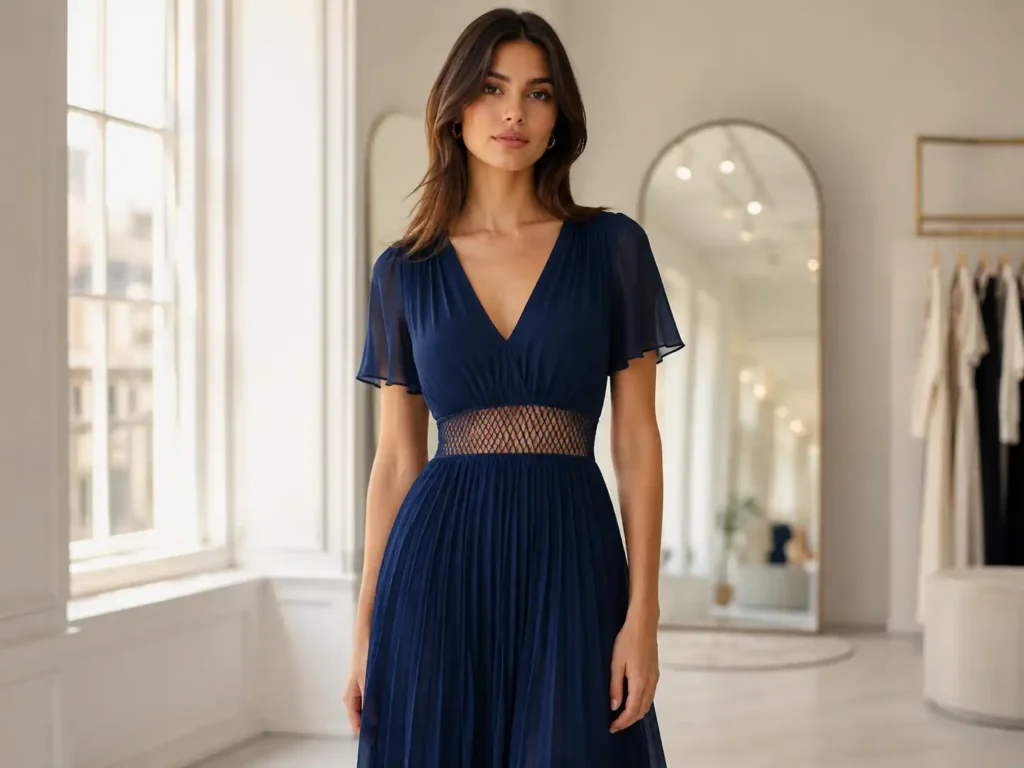
- A waist panel creates an illusion cut-out while preserving garment continuity. Placement must match the intended high-waist, natural-waist or low-waist proportion.
- The mesh can be single-layer, double-layer or supported from inside. Narrow bands need enough seam allowance and stable stitching to avoid twisting.
- Grading must protect coverage; a band should not become disproportionately tall or transparent in larger sizes.
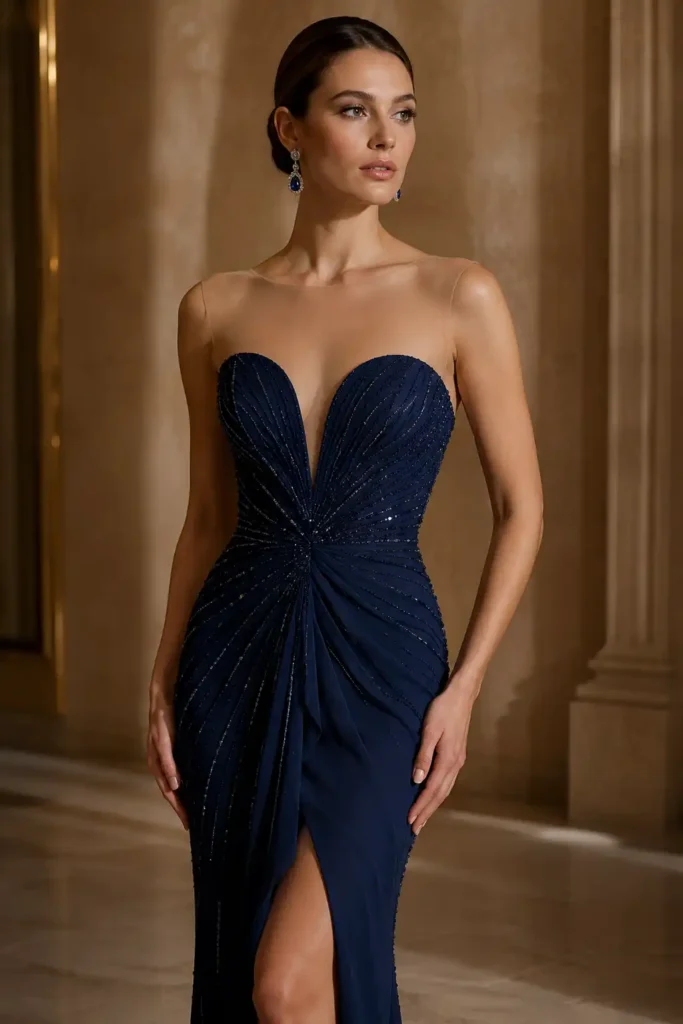
Illusion Neckline Dress
- Illusion necklines support deep-V, strapless or embellished designs while preserving a cleaner upper-body shape.
- Skin-tone mesh selection, neckline tension, shoulder stability and edge finishing determine whether the panel disappears visually or looks like an added insert.
- Fit checks cover neckline depth, underarm exposure, shoulder length, bust support and mesh comfort against the skin.
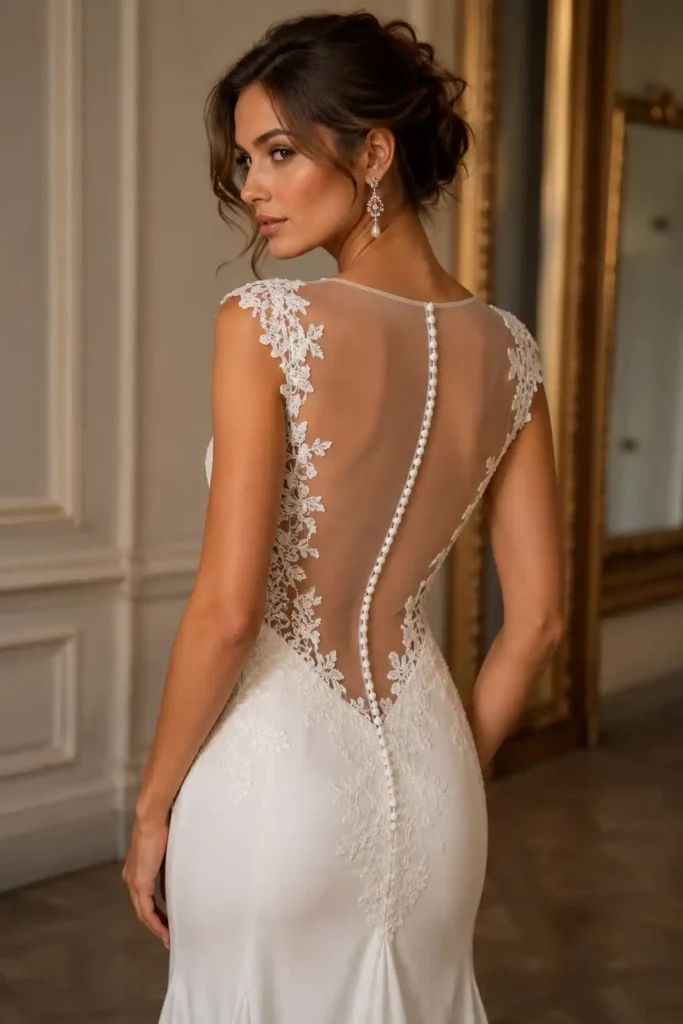
Sheer Back Panel Dress
- A transparent back can carry embroidery, lace placement, button details or clean mesh. Back width and shoulder balance control gaping.
- Zipper location, hook-and-eye placement and lining finish must avoid bulky intersections. Stretch mesh and non-stretch tulle require different pattern ease.
- Bulk inspection checks center-back alignment, neckline shape, panel height and seam strength.
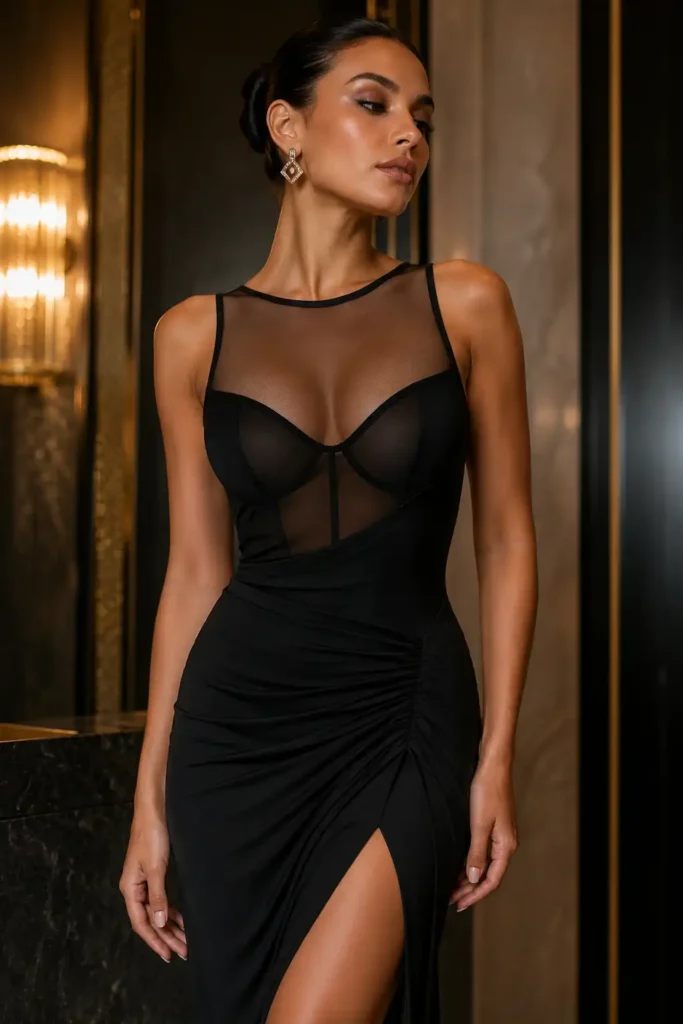
Mesh Bust Panel Dress
- Bust panels require the strictest coverage review because fabric tension changes dramatically over the body.
- Bra cups, under-bust seams, lining, power mesh or internal support may be needed depending on neckline and intended support level.
- Measurements should include upper bust, full bust, under bust, neckline depth and panel width rather than relying on one chest measurement.
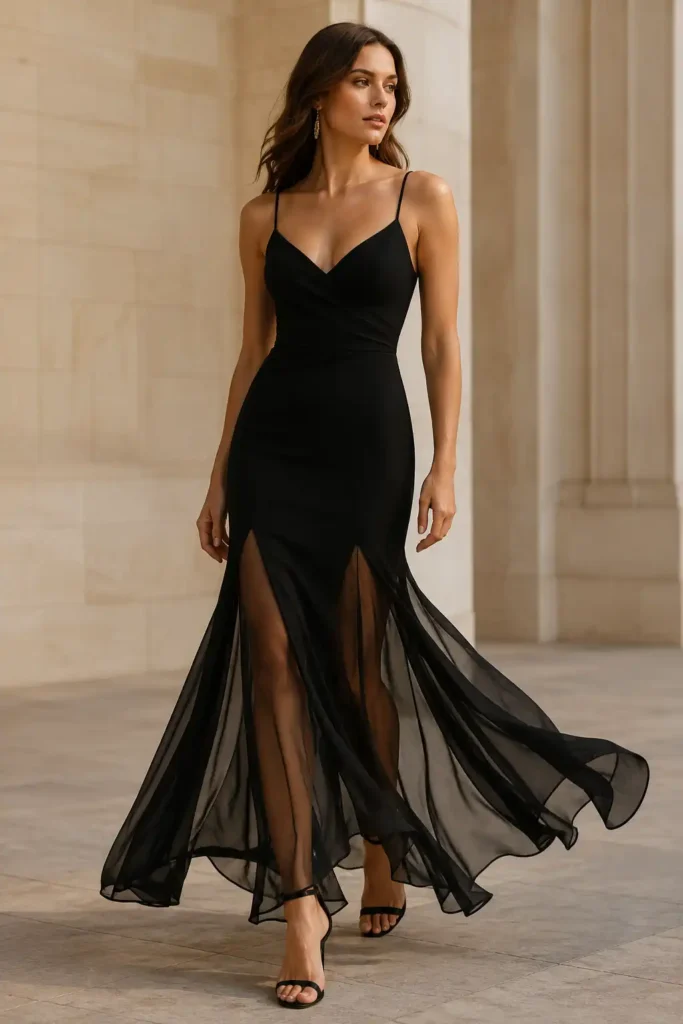
Sheer Skirt Insert Dress
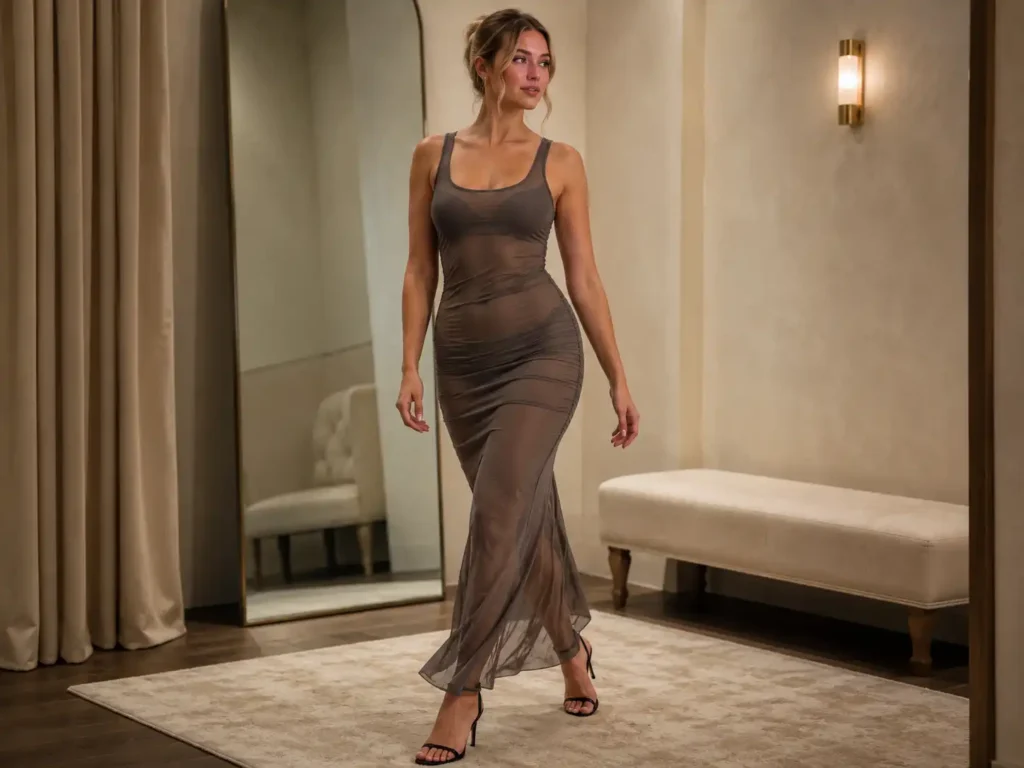
- Skirt inserts add movement and visual length to midi and maxi dresses. Chiffon, mesh, lace, tulle and organza can be used according to drape and transparency targets.
- Insert height, slit height, hip coverage and hem balance must be coordinated. Long inserts need stable joining seams and controlled pressing.
- Packing methods should reduce sharp creases and protect delicate surfaces during transport.
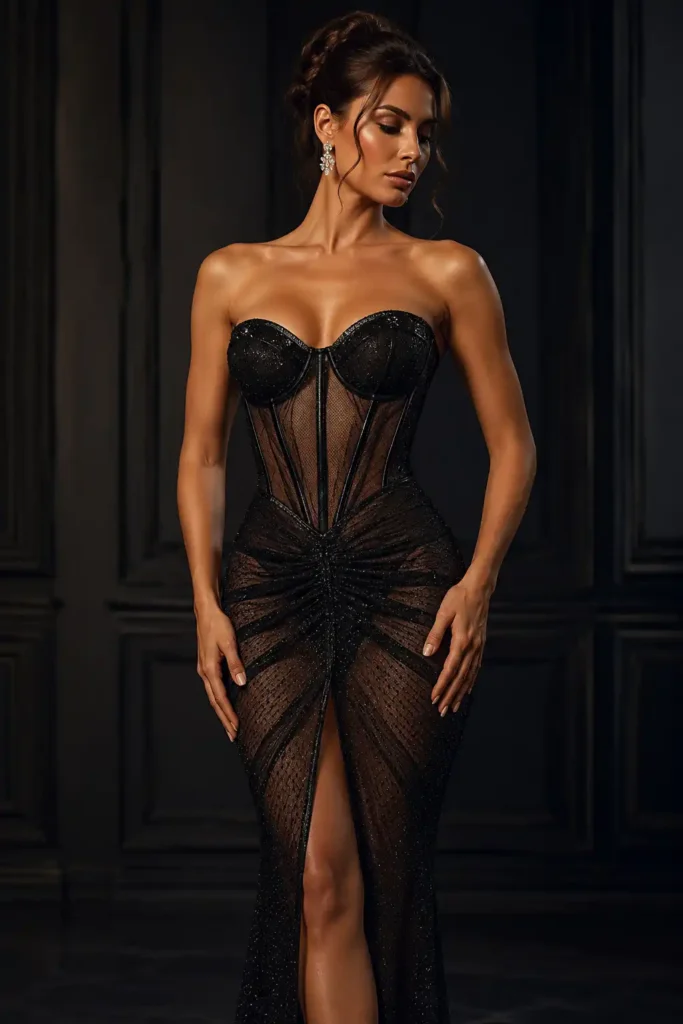
Corset Mesh Dress
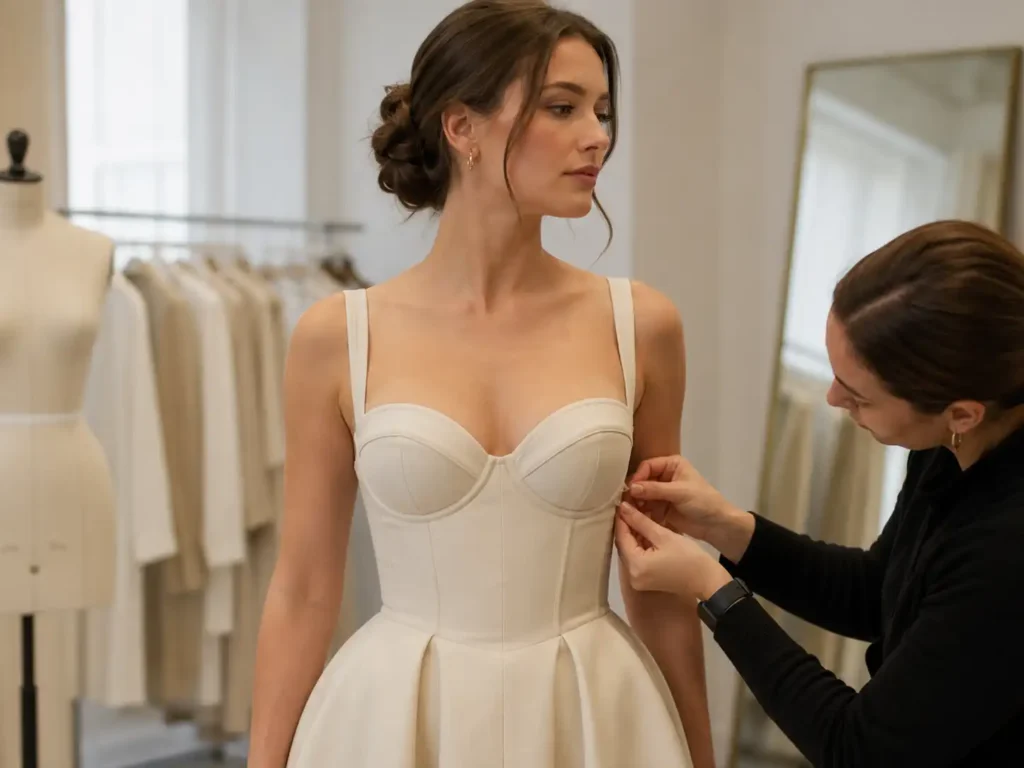
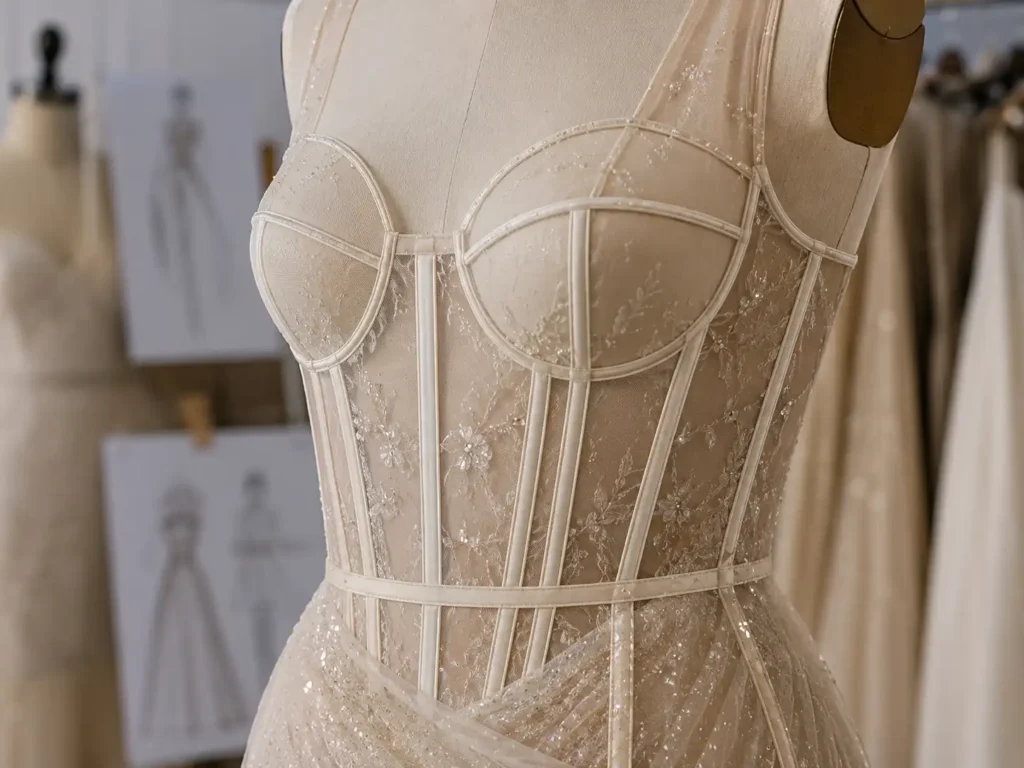
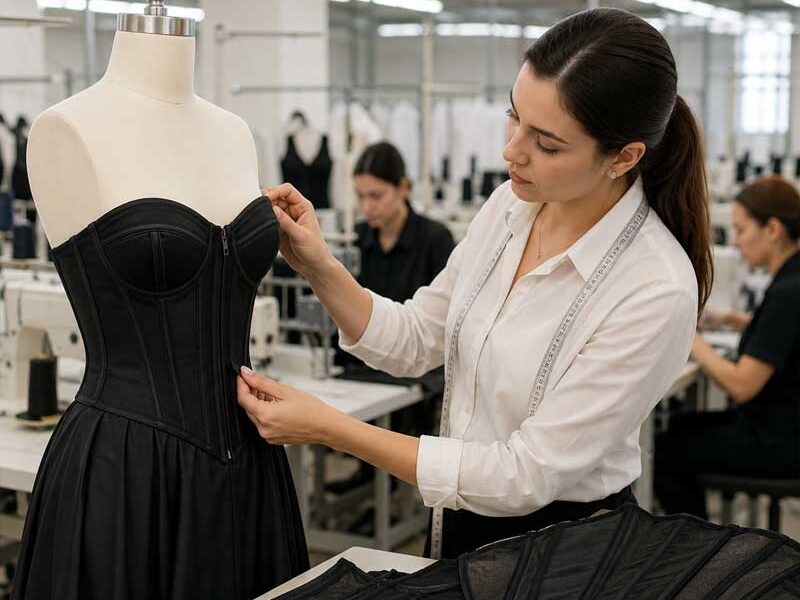
- Corset-mesh styles combine visible structure with transparent zones. Cup shape, boning position, waist suppression and lining coverage must work together.
- Mesh around cups and boning channels needs controlled tension. The sample stage confirms whether support comes from the visible shell, inner layer or both.
- Bulk control covers cup symmetry, boning ends, waist measurement, zipper flatness and panel tension.
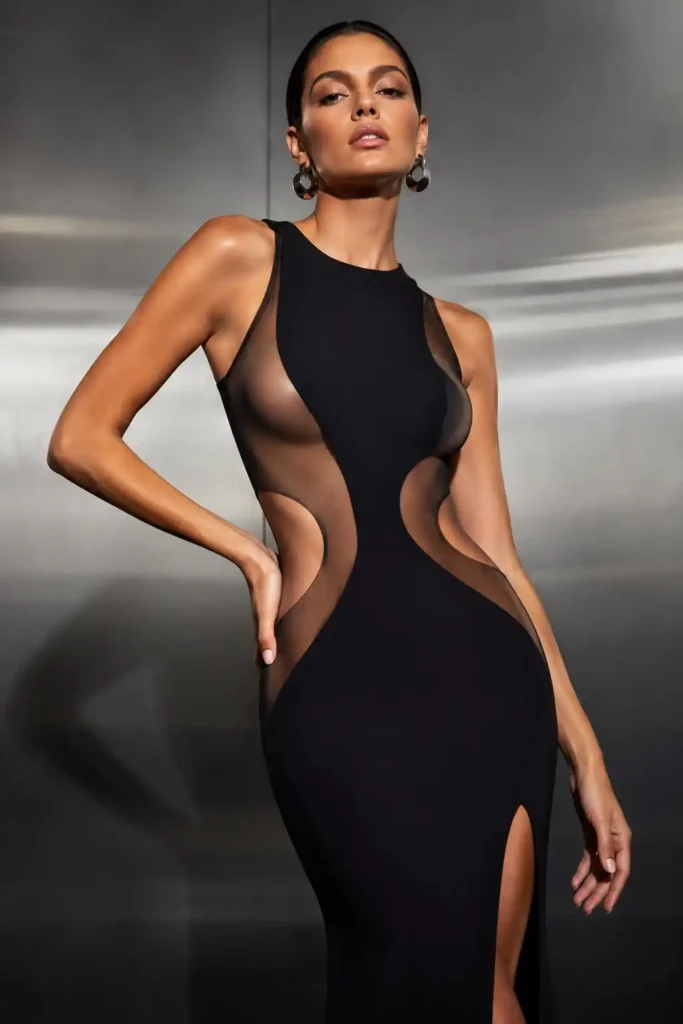
Cut-Out Illusion Dress
- Illusion inserts can replace open cut-outs while keeping a similar visual effect. The design remains sensitive to body movement and mesh color.
- Curved cut-out edges require accurate notches, seam allowance and joining order. Supporting tape or internal reinforcement may be evaluated where needed.
- On-body review should include standing, sitting and arm movement before PP approval.
Lengths and Silhouettes for Collections
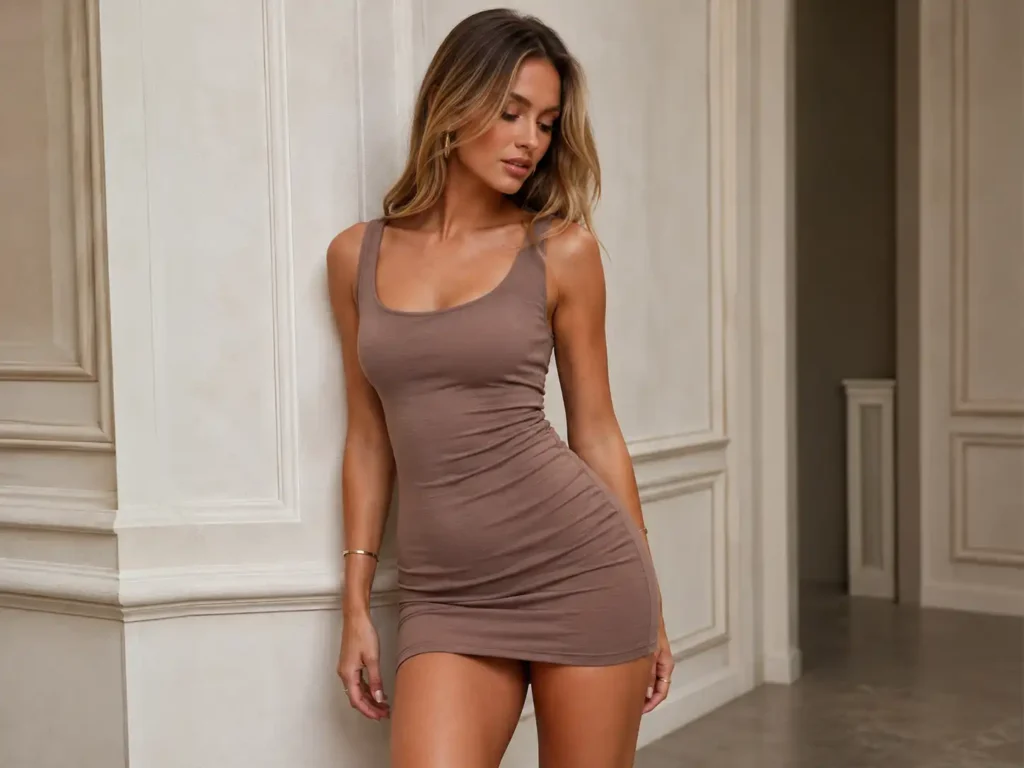
Mini Bodycon
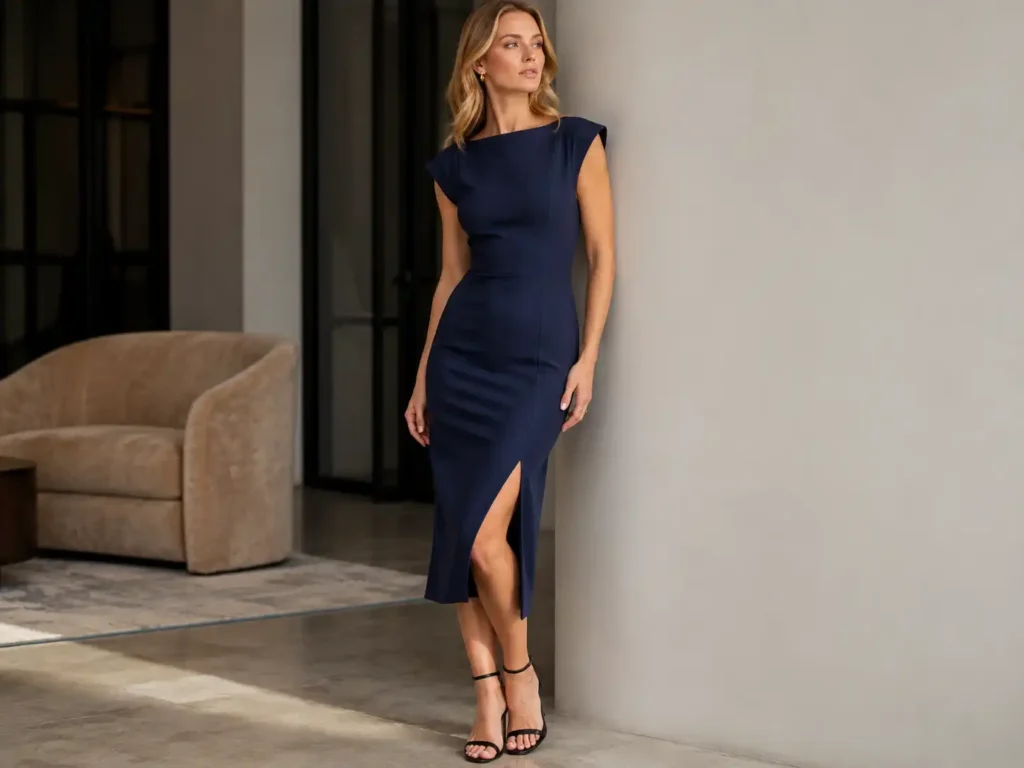
Midi Fitted
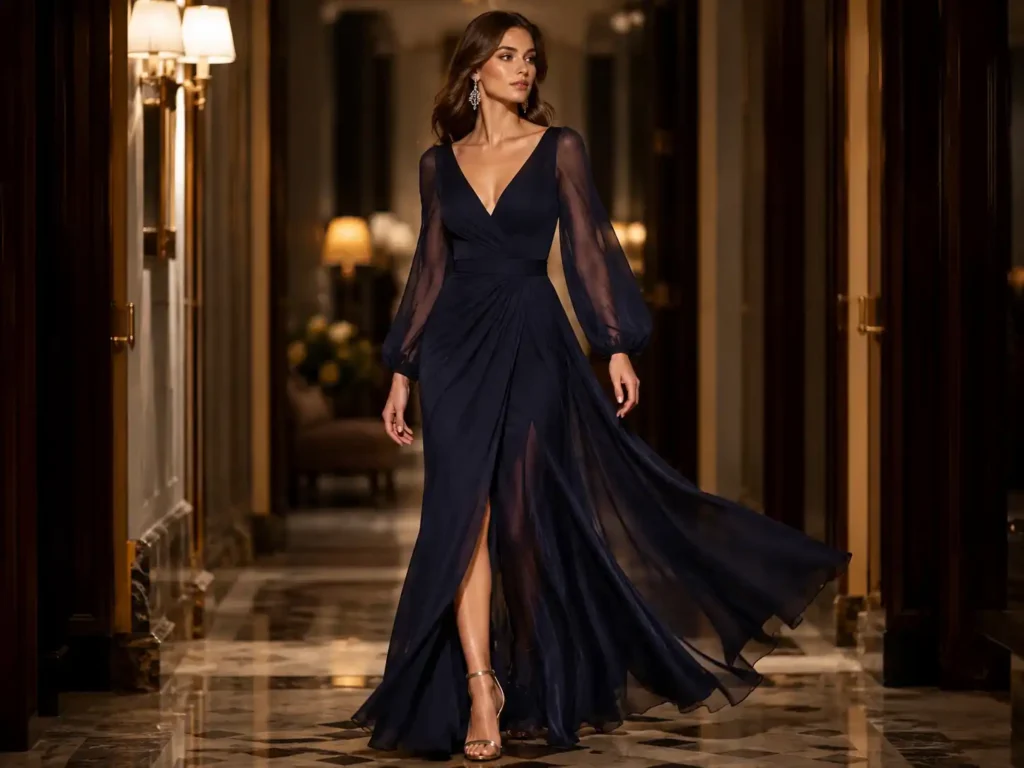
Maxi Evening
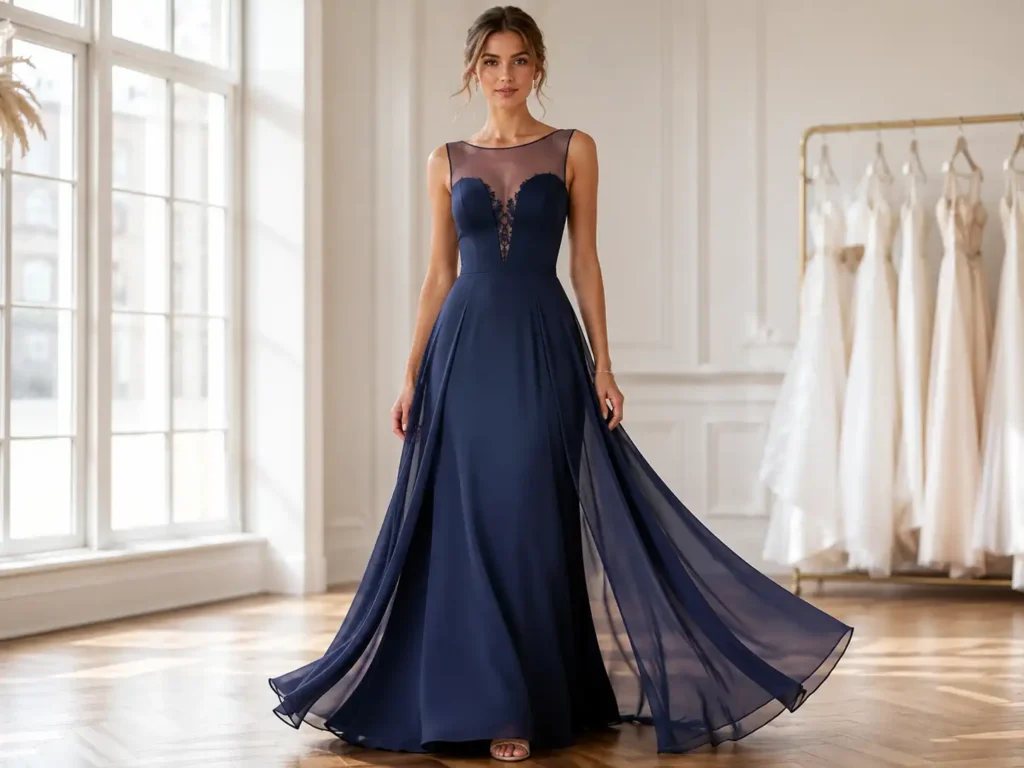
A-Line Sheer
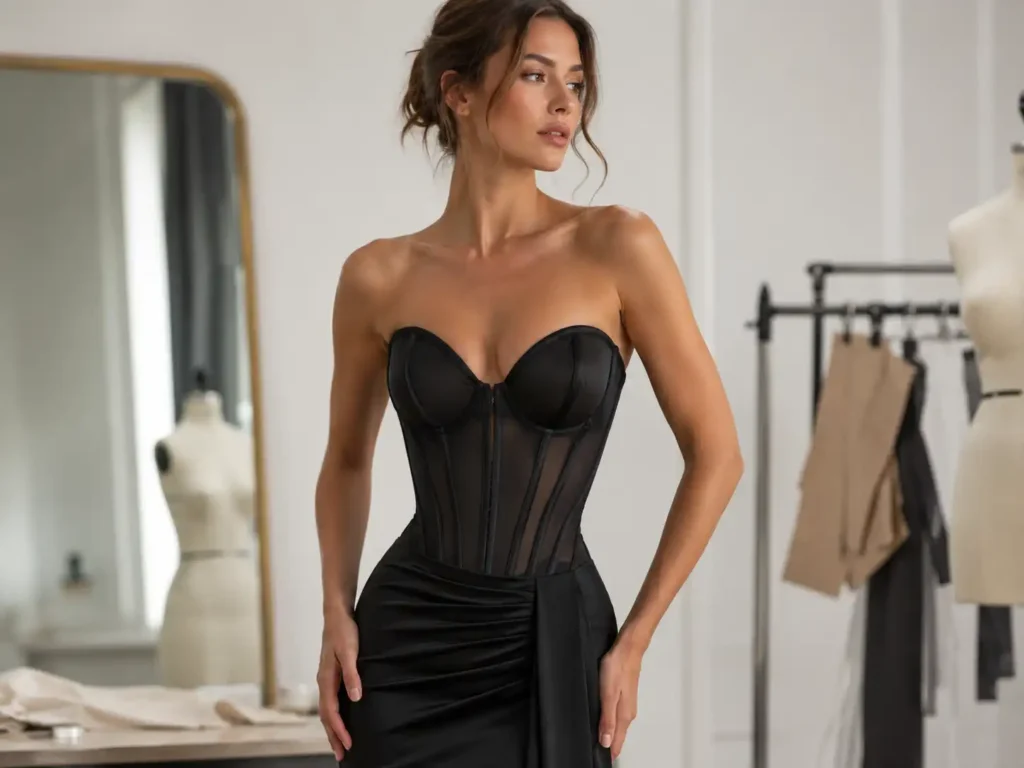
Corset Silhouette

Slip Silhouette
Strategic Sheer Panel Placement
Bust
Requires upper-bust, full-bust and under-bust control. Single-layer mesh may need cups, lining or power mesh behind selected zones.
Waist

Side Torso

Back

Hip

Thigh
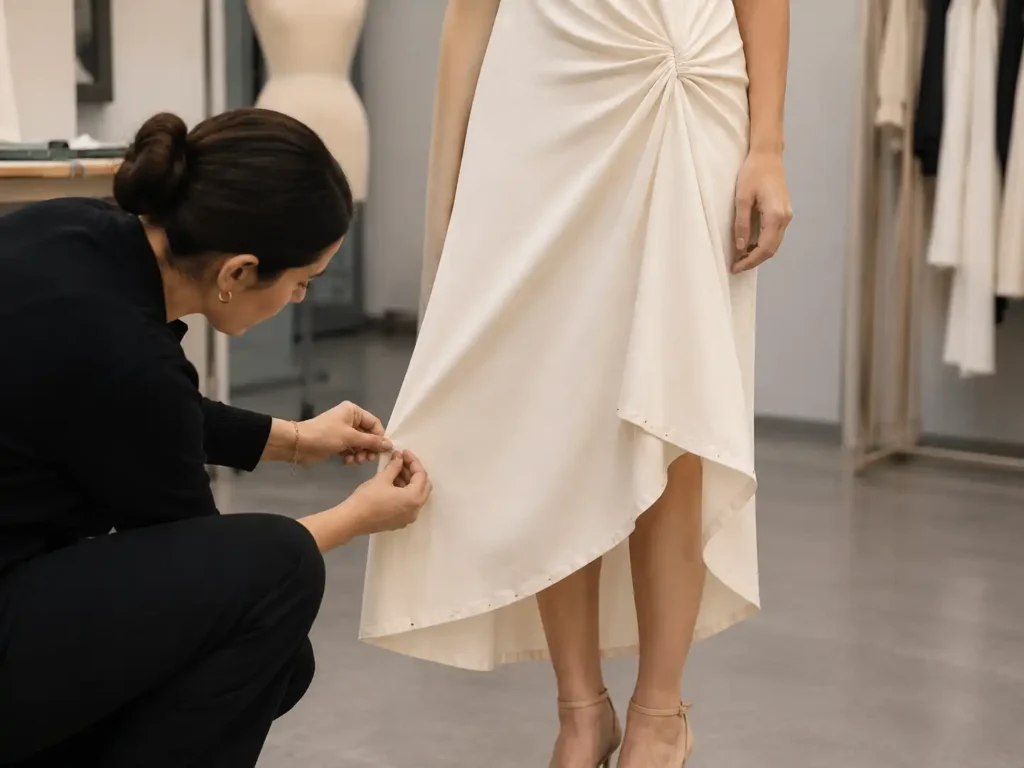
Hem

Shoulder and Sleeve
Styles for Multiple Selling Occasions

Partywear

Clubwear

Eveningwear

Wedding Guest

Graduation

Prom

Date Night

Festival Fashion
Sheer Fabrics Selected by Function
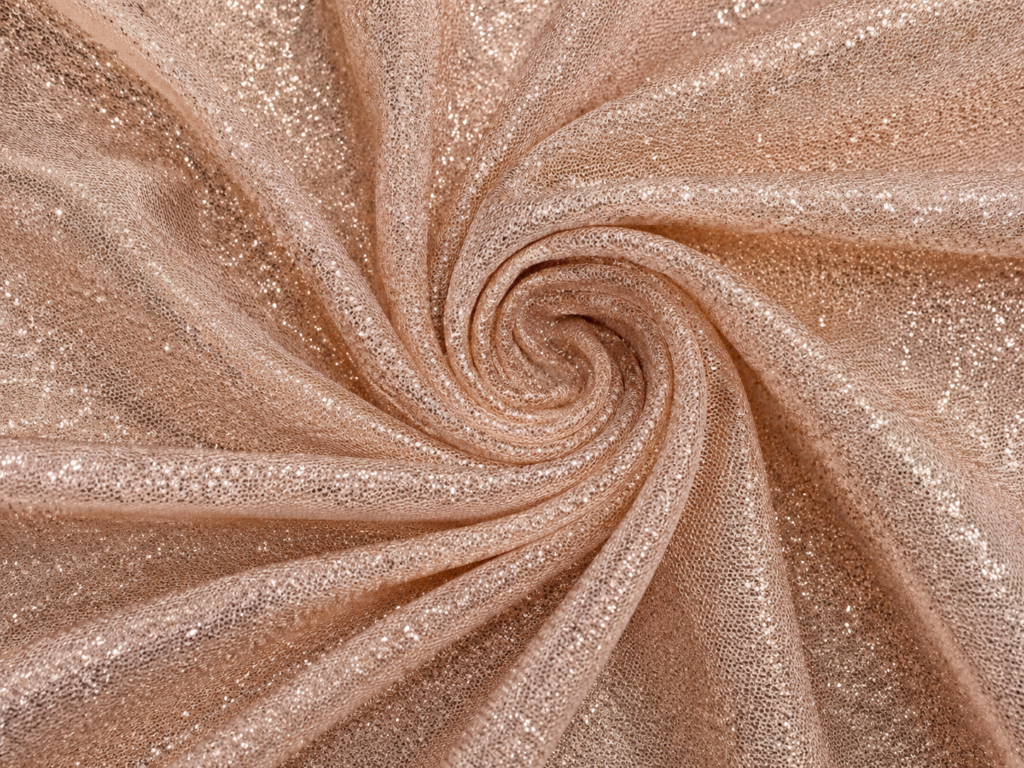
Soft Mesh
- Soft mesh works well for sleeves, overlays, upper-body panels and fluid designs where skin comfort matters.
- Low structure can make edges curl or seams ripple, so stitch trials and edge finishing need approval.
- Single-layer use increases transparency; lining or double layers may be needed around bust and underarm zones.
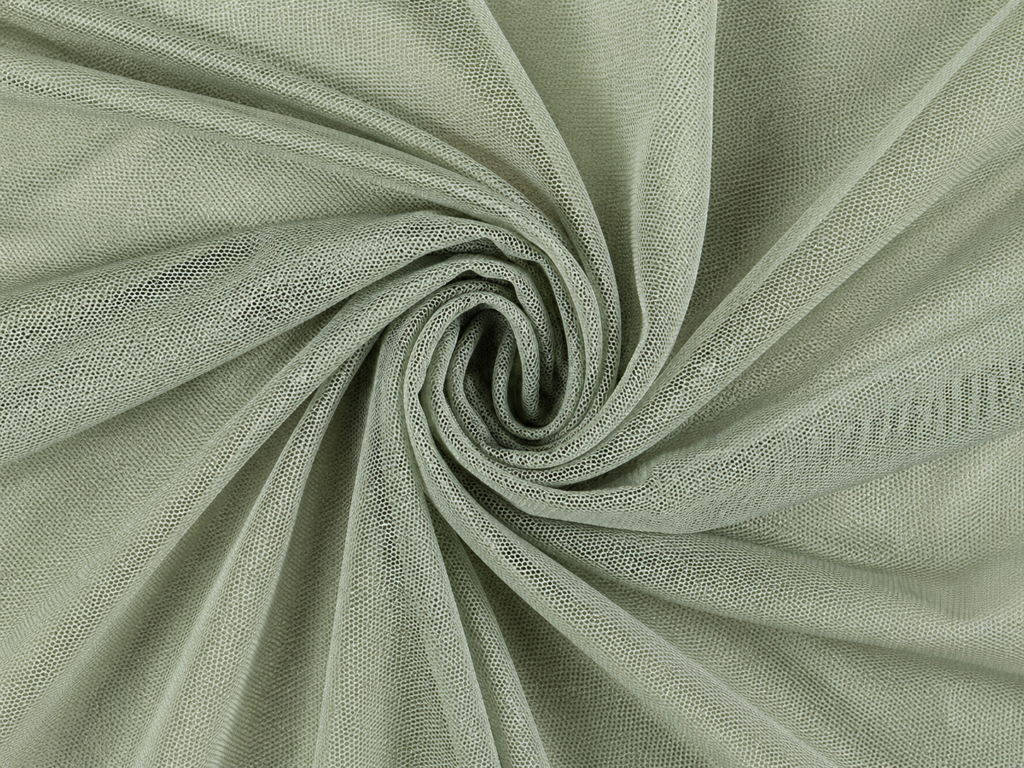
Stretch Mesh
- Stretch mesh supports fitted silhouettes and curved panel seams. Directional stretch must align with body movement and pattern shape.
- Recovery should be checked after repeated extension, not only during the first pull test.
- The shell fabric should have compatible stretch to reduce seam distortion.
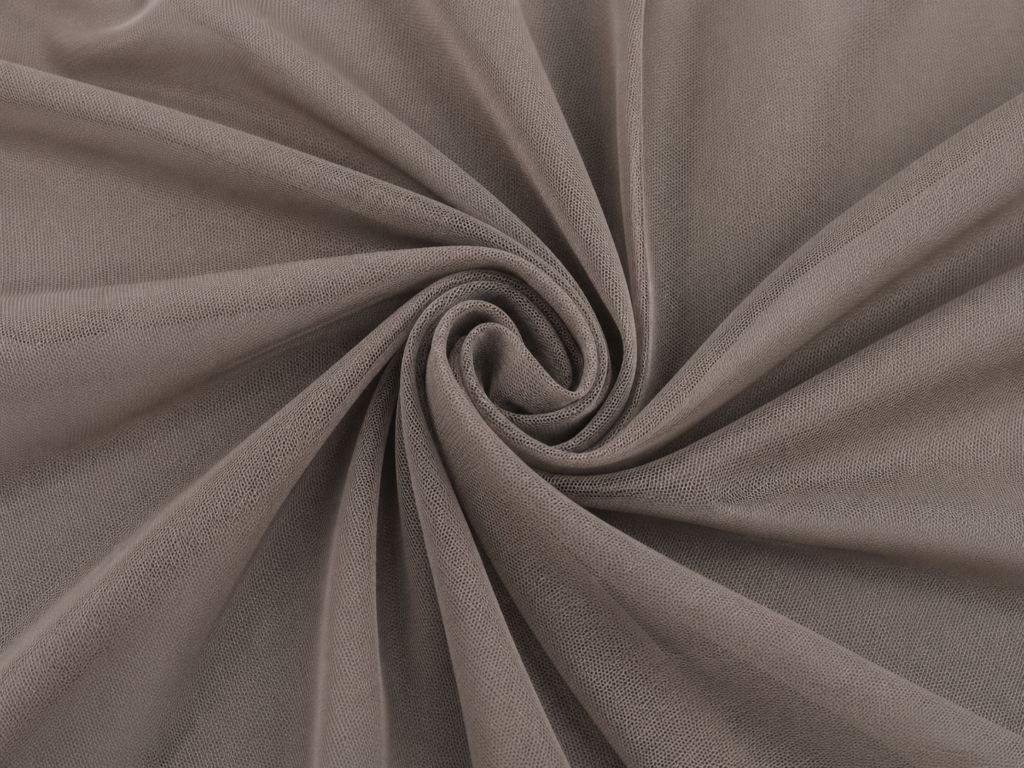
Power Mesh
- Power mesh offers stronger recovery and support for bodycon, corset and internal shaping zones.
- Compression level needs to match the intended comfort and size chart; excessive force can distort seams or reduce wearability.
- Visible use requires careful surface and color review because stronger mesh may look denser.

Double-Layer Mesh
- Two layers can reduce transparency, improve stability and create a richer surface without adding a separate lining.
- Layer direction and edge control matter; two layers can shift during cutting or sewing if not prepared correctly.
- Color depth may change when mesh is doubled, so approval must be made in the intended layer count.

Tulle
- Tulle creates light structure for formal, prom and layered designs. Stretch and non-stretch versions need different pattern ease.
- Tulle can snag, crease and feel firm against skin, making edge placement and lining important.
- Embellished tulle requires placement planning before cutting.

Lace
- Lace adds texture and controlled transparency. Motif placement, scallop direction and repeat must be planned before cutting.
- Stretch lace suits fitted bodies; rigid lace may need darts, seams or a supporting base.
- Bulk checks cover motif symmetry, holes, edge quality and color consistency.

Chiffon
- Chiffon creates fluid sheer inserts, sleeves and skirt panels. Grain control, seam slippage and pressing temperature need attention.
- Non-stretch chiffon should not be forced into stretch-dependent body zones without added ease or support.
- Layering changes color and opacity, so final approval must use the intended construction.

Organza
- Organza provides transparent structure for statement panels, sleeves and sculptural details.
- The crisp hand can expose seam allowance and internal construction, so finishing quality remains highly visible.
- Packing and pressing should protect shape while avoiding hard creases.

Power Mesh for Shape and Support
Power mesh can act as a visible panel, an internal support layer or both. Selection depends on compression, recovery, skin comfort, transparency and the surrounding shell fabric.
Visible Power Mesh Panels
- Visible power mesh creates a clean, controlled sheer area with stronger recovery than many soft meshes.
- The surface may appear denser, especially in black or dark colors. Color approval should compare the panel with shell and lining under the same lighting.
- Panel width, seam direction and body tension determine whether the mesh remains smooth or develops diagonal drag lines.
Internal Support Layers
- Power mesh can stabilize corset bodies, waist sections, bust zones and strapless designs without changing the outer appearance.
- Internal layers require separate patterns, joining points and seam allowance planning. The support layer should not end at a visible point or create a hard ridge.
- Comfort testing should include sitting, bending and arm movement rather than a static fitting only.
Recovery and Grade Control
- A recovery test should compare the original width, stretched width and returned width. Uneven recovery can change garment measurements after wear.
- The same compression cannot be assumed across all sizes. Grade rules should account for body growth, desired support and panel location.
- Bulk fabric lots need consistent stretch and recovery because even a small change can affect fit and seam appearance.
Match Sheer and Solid Fabrics Correctly
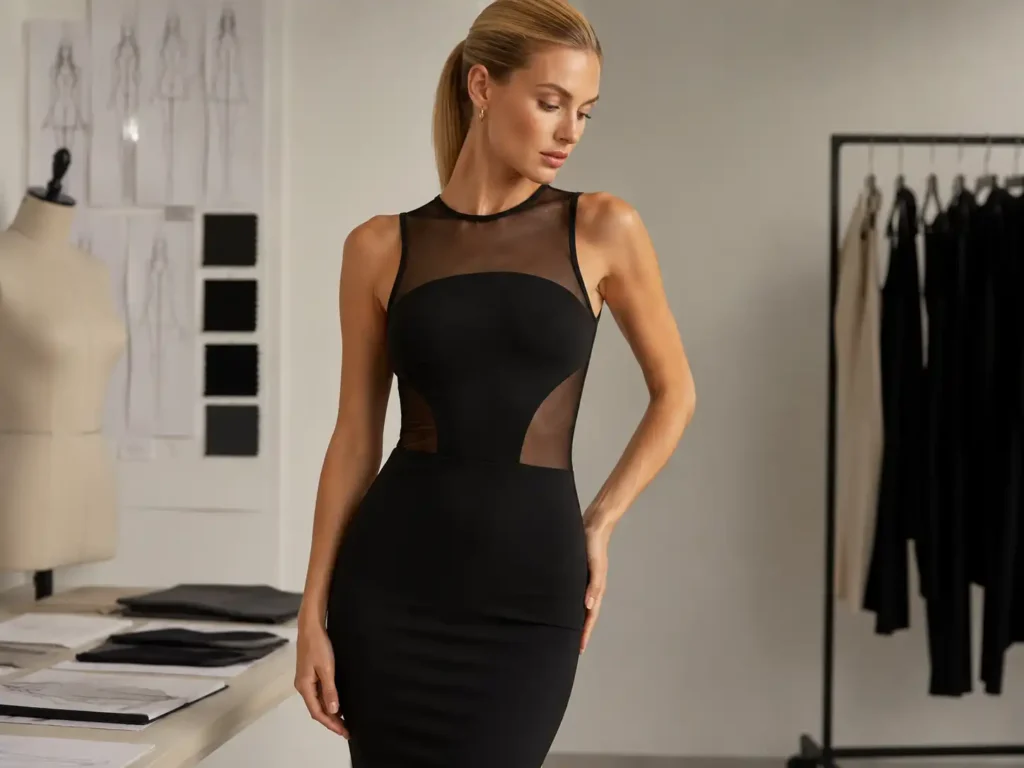
Power Mesh + Jersey
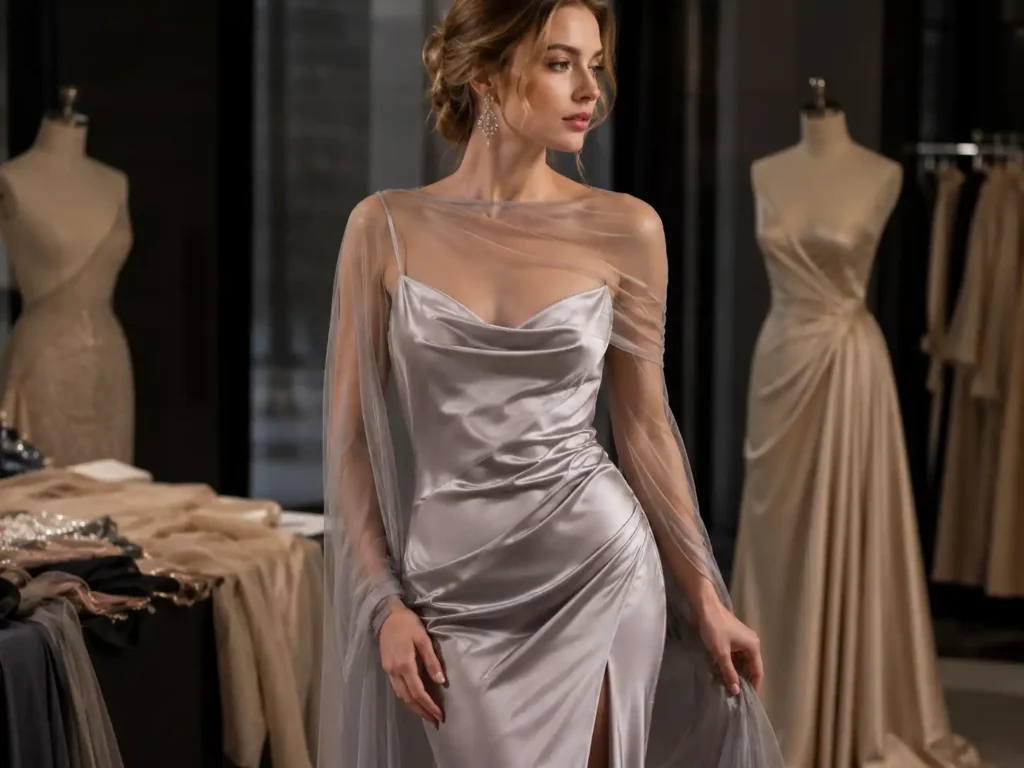
Soft Mesh + Satin
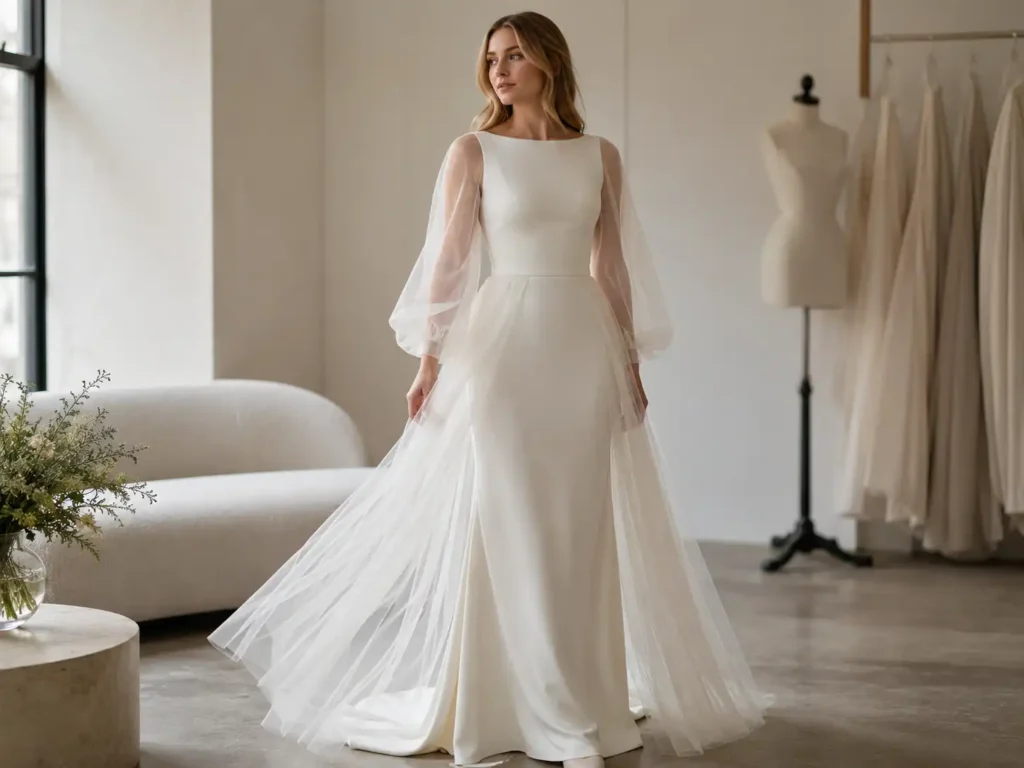
Tulle + Crepe
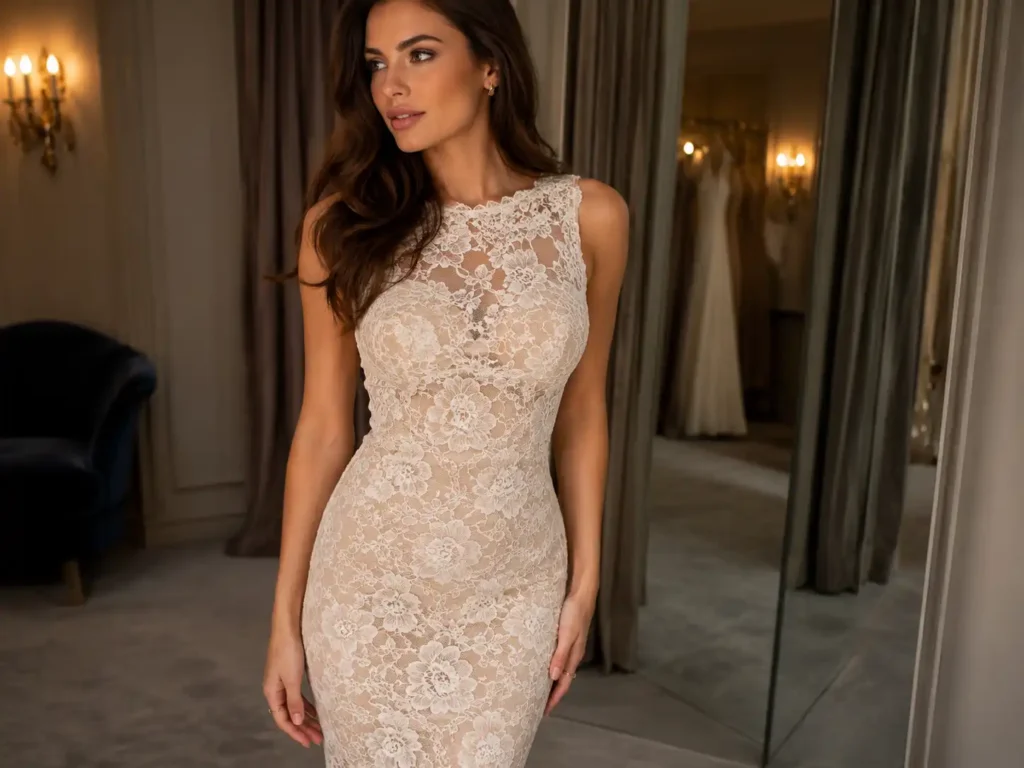
Lace + Stretch Lining
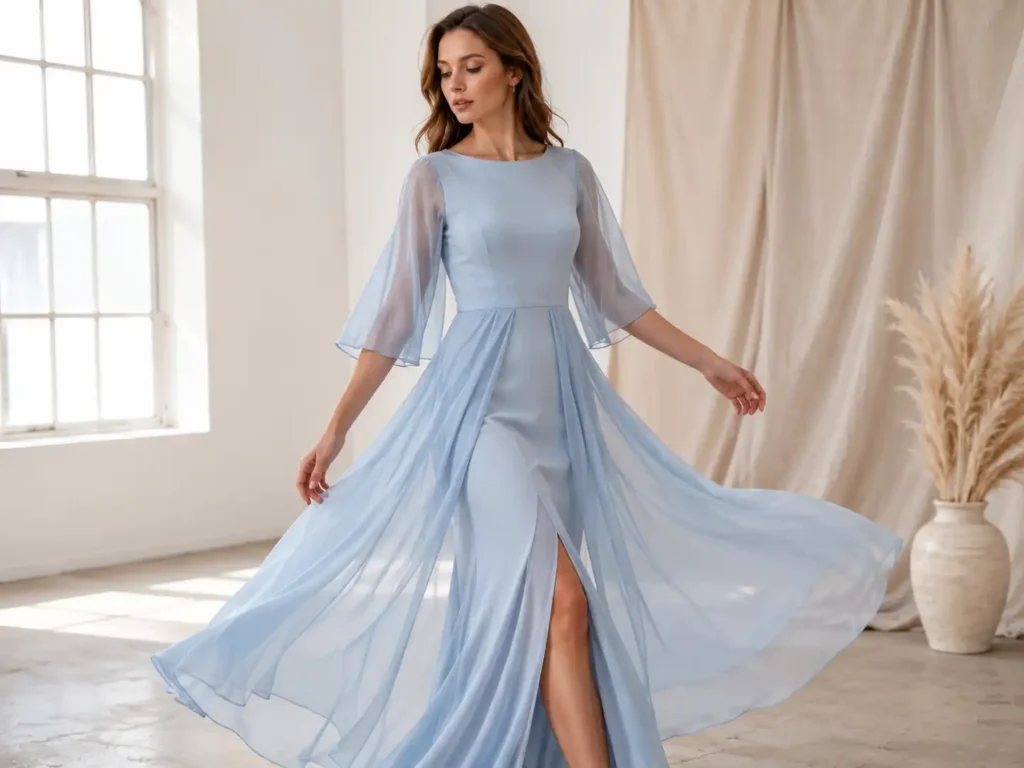
Chiffon + Woven Shell
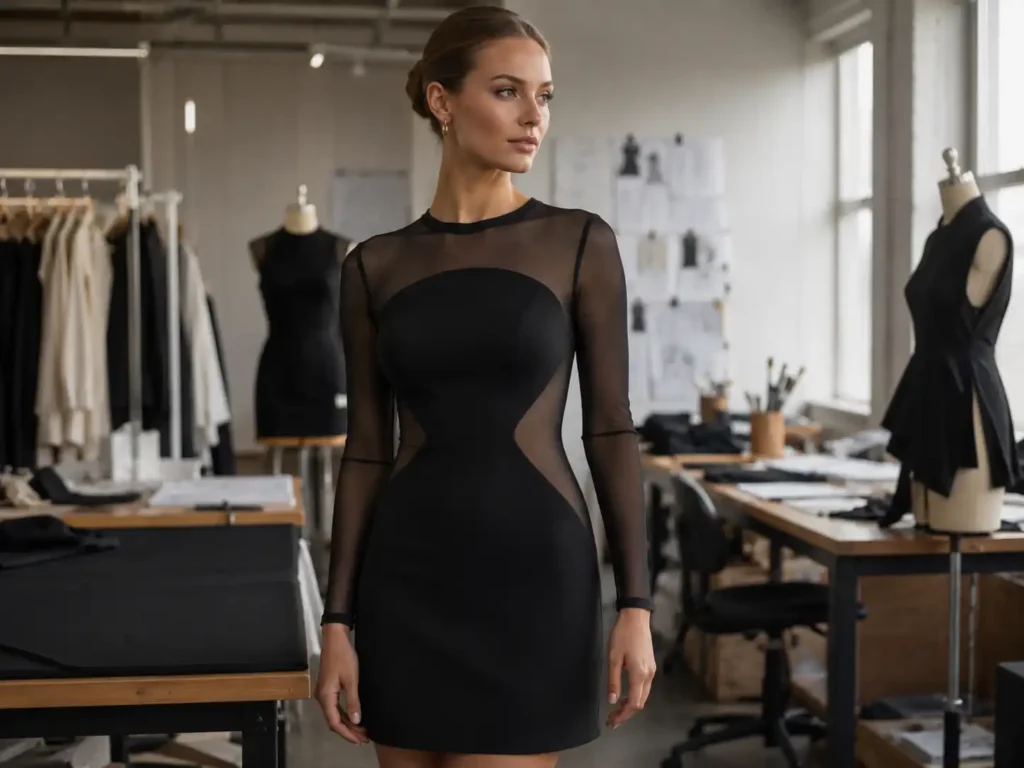
Mesh + Ponte
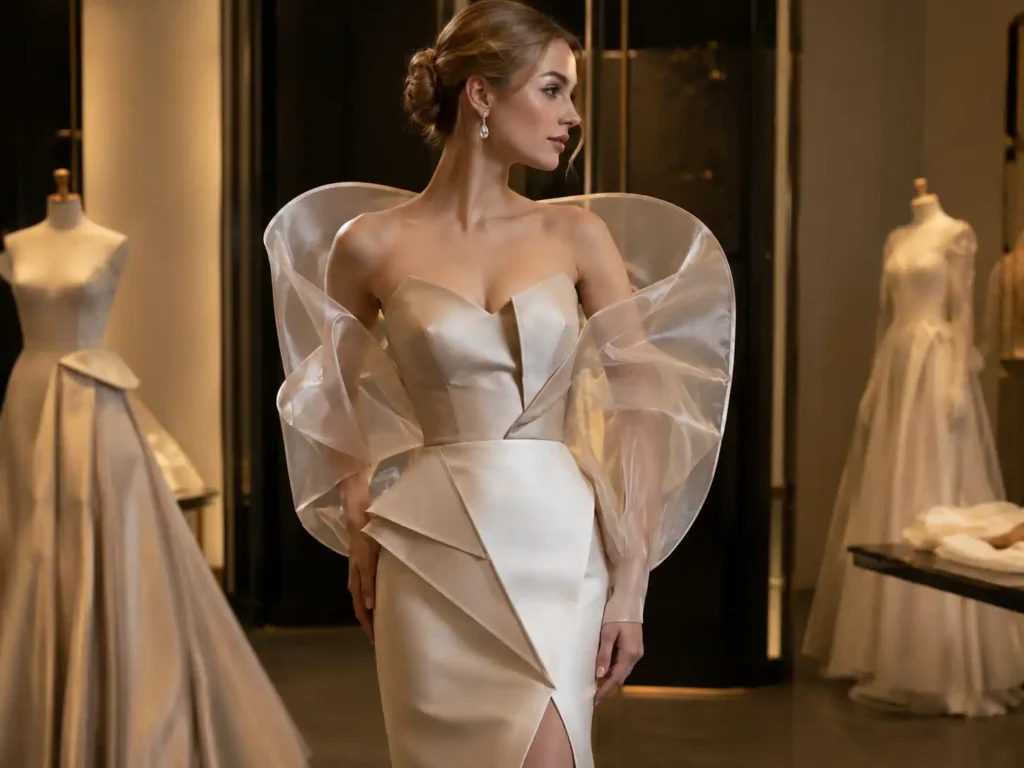
Organza + Structured Fabric
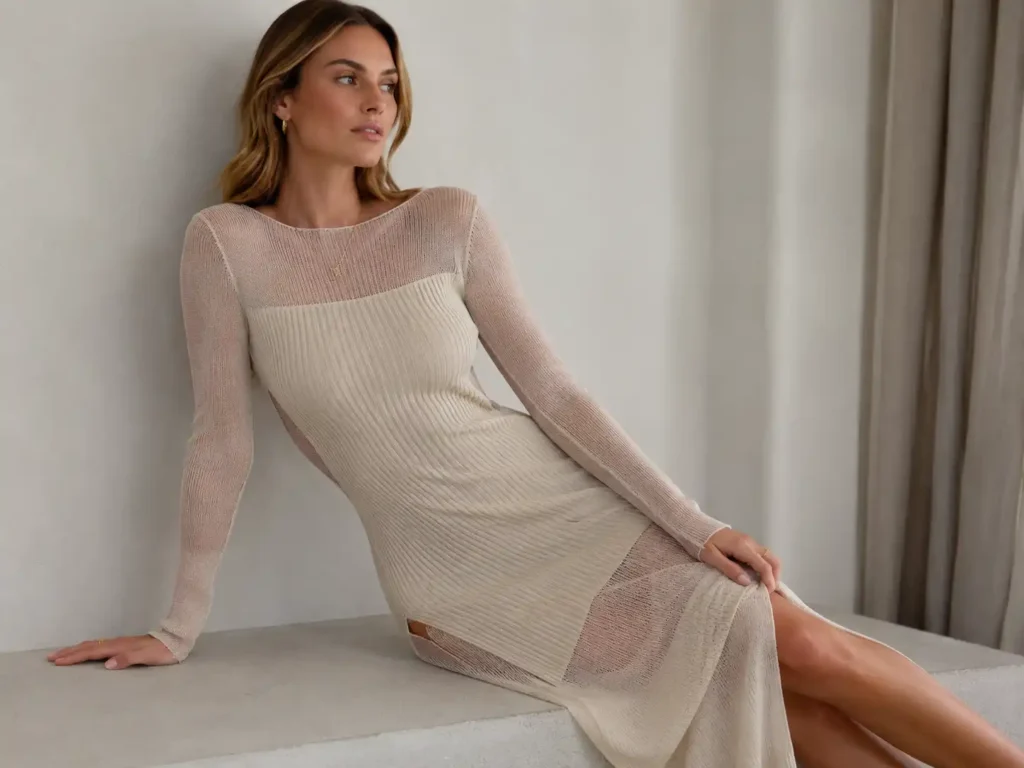
Sheer Knit + Rib Knit
Match Mesh, Shell and Lining Colors
Color Standard
- Use Pantone, a physical standard, an approved garment or an agreed fabric swatch. Generic names such as nude, wine or champagne leave too much room for interpretation.
- The standard should identify which material carries the primary shade: shell, mesh or lining.
Lab Dip and Swatch
- Custom colors may require lab dips or supplier swatches. Sheer materials should be reviewed over the intended lining and skin-tone background.
- Approval should record material composition, supplier, color code and layer count.
Dye-Lot Control
- Bulk lots can vary in tone. Shell and mesh should be separated by lot and matched before cutting.
- A replenishment order may require fresh approval if the original lot is unavailable.
Lighting Review
- Satin reflection, mesh transparency and lining depth can make one color look different across surfaces.
- Review under daylight and controlled indoor light before bulk approval.
Lining, Cups and Internal Support

Stretch Lining

Soft Woven Lining

Partial Bust Lining

Bra Cups
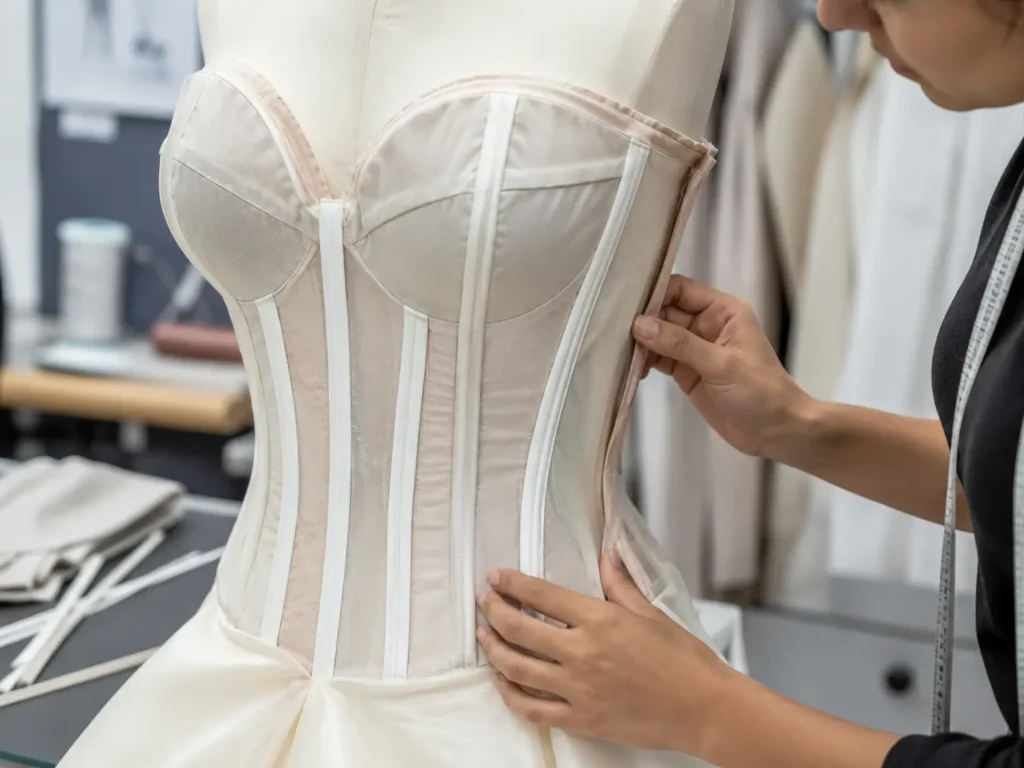
Boning
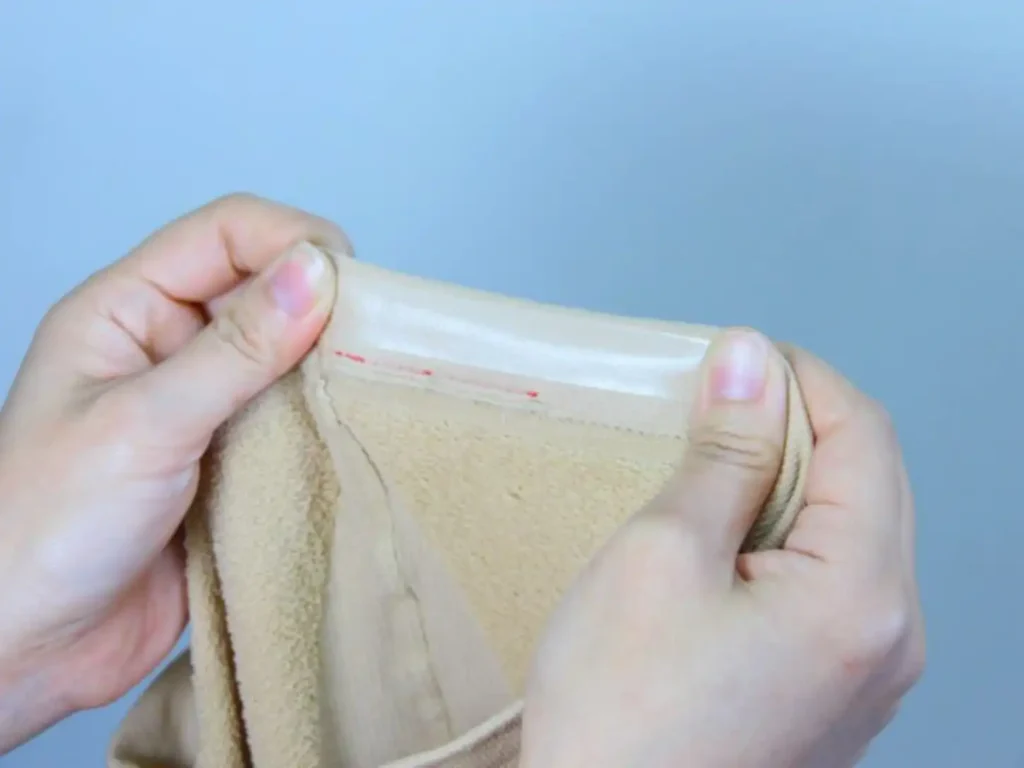
Anti-Slip Support
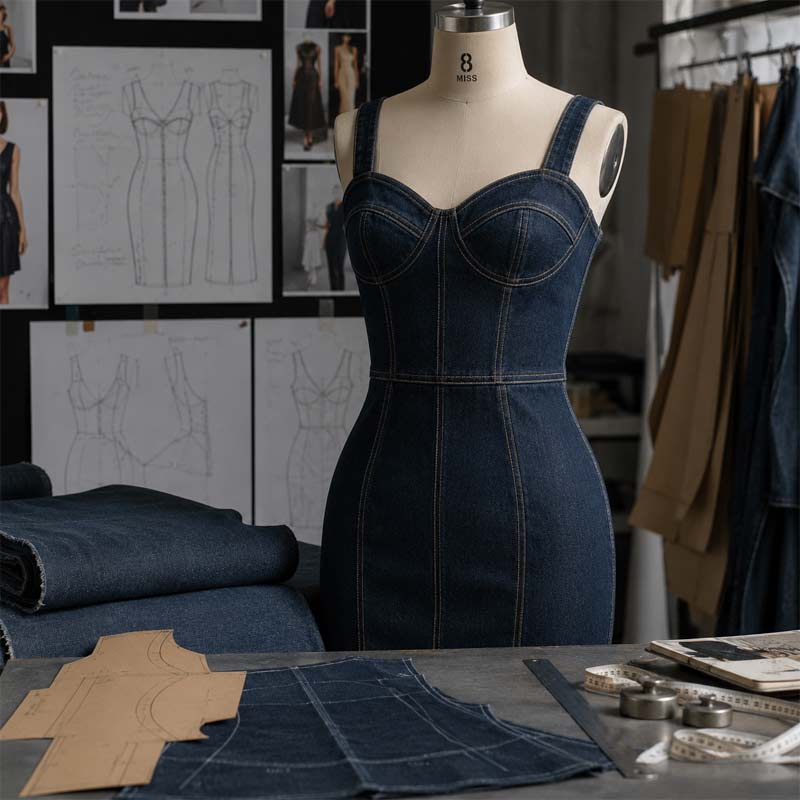
Pattern Engineering for Controlled Placement
Sheer-panel construction begins with pattern logic. The panel shape, seam path, body measurements and lining boundaries must agree before cutting the first sample.
- Convert Artwork Into Pattern Lines: Reference images often show a visual curve without technical dimensions. Pattern development converts the curve into measurable points tied to bust, waist, hip, side seam, neckline or hem. Critical coordinates can include panel height from shoulder, distance from center front, width at waist, width at high hip and distance from slit opening. Clear notches and matching points reduce sewing shift during curved joining.
- Control Bust and Waist Proportion: Upper bust, full bust, under bust and waist measurements influence panel tension differently. A single chest measurement cannot control a complex bust panel. Corset and deep-neck styles may also require cup position, cup spacing, neckline depth and under-bust seam measurements. The sample should confirm shape from front, side and three-quarter views.
- Balance Front and Back: A front panel can pull the side seam forward when the front body lacks enough width. A back mesh panel can gape when shoulder and back width are not balanced. Front length, back length, shoulder slope and armhole shape must support the intended panel line. Side seams should remain visually vertical unless the design specifies otherwise.
- Build Separate Lining Patterns: Lining should not be copied mechanically from the shell. Coverage, stretch, seam allowance and attachment points may differ. Partial lining needs clean start and stop lines. Full lining may require reduced bulk around curved mesh seams. Approved lining patterns become part of the PP and Golden sample records.
- Prepare for Bulk Repetition: A visually successful first sample still needs production marks, seam instructions, measurement points and grade rules. Pattern versions should be controlled from first sample through revision, PP approval and bulk cutting. Jinfeng Apparel uses 7+ senior pattern makers, 2 sample rooms and 20+ sample machinists to manage complex womenswear development.
Fit Control Across Key Body Zones
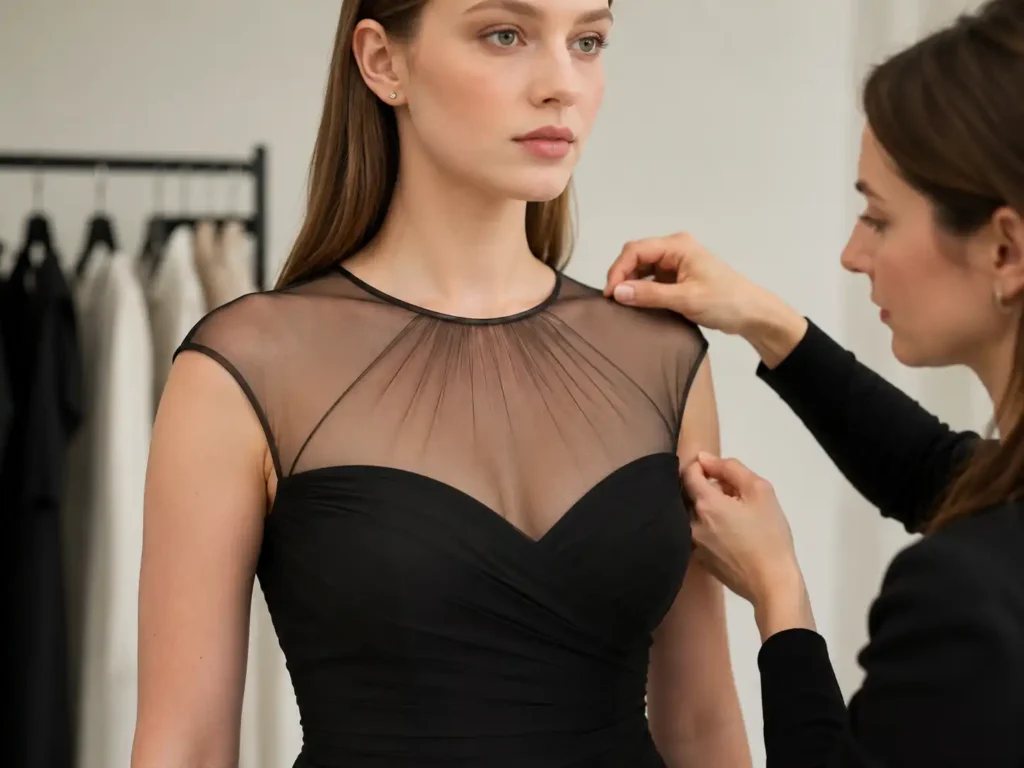
Upper Bust

Full Bust
Under Bust
Natural Waist
High Hip
Full Hip
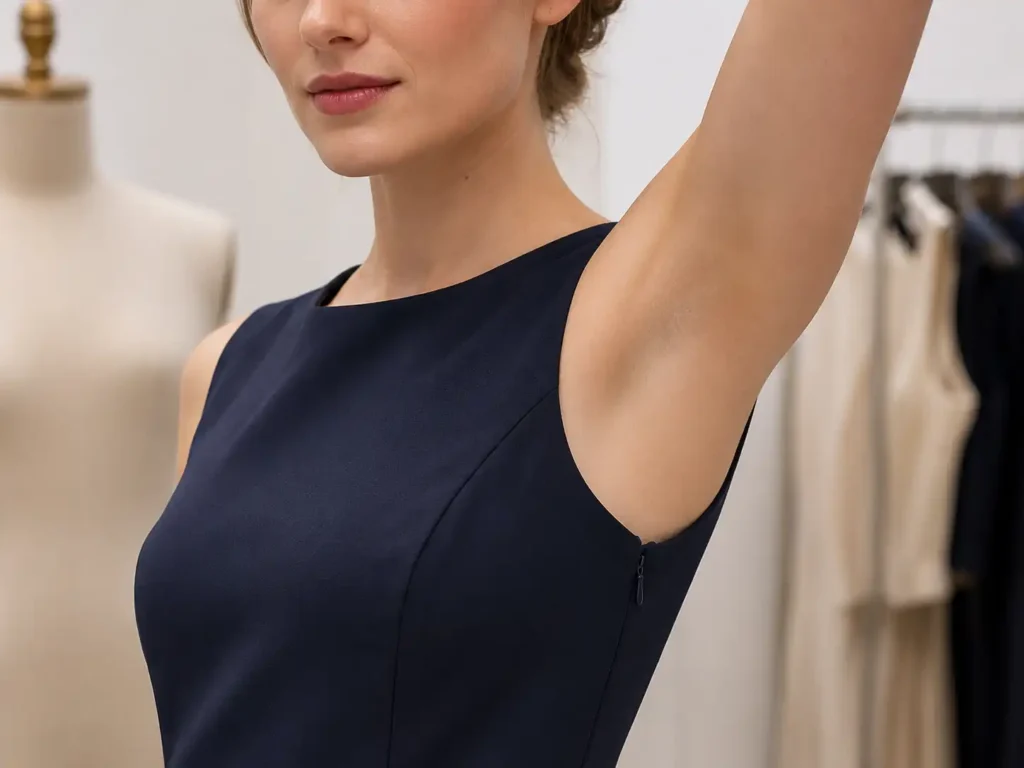
Underarm
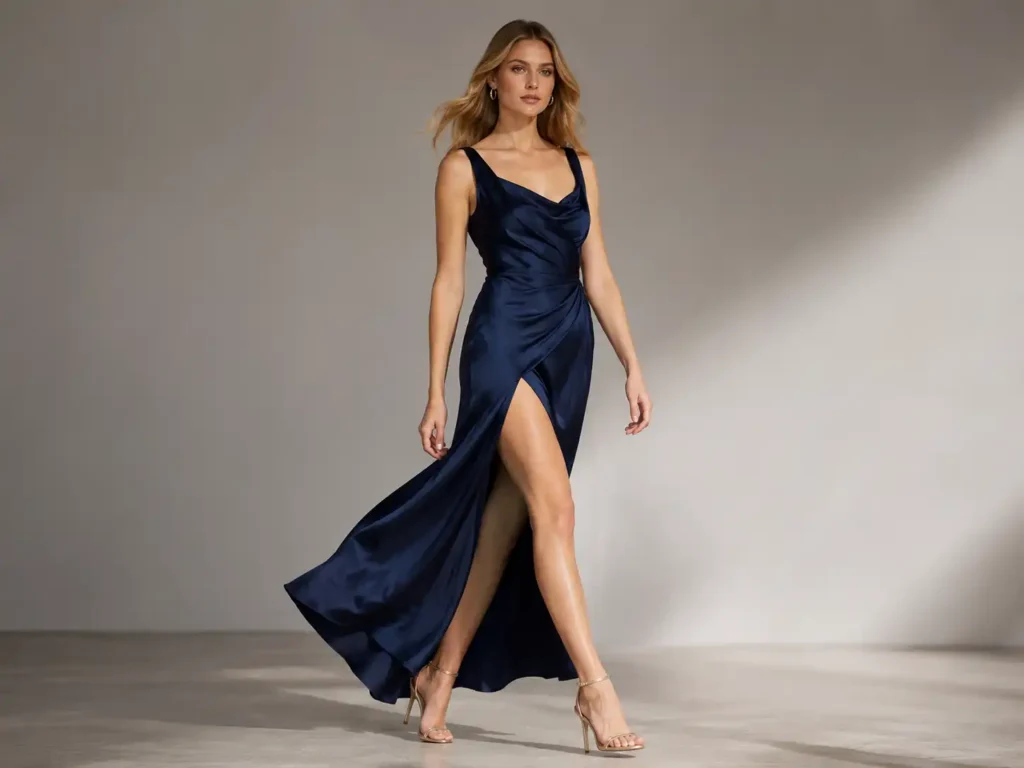
Hem and Slit
Size Grading Without Design Distortion
| Control Point | Common Sample Risk | Grading Requirement | Bulk QC |
|---|---|---|---|
| Bust Panel | Exposure increases under stretch | Adjust width and height with bust growth; review neckline and cup position | Panel width, upper-bust position and symmetry |
| Waist Panel | Band becomes too tall or too wide | Preserve visual proportion while adding waist room through selected seams | Panel height, level line and left-right balance |
| Side Torso | Panel shifts toward front or back | Split growth between front, back and side seams; retain matching points | Distance from center front/back and seam flatness |
| Hip Panel | Pulling or excessive transparency | Add controlled hip ease and review mesh recovery | Hip measurement, drag lines and panel tension |
| Back Panel | Gapping at neckline or armhole | Balance back width, shoulder slope and stretch ease | Back neckline shape and panel flatness |
| Skirt Insert | Slit or insert height changes visually | Grade from fixed reference points rather than hem alone | Insert height, slit height and hem balance |
Closures and Supporting Trims
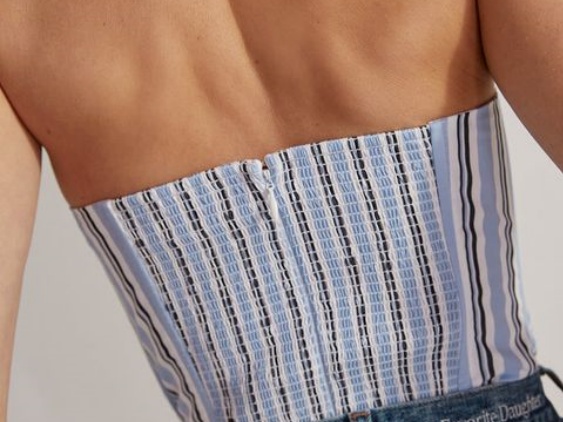
Invisible Zipper
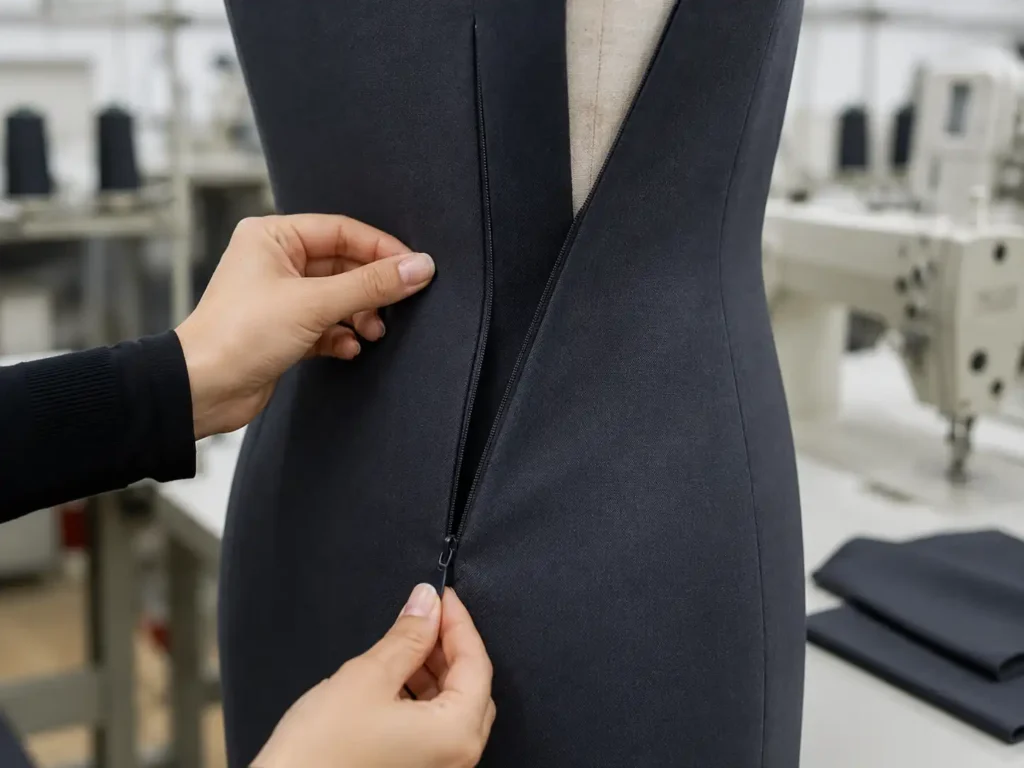
Back Zipper
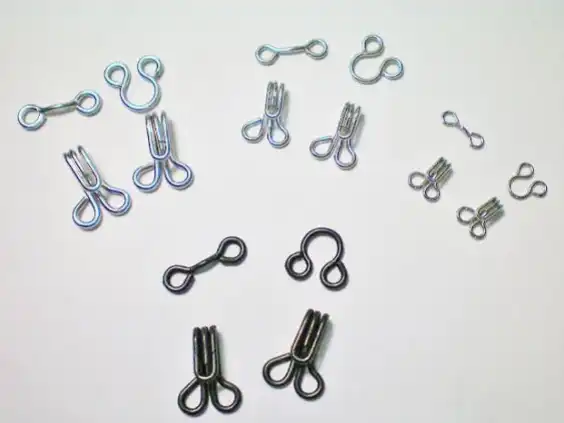
Hook and Eye
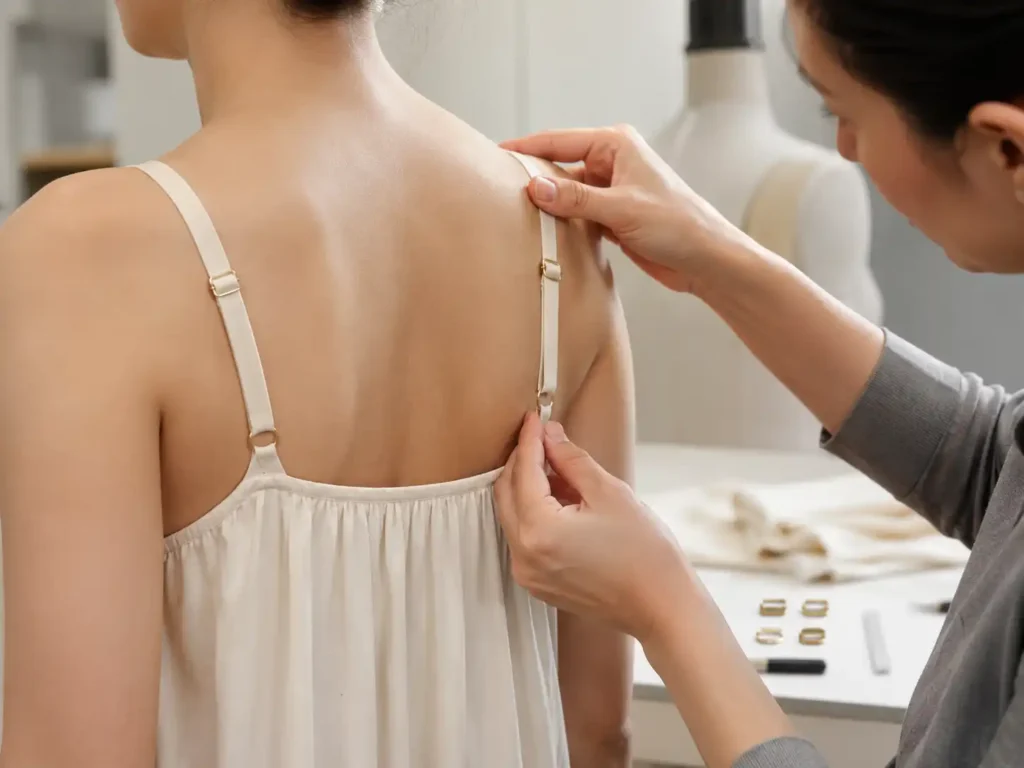
Adjustable Straps
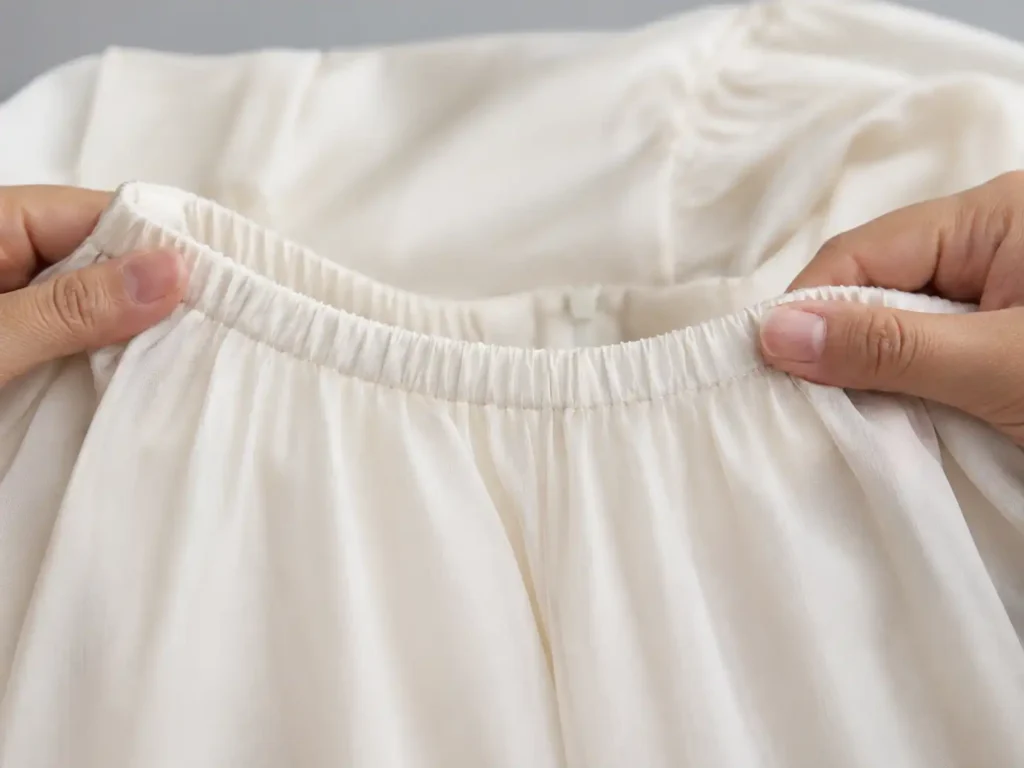
Elastic Support
Bra Cups

Boning

Silicone Grip
From Design File to Approved Sample

Project Review

Structure Analysis

Fabric Direction

Pattern Development

First Sample

Fit and Revision

PP Sample

Golden Sample
Sheer Panel Sample Approval Checklist
Transparency
Body Coverage
Panel Symmetry
Seam Flatness
Stretch Recovery
Lining Position
Closure Shape
Measurements

Correct Patterns Before Bulk Production
Sample feedback must be converted into controlled files. Chat comments alone cannot guide cutting, sewing and QC across thousands of garments.
Classify the Issue
- Fit, fabric, construction, color, trims, measurements, visual proportion, labeling and packing are reviewed separately so the correct source of the problem is addressed.
- A tight bust may come from the pattern, mesh recovery, cup shape or lining; changing only one measurement may not solve it.
Update the Pattern
- Approved changes are added to the correct pattern version, including shell, sheer panel and lining pieces.
- Panel notches, seam paths, slit positions, cup locations and support details must move together when needed.
Update Measurements
- Revised garment measurements and panel-specific measurements are recorded in the size chart.
- Tolerance should reflect product risk; a high-risk panel height may need tighter control than a lower-risk internal measurement.
Update Production Instructions
- The sewing method, stitch direction, layer count, lining coverage, trim placement and QC checkpoints are revised before PP approval.
- Bulk teams should not rely on memory from the sample room.
Seal the Standard
- PP sample approval and Golden sample sealing connect the written files with a physical garment reference.
- Further design changes after approval require schedule, cost and production-impact review.
Multi-Style Sampling Without Version Confusion
Fabric Group
Construction Group
Priority Group
Revision Tracker
Approval Status
Bulk Readiness
Bulk Production Workflow
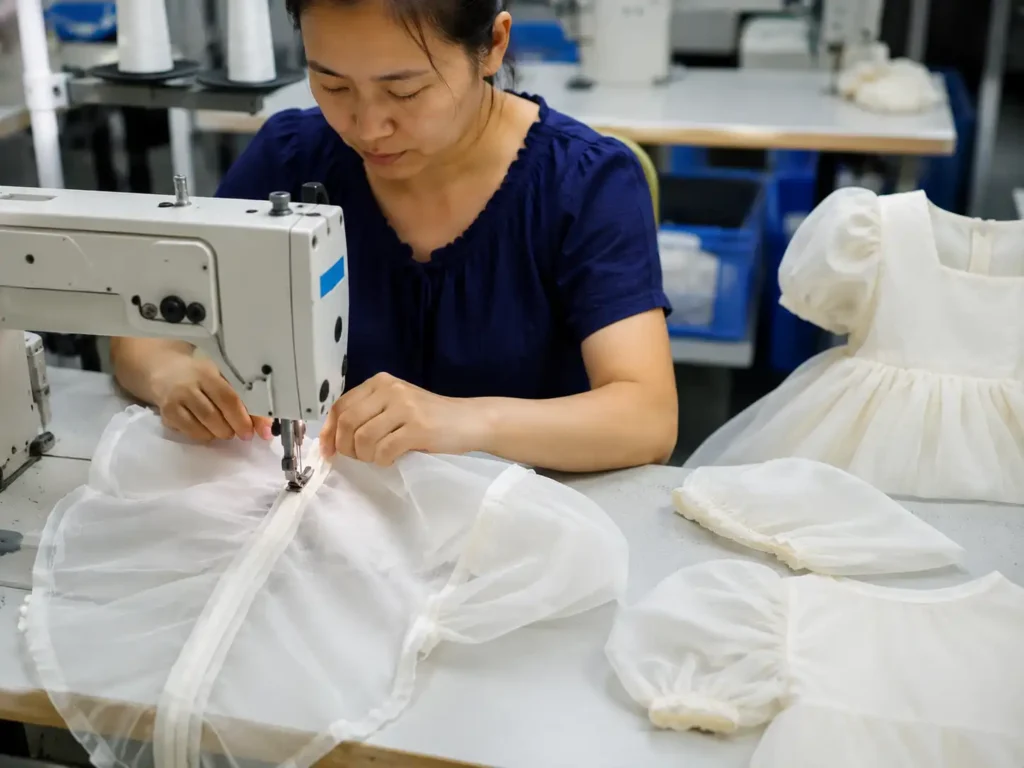
Approved Materials

Incoming Inspection

Fabric Preparation
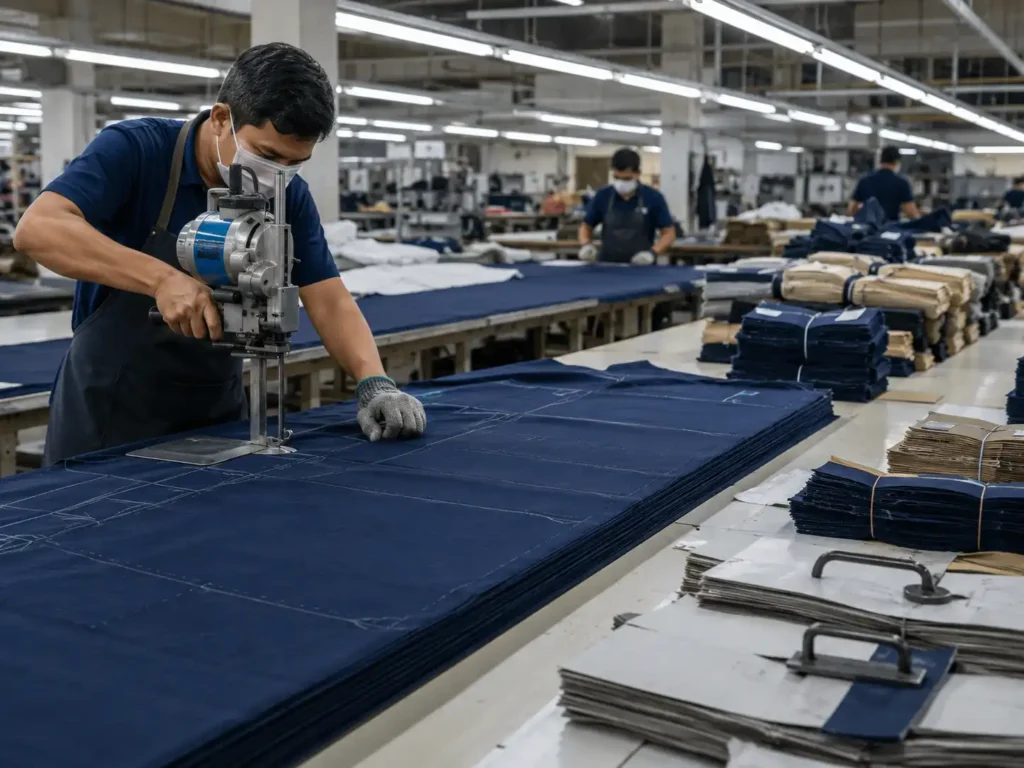
Cutting Control

First-Piece Review
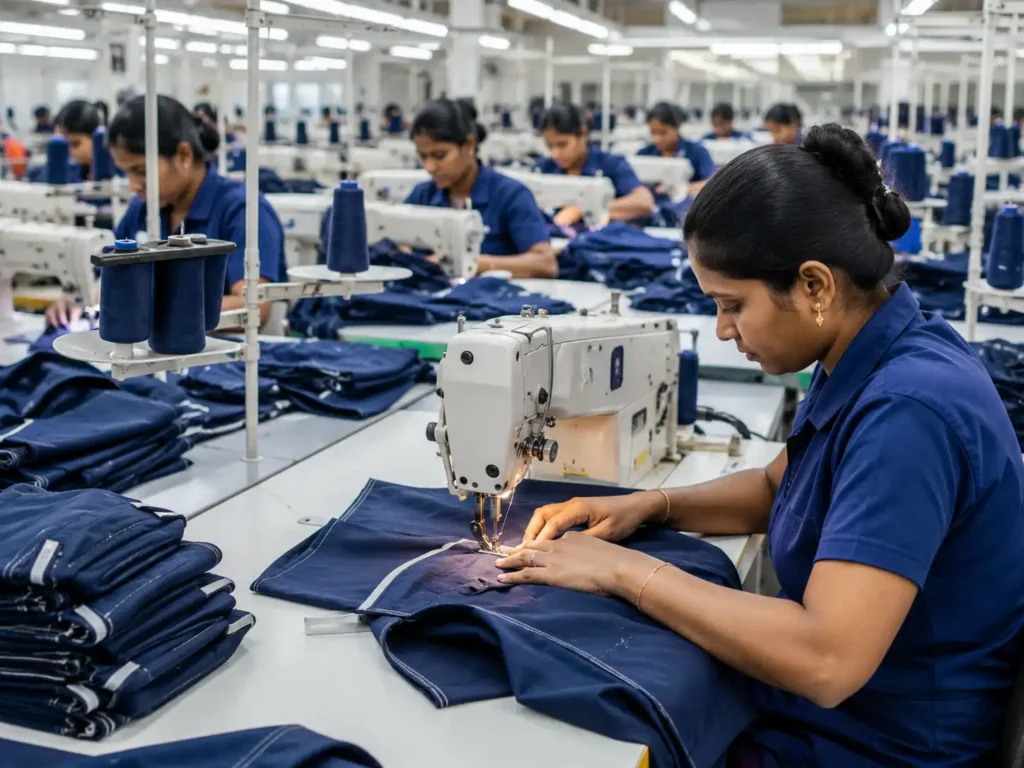
Sewing Production

In-Line Inspection
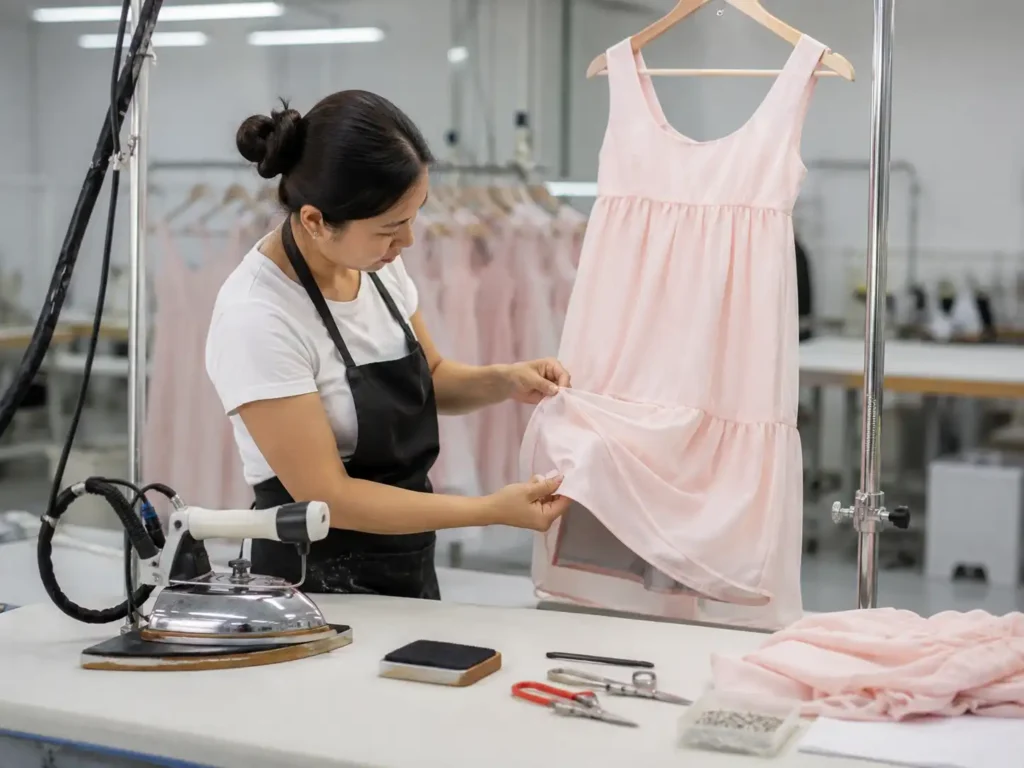
Finishing
Final Inspection
Quality Control by Production Stage
Incoming Material QC
- Inspect mesh holes, stains, shade, width, stretch direction, recovery, surface texture and usable quantity.
- Shell and lining lots are reviewed with the sheer material because color and tension must work together.
- High-risk areas are marked before cutting where possible.
Cutting QC
- Check panel shape, grain or stretch direction, left-right pairing, notches, lace motif placement, size bundling and damaged pieces.
- A reversed panel or mixed size bundle can create defects that sewing cannot correct.
- Cut parts should remain protected from snagging and contamination.
First-Piece Check
- The first garment confirms panel location, seam method, zipper shape, lining, support structure and key measurements.
- Production continues only after findings are corrected and communicated.
- For multiple colors or materially different lots, another first-piece check may be required.
Sewing In-Line QC
- Inspect seam waves, panel shift, asymmetric curves, tension marks, visible seam allowance, cup position, boning and closure shape.
- Key measurements can be checked during sewing rather than waiting for final garments.
- Repeated defects trigger correction at the operation where they begin.
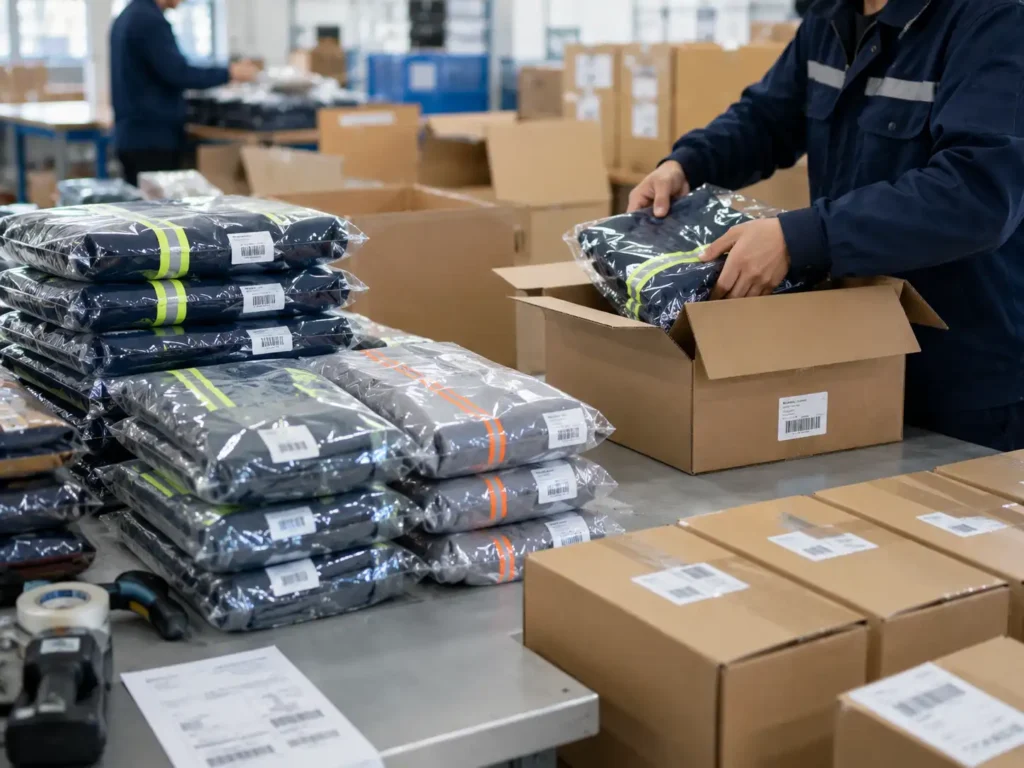
Packing QC
- Confirm brand label, size label, care label, hangtag, barcode, SKU label, polybag, folding, color-size ratio and carton mark.
- Carton-level quantity, SKU, color, size and barcode consistency are checked before shipment.
- Packing photos and shipment details can support final handover records.
Defect Prevention and Corrective Controls
Common defects can be traced to material, pattern, cutting, sewing or approval gaps. A defined prevention point makes corrective action faster and more accurate.
| Common Defect | Likely Cause | Prevention | Inspection Point |
|---|---|---|---|
| Mesh holes | Material damage, cutting handling or unsuitable needle | Incoming review, protected handling and needle trial | Incoming, cutting and sewing QC |
| Wavy seam | Uneven feeding, tension mismatch or incompatible stretch | Trial seam and approved feeding method | First-piece and in-line QC |
| Panel asymmetry | Cutting mismatch or sewing shift | Paired cutting, notches and visual reference | Cutting, first-piece and final QC |
| Excess transparency | Wrong layer count, over-stretch or missing lining | Wear test and approved coverage record | Sample and PP stages |
| Visible lining edge | Incorrect lining pattern or attachment | Separate lining pattern and boundary approval | Sample, first-piece and final QC |
| Zipper bulging | Seam instability or tension mismatch | Pattern correction, reinforcement and sewing trial | Sample and in-line QC |
| Size drift | Uncontrolled pattern version, stretch or cutting | Grade rule, fabric preparation and measurement plan | PP, in-line and final QC |
| Shade difference | Mixed dye lots or poor material matching | Lot separation and approved color standard | Incoming and cutting QC |
MOQ and Cost Structure
Fabric and Color
- Stock mesh and regular colors are usually easier to organize than custom-dyed mesh, exclusive lace, special tulle or custom-printed sheer materials.
- One style in black at 200 pieces can be assessed as one style/color unit. Black 100 pieces plus white 100 pieces does not normally meet 200 pieces per color.
- Shell, mesh and lining may come from separate suppliers with separate minimums.
Construction and Fit
- Curved panels, corset structure, cups, boning, double layers, complex lining, high slits and embellished mesh increase pattern, sampling and sewing work.
- Cost reflects pattern development, cutting, sewing time, pressing, QC and wastage rather than fabric alone.
- Construction can sometimes be simplified without weakening the brand-level appearance, but every change requires approval.
Quantity and Packing
- Larger quantities can improve material purchasing, cutting layout and sewing efficiency, while some development and testing costs remain project-based.
- Labels, hangtags, barcodes, SKU packing, custom polybags, cartons, warehouse labels and testing requests affect the final quotation.
- A clear style-color-size matrix allows more accurate costing than a single total quantity.
Private Label, Protection and Delivery
Private Label Packing
- Available support includes woven labels, satin labels, printed labels, size labels, care labels, hangtags, hang strings, barcode stickers, SKU labels, polybags, stickers, thank-you cards, cartons, carton marks and warehouse labels.
- Each garment can be folded, labeled and packed according to the approved SKU and warehouse requirements.
- Packing QC checks the garment, label, size, color, barcode, polybag and carton information together.
NDA and Design Protection
- NDA-based cooperation can protect tech packs, original samples, patterns, unpublished designs, label files, packaging files, prices and order information.
- Client names, logos, sample images, patterns, real order quantities and pricing are not disclosed without authorization.
- Case presentations use anonymous project information unless written approval is available.
Export and Delivery
- Support can include packing lists, commercial invoices, carton details, shipment photos, pickup coordination and client-nominated forwarders.
- Air freight, sea freight and split shipment can be discussed according to launch date, quantity and cost priorities. DDP is evaluated by destination and forwarding plan.
- Color-size ratio, SKU separation and carton marks are confirmed before handover.
Selected Sheer and Mesh Dress Programs
US Occasionwear Program
- Scope: 18 styles and 36,800 pieces across satin-mesh midi dresses, fitted evening dresses and corset silhouettes.
- Challenge: nude mesh looked correct when flat but became too transparent across bust and side-waist zones. Several styles also showed zipper bulging where stretch mesh met satin.
- Response: the team separated visible soft mesh from internal power mesh, adjusted lining boundaries, revised side-panel curves and added panel-specific measurement points. Zipper seams received construction trials before PP approval.
- Result: the collection moved into two delivery batches with controlled panel placement, approved color relationships and retail-ready SKU packing.
Australian Partywear Collection
- Scope: 24 styles and 62,400 pieces covering bodycon minis, cut-out illusion dresses, ruched mesh styles and partywear maxis.
- Challenge: the launch calendar required several hero styles to reach photo approval before the remaining assortment. Stretch recovery varied between dark and bright colors.
- Response: styles were grouped by mesh family, construction and launch priority. Hero SKUs moved first through fit and photo-ready samples. Color-specific stretch and recovery were checked before bulk allocation.
- Result: sample versions remained separated, priority styles entered production first, and the full program followed a controlled multi-batch schedule.
European Private-Label Line
- Scope: 12 styles and 24,000 pieces, including lace-panel maxis, sheer-back cocktail dresses and mesh-waist occasion styles.
- Challenge: the brand required several label languages, SKU-based packing, barcode accuracy and anonymous handling of unreleased designs.
- Response: product and packing files were managed together. Label placement, care content, barcode files, polybag requirements and carton marks were confirmed at PP stage. QC included product measurements, panel symmetry and carton-level SKU checks.
- Result: garments were delivered in color-size ratios aligned with warehouse receiving instructions, while brand files and unreleased styles remained protected.
Choose a Manufacturer Who Understands Sheer Construction
Relevant Product Experience
Pattern Capability
Material Knowledge
Structured Sampling
Bulk Control
Private Label Readiness
Design Protection
Repeat-Order Records
Frequently Asked Questions
Soft mesh, stretch mesh, power mesh, double-layer mesh, tulle, lace, chiffon and organza can all work. Selection depends on panel location, stretch, recovery, transparency, hand feel, seam behavior and the surrounding shell fabric.
Yes. Reference images, sketches, original samples, line sheets or tech packs can start the review. More complete measurements, material direction and quantity information allow a more accurate development and costing plan.
Transparency is checked by material, layer count, lining, body tension and lighting. Approval should include relaxed and stretched views, on-body fitting and movement where the panel covers high-risk zones.
Yes, after stretch, weight, recovery, seam behavior and color are reviewed. A visually attractive combination may still need a sewing trial before approval.
The team reviews fabric compatibility, needle, thread, seam tension, feeding, stitch method, seam allowance and pressing. A trial seam and first-piece review are important before volume sewing.
Yes. Bust, waist, side, back, hip, thigh, hem, shoulder and sleeve placements can be developed from design references. The approved position must be converted into pattern points and measurements.
Panels are not enlarged mechanically. Bust, waist, hip, back and length growth are considered separately so coverage and visual proportion remain controlled.
Yes. Stretch lining, woven lining, partial bust lining, bra cups, boning, elastic support and silicone grip can be evaluated according to structure and comfort.
MOQ starts from 200 pcs per style/color. Special fabrics, custom colors, printing, trims and packaging may carry separate supplier minimums.
Timing depends on file completeness, fabric and trim readiness, style complexity, fitting feedback and the number of revision rounds. A project timeline is prepared after the design and material direction are reviewed.
Bulk starts after PP sample approval, material confirmation, size chart, color, trims, labels, packing and production instructions are confirmed.
Yes. Photo-ready samples can be planned separately from fit and PP samples when a launch or campaign schedule requires an approved visual sample before bulk completion.
Yes. Support includes brand labels, size labels, care labels, hangtags, barcodes, SKU labels, polybags, cartons, carton marks and warehouse labels.
Yes. NDA-based cooperation can protect tech packs, original samples, patterns, unpublished designs, label files, packaging files, prices and order information.
Approved patterns and records can support reorders. A fresh review is still required when fabric, stretch, color, lining, length, neckline, cups, boning or other construction details change.

Start Your Sheer Panel Dress Program
Share the design direction, quantity plan and launch requirements with Kelly. Jinfeng Apparel will review the panel structure, fabric combination, size range, MOQ fit, sample requirements, private-label packing and likely production risks before proposing the next development step. A complete submission helps the team compare mesh, shell and lining as one system, identify high-risk coverage zones and prepare a more accurate sample and quotation plan.
Prepare These Details
- Reference image, sketch, original sample or tech pack
- Quantity per style/color and planned number of styles
- Main fabric, sheer fabric and lining preference
- Color plan and size range
- Panel position, coverage and support requirements
- Brand labels, hangtags, barcode and packing files
- Target delivery window and shipping destination