 Skip to content
Custom Smocked Dress Manufacturer
Smocked dresses look effortless on the rack, yet stable bulk production depends on exact control of panel width, elastic-thread tension, row spacing, fabric shrinkage, relaxed measurements and stretch range. Jinfeng Apparel develops adult women’s smocked mini, midi and maxi dresses for global fashion brands, resortwear labels, premium ecommerce collections and sourcing programs.
- MOQ starts from 200 pcs per style/color for regular fabric and construction plans.
- Regular dress samples generally require 10-15 days; complex styles usually require 15-25 days.
- 2 sample rooms, 7+ senior pattern makers and 20+ sample machinists support structured development.
- Smocking can be engineered for the bodice, back, waist, yoke, cuffs, side panels or selected bust areas.
- Production files define relaxed width, target stretch, row quantity, spacing, stitch density and inspection points.
Manufacturing Capacity Built for Smocked Dress Programs
Since 2008
6 Owned Factories
10+ Production Partners
2 Sample Rooms
Pattern and Sample Team
MOQ 200 Pcs
Made for Established Women’s Fashion Programs
Resortwear Brands
Premium Ecommerce Brands
DTC Fashion Labels
Fashion Retailers
Product Development Teams
Sourcing Companies
Where Smocked Dresses Commonly Lose Consistency
Excessive Tightness
Loose Recovery
Uneven Row Spacing
Size Drift
Broken Elastic Threads
Fabric Shrinkage
Panel Asymmetry
Bulk-Sample Gaps
Custom Smocked Dress Styles for Seasonal Collections

Smocked Mini Dress

Smocked Midi Dress

Smocked Maxi Dress

Smocked Bodice Dress

Smocked Waist Dress

Smocked Back Dress

Strapless Smocked Dress

Puff-Sleeve Smocked Dress

Tiered Smocked Dress
Tiered skirts create movement and strong seasonal volume. Fabric consumption, gather ratio, tier depth and hem sweep all affect cost and weight. A very heavy tiered skirt can pull down a soft smocked bodice, so strap design, waist seam and internal support may need adjustment. Bulk checks include tier height, left-right balance, seam gathering and final garment length.

Smocked Resort Dress

Floral Smocked Dress

Maternity-Friendly Smocked Dress
Smocking, Shirring, Ruching and Elastic Panels Compared
| Construction | How It Is Formed | Main Result | Best Applications | Main Control Risks |
|---|---|---|---|---|
| Elastic-Thread Shirring | Elastic thread in the bobbin forms repeated parallel rows | Continuous stretch and gathered surface | Adult smocked bodices, backs, waists and cuffs | Thread tension, row spacing, recovery, broken elastic |
| Decorative Smocking | Controlled stitching forms decorative geometric or textured gathers | Structured surface detail with limited or designed stretch | Premium capsules, yokes, feature panels | Labor consistency, pattern alignment, hand or machine variation |
| Ruching | Fabric is gathered or drawn along selected seams or channels | Local visual shaping and body contouring | Bodycon, party and occasion dresses | Left-right symmetry, seam stress, excessive bulk |
| Elastic Panel | Elastic tape, band or inserted elastic section creates flexibility | Functional stretch with a cleaner or simpler surface | Back panels, waists, sleeve openings | Elastic width, edge pressure, twisting, wash recovery |
| Pleating | Fabric is folded or heat-set into repeated lines | Structured volume without elastic stretch | Skirts, bodices and formal silhouettes | Pleat retention, heat response, spacing, packing deformation |
Smocking Placement Changes Fit and Silhouette

Full Bodice Smocking

Back Shirring Panel

Smocked Waist

Smocked Yoke

Smocked Cuffs

Side Smocking

Partial Bust Smocking

Tiered Skirt Pairing
Fabrics Selected for Controlled Smocking Performance
Fabric choice changes compression, softness, surface definition, shrinkage and recovery. Jinfeng Apparel reviews hand feel, drape, transparency, weight, stretch, print behavior and bulk risk before confirming a material direction.
Cotton Poplin for Crisp Smocked Silhouettes

Cotton poplin creates clear gathers, stable necklines and a fresh spring-summer appearance. It suits square-neck mini dresses, puff-sleeve midi dresses, structured resort styles and floral day dresses.
- Structure: Poplin holds shape better than soft rayon, giving sleeves and skirts a cleaner silhouette.
- Smocking response: Elastic rows remain visible and defined, but thick poplin can become rigid when row density is excessive.
- Shrinkage: Cotton shrinkage must be reviewed before final pattern approval because bodice width and dress length can change after washing.
- Transparency: White and pale colors may need lining, especially around the skirt and bust.
- Print direction: Checks include grain line, floral orientation and repeat matching when large motifs are used.
Cotton Voile for Lightweight Summer Dresses

Cotton voile offers softness, breathability and a delicate surface suitable for summer, beach and warm-climate collections. It works well for gathered skirts, soft puff sleeves and smocked yokes.
- Lightness: Voile creates an airy result without the fluid weight of viscose.
- Transparency: Most pale or printed voile styles need lining or selected double layers.
- Smocking definition: Fine rows can look refined, but needle size and thread tension must avoid puckering or fabric damage.
- Sewing stability: Thin panels may distort during cutting and sewing if grain direction is not controlled.
- Packing: Lightweight fabric recovers well from folding, though sharply pressed folds can still affect presentation.
Rayon and Viscose for Fluid Resortwear

Rayon and viscose remain strong options for smocked maxi dresses, floral midi dresses and vacation collections because they provide movement, soft drape and a cool hand feel.
- Drape: Fluid fabric produces attractive skirt movement and soft gathers.
- Shrinkage: Dimensional change can be significant, affecting both bodice compression and final length.
- Wet stability: Care instructions and wash expectations should be considered during material approval.
- Printing: Digital and screen prints can create strong seasonal visuals, but colorfastness and print shrinkage require review.
- Weight pull: Long skirts can place downward force on a soft smocked bodice.
Chiffon and Crepe for Soft Occasion Dresses

Chiffon and lightweight crepe can create refined smocked occasion dresses, romantic sleeves and layered skirts. Each requires careful transparency and seam control.
- Chiffon: Offers light movement but can slip, fray and show needle damage.
- Crepe: Provides more body and reduced shine, suitable for dressier day-to-evening styles.
- Lining: Coverage, color match and hem length must be defined during sampling.
- Smocking density: Very dense rows can distort a delicate surface or create uneven tension.
- Finishing: Steam and pressing methods must protect texture and prevent shine or flattening.
Linen Blends for Elevated Vacation Collections

Linen blends create an elevated natural appearance for resort, coastal and summer collections. Blends are often more stable and less sharply wrinkled than pure linen while preserving texture.
- Surface: Natural slubs and texture must be accepted or controlled according to brand positioning.
- Shrinkage: Linen content can change garment length and smocked-panel width.
- Wrinkling: Packaging and transport planning influence arrival presentation.
- Smocking response: Medium-weight linen blends can create attractive structure, but dense rows may feel bulky.
- Transparency: Light colors often need lining.
Lightweight Stretch Fabrics for Close Fit

Lightweight stretch woven or knit fabrics can support closer smocked silhouettes, hybrid bodycon dresses and contemporary party styles.
- Stretch direction: Two-way and four-way stretch behave differently during smocking and grading.
- Recovery: The shell fabric and elastic thread must recover together after wear.
- Transparency: Stretching can increase transparency, especially in pale colors.
- Seam compatibility: Stitch type and seam allowance should support repeated movement.
- Size grading: Negative ease and stretch range cannot be graded like a non-stretch woven dress.
Fabric Performance Matrix for Smocked Dress Development
| Fabric | Smocking Definition | Shrinkage Risk | Transparency Risk | Drape | Best Uses | Main Bulk Checks |
|---|---|---|---|---|---|---|
| Cotton Poplin | Clear and structured | Medium | Medium in pale colors | Crisp | Mini, puff-sleeve, square-neck | Shrinkage, row density, stiffness |
| Cotton Voile | Fine and soft | Medium | High | Light | Summer, beach, yoke styles | Lining, needle damage, distortion |
| Rayon/Viscose | Soft and compressed | Medium-High | Medium | Fluid | Maxi, resort, floral midi | Shrinkage, weight pull, print color |
| Chiffon | Delicate | Low-Medium by composition | High | Airy | Occasion, layered, romantic | Snags, transparency, row consistency |
| Crepe | Moderate and refined | Low-Medium | Medium | Soft to medium | Day-to-evening, midi | Texture, pressing, seam balance |
| Linen Blend | Textured and structured | Medium | Medium-High | Medium | Premium resort, coastal | Shrinkage, wrinkling, bulk at rows |
| Stretch Woven | Clean with added flexibility | Low-Medium | Medium when stretched | Medium | Fitted contemporary dresses | Recovery, seam stretch, grading |
| Jersey | Soft with high flexibility | Medium | Medium | Fluid | Casual, fitted, hybrid styles | Curling, recovery, seam stability |
Design Details Developed Around Smocked Construction

Neckline Direction

Sleeve Volume

Dress Length

Waist Placement

Tiered Skirts

Ruffles and Frills

Custom Prints

Trims and Labels
Pattern Engineering Behind Stable Smocked Dress Fit
Smocked dresses cannot be developed from finished flat measurements alone. Pattern work must account for compression, expansion, fabric shrinkage, bodice height, skirt attachment and grade behavior across the size range.
Building the Pre-Smocking Panel
The panel before shirring is wider than the finished relaxed garment. Its starting width influences gather depth, texture and stretch range.
- Compression ratio: A wider starting panel creates more gathers, but excessive fabric can become bulky or stiff.
- Grain direction: Off-grain cutting may cause diagonal rows, twisted side seams or uneven recovery.
- Seam allowance: Side-seam and top-edge allowances must remain stable after the panel is compressed.
- Fabric behavior: Cotton, rayon, chiffon and stretch woven fabrics require different panel allowances.
The pattern maker develops the first panel from the target finished measurement, intended stretch and approved visual density. A trial panel may be produced before the full sample when the material or coverage is unusual. After sewing and steam treatment, the panel is measured again. Any change to fabric weight, composition or elastic thread may require a new review rather than reusing an old ratio.
Defining Relaxed and Stretched Measurements
A single bust measurement does not describe a smocked bodice. Product files should distinguish relaxed width, comfortable wearing range and maximum reference stretch.
- Relaxed width: Measured without pulling the garment.
- Comfort range: Represents the intended body-measurement range for normal wear.
- Maximum reference: Used to understand capacity, not as a recommended fit point.
- Recovery: The panel should return close to the approved relaxed width after controlled stretching.
Measurement methods must be consistent across sample, PP and bulk inspection. Teams should avoid pulling with different force or measuring immediately after prolonged stretching.
The size chart may include both garment measurements and recommended body ranges when the brand’s fit policy supports it.
Controlling Vertical Position and Bodice Height
Smocking changes not only width but also vertical appearance. Row quantity, row spacing and fabric compression can alter the final bodice depth.
- Upper edge: Controls neckline height and bust security.
- Under-bust or waist position: Determines where the skirt begins.
- Side seam: Must remain level from left to right.
- Strap relationship: Strap length should hold the approved neckline without carrying excessive load.
During fitting, front, side and back views are checked together. A bodice that looks correct on a flat table may rise at the front or drop at the back when worn. Pattern corrections are recorded by sample version so the production team receives the approved geometry rather than verbal comments only.
Managing Pattern Versions Across Development
Pattern control prevents first-sample dimensions from reappearing in bulk after later revisions.
- First pattern: Used to establish structure and initial fit.
- Revised pattern: Incorporates confirmed fitting and measurement comments.
- PP pattern: Matches the approved material, construction and final measurements.
- Bulk pattern: Released with grading, lining pieces and placement references.
Pattern notes may include smocking start and end points, row count, seam matching, strap position, lining boundaries and skirt attachment. When fabric, stretch, lining or construction changes, the pattern is reviewed again. Reusing a file without checking the new material can create size and silhouette drift even when the style name remains unchanged.
Size Grading Built Around Stretch and Coverage
Bust Stretch Range
Waist Placement
Armhole Coverage
Strap Length
Dress Length
Extended Size Review
Smocked Dress Sampling from Concept to Approval
Sampling turns an attractive concept into a production-ready standard. Each development stage has a defined purpose, and comments should move into updated patterns, measurements, materials and sewing instructions.
Project Review Before Pattern Cutting
Development begins with available references: tech pack, original sample, line sheet, sketch or clear images.
- Style structure: neckline, smocking placement, sleeves, skirt type, lining and closures.
- Material direction: fabric type, weight, hand feel, stretch, transparency and print.
- Quantity plan: styles, colors, size range and target units per style/color.
- Commercial target: launch date, target price direction and private-label needs.
Fabric and Smocking Trial
For unfamiliar fabric, dense coverage or special stretch requirements, a trial panel may be produced before the full garment.
- Panel dimensions are recorded before shirring.
- Row quantity, spacing and stitch density are tested.
- Relaxed width and stretch range are measured.
- Surface appearance, softness and recovery are reviewed.
- Steam or wash behavior may be checked according to risk.
First Sample Development
The first sample establishes silhouette, construction and initial fit. Regular dresses generally require 10-15 days after materials and requirements are ready. Complex styles may require 15-25 days, while special materials follow supplier timing.
The internal review covers bust coverage, bodice height, relaxed width, stretch comfort, waist position, sleeve opening, skirt balance, lining and overall appearance. Photos, videos and measurement data can be prepared for brand review before shipment when needed.
Revision and Fit Correction
Feedback should identify the exact issue and desired result. Useful comments include marked measurements, fitting photos, front-side-back views and construction notes.
- Fit corrections update the pattern and size chart.
- Fabric changes trigger comparison of weight, stretch, shrinkage and hand feel.
- Construction changes update sewing instructions and costing.
- Trim changes review color, size, comfort, MOQ and availability.
PP Sample and Golden Reference
The PP sample confirms the production route before bulk release. It should reflect the approved fabric, color, construction, measurement, labels and packing method.
After approval, production files can be locked: final pattern, graded measurements, fabric reference, trim card, sewing instruction, label position, packing method and QC checklist. A Golden Sample or agreed reference is retained for production inspection, repeat orders and issue review.

Sample Feedback Converted into Production Standards
First Sample Review
- Mark exact measurements rather than only saying “too tight.”
- Provide fitting images from front, side and back when possible.
- Identify whether the issue comes from pattern, fabric, elastic tension or construction.
- Separate essential corrections from optional styling changes.
Revised Sample Control
- Fabric replacement can change shrinkage, stretch and panel ratio.
- A deeper neckline may require lining or strap adjustment.
- Added tiers or ruffles change fabric consumption and skirt weight.
- New labels or packaging can add supplier lead time.
PP Sample Approval
The PP sample locks the final production route. Approval should cover fabric, color, print, measurements, smocking specification, construction, trims, labels, hangtags, polybag and carton instructions. Late changes after PP approval can affect cost, material availability and delivery. Requested changes are reviewed through a controlled update rather than informal chat messages.

Bulk Production Controlled from PP Sample to Packing
A smocked dress order moves through defined checkpoints. Approved patterns, materials and sewing instructions must reach cutting, smocking, assembly, QC and packing teams without losing information between departments.
Production Handover and Material Lock
Bulk release starts after the PP sample and core files are approved.
- Final pattern and grade rules are issued.
- Fabric composition, weight, color, dye lot and shrinkage notes are confirmed.
- Elastic thread, trims, lining, labels and packaging are matched to references.
- Smocking rows, spacing, panel measurements and stretch range are included in production instructions.
- Packing ratio, barcode, carton marks and shipment split are confirmed.
Fabric Inspection and Relaxing
Fabric inspection checks color, defects, width, weight, shrinkage risk, print direction and batch consistency.
Rayon, viscose, cotton and linen blends may need conditioning or relaxation before cutting.
Printed fabric is reviewed for repeat, direction and visible variation. Light colors are checked for transparency and stains.
Fabric issues found before cutting are easier to isolate than defects discovered after assembly.
Cutting and Panel Control
Cutting follows approved grain direction, pattern version and size ratio. Smocked panels receive special attention because starting dimensions directly affect finished compression.
- Cut-panel width and height are checked.
- Directional prints and border designs are aligned.
- Matching points are marked for side seams and skirt attachment.
- Selected cut pieces are compared with the approved pattern before bundle release.
Smocking Setup and First-Piece Check
Production begins with controlled machine settings and first-piece inspection.
- Row quantity and spacing are compared with instructions.
- Finished relaxed width and stretch are measured.
- Left-right symmetry and top-edge stability are checked.
- Elastic thread ends and seam joins are inspected.
- Steam response is observed before wider production continues.
Assembly, Inline Inspection and Finishing
Smocked panels are joined to sleeves, lining, skirts, straps and trims. Inline inspectors review measurements, seam appearance, balance and workmanship during production.
Finishing covers thread trimming, controlled pressing, stain review, final measurement and appearance. Pressing should not flatten texture or damage elastic recovery.
Final Inspection and Packing
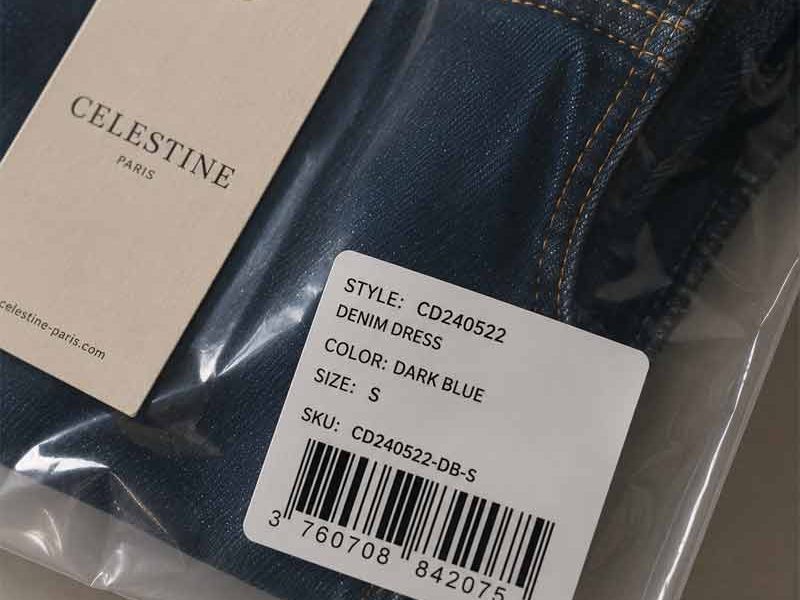
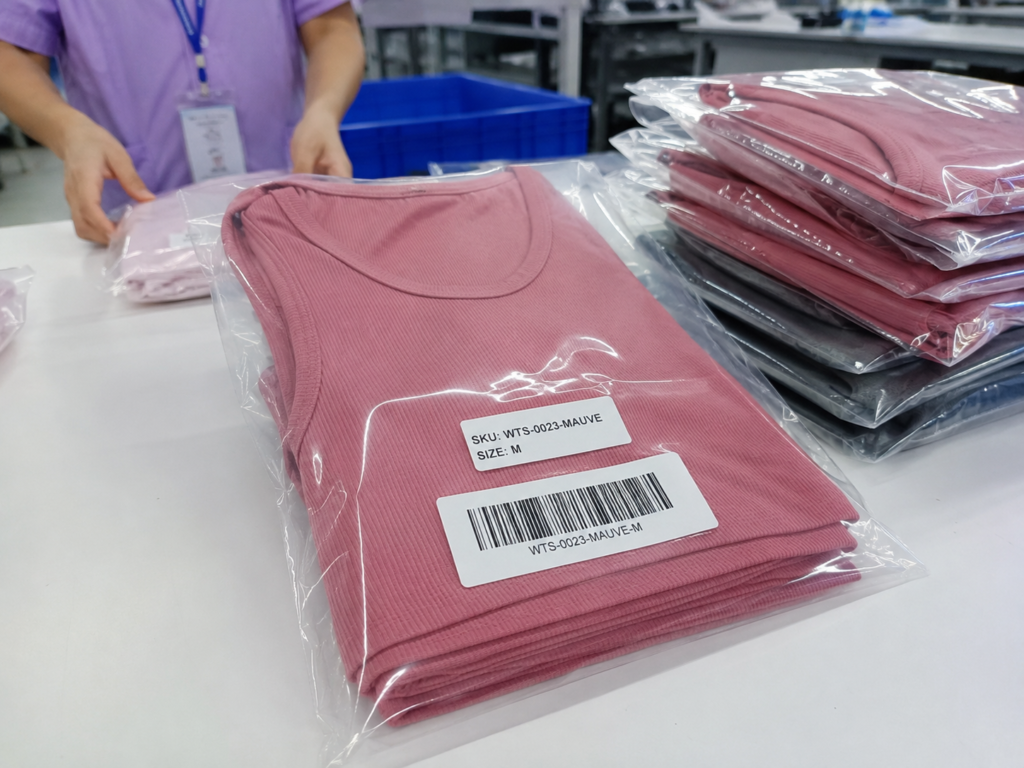
Final inspection checks approved appearance, measurement, stretch, workmanship, labels and packaging. SKU, barcode, size stickers and carton marks are verified against the packing instruction.
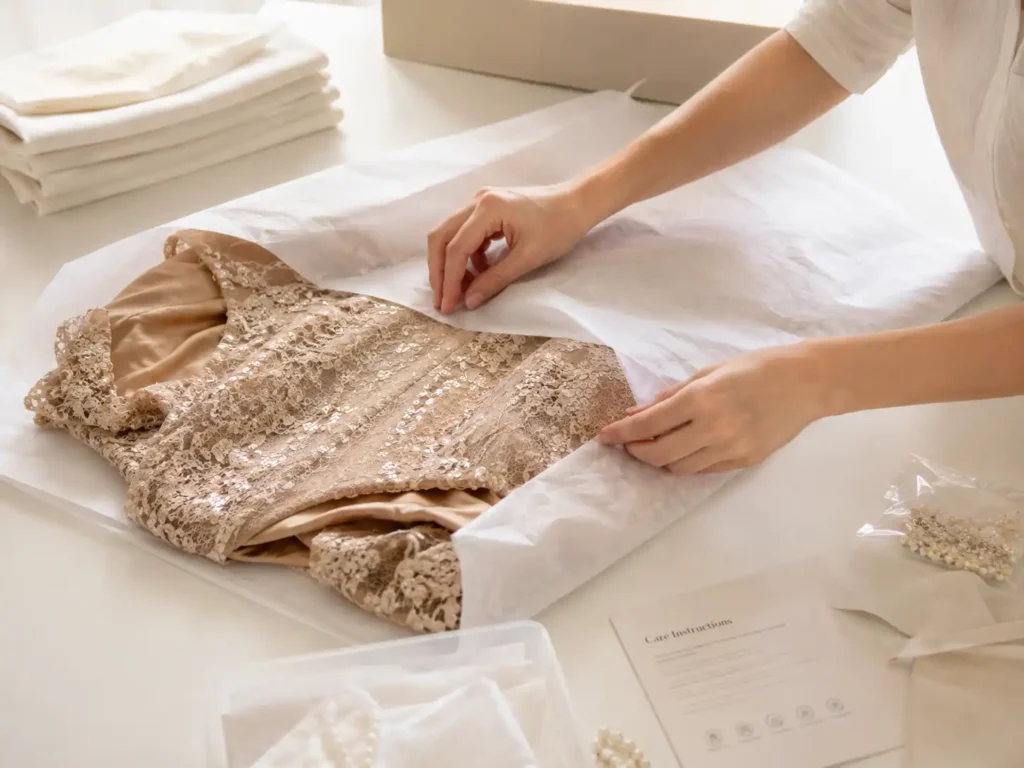
Smocked areas are folded without excessive compression. Ruffles, straps and tiered skirts are arranged to reduce presentation damage during transport.
Shipment documents and cargo details are prepared according to the agreed logistics route.
Quality Checks Specific to Smocked Dress Production
Fabric Inspection
Shrinkage Review
Cut-Panel Check
Smocking Density
Stretch Recovery
Garment Measurement
Sewing Appearance
Wash Stability
Packing Inspection
What Determines Smocked Dress Production Cost
Fabric Type
Smocking Coverage
Stitch Density
Style Complexity
Color and Print
Labels and Packing
MOQ Planning for Commercial Smocked Dress Orders
Regular Production Fit

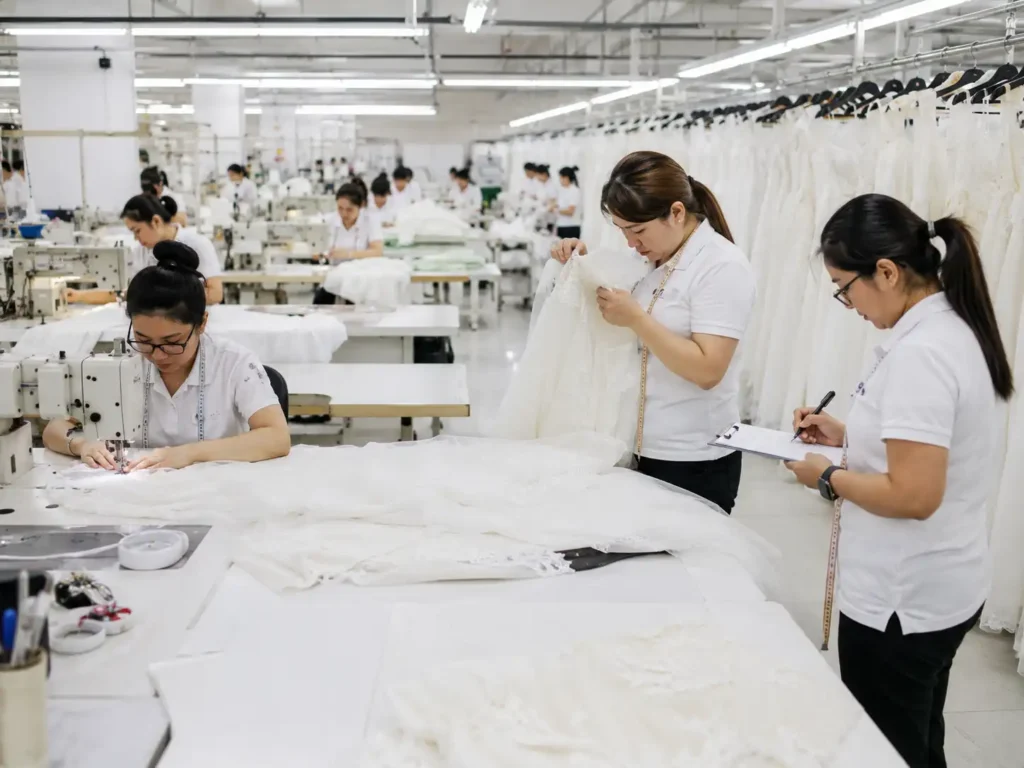
Material-Driven MOQ

Multi-Color Planning

Program Suitability
Private-Label Details Ready for Retail and Ecommerce

Main Label

Size Label

Care Label

Hangtag
Barcode Sticker

Branded Polybag
Packaging Designed to Protect Smocked Garment Shape
Controlled Folding
SKU Identification
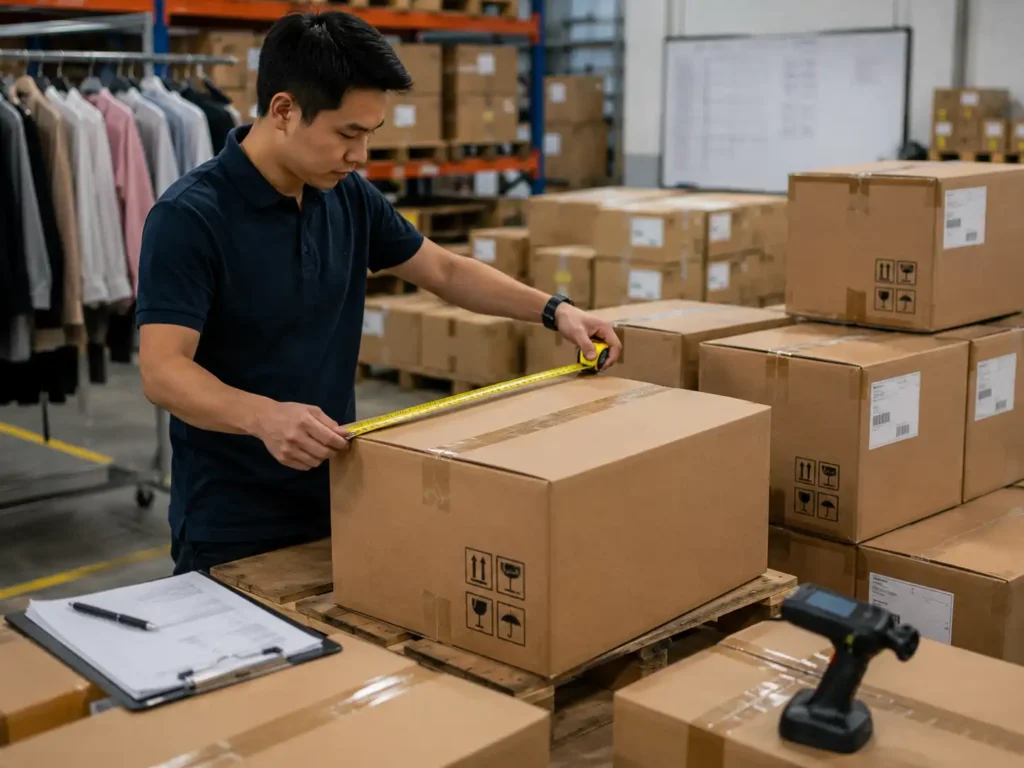
Carton Ratio
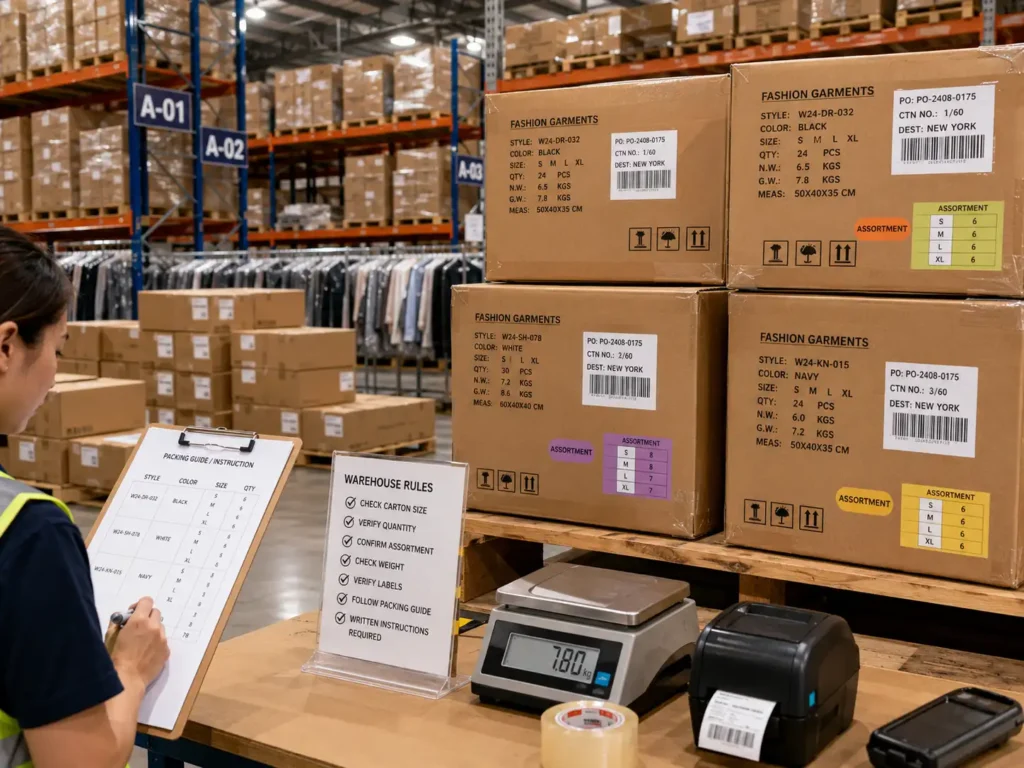
Shipping Marks

Production Scale for Multi-Style Smocked Collections
Jinfeng Apparel operates a structured women’s fashion production network for programs that include multiple silhouettes, colors, sizes and delivery batches. Scale is planned according to style complexity rather than using one generic output estimate.
Factory Allocation by Product Structure
The production system includes 6 owned women’s fashion factories and more than 10 long-term satellite production partners. Styles are allocated according to woven or knit construction, fabric sensitivity, smocking coverage, lining, skirt volume and delivery priority.
A simple cotton smocked mini dress and a lined chiffon maxi with multiple tiers should not be scheduled under the same efficiency assumptions. Complex styles are placed with teams familiar with the required material and construction, while more standardized styles can enter higher-efficiency lines.
Development and Production Team Coordination
Two sample rooms, 7+ senior pattern makers, 20+ sample machinists, 12+ merchandisers, 15+ QC inspectors and 30+ finishing and packing workers support the path from design files to delivery.
The value of the team lies in handover: development comments move into patterns and production files; merchandisers track materials and schedule; QC teams check key stages; finishing and packing teams verify retail details and shipment preparation.
Multi-Style Order Management
Established brands commonly develop 10-30 styles within one order program. Production planning groups styles by fabric family, construction, launch importance and material readiness.
- Shared fabric programs can reduce fragmentation.
- Hero styles may receive earlier sample and production priority.
- Color and size ratios are confirmed before cutting.
- Inline inspection windows are scheduled by style group.
- Packing data separates every SKU and destination.
Capacity with Controlled Boundaries
Monthly capacity supports large women’s fashion programs, but complex smocking, special fabrics, custom prints and heavy private-label work require earlier planning. Capacity statements are reviewed against actual style mix, material status and approved delivery date before commitment.
Lead-Time Planning from Sample to Shipment
Sampling Window
Pre-Production Lock
Bulk Production Window
Shipment Planning
Design Protection for Unreleased Smocked Collections
Tech Pack Protection
Sample and Pattern Protection
Unreleased Design Protection
Label and Order Protection
Smocked Dress Programs Managed at Commercial Scale
The following anonymized program examples reflect the size and operational structure common in established fashion collaborations. Brand names and protected designs remain confidential.

United States Resortwear Program
A US resortwear label planned 18 styles across smocked maxi, floral midi, halter and tiered silhouettes. The order contained 36,800 garments across four coordinated color stories and a size range from XS to XXL.
The first development challenge was inconsistent bodice compression between soft rayon prints and cotton-blend styles. Using one smocking ratio across both materials would have created different relaxed widths and wearing pressure. Separate trial panels were prepared for each fabric family. Pattern files then recorded panel width, row count, spacing, bodice height and target stretch by material group.
Two sample rounds were used for hero styles. The first round corrected waist placement, strap length and skirt weight. The revised round confirmed color, print scale, lining and packaging. Approved styles moved into PP sampling before bulk allocation.
Production was grouped by material and construction. Priority photo and launch styles entered first, while the remaining assortment followed after fabric and label confirmation. Packing separated every style, color and size SKU.
A launch-sensitive allocation used a planned air-and-sea split, with selected hero styles moving first and the remaining bulk volume moving under the lower-cost route.

Australian Summer Dress Collection
An Australian premium ecommerce program included 14 styles and 24,600 garments. The assortment covered puff-sleeve mini dresses, square-neck midi dresses, smocked-back woven dresses and lightweight resort maxis in rayon, cotton poplin and linen blends.
The main risk involved shrinkage and length stability. Several fabrics produced different results after conditioning, especially on tiered maxi skirts.
Fabric references were grouped by shrinkage behavior, and hem allowances were reviewed before PP approval. Smocked-panel measurements were taken after the agreed conditioning stage rather than immediately after sewing.
The size range covered AU 6-18. Grade review focused on bust coverage, armhole shape, waist position, strap length and maxi length. Larger sizes received separate review of bodice height and tier proportion instead of only proportional enlargement.
Private-label work included woven labels, care labels, hangtags, barcode stickers, branded polybags and carton marks. The program used three packing ratios for different warehouse allocations.
Production files connected each ratio with the correct barcode and carton plan, reducing manual decisions during final packing.

United Kingdom Ecommerce Program
A UK fashion label planned 22 styles and 52,400 garments for spring and early-summer releases. The range combined smocked mini dresses, printed midi dresses, back-shirred square-neck dresses and selected chiffon occasion styles.
The initial challenge was managing different commercial levels within one order. Core cotton and rayon styles needed efficient production, while chiffon and detailed ruffle styles required slower handling and more inspection.
Styles were allocated by construction group rather than forcing one line plan across the entire assortment.
Sampling priorities were set around campaign dates. Eight hero styles moved through first sample, revised sample and photo-ready review before the remaining styles. Final production release followed PP approval, print confirmation and label lock.
QC checkpoints focused on relaxed bust width, row spacing, elastic recovery, neckline level, waist placement, garment length and packing accuracy.
The shipment was divided into two planned batches, allowing the first launch group to move earlier while the second group completed under the main production schedule.
Frequently Asked Questions About Smocked Dress Manufacturing
Yes. Jinfeng Apparel develops adult women’s smocked mini, midi and maxi dresses for resortwear, premium ecommerce, DTC, retail, occasion and seasonal fashion programs. Product directions include full smocked bodices, back shirring, smocked waists, puff sleeves, tiered skirts, strapless styles, halter styles and printed resort dresses.
The regular starting MOQ is 200 pcs per style/color. Final MOQ depends on fabric availability, custom dyeing, exclusive prints, trims, lining, construction complexity and private-label materials. Every color should carry a commercially workable quantity rather than dividing one style into very small color groups.
Elastic-thread shirring normally uses elastic bobbin thread in repeated rows to create a stretchy gathered surface. Decorative smocking uses controlled stitching to form a designed texture or pattern. Ruching gathers fabric locally, while an elastic panel may use inserted elastic without the same surface effect. The intended construction should be confirmed before quotation.
Yes. Clear reference images can support an initial style and construction review. More accurate development comes from a tech pack, original sample, measurements, fabric direction, quantity plan and target size range. Final bulk production standards require approved patterns, measurements, materials, sewing instructions and a PP sample.
Yes. The development team can review tech packs, size charts, BOM information, artwork and packing instructions. Questions are raised when smocking ratio, relaxed measurement, stretch range, fabric shrinkage or construction details are missing or conflict with the intended fit.
Cotton poplin, cotton voile, rayon, viscose, chiffon, crepe, linen blends and selected lightweight stretch fabrics are common options. The best choice depends on silhouette, drape, transparency, shrinkage, print, lining and price direction. Swatches and sample panels are reviewed before production standards are locked.
Control begins with pre-smocking panel width, fabric type, elastic-thread specification, stitch length, row quantity and spacing. The finished panel is measured in a relaxed state and reviewed through an intended comfort range. Recovery after controlled stretching is compared with the approved reference.
Measurements normally include relaxed width, intended stretch range, bodice height, top-edge position, waist or under-bust position and garment length. The method should define measuring points and pulling force. Teams should avoid measuring immediately after the panel has been heavily stretched.
Yes, according to an approved size chart and fit direction. Extended sizes may need adjusted panel width, bodice height, armhole coverage, strap length, waist position and skirt volume. Simple proportional enlargement is not always suitable for elasticized garments.
Yes. Digital, screen, placement, border and exclusive print directions can be reviewed according to artwork, repeat scale, color, fabric and quantity. Smocking compresses the print, so strike-offs, panels or samples are recommended when motif scale and placement are important.
Simple dresses generally require 7-10 days, regular dresses 10-15 days and complex styles 15-25 days after required materials and information are ready. Special fabrics, custom prints, labels and trims follow supplier development timing. A clear timeline is provided after style review.
Bulk release normally requires PP sample approval, final pattern, grade rules, measurements, fabric and color, smocking specifications, construction, trims, labels, packing method and QC checklist. Late changes can affect cost, material availability and delivery.
Checks cover fabric, shrinkage risk, cut-panel dimensions, smocking density, row spacing, stretch recovery, garment measurements, sewing appearance, finishing, labels and packing. Inline inspection identifies problems during production rather than waiting until every garment is complete.
Yes. Options include main labels, size labels, care labels, hangtags, barcode stickers, SKU labels, branded polybags, cartons and shipping marks. Private-label items can have separate supplier MOQ and lead time, so files should be confirmed early.
Yes. Jinfeng Apparel can support NDA-based cooperation and protect tech packs, patterns, original samples, unpublished designs, labels, packaging files, order quantities and launch information. Public images or case materials are used only with permission or after identifying details are removed.
Start Your Custom Smocked Dress Project
Send available product information to Kelly for an initial development review. Useful files include reference images, tech packs, original sample photos, target fabric, color plan, size chart, quantity per style/color, private-label requirements and desired delivery date. The team will review product structure, smocking position, material direction, pattern complexity, sample route, MOQ fit and bulk-production risk before confirming the next step.
For a more accurate quotation and development plan, include:
- Style image, sketch, tech pack or original sample reference
- Target quantity for every style and color
- Fabric composition, weight, print or hand-feel direction
- Size range and available grade rules
- Relaxed and stretched measurement requirements, when available
- Main label, care label, hangtag and barcode files
- Packing, warehouse and shipment requirements
- Target sample date and bulk delivery date


