Skip to content
Adjustable Strap Dress Manufacturer
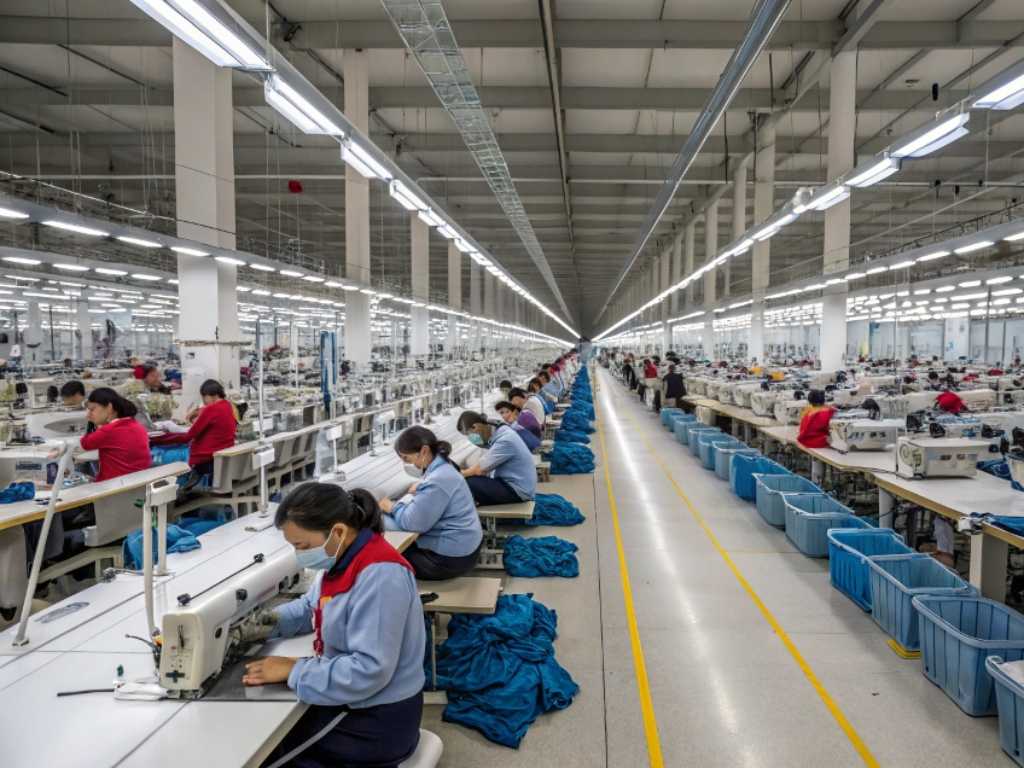
Jinfeng Apparel develops and manufactures adjustable strap dresses for global fashion brands, sourcing teams, occasionwear labels, resortwear collections and premium ecommerce programs. We manage the complete route from fabric direction and strap hardware selection to pattern development, fit review, PP approval, bulk production, quality control and private-label packing.
- Strap widths commonly developed from 6 mm to 25 mm, selected according to fabric weight, neckline structure and visual direction.
- Adjustable range is reviewed together with bust coverage, armhole depth, back height and overall dress balance rather than treated as an isolated trim detail.
- Development is supported by 7+ senior womenswear pattern makers, 2 sample rooms and 20+ sample machinists.
- Production projects start from 200 pcs per style/color, with final requirements confirmed according to fabric, hardware, construction and packing.
Built for Fit-Critical Adjustable Strap Dress Programs
Since 2008
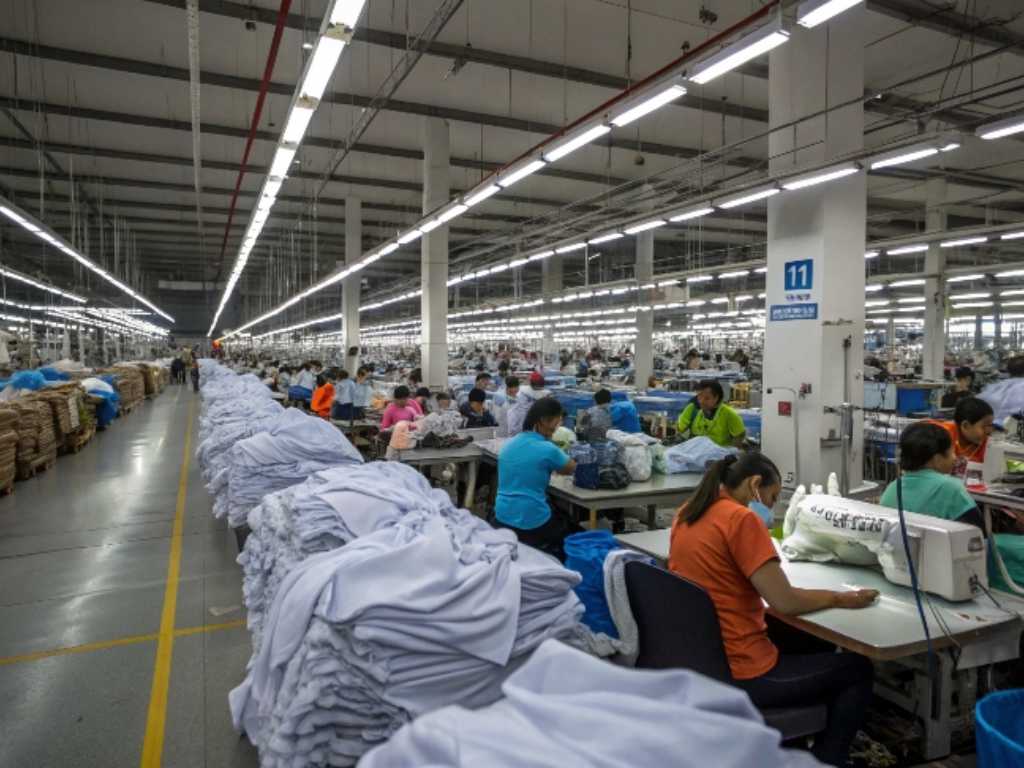
6 Owned Factories
10+ Production Partners
7+ Pattern Makers
2 Sample Rooms
15+ QC Inspectors
The Right Manufacturing Fit for Your Dress Collection
Best Fit For
- Established fashion brands developing seasonal dress collections.
- Occasionwear, partywear, resortwear and premium ecommerce labels.
- Sourcing teams managing 10-30 styles within one program.
- Product developers working from tech packs, sketches, reference samples or line sheets.
- Brands requiring multi-color, multi-size and private-label packing control.
- Long-term programs involving repeat orders, replenishment and collection extensions.
Project Requirements
- A clear product direction, reference image, sketch, original sample or tech pack.
- A defined quantity plan by style and color.
- A target size range and intended market.
- Fabric, trim and packaging expectations suitable for professional development.
- Acceptance of sample development, fit correction and PP approval before bulk.
- A launch or delivery window that can be reviewed against material and production readiness.
What Defines a Reliable Adjustable Strap Dress Manufacturer
An adjustable strap dress manufacturer must control the relationship between the strap, neckline, bust, armhole, back height, fabric weight and garment length. A slider alone does not create a functional adjustable dress. The product works only when the full upper-body structure remains stable at the shortest, middle and longest strap settings.
Adjustment Must Protect the Silhouette
A strap can technically move and still damage the fit. When the strap is shortened, the neckline may rise, the armhole may tighten and the waistline may shift upward. When the strap is extended, bust coverage may reduce, the side seam may drop and the back may lose stability. Pattern review therefore begins with three wearing positions rather than one flat measurement.
For a satin slip dress, the strap often carries a larger share of garment balance because the fabric is fluid and the neckline may have limited internal structure. For a lined party mini dress, the strap may work with shaped bust seams, cups or back elastic. For a maxi dress, the longer skirt weight can increase pull at the front and back attachment points. Each product needs a different engineering decision.
Hardware Must Match the Strap
Slider opening, strap width, strap thickness and surface friction must work together. A slider that is too wide may allow the strap to creep during wear. A slider that is too narrow can jam, twist the strap or damage the fabric edge. Plating, coating, color, weight and skin contact also matter, especially for low-back, lingerie-inspired and warm-weather products.
Jinfeng Apparel evaluates hardware during sampling and records the approved specification for bulk production. The review covers threading direction, smooth movement, holding stability, contact comfort, visual match and compatibility with the chosen strap construction.
Grading Must Be Size-Specific
One strap length cannot simply be copied across XS-XL. Bust depth, upper-body length, armhole position and neckline coverage change across the size range. Extended sizes may need a wider strap, a stronger attachment, a different back position or a revised adjustment window. Petite and tall options may also require front and back length corrections rather than a strap-only change.
Common Failures in Adjustable Strap Dress Production
Straps Slip During Wear
Neckline Drops Too Low
Armhole Exposes Too Much
Slider Twists or Jams
Attachment Points Tear
Bulk Fit Drifts
Adjustable Strap Dress Styles We Develop and Manufacture

Satin Slip Dresses

Cami Mini Dresses

Cowl-Neck Dresses
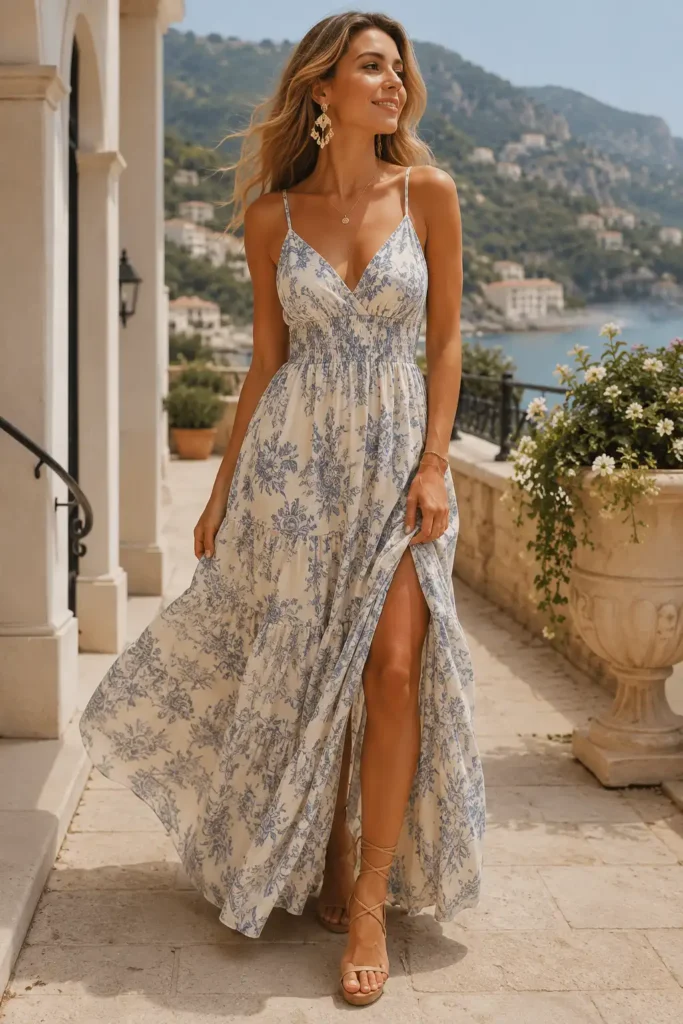
Resort Maxi Dresses
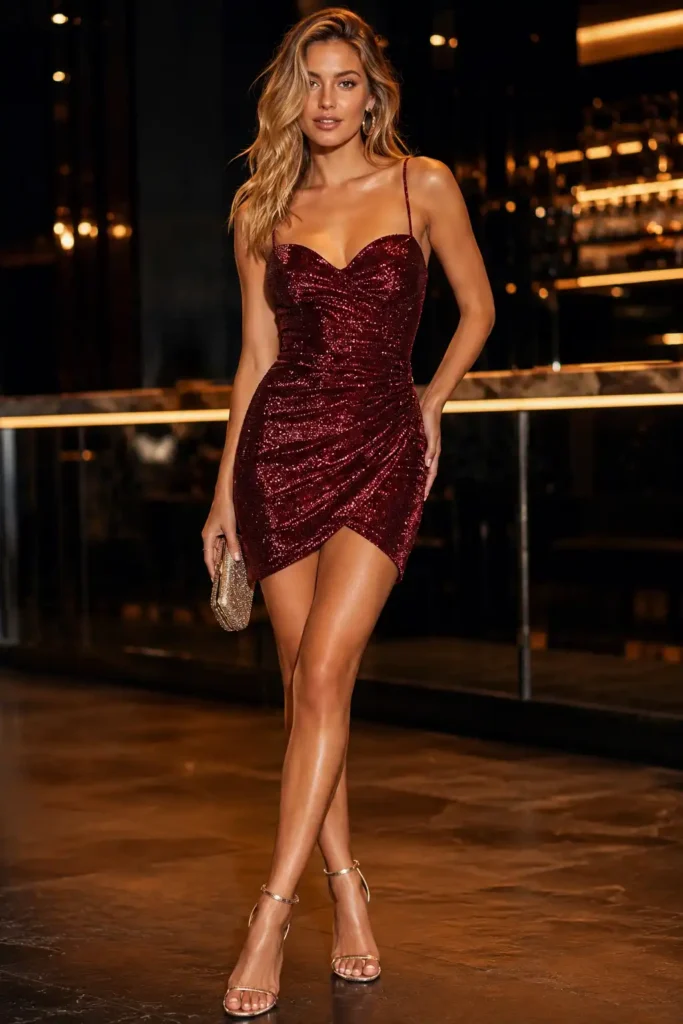
Party Mini Dresses
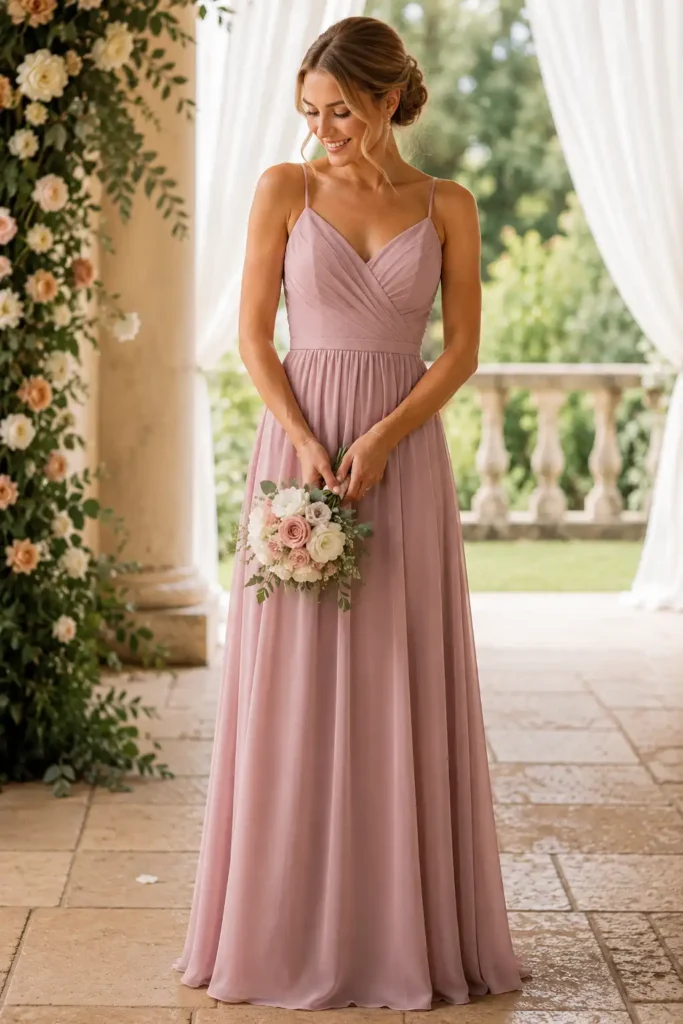
Bridesmaid Dresses
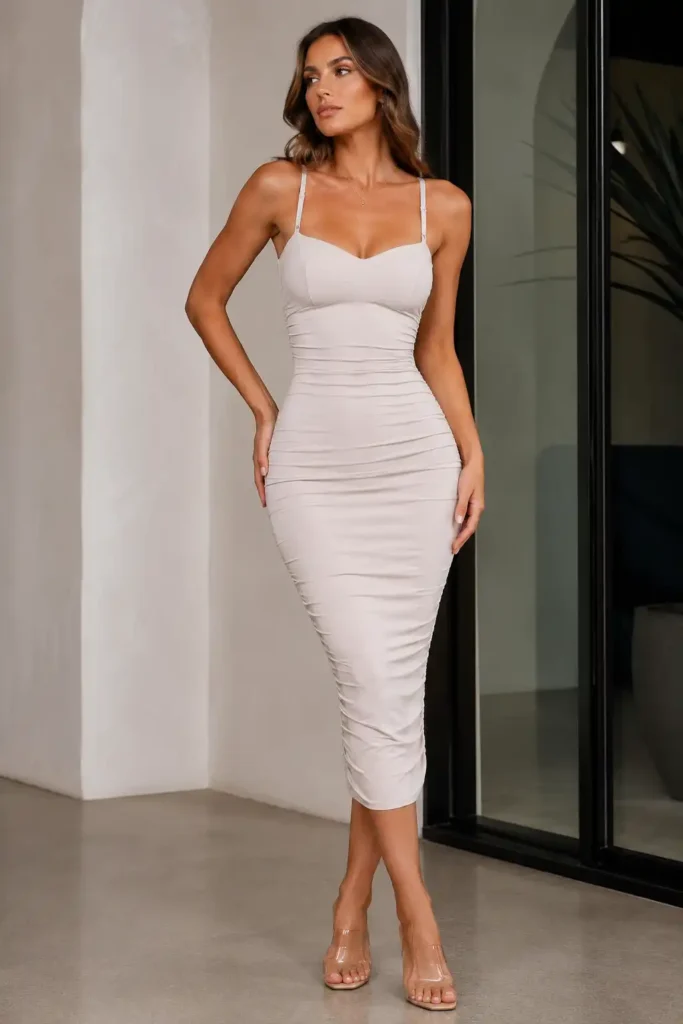
Bodycon Strap Dresses
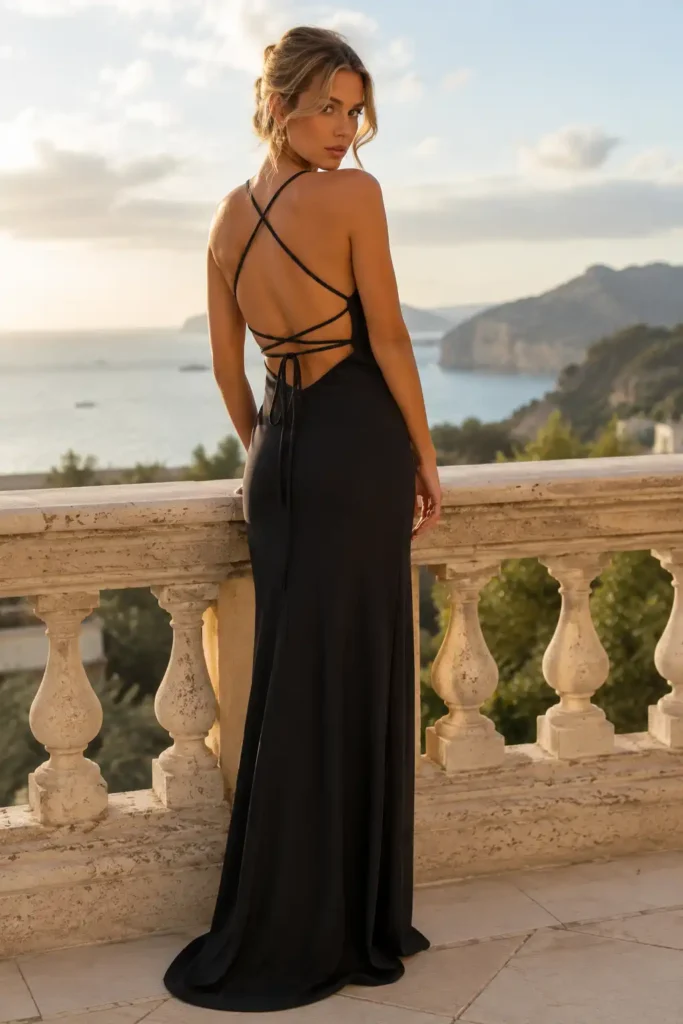
Backless Strap Dresses

Ruched Strap Dresses
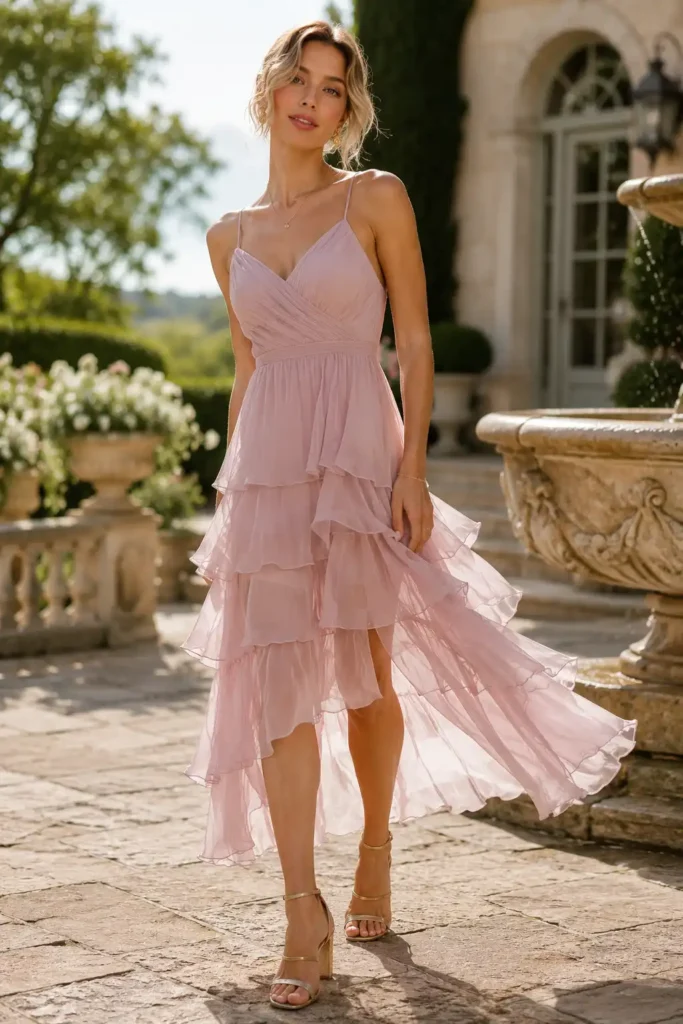
Chiffon Layered Dresses
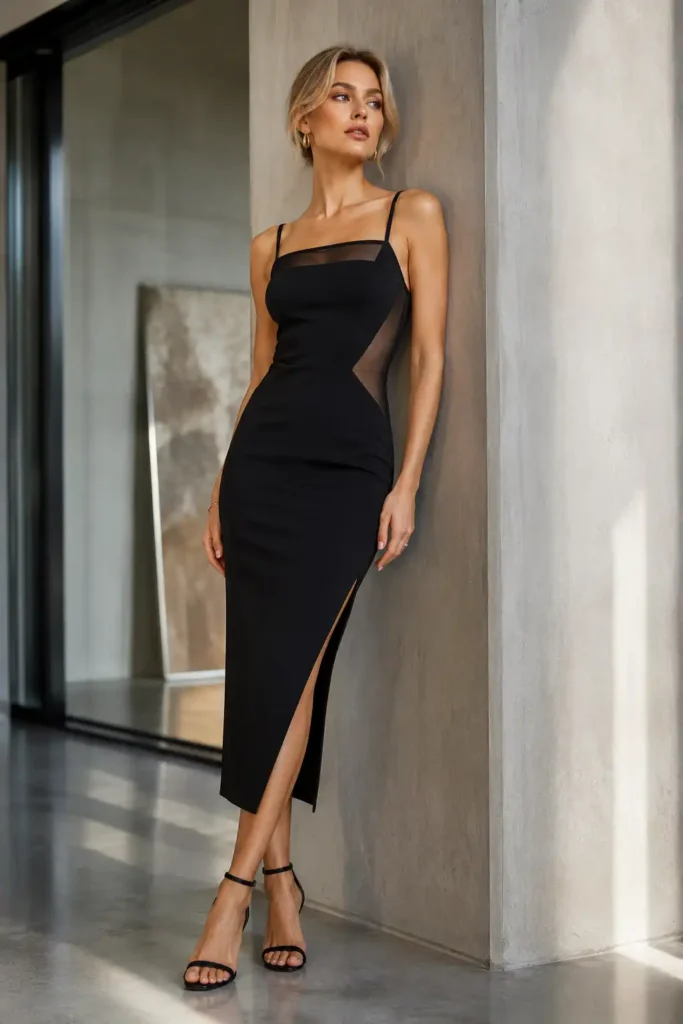
Mesh Panel Dresses
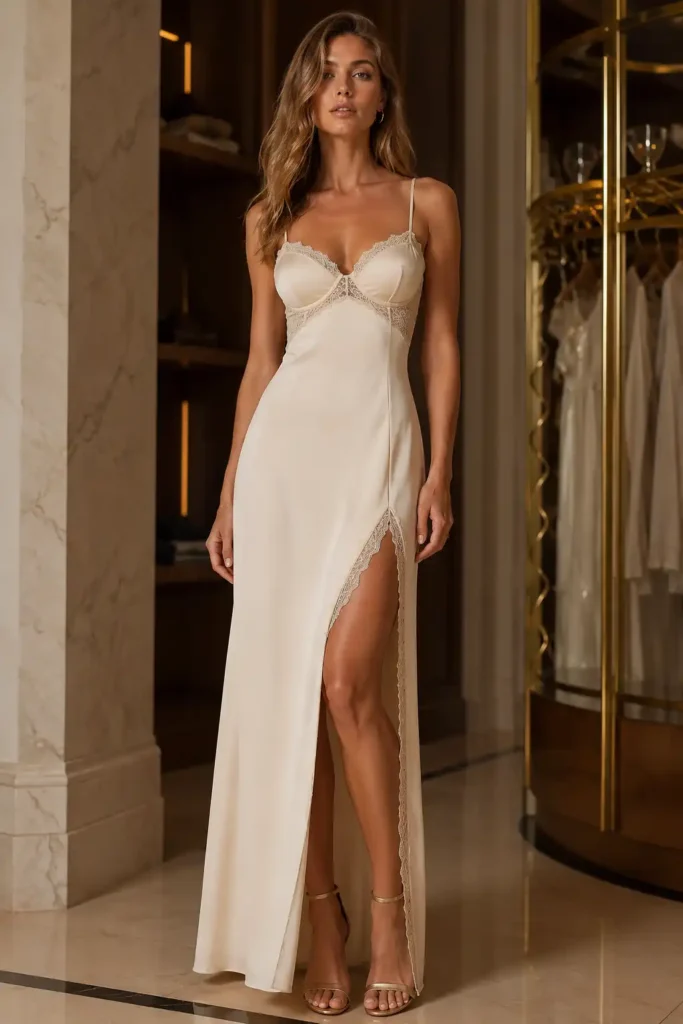
Lingerie-Inspired Dresses
Commercial Directions for Adjustable Strap Dress Collections

Party and Night-Out

Resort and Vacation
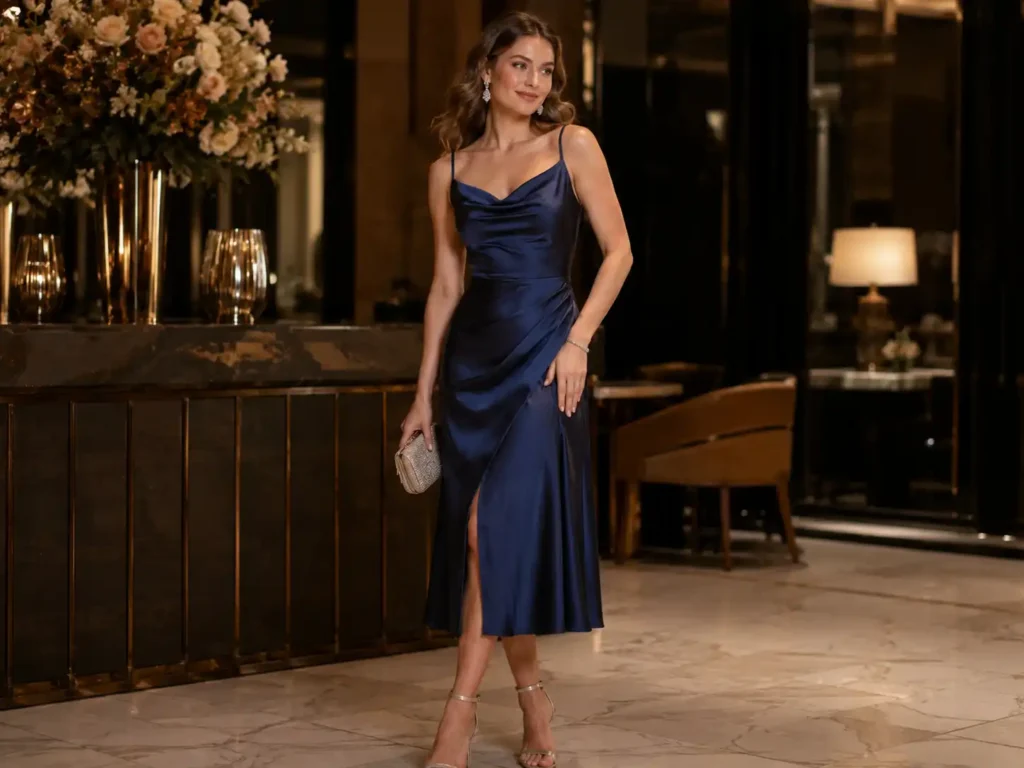
Occasion and Cocktail
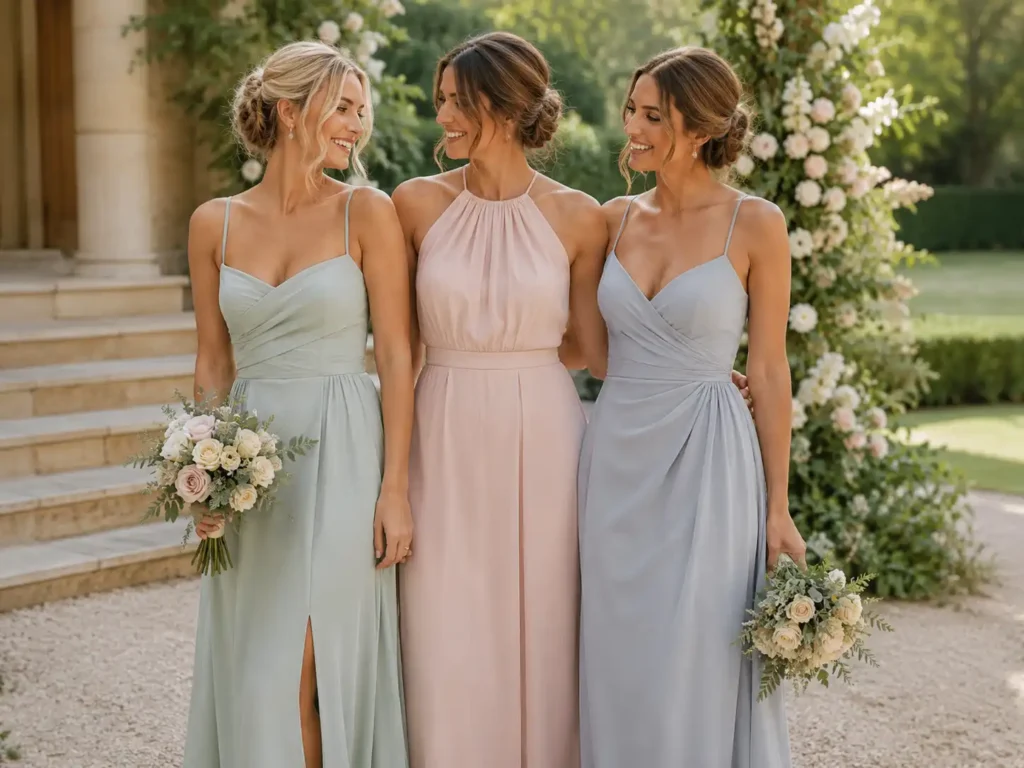
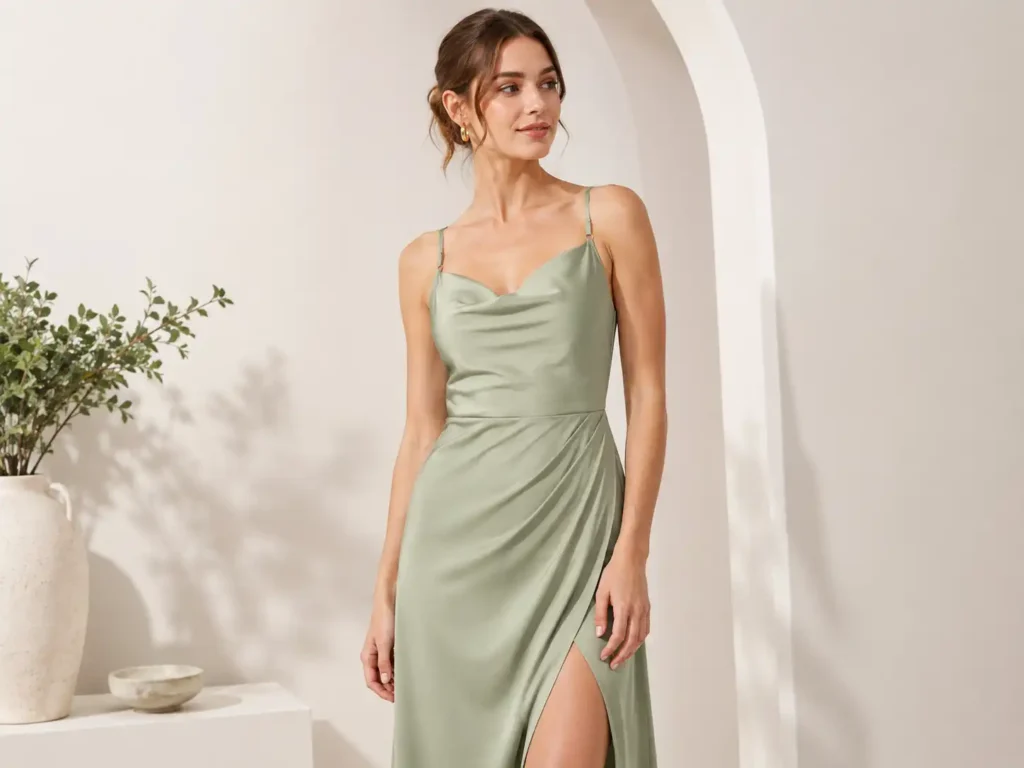
Bridesmaid Collections
Premium Ecommerce

Seasonal Fashion Drops
Adjustable Strap Systems for Different Dress Structures

Single Adjustable Strap
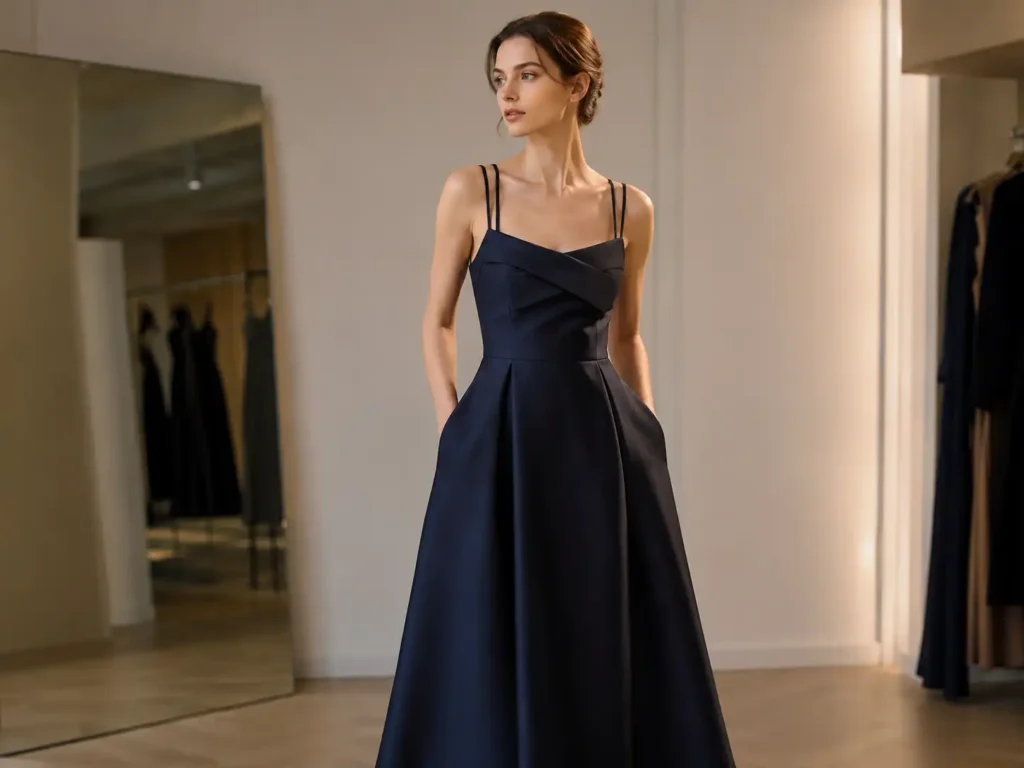
Double-Strap Construction

Cross-Back Adjustable Strap
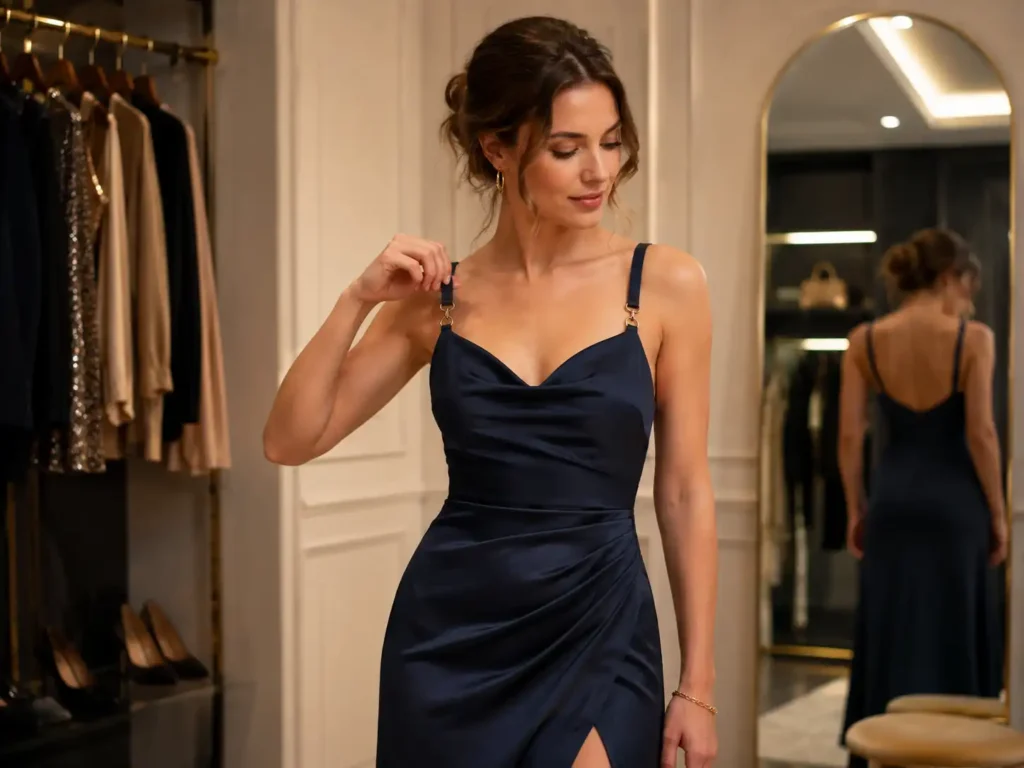
Detachable Strap System

Tie-and-Slider Combination

Elastic-Integrated Strap
Slider, Ring and Hardware Decisions That Affect Fit
Hardware is a functional component, a visual detail and a quality risk. Material, finish, geometry and opening size must be approved together with the finished strap.
Metal Sliders and Rings
Metal hardware gives a refined appearance and works well for satin, occasionwear and premium fashion programs. The review covers plating color, surface smoothness, weight, edge condition, skin contact and resistance to visible rubbing. A heavy metal part can pull on a fine strap, while a sharp inner edge can damage the fabric over repeated adjustment.
Color direction may include silver, gold, gunmetal, rose gold, black or a project-specific plated tone. Shade approval is especially important when hardware must coordinate with zipper teeth, hooks, decorative chains or branded trim. Production uses the approved physical sample rather than a color name alone.
Plastic and Coated Hardware
Plastic hardware can reduce weight and may suit casual, resort, swim-inspired or lightweight dress directions. Mold quality, color uniformity, flexibility and surface finish influence both appearance and function. Coated options can provide a softer color match but require checking for rubbing and coating loss.
Hardware is not selected only by unit cost. The correct decision balances visual value, strap performance, supplier MOQ, color availability and expected handling. A lower-cost part that slips or scratches the wearer creates a larger commercial risk than the initial saving.
Custom Logo Hardware
Logo sliders, rings or small branded metal parts can strengthen product identity. Custom hardware normally involves drawing confirmation, mold or tooling review, finish samples, minimum production requirements and a longer approval route. Logo readability must be balanced against part size and strap width.
For a first program, brands may begin with approved standard hardware and move to logo hardware after the fit and product direction are stable. For a recurring core style, a custom part can be stored as a controlled trim with drawings, color references and approved samples.
Functional Approval Points
- Finished strap width must remain consistent through the slider.
- Strap thickness must move without jamming while holding the selected position.
- Hardware orientation must match on left and right sides.
- Edges and seams must not catch inside the slider.
- The adjustment tail must remain neat at minimum and maximum settings.
- Hardware must not sit at an uncomfortable point on the shoulder or back.
Engineering the Strap Length and Adjustment Range
The effective adjustment range is not the difference between two arbitrary strap measurements. It is the range in which neckline position, bust coverage, armhole comfort and dress balance remain acceptable.
Start from Wearing Positions
Development checks at least three strap positions: short, middle and long. The short position should not pull the armhole upward, compress the bust or shift the waistline above the intended level. The long position should not create excessive neckline exposure, side gaping or back instability. The middle position is usually the target fit for the base size.
A strap may offer 80 mm of physical travel, yet only 50-60 mm may be commercially useful once fit limits are considered. The approved range therefore comes from wearing tests and pattern measurements rather than hardware capacity alone.
Match Width to Load
Fine 6-10 mm straps suit delicate visual directions but concentrate load and show variation quickly. Medium 12-18 mm straps provide more stability for lined, ruched or longer dresses. Wider 20-25 mm straps can support heavier fabrics, larger sizes or a more graphic fashion look.
Width selection also affects slider size, seam method, turning process, attachment reinforcement and cost. A strap that is visually elegant but unable to support the garment is not an acceptable development result.
Control Front and Back Angles
The front attachment affects neckline shape and bust coverage. The back attachment influences shoulder stability, side-body tension and whether the strap tends to slide outward. Moving a strap only 8-12 mm can change the wearing result significantly on a fine dress.
Pattern marks, sewing guides and measurement references are used to keep left and right positions consistent. Cross-back and low-back designs require additional review because the load direction is diagonal rather than vertical.
Grade by Size, Not Guesswork
Base-size approval is followed by a grading review. XS-XL may use different strap increments from bust and body-length increments.
Extended sizes can require a revised attachment position, added reinforcement or increased strap width.
Petite and tall options may need separate body-length rules so the strap is not used to correct an unrelated length problem.
Bust, Neckline and Armhole Control Must Work Together
Upper-body fit decides whether an adjustable strap dress feels secure or exposes more than intended. Bust shape, neckline depth and armhole coverage are reviewed as one system from first sample through bulk inspection.
Bust Coverage and Support
Bust control begins with upper bust, full bust and under-bust relationships. A loose upper bust can cause neckline gaping even when the full bust measurement is correct. A narrow cup or incorrectly placed dart can push the wearer upward and change strap tension. Support options may include shaped seams, fixed cups, soft lining, elastic, under-bust seams or internal panels.
For lingerie-inspired and low-neck products, the objective is controlled fashion exposure, not uncontrolled movement. Strap adjustment can refine the fit, but it cannot correct an incorrect bust pattern. Fit comments are separated into pattern changes, strap changes and support changes so each issue is solved at the correct level.
Neckline Depth and Shape
V-neck, square-neck, scoop, cowl and straight necklines react differently to strap movement. A cowl needs enough fabric to drape while maintaining side control. A straight neckline needs stable upper-bust tension. A deep V may require internal support or a controlled front opening.
Measurement records include neckline depth from a defined reference point, not a visual estimate. During sample review, the neckline is checked at standing, walking and seated positions.
Any change to strap length, cup position or back height is reviewed for its effect on the neckline.
Armhole and Side Coverage
Armhole depth is especially sensitive in slip dresses and low-back styles. Excess depth can reveal the bra line or side bust; insufficient depth can restrict movement and pull the neckline. Lining must follow the approved coverage without rolling outward.
The side seam, armhole curve and strap position are measured together. For larger bust sizes, added front length or bust shaping may be needed so the side seam remains vertical. Extending the strap alone would lower the entire upper body and worsen coverage.
Back Height and Stability
A low back changes where the strap can resist outward movement.
Smocking, elastic, a zipper, tie detail or shaped back panel may provide additional stability.
Back height is checked against the intended bra direction, wearing occasion and visual design.
Fabrics Selected for Stable Adjustable Strap Dresses

Satin

Chiffon

Crepe

Viscose
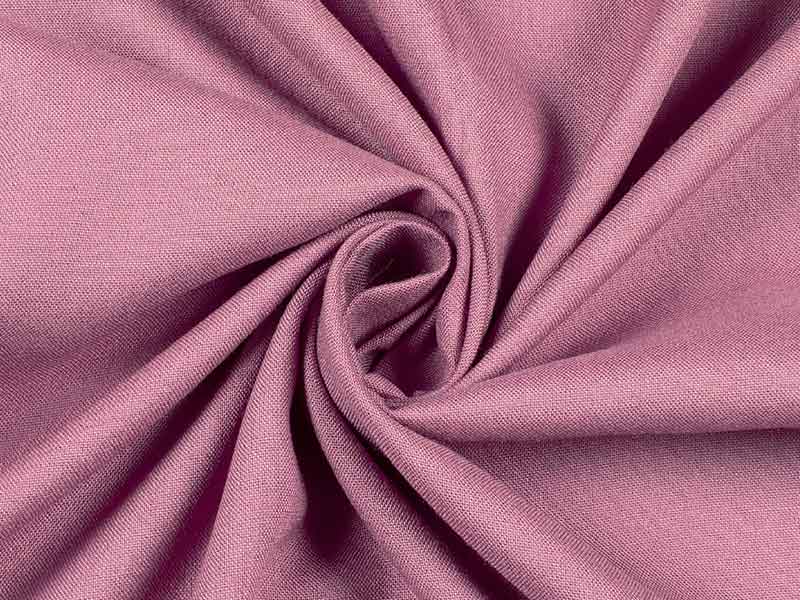
Rayon

Jersey

Mesh

Stretch Woven
Lining, Support and Closure Options for Better Fit
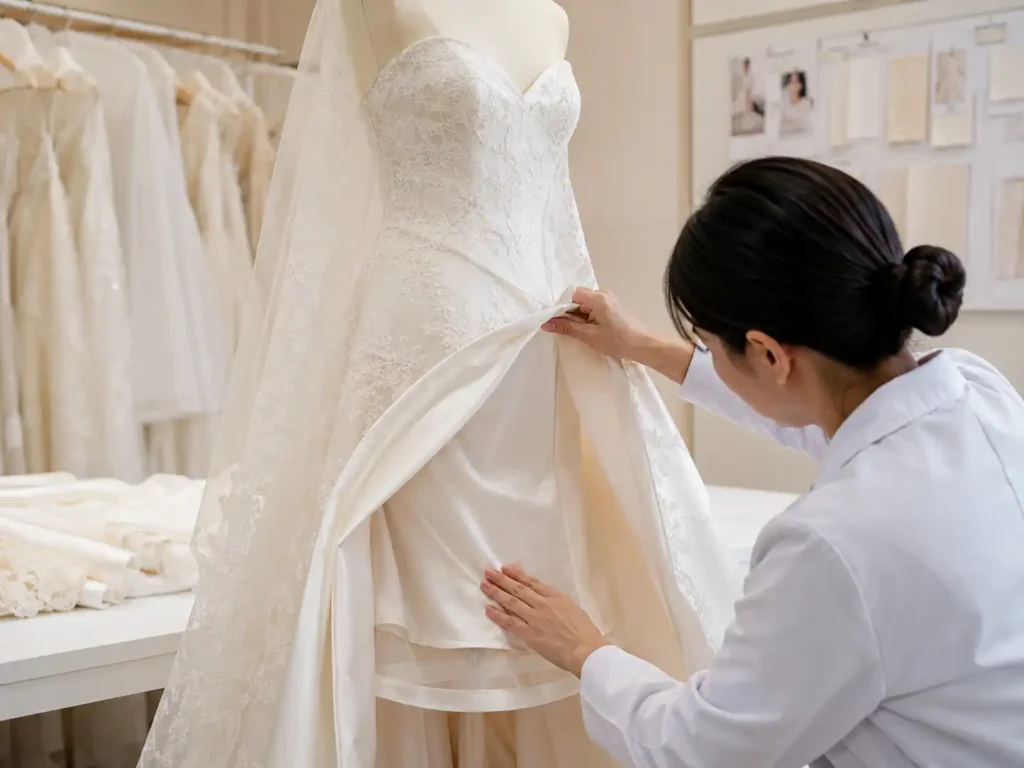
Full Lining
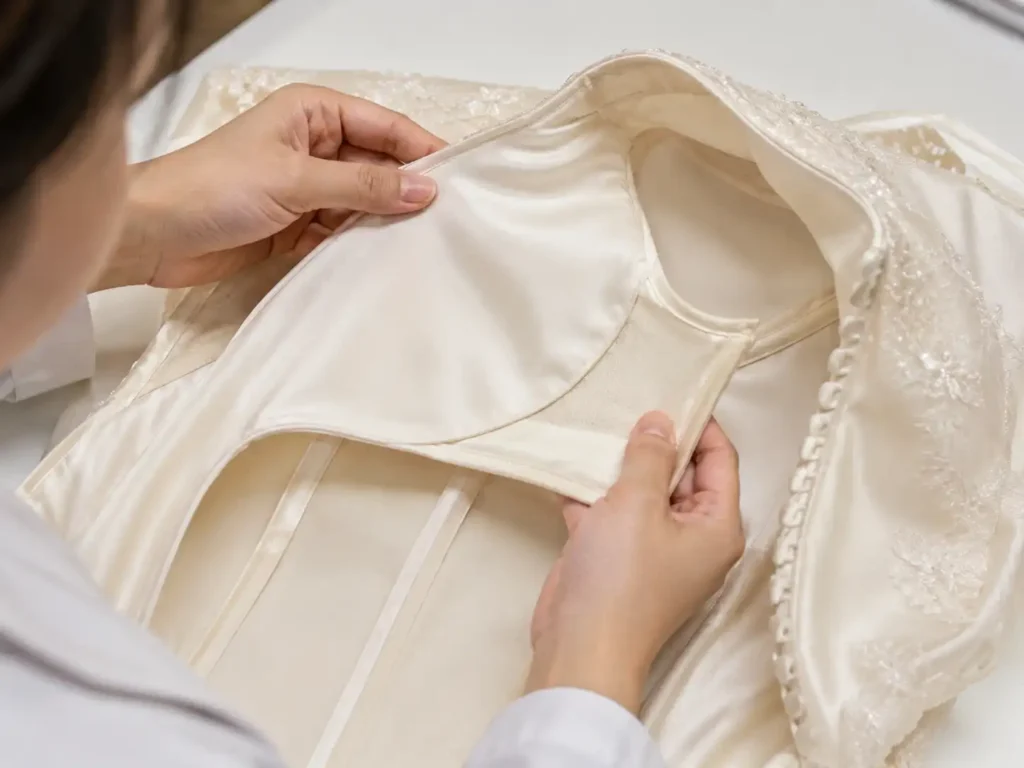
Bust Lining

Fixed Bra Cups

Back Shirring
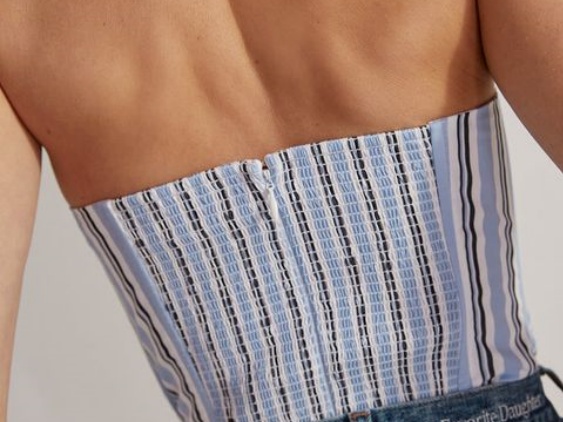
Invisible Zipper
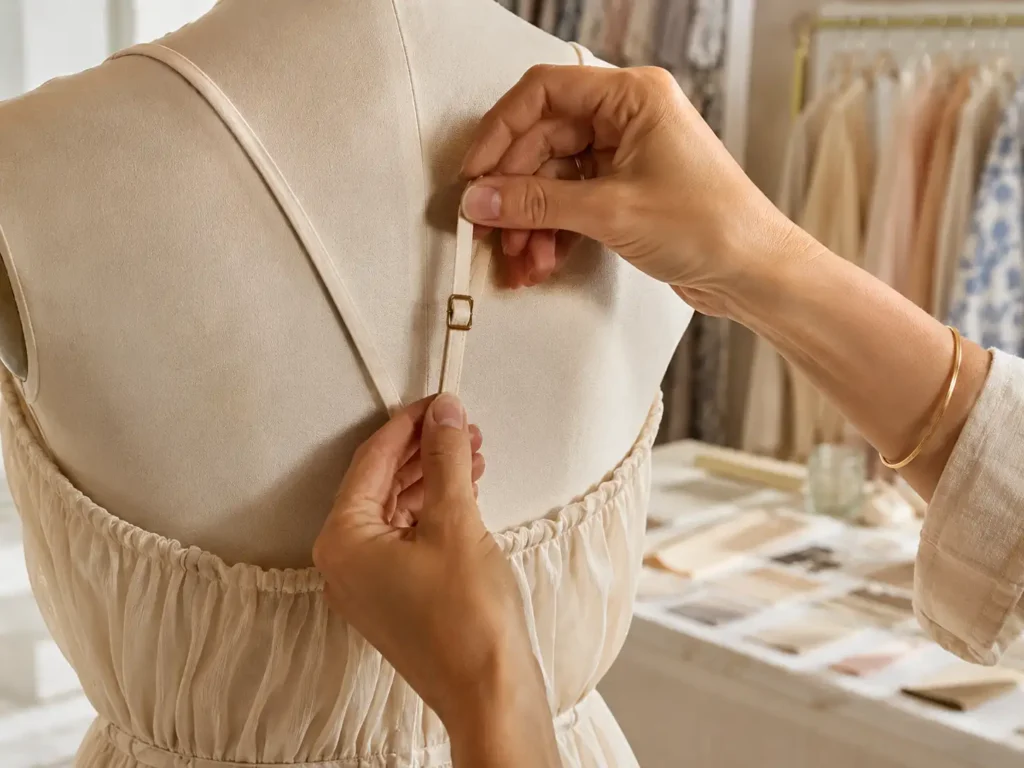
Hook, Tie or Open Back
Measurement and Grading Controls for Strap Dress Production
| Measurement Point | Development Purpose | Sample Review | Bulk Control |
|---|---|---|---|
| Strap finished length | Sets the base wearing position | Measure left and right before fitting | Check against approved size specification |
| Effective adjustment range | Defines usable shortest and longest settings | Test coverage and comfort at three positions | Verify slider travel and holding position |
| Front strap position | Controls neckline shape and bust support | Review on body and against pattern marks | Measure from defined neckline reference |
| Back strap position | Controls shoulder stability and side tension | Check slipping and back balance | Verify placement marks before and after sewing |
| Upper bust | Controls neckline contact | Check gaping at standing and movement | Garment measurement by size |
| Full bust | Controls body volume and cup relationship | Fit on approved model or form | Measure with garment closed and relaxed |
| Armhole depth | Controls side coverage and movement | Review side bust and underarm comfort | Measure from defined high point |
| Neckline depth | Controls exposure and visual proportion | Check at approved strap setting | Compare with PP and Golden samples |
| Front body length | Controls waistline and hem balance | Compare at short, middle and long settings | Measure from agreed high point |
| Back height | Controls low-back stability | Review with closure and strap route | Check center-back and side-back references |
| Lining coverage | Prevents transparency and rolling | Check during movement and under light | Visual and measurement inspection |
| Finished dress length | Protects commercial length intent | Review with intended footwear direction | Measure after pressing and hanging recovery |
Information Needed for Accurate Development and Quotation
Design References
Fabric Direction
Strap and Hardware
Size and Fit
Quantity and Timing
Private Label and Packing
From Design Review to Approved Production Sample
Adjustable strap dresses move through defined sample stages. Each stage has a separate purpose, and bulk production begins only after structure, fit, materials and workmanship are approved.
Project and Feasibility Review
The first review covers product category, fabric direction, strap system, hardware, lining, closure, size range, quantity, target price and delivery window. Risks are identified before pattern work begins. A reference image may look simple while hiding bias cutting, cowl shaping, fine strap turning or difficult hardware sourcing.
Pattern Development
The pattern maker converts the design and size information into a production-oriented base pattern.
Bust, neckline, armhole, front and back length, waistline and strap positions are established together.
Seam allowance, lining and reinforcement are included according to the intended construction.
First Sample
The first sample verifies silhouette, proportion, fabric behavior and construction feasibility.
It is not automatically the bulk standard.
The sample may reveal that the strap angle, adjustment range, cowl depth, lining, zipper or body length needs correction.
Fit Sample and Revision
Fit comments are organized by measurement, pattern, construction, fabric and trim. Revised samples confirm corrections rather than hiding them through temporary styling.
For multi-style collections, priority styles can be reviewed first to establish shared fabric, hardware and workmanship direction.
Photo-Ready or Salesman Sample
Where required, photo-ready or salesman samples are prepared after the main fit direction is stable. Visual finishing, color, label and presentation are important, but a photo sample does not replace PP approval when bulk specifications are still open.
PP Sample Approval
The PP sample locks the production version: fabric, color, hardware, strap width, adjustment range, pattern, measurements, construction, labels and packing direction.
Any change after approval must be reviewed for cost, material and schedule impact.
Golden Sample Sealing
A sealed Golden sample gives production and QC a physical reference.It is used with the size specification, BOM, workmanship file and packing requirements. Repeat orders can start more efficiently when approved records remain unchanged and materials are available.
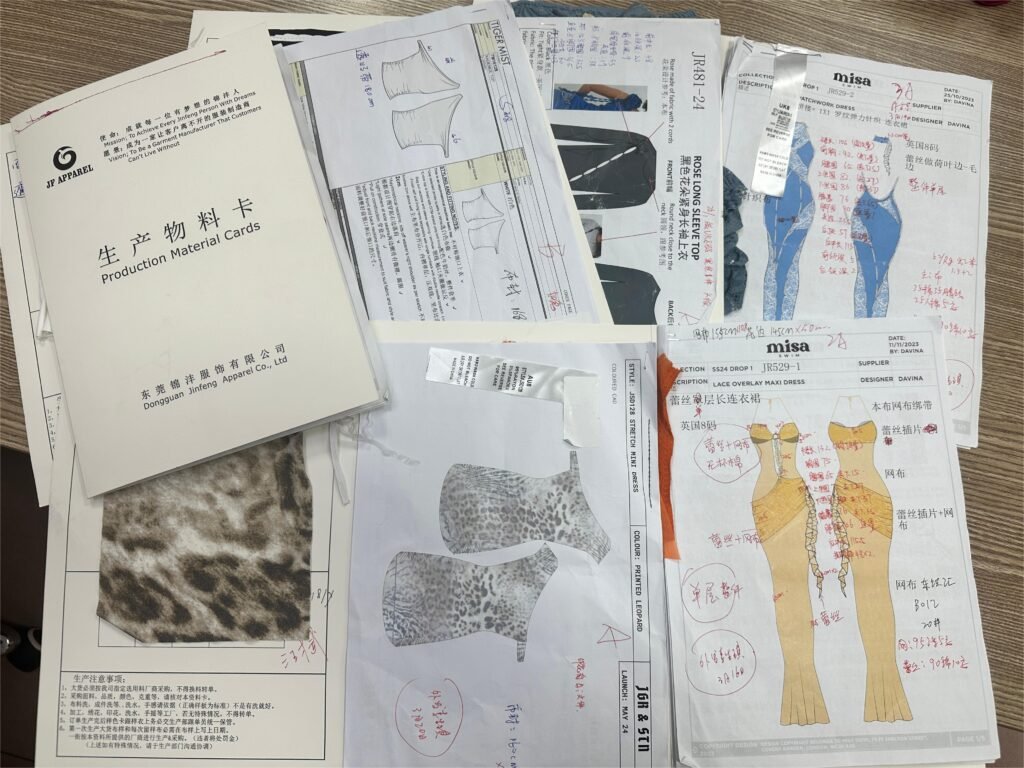
Fit Comments Become Controlled Pattern Corrections
Fit feedback is valuable only when it is translated into measurable and repeatable changes. Jinfeng Apparel separates visual comments from pattern causes so the approved result can be reproduced in every size.
Classify the Problem Correctly
A low neckline may come from a long strap, insufficient upper-bust control, a low front attachment, excess front-body length or weak back stability. Shortening the strap can appear to solve the issue while creating a tight armhole or high waistline. Each comment is traced to the pattern or construction cause before revision.
Comments are organized into categories such as measurement, balance, support, coverage, construction, trim and appearance. Photos are most useful when paired with arrows, measurement differences and a clear wearing position.
Update Pattern and Specification Together
After approval, pattern changes and measurement changes must match.
Moving a strap attachment without updating the placement reference creates bulk inconsistency.
Changing cowl depth without revising front-body length can affect the neckline and hem.
Jinfeng Apparel updates the related production information rather than relying on verbal instructions.
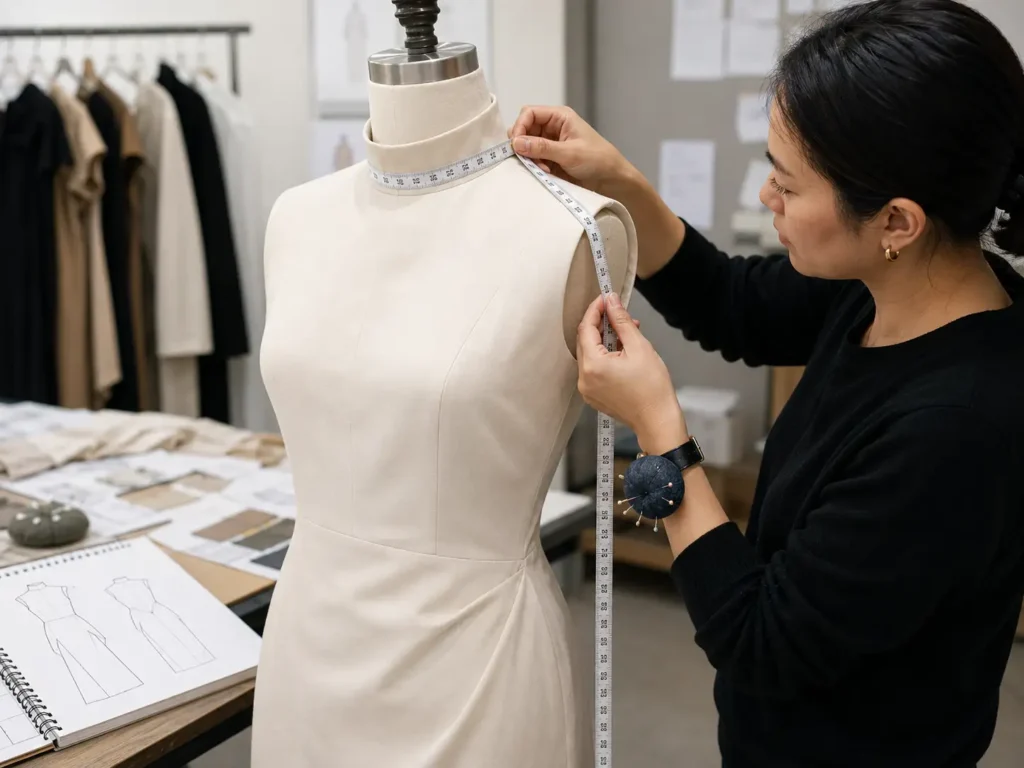
Workmanship Details That Protect Strap Function and Appearance
Fine straps reveal every inconsistency. Clean turning, stable width, correct threading and reinforced attachment separate a refined dress from a garment that looks inexpensive or fails during wear.
Consistent Strap Width
The finished strap must pass through the approved slider without jamming or excessive movement. Cutting width, seam allowance, turning method and pressing determine the result. Left and right straps are compared for width, thickness and surface condition.
Clean Strap Turning
Fine straps can twist, rope or show irregular seam allowance after turning. Fabric sensitivity and strap width determine the appropriate process. Satin and lightweight fabrics need controlled handling to avoid shiny pressure marks, pulled threads or uneven edges.
Correct Hardware Threading
The strap route through the slider and ring must create holding friction while allowing smooth adjustment. Incorrect threading can make the slider decorative rather than functional. Orientation is checked against the approved sample on both sides.
Reinforced Attachment
Reinforcement is placed according to fabric strength and garment load. Options can include enclosed backstitching, bar tack, internal tape, lining support or a wider seam base. Reinforcement should be secure without creating a hard visible patch.
Symmetrical Placement
Small position differences can make the neckline appear uneven. Front and back attachment marks are controlled during cutting and sewing. Measurement is taken from defined garment references rather than the raw edge alone.
Smooth Lining Integration
Lining should conceal attachment work, prevent rough edges and remain aligned with the shell. It must not pull the neckline inward or roll outward. Fine strap ends are finished so bulky layers do not interfere with hardware movement.
Controlled Strap Tail
The loose tail should remain neat throughout the approved range. Excess tail can look unfinished, while insufficient tail can pull through the slider.
Tail length and end finishing are approved during sample development.
Final Pressing and Protection
Pressing temperature, pressure and handling are matched to the shell and hardware. Metal parts should not mark satin, mesh or delicate fabrics. Finished garments are packed so sliders and rings do not press into visible surfaces during transport.
Bulk Production Flow for Adjustable Strap Dresses
Material Inspection
Fabric Preparation
Pattern and Marker
Cutting Control
Strap Preparation
Sewing Assembly
Garment Inspection
Pressing and Finishing
Private-Label Packing
Quality Control for Adjustable Strap Dress Orders
| QC Point | Inspection Focus | Common Failure | Control Method |
|---|---|---|---|
| Shell and lining | Color, defects, handfeel and compatibility | Shade variation, snagging, mismatched stretch | Incoming material review and shade grouping |
| Slider and ring | Size, finish, color and edge condition | Wrong color, rough edge, plating issue | Approved trim comparison and visual check |
| Strap width | Consistency through hardware | Jamming, twisting, loose holding | In-process width check |
| Strap length | Left-right balance and size standard | Uneven neckline, insufficient range | Measurement against specification |
| Adjustment range | Usable short, middle and long positions | Excess exposure or restricted movement | Functional wearing and measurement review |
| Holding stability | Slider remains in selected position | Strap creeps during wear | Pull and movement test based on project standard |
| Front strap position | Neckline and bust relationship | Asymmetry, neckline distortion | Placement measurement from defined references |
| Back strap position | Shoulder and back stability | Strap slips outward | Position and fit review |
| Attachment strength | Secure seam and reinforcement | Seam tearing or fabric damage | Seam inspection and project-specific pull review |
| Bust and upper bust | Coverage and contact | Gaping, compression, cup misplacement | Garment measurement and fit reference |
| Armhole depth | Side coverage and movement | Side bust exposure or tight underarm | Measurement and visual inspection |
| Neckline depth | Approved visual and coverage level | Too low, uneven or stretched | Measurement against PP sample |
| Lining | Coverage, smoothness and attachment | Rolling, exposure, pulling | Inside and outside garment review |
| Closure | Smooth operation and alignment | Zipper bulging, hook failure | Functional test and seam check |
| Finished length | Commercial length and balance | Uneven hem or size drift | Post-pressing measurement |
| Packing | Label, barcode, SKU and protection | Wrong label, missing barcode, hardware marks | Packing QC and carton audit |
A Structured Team Behind Every Dress Program
Project Contact
7+ Pattern Makers
2 Sample Rooms
20+ Sample Machinists
12+ Merchandisers
Production Network
15+ QC Inspectors
30+ Finishing Staff
Private Label Packing for Retail-Ready Dress Delivery

Brand Labels

Hangtags and Fasteners
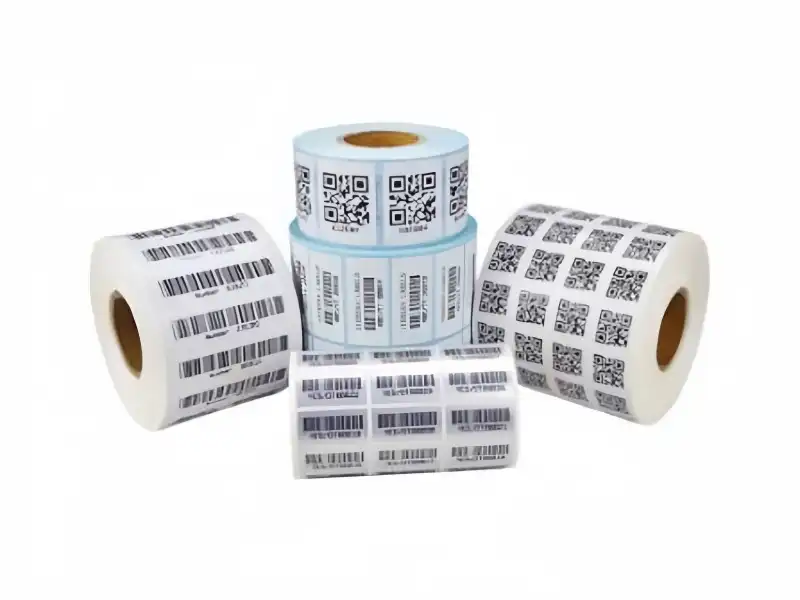
Barcode and SKU

Polybag and Tissue
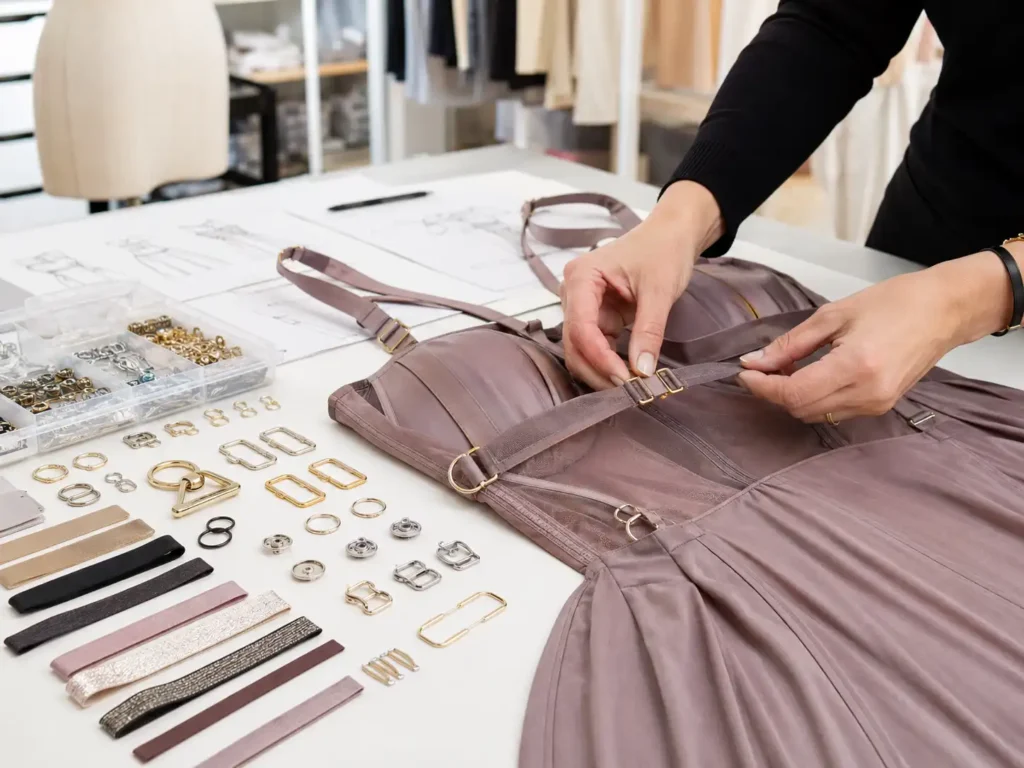
Hardware Protection

Carton and Delivery Files
MOQ, Costing and Project Schedule Explained Clearly
MOQ by Style and Color
MOQ starts from 200 pcs per style/color. One style in black at 200 pcs forms one standard production unit. One style split into 100 black and 100 white does not normally meet the per-color requirement. Multiple styles totaling 200 pcs also do not form a standard MOQ.
Custom-dyed fabric, custom printing, certified materials, special lace, sequins, logo hardware, molded trim or special packaging may carry separate supplier minimums. A 10-30-style collection should therefore be planned by fabric group, color group and commercial priority rather than divided into many very small variants.
Cost Structure
Quotation reflects shell fabric, lining, sliders, rings, support materials, zippers, labels, pattern work, sample development, cutting, sewing time, finishing, QC, packing, expected loss, testing where required and logistics arrangements. Construction changes can influence cost even when the outside appearance seems similar.
Cost control focuses on protecting brand-level appearance. Options may include using an approved standard slider instead of logo hardware, grouping styles around one fabric, reducing unnecessary lining complexity or adjusting internal construction without changing the visible design intention.
Schedule Control
A project schedule is confirmed after fabric, hardware, sample requirements, approval route, order quantity, packing and delivery conditions are reviewed. First sample, fit revision, PP approval, material booking, bulk production, QC, packing and shipment are separate milestones.
Multi-style programs are often divided into priority groups. Hero styles and photo samples can move first, while later styles follow shared fabric and workmanship approvals. Delayed fabric approval, late packaging files or design changes after PP approval can move the production plan, so timing decisions are recorded early.
NDA, Design Protection and Controlled Project Records
Design Protection
Controlled Internal Access
Anonymous Case Practice
Adjustable Strap Dress Programs Managed at Collection Scale
United States Partywear Collection
- Program scope: 18 adjustable strap styles across satin mini dresses, ruched party dresses and mesh-panel bodycon dresses. Total order quantity: 24,600 pcs across four core colors and an XS-XL size range.
- Development challenge: The original concepts used one slider size across straps ranging from 7 mm to 16 mm. Early fitting showed slippage on fine satin straps and restricted movement on the wider ruched styles. Several necklines also moved too far between the minimum and maximum settings.
- Jinfeng solution: Hardware was grouped into two approved size systems. Strap ranges were reduced to the usable fit window rather than the full hardware travel. Front attachment points were corrected on five styles, while three bodycon styles received revised armhole and upper-bust grading. The program used three sample rounds for the high-risk styles and two rounds for the remaining styles.
- Production control: PP samples locked hardware finish, threading route, adjustment range and packing position. Bulk QC included strap-width checks, left-right length comparison, neckline measurement and hardware function review. Ex-factory delivery was completed in two planned waves over a nine-week production window after final PP approval.
- Result: The collection moved with one shared gold-tone hardware direction while maintaining two functional slider specifications. Retained trim and pattern records supported a later repeat-order review.
Australian Resortwear Program
- Program scope: 12 maxi and midi styles in printed viscose, solid rayon and lightweight crepe. Total order quantity: 31,200 pcs across six print or color directions and an AU size range equivalent to XS-XL with selected extended sizes.
- Development challenge: Long skirt weight pulled the front neckline down on four maxi styles. The printed viscose also showed dimensional change after preparation, affecting finished length and back balance. One low-back design allowed the straps to move outward during walking.
- Jinfeng solution: Strap width increased from 8 mm to 12 mm on the heaviest maxi group. Front-body length and back strap positions were corrected, while a concealed stabilizing section was added to the low-back style. Fabric relaxation and shrinkage findings were applied before bulk cutting. Hero styles completed three sample stages; commercial carryover shapes completed two.
- Production control: Print and shade groups were separated, critical strap marks were included in cutting control, and finished lengths were measured after pressing and recovery. The program used air shipment for the first photo and launch quantity, followed by the main sea shipment with separated SKU cartons.
- Result: Twelve coordinated styles reached one launch calendar without using one construction solution for every silhouette. The brand retained the approved maxi strap system for a later seasonal color update.
United Kingdom Occasionwear Range
- Program scope: 24 satin, chiffon and crepe occasion dresses, including bridesmaid, cocktail and cowl-neck styles. Total order quantity: 62,400 pcs across eight colors, multiple size ratios and three delivery groups.
- Development challenge: Hardware color needed to remain consistent across shell fabrics with different undertones. Extended sizes required more bust volume and different strap positioning, while the brand wanted the visible strap widths to remain visually aligned across the range.
- Jinfeng solution: Physical hardware standards were approved against each fabric group rather than by color name alone. The base grading was revised for upper bust, armhole and front length, and selected extended sizes used additional internal reinforcement without changing the outside strap width. Three high-risk cowl and bridesmaid styles completed three sample rounds before PP approval.
- Production control: SKU files linked style, color, size, hardware and packing direction. QC checked strap function, neckline depth, lining coverage, finished length and hardware shade. Production and packing were released in three phases to match the brand’s warehouse and campaign schedule.
- Result: A 24-style range maintained one coordinated visual language while using product-specific fit and construction rules. The retained files created a clearer base for replenishment and new color development.
Why Brands Use Jinfeng for Strap Dress Development
Product Development, Not Catalog Selection
Fit Control, Not Slider Installation
Approved Standards, Not Verbal Memory
Frequently Asked Questions About Adjustable Strap Dresses
MOQ starts from 200 pcs per style/color. Final requirements depend on fabric availability, color development, sliders, rings, construction, private-label packing and production planning. MOQ is calculated by style and color rather than the total quantity across unrelated styles.
Yes. A reference image can be used for an initial product review. Clear front and back details, target fabric, length, size range, quantity and preferred fit help the team determine what must be developed. Protected designs should be used only with proper authorization.
Yes. Tech packs, size charts, BOM information, artwork and packing files allow a more accurate review. Any conflict between the drawing, measurements, fabric and construction is clarified before sampling.
An authorized original sample can be measured and analyzed for fabric, structure, seam construction, strap route, lining, closure and fit. Development can also include brand-specific corrections rather than making an uncontrolled copy.
Fine, medium and wider straps can be developed according to the design and material. Common project directions range from approximately 6 mm to 25 mm, but the final width must suit fabric thickness, hardware, garment load and intended appearance.
Yes. Jinfeng Apparel can review metal, plastic, coated and color-matched options. Availability, finish, MOQ, development time and function are confirmed for the selected project.
Standard finishes can be compared with the fabric, while custom color or plated directions require physical approval. A color name alone is not sufficient because fabric undertone and surface reflection affect the match.
Custom logo hardware can be evaluated. Tooling, drawing, size, finish, supplier minimum and approval timing need confirmation. Standard hardware may be more efficient for an initial run, while logo hardware can suit recurring core styles.
Strap width, thickness, surface friction, slider opening and threading route are reviewed together. The sample is tested at the approved adjustment positions, and bulk inspection checks strap width, hardware orientation and holding function.
Neckline depth is connected with upper bust, full bust, front-body length, armhole, back height and strap range. Fit review checks the garment at several strap positions rather than approving only one styled photograph.
Yes. Satin programs require control of surface handling, seam puckering, bias behavior, slider movement, lining, pressing and packing. The exact satin construction is reviewed before sample and bulk planning.
Yes. Production can follow the brand’s size chart, including alpha sizes, extended sizes, plus-size specifications and petite or tall adjustments. Larger sizes may require revised strap positions, reinforcement or grading rules.
Not every style needs full lining, but many satin, chiffon, mesh, light-color and occasion dresses benefit from full or partial lining. Lining choice depends on opacity, comfort, support, seam coverage and target appearance.
The route may include first sample, fit sample, revised sample, photo-ready sample, salesman sample, PP sample and Golden sample. PP approval is required before bulk standards are released.
Yes. Main labels, size labels, care labels, hangtags, barcode stickers, polybags, tissue, assortment packing and carton marks can be arranged according to the confirmed project. Packaging suppliers may have separate minimum requirements.
Yes. NDA-based cooperation can cover tech packs, samples, patterns, trims, labels, packaging, unpublished designs and order information. Public case descriptions remain anonymous unless authorization is provided.
Send the product image or tech pack, quantity by style/color, target fabric, size range, hardware direction, private-label packing, target delivery window and shipping destination. More complete information produces a more accurate evaluation.

Start Your Adjustable Strap Dress Project
Send your design files to Jinfeng Apparel for a structured review of fabric, strap construction, hardware, fit, sample requirements, MOQ, production risk, private-label packing and delivery planning. Clear project information allows the development team to identify issues before pattern work and provides a stronger basis for quotation and scheduling.
Please include:
- Reference image, sketch, line sheet, original sample or tech pack.
- Quantity by style and color, with the planned size ratio.
- Target fabric, color, print, lining and stretch direction.
- Preferred strap width, slider, ring, finish or logo hardware.
- Size chart, target market and any coverage or fit requirements.
- Label, barcode, packaging and warehouse instructions.
- Launch date, requested delivery window and shipping destination.