
What Is the Custom Clothing Development Process and How Does It Work from Idea to Production?

Your trusted Women’s Apparel Manufacturer from China
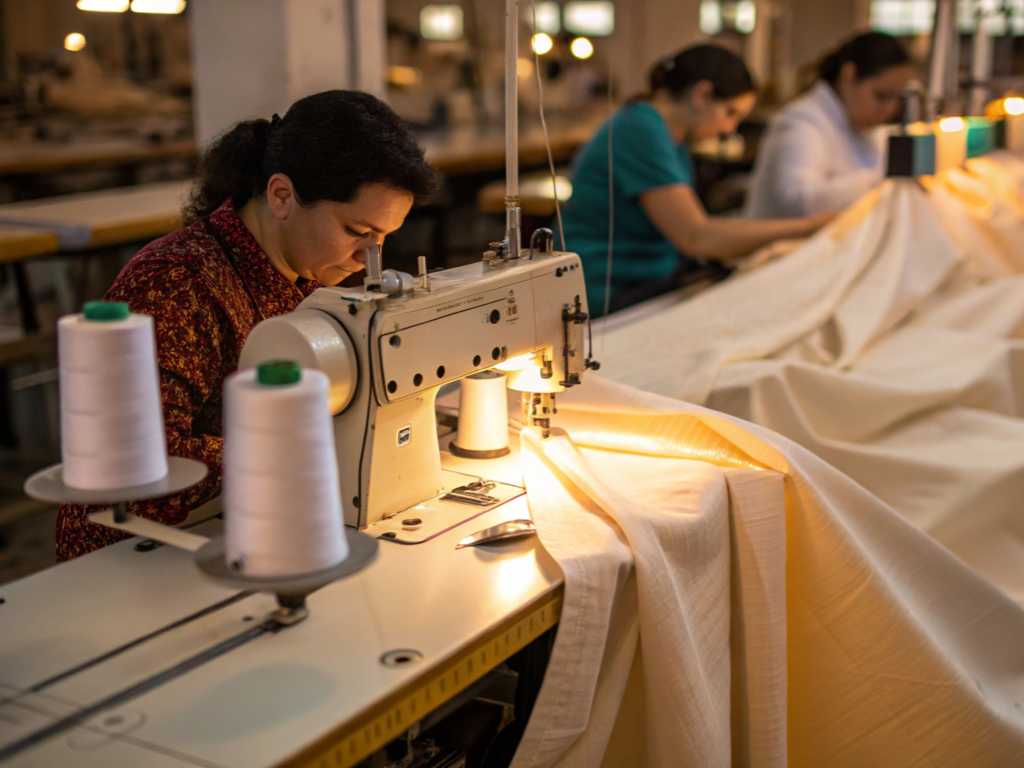
Bulk dress production is where a fashion idea either becomes a repeatable commercial product or turns into an expensive lesson. A beautiful sample can win a buyer’s attention, but the bulk order decides whether the style can survive real production: hundreds or thousands of garments, multiple sizes, several colors, different fabric rolls, different operators, pressing, packing, shipment booking, and warehouse receiving. For fashion brands, the real question is not only “Can this factory make my dress?” The smarter question is, “Can this factory reproduce the approved sample at scale without losing fit, fabric feel, stitching quality, color control, packaging accuracy, and delivery rhythm?”
Chinese dress factories manage bulk production by turning the approved sample into a controlled production system. They lock the PP sample, tech pack, measurements, fabric, trims, labels, packing method, cutting plan, sewing standard, QC checkpoints, and shipment files before mass production starts. The best factories manage bulk orders as projects, not as loose sewing work.
That is why experienced buyers do not only ask for a low unit price. They ask how the factory controls the gap between sample and bulk. Once fabric is cut, the cost of fixing mistakes rises quickly. A wrong waistline, twisted side seam, uneven hem, weak zipper, or incorrect care label may look small on one dress, but on 2,000 pieces it becomes a launch problem. The following article walks through how professional Chinese dress factories manage that risk from sample approval to final delivery.
What Does Bulk Dress Production Mean?
Bulk dress production means turning an approved sample, confirmed tech pack, fabric standard, size chart, trims, labels, and packing requirements into repeatable finished garments at commercial quantity. For fashion brands, it is not just sewing many dresses. It is a controlled process that protects fit, fabric performance, workmanship, branding accuracy, and delivery consistency from sample approval to shipment.
A clean, realistic fashion factory scene showing approved dress samples, tech packs, fabric swatches, measurement charts, and neatly organized production documents on a table, with dress production lines softly visible in the background, professional B2B apparel manufacturing style.
Sample to Bulk
A dress sample is often made by a skilled sample maker, with extra time spent on fit, balance, and finishing. Bulk production is different. The factory must make the same approved style again and again across multiple sizes, colors, fabric rolls, operators, and production days. That is where real production control begins.
A good Chinese dress factory will not treat the sample as a nice reference photo. It turns the approved PP sample into the physical standard for production. The pattern, size grading, fabric, trims, sewing methods, label placement, pressing method, folding method, and carton information should all be locked before cutting starts.
This matters because the most common bulk problems usually come from small early gaps. A waist seam that is not clearly measured may shift by 1-2 cm. A lining that is not defined may become too long or too short. A zipper that was smooth in the sample may wave in bulk if the seam tension is not controlled. These are not just small factory mistakes. They are signs that sample-to-bulk standards were not fully transferred.
For dresses, especially bodycon dresses, satin dresses, corset dresses, mesh dresses, party dresses, and occasionwear, the buyer is not only paying for fabric and sewing time. They are paying for the factory’s ability to repeat a visual and wearing effect at scale.
Dress Complexity
Dress production is more sensitive than many basic apparel categories because one garment often combines fit, silhouette, drape, stretch, lining, trims, and visible design details. A basic T-shirt may have fewer panels and fewer structure risks. A dress can involve bust shaping, waistline control, hip curve, skirt sweep, shoulder straps, invisible zippers, lining, boning, ruching, ruffles, lace, mesh panels, slits, pleats, and delicate hems.
Each detail affects bulk production. Satin can pucker if machine tension is wrong. Mesh can stretch during cutting. Lace can look uneven if motif placement is not planned. Bodycon dresses can lose shape if fabric recovery is unstable. Maxi dresses can look cheap if the hem is not balanced. Corset dresses need structure, not only a decorative seam.
That is why experienced production teams do not ask only, “Can we sew this?” They ask, “Can we repeat this cleanly across 200, 500, 1,000, or more pieces without changing the look?” The answer depends on the pattern, material, line assignment, sewing sequence, inspection points, and how quickly the factory reacts when issues appear.
Bulk Readiness
A style is ready for bulk production only when the technical, material, and commercial details are stable. In real factory work, “sample approved” is not enough if the buyer still expects changes. Before bulk starts, both sides should know exactly which version is approved, which comments are closed, which fabric is final, which measurements matter most, and which packing method will be used.
The safest pre-bulk stage usually checks four things: the garment standard, the material standard, the brand standard, and the delivery standard. If one of these is missing, the order can still move forward, but the risk rises quickly after cutting.
Bulk Control Areas
|
Control Area |
What Should Be Confirmed |
Practical Range or Checkpoint |
Risk If Missed |
|
PP sample |
Final approved physical sample |
1 approved reference sample per style/color if needed |
Bulk does not match approved look |
|
Measurements |
Size chart and tolerance |
Common tolerance often around +/-0.5-1.5 cm, depending on point and fabric |
Fit complaints and inconsistent sizing |
|
Fabric |
Quality, color, stretch, shrinkage, hand feel |
Bulk roll checked before cutting |
Shade, shrinkage, stretch, or drape problems |
|
Trims |
Zipper, elastic, lining, label, hangtag, thread |
Physical trim card or approved sample set |
Wrong trims or private-label errors |
|
Packing |
Polybag, barcode, carton mark, size ratio |
Confirmed before packing starts |
Warehouse receiving delays |
Buyer Mindset
A mature fashion buyer does not look at bulk production as a black box. They want to know how the factory prevents avoidable mistakes. They care about whether the factory can protect the approved fit, keep fabric behavior stable, manage size grading, control complex sewing, inspect finished garments, and prepare export-ready packing.
This is why serious buyers often ask questions that sound detailed: How do you control cutting for stretch mesh? How do you check satin shade? How do you prevent zipper waves? How do you manage multiple dress styles in one order? How do you save patterns for repeat production? These questions are not difficult for a real dress factory. They are normal.
The strongest factory relationship is usually not built on the cheapest quote. It is built on fewer surprises. If a factory can explain where bulk risks appear and how it controls them, the buyer can plan launches, photoshoots, warehouse receiving, and repeat orders with more confidence.
How Do Factories Start After Sample Approval?
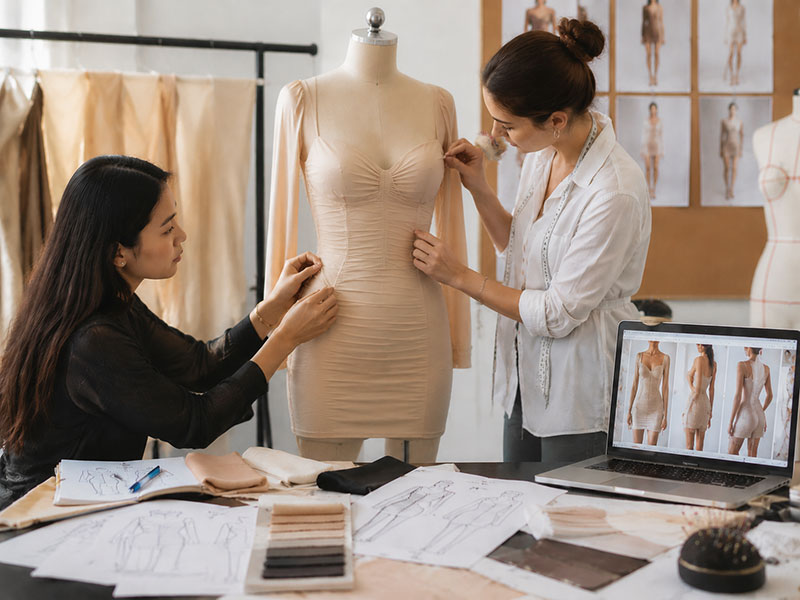
After sample approval, factories start by freezing the PP sample, updating the final tech pack, confirming measurements, checking fabric and trims, assigning a project owner, and planning the bulk timeline. A professional factory does not cut fabric immediately. It first makes sure the approved sample, production file, materials, QC points, packing rules, and delivery schedule all match.
A merchandiser and production supervisor reviewing an approved PP dress sample beside a tech pack, fabric swatches, trim card, and production calendar inside a modern Guangdong women’s apparel factory, realistic documentary style.
PP Sample Lock
The PP sample is the bridge between development and bulk production. In a well-managed factory, the approved sample is not only kept in the sample room. It is used by the merchandiser, pattern maker, production supervisor, sewing line, QC inspector, ironing team, and packing team as the main visual reference.
This is especially important for dresses because many details cannot be fully understood from a flat sketch. A neckline curve, bust shape, waist seam height, skirt drape, slit position, ruching tension, or strap angle is easier to judge against a physical sample. If the PP sample includes buyer comments, those comments must be closed before bulk starts. “Approved with changes” should never become “everyone remembers the changes.”
The factory should mark the approved version clearly. If there are several samples in the office, only one should be treated as the final production reference. When old samples stay on the table, old mistakes can quietly return. Good factories prevent this by controlling sample versions and keeping final comments in the production file.
Tech Pack Freeze
The final tech pack should work like a production contract between the buyer and factory team. It should include style number, flat sketch, garment photos, fabric information, trim details, measurement chart, size grading, construction notes, stitch requirements, label position, packing instructions, colorways, and order breakdown.
A tech pack does not need to be beautifully designed, but it must be clear. The most useful tech packs remove guesswork. They tell the factory which details are fixed, which details are flexible, and which parts need extra attention. For example, a buyer may allow a small lining adjustment but not allow any change to neckline depth. That priority should be written down.
Version control is also important. If the buyer sends five files named “final,” the factory may choose the wrong one. A practical file name such as “Style-218-Satin-Midi-PP-Approved-V4” is much safer. It helps the merchandiser, pattern team, cutting room, and QC team stay on the same page.
Timeline Planning
A realistic bulk timeline is built backward from the buyer’s required delivery date. The factory needs to reserve time for fabric purchasing, trim preparation, bulk fabric inspection, cutting, sewing, in-line QC, finishing, final inspection, packing, carton preparation, and shipment booking.
The time needed depends heavily on material availability and dress complexity. A simple woven dress in available fabric is very different from a multi-color lace dress, a custom-dyed satin dress, or a corset dress with special trims. Factories that give the same delivery promise for every style may sound convenient, but that can be risky.
A more reliable factory explains what affects timing. Common factors include fabric stock, dyeing time, custom print, trim lead time, order quantity, number of colors, size ratio, workmanship difficulty, current production schedule, inspection requirements, and shipping method. This allows the buyer to make better launch decisions instead of chasing an unrealistic date.
After Sample Approval Workflow
|
Stage After Sample Approval |
Typical Factory Action |
Why It Matters |
|
PP sample lock |
Mark final approved sample and close comments |
Prevents sample version confusion |
|
Tech pack freeze |
Update construction, measurements, trims, labels, packing |
Gives all teams one standard |
|
Material check |
Confirm fabric, trims, labels, lead time |
Avoids late material surprises |
|
Production plan |
Schedule cutting, sewing, QC, packing, shipment |
Protects launch calendar |
|
Responsibility setup |
Assign merchandiser or project owner |
Keeps communication clear |
Project Owner
Bulk production needs one responsible project owner because a dress order touches many teams. The buyer may talk to sales first, but the order still needs coordination with sourcing, sampling, pattern making, cutting, sewing, QC, packing, and logistics. If nobody owns the full order, the buyer may receive late or fragmented updates.
A good project owner tracks the order from sample approval to shipment. They confirm fabric arrival, trim status, production start date, cutting progress, in-line issues, QC results, packing photos, carton details, and delivery documents. For multi-style dress collections, this role becomes even more important because one delayed style can affect the whole launch.
For brands running seasonal dress drops, project ownership is not a luxury. It is the difference between chasing scattered answers and receiving structured production visibility. When communication is clear, buyers can adjust photoshoots, warehouse appointments, marketing calendars, and reorder planning with less stress.
Which Standards Keep Bulk Orders Consistent?
Bulk orders stay consistent when the factory controls the PP sample, pattern file, measurement tolerance, fabric standard, trim card, sewing method, QC criteria, label placement, packing rules, and reorder records. Consistency does not happen because workers are experienced. It happens because every important detail is written, measured, checked, corrected, and repeated during production.
A close-up editorial image of QC staff comparing finished dresses with a measurement chart and approved PP sample, showing tape measure, garment spec sheet, fabric swatch, trim card, and size labels on a clean inspection table.
Measurement Control
Measurements are one of the most practical ways to control bulk consistency. For dresses, the key points usually include bust, waist, hip, shoulder width, strap length, body length, skirt length, sleeve length, neckline drop, armhole, hem sweep, slit height, zipper length, and lining length.
Not all measurement points carry the same risk. On a bodycon dress, bust, waist, hip, and garment length may be critical because small differences can change fit. On a maxi dress, hem balance and lining length are more visible. On a corset dress, bust shape, waist seam, boning position, and back closure need tighter control. On a loose resort dress, some areas may allow more tolerance, but shoulder, neckline, and length still matter.
Factories usually apply tolerance ranges because fabric and sewing are not metal engineering. A common garment measurement tolerance may fall around +/-0.5 cm to +/-1.5 cm depending on the point, fabric, and style. Critical fit points should be tighter; non-critical areas may allow more room. The important thing is not to use one tolerance blindly for every dress.
Fabric and Trim Records
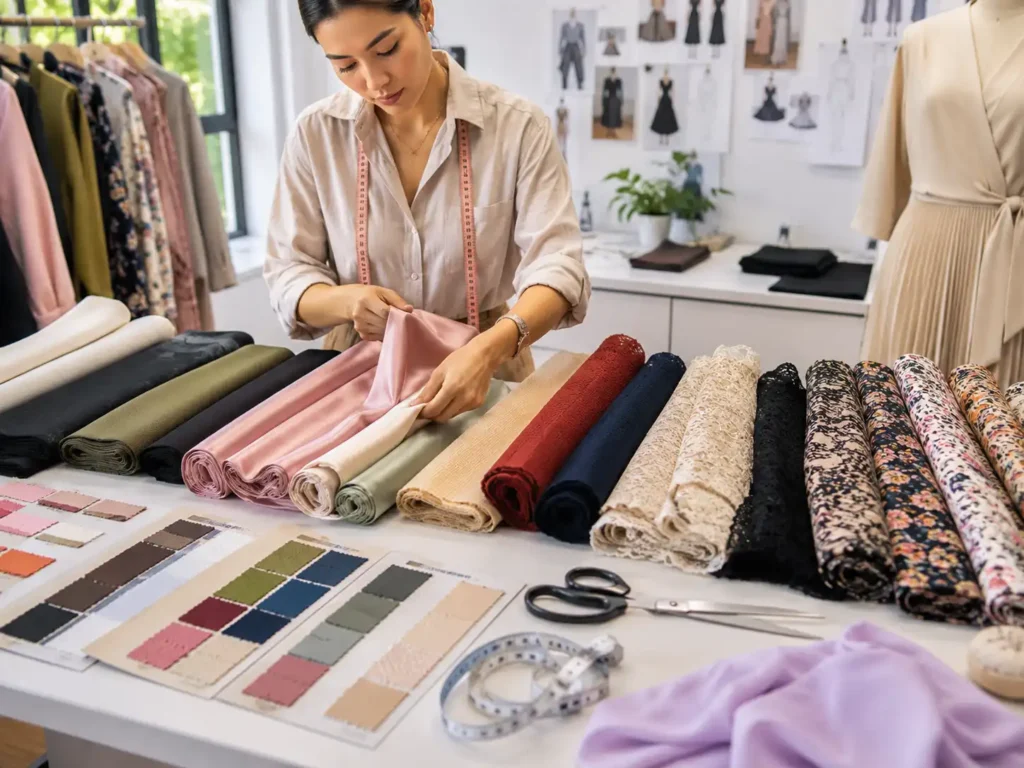
Fabric and trim records keep bulk orders from drifting away from the approved sample. The factory should save or confirm fabric composition, weight, width, color standard, hand feel, stretch direction, shrinkage behavior, lining requirement, dye lot, approved swatch, zipper type, thread color, elastic width, button size, hook quality, label artwork, and packaging details.
For fashion dresses, fabric records are not just purchasing notes. Fabric controls how the product looks on the body. Chiffon needs drape and transparency control. Satin needs shade and seam behavior checks. Stretch mesh needs recovery and tension control. Lace needs motif and edge handling. Sequin fabric needs backing comfort and careful sewing.
Trim records matter just as much. A wrong zipper can change the wearing experience. A weak hook can create return complaints. A different elastic can change fit. A wrong care label can cause compliance or customer-service issues. A missing barcode can delay warehouse receiving. Professional factories treat trims as part of the product, not as an afterthought.
Pattern Files
Pattern files are the backbone of repeatable dress production. Once the PP sample is approved, the factory should save the final pattern and graded sizes. If the buyer later reorders the same style, changes fabric, adds a new color, or adjusts the length, the saved pattern becomes the starting point.
This is where long-term manufacturing becomes more efficient. Without saved pattern records, every repeat order feels like starting again. The fit may change, the waistline may shift, or the garment length may not match the previous batch. With saved records, the factory can compare the new order against the previous standard and control changes more carefully.
For brands running seasonal collections, pattern memory is valuable. A winning mini dress may return in a new color. A corset top may become a dress. A bodycon style may extend into a maxi version. Good recordkeeping allows the factory and buyer to build on previous work instead of losing time on repeated corrections.
Brand Standards
Bulk consistency is not only about garment fit. It also includes brand presentation. Private-label items such as woven labels, size labels, care labels, hangtags, hang strings, barcode stickers, SKU labels, polybags, thank-you cards, cartons, carton marks, and warehouse labels must match the buyer’s approved standard.
This matters because many fashion brands sell through ecommerce warehouses, retail partners, boutiques, and marketplaces. A dress with the wrong barcode or size sticker can create inventory confusion even if the garment itself is perfect. A wrong care label can cause customer complaints. Poor folding can affect product photos after unpacking.
For repeat orders and multi-batch delivery, brand standards should be saved together with the production file. This helps the factory avoid asking the buyer the same basic questions every season and helps the buyer maintain a consistent retail experience across different collections.
How Are Fabrics, Cutting, and Lines Managed?
Factories manage fabrics, cutting, and production lines by inspecting materials before cutting, separating dye lots, planning markers and size ratios, controlling fabric direction, labeling cut bundles, and assigning the right sewing line to the right dress type. This stage is critical because many quality problems become expensive or impossible to fix after the fabric is cut.
A realistic cutting room in a women’s dress factory, showing workers inspecting satin, chiffon, mesh, and lace rolls, arranging pattern markers, cutting panels accurately, and bundling fabric pieces by size and color.
Fabric Inspection
Fabric inspection is one of the first real quality gates in bulk dress production. Before cutting, the factory should check for shade variation, stains, holes, yarn defects, printing flaws, width issues, stretch inconsistency, shrinkage concerns, nap direction, and hand-feel differences. If the fabric fails at this stage, sewing cannot rescue the order later.
Different dress fabrics need different inspection focus. Satin should be checked for shade, surface marks, and seam behavior. Chiffon should be checked for snags, transparency, and roll consistency. Mesh should be checked for stretch and recovery. Lace should be checked for motif defects and edge quality. Velvet should be checked for nap direction. Printed fabric should be checked for direction and print registration.
A strong factory reports serious fabric risks before cutting, even if the conversation is uncomfortable. That is a good sign. It means the factory is protecting the buyer’s final goods rather than hiding material issues until shipment.
Cutting Accuracy
Cutting accuracy affects size, shape, balance, and final appearance. The cutting team must follow the final pattern, size ratio, marker plan, fabric direction, layer height, bundle numbering, and color separation rules. If cutting is careless, the sewing line will repeat the mistake across the whole order.
For dresses, cutting becomes more technical when the style includes asymmetric panels, one-shoulder design, cut-outs, bias-cut pieces, lace placement, printed fabric, or stretch material. A wrong fabric direction can cause twisting. Overstretched fabric can shrink back after sewing. Mixed dye lots can create visible shade differences. Poor marker planning can also increase fabric waste.
Factories usually bundle cut panels by style, size, color, and batch. Proper bundle control prevents size mixing and helps the line track production. It also makes QC easier because inspectors can trace problems back to a specific cutting batch, fabric roll, or production group.

Line Matching
Not every sewing line is suitable for every dress. A factory may have several production units, but the important question is whether the right unit handles the right style. Stretch bodycon dresses need operators who understand elastic fabric and recovery. Satin dresses need clean seam control and careful pressing. Lace dresses need placement discipline. Sequin dresses need slower handling and finishing checks.
Line matching should consider fabric, construction, machine requirements, operator skill, order quantity, delivery date, and QC risk. A simple woven resort dress may move faster on a regular woven line. A structured corset dress needs a line familiar with boning, lining, cups, and closures. A mesh party dress needs tension control so the garment does not stretch out of shape.
For buyers, the best question is not only “Can you make this?” but “Which line will make this, and why?” A serious answer will mention fabric behavior, sewing difficulty, QC focus, and timeline. A weak answer will only say “no problem.” In bulk production, “no problem” is not a production plan.
Dress Type Production Control
|
Dress Type |
Fabric or Structure Risk |
Best Production Focus |
Practical QC Check |
|
Satin dress |
Puckering, shade marks, pressing shine |
Seam tension and pressing control |
Side seam, zipper, shade under light |
|
Mesh dress |
Stretch distortion, transparency |
Elastic direction and lining control |
Recovery, neckline, lining placement |
|
Lace dress |
Motif mismatch, rough edges |
Placement and edge finishing |
Motif balance, seam cleanliness |
|
Bodycon dress |
Fit variation, poor recovery |
Stretch handling and measurement control |
Bust, waist, hip, length |
|
Maxi dress |
Uneven hem, lining exposure |
Hanging balance and length control |
Front/back length, hem sweep |
|
Sequin dress |
Broken sequins, rough inside seams |
Slow sewing and inner comfort |
Decoration loss, seam feel |
Material Flow
Material flow is the behind-the-scenes discipline that keeps production stable. Fabric, lining, zippers, labels, hangtags, polybags, thread, and cartons should arrive before the order reaches the stage that needs them. If labels arrive late, finished goods may wait in the packing area. If zippers are short, the sewing line may stop. If fabric arrives in separate lots, the factory must manage shade carefully.
A practical factory tracks material status by style and color. For multi-style orders, this tracking becomes essential because each style may have different fabric, trims, and label requirements. A missing trim for one style can delay the whole shipment if the buyer wants goods shipped together.
Material flow is not glamorous, but it is one of the biggest reasons professional factories deliver more reliably. It turns production from “wait and see” into a planned process.
How Do Factories Control Sewing Quality?
Factories control sewing quality through first-piece approval, line training, in-line inspection, measurement checks, operator correction, finishing review, and final garment inspection. The goal is to catch sewing problems while production is still moving, not after hundreds of dresses are finished. Good sewing QC protects appearance, fit, comfort, and brand-level finishing.
A professional sewing line producing fashion dresses, with QC staff checking seams, zipper alignment, hem balance, and measurements on semi-finished garments, realistic factory lighting, clean and organized apparel production environment.
First Piece Check
The first-piece check is one of the most useful controls in bulk sewing. Before the full line continues, the supervisor and QC team inspect the first completed or semi-completed pieces against the PP sample and production file. They check seam position, stitch type, seam allowance, measurements, lining, zipper, label placement, pressing effect, and overall appearance.
This step saves time because early mistakes are easier to fix. If a zipper is waving, the team can adjust tension or sewing method. If the neckline is stretching, they can change handling or add support. If the waist seam is slightly high, they can review pattern or sewing allowance before many pieces are affected.
A factory that skips first-piece approval may still finish the order, but the risk is higher. In bulk dress production, a mistake repeated 300 times is not a small issue. It becomes a repair schedule, a shipping delay, or a buyer complaint.
In-Line Inspection
In-line inspection happens while garments are being sewn. QC staff or line supervisors check key operations before the dress is finished. For example, they may inspect neckline shape, shoulder strap length, side seam, zipper position, waist seam, sleeve opening, hem, lining, slit, ruching, lace join, or label placement.
The purpose is not to criticize workers. It is to prevent repeated defects. If the line shows skipped stitches, loose seams, uneven tension, twisting, or puckering, the supervisor can correct the method immediately. This protects both quality and production speed because repairing finished garments takes much longer.
In-line QC is especially important for complex women’s fashion styles. A ruched mesh dress, satin slip dress, lace cocktail dress, or corset mini dress may need several checkpoints because one detail can affect the next step. When in-line control is done well, final inspection becomes less stressful.
Complex Details
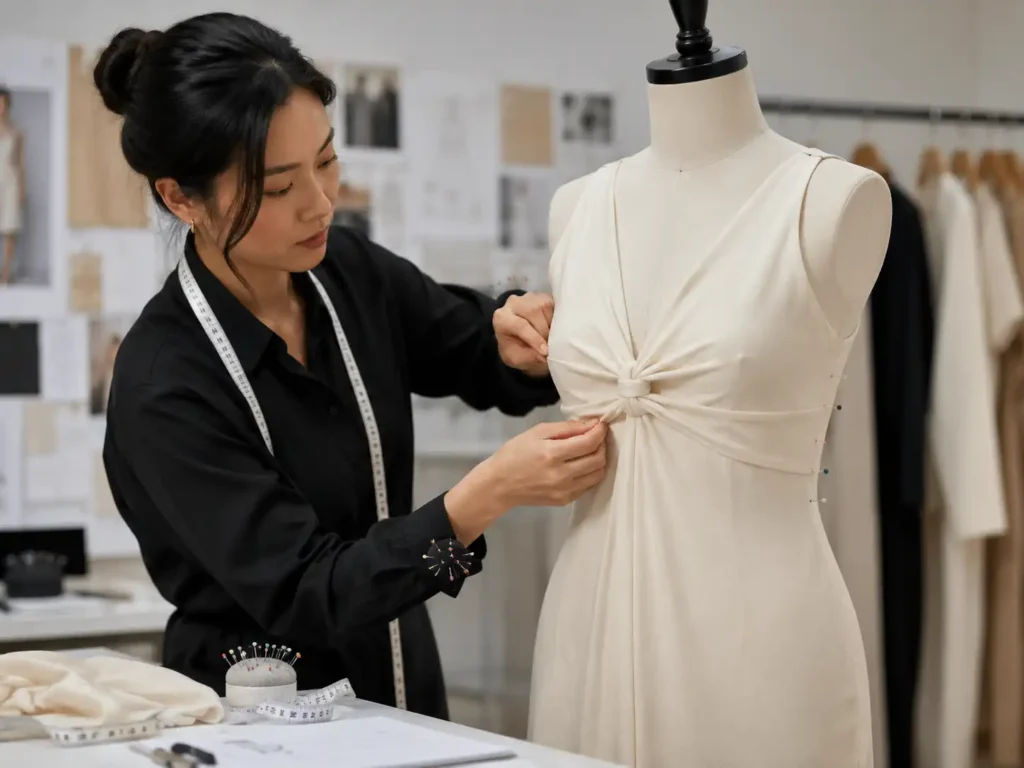
Complex dress details need practical sewing rules, not vague instructions. Ruching should have tension and placement standards. Ruffles need fullness and attachment consistency. Pleats need spacing control. Lace needs motif placement and clean joining. Mesh needs stretch direction and seam stability. Corset styles need boning position, cup shape, lining, and closure strength. Sequin dresses need careful needle control and inner comfort.
A good factory often tests difficult details before full-line production. Sometimes a construction detail needs slight adjustment to protect bulk stability. For example, a seam may need reinforcement, a lining may need a different edge finish, or a stitch type may need to change for stretch fabric. These adjustments should protect the design effect, not weaken it.
The best buyer-factory conversations are honest. Some design details look beautiful in one sample but are risky at scale. A professional factory should explain the risk early and offer practical options before fabric is cut.
Defect Tracking
Defect tracking helps a factory understand whether a sewing problem is random or repeated. Common dress defects include seam puckering, skipped stitches, loose thread, uneven hem, twisted side seam, zipper wave, lining exposure, poor pressing, stain marks, wrong label, and measurement variation.
A useful QC system records what happened, where it happened, how many pieces were affected, and what correction was made. This helps the production line improve during the order. It also helps future repeat orders because the factory can review previous problems before restarting production.
Sewing QC Checkpoints
|
QC Stage |
What Is Checked |
Common Dress Issues Found |
Corrective Action |
|
First-piece check |
Construction, measurement, sewing method |
Wrong seam position, zipper wave, poor neckline |
Adjust method before full production |
|
In-line QC |
Semi-finished sewing operations |
Skipped stitches, uneven tension, twisting |
Stop and correct line operation |
|
Measurement check |
Key size points by size/color |
Bust, waist, hip, length variation |
Recheck pattern, seam allowance, pressing |
|
Pressing review |
Shape, surface, hem, seam flatness |
Shine marks, poor drape, uneven hem |
Adjust temperature, method, handling |
|
Final garment QC |
Finished appearance and packing readiness |
Stains, thread ends, wrong labels |
Repair, replace, or hold for recheck |
How Is Final QC, Packing, and Delivery Managed?
Final QC, packing, and delivery are managed by checking finished dresses against the approved sample and tech pack, measuring key points, reviewing workmanship, confirming labels and barcodes, packing by buyer instructions, preparing cartons and shipping files, and coordinating shipment. This final stage protects product quality, warehouse accuracy, and brand presentation before goods leave the factory.
A final inspection and packing area for private-label dresses, showing finished garments on racks, QC checklist, barcode labels, branded polybags, cartons with shipping marks, and staff preparing export-ready fashion orders.
Final Inspection
Final inspection is the last quality gate before shipment. The inspection team checks finished dresses for appearance, measurements, workmanship, fabric defects, stains, loose thread, pressing, label placement, packing accuracy, and match to the approved sample. For important orders, buyers may also arrange their own inspection or third-party inspection.
For dresses, final inspection should pay special attention to visible and fit-sensitive areas. Neckline, bust shape, waist seam, zipper, side seam, hem, lining, straps, sleeve opening, slit height, lace panels, mesh panels, print direction, and pressing marks all matter. A garment can pass basic sewing but still fail brand-level presentation if these details look careless.
Final QC should not be the first time problems are discovered. If the factory has already done fabric checks, cutting QC, first-piece approval, in-line inspection, and finishing review, final inspection becomes a confirmation step. If not, final inspection turns into a rescue mission, and rescue missions often delay delivery.
Private Label Check
Private-label checking protects the buyer’s brand identity and warehouse operation. The factory should confirm woven labels, size labels, care labels, hangtags, hang strings, barcode stickers, SKU labels, polybags, thank-you cards, carton marks, and warehouse labels against the approved files.
This is where many avoidable mistakes happen. A dress may be well made, but the wrong size label can create customer returns. A wrong barcode can delay warehouse receiving. A missing country-of-origin detail can cause compliance problems. A wrong carton mark can slow down distribution. These problems are not sewing defects, but they still damage the order.
For multi-style dress collections, label control needs extra discipline. Each style may have different colors, size ratios, SKU labels, and packing requirements. A good factory separates labels by style and color before packing begins, then checks cartons before sealing.
Packing and Cartons
Packing should be confirmed before the packing team starts work. The buyer should specify whether dresses are folded flat, packed with tissue, placed in individual polybags, labeled with barcode stickers, packed by solid size, mixed size, solid color, or mixed color. The carton mark should match the packing list and buyer warehouse requirements.
Good packing protects both the garment and the buyer’s operation. Satin dresses need careful folding to reduce deep creases. Sequin dresses may need protection to avoid snagging. Long dresses may need larger polybags. White or light-colored dresses may need cleaner handling and stronger stain prevention. Retail-ready orders may need barcode accuracy and carton-level organization.
Carton information should usually include style number, color, size, quantity, carton number, gross weight, net weight, carton dimensions, and shipping mark. If the buyer uses a warehouse or 3PL, warehouse label rules should be confirmed early.
Delivery and Repeat
Delivery management connects the factory, buyer, forwarder, and destination warehouse. The factory prepares packing lists, commercial invoices, carton details, shipping marks, and other required files based on the agreed shipment method. Some orders move by sea to control cost. Some urgent launch styles may ship by air. Some buyers split shipments to balance speed and budget.
Repeat orders should begin with a review of previous records. The factory should check the saved pattern, measurement file, fabric reference, trim record, label standard, packing method, and previous QC notes. If the buyer wants a new color, new fabric, or fit adjustment, that change should be treated carefully instead of assuming everything is the same.
For fashion brands, repeat-order control is often where a strong factory partnership becomes obvious. The first order builds the standard. The second order tests whether the factory saved it. The third and fourth orders show whether the supplier can support a real seasonal business. A factory that keeps records well can help a brand reduce development time, control bulk consistency, and prepare future collections with less friction.
Conclusion: Build Bulk Dress Orders Around Control, Not Guesswork
A Chinese dress factory manages bulk production well when it can connect sample approval, technical records, fabric control, cutting discipline, sewing quality, QC reporting, private-label packing, and delivery coordination into one reliable workflow. The best suppliers do not treat bulk production as simple labor. They treat it as a controlled project with standards, checkpoints, responsibility, and feedback.
For fashion brands, the most important takeaway is this: do not judge a dress factory only by one beautiful sample or one attractive quote. Ask how the factory protects the approved sample during bulk production. Ask how it manages fabric risk, cutting accuracy, sewing defects, measurement tolerances, label control, packaging, and repeat orders. A professional answer will be specific, practical, and grounded in real production experience.
Jinfeng Apparel is built for brands that need custom women’s fashion manufacturing from development to bulk delivery. Based in Guangdong, China, Jinfeng Apparel supports OEM, ODM, and private-label womenswear, including dresses, skirts, jumpsuits, matching sets, party dresses, occasionwear, bodycon dresses, satin dresses, mesh dresses, lace dresses, sequin dresses, and seasonal dress collections. With 16+ years of womenswear manufacturing experience, 6 owned women’s fashion factories, 10+ long-term satellite production partners, MOQ from 200 pcs per style/color, NDA-based cooperation, and support for long-term repeat orders, Jinfeng Apparel helps brands move from sample to bulk with clearer control.
Send your tech pack, reference sample, line sheet, fabric request, target quantity, size range, and launch timeline to Jinfeng Apparel. The team can review your dress project, evaluate production feasibility, suggest material and construction options, and prepare a custom quotation for your next bulk order.
Share This Article :

Jerry Lee
Categories

Latest blogs


Table of Contents
Here, developing your OEM/ODM private label clothing collection is no longer a challenge—it’s an excellent opportunity to bring your creative vision to life.

