Skip to content
Travel Dress Manufacturer
Custom travel dress development for fashion brands requiring packable construction, controlled fit, private-label finishing, and scalable collection production.
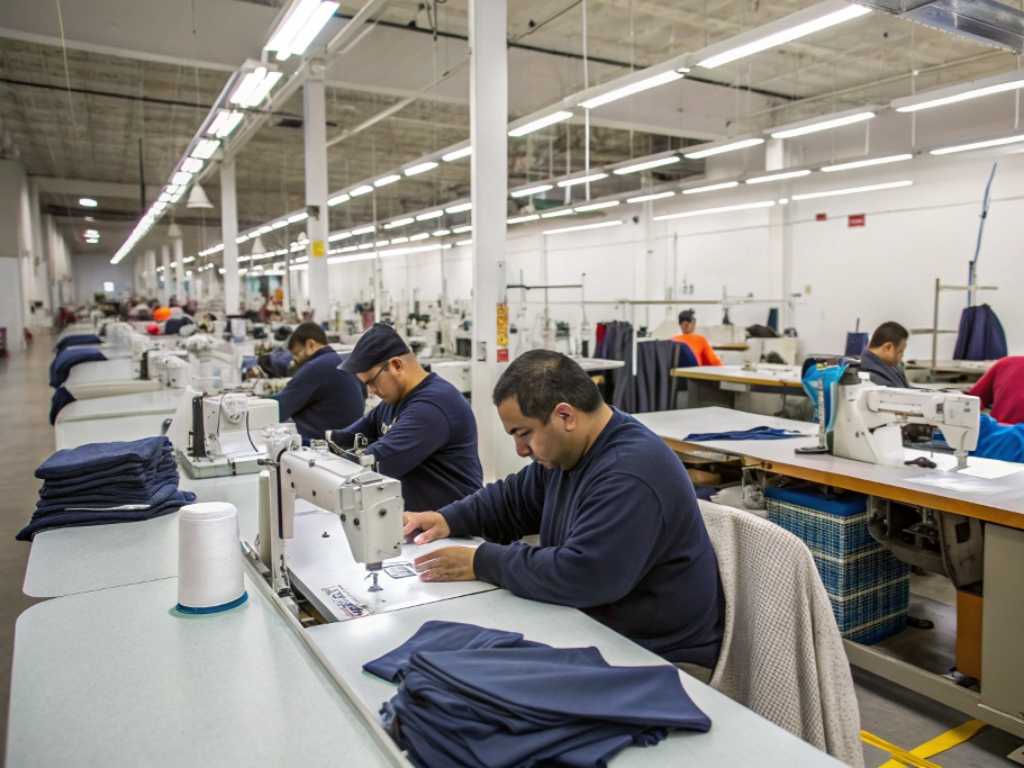
Jinfeng Apparel develops travel dresses from fabric direction and pattern engineering through sampling, PP approval, bulk production, quality control, and branded packing.
- 8 core travel dress directions covering city, resort, business, cruise, long-haul, and day-to-night use
- 7+ senior pattern makers supporting fit, length, pocket, lining, and movement corrections
- 2 sample rooms with 20+ sample machinists for structured development and revisions
- MOQ starts from 200 pieces per style and color, subject to materials and construction
- Multi-style production supported through 6 owned factories and 10+ long-term production partners
Manufacturing Capacity Built for Travel Dress Programs
Since 2008
Six Owned Factories
Ten Plus Partners
Two Sample Rooms
Seven Pattern Makers
Fifteen QC Inspectors
Built for Established Fashion and Travel Brands
Travel Clothing Brands
Resortwear Brands
Ecommerce Fashion Brands
Fashion Retailers
Sourcing Teams
Product Developers
Travel Dress Problems We Control Before Production
Packing Wrinkles
Excessive Transparency
Weak Stretch Recovery
Distorted Pockets
Deep pockets can pull side seams outward, show through lightweight fabric, or disturb the hip line.
Pocket bag material, opening angle, reinforcement, depth, phone weight, and placement must be coordinated with the silhouette and shell fabric.
Restricted Movement
A dress may fit well in a standing pose but restrict walking, sitting, reaching, bending, or climbing stairs.
Movement problems often result from insufficient hip ease, narrow hems, high armholes, tight sleeves, unstable slits, or poorly positioned waist seams.
Unstable Dress Length
Sample Bulk Differences
Missed Launch Dates
What Makes a Dress Ready for Travel
Travel Dress

Vacation Dress

Resort Dress

Summer Dress
Travel Dress Collections Developed for Modern Brands

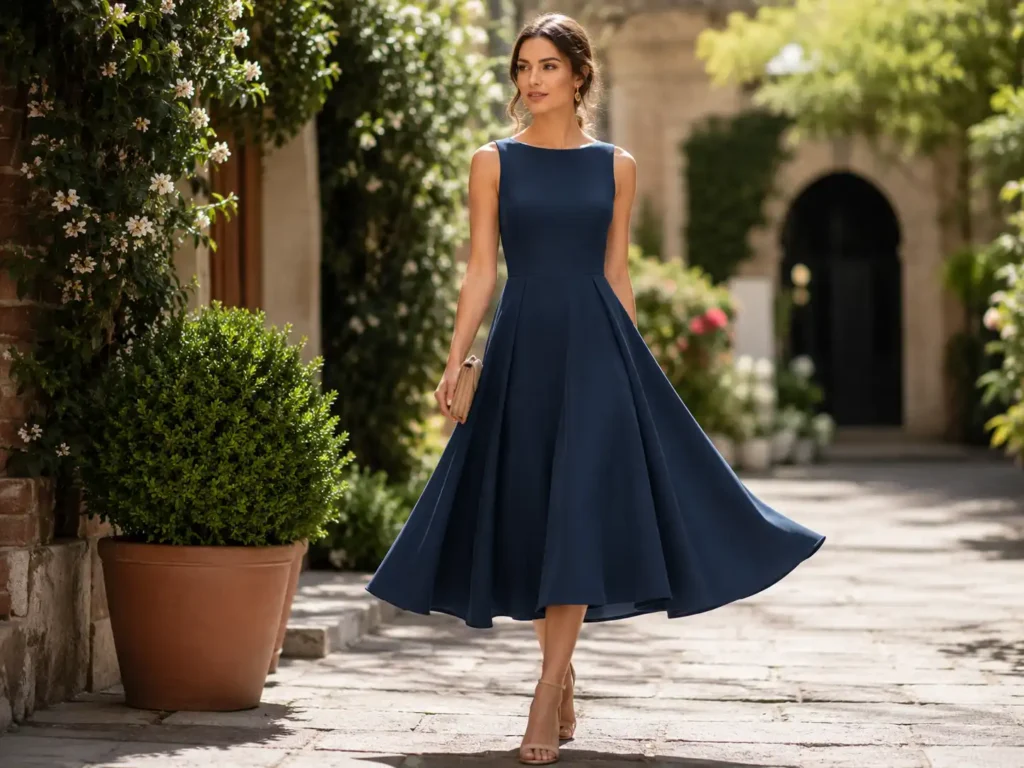
Travel Midi Dresses
- Front, back, and side length balance
- Slit stability during walking
- Pocket bag visibility
- Hem consistency after pressing
- Waistline alignment across sizes
- Lining length and opacity
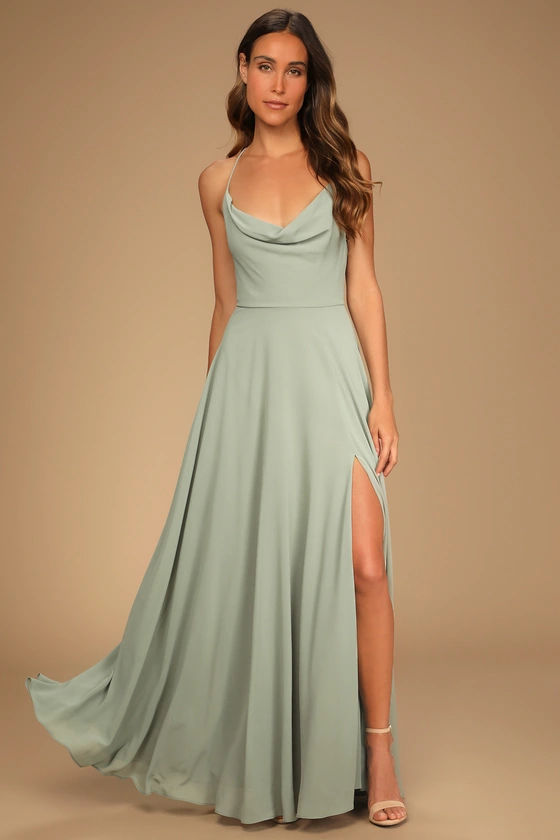
Packable Maxi Dresses
- Finished length by target size
- Hem circumference and movement
- Bias-drop observation
- Lining-to-shell relationship
- Print and panel alignment
- Folding method for shipment

Travel Shirt Dresses
- Collar symmetry
- Placket alignment
- Button spacing and security
- Sleeve roll-up tabs
- Waist belt length
- Chest coverage between buttons

Wrap Travel Dresses
- Neckline coverage
- Inner tie placement
- Outer belt anchoring
- Front skirt overlap
- Waist seam stability
- Grading across bust and hip sizes

A-Line Travel Dresses
- Shoulder-to-hem balance
- Side seam direction
- Flare distribution
- Pocket placement
- Lining volume
- Hem leveling
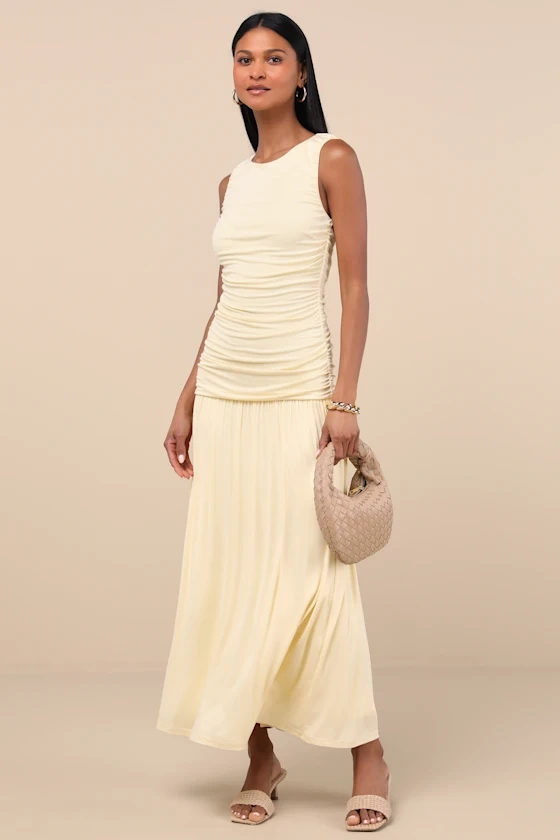
Jersey Travel Dresses
- Stretch and recovery direction
- Side seam twisting
- Neckline stabilization
- Hem wave control
- Measurement after relaxation
- Wash-related size change

Printed Vacation Dresses
- Print orientation
- Repeat alignment
- Color approval
- Placement tolerance
- Fabric shrinkage
- Cutting yield

Day-to-Night Dresses
- Neckline and coverage
- Silhouette under layering
- Wrinkle appearance
- Accessory compatibility
- Pocket concealment
- Pressing and packing presentation
Travel Scenarios Shape Every Design Decision

Long-Haul Travel

City Walking
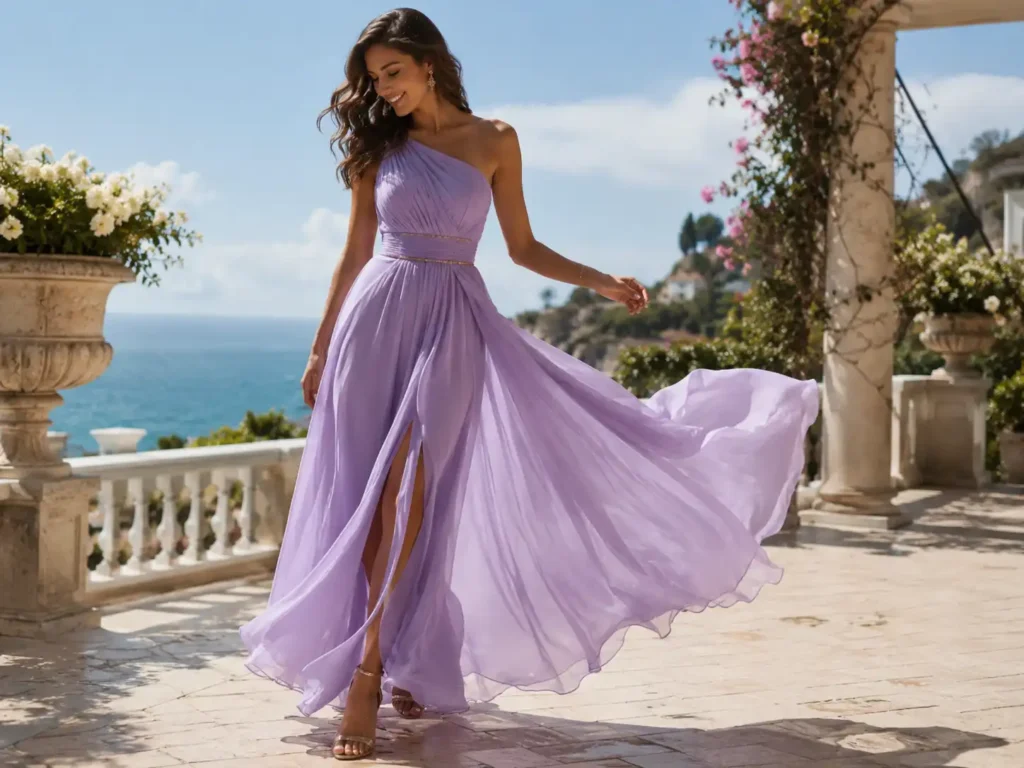
Resort Holidays

Cruise Travel

Business Travel

Day-to-Night Wear
Eight Performance Requirements Behind Travel-Ready Dresses
Wrinkle Recovery
Lightweight Construction
Breathable Comfort
Breathability is influenced by fiber content, fabric structure, garment ease, lining, sleeve coverage, and climate.
A breathable shell paired with a dense non-breathable lining may fail to deliver the intended comfort. Warm-weather travel styles often require carefully selected lining coverage rather than full heavy lining.
Airflow around the armhole, neckline, waist, and skirt also matters.
Stretch Recovery
Stretch improves movement only when recovery remains stable.
Weak recovery may produce seat bagging, loose waistlines, distorted necklines, and irregular hem lengths.
Development should define stretch direction, extension level, pattern ease, seam method, and recovery expectations. Bulk rolls must also be checked because stretch behavior may vary by lot.
Easy-Care Performance
Opacity Control
Compact Packability
Packability relates to garment volume, fold behavior, trim thickness, crushing sensitivity, and wrinkle recovery.
Large buckles, rigid boning, heavy ruffles, thick waistbands, and structured cups can increase luggage volume even when the shell fabric is light.
Packing direction should protect the dress while keeping the retail presentation controlled.
Styling Versatility
Versatility comes from proportion, color, neckline, sleeve, length, fabric surface, and accessory compatibility.
A dress intended for sightseeing and dinner should avoid details that make one setting uncomfortable or visually inappropriate.
Convertible features should be tested for stability, ease of use, and appearance in every intended configuration.
Fabric Systems Engineered for Travel Dress Performance

Stretch Jersey
Stretch jersey is frequently selected for long-haul, city, casual, and day-to-night travel dresses because it can provide movement, softness, and compact packing. Fabric quality varies widely, so composition alone does not predict garment performance. Development review includes:
- Fabric weight and surface density
- Two-way or four-way stretch
- Stretch recovery after extension
- Opacity under body tension
- Pilling and surface abrasion risk
- Shrinkage and spirality
- Edge curling during sewing
- Heat sensitivity during pressing
Thin jersey may need strategic lining or double layers around the bust and hip. Heavy jersey can improve coverage but increase warmth and garment weight. Pattern ease must be calculated according to measured stretch, intended compression, and brand fit. Sewing methods should protect elasticity without producing waviness or seam failure.

Ponte Knit
- Weight and thickness
- Stretch direction
- Recovery at waist and seat
- Heat response during pressing
- Side seam stability
- Surface pilling risk
- Hem bulk
- Seasonal comfort

Crepe Wovens
Crepe fabrics can provide fluid drape, a refined surface, lower shine, and relatively controlled wrinkle appearance. They work well for midi dresses, wrap dresses, day-to-night styles, business travel dresses, and elevated casual products. Development review includes:
- Fiber composition
- Weight and drape
- Surface texture
- Bias behavior
- Fraying
- Shrinkage
- Color consistency
- Pressing response
Some crepes are soft and fluid, while others are dry, structured, or elastic. Pattern and construction must therefore be based on the selected quality rather than a generic fabric name. Lightweight crepe may require lining or controlled seam finishes. Stretch crepe also requires recovery testing around the waist, hip, and elbow areas.

Rayon and Viscose
Rayon and viscose can deliver softness, breathability, rich color, and graceful movement for vacation, resort, summer, and printed travel dresses. Their drape creates strong visual value, but shrinkage, wrinkling, wet behavior, and dimensional stability require disciplined review. Development review includes:
- Fabric weight
- Shrinkage before and after care
- Wet strength considerations
- Skew or bow
- Colorfastness
- Print quality
- Bias growth
- Surface snagging
Long dresses made from fluid rayon or viscose may need hanging observation before final hem leveling. Fabric relaxation before cutting can improve consistency. Care instructions must reflect the confirmed material and finishing. A fabric that performs well in one color may behave differently after another dye or print process.
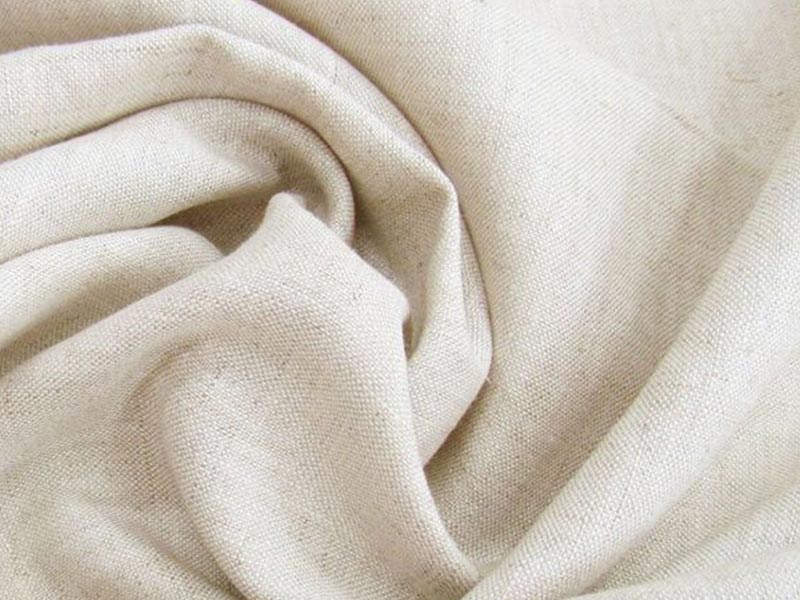
Linen Blends
- Linen percentage
- Surface slubs
- Crease expectations
- Shrinkage
- Color variation
- Seam slippage
- Opacity
- Lining needs
Travel Dress Fabric Selection Matrix
| Fabric Direction | Suitable Travel Products | Main Advantages | Main Manufacturing Risks | Recommended Review |
|---|---|---|---|---|
| Stretch Jersey | Long-haul dresses, fitted midi dresses, casual travel styles | Stretch, softness, compact packing, movement comfort | Bagging, pilling, transparency, side-seam twisting, neckline stretching | Stretch recovery, opacity, wash shrinkage, seam and hem trial |
| Ponte Knit | Business travel dresses, city midi dresses, structured knit styles | Coverage, shape retention, polished surface, controlled drape | Weight, heat retention, bulky hems, seat stretching | Weight, recovery, garment relaxation, pressing response |
| Crepe Woven | Wrap dresses, midi dresses, day-to-night styles | Refined texture, fluid movement, lower shine, versatile styling | Fraying, bias movement, shrinkage, seam visibility | Drape, shrinkage, seam method, lining and pressing |
| Rayon / Viscose | Printed vacation dresses, resort maxi dresses, summer styles | Softness, breathability, color depth, fluid drape | Shrinkage, wrinkling, wet behavior, hem growth | Care test, hanging observation, print and color review |
| Linen Blend | Resort dresses, cruise dresses, warm-climate styles | Breathable texture, natural appearance, seasonal value | Creasing, shrinkage, slubs, seam slippage, opacity | Blend ratio, wrinkle expectation, shrinkage and lining |
| Lightweight Polyester Woven | Packable dresses, printed travel styles, easy-care products | Low weight, color clarity, controlled care, broad print options | Static, heat sensitivity, low breathability in dense qualities | Hand feel, airflow, pressing, print and care evaluation |
| Chiffon | Layered maxi dresses, resort styles, dinner dresses | Movement, low weight, feminine appearance, layering | Transparency, snagging, uneven hems, fabric slippage | Lining, hem trial, layer balance, packing protection |
| Soft Suiting / Stretch Woven | Business travel dresses, shirt dresses, structured styles | Clean shape, professional appearance, stable construction | Excess weight, limited airflow, seam impressions | Stretch, weight, pressing, movement and sit testing |
Silhouettes Balanced for Movement and Packability

Mini Travel Dress

Midi Travel Dress
Midi length offers wide commercial use, yet the hem should avoid an awkward position on the calf. Side slit, wrap overlap, flare, and fabric weight affect walking. Measurement control should include center-front, center-back, side length, and slit height.

Maxi Travel Dress

A-Line Dress

Wrap Dress
Shirt Dress

Slip Travel Dress

Fitted Knit Dress
Design Details Made for Real Travel Use
Secure Side Pockets
Side-seam pockets can hold a phone, room key, or travel card while preserving a clean exterior.
Pocket depth, bag material, opening reinforcement, seam angle, and weight distribution must suit the shell fabric. Heavy contents should not drag the skirt or distort the hip line.
Concealed Security Pockets
Adjustable Shoulder Straps
Controlled Elastic Waist
Removable Waist Belts
Stable Side Slits
Side slits improve stride in midi and maxi dresses. Slit height must balance movement with coverage.
Reinforcement, seam allowance, lining opening, bartack position, and left-right consistency are important bulk quality points.
Convertible Sleeves
Roll-up tabs, adjustable cuffs, or removable styling details can extend seasonal and situational use.
Conversion features should work easily, remain visually clean in every position, and avoid heavy hardware that increases packing volume.
Lightweight Lining Systems
Lining can improve opacity, comfort, structure, and finishing, but a heavy or dense lining may reduce breathability and add bulk. Options include full lining, partial lining, bodice lining, skirt lining, double-layer construction, and selected coverage panels.
Pattern Development Beyond a Standing Fit Check
Bust and Neckline
Waist and Hip
Shoulder and Armhole
Length and Slit
Size Range Development
Jinfeng can develop US, UK, EU, AU, alpha-size, extended-size, plus-size, petite, and tall specifications according to the brand’s own size standard.
Movement Verification
Tech Pack Information Required Before Sampling
| Technical Information | Why It Matters |
|---|---|
| Front and Back Flat Sketch | Defines silhouette, seam lines, pockets, closures, panels, slits, and visible details |
| Measurement Chart | Establishes base size, finished garment measurements, and required tolerances |
| Grade Rules | Controls how bust, waist, hip, length, neckline, strap, armhole, and slit change across sizes |
| Shell Fabric | Defines composition, weight, stretch, recovery, drape, opacity, color, and care direction |
| Lining Specification | Controls coverage, breathability, color matching, static, and garment weight |
| Pocket Dimensions | Defines pocket opening, depth, placement, bag material, security, and expected load |
| Construction Notes | Confirms seam type, seam allowance, stitch density, hem, reinforcement, and finishing |
| Trims and Hardware | Specifies zippers, buttons, elastic, sliders, snaps, hooks, belts, and decorative components |
| Color References | Records Pantone references, approved swatches, lining color, trim color, and thread color |
| Label Placement | Identifies main label, size label, care label, country label, and attachment position |
| Packing Method | Defines folding, polybag, tissue, barcode, size sticker, carton ratio, and carton marks |
| Performance Direction | Clarifies wrinkle, stretch, recovery, wash, shrinkage, opacity, or third-party test requirements |
Prints Colors Linings and Trims Controlled Together

Custom Print Development

Seasonal Color Control
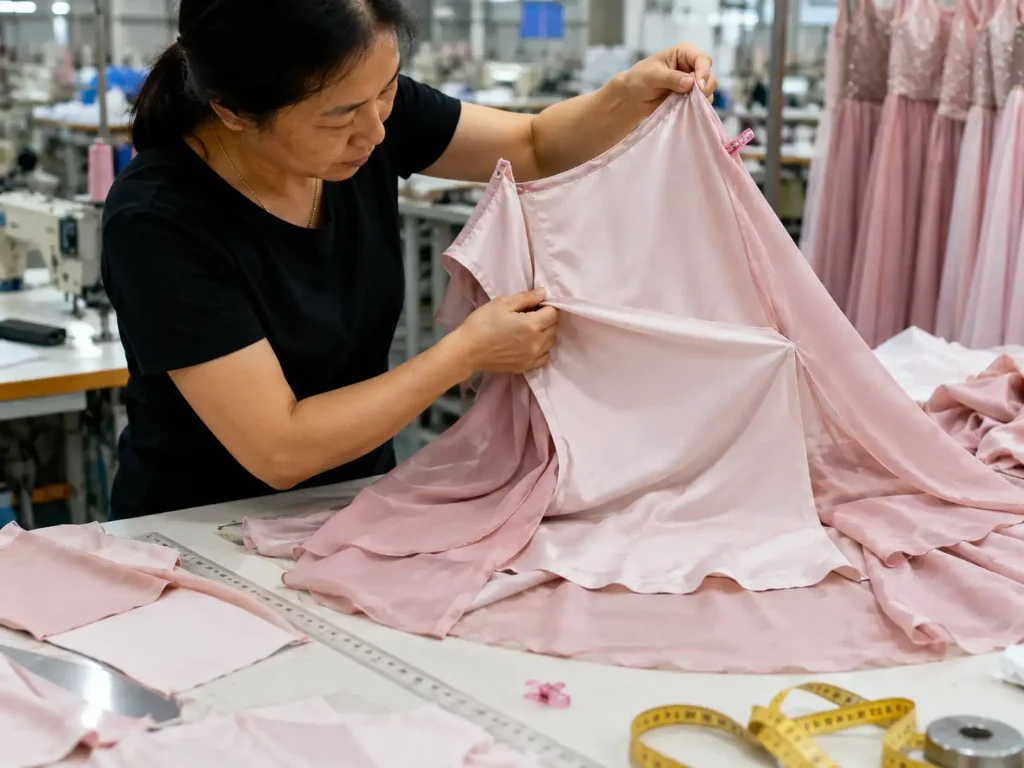
Lining Coordination

Zippers and Buttons
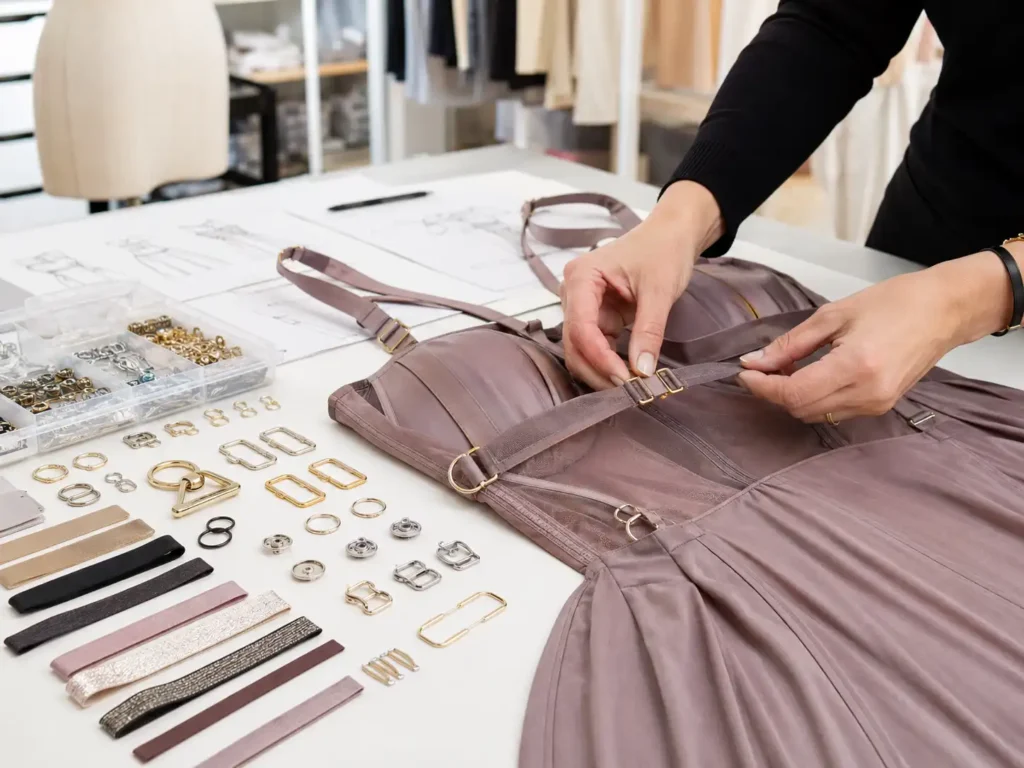
Elastic and Hardware
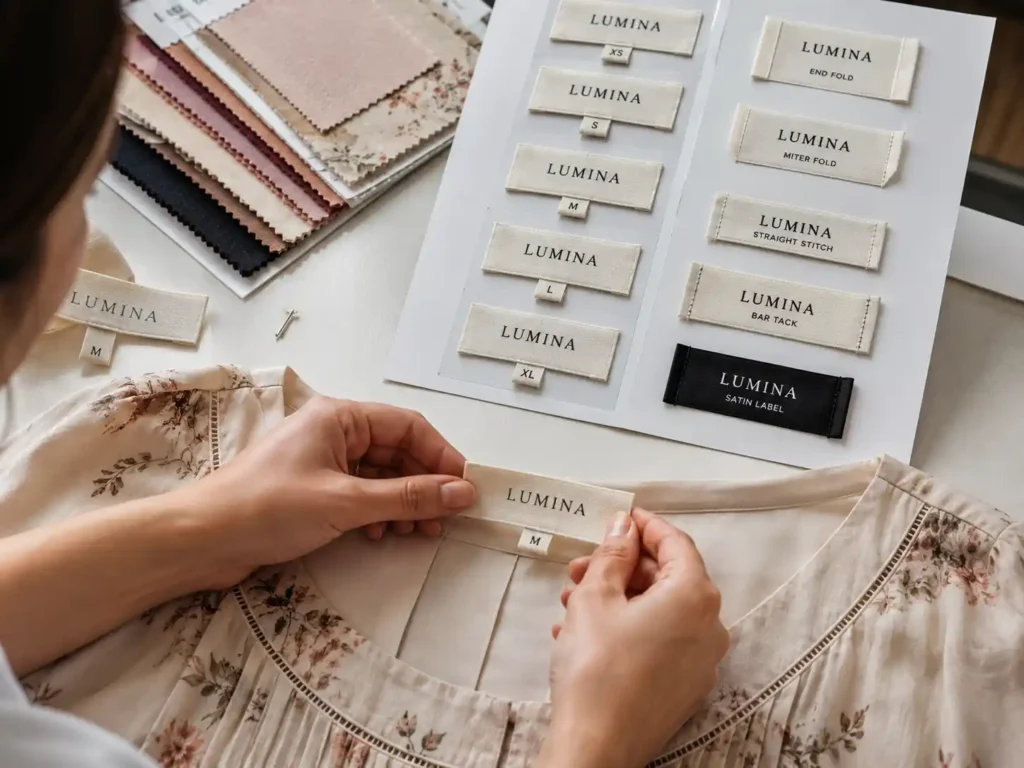
Labels and Care Details
Structured Travel Dress Sample Development Process
Project Review
Fabric Direction
Pattern Development
First Prototype
Fit Review
Sample Revision
PP Sample
Sealed Reference
Travel Performance Validation Before Bulk Production
Fold Recovery Review
Shrinkage Review
Stretch Recovery Review
Opacity Review
Colorfastness Review
Seam Strength Review
From Technical Files to Approved Bulk Production
Files and Feasibility
Materials and Sampling
PP Approval
Material Inspection
Cutting and Sewing
Finishing and Delivery
Workmanship Protecting Fit Appearance and Travel Performance
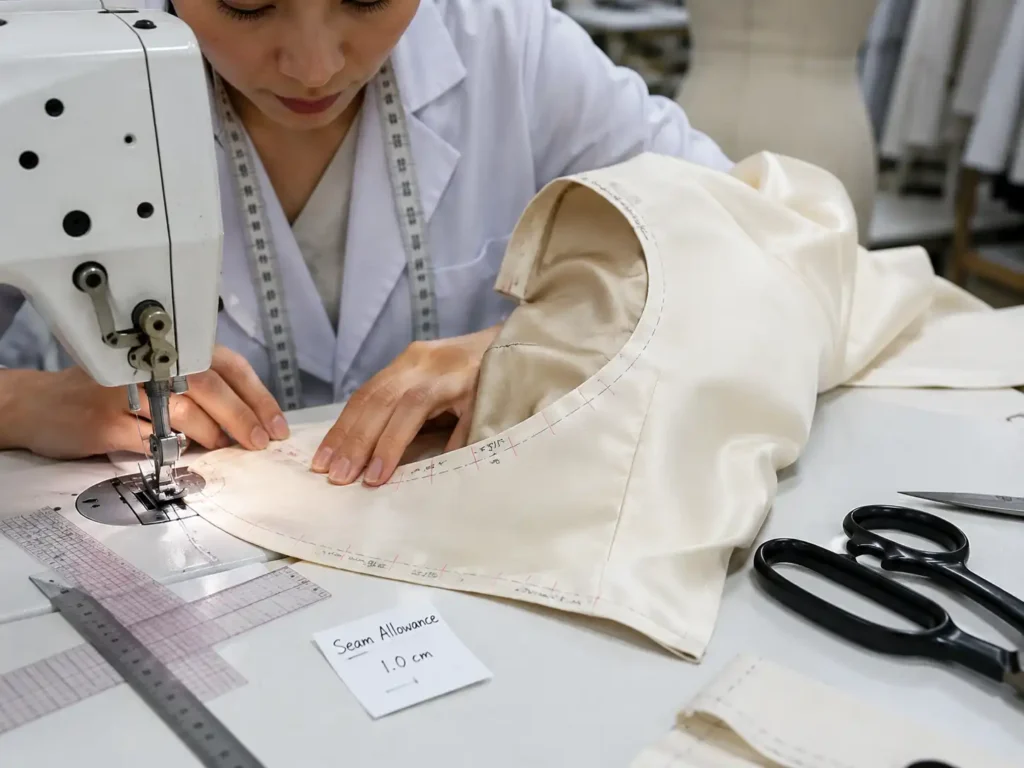
Controlled Seam Allowance

Stitch Density Control
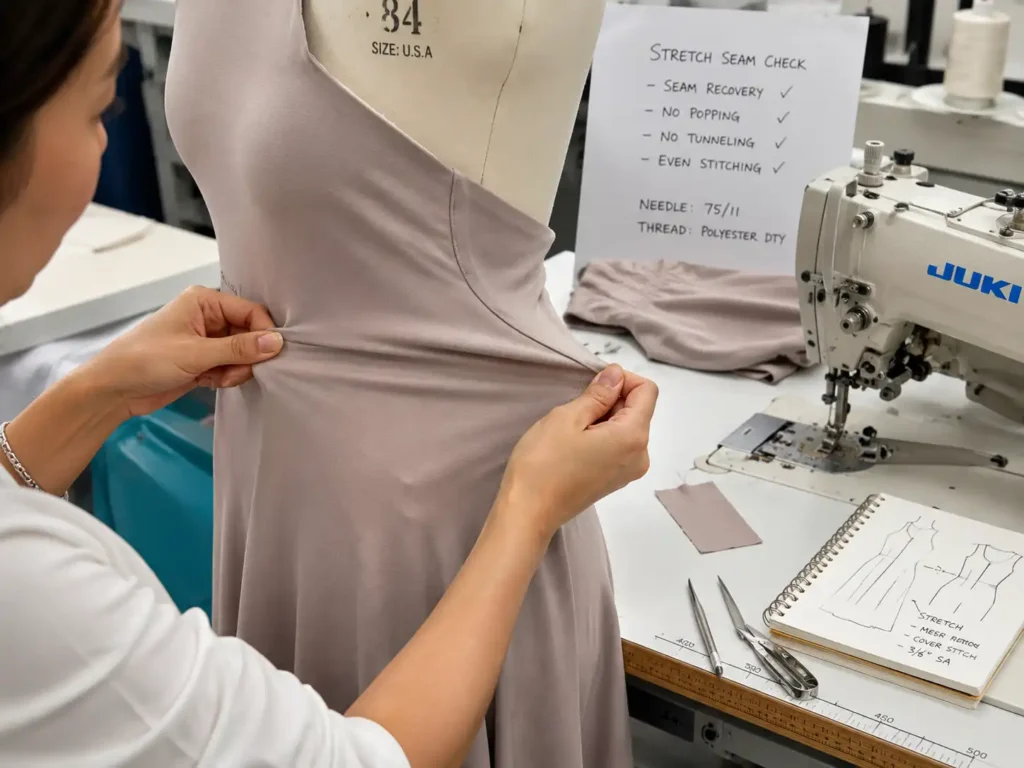
Stretch Seam Methods

Pocket Reinforcement
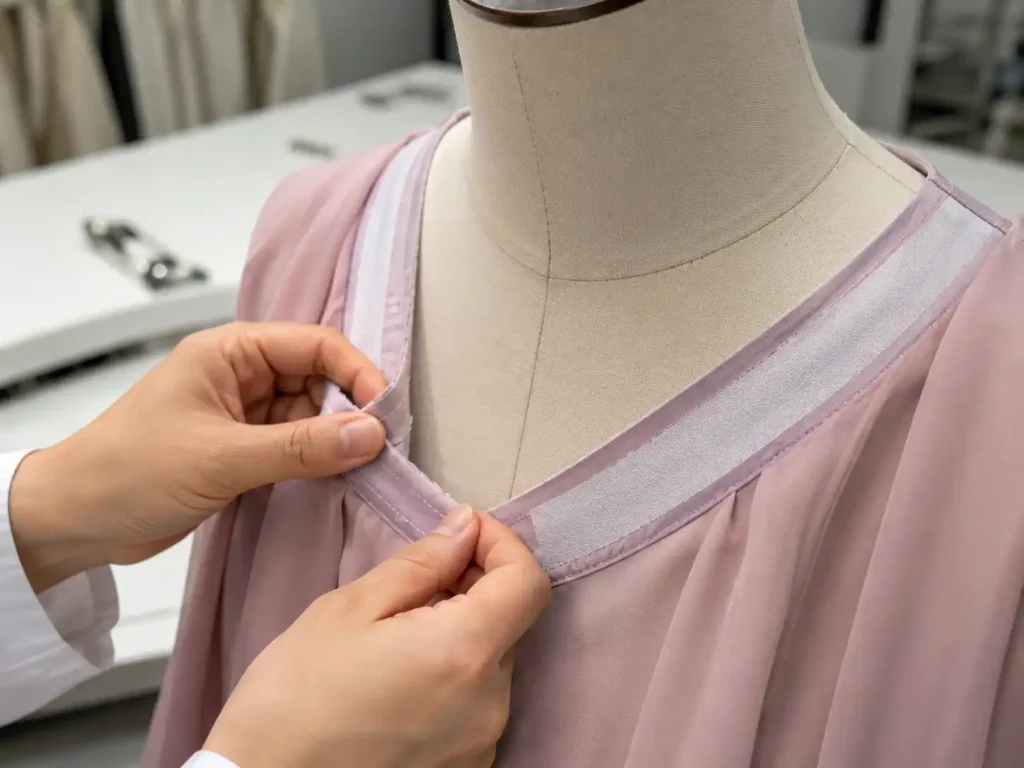
Neckline Stabilization
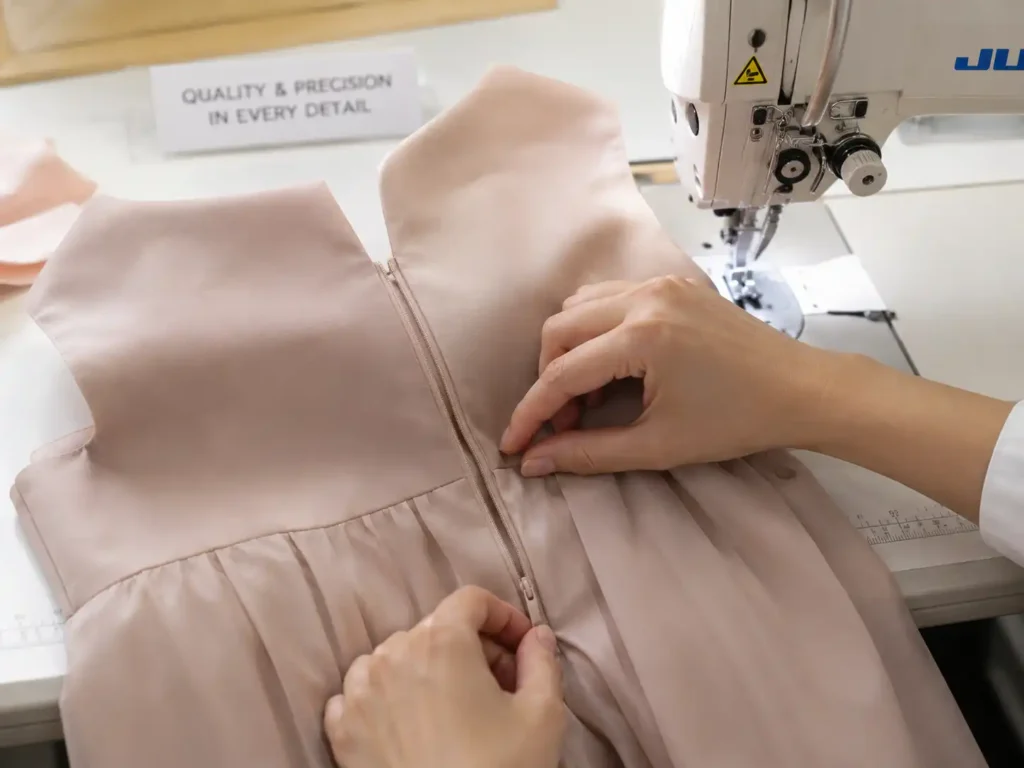
Zipper Installation
Invisible or exposed zippers should lie flat, open smoothly, align across waist seams, and remain secure at the top and bottom.
Lightweight fabric may need support to prevent rippling, while stretch fabrics require controlled handling to avoid uneven tension.
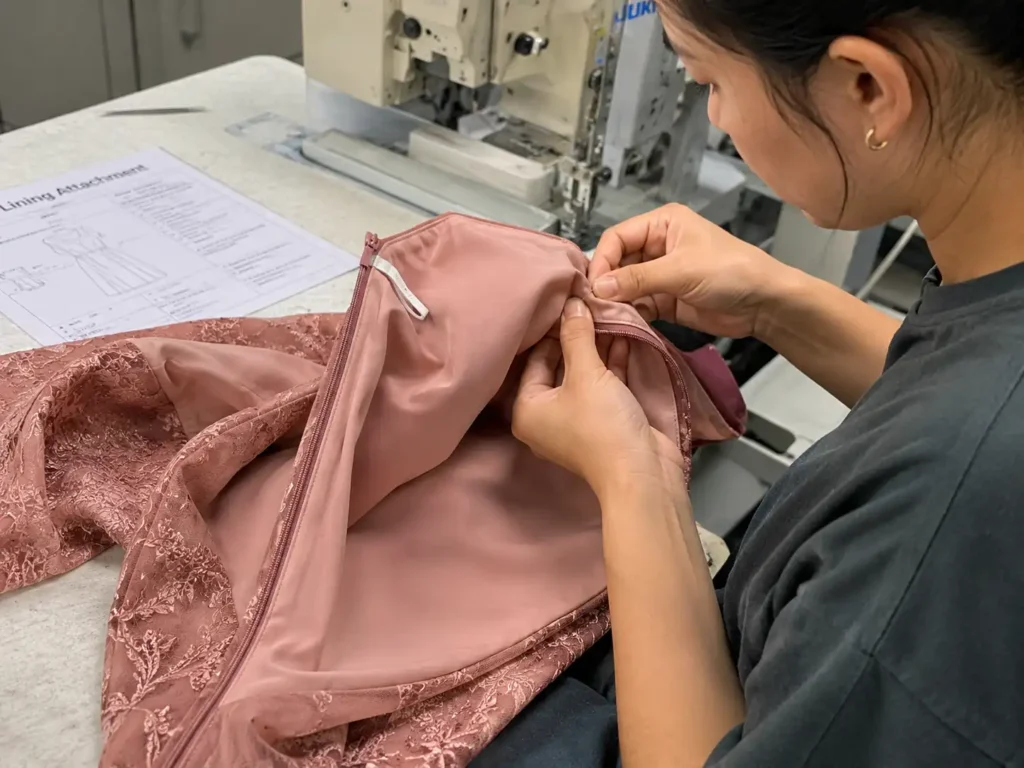
Lining Attachment
Lining should improve coverage and comfort without twisting, pulling, showing below the hem, or restricting movement.
Attachment points around armholes, necklines, zippers, waists, slits, and hems require careful balance. Stretch shell fabrics need compatible lining stretch or a construction allowing independent movement.
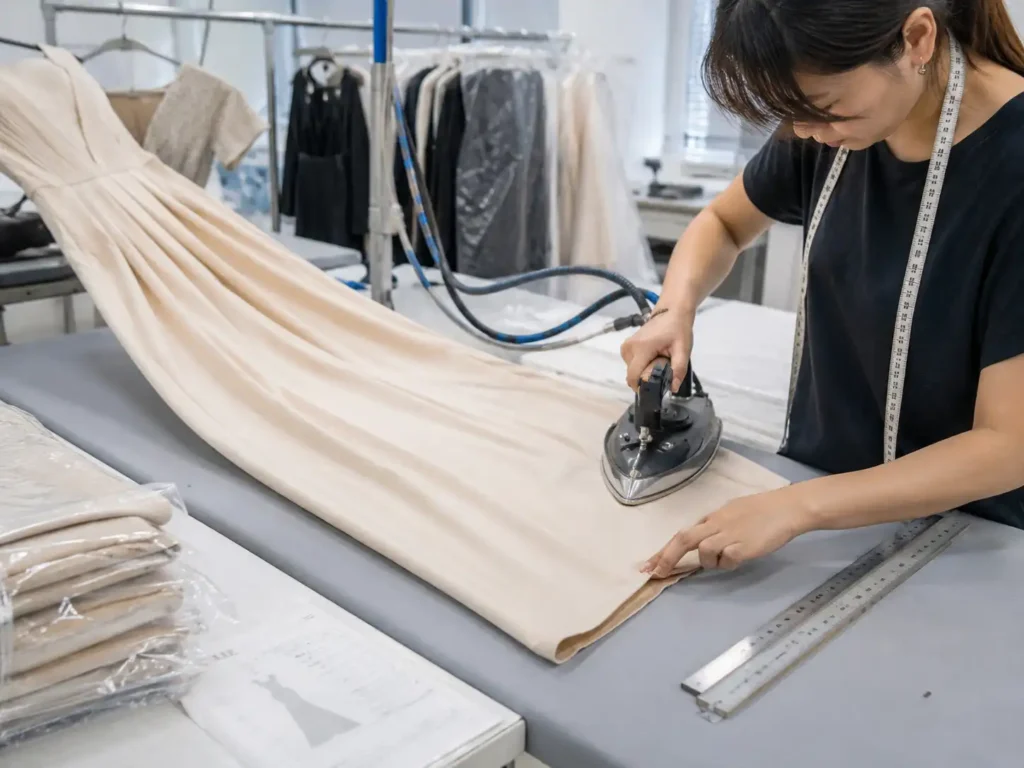
Hem and Pressing
PP Sample Controls Sample-to-Bulk Consistency
Approved Product Standard
Production Instruction File
Material Reference Control
Golden Reference Use
Quality Control Designed Around Travel Dress Risks
Incoming Material QC
Bulk fabric and trims are reviewed before cutting. Relevant checks may include color, dye lot, width, weight, hand feel, stretch, recovery, shrinkage, transparency, print direction, surface defects, lining match, zipper function, and trim consistency. Travel-related concerns include:
- Wrinkle appearance
- Stretch recovery
- Opacity in light colors
- Print and base-color consistency
- Fabric growth
- Lining breathability
- Care compatibility
Cutting QC
Cutting checks confirm fabric face, grain, stretch direction, nap or shine direction, print orientation, pattern placement, size bundles, piece counts, and defect avoidance.
Lightweight fabrics may shift during cutting; printed fabrics may require directional markers; long dresses may amplify small length errors.
Accurate bundle control also prevents size mixing later in production.
Sewing QC
In-line inspection reviews critical construction while garments are still moving through production.
Travel dress checks may cover neckline stability, armhole shape, strap security, waist measurement, pocket position, zipper flatness, side seam direction, slit height, lining attachment, and hem preparation.
Early correction prevents the same issue from repeating across a large production quantity.
Measurement QC
Final Garment QC
Packing and Shipment QC
Factory System for Multi-Style Travel Collections
Product-Based Allocation
Multi-Style Development
Capacity Coordination
Production Line Planning
Merchandising Control
Repeat Order Records
Private Label Packing Ready for Brand Delivery
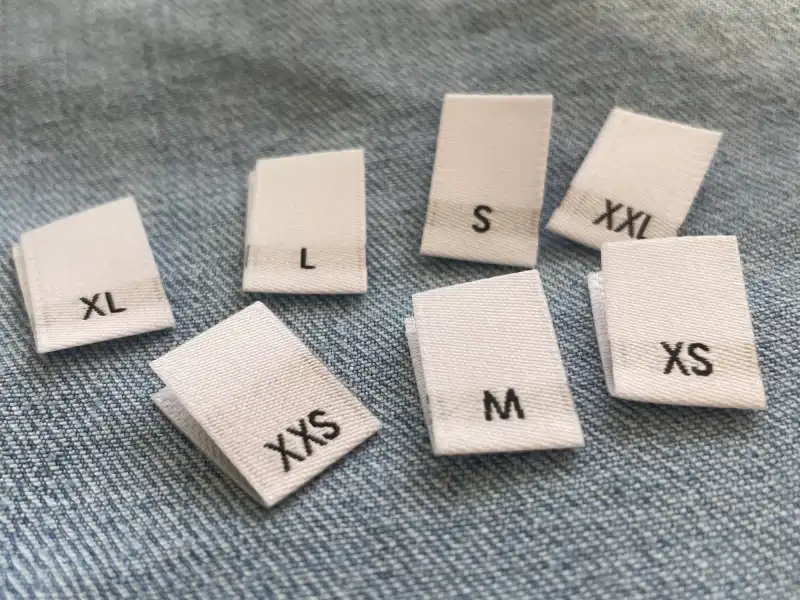
Brand and Size Labels
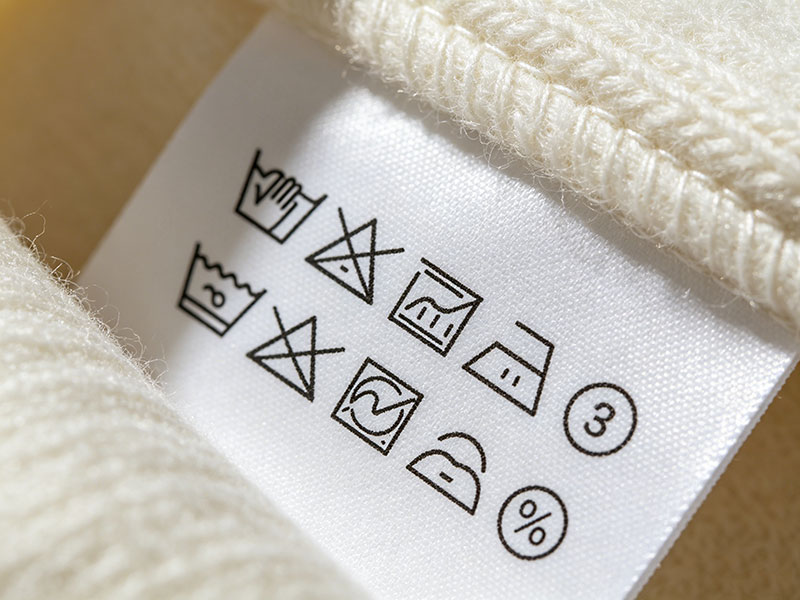
Care and Fiber Labels

Hangtags and Strings
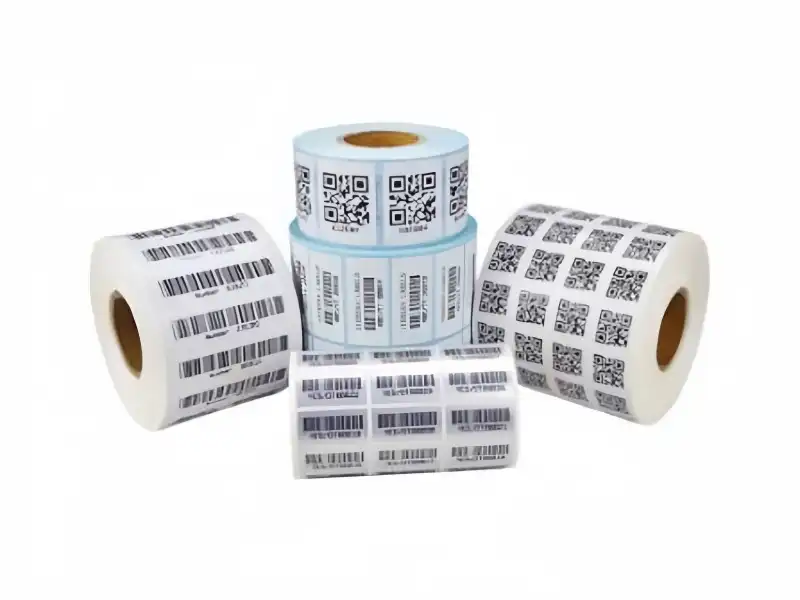
Barcode and SKU Control
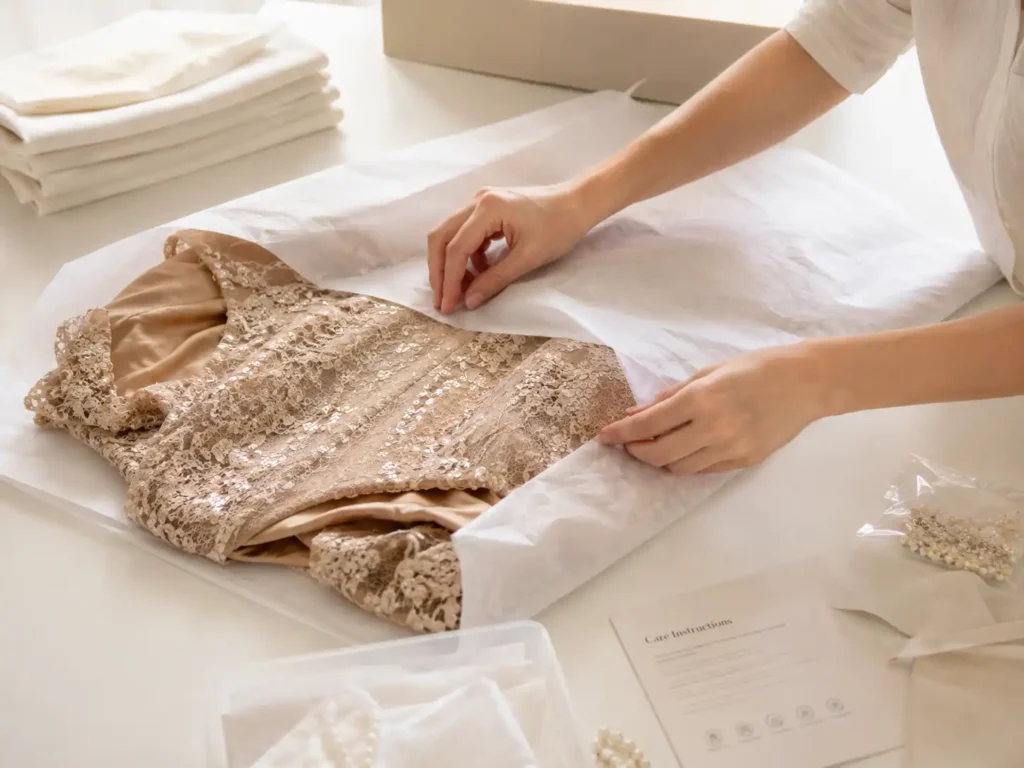
Protective Folding
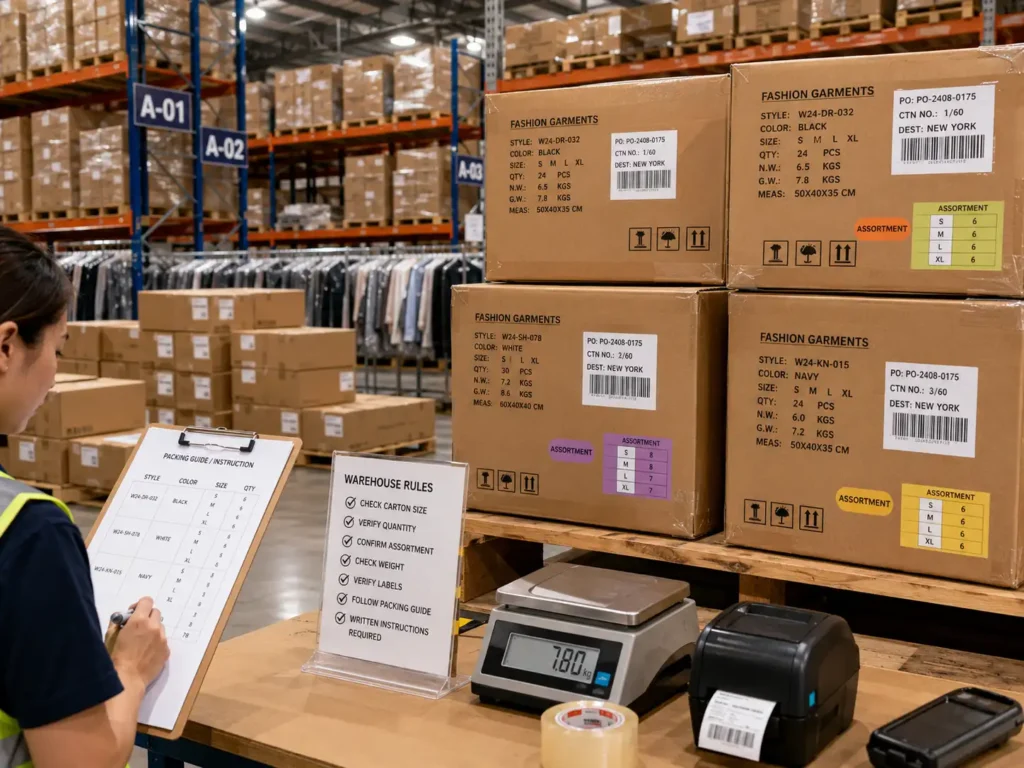
Cartons and Warehouse Marks
Launch Planning from Design Freeze to Warehouse
Design Freeze
Material Approval
Sample Approval
Bulk Preparation
Production and QC
Shipping and Receiving
Representative Travel Dress Production Programs

US Ecommerce Collection
Region: United States
Brand Type: Premium ecommerce womenswear
Program Size: 18 styles
Total Quantity: 36,000 garments
Average Quantity: 2,000 garments per style across approved colors
Product Mix: Jersey midi dresses, wrap dresses, shirt dresses, and fitted travel styles
Size Direction: US sizing with extended sizes on selected styles
The program required a consistent travel identity across several silhouettes rather than one repeated pattern. Development priorities included comfortable waist ease, concealed side pockets, opacity in light colors, stable jersey necklines, and compact ecommerce packing.
Production planning separated stretch jersey from woven shirt-dress styles. Measurement charts, fabric references, pocket dimensions, sewing instructions, and label positions were controlled by style. Knit inspections focused on recovery, side-seam twisting, neckline shape, and relaxed measurements. Woven styles received additional checks for plackets, collars, belts, and pocket flatness.
The collection structure allowed each style to maintain its own fit and construction while using coordinated labels, hangtags, barcode rules, polybags, and carton marks.
Australian Resort Program
Region: Australia
Brand Type: Established resort and vacation label
Program Size: 24 styles
Total Quantity: 60,000 garments
Average Quantity: 2,500 garments per style across color and print plans
Product Mix: Printed maxi dresses, fluid midi dresses, wrap silhouettes, and lined resort dresses
Size Direction: AU sizing with selected petite length adjustments
Main development risks included print direction, transparency, long hems, fluid viscose behavior, lining color, shrinkage, and seasonal timing. Artwork scale and repeat were reviewed with the base fabric before cutting plans were finalized.
Maxi dresses received front-back length review, hanging observation, lining balance, and final hem leveling. Light colors used coordinated lining based on opacity review. Print records covered approved colors, direction, repeat, and placement requirements. Packing methods were adjusted to protect long hems and reduce strong compression around waist seams.
The 24-style structure required clear sample tracking, material status updates, and production allocation according to fabric and construction.

European City Travel Range
Region: Europe
Brand Type: Multi-channel women’s fashion brand
Program Size: 12 styles
Total Quantity: 24,000 garments
Average Quantity: 2,000 garments per style
Product Mix: Ponte dresses, crepe midi dresses, structured shirt dresses, and day-to-night travel styles
Size Direction: EU sizing with a defined extended range
The range required a polished city-travel appearance with stable coverage, restrained wrinkle appearance, sitting comfort, and retail-ready presentation. Development focused on waist and hip ease, arm movement under layering, pocket concealment, zipper flatness, and fabric weight.
Ponte styles were reviewed after garment relaxation to protect measurement accuracy. Crepe styles required controlled seam finishing, pressing, and lining decisions. Shirt dresses used approved collar, placket, button, sleeve-tab, and belt specifications.
Private-label requirements included main labels, care labels, hangtags, barcode stickers, size stickers, packing ratios, and warehouse carton marks. Production and packing records were retained to support later replenishment.
How Brands Should Qualify Travel Dress Manufacturers
Category Experience
Fabric Knowledge
Pattern Capability
Sampling Structure
Performance Review
Bulk Control
Private Label Delivery
Design Protection
Download the Travel Dress Development Checklist
Product Development Checklist
- Intended travel scenario
- Target climate and season
- Dress silhouette and length
- Fabric composition and weight direction
- Stretch and recovery expectations
- Wrinkle and packing expectations
- Opacity and lining
- Pocket size and placement
- Closures and adjustable details
- Base size and size range
- Grade rules and tolerance
- Care instruction direction
- Labels, hangtags, and packing
- Required testing
- Target quantity and delivery window
Supplier Qualification Checklist
The supplier review section should cover:
- Factory and production structure
- Sample rooms and pattern team
- Fabric and trim sourcing
- Fit correction process
- PP sample control
- Material inspection
- Cutting and in-line QC
- Measurement inspection
- Final and packing inspection
- Private-label capability
- Project reporting
- NDA and file protection
- Repeat-order records
- Export documentation
The checklist can be used during initial RFQ review, sample evaluation, factory meetings, and vendor approval.
Travel Dress Manufacturing Questions
A travel dress is developed to balance fashion, movement, care, packing, climate, and repeat wear. Depending on the product direction, it may offer controlled wrinkling, compact packing, stretch, breathability, easy care, secure pockets, adjustable details, or day-to-night versatility.
Jinfeng Apparel can develop travel midi dresses, maxi dresses, shirt dresses, wrap dresses, A-line dresses, jersey dresses, printed vacation dresses, structured city travel dresses, day-to-night dresses, and selected resort travel styles.
Jinfeng can source and evaluate fabrics with reduced-crease or better recovery characteristics. Final wording should reflect the confirmed fabric, garment construction, care method, and agreed test basis. “Wrinkle-free” should not be used without valid supporting evidence.
Quick-dry development can be evaluated when a confirmed fabric specification and test requirement are provided. Drying performance depends on fiber, fabric structure, weight, finishing, garment construction, and test method.
Yes. Options may include side-seam pockets, concealed interior pockets, waist-seam pockets, or selected zippered pockets. Pocket dimensions, opening, security, bag material, placement, and expected load should be defined during development.
Common directions include stretch jersey, ponte, crepe, rayon or viscose, linen blends, lightweight polyester woven fabrics, chiffon, and soft stretch suiting. Selection depends on climate, silhouette, care, price, opacity, movement, and wrinkle expectations.
Yes. Jinfeng can develop US, UK, EU, AU, alpha-size, extended-size, plus-size, petite, and tall specifications according to the brand’s approved measurements and grade rules.
Please provide the base size, full size range, points of measurement, grade rules, measurement tolerance, and key dimensions such as bust, waist, hip, length, strap, armhole, neckline depth, slit height, and lining length.
Sampling time is confirmed after technical files, materials, trims, construction, size range, and required sample type are reviewed. A standard jersey dress and a custom printed lined maxi dress require different schedules. Complete files and approved materials improve timeline control.
Supported sample types include first samples, fit samples, revised samples, photo-ready samples, salesman samples, pre-production samples, PP samples, and sealed reference samples. The required combination depends on the project.
Bulk production follows the approved PP sample, pattern version, measurement chart, fabric reference, trim details, sewing instructions, label placement, packing method, and defined QC checkpoints. Material, in-line, final, and packing inspections support consistency.
Yes. Print development may cover artwork scale, repeat, color, base fabric, direction, placement, shrinkage, hand feel, and bulk production method. Custom print MOQ and timing depend on the selected supplier and process.
MOQ starts from 200 pieces per style and color. Material development, exclusive colors, special trims, custom prints, packaging, and fragmented size-color ratios may require a higher quantity.
Yes. Jinfeng supports main labels, size labels, care labels, hangtags, barcode stickers, SKU labels, polybags, carton marks, warehouse labels, and retail- or ecommerce-ready packing.
Yes. Jinfeng supports NDA-based cooperation and protects technical packs, patterns, samples, fabric and trim details, private labels, packaging, unpublished designs, quantities, and launch information throughout development and production.

Send Your Travel Dress Project for Review
Send your technical pack, reference garment, sketches, or annotated images together with the planned quantity per style and color. Include the target size range, grade rules, fabric direction, preferred hand feel, color plan, lining, pockets, trims, labels, packing, performance requirements, delivery destination, and launch window.
Jinfeng Apparel will review product structure, material feasibility, pattern requirements, MOQ, sample development, bulk production, quality control, packing, and delivery coordination. Where information remains incomplete, the team will identify the decisions needed before accurate sampling or quotation can proceed.
Please prepare:
- Technical pack or clear reference files
- Style list and quantity plan
- Color and size breakdown
- Fabric and lining direction
- Travel performance requirements
- Label and packaging files
- Required testing or inspection
- Target warehouse date