Skip to content
Dinner Dress Manufacturer
Custom dinner, cocktail, evening, and occasion dresses developed for global fashion brands, retailers, sourcing teams, and established womenswear programs.
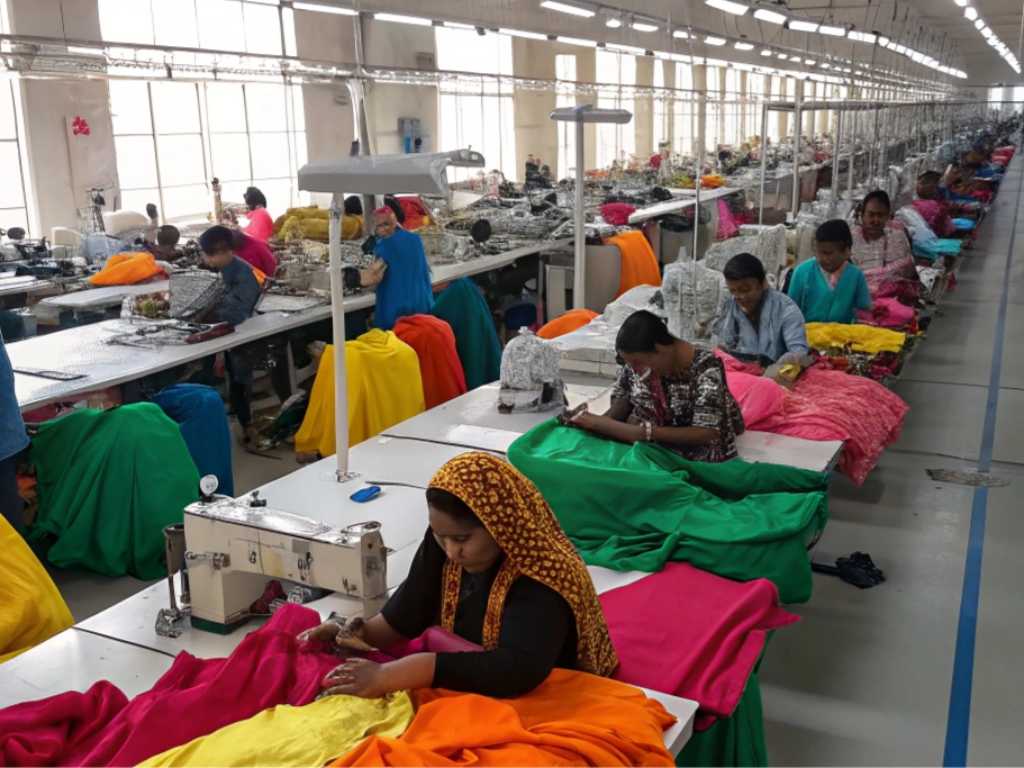
Jinfeng Apparel develops dinner dress collections from design references, technical files, or original samples through fabric sourcing, pattern development, sampling, bulk production, quality control, private-label packing, and export coordination.
- Since 2008, with 16+ years of custom womenswear manufacturing experience
- 12 core dinner dress categories covering satin, corset, bodycon, lace, mesh, sequin, cocktail, midi, and maxi styles
- Sample development ranges from 7–25 days according to construction and material complexity
- MOQ starts from 200 pieces per style/color under regular production conditions
- 6 owned factories, 10+ long-term production partners, 18+ sewing lines, and 6+ flexible production lines
- 2 sample rooms, 7+ senior pattern makers, 20+ sample machinists, and 15+ QC inspectors
Dinner Dress Manufacturing Supported by Measurable Capabilities
Since 2008
Six Owned Factories
Ten Plus Partners
Two Sample Rooms
Seven Pattern Makers
Fifteen QC Inspectors
One Manufacturing Chain From Design to Delivery
Product Development
Fabric and Trims
Pattern Engineering
Sample Development
Bulk Production

Built for Structured Dinner Dress Programs
Global Fashion Brands
Occasionwear Labels
Premium Ecommerce Brands
Fashion Retailers
Sourcing Teams
Product Developers
Risks That Can Damage a Dinner Dress Collection
Sample-Bulk Difference
Unstable Bust Support
Satin Surface Damage
Decoration Failure
Incorrect Dress Balance
Missed Launch Window
Why Brands Choose Jinfeng for Dinner Dresses
A suitable dinner dress manufacturer needs to understand how visual direction, fit, materials, manufacturing limits, commercial quantities, and delivery timing interact. Jinfeng organizes each program around the garment rather than treating every dress as an identical sewing order.

Dress-Focused Product Development
Dinner dresses are assessed by silhouette, occasion, exposure, movement, fabric surface, internal structure, decoration, target price, and bulk reproducibility. A satin slip dress requires a different development method from a boned corset mini or fully sequined maxi.
Pattern and sample teams examine the areas most likely to create fit or production problems:
- Bust shape and coverage
- Waist position and shaping
- Hip ease or compression
- Neckline depth
- Shoulder and strap stability
- Zipper position
- Slit opening
- Lining coverage
- Dress and hem length
- Construction repeatability
The aim is not merely to reproduce an image. The design must become a garment that can be graded, sewn, inspected, packed, shipped, and reordered.

Fabric-Specific Manufacturing Decisions
Fabric selection affects pattern dimensions, seam choice, lining, needle and thread requirements, pressing, waste, cost, MOQ, and packing. Satin, velvet, lace, mesh, chiffon, jersey, crepe, and sequined materials cannot share one fixed construction method.
Fabric review covers:
- Weight and drape
- Stretch and recovery
- Transparency
- Surface sensitivity
- Shrinkage risk
- Color consistency
- Lining compatibility
- Seam behavior
- Pressing response
- Bulk availability
Alternative materials may be proposed when the original choice creates excessive risk, cost, lead time, or order quantity without delivering enough visual value.
What Defines a Commercial Dinner Dress
Dinner dress is a broad occasion-led category rather than one fixed silhouette. The commercial definition depends on event level, styling direction, price position, length, coverage, material, and the expected transition from dinner to evening social activity.
Between Cocktail and Eveningwear
A dinner dress often sits between casual going-out fashion and full formal eveningwear. Common styles include fitted midi dresses, satin slips, structured mini dresses, elegant maxi dresses, asymmetric silhouettes, corset dresses, ruched bodycon pieces, and refined lace designs.Compared with a cocktail dress, a dinner dress may use longer lengths, softer sensuality, calmer decoration, or more polished fabric. Compared with a formal gown, it is often easier to wear, pack, style, and sell across a wider range of events.
Commercial collections commonly address:
- Restaurant dinners
- Cocktail receptions
- Wedding welcome dinners
- Rehearsal dinners
- Corporate dinners
- Charity banquets
- Holiday celebrations
- Resort evenings
- Birthday dinners
- Date nights
Designed Around Occasion Level
The same design direction can be adjusted for several occasion levels.
A satin midi with a soft cowl neckline can serve a date-night collection, while a lined structured version with controlled slit height may fit premium formal dinner retail.
Product development should define:
- Expected dress code
- Length and exposure level
- Wearer movement
- Day-to-evening versatility
- Climate and season
- Photography requirements
- Fabric care expectations
- Retail price position
- Packaging presentation
Clear occasion positioning helps avoid designs that look visually appealing but do not meet the comfort, coverage, or styling expectations of the intended market.
Custom Dinner Dress Product Range

Satin Slip Dresses

Cocktail Midi Dresses
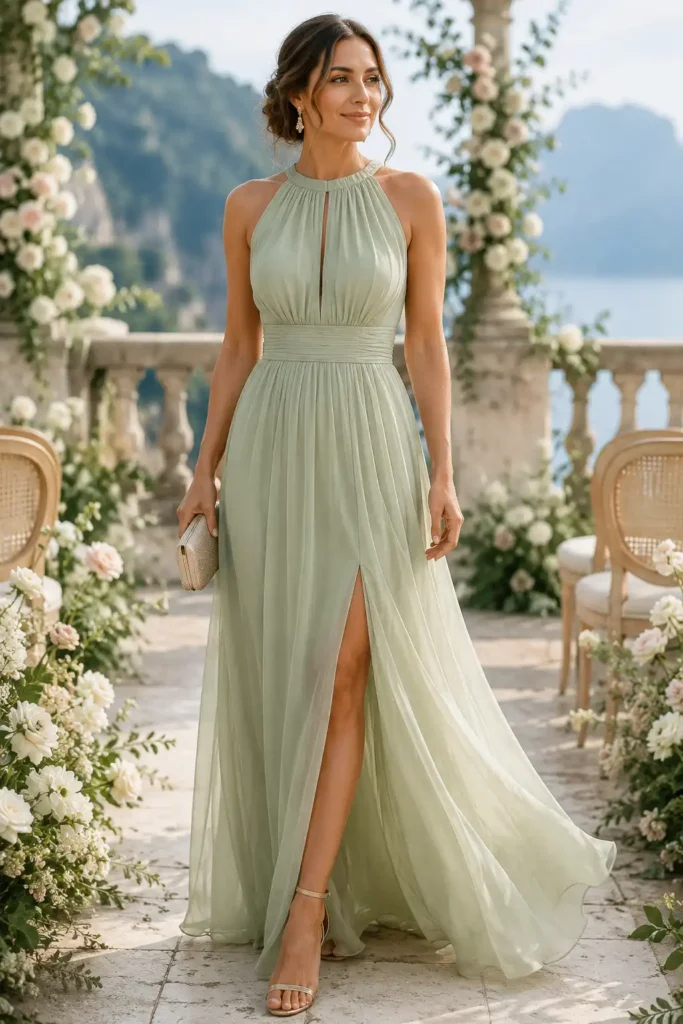
Formal Maxi Dresses

Corset Dinner Dresses

Ruched Bodycon Dresses

Halter Dinner Dresses

Strapless Dinner Dresses

One-Shoulder Dresses

Lace Dinner Dresses

Sequin Dinner Dresses
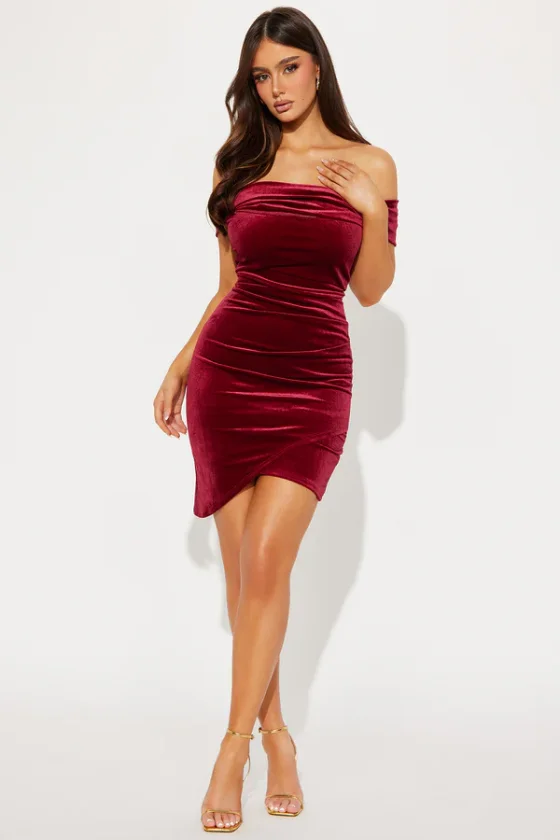
Velvet Dinner Dresses

Wedding Dinner Dresses
Dinner Dresses for Distinct Selling Occasions

Formal Corporate Dinner

Cocktail Reception
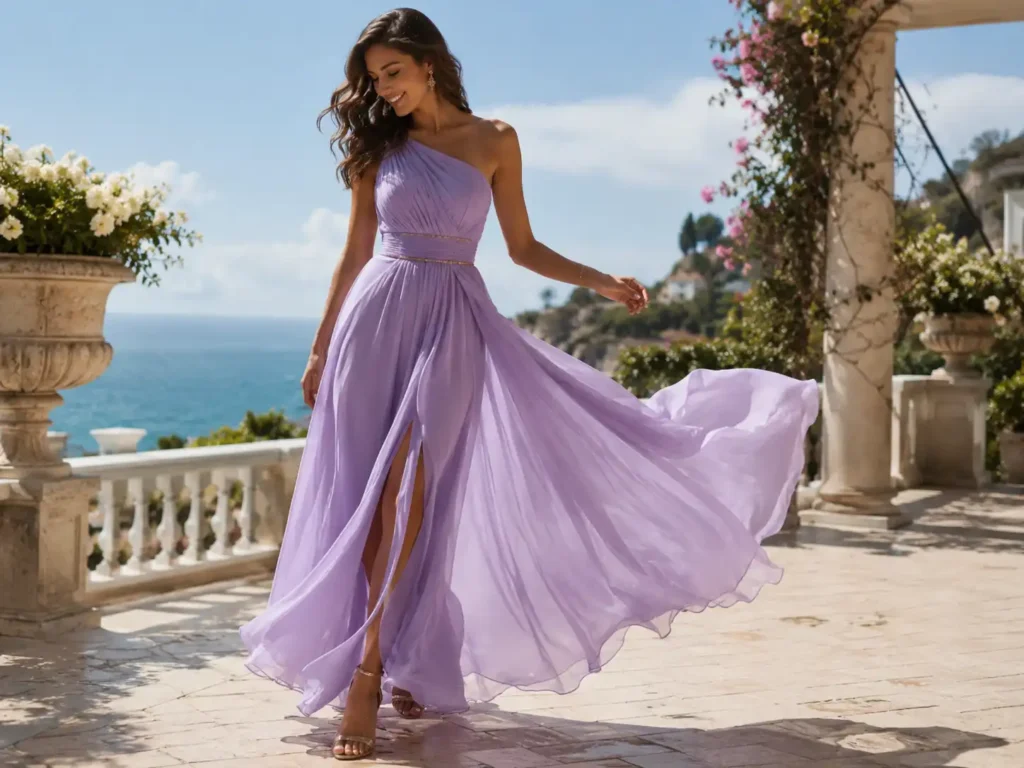
Wedding Welcome Dinner

Rehearsal Dinner

Restaurant Date Night
Gala Dinner
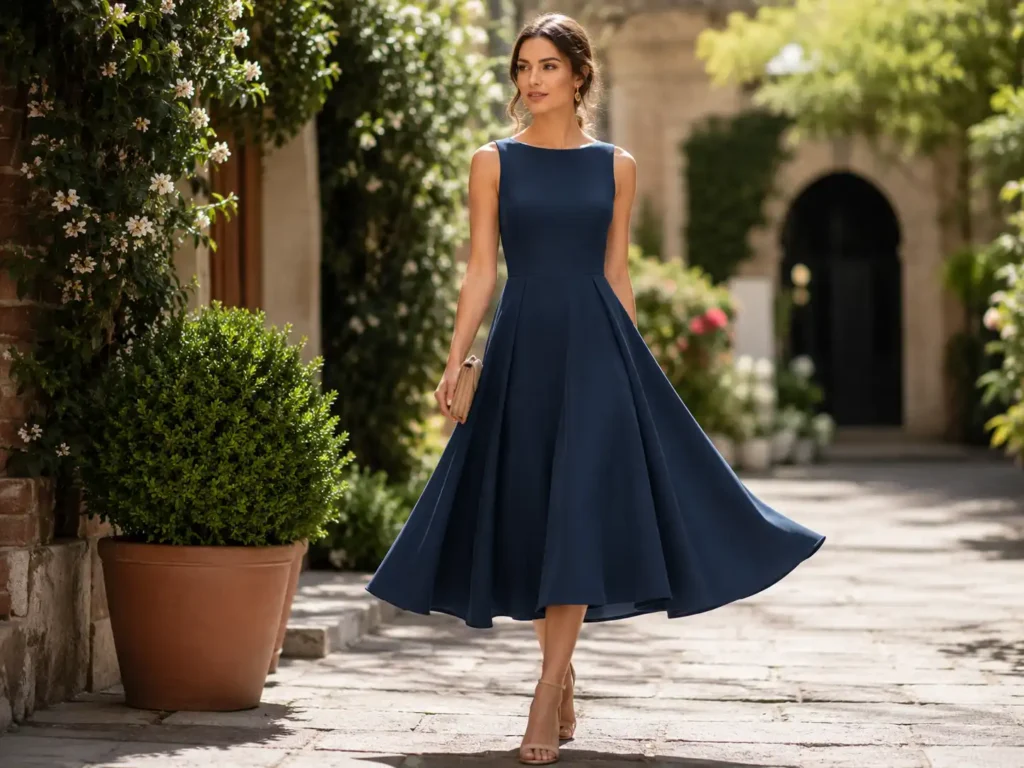
Holiday Celebration

Resort Evening
Length and Silhouette Development Options
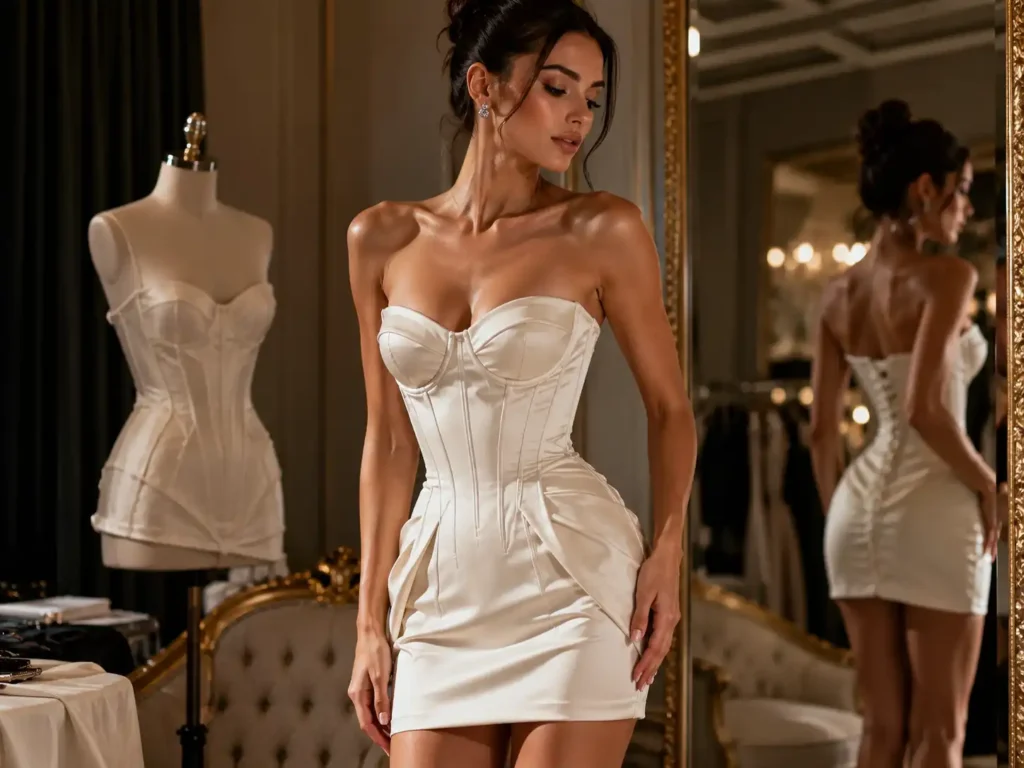
Mini Length

Knee Length

Midi Length
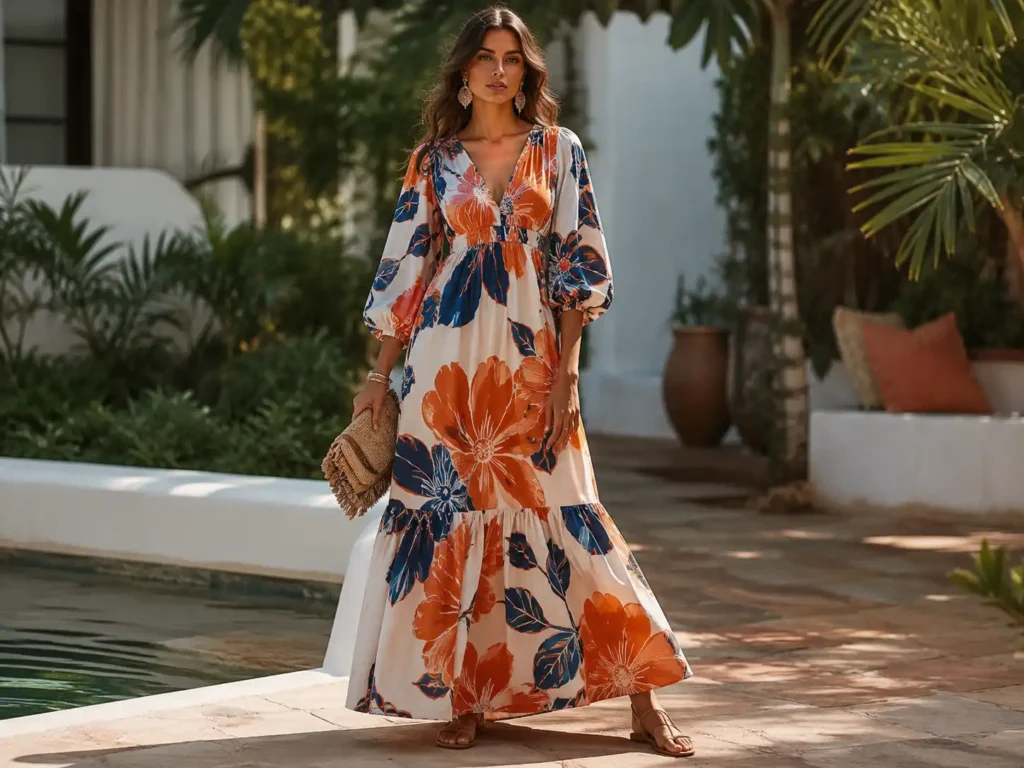
Maxi Length

Floor Length

Bodycon Shape

A-Line Shape

Slip Shape

Corset Shape

Mermaid Shape

Draped Shape

High-Slit Shape

Structural Interpretation Before Pattern Work
A reference image rarely reveals seam allowances, lining, closure type, internal support, actual fabric, stretch, grain direction, or measurements. Jinfeng begins by reading the visible structure and identifying missing information.
Review points include:
- Front and back construction
- Bust and neckline shape
- Waist location
- Hip fit
- Shoulder or strap support
- Closure position
- Slit construction
- Lining coverage
- Hem volume
- Decoration placement
The brand team should also provide target market, size range, target quantity, intended price level, and launch date. These factors influence the recommended fabric, construction, and sample route.
OEM ODM and Private Label Development
OEM From Tech Packs
ODM From Design Direction
Private Label Delivery
Dinner Dress Fabric Selection Matrix
| Fabric | Best Applications | Visual and Fit Effect | Main Production Risks | Control Focus |
|---|---|---|---|---|
| Satin | Slip, midi, maxi, draped, cowl-neck dresses | Smooth shine, fluid drape, refined evening appearance | Snagging, puckering, shade variation, pressing marks | Grain direction, seam tension, needle condition, pressing protection |
| Stretch Satin | Fitted midi, corset, bodycon dinner dresses | Satin surface with closer fit and improved movement | Uneven stretch, bubbling, seam waves | Stretch direction, recovery, lining compatibility, controlled feeding |
| Chiffon | Formal maxi, layered, sleeve, draped styles | Lightweight movement and soft transparency | Seam slippage, fraying, uneven hems, transparency | Fine seam finish, lining, hanging before hemming, edge control |
| Crepe | Cocktail, formal midi, column, draped dresses | Matte finish, clean structure, versatile weight | Shrinkage, shine from pressing, seam impression | Fabric testing, pressing temperature, seam allowance |
| Lace | Wedding dinner, cocktail, fitted occasion dresses | Texture, femininity, premium detail | Motif mismatch, holes, transparency, color variation | Placement plan, lining tone, edge finish, careful cutting |
| Mesh | Bodycon, ruched, panelled, illusion dresses | Stretch, transparency, shaping, layered effect | Holes, seam stretch, uneven tension, exposure | Stretch direction, reinforcement, lining coverage, needle control |
| Power Mesh | Corset, support panels, fitted linings | Compression and internal stability | Excessive tension, discomfort, visible edges | Recovery, panel direction, seam strength, fit testing |
| Velvet | Winter dinner, formal midi, holiday dresses | Rich surface, depth, premium seasonal look | Pile direction, crushing, seam marks, pressure lines | One-way cutting, handling, low-pressure finishing, packing |
| Sequin Fabric | Holiday, party, statement dinner dresses | Strong evening-light impact | Sequin loss, scratching, broken needles, bulky seams | Seam preparation, backing, edge protection, secure packing |
| Tulle | Layered skirts, corset dresses, formal silhouettes | Volume, transparency, structured lightness | Snagging, uneven layers, rough edges | Layer control, lining, cutting accuracy, edge finish |
| Jersey | Ruched bodycon, draped midi, date-night dresses | Stretch, comfort, body shaping | Twisting, seam growth, recovery loss | Grain, stretch testing, seam stabilization, measurement control |
| Ponte | Structured bodycon, corporate dinner, fitted midi | Dense stretch, clean shape, stable coverage | Heavy seams, pressing shine, restricted recovery | Seam grading, pressing protection, fit and recovery testing |
Satin Dinner Dress Manufacturing Controls
Satin remains one of the strongest dinner dress materials because it communicates polish, movement, and evening value. Its reflective surface also reveals defects more clearly than many matte fabrics.
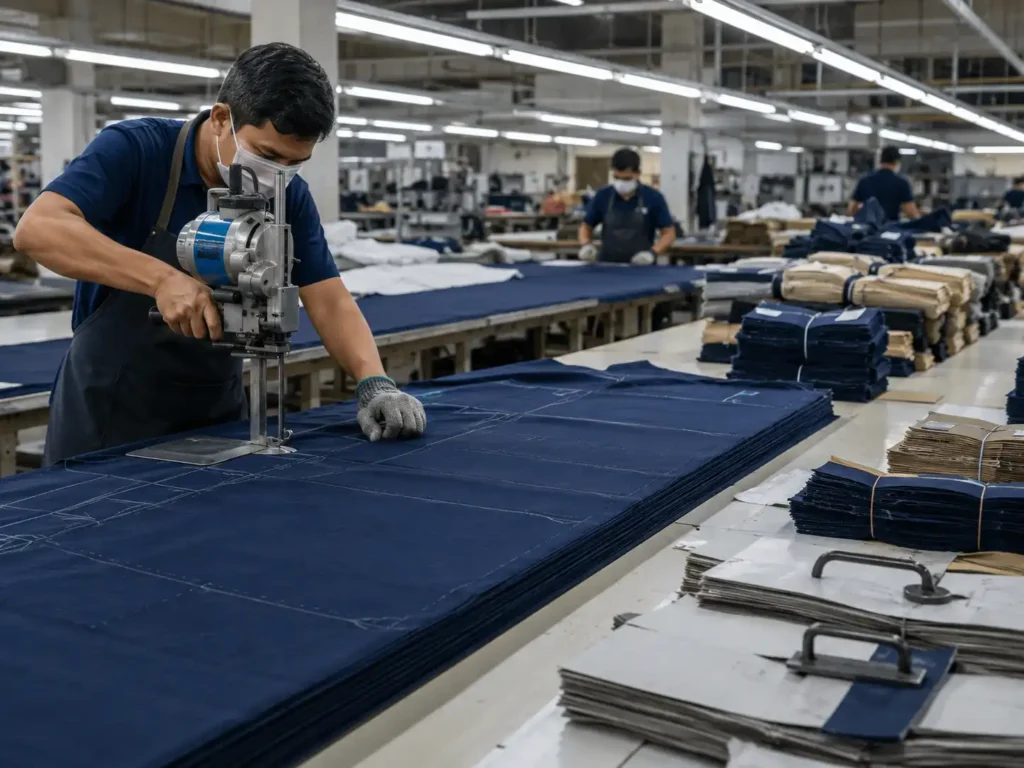
Cutting Direction and Surface Protection
Satin panels can appear different in color when cut in opposing directions because light reflects along the yarn and surface differently. All visible panels should follow the approved direction unless the design intentionally uses contrast.
Cutting control includes:
- Confirming face and reverse sides
- Marking fabric direction
- Checking shade before cutting
- Avoiding surface scratches
- Using clean cutting areas
- Separating damaged sections
- Controlling bias-cut movement
- Bundling pieces without excessive pressure
Bias-cut slip dresses need added attention because panels can grow, twist, or drop unevenly before hemming. The sample process should establish hanging time and final hem method.
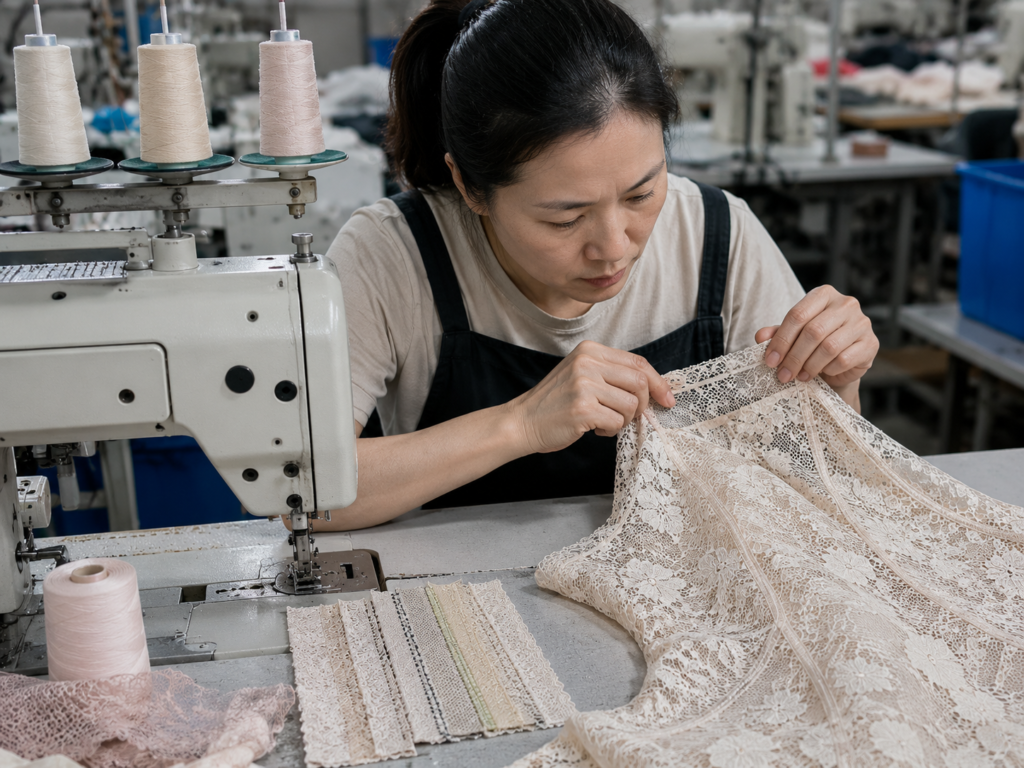
Seam Puckering and Zipper Flatness
Satin easily displays sewing tension. Tight thread tension, unsuitable needles, inconsistent feeding, narrow seam allowances, or poor handling can create visible waves.
Important controls include:
- Correct needle condition and size
- Balanced upper and lower thread tension
- Stable stitch density
- Controlled feeding
- Appropriate seam allowance
- Reinforcement where needed
- Careful invisible-zipper installation
- Reduced stretching during handling
Zipper areas need checking from several viewing angles. A zipper may function correctly but still create waves under reflected light. Seam methods should be verified during sample development before large quantities are sewn.
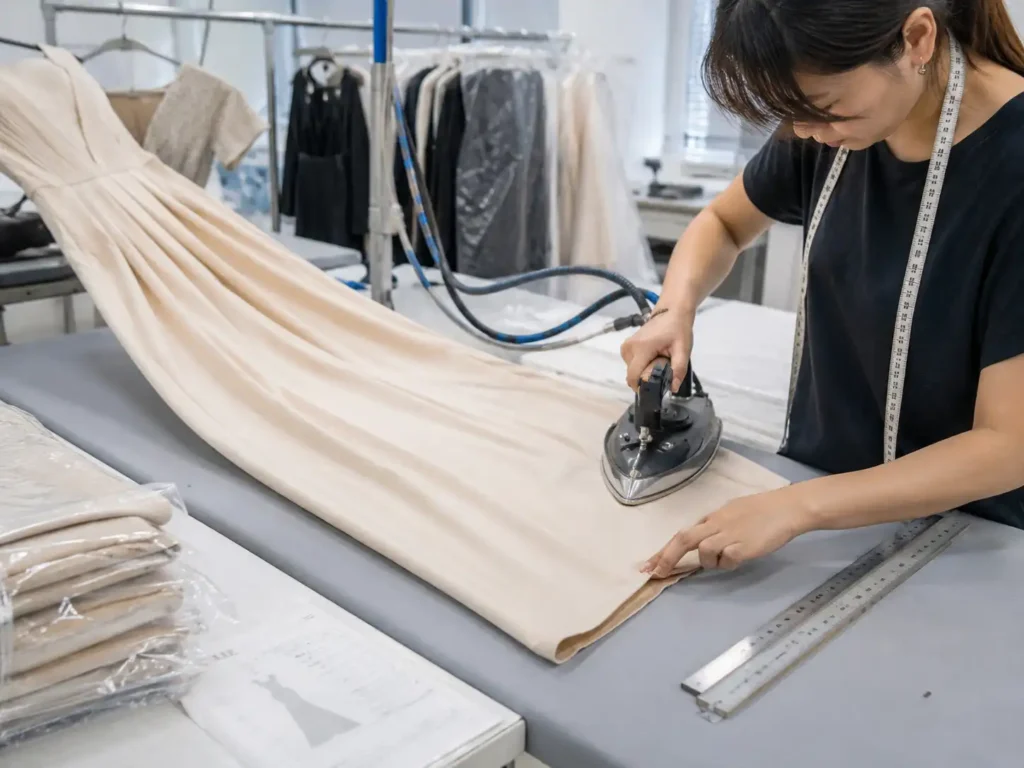
Pressing and Anti-Crease Packing
Excessive heat or pressure can create shine, glazing, seam impressions, water marks, or irreversible surface damage. Pressing settings need testing on the actual bulk fabric, not only on a similar swatch.
Finishing control includes:
- Pressing from the appropriate side
- Protective pressing cloth
- Controlled temperature
- Limited pressure
- Clean pressing surfaces
- Cooling before packing
- Tissue or protective layers
- Folding along low-risk areas
- Carton pressure planning
For premium satin programs, hanging or garment-bag packing may be considered according to dress length, decoration, retail presentation, and freight cost.
Delicate Fabrics Need Different Manufacturing Methods
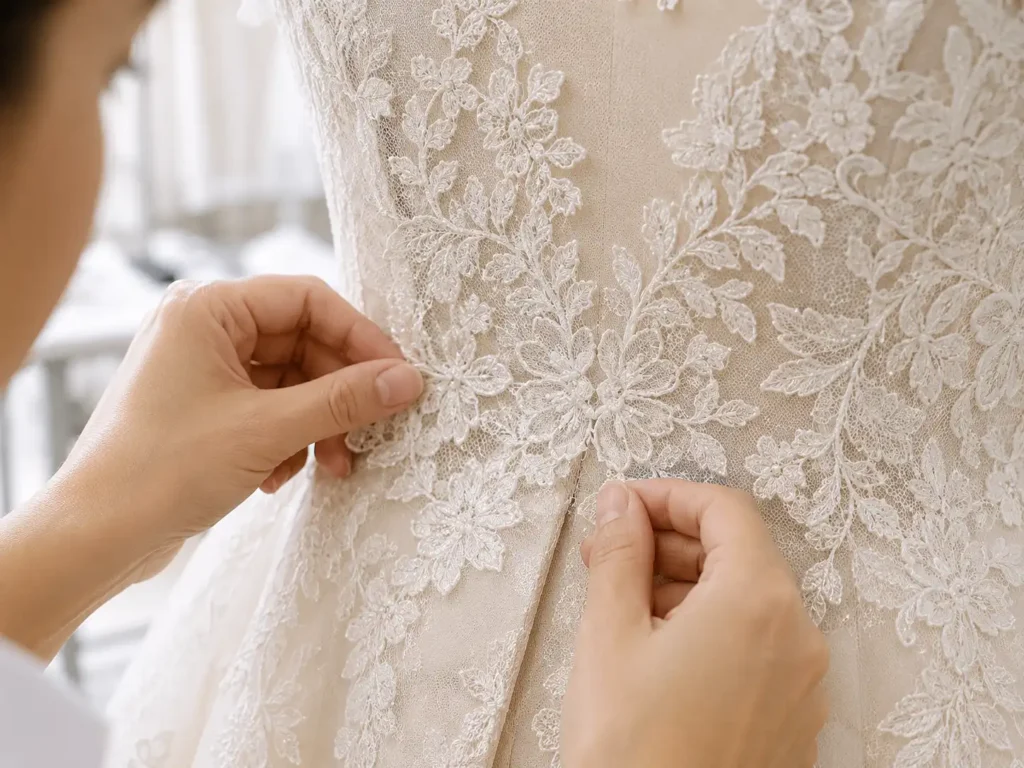
Lace Control
- Match visible motifs
- Inspect holes and broken yarns
- Approve lining color
- Control seam visibility
- Reinforce stress areas
- Protect scalloped edges

Mesh Control
- Confirm stretch direction
- Test recovery
- Prevent needle holes
- Control seam tension
- Plan lining coverage
- Reinforce straps and openings
- Inspect transparency under light
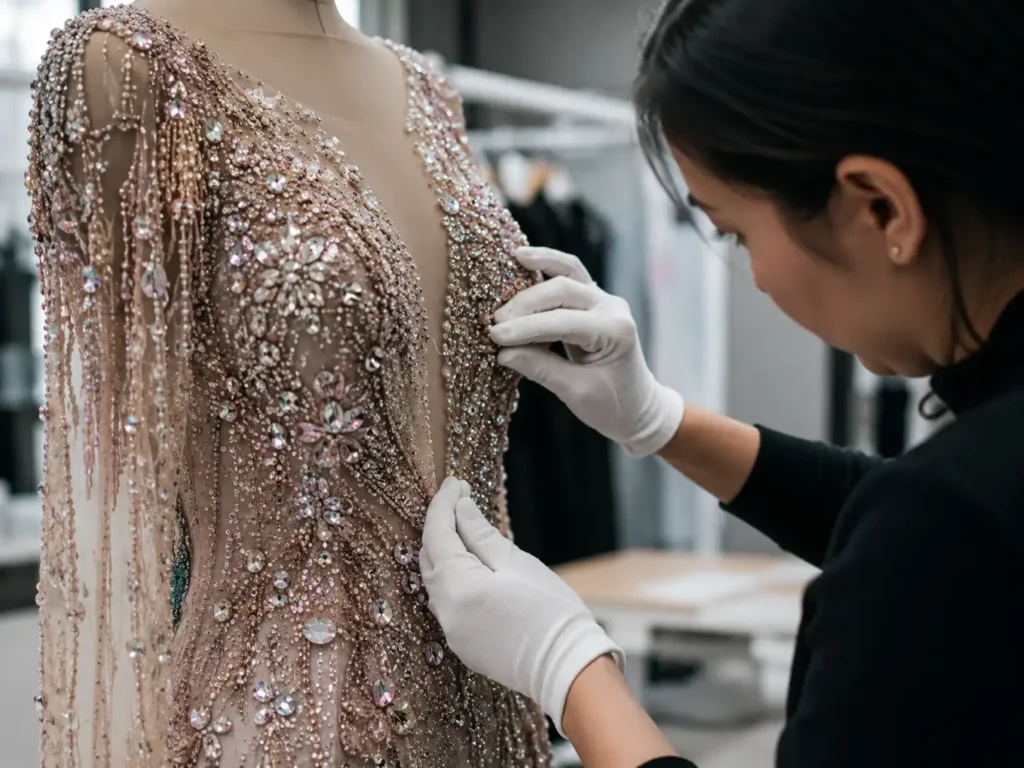
Sequin Control
- Secure loose decoration
- Protect skin-contact areas
- Control seam thickness
- Check sharp edges
- Test attachment strength
- Separate garments in packing
- Prevent surface compression
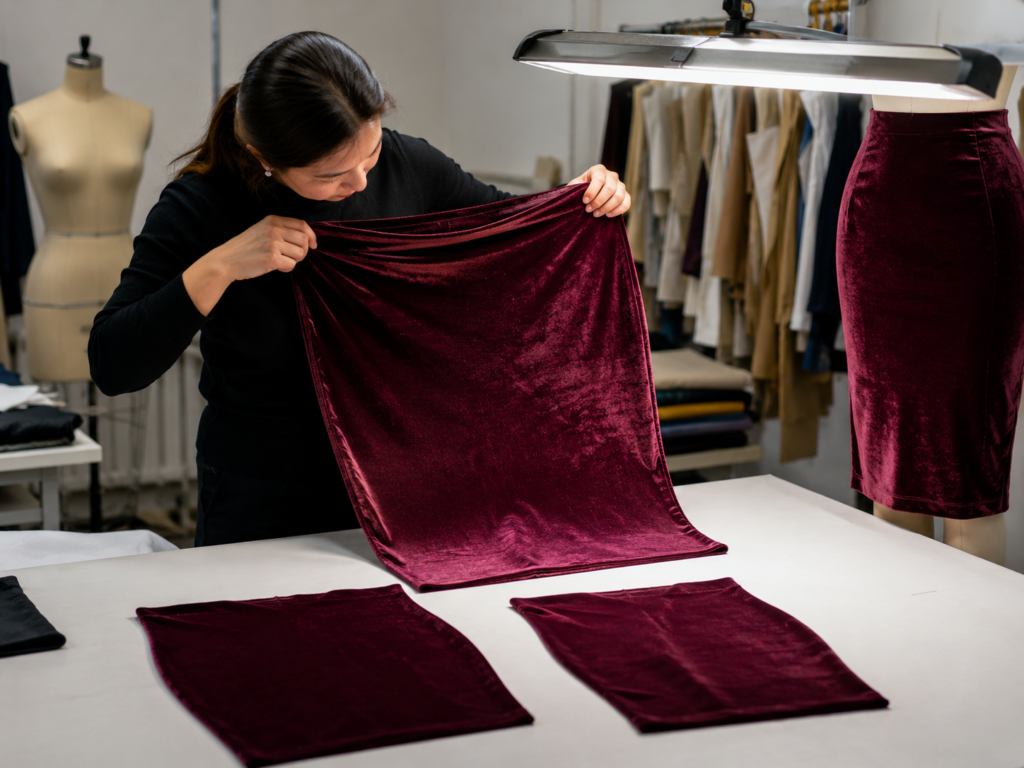
Velvet Control
- Mark pile direction
- Avoid excessive stacking pressure
- Control seam handling
- Use low-pressure finishing
- Prevent hanger marks
- Protect against carton compression
- Inspect under directional light
Internal Structure Trims and Finishing Components

Bra Cups
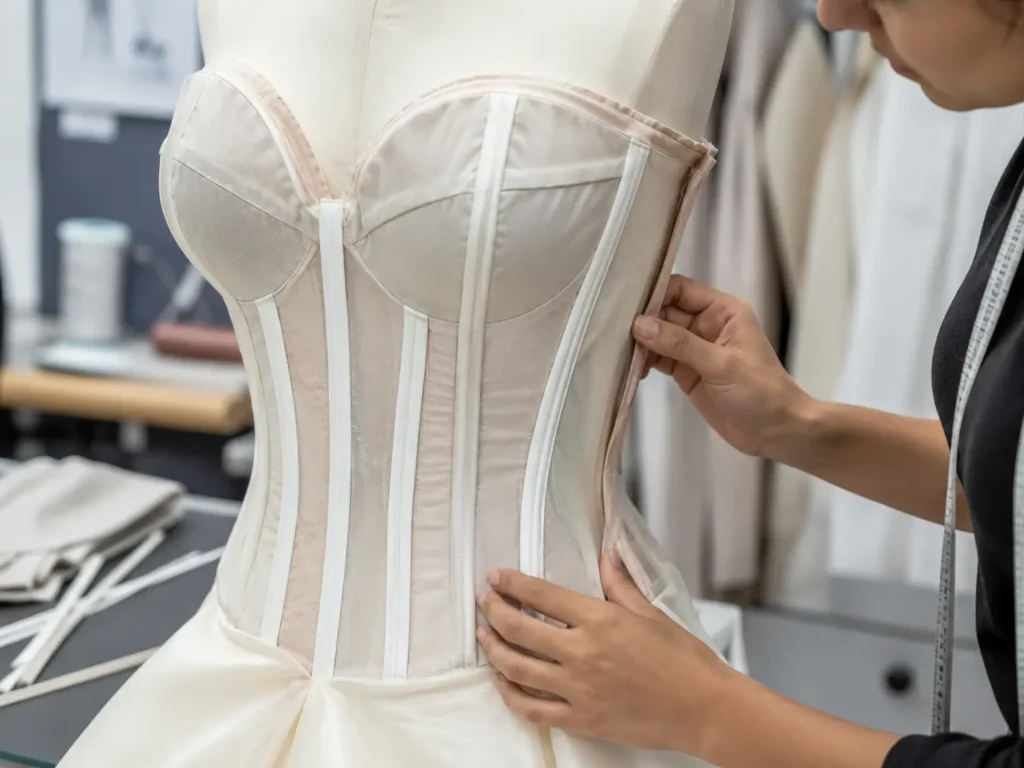
Boning
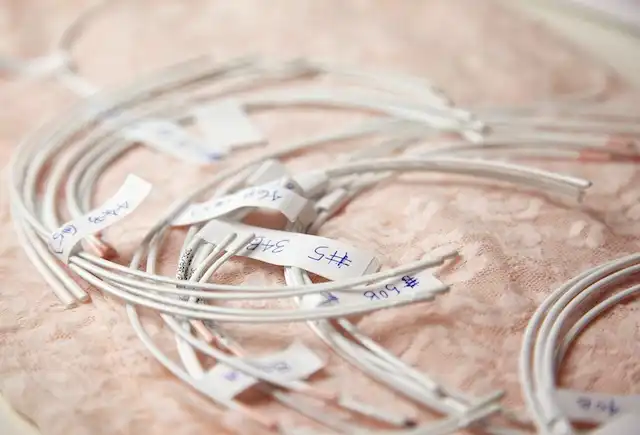
Underwires
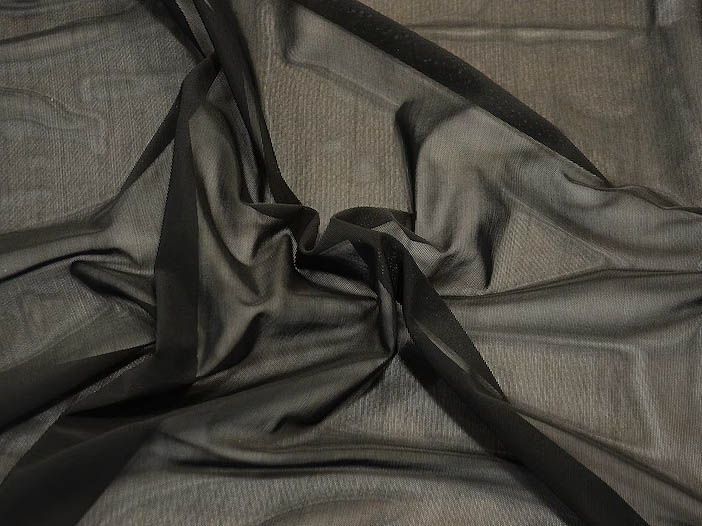
Power Mesh
Anti-Slip Tape

Linings

Invisible Zippers
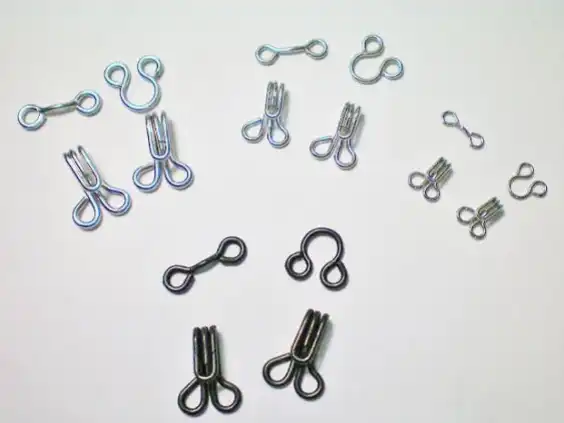
Hooks and Eyes
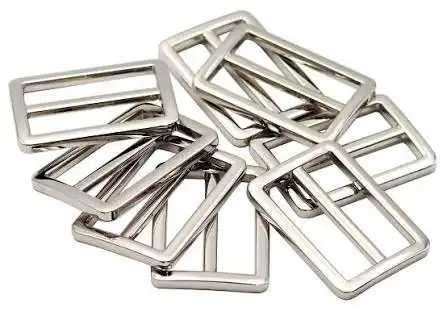
Strap Sliders

Rhinestone Trims
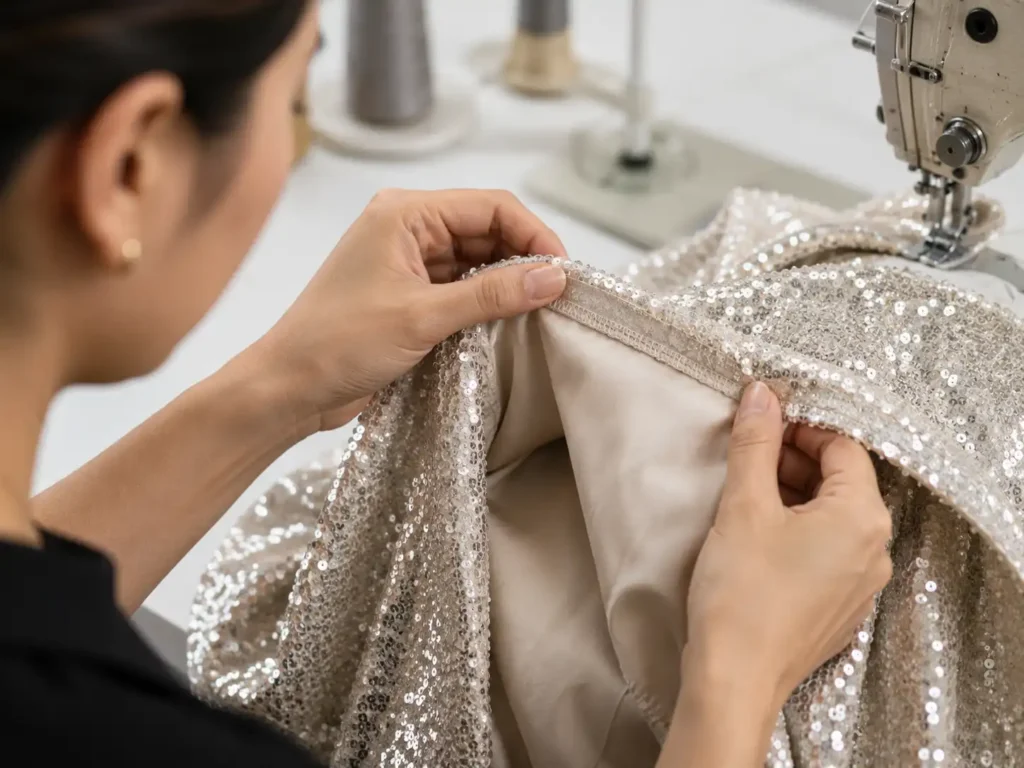
Beads and Sequins
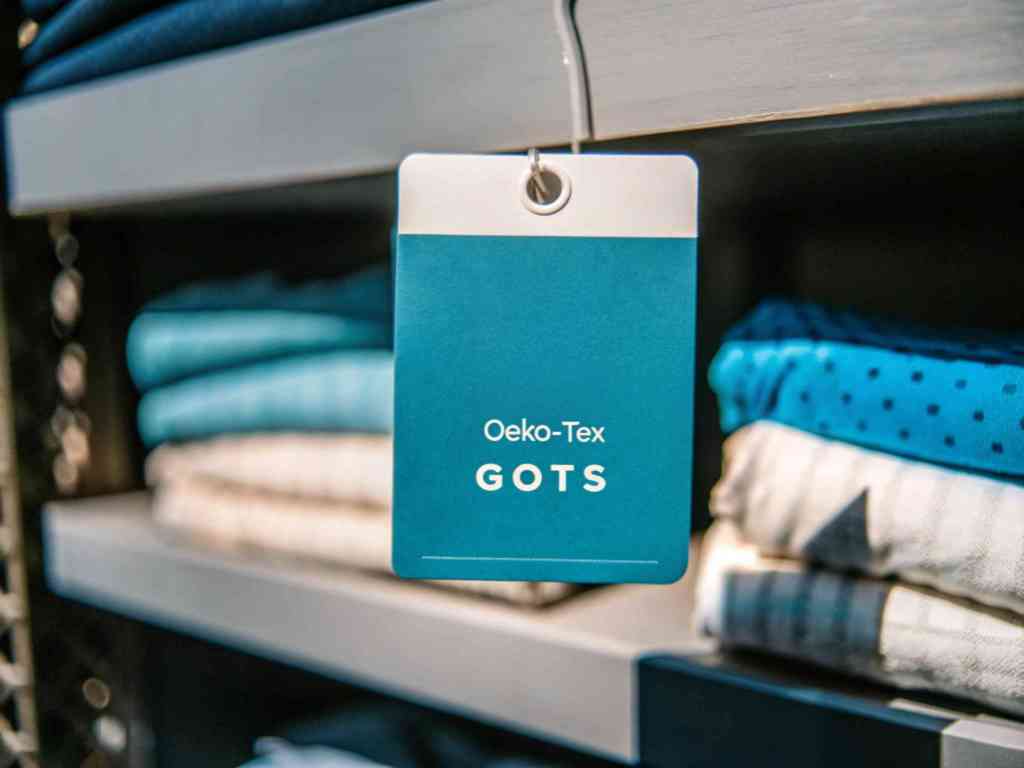
Brand Components
Pattern Engineering for Dinner Dress Fit
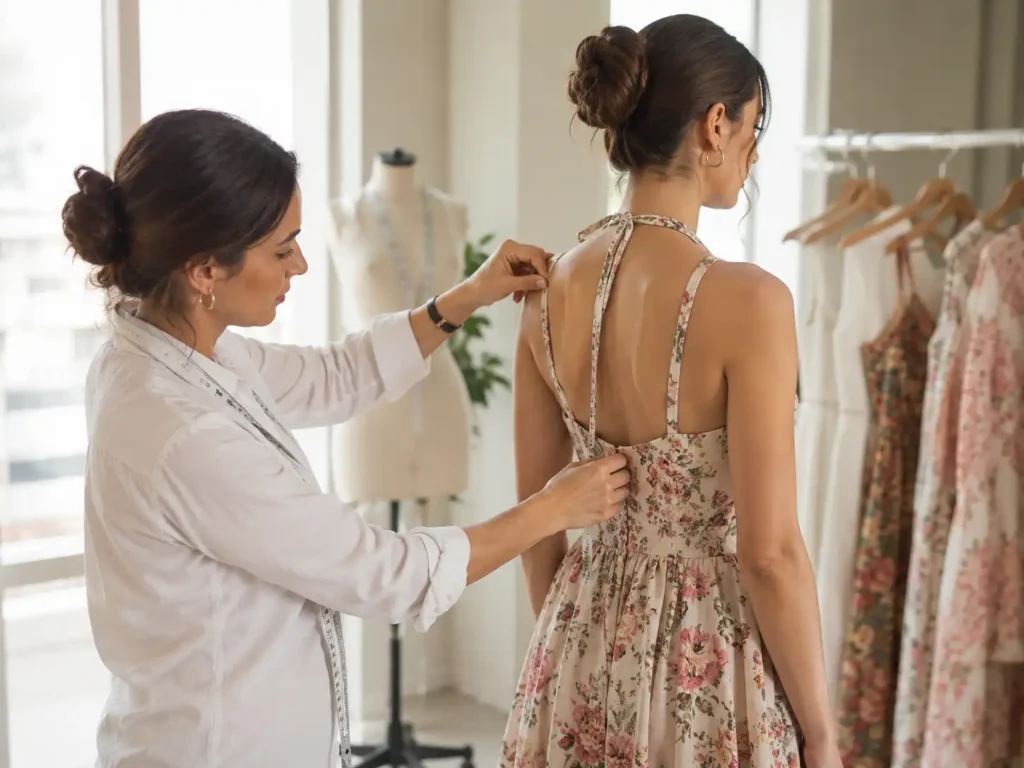
Dinner dress fitting is controlled through connected measurements and construction points. Jinfeng’s 7+ senior pattern makers, 2 sample rooms, and 20+ sample machinists support fitted, fluid, structured, asymmetric, and floor-length styles.
Bust Neckline and Support Engineering
Bust fit cannot be controlled by one circumference alone. Pattern makers review upper bust, full bust, underbust, cup position, neckline width, neckline depth, side coverage, armhole shape, strap position, and back opening.
Common risks include:
- Neckline gaping
- Underarm exposure
- Cup displacement
- Strapless slipping
- Weak deep-V support
- Tight upper bust
- Loose underbust
- Visible internal structure
- Uneven left-right shape
Corset and strapless styles may require multiple fitting points because small pattern changes affect cup shape, boning position, waist compression, zipper behavior, and neckline tension.
Waist Hip and Body Balance
Waist placement strongly affects the perceived proportion of a dinner dress. High-waist, natural-waist, low-waist, and dropped-waist designs require different pattern relationships.
Review points include:
- Front and back waist position
- Side-seam shape
- Waist-to-hip transition
- Hip ease
- Stretch compression
- Ruching distribution
- Slit opening
- Skirt fall
- Center-back balance
- Zipper stability
Fitted styles need enough movement for sitting and walking without losing the intended body shape. Fluid silhouettes still require controlled balance so seams and hems remain level.
Length Hem and Movement Engineering
Dinner dresses may be worn with different heel heights and across varied body proportions. Length review should define the intended finished position rather than relying on an unclear “mini,” “midi,” or “maxi” description.
Important POMs include:
- High-point shoulder to hem
- Center-front length
- Center-back length
- Side-seam length
- Lining length
- Slit height
- Hem sweep
- Train length
- Front-back hem difference
Maxi and floor-length samples should be reviewed while standing, walking, sitting, and turning. Fabric weight and bias behavior may change the hem after hanging.
Six Critical Dinner Dress Fit Controls
Bust Support
Neckline Coverage
Waist Placement
Hip Fit
Slit Control
Hem Balance
Size Development for the United States Market
US sizing requires clear brand-specific standards. Generic size labels are not enough for fitted dinner dresses, especially when the range includes structured bodices, stretch silhouettes, multiple lengths, or extended sizes.
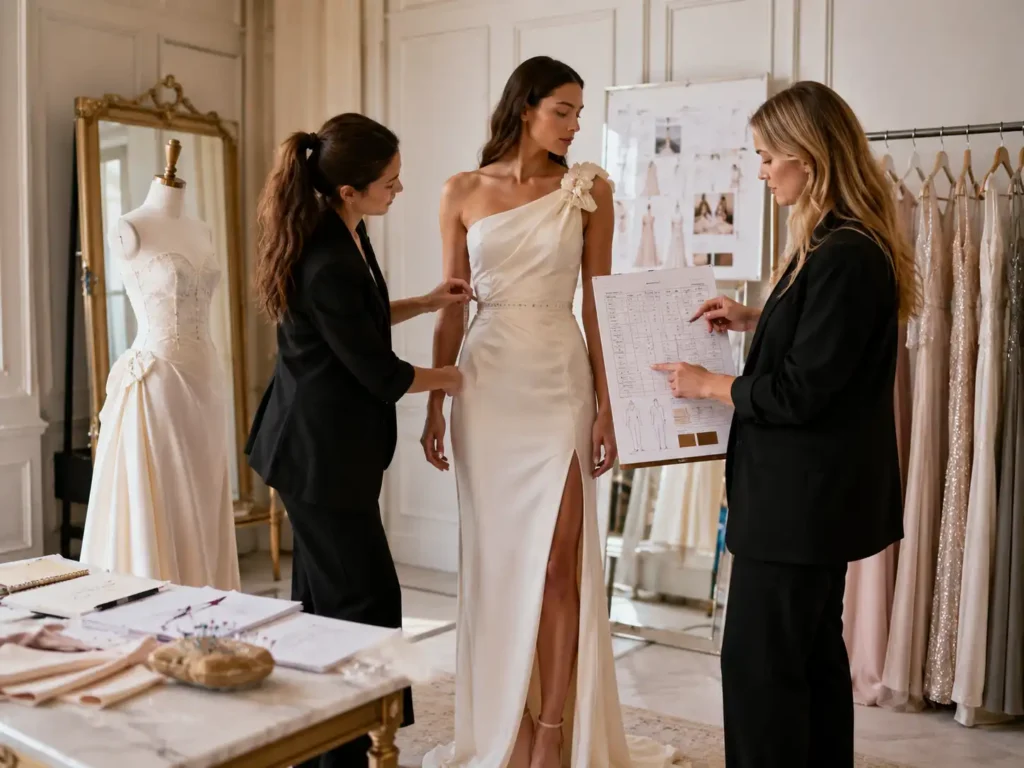
Base Size and Measurement Definitions
Development starts with an approved base size and clearly defined POMs. Every measurement should state where and how it is taken, whether the garment is relaxed or stretched, and whether the value includes seam or edge positions.
- Bust
- Upper bust
- Underbust
- Waist
- High hip
- Full hip
- Front length
- Back length
- Strap length
- Armhole
- Neckline depth
- Slit height
- Lining length
- Hem sweep

Grade Rules Across the Size Range
A sample fitting well in one size does not guarantee balanced grading.
Cups, neckline exposure, straps, armholes, boning, waist placement, slit height, and dress length may require controlled grade increments rather than proportional enlargement.
Grade review should consider:
- Brand body measurements
- Target fit
- Fabric stretch
- Internal support
- Size-specific cup needs
- Silhouette compression
- Length policy
- Intended wearer profile

Bulk Measurement Control
Bulk measurement inspection compares production garments with the approved size chart and tolerance.
Inspection should cover more than bust, waist, and hip.
Dinner dress measurement checks may include:
- Strap length
- Neckline width
- Front neckline depth
- Back opening
- Bodice length
- Slit height
- Lining length
- Zipper length
- Hem width
- Total garment length
Wear Movement and Comfort Testing
Sitting Test
Walking Test
Stair Test
Dining Test
Dance Test
Dressing Test
Sample and Production Planning Reference
| Development Stage | Reference Timing | Typical Scope | Main Timing Factors |
|---|---|---|---|
| Simple First Sample | 7–10 days | Clean mini, basic midi, uncomplicated woven or knit dress | Available fabric, clear pattern information, standard trims |
| Regular Dinner Dress Sample | 10–15 days | Satin midi, ruched dress, fitted cocktail style, lined maxi | Fabric sourcing, lining, zipper, pattern work, fit review |
| Structured Dress Sample | 12–18 days | Boned bodice, shaped panels, fitted jumpsuit, multi-part construction | Pattern complexity, cups, boning, lining, fitting |
| Corset or Strapless Sample | 15–25 days | Corset mini, strapless midi, underwired evening style | Cup shape, support components, fit rounds, closure method |
| Lace or Mesh Sample | 15–25 days | Lace placement, illusion panels, lined mesh, appliqué details | Motif planning, transparency, stretch, edge finishing |
| Sequin or Embellished Sample | 15–25 days | Sequined mini, rhinestone dress, decorated evening style | Decoration sourcing, seam preparation, attachment method |
| Special Material Development | 20–35 days | Custom color, special lace, custom print, developed trims | Supplier MOQ, lab dip, strike-off, trim tooling, approval |
| Revised Sample | 7–15 days | Pattern, fabric, measurement, trim, or construction corrections | Number and depth of revisions, material availability |
| PP Sample | 7–15 days | Final standard before bulk production | Final material and label readiness, complete approvals |
| Bulk Production Planning | Confirmed by project | Cutting, sewing, QC, finishing, packing, delivery | Quantity, style count, complexity, factory allocation, material arrival |
| Express or Air Delivery | Confirmed by destination | Samples, campaign units, priority commercial shipment | Weight, volume, route, customs, destination |
| Sea Delivery | Confirmed by route | Main bulk shipment and planned replenishment | Port schedule, booking, transit route, import arrangements |
How Sample Revisions Are Controlled
Fit Issue
Fabric Issue
Workmanship Issue
Color Issue
Trim Issue
Measurement Issue
Proportion Issue
Cost Issue
Production Allocation Based on Dress Complexity
Jinfeng operates 6 owned women’s fashion factories, works with 10+ long-term production partners, and manages 18+ sewing lines plus 6+ flexible production lines. Allocation is based on product capability, not available space alone.
Matching Styles With Production Units
A regular jersey bodycon dress, satin slip, boned corset mini, lace midi, and heavily sequined maxi need different sewing experience and production preparation.
Allocation considers:
- Fabric type
- Stretch or woven construction
- Number of pattern pieces
- Internal support
- Decoration
- Lining
- Seam sensitivity
- Order quantity
- Size range
- Delivery sequence
- Quality requirements
Complex first-time styles are assigned to production units with relevant experience and closer technical follow-up.
Capacity Without Blind Overbooking
The regular monthly production system can support more than 100,000 pieces across suitable womenswear programs, but complex dinner dresses cannot be calculated like basic garments.
Capacity planning considers:
- Sewing minutes
- Hand-finishing content
- Material preparation
- Quality checkpoints
- Pressing requirements
- Packing complexity
- Style changeover
- Seasonal workload
- Repeat versus first order
Realistic allocation protects quality and delivery more effectively than accepting every program under one standard promise.
From PP Approval to Packed Dinner Dresses
PP Approval
Bulk Material Approval
Pattern Lock
Cutting Control
Sewing Instruction
Inline Inspection
Finishing and Measurement

Maintaining Sample-to-Bulk Consistency
The value of a strong sample is lost when production standards are incomplete. Jinfeng converts approved samples into measurable, repeatable production controls.
Physical and Documented Standards
The production reference includes more than one physical garment. A controlled standard package may include:
- Approved PP Sample
- Golden Sample
- Final pattern
- Size chart
- Grade rule
- BOM
- Fabric approval
- Trim card
- Sewing instruction
- Label artwork
- Packing instruction
- QC checklist
Physical and written standards work together. A sample shows appearance, while documents define measurements, materials, and repeatable methods.
Material and Process Consistency
Bulk fabric can differ from sample yardage in shade, weight, stretch, drape, or surface. Material approval should confirm whether the bulk lot still supports the agreed fit and construction.
Production teams also need the same:
- Seam method
- Stitch density
- Needle requirements
- Thread color
- Pressing method
- Lining method
- Support components
- Ruching placement
- Slit construction
- Decoration attachment
Variations are reviewed before broad production continues.
Inspection Against the Approved Standard
Inline and final inspection compare production with approved measurements and visual details. Repeated findings trigger corrective action at the source rather than repair only at the end.
Consistency review covers:
- Silhouette
- Fit points
- Symmetry
- Shade
- Surface
- Seam quality
- Zipper behavior
- Decoration
- Pressing
- Labels
- Packing condition

Quality Control Across Every Production Stage

Fabric Inspection

Trim Inspection

Cutting Inspection
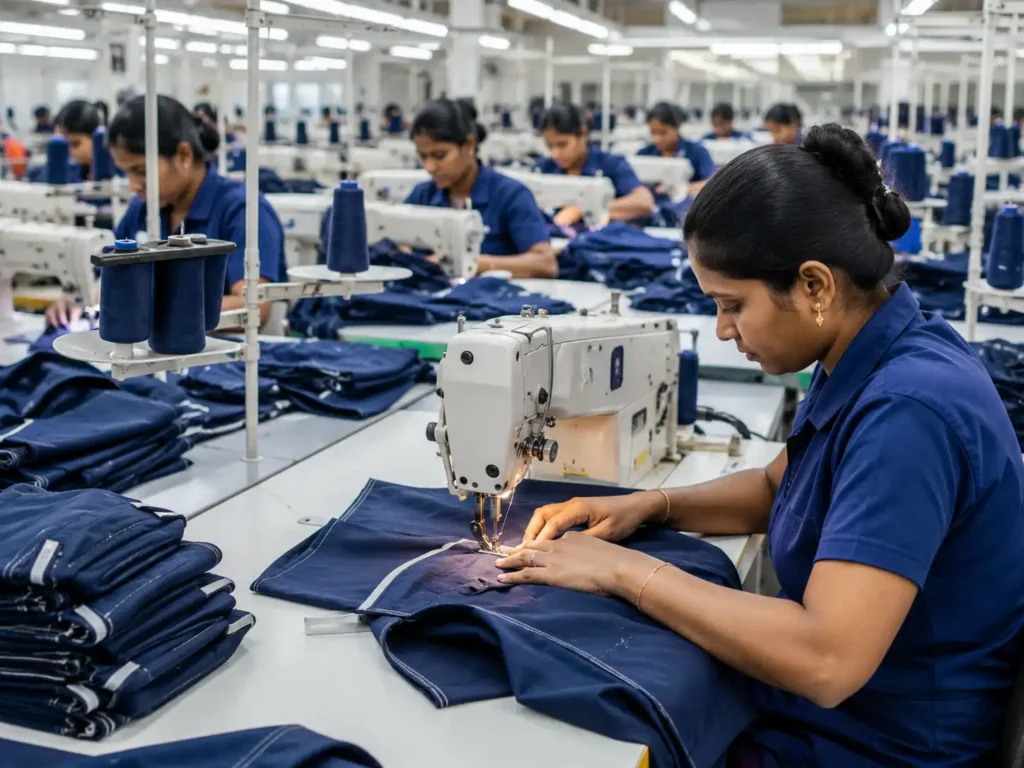
Inline Sewing Check
Measurement Inspection
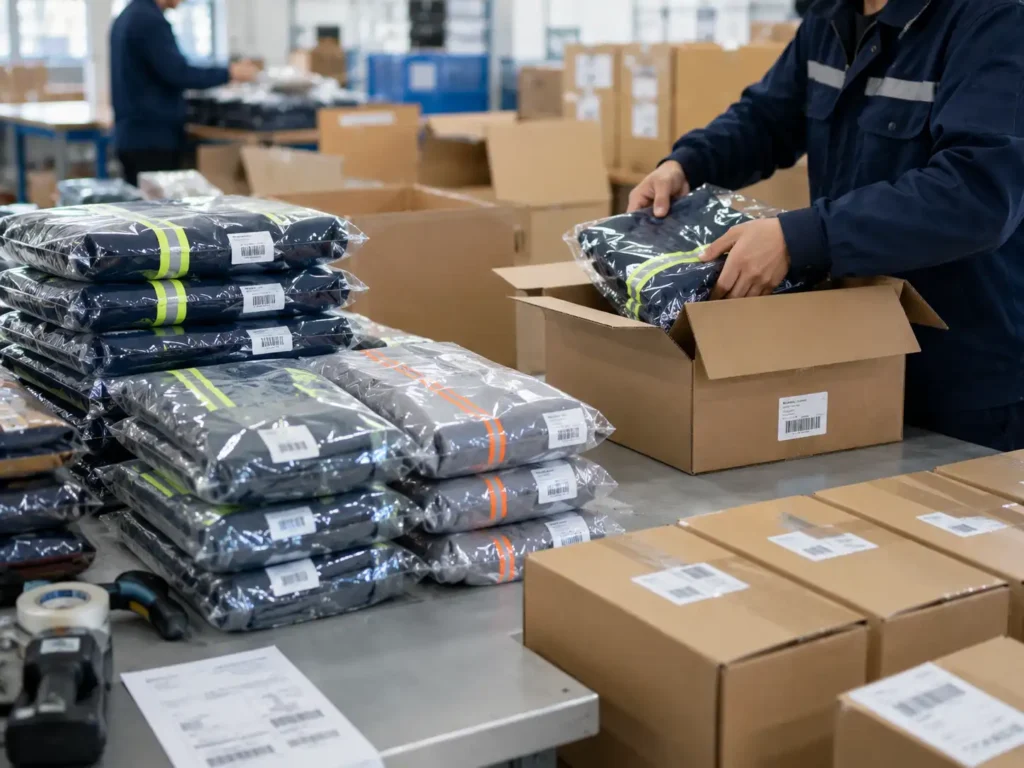
Final Packing Inspection
Quality Points for Different Dinner Dress Materials
Satin Dresses
Chiffon Dresses
Lace Dresses
Mesh Dresses
Sequin Dresses
Velvet Dresses
Corset Dresses
Maxi Dresses
Precision Workmanship for Premium Dinner Dresses
Workmanship should support the intended appearance without creating stiffness, bulk, discomfort, or visible construction marks. Sewing and finishing methods are selected around fabric and silhouette.
Seam Construction and Edge Finishing
Dinner dress seams may need clean enclosed finishing, narrow overlocking, French seams, binding, lining concealment, reinforcement, or graded seam allowances according to fabric and transparency.
Fine fabrics need controlled seam width and tension. Thick intersections around zippers, waist seams, boning channels, lace layers, or sequins may require reduced bulk before closing.
Workmanship checks include:
- Even seam allowance
- Stable stitch density
- Straight seam line
- Clean inside finishing
- No skipped stitches
- No thread loops
- No seam grin
- No rough skin-contact edges
- Reinforced stress points
- Controlled layer thickness
Zippers Linings and Internal Finish
A dinner dress may look clean externally while hiding uncomfortable or unstable construction inside.
Lining should remain smooth, correctly sized, securely attached, and compatible with shell stretch and drape.
Invisible zippers need:
- Flat installation
- Smooth opening
- Aligned waist seams
- Clean top finish
- Secure lower stop
- No caught lining
- Suitable tape color
- Controlled seam tension
Corset and fitted styles may use internal layers, cups, boning, power mesh, tape, and closures. Components should support the shape without creating visible ridges or pressure points.
Delicate Surface Sewing
Satin, velvet, mesh, lace, and sequined materials require special handling because sewing damage may remain visible after repair.
Production control may include:
- Surface-protected work areas
- Needle condition checks
- Reduced handling pressure
- Piece separation
- Controlled pin placement
- Decoration removal from seam zones
- Hand restoration of visible decoration
- Fabric-specific pressing
- Protective finishing and packing
The chosen method must be repeatable for the planned quantity rather than achievable only on one sample.
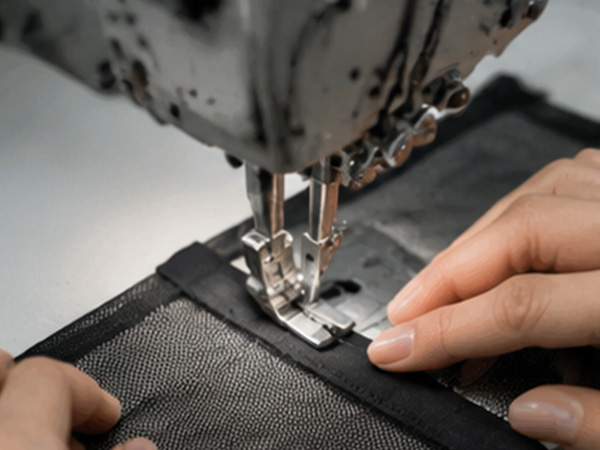
Pressing Finishing and Protective Packing
Dinner dresses can lose commercial value after sewing when pressing creates shine, packing crushes decoration, or long garments arrive deeply creased. Finishing methods need to follow fabric and retail presentation.
Fabric-Specific Pressing
Pressing conditions are tested on the approved material. Satin needs surface protection and controlled heat. Velvet needs pile protection and minimal pressure. Sequins need temperature and pressure limits. Lace and mesh need careful support.
Finishing control covers:
- Temperature
- Steam level
- Pressure
- Pressing side
- Protective cloth
- Seam shaping
- Cooling
- Hanger use
- Final measurement
- Surface reinspection
A clean appearance should not come at the cost of glazing, flattening, stretching, or distorted seams.
Folding and Garment Protection
Packing method depends on length, fabric, structure, decoration, brand presentation, warehouse rules, and freight cost.
Options may include:
- Standard folding
- Tissue interleaving
- Foam protection at trims
- Surface-facing barriers
- Shaped folding
- Individual garment bags
- Hanger packing
- Bodice support
- Sequin separation
- Carton layer control
Corset cups and boning need protection from crushing. Satin folds should avoid high-visibility areas where possible. Velvet and decoration should not remain under excessive pressure.
Carton and Arrival Condition
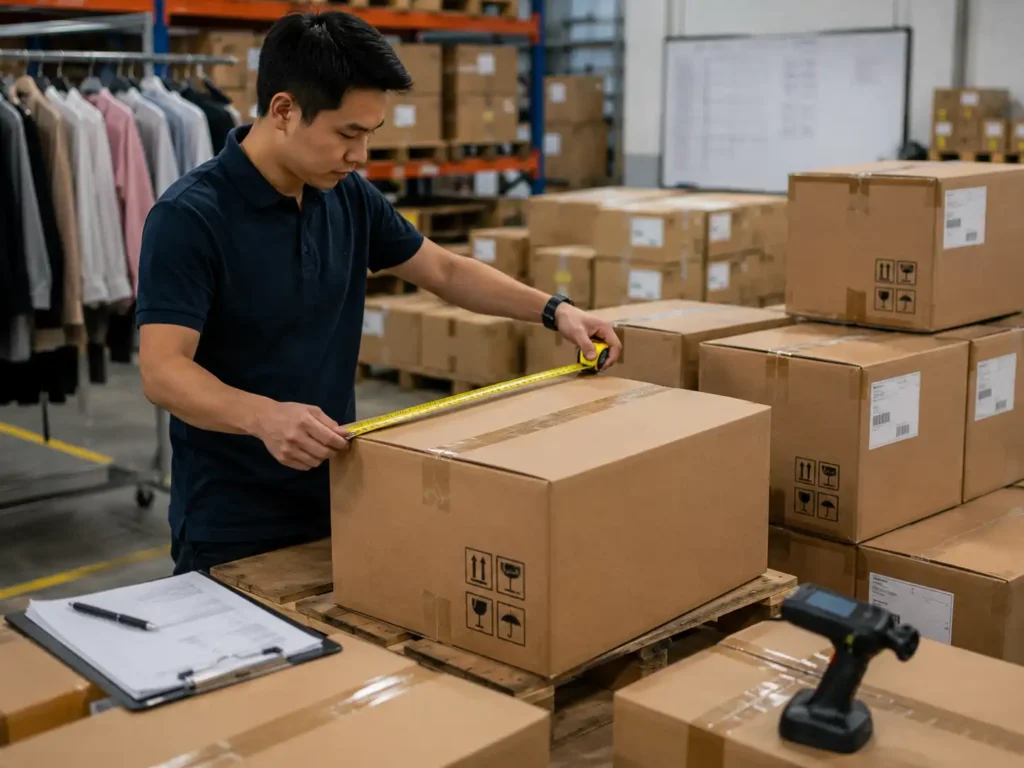
Carton size, garment count, folding method, total weight, internal pressure, and transport duration affect arrival condition.
Packing review includes:
- Units per polybag
- Units per carton
- Size and color assortment
- Carton dimensions
- Gross and net weight
- Carton strength
- Mark placement
- Moisture protection where required
- Warehouse labels
- Shipment photos
Private Label and Retail-Ready Delivery
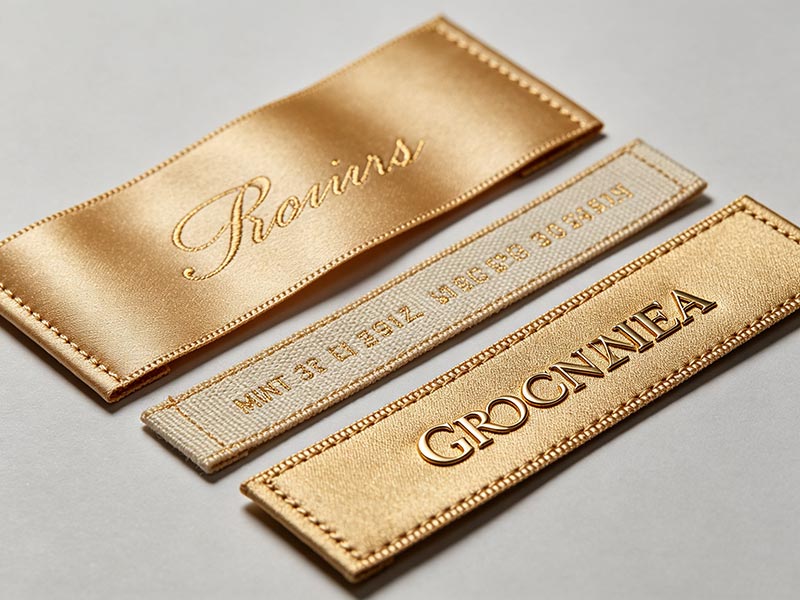
Main Labels
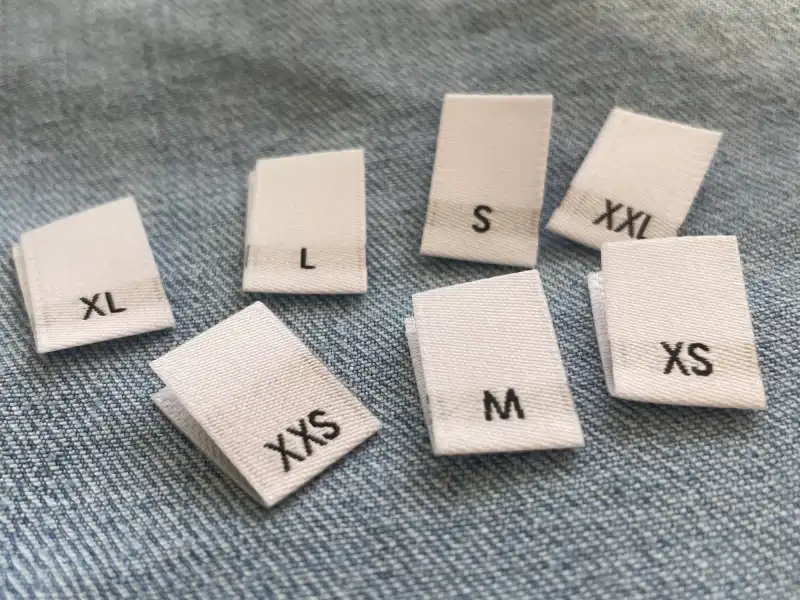
Size Labels
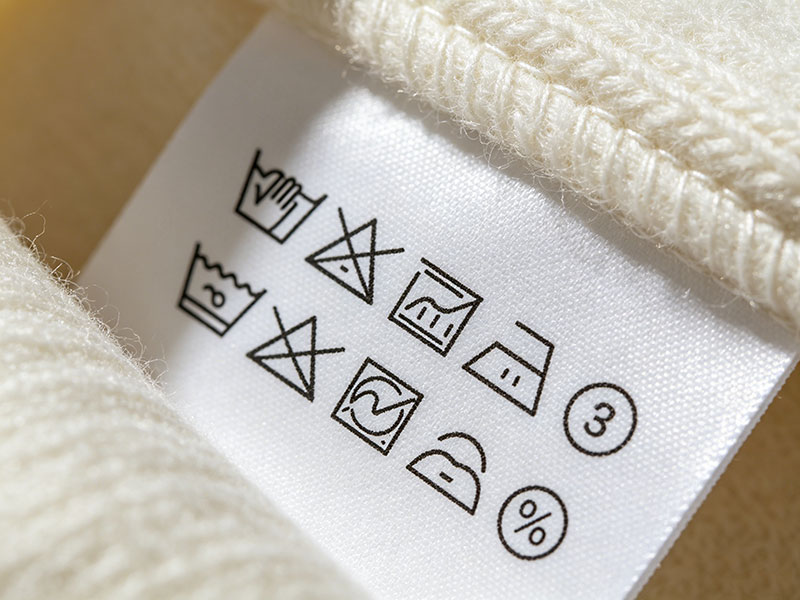
Care Labels

Hangtags
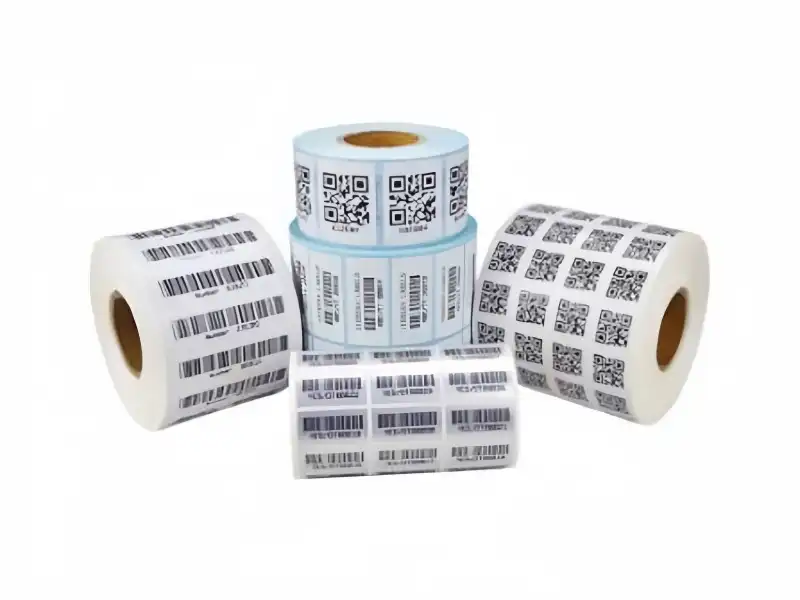
Barcode Labels

Polybags
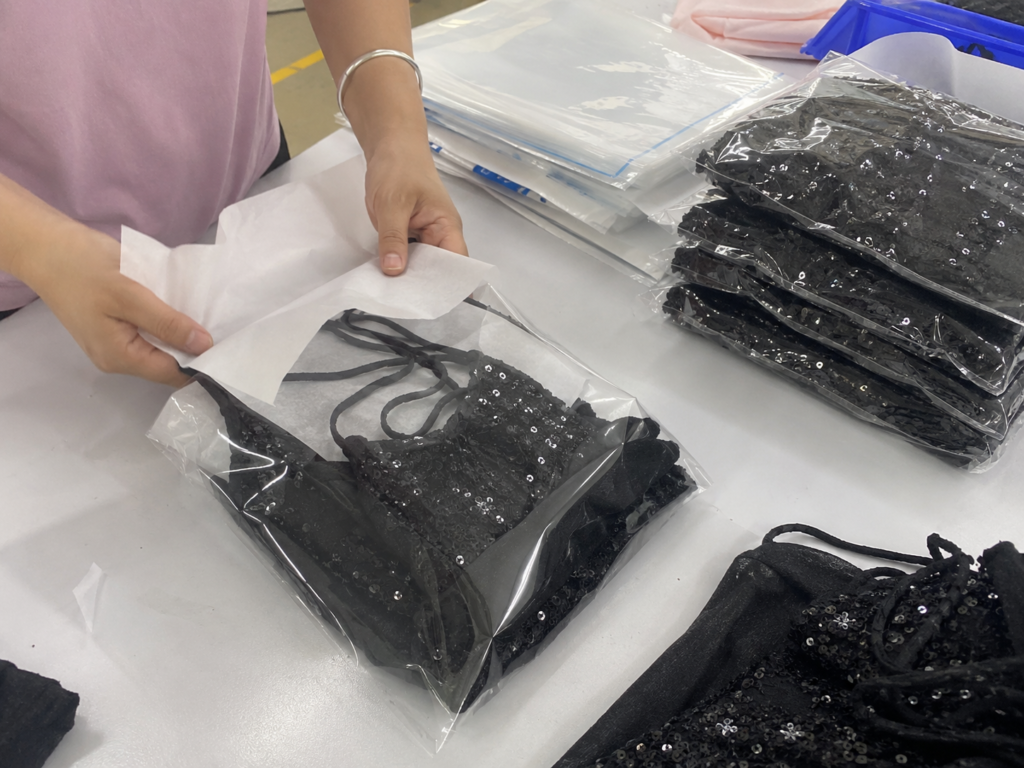
Garment Bags

Tissue Protection
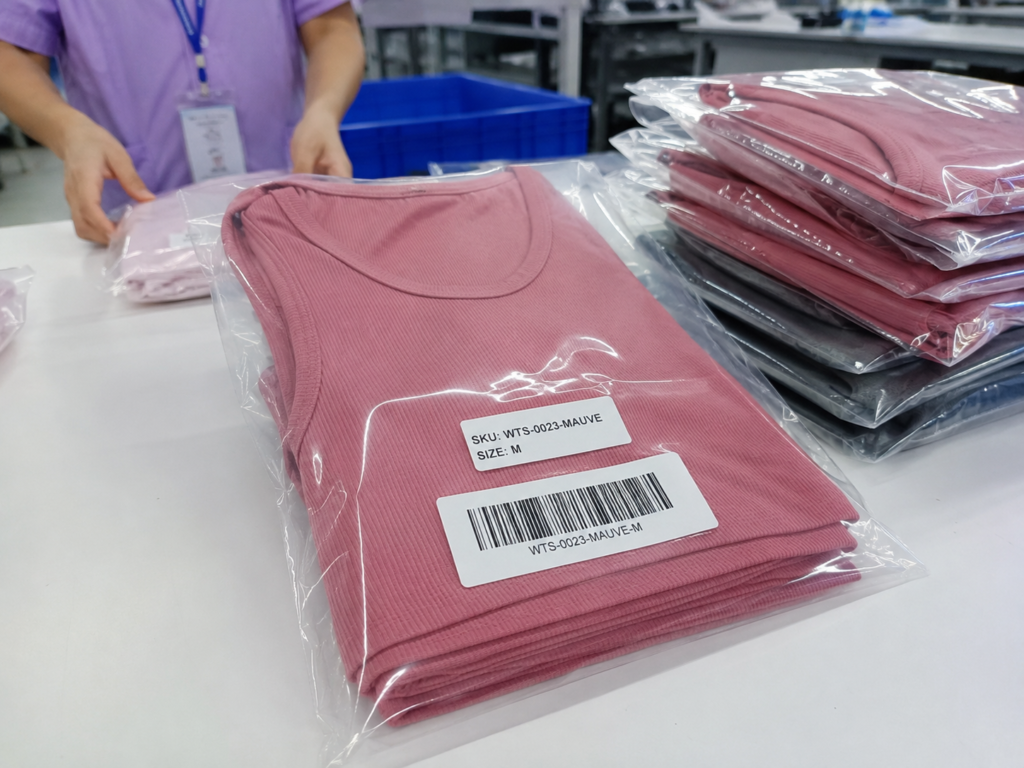
SKU Stickers
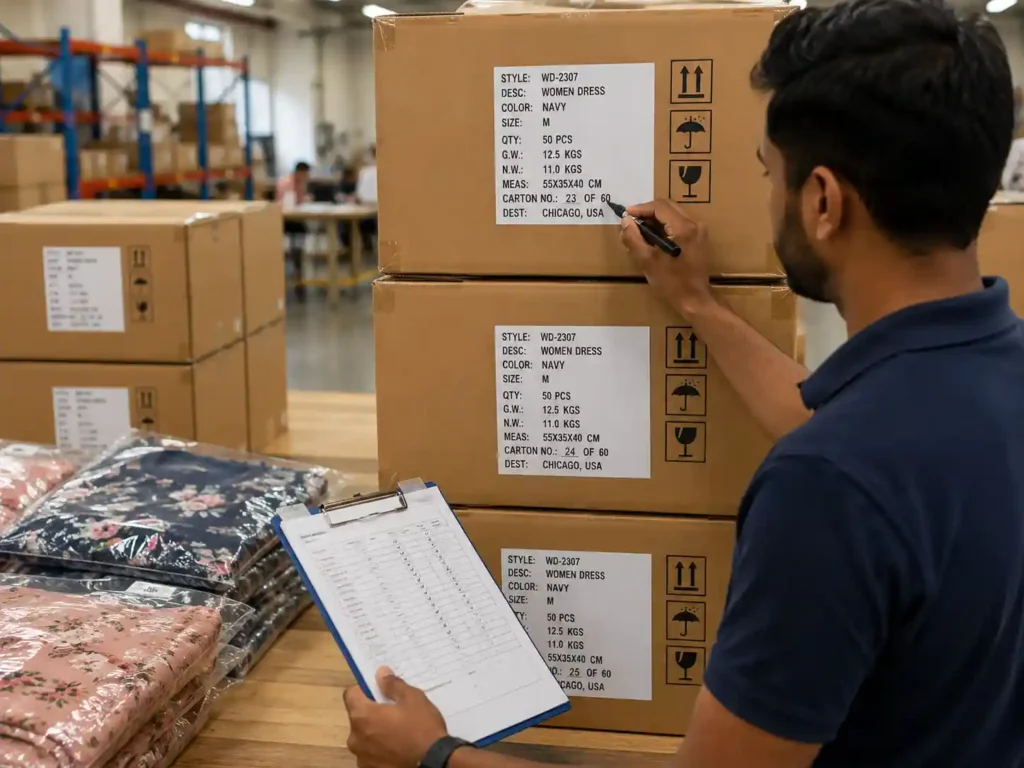
Carton Marks
Packing Lists
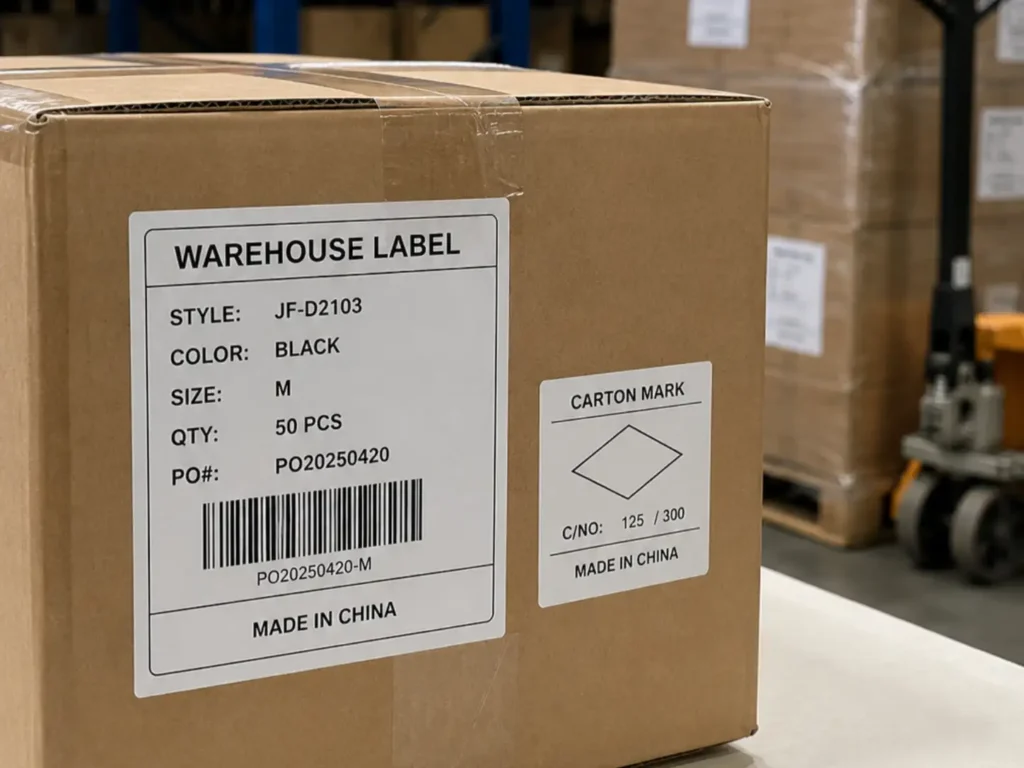
Warehouse Labels
Dinner Dress Program Examples
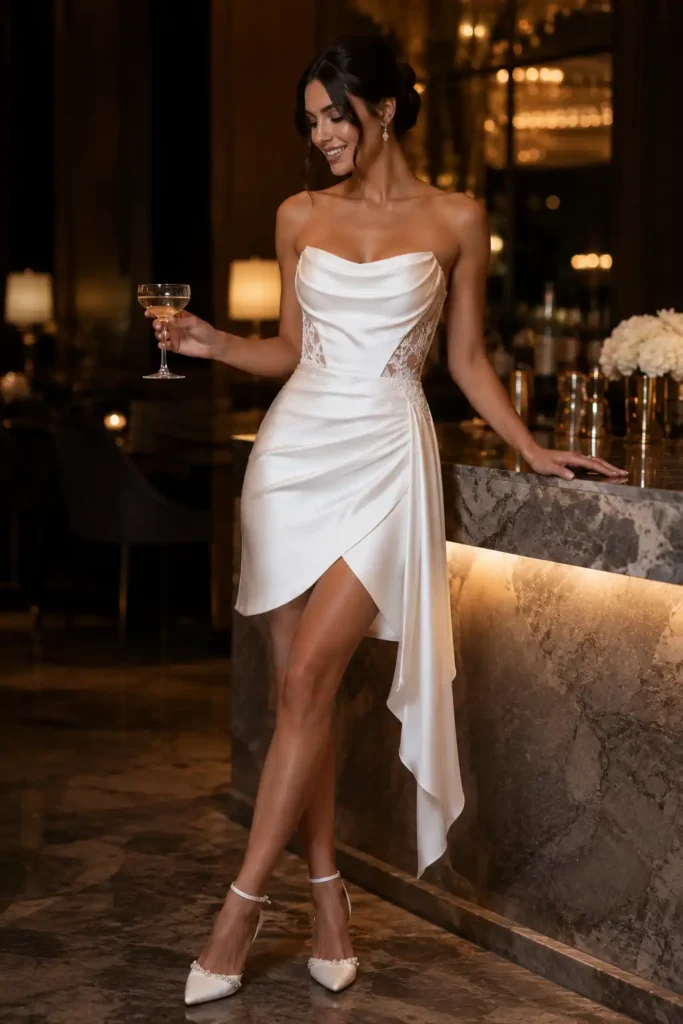
United States Ecommerce Program
A US premium ecommerce fashion program was structured around 18 dinner dress styles and 36,000 total pieces. The range included satin slip midis, ruched bodycon dresses, corset minis, one-shoulder styles, and sequined holiday dresses.
Project structure:
- 18 styles
- 36,000 total pieces
- Average 2,000 pieces per style
- XS–XL size range
- Four main color groups
- Three fabric groups
- Six priority photography styles
- Air and sea split delivery
The collection combined fluid satin, stretch fabrics, internal corset support, and sequined surfaces. Using one production method across all styles would have caused inconsistent fit, sewing, pressing, and packing.
Styles were grouped by material and construction. Priority campaign samples moved first. Corset styles received separate fit review, while satin and sequin styles used different production and packing instructions. Golden Samples and size charts were linked to each bulk group.
A priority quantity of hero styles and core sizes was separated for air delivery. Remaining cartons followed by sea with independent packing lists and SKU identification.

United Kingdom Occasionwear Program
A UK occasionwear collection was planned across 24 styles and 52,800 total pieces. Products included lace midis, mesh-panelled bodycon dresses, satin maxi dresses, draped cocktail styles, and structured evening silhouettes.
Project structure:
- 24 styles
- 52,800 total pieces
- Average 2,200 pieces per style
- UK size range 4–16
- Six commercial colors
- Four material groups
- Three delivery windows
- Retail-ready labels and barcodes
Lace motif placement, mesh transparency, satin shade, and long-dress hem balance required different inspection methods. Several colors also shared similar packaging, increasing SKU-mixing risk.
Lace and mesh styles received placement and lining approvals. Satin colors were grouped by fabric lot. Long styles were measured at front, side, and back. Packing instructions identified style, color, size, barcode, and carton assortment before final packing.
The program was divided into campaign, main launch, and replenishment windows. Each batch followed separate packing lists and carton marks while retaining the same approved patterns and Golden Sample standards.

Australian Resort Dinner Program
An Australian premium online fashion program included 12 resort and wedding dinner styles with 24,000 total pieces. The range combined lightweight maxi dresses, halter satin styles, printed woven dresses, fitted midis, and evening-ready two-piece looks.
Project structure:
- 12 styles
- 24,000 total pieces
- Average 2,000 pieces per style
- AU size range 6–14
- Five color and print directions
- Eight hero launch styles
- Private-label ecommerce packing
- Multi-batch production
The collection needed fluid movement, suitable coverage, controlled transparency, travel-friendly packing, and coordination with an early content-production schedule.
Photo-ready samples for hero styles were prioritized. Lightweight fabrics were checked for transparency and lining compatibility. Printed pieces followed direction markers. Long styles received hem and movement review, while packing trials focused on reducing high-visibility folds.
The first commercial batch focused on hero styles, core sizes, and launch colors. Remaining quantities followed according to the agreed inventory and freight plan.
Frequently Asked Questions About Dinner Dress Manufacturing
MOQ starts from 200 pieces per style/color under regular production conditions. Fabric availability, custom colors, printing, special lace, sequins, developed trims, complex structure, packaging, size breakdown, and production scheduling may affect the final quantity requirement.
Yes. Jinfeng can begin with reference images, sketches, original samples, line sheets, or tech packs. The development team reviews silhouette, structure, fabric direction, pattern risk, trims, target quantity, and production feasibility before formal sampling.
Yes. OEM projects can follow approved tech packs and specifications. ODM projects may begin with design direction, references, target occasion, price position, or collection plan, followed by fabric, pattern, sample, and production development.
Core materials include satin, stretch satin, chiffon, crepe, lace, mesh, power mesh, velvet, sequined fabric, tulle, organza, jersey, ponte, rayon, linen blends, and printed woven fabrics. Final selection depends on style, fit, quantity, cost, and availability.
Yes. Jinfeng supports corset and structured dresses using cups, boning, underwires, support panels, power mesh, anti-slip tape, lining, hook-and-eye closures, zippers, or lacing according to the design and fit requirement.
Simple styles may take about 7–10 days. Regular dinner dresses often require 10–15 days. Structured, lace, mesh, sequin, corset, or strapless styles may require 12–25 days. Special materials can extend the schedule.
Production follows approved PP and Golden Samples together with final patterns, size charts, grade rules, fabric approvals, trim cards, sewing instructions, label artwork, packing instructions, and QC checklists. Inline and final inspections compare bulk garments with the approved standards.
Yes. Options include woven labels, printed labels, size labels, care labels, hangtags, barcode labels, SKU stickers, polybags, garment bags, tissue protection, carton marks, packing lists, and warehouse labels.
Yes. NDA-based cooperation is supported. Tech packs, line sheets, patterns, samples, labels, packaging, order information, pricing, and unreleased styles are handled as confidential project information.
Please provide a tech pack or style reference, quantity per style/color, fabric direction, colors, size range, labels, packaging, destination, and target delivery date. Final pricing follows confirmed materials, construction, QC, and packing requirements.

Send Your Dinner Dress Project for Review
Send your dinner dress collection details to Kelly for an initial manufacturing assessment.
Clear project information helps the development and sourcing teams evaluate construction, fabric direction, fit risks, sample complexity, MOQ, quotation inputs, private-label requirements, production allocation, and delivery planning.
For a more accurate review, please include:
- Reference images, sketches, original sample photos, line sheet, or tech pack
- Target quantity for each style and color
- Planned size range and size ratio
- Preferred shell fabric, lining, and color direction
- Corset, cup, boning, underwire, mesh, lace, sequin, or decoration requirements
- Main label, care label, hangtag, barcode, polybag, and carton requirements
- Photo sample, PP Sample, bulk delivery, and launch dates
- Destination country, warehouse, or appointed forwarder information
- Testing, inspection, audit, or compliance requirements where applicable