...

Office Dress Manufacturer

Custom office dresses developed for professional appearance, reliable fit, everyday movement and consistent multi-size production.

Jinfeng Apparel develops structured office dresses, work dresses and office-to-evening collections for established fashion brands, retail groups and apparel sourcing teams. Every program can cover fabric sourcing, pattern development, sample fitting, production engineering, bulk manufacturing, quality inspection, private-label packing and export coordination.

  • 12+ office dress silhouettes for workwear and office-to-evening collections
  • 6 critical fit zones reviewed: shoulder, bust, waist, hip, armhole and hem
  • MOQ starts from 200 pieces per style and color
  • 2 sample rooms supported by 7+ senior pattern makers
  • Structured knit, crepe, suiting and stretch-woven fabric development
  • Multi-style collection planning for seasonal and repeat-order programs

Manufacturing Capacity Built for Office Dress Programs

Office dress production requires more than available sewing capacity. Pattern accuracy, fabric stability, controlled pressing, multi-size measurements and consistent finishing determine whether a professional dress looks polished after repeated wear. Jinfeng Apparel combines development, production and inspection teams around those requirements.

Since 2008

Jinfeng Apparel has focused on custom women’s fashion manufacturing since 2008. Long-term experience covers fitted dresses, structured midi dresses, workwear-inspired collections, tailored sets and private-label womenswear. Established workflows help development teams identify fabric, fit and construction risks before bulk production begins.

6 Owned Factories

Six owned women’s fashion factories support different garment structures and production requirements. Office dress programs can be allocated according to woven or knit construction, sewing complexity, order scale, delivery window and finishing standards rather than being assigned to an unsuitable line.

10+ Production Partners

More than ten long-term satellite production partners extend capacity for multi-style and multi-batch orders. Production is assigned through an established factory network, with specifications, approved samples, workmanship standards and QC requirements transferred before sewing starts.

100,000+ Monthly Capacity

The wider production system supports more than 100,000 pieces of monthly womenswear capacity under regular conditions. Actual allocation depends on garment construction, fabric availability, style count, size range, packing work and the confirmed production schedule.

7+ Pattern Makers

Senior pattern makers manage structure, balance, fit correction, grading and production-pattern release. For office dresses, attention is placed on shoulder balance, bust shaping, waist position, hip ease, sleeve mobility, slit height and finished garment length.

15+ QC Inspectors

Dedicated inspectors support material checks, cutting review, sewing-line inspection, measurements, appearance inspection, pressing review and packing verification. Inspection points are adjusted for each office dress structure rather than applying one generic checklist to every style.

Who We Manufacture Office Dresses For

Jinfeng Apparel supports organizations that need design conversion, controlled sampling, repeatable sizing and dependable bulk execution. The production model is best suited to structured apparel programs with defined product direction, commercial quantities and clear brand standards.

Established Fashion Brands

Established brands often need a manufacturer capable of preserving recognizable fit, fabric quality and finishing across several seasons. Jinfeng Apparel can retain pattern records, approved measurements, fabric references, trim details, workmanship notes and packing requirements to support repeat orders and related style development.

Workwear Fashion Labels

Workwear-focused labels need professional silhouettes without making garments feel like uniforms. Product development can combine structured lines, modern colors, stretch fabrics, suitable coverage and office-to-evening styling while maintaining a consistent collection identity.

Premium Ecommerce Brands

Online apparel brands depend heavily on accurate fit, clear product photography and controlled size grading. Development work can focus on front and side profile, waist placement, sleeve movement, fabric recovery and consistent production measurements to reduce avoidable fit complaints.

Fashion Retailers

Retailers commonly require multiple colors, broad size ranges, SKU management, barcode application, carton ratios and defined receiving dates. Jinfeng Apparel can coordinate product development with retail-ready packing and shipment documentation.

Sourcing Teams

Sourcing departments need visibility across quotation, materials, samples, production status, QC and delivery. Project information can be organized through confirmed files, revision records, approval points and documented production requirements.

Product Development Teams

Development teams may provide tech packs, line sheets, original samples, sketches or reference images. Jinfeng Apparel can assist with fabric direction, construction review, pattern development, sample revisions and preparation for bulk approval.
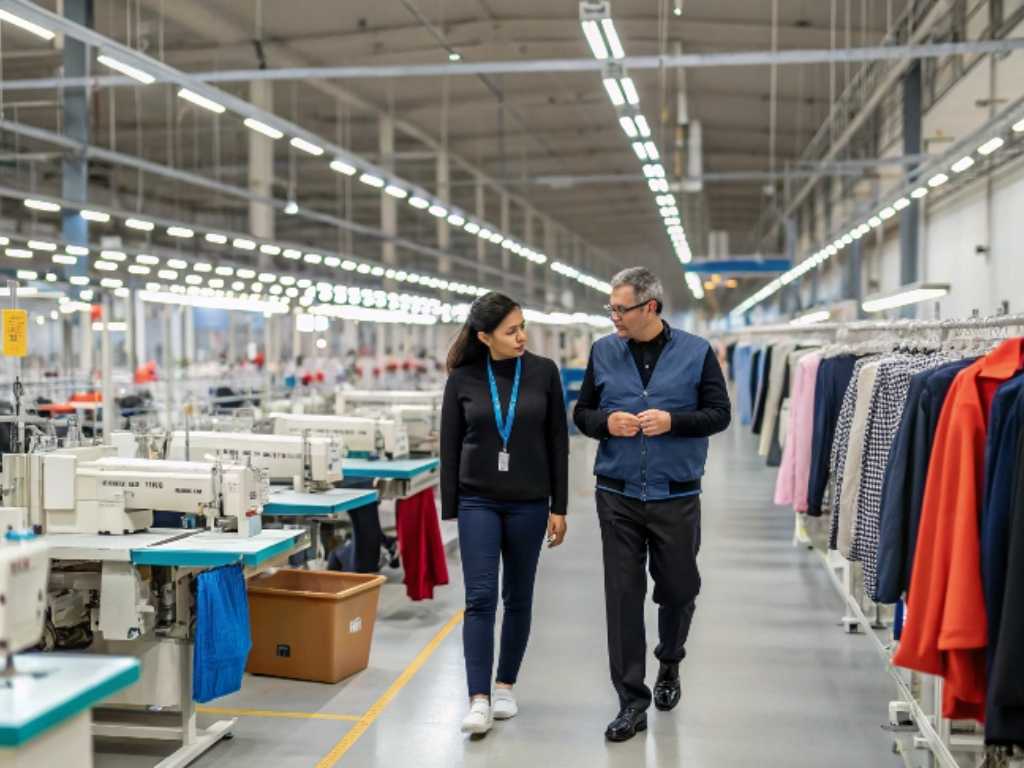
Two people walking and talking inside a modern garment factory.

What an Office Dress Manufacturer Must Control

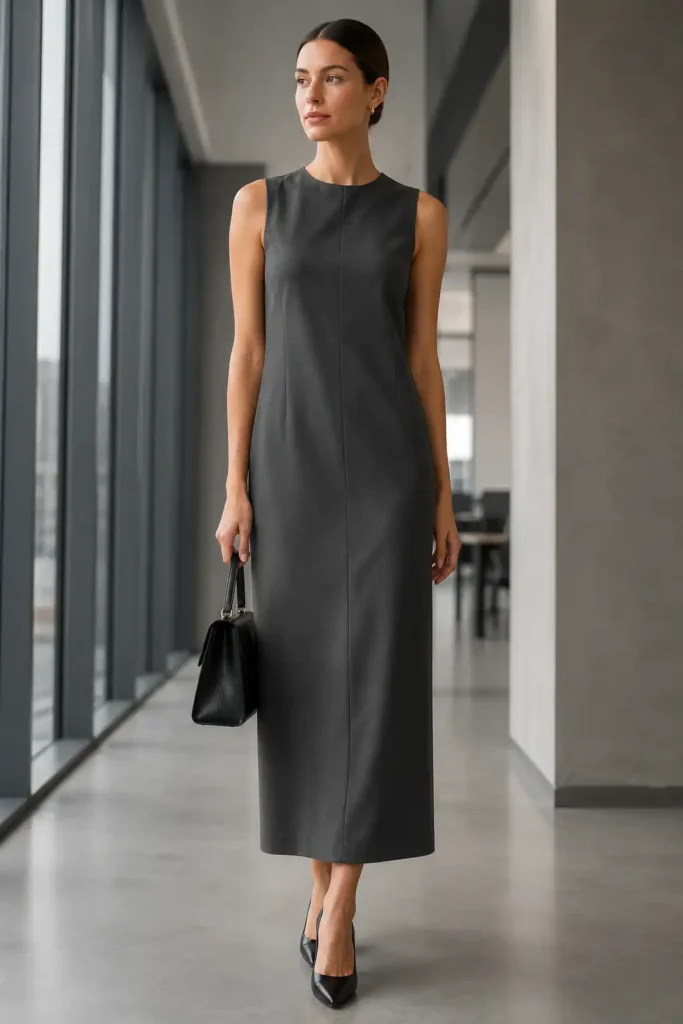
An office dress manufacturer develops and produces women’s dresses for professional environments while balancing structure, suitable coverage, movement comfort, fabric durability, stable sizing and retail-level finishing.

A capable manufacturer does not treat an office dress as a basic dress in a darker color. Professional wear must remain balanced while standing, sitting, walking, reaching and wearing a jacket. Necklines, armholes, waistlines, slits, hems and linings require controlled proportions. Fabrics need enough body to preserve shape, but excessive rigidity can restrict movement and reduce comfort.

  • Manufacturing work normally includes fabric evaluation, pattern development, sample fitting, construction engineering, size grading, bulk fabric control, sewing standards, pressing methods, measurement inspection and branded packing.
  • For established brands, the final objective is repeatability. A successful sample must become a stable production standard across colors, sizes and later reorder batches.

Production Problems That Damage Office Dress Performance

Office dresses often look simple in flat drawings, yet small errors become highly visible when garments are fitted, pressed and worn for a full working day. Early risk review protects the sample schedule and prevents repeated production corrections.

Standing Fit Only

A dress may look balanced while the wearer stands still but become tight across the hip or waist when seated. Fit reviews need sitting ease, back-waist movement and skirt opening evaluation rather than relying only on front-view photographs.

Weak Fabric Structure

Fabric with insufficient body can collapse around darts, pockets, waist seams and zipper areas. Jinfeng Apparel reviews weight, drape, stretch, recovery and lining needs before approving a fabric for structured office silhouettes.

Restricted Arm Movement

Incorrect shoulder width, armhole depth or sleeve shape can cause the dress body to lift when the wearer reaches forward. Pattern correction must balance clean tailoring with realistic office movement.

Uncontrolled Coverage

Necklines, wrap fronts, slits and skirt lengths may become unsuitable during movement. Coverage is reviewed through pattern position, overlap depth, fastening, lining and fit-sample observation.

Bulk Measurement Drift

Small sewing deviations can accumulate at bust seams, waist panels, zippers and hems. Measurement points, tolerances and inspection frequency need to be defined before bulk cutting and sewing.

Uneven Pressing

Office dresses rely on clean seams, controlled darts and smooth zipper areas. Excessive heat, pressure or incorrect pressing direction can create shine, seam impressions, stretching or visible waves.

From Design Brief to Finished Office Dresses

A structured workflow keeps fabric decisions, fitting comments, production files and delivery dates connected. Each approval point should produce a clear result before the next stage begins.

Project Review

The development team reviews style references, tech packs, target market, quantity, size range, fabric direction, price position, branding requirements and desired delivery window.

Fabric Direction

Suitable fabric options are compared by composition, weight, width, stretch, recovery, drape, surface, transparency, shrinkage risk, availability and production MOQ.

Pattern Development

Pattern makers translate the approved design into garment structure. Shoulder balance, bust shaping, waist position, hip ease, sleeve movement, slit placement and hem level receive early attention.

First Sample

The first sample verifies overall shape, fabric behavior, construction method and visual proportion. It also reveals whether the original design can be produced consistently.

Fit Revision

Comments are converted into measurable actions. Revised pattern points, updated dimensions, construction changes and fabric adjustments are recorded rather than left only in messages.

PP Sample

The pre-production sample confirms approved material, color, construction, measurements, labels and packing direction before bulk production starts.

Bulk Production

Materials, cutting, sewing, finishing and packing are organized according to the approved sample, production pattern, BOM, sewing instructions and order schedule.

Quality Inspection

Inspection covers materials, workmanship, measurements, appearance, pressing, labels, folding, barcode details, carton ratios and shipment preparation.

Packing and Delivery

Finished garments are packed according to brand, retail, warehouse or freight requirements. Shipment documents and collection arrangements are coordinated before dispatch.

Office Dress Styles We Manufacture

A balanced office dress range needs more than one conservative silhouette. Shape, fabric, construction and styling should address different professional environments, price levels and seasonal merchandising roles.

Sheath Dress

A sheath dress creates a clean professional line through controlled bust shaping, waist definition and moderate hip ease. Suitable fabrics include stretch suiting, crepe and stable woven blends. Pattern work focuses on dart placement, zipper smoothness, sitting comfort and a level hem.

Column Dress

Column silhouettes offer a straighter, modern profile with less waist suppression than a traditional sheath. Fabric selection must provide enough structure without creating stiffness. Side seams, back vents, shoulder balance and lining movement require close control.

Pencil Dress

Pencil dresses create a fitted waist-to-hem line and need carefully calculated hip ease. Slit height, stretch direction, seat comfort and recovery matter because excessive tightness can distort side seams and shorten the garment during wear.

A-Line Dress

A-line office dresses balance a shaped upper body with a gradually wider skirt. Grain direction, waist placement, skirt sweep and hem leveling influence the finished silhouette. Crepe, suiting, cotton blends and stable jersey can all support the category.

Wrap Dress

A professional wrap dress needs secure front coverage, controlled overlap and stable waist fastening. Neckline gaping, skirt opening and tie placement should be tested through movement. Inner fastening or snap solutions may be added when appropriate.

Shirt Dress

Shirt dresses combine collar construction, button placement, sleeve engineering and skirt shaping. Button-gap control, placket stability, waist definition, pocket position and hem balance affect whether the garment appears polished or casual.

Midi Office Dress

Midi lengths are central to many office collections. Proportion should be reviewed against waist position, sleeve length and footwear styling. Hem circumference must allow movement without creating excessive volume.

Knee-Length Dress

Knee-length work dresses require accurate finished-length control across sizes. A small variation can change the intended level of coverage. Pattern grading and production measurement checks are especially important.

Structured Knit Dress

Ponte and other stable knits can deliver comfort with clean shape retention. Stretch percentage, recovery, seam construction, pressing temperature and measurement relaxation must be verified before bulk production.

Blazer Dress

Blazer dresses combine tailored lapels, structured fronts, sleeve shaping and dress-length coverage. Interfacing, button position, shoulder balance, lining and front-edge pressing determine whether the garment looks refined.

Pleated Office Dress

Pleated skirts and bodices introduce visual movement while preserving professional styling. Pleat depth, placement, pressing, fabric memory and finished hem balance must remain consistent across the order.

Office-to-Evening Dress

Office-to-evening styles usually combine clean daytime coverage with stronger color, neckline or silhouette details. The garment should work with a blazer during the day and remain visually complete when worn alone.

Office-to-Evening Dresses With Controlled Versatility

Office-to-evening products need enough structure for meetings, enough comfort for extended wear and enough visual character for dinners or events. Strong development comes from controlled details rather than excessive decoration.

Professional Necklines

Boat, square, V and wrap necklines can be refined for professional coverage. Pattern depth, neckline stretch, facing construction and movement exposure should be checked during fitting.

Defined Waistlines

Waist seams, darts, belts or shaped panels can create a stronger silhouette without restricting sitting movement. Waist position should match the intended body proportion and target market.

Controlled Slits

Back, side or front slits support walking movement and visual interest. Finished height must remain consistent across sizes and stay suitable when seated.

Comfort Stretch

Moderate stretch can improve wearability, but pattern dimensions still require control. Stretch recovery and fabric relaxation should be tested to prevent permanent bagging at the hip, elbow or seat.

Refined Surface Direction

Crepe, smooth ponte, suiting, structured jersey and matte stretch woven materials support professional styling. Surface shine, pilling, snagging and pressing behavior require review.

Day-to-Night Colors

Black, navy, charcoal and neutral tones remain commercial foundations, while burgundy, forest green, cobalt and seasonal colors can create a stronger transition into evening occasions.

Build a Commercial Office Dress Collection

A complete collection should cover different working environments, silhouette preferences, climate needs and retail price positions. The strongest ranges combine repeatable core styles with selected seasonal updates.

Core Sheath Style

A reliable sheath dress can anchor repeat orders and permanent color programs. Development should prioritize fit consistency, fabric availability, zipper quality and clear measurement standards.

Comfort Knit Style

A stable knit style provides movement and easier daily wear. Fabric recovery, opacity, seam strength and shape retention should be confirmed before selecting a long-term material.

Modern Shirt Dress

A shirt dress introduces a more relaxed professional option. Collar shape, sleeve roll-up details, button security, pocket position and waist adjustment can create meaningful product differentiation.

Statement Blazer Dress

A blazer dress can serve campaign imagery, leadership dressing and office-event use. Tailoring details require longer development and more controlled pressing than a basic work dress.

Seasonal Color Style

Seasonal color updates allow core patterns to return without rebuilding the entire product. New dye lots, fabric availability and shade consistency still need confirmation before repeat production.

Office-to-Evening Style

A more elevated option supports after-work events and business dinners. Controlled neckline, waist emphasis, polished fabric and subtle design detail can raise perceived value without losing professional wearability.

Office Dress Solutions for Different Working Scenarios

Professional dressing is not one fixed use case. Travel, presentations, regular office days and formal meetings place different demands on fabric behavior, fit and construction.

Daily Office

Everyday office dresses should prioritize comfortable movement, stable sizing, easy layering and durable surfaces. Ponte, crepe and stretch woven materials are common directions.

Client Meetings

Client-facing styles benefit from cleaner tailoring, refined surfaces and controlled structure. Shoulder balance, neckline shape, pressing quality and garment symmetry become especially visible.

Business Travel

Travel-focused dresses need wrinkle management, comfortable sitting ease and packaging efficiency. Fabric should recover reasonably after folding and remain suitable for repeated wear.

Presentation Day

Presentation styles should stay balanced during standing, reaching and walking. Armhole mobility, hem control and secure neckline construction support confident movement.

Corporate Events

Office-event dresses may use stronger colors, lapel structures, asymmetric details or elevated fabrics while keeping coverage and fit appropriate for professional settings.

Office Dinner

Dinner styles can introduce a more defined waist, subtle slit, refined neckline or softer drape. Daytime layering should still remain possible.

Hybrid Work

Hybrid-work ranges often need lighter structure and more comfort. Stable knits, soft crepe and relaxed shirt dresses can support a polished appearance without traditional tailoring stiffness.

Seasonal Workwear

Summer and winter office collections require different fabric weights, sleeve structures and lining decisions. Seasonal planning should consider climate, retail timing and storage behavior.

Fabrics Selected for Professional Office Dresses
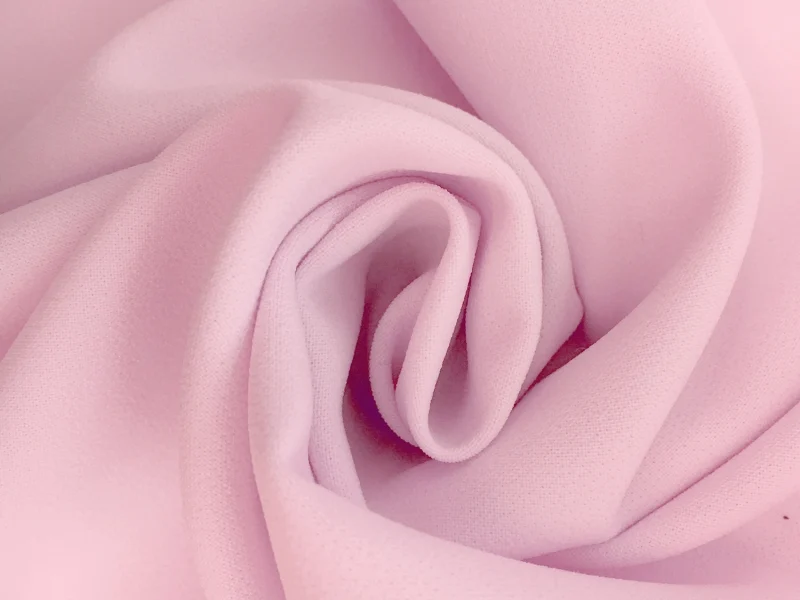
Fabric determines whether an office dress holds its shape, moves comfortably, presses cleanly and remains visually polished after wear. Selection should account for weight, drape, stretch, recovery, opacity, surface, shrinkage and availability.

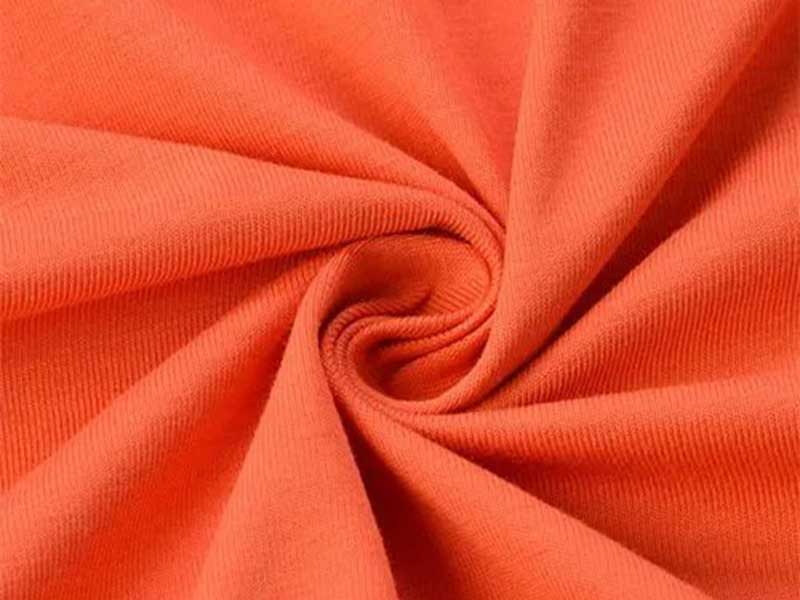
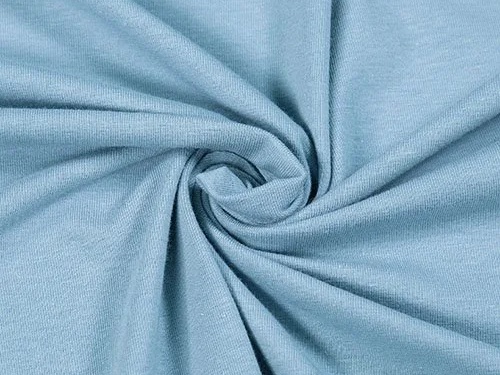
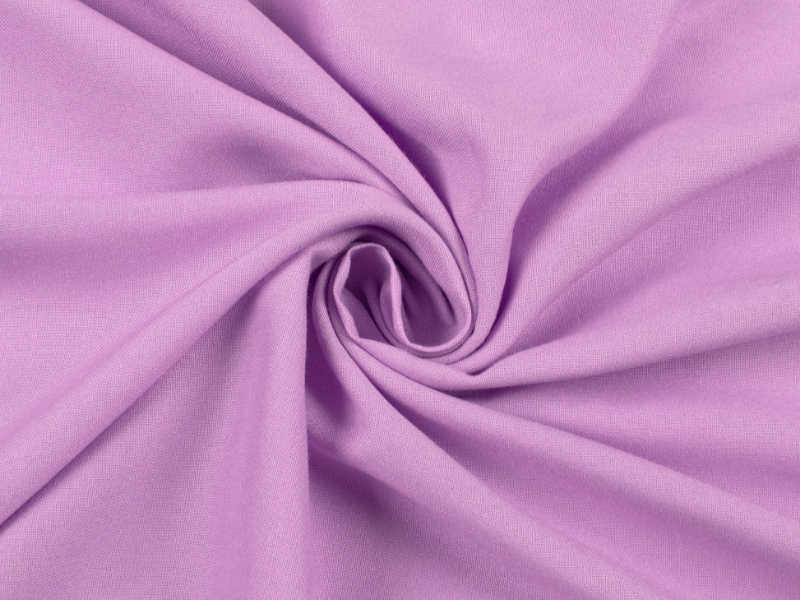
Stretch Suiting

Stretch suiting supports sheath, pencil, blazer and column dresses. The fabric should provide controlled body, clean pressing and moderate movement. Stretch percentage, recovery, shade consistency and interfacing compatibility need confirmation.

Ponte and Roma

Ponte and Roma fabrics offer stable knit structure with comfortable stretch. They work well for body-skimming office dresses and fitted sleeves. Recovery, pilling, opacity and relaxation measurements require testing.

Crepe

Crepe provides a matte surface and fluid but controlled drape. It suits midi, wrap, A-line and office-to-evening styles. Different crepe constructions vary widely in weight, stretch and wrinkle behavior.

Structured Jersey

Structured jersey can create softer professional styles with better movement. Seam stabilization, stretch direction, recovery, opacity and hem technique determine production quality.

Polyester Blends

Polyester blends can support wrinkle management, color consistency and commercial pricing. Hand feel, breathability, static, shine and pilling should be reviewed rather than judged only by composition.

Cotton Blends

Cotton blends suit shirt dresses and warmer-weather workwear. Shrinkage, wrinkling, colorfastness and pressing response must be evaluated before selecting the final blend.

Viscose Blends

Viscose blends offer softness and drape for relaxed office silhouettes. Dimensional stability, seam slippage, shrinkage and wet-strength behavior require attention.

Lining Materials

Linings improve coverage, structure and wearing comfort. Weight, static, color, shrinkage and movement must match the shell fabric. Poorly selected lining can pull the outer dress or show below the hem.

Office Dress Fabric Performance Comparison

Fabric DirectionSuitable StylesStructureStretchWrinkle BehaviorMain Control Points
Stretch suitingSheath, pencil, blazer dressHighLow to moderateUsually controlledRecovery, shade, interfacing, pressing shine
Ponte / RomaFitted knit, column, midiMedium to highModerate to highGenerally stablePilling, recovery, opacity, seam stretch
CrepeWrap, midi, A-line, office-to-eveningMediumDepends on constructionModerateDrape, snagging, shrinkage, seam appearance
Structured jerseySoft fitted dress, hybrid workwearMediumModerateUsually controlledRecovery, edge stabilization, opacity
Polyester blendMultiple commercial silhouettesVariableVariableOften controlledHand feel, shine, static, pilling
Cotton blendShirt dress, summer workwearMediumLow to moderateMore visible creasingShrinkage, colorfastness, pressing
Viscose blendRelaxed midi, wrap, soft A-lineSoft to mediumVariableModerateShrinkage, seam slippage, dimensional stability
Lightweight liningWoven and tailored dressesSupportiveLowDepends on fiberStatic, shrinkage, hem exposure, shell compatibility

Fit Engineering for Office Dress Performance

Professional dresses must preserve a clean silhouette without limiting normal movement. Pattern decisions should be connected to real wearing positions, fabric properties and the intended size range.

Shoulder and Neckline Balance

The shoulder line sets the entire upper-body balance. Excess width can create a dropped, loose appearance; insufficient width can pull the neckline and sleeve. Neckline shape must remain flat without gaping, rolling or exposing more during movement.

Development checks include shoulder slope, back-neck balance, front-neck depth, facing stability, sleeve insertion and jacket compatibility. Fit comments should identify exact pattern points rather than using general comments such as “make the top better.”

Waistline and Body Proportion

Waist position influences leg proportion, torso length and overall professional appearance. Natural-waist, raised-waist and shaped-panel constructions all require different balance.

Pattern makers review waist circumference, front-to-back distribution, dart intake, waist-seam level and sitting comfort.

A fitted waist should look defined while allowing breathing and seated movement. Fabric stretch cannot replace correct dimensions.

Hip Ease and Seat Comfort

Hip and seat measurements require functional ease based on silhouette and fabric. A pencil dress needs controlled shaping and slit support, while an A-line dress can distribute ease through the skirt.

Seated fitting helps identify upward riding, side-seam movement, horizontal pulling and lining restriction. Measurements may need adjustment across the back hip, upper thigh or waist-to-hip length.

Armhole and Sleeve Mobility

Office activities often involve reaching, typing and wearing outer layers. Armhole depth, shoulder width, sleeve cap and bicep dimensions must work together.

An armhole that is too deep may lift the entire dress when the arm moves. A sleeve cap that is too narrow can restrict movement and create drag lines. Sample fitting should review front reach, side lift and seated posture.

Measurement and Size Grading Control

A correct base sample is only the beginning. Commercial office dress production requires consistent proportions from the smallest to the largest size while preserving coverage, mobility and the intended silhouette.

Base Size Confirmation

The base size should reflect the target market, brand fit profile and preferred body measurements. Bust, waist, hip, shoulder, armhole, sleeve, garment length and slit position form the main reference points.

Ease by Fabric Type

Stable woven fabric needs different ease from ponte, jersey or stretch suiting. Applying one measurement set to several materials can create major fit differences even when the finished dimensions appear similar.

Bust and Waist Grading

Bust shaping, dart position and waist suppression should remain proportional across sizes. Simple circumference increases may move shaping points away from the body areas they are designed to support.

Hip and Seat Grading

Hip growth must preserve side-seam position, back balance and sitting ease. Pencil and column silhouettes require careful control because grading errors quickly become visible.

Armhole and Sleeve Grading

Armhole depth, bicep width, sleeve cap and cuff opening should grow in a coordinated way. Excessive growth can make larger sizes look loose, while insufficient growth restricts movement.

Length and Slit Position

Dress length, lining length and slit height need clear grading rules. A fixed slit length may produce unsuitable proportions across a wide size range.

Measurement Tolerances

Production tolerances should reflect seam complexity, fabric behavior and measurement location. Critical areas such as bust, waist, hip and garment length often need tighter attention than less visible points.

Bulk Size Inspection

Finished garments should be measured across the planned size ratio and production batches. Results need to be compared with the approved specification before packing.

Construction Details That Define Office Dress Quality
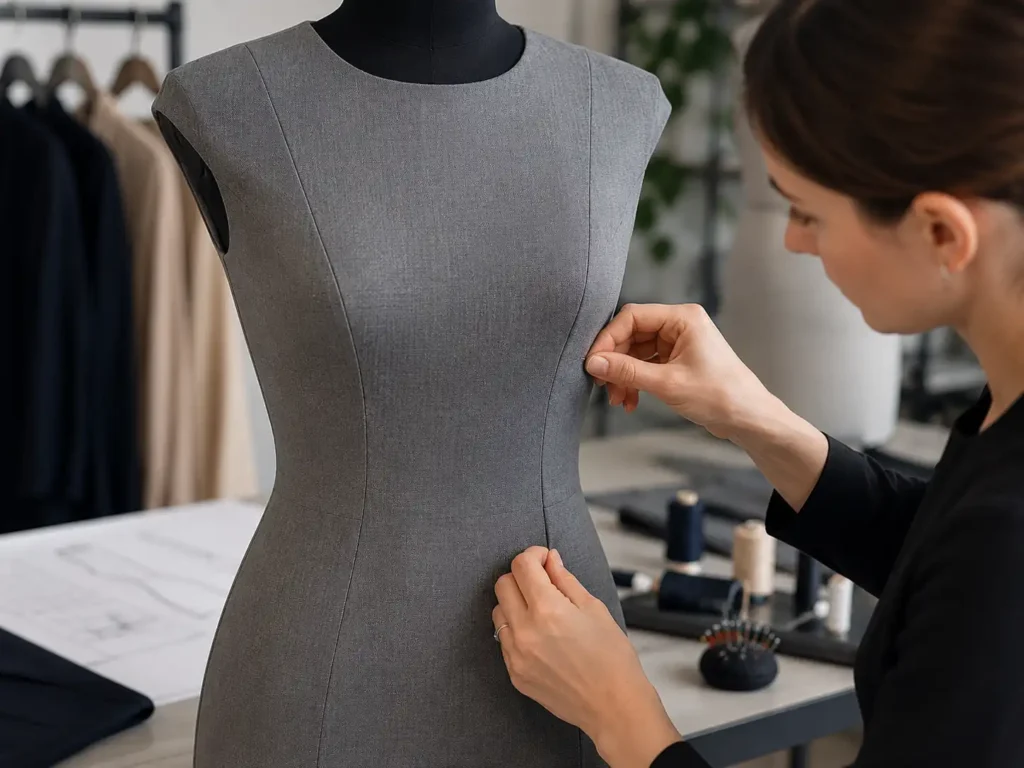
Small construction decisions strongly affect professional appearance. Seams, zippers, pockets, linings and hems must remain clean under close viewing and repeated wear.

Darts and Princess Seams

Darts and princess seams shape the bust, waist and torso. Points should finish smoothly without puckering or sharp impressions. Symmetry and pressing direction influence the final appearance.

Waist Seams

Waist seams create proportion and can connect different panels, gathers or skirt shapes. Seam alignment, stabilization and pressing help avoid twisting or visible thickness.

Back and Side Zippers

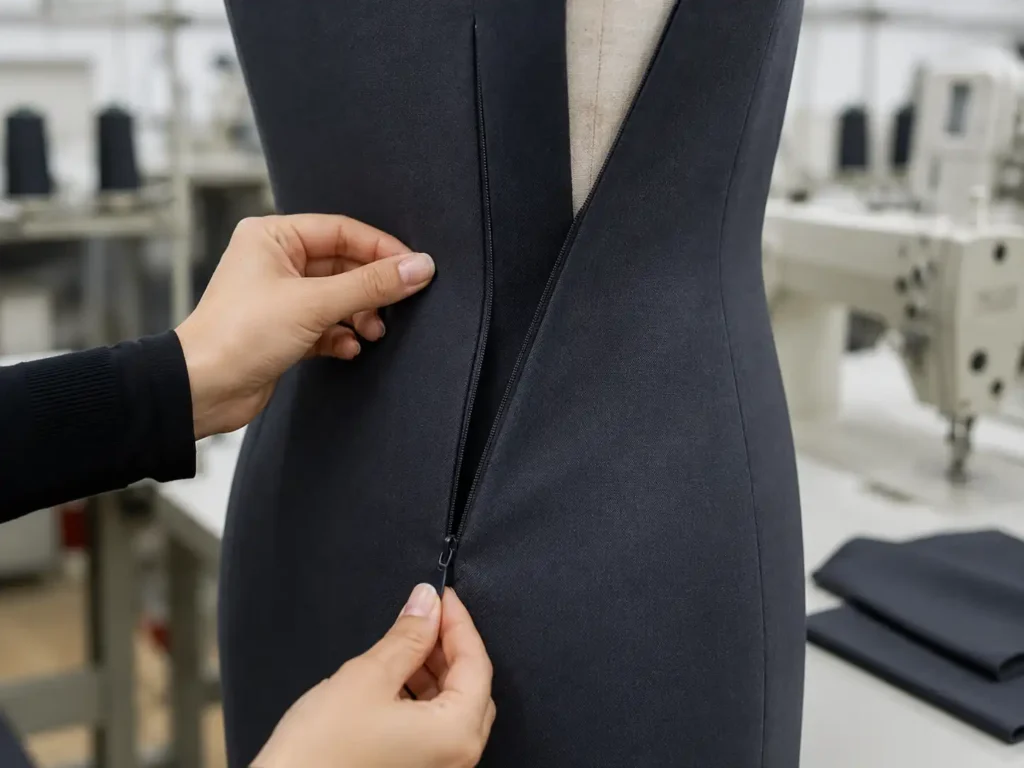
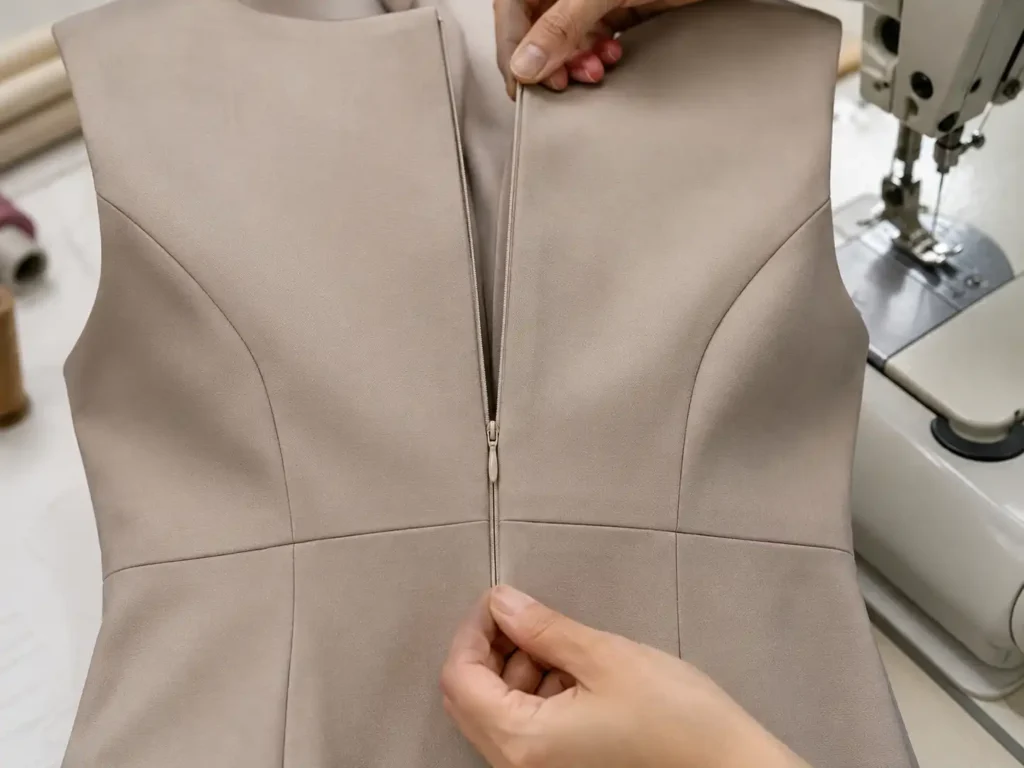
Zippers must lie flat without bubbling. Tape stability, seam allowance, fabric weight and pressing method all influence the result. Hook-and-eye placement may be added where needed.

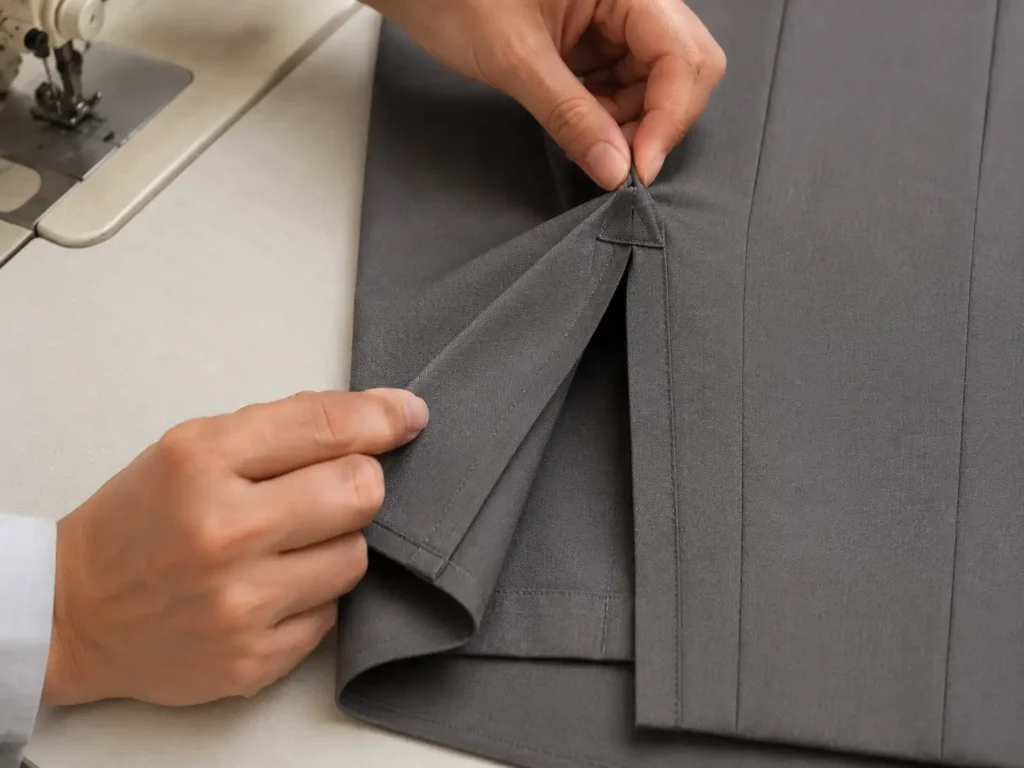
Slit Construction

Slits require reinforcement, consistent height and clean corners. Lining should not restrict movement or show through the opening. Stress points need secure stitching.

Sleeve Openings

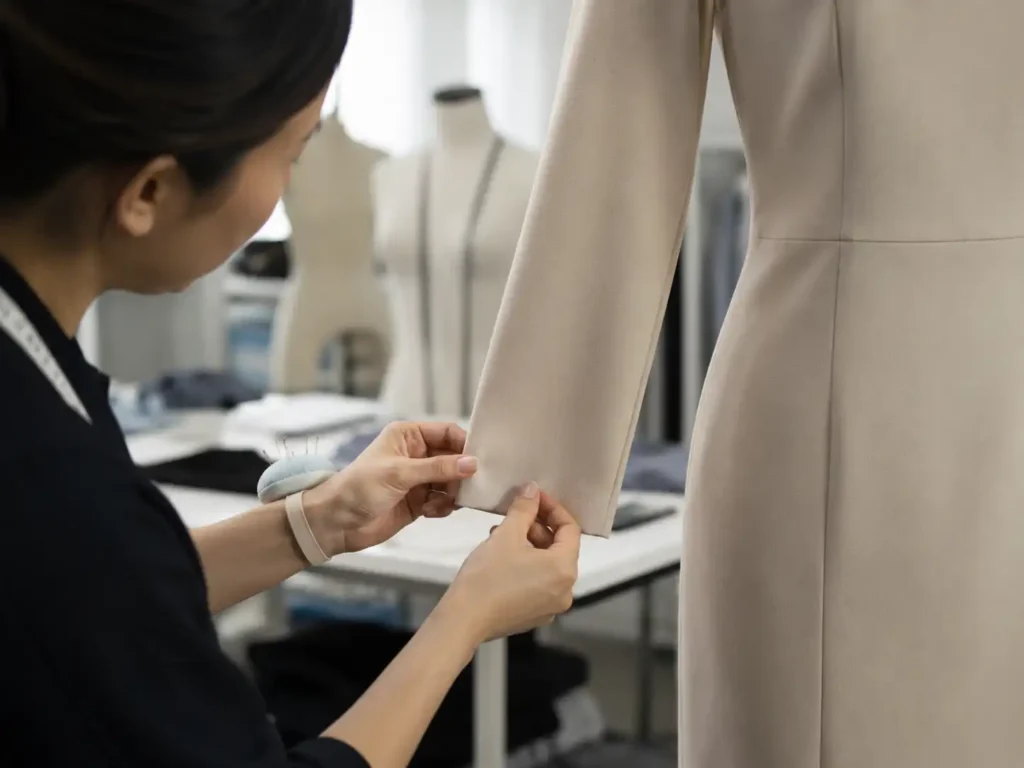
Sleeve hems, cuffs, vents and elastic openings should remain comfortable and symmetrical. Opening dimensions need to match the intended movement and visual proportion.

Lining Structure

Lining should support opacity and comfort without pulling the shell. It needs suitable ease, compatible shrinkage and a controlled hem position.

Pocket Engineering

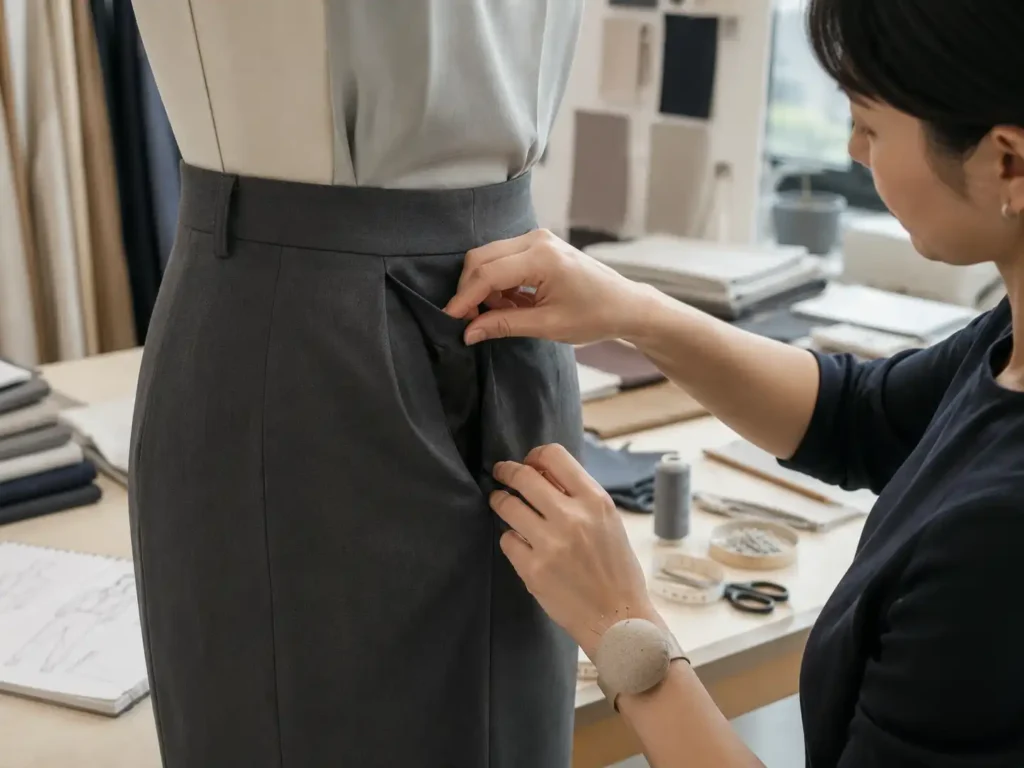
Pockets can improve functionality but may add volume at the hip or interrupt side seams. Placement, opening angle, pocket-bag size and reinforcement should be tested in the sample.

Hem and Pressing

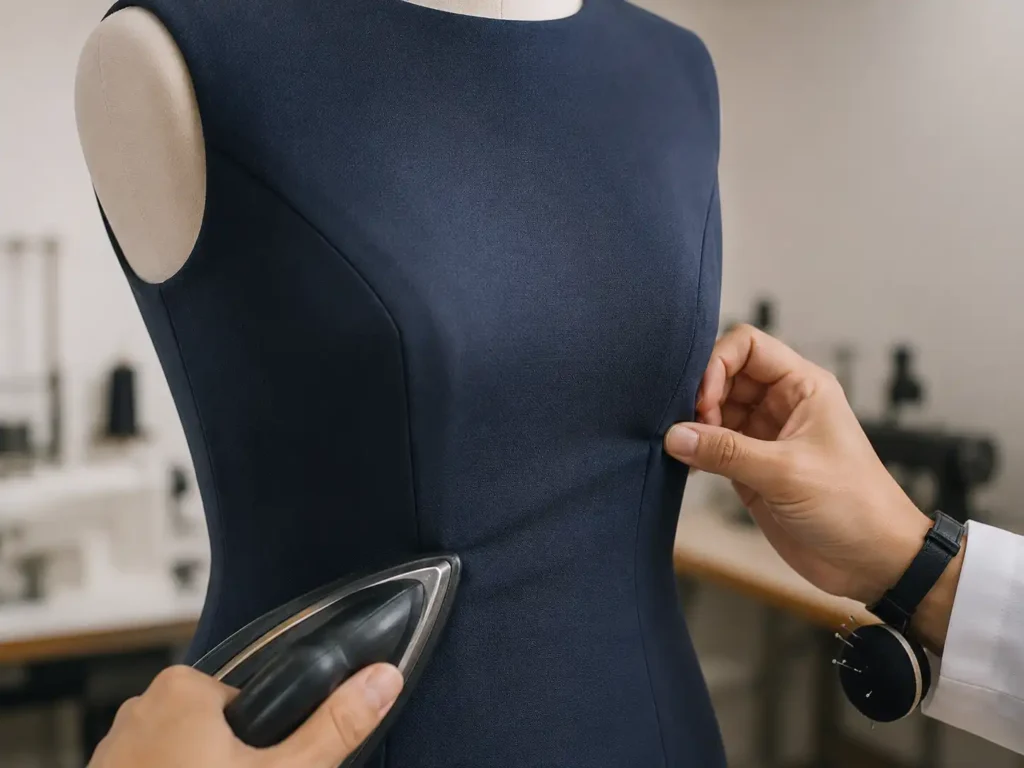
A professional hem should stay level and lie cleanly. Fabric drape, bias sections, seam thickness and pressing temperature influence the final edge.

All-Day Comfort Without Losing Professional Structure

Office dresses must support long periods of sitting, walking, commuting and layering. Comfort comes from controlled engineering rather than simply adding more stretch.

Sitting Ease

The waist, back hip and skirt opening should accommodate seated posture. Fitting only in a standing position can hide pressure points and upward garment movement.

Walking Movement

Hem width and slit placement need enough movement for normal walking and stairs. Narrow skirts require special attention to stride length and stress reinforcement.

Breathability

Fabric composition, weight, lining and garment fit all affect heat comfort. Climate and seasonal selling period should guide material selection.

Stretch Recovery

Stretch improves mobility only when the fabric returns to shape. Weak recovery creates bagging at the seat, waist, elbow and hip.

Coverage Control

Necklines, wraps and slits must maintain coverage during movement. Inner fastening, overlap depth, lining and pattern position can improve security.

Wrinkle Recovery

Travel and long office hours increase creasing. Material testing, garment construction and packing method influence how well the dress recovers.

Files Needed for Accurate Office Dress Development

Complete project information allows faster assessment of structure, materials, MOQ, sampling cost and delivery feasibility. Initial review can also begin from partial files when the available information is clearly identified.

Tech Pack

A tech pack provides construction details, measurements, stitching, trims and artwork. Clear documents reduce interpretation risk and support more accurate quotations.

Reference Image

Reference images communicate silhouette and visual direction. Additional front, back and detail views help identify construction that cannot be seen from one photograph.

Original Sample

An original sample can provide fit, hand feel, construction and finishing references. Any changes from the original garment should be listed separately.

Size Chart

The size chart identifies target dimensions and grading direction. It should state whether measurements are body measurements or finished-garment measurements.

Fabric Preference

Composition, weight, stretch, surface, color and performance expectations help narrow fabric sourcing. A physical swatch provides the strongest reference.

Color Plan

Pantone references, color chips or approved standards support shade development. Stock colors and custom dyeing follow different MOQ and lead-time structures.

Quantity Plan

Quantity per style, color and size affects fabric planning, production allocation and quotation. Total collection volume alone is not enough for accurate assessment.

Launch Date

The required launch or warehouse date allows sample, PP approval, production, QC, packing and freight planning to be scheduled backward.

Office Dress Sample Development Process

Sampling converts a concept into a garment that can be measured, fitted, photographed and prepared for repeatable production. Each round should resolve defined questions rather than create endless visual changes.

Style and Fabric Review

Development begins by reviewing intended silhouette, use scenario, target market, target price, size range and quantity plan. The team evaluates whether the proposed fabric can support the required structure, drape, coverage and movement.

Where the original material is unavailable or commercially unsuitable, alternative fabrics can be compared by composition, weight, stretch, hand feel, width, price, availability and production risk.

Pattern Development

Pattern makers translate sketches, samples or technical files into garment structure. Office dress patterns require controlled shoulder balance, bust shaping, waist position, hip ease, sleeve mobility, skirt opening and hem level.

Construction details are reviewed before cutting. Complex waist panels, lapels, linings, pockets and concealed zippers may require additional pattern pieces or stabilization.

First Sample and Fitting

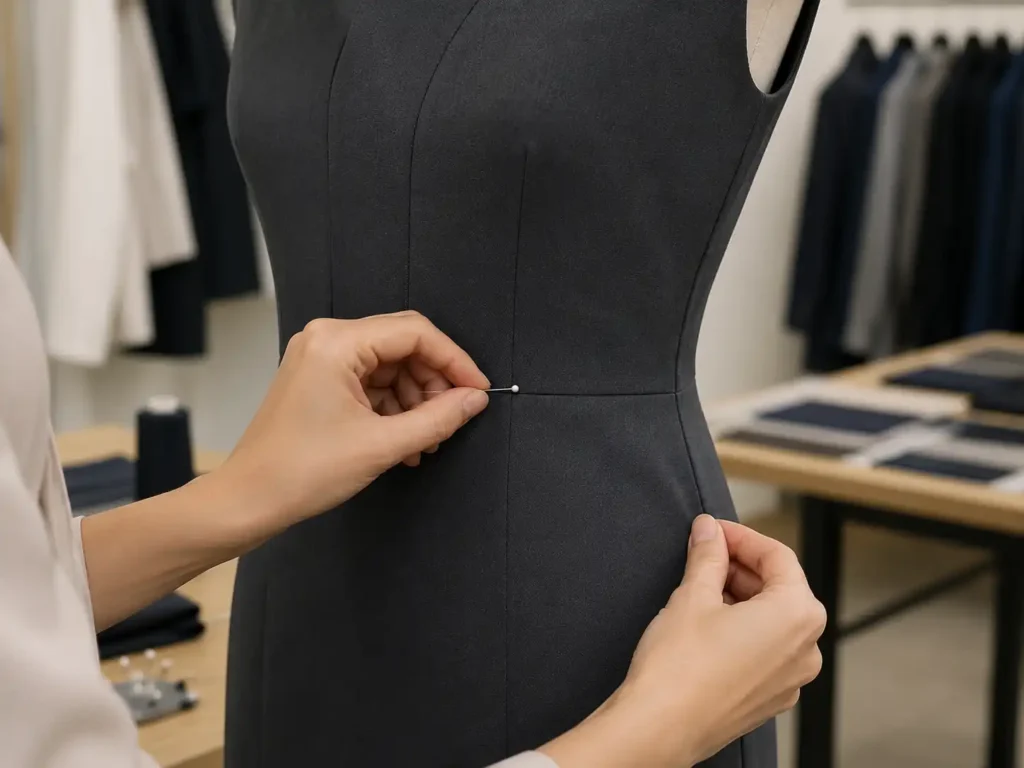
The first sample verifies silhouette, proportions, fabric behavior and construction logic. Fitting should include front, side and back views as well as sitting and movement observations.

Comments need to be measurable. “Reduce front waist by 1 cm,” “raise back slit by 2 cm” or “increase bicep width by 1.5 cm” can be transferred into production files. General comments cannot be controlled reliably.

Approval for Production

After revisions are completed, the PP sample confirms bulk materials, approved colors, measurements, labels, workmanship and packing direction.

The approved standard is then transferred into the production pattern, BOM, sewing instructions and QC checklist.

Sample Types Used Before Bulk Production

Different sample stages solve different risks. Selecting the right sequence protects time and prevents incomplete information from entering bulk manufacturing.

First Sample

The first sample confirms overall silhouette, construction approach and initial fabric behavior. It is not automatically the final production standard.

Fit Sample

A fit sample focuses on balance, measurements, ease, movement and proportion. Fit comments may require pattern changes even when the style appearance is already acceptable.

Revised Sample

A revised sample verifies approved corrections. Changes in fabric, construction, neckline, sleeve, length or fit may affect cost and timing.

Photo-Ready Sample

Photo-ready samples support campaign shoots, line sheets and sales presentations. Appearance, color, pressing and final trims need stronger visual control.

PP Sample

The pre-production sample represents the approved bulk standard. Material, color, labels, measurements, construction and packing direction should be confirmed before production release.

Golden Sample

The golden sample serves as a factory and QC reference during bulk production. It helps align workmanship, measurements, finishing and appearance across teams.

Manufacturing System for Multi-Style Office Dress Orders

Office dress collections often combine woven, knit and tailored structures. Jinfeng Apparel organizes development and production through coordinated teams rather than sending every style into one identical manufacturing route.

  • Two sample rooms support development, fitting and revision work. Seven or more senior pattern makers manage pattern structure and size grading, while more than twenty sample machinists produce first samples, revised samples, photo-ready samples and PP samples.
  • Six owned factories and more than ten long-term production partners support style allocation according to construction type, material, order quantity and schedule. Eighteen or more sewing lines and six or more flexible production lines form part of the wider production system.
  • Twelve or more merchandisers coordinate materials, approvals, production status, packing and delivery information. Fifteen or more QC inspectors support inspection, while more than thirty finishing and packing workers handle thread trimming, pressing review, folding, labels, polybags and carton preparation.

The system is designed to keep approved standards connected from sample room to bulk line. Production partners receive confirmed patterns, specifications, approved samples and inspection points before work begins.

Managing Collections With 10 to 30 Styles

Large office dress programs require structured priorities. A collection with many styles cannot be managed effectively as a series of unrelated single orders.

Style Classification

Styles can be grouped by hero products, core volume products, seasonal updates and supporting pieces. Priority affects sample order, fabric booking and production allocation.

Fabric Consolidation

Several styles may share one fabric family or color direction. Consolidation can improve purchasing efficiency, shade consistency and production planning while preserving product differentiation.

Sample Calendar

Development dates should show first sample, revision, photo sample, PP sample and approval deadlines. Styles with complex tailoring or custom fabrics need earlier starting points.

Approval Sequence

Bulk planning should not wait for every style to finish simultaneously. Approved styles can move forward while later revisions continue, provided fabric and production dependencies are controlled.

Factory Allocation

Woven sheath dresses, ponte styles, blazer dresses and soft shirt dresses may require different production strengths. Allocation should match construction and finishing requirements.

Size and Color Ratios

Each style, color and size ratio affects cutting, packing and delivery. Ratios should reflect forecasted demand and warehouse needs rather than being divided evenly without analysis.

Multi-Batch Delivery

A large program may use staged deliveries by launch priority, region or warehouse. Packing lists and carton identification must remain clear across batches.

Repeat Orders

Approved patterns, material references, trim records, measurement files and packing instructions can support faster repeat-order review. New fabric batches or changed colors still require confirmation.

Sewing and Workmanship Standards for Office Dresses
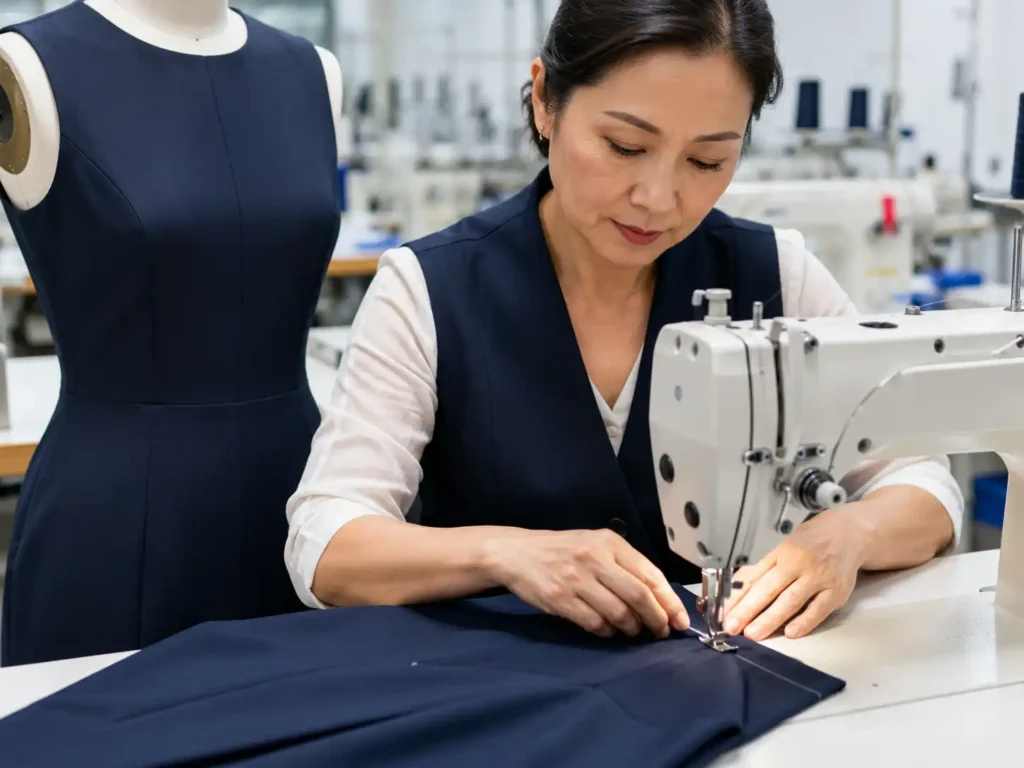
Professional garments expose construction quality through clean surfaces and controlled lines. Poorly handled seams, darts or zippers remain visible even when the fabric and design are strong.

Seam Control

Seam allowance, stitch density, thread tension and feeding must match the material. Uneven feeding can create puckering, twisting or stretched side seams.

Dart Finishing

Darts should taper smoothly and press toward the intended direction. Thick dart points or abrupt endings create visible bumps on fitted office dresses.

Zipper Installation

Concealed and exposed zippers need straight application, level waist-seam matching and smooth opening. The surrounding fabric should remain flat.

Panel Alignment

Waist panels, princess seams, collars, cuffs and pocket lines require accurate matching. Misalignment becomes more visible in solid office colors.

Lining Attachment

Lining should follow the shell without restricting movement. Armholes, necklines, zippers, vents and hems need clean attachment and sufficient ease.

Slit Reinforcement

Slit corners and upper openings receive repeated stress. Reinforcement should support movement while remaining discreet from the outside.

Button and Fastener Security

Buttons, snaps, hooks and bars should be positioned accurately and checked for strength. Fasteners near high-tension areas require additional control.

Pressing Discipline

Pressing shapes seams and improves appearance, but incorrect heat can create shine or distortion. Temperature and pressure should be suitable for the approved fabric.

Office Dress Quality Control From Fabric to Carton

QC StageMain Office Dress ChecksRisk Controlled
Fabric arrivalComposition reference, weight, width, color, hand feel, stretch, surface and shade groupingWrong material, inconsistent lots, unsuitable stretch
CuttingGrain direction, pattern placement, shade separation, panel accuracy and lining piecesTwisting, mismatched panels, color variation
Sewing startApproved sample, pattern, seam construction, dart shape, zipper method and slit reinforcementIncorrect workmanship entering full production
Inline inspectionSeam quality, panel alignment, measurements, sleeve balance, waist level and zipper smoothnessRepeated defects across the line
Final measurementBust, waist, hip, shoulder, armhole, sleeve, length, lining and slit positionSize inconsistency and fit complaints
Appearance inspectionSymmetry, stains, loose threads, puckering, pressing shine and hem balancePoor retail presentation
Label and packingMain label, care label, size label, hangtag, barcode, folding, polybag and ratioSKU errors and warehouse rejection
Shipment preparationCarton mark, quantity, gross and net weight, carton size and documentsDelivery and receiving discrepancies

What Determines Office Dress Production Cost

Office dress quotations combine materials, pattern work, construction time, quality requirements and packing rather than relying on garment appearance alone.

Main Fabric

Composition, weight, width, stretch, finish, supplier MOQ and color availability influence material cost and production risk.

Lining and Interfacing

Tailored or opaque styles may require lining, fusible support or localized stabilization. Material compatibility and application work affect cost.

Construction Complexity

Princess seams, lapels, cuffs, pockets, panels, pleats, vents and complex linings increase cutting and sewing time.

Pattern and Sampling

Original development, fit revisions, grading and PP samples require specialist work. Existing approved patterns can reduce repeat-order development work.

Trims and Closures

Zippers, buttons, hooks, snaps, belts, buckles, labels and custom hardware each have separate costs and supplier requirements.

Pressing and Finishing

Tailored dresses and blazer dresses need more controlled pressing and finishing than simple knit styles.

Quality Requirements

Additional measurement frequency, testing, third-party inspection or special documentation may affect project cost and schedule.

Packing Requirements

Branded labels, hangtags, barcode stickers, individual folding, tissue, cartons, ratio packing and warehouse labels influence final quotation.

Cost Optimization

Cost can often be improved by selecting an alternative fabric, simplifying hidden construction, consolidating colors, sharing trims across styles or improving cutting utilization without weakening the visible brand standard.

Office Dress MOQ and Order Planning

Jinfeng Apparel’s basic MOQ starts from 200 pieces per style and color. Final requirements depend on fabric supply, color development, trims, construction, packaging and the selected production route.

One Style, One Color

An order of 200 pieces in one style and one color can be reviewed under the standard starting structure when regular materials and production conditions apply.

One Style, Two Colors

Two colors at 200 pieces per color create a total of 400 pieces. Material availability and color-lot planning still need confirmation.

Multiple Styles

A collection may include 10 to 30 styles, but each style and color should have a commercially workable quantity. Total collection volume does not automatically replace the per-style requirement.

Stock Fabric

Regular available fabrics are generally easier to plan at the standard starting MOQ. Available quantity, shade, width and batch still need verification.

Custom Color

Custom dyeing may require higher fabric minimums because lab dips, dye lots, wastage and minimum dyeing meters are involved.

Custom Weaving or Printing

Exclusive weaving, printing and special finishes can introduce separate material minimums and longer development schedules.

Special Trims

Custom buttons, buckles, branded hardware or unusual zippers may carry supplier minimums independent of garment quantity.

Private-Label Packing

Labels and common packaging can often be planned with the garment order, while special boxes, molded inserts or custom materials may require separate quantities.

Private-Label and Retail-Ready Office Dress Packing

Office dress programs often need complete brand presentation and warehouse-ready execution. Label and packing files should be confirmed before bulk completion to avoid delays at the final stage.

Woven Main Labels

Woven labels can display the brand name and identity. Size, fold type, placement, thread colors and edge finish need approval.

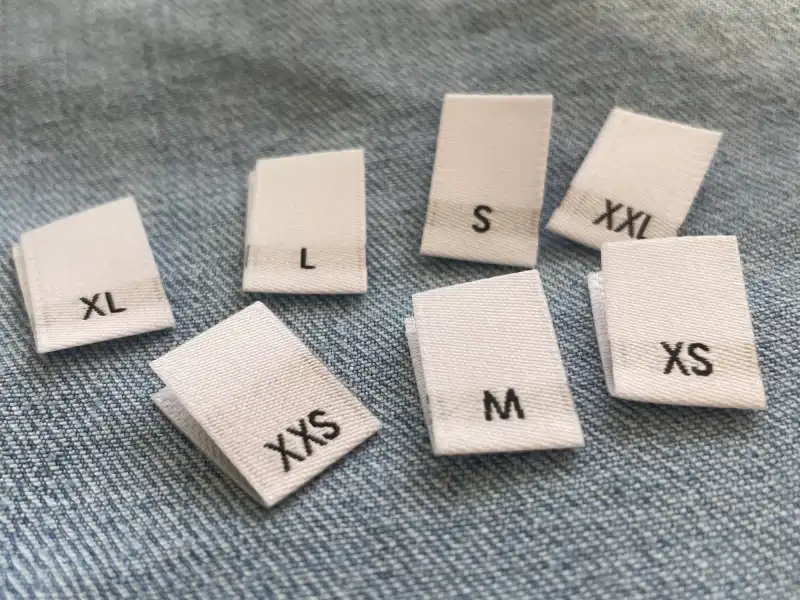
Size Labels

Size labels must match the approved size chart and packing ratio. Placement should remain consistent across all styles.

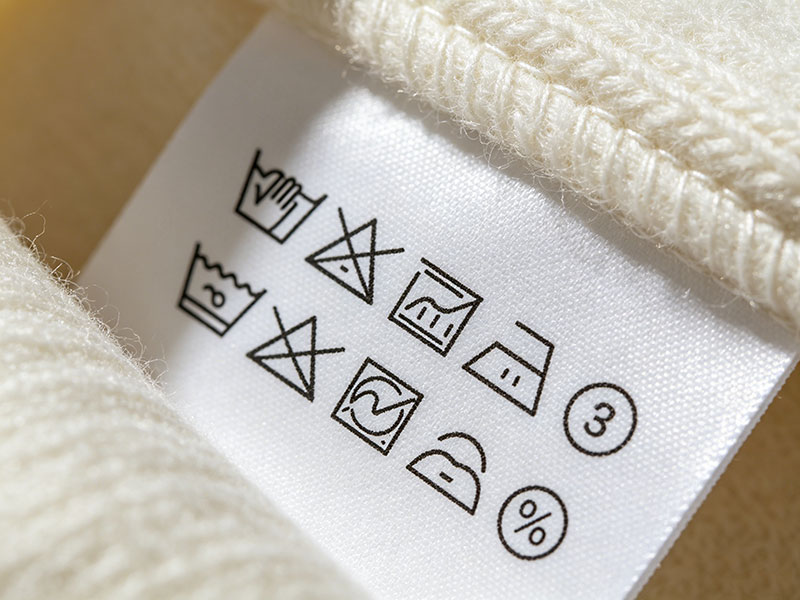
Care Labels

Care labels can include composition, care instructions, country information and other required text supplied or approved by the brand.

Hangtags

Hangtags may carry brand stories, pricing, style numbers, material information or campaign details. String type and attachment position should be confirmed.

Barcode and SKU Labels

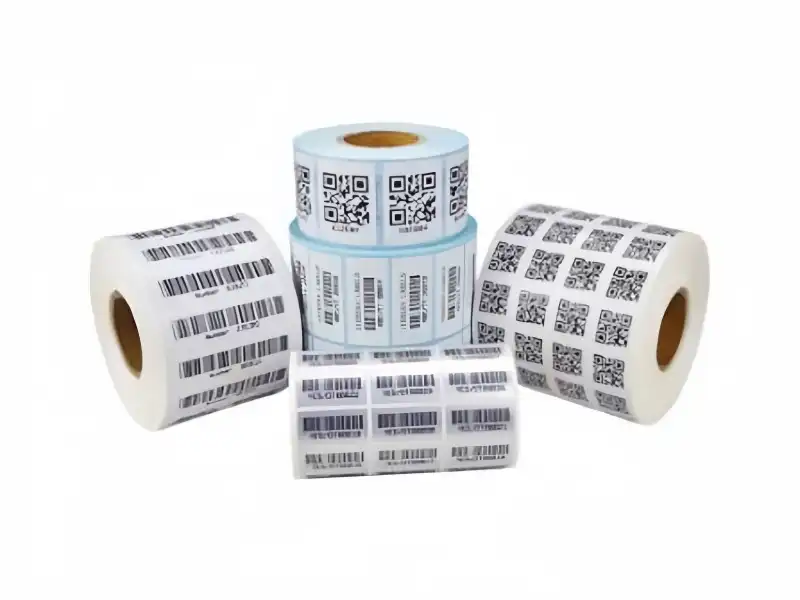
Barcode files must match style, color and size information. Verification before application reduces warehouse and inventory errors.

Polybags and Stickers

Polybags can be plain or printed according to the packing plan. Warning text, ventilation holes, adhesive strength and size should suit the garment.

Folding and Size Ratios

Folding method affects presentation and carton efficiency. Size and color ratios need to match the approved packing list.

Cartons and Carton Marks

Carton dimensions, quantity, weight, shipping marks and warehouse labels should align with freight and receiving instructions.

Sample, Production and Delivery Timeline Planning

Office dress schedules should be built backward from campaign photography, sales meetings, warehouse receiving or launch dates. Material development and sample revisions often determine the critical path.

  • Simple office dress samples may take approximately 7 to 10 days when the design, material and measurements are clear. Regular structured dresses commonly require around 10 to 15 days. Styles with tailored lapels, complex panels, special trims or difficult materials may require 12 to 25 days or longer.
  • Revised samples and PP samples are scheduled according to the number of corrections, material availability and approval requirements. Major design changes can create a new development stage rather than a minor revision.
  • Bulk production timing is confirmed after PP approval, material readiness, quantity, style count, size range and packing work are clear. Multi-style programs need an integrated schedule covering material booking, factory allocation, sewing, QC and packing.
  • Freight planning should begin before production finishes. Express, air freight, sea freight, split shipment and client-appointed forwarders can be reviewed according to volume, launch priority and cost targets.

Design Protection and Compliance Coordination

Established fashion programs often include unpublished designs, confidential pricing, exclusive materials and controlled brand files. Jinfeng Apparel supports NDA-based cooperation and project confidentiality.

Protected Development Files

Tech packs, line sheets, original samples, patterns, measurement charts, trim files and revision records are used for approved project development and production.

Unreleased Styles

Unpublished samples and collection information are not intended for public display without authorization. Anonymous or internally developed images should be used for marketing content.

Private-Label Files

Logo artwork, woven-label layouts, care labels, hangtags, barcode files, packing guides and carton marks are handled as project documents.

Factory Review Support

For larger programs, factory profiles, production information, QC processes, packing processes and available audit-related documents can be reviewed according to the factory assigned to the order.

Material Documentation

Certified or tested fabric requirements must be confirmed by material type, supplier, color, batch, certificate scope, validity, MOQ and lead time. No certification should be assumed across every fabric.

Inspection Coordination

Brand-appointed inspectors or third-party inspection arrangements can be discussed before production. Standards, booking procedures and reporting needs should be confirmed in advance.

Office Dress Programs Managed From Sample to Delivery

The following anonymized project profiles illustrate how multi-style office dress orders can be structured. Brand names, proprietary designs and commercial details remain confidential.

United States Workwear Collection

  • Market: United States
  • Product Direction: Sheath dresses, wrap dresses, ponte midis and blazer dresses
  • Style Count: 14 styles
  • Total Order: 28,800 pieces
  • Color Plan: 2 to 4 colors per style
  • Size Range: US 2–14
The brand needed a coordinated office collection with enough visual variety for monthly launches while preserving a consistent fit identity. Early samples showed different waist positions and sleeve mobility across woven and knit products. Jinfeng Apparel grouped the range into woven structured, stable knit and tailored categories. Pattern teams aligned waist placement and target ease while maintaining fabric-specific construction. The sample schedule prioritized campaign styles first, followed by core volume products. Bulk QC focused on waist level, hip ease, zipper smoothness, dress length and barcode accuracy. The final order was divided into two delivery batches. Hero styles were prepared for the first launch window, while core colors followed in the second shipment. Pattern and packing records were retained for replenishment review.

United Kingdom Office-to-Evening Range

  • Market: United Kingdom
  • Product Direction: Crepe midi dresses, structured jersey dresses and refined wrap styles
  • Style Count: 22 styles
  • Total Order: 51,600 pieces
  • Color Plan: Core neutrals plus seasonal jewel tones
  • Size Range: UK 6–18

The project required dresses suitable for office hours, business dinners and retail events. Main risks involved wrap-front coverage, slit height, stretch recovery and consistent grading through the larger sizes. Fabric review compared several crepe and jersey options by weight, recovery, opacity and pressing behavior.

Fit samples were assessed in standing and seated positions. Wrap overlap, inner fastening, sleeve width and lining ease were adjusted before PP approval. Production was divided across suitable woven and knit lines. Inspection concentrated on neckline stability, side-seam balance, slit position, finished length and fabric relaxation. Size-ratio packing was prepared for several retail destinations.

North American Multi-Season Program

  • Market: United States and Canada
  • Product Direction: Shirt dresses, pencil dresses, A-line work dresses, tailored sets and core sheath styles
  • Style Count: 18 styles
  • Total Order: 72,000 pieces
  • Delivery Structure: Three production and shipment batches
  • Size Range: XS–XXL
The brand needed one manufacturing structure for a multi-season program rather than isolated orders. Product development also had to support shared fabrics, recurring colors and faster repeat orders. Jinfeng Apparel organized styles by construction and factory suitability. Core fabrics and common trims were consolidated where appropriate, while exclusive design details remained style-specific. Sample comments were converted into revised patterns, measurement files, BOMs and QC checklists. The first batch supported campaign and early retail dates. The second carried core commercial quantities, and the third supported regional replenishment. Repeat-order records covered patterns, fabrics, trims, labels, measurements and packing instructions.

Frequently Asked Questions About Office Dress Manufacturing

Jinfeng Apparel can develop sheath dresses, pencil dresses, A-line dresses, wrap dresses, shirt dresses, structured knit dresses, midi work dresses, blazer dresses and office-to-evening styles. Product feasibility depends on fabric, construction, target fit, quantity and production schedule.

The basic MOQ starts from 200 pieces per style and color. Custom-dyed fabrics, exclusive printing, special trims, certified materials and custom packaging may have separate minimum requirements.

Yes. Reference images can be reviewed for silhouette, construction and fabric direction. Additional details, measurements, quantity, target market and material expectations improve development accuracy.

Yes. Tech packs can be reviewed for measurements, construction, trims, artwork, labels and packing requirements. Any unclear or conflicting information should be resolved before sample cutting.

Common directions include stretch suiting, ponte, Roma, crepe, structured jersey, polyester blends, cotton blends and viscose blends. Final selection depends on silhouette, season, target price, stretch, opacity and structure.

Simple styles may take around 7 to 10 days. Regular structured dresses often require 10 to 15 days, while tailored or complex products may need 12 to 25 days or longer depending on materials and revisions.

Yes. Size grading can be developed from an approved base size and brand measurement system. Fabric behavior, silhouette, coverage and target market should be considered before final grading rules are released.

A PP sample is strongly recommended before bulk production. It confirms approved materials, color, construction, measurements, labels and packing direction and becomes a key production reference.

Yes. Jinfeng Apparel supports multi-style womenswear programs, seasonal collections, repeated color programs and multi-batch delivery. Each style and color still needs a workable production quantity.

Yes. Available support includes woven labels, size labels, care labels, hangtags, barcode stickers, polybags, stickers, cartons, carton marks and warehouse labels.

Start Your Office Dress Manufacturing Project

Send your office dress brief to Jinfeng Apparel for an initial development and production review.

Useful files include tech packs, reference images, line sheets, original sample photographs, size charts, fabric swatches, color standards, quantity plans, private-label artwork and target delivery dates.

A complete brief helps the team evaluate pattern complexity, suitable fabrics, sample requirements, MOQ structure, production allocation, quality checkpoints, packing work and delivery feasibility. When some files are still under development, available information can be reviewed first and missing requirements can be identified before quotation or sampling begins.

Please include:

  • Company and brand name
  • Main contact and email
  • Office dress styles or product direction
  • Quantity per style and color
  • Target size range
  • Preferred fabric or performance needs
  • Private-label and packaging requirements
  • Target sample date
  • Required delivery window
  • Tech pack, reference image or line sheet upload
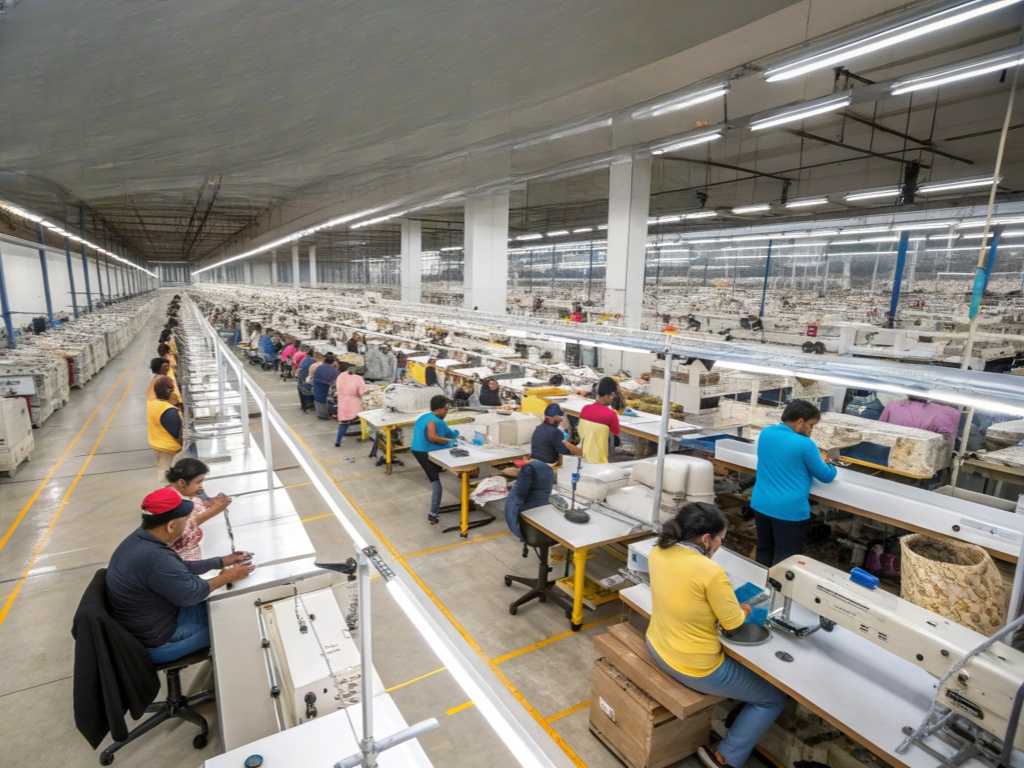
Factory floor with workers sewing garments in a large production area.

Submit Your Production Inquiry

Please share your product details, estimated quantity, target market, timeline, and development requirements. Our project team will review your inquiry and provide a tailored OEM/ODM production solution.

Women’s Apparel Production for Established Fashion Brands

From sample development to bulk production, JF Apparel supports fashion brands with confidential OEM/ODM manufacturing, stable quality control, and scalable production.