Skip to content
Midi Office Dress Manufacturer
Custom midi office dresses developed for polished workwear collections, private-label launches, and repeatable bulk production.
Jinfeng Apparel helps global fashion brands develop midi office dresses from product direction to production-ready garments. Our team supports fabric sourcing, pattern development, sample review, fit correction, bulk production, QC, private-label packing, and export coordination. For office dress programs, we focus on professional length, structured comfort, modest neckline planning, sleeve balance, waist placement, walking ease, zipper flatness, pressing quality, and size stability across multi-style collections.
- Since 2008— women’s fashion manufacturing experience for overseas apparel programs.
- 6 owned women’s fashion factories— production structure for dresses, skirts, jumpsuits, sets, and private-label womenswear.
- 10+ long-term satellite production partners— flexible support for multi-style office dress capsules and phased delivery.
- MOQ from 200 pcs/style/color— suitable for organized custom production, not stock resale or micro-order fulfillment.
- Anonymous office dress program range: 12–24 styles / 26,000–68,000 pcs— workwear and business casual midi dress programs across US, UK, and Australian markets.
Manufacturing Facts for Office Dress Programs
Since 2008
Jinfeng Apparel has focused on women’s apparel development and production since 2008. For midi office dress projects, long-term experience matters because clean workwear silhouettes carry hidden risks: waistline position, hip ease, sleeve comfort, back zipper flatness, neckline coverage, sitting comfort, and hem balance. Our work begins before sewing, with style review, fabric direction, construction analysis, and production feasibility.
- Women’s apparel development since 2008.
- Office-ready dress structure review before sampling.
- Production feasibility checked before bulk planning.
6 Owned Factories
Jinfeng Apparel operates 6 owned women’s fashion factories. Different dress styles require different production matching. A ponte sheath dress, a crepe wrap dress, and a belted shirt midi dress cannot be managed through one identical production route. Our internal factory structure helps match product type, fabric behavior, construction difficulty, quantity plan, and delivery rhythm to a suitable production unit.
- Owned factory support for core womenswear production.
- Style allocation by fabric and construction difficulty.
- Stronger coordination for repeatable office dress programs.
10+ Partners
Jinfeng Apparel works with 10+ long-term satellite production partners in the Guangdong women’s fashion supply region. For multi-style office dress collections, partner coordination helps manage fabric groups, trims, color plans, size ratios, sewing difficulty, and staged delivery. Long-term partners reduce communication risk because production expectations, QC points, and packaging requirements can be aligned before bulk work begins.
- Capacity support for seasonal office dress programs.
- Partner allocation by style risk and schedule.
- Unified QC and packing expectations before bulk.
MOQ 200
- MOQ from 200 pcs/style/color.
- Fabric and trim minimums reviewed separately.
- Style/color planning confirmed before quotation.
OEM ODM
- OEM support from complete technical files.
- ODM support from reference images or collection direction.
- Sample route reviewed before bulk quotation.
Private Label
- Woven, size, and care label support.
- Hangtags, barcode stickers, and SKU labels.
- Polybag, carton mark, and warehouse label coordination.
Built for Mature Officewear Dress Programs
Fashion Brands
- Style structure review.
- Fabric and trim sourcing.
- Sample measurement check.
- Bulk production planning.
Workwear Labels
- Professional silhouette planning.
- Modest coverage review.
- Fit and comfort balance.
- Size range execution.
Ecommerce Brands
- Photo-ready samples.
- SKU packing support.
- Multi-color handling.
- Return-risk control.
Retail Chains
- Multi-style planning.
- Color-size breakdown.
- Packing confirmation.
- Shipment coordination.
Sourcing Offices
- File review support.
- MOQ explanation.
- Cost factor review.
- QC point alignment.
Brand Groups
- Pattern record keeping.
- Repeat-order support.
- Seasonal collection planning.
- Multi-batch production.
Common Office Dress Development Problems
Unstable Fit
- Bust, waist, and hip balance.
- Shoulder and armhole comfort.
- Midi length by size.
- Walking slit and hem width.
Wrong Fabric
- Crepe, ponte, suiting, and jersey review.
- Wrinkle and shrinkage risk.
- Lining and opacity.
- Color and batch consistency.
Weak Bulk Polish
- Zipper flatness.
- Seam and hem balance.
- Pressing and fold marks.
- Final packing review.
Midi Office Dress Styles We Manufacture
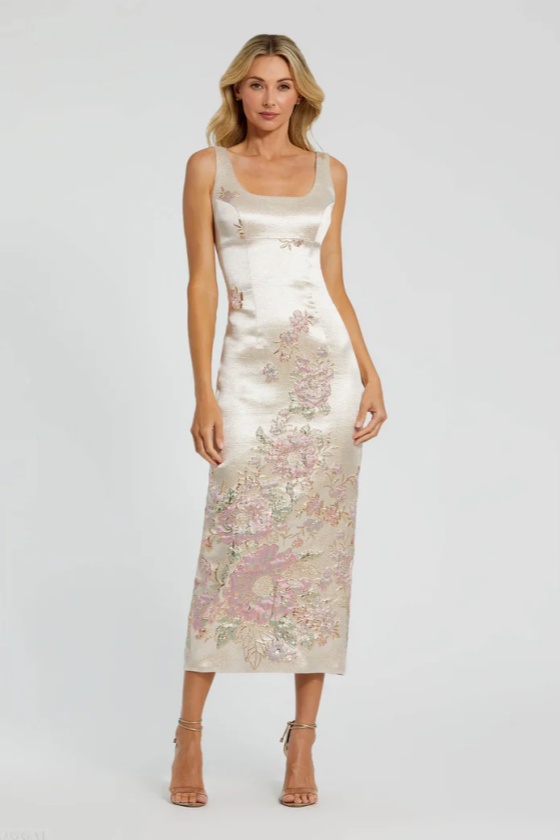
Sheath Midi
- Bust room and side seam smoothness.
- Back vent or slit height review.
- Waist seam, hem, and pressing control.
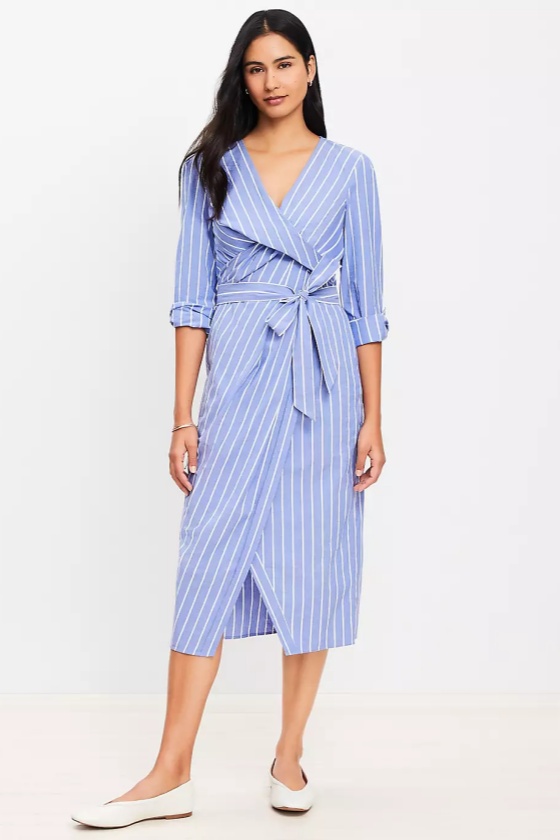
Wrap Midi
- Wrap depth and overlap coverage.
- Tie length and internal closure review.
- Drape, shrinkage, and recovery check.
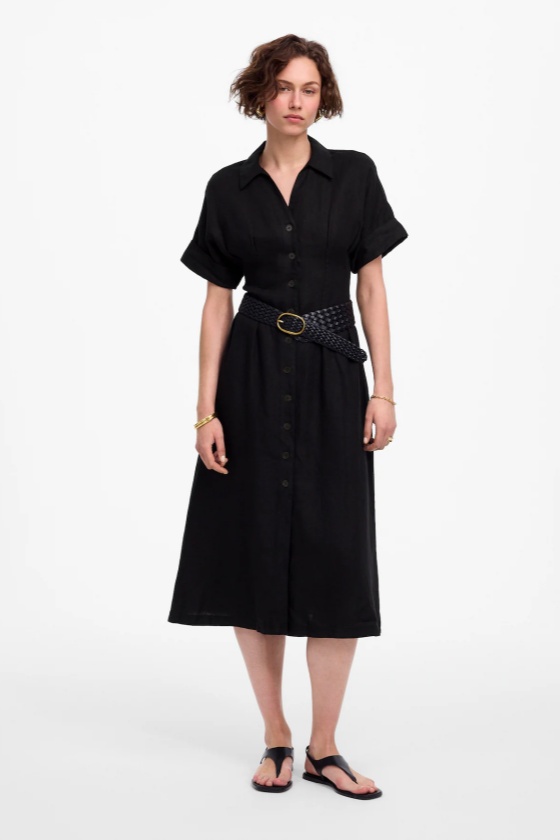
Shirt Midi
- Collar roll and placket alignment.
- Button spacing and pocket placement.
- Sleeve finish and hem quality.

Belted Dress
- Belt width and loop position.
- Waistline placement by size.
- Belt pairing and packing layout control.
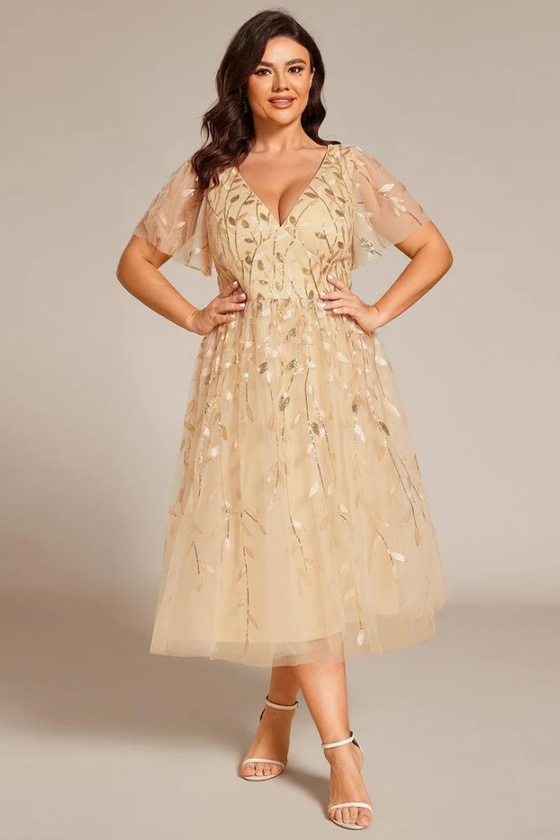
A-Line Midi
- Waist shaping and skirt flare balance.
- Panel distribution and side seam hang.
- Lining length and hem finishing.
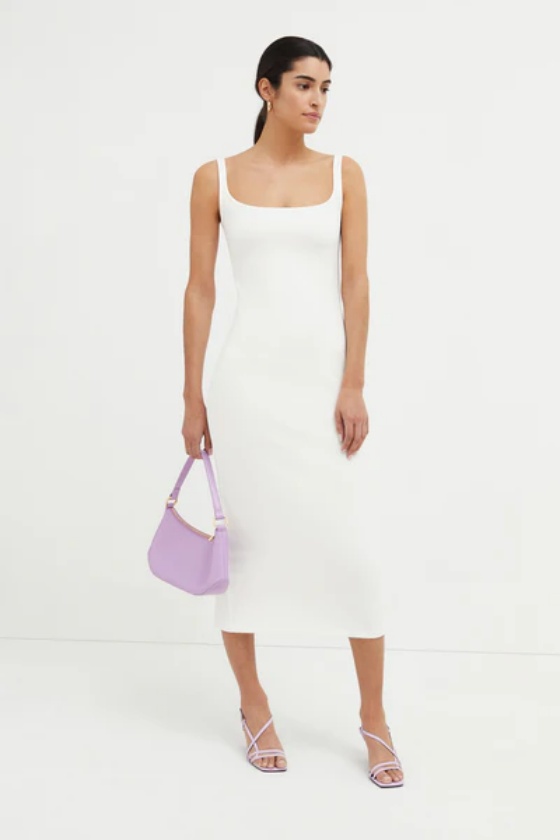
Pencil Midi
- Hip ease and waist grip review.
- Back slit height and reinforcement.
- Seam smoothness and stretch recovery.

Short Sleeve
- Sleeve cap and armhole comfort.
- Bicep room and shoulder point.
- Sleeve symmetry and pressing review.

Long Sleeve
- Shoulder slope and sleeve twist control.
- Elbow movement and cuff opening.
- Sleeve symmetry and shoulder seam review.

Sleeveless Layering
- Armhole coverage and shoulder width.
- Bust dart and neckline review.
- Under-blazer comfort and clean finish.
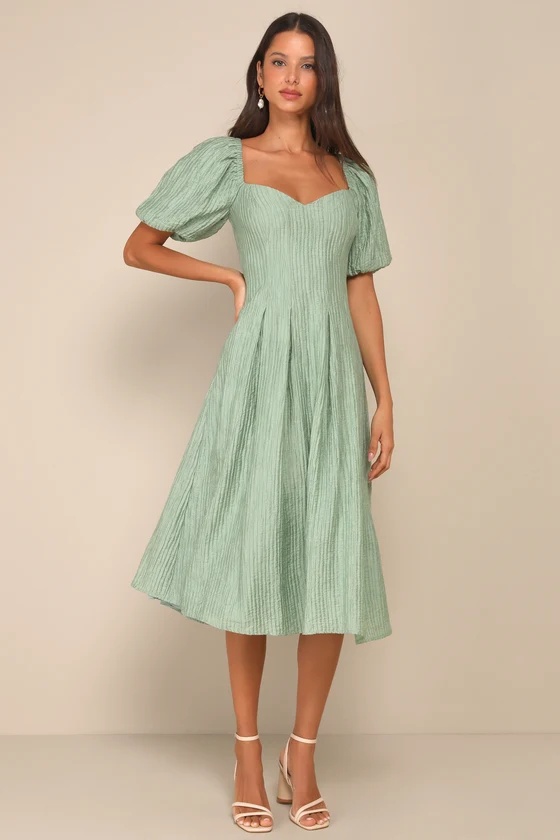
Pleated Midi
Pleated office midi dresses require controlled waist attachment, pleat depth, hem balance, and pressing stability. Fabric selection is critical because some fabrics lose pleat definition after steaming or packing. Jinfeng reviews pleat width, stitch holding, skirt weight, lining length, and package fold method. Bulk work focuses on pleat direction, waist seam straightness, color consistency, and pressing marks across production batches.
- Pleat depth and waist attachment.
- Pressing stability and skirt weight.
- Fold method and color consistency.

Knit Office
Knit office midi dresses need a balance between comfort, structure, and recovery. Ponte, rib knit, jersey, and compact knit fabrics can support different looks. Development focus includes stretch direction, body contour, neckline stability, side seam twisting, hem stretching, and washing shrinkage. Jinfeng reviews size tolerance and recovery before bulk production, because a knit dress may look correct before wear but lose shape after washing.
- Stretch direction and recovery.
- Neckline stability and side seam twist.
- Washing shrinkage and size tolerance.
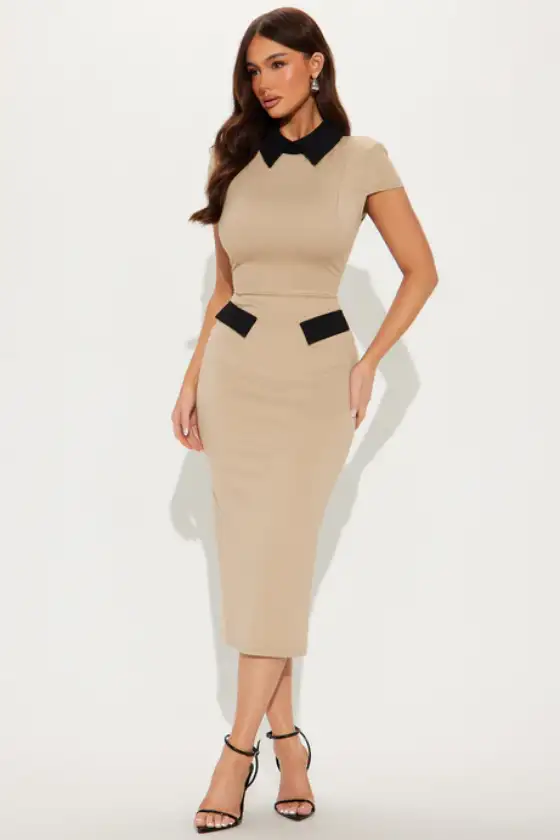
Business Casual
- Soft styling with office polish.
- Wrinkle control and neckline coverage.
- Packing condition for delivery appearance.
Fabric Direction for Midi Office Dresses
| Fabric Direction | Best for Office Midi Styles | Development Focus | Bulk Control Notes |
|---|---|---|---|
| Ponte / Roma | Sheath, pencil, structured knit, body-skimming midi | Thickness, recovery, seam smoothness, waist support | Check side seam balance, hem stretch, washing shrinkage, and size stability |
| Crepe | Wrap, A-line, office-to-evening, semi-formal midi | Drape, wrinkle resistance, texture, zipper flatness | Control pressing marks, waistline shape, and color depth between lots |
| Suiting Blend | Tailored shirt dress, belted midi, structured A-line | Structure, professional surface, press line, sleeve shape | Monitor cutting direction, seam puckering, collar stability, and hem balance |
| Stretch Woven | Slim office dress, pencil midi, sleeveless layering dress | Comfort stretch, recovery, opacity, fit tolerance | Review hip ease, slit height, zipper wave, and size ratio accuracy |
| Jersey | Soft work dress, relaxed midi, travel-friendly office dress | Stretch, recovery, twisting, shrinkage, body contour | Check side seam twist, neckline stability, and washing dimension change |
| Rib Knit | Casual office midi, long sleeve knit dress, body-skimming style | Rib density, stretch direction, recovery, hem holding | Control neckline stretching, side seam balance, and packing fold marks |
| Rayon / Viscose Blend | Summer office midi, soft wrap dress, shirt midi | Drape, breathability, shrinkage, wrinkle behavior | Review pre-production shrinkage, seam slipping, and packing crease risk |
| Polyester Blend | Easy-care office dress, printed midi, private-label workwear | Color consistency, wrinkle resistance, cost balance | Check heat pressing, static issue, shade matching, and fabric handfeel |
| Linen Blend | Warm-weather office dress, relaxed business casual midi | Breathability, crease management, opacity, soft structure | Control shrinkage, seam puckering, lining decision, and final pressing |
Fit Engineering for Work-Ready Midi Dresses
Office midi dress development needs a measured balance between shape, comfort, coverage, and movement. Jinfeng reviews fit before bulk production so approved samples can become repeatable garments across size ranges.
Bust Waist Hip Balance
A midi office dress must create a clean shape without becoming too tight for long-hour wear.
The bust, waist, and hip relationship is reviewed early because small measurement errors can change the whole garment. For sheath, pencil, and body-skimming styles, the hip area needs enough ease for sitting and walking. For wrap and A-line styles, the waistline controls visual proportion and comfort.
- Bust room— checked against neckline depth, dart position, and armhole shape; a tight bust can pull the front neckline or create diagonal drag lines.
- Waist placement— reviewed by style type and size range; office dresses need polished waist position rather than a partywear fit that rides too high or compresses the body.
- Hip ease— planned according to silhouette; pencil midis need controlled ease, while A-line midis need smooth flare without excess volume.
- Size ratio— checked after sample approval so grading does not distort midi length, slit height, or waist balance.
Jinfeng uses sample feedback, size chart review, and pattern correction to build a production standard before bulk work begins.
Shoulder Armhole Sleeve Comfort
Office dresses are worn while typing, commuting, sitting, carrying bags, and moving through meetings. Shoulder and sleeve comfort cannot be judged only by flat measurements. Jinfeng reviews shoulder point, armhole depth, sleeve cap shape, bicep room, cuff opening, and fabric stretch. Short sleeve office dresses need a clean sleeve opening without restricting movement. Long sleeve midis need elbow comfort and cuff balance.
- Shoulder balance— checked to avoid forward pull, dropped shoulder distortion, or neckline movement.
- Armhole depth— controlled for coverage and movement; too high feels tight, while too low exposes lining or innerwear.
- Sleeve shape— reviewed according to woven or knit fabric behavior; woven sleeves need movement allowance, while knit sleeves need recovery control.
- Sleeve pair symmetry— checked during sample and bulk because sleeve twisting or unequal sleeve length affects retail presentation.
Jinfeng’s fit review links shoulder and sleeve construction with fabric choice, sewing method, and pressing standard.
Midi Length and Walking Ease
Midi length is not a simple measurement. It must support brand style, model height, size range, workplace coverage, and walking comfort.
A dress that looks elegant while standing can become restrictive when the hem width, back slit, side slit, or fabric weight is not planned.
Jinfeng reviews finished length, hem sweep, slit height, lining length, and pressing method before bulk production.
- Finished length— checked by style and size range to preserve midi proportion without making larger sizes visually heavy.
- Hem sweep— planned according to silhouette; pencil dresses need a controlled slit or vent, while A-line dresses need balanced flare.
- Slit height— reviewed for movement and coverage; office dress slits should support walking without becoming too revealing.
- Lining length— checked carefully so lining does not show below the shell or restrict movement.
Jinfeng helps brands create office midi dresses with professional length, clean movement, and stable bulk measurements.
Office-Ready Design Details Jinfeng Controls

Neckline Depth
- Neckline depth and width.
- Facing, binding, and lining connection.
- Under-blazer appearance and fit security.

Sleeve Coverage
Sleeves shape the office character of a midi dress. Short sleeves, cap sleeves, puff sleeves, three-quarter sleeves, and long sleeves need different armhole and shoulder control. Jinfeng checks sleeve balance, bicep room, cuff width, sleeve cap shape, and fabric recovery. For woven fabrics, movement allowance is essential; for knits, recovery and neckline stability must be reviewed after stretching.
- Sleeve balance and bicep room.
- Armhole and shoulder control.
- Fabric recovery for knit or stretch styles.

Waist Belts
- Belt width and loop position.
- Buckle material and tie length.
- Belt pairing and packing method.
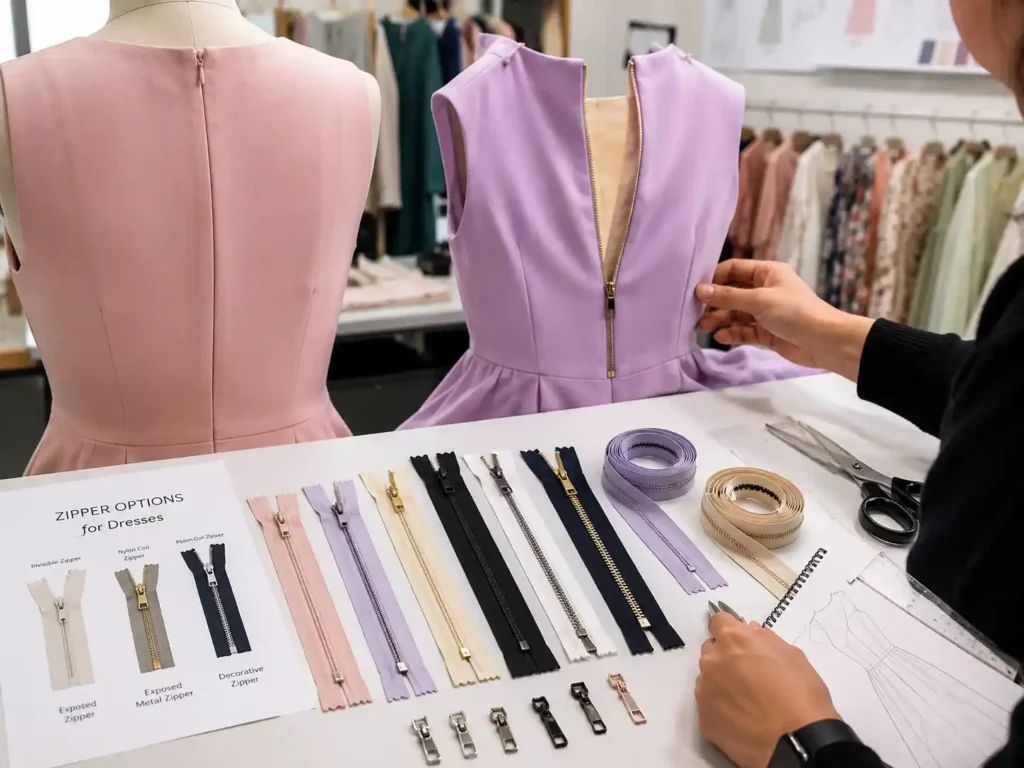
Back Zippers
- Invisible zipper placement.
- Zipper length and stopper position.
- Smoothness, waviness, and sewing symmetry.

Walking Slits
- Slit height and opening position.
- Reinforcement and bartack placement.
- Lining opening and size consistency.
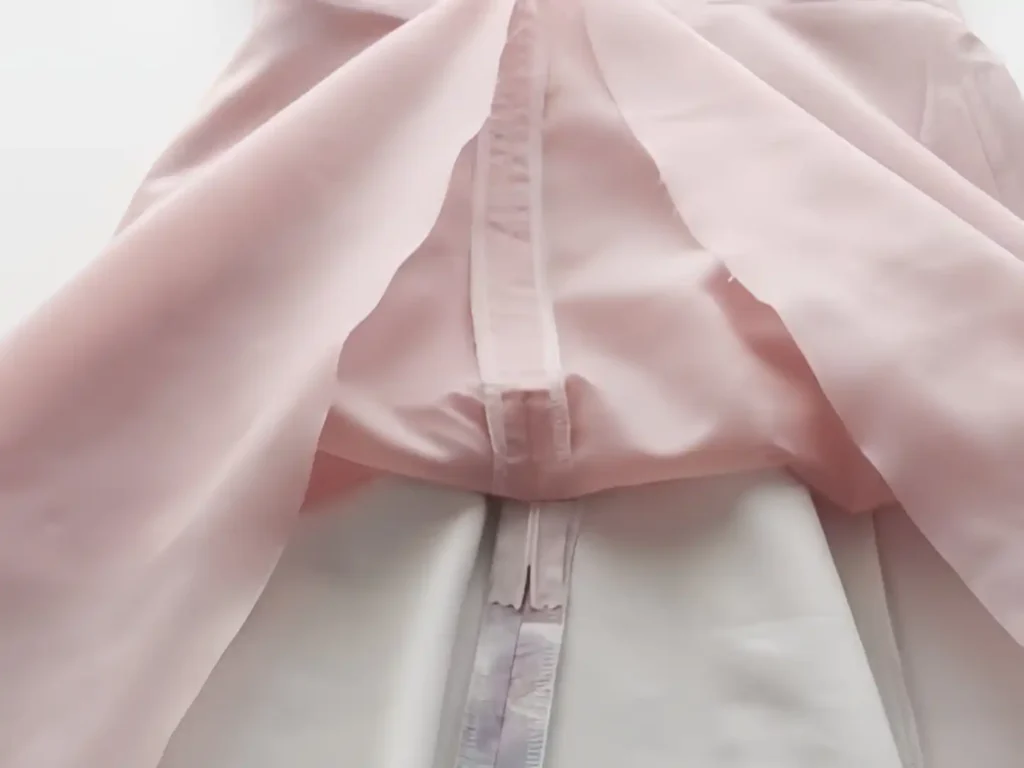
Lining Coverage
- Lining length and attachment.
- Static risk and shrinkage compatibility.
- Exposure, twisting, and comfort review.

Pocket Placement
- Pocket size and bag fabric.
- Placement by size.
- Hip bulk and front-line control.

Hem Finish
- Hem allowance and stitch type.
- Curve balance and pressing standard.
- Stretching, twisting, and waviness review.

Button Placket
- Placket straightness and spacing.
- Buttonhole quality and reinforcement.
- Spare button and packing confirmation.
Workmanship Details Behind Polished Office Dresses
Midi office dresses sell through clean lines and controlled construction. Jinfeng Apparel reviews sewing method, seam behavior, pressing, lining, zipper, and hem finish so bulk garments stay close to the approved sample.
Seam Construction and Shape Control
Seam quality shapes the whole office dress. Side seams, princess seams, waist seams, shoulder seams, sleeve seams, and center-back seams must support the intended silhouette without puckering or twisting. Jinfeng reviews seam allowance, stitch type, thread tension, fabric feeding, and pressing effect before bulk production. For ponte and jersey, side seam twisting and hem stretching are important risks. For crepe and suiting blends, seam puckering and pressing shine need attention.
- Stitch density— selected according to fabric thickness and stretch level, not applied with one generic setting.
- Seam allowance— planned to support garment structure, lining connection, alteration needs, and pressing result.
- Thread tension— adjusted to avoid seam puckering on woven fabrics and popped seams on stretch fabrics.
- Pressing sequence— reviewed because office dress seams must look flat and clean without over-pressing.
A well-sewn midi office dress should keep its shape on the hanger, on the body, and inside retail packaging.
Zipper Lining and Inner Finish
Office dresses often use invisible zippers, partial linings, full linings, facings, bindings, or clean-finish methods.
These areas are not always visible in product photos, yet they affect comfort, durability, and perceived value.
Jinfeng reviews zipper tape quality, zipper length, seam crossing, lining connection, hook placement, facing stability, and inner seam finish during sample review. For bulk production, the same standard needs to be repeated across every color and size.
- Invisible zipper— checked for smooth pulling, flat appearance, equal top edge, and no waist seam bulge.
- Lining attachment— planned to avoid twisting, pulling, or visible lining below the shell.
- Facing stability— reviewed to prevent neckline rolling, armhole distortion, or inside-out movement.
- Inner seams— finished according to fabric and price level, with attention to comfort and wash performance.
Clean inner construction helps office dresses feel brand-level, not merely acceptable.
Hem Pressing and Packing Readiness
Midi office dresses rely on hem balance and pressing quality.
A crooked hem, twisted lower skirt, poor fold, or visible pressing shine can damage the professional look. Jinfeng reviews hem width, hem stitch, curve balance, lining length, steam temperature, folding method, and packing layout.
Fabrics react differently: crepe may show pressing marks, rayon may wrinkle, ponte may stretch, and linen blends may crease quickly.
- Hem balance— checked on the dress form or hanger before packing.
- Pressing method— adjusted by fabric, especially for crepe, suiting, and synthetic blends.
- Fold position— planned to reduce strong marks in the front body or skirt area.
- Packing review— confirms belt, spare trims, labels, barcode, and polybag position.
Office midi dresses should arrive with clean fold lines, correct labels, smooth zipper areas, and ready-to-process carton organization.
From Reference Image to Production Standard
Jinfeng Apparel does not treat sample development as simple copying. Each midi office dress is reviewed by structure, fabric, fit, trim, sewing method, MOQ, packing, and bulk feasibility.
Step 1|Development Starts from Clear Files
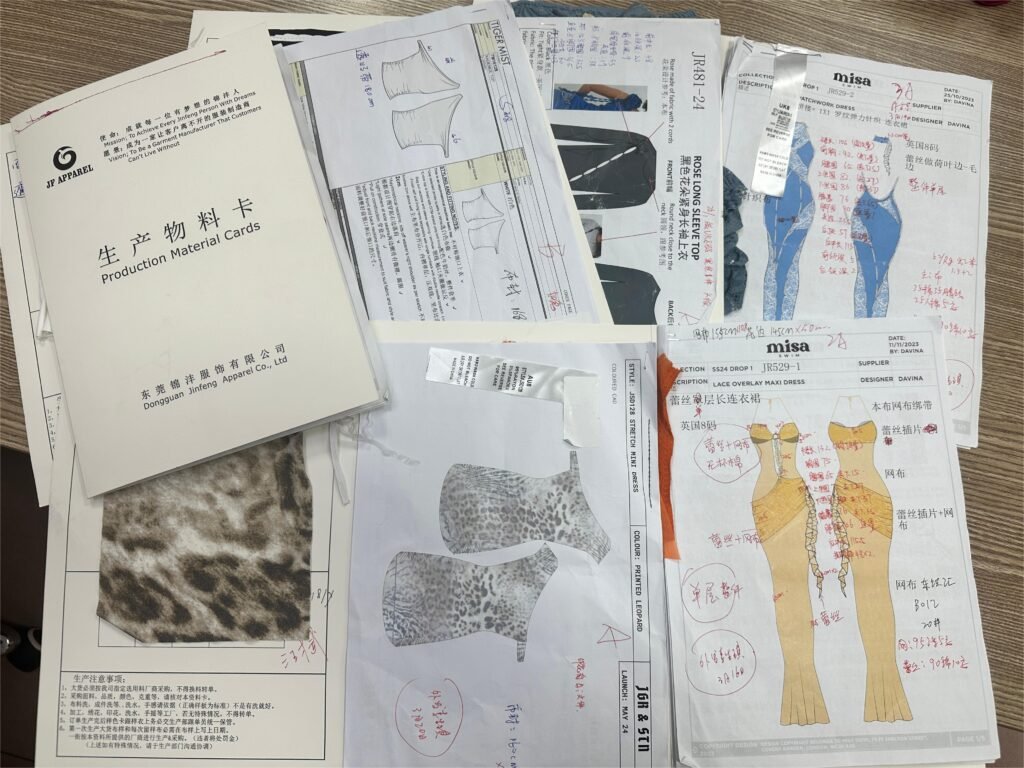
A midi office dress project can begin with a tech pack, reference image, original sample, line sheet, sketch, size chart, BOM, or fabric idea. Jinfeng’s team reviews the files and identifies the main production risks before starting sample work. For office midi dresses, early review usually focuses on silhouette, fabric suitability, length, neckline coverage, waist placement, sleeve balance, zipper position, lining need, and private-label requirements.
- Tech pack— used to understand measurements, construction, trims, labels, and finishing.
- Reference image— used to read silhouette, style direction, surface details, and visual target.
- Original sample photo— useful for shape, construction, and fit expectations.
- Line sheet— helpful when a project includes 10–30 styles across one office dress capsule.
- Size chart— reviewed for bust, waist, hip, dress length, sleeve, shoulder, armhole, and hem sweep.
A clearer file set helps Jinfeng prepare more accurate sampling advice, quotation structure, and production planning.
Step 2|Sample Review Builds Bulk Standards
The first sample is not only a visual check; it builds the future bulk standard.
Jinfeng reviews measurements, fabric behavior, neckline, sleeve, waistline, zipper, lining, hem, slit, and pressing effect.
Office midi dresses often require sample notes around sitting comfort, walking ease, sleeve movement, and under-blazer wear. When fabric changes after the first sample, pattern behavior may change as well.
- Measurement comparison against the approved size chart.
- Fabric drape and recovery under movement.
- Neckline, armhole, and sleeve comfort.
- Waistline, zipper, slit, and lining control.
- Pressing and packing effect after handling.
Sample comments are recorded so the next version can move closer to PP approval. Jinfeng helps connect sample decisions with bulk feasibility instead of treating sample comments as isolated edits.
Step 3|PP Approval Before Bulk Work
Before bulk production, the approved pre-production sample should represent the agreed standard for fabric, fit, sewing, measurement, trims, labels, packing, and overall appearance. Jinfeng uses PP approval to align product expectations and reduce avoidable production risk. For office midi dresses, PP review is especially important because small deviations in length, waistline, zipper, sleeve, or hem can change the finished garment’s professional look.
- Confirmed fabric and color direction.
- Approved measurements and tolerance.
- Final neckline, sleeve, waistline, and slit details.
- Confirmed zipper, buttons, belts, labels, and packaging.
- Production notes for cutting, sewing, pressing, QC, and packing.
Once PP standard is confirmed, bulk production can be managed with clearer quality checkpoints and fewer unclear revisions.
Pattern and Size Control for Office Dresses
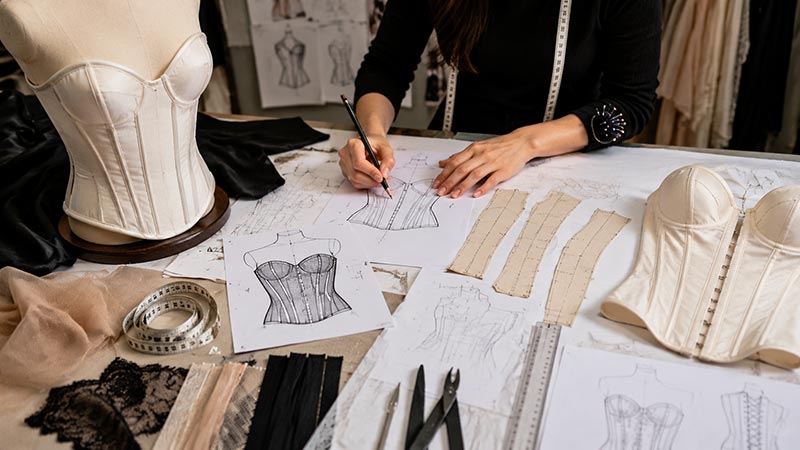
Office midi dress returns often begin with fit. Jinfeng connects pattern correction, measurement review, size ratio planning, and bulk QC so approved samples can be repeated across size runs.
Pattern Correction Before Bulk
Pattern correction is essential for office midi dresses because the garment must look polished while allowing movement. Jinfeng reviews the pattern around bust dart, shoulder slope, waist shaping, hip ease, sleeve cap, armhole, back zipper, slit, and hem curve. A small correction in the waist or side seam can change the entire body line. A sleeve adjustment can affect shoulder comfort and underarm movement.
- Front body— bust room, neckline position, dart direction, and waist balance.
- Back body— zipper line, shoulder blade ease, center-back seam, and waist shaping.
- Skirt area— hip ease, hem sweep, slit placement, and lining length.
- Sleeve area— shoulder point, sleeve cap, bicep measurement, and cuff opening.
Jinfeng records pattern changes so sample revisions can move toward a stable production standard instead of repeating the same issue through multiple sample rounds.
Size Range Planning
Many office midi dress programs include XS–XL, XXS–XXL, or brand-specific size ranges. Jinfeng follows the client’s size chart and size ratio, then checks how key areas change across sizes. Midi length, slit height, sleeve length, waist position, and hem sweep cannot be graded blindly. Larger sizes may need more hip ease, stronger seam control, and better shoulder balance, while smaller sizes may need careful neckline and armhole control.
- Bust, waist, and hip measurement distribution.
- Dress length and slit height across sizes.
- Sleeve length, armhole, and shoulder balance.
- Hem sweep and skirt movement.
- Grading review for key fit points.
For office dresses, the goal is not only matching a chart, but keeping the same polished brand look across the confirmed size range.
Bulk Measurement Review
Bulk production must be checked against the approved standard. Jinfeng reviews measurement points during production and before shipment preparation, especially for styles with fitted waist, zipper, slit, sleeves, lining, or stretch fabric. Measurement review helps catch problems before packing, such as length variation, uneven hem, tight hip, sleeve mismatch, or neckline stretching.
- Bust, waist, hip, shoulder, sleeve, armhole, dress length, hem sweep, and slit height.
- Comparison against approved size chart and sample standard.
- Notes for styles with stretch fabrics, lining, belts, or pleats.
- Corrective action when a measurement issue affects fit or appearance.
A strong measurement system helps reduce avoidable mismatch between approved sample and delivered bulk garments.
Office-to-Evening Midi Dress Development
Workday Structure
- Clean waist and shoulder shape.
- Controlled sleeve and armhole comfort.
- Professional midi length.
- Stable pressing and packing.
Evening Transition
- Refined neckline control.
- Slit and coverage balance.
- Fabric surface quality.
- Versatile styling details.
Comfort Stretch
Comfort stretch is important for long-hour wear, especially in ponte, stretch woven, jersey, rib knit, and compact knit office dresses. Jinfeng reviews stretch direction, recovery, seam strength, neckline stability, and hem holding. Too much stretch may reduce structure; too little stretch may create tight sitting or pulling across the hip. Sample review connects fabric performance with real movement needs.
- Stretch and recovery review.
- Sitting and walking comfort.
- Seam strength under movement.
- Size stability after wear.

Bulk Production Control for Midi Office Dresses
Bulk production must repeat the approved sample across fabric lots, sizes, colors, and packing batches. Jinfeng manages office dress production through material review, cutting control, sewing checkpoints, pressing standards, QC, and packing confirmation.
Fabric Lot and Cutting Control
Office midi dresses rely on clean surface, stable color, accurate cut, and balanced garment hang. Jinfeng reviews fabric before cutting, especially for crepe, ponte, suiting blends, rayon blends, jersey, rib knit, and linen blends. Shade variation, fabric direction, shrinkage risk, width, stretch direction, and surface defects can affect final garments. Cutting direction also matters for styles with panels, pleats, slits, belts, collars, and sleeves.
- Fabric lot review before cutting.
- Shade and color comparison against approved standard.
- Stretch direction and grainline alignment.
- Marker and cutting accuracy for key pattern pieces.
- Separate handling for lining, belt, collar, placket, and pocket pieces.
Good cutting control reduces size variation, twisted seams, uneven hems, and inconsistent garment shape.
Sewing Line and Inline Review
During sewing, office midi dress quality depends on thread tension, seam feeding, zipper insertion, sleeve attachment, lining connection, placket alignment, and waist seam control. Jinfeng tracks key production points so problems can be corrected before a full batch is completed. Fitted styles and tailored styles require more attention because small sewing differences can affect fit and appearance.
- Inline checks for zipper flatness, seam puckering, waist seam, sleeve balance, and hem shape.
- Measurement checks during production, not only after finishing.
- Style-specific review for wrap overlap, shirt placket, belt loops, slit reinforcement, and lining length.
- Communication of correction notes when a repeated issue appears.
Inline control helps protect the approved PP standard and reduces end-stage rework.
Pressing Packing and Shipment Preparation
Pressing and packing are especially important for office dresses because the garment must arrive with a polished retail look. Jinfeng reviews pressing temperature, steam use, crease control, fold line, belt packing, label placement, barcode stickers, polybag size, carton mark, and size-color separation. Crepe, rayon, ponte, and linen blends require different handling to avoid shine, strong crease marks, or stretched hems.
- Final pressing based on fabric behavior.
- Garment fold planning to reduce visible marks.
- Label and barcode accuracy by SKU.
- Color-size separation before carton packing.
- Carton mark and packing list consistency.
The goal is clean, organized delivery that supports warehouse receiving and retail preparation.

Quality Control for Office Midi Dresses
Fabric Check
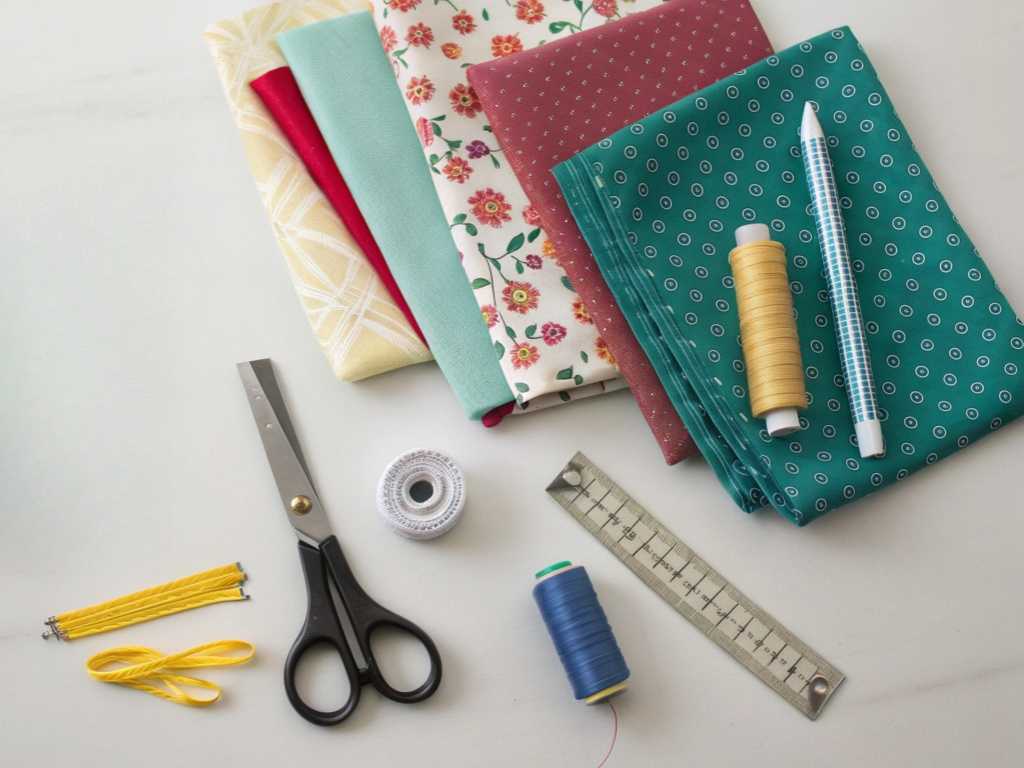
- Surface defects and shade variation.
- Stretch, handfeel, and thickness.
- Opacity, shrinkage, and texture direction.
Cutting Check
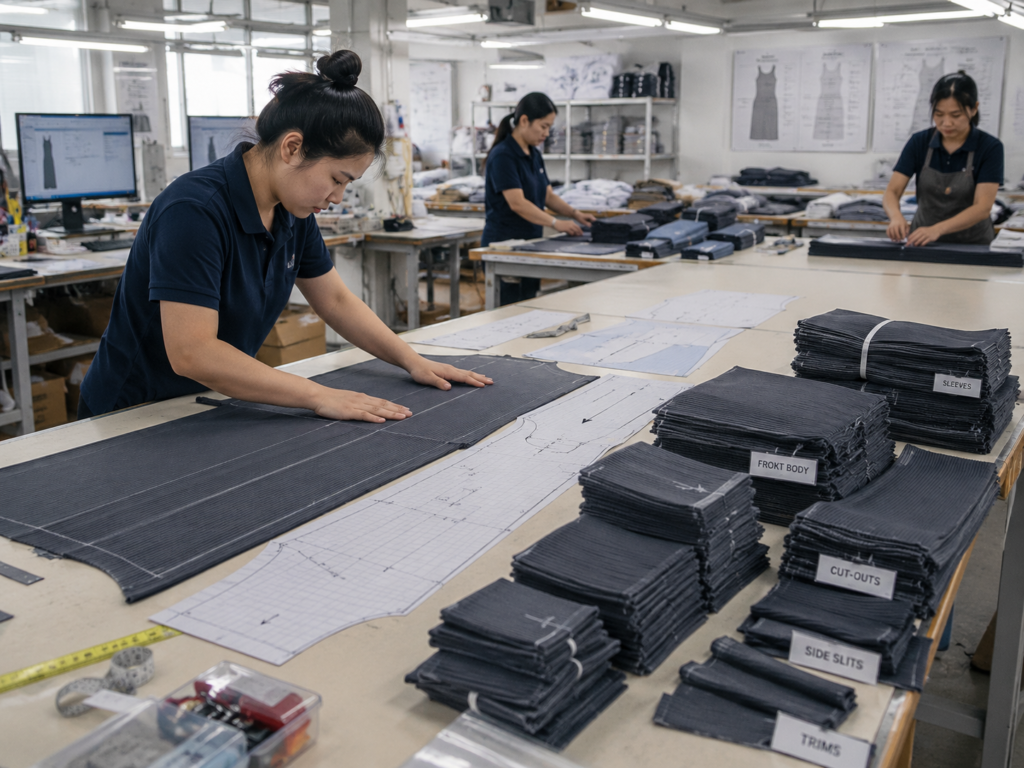
Cutting accuracy affects fit, seam balance, hem shape, and lining match. Jinfeng checks cutting direction, pattern alignment, size separation, notch placement, panel pairing, collar pieces, sleeve pieces, belt pieces, and lining pieces. Midi office dresses with panels, pleats, plackets, or slits need careful cutting control. Poor cutting can create twisted side seams, uneven hems, or mismatched left-right parts.
- Cutting direction and pattern alignment.
- Size separation and notch placement.
- Panel, collar, sleeve, belt, and lining pieces.
Sewing Check
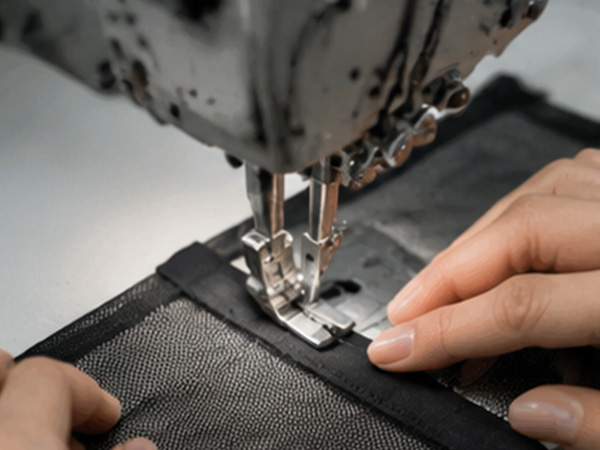
- Seam smoothness and thread tension.
- Zipper placement and sleeve setting.
- Placket, pocket, and lining attachment.
Measurement Check
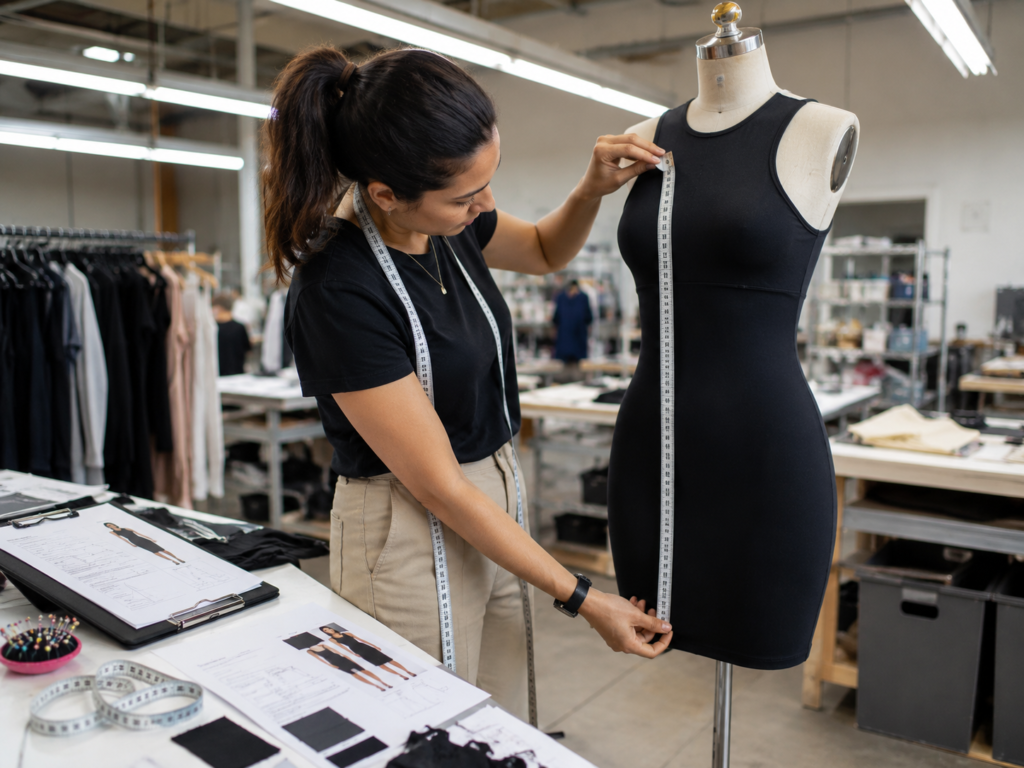
- Bust, waist, hip, and shoulder.
- Sleeve, armhole, and dress length.
- Hem sweep, slit height, and belt length.

Zipper Review
- Invisible zipper sewing.
- Zipper tape quality and length.
- Waist seam crossing and lining connection.

Lining Review
- Lining length and seam attachment.
- Static risk and fabric compatibility.
- Movement, twisting, and shell balance.
Pressing Review
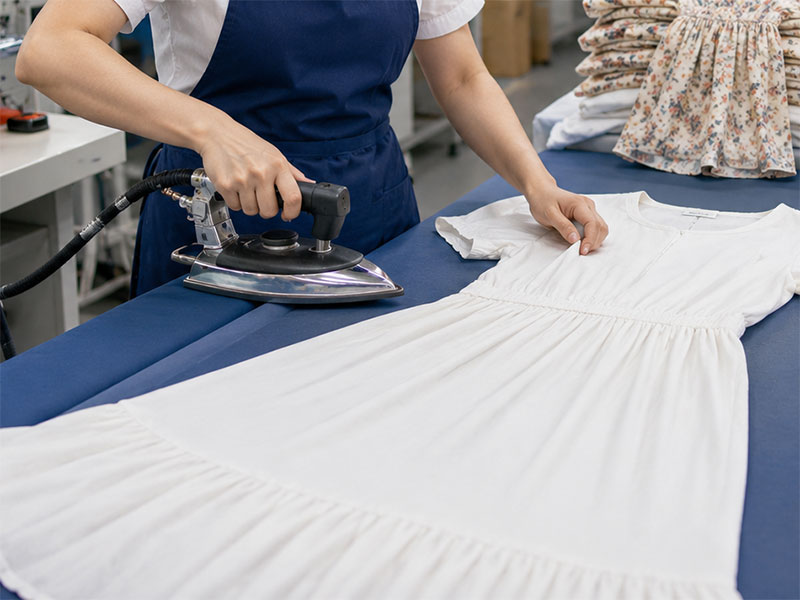
- Seam flattening and collar shaping.
- Placket, hem, and pleat definition.
- Fabric-safe temperature and steam control.

Packing Check
- Labels, hangtags, barcodes, and SKU labels.
- Polybags, carton marks, and packing list.
- Garment fold, belt placement, and carton organization.
MOQ Timeline and Order Planning Reference
| Planning Item | Standard Reference | What Affects It | Jinfeng Review Focus |
|---|---|---|---|
| MOQ | From 200 pcs per style/color | Fabric availability, color development, trims, construction, packing | Confirm style/color plan before quotation |
| Size Range | Client size chart | Grading, size ratio, fit standard, model target | Review bust, waist, hip, length, sleeve, slit |
| Style Count | 10–30 styles per collection program | Fabric groups, sewing difficulty, launch priority | Group by fabric, silhouette, trim, and delivery batch |
| Project Quantity | 20,000–80,000 pcs per brand program | Number of styles, color count, size ratio, batch plan | Match production units and QC flow by program |
| Sample Planning | Confirmed after file review | Fabric sourcing, pattern difficulty, trims, revision needs | Review reference image, tech pack, BOM, size chart |
| PP Standard | Before bulk production | Sample approval, fabric confirmation, label approval | Align measurements, sewing, trim, packing, and QC |
| Bulk Schedule | Confirmed after PP approval | Quantity, style mix, fabric arrival, production allocation | Plan cutting, sewing, inline QC, finishing, packing |
| Private Label | Confirm before bulk | Label artwork, barcode list, hangtags, polybags, cartons | Check label placement, SKU logic, carton marks |
| Delivery Plan | By project | Shipping method, carton volume, destination, documents | Prepare packing list, carton marks, shipment notes |
Private Label Support for Office Dress Lines

Woven Labels
- Main label placement.
- Fold and stitch method.
- Color and size check.
- Bulk pairing control.
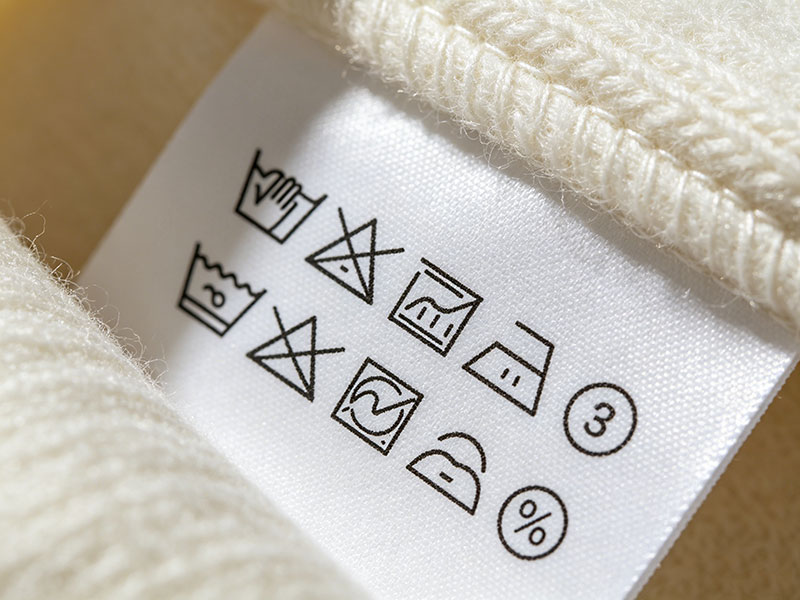
Care Labels
- Fiber content alignment.
- Wash care placement.
- Multi-language label handling.
- Label file confirmation.

Hangtags
- Hangtag file review.
- String and pin placement.
- Barcode matching.
- SKU separation.
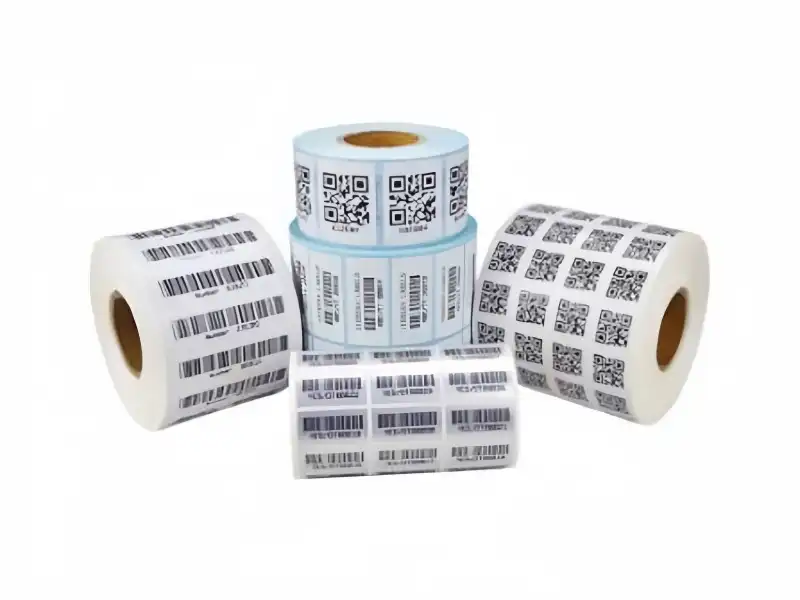
Barcode Stickers
- SKU label preparation.
- Barcode placement.
- Size-color matching.
- Carton label support.

Polybags
Polybags protect garments during packing and shipment. For office midi dresses, polybag size, fold method, belt placement, hangtag position, and barcode visibility should be confirmed before bulk packing. Crepe, rayon, linen blends, and structured fabrics need careful folding to avoid strong creases or pressure marks. Jinfeng reviews packing method according to fabric and garment shape.
- Polybag size planning.
- Fold method review.
- Barcode window placement.
- Garment protection.
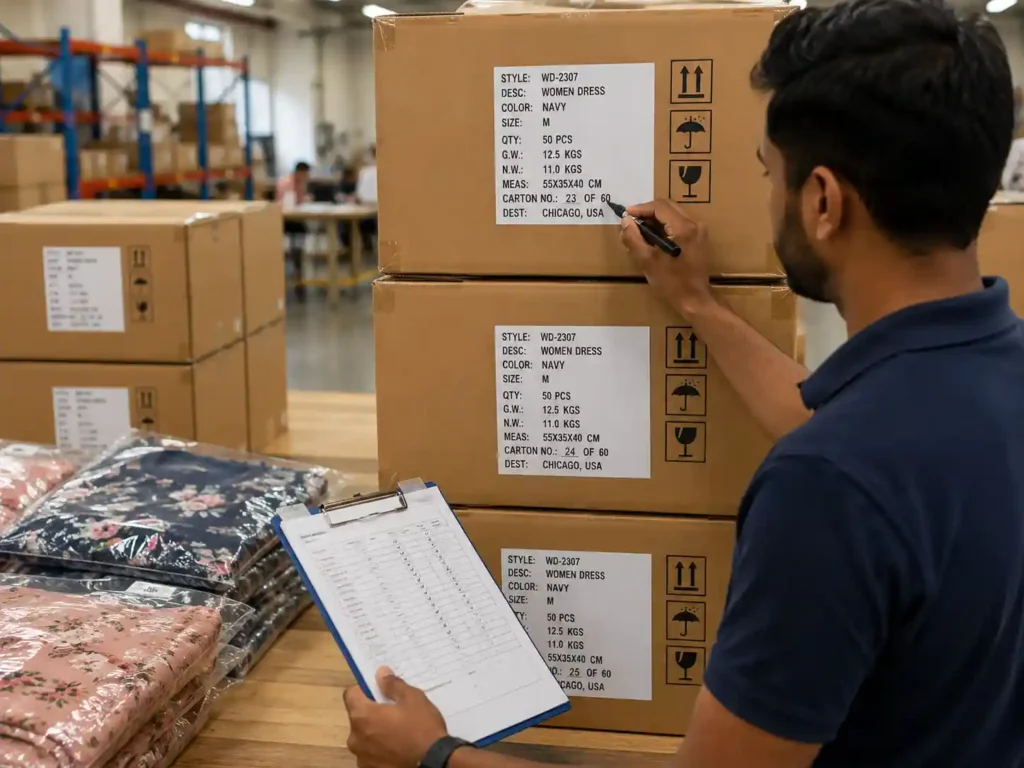
Carton Marks
- Style and color carton marks.
- Size ratio notes.
- Packing list alignment.
- Shipment batch separation.
Seasonal Midi Office Dress Collection Planning

Spring Office
Spring midi office dresses often use lighter crepe, soft suiting blends, compact knits, stretch woven fabrics, or rayon blends. Design direction can include short sleeves, soft A-line shapes, wrap midis, belted dresses, and polished shirt dresses. Jinfeng reviews fabric drape, lining need, neckline coverage, and sleeve comfort. Color planning often focuses on neutrals, soft seasonal tones, and office-friendly prints.
- Light to mid-weight fabrics.
- Fresh office color direction.
- Short sleeve and wrap styles.
- Comfortable workday movement.

Summer Commute
- Breathable fabric selection.
- Opacity and lining review.
- Warm-weather packing control.
- Wrinkle and shrinkage risk.
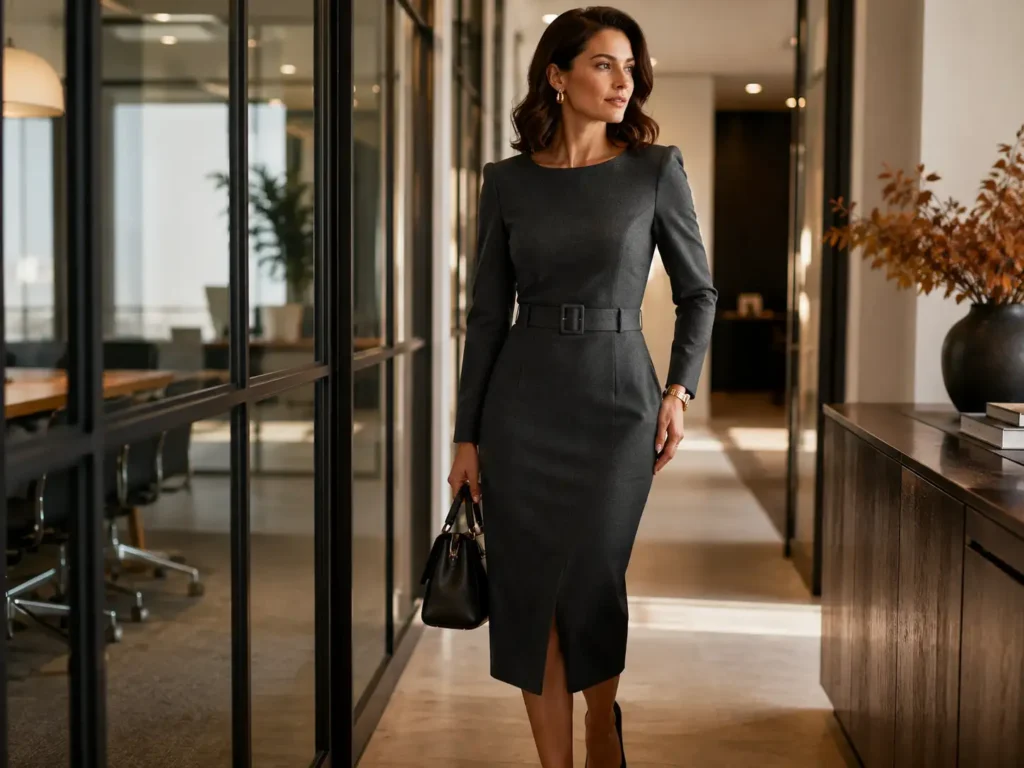
Fall Workwear
- Structured fabric direction.
- Long sleeve fit review.
- Deeper office color groups.
- Polished pressing standard.

Winter Layering
- Layering-friendly fit.
- Heavier fabric handling.
- Sleeve and shoulder comfort.
- Carton and fold planning.
OEM ODM Private Label Office Dress Service
OEM Development
- Tech pack and size chart review.
- Fabric and trim sourcing support.
- Pattern and sample development.
- PP sample and bulk standard alignment.
ODM Support
ODM support is suitable when a brand has a reference image, market direction, target style, fabric idea, or collection plan, but needs product development input before technical files are complete. Jinfeng can assist with fabric direction, silhouette planning, construction suggestions, sample path, and private-label planning. For office midi dresses, ODM support often covers sheath, wrap, shirt, belted, knit, and business casual styles built around a brand’s seasonal direction.
- Reference image review.
- Style and fabric suggestion.
- Fit and construction planning.
- Sample route discussion.
Private Label
Private-label support helps brands prepare office midi dresses for their own retail, ecommerce, or distribution channels. Jinfeng can coordinate labels, hangtags, barcode stickers, SKU labels, polybags, cartons, carton marks, and warehouse labels based on approved files. For multi-style collections, private-label execution must be linked with style-color-size information to avoid packing errors and relabeling work after delivery.
- Label and packaging review.
- Barcode and SKU support.
- Polybag and carton planning.
- Confidential file handling.
Multi-Style Office Dress Collection Management
Many brand programs are not single-style orders. Jinfeng supports office midi dress collections with style grouping, fabric grouping, trim management, QC checkpoints, packing separation, and delivery coordination.
Managing 10 to 30 Styles
A 10–30 style office dress program needs organized development. Different silhouettes, fabrics, trims, and sewing difficulty levels must be grouped before sampling or bulk production.
A sheath ponte dress, a rayon shirt dress, a crepe wrap midi, and a suiting belted dress may all belong to one collection, but each style needs different production notes.
Jinfeng reviews the collection by fabric group, silhouette group, construction difficulty, color plan, trim group, launch priority, and delivery schedule.
- Style grouping by construction and fabric type.
- Sample priority planning for key commercial styles.
- Fabric and trim review before bulk quotation.
- Project records for each approved style.
- PP approval notes linked with bulk production.
For large office dress programs, organized style grouping helps reduce confusion between design, sampling, QC, packing, and shipment preparation.
Managing 20,000 to 80,000 Pieces
A mature brand program may cover 20,000–80,000 pcs across several styles, colors, and size ratios. Quantity alone does not define complexity. The risk comes from mixed fabrics, color development, label matching, trim separation, sewing difficulty, and staged delivery. Jinfeng reviews each program based on quantity distribution per style/color, fabric source, pattern standard, production allocation, QC flow, packing method, and shipment arrangement.
- Quantity planning by style, color, and size ratio.
- Production allocation according to product difficulty.
- Inline QC arrangement for fitted and structured styles.
- Packing and carton planning by SKU.
- Progress communication for important production nodes.
Clear quantity planning helps maintain garment consistency without weakening brand-level appearance.
Managing Repeat Orders
Office midi dresses can become repeatable products when fabric, fit, and bulk quality remain stable.
Jinfeng supports long-term cooperation through pattern records, size chart records, fabric references, trim details, measurement files, packing requirements, and shipment notes.
For repeat programs, brands may expand colors, adjust size ratios, reorder proven silhouettes, or update fabric for a new season.
- Pattern and measurement records.
- Fabric and color references.
- Trim and label file archive.
- Packing and carton mark records.
- Notes from previous QC and shipment feedback.
Repeat-order support helps brands protect a proven office dress style while updating it for new seasonal needs.
Office Dress Project Examples

US Ecommerce Brand
A US premium online fashion brand planned a work-ready midi dress capsule for a seasonal launch. The program included 18 styles across sheath midis, wrap midis, belted shirt dresses, and sleeveless layering dresses, with a total plan of about 42,000 pcs. The main challenge was fit stability across XS–XL and maintaining a polished office look in both ponte and crepe fabrics.
- 18 styles / 42,000 pcs / 4 office dress groups — project data: sheath midis, wrap midis, belted shirt dresses, and sleeveless layering dresses; technical difficulty: previous samples looked good in photos but had tight hip areas after sitting; solution: Jinfeng reviewed the size chart, revised hip ease, and adjusted slit height before PP approval.
- 2 fabric groups / ponte and crepe — project data: ponte and crepe fabrics supported fitted and semi-structured silhouettes; technical difficulty: back zippers showed waviness on fitted styles; solution: zipper placement, seam tension, and pressing method were checked by fabric group.
- 4 fit-risk points — project data: waistline, dress length, zipper flatness, and lining length needed control; technical difficulty: inconsistent lining length across samples affected wear comfort; solution: PP notes were built around lining length, sleeve comfort, and hem balance.
- SKU-ready packing / several colorways — project data: barcode and polybag information was required before packing; technical difficulty: multi-color office dress packing could create warehouse confusion; solution: Jinfeng separated packing records by style/color/size.

UK Workwear Label
A UK workwear label needed a polished office dress line with more structure than casual fashion dresses.
The program included 12 styles and about 26,000 pcs, mainly sheath dresses, A-line midis, and belted office dresses.
The brand wanted a clean professional look without making the garments feel like uniforms.
- 12 styles / 26,000 pcs / 3 product groups — project data: sheath dresses, A-line midis, and belted office dresses; technical difficulty: original fabric direction felt too soft and casual; solution: Jinfeng suggested crepe, ponte, and suiting blend directions for different silhouettes.
- Belted style control — project data: belted dresses required repeated waist proportion across sizes; technical difficulty: waist belts created inconsistent proportions across sizes; solution: belt width, loop location, and waist placement were reviewed by size.
- Sleeve and shoulder review — project data: two woven styles had tight sleeve openings; technical difficulty: sleeve discomfort could affect long-hour office wear; solution: shoulder slope, sleeve cap, and bicep room were corrected during sample review.
- Neutral color consistency — project data: several styles used coordinated neutral colors; technical difficulty: color consistency across fabric groups could weaken collection presentation; solution: fabric grouping improved production clarity and shade review.

Australia Fashion Brand
An Australian fashion brand planned a summer office dress capsule for warm-weather commuting and hybrid work. The program included 24 styles and around 68,000 pcs, including shirt midis, wrap dresses, sleeveless layering dresses, relaxed A-line midis, and soft business casual silhouettes. The main risk was balancing breathable fabrics with wrinkle control and professional coverage.
- 24 styles / 68,000 pcs / 5 summer office groups — project data: shirt midis, wrap dresses, sleeveless layering dresses, relaxed A-line midis, and business casual silhouettes; technical difficulty: breathable fabrics needed better wrinkle control and office coverage; solution: Jinfeng reviewed rayon, linen blend, lightweight crepe, and polyester blend options.
- 3 fabric risks — project data: rayon blend samples had shrinkage and crease concerns; technical difficulty: warm-weather fabrics can lose polish after shipment; solution: sample comments focused on shrinkage, opacity, lining decisions, and hem finish.
- Sleeveless and placket control — project data: sleeveless styles needed better armhole coverage and shirt dress plackets needed straighter alignment; technical difficulty: under-blazer wear and front placket appearance affected product value; solution: armhole shape, placket straightness, and neckline coverage were reviewed before bulk.
- Staged shipment preparation — project data: several launch dates required phased delivery; technical difficulty: mixed style readiness could delay summer launches; solution: production planning separated styles by fabric behavior and launch priority.
Why Brands Choose Jinfeng Apparel
Dress Focus
- Dress-led womenswear development.
- Midi office, ponte, suiting, and structured dress support.
- Fit, finishing, and brand presentation control.
Fabric Thinking
- Fabric weight, drape, and recovery review.
- Shrinkage, opacity, texture, and MOQ check.
- Fabric options matched by office dress structure.
Fit Correction
- Bust, waist, hip, and shoulder review.
- Sleeve, armhole, length, and hem sweep control.
- Sample comments converted into pattern notes.
Bulk Discipline
- Fabric lot and cutting control.
- Measurement, pressing, and packing checks.
- Style, color, size, and carton records.
Private Label
- Labels, hangtags, barcodes, and SKU support.
- Polybags, carton marks, and warehouse labels.
- Private-label packing reviewed before bulk.
Long-Term Work
- Pattern and fabric records.
- Seasonal and repeat-order support.
- Multi-batch office dress production planning.

Download Midi Office Dress Development Checklist
A clear development brief helps Jinfeng review fabric, fit, sample route, MOQ, private-label needs, and bulk risk faster. Use the checklist before sending files or planning a collection.
Prepare Better Files Before Sampling
Midi office dress development becomes more efficient when the brand sends organized files. A reference image can show visual direction, but a full tech pack, size chart, BOM, fabric direction, color plan, and label requirement help Jinfeng review sample feasibility more accurately. Office dress programs often involve multiple hidden decisions: neckline depth, sleeve coverage, waistline position, midi length, lining, zipper, slit, belt, and packing.
Checklist includes:
- Reference image or sketch.
- Tech pack or line sheet.
- Target quantity per style/color.
- Size chart and size ratio.
- Fabric preference or swatch direction.
- Color plan and launch season.
- Label, hangtag, barcode, and packaging needs.
- Target delivery or launch date.
After receiving files, Jinfeng can review product structure, fabric direction, sample path, MOQ, cost factors, and production risk. The checklist helps reduce repeated questions, unclear quotation requests, and sample delays caused by missing information. For collections with 10–30 styles, clear file organization also helps group styles by fabric, silhouette, trim, and launch priority.
Frequently Asked Questions
Our standard MOQ starts from 200 pcs per style/color. Final MOQ depends on fabric availability, color development, trims, construction complexity, private-label packing, and production schedule. Custom fabrics, special trims, or complex packaging may require separate MOQ review.
Yes. Jinfeng Apparel supports development from tech packs, size charts, BOM, fabric requirements, original samples, reference photos, line sheets, and sketches. Our team reviews structure, fabric, measurements, trims, labels, and packing needs before sample or quotation planning.
Yes. We can review fabric directions such as ponte, crepe, suiting blends, stretch woven, jersey, rib knit, rayon blends, polyester blends, and linen blends. Fabric choice is reviewed by drape, stretch, recovery, opacity, shrinkage, wrinkle risk, and MOQ.
Yes. We support woven labels, size labels, care labels, hangtags, hang strings, barcode stickers, SKU labels, polybags, stickers, thank-you cards, cartons, carton marks, and warehouse labels based on approved files and order requirements.
Yes. Jinfeng can support multi-style dress collections. We review style groups, fabric groups, trim groups, color plans, size ratios, sample priorities, QC points, and packing separation so the collection can move through development and production with clearer management.
Yes. Jinfeng supports sheath midi dresses, wrap midis, shirt dresses, belted office dresses, A-line midis, pencil midis, short sleeve styles, long sleeve styles, sleeveless layering dresses, pleated midis, knit office dresses, and business casual styles.
Fit control starts during sample development. We review bust, waist, hip, shoulder, sleeve, armhole, dress length, hem sweep, and slit height against the approved size chart and PP sample. Bulk production follows the confirmed measurement and construction standard.
Yes. Jinfeng supports NDA-based cooperation. Client tech packs, original samples, patterns, unpublished designs, label files, packaging files, order information, and brand materials are used for the approved project and protected during development and production.
Yes. Jinfeng supports long-term cooperation, seasonal collection development, repeat orders, and multi-batch production. Pattern records, fabric references, trim details, measurement files, and packing requirements can be kept for future production planning.
Send reference images, tech packs, target quantity per style/color, fabric preference, color plan, size range, label or packing needs, launch date, and any original sample photos. Better files help our team review sample, MOQ, cost, and production feasibility faster.

Start Your Midi Office Dress Project
Jinfeng Apparel supports global fashion brands with custom midi office dress development, fabric sourcing, fit correction, sampling, bulk production, QC, private-label packing, and export coordination. Send your tech pack, reference image, original sample photo, line sheet, size chart, BOM, fabric preference, label files, packing instructions, target quantity, and launch schedule. Kelly can help review project feasibility, MOQ, sample direction, fabric risk, construction complexity, and next-step planning.
For office midi dress collections, clearer files allow faster review of neckline coverage, sleeve comfort, waist placement, dress length, hip ease, zipper flatness, lining needs, slit height, pressing method, label placement, barcode planning, and carton organization. Our team can review a single office dress style or a 10–30 style collection program with planned quantities across several colors and sizes.
Please prepare:
- Reference image, tech pack, line sheet, or original sample photo.
- Target quantity per style/color.
- Fabric direction, color plan, and size range.
- Label, hangtag, barcode, polybag, and carton requirements.
- Target launch date or delivery window.
- Fit comments from previous samples, when available.