 Skip to content
Wedding Guest Dress Manufacturer
Custom wedding guest dress development for fashion brands needing elegant occasionwear, controlled fit, refined fabrics and stable bulk production.
Jinfeng Apparel helps fashion brands develop wedding guest dress collections from concept, reference image, sample or tech pack into production-ready garments. Our team supports satin, chiffon, lace, crepe, mesh, floral, midi, maxi, cocktail and semi-formal occasion dresses through fabric direction, pattern development, sampling, PP sample approval, bulk production, QC, private-label packing and export delivery.
- Since 2008— custom womenswear manufacturing experience for overseas dress programs.
- 6 owned women’s fashion factories— production support for wedding guest, occasionwear, partywear and private-label dresses.
- 2 sample rooms / 20+ sample machinists— first sample, fit sample, revised sample, photo-ready sample, PP sample and Golden sample support.
- 7+ senior pattern makers— bust, waist, hip, neckline, strap, slit, lining and length control.
- Anonymous case range: 14–22 styles / 28,000–64,000 pcs— wedding guest dress programs across US, UK and Australian fashion markets.
Manufacturing Facts Behind Every Dress Program
Since 2008
- Custom womenswear manufacturing background.
- Dress-led development and bulk production support.
- Export project communication for overseas fashion teams.
Guangdong Supply Base
Jinfeng Apparel works from Guangdong’s apparel supply chain, giving dress programs access to fabric, trims, sampling, sewing, finishing and export resources. Wedding guest dress projects often need satin, chiffon, lace, mesh, crepe, lining, zippers, labels and packing materials coordinated before production.
- Fabric and trim sourcing support.
- Faster material discussion during sampling.
- Production and packing resources kept close to development.
6 Owned Factories
- Owned production control for dress programs.
- Factory allocation by fabric and workmanship risk.
- Stronger PP sample handover before bulk.
10+ Partner Factories
- Seasonal capacity support.
- Multi-batch production planning.
- Additional resources for approved programs.
2 Sample Rooms
- Sample development for satin, chiffon, lace and printed dresses.
- Fit comments recorded for revision.
- PP sample standards prepared for production handover.
15+ QC Inspectors
- Fabric, cutting and sewing checks.
- Measurement and garment inspection.
- Packing QC before shipment.
Built for Wedding Guest Dress Programs
Fashion Brands
- Seasonal dress direction reviewed before sampling.
- Fabric, fit and construction risks checked early.
- Bulk standards prepared after PP approval.
Occasionwear Labels
- Cocktail, midi, maxi and semi-formal dress support.
- Satin, chiffon, lace, mesh and crepe review.
- Sample notes converted into production standards.
Premium Ecommerce Teams
- Photo-ready sample support.
- Size, label and barcode packing coordination.
- Repeat-order records for strong styles.
Sourcing Teams
- MOQ and quantity planning by style/color.
- Fabric and construction risk review.
- QC and delivery planning before production.
Product Developers
- Pattern and sample revision support.
- Fabric and trim direction review.
- PP approval records prepared for bulk.
Private-Label Programs
- Woven labels, care labels and size labels.
- Hangtags, barcode stickers and polybags.
- Carton marks and packing records.

Wedding Guest Dresses Need Different Manufacturing Logic
Wedding guest dress production is not the same as bridal gown production or ready-stock dress sourcing. The category requires fashion-led product development with occasionwear-level control.
From Guest Occasion to Retail-Ready Dress
Wedding guest dresses usually need a balance of elegance, comfort, price control and seasonal appeal. A brand range may include satin midi dresses for evening receptions, chiffon maxi dresses for summer weddings, lace cocktail dresses for semi-formal events, floral wrap dresses for garden weddings and slip dresses for destination weekends.
Jinfeng Apparel treats wedding guest dresses as occasionwear fashion products rather than bridal gowns. The production focus is different. Instead of heavy bridal construction, the team reviews fabric drape, lining coverage, hem balance, bust security, slit height, zipper flatness, color grouping, packing quality and repeat-order feasibility.
For brand teams, supplier value is not only sewing. A wedding guest dress manufacturer should help judge whether a fabric fits the shape, whether a neckline is safe during movement, whether lining length looks clean, whether a color group can be repeated and whether the final garment can arrive ready for retail or ecommerce handling.
Key review points include:
- Fabric selection by occasion and price position.
- Pattern review for bust, waist, hip and length.
- Lining and opacity control for light colors.
- Slit, strap, neckline and zipper stability.
- PP sample approval before bulk cutting.
- Private-label packing and SKU control.
Wedding Guest Dress Types We Develop

Satin Midi Dress
- Satin weight and shine direction reviewed.
- Seam tension and zipper flatness checked.
- Pressing and folding method planned by fabric.

Chiffon Maxi Dress
- Transparency and lining length reviewed.
- Long hem and side seam drop checked.
- Fabric handling notes prepared before cutting.

Lace Cocktail Dress
Lace cocktail dresses need careful handling because lace pattern placement affects perceived garment value. Jinfeng reviews motif direction, seam matching, lining coverage, edge finishing, zipper position and damage risk before cutting and sewing.
- Motif placement checked before bulk cutting.
- Lining shade and opacity reviewed.
- Edge finish and zipper area controlled.

Floral Guest Dress
- Print scale and placement reviewed.
- Color direction checked before production.
- Packing method planned to reduce wrinkle marks.

Crepe One-Shoulder Dress
- Shoulder angle and neckline tension checked.
- Bust and waist balance reviewed.
- Zipper and side seam stability controlled.

Halter Guest Dress
- Neck tie or closure strength checked.
- Armhole and bust coverage reviewed.
- Size grading protects neckline stability.

Slip Guest Dress
- Cutting direction and seam fall checked.
- Strap length and neckline coverage reviewed.
- Side split and hem stability controlled.

Wrap Guest Dress
- Wrap overlap and tie length checked.
- Neckline and waist security reviewed.
- Skirt opening and movement tested.

Ruched Midi Dress
- Fabric tension and recovery reviewed.
- Ruching distribution checked by size.
- Side seam and lining stretch controlled.

Mesh Layered Dress
- Mesh layer alignment reviewed.
- Lining color and coverage checked.
- Packing pressure and snagging risk controlled.

Black-Tie Guest Dress
- Formal length and drape reviewed.
- Slit and neckline control checked.
- Final pressing and garment presentation planned.

Summer Wedding Dress
- Lightweight fabric and opacity reviewed.
- Wrinkle recovery and packing method checked.
- Color and lining relation confirmed.

Destination Guest Dress
- Fold recovery and packing checked.
- Long hem balance reviewed.
- Print direction and color grouping controlled.

Semi-Formal Dress
- Commercial fit and comfort reviewed.
- Zipper and lining quality checked.
- Proportion adjusted by size range.

Floral Maxi Dress
- Print and cutting layout reviewed.
- Waist seam and skirt sweep controlled.
- Long hem and packing method checked.
Fabric Choices and Production Control Points
Wedding guest dress fabric selection should match design, target price, season, fit and packing method. Jinfeng Apparel reviews fabric direction before sampling to reduce risks during bulk production.
| Fabric Type | Best Use | Main Risk | Jinfeng Control Focus |
|---|---|---|---|
| Satin | Midi dresses, slip dresses, evening guest styles | Snagging, seam puckering, shade variation, pressing marks | Weight review, shine direction, lining match, zipper flatness |
| Chiffon | Maxi dresses, summer weddings, garden weddings | Transparency, fraying, uneven hem, fabric slipping | Lining length, edge finish, cutting control, hem balance |
| Lace | Cocktail dresses, sleeves, overlays, refined panels | Motif mismatch, holes, fraying, lining color mismatch | Motif placement, seam matching, lining shade, damage check |
| Crepe | One-shoulder, semi-formal, cocktail and midi dresses | Seam bulk, wrinkles, poor drape when weight is wrong | GSM review, lining match, pressing method, seam allowance |
| Mesh | Layered dresses, sleeves, cut-outs, bodycon styles | Stretch distortion, holes, transparency, neckline deformation | Recovery review, lining coverage, seam tension, packing pressure |
| Printed Woven | Floral guest dresses, resort wedding styles | Print shift, shade variation, cutting waste | Artwork scale, repeat direction, panel placement, color standard |
| Rayon / Viscose | Destination guest dresses and soft resort styles | Shrinkage, length change, wrinkle behavior | Shrinkage review, length tolerance, pressing and packing plan |
| Sequin Fabric | Evening guest dresses and party occasionwear | Heavy seams, scratchy edges, missing sequins | Lining comfort, edge finish, zipper area, packing protection |

Color Direction for Seasonal Dress Ranges
Color planning affects wedding guest dress appeal, fabric sourcing, MOQ structure, lab dip timing and bulk consistency across a multi-style collection.
Color Groups Need Manufacturing Discipline
Wedding guest dress ranges often follow ceremony season, location and formality level. Spring ranges may use soft pink, sage, champagne, dusty blue and floral prints. Summer ranges may move toward butter yellow, pastel green, light blue, coral, ivory-adjacent prints and airy chiffon. Fall collections often use wine, espresso, olive, navy, rust and jewel tones. Holiday occasionwear may need black, emerald, burgundy, metallic tones and richer satin or velvet textures.
For production, color is not only a design decision. Each shade can affect fabric availability, dye lot control, lining choice, zipper color, thread matching, label placement and packing schedule. A satin midi dress in champagne may expose seam tension more clearly than navy. A chiffon maxi dress in pale blue may need stronger lining review than black. A floral print may need artwork repeat and strike-off control before bulk fabric is cut.
Jinfeng Apparel reviews color plans together with fabric direction and quantity. When one style uses several colors, each color normally follows MOQ by style/color. Custom-dyed fabrics, custom prints, specialty lace and sequin colors may require supplier-level MOQ and longer material confirmation. For mature programs, color families can be grouped to control sourcing and packing more clearly.
Color review includes:
- Seasonal color story.
- Fabric availability by shade.
- Lab dip or strike-off requirement.
- Lining color and opacity.
- Thread, zipper and trim matching.
- Color-size packing and carton marks.
- Repeat-order color records.

Fit Control from Sample to Bulk
Wedding guest dresses must photograph well and remain wearable through ceremony, dinner, travel and movement. Fit control begins before the first sample and continues through PP approval and measurement inspection.
Fit Is a Commercial Risk, Not Only a Pattern Issue
A wedding guest dress can look beautiful on a hanger but fail when bust coverage, waist placement, strap length, slit height or lining length is not controlled. Midi and maxi dresses also need hem balance across sizes, especially when lightweight chiffon, satin or rayon-based fabrics are used.
Jinfeng Apparel reviews fit from several points. Bust coverage is checked for neckline safety and garment balance. Waist position is reviewed because a waist seam placed too high or too low can change the whole silhouette. Hip ease is assessed for sitting and walking comfort. Strap length, back opening and armhole shape are reviewed for movement and photo styling. Slit height is checked for event-appropriate coverage.
Multi-size production requires grading discipline. A size chart cannot simply scale every measurement equally. Long dress length, bust shaping, waist seam, hip width, slit height and strap placement need review across the size run. Jinfeng Apparel works with client size charts and sample comments to prepare bulk measurement points and tolerance logic.
Fit review covers:
- Bust, waist and hip balance.
- Neckline, strap and armhole stability.
- Slit height and movement comfort.
- Midi and maxi length control.
- Lining movement and opacity.
- Size grading and tolerance review.
Design Details That Shape Bulk Results
Neckline Depth
- Coverage and event suitability reviewed.
- Facing or lining method checked.
- Size grading protects neckline stability.
Strap Width
- Strap width and length checked.
- Attachment strength reviewed.
- Slider or tie option confirmed when needed.
Back Opening
- Back depth and side coverage reviewed.
- Tie or zipper placement checked.
- Shoulder balance controlled.
Waist Seam
- Waist placement checked during fitting.
- Side seam balance reviewed.
- Grading logic connected with body proportion.
Side Slit
- Slit height defined clearly.
- Reinforcement and edge finish checked.
- Lining opening matched with outer shell.
Lining Edge
- Lining length and shade reviewed.
- Edge finish matched with fabric.
- Opacity checked under realistic light.
Invisible Zipper
- Zipper placement and length checked.
- Seam allowance and tension controlled.
- Pressing method selected by fabric.
Hem Finish
- Hem method selected by fabric.
- Front, back and side length checked.
- Pressing and packing effects reviewed.
Print Placement
- Artwork scale and repeat reviewed.
- Panel and seam placement checked.
- Cutting layout connected with size range.

From Reference Image to PP Sample
Jinfeng Apparel’s sample rooms help fashion teams convert ideas, tech packs and reference images into sample standards ready for bulk production planning.
Sample Development With Clear Production Purpose
A wedding guest dress sample is not only a visual prototype. It is a test of fabric suitability, pattern balance, garment construction, fit, finishing and bulk feasibility. Jinfeng uses 2 sample rooms, senior pattern-making support and 20+ sample machinists to develop first samples, fit samples, revised samples, photo-ready samples and PP samples when needed.
The process normally begins with a review of style image, tech pack, target fabric, size chart, quantity plan and launch timing. The development team checks whether the selected fabric can achieve the design effect. Satin may need seam tension testing. Chiffon may need transparency and lining review. Lace may need motif placement. Mesh may need stretch and opacity control. Floral dresses may need print scale review.
After the first sample, Jinfeng supports fit review and revision comments. Changes may include neckline depth, waist position, hem length, strap stability, lining length, zipper placement, slit height or finishing method. PP sample approval locks fabric, color, trims, measurements, construction, label placement and packing method before bulk work starts.
Sample path may include:
- Project file review
- Fabric and trim direction
- Pattern development
- First sample
- Fit sample or revised sample
- Photo-ready sample when needed
- PP sample approval
- Golden sample reference
OEM, ODM and Private Label Dress Support
OEM Development
- Tech pack and measurement chart execution.
- Original sample and sample correction support.
- PP sample and bulk production handover.
ODM Support
- Reference image and moodboard review.
- Fabric and trim direction support.
- Sample route built around bulk feasibility.
Private Label Delivery
- Labels, hangtags and barcode stickers.
- Polybags, SKU labels and carton marks.
- Packing files confirmed before bulk packing.

Bulk Production Control for Wedding Guest Dresses
Wedding guest dress programs often include multiple styles, colors and sizes. Bulk control connects PP sample standards to cutting, sewing, finishing, inspection, packing and delivery.
From Approved Sample to Repeatable Production
Bulk production risk increases when a collection includes satin, chiffon, lace, mesh, floral prints, long hems, linings, invisible zippers, slits and multiple size ratios. A sample can be approved, yet bulk production may still fail if fabric lots are not checked, cutting direction is unclear or sewing teams do not receive garment-specific instructions.
Jinfeng Apparel manages bulk work through a structured production reference. Before production starts, the team checks approved sample, fabric record, color reference, trim standard, size chart, measurement points, seam method, lining instruction, label placement, packing requirement and QC focus.
During sewing, production instructions guide seam allowance, stitch type, zipper position, strap length, neckline finishing, waist seam, lining method and slit construction. Inline checks focus on issues that can spread quickly across a batch, such as uneven hems, twisted seams, zipper waves, lining exposure, loose straps or shade mismatch.
Bulk control includes:
- Fabric and trim arrival check.
- Cutting direction and bundle control.
- Sewing line handover.
- Inline QC by garment risk.
- Measurement inspection by approved size chart.
- Final garment appearance review.
- Private-label packing check.
- Shipment file preparation.
Workmanship That Makes Occasion Dresses Look Refined
Wedding guest dress workmanship should translate elegance into controlled sewing, clean lining, balanced hems, flat zippers, polished pressing and careful packing.
Sewing, Lining and Finishing Decide Perceived Value
A wedding guest dress does not need bridal gown construction, but it still needs refined workmanship. Satin can reveal puckering along seams. Chiffon can expose uneven gathering. Lace can look low value when motifs are cut carelessly. Mesh can tear when seam tension is too strong. Printed woven fabrics can look unbalanced when panel placement is wrong.
Jinfeng Apparel reviews workmanship before and during production. Seam allowance and stitch type are aligned with fabric behavior. Thread color is matched to fabric shade or design effect. Lining construction is selected based on transparency, comfort and outer fabric movement. Zipper insertion is checked for smooth closure, flat appearance and enough strength. Pressing is planned by fabric sensitivity.
Private-label packing also affects workmanship perception. A satin or chiffon dress can lose value if folded under heavy pressure or packed without regard to drape. Jinfeng reviews garment folding, polybag size, SKU label position and carton arrangement based on fabric and length.
Workmanship review includes:
- Seam type and stitch tension.
- Lining attachment and opacity.
- Zipper flatness and hook placement.
- Hem finishing and length balance.
- Lace motif and mesh layer control.
- Pressing method by fabric.
- Folding and polybag selection.
- Packing protection for delicate surfaces.


Quality Control Focused on Occasionwear Risk
Jinfeng Apparel checks wedding guest dresses through material, cutting, sewing, measurement, finishing and packing stages to reduce avoidable production variation.
QC Built Around Real Dress Failure Points
Quality control for wedding guest dresses must be more specific than a final visual check. The main risks often start before sewing. Fabric inspection reviews shade, stains, holes, stretch, handfeel, print direction, lace damage, mesh defects and sequin surface condition. Cutting inspection reviews grainline, print placement, lace motif, size bundles, lining pieces and fabric defects.
During sewing, inline checks focus on neckline symmetry, strap length, waist seam position, side seam smoothness, zipper flatness, lining attachment, slit height, hem balance, ruching density and left-right consistency. Measurement checks compare bust, waist, hip, length, strap, sleeve, slit and garment-specific points against approved size chart and tolerance.
Finishing QC reviews loose threads, stains, surface pulls, pressing marks, lining exposure, zipper function, label placement and overall garment presentation. Packing QC checks size labels, hangtags, barcode stickers, SKU separation, polybag condition, carton mark and packing list consistency.
QC focus includes:
- Fabric shade and surface condition.
- Cutting direction and placement accuracy.
- Inline sewing checkpoints.
- Measurement by approved tolerance.
- Final appearance and pressing.
- Label, hangtag and barcode accuracy.
- Polybag and carton mark consistency.
- Pre-shipment packing records.
Size Range and Measurement Stability
XS–XL Size Runs
- Size ratio reviewed before cutting.
- Size labels matched with packing plan.
- Measurement points confirmed by style.
Plus-Size Review
- Bust and armhole coverage reviewed.
- Waist and hip balance checked.
- Length and slit grading controlled.
Petite Adjustment
- Length, strap and waist changes reviewed.
- Slit height and hem balance checked.
- Print placement adjusted when needed.
Bust-Waist-Hip Balance
- Bust, waist and hip points reviewed.
- Fabric stretch and lining considered.
- Fit comments converted into pattern updates.
Length Control
- Front, back and side length checked.
- Lining length reviewed separately.
- Hem method matched with fabric.
Measurement QC
Measurement inspection covers approved points from the size chart, including bust, waist, hip, shoulder, strap, sleeve, slit and garment length where relevant. Clear tolerance review helps avoid confusion during bulk inspection and shipment approval.
- Approved points measured by size.
- Tolerance confirmed before production.
- QC records support shipment review.
MOQ and Timeline Planning for Dress Programs
Wedding guest dress planning should align style count, color count, size range, fabric sourcing, sample approval, bulk production and delivery window before costing begins.
| Planning Item | Standard Direction | Jinfeng Review Focus |
| MOQ Basis | From 200 pcs per style/color | MOQ reviewed by style, color, fabric and production calendar |
| Style Count | 10–30 styles in a planned seasonal program | Style grouping by fabric, silhouette, difficulty and launch priority |
| Color Count | Each color reviewed separately | Color story, lab dip, fabric availability, lining and trim match |
| Sample Path | First sample, revised sample, photo sample, PP sample | Sample stage planned by complexity, launch timing and approval needs |
| Fabric Direction | Satin, chiffon, lace, crepe, mesh, printed woven or rayon-based options | Drape, opacity, stretch, shrinkage, surface risk and bulk availability |
| Private Label | Labels, hangtags, barcodes, polybags and carton marks | Packaging supplier MOQ, artwork readiness and packing instructions |
| Bulk Timing | Starts after PP approval and material readiness | Production allocation, QC checkpoints, packing and shipment planning |
| Delivery Route | Express, air freight, sea freight or split shipment | Launch window, carton data, destination and forwarder requirements |
| ||
Private Label and Retail Packing Support

Main Label
- Label size and position reviewed.
- Sewing method matched with garment structure.
- Placement checked against lining and neckline.

Care Label
Care labels should match fiber content, washing guidance, country requirement and garment construction. Jinfeng checks care label position and attachment method so labels remain consistent across sizes and styles.
- Fiber content and care wording reviewed.
- Placement checked for comfort.
- Care file connected with fabric record.

Size Label
- Size range confirmed before production.
- Size label position reviewed.
- Packing list aligned with size labels.

Hangtag
- Hangtag artwork and string method reviewed.
- Attachment point matched with fabric sensitivity.
- Barcode relation confirmed when supplied.
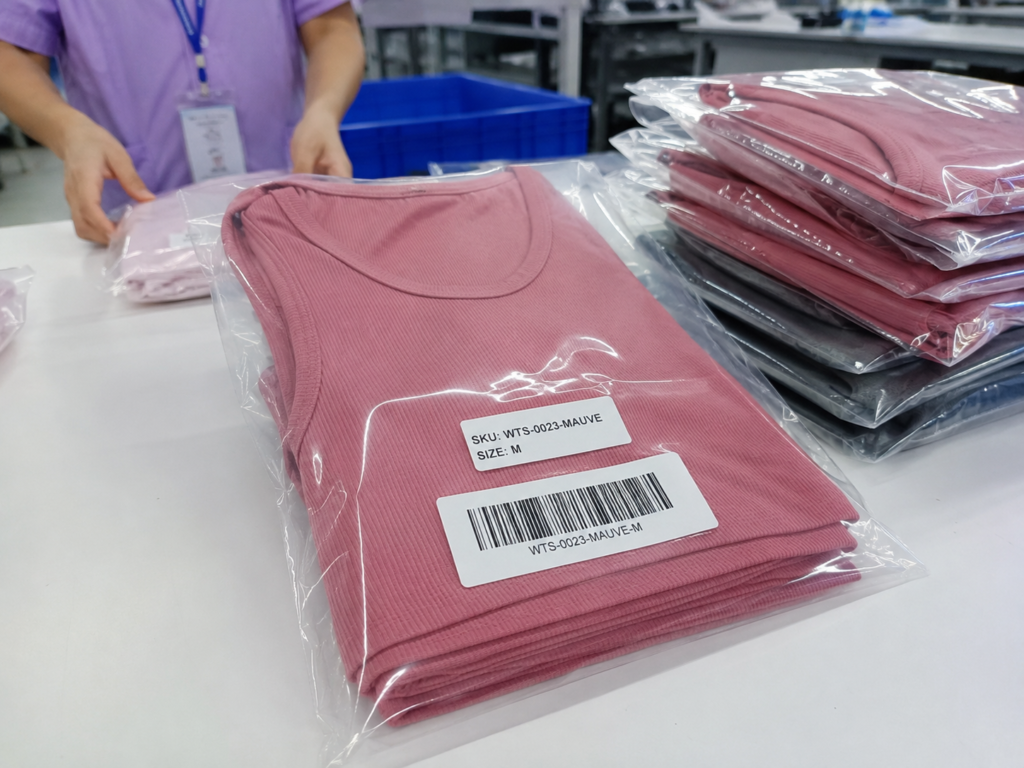
Barcode Sticker
- SKU files matched with style data.
- Barcode placement confirmed before packing.
- Scan and packing accuracy checked.
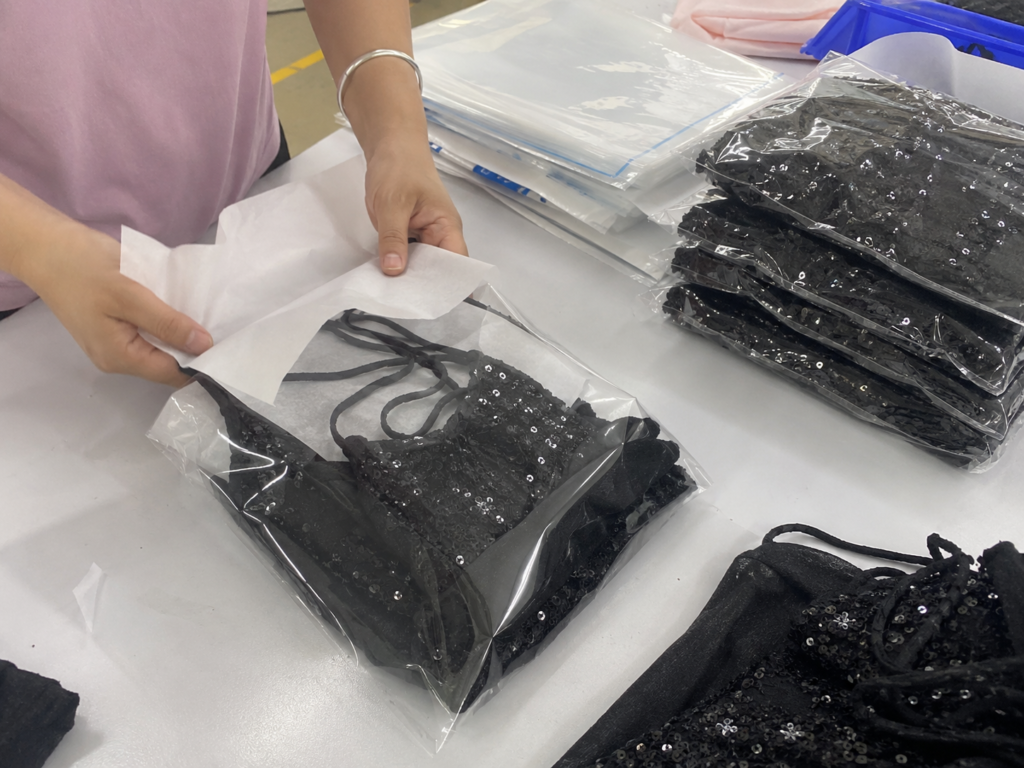
Polybag
- Polybag size matched with garment fold.
- Sticker placement checked for warehouse use.
- Fabric crease risk reviewed before packing.
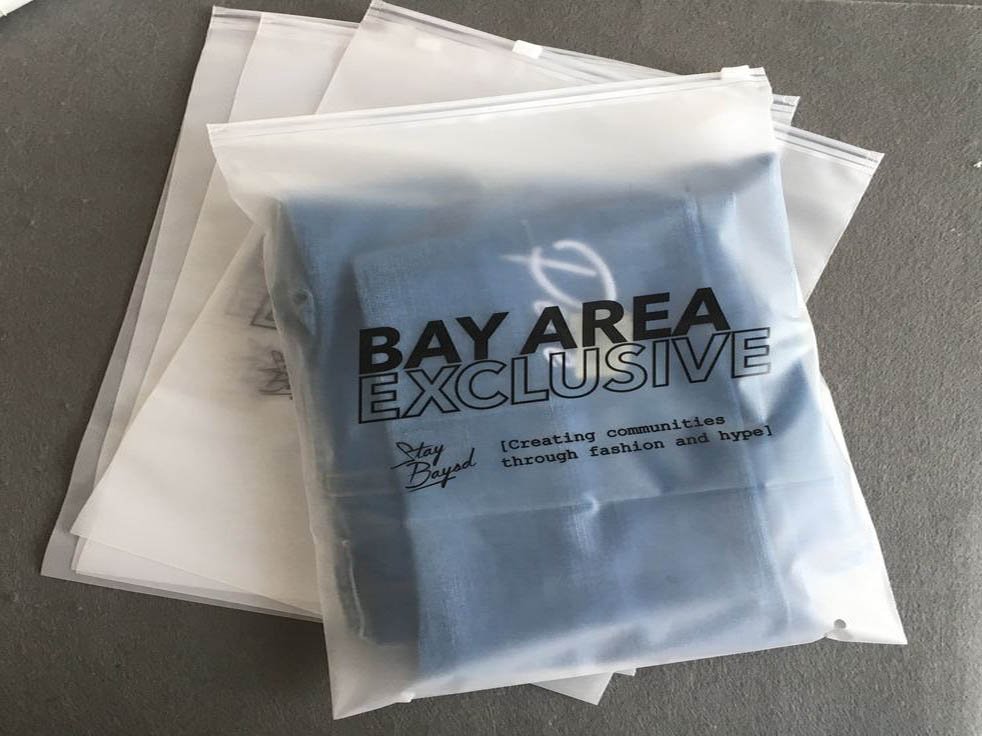
Dust Bag
- Dust bag material and size reviewed.
- Supplier MOQ and timing checked.
- Packing method matched with garment value.
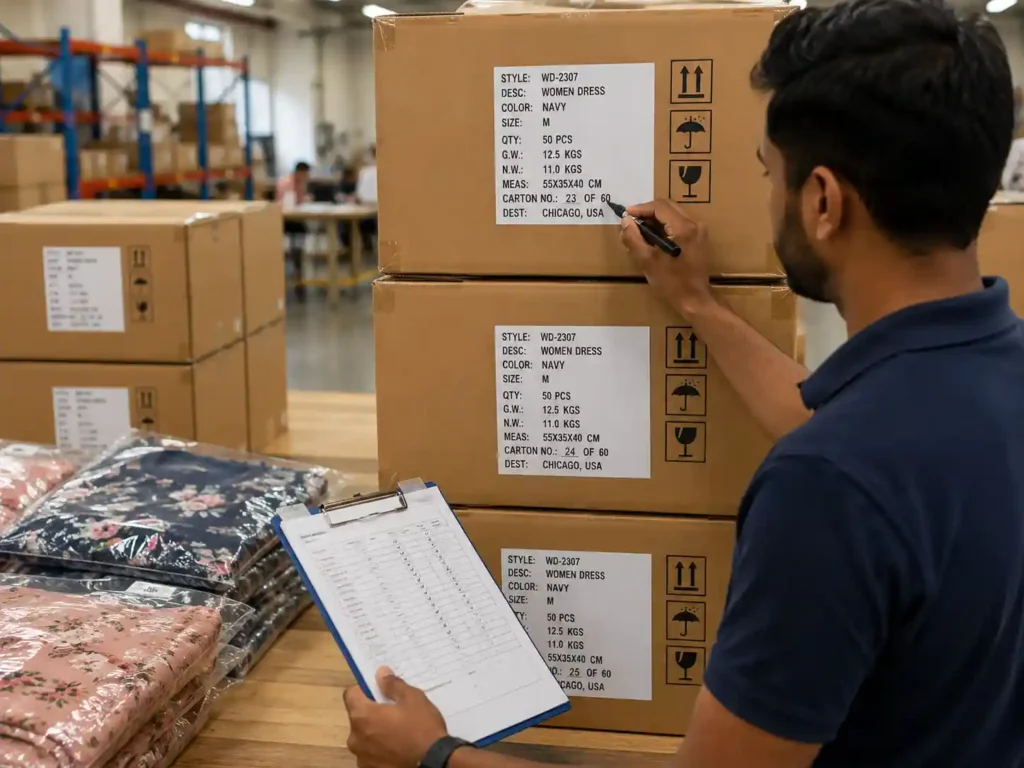
Carton Mark
Carton marks help shipment sorting and receiving. Jinfeng supports carton marking by style, color, size range, SKU group and destination details when packing instructions are confirmed.
- Style-color-size data included.
- Carton number and destination reviewed.
- Packing list aligned with carton marks.
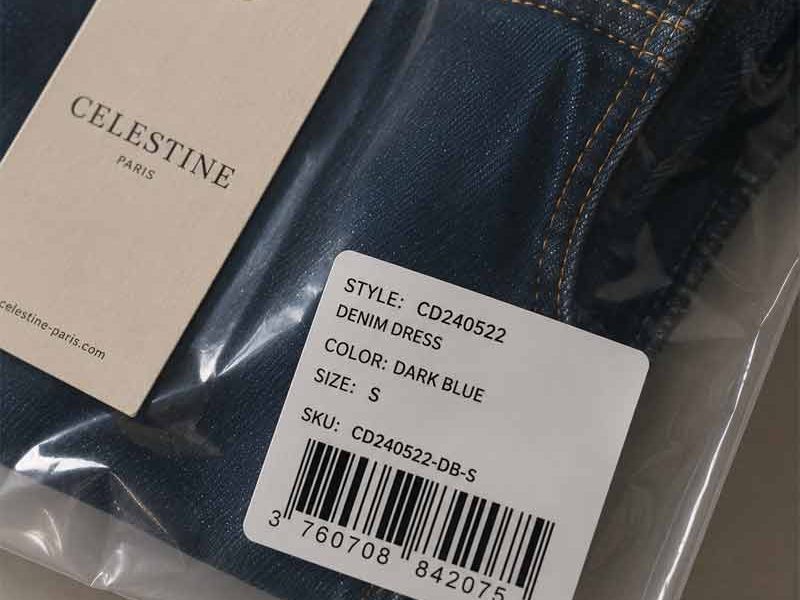
SKU Packing
- SKU records checked before packing.
- Color and size groups separated.
- Carton data prepared for shipment.

Planning Around Wedding Season Launches
Wedding guest dress collections often connect to spring weddings, summer events, destination travel, fall ceremonies and holiday occasionwear. Timing control protects the selling window.
Development Timing Should Start Before Peak Demand
Wedding guest dress programs usually need sample planning before campaign photography, wholesale presentations, ecommerce launch or retail delivery. Delays in fabric confirmation, sample revision, PP approval or private-label materials can push a collection too close to the selling window.
Jinfeng Apparel recommends planning by commercial milestone rather than only factory start date. The schedule should include design review, fabric sourcing, sample making, fit comments, revised sample if needed, PP sample approval, material purchasing, bulk production, QC, packing and shipment.
For large programs, style count and color count must be clear. A 10-style capsule is very different from a 30-style seasonal range. Bulk planning also depends on size ratio, private-label materials, packing method and shipment destination. Jinfeng keeps pattern, measurement, fabric, trim and packing records to support repeats and later color extensions.
Launch planning review includes:
- Photo sample deadline.
- PP approval target.
- Fabric and trim readiness.
- Style priority by launch date.
- Bulk production window.
- Private-label packing file deadline.
- QC and final inspection schedule.
- Air, sea or split shipment plan.
Choosing the Right Dress Manufacturing Partner
Ready-Stock Dress Sellers
- Fast access can help short-term assortment gaps.
- Limited pattern and fabric ownership.
- Weak fit for exclusive custom collections.
Bridal Gown Factories
- Strong craftsmanship can suit bridal work.
- Heavy construction may not fit fashion occasionwear.
- Cost and timing may not suit seasonal dress programs.
Trading Companies
- Communication support may be useful.
- Factory control needs verification.
- QC and sample ownership should be checked carefully.
Jinfeng Apparel
- Development, sampling and bulk production linked.
- Private-label packing and export support.
- Strong fit for planned seasonal dress programs.
Wedding Guest Dress Supplier Checklist
Tech Pack Review
- Measurements and construction notes reviewed.
- BOM, trims and label details checked.
- Missing items clarified before sampling.
Reference Image Review
Many wedding guest dress projects start from reference images. Jinfeng reviews structure, fabric direction, lining need, fit risk and production feasibility before building a sample plan.
- Front, back and detail images reviewed.
- Fabric and structure risk checked.
- Sample route suggested by style complexity.
Fabric Sourcing
- Fabric handfeel and drape reviewed.
- Opacity and shrinkage risk checked.
- Bulk availability confirmed before production.
Pattern Development
- Fit-sensitive points reviewed.
- Sample comments converted into pattern updates.
- Size grading planned before bulk.
PP Sample Control
- Final fabric and trims confirmed.
- Measurements and construction locked.
- Packing method approved before bulk.
Measurement Inspection
- Approved points checked by size.
- Tolerance confirmed before inspection.
- Measurement records support shipment review.
Private Label Support
Labels, hangtags, barcodes, polybags and carton marks need early confirmation. Jinfeng supports private-label packing while reviewing material supplier MOQ and file readiness.
- Label and packing artwork reviewed.
- Barcode and SKU files matched.
- Carton mark rules confirmed.
Design Protection
- NDA-based cooperation supported.
- Tech packs and samples protected.
- Anonymous case format used when needed.
Wedding Guest Dress Project Examples

U.S. Occasionwear Range
A U.S. ecommerce fashion brand planned a spring wedding guest capsule with satin midi dresses, floral chiffon maxis, one-shoulder crepe dresses and ruched cocktail styles across soft pink, sage, champagne and navy color groups.
- 18 styles / 42,000 pcs / 4 product groups — project data: satin midi, floral chiffon maxi, one-shoulder crepe and ruched cocktail styles; technical difficulty: campaign sample appearance had to stay aligned with bulk production; solution: Jinfeng separated sample review by fabric and silhouette before PP approval.
- Satin and chiffon control points — project data: satin styles needed flat invisible zippers and clean pressing, while chiffon styles needed lining and long hem control; technical difficulty: fabric behavior created different sample-to-bulk risks; solution: style-specific sewing and finishing notes were prepared.
- Floral print review — project data: floral styles needed print direction control across sizes; technical difficulty: long panels made print imbalance visible; solution: Jinfeng reviewed cutting direction, panel placement and color records before bulk cutting.
- SKU packing and carton marks — project data: final packing used SKU labels and carton marks for ecommerce receiving; technical difficulty: multiple soft colorways created packing risk; solution: style-color-size records were checked before carton sealing.

UK Lace and Mesh Capsule
A UK occasionwear label developed wedding guest and semi-formal dress styles with lace midi dresses, mesh layered dresses, crepe cocktail dresses and fitted satin styles in wine, black, emerald, blush and deep blue.
- 14 styles / 28,000 pcs / 5 color groups — project data: lace midi, mesh layered, crepe cocktail and fitted satin styles; technical difficulty: detail consistency across lace, mesh and satin required different handling; solution: Jinfeng reviewed each style by fabric type before sample revision.
- Lace and mesh control — project data: lace motifs needed clean placement, while mesh layers needed lining coverage without looking heavy; technical difficulty: one generic QC rule could not protect both materials; solution: separate sewing and QC points were prepared.
- Production instruction file — project data: stitch type, seam allowance, zipper position, lining method, label position and pressing notes were confirmed; technical difficulty: similar silhouettes could create production confusion; solution: style-specific production instructions guided sewing teams.
- Inspection focus — project data: inspectors checked neckline symmetry, lace damage, mesh holes, side seam smoothness and measurement stability; technical difficulty: delicate fabrics showed small defects quickly; solution: inline and final QC checks were combined.

Australia Resort Wedding Program
An Australian resort and summer occasionwear brand developed a wedding season collection with printed chiffon maxi dresses, halter guest dresses, wrap dresses, satin slip dresses and lightweight floral midi dresses.
- 22 styles / 64,000 pcs / resort wedding program — project data: printed chiffon maxis, halter guest dresses, wrap dresses, satin slips and floral midis; technical difficulty: dresses needed to fit beach ceremonies, garden weddings, travel packing and summer photography; solution: Jinfeng reviewed fabric weight, lining and packing method by garment group.
- Light-color and transparency review — project data: several light chiffon and floral styles needed opacity checks; technical difficulty: transparency varied under daylight and studio lighting; solution: lining shade, length and garment coverage were reviewed before PP approval.
- Print and long hem control — project data: printed dresses needed cut direction and panel consistency, while long chiffon styles needed hem balance after pressing; technical difficulty: resort fabrics shifted during cutting and finishing; solution: QC notes were built around fabric-specific risk.
- Large seasonal order support — project data: bulk production used style-specific QC notes and private-label packing records; technical difficulty: multi-style ranges could lose approval details; solution: Jinfeng retained pattern, fabric, trim and packing records for repeats.
Protecting Designs and Repeat Production Records
NDA-Based Cooperation
- NDA-based cooperation available.
- Project files used for development and production.
- Protected details are not shared publicly without approval.
Unreleased Style Protection
- Unreleased styles handled as confidential.
- Label and packing files protected.
- Anonymous project format used for public examples.
Repeat Order Records
- Pattern and measurement records retained.
- Fabric and trim references saved.
- Packing and QC records support repeats.
Frequently Asked Questions About Wedding Guest Dress Manufacturing

Start Your Wedding Guest Dress Program
Jinfeng Apparel supports fashion brands with wedding guest dress development, sampling, bulk production, quality control, private-label packing and export delivery. Share your project files so Kelly and the development team can review style structure, fabric direction, quantity plan, sample route, MOQ fit, private-label needs and delivery schedule.
Please include as many details as possible:
- Reference images, sketches or tech packs.
- Target quantity per style/color.
- Fabric direction: satin, chiffon, lace, crepe, mesh, floral print or other options.
- Color plan and size range.
- Private label, hangtag, barcode or packaging needs.
- Target market and planned delivery window.
- Sample type needed: first sample, fit sample, photo sample or PP sample.
- Special construction notes: lining, slit, zipper, ruching, lace placement or long hem.

