Skip to content

The bodycon dress looks simple on the outside—tight silhouette, clean lines, minimal panels—but in manufacturing reality, it is one of the most technically sensitive garments in women’s fashion. A 1–2 cm deviation in stretch ratio, seam tension, or grading logic can completely change the way the garment behaves on the body. This is why experienced factories rarely rely on sketches or mood images alone. They rely on structured technical packs that translate design intent into measurable production data.
In real production environments, especially across OEM and ODM factories in China, Europe, and the US sourcing network, tech packs act as the “shared language” between design teams and sewing lines. Without it, even experienced pattern makers will interpret the same design differently. A structured tech pack defines fabric elasticity, body measurements, seam construction, stitching density, and even how the garment should recover after stretching.
A bodycon dress tech pack is a structured document that defines fabric stretch, measurements, construction details, and finishing standards. It ensures factories can accurately convert design intent into production-ready garments. A complete tech pack reduces sampling errors, improves fit consistency, and controls production risk by aligning design, pattern, and manufacturing logic before bulk production begins.
There was a case in a Dongguan production line where a brand submitted only a reference image of a celebrity dress. Three sample rounds failed because each version used a different stretch assumption. Once a proper tech pack was introduced—defining 18% spandex recovery and 1.2x negative ease—the first approved sample was achieved. That moment is exactly why structured technical documentation matters in real production systems.
What Is a Bodycon Dress Tech Pack?
A bodycon dress tech pack is a structured production document that converts a tight-fit dress design into measurable factory instructions. It defines fabric stretch behavior, body measurements, seam construction, and grading logic so the garment can be reproduced consistently across sampling and bulk production.
For bodycon styles, the tech pack is not only a design reference—it is a fit control system. Because the garment relies heavily on stretch recovery and body compression, even small missing details (like 3–5% fabric elasticity deviation or 1 cm grading gap) can completely change the wearing effect.
In real factory development, over 60% of first-round sample corrections on bodycon dresses come from missing or unclear stretch + measurement specifications rather than sewing issues.
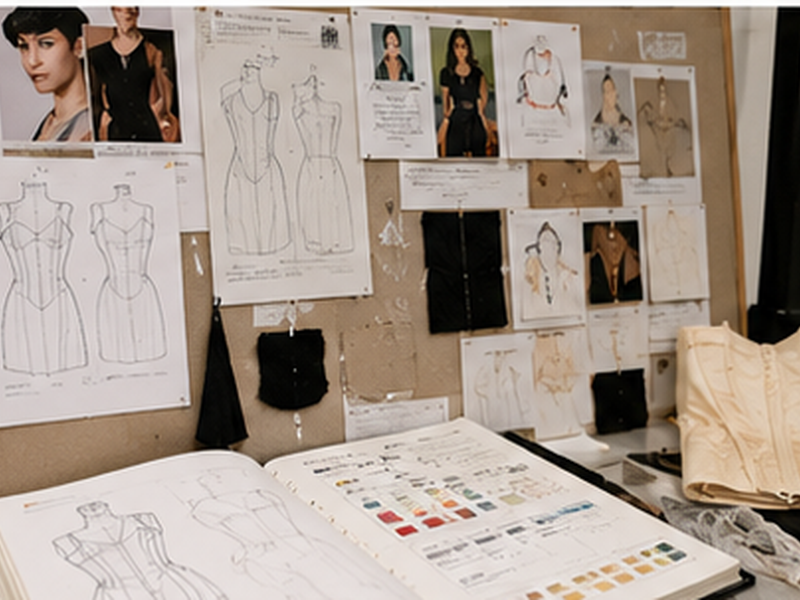
What defines a production-ready tech pack?
A production-ready bodycon tech pack must remove interpretation gaps. It should allow a pattern maker to recreate the garment without asking additional questions.
Key requirements:
- Clear garment silhouette (mini / midi / long bodycon structure)
- Exact body measurement points (bust, waist, hip, length, strap width)
- Negative ease definition (how much smaller garment is vs body size)
- Fabric stretch ratio (horizontal + vertical elasticity)
- Seam construction logic (flatlock, overlock, zigzag reinforcement)
- Stitch density (e.g., 3–4 stitches per cm for stretch seams)
- Size grading rule (how each size expands or compresses)
| Tech Pack Element | Required Detail Level | Impact if Missing |
|---|---|---|
| Body measurements | ±0.5–1 cm precision | Fit inconsistency |
| Fabric stretch % | 10%–40% range clearly defined | Wrong tightness level |
| Seam type | Specific stitch method | Seam break or discomfort |
| Grading rule | Per size ratio defined | Size distortion |
| Length control | Front/back difference noted | Silhouette imbalance |
A production-ready version is not “more detailed”—it is less ambiguous. Factories do not guess; they execute what is measurable.
Which technical elements are essential for tight-fit dresses?
Bodycon dresses depend on controlled tension between fabric and body. Unlike loose silhouettes, the structure is “invisible engineering.”
Critical technical elements include:
- Fabric recovery rate
Determines whether the dress returns to original shape after stretching. Typical requirement: 85%–95% recovery after 30 minutes tension test. - Negative ease ratio
Most bodycon dresses use -5% to -12% ease depending on fabric stretch level. - Panel shaping logic
Side seams, princess seams, or seamless knit mapping must align with body curvature zones. - Compression zoning
Waist and hip areas often require different tension levels to avoid rolling or slippage. - Elastic reinforcement zones
Under bust, waistline, and hem must be reinforced if fabric GSM is low (<200gsm knit).
Without these parameters, two factories can produce completely different fits from the same sketch.
Why is Bodycon development more sensitive than other dress types?
Bodycon dresses react directly to material physics. Unlike structured garments where tailoring hides variation, tight-fit dresses expose every deviation.
Main sensitivity factors:
- Fabric inconsistency effect is amplified
A 2% difference in stretch can shift hip fit by 1–2 cm visually. - Body movement interaction matters
Sitting, walking, and stretching change garment tension dynamically. - Seam placement becomes visible design logic
Poor seam positioning creates twisting or uneven compression. - Size grading risk is higher than loose styles
Each size increase multiplies tension imbalance risk. - Comfort vs appearance trade-off
Higher compression improves silhouette but reduces wear comfort.
In production terms, bodycon dresses sit in the “high-precision category” of apparel. They require the same level of technical control as sports compression wear, even though the visual language is fashion-oriented.
What Information Should Be Included in a Tech Pack?
A bodycon dress tech pack must translate design intent into measurable production data. It should clearly define fabric behavior, garment measurements, construction logic, and finishing standards so that a factory can produce consistent samples without repeated clarification.
For tight-fit dresses, missing even one element—such as stretch percentage, seam type, or grading rule—can lead to 2–3 sampling revisions. A complete tech pack reduces interpretation risk and stabilizes production outcomes across sizes.
Which design details must be clearly specified?
Design details are the visual foundation, but in production they must be converted into technical instructions.
Key inclusions:
- Front and back flat sketches with seam breakdown
- Neckline type (square, V-neck, asymmetric, plunge depth in cm)
- Strap width or sleeve construction (if applicable)
- Dress length (measured from HPS to hem in cm)
- Waist placement (natural waist / raised / dropped)
- Design zones (ruched area, cut-out position, draping point)
A 2 cm mismatch in neckline depth or waist positioning can shift the entire body proportion visually, especially in bodycon silhouettes where alignment is strict.
What fabric and stretch data should be defined?
Fabric is the most critical factor in bodycon production because it controls compression and recovery.
Required fabric specifications:
- Fabric composition (e.g., 90% polyester / 10% spandex)
- GSM range (example: 180–260gsm for knit bodycon)
- Stretch ratio (horizontal / vertical)
- Recovery rate after stretch (minimum 85% recommended)
- Thickness and opacity level
- Shrinkage tolerance (wash test result)
| Fabric Parameter | Recommended Range | Risk if Missing |
|---|---|---|
| Stretch ratio | 15%–40% | Incorrect fit tightness |
| Recovery rate | ≥85% | Bagging or deformation |
| GSM | 180–260gsm | Too thin or too heavy feel |
| Shrinkage | ≤3% | Size instability after wash |
Two fabrics with identical appearance can behave completely differently once tension is applied. Without these data points, sampling becomes trial-based rather than controlled.

How should measurements and grading rules be structured?
Measurement structure defines how the garment fits across sizes. For bodycon dresses, grading must consider body compression rather than simple linear scaling.
Essential measurement components:
- Body measurement chart (bust / waist / hip / length)
- Garment measurement chart (finished garment size)
- Negative ease definition per size
- Key point tolerance (±0.5–1 cm standard)
- Size grading ratio (XS → S → M → L → XL logic)
Example grading logic (bodycon fit):
| Size | Bust Ease | Waist Ease | Hip Ease |
|---|---|---|---|
| XS | -10% | -12% | -8% |
| S | -8% | -10% | -6% |
| M | -6% | -8% | -5% |
| L | -5% | -6% | -4% |
If grading logic is not clearly defined, factories may apply standard loose-dress grading, which causes bodycon silhouettes to lose compression in larger sizes.
What sewing and construction instructions are required?
Construction instructions define how the garment behaves structurally under stretch and movement.
Key requirements:
- Stitch type (overlock, flatlock, zigzag reinforcement)
- Seam allowance (typically 0.6–1.0 cm for stretch garments)
- Seam direction (vertical vs horizontal stretch alignment)
- Elastic reinforcement zones (waist, under-bust, shoulder)
- Hem finishing method (double fold / coverstitch)
- Label placement and internal finishing rules
In bodycon garments, seam direction is as important as seam type. Misaligned seams can reduce stretch capacity by 10–15% in key body zones.
How Do You Build a Tech Pack Step by Step?
A bodycon dress tech pack is built through a structured conversion process: turning visual design into measurable production instructions. Each step reduces interpretation risk and ensures pattern makers, sample rooms, and production lines follow the same technical logic.
In real factory workflows, a complete tech pack typically reduces sampling rounds from 3–5 to 1–2 and improves first-sample approval rates by over 40%. The key is not volume of information, but accuracy of measurable data.
How to convert design sketches into technical flats?
The first step is transforming visual sketches into flat technical drawings. This removes ambiguity and defines garment structure clearly.
Core actions:
- Convert front/back/side sketches into flat CAD drawings
- Mark all seam lines and panel divisions clearly
- Define neckline depth in cm (not visual reference only)
- Indicate waist, hip, and bust positions precisely
- Add tension zones (high stretch / medium stretch areas)
A sketch often exaggerates proportions by 10–20%. Technical flats correct this distortion so factories do not misinterpret silhouette balance.
How to define fit, stretch, and compression levels?
Bodycon dresses depend on controlled tension, not only measurements. This step defines how tight the garment behaves on the body.
Required data:
- Fabric stretch ratio (e.g., 20%–35% horizontal stretch)
- Negative ease percentage per area (-5% to -12%)
- Compression zones (waist, hip, under bust)
- Recovery rate after stretch (≥85%)
- Movement allowance for sitting and walking
| Fit Parameter | Recommended Range | Production Risk if Missing |
|---|---|---|
| Stretch ratio | 20%–35% | Incorrect tightness |
| Negative ease | -5% to -12% | Loose or over-tight fit |
| Recovery rate | ≥85% | Shape distortion after wear |
| Compression zoning | Defined per body area | Uneven silhouette |
Factories will assume default stretch behavior if not specified, which often leads to completely different wearing results.
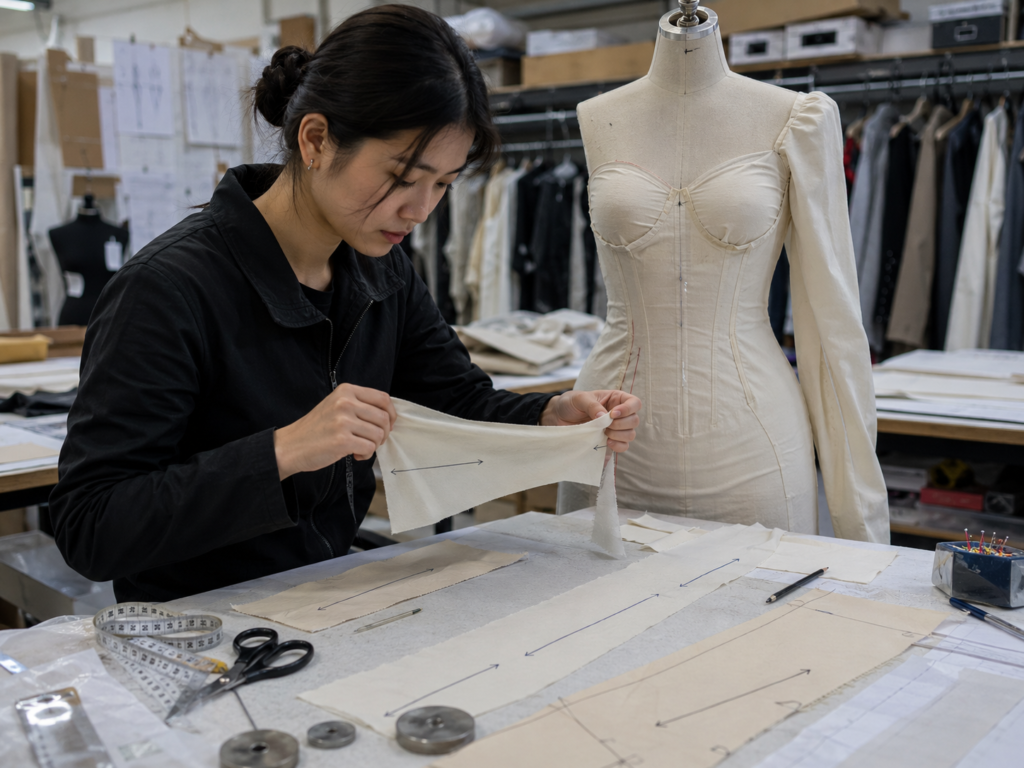
How to build size specs for body-hugging silhouettes?
Size development for bodycon dresses is not linear grading. It must follow body contour logic rather than standard garment scaling.
Key steps:
- Define body measurement chart (not only garment size)
- Add garment finished measurement chart separately
- Set negative ease per size (XS to XL variations)
- Control tolerance range (±0.5–1 cm max)
- Align hip-to-waist ratio across sizes
Example grading structure:
| Size | Bust Ease | Waist Ease | Hip Ease | Length Adjustment |
|---|---|---|---|---|
| XS | -10% | -12% | -8% | Base |
| S | -8% | -10% | -6% | +1 cm |
| M | -6% | -8% | -5% | +2 cm |
| L | -5% | -6% | -4% | +3 cm |
If grading rules are missing, factories often apply standard loose-dress scaling, which destroys bodycon compression balance.
How to document trims, seams, and finishing details?
Trims and finishing define both durability and comfort, especially under stretch tension.
Key documentation items:
- Stitch type per seam zone (overlock / flatlock / zigzag)
- Seam allowance (0.6–1.0 cm standard for stretch fabric)
- Elastic tape position (waist, neckline, shoulder support)
- Hem finish method (double fold / coverstitch)
- Zipper type and placement (invisible / side / back)
- Label position to avoid skin friction
Incorrect seam direction can reduce fabric stretch efficiency by 10–15%, leading to restricted movement or seam breakage.
Step-by-step production flow summary
| Step | Output | Key Risk Controlled |
|---|---|---|
| Sketch → Flat drawing | Technical silhouette | Misinterpretation of design |
| Fit definition | Stretch + compression data | Wrong tightness level |
| Size grading | Multi-size logic | Size distortion |
| Trim specification | Sewing + finishing rules | Durability failure |
What Are the Common Mistakes in Bodycon Tech Packs?
A bodycon dress tech pack often fails not because of poor manufacturing, but because key technical details are missing or incorrectly defined. In tight-fit garments, small documentation gaps quickly turn into visible fit problems, sampling delays, and inconsistent bulk production results.
In real factory experience, more than 50% of first sample rework cases come from unclear stretch data, incomplete measurement logic, or missing construction instructions rather than sewing quality issues.
Why do measurement gaps cause fit failure?
Missing or inconsistent measurement data is one of the most frequent issues in bodycon development. Unlike loose silhouettes, bodycon garments rely on precise body mapping.
Common measurement problems:
- Only garment measurements provided, no body reference chart
- Missing negative ease values (how tight the garment should fit)
- Inconsistent bust–waist–hip ratio logic
- No tolerance range definition (±0.5–1 cm missing)
- Length not adjusted across sizes
| Issue Type | Result in Sampling | Risk Level |
|---|---|---|
| Missing body chart | Wrong size interpretation | High |
| No ease definition | Too loose or too tight fit | High |
| No tolerance range | Repeated revisions | Medium–High |
| Inconsistent grading | Size distortion across range | High |
Even a 1 cm error in waist or hip placement can visually shift body proportion in tight dresses, making the garment feel “off fit” even if sewing quality is correct.
How does unclear fabric stretch lead to sampling errors?
Fabric behavior is one of the most underestimated risk points in bodycon production. Two fabrics with similar appearance can perform very differently under tension.
Common mistakes:
- Stretch percentage not defined (e.g., 15% vs 40% difference)
- No recovery rate test (fabric does not return to shape)
- GSM missing or estimated visually
- Fabric substitution allowed without approval rule
- No wash or shrinkage data included
- Dress feels too tight or too loose on body
- Side seams twist after wearing
- Hem rises or collapses after movement
- Size consistency varies between batches
Without defined stretch data, factories may select “closest available fabric,” which often changes garment performance completely even if composition looks similar.
What happens when construction details are missing?
Construction instructions define how the garment behaves under movement and tension. Missing these details leads to default factory assumptions.
Frequent missing elements:
- Seam type not specified (flatlock vs overlock vs zigzag)
- No seam direction mapping (vertical/horizontal stretch alignment)
- Elastic reinforcement zones not marked
- Hem finishing method not defined
- Stitch density not controlled
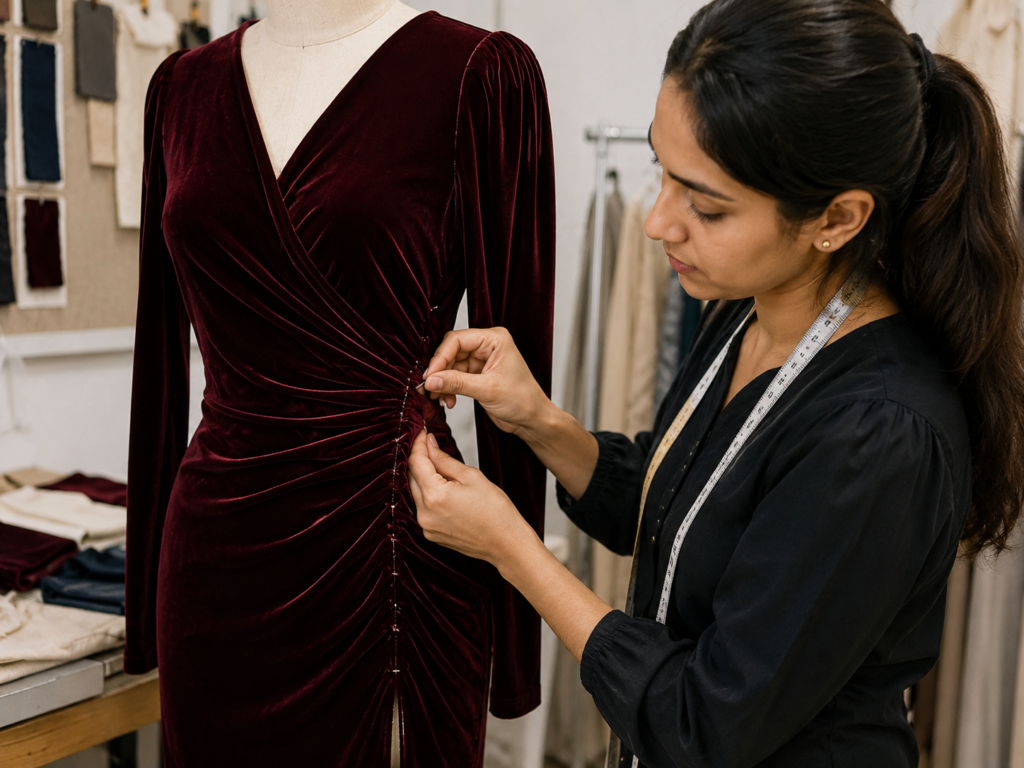
| Missing Element | Factory Default Action | Result |
|---|---|---|
| Seam type | Standard overlock | Reduced stretch comfort |
| Elastic zones | Not added | Waist rolling or slipping |
| Stitch density | Standard setting | Seam break under tension |
| Seam direction | Ignored | Fabric distortion |
In bodycon garments, seam direction alone can affect stretch performance by 10–15%, which directly changes how the garment fits under movement.
Why do factories misinterpret visual references?
Relying only on images or sketches is one of the biggest risks in bodycon development. Visual references cannot communicate technical constraints.
Typical misinterpretation issues:
- Proportions exaggerated in sketches (10–20% distortion)
- No scale reference for neckline depth or waist position
- Fabric tension not visible in images
- Seam placement assumed differently by pattern makers
- Fit expectation differs between regions and factories
- First sample looks “correct” visually but fails on body fit
- Different factories produce different interpretations
- Multiple sampling rounds required to adjust proportion
- Delayed bulk approval due to inconsistent samples
An image shows appearance, but a tech pack defines behavior. Without behavioral data (stretch, compression, grading), factories fill gaps using internal habits rather than design intent.
Common mistake impact summary
| Mistake Category | Main Root Cause | Production Outcome |
|---|---|---|
| Measurement gaps | Missing body + garment logic | Wrong sizing fit |
| Fabric ambiguity | No stretch/recovery data | Unstable wearing behavior |
| Construction missing | No sewing instructions | Structural inconsistency |
| Visual-only input | No technical specification | Interpretation errors |
How Does a Tech Pack Affect Sampling and Bulk Production?
A bodycon dress tech pack directly controls how smoothly a design moves from sampling into bulk production. It defines the rules for fabric behavior, fit accuracy, and construction standards, which reduces interpretation differences between pattern makers, sampling teams, and production lines.
In real factory operations, a complete tech pack can reduce sampling rounds from 3–5 cycles to 1–2 cycles, while improving first-sample approval rates by more than 40%. It also stabilizes bulk production consistency by keeping measurement deviation under 2–3%.
How does it reduce sampling rounds and cost?
Sampling is usually the most time-consuming stage in dress development. Most delays come from missing or unclear specifications rather than sewing issues.
A complete tech pack reduces iterations by:
- Defining exact fabric stretch and recovery before cutting fabric
- Locking measurement standards before pattern creation
- Clarifying seam structure and construction methods in advance
- Removing subjective interpretation from design sketches
- Aligning expectations between design and production teams early
| Tech Pack Quality | Sampling Rounds | Average Lead Time | Revision Cost |
|---|---|---|---|
| Incomplete | 3–5 rounds | 15–25 days | High |
| Partial | 2–3 rounds | 10–18 days | Medium |
| Complete | 1–2 rounds | 5–12 days | Low |
Most re-sampling happens because factories must “guess” fabric stretch behavior or adjust unclear measurements. A structured tech pack eliminates this guesswork.
How do factories interpret tech pack instructions?
Factories do not read tech packs as design inspiration—they convert them into production instructions for pattern making, cutting, and sewing.
Interpretation flow in real production:
- Pattern makers extract measurement and grading rules
- Fabric team selects material based on GSM and stretch data
- Sample room builds prototype using seam and stitch instructions
- QC checks alignment between tech pack and finished sample
- Adjustments are made only when deviation exceeds tolerance
Key interpretation points:
- Measurements → converted into pattern blocks
- Stretch ratio → converted into negative ease calculation
- Seam details → converted into sewing machine settings
- Finishing instructions → converted into production SOP
Without a structured tech pack, each department applies internal standards, which leads to inconsistent results across samples.
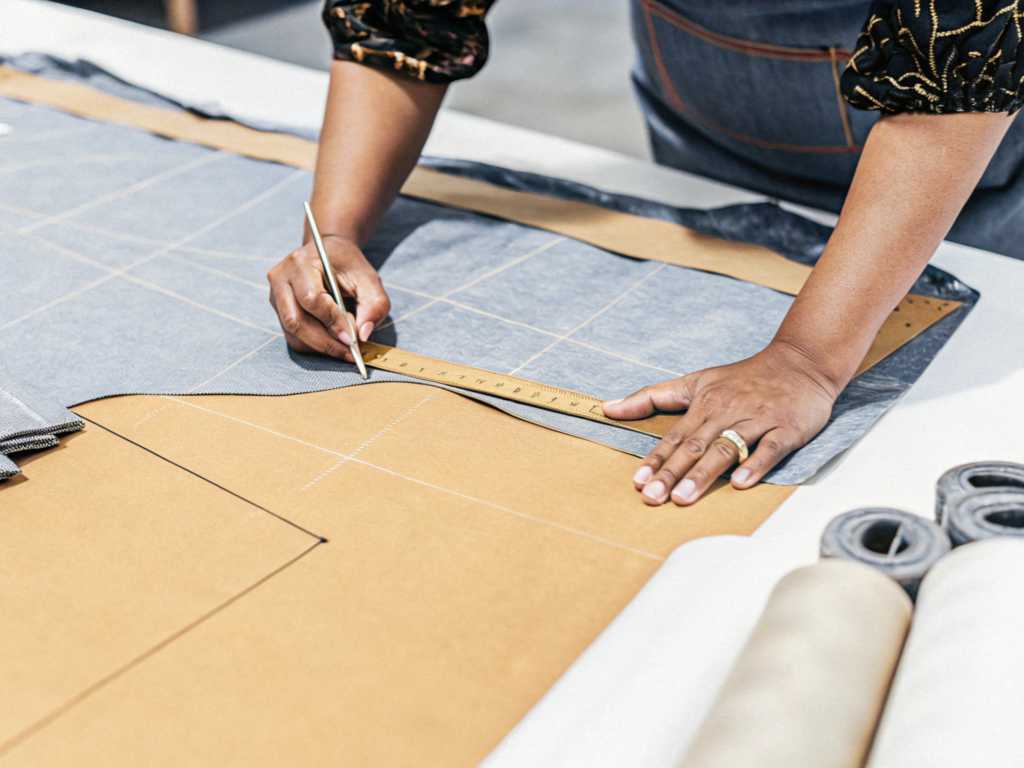
What risks appear when tech packs are incomplete?
Incomplete documentation is one of the main reasons for production instability in bodycon dresses. The risk increases as production scales from sample to bulk.
Main risk areas:
- Fabric substitution without approval due to missing specifications
- Size inconsistency across production batches
- Fit deviation between sample and bulk units
- Seam failure during wear due to incorrect stitch selection
- Repeated sampling loops increasing cost and lead time
Risk impact table:
| Missing Information | Production Risk | Real Outcome |
|---|---|---|
| Stretch data missing | Wrong tightness level | Fit rejection |
| Grading rule missing | Size distortion | Inconsistent sizing |
| Seam instruction missing | Structural failure | Seam break or twisting |
| Fabric GSM missing | Wrong drape | Silhouette imbalance |
Once bulk production starts with incomplete data, corrections become 5–10 times more expensive compared to fixing issues at the tech pack stage.
How does it ensure production consistency at scale?
Consistency in bodycon dresses depends on controlling variables that affect fabric tension, stitching behavior, and measurement accuracy across multiple production batches.
A complete tech pack ensures:
- Same fabric specification used across all orders
- Standardized measurement reference for all sizes
- Unified sewing instructions across production lines
- Controlled tolerance limits for QC inspection
- Stable grading logic for repeat orders
Bulk production stability indicators:
| Control Factor | Without Tech Pack | With Tech Pack |
|---|---|---|
| Size deviation | 3–6 cm variation | ≤2 cm variation |
| Fabric inconsistency | High | Controlled |
| Sample replication accuracy | Low | High |
| Reorder stability | Unstable | Consistent |
Bulk production is not about making one perfect sample—it is about reproducing the same result hundreds or thousands of times without deviation. A structured tech pack is the only system that makes this repeatability possible.
Why Is a Professional Manufacturer Critical for Tech Pack Accuracy?
A tech pack alone does not guarantee accurate production. In bodycon dress manufacturing, execution quality depends heavily on how well a factory understands fabric behavior, fit tension, and construction logic. A professional manufacturer transforms technical documents into stable production outcomes by interpreting, validating, and correcting potential risks before bulk production starts.
In real production environments, factories with strong technical teams can improve first-sample approval rates by 35–60% compared to basic sewing-only facilities. The difference is not equipment—it is interpretation capability.
What capabilities are required from a reliable factory?
A capable manufacturer must be able to translate technical specifications into real garment performance. This requires both technical knowledge and hands-on experience with stretch garments.
Key capabilities:
- Pattern development based on negative ease logic (not standard grading)
- Fabric testing for stretch, recovery, and shrinkage before cutting
- Seam behavior control for high-tension garments
- Sample correction based on technical reasoning, not visual adjustment only
- Understanding of compression balance between comfort and silhouette
| Capability Area | Basic Factory | Professional Manufacturer |
|---|---|---|
| Pattern making | Standard grading only | Negative ease + body mapping |
| Fabric control | Visual selection | Lab-tested stretch & recovery |
| Sampling logic | Trial & error | Data-driven adjustment |
| Fit evaluation | Visual inspection | Body performance testing |
In bodycon dresses, factories without stretch engineering experience often treat the garment like woven clothing, which leads to fit distortion and seam stress issues.
How do experienced teams improve tech pack execution?
Experienced teams do not simply follow tech packs—they validate them against real production constraints. This reduces hidden risks before sampling begins.
Key improvement actions:
- Cross-checking fabric stretch against intended compression level
- Adjusting seam placement to prevent over-tension zones
- Rebalancing grading logic for real body movement behavior
- Identifying missing or unrealistic specifications in advance
- Running pre-sample simulation checks on critical measurements
Production impact:
| Stage | Standard Factory | Experienced Manufacturer |
|---|---|---|
| First sample accuracy | 50–65% | 85–95% |
| Revision cycles | 3–5 rounds | 1–2 rounds |
| Fit consistency | Medium variability | High stability |
| Bulk deviation risk | Medium–High | Low |
Experienced teams often detect issues before cutting fabric. For example, if stretch ratio and seam tension are mismatched, they adjust pattern allowance before sampling starts, saving multiple correction rounds.
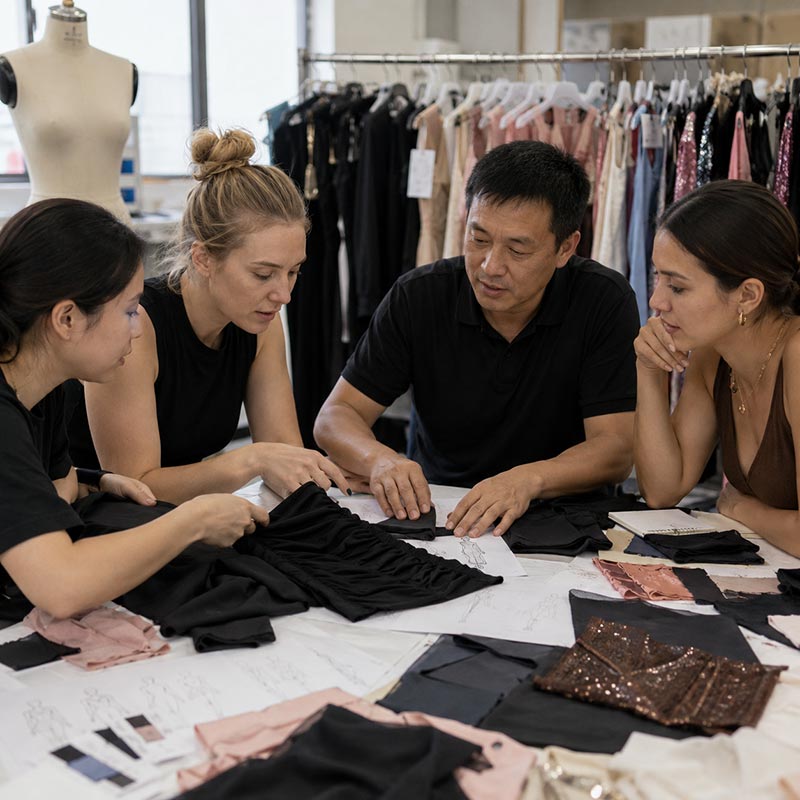
What role does communication play in reducing production risk?
Even a perfect tech pack can fail if communication between design and factory is weak. In bodycon production, small clarifications often determine final fit accuracy.
Critical communication points:
- Confirmation of stretch expectations before sampling
- Alignment on acceptable tolerance range (±0.5–1 cm)
- Clarification of compression zones (waist, hip, bust)
- Fabric substitution approval rules
- Sample feedback structured by technical categories, not general comments
Common communication gap issues:
| Issue Type | Result |
|---|---|
| Vague feedback (“too tight”) | Multiple unnecessary revisions |
| Missing technical terms | Wrong correction direction |
| Delayed confirmation | Extended lead time |
| No structured review | Inconsistent final sample |
Factories operate on instructions, not interpretation. The more structured the communication, the fewer production variations occur.
How does Jinfeng Apparel handle tech pack-based development?
In structured manufacturing systems like Jinfeng Apparel, tech packs are not treated as static documents but as active production references.
Core handling process:
- Technical review before sampling (fabric + measurement validation)
- Internal feasibility check for stretch and compression balance
- Pre-sampling correction suggestions based on pattern logic
- Controlled sampling with measurement tracking per revision
- Bulk production validation using approved sample baseline
Performance indicators:
| Metric | Standard Process | Structured Manufacturer System |
|---|---|---|
| Sample approval speed | 2–4 weeks | 7–12 days |
| Fabric-related errors | High | Controlled |
| Size consistency | Variable | Stable |
| Reorder accuracy | Low–Medium | High |
When tech packs are combined with experienced manufacturing systems, they become executable production instructions rather than theoretical design files. This combination is what stabilizes bodycon dress quality across large-scale production.
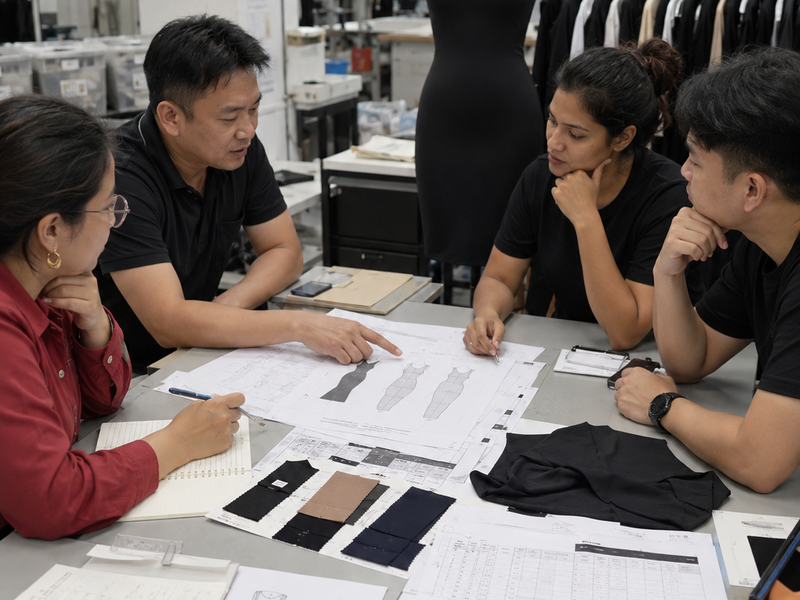
Start Your Custom Bodycon Dress Production
If you are developing a bodycon dress collection and need accurate sampling, stable sizing, and production-ready execution, Jinfeng Apparel supports full OEM & ODM development—from tech pack review to bulk manufacturing.
Whether you already have a tech pack or only a reference image, our development team can help convert your idea into a production-ready garment with controlled fit, fabric behavior, and consistent sizing across all units.
Reach out to Jinfeng Apparel to start your custom bodycon dress project and receive professional manufacturing support for sampling and bulk production.