 Skip to content
Custom Lace Dress Manufacturer for Boutique Owners
Private label lace dresses for boutique collections.
Jinfeng helps boutique owners and women’s fashion brands develop custom lace dresses from reference images, tech packs, or sample garments. With in-house pattern support, sample rooms, sourcing coordination, and scalable production lines, lace mini dresses, midi dresses, occasion styles, and repeat programs can move from concept to finished garments with better control.
- 4 factories covering women’s fashion and casualwear
- Manufacturing partner for globally recognized women’s fashion brands
- 7 pattern makers for fit and structure
- 20 sample makers for faster revisions
- 18 production lines with 300,000 pcs/month capacity




Why Lace Dresses Keep Selling Across Boutique Markets
Lace dresses remain commercially useful because they bring texture, occasion value, and strong visual appeal. A well-developed lace style can support partywear, bridal-inspired edits, vacation drops, holiday collections, and repeat boutique programs.
Occasion-Ready Appeal
Lace naturally fits dinners, parties, birthdays, bridal showers, wedding guest edits, and seasonal event dressing.
Strong Visual Texture
Floral motifs, scalloped edges, sheerness, and lining contrast photograph well for e-commerce and social content.
Flexible Price Positioning
Different lace qualities support entry, mid-range, and premium boutique pricing without changing the entire silhouette.
Repeatable Silhouettes
Mini, midi, bodycon, slip, corset, and long-sleeve lace dresses can return across multiple seasons.
Color Refresh Potential
Black, ivory, blush, red, wine, navy, sage, and seasonal tones can refresh the same base shape.
Feminine Without Heavy Branding
Lace gives clear product identity without relying on large logos, loud graphics, or short-lived slogans.
Easy Capsule Pairing
Lace dresses work beside satin pieces, mesh tops, corset styles, party sets, and occasionwear capsules.
Strong Repeat Potential
When fit, fabric, and lining are stable, a lace dress can become a recurring boutique style.
Lace Dress Production Requires More Than Basic Sewing
Lace gives a dress its surface value, but it also exposes weak development. Pattern balance, fabric direction, lining choice, seam tension, opacity, and edge finishing all influence how the garment looks, feels, photographs, and performs in repeat orders.
Lace Surface Control
The lace surface must stay clean, balanced, and intentional. Motif direction, scalloped edges, floral placement, and panel matching should be reviewed before cutting. When lace is cut carelessly, the front body, hem, sleeve, or neckline can look uneven even if the sewing is technically complete.
Lining and Opacity Control
A lace dress is rarely judged by lace alone. Lining controls coverage, comfort, body shape, and product confidence. Ivory, nude, blush, black, and tonal linings can change the entire selling effect. Poor lining can make a strong lace design look unfinished or uncomfortable.
Fit and Recovery Control
Fitted lace dresses need the right balance between stretch, recovery, seam tension, and body measurement. A bodycon lace dress can look correct on the hanger but fail after wearing if the lace grows, the lining restricts movement, or the side seams twist.
Bulk Consistency Control
Boutique teams often start with a test order and scale after sales feedback. A first sample is only useful if the approved fit, fabric, color, trim, label, and packing notes can be maintained through production and future repeat orders.
Who We Serve
Lace dress sourcing becomes easier when the factory understands the customer’s sales model, product calendar, fit expectation, and production risk. Jinfeng is built for fashion teams that need product development, sample control, and stable order execution.
Online Boutique Owners
Online boutique owners often need lace mini dresses, midi dresses, and party styles for frequent drops. The main concern is finding a factory that can support smaller first orders without losing fit, lining quality, or private label detail.
- fast style testing and clear MOQ
- generic supplier styles look too similar
- start from 300–500 pcs and keep approved fit notes for repeats
Women’s Fashion Retailers
Fashion retailers need lace dresses that can sit inside a broader seasonal assortment. The product must look attractive online, fit consistently across sizes, and arrive in a form that supports store receiving or warehouse handling.
- stable seasonal product programs
- sample quality changes during bulk production
- confirm fabric, lining, color, label, and packing before cutting
Occasionwear Brands
Occasionwear teams develop lace dresses for parties, wedding guests, bridal showers, dinners, and formal edits. The product must carry stronger visual value while still feeling comfortable enough for real events.
- refined surface effect and wearable structure
- lace looks good but feels stiff or too sheer
- review lace GSM, lining opacity, seam finish, and closure strength
DTC Fashion Brands
DTC fashion brands often bring reference images, campaign ideas, or early tech packs. They need a factory that can read the visual direction and convert it into a sample that supports real selling, not only showroom display.
- accurate development from images or tech packs
- too many sample rounds slow the launch calendar
- use 2 sample rooms, 7 pattern makers, and 20 sample makers
Boutique Buying Teams
Buying teams care about product appeal, delivery reliability, and reorder safety. They need lace dresses that can perform across sizes, colors, and repeat batches without creating unnecessary returns or receiving problems.
- commercially safe style development
- repeat orders differ from the approved first batch
- keep pattern, fabric, trim, size spec, and packing records
Private Label Dress Brands
Private label dress brands need more than a garment. They need labels, hangtags, barcodes, polybags, carton marks, and packing standards that protect the brand experience from factory floor to final customer.
- branded product presentation
- packaging and labels feel disconnected from the dress quality
- align main label, care label, hangtag, SKU sticker, and carton mark early
Social Commerce Fashion Teams
Social commerce teams need styles that photograph clearly and move quickly through product testing. Lace dresses work well for try-on videos, campaign shots, and themed drops when the silhouette is strong and the surface detail is clean.
- photogenic styles for fast selling cycles
- sample looks good, but bulk lacks visual sharpness
- check motif placement, edge finishing, lighting opacity, and color consistency
Growing Apparel Brands
Growing brands need a supplier that can support both controlled first orders and later scale-up. When a lace dress sells well, the same style may need larger repeats without changing fit, fabric hand feel, or delivery reliability.
- path from test order to repeat production
- small-order suppliers cannot handle larger volume later
- use 18 production lines and 300,000 pcs/month capacity for scale planning
Common Lace Dress Sourcing Problems Boutique Teams Face
Boutique lace dress projects often fail before bulk production starts. The issue is usually not whether a factory can sew lace, but whether the development, fabric, fit, and production records are controlled from the beginning.
| Sourcing Problem | Commercial Risk | Production Response |
|---|---|---|
| Lace feels too cheap after sampling | Lower perceived value and weaker product photos | Compare lace type, GSM, motif density, lining, and hand feel before sample approval |
| White or ivory styles look too sheer | Higher return risk and weak customer confidence | Test lining opacity under strong light and campaign-like photography conditions |
| Bodycon fit changes after wearing | Poor reviews and unstable size feedback | Check stretch ratio, recovery, seam tension, and lining compatibility before bulk |
| Sample and bulk look different | Lost trust with repeat customers | Confirm PP sample, fabric lot, color, trim, label, and measurement standards |
| Scalloped edges look uneven | Product looks poorly finished in close-up images | Control edge placement, panel cutting, neckline balance, and hem alignment |
| MOQ is too high for new styles | Slower product testing and inventory pressure | Start with 300–500 pcs when suitable, then scale proven styles |
| Multiple colors create shade issues | Inconsistent product display and return confusion | Review lab dips, lining shade, lace color, and bulk fabric lot before cutting |
| Reorders lose original fit | Strong styles become hard to scale | Maintain approved pattern, grading, fabric direction, and fit correction records |
Sampling Works Better With Clear Product Information
A custom lace dress can move faster when design direction, quantity, fit, fabric, and selling scene are clear before development starts. Strong preparation helps reduce sample rounds and gives the factory enough detail to control cost, structure, and production risk.
Selling Scene
The intended selling scene should be clear before choosing fabric. A bridal shower lace dress, a party mini dress, and a wedding guest midi dress need different opacity, lining, length, and structure.
Target Silhouette
Mini, midi, maxi, slip, corset, bodycon, cut-out, and overlay dresses require different pattern logic. The silhouette decides where stretch, lining, closure, and seam reinforcement need attention.
Fabric Direction
A lace dress should not begin with fabric choice alone. GSM, stretch percentage, recovery, motif size, hand feel, opacity, and color availability should match the target customer and retail price.
Quantity Plan
A controlled first order can help test the market before scaling. For many boutique projects, 300–500 pcs can support an initial drop, while proven styles can move into 1,000–5,000 pcs repeat orders.
Fit Standard
Fit expectation should be defined early. A relaxed lace sundress and a sculpting lace bodycon dress require different tolerance levels, measurement control, lining stretch, and size grading.
Launch Timeline
Simple lace dresses can move faster, while structured, corset, embellished, or cut-out styles need more development time. Sampling usually takes 5–10 days for regular styles and 7–15 days for complex styles.
Key Standards for Choosing a Lace Dress Manufacturer
The right lace dress factory should combine product understanding, sample development, fabric judgment, production discipline, and order follow-up. These standards help boutique teams judge whether a supplier can support both first orders and future repeats.
Development Capability
A reliable manufacturer should understand reference images, tech packs, sample garments, and size charts. For lace dresses, this means converting visual direction into pattern, fabric, lining, and construction decisions that can survive production.
Fabric and Lining Judgment
Lace needs careful matching with lining. A strong supplier should explain why one lace works better for a bodycon dress, another works better for occasionwear, and another works better for a soft boutique sundress.
Fit and Pattern Control
Fit is central to lace dress success. Pattern makers should control bust, waist, hip, strap, sleeve, neckline, and length balance, especially for bodycon, corset, cut-out, and fitted midi styles.
Small Order and Scale Ability
Boutique projects often start with smaller first orders. A reliable partner should support controlled testing while keeping the structure ready for repeat orders and higher volume when a style proves itself.
Production Record Keeping
Approved sample, pattern, fabric, trims, labels, measurements, and packing details should be recorded clearly. Repeat production becomes safer when the factory can reproduce the same construction and quality standard.
Communication and Follow-Up
Strong order follow-up reduces production surprises. Merchandising and production teams should keep fabric approval, sample comments, production status, inspection points, and delivery information organized throughout the order.
Lace Dress Styles Built for Boutique Drops and Repeat Orders
Custom lace dresses can support party edits, bridal-inspired capsules, vacation collections, holiday drops, and refined occasionwear programs. Each silhouette needs a different mix of lace weight, lining, stretch, pattern control, and finishing method.

Lace Mini Party Dress
A lace mini party dress works well for birthday drops, weekend edits, date-night collections, and social-led product launches. The short length keeps the style visually sharp, while lace texture gives stronger perceived value than a plain mini dress.
- Common length: 31–34 inches
- Suggested lace weight: 120–180 GSM
- Stretch range: 5–20%
- Best fabrics: stretch lace, corded lace, embroidered mesh
- Complexity level: Medium
- Main control point: neckline balance, hem stability, lining coverage

Lace Midi Bodycon Dress
A lace midi bodycon dress suits more mature boutique edits, evening capsules, and fitted occasion styles. Recovery matters more than decoration. If the lace grows after wear, the garment loses shape and customer confidence drops quickly.
- Common length: 42–48 inches
- Suggested lace weight: 160–220 GSM
- Stretch range: 20–35%
- Recovery target: 85%+
- Best fabrics: stretch lace, power mesh lining
- Complexity level: High
- Main control point: seam tension, recovery, graded fit

Lace Corset Dress
A lace corset dress supports partywear, bridal shower edits, evening capsules, and higher-value boutique assortments. The selling point comes from structure, not only lace surface. Bust shape, waist hold, boning position, and zipper strength need careful development.
- Common length: mini to midi
- Suggested lace weight: 130–200 GSM
- Lining weight: 120–180 GSM
- Structure detail: 6–10 boning channels when needed
- Best fabrics: corded lace, guipure lace, satin lining
- Complexity level: Very high
- Main control point: bust fit, closure stress, upper edge stability

Lace Slip Dress
A lace slip dress fits resort edits, summer capsules, soft occasionwear, and lingerie-inspired boutique styling. The shape looks simple, yet small issues around straps, neckline, side seam, and lining length become very visible in product photos.
- Common length: 33–46 inches
- Suggested lace weight: 90–150 GSM
- Stretch range: 0–15%
- Best fabrics: eyelash lace, lightweight lace, satin lining
- Complexity level: Medium
- Main control point: strap length, neckline gaping, lining softness

Long-Sleeve Lace Dress
A long-sleeve lace dress fits autumn edits, holiday collections, modest occasionwear, and evening styles. Sleeve comfort needs close attention because lace can restrict movement around the armhole, elbow, and cuff if stretch and pattern balance are not controlled.
- Common length: mini, midi, or maxi
- Suggested lace weight: 100–180 GSM
- Stretch range: 10–25% for fitted sleeves
- Best fabrics: stretch lace, floral lace, mesh lace
- Complexity level: High
- Main control point: sleeve torque, armhole comfort, cuff finish

Lace Maxi Occasion Dress
A lace maxi dress works for wedding guest edits, resort evenings, formal boutique capsules, and seasonal occasionwear. Long length increases production risk. Uneven hems, lining drag, or lace imbalance can reduce the visual quality quickly.
- Common length: 55–60 inches
- Suggested lace weight: 110–180 GSM
- Stretch range: 0–10%
- Best fabrics: Chantilly-style lace, corded lace, embroidered mesh
- Complexity level: High
- Main control point: hem balance, motif direction, lining movement

Lace Cut-Out Dress
A lace cut-out dress is strong for younger boutique edits, party collections, and confident evening looks. Cut-out areas need reinforcement because lace can stretch open, curl, or break around stress points after wear.
- Common length: 32–46 inches
- Suggested lace weight: 150–220 GSM
- Stretch range: 20–35%
- Best fabrics: stretch lace, mesh lace, jersey lining
- Reinforcement: 5–8 mm tape where needed
- Complexity level: Very high
- Main control point: cut-out stability, skin comfort, seam strength

Lace Overlay Sundress
A lace overlay sundress supports spring edits, vacation drops, soft feminine capsules, and relaxed boutique collections. Commercial success depends on lightness, comfort, and a clean relationship between outer lace and inner lining.
- Common length: mini to midi
- Suggested lace weight: 100–170 GSM
- Lining weight: 80–130 GSM
- Best fabrics: cotton-blend lace, soft mesh lace, guipure lace
- Complexity level: Medium
- Main control point: drape, lining shadow, seam bul

White Lace Bridal Shower Dress
A white or ivory lace dress fits bridal showers, engagement parties, rehearsal dinners, and romantic boutique edits. Shade accuracy is critical because optical white, warm ivory, cream, and champagne each communicate a different price feeling.
- Common length: mini to midi
- Suggested lace weight: 110–190 GSM
- Opacity target: 80–95% after lining
- Best fabrics: corded lace, guipure lace, embroidered lace
- Complexity level: High
- Main control point: shade match, seam visibility, lining colo

Lace Halter Neck Dress
A lace halter neck dress works well for vacation drops, summer party edits, resort dinners, and evening-ready boutique collections. The neckline creates strong visual lift, but neck comfort and back tension must be controlled during sampling.
- Common length: mini to midi
- Suggested lace weight: 120–190 GSM
- Stretch range: 10–30%
- Best fabrics: stretch lace, embroidered mesh, soft floral lace
- Complexity level: High
- Main control point: neck tension, back opening, bust support

Off-Shoulder Lace Dress
An off-shoulder lace dress supports romantic edits, wedding guest capsules, holiday collections, and feminine occasionwear. The neckline carries most of the selling image, so elastic tension, sleeve position, and upper-body fit need strong control.
- Common length: mini, midi, or maxi
- Suggested lace weight: 130–210 GSM
- Stretch range: 15–30% preferred
- Best fabrics: stretch lace, corded lace, mesh lace
- Complexity level: High
- Main control point: neckline grip, sleeve balance, movement comfort

Lace Mermaid Hem Dress
A lace mermaid hem dress fits refined occasionwear, wedding guest edits, formal boutique stories, and evening capsules. The shape needs a clean hip fit and controlled lower flare, especially when lace and lining behave differently.
- Common length: midi to maxi
- Suggested lace weight: 150–230 GSM
- Stretch range: 10–25%
- Best fabrics: stretch lace, corded lace, power mesh lining
- Complexity level: Very high
- Main control point: hip fit, flare balance, walking comfort
Fabric Choices That Shape Fit, Comfort, and Selling Value
Lace dress performance depends on fabric behavior. Weight, stretch, recovery, opacity, shrinkage, lining, and surface texture affect how the garment looks online, feels on the body, and stays consistent during repeat production.

Stretch Lace
Stretch lace works well for bodycon, midi, cut-out, and fitted party dresses. It gives comfort and movement, but recovery must be tested before bulk production. Poor recovery can cause fabric growth, loose fit, and unstable size feedback.
- Typical weight: 140–220 GSM
- Stretch ratio: 20–40%
- Recovery target: 85–95%
- Opacity: low to medium without lining
- Shrinkage target: within 3–5%
- Best use: fitted midi, bodycon, cut-out styles
- Main risk: seam waviness, fabric growth, grading inconsistency

Corded Lace
Corded lace creates raised floral texture and a stronger occasionwear surface. It suits party dresses, bridal-inspired styles, structured minis, and elegant midi dresses. Seam bulk and motif balance need close control during sample development.
- Typical weight: 130–200 GSM
- Stretch ratio: 0–10%
- Recovery target: not stretch-led
- Opacity: medium with lining
- Shrinkage target: within 3%
- Best use: occasionwear, bridal shower, corset dresses
- Main risk: thick seams, edge stiffness, motif mismatch

Guipure Lace
Guipure lace has an open structure with stronger surface depth. It is suitable for premium boutique dresses, overlay styles, white lace dresses, and bridal-inspired capsules. Cutting consumption is usually higher than lightweight lace.
- Typical weight: 160–260 GSM
- Stretch ratio: 0–5%
- Recovery target: not stretch-led
- Opacity: medium to high by pattern density
- Shrinkage target: within 3%
- Best use: premium mini, overlay, bridal-inspired dresses
- Main risk: stiffness, heavy seams, higher fabric usage
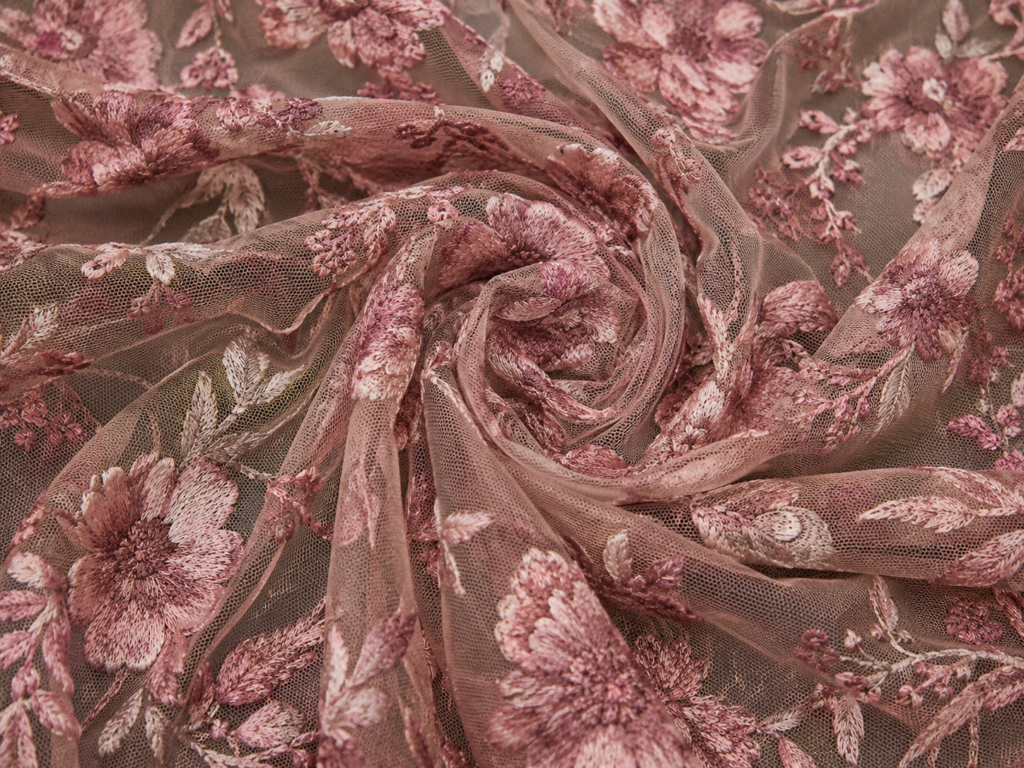
Embroidered Mesh Lace
Embroidered mesh lace gives soft decoration without heavy garment structure. It fits party dresses, feminine mini styles, evening looks, and romantic capsule collections. Thread tension and mesh stability should be checked before final approval.
- Typical weight: 90–180 GSM
- Stretch ratio: 0–15%
- Recovery target: depends on mesh base
- Opacity: low to medium
- Shrinkage target: within 3–5%
- Best use: party mini, slip dress, evening capsule
- Main risk: thread snagging, puckering, embroidery distortion

Lightweight Chantilly-Style Lace
Lightweight Chantilly-style lace gives a soft, delicate, and romantic surface. It suits slip dresses, long-sleeve styles, lace overlay dresses, and bridal-inspired silhouettes. Because the fabric is fine, lining and seam finishing become important.
- Typical weight: 70–130 GSM
- Stretch ratio: 0–10%
- Recovery target: not stretch-led
- Opacity: low
- Shrinkage target: within 3%
- Best use: slip dress, overlay dress, soft occasionwear
- Main risk: tearing, low durability, seam damage

Cotton-Blend Lace
Cotton-blend lace brings a softer, more natural hand feel. It works for spring dresses, resort edits, casual boutique collections, and relaxed feminine silhouettes. Shrinkage and post-wash surface change need review before bulk production.
- Typical weight: 120–200 GSM
- Stretch ratio: 0–15%
- Recovery target: moderate when blended with elastane
- Opacity: medium
- Shrinkage target: within 3–5%
- Best use: sundress, resort dress, casual lace dress
- Main risk: wrinkling, shade variation, wash shrinkage

Sequin Lace
Sequin lace gives strong partywear and evening value. It photographs well under night lighting and supports higher price positioning. Comfort, seam handling, and decoration security need closer review because sequins add weight and friction.
- Typical weight: 180–300 GSM
- Stretch ratio: 0–10%
- Recovery target: not stretch-led
- Opacity: medium to high with lining
- Shrinkage target: within 3%
- Best use: party dress, evening dress, holiday drop
- Main risk: scratching, sequin loss, needle damage

Velvet Stretch With Lace Inserts
Velvet stretch with lace inserts suits holiday drops, winter party edits, and richer boutique collections. The contrast between soft velvet and lace detail gives stronger depth, but pile direction and lace-panel tension need careful matching.
- Typical weight: 200–280 GSM
- Stretch ratio: 20–35%
- Recovery target: 85%+
- Opacity: high on velvet body
- Shrinkage target: within 3–5%
- Best use: winter party dress, evening capsule
- Main risk: pile shading, panel distortion, seam thicknes
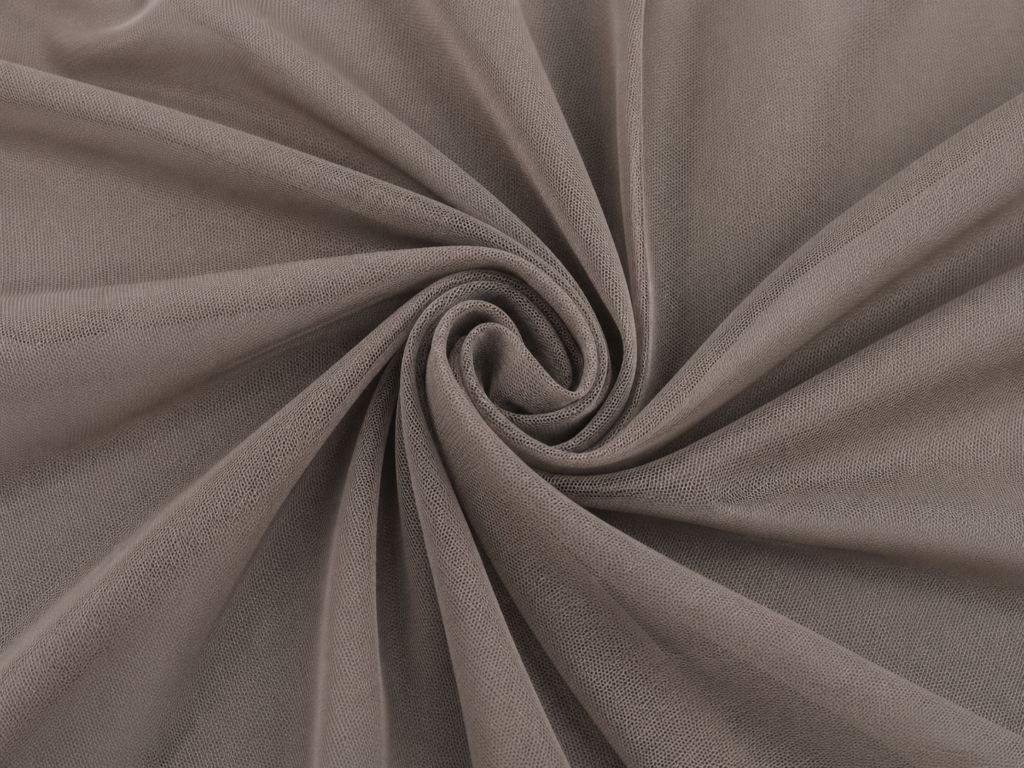
Power Mesh Lining
Power mesh lining is important for fitted lace dresses that need shape support. It helps bodycon, sculpting, corset, and cut-out styles hold the body better while keeping movement possible. Stretch and recovery should match the outer lace.
- Typical weight: 120–180 GSM
- Stretch ratio: 30–60%
- Recovery target: 85–95%
- Opacity: medium, depending on color
- Shrinkage target: within 3–5%
- Best use: bodycon, corset, sculpting lace dresses
- Main risk: tight feel, poor breathability, lining pull
Surface Details That Make Lace Dresses More Distinctive
Boutique lace dresses gain value through visible detail. Scalloped edges, appliqué, embroidery, contrast lining, ruching, and decoration can improve the selling image. Each technique should be reviewed for comfort, washing, stretch, and bulk consistency.

Scalloped Edge Placement
Scalloped edges work well on necklines, hems, cuffs, slits, and straps. The effect looks refined when the motif sits evenly across the garment. Cutting must follow the lace pattern accurately, especially for white, ivory, black, and high-contrast styles.
Surface value improves immediately, but cutting consumption may increase. Uneven scallops can make a finished garment look unbalanced in close-up images, even when the general sewing quality is acceptable.

Lace Appliqué
Lace appliqué adds dimension to bridal-inspired dresses, party styles, and occasionwear pieces. It can make a simple base garment feel more developed without changing the full silhouette.
The main risk is stiffness. Appliqué layers may feel thick or scratchy if placed near the underarm, side waist, or neckline. Placement should be tested on a worn sample before bulk approval.

Eyelash Lace Edge
Eyelash lace gives a soft, delicate border for slip dresses, neckline edges, cuffs, and hems. The detail works especially well for romantic capsule collections and lighter boutique styles.
Durability needs review because fine threads can catch on jewelry, bags, or rough surfaces. Eyelash edges are better for occasion use than heavy daily wear, unless the lace quality is strong.

Embroidery on Mesh
Embroidery on mesh creates a refined floral or decorative surface. It supports evening looks, feminine mini dresses, and soft occasionwear. Product photography usually captures embroidery depth better than flat lace.
Thread tension matters. Poor tension can pucker the mesh, distort panels, and change the garment shape. Embroidery density also affects softness, breathability, and final garment cost.

Contrast Lining
Contrast lining changes how the lace reads visually. Nude, ivory, black, blush, wine, or tonal lining can make the same lace look romantic, bold, premium, or softer.
Opacity testing is important. Light lining can look elegant but may show seam allowance or undergarments. Dark lining can make lace motifs sharper, but shade matching must stay stable across bulk production.

Ruching Over Lace
Ruching can improve body confidence and create a stronger fitted silhouette. It is useful for bodycon dresses, side-waist details, maternity-friendly party styles, and midsection shaping.
The gathering ratio must remain consistent across sizes. Uneven ruching can twist side seams, shorten garment length, or create pressure points. Elastic tension and seam strength need testing before production.

Sequin and Bead Decoration
Sequins and beads support partywear, evening edits, and higher-value occasion capsules. They create shine and depth in product photos, especially under evening lighting.
Added decoration increases garment weight, seam bulk, and wearer friction. Lining softness, decoration security, and abrasion resistance should be checked carefully before large orders.

Lace Panel Blocking
Lace panel blocking combines lace with mesh, satin, jersey, velvet, or woven fabric. It helps create contrast, shape, and a more modern boutique look without making the whole dress sheer.
Panel tension needs control. When one panel stretches and another does not, the garment can twist or pull after wear. Fabric pairing should be tested during the first sample stage.
Construction Details That Protect Shape, Fit, and Comfort
Lace dress quality depends on structure. Pattern engineering, stretch direction, seam tension, lining compatibility, reinforcement, closures, and finishing all affect how the garment fits, feels, and stays consistent during production.
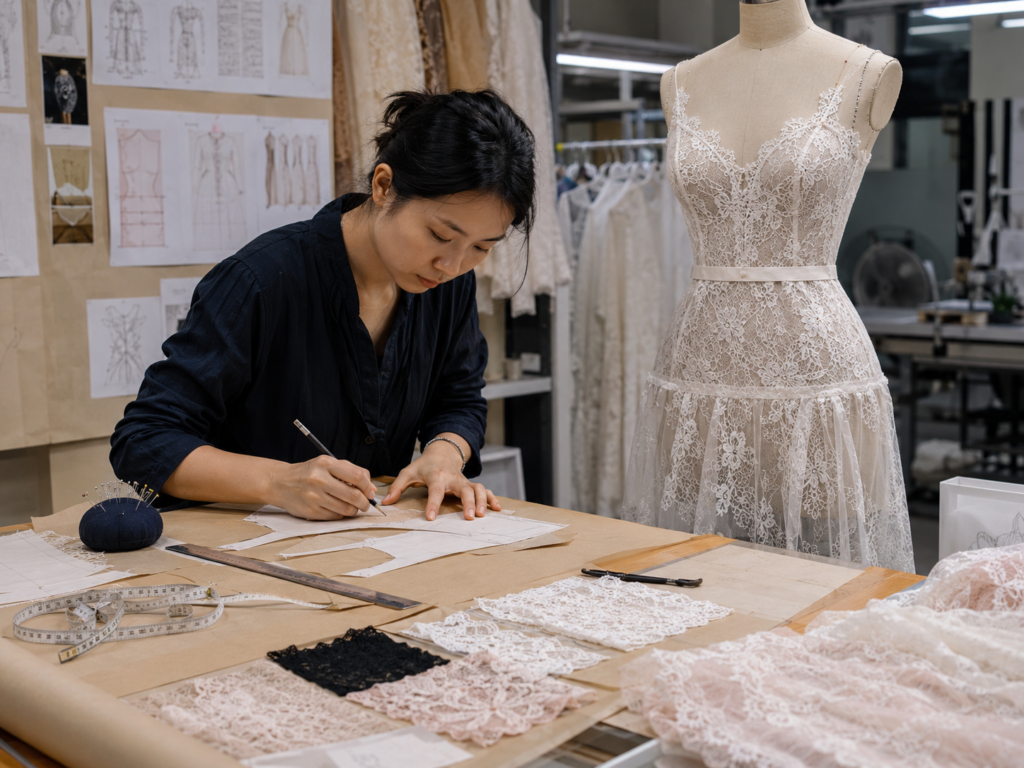
Pattern Engineering
Pattern development should match the lace type, lining behavior, stretch level, and target fit. A relaxed lace overlay dress and a fitted bodycon dress need different pattern logic, especially around bust, waist, hip, neckline, and hem balance.

Stretch Direction Control
Stretch lace must be cut in the correct direction to avoid twisting, pulling, or uneven pressure on the body. Bodycon, cut-out, long-sleeve, and fitted midi dresses need extra control before bulk cutting.
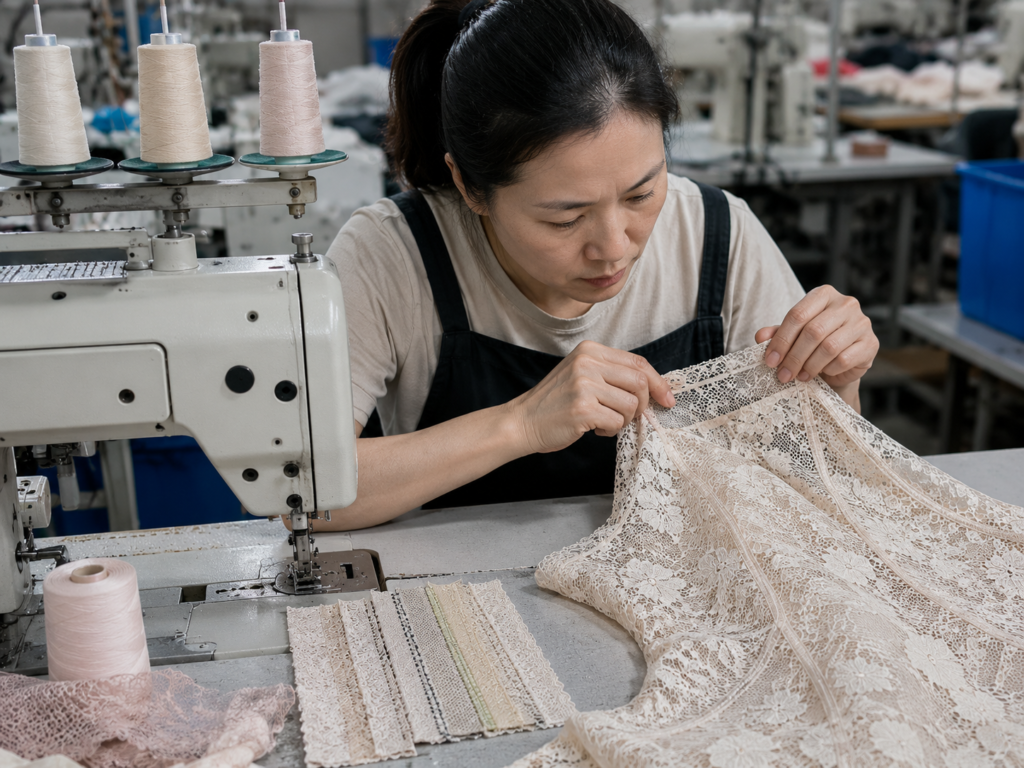
Seam Tension Management
Lace can wave, pucker, or break when stitch tension is not balanced. Needle type, thread tension, stitch choice, and seam allowance should match fabric weight, stretch ratio, and garment fit level.

Lining Compatibility
Lining should support the lace without restricting movement. If the outer lace stretches more than the lining, the dress may pull, twist, or feel tight, especially in fitted silhouettes.

Cut-Out Reinforcement
Cut-out lace dresses need stable edges around neckline, waist, side, and back openings. Hidden tape, clean binding, or facing can help prevent stretching, curling, and seam stress during wear

Ruching Control
Ruching should create shape without distorting the dress. Gathering ratio, side seam balance, elastic tension, and fabric recovery need review across sizes before production starts.

Closure Construction
Invisible zippers, hooks, adjustable straps, lace-up backs, and inner elastic must hold stress without damaging lace panels. Tight or structured styles need stronger review around closure seams.

Pressing and Finishing
Lace needs light finishing to protect surface texture. Final steaming, thread trimming, stain checking, shape correction, and careful packing help the dress arrive clean and ready for boutique presentation.
Label and Packaging Details That Support Boutique Presentation
A custom lace dress should feel complete before it reaches the customer. Labels, hangtags, SKU stickers, polybags, folding, hanger packing, and carton marks help protect the garment, improve receiving efficiency, and keep the boutique brand experience consistent from production to delivery.
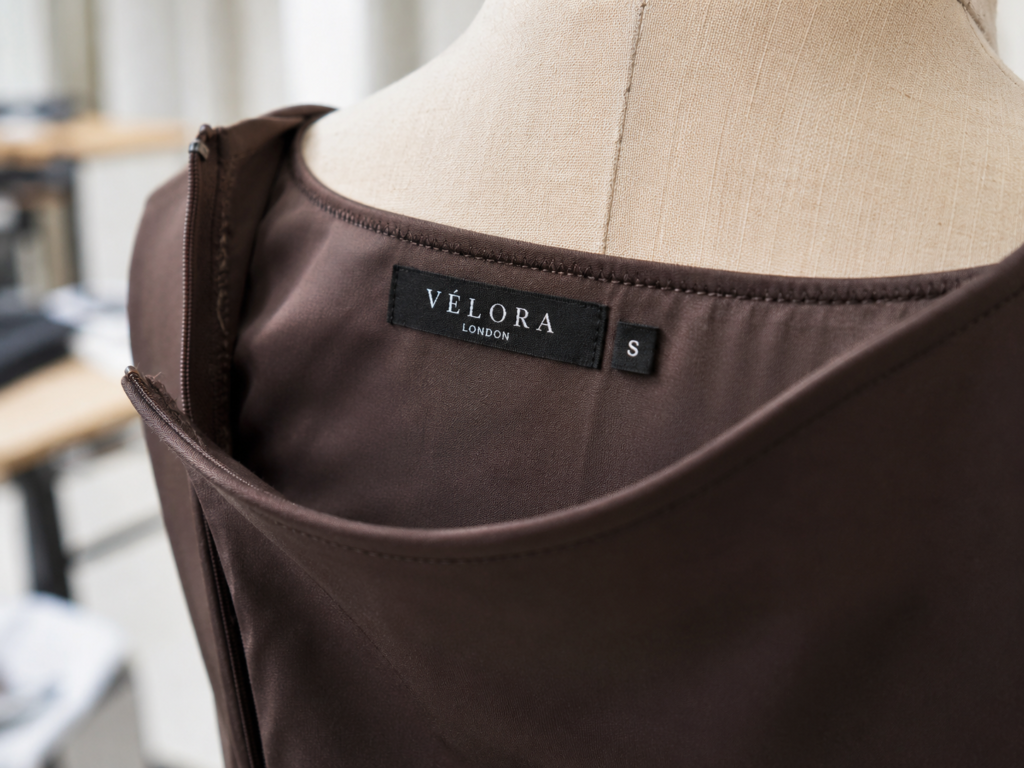
Main Label
The main label gives the lace dress its first brand detail after the garment is opened. For delicate lace styles, the label should feel soft, sit cleanly inside the dress, and avoid scratching the neck or showing through light lining.
- Common options: woven label, satin label, printed label
- Best placement: back neck, inner facing, or lining seam
- Key control: soft touch, clean stitching, no visible pulling
- Brand value: makes private label styles feel finished and retail-ready

Size Label
The size label should be easy to read and consistent across all sizes. Fitted lace dresses are sensitive to size expectations, so clear labeling helps reduce confusion during try-on, fulfillment, and repeat orders.
- Common range: XS–XL or custom brand size range
- Best placement: near main label or care label
- Key control: correct size matching before packing
- Brand value: supports smoother inventory and lower size-related errors
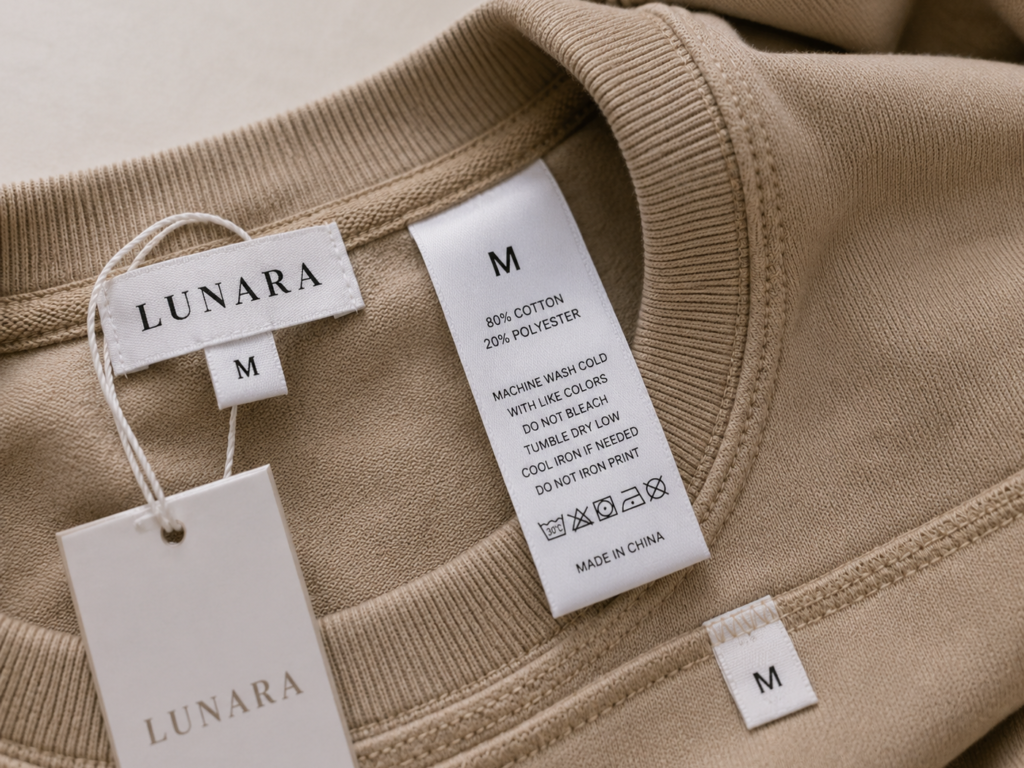
Care Label
The care label protects both the garment and the customer experience. Lace, lining, sequins, embroidery, and delicate trims may need specific wash instructions, especially for occasionwear and fitted styles.
- Common content: fiber, wash care, origin, RN if required
- Best placement: side seam or inner lining seam
- Key control: care wording must match fabric behavior
- Brand value: reduces after-sale issues caused by incorrect washing
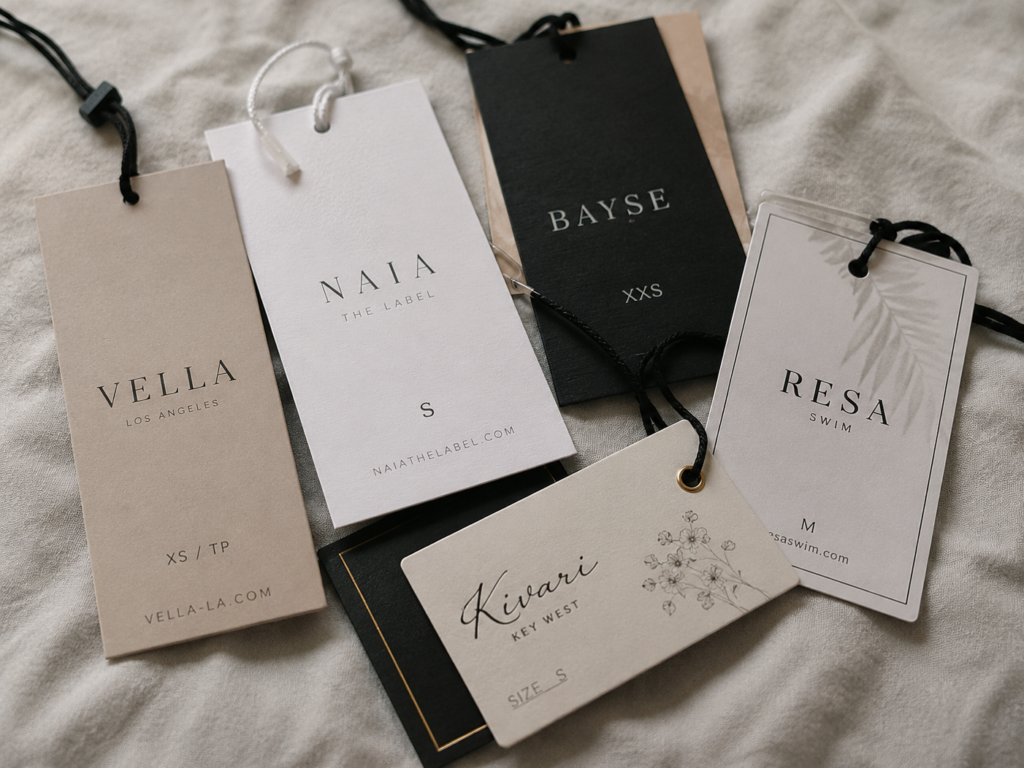
Hangtag
The hangtag adds a visible brand touch before the customer tries on the dress. For lace dresses, the hangtag should feel refined, not heavy. Paper weight, string, logo finish, and tag size should match the dress price level.
- Common options: matte card, textured card, coated card
- Best use: boutique racks, e-commerce packing, gifting feel
- Key control: secure attachment without damaging lace
- Brand value: improves perceived quality before first wear

Barcode and SKU Sticker
Barcode and SKU stickers help boutique teams manage receiving, warehouse sorting, online orders, and repeat inventory. For lace dress programs with multiple colors and sizes, accurate SKU control prevents shipment and fulfillment mistakes.
- Common content: style code, color, size, barcode, quantity
- Best placement: polybag, hangtag, or carton label
- Key control: SKU data must match order sheet and packing list
- Brand value: supports cleaner stock management and faster fulfillment
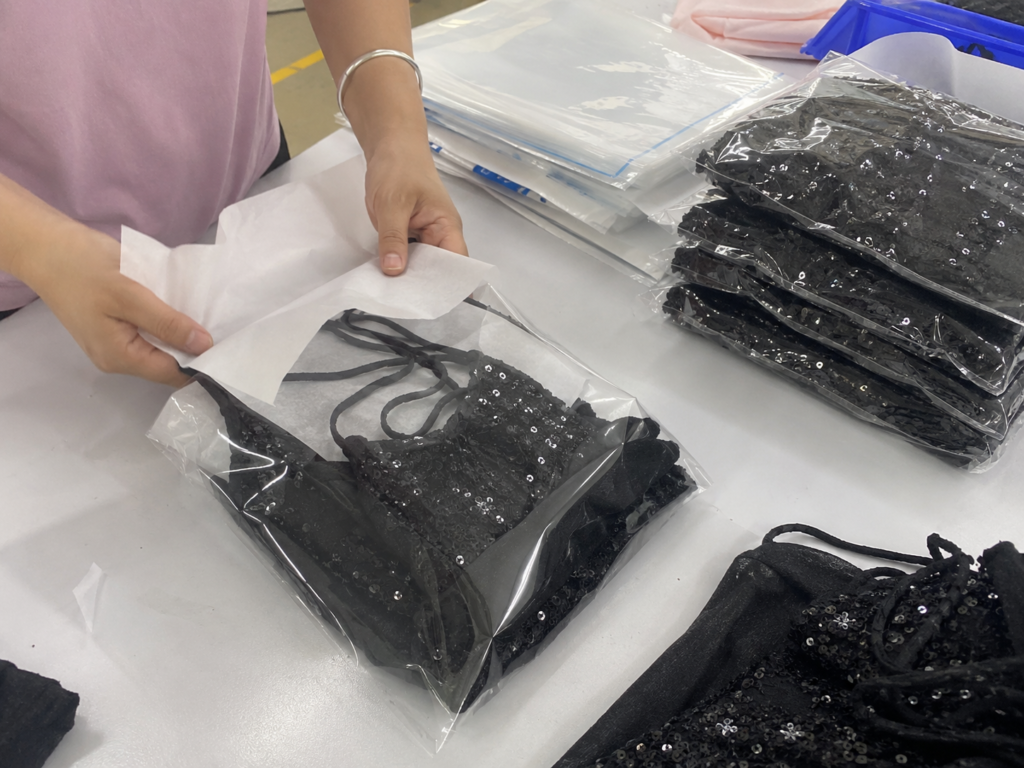
Polybag
The polybag protects lace dresses from dust, moisture, friction, and handling damage during shipment. Bag size should match the folded garment, especially for lace styles with structure, appliqué, sequins, or delicate surface detail.
- Common options: clear bag, frosted bag, printed warning bag
- Best fit: garment should sit flat without strong compression
- Key control: avoid crushing lace texture or structured details
- Brand value: keeps garments cleaner before boutique receiving
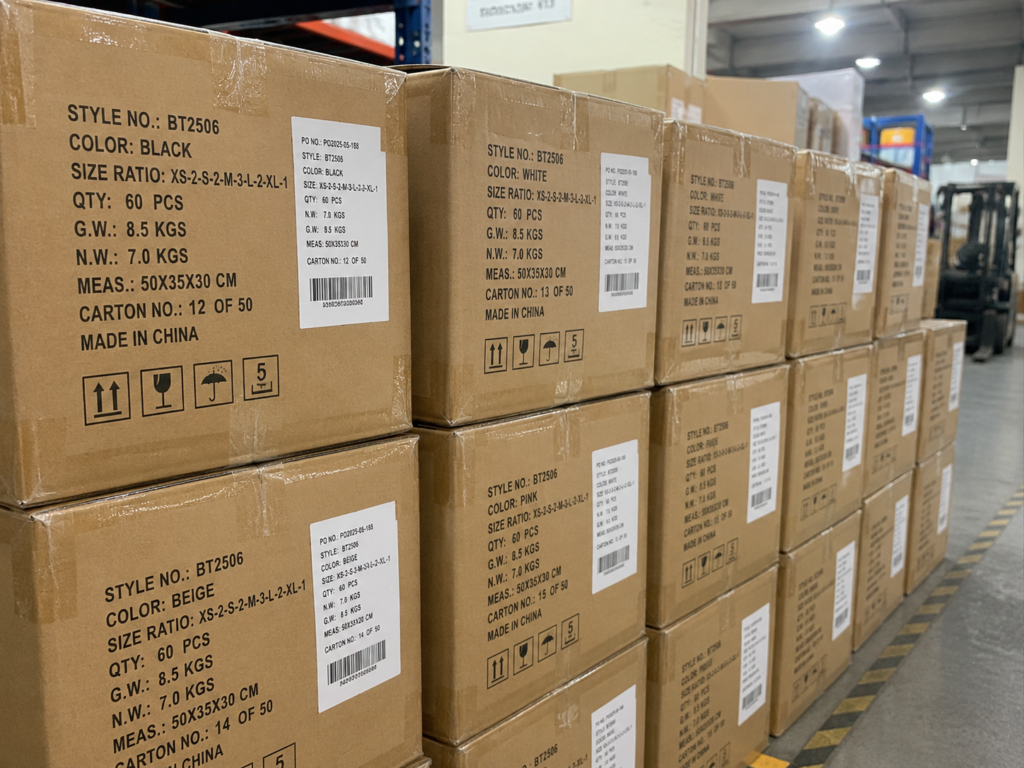
Carton Mark
Carton marks help receiving teams identify goods quickly. Clear carton information is especially important for lace dress orders with multiple styles, colors, size ratios, split shipments, or warehouse delivery requirements.
- Common content: style, color, size ratio, quantity, carton number
- Best use: bulk shipment, warehouse receiving, overseas stock intake
- Key control: carton mark must match packing list and order file
- Brand value: reduces receiving errors and improves shipment control

Folding or Hanger Packing
Packing method should match the lace dress structure. Soft mini dresses can usually be folded, while long, structured, embellished, or premium occasion styles may need hanger packing to protect shape and surface details.
- Common options: flat fold, tissue support, hanger packing
- Best choice: based on length, lace type, decoration, and channel
- Key control: prevent deep creases, crushed trims, or distorted shape
- Brand value: helps the dress arrive closer to retail presentation
Custom Options That Make Lace Dresses More Brand-Specific
A private label lace dress should not look like a common market style with a new label added. Silhouette, lace choice, lining, color, neckline, sleeve, closure, fit, and packaging details can all make the style feel more specific to a boutique collection.
Silhouette Development

Silhouette decides how the lace dress sells, fits, and photographs. Mini, midi, maxi, bodycon, corset, slip, cut-out, and overlay styles can be developed from reference images, tech packs, original samples, or design notes.
- Common options: mini, midi, maxi, slip, corset, bodycon
- Best use: party drops, bridal edits, vacation stories, occasionwear
- Key control: bust, waist, hip, hem, and strap balance
- Brand value: creates a recognizable dress shape for repeat collections
Lace Selection

Lace choice changes the entire price feeling and wearing experience. Stretch lace, corded lace, guipure, embroidered mesh, cotton-blend lace, lightweight lace, and sequin lace each support a different style direction.
- Common options: stretch lace, guipure, embroidered mesh, corded lace
- Best use: fitted dresses, occasion styles, soft feminine edits
- Key control: GSM, stretch ratio, motif size, hand feel, opacity
- Brand value: helps position the dress from casual to premium
Lining Development

Lining controls coverage, comfort, structure, and confidence. A lace dress may look attractive on a hanger, but the final wearing experience depends heavily on lining softness, opacity, stretch, and shade.
- Common options: satin, soft mesh, jersey, nude lining, power mesh
- Best use: fitted lace dresses, white lace, occasionwear, bodycon styles
- Key control: opacity, recovery, shrinkage, skin feel, color match
- Brand value: improves comfort while protecting product quality perception
Color Direction

Color gives one lace dress multiple selling lives. Black, ivory, white, blush, red, wine, navy, chocolate, sage, and seasonal tones can refresh the same silhouette for different boutique stories.
- Common options: black, ivory, blush, wine, red, seasonal colors
- Best use: holiday drops, bridal edits, party capsules, resort collections
- Key control: lab dip, lining shade, bulk color consistency
- Brand value: extends one approved shape into multiple sales moments
Neckline and Sleeve Design

Neckline and sleeve details shape the customer’s first impression. Square neck, sweetheart, V-neck, halter, off-shoulder, mock neck, long sleeve, cap sleeve, and strap styles can shift the same lace dress into different moods.
- Common options: square neck, halter, off-shoulder, long sleeve
- Best use: partywear, modest edits, summer drops, evening styles
- Key control: neckline grip, sleeve mobility, edge finishing
- Brand value: creates variety without rebuilding the full dress structure
Closure and Support Details

Closures decide whether a lace dress feels secure during wear. Invisible zippers, hook-and-eye closures, lace-up backs, adjustable straps, inner elastic, boning, and facings should be selected based on the dress shape.
- Common options: invisible zipper, hooks, lace-up back, boning
- Best use: corset dresses, bodycon styles, fitted midi, cut-out designs
- Key control: stress points, zipper smoothness, seam reinforcement
- Brand value: improves confidence, fit, and perceived garment quality
Fit and Size Grading

Fit determines whether a lace dress can become a repeat style. A sample may look good in one size, but production must hold shape across XS–XL or the brand’s own size range.
- Common options: standard grading, custom size chart, plus-size grading
- Best use: fitted lace dresses, bodycon styles, retailer size programs
- Key control: bust, waist, hip, length, sleeve, strap measurement
- Brand value: supports stronger reviews and safer repeat orders
Label and Packing Setup

Labels and packing should be developed together with the garment, not added at the end. Main label, size label, care label, hangtag, barcode sticker, polybag, carton mark, folding, and hanger packing can all be planned before production.
- Common options: woven label, care label, hangtag, SKU sticker
- Best use: private label programs, boutique retail, online fulfillment
- Key control: label placement, packing accuracy, carton information
- Brand value: makes the finished dress ready for selling channels
Bulk Production Built Around Approved Samples and Stable Records
Bulk production should protect the approved sample. For lace dress orders, fabric inspection, cutting direction, seam control, lining attachment, measurement checks, and packing accuracy all need organized follow-up from production start to shipment.

Order Confirmation
Order quantity, color ratio, size ratio, payment schedule, label details, packaging method, and shipping plan are confirmed before material preparation. Common cooperation terms include 50% deposit and 50% before shipment.
- Key details: quantity, color, size, labels, packing
- Main goal: clear production file before bulk begins
- Risk reduced: wrong color ratio, label error, packing mismatch

Material Preparation
Lace, lining, trims, labels, hangtags, polybags, and cartons are prepared according to approved records. Fabric width, color shade, shrinkage, stretch, and surface defects should be checked before cutting.
- Key details: lace, lining, zipper, label, packing
- Main goal: match approved sample materials
- Risk reduced: shade difference, shrinkage, fabric substitution

Pre-Production Sample
A pre-production sample confirms that real bulk materials match the approved development sample. Lace motif direction, opacity, seam tension, zipper strength, and final appearance are reviewed before cutting starts.
- Key details: PP sample, bulk fabric, final trims
- Main goal: confirm production standard
- Risk reduced: sample-to-bulk inconsistency

Cutting and Bundling
Cutting follows lace direction, motif placement, and panel balance. Lace dresses need careful cutting because floral direction, scalloped edges, sleeve symmetry, and front body placement are easy to notice.
- Key details: grain, motif, scallop, panel matching
- Main goal: keep surface balanced
- Risk reduced: uneven front body, twisted panels, poor hem line

Sewing and Inline Review
Production lines follow approved construction notes. Inline checks focus on seam tension, lining attachment, zipper setting, strap balance, ruching, thread ends, and key measurements during sewing.
- Key details: seam, lining, closure, measurement
- Main goal: find issues before final inspection
- Risk reduced: rework, uneven seams, unstable fit

Finishing and Packing
Finished garments are steamed lightly, trimmed, measured, inspected, labeled, folded, or packed on hangers according to the confirmed method. Packing should protect lace texture and garment shape during delivery.
- Key details: finishing, labels, polybags, cartons
- Main goal: ready-to-ship garment presentation
- Risk reduced: stains, wrinkles, label errors, carton confusion
Practical Order Planning for Boutique Lace Dress Program
Lace dress programs often begin with controlled quantities and grow after sales feedback. Clear MOQ, sampling time, production time, and delivery planning help reduce launch pressure and keep repeat orders easier to manage.
| Order Item | Practical Range | Lace Dress Notes |
|---|---|---|
| Regular sample time | 5–10 days | Suitable for lace mini dresses, slip dresses, overlay styles, and simple lined lace silhouettes |
| Complex sample time | 7–15 days | Suitable for corset lace dresses, cut-out styles, long-sleeve lace dresses, layered styles, and embellished pieces |
| Small order | 300–500 pcs | Suitable for boutique first drops, new color testing, seasonal trials, and controlled market validation |
| Medium order | 1,000–5,000 pcs | Suitable for proven lace dress styles, repeat color programs, and stronger seasonal product planning |
| Large order | 5,000+ pcs | Suitable for stable selling styles, planned scale-up, multi-store programs, and long-term reorder planning |
| Simple bulk production | 15–25 days | Suitable when fabric is ready and the lace dress construction is relatively simple |
| Regular bulk production | 25–35 days | Common for private label lace dress orders with lining, labels, packing, and standard construction details |
| Complex bulk production | 35–45 days | Needed for structured lace dresses, corset construction, cut-outs, sequins, embroidery, or multi-detail designs |
| Payment arrangement | 50% deposit + 50% before shipment | Common cooperation structure for custom garment production; long-term or split-shipment orders can be discussed |
| Shipping Method | Typical Transit Time | Best For | Lace Dress Notes |
|---|---|---|---|
| Express | 5–7 days | Samples, urgent small shipments, sales meeting pieces, pre-launch approvals | Faster option for sample packages, fit review garments, urgent color approvals, and small replenishment needs |
| Air Freight | 7–15 days | Time-sensitive bulk orders, seasonal launches, medium-volume deliveries | Suitable when launch timing is tight but shipment volume is larger than sample parcels |
| Sea Freight | 20–35 days | Planned bulk orders, larger production runs, cost-controlled replenishment | Better for stable orders with enough calendar space, especially medium and large repeat production |
Quality Checks That Protect Fit, Surface, and Repeat Orders
Lace dress quality is judged through surface detail, body fit, lining comfort, measurement accuracy, and final presentation. Quality control should begin before cutting and continue through sewing, finishing, packing, and shipment.
Fabric Inspection
Lace fabric is checked before cutting for holes, stains, broken threads, color shade, width variation, motif direction, and surface defects. Light colors, open lace patterns, and embroidered lace need closer review because small flaws become more visible after lining and photography.
Shrinkage and Recovery Review
Outer lace and lining should be reviewed together for shrinkage, stretch, and recovery. Fitted lace dresses need stronger control because poor recovery can cause fabric growth, twisting seams, loose fit, and unstable size performance after wearing or washing.
Cutting Quality Check
Cutting quality affects the full appearance of a lace dress. Lace direction, motif balance, scalloped edges, sleeve symmetry, front body panels, and hem alignment should be checked before sewing starts, especially for white, ivory, black, and high-contrast lace styles.
Inline Sewing Check
Inline inspection focuses on seam tension, lining attachment, zipper setting, strap position, sleeve balance, ruching control, thread ends, and key measurements during production. Early checking helps reduce rework and keeps bulk garments closer to the approved sample.
Final Measurement Check
Finished garments are measured across key points such as bust, waist, hip, length, sleeve, strap, neckline opening, and hem width. Fitted lace dresses need closer tolerance control because small measurement changes can affect comfort, fit, and customer feedback.
Surface and Appearance Review
Final appearance review checks visible lace damage, loose threads, stains, puckering, uneven edges, lining exposure, zipper smoothness, and overall garment shape. Lace dresses should look clean both in close-up product shots and full-body try-on views.
Packing and Label Check
Before shipment, labels, hangtags, care labels, barcode stickers, polybags, carton marks, packing list details, and size-color ratios are reviewed. Accurate packing supports boutique receiving, warehouse handling, inventory control, and smoother repeat order management.

Responsible Production Preparation for Lace Dress Orders
Factory safety and compliance needs vary by country, sales channel, and customer policy. Lace dress production should prepare material records, clean handling, care label information, sharp-object control, and shipment documents before the production calendar becomes tight.
Material Record Preparation
Fabric, lining, trims, labels, and packaging materials should be recorded before bulk production. When testing is required, fiber content, color, decoration, shrinkage, care requirements, and customer standards should be confirmed during quotation and sample development.
Clean Handling Control
Lace dresses need clean handling because stains, oil marks, dust, and surface friction can show clearly, especially on white, ivory, blush, and light-colored styles. Cutting, sewing, finishing, and packing areas should protect delicate surfaces from unnecessary damage.
Needle and Sharp Object Control
Needles, pins, scissors, blades, and small metal items should be managed carefully during sewing and finishing. Delicate lace can tear easily, and stronger sharp-object control helps protect garment safety, surface quality, and final shipment reliability.
Care Label Accuracy
Care label wording should match the actual lace, lining, trims, embroidery, sequins, and closure details. Gentle wash, hand wash, dry clean, low heat, or dry-flat guidance may be needed depending on the final fabric and construction combination.
Production Environment Awareness
Lace dress production requires careful handling across cutting tables, sewing lines, finishing areas, and packing stations. Clean surfaces, controlled garment movement, and organized production flow help reduce stains, snagging, fabric damage, and avoidable quality issues.
Document Readiness
Order documents, packing lists, carton marks, shipping terms, inspection records, and delivery details should be organized before shipment. Clear documentation supports customs clearance, warehouse receiving, internal review, and future repeat production planning.
Why Jinfeng Is Suitable for Custom Lace Dress Manufacturing
A strong lace dress supplier should understand style, fit, fabric, lining, sampling, production records, and repeat orders. Jinfeng’s factory structure supports boutique lace dress programs that need development skill and stable production execution.
Women’s Fashion Focus
Jinfeng focuses strongly on women’s fashion garments, including dresses, sets, fashion tops, fitted styles, occasionwear, and partywear. Lace dresses fit naturally into this product direction because they require fashion sense, structure, and surface control.
Sample Development Structure
Jinfeng has 2 sample rooms, 7 pattern makers, and 20 sample makers to support product development. Lace dress projects benefit from this structure because fit correction, lining review, and sample refinement often decide the final order result.
Suitable Order Range
Boutique lace dress programs often begin with controlled quantities. Jinfeng can support 300–500 pcs small orders, 1,000–5,000 pcs medium orders, and 5,000+ pcs larger production programs when styles are ready to scale.
Production Capacity
With 18 production lines and around 300,000 pcs/month actual capacity, Jinfeng can support first orders, repeat orders, and gradual production scale-up. Extra capacity of 50,000–80,000 pcs can also support growing programs.
Fit and Structure Experience
Lace mini dresses, bodycon dresses, corset styles, cut-out dresses, and occasionwear need pattern and construction control. Jinfeng’s experience with fitted women’s fashion helps support styles where body shape and garment structure matter.
Private Label Support
Main labels, size labels, care labels, hangtags, barcode stickers, polybags, carton marks, folding, and hanger packing can be coordinated with the garment order. Brand presentation stays connected from sample approval to shipment.
Global Delivery Support
Express, air, and sea shipping can be arranged according to timing and cost needs. FOB, CIF, DDP, DAP, split shipment, and overseas warehouse delivery can be discussed based on project requirements.
Long-Term Cooperation Fit
Jinfeng is suitable for fashion teams with clear product direction, regular launches, and repeat-order potential. The value is not only making one lace dress, but keeping fit, fabric, and delivery stable over future orders.
Case Studies for Boutique Lace Dress Programs
Different lace dress projects need different controls. Some start from small test orders, some focus on white occasion styles, and some need repeat production after a successful launch. These cases show how lace sourcing, lining control, fit correction, and production planning can support stronger boutique dress programs.
Case 1|A U.S. Online Boutique Retailer
Project Overview
- Customer role: Merchandise Director
- Country: United States
- Name: Confidential
- Product: Private label lace mini dress capsule
- Sales channel: Online boutique store
- Starting point: Reference images + target size chart
- Initial order: 300 pcs per style
- Scale order: 1,800 pcs per style after first sales test
- Key service: lace sourcing, lining selection, sample correction, private label packing
Challenge
The retailer wanted to launch a lace mini dress capsule for party, date-night, and bridal shower selling moments. Previous supplier options looked too generic, and several samples had weak lining coverage under product photography lighting. The team needed a lace dress factory that could support a controlled first order without losing fit, hand feel, or branded presentation.
Solution
Jinfeng reviewed the reference images, target customer, color direction, and expected order quantity before sampling. Several lace and lining combinations were compared for opacity, softness, stretch, and price level. The pattern was adjusted around bust, waist, neckline, and hem balance. Main label, size label, care label, hangtag, barcode sticker, polybag, and carton mark details were confirmed before production.
Result
- First order started at 300 pcs per style
- Reorder grew to 1,800 pcs per style after sales testing
- Lining opacity improved for white and ivory lace styles
- Approved pattern notes supported repeat production
- Private label packing was aligned before shipment


Case 2|A UK Occasionwear Boutique Brand
Project Overview
- Customer role: Product Development Manager
- Country: United Kingdom
- Name: Confidential
- Product: Lace midi occasion dress
- Sales channel: Boutique retail + online store
- Starting point: Tech pack + fabric direction
- Initial order: 500 pcs per style
- Scale order: 3,000 pcs across two colors
- Key service: pattern development, lace placement, lining match, size grading
Challenge
The brand needed a lace midi dress for wedding guest, dinner, and occasionwear edits. The design required a more refined surface than basic stretch lace, but the dress still needed comfort for real wear. Earlier samples from another supplier had twisting side seams, uneven sleeve balance, and shade mismatch between lace and lining.
Solution
Jinfeng reviewed the tech pack, target measurements, fabric direction, and preferred fit before building the first sample. Lace weight, lining GSM, color tone, and stretch behavior were checked together. Pattern adjustments focused on bust shape, waist position, hip balance, sleeve mobility, and hem line. Before bulk cutting, the production team confirmed lace direction, lining shade, zipper quality, and measurement tolerance.
Result
- First order began at 500 pcs per style
- Production expanded to 3,000 pcs across two colors
- Side seam balance and sleeve comfort were improved
- Lace and lining shade records supported bulk consistency
- Graded measurements stayed closer to approved fit notes
Case 3|An Australian DTC Fashion Brand
Project Overview
- Customer role: Brand Founder
- Country: Australia
- Name: Confidential
- Product: Sculpting lace bodycon dress
- Sales channel: Direct-to-consumer e-commerce
- Starting point: Reference sample + size chart
- Initial order: 300 pcs per style
- Scale order: 3,500 pcs per style within 3 months
- Key service: MOQ planning, stretch control, recovery testing, production scale-up
Challenge
The brand wanted to test a fitted lace bodycon dress with a controlled first order, but also needed a supplier that could scale quickly if the style performed well. The main concern was repeat consistency. Previous suppliers could handle small quantities, but the fit changed when the order volume increased, especially around waist, hip, and side seam tension.
Solution
Jinfeng supported a step-by-step production plan. The first batch was controlled at 300 pcs per style for market testing. During sampling, the team reviewed stretch direction, recovery, lining compatibility, seam tension, and graded measurements. After the style showed sales potential, Jinfeng maintained the approved pattern, fabric direction, fit notes, and production records before allocating additional line capacity for the scale-up order.
Result
- Order scaled from 300 pcs to 3,500 pcs per style within 3 months
- Fit remained more consistent across repeat batches
- Stretch direction and recovery were controlled before cutting
- Production errors were reduced during the scale-up stage
- A longer-term plan was prepared for fitted lace dress repeats

Questions About Custom Lace Dress Manufacturing








Start Your Custom Lace Dress Program With Jinfeng
A successful lace dress program needs more than basic sewing. Fit balance, lace selection, lining opacity, stretch recovery, seam stability, sample accuracy, and repeat bulk consistency all need to be controlled from the first development stage.
Jinfeng supports custom lace dress development, private label production, and bulk manufacturing from Dongguan. Send a reference image, sample garment, size chart, tech pack, or fabric direction to start a clear development plan.
- Lace mini, midi, bodycon, corset, slip, cut-out, long sleeve, off-shoulder, and occasion dresses
- Stretch lace, corded lace, guipure lace, embroidered mesh, Chantilly-style lace, and lining options
- Partywear drops, bridal shower edits, wedding guest styles, vacation collections, and repeat lace dress programs
- Small test orders, seasonal launches, repeat colorways, and scalable bulk delivery
- Private label, care label, hangtag, SKU packing, carton marking, and shipment support

