 Skip to content
OEM Velvet Dress factory
Custom velvet dresses for fashion brands, partywear labels and seasonal collections.
Jinfeng develops and produces OEM velvet dresses for fashion brands that need stronger fabric control, accurate fit, reliable sampling and stable bulk delivery. From stretch velvet bodycon dresses to party, evening and holiday styles, our team supports custom development from tech pack, reference sample or image.
- 4 coordinated factories for fashion and casual lines
- 18 production lines with 300,000 pcs monthly capacity
- 2 sample rooms, 7 pattern makers, 20 sample makers
- Manufacturing partner for globally recognized women’s fashion brands
- Orders from 300–500 pcs to 5,000+ pcs



Why Velvet Dresses Keep Returning Season After Season
Velvet dresses stay commercially relevant because the fabric carries depth, softness and occasion value. For brands, velvet supports strong visual merchandising, seasonal drops and repeatable silhouettes across partywear, eveningwear and holiday collections.
Strong Occasion Value
Velvet naturally fits party, evening, wedding guest and holiday dressing. The surface feels dressier than basic jersey, so the same silhouette can support a higher perceived value without relying on loud decoration.
Camera-Friendly Texture
Velvet catches light with depth and shadow. On product pages, social content and campaign imagery, the surface creates a richer visual effect than flat knit or woven fabrics, especially in dark jewel tones.
Seasonal Sales Strength
Velvet performs well in fall, winter, festive and event-driven drops. A single velvet capsule can cover holiday parties, date-night dressing, year-end events and winter occasion collections.
Flexible Silhouette Range
The fabric works across mini, midi, bodycon, slip, wrap, ruched and long-sleeve styles. This gives brands room to build multiple SKUs from one material direction without losing collection consistency.
Higher Price Perception
A well-chosen velvet can make a clean dress feel more premium. Good pile density, color depth and hand feel help support better price positioning than many plain fashion fabrics.
Repeatable Color Strategy
Black, burgundy, emerald, navy, chocolate and champagne velvet can return season after season. Brands can keep approved patterns and refresh only colors, trims or neckline details.
Fit and Comfort Potential
Stretch velvet supports sculpted shapes while staying soft on the body. When stretch recovery, seam tension and pattern balance are controlled, it can deliver both visual shape and wearer comfort.
Strong Collection Storytelling
Velvet has an emotional language: evening, softness, celebration and intimacy. It helps brands create a clear seasonal story across lookbooks, campaign imagery, retail displays and online merchandising.
How Brands Choose OEM, ODM, Or Private Label Velvet Dress Production
Not every velvet dress project starts from the same stage. Some brands already have a complete tech pack, approved fit sample, and size chart. Others only have reference images, a fabric direction, or a seasonal drop plan. The right production model depends on how much development support the style needs before bulk production.
OEM Velvet Dress Development
OEM velvet dress development is suitable when a brand already has a clear design direction, tech pack, size chart, reference sample, or approved garment. The factory’s role is to translate the confirmed idea into production-ready velvet dresses with accurate pattern work, fabric control, construction details, and repeat bulk consistency.
For velvet dresses, OEM work should focus on fit accuracy and production control rather than basic sewing. Bust, waist, hip, neckline, sleeve, hem length, stretch direction, seam tension, lining, closure, and nap direction all need to follow the approved sample. Jinfeng supports OEM velvet dress projects from sample development to bulk production, especially for mini, midi, bodycon, ruched, wrap, slip, and evening styles.
Suitable for brands with clear designs, tech packs, reference samples, or planned seasonal drops.

ODM Velvet Dress Development
ODM velvet dress development is suitable when a brand has a market direction but still needs support with silhouette development, fabric selection, pattern adjustment, sample testing, and production planning. The starting point may be a mood board, campaign reference, target customer profile, selling price, or collection concept.
For velvet dresses, ODM support can help decide which shape, length, neckline, sleeve, fabric, lining, surface technique, and construction method make sense for the intended sales channel. Jinfeng’s sample rooms, pattern makers, sample makers, and sourcing support help turn early ideas into fitted dress samples that can be tested, revised, and prepared for production.
Suitable for brands developing new velvet dress collections without a fully finished technical file.

Private Label Velvet Dress Production
Private label velvet dress production is suitable when a brand needs garments produced with its own brand identity, care label, size label, hangtag, barcode sticker, polybag, carton mark, and packing method. The focus is not only the garment, but also the finished product experience after receiving, warehousing, and selling.
For velvet dress programs, private label details should match the product level and sales channel. A soft main label improves wearing comfort on fitted garments. A clear care label supports after-sale communication. Accurate SKU stickers, folding methods, and carton marks help warehouse receiving. Jinfeng can support private label elements together with sample development, production planning, quality inspection, and shipment preparation.
Suitable for brands that need retail-ready velvet dresses with complete label and packaging details.

Production Model Comparison
| Production Model | Best Starting Point | Best For | Jinfeng Support | Main Control Focus |
|---|---|---|---|---|
| OEM Velvet Dress Development | Tech pack, size chart, approved sample, or reference garment | Brands with confirmed designs and planned seasonal drops | Pattern correction, fabric matching, sample making, bulk production, repeat order control | Fit accuracy, stretch direction, seam tension, lining, closure, and bulk consistency |
| ODM Velvet Dress Development | Moodboard, reference images, target customer, price range, or collection direction | Brands developing new velvet styles without a complete technical file | Style development, fabric suggestion, pattern adjustment, sample testing, production planning | Silhouette selection, fabric behavior, sample refinement, wearing comfort, and production feasibility |
| Private Label Velvet Dress Production | Approved style direction with brand label and packing requirements | Brands that need retail-ready velvet dresses under their own identity | Main label, size label, care label, hangtag, SKU sticker, polybag, carton mark, and packing support | Brand presentation, label comfort, care information, SKU accuracy, and shipment readiness |
Who We Serve For OEM Velvet Dress Production
Velvet dress programs are usually planned around partywear, holiday launches, occasionwear, boutique retail, and repeat fashion drops. Jinfeng works with brands that need custom velvet dresses developed with stable fit, fabric control, sample accuracy, and scalable bulk production.
Holiday collection brands
Holiday collections need velvet dresses that photograph well, ship on time, and keep color consistency across repeat orders. Jinfeng supports velvet mini, bodycon, wrap, and long sleeve dresses for seasonal launches where fabric direction, surface protection, and delivery timing all matter.
Partywear fashion labels
Partywear brands often need fitted velvet styles with strong visual impact. Bodycon shapes, ruched details, cut-outs, and short lengths require careful pattern balance, stretch recovery, and seam tension control so the dress keeps shape after fitting and movement.
Occasionwear dress brands
Occasionwear brands need velvet dresses that feel elevated without becoming difficult to produce. Jinfeng supports evening-inspired silhouettes, midi dresses, gowns, wrap dresses, and draped styles where fabric weight, lining choice, zipper construction, and surface finish affect the final price level.
Online women’s fashion brands
Online fashion brands usually move through frequent drops and quick style testing. Jinfeng can develop from tech packs, reference photos, original samples, or size charts, helping teams move from sample review to small launch orders and later repeat production.
Boutique chains
Boutique chains need velvet dresses that feel special but remain wearable across sizes. Wrap dresses, long sleeve styles, midi dresses, and soft party silhouettes need controlled coverage, clean finishing, comfortable lining, and packing that protects the garment before retail display.
Importers and distributors
Importers and distributors need production that supports clear SKU handling, carton marks, size ratios, and shipment planning. For velvet dress orders, Jinfeng helps manage fabric consistency, packing method, labeling, quality inspection, and split shipment needs for overseas delivery.
Brands scaling from test orders
Some velvet dress styles begin with 300–500 pcs for market testing, then move into 1,000–5,000 pcs or higher after sales feedback. Jinfeng supports this path by keeping approved patterns, fabric notes, fit comments, and production standards for repeat orders.
Private label fashion programs
Private label velvet dress programs need more than garment production. Main labels, care labels, size labels, hangtags, SKU stickers, polybags, carton marks, and packing methods all affect brand presentation, warehouse handling, customer experience, and after-sale clarity.
Velvet Dress Sourcing Decision Checklist
A strong velvet dress supplier should not only offer a price. The right partner should understand fabric behavior, fit control, sampling discipline, bulk consistency and shipment needs. Use these points to compare potential factories before sending a full order.
| Sourcing Area | What to Check | Why It Matters for Velvet Dresses |
|---|---|---|
| Fabric Direction | Nap direction, cutting layout, shade lot separation | Prevents uneven surface tone and mismatched panels |
| Stretch Control | Stretch ratio, recovery, garment balance | Reduces growth, twisting and poor fit after wear |
| Sample Ability | Pattern correction, fabric matching, revision speed | Helps reach approval before launch deadlines |
| Bulk Capacity | Production lines, monthly output, scale-up ability | Supports test orders and repeat production |
| Quality Control | Inspection before, during and after sewing | Reduces seam pressure, stains and measurement errors |
| Packing Method | Folding pressure, hanger option, carton marks | Protects pile surface and retail presentation |
| Delivery Terms | FOB, CIF, DDP, DAP, split shipment | Helps match cost, timing and warehouse needs |
Velvet Dress Styles for Brand Development
Velvet dress development should begin with the commercial role of each style. A mini dress, bodycon dress and draped midi dress can all use velvet, but each one needs different fabric weight, stretch behavior, pattern engineering and finishing control.
Velvet Mini Dress
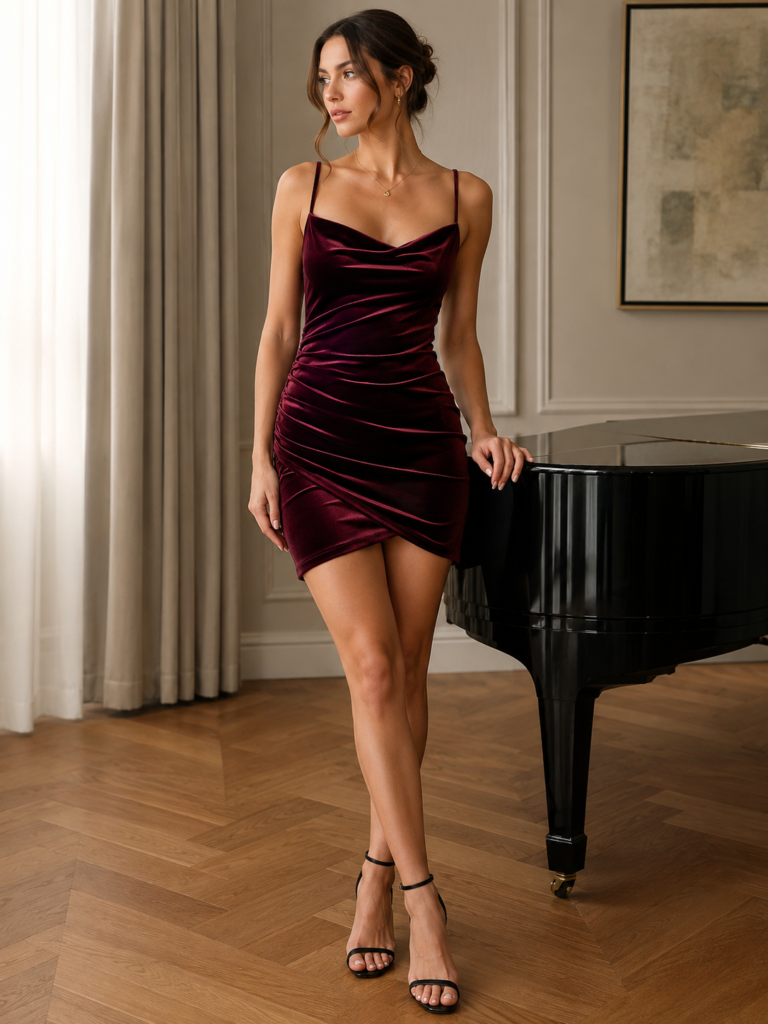
A velvet mini dress works well for party drops, holiday edits, clubwear collections and social-driven product launches. Common body length ranges from 80–88 cm depending on size and market preference.
- Best fabric range: 220–320 GSM stretch velvet
- Suggested stretch: 20–40% crosswise stretch
- Development level: Medium
- Main control point: Hem balance, neckline stability and side seam tension
- Commercial value: Strong image impact, easy color expansion, suitable for repeat seasonal drops
Velvet Bodycon Dress
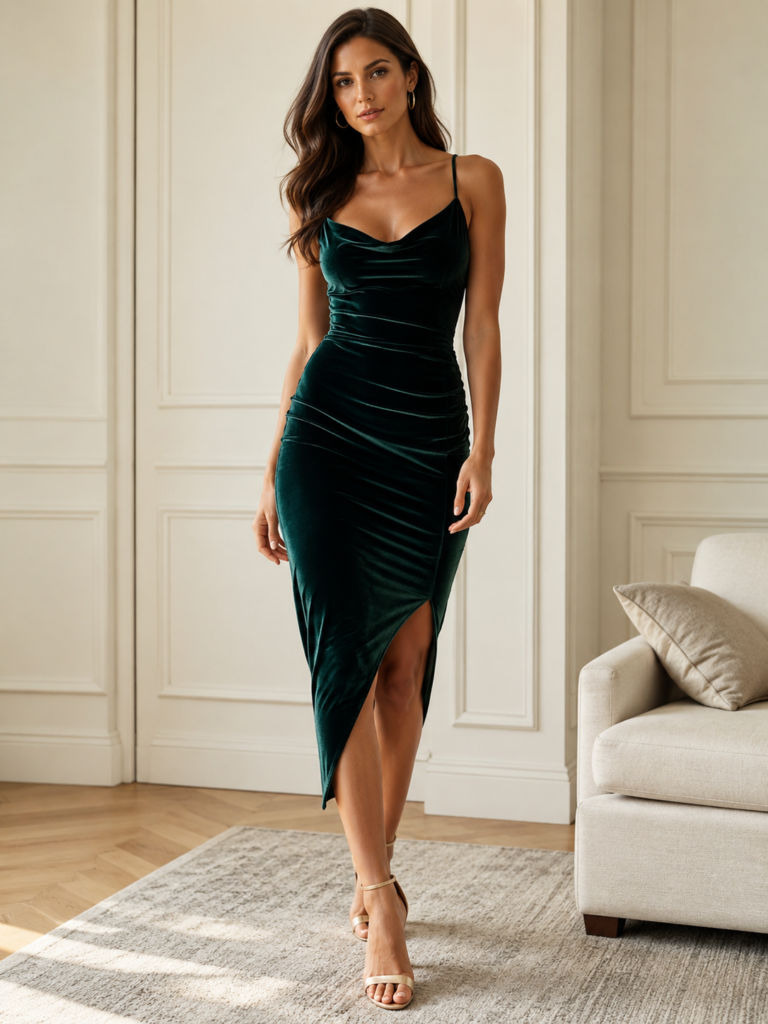
A velvet bodycon dress is suitable for brands focused on fitted silhouettes, date-night dressing, occasionwear and sculpted party styles. It can be developed as mini, midi or long sleeve versions.
- Best fabric range: 250–350 GSM stretch velvet
- Suggested stretch: 30–60% crosswise stretch
- Recovery target: Above 85% after extension testing
- Development level: High
- Main control point: Hip curve, waist shaping, seam tension and recovery

Ruched Velvet Dress
A ruched velvet dress is effective for body-skimming styles, maternity-inspired occasion shapes, partywear and online fashion collections. Ruching adds texture and helps create a forgiving fit.
- Best fabric range: 220–330 GSM stretch velvet
- Suggested stretch: 25–50%
- Ruching ratio: Often 1.3–1.8 times depending on position
- Development level: High
- Main control point: Even gathering, side seam control and lining compatibility

Velvet Slip Dress
A velvet slip dress works for soft eveningwear, boutique collections, resort-to-evening edits and simple premium capsules. It can be developed as mini, midi or ankle-length.
- Best fabric range: 180–280 GSM soft velvet or micro velvet
- Suggested stretch: 10–30%, depending on silhouette
- Development level: Medium
- Main control point: Bias balance, strap length, neckline curve and drape
- Commercial value: Clean styling, easy layering, strong visual softness

Velvet Wrap Dress
A velvet wrap dress suits holiday work events, dinner dressing, boutique retail and more mature fashion ranges. It offers adjustability and can work across several body types.
- Best fabric range: 220–320 GSM stretch or soft woven velvet
- Suggested stretch: 15–35% for comfort
- Development level: Medium to high
- Main control point: Overlap coverage, waist tie placement and neckline security
- Commercial value: Broader fit appeal and lower size sensitivity

Long Sleeve Velvet Dress
A long sleeve velvet dress fits fall and winter launches, holiday dinners, event dressing and modest partywear collections. It can be developed as mini, midi or fitted maxi.
- Best fabric range: 240–340 GSM stretch velvet
- Suggested stretch: 25–45%
- Development level: Medium
- Main control point: Armhole comfort, sleeve twist, cuff recovery and shoulder balance
- Commercial value: Higher seasonal relevance and stronger winter sell-through

Draped Velvet Midi Dress
A draped velvet midi dress is suitable for premium occasionwear, evening collections and wedding guest edits. The style depends on fluid fabric behavior rather than heavy decoration.
- Best fabric range: 180–280 GSM fluid velvet
- Suggested stretch: 10–30%
- Length reference: 105–125 cm depending on market
- Development level: High
- Main control point: Drape placement, weight distribution and seam support

Velvet Cut-Out Dress
A velvet cut-out dress fits partywear, statement capsule drops and influencer-led merchandising. It creates strong visual identity, but needs careful reinforcement.
- Best fabric range: 250–340 GSM stretch velvet
- Suggested stretch: 30–50%
- Development level: High
- Main control point: Cut-out edge reinforcement, body placement and recovery
- Commercial value: Strong campaign image and higher product differentiation
Velvet Evening Gown
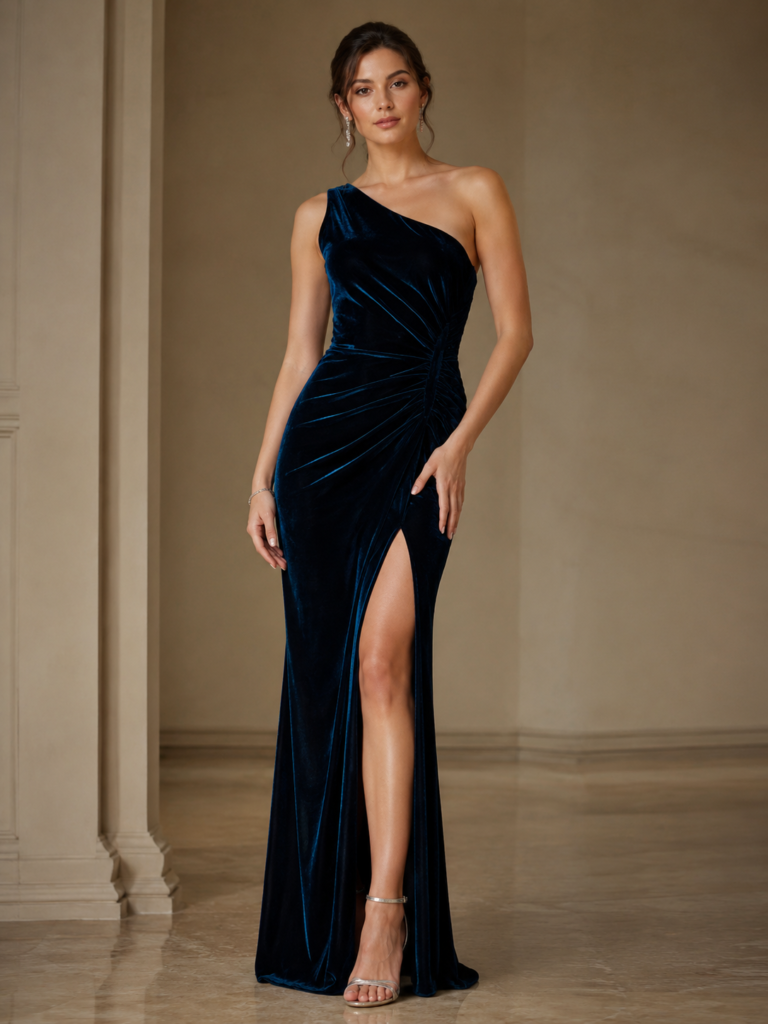
A velvet evening gown suits formalwear, occasionwear, winter events and high-value seasonal collections. It requires more attention to weight, lining and packing.
- Best fabric range: 260–380 GSM velvet or stretch velvet
- Suggested stretch: 10–35% depending on structure
- Length reference: 140–155 cm for full length
- Development level: High
- Main control point: Hem sweep, lining, zipper strength and surface protection
Velvet Fabric Options for Custom Dress Production
Fabric selection decides most of the final garment result. Velvet can feel sculpted, soft, fluid, rich, sheer or structured depending on pile density, base construction, stretch ratio and finishing. Each fabric direction should be confirmed by swatch, hand feel review, stretch test and approved sample before bulk production.
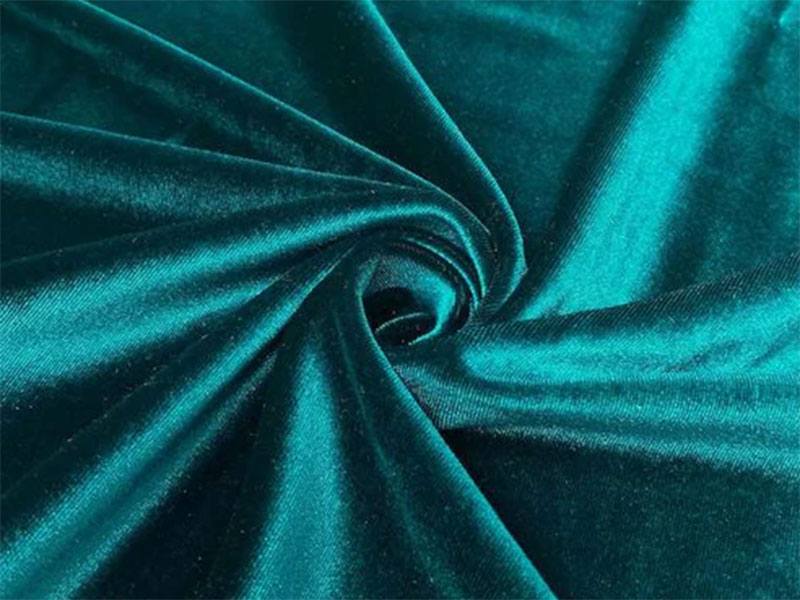
Stretch Velvet
Stretch velvet is suitable for bodycon, mini, ruched and long-sleeve dresses. It gives a soft surface with body-hugging comfort, making it useful for partywear, date-night styles and fitted occasion collections.
- GSM range: 220–350 GSM
- Stretch ratio: 25–60% crosswise
- Recovery target: 85–95%
- Opacity: Medium to high
- Shrinkage target: Within 3–5% after testing
- Main risk: Growth, wavy seams and poor recovery if the base knit is too loose
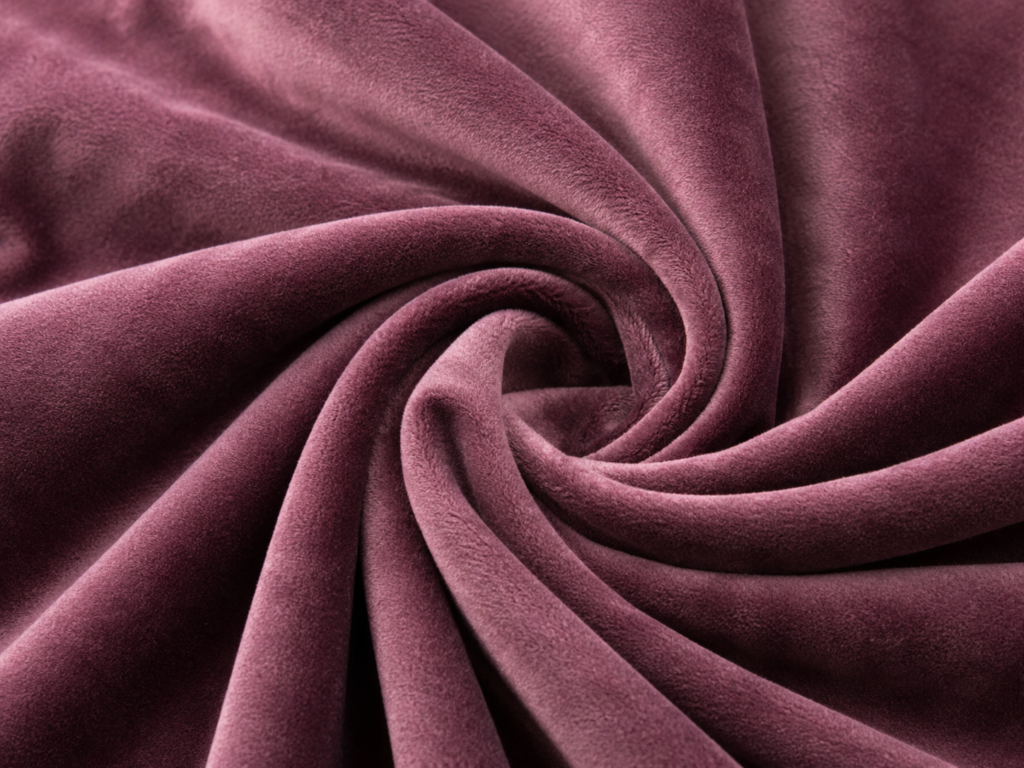
Micro Velvet
Micro velvet has a shorter pile and smoother surface. It works well for slip dresses, clean mini styles and soft draped silhouettes where heavy pile may feel too bulky or too formal.
- GSM range: 180–280 GSM
- Stretch ratio: 10–35%
- Recovery target: 80–90%
- Opacity: Medium
- Shrinkage target: Within 3–5%
- Main risk: Thin areas may show seam allowance, lining color or body shadow under strong light

Crushed Velvet
Crushed velvet gives a broken-light surface with stronger visual movement. It is useful for partywear, clubwear and trend-driven collections where texture matters more than a classic smooth velvet finish.
- GSM range: 200–320 GSM
- Stretch ratio: 20–50%
- Recovery target: 80–90%
- Opacity: Medium to high
- Shrinkage target: Within 4–6%
- Main risk: Surface variation must look intentional, not like production damage or uneven pressing

Burnout Velvet
Burnout velvet works for evening, sheer-panel and more decorative dress concepts. It creates depth through semi-transparent areas and raised velvet patterns, often needing lining or layered construction.
- GSM range: 120–220 GSM
- Stretch ratio: 5–25%
- Recovery target: Depends on base fabric
- Opacity: Low to medium
- Shrinkage target: Within 3–5%
- Main risk: Transparency, weak seam zones and inconsistent pattern placement across sizes

Sequin Velvet
Sequin velvet supports statement party dresses, holiday capsules and stage-inspired occasionwear. It gives strong visual value, but adds weight, stiffness and higher sewing difficulty.
- GSM range: 280–450 GSM
- Stretch ratio: 5–25%, depending on base fabric
- Recovery target: 70–85%
- Opacity: High
- Shrinkage target: Within 3–5%
- Main risk: Sequin abrasion, broken needles, scratchy inner surface and heavy seam bulk
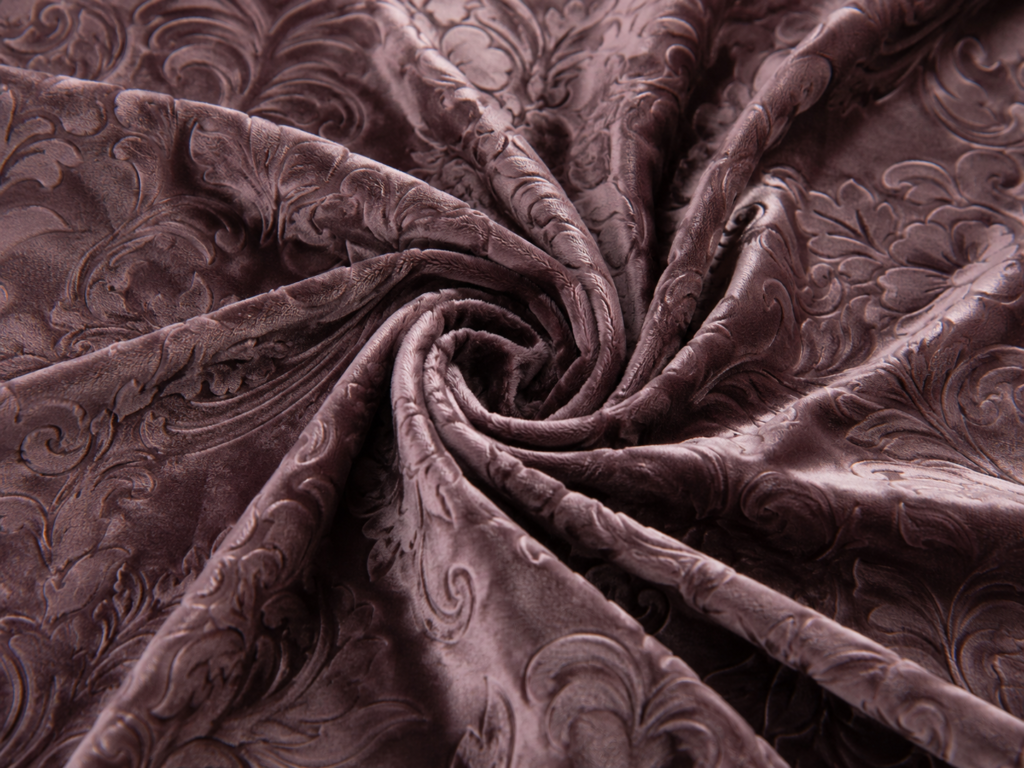
Embossed Velvet
Embossed velvet creates a patterned surface through pressure and heat. It is useful for boutique collections, vintage-inspired dresses and premium seasonal capsules that need texture without extra trims.
- GSM range: 220–350 GSM
- Stretch ratio: 10–35%
- Recovery target: 80–90%
- Opacity: Medium to high
- Shrinkage target: Within 3–5%
- Main risk: Embossing may fade if heat, pressure, steaming or wash conditions are not suitable

Woven Velvet
Woven velvet offers a more structured appearance than stretch velvet. It is better for wrap dresses, structured mini dresses, evening gowns and styles where shape matters more than close body stretch.
- GSM range: 240–400 GSM
- Stretch ratio: Usually 0–10%
- Recovery target: Not stretch-driven
- Opacity: High
- Shrinkage target: Within 2–4%
- Main risk: Limited movement, seam pressure and fit issues if the pattern lacks enough ease

Velour Knit
Velour knit is softer and more casual than classic velvet. It can support lounge-inspired dresses, relaxed mini styles, soft winter capsules and casual evening pieces with a warmer hand feel.
- GSM range: 220–330 GSM
- Stretch ratio: 20–50%
- Recovery target: 80–90%
- Opacity: Medium to high
- Shrinkage target: Within 4–6%
- Main risk: Casual surface may not support higher occasionwear pricing if the pile looks too low or flat

Flocked Mesh Velvet
Flocked mesh velvet uses velvet-like patterns on a mesh or sheer base. It suits party dresses, sleeve panels, illusion necklines, overlay skirts and fitted styles that need a semi-sheer visual effect.
- GSM range: 90–180 GSM
- Stretch ratio: 10–40%, depending on mesh base
- Recovery target: 75–90%
- Opacity: Low to medium
- Shrinkage target: Within 3–5%
- Main risk: Flock shedding, seam weakness, transparency control and lining compatibility
Velvet Vs Common Dress Fabrics For Custom Dress Production
Velvet gives dresses a deeper surface, softer hand feel, stronger seasonal mood, and higher occasion value. Compared with satin, chiffon, jersey, mesh, lace, and sequin fabrics, velvet is often chosen when a brand needs a richer visual effect, better winter appeal, and stronger partywear or occasionwear positioning.
| Fabric Type | Best Use | Visual And Hand Feel | Fit Behavior | Main Production Risk | When To Choose |
|---|---|---|---|---|---|
| Velvet | Party dresses, holiday styles, bodycon dresses, evening edits | Soft pile, deep color, rich surface shadow | Works well in both stretch and structured styles | Nap direction, pile crushing, shade difference | Choose velvet when the style needs depth, warmth, softness, and stronger occasion value |
| Satin | Slip dresses, evening dresses, bridesmaid styles, clean silhouettes | Smooth shine, fluid drape, cool hand feel | Good drape, less forgiving on body lines | Snagging, seam puckering, visible wrinkles | Choose satin when the style needs shine, fluid movement, and a cleaner formal look |
| Chiffon | Flowy dresses, layered skirts, romantic occasionwear | Lightweight, sheer, soft movement | Loose and floating, not body-shaping | Transparency, seam slippage, fraying | Choose chiffon when the design needs lightness, volume, and soft layering |
| Jersey | Casual dresses, fitted basics, easy-wear styles | Soft, flexible, smooth knit surface | Strong comfort and stretch, more casual appearance | Growth, twisting, weak recovery | Choose jersey when comfort, daily wear, and lower production complexity matter more |
| Mesh | Cut-out dresses, illusion panels, partywear details | Sheer, light, modern, body-revealing | Flexible, often used as panels or overlays | Edge stretching, transparency, weak seams | Choose mesh when the dress needs sheer effects, body contouring, or visual contrast |
| Lace | Occasionwear, feminine dresses, wedding guest styles | Decorative, textured, romantic surface | Depends on base; usually needs lining | Pattern placement, snagging, lining mismatch | Choose lace when the design needs decoration, texture, and a more romantic look |
| Sequin Fabric | Statement party dresses, festive capsules, eventwear | High shine, strong visual impact, heavier surface | Less flexible, often needs lining | Weight, scratching, broken sequins, seam bulk | Choose sequins when the style needs maximum shine and strong campaign visibility |
| Rib Knit | Fitted casual dresses, lounge dresses, soft bodycon styles | Textured ribs, comfortable stretch, casual hand feel | Good stretch and recovery when fabric is stable | Rib distortion, growth, uneven tension | Choose rib knit when the dress needs comfort, softness, and a more casual price position |
Velvet Surface Techniques for Commercial Collections
Surface techniques help velvet dresses carry stronger visual value for partywear, occasionwear and seasonal collections. Each finish should be reviewed for hand feel, stretch, recovery, rubbing resistance, wash behavior and bulk stability before production.

Heat Embossing
Heat embossing creates raised or pressed patterns on velvet, adding texture without extra trims. It suits floral, baroque, geometric and vintage-inspired dress styles.
- Best for: boutique capsules, winter dresses, premium partywear
- Visual effect: tonal pattern, deeper surface shadow
- Fabric impact: may slightly reduce stretch and recovery
- Comfort note: usually soft if pressure is controlled
- Risk control: test steaming, rubbing and embossing durability

Foil Printing
Foil printing adds metallic shine to velvet, making it useful for festive, holiday and evening dress collections.
- Best for: mini dresses, partywear, clubwear, festive drops
- Visual effect: gold, silver or tonal metallic reflection
- Fabric impact: can reduce stretch if coating is heavy
- Comfort note: may feel stiffer than plain velvet
- Risk control: check cracking, peeling and color migration

Glitter or Lurex Finish
Glitter and lurex finishes bring sparkle without the full weight of sequins. They work well for camera-friendly party dresses.
- Best for: holiday capsules, eventwear, social campaign styles
- Visual effect: fine sparkle, light-catching surface
- Fabric impact: may reduce softness and recovery
- Comfort note: lining may be needed for fitted dresses
- Risk control: test shedding, rubbing and inner-surface feel

Devore Burnout
Devore burnout creates sheer and raised areas on velvet, adding depth and a more decorative surface.
- Best for: evening dresses, illusion panels, romantic styles
- Visual effect: semi-sheer pattern with velvet texture
- Fabric impact: weaker in burned-out areas
- Comfort note: often needs lining or partial lining
- Risk control: check transparency, seam strength and placement

Embroidery on Velvet
Embroidery adds craft value and detail to velvet dresses. It can be tonal for a refined look or contrast for stronger visual impact.
- Best for: boutique occasionwear, premium capsules, statement styles
- Visual effect: raised motif, textured surface detail
- Fabric impact: dense embroidery may block stretch
- Comfort note: backing and lining should feel smooth
- Risk control: test fabric distortion, motif placement and seam bulk

Sequin Application
Sequins create strong party and eveningwear value. They can turn a simple velvet silhouette into a statement dress.
- Best for: holiday dresses, eventwear, stage-inspired styles
- Visual effect: strong shine, high-impact surface
- Fabric impact: adds weight and reduces flexibility
- Comfort note: lining is often needed for skin comfort
- Risk control: check sequin loss, abrasion and needle damage

Print on Velvet
Printing gives velvet dresses a more distinctive look through florals, animal patterns, abstract graphics or tonal artwork.
- Best for: fashion drops, boutique capsules, seasonal stories
- Visual effect: printed pattern with soft pile depth
- Fabric impact: color may appear softer than on flat fabric
- Comfort note: usually comfortable if print layer is light
- Risk control: test colorfastness, rubbing and print clarity

Pleating or Heat Setting
Pleating adds movement and structure to velvet dresses, especially on skirts, sleeves and draped panels.
- Best for: midi dresses, gowns, soft occasionwear styles
- Visual effect: volume, movement and vertical texture
- Fabric impact: pleats may relax after steaming or packing
- Comfort note: can feel bulky if fabric is too heavy
- Risk control: test pleat recovery, heat stability and packing marks
Production Engineering for Velvet Dress Manufacturing
Velvet dress production depends on technical control from pattern to finishing. Fit, stretch direction, pile surface, seam pressure, lining and packing all affect how the final garment looks, feels and performs in bulk production.

Pattern Engineering
Pattern engineering decides how a velvet dress holds shape on the body. Bodycon, ruched, wrap, slip and gown styles all need different balance around the bust, waist, hip, sleeve and hem. For fitted velvet dresses, the pattern should follow the actual stretch and recovery of the fabric, not only the flat measurement chart.

Stretch Direction Control
Stretch direction affects wearing comfort and garment recovery. For stretch velvet styles, the main stretch usually needs to run across the body so the dress can move with the wearer. If fabric direction is wrong, the garment may twist, feel tight in some areas or lose shape after fitting.

Nap Direction Management
Velvet pile reflects light differently depending on direction. If front, back, sleeve or skirt panels are cut in mixed directions, the garment may look like it has different color panels. One-way cutting and shade lot separation help keep the surface tone more consistent in bulk production.

Seam Tension Management
Seam tension is critical for velvet dresses because tight stitching can flatten the pile, create puckering or break stretch recovery. Before bulk sewing, stitch type, needle size, thread tension and machine settings should be tested on the actual velvet fabric, especially for side seams, sleeves and zipper areas.

Lining Compatibility
Lining can improve opacity, comfort and structure, but the wrong lining can restrict movement or change the garment shape. For burnout, sequin, glitter or sheer velvet styles, lining is often useful. For stretch bodycon dresses, lining must have enough flexibility to move with the outer fabric.

Cut-Out Reinforcement
Cut-out velvet dresses need support around open areas so the edges stay clean after wear. Waist, bust, shoulder and back cut-outs may need facing, binding, elastic or light reinforcement. The goal is to keep the shape stable without making the edge feel stiff or uncomfortable.
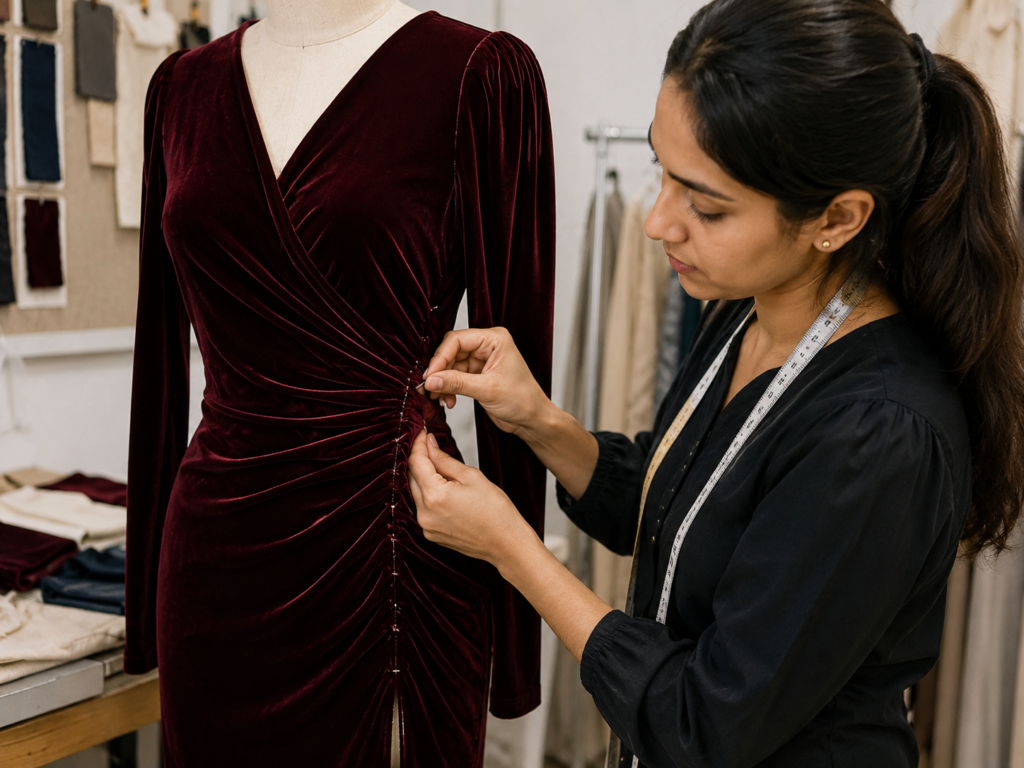
Ruching Control
Ruching adds texture and fit tolerance, but uneven gathering can make bulk production look inconsistent. The gathering ratio, placement marks and seam balance should be confirmed before production. Side-ruching, front-ruching and drawstring styles each need clear sewing references to keep the approved look across sizes.

Closure Construction
Closures affect both appearance and durability. Invisible zippers, back zippers, hooks, ties and adjustable straps must match the fabric weight and wearing tension. For velvet dresses, zipper sewing needs careful control because pile can get caught easily and heavy fabric can create waves around the closure.
Logo, Label and Packaging Customization for Velvet Dress Orders
Brand trims and packaging affect how a velvet dress is received, worn, stored and sold. For velvet styles, labels should feel soft on the body, packaging should protect the pile surface, and carton details should support clean warehouse handling.

Main Label / Brand Label
Main labels carry the first brand impression when the customer opens the garment. Soft woven labels are often suitable for dresses because they feel cleaner against skin.
- Placement: back neck, side seam or inner facing.
- Common size: 20–50 mm width.
- Material: woven, satin or printed cotton.
- Key control: soft edge, straight placement and clean stitching.
- Brand value: improves perceived garment quality.

Size Label
- Placement: near main label or side seam.
- Format: XS–XL, numeric or dual sizing.
- Material: soft woven or printed label.
- Key control: readable size and consistent placement.
- Brand value: reduces packing and fulfillment mistakes.

Care Label
- Placement: side seam or inner lower area.
- Content: fiber, care symbols, country of origin.
- Material: soft satin or printed label.
- Key control: readability and skin comfort.
- Brand value: protects garment quality after purchase.

Hangtag
- Common size: 50×90 mm or customized.
- Material: coated card, textured paper or recycled card.
- Attachment: string, safety pin or loop.
- Key control: color match and clean punching.
- Brand value: improves retail and unboxing impression.

Barcode or SKU Sticker
- Placement: polybag, hangtag or carton.
- Content: SKU, color, size, barcode and style code.
- Key control: scan accuracy and label adhesion.
- Best use: multi-color and multi-size dress programs.
- Brand value: improves fulfillment accuracy.
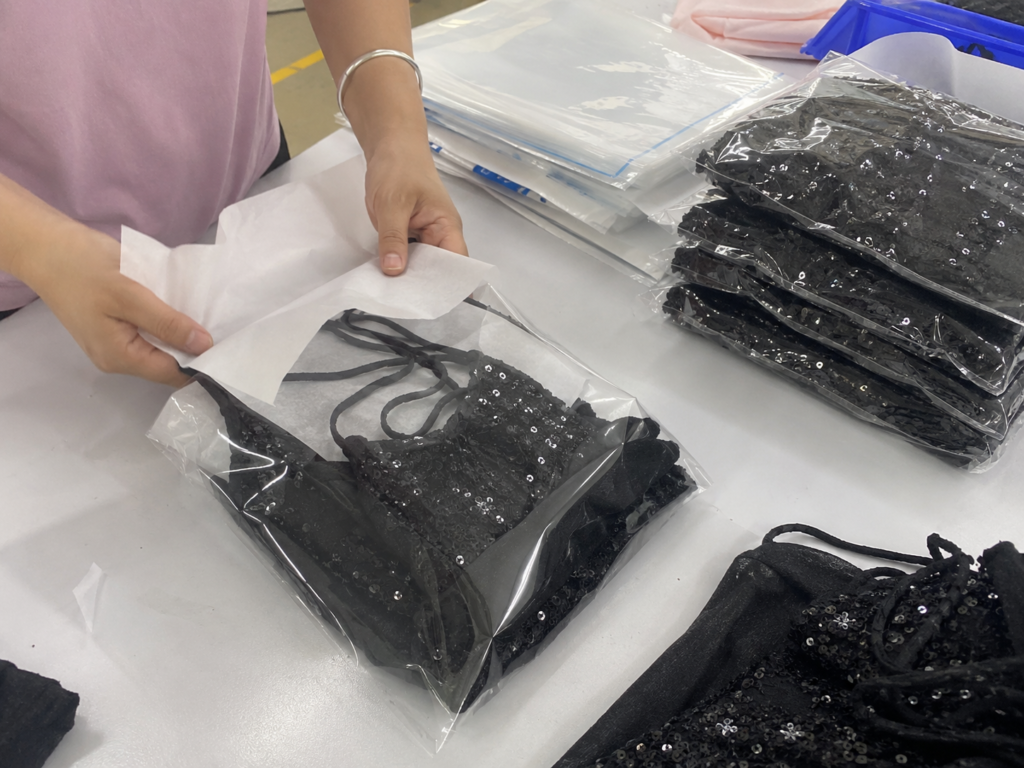
Polybag
- Common thickness: 30–60 microns.
- Options: clear, frosted, recycled or warning-printed.
- Closure: self-seal or resealable.
- Key control: size fit, ventilation and label placement.
- Brand value: protects product presentation before delivery.
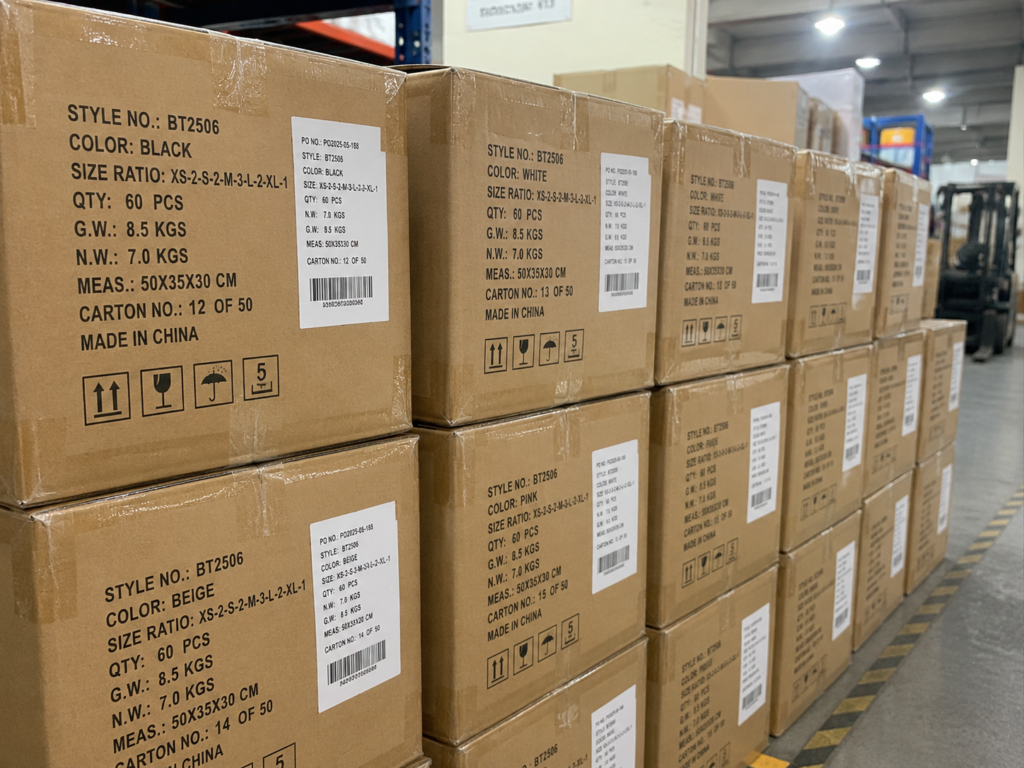
Carton Mark
- Content: PO, style, color, size range, quantity and carton number.
- Placement: one or two carton sides.
- Key control: readable printing and packing list match.
- Best use: bulk and split shipment orders.
- Brand value: improves delivery and warehouse handling.

Folding or Hanger Packing
- Folding: suitable for jersey, rib and casual styles.
- Hanger packing: better for satin, sequin and occasionwear.
- Key control: crease position and strap protection.
- Packing option: single polybag or carton-hanger system.
- Brand value: preserves first impression and product shape.
Velvet Dress Development Risk Map
Velvet dresses can look simple in photos but carry hidden production risks. Surface direction, stretch recovery, color consistency, seam pressure, lining and packing should be checked before bulk production.
| Risk Area | Common Problem | Impact on Order | Control Method |
|---|---|---|---|
| Nap Direction | Panels look darker or lighter after sewing | Uneven garment appearance, weak product photos | Confirm one-way cutting and mark pile direction |
| Stretch Recovery | Dress grows after fitting or wear | Poor body shape, higher return risk | Test stretch and recovery before sample approval |
| Seam Pressure | Pile becomes flat around seams | Shine marks, puckering, lower perceived quality | Adjust needle, thread tension and machine setting |
| Shade Difference | Color varies between panels or lots | Bulk looks inconsistent across sizes and colors | Separate fabric lots and review under proper light |
| Lining Mismatch | Outer shell pulls or twists | Poor comfort, distorted fit, weak drape | Match lining weight, stretch and length to velvet |
| Ruching Inconsistency | Gathers look uneven across sizes | Style loses shape and visual value | Set gathering ratio, placement marks and sewing reference |
| Zipper Distortion | Back or side zipper waves | Poor fit, visible construction issue | Reinforce seam and check fabric weight tension |
| Packing Marks | Garments arrive with deep pressure lines | Damaged surface, poor retail presentation | Reduce compression and choose suitable packing method |
Sample Development Process for Custom Velvet Dresses
Style Review

The first step is to review the style type, target fit, dress length, fabric direction, color plan and order goal. For velvet dresses, early judgment should focus on whether the design needs stretch velvet, woven velvet, lining, ruching, cut-outs, sequins or special packing.
Fabric Selection

Fabric is selected according to silhouette and sales use. Bodycon styles need better stretch and recovery, slip dresses need softer drape, gowns need weight control, and burnout or sequin velvet may need lining for comfort and coverage.
Pattern Making

Pattern work follows the approved measurements, reference sample or tech pack. For velvet dresses, pattern makers need to control bust, waist, hip, neckline, sleeve, hem and stretch direction so the garment can keep shape after fitting.
Sample Sewing

Sample makers sew the first garment to check shape, fabric behavior and construction. Regular styles usually take 5–10 days, while more complex styles may take 7–15 days.
- pattern, fabric and trims.
- silhouette, seams, lining, straps and closures.
- first physical sample.
- 5–10 days for regular styles.
Fit Review

The sample is reviewed from front, side, back and movement. Key areas include back gaping, bust hold, strap tension, waist shape and hem balance.
- first sample.
- fit, measurement, surface and comfort.
- revision comments.
- reviewed before second sample if needed.
Pre-Production Sample
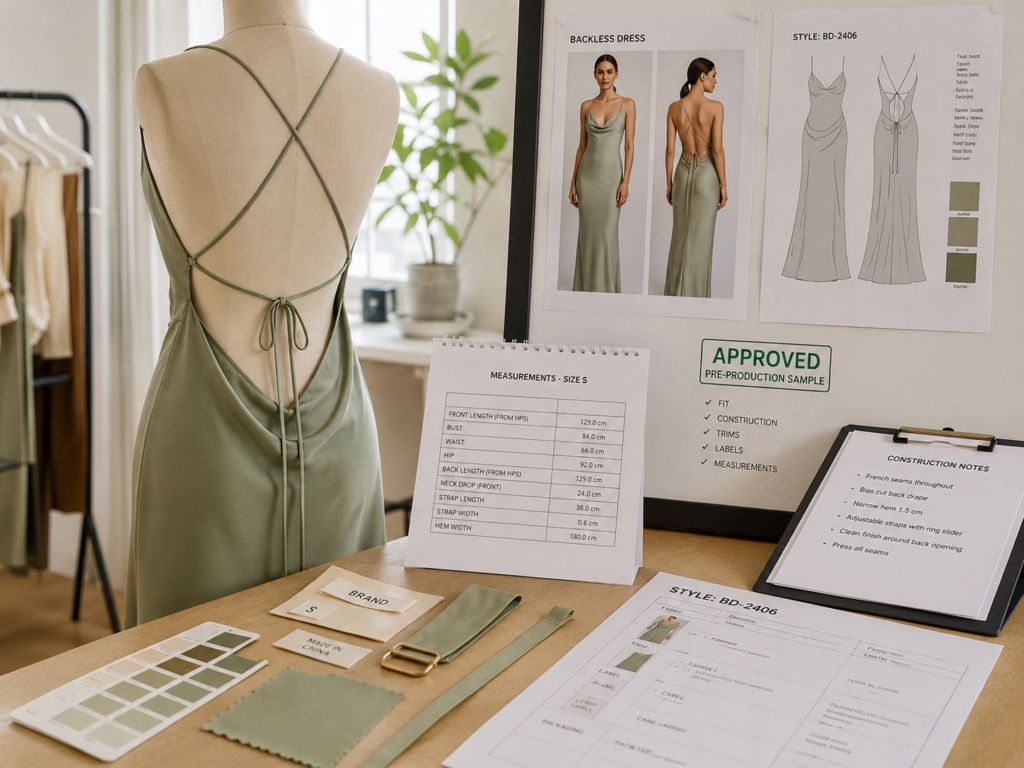
After revision, the approved sample becomes the production reference. Measurements, fabric notes, trims, labels and construction details are confirmed for bulk planning.
- revised sample and approved comments.
- repeatable construction and size grading.
- production-ready sample.
- confirmed before bulk cutting.
Bulk Production Process for Velvet Dress Orders
Bulk production should keep the approved sample consistent in fabric direction, fit, seam quality, surface condition and packing. Jinfeng supports velvet dress orders through coordinated production planning, material control, sewing follow-up, finishing, inspection and delivery preparation.

Order Review
The order is reviewed after sample approval, including style details, size ratio, color quantity, fabric status, labels, packing method and delivery date. For velvet dresses, nap direction, lining choice and fabric lot control should be confirmed before production starts.

Material Preparation
Fabric, lining, zippers, labels, hangtags, polybags and carton marks are prepared according to the approved sample. Velvet fabric should be checked for color, width, stretch, surface marks and lot consistency before cutting.

Cutting Control
Velvet cutting follows the approved nap direction and size breakdown. Stretch velvet may need relaxation before cutting, while dark colors and special surfaces need careful shade grouping to avoid mismatched panels in bulk garments.

Sewing Production
Sewing starts after machine settings, stitch type, needle size and thread tension are tested on actual velvet fabric. Side seams, zipper areas, ruching, sleeves and hems are checked closely to reduce puckering, pile damage and seam distortion.

Finishing Review
Finished garments are reviewed for shape, measurements, surface condition, seam quality, zipper function, lining comfort and overall appearance. Velvet should be steamed with care, using light pressure to avoid shine marks or crushed pile.

Packing Preparation
Packing follows the confirmed method for each style. Simple mini and bodycon dresses may use flat folding, while gowns, sequin velvet or high-pile styles may need looser packing, garment bags or hanger packing to protect the surface.
MOQ, Lead Time and Shipping Options for Velvet Dress Programs
Velvet dress programs often begin with a controlled test order, then move into repeat production after sales feedback. Jinfeng supports sample development, small-to-large quantity planning, bulk production and international delivery for custom velvet dress orders.
| Item | Reference Range | Best For | Notes |
|---|---|---|---|
| Test Order MOQ | 300–500 pcs | New velvet dress styles, first color test, market launch | Suitable for mini, bodycon, wrap and simple party dress programs |
| Mid-Size Order | 1,000–5,000 pcs | Seasonal drops, repeat colors, online launches | Better for confirmed styles with approved fit and fabric |
| Scale Order | 5,000+ pcs | Strong repeat styles, larger retail plans, multi-color programs | Requires earlier fabric booking and production planning |
| Regular Sample Time | 5–10 days | Simple mini, slip, long sleeve or basic stretch styles | Based on available fabric and clear reference information |
| Complex Sample Time | 7–15 days | Ruched, lined, cut-out, sequin or gown styles | Extra time may be needed for trims, lining or surface testing |
| Simple Bulk Time | 15–25 days | Clean construction and stable fabric programs | Suitable when fabric, labels and trims are ready |
| Regular Bulk Time | 25–35 days | Common velvet dress orders | Suitable for bodycon, wrap, ruched and long sleeve styles |
| Complex Bulk Time | 35–45 days | Gowns, sequin velvet, embroidery, special packing | More time needed for sewing control, finishing and inspection |
| Shipping Method | Timing Reference | Best For | Notes |
|---|---|---|---|
| Express | 5–7 days | Samples, urgent review pieces, small shipments | Faster delivery with higher shipping cost |
| Air Freight | 7–15 days | Seasonal launches, replenishment, tight delivery windows | Good balance when timing matters more than lowest freight cost |
| Sea Freight | 20–35 days | Larger bulk orders, planned inventory, cost control | Best for volume shipments with enough lead time |
Quality Inspection for Velvet Dress Orders
Velvet dress inspection should protect fit, surface, color, sewing and packing quality before shipment. Jinfeng checks key details from fabric preparation to final packing, helping custom velvet dress orders stay close to the approved sample.
Fabric Inspection
Fabric is checked before cutting for color, width, stretch, surface marks, stains and pile condition. For velvet dresses, dark shades and high-pile fabrics need careful review because shade streaks and pressure marks can become visible after sewing.
Pre-Cutting Check
Pre-cutting review confirms fabric lot, pattern pieces, size ratio and nap direction. Velvet panels should follow the approved cutting direction so front, back, sleeves and skirt pieces do not show uneven color under light.
First Piece Review
The first production piece is compared with the approved sample before full sewing continues. Measurements, seam tension, neckline, sleeve, zipper, lining, hem and surface condition are checked to catch problems early.
In-Line Inspection
In-line inspection checks garments while production is moving. Common focus areas include seam puckering, skipped stitches, uneven ruching, twisted seams, lining pull, zipper function and pile pressure marks.
Measurement Check
Measurement control keeps the approved fit consistent across sizes and batches. Key points include bust, waist, hip, body length, sleeve length, shoulder width, hem width and strap length, especially for fitted velvet dresses.
Surface and Color Review
Surface review checks shade consistency, pile direction, flattened areas, shine marks, stains and rubbing marks. Velvet can change visually under light, so panel matching and color lot control are important before packing.
Closure and Trim Check
Closures and trims are checked for function, strength and appearance. Invisible zippers, hooks, straps, ties, labels, sequins and embroidery should sit cleanly without pulling, scratching or damaging the velvet surface.
Final Packing Inspection
Final packing confirms folding method, polybag size, SKU sticker, carton mark, quantity and garment condition. Velvet dresses should not be over-compressed, especially gowns, sequin velvet and high-pile styles.
Factory Safety and Compliance Support
Stable velvet dress production depends on organized factory management, material control, safe production flow and clear export preparation. Jinfeng supports overseas fashion orders with practical compliance coordination from development to shipment.
Safe Production Environment
A clean and organized production environment helps reduce quality risk and delivery interruption. For velvet dress orders, fabric storage, cutting space, sewing areas and finishing stations should stay controlled so the velvet surface avoids dirt, pressure marks and unnecessary handling damage.
Material and Trim Traceability
Fabric, lining, zippers, labels, hangtags and packaging details should be recorded for every approved style. This helps repeat velvet dress orders stay closer to the original sample, especially when the same black, burgundy, emerald or navy color needs to be reproduced later.
Inspection Coordination
Production and shipment inspection can be arranged according to order needs. For velvet dresses, inspection should focus on measurements, workmanship, surface condition, pile direction, color consistency, label placement, packing method and carton marks before goods leave the factory.
Export Documentation Support
Export orders need accurate packing lists, carton details, quantity records, shipping marks and delivery information. Jinfeng supports common delivery terms such as FOB, CIF, DDP and DAP, helping velvet dress shipments move more smoothly through warehouse receiving and customs handling.
Practical Compliance Preparation
Care label content, fiber composition, country-of-origin marking, packaging rules and testing needs should be discussed before bulk production. For foil, glitter, sequin, burnout or printed velvet styles, extra checks may be needed for rubbing, comfort, washing and surface durability.
Why Jinfeng Fits Custom Velvet Dress Programs
Velvet dress production needs fabric judgment, fit control, sample accuracy and stable bulk execution. Jinfeng is suited for fashion brands that need custom velvet dresses developed from concept, reference sample or tech pack into repeatable production.
Long Apparel Manufacturing Experience
Jinfeng’s factory system has been operating since 2008, with founder-level apparel experience dating back to 1996. This background supports practical decisions in cutting, sample making, sewing, production follow-up and delivery, especially for velvet styles that require careful surface and fit control.
Strong Fit With Women’s Fashion Dresses
Jinfeng focuses on women’s fashion garments, including dresses, sets, fashion tops, fitted silhouettes, partywear and occasionwear. Velvet dresses naturally fit this product direction, especially mini dresses, bodycon styles, ruched dresses, long-sleeve party dresses and evening-inspired collections.
Sample Development Inside the Factory System
Jinfeng has 2 sample rooms, 7 senior pattern makers, 20 sample makers and 3 sourcing staff. This structure helps brands move from tech pack, reference image or original sample into a workable velvet dress sample with better control over fit, fabric and construction.
Flexible Order Planning and Scale-Up
Jinfeng supports small orders around 300–500 pieces, mid-size orders around 1,000–5,000 pieces and larger programs above 5,000 pieces. This makes it suitable for velvet dress launches that begin with testing, then move into repeat orders after sales performance is confirmed.
Production Capacity for Repeat Programs
With 18 production lines and around 300,000 pieces monthly capacity, Jinfeng can support ongoing velvet dress production beyond the first order. Approved patterns, fabric notes and production comments can be kept for repeat colors, size runs and seasonal reorder planning.
Multi-Factory Support for Fashion Categories
Jinfeng operates through 4 coordinated factories, including 3 women’s fashion factories and 1 casual T-shirt, hoodie and print-focused factory. For velvet dress orders, this structure supports clearer production allocation, better line planning and reduced pressure on a single production point.
Practical Overseas Delivery Support
Velvet dress shipments can be arranged by express, air or sea, depending on timing and order size. Jinfeng supports FOB, CIF, DDP, DAP and split shipments, helping brands manage samples, seasonal launches, replenishment orders and larger inventory plans.
Better Match for Established Fashion Teams
Jinfeng is most suitable for brands with clear product direction, regular launch rhythm and a need for stable production. For velvet dress programs, the strongest fit is with teams developing partywear, occasionwear, fitted dresses, holiday capsules and repeatable fashion styles.
Case Studies
The following cases show how velvet-related dress development can move from concept to controlled production. Names can be replaced with approved client identities, anonymous titles or internal project names before publishing.
Case 1|A US Occasionwear Brand
Project Overview
- Client role: Product Development Manager
- Country: United States
- Name: Sarah M.
- Product: Stretch velvet mini party dress
- Market: US occasionwear and holiday dressing
- Sales channel: Online store and boutique wholesale
- Starting point: Tech pack + reference sample
- Initial order: 500 pcs per color
- Scale order: 4,000 pcs across 3 colors
- Key service: Fabric matching, fit correction, size grading, bulk control
Challenge
The brand needed a velvet mini dress for a holiday collection, but earlier samples from another supplier had unstable fit. The neckline stretched during fitting, the waist became loose after wear, and the side seams twisted slightly. The team also needed better color consistency under studio and retail lighting.
Solution
Jinfeng reviewed the tech pack, reference sample and size chart, then adjusted the bust, waist, hip and side seam balance. A stretch velvet fabric with stronger recovery was selected, and nap direction was confirmed before cutting. The approved sample was kept as the standard for fit, seam tension, hem level and surface appearance.
Result
- Initial order started at 500 pcs per color
- Scale order reached 4,000 pcs across 3 colors
- Neckline stretching was reduced after pattern correction
- Side seam balance stayed more consistent in bulk
- Holiday delivery was completed through planned production follow-up


Case 2|A UK Boutique Chain
Project Overview
- Client role: Senior Sourcing Manager
- Country: United Kingdom
- Name: Emma R.
- Product: Long sleeve velvet wrap dress
- Market: Boutique retail and winter occasionwear
- Sales channel: Physical stores and online shop
- Starting point: Reference images + measurement spec
- Initial order: 800 pcs per style
- Repeat order: 2,600 pcs after store sell-through review
- Key service: Fabric sourcing, front coverage correction, packing method planning
Challenge
The boutique chain wanted a velvet wrap dress that felt elegant but remained wearable across sizes. The earlier sample had weak front coverage, uneven skirt overlap and pulling at the waist tie area. The brand needed a winter occasion dress that could work for dinner, work events and holiday parties without feeling too revealing.
Solution
Jinfeng adjusted the wrap overlap, waist tie position and skirt angle, then selected a medium-weight velvet with enough drape and better comfort. The development team checked front coverage across more than one size before production. Packing was also revised to reduce pressure around the front panels and waist tie area.
Result
- Initial order reached 800 pcs per style
- Repeat order increased to 2,600 pcs
- Front coverage improved across the size range
- Waist pulling was reduced through fabric and pattern adjustment
- Store presentation became cleaner after packing revision
Case 3|An Australian DTC Fashion Brand
Project Overview
- Client role: Founder and Creative Director
- Country: Australia
- Name: Chloe W.
- Product: Sculpting midi bodycon dress
- Market: Australia
- Sales channel: Direct-to-consumer e-commerce
- Starting point: Reference images + size chart
- Initial order: 300 pcs per style
- Scale order: 3,500 pcs per style within 3 months
- Key service: MOQ planning, fabric consistency, grading, production scale-up
Challenge
The brand wanted to test a new velvet bodycon style with a controlled first order, but also needed a factory that could scale quickly if the product performed well. Previous suppliers could handle small quantities, but repeat consistency became difficult when order volume increased. Fit stability, fabric recovery and color consistency were the main concerns.
Solution
Jinfeng supported a step-by-step production plan. The first batch was controlled at 300 pcs per style for market testing. After the style showed sales potential, the approved pattern, fabric direction and fit notes were kept for repeat production. Extra production capacity was then arranged for the scale-up order.
Result
- Order scaled from 300 pcs to 3,500 pcs per style within 3 months
- Fit remained consistent across repeat batches
- Production errors were reduced during the scaling phase
- Fabric direction and seam tension stayed closer to the approved sample
- A longer-term plan was built for multiple fitted dress styles

OEM Velvet Dress Manufacturing FAQ
Common questions about OEM velvet dress production usually focus on MOQ, sample development, fabric selection, fit control, private label details, bulk production time, quality inspection, and shipping. Clear information helps prepare a smoother development request.
Jinfeng can develop and produce velvet mini dresses, bodycon dresses, ruched dresses, wrap dresses, slip dresses, long sleeve dresses, cut-out dresses and evening gowns. Styles can be developed from tech packs, reference images, original samples or size charts.
Common order ranges include 300–500 pieces for smaller launch orders, 1,000–5,000 pieces for mid-size production and 5,000+ pieces for larger programs. Final MOQ depends on fabric type, color count, size range, trims and production complexity.
Regular velvet dress samples usually take around 5–10 days. More complex samples, such as ruched styles, lined gowns, cut-out dresses, sequin velvet or embroidered velvet, usually take around 7–15 days depending on fabric and trim availability.
Yes. Jinfeng can review reference images, original samples, sketches, size charts or tech packs. For better accuracy, clear front, back and detail images are helpful, especially for neckline, ruching, sleeve shape, zipper position and dress length.
Yes. Main labels, size labels, care labels, hangtags, barcode stickers, polybags, carton marks, folding methods and hanger packing can be arranged. Packaging should be chosen according to fabric surface, sales channel and shipment method.
Stretch velvet is usually more suitable for bodycon dresses because it supports close fit and movement. A practical range is often 250–350 GSM with 30–60% crosswise stretch and strong recovery. Final choice depends on fit, opacity and target price.
Color control starts with fabric lot review and shade grouping. Nap direction should also be controlled because velvet can look different under light when panels are cut in different directions. Dark shades need extra review before cutting and packing.
Yes. Repeat orders can follow approved patterns, sample comments, fabric notes and packing requirements. This is useful for velvet dresses that begin as a small launch and later scale into larger production after sales performance is confirmed.
Yes. Air shipping is suitable for urgent seasonal launches, replenishment or shorter delivery windows. Express usually takes around 5–7 days, air freight around 7–15 days and sea freight around 20–35 days, depending on route and order plan.
Yes. Third-party inspection can be coordinated according to order requirements. Velvet dress inspection should cover measurements, workmanship, surface condition, pile direction, color consistency, labels, packaging, carton marks and final quantity.
Often, yes. Simple stretch velvet mini dresses may use flat folding, while gowns, sequin velvet or high-pile velvet styles may need looser packing or hanger packing. The goal is to reduce pressure marks and protect garment presentation.
Helpful materials include tech pack, reference images, size chart, fabric preference, color plan, order quantity, label artwork, packing requirements and target shipment date. If no tech pack is available, clear photos and measurements can start the review.








Start Your OEM Velvet Dress Program With Jinfeng
A successful velvet dress program needs more than basic sewing. Fit balance, stretch recovery, fabric direction, surface protection, sample accuracy, and repeat bulk consistency all need to be controlled from the first development stage.
Jinfeng supports OEM velvet dress development, private label production, and bulk manufacturing from Dongguan. Send a reference image, sample garment, size chart, tech pack, or fabric direction to start a clear development plan.
- Velvet mini, midi, bodycon, ruched, wrap, slip, cut-out, long sleeve, and evening dresses
- Stretch velvet, micro velvet, crushed velvet, burnout velvet, sequin velvet, and woven velvet fabrics
- Partywear drops, holiday capsules, occasionwear edits, boutique collections, and repeat production programs
- Small test orders, seasonal collections, repeat colorways, and scalable bulk delivery
- Private label, care label, hangtag, SKU packing, carton marking, and shipment support
