Skip to content
Backless Dress Supplier for Instagram Brands
Custom open-back dresses for visual-led fashion drops.
Jinfeng develops backless dresses for Instagram-driven fashion brands that need strong product photos, reliable fit, private label finishing and repeatable production. From reference image to sample, test order and bulk run, each style is controlled through pattern, fabric, structure and delivery planning.
- 4 factories support dresses, fashionwear, casualwear, print and embroidery.
- 2 sample rooms handle image, sample and tech pack development.
- 7 pattern makers refine fitted and open-back silhouettes.
- 8 production lines, 300,000 pcs monthly capacity
- Manufacturing partner for globally recognized women’s fashion brands



Why Backless Dresses Fit Instagram Fashion Growth
Instagram is still one of the strongest visual channels for fashion discovery. With around 3 billion monthly active users, the platform gives fashion brands a large audience for product photos, Reels, creator content and campaign drops. For backless dresses, the back view, side curve, fabric shine and movement create natural content angles.
Large Visual Audience
Instagram’s scale gives fashion brands room to test visual products across product posts, Reels, stories, creator shoots and paid campaigns. Backless dresses work well because the style gives more than one selling angle: front view, side view, back detail and movement. A single dress can create multiple content assets for one drop.

Strong Brand Discovery Behavior
Instagram users are already comfortable engaging with brands. Industry reports citing Instagram data show that 90% of users follow at least one business account, which makes the platform useful for product discovery, new collection exposure and repeat customer touchpoints. For backless dresses, strong photos, fit clarity and social proof can help move interest from content to product page.

Why Backless Dresses Keep Selling Across Visual Fashion Channels
Clear Product Angle
An open back gives the dress a strong second view. It helps product photos, model shots, reels and campaign images show more than a basic front-facing silhouette.
Broad Occasion Use
The same category can serve birthdays, dinners, vacations, wedding guest edits, holiday drops and night-out collections. This keeps the style useful across seasons.
Easy Style Renewal
Mini, midi, maxi, halter, tie-back, cowl, cut-out and ruched versions allow brands to refresh the category without changing the entire product direction.
Strong Fit Perception
A clean back line, balanced waist and controlled hip shape make the dress look more intentional. Poor back fit is easy to notice, so pattern control matters.
Fabric-Led Price Range
Satin, mesh, sequin, velvet stretch, jersey and rib knit can shift the same open-back idea from casual to occasionwear or partywear.
Repeat Color Potential
Once the fit and fabric are approved, a successful style can return in black, white, chocolate, red, metallic, pastel or seasonal shades.
Social Content Value
Backless dresses create movement, skin reveal and detail shots. That makes them useful for product pages, influencer styling and short-form video content.
Instagram Brand Types Served for Backless Dress Programs
Instagram-Native Fashion Labels
Influencer-Led Dress Brands
Creator Collaboration Capsules
Online Boutique Drop Brands
DTC Occasionwear Brands
Social-Driven Partywear Brands
Resort and Vacationwear Brands
Fast-Growing Social Retailers
who we serve
Instagram Fashion Brands
DTC Women’s Fashion Brands
Online Fashion Boutiques
Occasionwear and Partywear Labels
Creator-Led Fashion Labels
Fast-Growing Fashion Retailers
Resort and Vacationwear Brands
Private Label Dress Programs
Backless Dress Styles Built for Instagram-Led Collections
A strong backless dress program should not depend on one silhouette. Different styles serve different drops, price points, campaign scenes and reorder plans. The key is to match each style with the right fabric, construction method and production risk control.

Backless Mini Bodycon Dress
A fast-moving style for party drops, birthday edits, clubwear capsules and boutique launches. The silhouette sells through body shape, back exposure and a clean fitted line.
- Fabric: 180–260 GSM stretch jersey, ponte or double-layer knit.
- Stretch: 15–35%.
- Development level: Medium.
- Key control: back gaping, bust hold, side seam balance and hem twisting.
- Production risk: weak recovery can make the back opening loose after wear.
- Commercial value: easy to recolor, easy to shoot and strong for repeat drops.

Satin Backless Slip Dress
A clean style for resort, dinner and wedding guest capsules. Satin gives the dress a higher visual price, but it also exposes sewing tension, needle marks and uneven pressing.
- Fabric: 95–140 GSM satin, charmeuse or viscose satin.
- Stretch: 0–8%.
- Development level: Medium to high.
- Key control: back drape, side seam balance, hem fall and pressing.
- Production risk: puckering, fabric slippage, shade difference and shine marks.
- Commercial value: suitable for elevated color drops and occasionwear programs.

Halter Backless Dress
A strong warm-weather silhouette for vacation drops, resort edits and beach-to-dinner collections. The front needs enough coverage while the back remains clean and open.
- Fabric: 160–240 GSM jersey, stretch satin, rib knit or soft crepe.
- Stretch: 10–30%.
- Development level: Medium.
- Key control: neck pressure, bust coverage, strap angle and back balance.
- Production risk: halter tension can pull the front upward or create discomfort.
- Commercial value: creates a clean front view with a strong open-back reveal.

Cowl Backless Midi Dress
A refined silhouette for evening edits, soft occasionwear and minimal fashion drops. The cowl detail needs controlled drape so it looks relaxed without collapsing.
- Fabric: 120–180 GSM satin, modal blend or drapey jersey.
- Stretch: 0–15%.
- Development level: High.
- Key control: cowl fall, back depth, neckline balance and fabric weight.
- Production risk: uneven drape can change the whole look of the dress.
- Commercial value: supports a more elevated price position than basic fitted styles.

Ruched Open-Back Dress
A fitted style for body-sculpting drops, curve edits and repeat-selling dress programs. Ruching helps the dress feel more forgiving while keeping a strong body line.
- Fabric: 180–280 GSM stretch mesh, jersey or modal spandex.
- Stretch: 20–40%.
- Development level: High.
- Key control: elastic tension, ruching length, side seam rotation and body length.
- Production risk: uneven gathering can twist the dress or shorten the body.
- Commercial value: useful for styles that need shape, comfort and broader fit confidence.

Cut-Out Backless Dress
A high-impact option for campaign launches, creator edits and trend-led collections. Cut-outs create a clear visual signature, but the edges must stay flat and stable.
- Fabric: 200–300 GSM ponte, scuba knit, stretch crepe or compact jersey.
- Stretch: 15–30%.
- Development level: High.
- Key control: edge recovery, symmetry, reinforcement and seam tension.
- Production risk: cut-out areas can stretch, curl or lose shape after wearing.
- Commercial value: strong product thumbnail value and good potential for signature styles.

Tie-Back Backless Dress
A flexible style for resort wear, casual summer drops and adjustable-fit capsules. The tie detail gives the customer more control, but the structure still needs strength.
- Fabric: 120–180 GSM cotton poplin, rayon, crepe or lightweight jersey.
- Stretch: 0–20%.
- Development level: Medium.
- Key control: tie length, tie strength, strap width and back coverage.
- Production risk: weak tie seams can fail at pressure points.
- Commercial value: adjustable fit makes the style useful across vacation and boutique edits.

Sequin Backless Dress
A high-visual style for holiday drops, birthday capsules, partywear and event-driven launches. The shine is valuable, but comfort and seam cleaning decide the final quality.
- Fabric: 180–320 GSM sequin mesh or stretch sequin knit.
- Stretch: 5–25%.
- Development level: High.
- Key control: lining comfort, seam bulk, sequin direction and edge cleaning.
- Production risk: sequin loss, needle damage and skin irritation around open-back edges.
- Commercial value: strong for flash photography, studio campaigns and seasonal party drops.

Backless Maxi Dress
A longer silhouette for resort edits, wedding guest collections and elevated evening capsules. The dress needs balance between back opening, waist placement, slit position and hem movement.
- Fabric: 140–220 GSM jersey, crepe, satin or soft rib knit.
- Stretch: 5–30%.
- Development level: Medium to high.
- Key control: hem balance, back pulling, slit placement and fabric drag.
- Production risk: long lengths can twist or fall unevenly if fabric direction is not controlled.
- Commercial value: supports higher order value and longer seasonal shelf life.

Backless Corset Dress
A structured style for partywear, occasionwear and creator-led capsule drops. The corset shape adds support and a sharper waist line, while the open back keeps the style visually strong.
- Fabric: 180–300 GSM satin, stretch crepe, ponte or structured woven.
- Stretch: 0–20%.
- Development level: High.
- Key control: bust shaping, boning position, back support and zipper stability.
- Production risk: poor structure can cause front collapse, tightness or uneven body pressure.
- Commercial value: suitable for higher-price drops, evening edits and statement product launches.

Long Sleeve Backless Mini Dress
A strong contrast style for fall, winter and night-out collections. The front feels covered, while the back opening creates the main visual surprise.
- Fabric: 180–260 GSM jersey, rib knit, velvet stretch or stretch mesh.
- Stretch: 15–40%.
- Development level: Medium to high.
- Key control: sleeve balance, shoulder fit, back opening stability and body length.
- Production risk: sleeve tension can pull the shoulder and distort the back shape.
- Commercial value: useful for cooler-season drops and strong front-to-back product photography.

Sheer Mesh Backless Dress
A high-impact style for partywear, resort styling and layered campaign looks. Sheer mesh creates visual depth, but lining and opacity decisions must be controlled early.
- Fabric: 80–160 GSM stretch mesh, printed mesh or power mesh.
- Stretch: 25–50%.
- Development level: High.
- Key control: lining coverage, seam tension, print placement and back edge recovery.
- Production risk: mesh can distort, stretch out or reveal more than intended under light.
- Commercial value: strong for social content, statement drops and limited capsule collections.
Fabric Choices That Shape Fit, Price and Product Photos

Stretch Mesh
- GSM: 80–160.
- Stretch: 25–50%.
- Recovery: 80–90%.
- Opacity: low to medium.
- Shrinkage: within 3–5%.
- Key control: lining match, stretch direction and seam tension.
- Production risk: distortion during cutting, sewing and pressing.
- Best styles: ruched open-back dress, sheer mesh dress, party mini dress.

Stretch Satin
- GSM: 120–190.
- Stretch: 5–18%.
- Recovery: 70–85%.
- Opacity: medium.
- Shrinkage: within 3%.
- Key control: seam tension, needle choice and pressing temperature.
- Production risk: puckering, needle marks, shade difference and shine marks.
- Best styles: satin slip dress, halter backless dress, cowl midi dress.
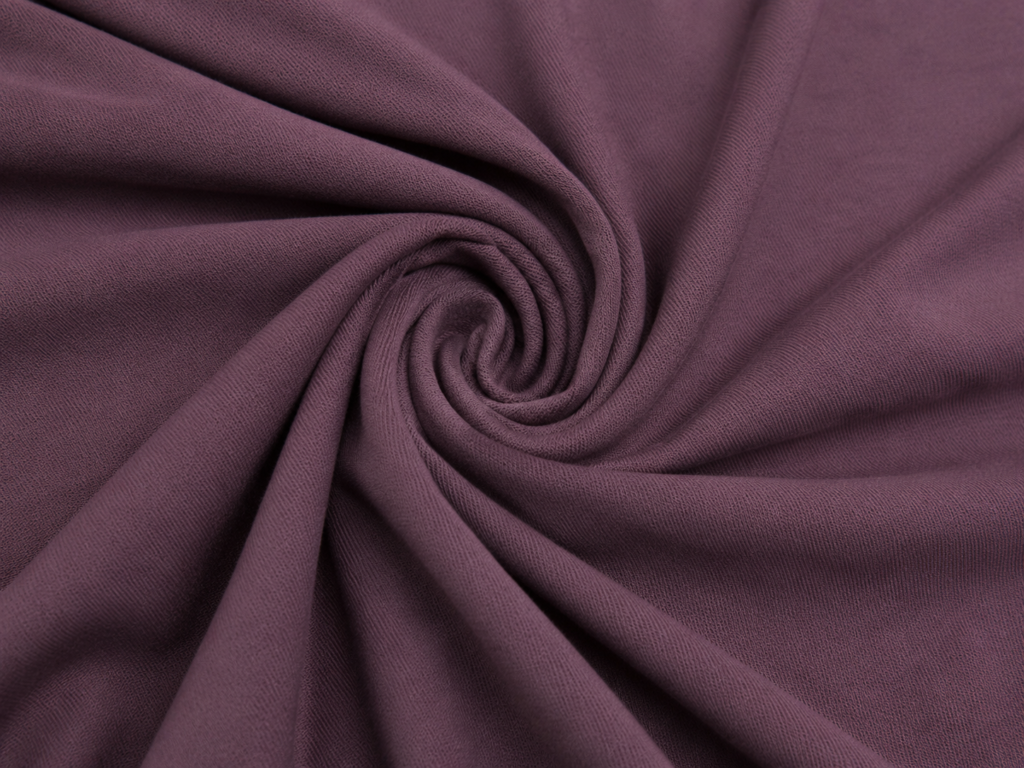
Double-Layer Jersey
- GSM: 180–280.
- Stretch: 20–40%.
- Recovery: 85–95%.
- Opacity: medium to high.
- Shrinkage: within 3–5%.
- Key control: layer alignment, fabric relaxation and side seam balance.
- Production risk: layer shifting, seam rolling and body length change.
- Best styles: bodycon mini dress, sculpting midi dress, ruched open-back dress.

Velvet Stretch
- GSM: 200–320.
- Stretch: 15–30%.
- Recovery: 75–90%.
- Opacity: high.
- Shrinkage: within 3–5%.
- Key control: nap direction, shade grouping and low-pressure pressing.
- Production risk: pile marks, color shading and seam pressure lines.
- Best styles: long sleeve backless dress, velvet party dress, winter capsule dress.

Sequin Mesh
- GSM: 180–320.
- Stretch: 5–25%.
- Recovery: 60–80%.
- Opacity: medium with lining.
- Shrinkage: within 3%.
- Key control: lining comfort, sequin direction and edge cleaning.
- Production risk: sequin loss, needle damage, seam bulk and skin irritation.
- Best styles: sequin backless mini dress, birthday dress, holiday party dress.

Compact Rib Knit
- GSM: 180–260.
- Stretch: 25–45%.
- Recovery: 80–92%.
- Opacity: medium to high.
- Shrinkage: within 5%.
- Key control: fabric relaxation, wash test and pattern adjustment.
- Production risk: rib twisting, length growth and side seam rotation.
- Best styles: rib backless midi dress, casual mini dress, resort knit dress.

Stretch Crepe
- GSM: 160–240.
- Stretch: 8–20%.
- Recovery: 75–88%.
- Opacity: medium to high.
- Shrinkage: within 3%.
- Key control: seam smoothness, edge stability and pressing method.
- Production risk: seam puckering, edge curling and uneven drape.
- Best styles: cut-out backless dress, corset dress, structured mini dress.

Power Mesh
- GSM: 120–220.
- Stretch: 30–60%.
- Recovery: 85–95%.
- Opacity: low to medium.
- Shrinkage: within 3–5%.
- Key control: compression level, lining comfort and edge recovery.
- Production risk: rolling edges, tight hand feel and size pressure.
- Best styles: sculpting midi dress, ruched dress, fitted party dress.

Chiffon or Georgette
- GSM: 60–120.
- Stretch: 0–5%.
- Recovery: low.
- Opacity: low to medium.
- Shrinkage: within 3%.
- Key control: lining coverage, seam finishing and hem balance.
- Production risk: transparency, fabric slipping, seam fray and uneven hem fall.
- Best styles: backless maxi dress, resort dress, soft tie-back dress.
Surface Techniques That Add Value Without Losing Comfort

Ruching
Ruching gives fitted dresses more body-shaping value. It is useful for waist, hip and side seam areas where customers expect a smoother fit.
- Best fabric: stretch mesh, jersey, modal spandex.
- Best style: bodycon mini, midi and open-back dresses.
- Key control: elastic length and gathering density.
- Production risk: uneven ruching can twist the garment.
- Value: improves fit confidence across more body shapes.

Sequin Embellishment
Sequins add strong party and holiday value. They work well under flash, studio lighting and short video movement, but comfort must be protected.
- Best fabric: sequin mesh, sequin knit, sequin velvet.
- Best style: mini dress, party dress, birthday dress.
- Key control: lining, edge cleaning and seam bulk.
- Production risk: scratchy edges and sequin loss.
- Value: supports high-impact seasonal launches.

Heat Transfer Print
Heat transfer can support tonal artwork, small logos or placement graphics. For stretch dresses, placement matters more than size.
- Best fabric: compact jersey, ponte, scuba knit.
- Best style: sporty fitted dress or limited drop.
- Key control: stretch test and wash test.
- Production risk: cracking, peeling and stiff surface feel.
- Value: adds brand detail without changing pattern structure.

Digital Print
Digital print works for resort, vacation and statement dress capsules. Print scale should match body proportion, dress length and back opening.
- Best fabric: polyester satin, mesh, jersey, light woven.
- Best style: resort maxi, printed mini, vacation dress.
- Key control: print placement and color approval.
- Production risk: shade difference and print distortion.
- Value: supports exclusive patterns and seasonal storytelling.

Embroidery Detail
Embroidery adds texture and brand character when placed carefully. It should avoid high-stretch zones on fitted open-back dresses.
- Best area: straps, hem, chest panel or small placement.
- Best style: resort dress, capsule dress, premium detail style.
- Key control: stitch density and backing softness.
- Production risk: stiffness, skin irritation and reduced stretch.
- Value: creates a more crafted private label detail.

Foil or Metallic Finish
Foil creates shine without adding heavy embellishment. It works for night-out edits, event dresses and small seasonal launches.
- Best fabric: jersey, stretch mesh, compact knit.
- Best style: party mini, fitted midi, statement dress.
- Key control: rubbing test and wash resistance.
- Production risk: peeling, cracking and color transfer.
- Value: gives a strong visual effect with lighter garment weight.

Garment Dye Effect
Garment dye gives jersey or rib styles a softer casual tone. It works for resort, lifestyle and relaxed capsule colors.
- Best fabric: cotton blend jersey, rib knit, modal blend.
- Best style: casual backless dress, resort knit dress.
- Key control: shrinkage, trim compatibility and shade grouping.
- Production risk: uneven color and label staining.
- Value: creates a softer, lived-in color direction.

Lining and Layering
Lining improves coverage, comfort and garment structure. It is important for mesh, sequin, satin and light-colored open-back dresses.
- Best lining: soft knit, stretch mesh, lightweight jersey.
- Best style: sheer, sequin, satin and fitted dresses.
- Key control: stretch match and shrinkage match.
- Production risk: pulling, added bulk and heat discomfort.
- Value: improves wearability and reduces transparency concerns.
Construction Controls That Protect Open-Back Fit
Pattern Engineering
- Key area: bust, waist, hip and back opening.
- Best for: fitted, halter, cut-out and bodycon dresses.
- Control point: body form fitting before grading.
- Risk: gaping, front collapse and uneven side balance.
Stretch Direction Control
- Key area: fabric grain and stretch direction.
- Best for: jersey, mesh, rib, ponte and stretch satin.
- Control point: fabric relaxation before cutting.
- Risk: side seam rotation and loose back edge.
Seam Tension Management
- Key area: side seam, back edge, strap seam.
- Best for: stretch and lightweight fabrics.
- Control point: needle, thread and stitch length.
- Risk: puckering, seam breakage and uneven tension.
Lining Compatibility
- Key area: bust, skirt, sheer panels and sequin areas.
- Best for: mesh, satin, sequin and light colors.
- Control point: stretch, shrinkage and hand feel match.
- Risk: pulling, discomfort and visible lining movement.
Cut-Out Reinforcement
- Key area: waist cut-outs, back openings and side openings.
- Best for: ponte, scuba, crepe and compact jersey.
- Control point: edge recovery and symmetry.
- Risk: curling, stretching and distorted openings.
Ruching Control
- Key area: side seam, waist, hip and center back.
- Best for: ruched mini, midi and bodycon dresses.
- Control point: elastic measurement by size.
- Risk: uneven folds, twisting and shortened body.
Closure Construction
- Key area: side seam, center back, halter neck and tie points.
- Best for: satin, fitted and structured styles.
- Control point: zipper stability and bartack strength.
- Risk: zipper wave, weak tie seams and pulling.
Pressing and Finishing
- Key area: back opening, hem, zipper, straps and lining edges.
- Best for: all open-back dress styles.
- Control point: fabric-specific heat and pressure.
- Risk: shine marks, uneven hems and distorted edges.
Brand Labels and Packaging for Online Dress Sales

Main Label
- Placement: back neck, side seam or inner facing.
- Common size: 20–50 mm width.
- Material: woven, satin or printed cotton.
- Key control: soft edge, straight placement and clean stitching.
- Brand value: improves perceived garment quality.

Size Label
- Placement: near main label or side seam.
- Format: XS–XL, numeric or dual sizing.
- Material: soft woven or printed label.
- Key control: readable size and consistent placement.
- Brand value: reduces packing and fulfillment mistakes.

Care Label
- Placement: side seam or inner lower area.
- Content: fiber, care symbols, country of origin.
- Material: soft satin or printed label.
- Key control: readability and skin comfort.
- Brand value: protects garment quality after purchase.

Hangtag
- Common size: 50×90 mm or customized.
- Material: coated card, textured paper or recycled card.
- Attachment: string, safety pin or loop.
- Key control: color match and clean punching.
- Brand value: improves retail and unboxing impression.

Barcode or SKU Sticker
- Placement: polybag, hangtag or carton.
- Content: SKU, color, size, barcode and style code.
- Key control: scan accuracy and label adhesion.
- Best use: multi-color and multi-size dress programs.
- Brand value: improves fulfillment accuracy.
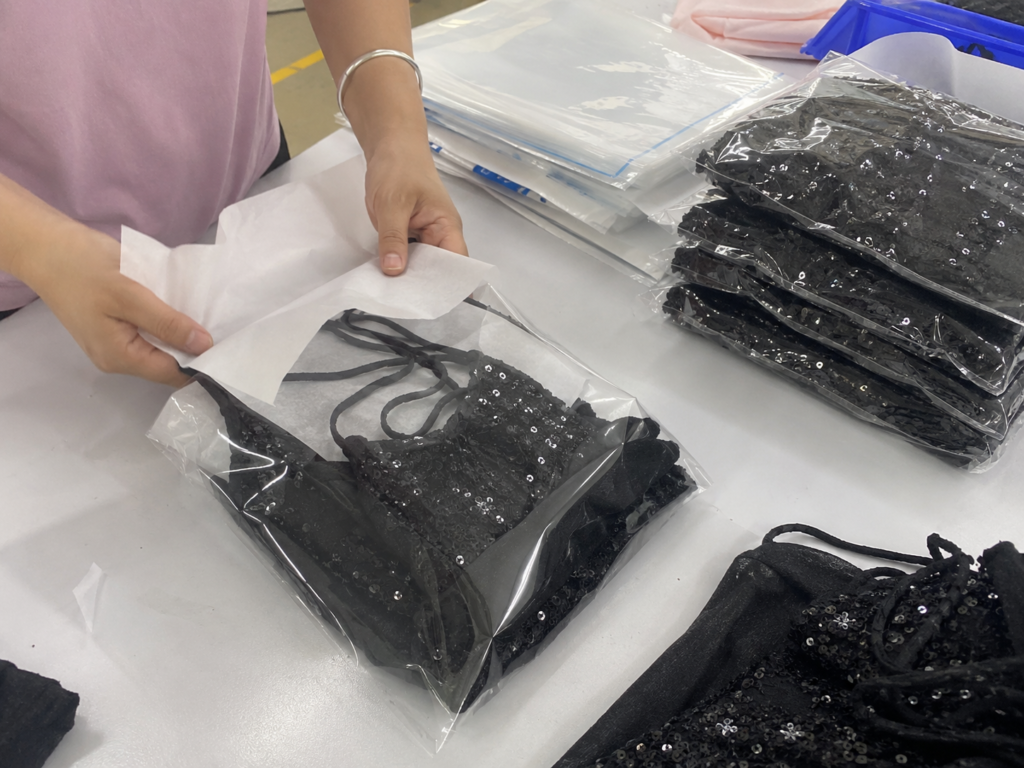
Polybag
- Common thickness: 30–60 microns.
- Options: clear, frosted, recycled or warning-printed.
- Closure: self-seal or resealable.
- Key control: size fit, ventilation and label placement.
- Brand value: protects product presentation before delivery.
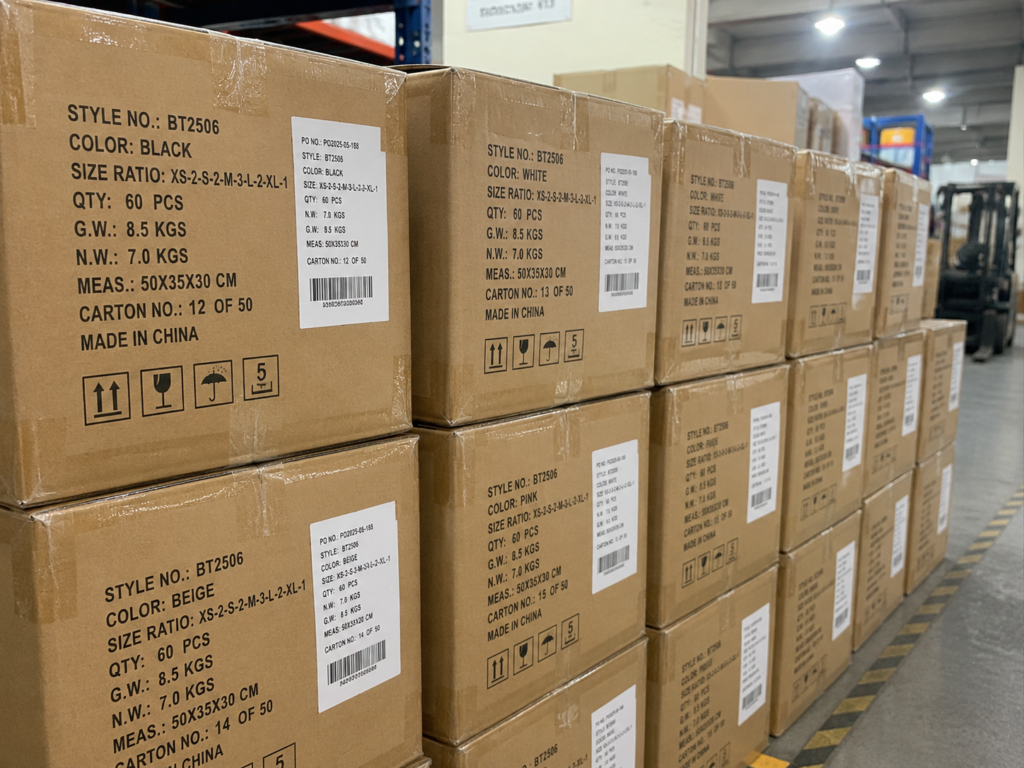
Carton Mark
- Content: PO, style, color, size range, quantity and carton number.
- Placement: one or two carton sides.
- Key control: readable printing and packing list match.
- Best use: bulk and split shipment orders.
- Brand value: improves delivery and warehouse handling.

Folding or Hanger Packing
- Folding: suitable for jersey, rib and casual styles.
- Hanger packing: better for satin, sequin and occasionwear.
- Key control: crease position and strap protection.
- Packing option: single polybag or carton-hanger system.
- Brand value: preserves first impression and product shape.
Backless Dress Risks That Should Be Solved Before Bulk Cutting
| Risk Area | What Can Go Wrong | Control Before Production |
|---|---|---|
| Back Opening | Gaping, curling or weak recovery | Fit sample, edge reinforcement, stretch test |
| Bust Coverage | Front collapse or insecure wearing | Pattern adjustment, lining, strap angle check |
| Strap Structure | Slipping, pulling or neck pressure | Strap width, tension test, attachment strength |
| Side Seam | Twisting or uneven body line | Stretch direction, cutting alignment, fit review |
| Fabric Opacity | Transparency under light | Lining test, color test, double-layer option |
| Satin Surface | Puckering or shine marks | Needle choice, seam tension, pressing test |
| Sequin Comfort | Scratching or bulky seams | Soft lining, seam cleaning, edge protection |
| Repeat Order | Fit changes between batches | Approved sample record, measurement chart, fabric notes |
Private Label Options for Branded Backless Dress Collections
A branded dress program needs more than sewing. Fabric, color, fit, label, packaging and SKU structure should match the sales channel, launch rhythm and customer expectations. Jinfeng can align sample development with private label execution.
Custom Fabric Direction
Fabric selection can follow hand feel, stretch, shine, opacity or target price. Backless dresses often need fabric testing before final approval because GSM, stretch, recovery and shrinkage affect both fit and comfort. Satin, mesh, jersey, rib, sequin and velvet each create different product value beyond the silhouette.
Custom Color Development
Color affects campaign mood, reorder potential and stock planning. Core shades such as black, white and chocolate can support repeat sales, while red, metallic, pastel or seasonal tones help capsule drops feel fresh. Lab dips, bulk shade approval and fabric lot control help keep color programs stable.
Custom Pattern Adjustment
Backless dresses need pattern control around bust, waist, hip and back opening. Small changes to back depth, strap angle, hem length or slit position can strongly affect wearing security. Fit samples and measurement charts help protect consistency before moving into bulk production.
Custom Surface Details
Surface details can change product positioning without rebuilding the full pattern. Ruching, print, foil, embroidery, sequin and contrast trims should be placed carefully to avoid discomfort or pressure in high-stretch areas. Wash, rubbing and stretch testing help protect both appearance and wearability.
Custom Label Package
Backless dresses need pattern control around bust, waist, hip and back opening. Small changes to back depth, strap angle, hem length or slit position can strongly affect wearing security. Fit samples and measurement charts help protect consistency before moving into bulk production.
Custom Order Planning
Surface details can change product positioning without rebuilding the full pattern. Ruching, print, foil, embroidery, sequin and contrast trims should be placed carefully to avoid discomfort or pressure in high-stretch areas. Wash, rubbing and stretch testing help protect both appearance and wearability.
Sample Development Process for Backless Dress Styles
Style Review

The process starts with reference image, original sample, sketch or tech pack review. Back depth, strap structure, length, fit level and fabric direction are checked before pattern work begins.
- reference image, sample or tech pack.
- silhouette, fabric, construction and target fit.
- initial development direction.
- confirmed before sample room arrangement.
Fabric and Trim Matching
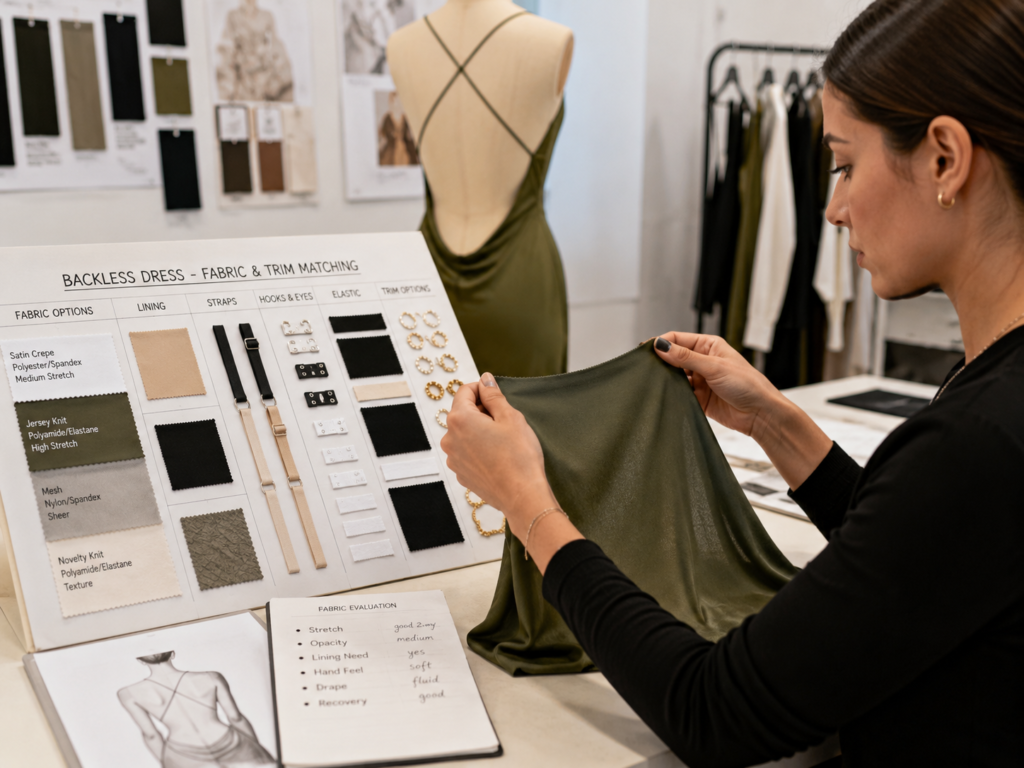
Fabric choice is matched to the open-back structure. Stretch, recovery, opacity, lining need and surface behavior are checked before cutting the sample.
- fabric target, color direction or hand feel.
- GSM, stretch, shrinkage and opacity.
- recommended fabric and trim direction.
- handled with sourcing support from the purchasing team.
Pattern Development

Pattern makers develop the first pattern around bust, waist, hip and back opening. Fitted dresses need extra attention on side seam balance and back edge control.
- approved style direction.
- body proportion, back opening and fit security.
- first pattern for sample cutting.
- arranged according to style complexity.
First Sample Making

Sample makers sew the first garment to check shape, fabric behavior and construction. Regular styles usually take 5–10 days, while more complex styles may take 7–15 days.
- pattern, fabric and trims.
- silhouette, seams, lining, straps and closures.
- first physical sample.
- 5–10 days for regular styles.
Fit and Detail Review

The sample is reviewed from front, side, back and movement. Key areas include back gaping, bust hold, strap tension, waist shape and hem balance.
- first sample.
- fit, measurement, surface and comfort.
- revision comments.
- reviewed before second sample if needed.
Pre-Production Sample
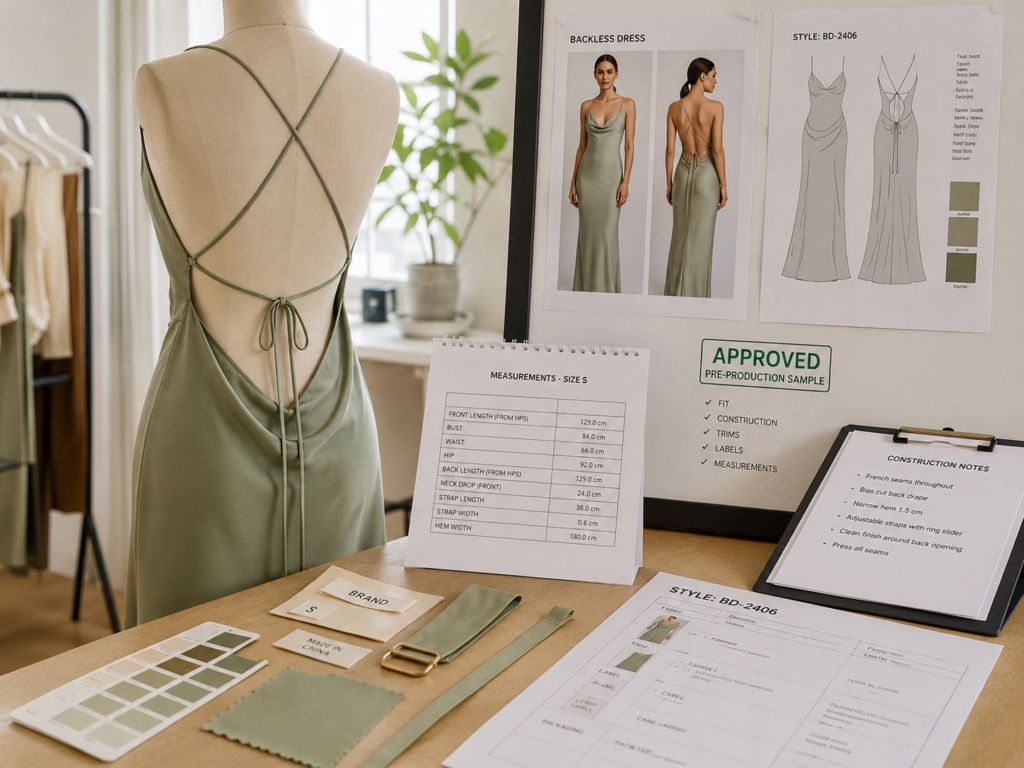
After revision, the approved sample becomes the production reference. Measurements, fabric notes, trims, labels and construction details are confirmed for bulk planning.
- revised sample and approved comments.
- repeatable construction and size grading.
- production-ready sample.
- confirmed before bulk cutting.
Bulk Production Process for Repeatable Backless Dress Orders

Pre-Production Review
Production starts with the approved sample, measurement chart, fabric notes, trims, label placement and packing requirements. Back depth, strap length, lining position and seam tension are checked again before bulk planning.
- approved sample, size chart, fabric and trim details.
- fit standard, construction method and order quantity.
- production reference file.
- no bulk cutting before full approval.

Fabric and Trim Preparation
Fabric is prepared according to color, lot, stretch, GSM and shrinkage condition. Trims are checked for size, color, strength and compatibility with the garment structure.
- bulk fabric, lining, zipper, elastic, label and trims.
- shade, stretch, hand feel and shrinkage.
- ready-to-cut material package.
- bulk fabric must match approved sample direction.

Size Grading and Marker Planning
Backless dresses need careful grading around bust, waist, hip and back opening. Larger sizes should not simply grow wider without support adjustment.
- approved base size and size range.
- bust coverage, back depth, strap length and body length.
- graded pattern and cutting marker.
- open-back proportion must stay balanced across sizes.

Bulk Cutting
Cutting follows fabric direction, stretch direction and marker plan. Stretch mesh, rib knit, satin and velvet need different handling before cutting.
- relaxed fabric and approved marker.
- grain, nap direction, stretch direction and layer control.
- cut panels ready for sewing.
- fabric relaxation and shade grouping before cutting.

Sewing Line Arrangement
Sewing lines are arranged by style complexity, fabric type and construction method. Open-back dresses require clear instructions for straps, lining, edges, closures and hem finishing.
- cut panels, trims and sewing instructions.
- seam tension, edge stability and construction sequence.
- first-line garments and bulk sewing flow.
- first output checked before full line continuation.

Inline Inspection
Inline inspection checks problems during production, not only after finishing. Back gaping, seam twisting, strap tension, zipper wave and lining movement are reviewed before defects spread.
- first bulk pieces and inline production.
- measurement, sewing, fabric surface and fit details.
- correction notes for production line.
- problems corrected while production continues.

Final Finishing
Finishing controls pressing, thread cleaning, label placement, folding and packing preparation. Satin, velvet, sequin and mesh all require fabric-specific handling.
- sewn garments.
- pressing, loose threads, surface marks and final shape.
- finished garments ready for final QC.
- pressing temperature matched to fabric behavior.

Packing and Shipment Preparation
Packing follows confirmed label, polybag, SKU, carton mark and shipping method. Split delivery or overseas warehouse packing can be arranged when needed.
- finished and inspected garments.
- folding, hanger packing, SKU labels and carton accuracy.
- shipment-ready cartons.
- packing list must match final carton marks.
MOQ, Lead Time and Shipping Options for Dress Programs
| Item | Standard Reference | Suitable Use |
|---|---|---|
| Small Order MOQ | 300–500 pcs | First test order, new style launch, color trial |
| Medium Order | 1,000–5,000 pcs | Proven style, seasonal drop, multi-size production |
| Bulk Order | 5,000+ pcs | Repeat order, scale production, long-term program |
| Regular Sample Time | 5–10 days | Jersey, rib, satin, simple mini or midi styles |
| Complex Sample Time | 7–15 days | Sequin, ruched, lined, cut-out or structured styles |
| Simple Production Time | 15–25 days | Basic fitted dresses, casual open-back styles |
| Regular Production Time | 25–35 days | Most private label backless dress orders |
| Complex Production Time | 35–45 days | Sequin, multi-layer, corset, cut-out or high-detail styles |
| Production Lines | 18 lines | Supports test orders, repeat orders and multi-style programs |
| Monthly Capacity | Around 300,000 pcs | Suitable for scalable dress production |
| Extra Capacity Space | 50,000–80,000 pcs | Helps support reorder growth and peak-season planning |
| Shipping Method | Time Reference | Suitable Use |
|---|---|---|
| Express | 5–7 days | Samples, urgent approvals, small replenishment |
| Air Freight | 7–15 days | Launch-sensitive orders, medium-volume drops |
| Sea Freight | 20–35 days | Larger production runs, planned stock replenishment |
Quality Inspection Points for Open-Back Dress Orders
Quality control for backless dresses should cover fit, fabric, structure and final presentation. Weak recovery, poor strap balance, uneven lining or unstable measurements can affect both photos and wear.
Fabric Inspection
Fabric is checked before cutting for shade, surface, hand feel, GSM, stretch and shrinkage. Satin, velvet, mesh and rib knit need closer review because flaws, shade variation and recovery problems show quickly after production.
Measurement Check
Measurements are checked against the approved size chart during sample, inline and final inspection. Bust, waist, hip, body length, strap length and back opening depth affect wearing security and size consistency.
Back Opening Review
The back opening is reviewed for shape, symmetry, edge tension and skin comfort. The edge should lie flat, recover after light pulling and keep the approved shape after pressing.
Strap and Closure Test
Straps, ties, hooks, zippers and halter points carry wearing pressure. Their placement and strength should match fabric weight, dress length and back opening depth.
Seam and Stitch Review
Seams are checked for tension, strength, puckering and clean stitching. Side seams should stay straight, stretch seams should move without breakage, and satin seams should avoid needle marks.
Lining and Opacity Check
Lining is checked for coverage, comfort, stretch compatibility and position. Light colors, mesh, sequin and satin styles need opacity review under stronger light before packing.
Pressing and Appearance Check
Final finishing affects how the dress looks when photographed and unpacked. Pressing temperature, back opening shape, hem balance, straps, zippers and lining edges should match the approved sample.
Packing Accuracy Check
Packing inspection confirms labels, hangtags, SKU stickers, polybags, folding and carton marks. Style, color, size, barcode and carton details should match the final packing list.
Factory Safety and Compliance Support for Dress Production
Coordinated Factory Structure
Jinfeng works through 4 coordinated factories with clear production roles. Three factories focus on women’s fashion garments, while one factory supports casualwear, T-shirts, hoodies, printing and embroidery.
The factory system includes 18 production lines and around 5,000 square meters of working space. This structure helps match backless dress orders with the right production line, whether the style is a fitted party dress, satin occasion dress or decorated open-back style.
Sample and Development Team
Backless dress development depends on pattern skill, fabric judgment and sample correction. Jinfeng supports this stage with 2 sample rooms, 7 experienced pattern makers, 20 sample makers and 3 purchasing staff for fabric and trims.
Regular samples usually take 5–10 days, while more complex styles may need 7–15 days. This development structure is especially useful for open-back styles that require fit review around bust coverage, back depth, strap tension, lining and fabric recovery.
Production Team and Line Management
Production planning is arranged according to style complexity, order quantity and delivery timing. Backless dresses using mesh, satin, sequin, lining, cut-outs or special trims need line planning before bulk sewing begins.
Jinfeng operates 18 production lines with around 300,000 pcs monthly capacity and an additional 50,000–80,000 pcs capacity space. The system can support 300–500 pcs test orders, 1,000–5,000 pcs medium runs and 5,000+ pcs repeat production.
Order Follow-Up and Communication
Dress programs often include many moving details: color, fabric, lining, labels, packing, size ratio, sample comments and shipping method. Clear follow-up helps keep these details aligned from sampling to shipment.
Jinfeng has 8 business staff and 8 order follow-up staff supporting communication, sample updates, production changes and delivery timing. This is useful for multi-style dress programs, repeat orders and split shipment arrangements.
Equipment and Production Support
Factory equipment supports cutting, fabric checking, shrinkage control, printing, embroidery and heat transfer. These resources help manage both clean open-back styles and decorated partywear programs.
Jinfeng is equipped with 2 DTG machines, 18 embroidery machines, 15 heat transfer machines, 1 shrinkage machine, 1 fabric inspection machine and 1 automatic cutting machine. These resources support fabric preparation, surface detail and production consistency.
Safety, Inspection and Delivery Discipline
Production reliability depends on organized material handling, safe machine operation, inspection flow and shipment preparation. Backless dress orders need fabric checking before cutting, inline review during sewing and final inspection before packing.
Packing accuracy also matters before delivery. Carton marks, packing lists, SKU information and shipment method should match the order plan. Express, air and sea shipment options can be arranged according to sample needs, launch timing and order volume.
Why Jinfeng Fits Instagram-Led Dress Brands
Instagram-led fashion brands need product development that connects visuals with production reality. A dress may look simple in a photo, but backless construction needs skilled pattern work, fabric understanding, sample correction and repeat-order discipline.
Jinfeng’s strength sits in women’s fashion manufacturing, especially dresses, sets, fashion tops, fitted styles, occasionwear and partywear. Factory capacity, sample resources and order coordination support the path from first sample to long-term reorder planning.
Strong Match With Dress Categories
Sample Development Resources
2 sample rooms, 7 pattern makers and 20 sample makers support reference-based development. Open-back styles can be adjusted through pattern, fabric, lining, strap and closure review before production.
Small Test Order Support
Scalable Production Capacity
Multi-Factory Structure
Practical Delivery Options
Backless Dress Case Templates for Production Planning
The following case templates show how backless dress programs can be planned for different fashion businesses. Names are sample placeholders and can be replaced with approved customer information, photos and production records before publishing.
Case 1|United States Instagram Fashion Brand
Project Overview
- Customer role: Product Development Manager.
- Country: United States.
- Name: Emily R.
- Product: Backless mini bodycon dress.
- Sales channel: Instagram, Shopify store and influencer seeding.
- Starting point: Reference images and target size chart.
- Initial order: 300 pcs per color.
- Scale order: 2,400 pcs across 3 colors within 4 months.
Key service: pattern adjustment, fabric matching, sample revision and repeat production.
Project Story
The brand wanted a fitted backless mini dress for a birthday and night-out drop. The first reference looked strong in photos, but the back opening needed better support and the bust area needed more coverage for real customer wear.
Jinfeng adjusted the pattern around strap angle, back depth and side seam balance. A double-layer stretch jersey was selected to improve opacity and recovery. After the first order tested well, the approved sample was used as the production reference for repeat colors.
Result
- First run started at 300 pcs per color.
- Repeat order reached 2,400 pcs across 3 colors.
- Back gaping was reduced during sample revision.
- Fabric recovery remained stable across repeat production.
- The style became a repeatable mini dress base for later drops.


Case 2|United Kingdom Online Boutique
Project Overview
- Customer role: Buying Manager.
- Country: United Kingdom.
- Name: Sophie M.
- Product: Satin backless slip dress.
- Sales channel: Online boutique and seasonal edits.
- Starting point: Original sample and color direction.
- Initial order: 500 pcs per style.
- Scale order: 1,800 pcs in two seasonal colors.
- Key service: satin sourcing, back drape control, pressing standard and packing method.
Project Story
The boutique needed a satin open-back dress for dinner, vacation and wedding guest styling. The main concern was fabric slippage, seam puckering and uneven hem fall after production.
Jinfeng reviewed the original sample, matched a 120–140 GSM satin direction and adjusted seam tension during sample making. Pressing temperature and folding method were set before bulk packing to reduce shine marks and hard creases.
Result
- Initial order launched at 500 pcs.
- Repeat order expanded to 1,800 pcs.
- Hem balance and back drape were improved before bulk.
- Pressing marks were reduced through finishing control.
- The dress worked as a seasonal occasionwear item.
Case 3|Australian DTC Fashion Brand
Project Overview
- Customer role: Founder.
- Country: Australia.
- Name: Chloe W.
- Product: Sculpting backless midi dress.
- Sales channel: Direct online store.
- Starting point: Reference images and brand size chart.
- Initial order: 300 pcs per style.
- Scale order: 3,500 pcs per style within 3 months.
- Key service: MOQ planning, fabric consistency, grading and scale-up production.
Project Story
The brand needed a controlled first order for a fitted backless midi dress, with room to scale quickly if sales response was strong. Previous suppliers handled small batches but struggled with repeat consistency.
Jinfeng supported a step-by-step plan. The first batch stayed at 300 pcs per style for market testing. After sales growth, the approved pattern, fabric direction and fit notes were maintained for scale-up production.
Result
- Order scaled from 300 pcs to 3,500 pcs per style.
- Fit remained consistent across repeat batches.
- Production errors were reduced during scale-up.
- Fabric direction stayed aligned with approved sample.
- A longer-term plan was built for multiple fitted dress styles.

FAQ About Backless Dress Manufacturing
Clear answers help teams prepare better tech packs, samples and production plans before starting a backless dress program.
Yes. Jinfeng can develop samples from reference photos, original samples or tech packs. For backless dresses, the team reviews back depth, bust coverage, strap structure, fabric direction and body proportion before sample making.
Small orders usually start from 300–500 pcs. Medium orders are commonly 1,000–5,000 pcs. Larger production runs above 5,000 pcs can be planned after style, fabric and delivery requirements are confirmed.
Regular styles usually take 5–10 days. More complex dresses, such as sequin, ruched, lined, cut-out or structured open-back styles, usually take 7–15 days depending on fabric and construction.
Yes. Jinfeng can support main labels, size labels, care labels, hangtags, barcode stickers, polybags, carton marks, folding and hanger packing. Label and packaging details should be confirmed before bulk production.
Yes. Multi-color production is common for approved backless dress styles. Lab dips, bulk shade approval and fabric lot control help keep color consistency across black, white, red, chocolate, metallic, pastel and seasonal tones.
Common options include stretch mesh, stretch satin, double-layer jersey, velvet stretch, sequin mesh, compact rib knit, crepe and soft woven fabrics. Fabric choice depends on fit, opacity, stretch, price position and wearing occasion.
Fit review focuses on back gaping, bust hold, strap tension, side seam balance, waist shape, hip fit and hem level. The approved sample becomes the reference for bulk production.
Yes. Jinfeng supports small test orders, medium repeat orders and larger production runs. Approved patterns, measurement charts, fabric notes and trim details help protect consistency across repeat batches.
Simple styles usually take 15–25 days. Regular styles usually take 25–35 days. Complex styles with lining, sequin, cut-outs or detailed construction usually take 35–45 days.
Express usually takes 5–7 days, air freight 7–15 days and sea freight 20–35 days. FOB, CIF, DDP, DAP and split shipments can be arranged according to order needs.
Yes. Jinfeng has DTG, embroidery and heat transfer equipment. Print or embroidery placement should avoid high-stretch or skin-contact pressure areas unless testing confirms comfort and durability.
Reference photos, target fabric, size chart, quantity range, color plan, logo files, label requirements and delivery market help the team review feasibility, sampling time and production plan faster.

Develop Backless Dresses With A Factory Built For Fit
A successful backless dress program needs more than basic sewing. Back depth, bust support, strap tension, fabric recovery, lining comfort, seam balance, size grading, label placement, packing, and repeat production all need to be controlled from the first sample.
jinfeng supports custom backless dress development, private label production, and bulk manufacturing from Dongguan. Send a reference image, sample garment, size chart, or tech pack to start a clear development plan.
- Backless mini, midi, maxi, halter, cowl, ruched, and cut-out dresses
- Satin, mesh, jersey, rib knit, velvet, sequin, crepe, and chiffon options
- Open-back fit control, strap structure, lining, seam tension, and edge stability
- Partywear, occasionwear, resortwear, vacation, and Instagram-led dress collections
- Small test orders from 300–500 pcs and repeat production programs
- Private label, care label, hangtag, SKU, polybag, carton mark, and shipment support