 Skip to content
Mesh Dress Supplier for Clubwear Brands
Custom mesh dress manufacturing for fast-moving clubwear collections.
Jinfeng Apparel helps clubwear brands develop mesh dresses with controlled stretch, clean fit, stable transparency and repeatable bulk production. From reference images and tech packs to samples, fabric matching, pattern adjustment and delivery, our team supports brands that need more than a basic dress supplier.
- 4 factories, including 3 women’s fashion factories for mesh dress and clubwear production
- 18 production lines supporting fitted dress orders and scalable order planning
- 2 sample rooms for faster fabric trials, fit adjustment and mesh dress development
- Manufacturing partner for globally recognized women’s fashion brands
- 300,000 pcs monthly capacity, expandable by 50,000–80,000 pcs



Why Mesh Dresses Stay Relevant in Clubwear
Strong Visual Impact
Controlled Sheerness
Body-Focused Fit
High Style Variation
Efficient Drop Planning
Strong Styling Flexibility
Repeat Order Potential
Fabric-Led Perceived Value
Client Types Served
Clubwear Brands Launching Monthly Dress Drops
These brands need mesh dresses that photograph well, fit close to the body and arrive in time for planned launches. Their concern is not only price; it is whether a supplier can keep the approved fit stable across repeated drops.
- Common need: fast sampling, small test orders, stable repeat production.
- Common risk: fit changes between sample and bulk.
- Jinfeng prevention: approved patterns, fabric notes, size grading and production follow-up are kept together before repeat orders move into production.
Partywear Brands Building Statement Mini Dresses
Partywear teams often need sheer panels, ruching, cut-outs, long sleeves, asymmetric necklines and lined body sections. These details can look simple in photos but require careful sewing balance and pattern planning.
- Common need: stronger visual product with cleaner construction.
- Common risk: transparent areas, seams and lining look uneven in bulk.
- Jinfeng prevention: sample review focuses on sheerness, seam placement, stretch direction, lining color and wearing comfort before bulk approval.
Fast Fashion Dress Brands Testing New Silhouettes
Fast-moving dress brands usually test several styles before committing to scale. They need low enough starting quantities, but they also need a supplier that can expand production if a style performs.
- Common need: 300–500 pcs test orders with repeat potential.
- Common risk: small-order suppliers cannot support later volume.
- Jinfeng prevention: test orders can be planned around scalable patterns, repeat fabric options and factory allocation for larger follow-up batches.
Online Boutique Brands Selling Social-Driven Styles
Online boutiques often rely on strong product images, fast product launches and frequent refreshes. Mesh dresses work well for them, but only when fit and fabric feel match the customer expectation created by the photos.
- Common need: attractive styles with wearable fit.
- Common risk: products look good in photos but feel uncomfortable.
- Jinfeng prevention: fabric hand feel, lining softness, stretch recovery and size tolerance are reviewed during development rather than after production.
Occasionwear Brands Adding Sheer Party Pieces
Occasionwear brands may want mesh dresses that feel more elevated than basic clubwear. They often need cleaner finishing, better lining choices, controlled opacity and a more refined fit.
- Common need: a balance of sensuality and product quality.
- Common risk: mesh construction feels too cheap or too revealing.
- Jinfeng prevention: fabric weight, lining coverage, seam tension and finishing are selected according to the intended price band and wearing occasion.
DTC Fashion Brands Scaling Winning Products
Direct-to-consumer fashion teams often use sales data to scale winning styles. Once a mesh dress sells, the next challenge is repeat consistency across color, size and production batch.
- Common need: repeatable bulk production after the first launch.
- Common risk: second batch fits differently from the first batch.
- Jinfeng prevention: confirmed sample, approved measurements, fabric direction and production comments are retained for repeat orders and scaling plans.
Private Label Fashion Brands With Tech Packs
Private label teams usually arrive with sketches, reference images, tech packs, size charts and brand trims. They need a factory that can turn clear product direction into wearable samples and stable bulk.
- Common need: accurate sample interpretation and efficient revisions.
- Common risk: too many rounds of sample correction.
- Jinfeng prevention: pattern makers and sample makers review construction, fabric behavior and fit points before the first sample is cut.
Women’s Fashion Brands Expanding Into Clubwear
Some brands already sell dresses, sets or tops and want to enter clubwear without risking quality problems. Mesh dresses are a good entry point, but only if the supplier understands fitted construction.
- Common need: category expansion with controlled risk.
- Common risk: new materials and tighter silhouettes create returns.
- Jinfeng prevention: development starts with fit block selection, stretch testing, lining selection and a clear MOQ plan before multiple styles are launched.
Mesh Dress Style Directions

Sheer Mesh Mini Dress
A strong choice for club nights, birthday edits, party drops and social-first launches. The mini length keeps the product visually direct, while sheer mesh gives the style immediate impact.
- Typical length: 78–86 cm from shoulder
- Fabric range: 90–140 GSM stretch mesh
- Stretch target: 25%–40% width stretch
- Best use: party drop, clubwear capsule, influencer shoot
- Main control: opacity, hem stability and side seam tension
- Development level: medium

Ruched Mesh Bodycon Dress
A reliable repeat style for brands that sell fitted dresses. Ruching helps shape the body, softens transparency and makes size flexibility easier when engineered correctly.
- Typical length: mini 80–88 cm or midi 105–120 cm
- Fabric range: 100–160 GSM mesh or power mesh
- Stretch target: 30%–50% width stretch
- Best use: repeat product, partywear range, curve-friendly capsule
- Main control: gathering ratio and side seam balance
- Development level: high

Printed Mesh Dress
Printed mesh works well for seasonal drops, vacation edits, festival looks and statement capsules. The print creates stronger product identity without changing the basic silhouette.
- Typical length: 80–90 cm mini or 110–125 cm midi
- Fabric range: 85–130 GSM printed stretch mesh
- Stretch target: 20%–35% after printing
- Best use: seasonal story, photo campaign, quick trend launch
- Main control: print placement, color fastness and shade matching
- Development level: medium to high

Long Sleeve Mesh Dress
A strong option for fall drops, evening edits and transitional partywear. Long sleeves make the dress feel more styled while still allowing sheer surface expression.
- Typical length: 82–92 cm mini or 110–120 cm midi
- Fabric range: 95–150 GSM soft stretch mesh
- Stretch target: 25%–45% width stretch
- Best use: fall clubwear, dinner-to-party styling, holiday edits
- Main control: sleeve twist, armhole comfort and cuff recovery
- Development level: medium

Double-Layer Mesh Dress
A practical style for brands that want a sheer look with better coverage. Double-layer mesh can create depth, softer opacity and stronger perceived quality.
- Typical length: 85–95 cm mini or 115–125 cm midi
- Fabric range: 2 layers of 70–110 GSM mesh
- Stretch target: 20%–35% after layering
- Best use: premium clubwear, occasionwear, refined party edits
- Main control: layer movement, seam thickness and transparency balance
- Development level: high

Cut-Out Mesh Dress
Cut-out mesh dresses work for statement launches, club collections and campaign hero products. They create strong visual identity, but require more structural planning than basic bodycon styles.
- Typical length: 78–90 cm mini
- Fabric range: 110–180 GSM power mesh or mesh-knit blend
- Stretch target: 30%–50% width stretch
- Best use: campaign hero, clubwear statement piece, limited capsule
- Main control: cut-out stability, edge reinforcement and coverage
- Development level: high

Mesh Midi Bodycon Dress
A more mature option for brands serving partywear, dinner dressing and occasionwear. The midi length adds perceived value and helps mesh feel more elevated.
- Typical length: 110–125 cm
- Fabric range: 120–180 GSM stretch mesh or lined mesh
- Stretch target: 25%–45% width stretch
- Best use: occasionwear, evening edit, premium fitted dress range
- Main control: hip fit, walking ease and hemline recovery
- Development level: medium to high

Mesh Overlay Slip Dress
A strong direction for brands that want sensuality with more comfort. The inner slip gives coverage, while the mesh overlay adds movement, softness and visual texture.
- Typical length: 82–95 cm mini or 110–125 cm midi
- Fabric range: 70–110 GSM mesh overlay + lining slip
- Stretch target: lining matched within 10% of outer stretch
- Best use: holiday, resort, dinner-to-club styling
- Main control: lining compatibility and overlay movement
- Development level: medium

One-Shoulder Mesh Dress
A clean statement silhouette for partywear brands that want asymmetry without heavy trims. It works well in solid mesh, printed mesh and ruched mesh versions.
- Typical length: 80–90 cm mini or 108–118 cm midi
- Fabric range: 100–160 GSM stretch mesh
- Stretch target: 25%–40% width stretch
- Best use: party capsule, birthday collection, visual merchandising hero
- Main control: shoulder balance, neckline recovery and side seam torque
- Development level: medium to high

Mesh Panel Dress
Mesh panels can be used to update an existing fitted dress block without moving fully into sheer styles. Panels add tension, contrast and visual shape.
- Typical length: 82–92 cm mini or 110–120 cm midi
- Fabric range: base knit 180–240 GSM + mesh 90–140 GSM
- Stretch target: fabric stretch balanced within 15%
- Best use: safer clubwear entry, repeat style update, capsule extension
- Main control: panel alignment and stretch compatibility
- Development level: high

Glitter Mesh Party Dress
Glitter mesh is suitable for holiday drops, New Year edits, birthday collections and party campaigns. It brings strong shelf and image appeal, but needs comfort control.
- Typical length: 78–88 cm mini
- Fabric range: 100–150 GSM glitter stretch mesh
- Stretch target: 20%–35% after surface finish
- Best use: holiday partywear, festive capsule, social-first campaign
- Main control: hand feel, glitter transfer and lining comfort
- Development level: medium to high

Flocked Mesh Dress
Flocked mesh works for elevated clubwear, velvet-touch party dresses and fall/winter capsules. The surface feels richer than plain mesh while keeping a sheer base.
- Typical length: 82–95 cm mini or 110–120 cm midi
- Fabric range: 120–180 GSM flocked stretch mesh
- Stretch target: 20%–35% depending on flock coverage
- Best use: premium partywear, winter clubwear, date-night edits
- Main control: flock adhesion, stretch loss and rubbing resistance
- Development level: high
Mesh Fabric Options
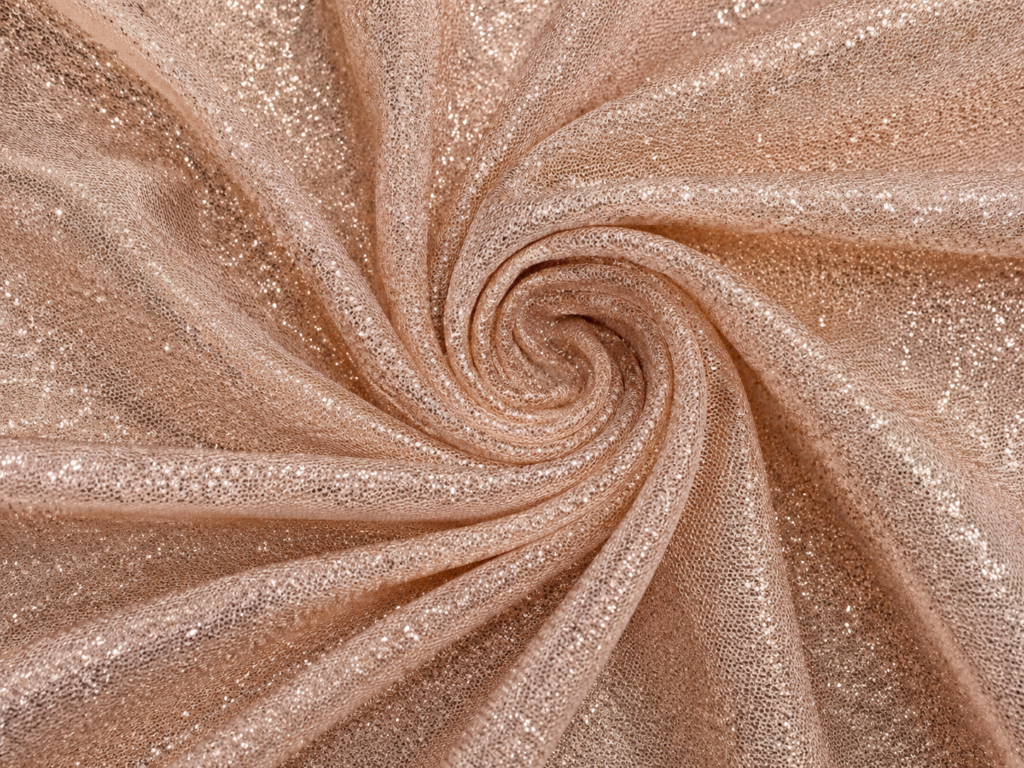
Soft Stretch Mesh
Soft stretch mesh is the most common base for clubwear dresses because it offers comfort, movement and close-body fit. It works well for mini dresses, long-sleeve styles, printed mesh dresses and light ruched silhouettes.
- GSM range: 80–130 GSM
- Stretch ratio: 25%–45% width stretch
- Recovery target: 85%–92% after stretch testing
- Opacity level: low to medium
- Shrinkage target: within 3%–5%
- Best use: entry clubwear, printed styles, layered dresses
- Production risk: edge curling, transparency mismatch, seam waving

Power Mesh
Power mesh is stronger and more supportive than soft stretch mesh. It is suitable for bodycon dresses, shaping panels, ruched styles and dresses that need more hold through the waist and hip.
- GSM range: 130–200 GSM
- Stretch ratio: 35%–60% width stretch
- Recovery target: 88%–95%
- Opacity level: medium
- Shrinkage target: within 3%–5%
- Best use: sculpting dress, fitted midi, ruched bodycon
- Production risk: high tension seams, tight fit complaints, needle damage
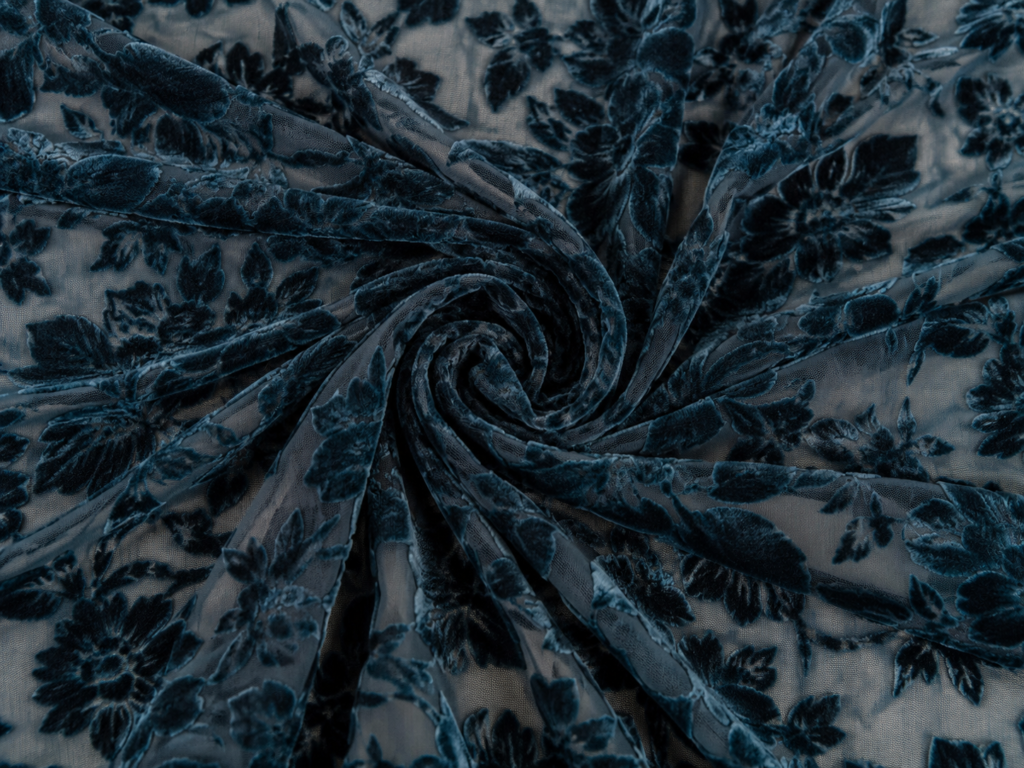
Printed Stretch Mesh
- GSM range: 85–140 GSM before printing
- Stretch ratio: 20%–40% after printing
- Recovery target: 82%–90%
- Opacity level: low to medium
- Color fastness target: grade 3–4 or above
- Best use: vacation edits, festival drops, graphic clubwear
- Production risk: print distortion, shade difference, stretch reduction
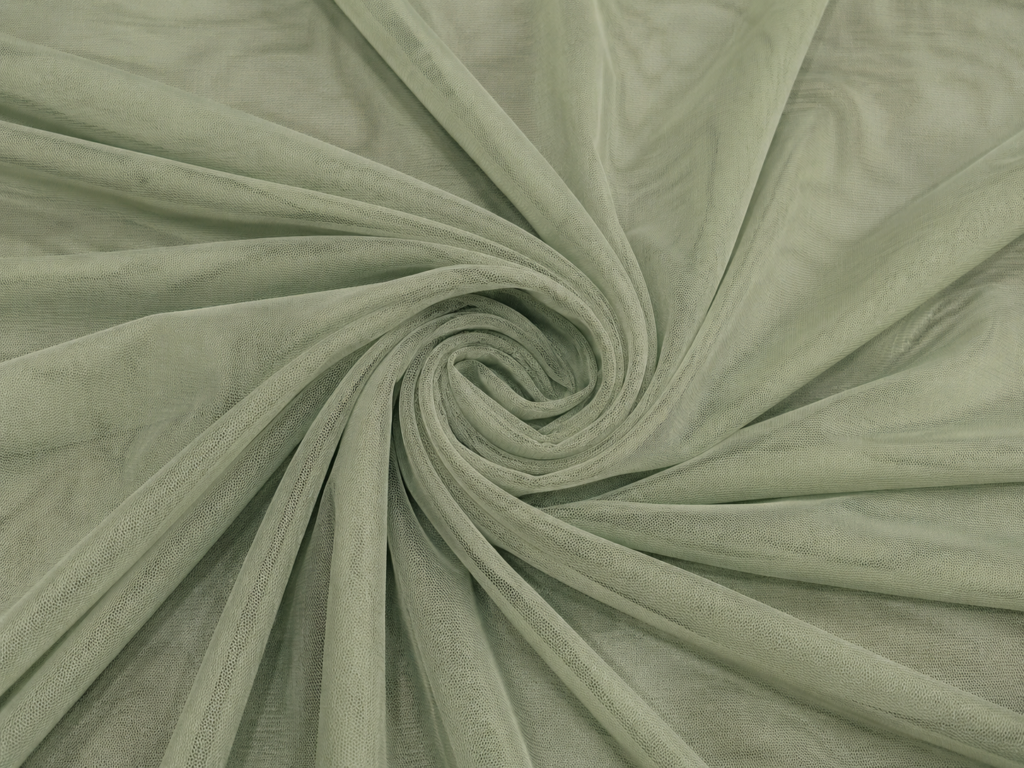
Glitter Mesh
Glitter mesh adds strong party impact and performs well for holiday selling periods. It is more visual than basic mesh, but comfort and surface durability must be tested before bulk production.
- GSM range: 100–160 GSM
- Stretch ratio: 20%–35% after glitter finish
- Recovery target: 80%–88%
- Opacity level: low to medium
- Color fastness target: grade 3–4, with rubbing check
- Best use: festive partywear, New Year drops, birthday edits
- Production risk: glitter transfer, rough hand feel, reduced elasticity

Flocked Mesh
Flocked mesh gives a velvet-like surface over a sheer base. It supports elevated clubwear and partywear styles where texture needs to justify a higher retail price.
- GSM range: 120–180 GSM
- Stretch ratio: 20%–35% depending on flock density
- Recovery target: 82%–90%
- Opacity level: medium
- Color fastness target: grade 3–4 with abrasion review
- Best use: winter partywear, premium clubwear, date-night dresses
- Production risk: flock shedding, surface cracking, shade inconsistency

Double-Layer Mesh
Double-layer mesh improves coverage while keeping a sheer visual effect. It is often used when a brand wants mesh styling but needs a more wearable, less revealing product.
- GSM range: 70–110 GSM per layer
- Stretch ratio: 20%–35% after layering
- Recovery target: 82%–90%
- Opacity level: medium to high
- Shrinkage target: both layers within 3%–5%
- Best use: premium mini dress, lined bodycon, occasionwear mesh
- Production risk: layer twisting, seam bulk, uneven transparency

Metallic Mesh
Metallic mesh brings shine and nightwear appeal, especially for stage, party and statement clubwear ranges. It needs careful handling because surface finishes may reduce softness and stretch.
- GSM range: 90–150 GSM
- Stretch ratio: 15%–35%
- Recovery target: 78%–88%
- Opacity level: low to medium
- Color fastness target: rubbing and migration check required
- Best use: event dresses, campaign styles, metallic party capsules
- Production risk: surface cracking, skin irritation, color migration

Lined Mesh Combination
A lined mesh construction pairs outer mesh with a soft inner layer. It is useful for brands that need wearable clubwear with better coverage, comfort and product confidence.
- Outer GSM: 80–130 GSM mesh
- Lining GSM: 120–180 GSM soft knit lining
- Stretch balance: lining within 10%–15% of outer stretch
- Opacity level: medium to high
- Shrinkage target: both layers controlled within 3%–5%
- Best use: premium clubwear, occasionwear, DTC repeat styles
- Production risk: lining creep, twisting, shade mismatch

Velvet Stretch Mesh
Velvet stretch mesh gives clubwear dresses a softer, richer surface while keeping the light transparency of mesh. It works well for darker color stories, fall party drops, date-night edits and elevated bodycon silhouettes.
- GSM range: 130–190 GSM
- Stretch ratio: 20%–35% depending on velvet pile density
- Recovery target: 82%–90%
- Opacity level: medium
- Shrinkage target: within 3%–5%
- Color fastness target: grade 3–4, with rubbing review
- Best use: premium clubwear, winter partywear, fitted evening dresses
- Production risk: pile pressure marks, shade direction, reduced stretch
Mesh Fabric Techniques & Product Development Risk Map for Mesh Dress Programs
Digital Print on Stretch Mesh
Glitter Finish on Mesh
Flocking on Mesh
Heat Transfer Graphics
Embroidery on Mesh Panels
Rhinestone or Hotfix Decoration
Contrast Lining Under Sheer Mesh
Pleating or Controlled Gathering
Pattern and Structure Control for Fitted Mesh Dresses
Pattern Engineering
Stretch Direction Control
Seam Tension Management
Lining Balance
Cut-Out Reinforcement
Ruching Control
Closure Construction
Pressing and Finishing
Brand Labels, Packaging and Retail-Ready Details

Main Label

Size Label

Care Label
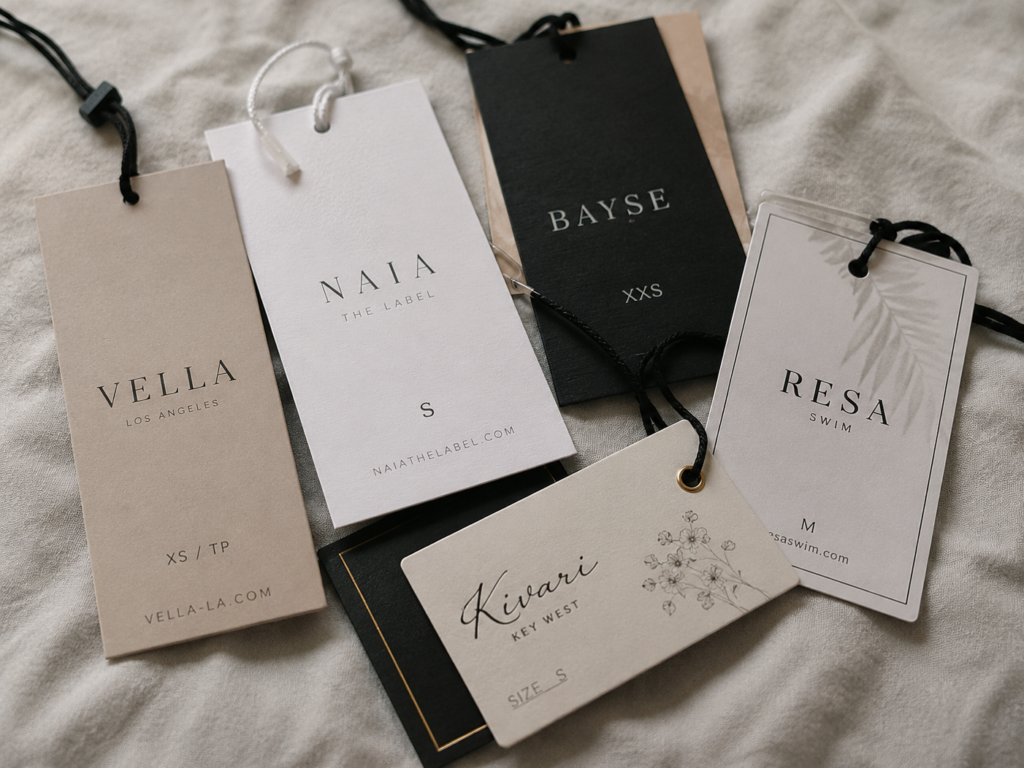
Hangtag

Barcode and SKU Sticker
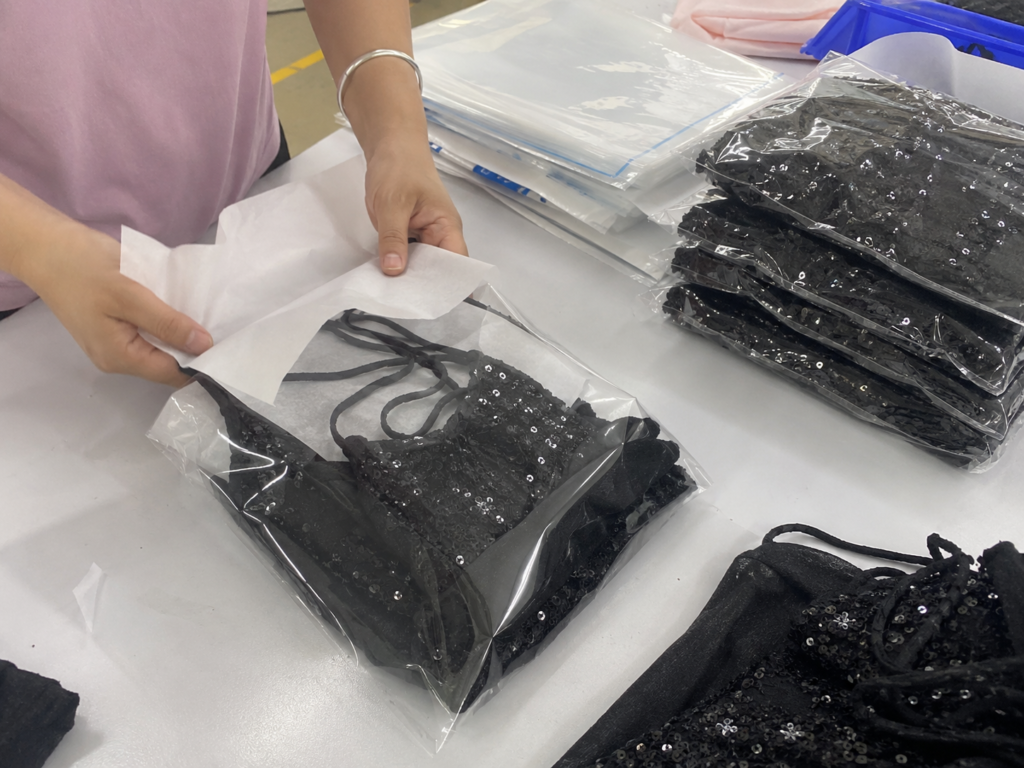
Polybag
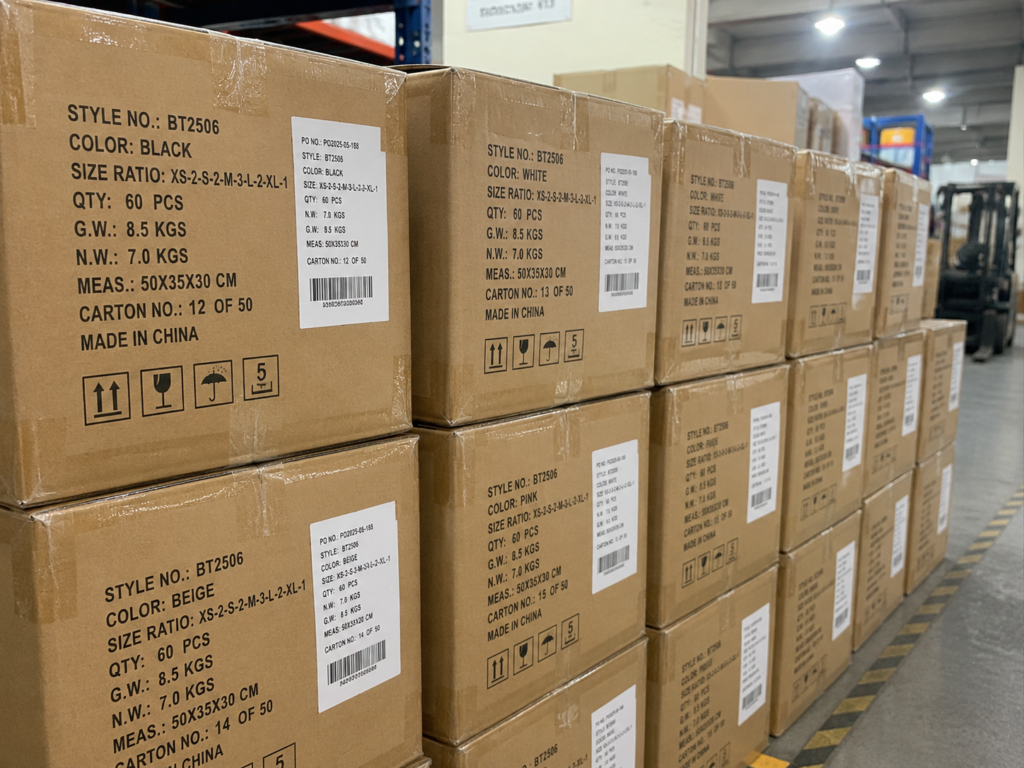
Carton Mark

Folding or Hanger Packing
Sample Development Process for Mesh Dress Collections

Style Direction Review
The process starts by clarifying the design direction, selling purpose and technical risk. Jinfeng reviews tech packs, reference images, original samples or size charts to understand the intended length, fit level, transparency, lining, ruching, cut-out detail and launch timing. This step helps avoid unclear sampling and gives the development team a more accurate starting point.

Fabric Matching
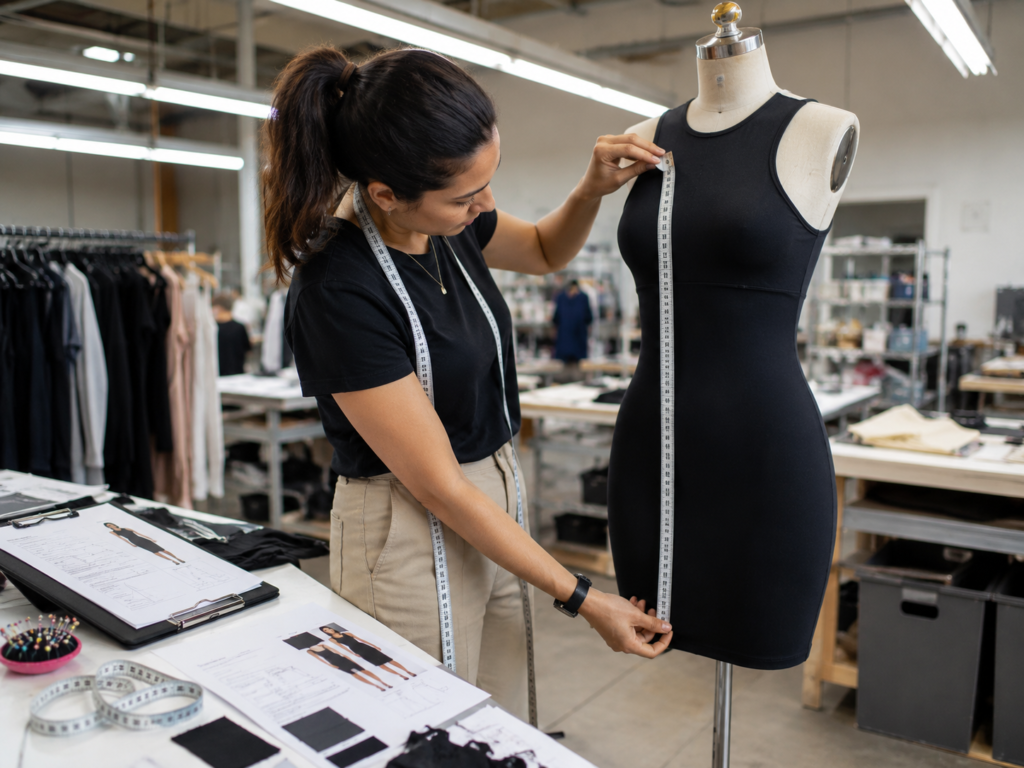
Pattern Development
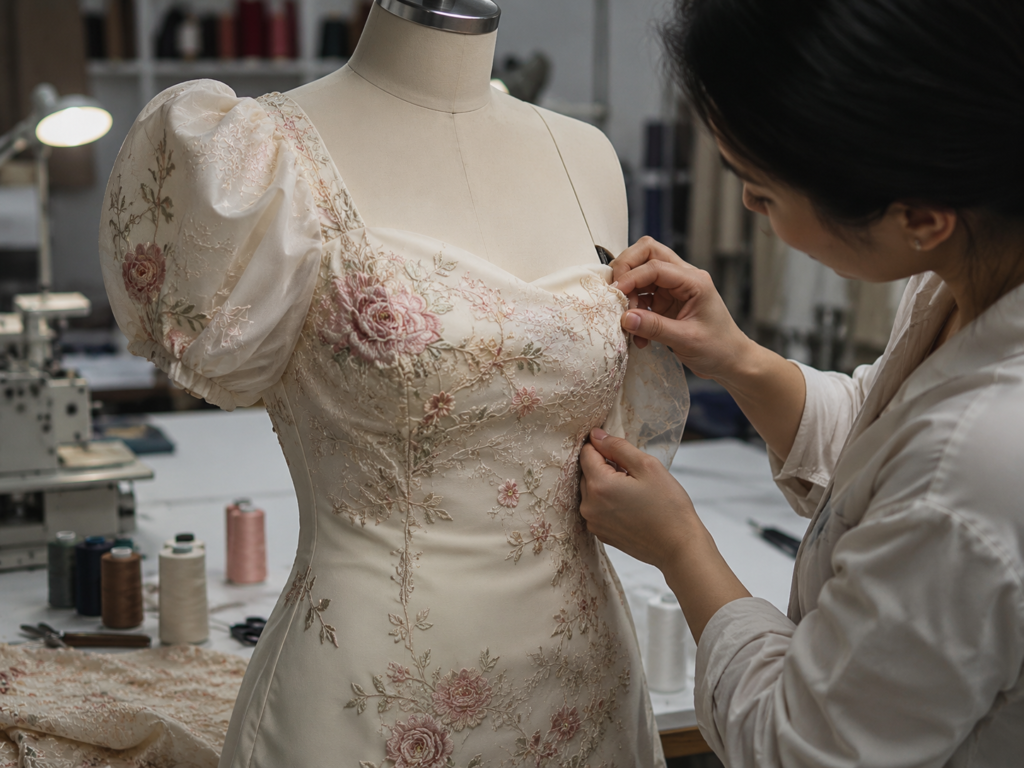
Sample Sewing

Fit and Revision

Pre-Production Sample
Bulk Production Process for Mesh Dress Orders
Production File Confirmation
Before bulk starts, the approved sample, measurement chart, fabric direction, color standard, trim card, label placement, packing method and carton requirements are confirmed together. For mesh dresses, this file also needs clear notes on stretch, lining, opacity, seam tension and surface treatment.
A complete production file keeps sampling, cutting, sewing, finishing and packing teams working from the same standard. It reduces misunderstanding and helps the approved sample move into production with better consistency.
Fabric and Material Preparation
Mesh rolls, lining fabric, zippers, trims, labels, hangtags, polybags and cartons are prepared before cutting. The team checks shade, holes, snags, stretch variation, surface defects and lining compatibility, especially for printed, glitter, flocked, metallic or velvet mesh.
Material issues are easier to solve before cutting than after sewing. Careful preparation helps protect the final fit, appearance and delivery schedule, especially when one order includes multiple colors or similar mesh styles.
Cutting and Bundling
Cutting requires controlled spreading tension, correct stretch direction, accurate marker planning and clean panel matching. Mesh can move, curl or stretch during handling, so cutting direction and size bundling must follow the approved production file.
For printed mesh, panel direction and print placement need extra attention. Accurate cutting helps protect body fit, side seam balance, sleeve comfort and hem stability before the garment enters sewing.
Sewing Line Preparation
Before mass sewing, the production line confirms stitch type, needle size, thread choice, seam allowance, lining attachment, edge finishing and ruching marks. Mesh dress sewing needs stable tension because loose or tight seams can quickly affect the final look.
Clear line preparation helps operators follow the approved sample instead of making separate judgments during sewing. This is especially important for bodycon dresses, ruched styles, long sleeves, cut-outs and lined mesh constructions.
Inline Production Review
During production, inline review checks seam tension, measurement, ruching balance, lining position, print placement, sleeve comfort, hem stability and surface marks. The goal is to catch problems while the order can still be adjusted.
For fitted mesh dresses, small issues can become visible on body or in product photos. Early review helps prevent twisting, uneven gathers, skipped stitches, lining creep and shade problems from spreading across bulk production.
Finishing and Packing
After sewing, garments move through thread trimming, light pressing, surface cleaning, measurement review, label check, folding, polybagging and carton packing. Mesh needs gentle handling because it can snag, crease, stretch or lose surface quality.
Glitter, flocked, metallic and embellished mesh may need extra protection during packing. A clean packing standard helps preserve first impression and supports smooth warehouse receiving after delivery.
Shipment Preparation
Before shipment, packing list, carton marks, PO information, shipping terms, delivery route and warehouse instructions are reviewed. Jinfeng can support FOB, CIF, DDP, DAP and split shipments according to order needs.
Courier, air and sea freight can be arranged based on launch timing and cost target. Clear shipment preparation helps reduce receiving errors and keeps mesh dress programs aligned with planned selling windows.
MOQ, Production Time and Shipping Options
Mesh dress order planning should match style complexity, launch timing and repeat potential. Jinfeng supports controlled test orders, regular production and scale orders, with sampling and bulk timelines planned around fabric, fit, construction and finishing requirements.
| Stage | Quantity / Time | Suitable For | Notes |
|---|---|---|---|
| Test Order | 300–500 pcs | New mesh dress style, first color, market test | Suitable for new silhouettes, printed mesh, ruched styles or first clubwear capsule launches |
| Regular Order | 1,000–5,000 pcs | Confirmed style, seasonal drop, repeat color | Works well after sample approval and early sales confidence |
| Scale Order | 5,000+ pcs | Strong seller, multi-color program, larger launch | Suitable for repeat products with stable pattern, fabric and size grading |
| Regular Sample | 5–10 days | Simple mesh dress, solid color, basic lining | Best for clean mini dresses, soft stretch mesh or standard bodycon styles |
| Complex Sample | 7–15 days | Ruching, cut-out, print, glitter, flocking, velvet mesh | Extra time supports fabric testing, surface control and fit adjustment |
| Simple Bulk Production | 15–25 days | Clean construction, stable fabric, limited trims | Suitable for solid mesh styles with fewer development risks |
| Regular Bulk Production | 25–35 days | Most mesh dress production orders | Common timeline for clubwear mesh dresses after approval |
| Complex Bulk Production | 35–45 days | Printed, lined, ruched, embellished or multi-process styles | Used when the style needs stronger construction or surface control |
Shipping Methods Information
| Shipping Method | Typical Time | Suitable For |
|---|---|---|
| Express / Courier | 5–7 days | Samples, urgent small shipments, approval pieces |
| Air Freight | 7–15 days | Faster launches, replenishment, campaign timing |
| Sea Freight | 20–35 days | Larger orders, planned seasonal delivery, better freight cost control |
Quality Inspection for Mesh Dress Production
Fabric Inspection
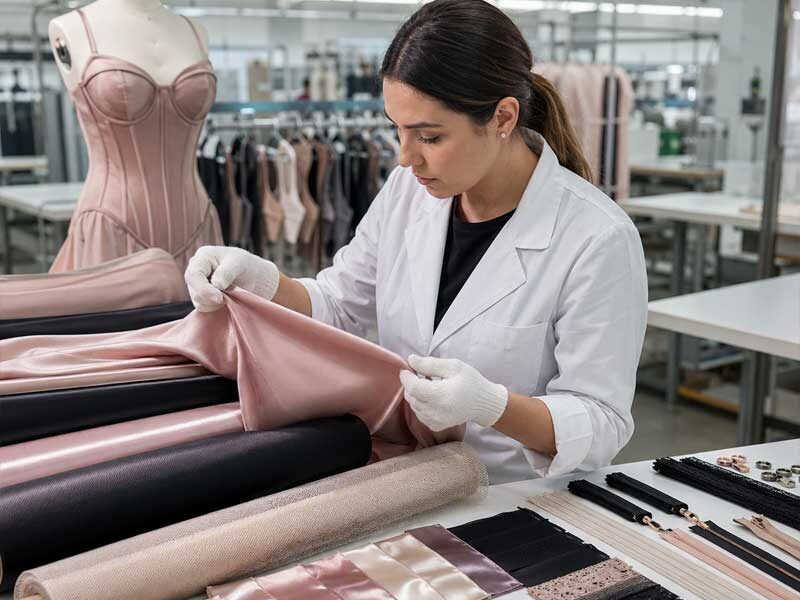
Fabric inspection starts before cutting. Mesh rolls are checked for holes, snags, shade difference, stretch variation, fabric direction and surface defects. For printed, glitter, flocked, metallic or velvet mesh, surface stability is reviewed more carefully because defects can become highly visible after sewing.
- Holes and snags
- Shade consistency
- Width and length stretch
- Fabric direction
- Surface marks
- Shrinkage risk
Measurement Control

Measurement control keeps fitted mesh dresses close to the approved sample. Bust, waist, hip, dress length, sleeve length, neckline and hem opening are checked according to the confirmed size chart. For bodycon and ruched styles, small measurement changes can affect comfort and appearance quickly.
- Bust measurement
- Waist and hip fit
- Dress length
- Sleeve length
- Neckline width
- Hem opening
Seam and Stitch Review

Seam inspection is important because mesh makes sewing quality easy to see. The team checks skipped stitches, broken threads, wavy seams, puckering, twisting and seam tension. High-stress areas such as side seams, armholes, sleeves, hems and cut-out edges need closer review.
- Skipped stitches
- Broken threads
- Seam waving
- Puckering
- Twisted seams
- Stitch tension
Lining and Coverage Check

Lining inspection checks comfort, opacity and movement. The lining should match the approved shade, sit smoothly inside the garment and move with the outer mesh. If lining stretch or shrinkage is mismatched, the dress may pull, twist or lose coverage after wearing.
- Lining shade
- Lining softness
- Stretch balance
- Coverage area
- Shrinkage match
- Inner layer movement
Surface and Trim Review
Surface inspection focuses on the parts that affect product images and wearing experience. Printed mesh, glitter mesh, flocked mesh, metallic mesh and embellished styles are checked for color movement, rubbing, shedding, cracking and uneven finishing. Trims are reviewed for placement and function.
- Print clarity
- Glitter transfer
- Flock shedding
- Metallic cracking
- Rhinestone adhesion
- Zipper or trim function
Final Packing Review

Final inspection checks the garment after finishing and before shipment. Labels, hangtags, barcode stickers, folding, polybags, carton quantity and carton marks are reviewed against the packing requirement. Mesh dresses need careful handling because the fabric can snag, crease or stretch during packing.
- Main label position
- Care label accuracy
- Hangtag placement
- Barcode sticker
- Folding method
- Carton mark
Factory Safety and Responsible Production
Organized Production Areas
Equipment-Based Production Support
Order Follow-Up System
Worker Safety Awareness
Material Handling Discipline
Delivery and Documentation Control
Why Jinfeng Fits Clubwear Brand Supplier Selection
Strong Match With Fitted Women’s Fashion
Mesh dresses sit close to the body and often include ruching, sheer panels, lining, cut-outs or surface effects. Jinfeng’s mature categories include dresses, sets, fashion tops, fitted knit styles, occasionwear, partywear and selected shaping products.
- Better fit understanding
- Stronger pattern judgment
- More relevant construction experience
- Cleaner transition from sample to bulk
Sampling Team Built for Development Work
Mesh dress sampling needs pattern correction, fabric matching and construction review. Jinfeng has 2 sample rooms, 7 pattern makers and 20 sample makers, giving development work enough structure before production begins.
- Faster sample response
- Clearer revision handling
- Better fabric-to-pattern matching
- Less guesswork before approval
Production Capacity for Repeat Orders
A clubwear style may start small, then grow quickly after launch. Jinfeng supports 300–500 pcs test orders, 1,000–5,000 pcs regular orders and 5,000+ pcs scale orders, backed by 18 production lines and about 300,000 pcs monthly capacity.
- Supports first tests
- Handles repeat colors
- Allows scale-up planning
- Reduces supplier switching risk
Fabric and Surface Process Awareness
Mesh dresses often use printed mesh, glitter mesh, flocked mesh, velvet mesh, power mesh or lined mesh. Each fabric has different risks around stretch, recovery, color, rubbing and comfort.
- Better fabric selection
- Fewer surface failures
- Stronger comfort control
- More reliable bulk quality
Practical MOQ and Timeline Planning
Jinfeng’s MOQ and timelines help brands plan around product risk. Regular samples usually take 5–10 days, complex samples 7–15 days, while bulk production commonly ranges from 15–45 days depending on style complexity.
- Easier launch planning
- Better test order control
- Cleaner repeat production schedule
- Less pressure from unclear timelines
Delivery Options for Different Launch Needs
Clubwear brands may need urgent samples, fast replenishment or larger planned shipments. Jinfeng can support courier, air and sea freight, with FOB, CIF, DDP, DAP and split shipment arrangements.
- Faster sample approvals
- More flexible delivery planning
- Better cost control for larger orders
- Easier support for overseas warehouse needs
Case Studies
The following cases show how mesh dress and fitted dress programs can move from idea, sample and first order into repeat production. Names are presented as role-based profiles for confidentiality.
Case 1|A United States Clubwear Brand
Project Overview
- Product: Ruched sheer mesh mini dress
- Market: United States
- Sales channel: Online fashion store
- Starting point: Tech pack + reference images
- Initial order: 500 pcs per style
- Repeat order: 4,000 pcs per style
- Key service: Stretch mesh sourcing, ruching control, lining adjustment, repeat production
Challenge
The brand needed a ruched mesh mini dress for a night-out collection. Previous samples from another supplier looked good in photos but had uneven ruching, unstable side seams and inconsistent transparency across colors. The product needed stronger fit control before launch.
Solution
Jinfeng reviewed the stretch mesh, lining color, ruching ratio and side seam balance before the revised sample was made. Pattern notes and sewing marks were locked after approval, so bulk production could follow the same gathering position and fit standard.
Result
- First order started at 500 pcs per style
- Repeat order increased to 4,000 pcs per style
- Ruching remained consistent across bulk production
- Lining color improved coverage without changing the sheer look
- Repeat production followed the approved sample standard


Case 2|A United Kingdom Partywear Label
Project Overview
- Product: Printed mesh long-sleeve dress
- Market: United Kingdom
- Sales channel: E-commerce and boutique wholesale
- Starting point: Print artwork + size chart
- Initial order: 300 pcs per color
- Scale order: 2,800 pcs across 3 colors
- Key service: Print placement, stretch review, sleeve fit, color control
Challenge
The brand wanted a printed mesh dress for a seasonal partywear drop. The main concern was print distortion after stretching, especially around the bust, waist and sleeves. The brand also needed the same print story across several colors.
Solution
Jinfeng checked fabric stretch after printing and adjusted the pattern around key body zones. Sleeve movement, print direction and color consistency were reviewed before bulk. The production file kept placement notes and color standards together for each colorway.
Result
- First order launched at 300 pcs per color
- Follow-up order reached 2,800 pcs across 3 colors
- Sleeve comfort improved after pattern adjustment
- Print distortion was reduced in high-stretch areas
- Color standards supported cleaner repeat production
Case 3|An Australian DTC Fashion Brand
Project Overview
- Product: Sculpting midi bodycon dress
- Market: Australia
- Sales channel: Direct-to-consumer e-commerce
- Starting point: Reference images + size chart
- Initial order: 300 pcs per style
- Scale order: 3,500 pcs per style within 3 months
- Key service: MOQ planning, fabric consistency, grading, production scale-up
Challenge
The brand wanted to test a new bodycon style with a controlled first order, but also needed a supplier that could scale quickly if the product performed well. Previous suppliers could handle small quantities, but struggled with repeat consistency when volume increased.
Solution
Jinfeng supported a step-by-step production plan. The first batch was controlled at 300 pcs per style for market testing. After the style showed sales potential, Jinfeng maintained the approved pattern, fabric direction and fit notes, then allocated added production capacity for the scale-up order.
Result
- Order scaled from 300 pcs to 3,500 pcs per style within 3 months
- Fit remained consistent across repeat batches
- Production errors were reduced during scaling
- A longer-term plan was built for fitted dress styles
- The brand gained a clearer path from test order to repeat production

Common Questions About Custom Mesh Dress Manufacturing
- sheer mesh mini dresses
- ruched mesh bodycon dresses
- printed mesh dresses
- long-sleeve mesh dresses
- cut-out mesh dresses
- double-layer mesh dresses
- mesh midi dresses
- glitter mesh dresses
- flocked mesh party dresses








Prepare Your Mesh Dress Project Details
Custom Mesh Dresses Built From Sample To Repeat Production
A strong mesh dress should look clear in photos, feel secure on body and remain consistent when production scales. Jinfeng supports clubwear brands with sample development, mesh fabric matching, pattern control, lining selection, private label finishing, bulk production and global delivery. Send the project details below to begin development:
- Reference image, sketch, tech pack or original sample
- Target mesh fabric, color and surface effect
- Sheer, lined or double-layer coverage requirement
- Dress length, fit preference and size range
- Estimated quantity per style and color
- Label, packaging and carton requirements
- Delivery country and preferred shipping method

