Skip to content
Custom Bodycon Dress Supplier for Fashion Brands
Jinfeng Apparel helps fashion brands develop and manufacture custom bodycon dresses from reference images, tech packs, original samples, or co-created design ideas. We support the full process from pattern development and sample making to fabric sourcing, bulk production, private label finishing, and export delivery.
- 2 sample development rooms
- 7 senior pattern makers
- 20 sample technicians
- 18 production lines
- Monthly capacity around 300,000+ pieces
- Common sampling time: 5–10 days



Why Bodycon Dresses Stay Strong in Women’s Fashion
Bodycon dresses are not limited to one trend cycle. They remain relevant because they answer a clear customer need: a dress that creates shape, feels confident on body and works across multiple social occasions.
Strong Occasion Demand
- More styling occasions
- Better campaign planning
- Easier seasonal updates
- Stronger category repeatability
Clear Visual Impact
- Strong e-commerce photography
- Better social media presentation
- Clearer product storytelling
- Higher outfit recognition
Easy Style Refresh
- Faster new style development
- More color and fabric extensions
- Lower development risk after fit approval
- Easier reorder planning
High Fit Sensitivity
- Fabric becomes sheer when stretched
- Waist shape does not flatter the body
- Bust or hip area feels too tight
- Hem rides up during movement
- Ruching sits in the wrong position
Strong Private Label Potential
- Better product continuity
- Cleaner brand identity
- More efficient development
- Stronger repeat order potential
Good Fit Creates Reorder Value
Bodycon Dress Manufacturing for Established Fashion Businesses
Fast Fashion Women’s Brands
Fast fashion brands need frequent drops, quick samples, and accurate trend interpretation. Their bodycon programs often include ruched minis, cut-out dresses, mesh styles, strapless silhouettes, partywear, and fitted occasionwear.
Why Jinfeng Fits
Jinfeng supports dresses, sets, fashion tops, fitted garments, and trend-led products. With sample rooms, pattern makers, and sample technicians, we help brands develop new styles with better fit and production control.
DTC Fashion Brands
DTC brands need dresses that photograph well, fit confidently, support reviews, and carry private label presentation. Product visuals and fit quality directly affect conversion across websites, social channels, ads, and email campaigns.
Why Jinfeng Fits
Jinfeng works from reference images, tech packs, original samples, or co-created concepts. We support sampling, fabric review, private label details, packaging, and production planning from test order to reorder.
Partywear and Clubwear Brands
Partywear brands need strong visual details: ruching, mesh, cut-outs, asymmetric necklines, straps, mini lengths, stretch fabrics, and statement colors. These styles need precise fit because small issues show quickly when worn.
Why Jinfeng Fits
Jinfeng’s experience in sexy fashion, fitted silhouettes, partywear, and occasionwear supports detailed development. Our pattern team reviews bust, waist, hip, stretch, seam tension, and cut-out stability during sampling.
Occasionwear Brands
Occasionwear brands develop dresses for cocktails, holidays, wedding guests, dinners, and elevated parties. These styles need better fabric selection, clean finishing, lining review, polished fit, and stronger sample-to-bulk control.
Why Jinfeng Fits
Jinfeng supports dresses, woven garments, knit garments, and fitted categories. We review fabric drape, stretch, lining, seam construction, dress length, and body shape before production begins.
Boutique and Online Retailers
Boutique and online retailers need flexible development, manageable MOQ, seasonal capsules, and stable replenishment. They may start smaller, but still need fit control, packaging support, delivery coordination, and reorder communication.
Why Jinfeng Fits
Jinfeng supports selected small orders, mid-size production, and larger programs. Merchandisers follow sampling, production, packing, and delivery details so clients can manage drops and replenishment more clearly.
Private Label Apparel Companies
Private label companies need product development, labels, hangtags, packaging, logo methods, confidentiality, bulk production, and repeat order support. Bodycon dresses often require consistent fit and stable supplier coordination.
Why Jinfeng Fits
Jinfeng supports OEM and ODM cooperation, including woven labels, care labels, neck prints, hangtags, barcode stickers, and packaging. NDA cooperation can be discussed for unreleased designs, tech packs, and samples.
Custom Bodycon Dress Styles We Develop and Produce
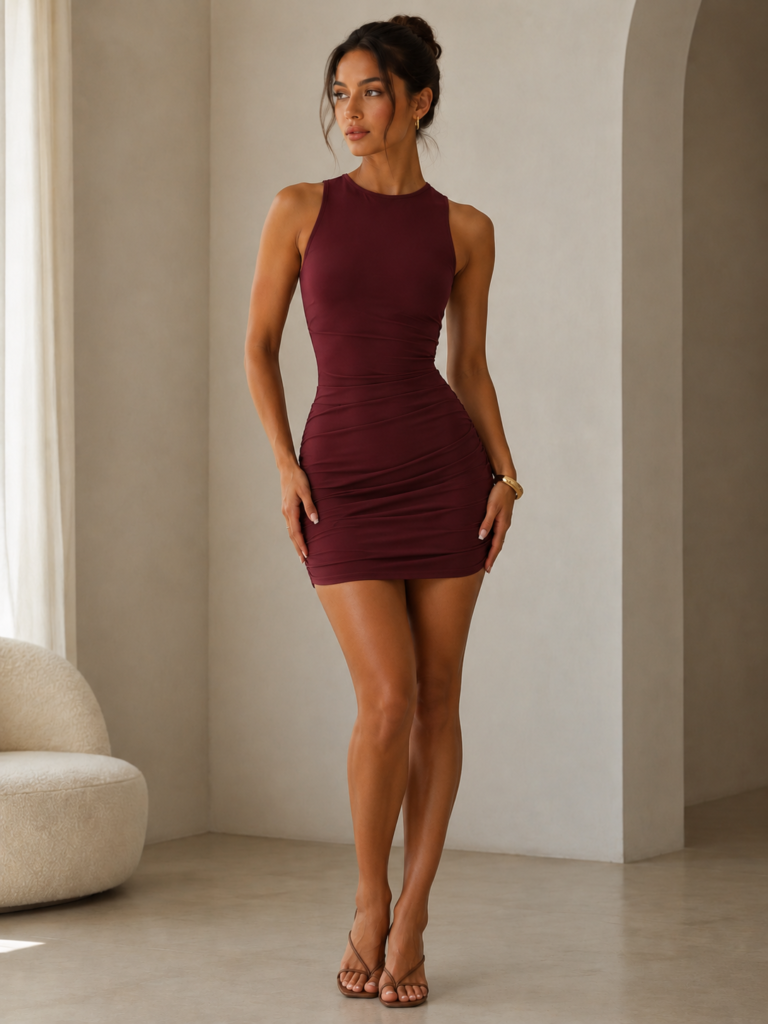
Mini Bodycon Dress
Fast fashion drops, clubwear, partywear, date-night styles, holiday capsules and young women’s fashion collections.
- Mini length rides up during movement
- Hip area feels too tight or restrictive
- Hem shape becomes unstable after wearing
- Bust, waist and hip proportion looks unbalanced
- Fabric recovery is weak after fitting
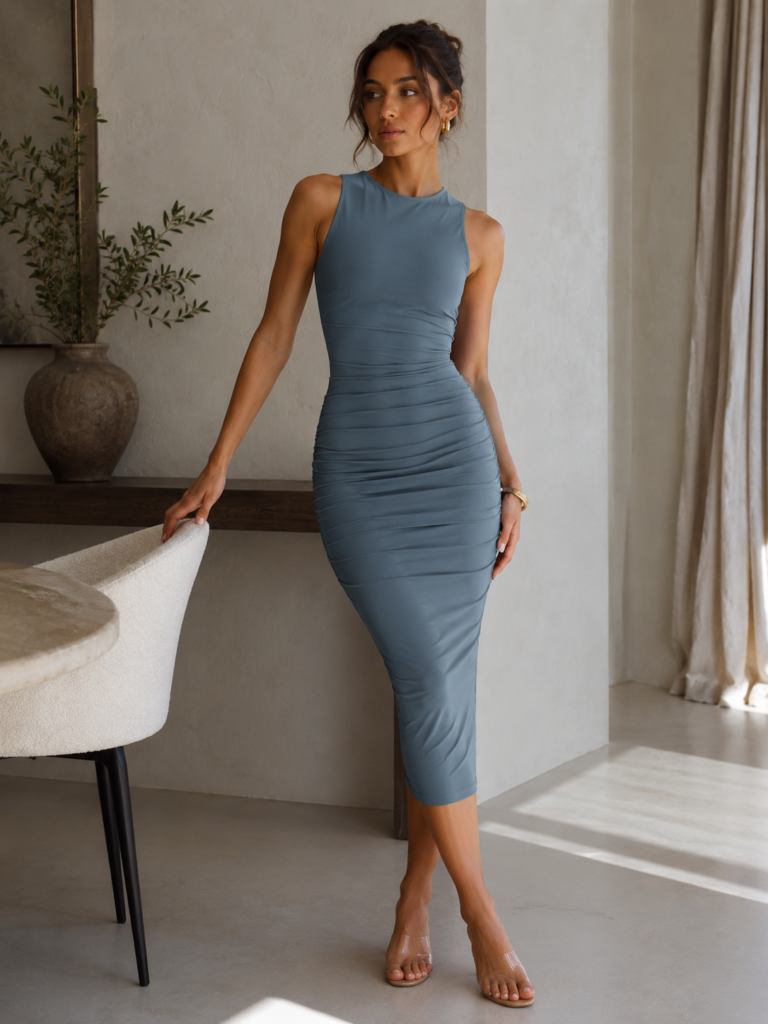
Midi Bodycon Dress
Occasionwear, dinner looks, cocktail styles, elevated fashion collections and fitted seasonal dress programs.
- Hem opening restricts walking
- Knee area feels too tight
- Dress shape looks heavy if fabric is too thick
- Slit placement is uncomfortable or too revealing
- Lower body fit changes after movement

Maxi Bodycon Dress
Eveningwear, resort dressing, event looks, vacation collections and longer sculpted silhouettes.
- Dress feels too heavy on body
- Lower body movement is limited
- Side seams twist on longer lengths
- Fabric drape does not support the silhouette
- Hem shape becomes uneven after sewing
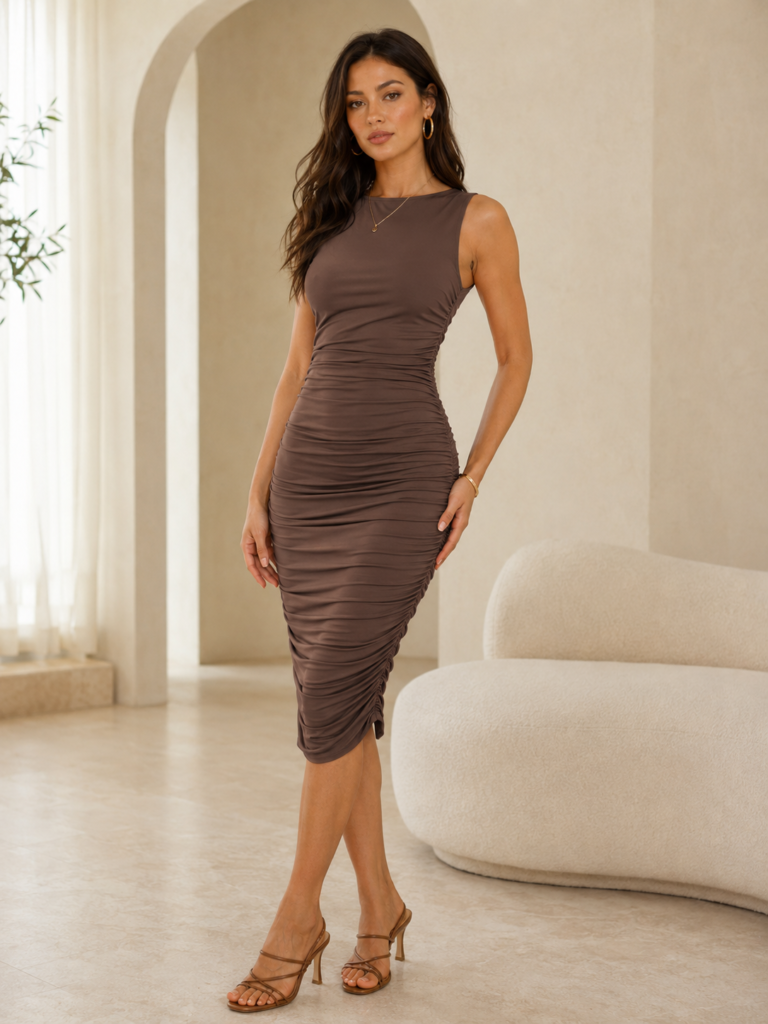
Ruched Bodycon Dress
Partywear, clubwear, waist-shaping styles, body-contour dresses and social-driven fashion drops.
- Ruching sits too high or too low
- Gathering looks uneven on both sides
- Waist area becomes bulky
- Fabric does not recover after stretch
- Side seams pull out of position

Cut-Out Bodycon Dress
Statement fashion, partywear, nightlife collections, vacation styles and trend-led DTC brands.
- Cut-out shape pulls open when worn
- Edges curl or lose stability
- Placement exposes the wrong area
- Shape changes after movement
- Fabric tension pulls the design off balance

Mesh Bodycon Dress
Clubwear, party dresses, sheer-panel designs, layered dresses, long sleeve fitted styles and fashion-forward collections.
- Mesh stretches or distorts during sewing
- Seam tension creates puckering
- Transparency is too high without lining
- Mesh and main fabric stretch differently
- Panel shape changes when worn

Strapless Bodycon Dres
- Dress slides down during movement
- Top edge rolls or gaps
- Bust area lacks support
- Upper body feels too tight
- Fabric recovery cannot hold the shape
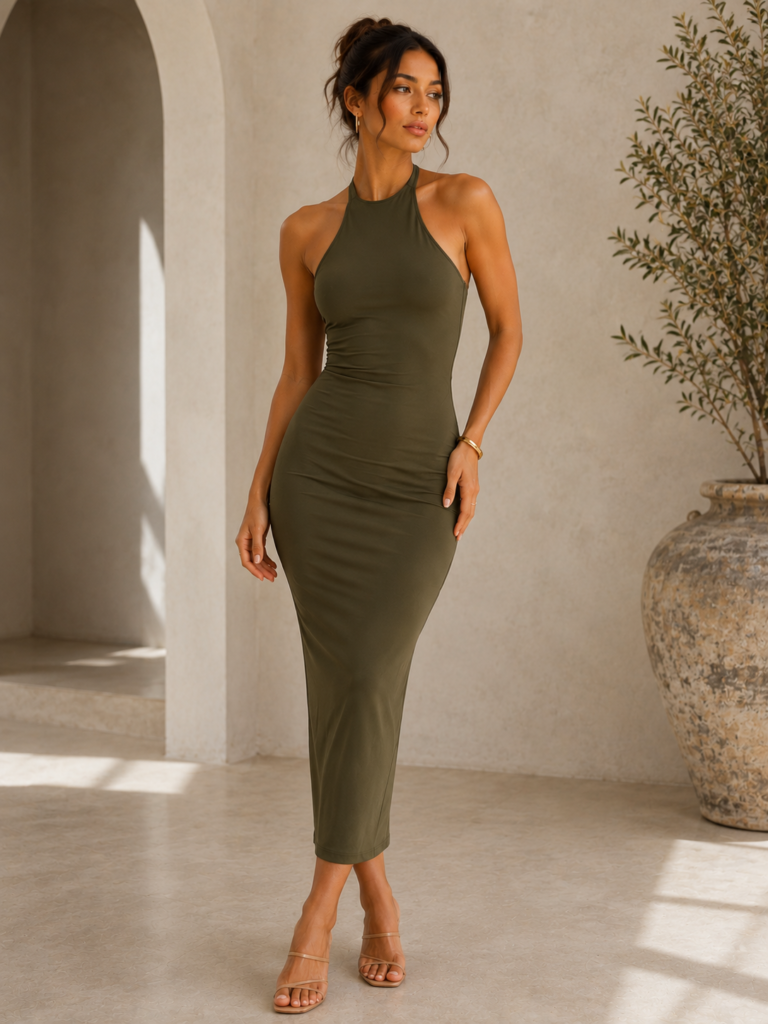
Halter Bodycon Dress
- Neckline creates pressure on the neck
- Bust coverage is not stable
- Back shape feels unbalanced
- Fabric pulls upward during wear
- Front neckline does not sit cleanly

Long Sleeve Bodycon Dress
- Armhole feels tight
- Sleeve twists after movement
- Shoulder and chest areas pull
- Fabric recovery is weak at the elbow
- Upper body fit restricts comfort

One Shoulder Bodycon Dress
- Neckline becomes unstable
- One side pulls more than the other
- Bust position feels unbalanced
- Shoulder hold is not secure
- Side seam tension affects the full shape

Sequin Bodycon Dress
- Sequin fabric feels heavy or scratchy
- Seam areas are difficult to sew cleanly
- Lining is uncomfortable or unstable
- Stretch is limited after embellishment
- Garment weight affects the final fit
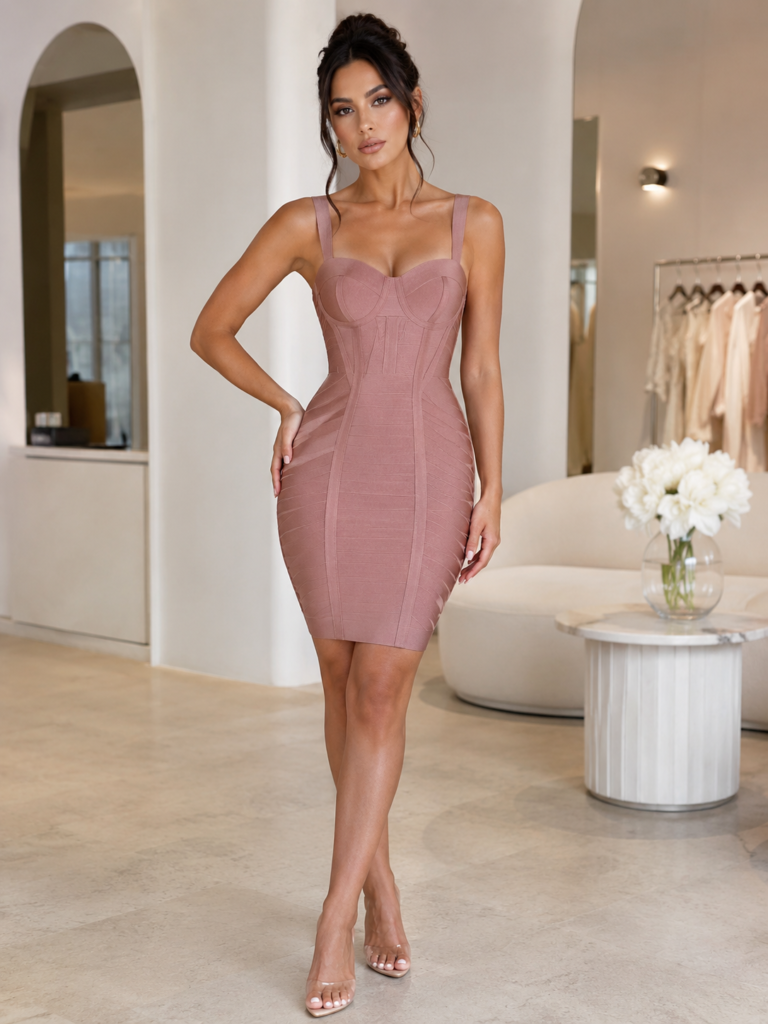
Bandage / Sculpting Bodycon Dress
- Dress feels too tight or stiff
- Compression is uneven across the body
- Size grading changes support level
- Movement comfort is limited
- Seams create pressure marks
Fabric Options for Custom Bodycon Dresses

Cotton-Spandex Jersey
Soft casual bodycon dresses, tank dresses, short sleeve fitted dresses and everyday fashion styles.
- Fabric shrinks after washing
- Dress twists after sewing or wear
- Recovery becomes weak after fitting
- Light colors may become too sheer
- Fabric feels too thin for a fitted silhouette

Polyester-Spandex Knit
Fast fashion bodycon dresses, affordable party styles, printed dresses and stretch-driven seasonal drops.
- Surface looks too shiny or low value
- Fabric feels thin on body
- Recovery weakens after wear
- Color may look different under studio light
- Dress loses shape after repeated fitting
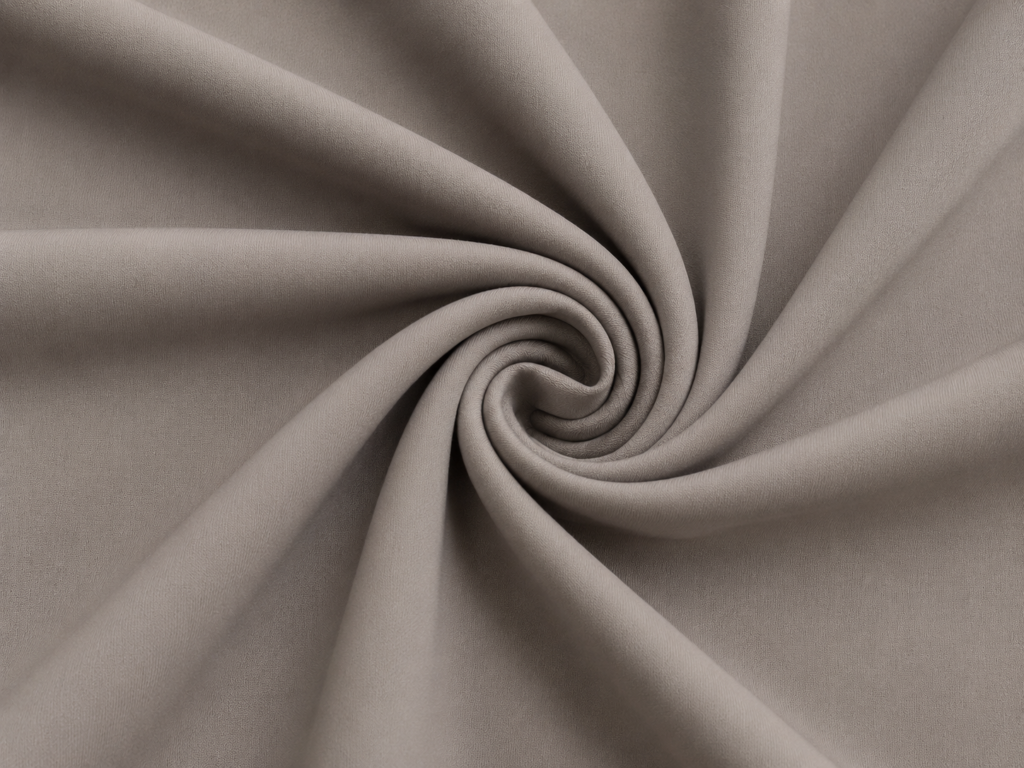
Nylon-Spandex
Sculpting dresses, active-inspired fitted dresses, smooth bodycon styles and modern stretch silhouettes.
- Fabric becomes sheer under tension
- Compression feels too strong
- Seams may pull under stretch
- Dress feels too tight if pattern pressure is wrong
- Different fabric lots may behave differently
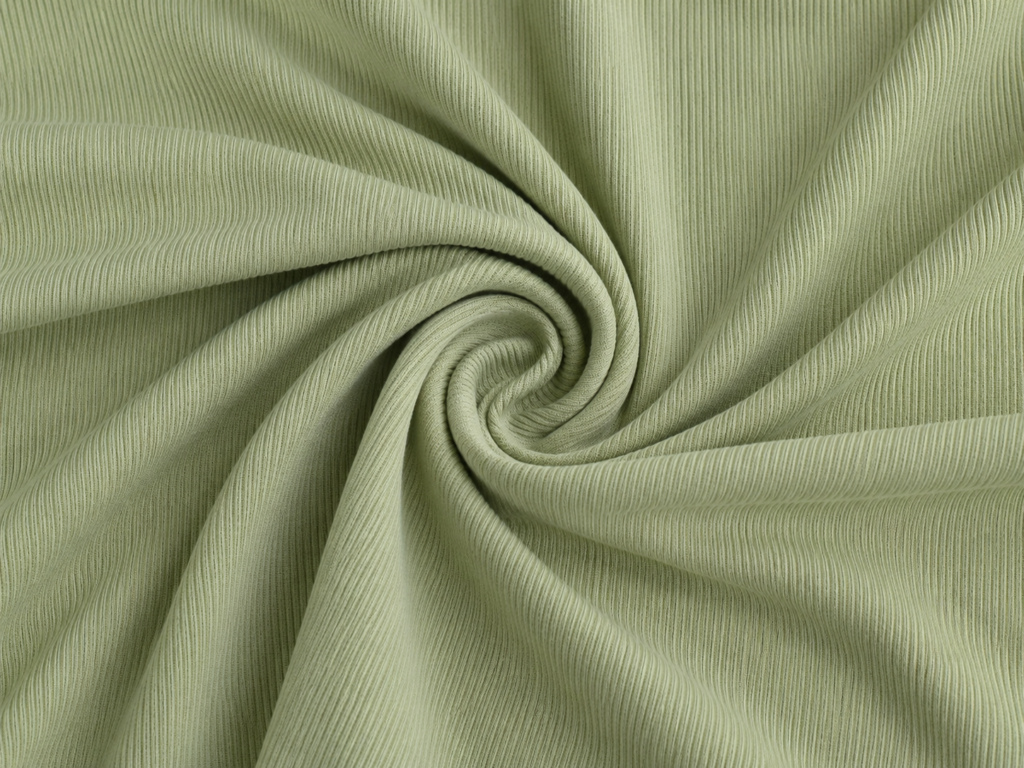
Rib Knit
- Rib stretches more than expected
- Dress becomes too tight or too loose
- Length may change after wearing
- Recovery varies by rib structure
- Body shape looks uneven if tension is wrong

Ponte Knit
- Fabric feels too heavy for the style
- Dress looks stiff if pattern is wrong
- Movement can feel restricted
- Seams may look bulky
- Hem opening may need adjustment
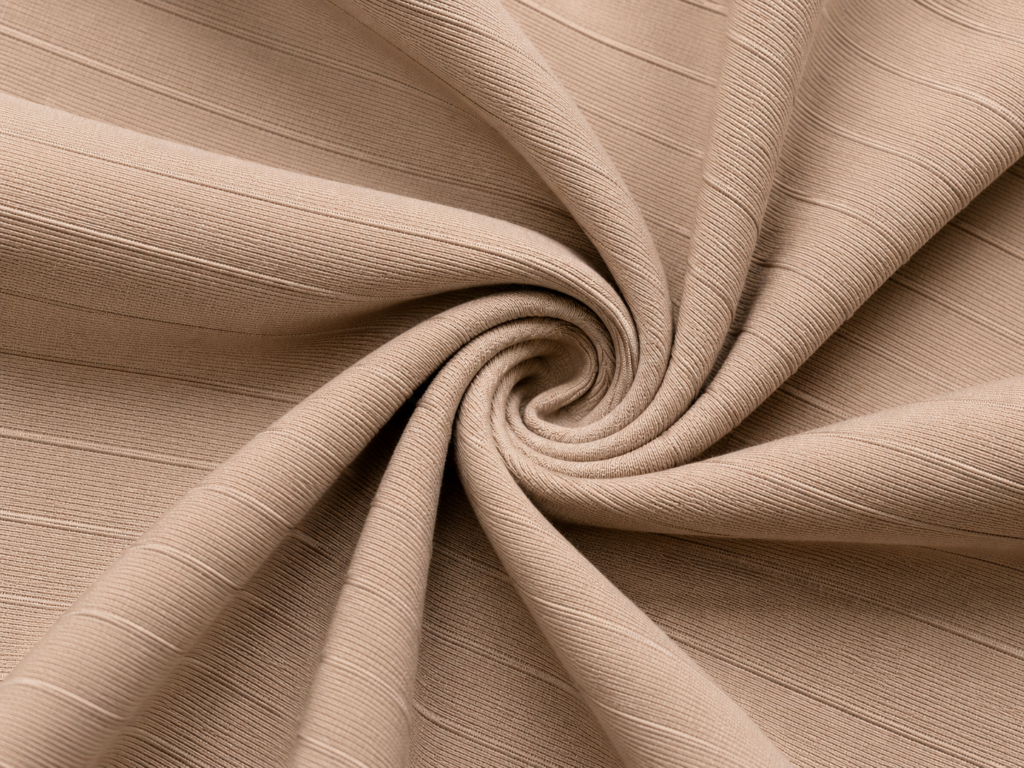
Bandage Knit
- Dress feels too tight or heavy
- Compression is uneven across the body
- Size grading becomes harder
- Movement comfort is limited
- Seams may create pressure marks
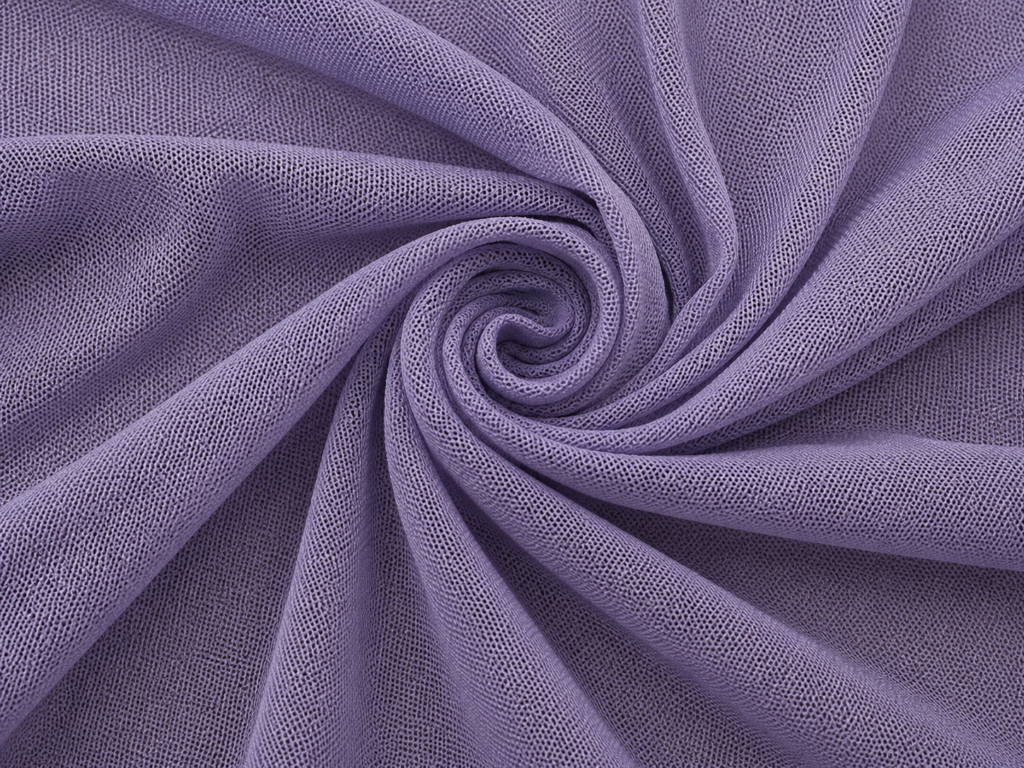
Mesh
- Mesh stretches or distorts during sewing
- Seam tension creates puckering
- Transparency is too high without lining
- Mesh and main fabric stretch differently
- Panel shape changes when worn

Power Mesh
- Pressure feels too strong in certain areas
- Weak mesh does not support the dress
- Skin comfort is poor
- Mesh rolls or shifts inside the garment
- Stretch does not match the outer fabric

Stretch Velvet
- Velvet direction creates shade differences
- Surface shine changes by cutting direction
- Seam pressure becomes visible
- Fabric feels too warm or heavy
- Stretch velvet may lose shape if too soft

Stretch Satin
Dressier bodycon styles, cocktail dresses, evening looks and smooth fitted silhouettes.
- Satin shows seam puckering easily
- Cutting defects become visible
- Surface tension lines appear on body
- Fabric may feel too slippery during sewing
- Lining choice can affect the final shape

Stretch Lace with Lining
- Lace may tear or distort during sewing
- Lining color affects the final look
- Skin comfort may be poor
- Pattern placement can look uneven
- Lace and lining may stretch differently
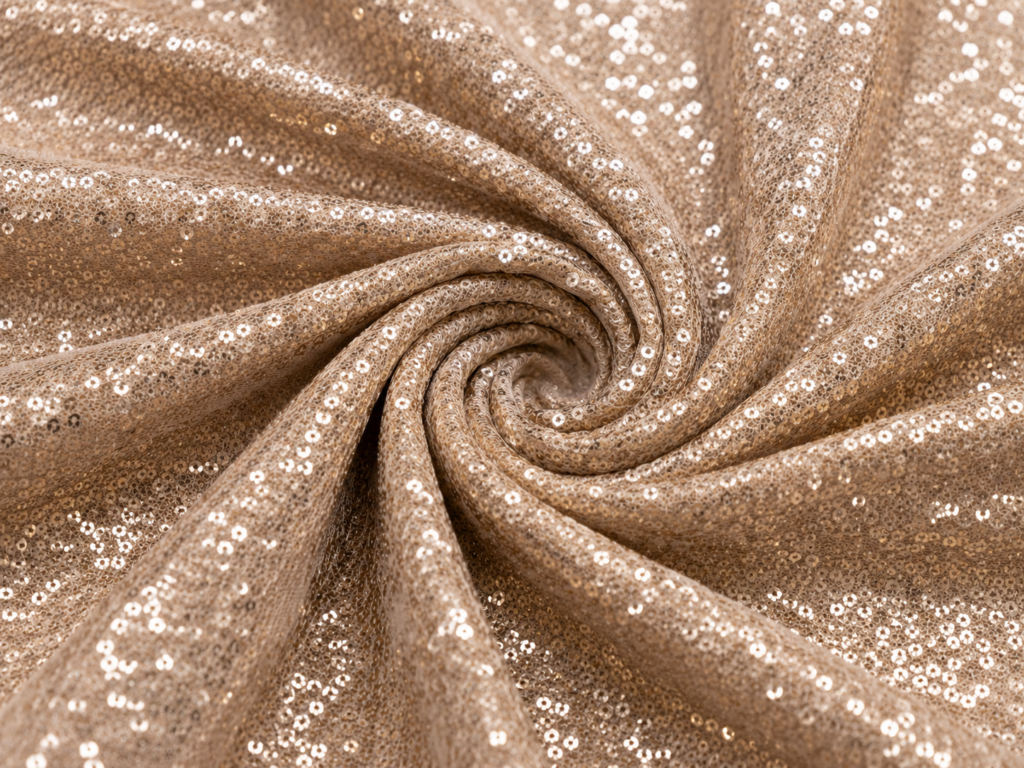
Sequin Stretch Fabric
- Fabric feels heavy or scratchy
- Seams are difficult to sew cleanly
- Stretch is limited by embellishment
- Poor lining reduces comfort
- Garment weight affects the final fit
A Women’s Dress Manufacturing System Built for Fit and Scale
Women’s Fashion Factory Base
Jinfeng operates three women’s fashion production factories focused on dresses, sets, fashion tops, fitted styles, partywear, occasionwear, knit garments and woven garments.
For bodycon dresses, this matters because the product depends on silhouette, fit, fabric behavior and detailed construction, not only sewing output.
Casualwear and Print-Focused Factory
Jinfeng also operates one factory focused on T-shirts, hoodies, graphic products, blanks, printing and embroidery.
This factory adds flexibility for brands that develop dress programs together with casual capsules, logo products, promotional styles or private label collections.
Sample Development Rooms
Jinfeng has two sample development rooms that support faster product development from tech packs, reference images and original samples.
Regular styles usually take around 5–7 days for sampling, while more complex styles may take around 7–10 days depending on fabric, trims and construction.
Pattern and Sample Team
The sample setup includes seven senior pattern makers, twenty sample technicians and three sourcing staff.
For bodycon dresses, this team helps review bust, waist, hip, dress length, stretch, recovery, lining, ruching, cut-outs and other fit-sensitive details before production approval.
Production Capacity
Jinfeng has eighteen production lines, around 5,000 square meters of factory space and approximately 300,000 pcs monthly capacity.
Additional capacity of around 50,000–80,000 pcs can be discussed when larger production planning requires scale-up.
Branding and Decoration Equipment
Jinfeng’s equipment includes DTG printing machines, eighteen embroidery machines, fifteen heat transfer machines, one shrinkage machine, one fabric inspection machine and one automatic cutting machine.
This supports logo execution, fabric preparation, graphic development and private label production coordination.
Merchandising and Order Follow-Up
Jinfeng has eight sales team members and eight merchandisers supporting quotation, sampling, production updates, packing details and delivery coordination.
Communication can be handled through email, WeChat, WhatsApp, video calls and voice calls, with fluent English support for overseas clients.
Founder Experience and Production Mindset
Jinfeng’s factory system was established in 2008. The founder team has worked in apparel production since 1996, beginning from practical production work such as cutting, sample sewing and order follow-up.
This hands-on background helps the company understand real garment problems beyond surface-level production management.
Clear Product Boundary
Jinfeng is strongest in women’s dresses, matching sets, fashion tops, fitted garments, sculpting styles, knitwear and woven apparel.
T-shirts, hoodies and printed casualwear are also stable strengths. Swimwear, light jackets and denim can be discussed, but they are not the main focus.
MOQ, Test Orders and Reorder Planning
Small Test Orders
Small test orders are useful when a brand wants to validate a new bodycon dress without carrying too much inventory. This is common for new ruched styles, cut-out details, mesh panels, strapless shapes or seasonal color tests.
- Opening quantity is too high for a new style
- Fabric MOQ limits color testing
- Multiple sizes increase inventory pressure
- New bodycon fit has not been proven yet
- Brand needs sales data before scaling
Mid-Size Launch Orders
Mid-size orders are often used after the sample is approved and the product direction feels ready for launch. This stage needs stronger planning because the order may include several colors, full size range and private label packaging.
- Campaign timing is already fixed
- Size and color breakdowns need accuracy
- Fabric and trims must be secured early
- Sample standard must carry into bulk
- Packing details become more important
Larger Bulk Programs
Larger programs are suitable for proven bodycon dress styles, strong seasonal collections or products with repeat sales history. At this stage, a supplier needs production discipline, not only sample-making ability.
- Bulk quality shifts away from the sample
- Fabric lots affect hand feel or shade
- Production output becomes inconsistent
- Delivery timing becomes harder to control
- Reorders need the same approved fit
Color and Size Planning
Bodycon dresses are fit-sensitive, so size planning matters. A style may perform well in smaller sizes but lose shape if grading is not handled properly. Color planning also affects fabric sourcing and production MOQ.
- Too many colors increase MOQ pressure
- Some sizes sell faster than others
- Size grading changes the dress shape
- Color extension does not match original fabric
- Inventory becomes unbalanced after launch
Fabric MOQ and Trim MOQ
Fabric is often the real MOQ driver. A simple bodycon dress in available fabric may be easier to start, while custom dyeing, special mesh, stretch lace, sequins or bandage fabric may require higher minimums.
- Desired fabric has high MOQ
- Custom dyeing increases lead time
- Trim suppliers require minimum quantities
- Lining choice affects cost and production
- Special fabrics are hard to reorder
Reorder Planning
A successful bodycon dress often becomes more valuable in the second and third order. Once the fit is approved and the market responds, brands may want new colors, longer lengths, new sleeves or improved details.
- Reorder fabric does not match the first batch
- Pattern changes were not recorded clearly
- Fit comments were lost after sample approval
- Production slot is not reserved early
- Restock arrives after demand has passed
| Order Stage | Quantity Range | Best For | Jinfeng Support |
|---|---|---|---|
| Sample Development | 1 style | Fit, fabric and construction approval | Pattern review, fabric sourcing, sample making and revision support |
| Small Test Order | 200–500 pcs | First launch, market testing, new style validation | Controlled production for selected projects before larger commitment |
| Mid-Size Order | 1,000–5,000 pcs | Seasonal drops, confirmed styles, boutique or DTC launches | Production planning, material coordination and order follow-up |
| Bulk Program | 5,000+ pcs | Proven best-sellers, repeat colors, larger collection programs | 18 production lines and scalable capacity for larger planning |
| Repeat Order | Based on sales plan | Restocks, new colors, style extensions | Approved sample reference, fit notes and production record support |
Logo and Branding Options for Private Label Bodycon Dresses
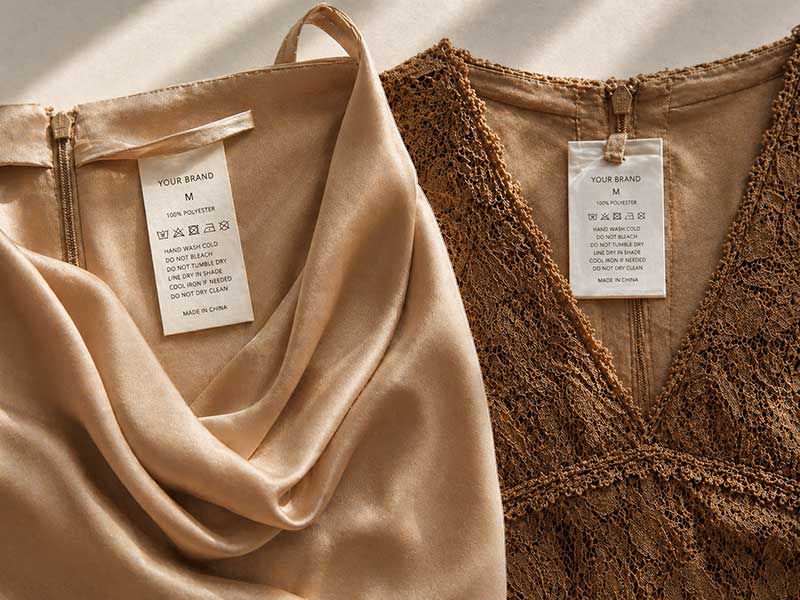
Neck Print
Neck print is often suitable for bodycon dresses because it avoids bulky sewn labels. It works well for fitted knit dresses, active-inspired bodycon dresses, casual fitted dresses and private label programs focused on comfort.
- Print fades after washing
- Placement is not centered
- Ink feels uncomfortable on skin
- Artwork does not scale across sizes
- Fabric surface affects print clarity
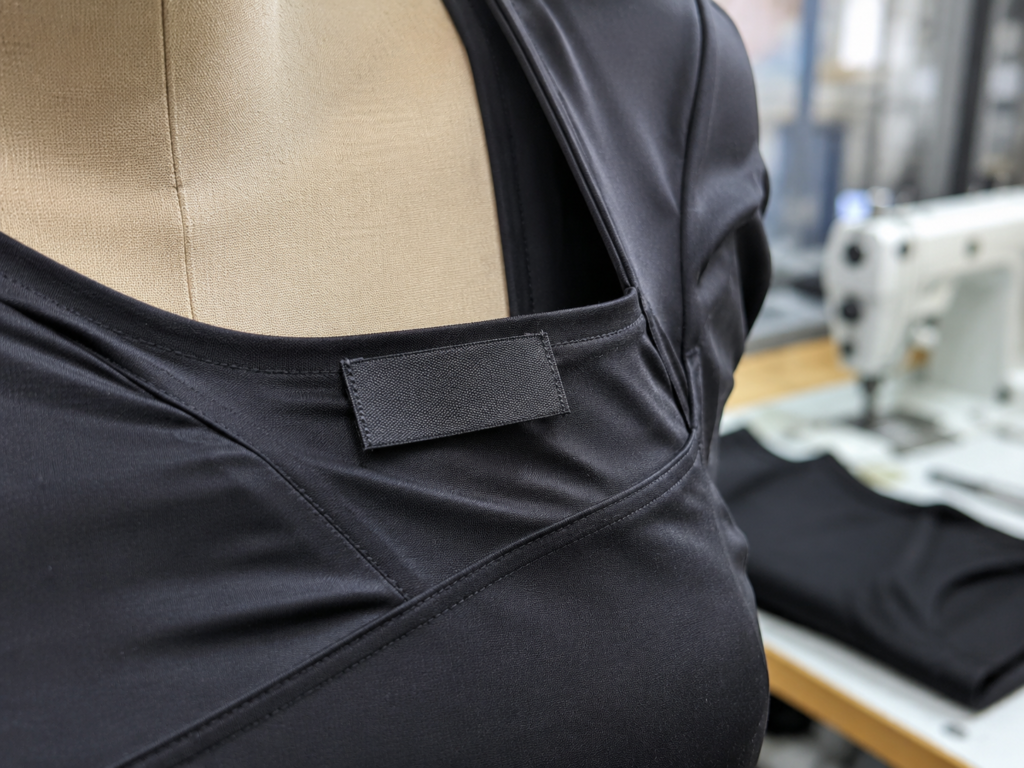
Woven Label
Woven labels help establish brand identity, especially for private label dress programs and boutique retail products. They are useful when the brand wants a more permanent and recognizable garment detail.
- Label feels scratchy on fitted garments
- Label is too large for the dress style
- Placement affects comfort
- Label color does not match brand direction
- Repeat orders use different label versions

Care Label and Size Label
Care labels and size labels are important for production clarity, customer use and garment care. They are especially important when fabrics include stretch blends, mesh, lace, velvet, sequins or lining.
- Care instructions are incomplete
- Size label is hard to read
- Label placement irritates the skin
- Label content changes between orders
- Fabric care is not clear for customers
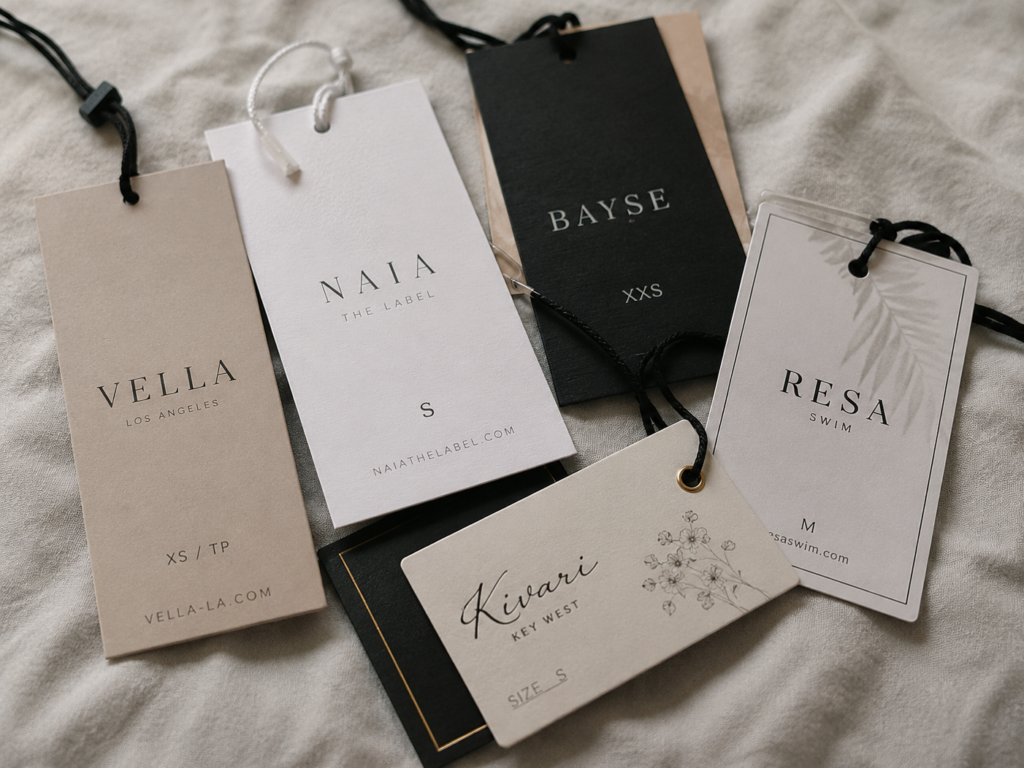
Hangtag
Hangtags help present the product as a branded fashion item. They can include brand story, collection name, SKU, size, pricing, fabric information, care notes or campaign details.
- Hangtag quality feels lower than the garment
- Tag placement damages delicate fabric
- Information is missing or incorrect
- Different styles use inconsistent tags
- Hangtags are confirmed too late
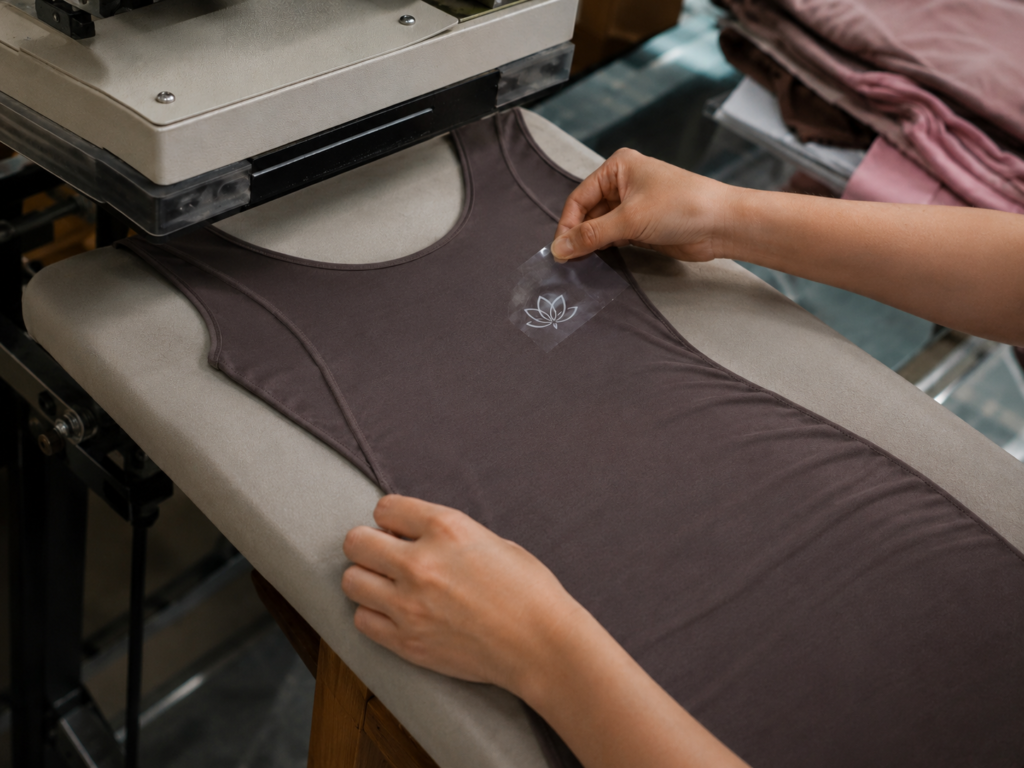
Heat Transfer Logo
Heat transfer can work for active-inspired bodycon dresses, sculpting styles, fitted knit dresses and clean minimal branding. It is usually better for small logos than large graphic branding.
- Logo cracks when stretched
- Bonding is weak on certain fabrics
- Heat affects delicate material
- Gloss level does not match the brand look
- Logo placement distorts when worn
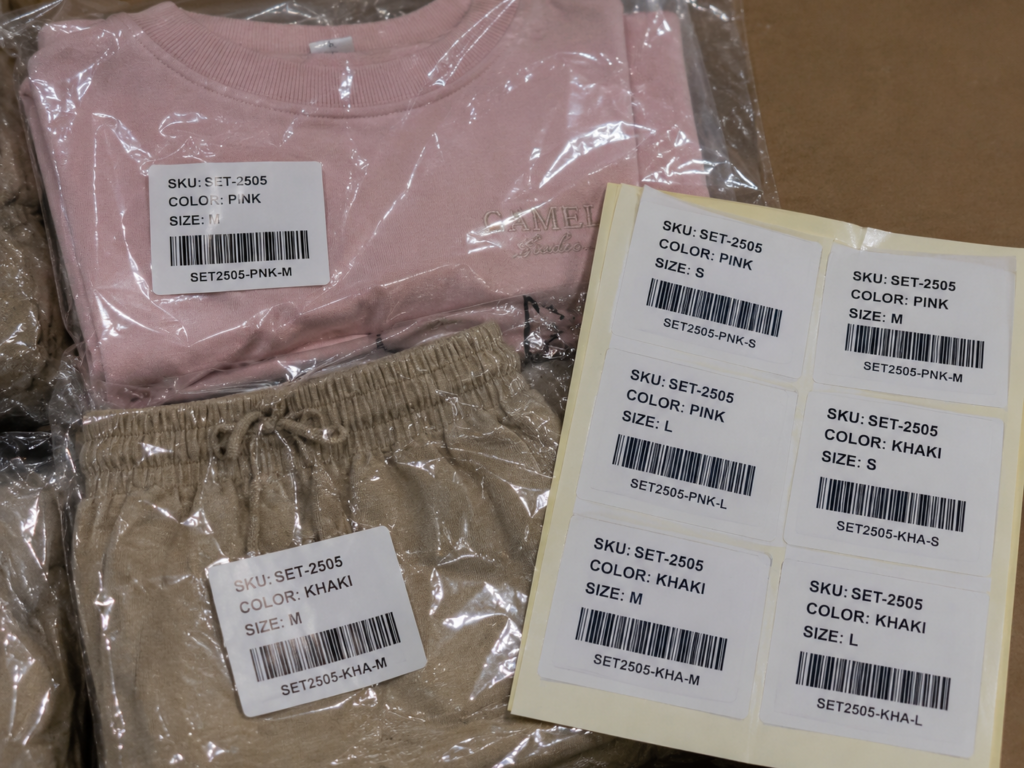
Packaging Sticker and Barcode
Packaging stickers and barcode labels are important for e-commerce, boutique retail, wholesale and warehouse receiving. They help connect the garment to the correct SKU, size, color and order details.
- Barcode does not match the product
- Size and color information is unclear
- Sticker placement is inconsistent
- Warehouse team needs to relabel goods
- Multi-color orders become hard to sort
Sample Development for Custom Bodycon Dresses
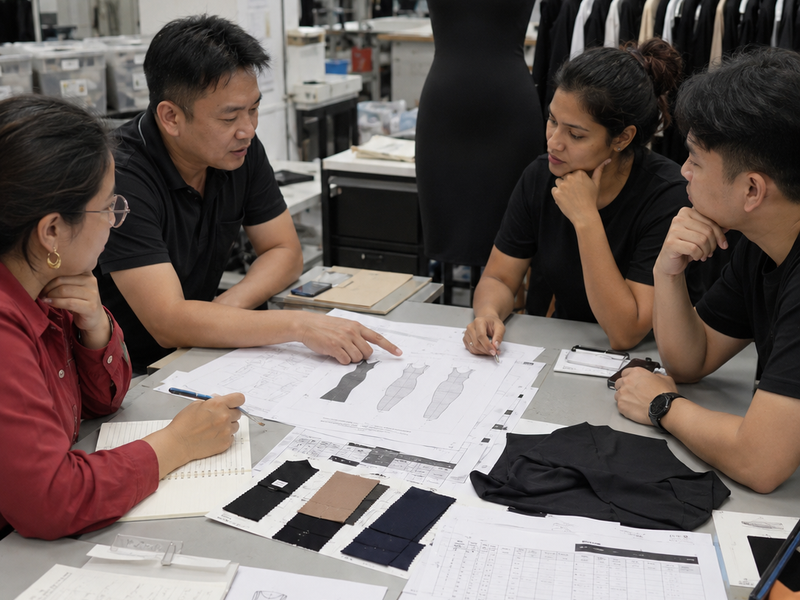
Project Review
The first step is understanding the dress before pattern making begins. Jinfeng reviews the tech pack, reference image, original sample, size chart, fabric idea, target fit, logo needs, order quantity and launch timeline.
- Reference image hides construction details
- Tech pack lacks enough measurement information
- Target fit is not clearly explained
- Client wants the look but not the same fabric
- Dress looks simple but structure is complex
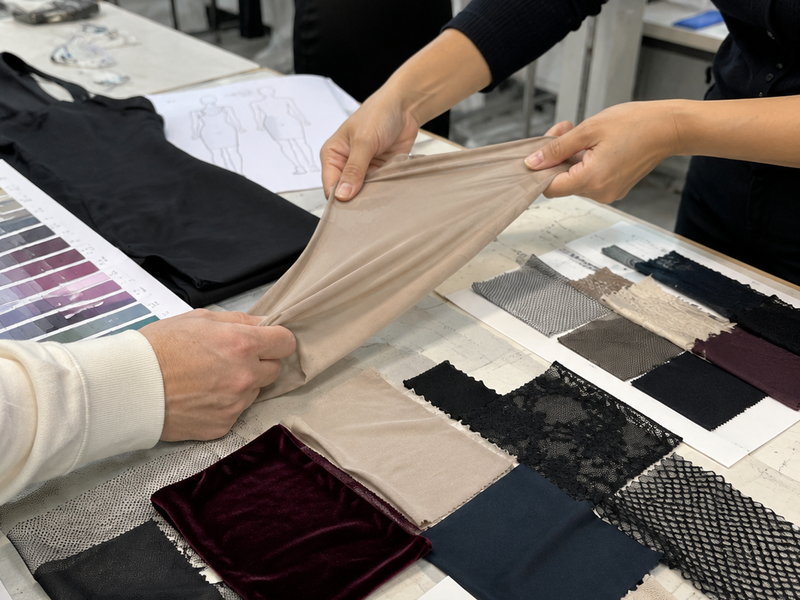
Fabric and Trim Sourcing
Fabric selection is critical for bodycon dresses. A wrong fabric can make the dress sheer, uncomfortable, too loose, too tight or difficult to sew.
- Fabric becomes sheer when stretched
- Recovery is weak after fitting
- Mesh or lace needs lining
- Sequin or velvet is difficult to handle
- Trim choice affects comfort and production cost
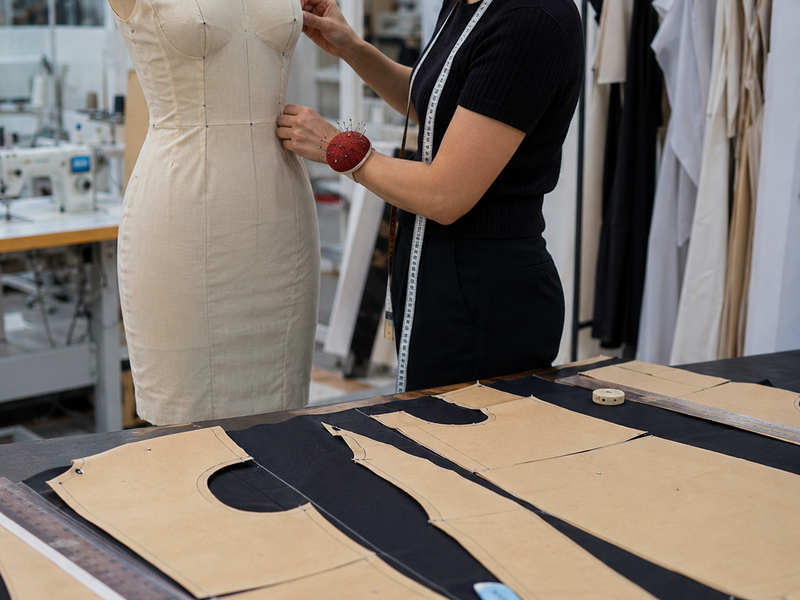
Pattern Making
Pattern making turns the dress idea into a real body shape. For bodycon dresses, the pattern must control bust, waist, hip, length, stretch direction, neckline, sleeve and hem balance.
- Bust area gaps or pulls
- Waistline does not shape the body
- Hip area feels too tight
- Dress rides up when walking
- Pattern does not match fabric stretch

Sample Cutting and Sewing
After pattern and fabric direction are confirmed, the sample moves into cutting and sewing. This stage reveals how the fabric behaves under real construction.
- Seam tension changes the dress shape
- Mesh distorts during sewing
- Satin shows puckering
- Ruching looks uneven
- Cut-out edges do not stay stable
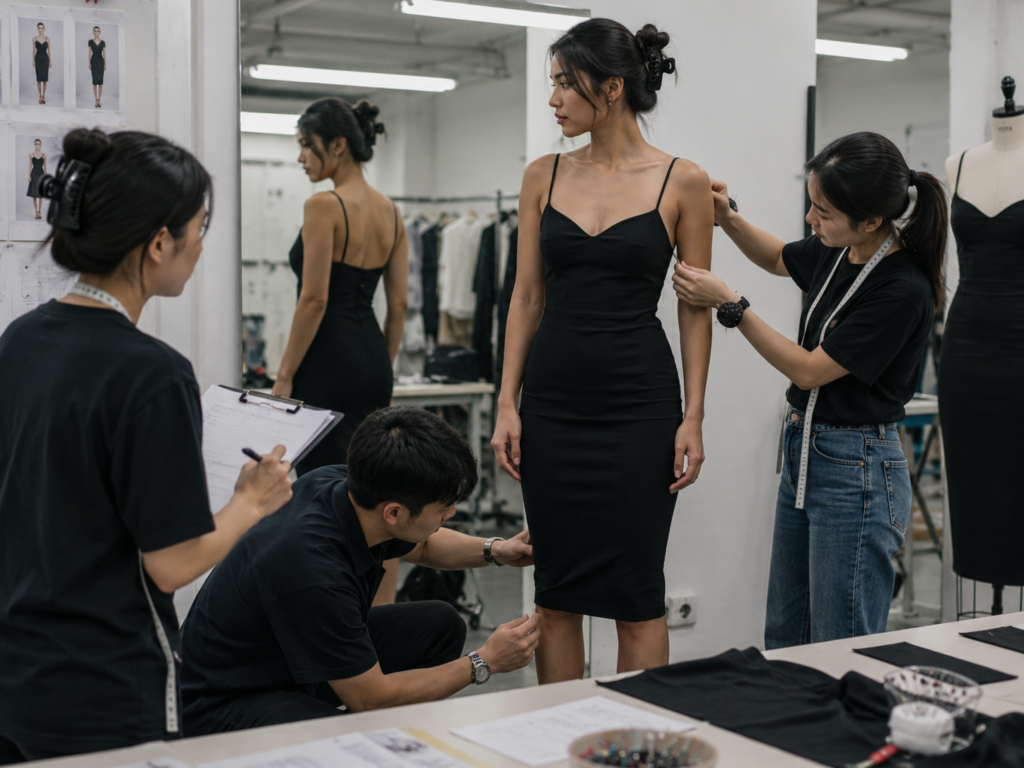
Internal Fit Review
Before the sample is sent to the client, Jinfeng reviews key details internally. This helps catch basic problems before the client fitting stage.
- Measurements pass but the dress does not flatter the body
- Neckline or strap position feels unstable
- Fabric recovery is weaker than expected
- Hem does not sit cleanly
- Logo or label placement feels wrong

Client Feedback and Revision
After the client reviews the sample, feedback must be translated into clear production actions. This stage is important for fit-sensitive products because small changes can affect the whole garment.
- Feedback is unclear or scattered
- Fit comments change the pattern and cost
- Fabric needs to be changed after first sample
- Revision affects delivery schedule
- Approved sample details are not recorded
Fit and Body Shape Control for Bodycon Dresses

Bust Fit
The bust area controls the upper body balance of a bodycon dress. If the pattern is too tight, the fabric may pull across the chest. If it is too loose, the neckline may gape or lose support. Strapless, halter, one shoulder and cut-out styles need extra attention because the upper body structure must stay stable while still feeling comfortable.
Jinfeng reviews bust width, neckline position, fabric stretch and seam placement during sampling to reduce fit problems before production.

Waist Shaping
Waist shaping decides whether a bodycon dress creates a clean and flattering silhouette. This is especially important for ruched dresses, sculpting dresses, midi bodycon dresses and fitted partywear. Poor waist control can make the dress look tight without looking shaped.
Jinfeng reviews waist position, side seam direction, fabric tension and body contour during pattern development. For ruched styles, the team checks whether the gathering supports the waistline instead of adding unnecessary bulk.
Hip Fit
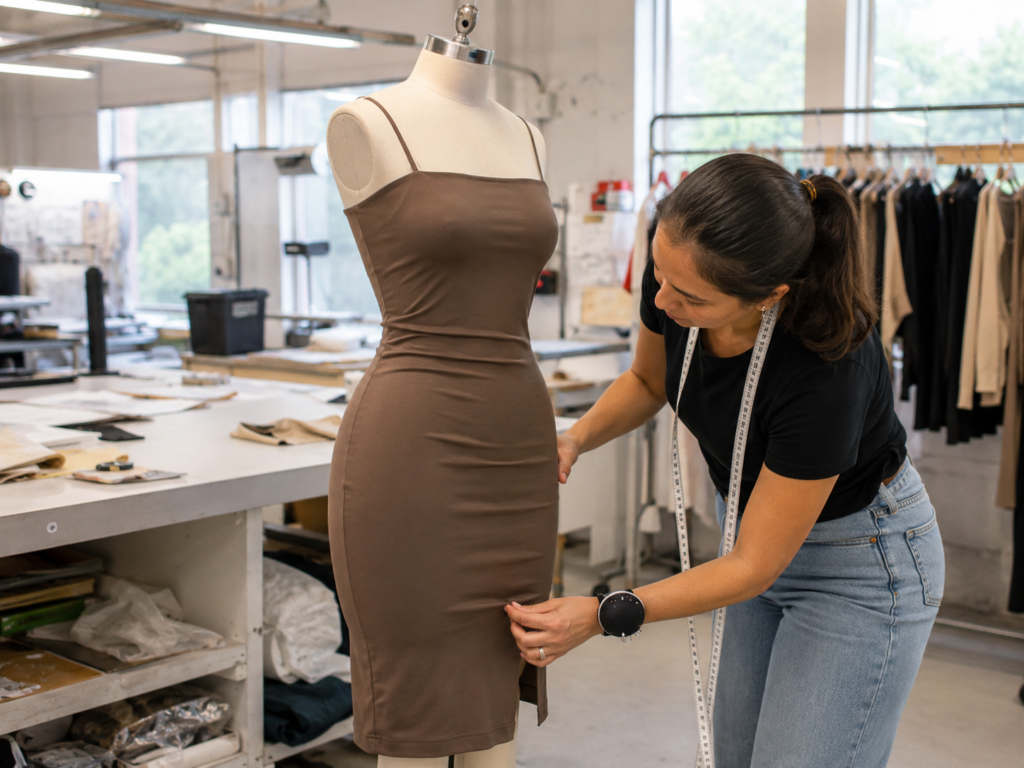
The hip area affects both appearance and comfort. A bodycon dress should follow the body line without restricting movement, twisting at the seams or becoming sheer under tension. If the hip fit is too tight, the dress may ride up or feel uncomfortable when walking. If it is too loose, the fitted silhouette becomes weak.
Jinfeng reviews hip width, stretch recovery, hem opening and movement comfort to help the dress keep its intended shape when worn.

Stretch and Recovery
Stretch helps a bodycon dress fit close to the body, while recovery helps the garment return to shape after wearing. Both are essential for fitted dresses, sculpting styles and active-inspired silhouettes. A fabric with poor recovery may look acceptable in the first fitting but lose shape after movement.
Jinfeng reviews stretch direction, compression level, opacity and recovery before sample approval. The pattern and fabric are checked together so the dress can shape the body without becoming uncomfortable.

Length and Proportion
Mini, midi and maxi bodycon dresses each need a different balance of length, hem width and movement. A mini dress may ride up if the length or hip fit is wrong. A midi dress may restrict walking if the hem opening is too narrow. A maxi dress may twist or feel heavy if the fabric and seam direction are not controlled.
Jinfeng reviews total length, waist position, hip line and hem behavior as part of the full silhouette.

Size Grading
Size grading for bodycon dresses is not only about making each point larger. The dress must keep its intended shape across sizes while maintaining bust, waist, hip, length and stretch balance. A style that looks correct in size S may lose proportion in size L if grading is too mechanical.
Jinfeng reviews grading according to fabric behavior, fit direction and target customer range, helping brands keep the approved silhouette more consistent across production sizes.
Construction Details That Decide the Final Fit

Ruched Placement
Ruching can shape the waist, soften the body line and improve the visual effect of a bodycon dress. Poor ruching can make the dress look bulky, uneven or unbalanced.
- Ruching height
- Gathering balance
- Side seam stability
- Waist and hip effec

Cut-Out Stability
Cut-outs create strong visual impact, but they can easily distort when the dress stretches on body. Placement, edge finishing and fabric recovery all affect the final result. wearable.
- Cut-out placement
- Edge finishing
- Fabric recovery
- Exposure control

Strapless Support
Strapless bodycon dresses need support, not just tight fabric. If the upper body structure is weak, the dress may slide down, gap at the bust or feel uncomfortable. production.
- Bust balance
- Top edge hold
- Inner support
- Fabric recovery

Mesh Panel Control
Mesh panels add a strong fashion effect, especially for partywear and clubwear. The challenge is controlling transparency, seam tension and stretch difference between mesh and the main fabric.
- Mesh transparency
- Panel shape
- Seam tension
- Lining need

Lining Selection
Lining can improve opacity, comfort and structure, but the wrong lining can restrict stretch or change the fit. This is important for mesh, lace, satin, sequin and light-colored bodycon dresses.
- Opacity support
- Stretch compatibility
- Skin comfort
- Color matching

Side Seam Tension
Side seams help hold the bodycon dress shape. If tension is wrong, the dress may twist, pull, wrinkle or lose balance after wear. This is especially visible in ruched, stretch, mesh and sculpting styles.
- Seam strength
- Stretch allowance
- Twist control
- Body pressure

Hem Stability
The hem affects both comfort and appearance. Mini dresses may ride up, midi dresses may restrict walking, and stretch fabrics may curl if the finishing is not suitable.
- Hem opening
- Curling risk
- Walking comfort
- Finished length

Zipper and Closure Position
Zippers, hooks and closures affect how easy the dress is to wear and how clean the back or side seam looks. Poor placement can create pulling, discomfort or visible tension.
- Closure position
- Zipper smoothness
- Seam balance
- Wearing comfort
Quality Control for Fit-Sensitive Dress Production

Fabric Quality Check
Fabric is the first risk point for bodycon dresses. The material must support the design, fit the body and stay stable during production.
- Shade differences between rolls
- Fabric defects after cutting
- Weak recovery
- Surface damage
- Fabric feels different from approved sample

Stretch and Recovery Review
Stretch allows the dress to fit the body. Recovery helps the garment return to shape after wear. Both need to be checked carefully.
- Dress stretches out after fitting
- Compression feels uneven
- Fabric becomes sheer under tension
- Fit changes after wear
- Different batches behave differently
Measurement Control
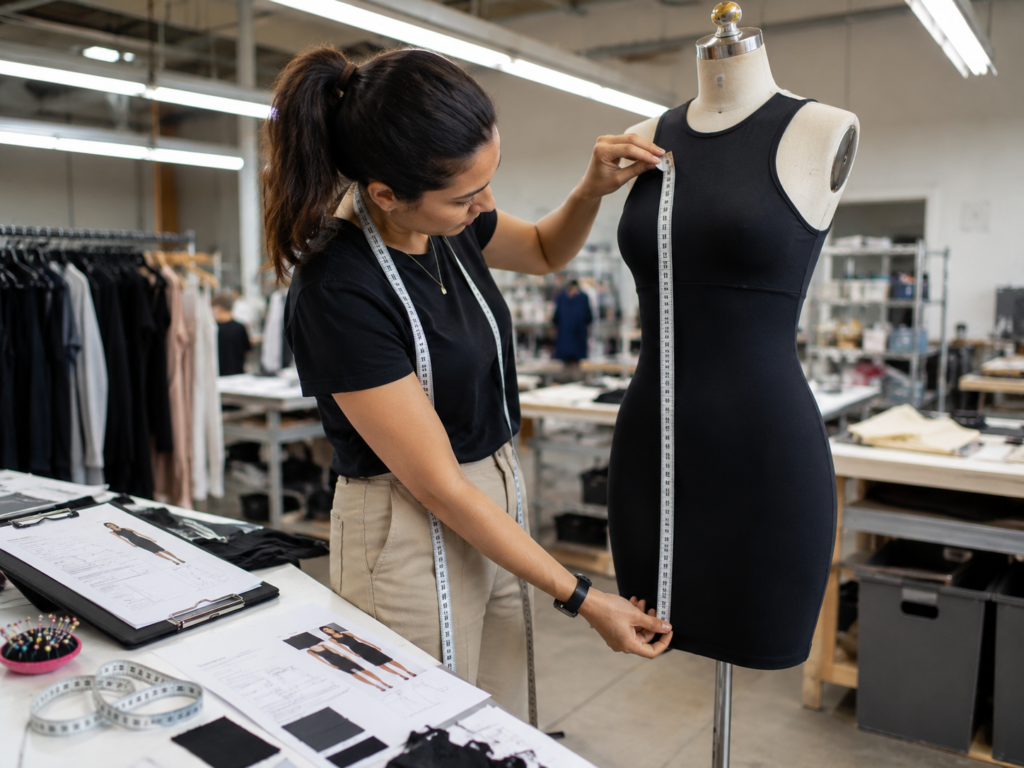
Measurements matter, but bodycon dress QC should also consider how those measurements work on body.
- Bust, waist or hip measurement shifts
- Length changes after sewing
- Size grading loses the shape
- Hem opening is too narrow
- Dress feels different from the approved sample
Seam and Stitching Quality
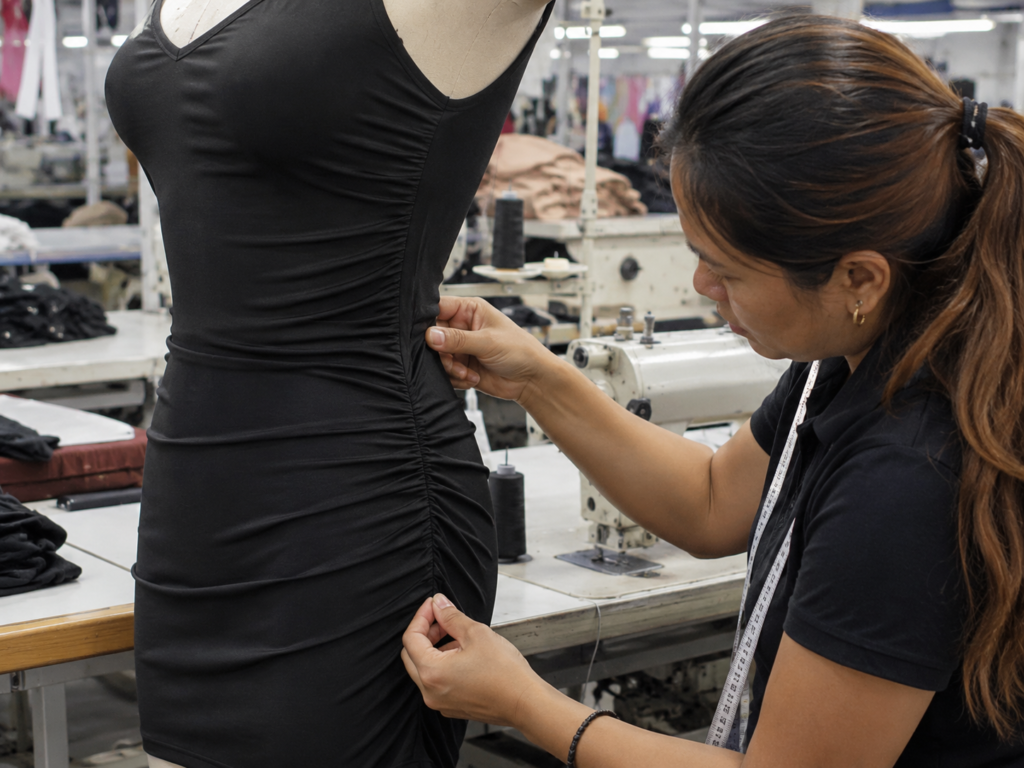
Stitching affects both appearance and comfort. Stretch fabrics, mesh, satin, velvet and sequin materials can all create sewing challenges.
- Seam pulling
- Stitch breakage under stretch
- Puckering on smooth fabrics
- Uneven ruching
- Twisted side seams

Opacity and Lining Check
Sheerness is one of the most common risks in fitted dresses. A fabric can look fine flat, then become transparent when stretched.
- Fabric becomes sheer at hip or bust
- Light colors need better lining
- Mesh or lace reveals too much
- Lining restricts stretch
- Inner layer shifts during wear

Trim, Zipper and Closure Review
Trims and closures affect how the dress wears. A poor zipper or uncomfortable closure can reduce product quality even if the dress shape is correct.
- Zipper pulls or waves
- Hooks feel uncomfortable
- Straps are unstable
- Elastic loses recovery
- Hardware does not match product level
Logo and Label Check
Private label details should be clean, comfortable and accurate. For fitted dresses, label placement and logo method need special care.
- Label scratches the skin
- Neck print is off-center
- Heat transfer cracks
- Hangtag is attached incorrectly
- Size or care information is wrong

Final Packing Review
Final packing protects the dress and helps the client receive the goods accurately. For multi-style or multi-color orders, packing clarity matters.
- Wrong size sticker
- Incorrect barcode
- Poor folding
- Missing hangtag
- Carton mark does not match packing list
Packaging Solutions for Private Label Bodycon Dresses
Packaging is often treated as a final step, but for bodycon dresses it should be planned earlier. A fitted dress may include delicate fabric, lining, stretch material, sequins, mesh, lace, hangtags, size labels and private label details. Poor packing can damage presentation before the product reaches the customer.
Individual Poly Bag
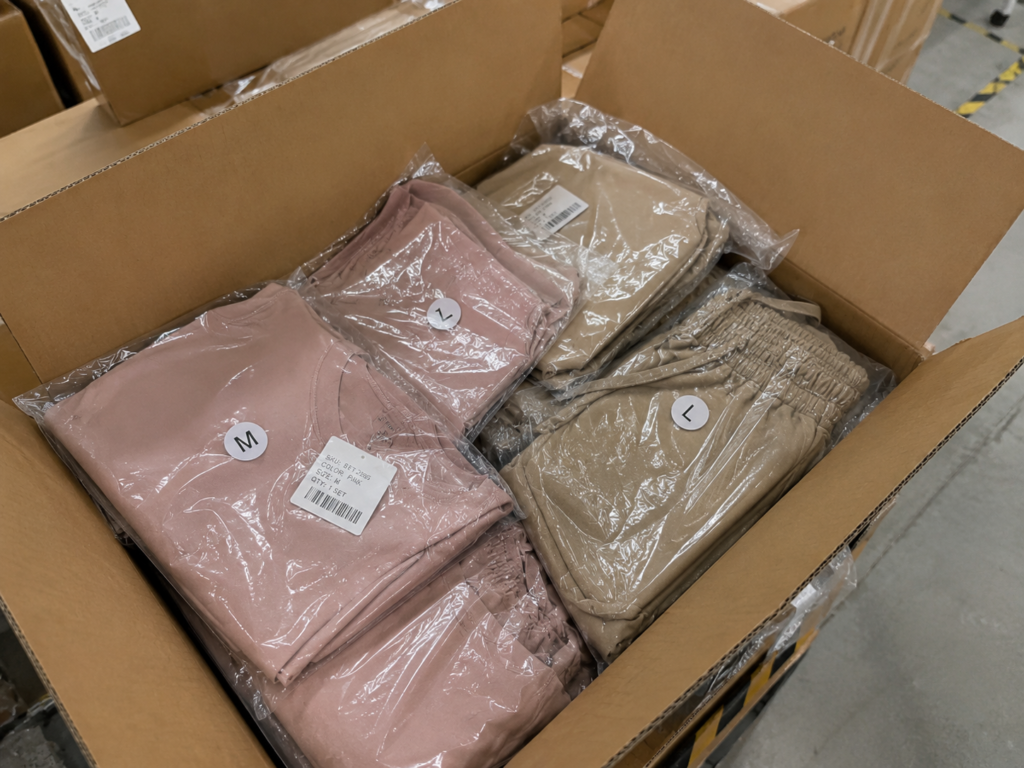
Individual poly bags help protect each dress during shipment and warehouse handling. They are commonly used for e-commerce, boutique retail, wholesale and private label orders.
- Poly bag size does not fit the dress well
- Garment arrives wrinkled or poorly folded
- Size sticker is missing or unclear
- Light fabrics are not protected enough
- Warehouse team cannot identify the product quickly
Custom Hangtag
Hangtags help a private label dress feel finished. They can carry brand identity, collection name, size, price, fabric content, care notes or campaign details.
- Hangtag quality does not match the dress level
- Tag placement damages mesh, lace or satin
- Tag string or pin creates marks on delicate fabric
- Information is missing or inconsistent
- Hangtags are confirmed too late in production
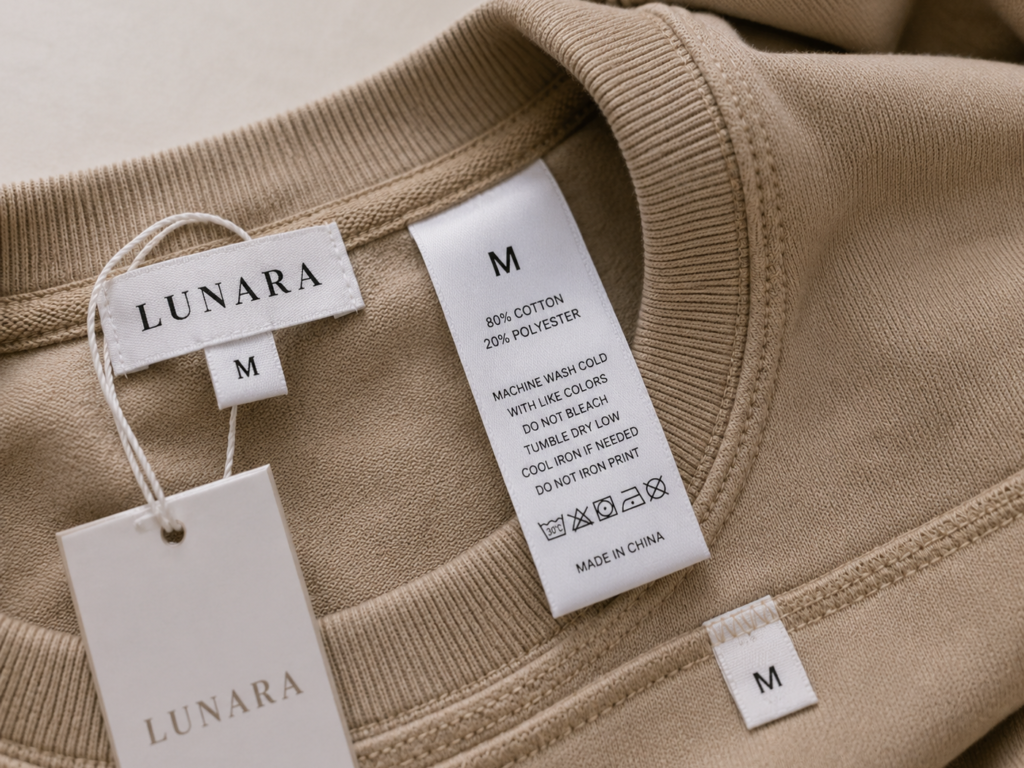
Woven Label and Care Label
Woven labels and care labels are important for private label identity and customer use. They are especially important for stretch fabrics, lined dresses, mesh dresses, sequins, velvet, satin and lace
- Label feels uncomfortable on a fitted garment
- Care information is incomplete
- Label placement affects stretch or comfort
- Different batches use different label versions
- Label color or quality does not match the brand
Size Sticker and Barcode
Size stickers and barcode labels help brands manage warehouse receiving, inventory sorting, marketplace fulfillment and direct-to-consumer shipping.
- Barcode does not match the SKU
- Size and color information is unclear
- Sticker placement is inconsistent
- Warehouse needs to relabel products after arrival
- Multi-color orders become difficult to sort
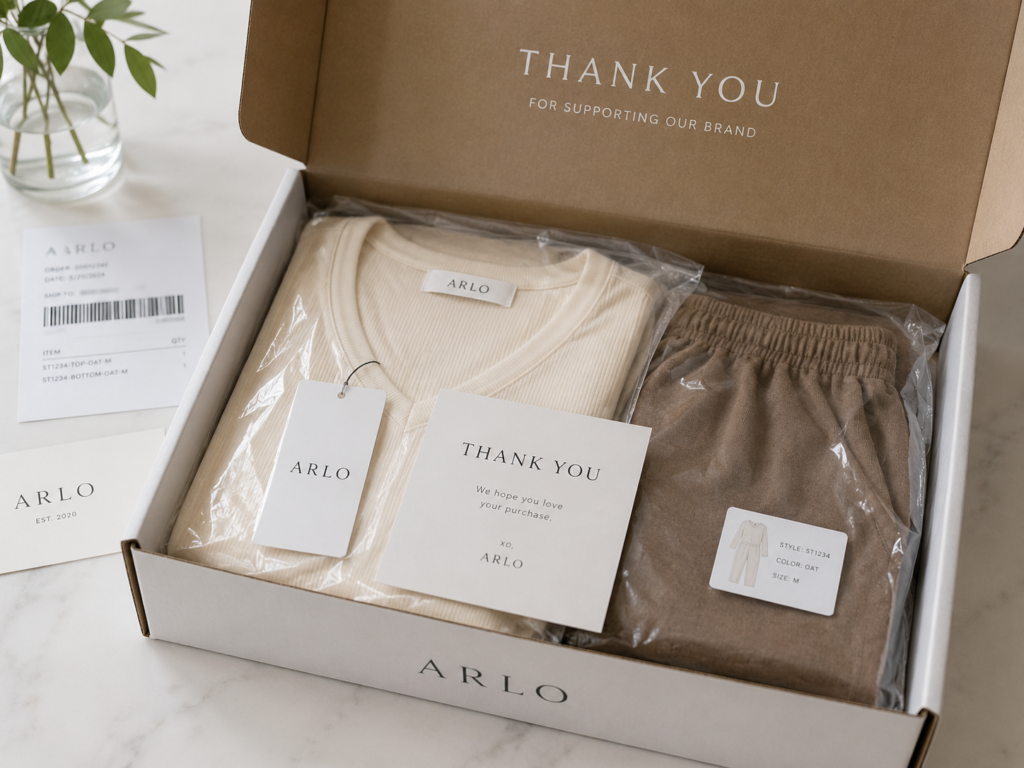
E-Commerce Ready Packing
E-commerce-ready packing helps the product arrive clean, organized and ready for warehouse intake or direct shipment. This is useful for DTC brands, online retailers and fast fashion sellers.
- Product presentation feels weak after delivery
- Dresses arrive wrinkled or compressed
- Warehouse team needs extra handling
- Size stickers are not visible
- Packaging does not match brand positioning
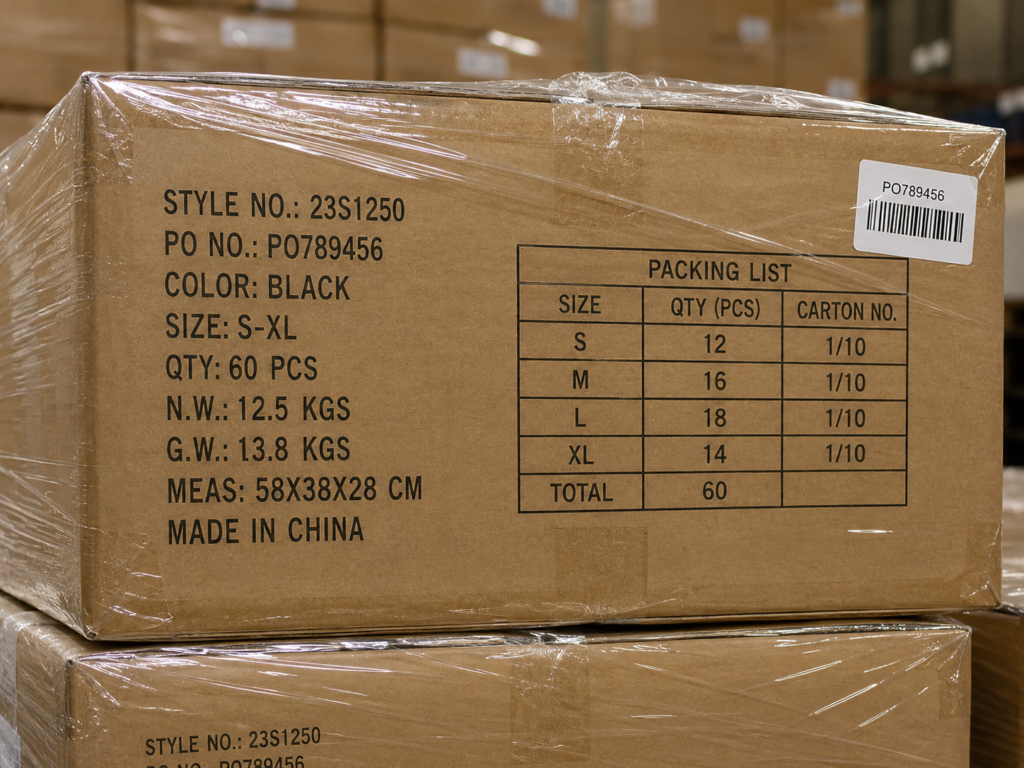
Carton Marking and Packing List
Carton information matters when the order includes multiple dress styles, colors and sizes. Clear carton marks and packing lists help clients receive goods faster and check quantities more accurately.
- Cartons are difficult to identify
- Style numbers or color codes are missing
- Size breakdown is unclear
- Packing list does not match physical goods
- Split shipments become confusing
Delivery Support for Samples, Bulk Orders and Reorders
| Shipping Method / Scenario | Typical Timing | Best For | Key Risk | Jinfeng Support |
|---|---|---|---|---|
| Express Delivery | 3–7 days | Samples, urgent revisions, approval pieces | Higher cost or missing sample notes | Helps arrange fast sample shipment with product details included |
| Air Freight | 5–8 days | Launch orders, urgent restocks, seasonal drops | Higher cost and tight timing | Coordinates packing details, shipment timing and delivery expectations |
| Sea Freight | 20–35 days | Bulk orders, planned stock, larger reorders | Longer transit time and port delays | Supports carton marks, packing lists and shipment preparation |
| Sample Stage | Based on sample completion | Fit review, approval and revision planning | Delayed sample slows the project | Prepares sample shipment clearly for client review |
| Small Test Order | Depends on method | 200–500 pcs launch tests | Freight cost may feel high per unit | Helps choose a practical shipping route by quantity and urgency |
| Launch Order | Air or sea | 1,000–5,000 pcs production | Missing campaign or drop date | Aligns production, packing and shipping before dispatch |
| Bulk Order | Usually sea freight | 5,000+ pcs programs | Carton and receiving confusion | Supports organized carton information and packing list details |
| Reorder | Depends on urgency | Restocks and proven styles | Late planning delays replenishment | Uses prior order references to plan delivery more efficiently |
| Area | Common Options / Requirements | Best For | Key Risk | Jinfeng Support |
|---|---|---|---|---|
| Trade Terms | EXW, FOB, CIF, DDP | Different logistics setups | Freight responsibility is unclear | Discusses suitable terms before order confirmation |
| EXW | Pickup from factory | Clients with China-side forwarders | Client handles most logistics | Goods can be prepared for arranged pickup |
| FOB | Delivery to export port | Brands with freight partners | Port timing must be clear | Supports export-side shipment coordination |
| CIF | Freight to destination port | Clients needing port-level freight support | Destination clearance still needed | Helps arrange freight to agreed destination port |
| DDP | Delivered to final address | E-commerce and warehouse-direct brands | Route and cost need early confirmation | Can be discussed based on destination and order details |
| Split Shipment | Partial stock, urgent styles, mixed air/sea | Campaigns and multi-style drops | Tracking and carton details become confusing | Can separate goods when packing and planning allow |
| Warehouse Labels | SKU, barcode, size, color stickers | E-commerce and 3PL receiving | Relabeling after arrival | Applies labels according to client instructions |
| Carton Marks | Style, color, size, quantity, PO details | Bulk orders and warehouse intake | Cartons are hard to identify | Prepares clearer carton information |
| Packing List | Carton breakdown and quantity details | Receiving and inventory checks | Packing list does not match goods | Coordinates packing list with carton contents |
| Reorder Delivery | Restock timing and shipment planning | Proven bodycon dress styles | Goods arrive after demand peaks | Helps discuss production and delivery schedule early |
Bodycon Dress Development Experience and Project Cases
Jinfeng supports bodycon dress projects involving complex structures, sample correction, fabric changes, MOQ planning, high fit requirements, urgent timelines and private label needs.
Case 1|A U.S. E-Commerce Fashion Brand
Project Overview
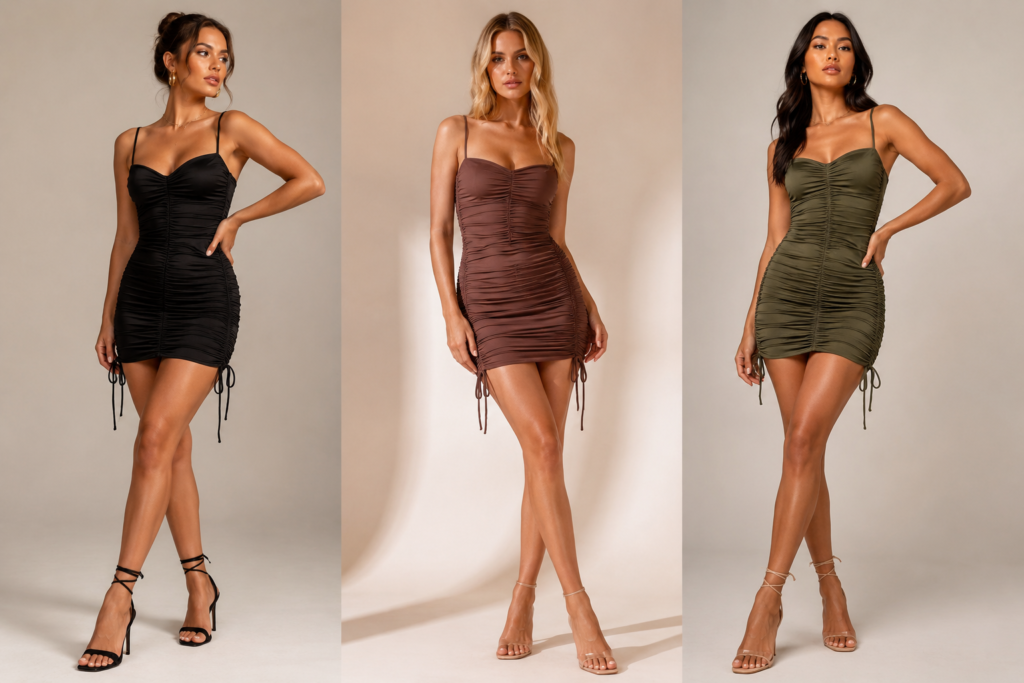
- Product: Ruched mini bodycon dress
- Starting point: Reference images + size chart
- Sample time: Around 7 days
- Initial order: 300 pcs
- Follow-up plan: New colors after launch test
- Key service: Fit correction, ruching adjustment, fabric review, MOQ planning
Challenge
The brand needed a fitted mini dress for a fast online launch. The style looked simple in photos, but the first development direction required better waist shaping, cleaner ruching, stronger fabric recovery, and a more wearable mini length.
Jinfeng Solution
Jinfeng reviewed the reference images, adjusted the ruched placement, refined the side seam tension, and helped review a stretch fabric with better recovery. The pattern team focused on bust, waist, hip, hem balance, and movement comfort before preparing the order for launch testing.
- Clearer body shape after sample correction
- More stable ruched placement
- Better fit direction for bulk production
- Lower inventory pressure with controlled first order
- Color extension plan prepared for reorder
Case 2|A European Partywear Brand
Project Overview
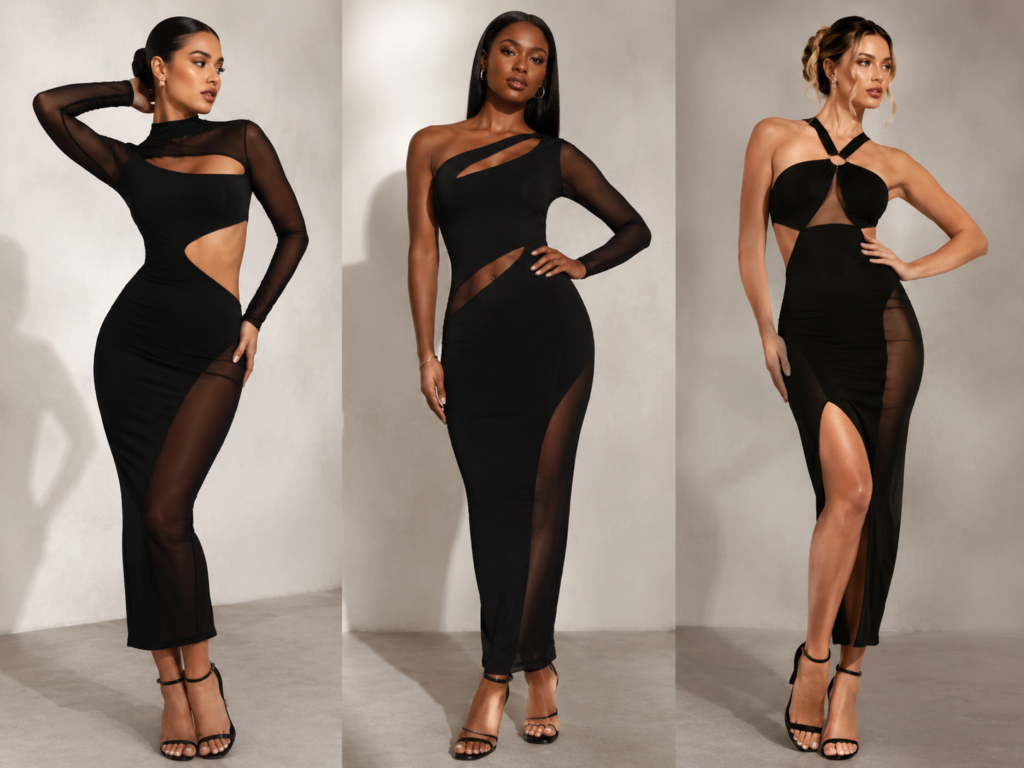
- Product: Cut-out mesh bodycon dress
- Starting point: Tech pack + reference sample
- Sample time: Around 10 days
- Initial order: 500 pcs
- Production type: Partywear / event dress capsule
- Key service: Complex structure review, mesh control, lining review, construction correction
Challenge
The dress required cut-out details, mesh panels, and a fitted silhouette. The main risk was construction stability. If the cut-out placement, mesh tension, lining, and side seam balance were not handled correctly, the dress could lose shape when worn.
Jinfeng Solution
Jinfeng reviewed the cut-out shape, edge finishing, mesh transparency, lining requirement, and seam tension. The pattern team adjusted the bust, waist, and side body areas, while the sample team tested the construction before moving closer to production approval.
- Cut-out shape became more stable
- Mesh panel placement improved
- Lining direction became clearer
- Construction risk reduced before bulk
- Client received clearer cost and lead time direction
Case 3|A U.S. Private Label Client
Project Overview
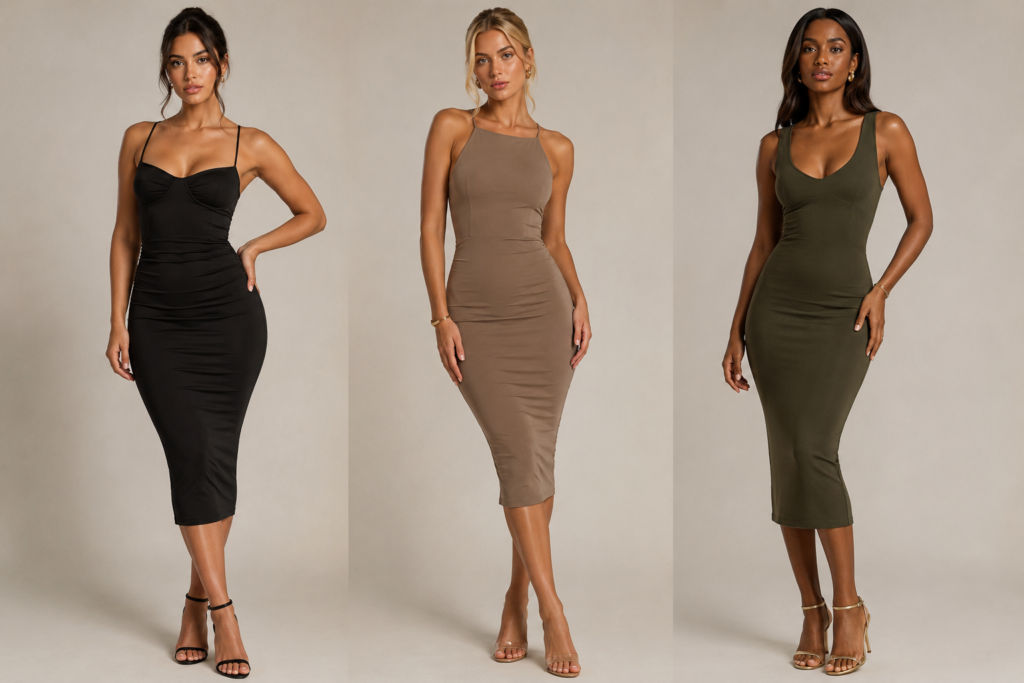
- Product: Sculpting midi bodycon dress
- Starting point: Original sample + brand label request
- Sample time: Around 7–10 days
- Initial order: 800 pcs
- Follow-up order: Planned after first selling cycle
- Key service: Fabric recovery review, size grading, private label details, packaging support
Challenge
The client needed a sculpting midi dress with strong body shape, clean private label finishing, and reliable reorder potential. The main concerns were fabric recovery, movement comfort, size grading, label placement, and repeat production consistency.
Jinfeng Solution
Jinfeng reviewed stretch, recovery, opacity, and fabric pressure before sample approval. The pattern team adjusted bust, waist, hip, hem opening, and grading direction. Jinfeng also supported woven labels, hangtags, care labels, polybag details, and packing information.
- Stronger sculpting fit direction
- Better movement comfort for midi length
- Cleaner private label presentation
- Approved sample notes kept for reorder planning
- Future color extension became easier to prepare
Factory Transparency for Long-Term Apparel Partnerships
Manufacturer Identity
- Direct garment manufacturing support
- OEM / ODM cooperation
- Sample development
- Bulk production
- Repeat order planning
Factory Visit Support
- Sample rooms
- Production lines
- Product development process
- Fabric and trim coordination
- Order follow-up workflow
Organized Production Structure
- Bodycon dresses
- Partywear dresses
- Occasionwear dresses
- Knit and woven women’s apparel
- Graphic and logo products
- Casualwear extensions
Sample-to-Bulk Control
- Approved sample
- Pattern notes
- Fabric direction
- Trim details
- Logo placement
- Size and measurement comments
- Packing instructions
Fabric and Material Review
- Stretch and recovery
- Opacity under tension
- Hand feel
- Shrinkage behavior
- Lining needs
- Trim compatibility
- Bulk availability
Production Follow-Up Team
- Video call
- Voice call
Inspection Readiness
- Measurements
- Workmanship
- Fabric condition
- Stretch and recovery
- Opacity and lining
- Logo and label details
- Packaging and carton information
NDA and Confidential Development
Fashion brands often share unreleased styles, seasonal concepts, original samples, campaign products and private label details. Jinfeng can discuss NDA cooperation before sample development begins.
- Unreleased dress designs
- Tech packs
- Original samples
- Private label programs
- New collection concepts
- Fit blocks and product development notes
Start Your Custom Bodycon Dress Project with a Clear Production Plan
Style Feasibility
Fabric Direction
Pattern and Fit Needs
Construction and Detail Review
MOQ and Production Plan
Branding, Packing and Delivery
Frequently Asked Questions About Custom Bodycon Dress Manufacturing
Start Your Custom Bodycon Dress Project With A Clear Production Plan
Send your bodycon dress reference, tech pack, target fabric, size range, quantity plan, private label needs and delivery country. Jinfeng can help review the sampling path, fit structure, fabric choice, branding options, packaging details, quality points and shipment plan before production begins.
A clear starting brief helps reduce development risk. It also gives the sample team, sourcing team and production team a better foundation for pricing, timing and bulk planning.
- Clear review of fit, fabric and body shape before sampling
- Support for private label details, including labels and packaging
- Flexible planning for MOQ, production schedule and repeat orders
- Coordination of quality control, packing and delivery before shipment