Skip to content


A dress can look flawless in a sample fitting and still cause serious trouble once production reaches the warehouse. Perhaps the waist sits one centimeter higher than expected, the satin shows a different sheen under store lighting, or a concealed zipper pulls awkwardly after the garment has been pressed. These problems are rarely just a matter of an inspector missing a loose thread. They usually point to something that changed between the approved design and the finished production run. For fashion brands working with custom manufacturers, the real challenge is keeping those two versions of the dress consistent.
Dress quality control is the process of checking materials, patterns, measurements, stitching, fit, appearance, labels, and packaging against approved requirements throughout production. It begins with sample and material approval, continues through cutting and sewing, and includes finished-garment and pre-shipment inspections. A useful QC checklist specifies each checkpoint, its acceptance criteria, the inspection result, and the corrective action required when something does not meet the standard.
At Jinfeng Apparel, our approach connects sample development with material checks, cutting control, in-line sewing inspection, final garment review, and packing verification. Different styles create different risks: a mesh dress needs careful coverage checks, while a corset dress demands attention to internal support. Imagine opening a shipment of beautifully packed dresses only to discover that the sizing varies between colors. The loss is not limited to reworking garments; it can interrupt a launch and erode confidence in the collection. The following process explains how to identify those risks before they become expensive surprises.
What Is Dress Quality Control?
Dress quality control is the coordinated set of checks used to confirm that manufactured dresses meet approved standards for materials, measurements, fit, construction, appearance, and delivery. It combines preventive controls before and during production with inspection of finished garments. When problems are found, the results should be documented, investigated, corrected, and rechecked against the same approved specifications rather than judged by personal opinion.
What Does Dress Quality Control Cover?
A properly made dress needs to perform well in several ways at once. The fabric must match what was approved, the garment must fit the intended body measurements, seams must support normal wear, and the finished appearance must represent the brand accurately. A dress can pass a quick visual inspection and still be unsuitable because its lining pulls, its zipper catches, or its fabric stretches differently from the original sample. For that reason, quality cannot be reduced to the number of loose threads discovered at the end of sewing.
Our documented process covers incoming fabrics and trims, cutting accuracy, sewing workmanship, in-line checks, measurements, pressing, finished appearance, labeling, packing, and final shipment verification. The relative importance of each checkpoint changes with the design. Satin calls for close observation of shade, snagging, pressing marks, and seam puckering; lace requires attention to motif placement and damage; bodycon dresses need particular scrutiny of stretch, recovery, and fit. These checks support the same objective: producing the garment that the brand actually approved, not simply a garment that looks similar on a hanger.
How Is Dress Quality Defined Before Production?
Quality becomes measurable when the brand and factory agree on a shared reference before cutting begins. A pre-production sample, or PP sample, is an important physical standard, but it cannot communicate every requirement by itself. The pattern version, grading rules, measurement chart, fabric specifications, bill of materials, trim approvals, construction instructions, and packaging details also need to be confirmed. Otherwise, teams may make reasonable but inconsistent decisions when a fabric is substituted or a construction detail seems unclear.
Consider an illustrative size M dress with an approved bust circumference of 90 cm and an agreed tolerance of plus or minus 1 cm. That measurement would be acceptable between 89 and 91 cm, provided the specified measurement method is used. It is not a universal tolerance; a closely fitted neckline or structured cup may need a different limit. Jinfeng Apparel uses approved PP samples and retained Golden Sample references alongside technical documents to connect development decisions with bulk production. The aim is to make the definition of ‘correct’ clear before the first production panels are cut.
How Do Quality Control and Inspection Differ?
Inspection describes the act of checking a material, operation, garment, or lot and recording whether it meets the specification. Quality control is wider: it includes the decisions that keep the process stable and prevent known problems from repeating. If an inspector notices puckering beside the concealed zipper, marking that garment as defective is inspection. Checking the needle, sewing tension, zipper type, fabric handling, and pressing method to determine what caused the puckering belongs to the wider quality-control process.
This distinction matters when the order involves several hundred or several thousand pieces. A fault found in the first production pieces may be corrected before it spreads; the same fault discovered after packing can require sorting, opening bags, repairs, new checks, and repacking. At Jinfeng Apparel, intermediate production checks are part of the documented workflow, rather than relying solely on a final appearance review. Inspection reports are valuable, but they provide much stronger evidence when they are connected to corrective actions and changes in production practice.

How Does the Dress QC Process Work?
The dress QC process moves through approved specifications, incoming materials, cutting, sewing, in-line checks, finishing, packing, and final inspection. Each stage compares actual work with the approved sample and technical requirements, while nonconforming material or garments are reviewed before proceeding. Checking quality at these stages helps a factory identify the source of problems earlier and reduces the risk of discovering them across a completed shipment.
What Is Checked Before Bulk Production?
Bulk production should begin only after the important design and manufacturing decisions have been approved. The team needs the final PP sample, correct pattern revision, size chart, grading instructions, color standard, approved fabrics, trims, sewing instructions, labels, and packing requirements. It also needs a production order stating the intended styles, sizes, colors, quantities, and timing. When even one document is out of date, a good sewing team can reproduce the wrong version of the garment with remarkable consistency.
For instance, a strapless corset dress may appear ready after a fitting, yet the production team still needs exact information about cup placement, boning locations, the zipper, lining layers, and neckline support. A switch in boning or cup material can affect fit without changing the general silhouette on a hanger. Our pre-production review links the physical sample with the bill of materials and construction instructions, helping teams assess such changes before cutting. The important point is not how many forms are signed, but whether each production decision can be traced to an approved requirement.
How Are Fabrics and Cutting Inspected?
Incoming fabric inspection compares delivered material with its approved reference. Depending on the order, the checks may include identity, color, usable width, fabric weight in grams per square meter, surface defects, hand feel, stretch direction, and requirements for dimensional stability or colorfastness. Testing is agreed according to material risks and product requirements; not every roll automatically receives every laboratory test. ISO 5077:2007, for example, is a recognized method for determining dimensional change under specified washing and drying conditions, rather than a universal pass-or-fail limit.
Cutting adds another set of controls: pattern version, grain or directional layout, print positioning, panel count, size identification, and correct treatment of stretch fabrics. Some knitted or elastic materials need controlled relaxation before cutting, because tension from storage or handling can change their dimensions. A satin panel cut in the reverse direction may reflect light differently, while an incorrectly oriented stretch panel can alter fit even when its measurements initially seem right. Our cutting checks seek to catch these differences before they become sewn-in defects, when correcting them is usually more disruptive.
How Are Sewing and In-Line Checks Done?
In-line inspection evaluates the garment while it is being assembled, so the team can identify a problem close to the operation that produced it. Typical checks include stitch formation, seam allowance, puckering, skipped stitches, panel alignment, zipper installation, lining attachment, strap length, and symmetry. For a lace or ruched dress, decorative placement may be just as important as basic seam strength. For a corset design, cup positioning and boning attachment need their own inspection points rather than being treated as optional finishing details.
Jinfeng Apparel’s documented sewing checks include these construction features, with the emphasis adjusted to the style. A repeated twist in a bodycon side seam might come from cutting direction, uneven fabric feeding, or a pattern problem; pressing alone will not necessarily solve it. A useful in-line record therefore identifies the operation, observed defect, affected quantity, action taken, and recheck result. The frequency of checking should also reflect risk. Complicated garments need closer attention at operations that are difficult to repair after the layers have been assembled.
What Happens During Finishing and Packing?
Finishing turns a sewn dress into a product ready for the customer to receive. The work includes thread trimming, stain and damage checks, pressing, functional checks, measurements where required, and a final examination of appearance. Fabric behavior still matters at this stage: excessive heat or pressure can mark satin, rough handling can damage sequins, and unsuitable folding can distort a structured bodice. A finishing team should not use pressing to disguise a construction problem that ought to be repaired at its source.
Packing adds checks that directly affect warehouse accuracy and the customer’s experience. Each item needs the correct brand and care labels, size identification, hangtag, barcode, protective packaging, and approved folding method. Carton marks and packed quantities should correspond to the order and packing list. Our process includes packing QC and final shipment verification because a perfectly sewn garment can still be commercially unusable if the barcode identifies another style or the carton contains the wrong size ratio. The following table shows how the inspection stages fit together.
| QC stage | Main checkpoint | Typical record or decision |
| Pre-production | PP sample, pattern, size chart, materials, BOM | Approved specification release |
| Incoming materials | Shade, gsm, width, stretch, surface defects, trims | Accept, investigate, or hold material |
| Cutting | Pattern version, grain, printed panels, size bundles | Cut-panel inspection record |
| Sewing and in-line | Seams, zippers, lining, straps, structural details | Defect and correction record |
| Finished garment | Measurements, fit, appearance, pressing | Garment inspection result |
| Packing | Labels, barcode, folding, cartons, size ratios | Packing verification |
| Final review | Lot identification, defects, cartons, shipment details | Release, hold, or reinspection decision |
What Should a Dress QC Checklist Include?
A practical dress QC checklist covers approved fabrics and trims, measurements, fit, seams, construction details, appearance, labels, barcodes, and packing. Each item needs a reference standard, a method of inspection, a result, and a decision when it falls outside the agreed limits. The checklist should also reflect the dress type, because a stretch bodycon style has different risks from a lace or structured evening dress.
Which Fabric and Trim Details Matter?
Material checks should answer two questions: is the correct material being used, and does it behave like the material that was approved? A fabric can match its color swatch while differing in weight, drape, transparency, or recovery. A lighter lining may change coverage; a replacement zipper can create an unwanted ridge; and a different mesh can alter the tension required for a fitted panel. Identifying these differences before assembly is particularly important in premium dresses, where the look often depends on how materials interact.
The checklist should specify fabric composition, weight, usable width, shade reference, visible damage, and any agreed performance testing. It should also include zipper size and function, lining type, strap and fastener specifications, decorative attachments, and structural components such as boning or cups. Our material and trim review uses approved samples and the BOM as reference points, so a substitute is not accepted simply because it seems close. Where the design requires extra verification, results should be linked to the corresponding material lot or approved sample reference.
How Are Measurements and Fit Checked?
Measurement checks compare the finished garment with a defined size chart, using the same measuring points and conditions for every inspected piece. The method matters as much as the number. One inspector may allow a jersey dress to rest naturally, while another accidentally stretches it across the table; their readings will differ even if both use a reliable tape measure. A specification should therefore state whether the measurement is a full circumference or a flat half-width and how the garment should be prepared.
Fit review asks a different question: does the dress sit and move as intended? A bodice can meet its flat bust measurement while the cups are too far apart, or a maxi dress can measure correctly at one point yet hang unevenly around the hem. We use approved pattern and sample references when assessing such details. The example below illustrates how a brand might define size M dimensions for a fitted dress. These are hypothetical values for explaining acceptance ranges, not standard Jinfeng Apparel tolerances and not limits that suit every design.
| Size M measurement | Approved finished value | Illustrative tolerance | Acceptable example range |
| Bust circumference | 90 cm | ±1.0 cm | 89–91 cm |
| Waist circumference | 72 cm | ±1.0 cm | 71–73 cm |
| Hip circumference | 98 cm | ±1.5 cm | 96.5–99.5 cm |
| Overall dress length | 120 cm | ±1.5 cm | 118.5–121.5 cm |
| Shoulder strap length | 35 cm | ±0.5 cm | 34.5–35.5 cm |
| Slit height | 40 cm | ±0.5 cm | 39.5–40.5 cm |
How Are Seams and Construction Checked?
Seam inspection involves more than looking for straight lines of stitching. A seam needs to suit the material, withstand the expected movement, and preserve the silhouette. Inspectors may check stitch formation, skipped stitches, seam allowance, needle damage, puckering, seam opening, and the alignment of adjoining panels. Particular operations deserve attention when they are hard to repair later, such as closing a lined bodice or setting a concealed zipper into delicate satin. A neat seam may still be unsuitable if it lacks the required stretch or pulls apart under normal wear.
Construction checks need to account for the garment’s intended use. A high slit should sit at the approved height and have appropriate reinforcement; straps and fasteners need secure attachment; a fitted lining should not pull the outer shell out of shape. For a stretch dress, the selected stitch and seam construction should accommodate movement without breaking. Where a brand requires laboratory verification, a relevant seam test can be agreed rather than inferred from appearance. Jinfeng Apparel’s sewing checks include symmetry, seam allowances, zippers, straps, lining, ruching, and special structure, with acceptance based on the approved sample and instructions.
Are Labels, Barcodes, and Packing Correct?
Label and packing errors can prevent a garment from being sold even when the workmanship is excellent. A size sticker that disagrees with the sewn-in label, a barcode linked to another color, or an incorrect carton ratio can create warehouse reconciliation problems and returns. The checklist should compare each item against approved artwork, the SKU list, and the order’s packing instructions. A barcode that merely looks clear is not necessarily correct; where scanning is required, the encoded information should be checked against the intended style, size, and color.
Care and fiber labels also deserve careful attention because legal requirements depend on the destination market.Other markets have their own rules, so a factory should work from approved, market-specific labeling requirements rather than assume one label suits every destination. Our packing QC covers labels, hangtags, barcode stickers, folding, protective packaging, carton marks, and packed quantities, including the additional handling needs of embellished or structured dresses.

Which Dress Defects Need Extra Checks?
Special dress constructions require targeted inspections. Satin and chiffon are sensitive to surface marks, puckering, and drape; mesh and lace need checks for damage, transparency, and motif placement; sequins and corset structures introduce attachment and support risks; bodycon dresses depend on stretch, recovery, and fit. Applying one generic defect list to every category can miss the problems customers will notice most clearly when the garment is worn.
How Are Satin and Chiffon Defects Detected?
Satin catches the light, which is part of its appeal and part of the inspection challenge. A small snag, pressure mark, or change in fabric direction can become obvious in photographs even when it is difficult to see under casual factory lighting. Inspectors should compare the finished garment with the approved standard under consistent lighting and examine zipper seams, side seams, and pressed areas. They should also distinguish actual shade variation from changes in apparent color caused by the way a satin panel reflects light.
Chiffon creates a different set of risks. Its light weight can make needle marks, puckered seams, exposed allowances, and uneven hems unusually noticeable. Layers and linings need checking for the intended opacity, especially during movement and under light. A fluid or bias-cut hem may change after hanging, so the correct finishing procedure matters before the final length is judged. At Jinfeng Apparel, these fabrics receive style-specific attention during cutting, sewing, pressing, and packing. A material that looks beautiful as a swatch still has to behave properly as a complete dress.
What Can Go Wrong With Mesh and Lace?
Mesh is often used where a designer wants transparency, shaping, or layered texture. Each use creates a different quality requirement. A small hole may open visibly when stretched; a neckline may become distorted by tension; or a lining that seemed acceptable on the table may provide too little coverage when the dress is worn. Inspectors should examine surface damage, panel balance, stretch direction, recovery, attachment, and the relationship between the outer mesh and lining. The approved design determines the intended transparency, rather than an inspector’s personal preference.
Lace brings the additional challenge of motif placement. Two acceptable lace panels can produce a visibly uneven dress if the floral pattern does not meet correctly at a center seam or neckline. The checklist may require inspection of broken threads, damaged edges, misplaced appliqués, symmetry, and lining placement. For delicate lace, rough handling during cutting or sewing can introduce damage that was absent during incoming material inspection. Our QC standards for mesh and lace focus on both material condition and the appearance of the assembled garment, because problems often become visible only after the individual panels are joined.
How Are Sequins and Corset Details Checked?
Sequin dresses need checks for missing decorations, loose attachment threads, rough exposed edges, damaged backing fabric, and uneven placement. The inspector should examine not only the front of the dress but also the inside near armholes, necklines, and seams where embellishment could irritate the wearer. Where sequins cross a seam, the construction needs to be appropriate for the material and the approved design. Protective packing is also part of the quality decision: surface friction and compression can damage decoration after the garment has passed its final visual inspection.
Corset dresses require a different kind of scrutiny. Cup symmetry, boning placement, internal support, zipper alignment, neckline stability, and the relationship between outer fabric and lining all affect fit. A dress can match its flat bust measurement and still sit badly because the cup position is wrong. Our production documentation for structured dresses includes the relevant pattern and construction details, so inspection is not limited to exterior appearance. In both embellished and corset styles, hidden workmanship matters because it determines whether the finished dress maintains its shape and remains comfortable during normal movement.
How Are Bodycon Fit and Stretch Verified?
Bodycon dresses often rely on negative ease, meaning the finished garment is intentionally smaller than the body dimensions it is designed to fit. The result depends on fabric extension, recovery, pattern balance, and stitching that can accommodate movement. Two fabrics with similar fiber-content labels can behave differently because of yarn, knit structure, finishing, and the direction of stretch. A substitute fabric therefore needs more than a quick color comparison; it may require new fit assessment before the existing pattern is approved for bulk use.
Inspection should combine measurements with observation of actual fit. Important points include the bust, waist, hip, length, side-seam position, ruching symmetry, transparency under extension, and whether the garment returns toward its original shape. Excessive pulling, twisting, or loss of recovery can make a dress unsuitable even when it looks good on a stationary mannequin. At Jinfeng Apparel, stretch dress production connects material review, appropriate fabric preparation, cutting direction, in-line sewing checks, and finished-garment evaluation. The goal is a consistent silhouette that feels wearable, not simply a garment that is tight enough to resemble the original design.
How Do AQL and Final Inspections Work?
AQL inspection assesses a production lot using a specified sampling scheme and agreed defect limits. Inspectors select items according to the plan, classify findings, and compare the results with the applicable acceptance and rejection numbers. Final inspection also verifies measurements, workmanship, labels, cartons, and shipment details. Sampling supports a consistent decision about the lot; it does not prove that every single dress is defect-free.
What Are Critical, Major, and Minor Defects?
Defect categories help an inspector distinguish a genuine safety or sales problem from a small cosmetic deviation. A critical defect generally involves an unacceptable safety hazard or serious compliance issue. A major defect substantially affects the garment’s use, appearance, or saleability; examples may include a broken zipper, a significant measurement error, or a visible hole. A minor defect is a smaller deviation that does not materially affect performance or the appearance agreed for that product. These examples still need interpretation in the context of the dress and destination market.
A tiny mark in a concealed lining may have different consequences from the same mark on the front of a pale satin evening dress. That is exactly why defect classifications should be agreed before inspection, preferably with descriptions and reference photographs. Many commercial garment inspections use illustrative AQL levels such as 2.5 for major defects and 4.0 for minor defects, alongside a zero-acceptance approach to critical defects in the sample. These are examples, not universal rules or automatic Jinfeng Apparel settings. The actual sampling plan and product specification determine the applicable decision.
How Are AQL Samples and Limits Set?
An AQL number is not calculated by multiplying the order quantity by a permitted defect percentage. Instead, the inspector first defines the relevant inspection lot and chooses an agreed sampling scheme and inspection level. The lot size and selected AQL then determine the sample size and acceptance or rejection numbers from the applicable tables. For example, a 2,000-piece order containing several styles or production sources may need to be divided into appropriately defined lots rather than treated as one interchangeable group of dresses.
is a current international reference for sampling schemes indexed by acceptance quality limit for lot-by-lot attribute inspection. Its provisions cover sampling arrangements and related inspection rules; using the term AQL does not itself show that a specific standard has been applied. Jinfeng Apparel can arrange AQL inspections according to the customer’s agreed requirements. When a garment has critical safety features or a particularly sensitive construction detail, the brand may also require targeted checks beyond ordinary sample-based inspection.
What Happens When a Dress Lot Fails?
A failed lot should be treated as a documented quality decision, not a request to quietly replace the few garments the inspector happened to examine. The first task is to record the findings: style, color, size, affected lot, defect type, number observed, and photographs where helpful. The team then investigates whether the problem is isolated or likely to affect additional pieces. Several dresses with the same incorrect slit height, for example, may indicate a shared pattern marking or sewing-instruction problem rather than a handful of unrelated mistakes.
Corrective action depends on the cause and the condition of the goods. The factory may need to identify or hold affected products, sort garments, carry out feasible repairs, update production instructions, and recheck corrected items. Where the lot failed an agreed sampling plan, the applicable reinspection and release conditions still need to be met; correcting individual defects does not automatically turn a rejection into acceptance. Our documented final-inspection workflow distinguishes garments that can proceed to packing from those requiring repair, reinspection, customer confirmation, or shipment restriction. Clear records protect both parties from disagreements about what was found and what happened afterward.
Can Clients Arrange Third-Party Inspections?
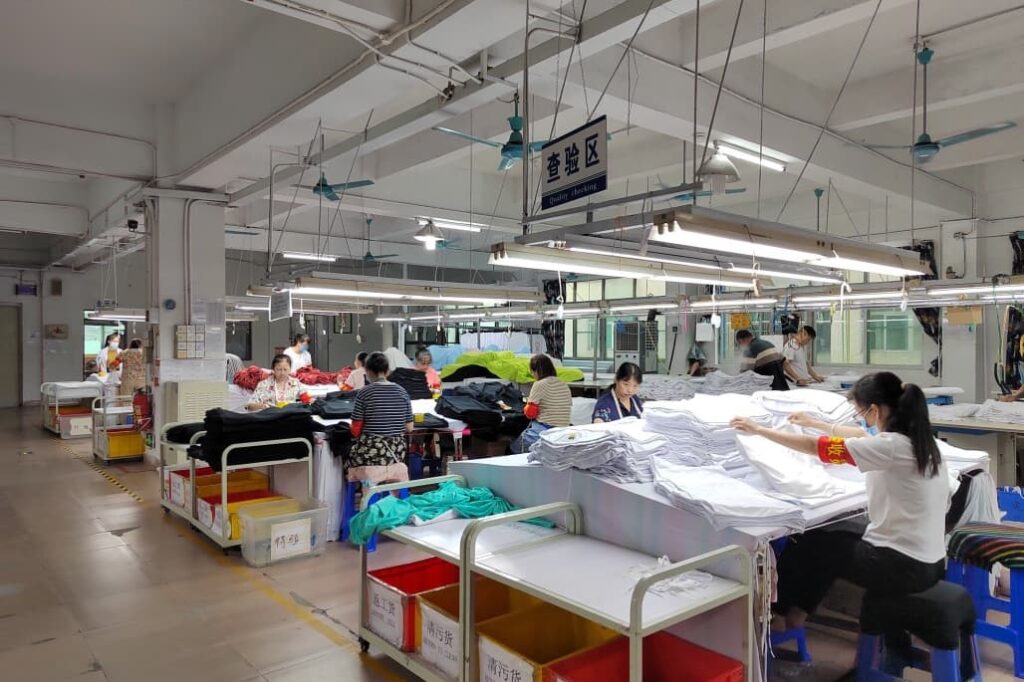
Independent inspectors can be useful when a brand is working with a new supplier, launching a complicated collection, or following a formal retail procurement process. Their task is to inspect against an agreed scope, not to invent a new quality standard at the factory gate. Before the visit, the inspector should have access to the approved sample, measurement chart, defect guide, lot information, and packing requirements. The report should identify how samples were selected, what was examined, which defects were found, and the resulting lot decision.
Jinfeng Apparel supports customer-appointed and third-party pre-shipment inspection according to project requirements, including preparation of relevant product references and production information. External inspection is an additional layer of verification rather than a substitute for incoming-material and in-line controls. An inspector who arrives after packing cannot undo a wrong pattern version or prevent seam distortion that developed during sewing. For brands assessing a manufacturing relationship, the strongest evidence is the combination of production-stage records, credible final inspection, and documented corrective action when a problem occurs.
How Can Brands Verify Consistent QC?
Brands can assess consistency by comparing approved product specifications with material, production, measurement, final-inspection, and corrective-action records. They should ask how a factory identifies affected lots, controls revised instructions, manages production across sites, and preserves standards for repeat orders. One attractive sample or passing inspection is encouraging, but a traceable history of decisions provides stronger evidence that the same dress can be reproduced reliably.
Which QC Records Should a Factory Provide?
The most useful QC documents create a path from the approved design to the garments actually shipped. At the beginning, that means the PP sample or Golden Sample reference, current pattern and grading files, measurement chart, BOM, approved material details, construction instructions, and packing specification. During production, relevant records can include material inspections, cut-panel checks, in-line defect findings, measurement results, corrective actions, and finished-garment inspection. For final shipment, the lot identity, carton details, and release decision should correspond to the order being dispatched.
Not every order needs the same amount of paperwork. A straightforward jersey dress may justify a smaller set of critical checks than an embellished, structured gown, while a major retailer may require additional reporting. The essential fields are still practical: style and lot identifiers, inspection date, quantity examined, accepted criteria, findings, action taken, and the person or team responsible for approval. Our production management system uses approved samples, QC checklists, production instructions, and packing records to support this continuity. Documents should help someone make and verify a decision, rather than exist only to make a factory appear organized.
How Are Defects Corrected and Rechecked?
A corrective process needs to distinguish repairing the affected garment from eliminating the reason the defect appeared. If a maxi dress has an uneven hem, alteration may make that one garment acceptable, but it does not explain whether the cause was cutting, bias relaxation, sewing distortion, or finishing. The team should compare the defective product with the approved standard, examine the relevant production stage, and decide whether other pieces share the same risk. Without this investigation, the fault may return in the next batch.
The correction should match the evidence. Wrong pattern markings call for a version or instruction change; inconsistent sewing may require an operation review; unsuitable fabric might need to be held or replaced rather than pushed through production. Reinspection then confirms that the corrected products meet the original acceptance criteria. At Jinfeng Apparel, our documented approach includes issue classification, root-cause review, sample or construction changes where necessary, revised records, and additional checking. The objective is not to claim that defects never occur. It is to demonstrate that findings lead to controlled decisions and measurable follow-through.
How Is Quality Controlled Across Production Sites?
A manufacturing network can support different fabrics, construction methods, and order schedules, but it also creates a need for consistent communication. Jinfeng Apparel operates six owned womenswear factories and works with more than ten long-term satellite production partners. That capacity is useful only when the relevant production teams work to the same approved pattern, sample, material requirements, size specifications, and inspection criteria. A style should not silently change because it is being assembled at a different site or by a different team.
Traceability becomes particularly important if an order is divided between locations or production periods. When applicable, records should identify the production source, material lot, pattern revision, and inspection findings so that a problem can be investigated without treating all garments as identical. Dress categories should also be matched to appropriate processes: a lace occasion dress requires different critical checkpoints from a simple jersey shift. Brands reviewing a multi-site manufacturer should examine how specifications are released, how deviations are approved, and how results are compared. Factory count alone is not proof of consistent quality; repeatable execution is what matters.
How Are Standards Maintained for Repeat Orders?
A repeat order is not automatically identical to the previous one. Fabric can come from a new dye lot, a trim supplier may change, and different operators may handle the same construction. Even where the composition and nominal weight remain unchanged, drape, shine, extension, and recovery can differ enough to affect the final result. That is why the original approved documents should be reviewed against the materials and conditions available for the new production run.
Jinfeng Apparel supports seasonal collection development and repeat production using retained patterns, size charts, material references, trim specifications, Golden Sample standards, packing requirements, and QC records. Suppose a brand reorders a successful satin maxi dress. The new fabric should be checked against its approved reference; any substitution needs review before cutting, and the previous inspection findings can guide attention to known risk points such as zipper distortion or unwanted folding creases. Consistent quality does not mean nothing ever changes. It means changes are recognized, approved, documented, and verified before they reach the customer’s next collection.
Conclusion
Dress quality is not determined by a single inspection or by the appearance of one carefully made sample. It comes from managing a sequence of decisions: choosing suitable materials, approving workable patterns, checking construction while it happens, and confirming that the finished garments and packaging match the agreed requirements. At Jinfeng Apparel, this connection between development, production, quality control, and repeat-order records is central to our custom womenswear work. For a brand planning its next dress collection, discussing the QC checklist while approving the sample is a practical way to protect the launch long before the first cartons are packed.
Frequently Asked Questions
1. What is the most important step in dress quality control?
The most important step is establishing a clear, approved standard before bulk production, because every later inspection depends on knowing what the garment is supposed to be. That standard should connect the PP sample with measurements, materials, construction instructions, and relevant acceptance criteria. Incoming material checks and in-line sewing inspection are equally important for preventing errors from spreading. A final inspection can identify defects, but it cannot replace the earlier decisions that determine whether a complete order will reproduce the approved dress.
2. What should be included in a dress inspection checklist?
A practical checklist covers fabric identity and appearance, trims, pattern and cutting accuracy, seams, stitching, zippers, linings, finished measurements, fit, pressing, and the overall garment condition. It should also verify brand labels, care labels, barcodes, packing methods, and carton quantities. Each item needs an agreed reference and a recorded result. Special styles require additional checks: corset dresses need internal support inspection, mesh dresses need coverage and damage checks, and sequin dresses need attachment and comfort review.
3. What is AQL 2.5 in garment inspection?
AQL 2.5 is an acceptance-quality-limit setting sometimes selected for a defined defect category, often major defects, within an agreed sampling plan. It does not mean that exactly 2.5% of a shipment may be defective or that every inspection uses the same sample size. The acceptance and rejection numbers depend on the applicable scheme, lot size, and inspection level. Brands should agree on those details and the defect classifications before inspection, using an appropriate reference such as ISO 2859-1:2026.
4. How are dress measurements checked during bulk production?
Inspectors measure defined points on selected garments and compare the results with the approved size chart and tolerances. The measurement method needs to be consistent, particularly for stretch fabrics that can change shape when pulled across a table. Common points include bust, waist, hip, length, straps, neckline, and slit height. Fit should also be assessed separately where the design requires it, because a dress may meet its flat measurements while showing poor balance, cup positioning, or movement on the body.
5. Which defects are common in satin, lace, and bodycon dresses?
Satin dresses may show snags, seam puckering, shade differences, unwanted press marks, or zipper distortion. Lace dresses can have damaged motifs, irregular matching, poorly attached edges, or lining that changes the intended appearance. Bodycon dresses may develop twisted seams, uneven ruching, excessive transparency under stretch, poor recovery, or inconsistent fit. These problems require inspection methods suited to each fabric and construction. A generic final checklist alone may not expose them until the dress is worn or photographed.
6. Can a fashion brand request an independent inspection before shipment?
Yes. A fashion brand can arrange a customer-appointed or independent third-party inspection, provided the scope and practical arrangements are agreed with the manufacturer. Inspectors should have access to the approved garment standard, measurement specifications, lot information, defect classifications, and packing requirements. The final report should explain what was sampled and found, together with the lot decision. Independent inspection adds useful verification, but routine material, cutting, sewing, and finished-garment controls remain necessary throughout production.