Skip to content


A dress can look flawless on a showroom rail and still become a costly problem when thousands of pieces reach a warehouse. Perhaps the waist measurements drift between sizes, a concealed zipper catches, or pale satin shows marks that nobody noticed during pressing. A fashion brand needs a fair way to judge these problems before the collection ships, without pretending that a glance at a few finished garments tells the whole story.
AQL 1.5, 2.5, and 4.0 are acceptance quality limits used to select statistical sampling plans for product inspection. Under comparable conditions, AQL 1.5 applies stricter acceptance criteria than 2.5, while AQL 4.0 is more permissive. Clothing brands commonly use different values for major and minor defects. The result depends on the chosen standard, inspection level, sample size, and agreed defect definitions.
Imagine that 2,000 dresses are packed for a seasonal launch. An inspector finds several faulty zippers and a handful of loose threads. Is the lot acceptable, does the factory need to sort everything, or should the inspection be repeated? The answer depends less on whether someone calls the workmanship “good” and more on the inspection agreement and what the defects actually mean. At Jinfeng Apparel, these questions connect directly with custom dress development, approved samples, production controls, and the practical decisions brands make before releasing an order.
What Is AQL 1.5 vs 2.5 vs 4.0?
AQL 1.5, 2.5, and 4.0 are numerical acceptance quality limits used in sampling inspection. A lower value generally means a stricter acceptance threshold when the sampling conditions remain the same. For garment orders, the values are often assigned to different defect categories, but they are not quality grades, promises of defect-free production, or automatic percentages of defective pieces permitted in a shipment.
An AQL inspection examines a sample drawn from a defined production lot and compares the number of nonconforming units with an acceptance plan. It helps a clothing brand make a consistent lot-level decision without checking every garment. That makes it valuable for seasonal collections, repeat orders, and private-label programs involving many sizes and colors. Yet the numbers only work when the people involved agree on the product specifications and on what counts as an actual defect.
What Do the Three AQL Values Mean?
AQL stands for Acceptance Quality Limit, a parameter used to select a sampling scheme. AQL 1.5 is more demanding than AQL 2.5, and AQL 4.0 is more permissive, provided the same inspection conditions apply. In everyday garment inspection, a brand might choose AQL 2.5 for major defects and AQL 4.0 for minor defects, while using a stricter value such as 1.5 for selected quality concerns. These are common commercial arrangements, not mandatory grades assigned to particular clothing prices.
Consider a satin dress with a broken zipper and another with one removable thread inside its lining. The zipper affects wearability and may be a major defect; the thread may be minor if it falls outside the agreed finish standard. Applying the same numerical severity to both problems obscures their different consequences. A useful inspection agreement defines the categories first, then sets acceptance limits that suit the garment and its intended retail presentation.
| Comparison | AQL 1.5 | AQL 2.5 | AQL 4.0 |
| Relative acceptance threshold | Stricter | Intermediate | More permissive |
| Sample size in the example | 125 | 125 | 125 |
| Acceptance number (Ac) | 5 | 7 | 10 |
| Rejection number (Re) | 6 | 8 | 11 |
| Common commercial use | Higher-control defect criteria | Major defects | Minor defects |
The numerical row uses a 2,000-piece lot, General Inspection Level II, normal single sampling, and traditional ANSI/ASQ Z1.4-style tables. It is an example, not a universal table for every sampling method or edition of ISO 2859-1. Here, a count of six nonconforming units would fail the AQL 1.5 criterion but meet the AQL 2.5 criterion for the same category. Other defect categories and contractual requirements would still need to pass independently.
Is AQL 2.5 a 2.5% Defect Allowance?
No. AQL 2.5 does not give a manufacturer permission to knowingly pack and ship 2.5% defective garments. AQL is an indexing value within an acceptance-sampling system, and the acceptance number depends on the plan. For example, a traditional normal single-sampling plan for 200 inspected units at AQL 2.5 has an acceptance number of 10 and a rejection number of 11. That is a statistical decision rule, not an estimate of the exact defect rate in every uninspected carton.
The distinction also matters after an inspection passes. An accepted lot may contain nonconforming products because sampling never examines every piece. Conversely, a rejected lot is not necessarily defective throughout; the sample simply did not satisfy the agreed plan. Known faulty garments should be identified and handled under the quality agreement rather than treated as acceptable stock merely because a sample count was below a threshold. AQL helps manage uncertainty; it does not excuse avoidable faults.
Is a Lower AQL Always Better?
Choosing AQL 1.5 can be reasonable when the consequences of a defect are especially serious, but selecting the lowest number for every detail is not necessarily a sound decision. A stricter plan generally increases the chance that a lot with relatively few nonconforming units will be rejected. That may protect a demanding product standard, yet it can also bring more sorting, repairs, inspections, and shipping pressure. The right balance depends on the garment’s function, presentation, and contractual expectations.
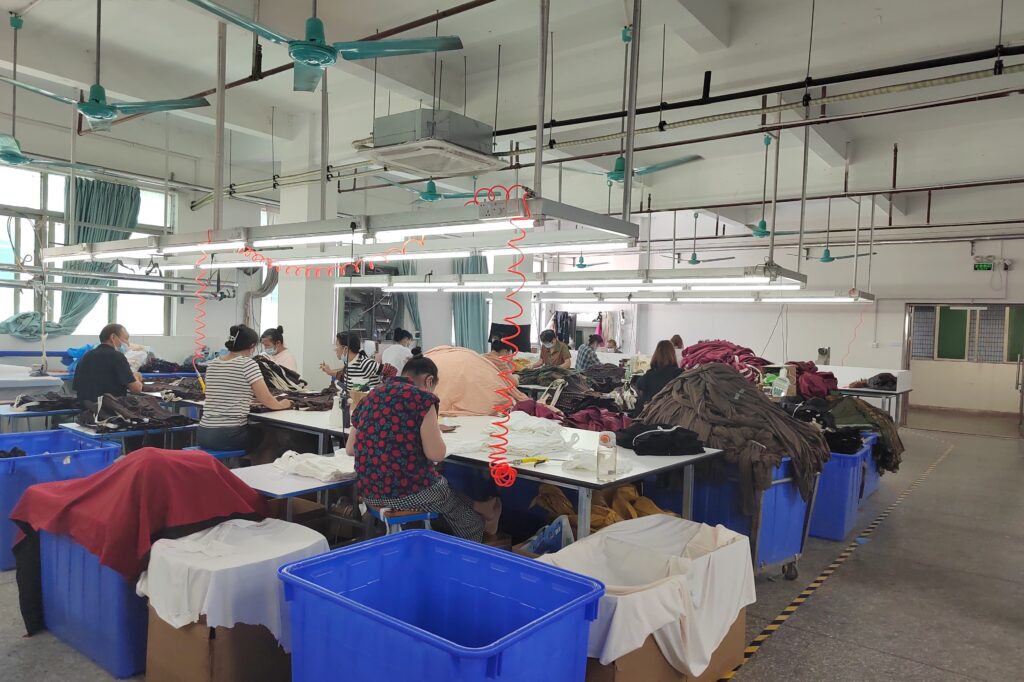
A useful quality program starts before the inspection table is opened. Jinfeng Apparel’s documented manufacturing approach includes incoming material checks, cutting and sewing QC, finished-garment assessment, pressing, and packing review, with AQL sampling arranged according to the order or customer’s requirements. These stages are complementary: process controls try to prevent defects, while final sampling evaluates the lot presented for release. Strong manufacturing cannot be replaced by a strict number printed on an inspection report.

How Do AQL Sampling Tables Work?
AQL sampling tables connect the production lot size, inspection level, sampling plan, and chosen acceptance quality limit. Inspectors determine a sample-size code, select the applicable sample, and compare the observed count of nonconforming units with acceptance (Ac) and rejection (Re) numbers. A valid result also depends on drawing the sample properly and using the agreed standard edition and inspection conditions.
Two inspectors could visit the same warehouse and reach different conclusions if one checks a handful of convenient cartons while the other follows a specified sampling scheme. That is why the inspection plan should be established before production is offered for final acceptance. The lot definition, sampling method, inspection level, and defect-counting rules together make the result understandable to the brand, factory, and any independent inspection team.
How Is the Sample Size Chosen?
Under widely used attribute-sampling systems, the inspector begins with the number of units in the inspection lot and the selected inspection level. General Inspection Level II is common for routine commercial checks, although Levels I and III can be specified when their different sampling implications are appropriate. The lot-size table provides a code letter, and the sampling-plan table identifies the actual number to inspect, subject to any arrows or adjustments in that plan.
Lot size is not simply the entire purchase order whenever several products are involved. A delivery may contain different styles, fabric batches, manufacturing sites, or production periods. Where those groups are not sufficiently homogeneous, defining separate inspection lots may provide more meaningful results. For example, 3,000 black dresses and 2,000 ivory dresses could have different color and fabric risks. Sampling should reflect the agreed lot structure instead of hiding important differences inside one convenient total.
| Lot size | Level II code | Sample size | AQL 1.5 Ac/Re | AQL 2.5 Ac/Re | AQL 4.0 Ac/Re |
| 500 | H | 50 | 2/3 | 3/4 | 5/6 |
| 1,000 | J | 80 | 3/4 | 5/6 | 7/8 |
| 2,000 | K | 125 | 5/6 | 7/8 | 10/11 |
| 5,000 | L | 200 | 7/8 | 10/11 | 14/15 |
These figures illustrate traditional normal single-sampling tables commonly used with ANSI/ASQ Z1.4-style inspection. Ac is the highest count accepted; Re is the first count rejected. They are not a substitute for the contractually applicable standard, edition, or complete sampling table. In this example, 500 pieces yield a sample of 50, or 10% of the lot, while 5,000 pieces yield a sample of 200, or 4%; sample sizes do not increase in direct proportion to order volume.
What Do Ac and Re Actually Count?
Acceptance and rejection numbers must be paired with a defined counting method. In a plan based on nonconforming units, one dress with a damaged zipper and an unacceptable seam can still be one major-defective unit, even though it has two separate major defects. Inspectors should record both findings for corrective action, but counting the dress twice as two defective units would distort a unit-based sampling decision. Plans based on numbers of nonconformities follow different rules.
A clothing order also normally has more than one classification to consider. A lot could satisfy the major-defect criterion but fail the minor-defect criterion, or contain a safety issue that requires separate action. A sample of 200 dresses with eight major-defective units may meet the traditional AQL 2.5 threshold of Ac 10, yet that fact alone says nothing about critical defects, labeling compliance, or measurements controlled by separate specifications. The inspection report should show the counts and conclusions distinctly rather than offer only a vague “pass” statement.
Which Standard and Sampling Method Apply?
ISO 2859-1:2026 is the current international edition for AQL-indexed lot-by-lot inspection by attributes. It was published in January 2026 and replaced the 1999 edition and its amendments. ANSI/ASQ Z1.4 is another widely referenced framework. Commercial inspection charts may reflect different editions or older MIL-STD-105E-derived tables, so figures copied from a website should never replace the exact plan specified in the purchase order or inspection instructions.
The sampling method matters as well. Single, double, and multiple sampling schemes do not work identically, and normal, tightened, or reduced inspection can lead to different decisions. Switching rules may be relevant to recurring production lots. An established brand ordering a seasonal collection every quarter may need a more thoughtful inspection agreement than a one-time transaction. The full specification should state the standard and edition, level, severity, sampling method, AQL values, counting approach, and any independent product tests.
How Should the Inspector Select Garments?
A mathematically correct sample size cannot repair biased sample selection. Choosing the nearest cartons, checking only one size, or examining only the cleanest finished pieces can miss defects concentrated in other parts of production. Where possible, the sample should be selected randomly from the defined lot and distributed according to the agreed sampling procedure, with attention to cartons, colors, sizes, and production batches. The actual selection method should be documented.
This is particularly relevant to women’s fashion, where fabric and construction can vary substantially across an order. A run of ivory satin may reveal shade problems that do not appear in black, while a larger size might expose stretch or grading issues. If a shipment is partly unfinished or the inspector cannot access the full lot, those limitations should be recorded rather than silently treated as a normal inspection. Representative selection makes the acceptance decision more credible and the defect report more useful.
Which Garment Defects Are Critical, Major, or Minor?
Garment defects are commonly grouped by their consequences: critical defects involve serious safety or compliance concerns, major defects significantly affect fit, function, appearance, or saleability, and minor defects involve limited imperfections. An agreed defect list must establish the boundaries. The same stitching or fabric problem can have different severity depending on its location, visibility, and effect on normal wear and its approved specification.
Defect classification is often the most disputed part of a garment inspection. An AQL number cannot tell an inspector whether a faint satin mark should be ignored, recorded as minor, or treated as a major issue. That decision depends on the approved garment, the location of the mark, the brand’s quality requirements, and how the customer will experience the product. Clear reference samples and defect photographs are more useful than broad instructions to maintain “excellent workmanship.”
What Counts as a Critical Defect?
A critical defect involves an unacceptable safety hazard, serious compliance failure, or other condition defined as critical by the inspection agreement. Examples may include dangerously sharp trims, exposed structural components that could injure the wearer, or serious contamination. Many clothing inspection protocols specify zero acceptance for critical defects, although that is a contractual rule rather than a separate universal AQL column labeled zero. Finding no critical problems in a sample does not prove every uninspected garment is free of them.
Labeling problems require judgment rather than automatic escalation. A care-label placement error is not necessarily critical, while missing or incorrect legally required information may create a significant compliance concern depending on the garment and destination market. In a corset dress, an exposed sharp boning end can pose a different risk from a cosmetic seam irregularity. A potential critical finding deserves containment, investigation, and appropriate screening rather than a routine argument over how many pieces the sampling table allows.
Which Problems Are Major Defects?
Major defects are those likely to prevent normal use, materially harm appearance, or make a garment commercially unacceptable. Typical examples include broken zippers, open seams, visible holes, severe color differences, wrong sizes, and measurements outside approved tolerances. For fitted dresses, an apparently small dimensional change may matter greatly if it changes support or restricts movement. A strapless bodice that slips during wear can have a serious functional problem even when its flat measurements appear close to specification.
The approved product standard must guide classification. A seam issue inside a concealed lining may not carry the same consequences as an open side seam on a bodycon dress. Similarly, fabric irregularities considered normal in a textured material might be unacceptable across a smooth satin front panel. AQL 2.5 is commonly selected for major garment defects, while some brands choose AQL 1.5 for stricter control. Neither number determines which defects belong in the category; that judgment belongs in the technical agreement.
What Makes a Defect Minor?
Minor defects are limited imperfections that do not substantially affect fit, performance, or the garment’s intended appearance. Examples may include a removable loose thread, a faint pressing trace in an inconspicuous area, or a small finishing inconsistency outside the approved workmanship standard. “Minor” still means the issue has been assessed as a nonconformity; it does not mean all visible imperfections should automatically be left in finished products. AQL 4.0 is often chosen for this category, but that arrangement is not compulsory.
Visibility matters particularly in fashion photography and premium retail presentation. A faint mark inside a skirt lining may be barely relevant to the wearer, whereas a similar mark at the center front of an ivory evening dress can stand out immediately. A useful defect guide therefore combines descriptions with photographs, garment-zone references, and examples of acceptable material variation. It should also explain whether the inspector records one defective garment or multiple individual defects when several issues appear on the same piece.
How Do Labels and Packaging Fit In?
Quality problems do not end at the sewing machine. A perfectly constructed dress can still reach the wrong customer if its size label or barcode is incorrect. Wrong fiber-content information, mismatched hangtags, incorrect carton quantities, or packing labels that cannot be scanned may affect regulatory compliance, warehouse receiving, returns, or retail saleability. Their classification depends on consequences and the destination market; it should not be based only on whether the error looks visually small.
Jinfeng Apparel’s quality process includes brand labels, care labels, size identification, barcodes, folding, polybags, packing ratios, and carton marks. For private-label programs, these details are part of the finished product rather than administrative extras. A clear defect agreement should cover packaging and identification alongside sewing, measurements, and fabric appearance. That gives the final inspection a practical connection to the journey from factory cartons to the customer’s wardrobe.
Which AQL Level Fits Your Clothing Order?
The appropriate AQL level depends on the seriousness of potential defects, garment construction, brand positioning, and commercial risk. AQL 1.5 may suit stricter requirements; AQL 2.5 is commonly used for major defects; and AQL 4.0 often applies to minor defects. Brands should confirm these limits together with workmanship standards, measurement tolerances, and corrective-action procedures before bulk production starts and samples are approved.
AQL selection should follow a conversation about what might actually go wrong with the product. An everyday skirt, a satin slip dress, and a structured corset gown do not present identical risks. The price of the garment alone does not define an appropriate sampling plan, either. A moderately priced dress with an important functional fastening may warrant careful control, while a premium garment can also contain minor appearance variations that are normal for its approved material.
When Does AQL 1.5 Make Sense?
AQL 1.5 can be useful where a brand needs tighter acceptance criteria for defects with meaningful consequences. This may include selected appearance or construction issues on occasionwear, highly fitted styles, or products with difficult closures. Suppose a collection uses delicate satin with a concealed zipper across several sizes. The brand might decide that zipper failures and visible fabric damage deserve stricter inspection than minor removable threads. The rationale should be documented in the quality agreement, rather than introduced after a failed shipment.
Stricter acceptance also has costs. More lots may fail sampling, leading to sorting, repairs, reinspection, and possible launch delays. If the production process has recurring defects, lowering the AQL will identify the problem more often but will not eliminate it. The greater improvement may come from checking fabric batches before cutting, correcting zipper-setting methods during sewing, or revising the approved construction sample. AQL 1.5 is a decision threshold, not a manufacturing technique.
Is AQL 2.5 Suitable for Major Defects?
AQL 2.5 is frequently used as a major-defect limit in clothing inspection programs because it provides an established numerical basis for lot acceptance. Some brands pair it with AQL 4.0 for minor defects and a separate zero-acceptance condition for critical issues. Such combinations are common, not compulsory, and the exact inspection level and sampling plan still need to be defined. The defect guide is equally important: a broken zipper and a removable internal thread should not receive the same classification without a compelling product-specific reason.
For a repeat-order dress program, a consistent quality agreement can help different teams interpret findings similarly from season to season. Yet keeping the same AQL does not mean ignoring changes in style, fabric, or construction. An order using a new stretch fabric or more complicated boning may require additional fit and performance checks even if the major-defect sampling limit remains 2.5. Sampling manages lot-level uncertainty; technical approval manages the product itself.
How Should Fabric and Style Change the Plan?
Fabric and construction affect which defects deserve attention more directly than they dictate a single AQL value. Satin is sensitive to snags, pressure marks, and uneven sheen; lace may show broken motifs, misaligned joins, and loose edges; mesh needs careful checks for holes, transparency, and stretch recovery. Sequin dresses introduce risks from missing embellishments and rough edges, while corset dresses depend on boning placement, cups, closures, and body support. A generic checklist will overlook some of these important differences.
Jinfeng Apparel’s documented QC references distinguish satin, mesh, lace, sequin, bodycon, corset, and other styles. For a brand’s new collection, inspection instructions can therefore specify distinct defect examples for each garment type while retaining one agreed sampling framework where appropriate. The aim is not to make every style follow an increasingly complicated set of numbers. It is to ensure that the items inspected are assessed against the risks that matter to the finished garment.
What Must Be Agreed Before Production?
The most useful time to settle inspection requirements is during sampling and pre-production approval, not when cartons are already waiting for collection. The brand and manufacturer should align on the approved sample, fabric reference, measurement chart, construction details, labeling, packaging, and defect classifications. They should also identify the standard edition, inspection level, sampling method, AQL values, and how critical findings will be handled. A purchase order that only states “AQL 2.5” leaves important questions unanswered.
For custom programs, Jinfeng Apparel can work from approved tech packs, samples, measurement specifications, and customer QC criteria, then connect those documents to garment and packing checks. Its established production model includes development, sampling, bulk manufacturing, and order-specific inspection support. Clear early decisions help prevent disagreements over whether a finding is a defect, how it should be counted, and what evidence is needed before shipment. They also make future repeat orders easier to evaluate against the same confirmed expectations.
How Are Women’s Dresses Inspected?
Women’s dresses are inspected against approved samples, measurement charts, fabric requirements, construction standards, and packaging instructions. The checks include fit, dimensions, seams, zippers, linings, visible fabric defects, embellishments, labels, and carton information, with particular attention to fabric behavior and normal wear. Inspection priorities vary by garment: a satin dress, mesh style, bodycon dress, and corset gown each require attention to different material and functional risks throughout manufacturing and final inspection.
Fashion inspection is more demanding than deciding whether a dress looks tidy on a hanger. Fit, drape, fabric behavior, and structural support can change how a garment performs on the body. A lined dress may twist because the lining is too restrictive; a strapless design may slip despite correct flat measurements; an embellished style may look attractive while having abrasive edges against the skin. Those problems call for checks matched to the garment, not just a generic final appearance assessment.
How Are Measurements and Fit Checked?
Measurement inspection compares finished garments with the approved tech pack and its defined measuring method. Common points include bust, waist, hips, shoulder width, strap length, dress length, sleeve length, and slit height. Measurements should be taken with consistent placement and suitable garment preparation, especially with elastic materials, curved seams, and bias-cut styles. A small difference can be harmless for one design and serious for another, depending on the confirmed tolerance and the way the garment is intended to fit.
Jinfeng Apparel’s internal reference tolerances provide examples, but they are not universal limits or a promise that every product uses the same allowances. Customer-approved tolerances take precedence, and sensitive fabrics or structured styles may need separate confirmation. Flat measurements also need to be interpreted alongside fit: a bodycon dress can meet its chart but twist because of incorrect stretch direction, while a corset may measure correctly but provide poor support. The inspection should consider both the numbers and the garment’s actual use.
| Measurement point | Jinfeng internal reference tolerance | Main inspection concern |
| Bust | +/- 1 cm | Fit across chest |
| Waist | +/- 1 cm | Waistline and silhouette |
| Hips | +/- 1.5 cm | Ease and movement |
| Shoulder width | +/- 0.8 cm | Balance and placement |
| Shoulder strap | +/- 0.5 cm | Neckline and support |
| Dress length | +/- 1 cm | Hem consistency |
| Maxi dress length | +/- 1.5 cm | Hem balance and clearance |
| Slit height | +/- 1 cm | Appearance and movement |
The figures are internal reference values drawn from Jinfeng Apparel’s company fact sheet. They must be adjusted to the customer’s approved tech pack, measuring method, fabric stretch, and garment construction. They are not values established by AQL itself, and the AQL acceptance plan should not be used to invent a measurement tolerance after production. Different measuring equipment or methods can also affect whether a garment appears within tolerance.
What Matters Most in Satin, Lace, and Mesh?
Satin reveals problems that may be less noticeable in textured fabrics. Inspectors should look for snags, inconsistent sheen, shade variation, pressing marks, zipper rippling, and lining visibility. Panel direction is important because some satin surfaces reflect light differently depending on how the material is cut. A slight mismatch between front and side panels can become obvious in product photography, especially with pale colors. The approved fabric and finished sample help distinguish unwanted damage from expected material characteristics.
Lace creates a different challenge. Motif alignment, edge finishing, broken pattern areas, neckline coverage, and the relationship between lace and lining can determine whether the garment looks balanced. Mesh requires checks for holes, transparency, elastic recovery, distorted necklines, and seam stability. A dress can pass a basic visual check while still pulling or exposing more than the design intended when worn. These fabrics need both careful material handling during production and a finished-garment inspection that considers how the dress will be used.
How Are Corset, Sequin, and Bodycon Styles Checked?
Corset dresses require closer attention to components that shape and support the body. Inspectors should examine cup position, boning channels, sharp or exposed ends, closures, lining, and the relationship between bust and waist measurements. A dress can have attractive external stitching yet feel uncomfortable because an internal support component is misplaced. Strapless designs may also need checks of upper-bust fit and grip, since correct flat measurements alone do not establish that the garment stays in position during movement.
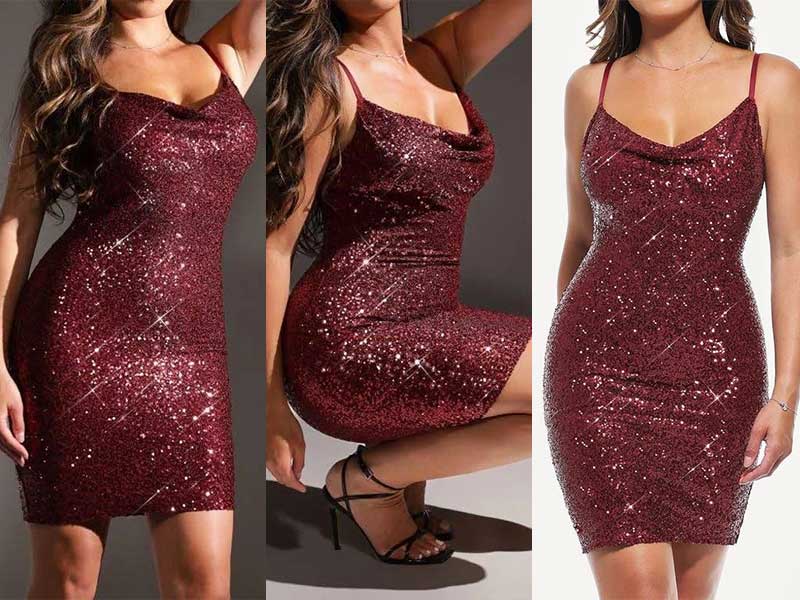
Sequin dresses need checks for missing embellishments, secure attachment, abrasive edges, trapped fabric near closures, and protection during folding and packing. Bodycon garments depend on fabric stretch, recovery, seam balance, and consistent sizing; a cut direction mistake can cause twisting even if individual seams look neat. Jinfeng Apparel’s garment-specific QC references identify these risks because construction and material behavior are central to the product. AQL sampling can reveal affected finished units, but development-stage fit approval and production checks remain necessary to prevent repeated issues.
How Are Sewing, Labels, and Packaging Verified?
Seam inspection examines stitch consistency, skipped stitches, seam allowance, puckering, symmetry, and the security of important construction areas. Zippers should open and close smoothly without distorting surrounding fabric. Linings should be secure, provide suitable movement allowance, and remain concealed where the design requires. Inspectors also examine pressing and finishing, since excessive heat or poor handling can alter fabric appearance. These checks should be matched to the approved sample rather than an inspector’s personal preference for how a dress ought to look.
Packaging inspection confirms that finished garments are correctly identified and protected for the customer’s distribution route. Brand labels, care labels, size labels, hangtags, barcodes, polybags, packing quantities, and carton marks should agree with the relevant SKU and order documents. A beautifully finished dress with the wrong barcode may still create costly receiving or fulfillment problems. At Jinfeng Apparel, packing QC forms part of the manufacturing quality process because the delivered product includes accurate identification, suitable presentation, and the ability to reach the right customer in the right size.
What Happens When an AQL Inspection Fails?
A failed AQL inspection means the sampled lot did not satisfy at least one agreed acceptance criterion. The manufacturer and brand should review the findings, identify potentially affected products, investigate the cause, and agree on corrective action. Sorting, repair, replacement, broader screening, or reinspection may be needed. A new inspection does not automatically authorize shipment unless all contractual and other applicable requirements are met.
A failed report can be alarming when a seasonal launch depends on a delivery date, but it should not trigger an automatic assumption that every piece is unsaleable. The first question is what the inspection actually found. Several unrelated cosmetic issues call for a different response from repeated zipper failures or incorrect measurements across a full size range. The inspection result is most useful when it points the production team toward an underlying problem that can be contained and corrected.
What Causes a Lot to Fail?
A lot fails its sampling criterion when the observed count reaches the rejection number, or when another separately agreed requirement is not met. Take a 2,000-piece dress lot inspected under the traditional normal single-sampling plan at General Inspection Level II. The sample size is 125. At AQL 2.5, seven major-defective units meet the criterion while eight reach rejection. That decision says something about the sampled lot under that plan; it does not establish the exact number of defective garments in the full shipment.
The specific defect pattern matters more than the pass/fail label alone. If eight garments have faulty zippers, the factory should examine the zipper batch, installation method, and possible spread across production. If there are different issues in different styles, the investigation may need to be divided by garment or manufacturing group. Inspectors should identify affected sizes, colors, locations, and defect descriptions so the response can address the real problem rather than simply repair the sampled pieces.
How Should Findings Be Reported and Investigated?
A useful report identifies the lot, sample size, standard and edition, inspection level, AQL values, observed counts, and decision for each defect category. Photographs should show what matters, and measurement problems should include the actual dimension, required value, and agreed tolerance. These details reduce disagreements and give technical teams evidence they can act on. An unexplained “failed inspection” stamp tells a brand very little about the true risk or the time needed to correct it.
The factory should then use its production records to trace likely causes. Repeated color differences may point to mixed fabric lots, measurement failures to cutting or grading problems, and damaged zippers to component quality or sewing technique. Jinfeng Apparel’s documented QC records cover materials, cutting, in-line checks, measurements, finished garments, repairs, packing, and customer inspection. Linking those records to the final findings supports targeted corrections, particularly for multi-style collections in which a problem may affect only one fabric, size, or manufacturing batch.
Can Garments Be Reworked and Reinspected?
Many defects can be corrected, but repairs need to be evaluated against the original product standard. Loose threads can usually be removed; limited pressing marks may be improved with controlled finishing; some zippers can be repaired or replaced. Other problems are less forgiving. A hole in delicate satin may remain visible after mending, and a major measurement error may not be repairable without distorting the silhouette. Repeated handling can itself create marks or damage, especially with lace, mesh, or sequins.
After repairs, the manufacturer should verify the corrected products and determine whether the original cause may affect uninspected garments. Reinspection may involve a new random sample, targeted checks, broader sorting, or a different agreed procedure. Merely fixing the failed sample pieces is not enough when the defect may be widespread. The customer and inspection provider should confirm the reinspection rules and release decision; a later passing sample does not automatically erase unresolved safety, regulatory, or contractual concerns.
What Should Be Confirmed Before Shipment?
Before goods are released, the brand should have a clear picture of the final inspection result, completed corrections, and any remaining exceptions. The shipment should match approved samples, current measurement specifications, labeling requirements, packing instructions, and agreed quantities. Different colorways or sizes may need separate confirmation where their risks or production conditions differ. The shipping documents and carton marks should also correspond to the contents, because an otherwise acceptable dress can still create problems when it reaches the warehouse under the wrong SKU.
Jinfeng Apparel can support customer or third-party inspection arrangements using relevant samples, measurement charts, production instructions, packaging requirements, and AQL criteria. Those records also help with repeat orders: a zipper weakness discovered in one season should inform the next production run instead of being rediscovered after another finished-goods inspection. For brands with regular collection launches, that learning process is as important as the immediate acceptance decision. AQL measures a shipment against an agreed rule; consistent manufacturing quality is built over time.
Conclusion
AQL 1.5, 2.5, and 4.0 are useful tools for making clothing inspection decisions, but the numbers do not tell the whole story. AQL 1.5 is stricter, AQL 2.5 is often used for major defects, and AQL 4.0 is often used for minor defects. The meaningful decision depends on the sampling scheme, agreed product standards, sound defect classification, and the quality controls used before finished garments are packed. The most dependable result is not simply a report marked “pass”; it is a collection that matches its approved design, fits as expected, and arrives ready for the intended market. For brands planning custom dresses or repeat womenswear programs, Jinfeng Apparel can discuss product specifications, development needs, and order-specific inspection arrangements as part of a practical manufacturing partnership.
Frequently Asked Questions
Is AQL 1.5 better than AQL 2.5 for clothing?
AQL 1.5 is stricter than AQL 2.5 under the same sampling conditions, but stricter is not automatically better for every clothing order. A brand may choose 1.5 for selected high-impact defects when more demanding acceptance criteria are justified. AQL 2.5 is commonly used for major garment defects and may be suitable where the agreed specifications and manufacturing controls support that choice. Neither number replaces a clear defect guide, approved samples, or proper inspection of garment measurements and construction.
What are the usual AQL levels for major and minor defects?
A common commercial garment-inspection arrangement uses zero acceptance for agreed critical defects, AQL 2.5 for major defects, and AQL 4.0 for minor defects. Some brands specify AQL 1.5 for stricter control of selected categories. These settings are not a universal legal rule, and the zero-critical condition is commonly a separate contractual requirement. The applicable acceptance numbers depend on lot size, sample size, sampling method, inspection severity, and the exact standard or table identified in the inspection agreement.
How many dresses are inspected in a 1,000-piece order?
A 1,000-piece lot corresponds to an 80-piece sample under a commonly used traditional General Inspection Level II normal single-sampling scheme, provided the lot and sampling conditions match that table. The corresponding AQL 2.5 acceptance and rejection numbers are five and six. A different level, inspection scheme, or contractually specified edition may lead to different requirements. The inspector should also consider how the sizes, colors, cartons, and manufacturing batches are represented in the selected sample.
Does passing AQL 2.5 mean no garments are defective?
No. Passing an AQL 2.5 inspection means the sample met the acceptance criteria of the selected sampling plan for that defect category. It does not prove the entire lot is defect-free or establish the exact defect rate among uninspected garments. Known nonconforming pieces still require appropriate handling under the quality agreement. This is why garment brands should use final sampling together with incoming material checks, in-line sewing controls, measurement verification, and finished-garment inspections rather than treating AQL as a guarantee.
Are measurements outside tolerance counted as major defects?
Measurement deviations outside an approved tolerance are often classified as major defects when they materially affect fit, appearance, or normal use. The decision depends on the garment, the measurement point, and the agreed defect guide. A small variation in a relaxed skirt may have a different effect from the same variation in a fitted corset dress. AQL does not set universal centimeter tolerances; those values should be confirmed in the tech pack along with the measuring method and any functional fit requirements.
What happens if a clothing shipment fails AQL inspection?
A failed inspection means the lot did not satisfy an agreed acceptance criterion, not necessarily that every garment is defective. The brand and manufacturer should review the findings, investigate the cause, identify affected products, and agree on sorting, repairs, replacement, additional screening, or reinspection. If the failure stems from a repeated manufacturing problem, correcting only the sampled garments may leave other affected units in the lot. Shipment should proceed only after the applicable release requirements are satisfied and the result is documented.
Tags: AQL 1.5 vs 2.5 vs 4.0, garment AQL inspection, AQL sampling table, acceptance quality limit, AQL 1.5, AQL 2.5, AQL 4.0, apparel quality control, garment quality assurance, clothing defect classification, critical defects, major garment defects, minor garment defects, garment inspection sample size, clothing inspection checklist, dress quality inspection, pre-shipment garment inspection, ISO 2859-1, private label clothing quality, womenswear manufacturing quality