
Skirt Trends 2027: Which Silhouettes, Fabrics, Colors, and Details Will Define the Year?

Your trusted Women’s Apparel Manufacturer from China
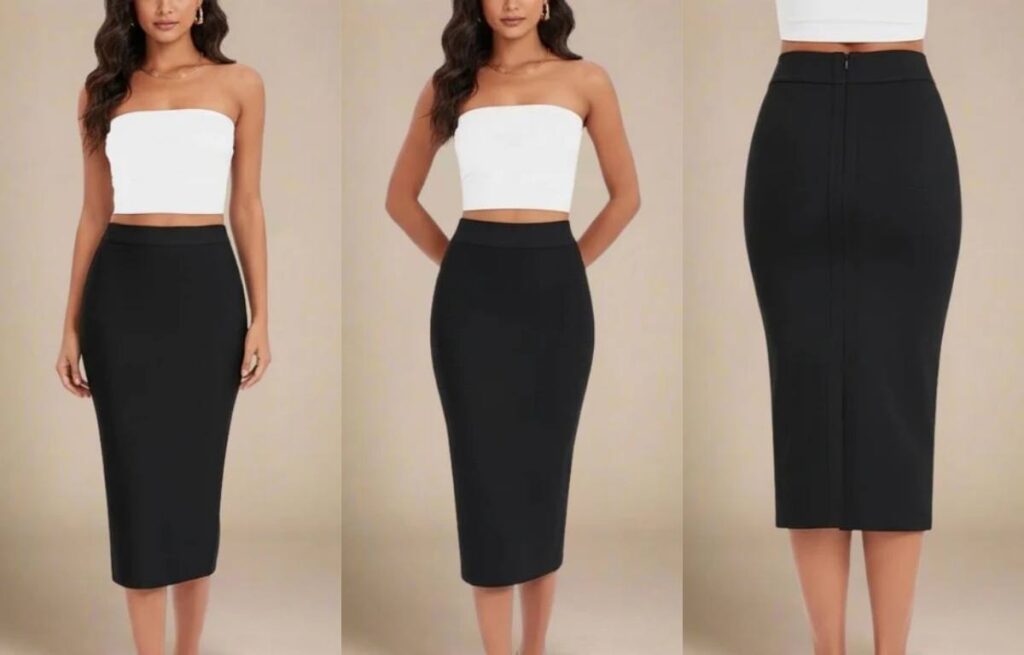
The most interesting thing about skirts heading into 2027 is that fashion is not asking women to choose one length and abandon everything else. Early Spring/Summer 2027 collections are showing something more useful: familiar skirts are being rebuilt through proportion, transparency, texture, waist placement, and movement. Slim columns sit beside rounded balloon shapes, delicate lace is paired with cleaner tailoring, and sheer layers are becoming more considered rather than simply more revealing. At this stage of the season, the direction feels less like one dramatic replacement trend and more like a broad redesign of what an everyday skirt can do.
Skirt trends for 2027 are being defined by contrast: narrow columns beside controlled volume, sheer and lace layers beside tailoring, and familiar midi shapes refreshed through basque waists, drop waists, fringe, print, and movement. Rather than one dominant hemline, the strongest direction is toward recognizable silhouettes with a more distinctive material, proportion, or styling detail that can move from runway inspiration into real wardrobes.
For anyone planning a wardrobe or a fashion collection, this makes 2027 more interesting but also more demanding. A skirt can look extraordinary in a runway photograph and become disappointing as soon as someone walks, sits, packs it into a suitcase, or tries to style it with ordinary clothes. The trends with staying power will be the ones that survive those everyday tests. That is where the story becomes more useful than simply declaring that a particular skirt is “back.”
What Skirt Trends Will Define 2027?
The strongest skirt trends for 2027 center on expressive surfaces, controlled transparency, stronger waist definition, movement, and a wider mix of proportions. Lace, sheer layers, fringe, sculptural volume, columns, coordinated skirt sets, and playful prints are emerging together. The result is not one compulsory skirt shape, but a season in which familiar silhouettes gain freshness through fabric, construction, and styling.
A More Expressive Skirt
Copenhagen’s Spring/Summer 2027 season provides one of the first substantial readings of where womenswear is moving. After years when highly restrained styling often dominated the conversation, the new collections brought noticeably more lace, transparency, texture, unusual greens, decorative surfaces, and waist emphasis. Vogue’s assessment of the season similarly noted an evolution away from a purely minimalist Scandinavian image toward stronger color, craft, and playful styling.
For skirts, this change does not necessarily mean complicated construction from waistband to hem. In many of the more convincing examples, one strong feature is doing most of the work. MKDT Studio used sculptural column skirts underneath translucent layers and covered other skirts with fringe that visibly changed as the model walked. The basic silhouette remained understandable, but the garment acquired personality through surface and movement rather than through excessive cutting lines or decoration.
This is an important distinction for real-world fashion. A consumer can immediately understand a straight midi skirt, even when it is made from lace, covered with fringe, or layered beneath organza. A more unfamiliar silhouette has to work harder because the customer must first understand how it fits, how it moves, what she wears with it, and whether it feels flattering. In practice, updating a familiar skirt with one noticeable new element often creates a stronger product than trying to force several runway ideas into the same garment.
The shift also explains why 2027 does not look like a simple return to maximalism. The strongest pieces are not necessarily louder; they are more deliberate. A narrow skirt can remain almost minimal while its transparency does the talking. A balloon skirt can be completely plain because the volume already provides the visual statement. A white lace midi may need almost no additional trim because the material creates enough surface interest on its own.
Evolution Rather Than Replacement
Many trends arriving in 2027 have a history. Sheer dressing, lingerie references, slip skirts, lace, low-waist shapes, embellishment, and unusual surface treatments were already visible during previous seasons. Fashion rarely closes one trend chapter on December 31 and opens another on January 1. Strong ideas normally evolve through several cycles until designers, retailers, and consumers discover the version that is easiest to wear.
Transparency is a good example. Early versions of the trend often relied on dramatic exposure, which worked well for editorial images but limited everyday adoption. Copenhagen Spring 2027 street style showed a more flexible approach: sheer garments appeared over solids, prints, underwear-like layers, and partially opaque foundations. Transparency was being treated as a styling tool rather than an instruction to expose as much skin as possible.
Lace is changing in a similar way. It no longer belongs only to romantic occasion dresses or delicate lingerie-inspired outfits. Current styling places lace beside heavier knits, tailoring, casual separates, and tougher accessories. That contrast makes the material easier to incorporate into ordinary wardrobes because it no longer dictates the mood of the entire outfit. A lace skirt can feel romantic, casual, directional, or evening-ready depending on the lining, cut, and surrounding pieces.
For fashion collections, this type of trend evolution is valuable because customers do not need to learn an entirely new product language. They may already understand the slip skirt or midi skirt; what changes is the fabric, waist, hem, or styling. Familiarity reduces resistance, while the updated element gives the product enough newness to justify another purchase.
Shape, Surface, and Movement
Three variables are becoming especially useful for reading 2027 skirts: shape, surface, and movement. Shape includes more than hem length. Waist position, hip volume, flare point, side profile, and the relationship between outer shell and lining can completely change the impression of a skirt. Jacquemus Spring 2027 illustrates this clearly through full skirts, drop-waist bubble proportions, and coordinated skirt looks that create shape before embellishment is even considered.
Surface creates another layer of distinction. Lace, embroidery, appliqué, fringe, sequins, organza, transparent mesh, and blurred prints can make relatively simple patterns visually memorable. Surface treatment is particularly useful when a brand wants to enter a trend without taking the larger fit risk associated with an extreme silhouette. A familiar midi skirt made in an unusual textile is often easier to merchandise than an unfamiliar shape made in an equally unfamiliar material.
Movement is the final test because skirts are seen differently in motion than they are on a hanger. Fringe needs to swing freely without tangling. Bias satin needs to fall smoothly rather than twist around the legs. A sheer outer layer should move naturally with its lining. Balloon volume should return to shape after sitting instead of collapsing into permanent creases.
The most convincing 2027 skirts are likely to balance these elements rather than maximize all three. When the silhouette is already dramatic, the fabric can be quieter. When the textile is highly decorative, the shape often benefits from restraint. That balance makes a trend easier to understand, easier to style, and easier to live with after the first photograph has been taken.
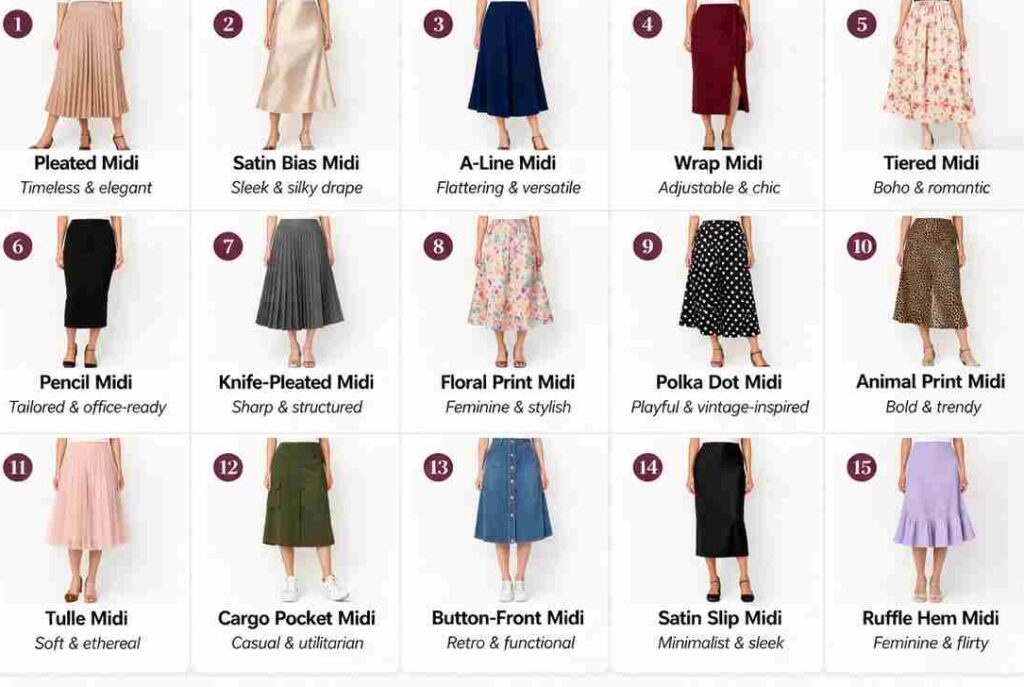
Which Skirt Silhouettes Are Trending in 2027?
No single hemline is replacing every other skirt in 2027. Midi and knee-area lengths currently offer the broadest versatility, while minis and maxis remain relevant for distinct occasions and audiences. The larger change is structural: straight columns, low and shaped waists, balloon volume, drop-waist proportions, sheer midis, and irregular hems are giving familiar skirt lengths noticeably different personalities.
Mini, Midi, and Maxi
The mini is not disappearing. Short skirts remain particularly natural for partywear, clubwear, vacation collections, youthful fashion, and coordinated sets. What is changing is the amount of design expected from them. A very basic short straight skirt may still sell, but it does not automatically communicate 2027. Pleating, lace, textural fabric, transparency, shaped waistlines, subtle volume, or a matching top can give the same short length a clearer seasonal identity.
Mini-skirt development also exposes problems that fashion photographs can hide. Seat coverage changes when someone bends or sits, and a fitted mini may rise several centimeters during walking depending on fabric stretch, hip ease, and lining construction. Short skirts therefore need to be evaluated in motion rather than approved simply because the front view looks correct. Waist position, hem measurement, and stretch recovery are often more important to comfort than another decorative detail.
The midi currently offers the widest design freedom. It can be slim, bias-cut, pleated, sheer, balloon-shaped, tailored, flared, or heavily textured without losing its basic familiarity. That makes it unusually useful across office, resort, occasion, everyday, and evening ranges. Copenhagen’s recent street style also shows how naturally midi and longer skirts can absorb romantic fabrics and layered styling without becoming impractical.
Maxis remain strongest when fabric movement is part of the design. Chiffon, rayon, lace, mesh, and lighter woven fabrics can prevent a long skirt from feeling visually heavy. The challenge is balance: longer hems make even small differences between front, side, and back more noticeable, while bias-cut or lightweight fabrics may continue relaxing after sewing. A maxi should therefore be checked after hanging as well as immediately after production.
Silhouette | 2027 Direction | Key Fit Check | Common Development Risk |
Mini | Layered, textured, coordinated | Seat coverage and ride-up | Hem becomes too short in motion |
Midi | Column, slip, sheer, balloon | Calf position and stride | Length feels visually awkward |
Maxi | Fluid, printed, transparent | Hem balance and walking clearance | Dragging or uneven hem |
Balloon | Basque or shaped waist | Volume placement | Excess bulk around hip |
Column | Long, clean vertical line | Hip/thigh ease and stride | Restricted walking movement |
Low/drop waist | Straight or rounded | Waist stability and high hip | Sliding, gaping, poor proportion |
Asymmetric | Soft irregular hem | Front-to-back balance | Hem looks accidental |
Balloon and Shaped Waists
Balloon and bubble silhouettes deserve attention because they create obvious newness without relying on print or embellishment. Jacquemus Spring 2027 included drop-waist bubble skirts and fuller skirt proportions, while coverage of the collection also highlighted basque-waist balloon-style skirt sets. The shaped upper section helps control where the volume begins, making the silhouette look more intentional than a skirt gathered heavily from a conventional waistband.
The construction is more technical than the final garment may suggest. Pattern makers need to decide where fullness begins, how much fabric is controlled into the hem or lining, how the side profile behaves, and whether the volume remains balanced between front and back. A few centimeters of additional fullness placed at the wrong level can turn a sculptural silhouette into unwanted bulk around the widest part of the hip.
Material changes the result just as dramatically. Crisp organza, taffeta-like woven fabrics, and structured cottons can hold a visible rounded form, while rayon, chiffon, or other fluid fabrics collapse into softer volume. Neither result is automatically better, but changing fabric without reconsidering the pattern can produce a completely different garment from the approved concept.
Grading also deserves care. Increasing volume mechanically by the same percentage through every size can exaggerate the shape more than intended. The visual relationship between waistband, high hip, full hip, and hem should remain balanced as the garment is graded. A successful balloon skirt looks deliberately generous; it should not look as though the wrong size has simply been enlarged.
Columns and Cleaner Lines
At the opposite end of the spectrum, the column skirt offers a much quieter version of newness. MKDT Studio’s Spring 2027 collection used sculptural column skirts as a foundation beneath transparent layers, floral surfaces, and moving fringe. The clean vertical shape allowed more expressive materials to remain readable because the silhouette itself was controlled.
A good column skirt should not be confused with a skirt that is merely tight. The objective is a relatively uninterrupted vertical line from hip toward hem. Enough ease is needed around the hip and thigh to avoid horizontal stress lines, twisting side seams, or a skirt that climbs upward during walking. Movement may come from stretch, a back or side slit, a vent, or carefully calculated ease depending on the fabric.
The style also works well as a commercial bridge between tailoring and softer fashion. In suiting or ponte, a column can feel structured and appropriate for work. In lace or mesh, the same basic idea becomes more evening-oriented. Satin gives it fluidity, while fringe changes the silhouette every time the wearer moves.
This ability to change personality through material makes the column particularly useful for brands developing several categories at once. Instead of inventing a completely different shape for each occasion, a reliable base proportion can be interpreted through different fabrics, lengths, and surface treatments while retaining a consistent fit language.
Which Fabrics and Details Will Shape 2027 Skirts?
Fabric will be one of the biggest drivers of 2027 skirt design. Sheer mesh, lace, chiffon, organza, satin, fringe, embroidery, and textured surfaces can make familiar silhouettes feel new without complicated pattern work. The most successful materials will deliver the desired transparency, drape, movement, or volume while still allowing reliable lining, sewing, fit, care, and repeatable bulk production.
Sheer and Lace Layers
Transparency has developed far enough that it should no longer be treated as a single styling trick. Copenhagen Spring 2027 street style showed see-through garments worn over matching lingerie-like foundations, solid clothing, prints, and partially opaque layers. The trend can therefore range from very exposed to relatively modest while still delivering the same sense of lightness and depth.
For a skirt, lining length is one of the simplest ways to change the customer. A full lining creates a more conventional product while allowing the outer mesh or lace to add texture. A shorter lining under a midi or maxi preserves visible transparency below the thigh. Two layers of mesh can soften exposure without introducing the visual break of an opaque lining, while strategically backed lace can retain open motifs in selected areas.
The material itself needs to be identified precisely. Stretch mesh follows the body and changes opacity when extended. Chiffon falls away from the body but can be vulnerable to seam slippage. Tulle has a drier hand and can create volume. Organza is transparent but holds considerably more shape. Lace may include open motifs that interact with darts, zippers, side seams, and hem finishing in ways that a plain fabric does not.
This is why transparency should be judged on a finished or near-finished sample rather than from a loose swatch alone. Stretching a fabric across the hip can reveal far more than holding the same fabric up to the light. Gathering can increase opacity, while tension can reduce it. The interaction of shell, lining, underwear, seam allowances, and lighting ultimately determines whether a sheer skirt looks intentional.
Drape, Structure, and Recovery
The fabric selected for a trend silhouette can matter as much as the pattern. A balloon skirt needs enough body to create and retain volume, whereas a bias midi needs sufficient drape to fall around the body without becoming stiff. A fitted column made from ponte relies on recovery, while a comparable style in satin depends more heavily on pattern ease because the fabric may offer little stretch.
Drape describes how readily a fabric falls under its own weight. Two materials with similar weight can behave completely differently if one is crisp and the other fluid. Organza can stand away from the body and preserve sculptural volume, while chiffon of a comparable lightweight category tends to collapse into soft folds. Satin may appear fluid but can vary dramatically according to fiber, weave, finishing, thickness, and elastane content.
Stretch creates another layer of complexity. A fabric that extends easily but does not recover can produce a skirt that looks correct during the first fitting and grows noticeably after repeated sitting or wearing. For fitted styles, both stretch percentage and recovery should therefore be considered. The direction of stretch also matters; cutting a pattern against the intended stretch direction can alter the waist, hip, and hem more than a small change to the paper pattern itself.
Jinfeng Apparel’s documented womenswear material system includes chiffon, satin, stretch satin, lace, mesh, power mesh, jersey, rib knit, ponte, crepe, velvet, sequin fabric, organza, tulle, rayon, viscose, linen, denim, and suiting fabrics. Material evaluation considers drape, stretch, transparency, lining requirements, hand feel, and risks associated with stable bulk production rather than treating fabric as a purely visual decision.
Fabric Direction | Strong Skirt Applications | What to Test Before Approval | Main Risk |
Stretch mesh | Sheer fitted midi, layered skirt | Stretch direction, recovery, opacity | Transparency changes over hip |
Lace | Slip, midi, occasion skirt | Motif placement, edge, lining | Visible seams or uneven motifs |
Satin | Bias, column, evening skirt | Drape, puckering, snagging | Seam rippling and surface damage |
Organza | Balloon, overlay, sculptural skirt | Crease recovery, volume, seams | Crushing during packing |
Ponte | Fitted column, tailored knit skirt | Stretch recovery, thickness | Bagging at seat or knees |
Chiffon | Layered midi and maxi | Seam slippage, transparency, hem | Distorted or uneven hem |
Sequin fabric | Party and evening skirt | Weight, shedding, seam bulk | Abrasion and difficult finishing |
Fringe and Surface Detail
Fringe is particularly relevant because it creates a large visual effect from movement rather than from silhouette alone. MKDT Studio covered skirts and dresses with full fringe that moved with every step, while broader Copenhagen coverage also identified fringe as part of the season’s more tactile, expressive mood.
The practical question is how much fringe the product really needs. Full coverage produces dramatic motion but adds weight, labor, material cost, and packing difficulty. Long strands can become tangled during transport or catch against shoes and neighboring garments. A fringe hem, side insert, diagonal panel, or selected tier can deliver much of the same visual energy while making production and everyday wear easier.
Sequins, embroidery, appliqué, and other surface treatments raise similar questions. Decorative weight can pull a lightweight base fabric out of shape. Dense sequin seams may become thick enough to affect comfort or zipper installation. Embroidery can shrink or distort the surrounding material if thread density and stabilizing methods are not properly balanced. Three-dimensional appliqué requires enough attachment strength to survive handling without making the inside of the garment uncomfortable.
Placement should also be tied to graded patterns rather than added after sizing is complete. A decorative border positioned perfectly on the sample size may look too high or low after length grading if its position is not reconsidered. Good development treats decoration as part of garment engineering, not as an accessory applied after the main pattern has already been solved.

Which Colors and Prints Will Define 2027 Skirts?
Spring 2027 is developing around a mixed palette rather than one universal color. White and ivory are strong foundations, while moss and unconventional greens, turquoise, rust, and brighter accents provide energy. Stripes, polka dots, florals, and checks are also adding personality. The strongest skirt collections will use a coherent palette rather than placing every emerging color or print on every silhouette.
White, Green, and Saturated Color
White and ivory are particularly compatible with the material direction of 2027. Lace, organza, mesh, soft tailoring, and textured woven fabrics all become visually clear in pale colors because their surface can be seen without competing against complicated color. Copenhagen Spring/Summer 2027 coverage identified all-white dressing as an important early trend, while Jacquemus built much of its Spring 2027 story around light Mediterranean neutrals and white.
Green provides a more directional alternative. Rather than another cycle dominated only by conventional emerald or pale sage, current Spring 2027 reporting has highlighted moss and deliberately unusual greens. CIFF coverage singled out moss green as a color attracting commercial attention, while Copenhagen collections also experimented with chartreuse-like and other unconventional green tones.
Jacquemus contributes a different signal through concentrated saturated colors. Coverage of the collection identified turquoise and rust as notable accents against the largely ivory palette, while the runway itself also included yellow, red, stripes, and polka dots within its Mediterranean color story.
A useful collection does not need to treat every one of these shades as an equal commitment. Core colors can carry familiar styles, while one or two stronger seasonal tones provide campaign impact. A directional turquoise balloon skirt may create the photograph that brings someone to the collection, while the same shape in ivory or black may ultimately appeal to a broader customer base.
Stripes, Dots, and Florals
Polka dots are continuing into the Spring 2027 conversation rather than emerging from nowhere. Vogue’s Copenhagen review identified dots among the motifs retaining momentum, and Caro Editions continued to use them as part of an already recognizable visual vocabulary. This type of continuation is commercially useful because the consumer already understands the print, while changes in scale, spacing, color, and silhouette can keep it fresh.
Stripes also deserve attention, especially for resort and matching-set collections. Jacquemus used coastal striping within its Spring 2027 world, including coordinated skirt looks. A stripe can visually lengthen, widen, or redirect the silhouette depending on orientation, making print placement part of the pattern rather than a decision made only during fabric selection.
Florals are becoming more varied than the standard small spring print. Copenhagen street style included prairie-inspired and romantic florals, while MKDT Studio used blurred floral prints and appliqué to give otherwise clean garments a more organic surface. The result can feel nostalgic, artistic, or modern depending on scale and execution.
Print accuracy becomes increasingly important when geometry is obvious. A vertical stripe makes a twisting side seam easy to see. A large check exposes cutting imbalance immediately. An oversized floral may require planned placement so that one skirt does not receive an empty section of the repeat while another receives several dominant motifs. The stronger the print structure, the more cutting and sewing accuracy becomes part of the visible design.
Color Has to Work in Production
A trend color does not become a reliable product simply because it looks good on a screen. Fabric availability, dye-lot consistency, trim matching, lining color, thread, zipper tape, and replenishment potential all influence whether the shade can be reproduced across a full order and later repeated. This becomes particularly important for coordinated sets, where even small shade differences between the top and skirt can be obvious when the pieces are worn together.
Light skirts bring their own challenges. White or ivory fabric that appears opaque in a relaxed swatch may become much more transparent when stretched across the hip or placed under strong daylight. Pale satin can reveal pocket bags, seam allowances, or underwear far more readily than the same construction in black. A lining therefore needs to be chosen for both opacity and visual compatibility with the shell.
Strong saturated colors create different risks. A bright turquoise body fabric combined with a zipper or elastic that is almost, but not quite, the same color can make the garment look less refined. In some cases, a deliberately contrasting trim creates a better result than an unsuccessful near match. Dark and highly saturated fabrics may also show differences between dye lots more clearly depending on fiber and finish.
For custom collection development, color approval is most useful when it is reviewed on the intended production fabric together with the main lining and visible trims. If a skirt is expected to return in future drops, retaining approved color, material, and trim references can reduce the chance that the repeat order looks subtly different from the version customers already know.
Which 2027 Skirt Trends Have Retail Potential?
The skirt trends with the strongest retail potential combine visible newness with easy styling and manageable product risk. Sheer or lace midis, refined slip skirts, columns, coordinated skirt sets, moderated balloon silhouettes, and selectively fringed styles can look current without requiring customers to rebuild their wardrobes. Extreme runway volume can attract attention, but commercial versions usually work better after proportion, coverage, weight, and construction are edited.
Runway Idea vs. Wearable Product
A runway garment has one immediate responsibility: it needs to communicate an idea strongly enough to be noticed. A commercial garment has to do considerably more. It needs to look convincing in photographs, fit several body sizes, remain comfortable while walking and sitting, survive packing and transport, work with existing clothes, and justify its price once the customer sees it outside the controlled environment of a fashion show.
This difference explains why the most successful version of a trend is often quieter than its first appearance. A completely transparent maxi skirt may create a memorable runway image, but introducing a shorter tonal lining can preserve the visual lightness while eliminating a major styling barrier. The idea has not disappeared; it has simply been translated into a product that more people can understand and wear.
Balloon volume can be treated similarly. A runway silhouette may exaggerate the hip by several layers or use dramatic internal structure. A commercial version can reduce the circumference, move the fullness lower, or soften the shell fabric while retaining the rounded shape that made the original idea interesting. The customer still recognizes the trend, but everyday movement becomes more manageable.
Fringe and embellishment can also be edited rather than removed. Full fringe from waist to hem offers the most movement but brings more weight and potential tangling. A fringed lower panel or hem may deliver much of the same photographic impact while keeping the waist and hip cleaner. Good commercial design is often the process of identifying the element responsible for the excitement and removing whatever competes with it.
Occasion, Resort, and Everyday Use
Trend potential changes according to wearing occasion. Lace, satin, sequins, controlled transparency, and fringe naturally suit evening, party, and occasion collections because customers in these categories already expect a stronger visual statement. More delicate fabrics and complex surface treatments can also make sense at higher retail price points where design detail contributes directly to perceived value.
Resort collections operate differently. The strongest skirts tend to benefit from movement, breathable or lightweight construction, visual print, and relatively easy styling. A striped midi with a coordinated top, fluid printed maxi, airy lace skirt, or lightly transparent layer can move from daytime sightseeing to dinner without demanding an entirely different wardrobe. Jacquemus’s Spring 2027 focus on Mediterranean ease and coordinated skirts shows why this category remains particularly compatible with expressive skirt design.
Everyday fashion needs more restraint, but restraint does not mean boring. A clean column in an interesting fabric, a bias midi with an updated waist, or a softer balloon silhouette can provide enough seasonal change without creating a styling problem. The garment needs to remain recognizable as something that works with knitwear, shirts, jackets, tanks, and familiar footwear.
Matching sets sit comfortably across these categories because they offer two levels of commitment. Styled together, the pieces create an immediate campaign look. Sold separately, the skirt remains available to someone who only wants part of the outfit. This also gives brands more ways to extend a strong fabric story into tops, dresses, or later color drops.
Repeat Potential Matters
A skirt becomes more valuable when success can lead to another order without forcing the entire product to be reinvented. A strong satin midi can return in another color. A lace skirt can share a proven waistband and hip block with a related mesh style. A matching set can be extended into a dress. A successful balloon skirt can move from a seasonal stripe into a solid color without changing the core pattern.
Thinking about this possibility during the first development round affects design decisions. A style that depends on one difficult-to-source trim or a fabric available for only a short period may create problems if demand suddenly increases. A design that can retain its identity across several material options gives the brand more flexibility if the first launch performs well.
Technical records become important here. Approved patterns, grading, measurements, fabric references, trim details, workmanship notes, and packing requirements make it easier to reproduce the product consistently. Without those records, the second order can become almost another first order, with unnecessary differences in fit, shade, construction, or presentation.
Jinfeng Apparel’s documented development system supports seasonal collections, same-fabric style extensions, different colors and lengths, and coordinated top, skirt, and dress programs. Product development can begin from reference images, sketches, samples, tech packs, or line sheets, with fabric direction and production feasibility considered before bulk production.
For an established fashion business, repeat potential is worth considering before the first order is placed. The product that becomes valuable is often not the most experimental skirt in the range, but the one whose silhouette can remain recognizable while color, textile, surface, or coordinated pieces keep the idea fresh over several launches.

How Can Brands Develop a 2027 Skirt Collection?
A strong 2027 skirt collection moves from trend selection into fabric evaluation, pattern development, fitting, sample revision, pre-production approval, and controlled bulk manufacturing. Directional shapes should be tested early because balloon volume, transparency, low or shaped waists, fringe, and unusual fabrics create more uncertainty than established silhouettes. The goal is not merely to reproduce a trend image, but to make the concept repeatable across sizes and quantities.
Build the Range Before the Individual Style
Developing every skirt as an independent idea often creates a collection that contains several fashionable products but no clear relationship between them. A more disciplined range begins with a limited number of silhouette families, material families, repeated details, and colors. This allows products to look different enough to justify their place while still appearing to come from the same brand and season.
A six-style skirt capsule, for example, might use three structural families: one column, one fluid midi block, and one directional balloon shape. The column could appear in ponte and lace, the fluid midi in satin and print, while the balloon could be developed in a solid and stripe. One or two coordinating tops could connect several of the skirts without requiring another completely independent product architecture.
This method also improves development efficiency. Shared materials reduce the number of fabric decisions. A proven waist or hip block can reduce repeated fitting work. Repeated construction details give the production team a clearer standard. Color stories become more coherent in campaign photography because the collection was designed as a group rather than assembled after each individual sample was already finished.
The most uncertain silhouettes should enter sampling early. A familiar bias midi in a known satin may be relatively predictable, while a basque-waist balloon skirt in a crisp transparent fabric can change dramatically with a small adjustment in waist shape, shell circumference, lining length, or material stiffness. Early sampling protects the calendar by finding these problems while there is still time to solve them.
Fit the Skirt in Motion
A skirt should never be approved from a static front photograph alone. During fitting, the wearer should walk, sit, turn, take a normal stride, and move in the way the intended customer is likely to move. A waistband that looks perfect while standing may gape after sitting. A fitted skirt can rotate during walking. A slit that seems modest on a mannequin may open much farther when someone climbs stairs.
The waist position should remain stable unless movement is intentionally part of the design. High-hip and full-hip ease need to allow the intended line without creating unnecessary fabric. Side seams should remain close to their planned position rather than being pulled forward or backward. A short lining under a transparent shell should provide the intended coverage in both standing and sitting positions.
Fabric needs time during fitting as well. Bias satin can grow after hanging. Stretch mesh may relax after repeated movement. Heavy fringe can pull a lightweight outer layer downward. A balloon skirt may look full immediately after pressing but become flatter after sitting or packing. For these reasons, some problems only become visible several hours after a sample has been completed.
Useful fitting records include the following checkpoints:
- Waist position and waistband stability
- High-hip and full-hip measurements
- Front, side, and back length balance
- Side-seam position
- Sitting coverage
- Normal walking stride
- Slit opening during movement
- Lining length and movement
- Transparency under fabric tension
- Hem level after hanging
- Stretch recovery where applicable
- Waistband rolling, gaping, or distortion
Jinfeng Apparel’s documented pattern and sample system includes 7+ senior womenswear pattern makers, 2 sample rooms, and 20+ sample machinists. Its development controls include waist, high waist, low waist, hip, and garment length, alongside other fit measurements used to turn skirt and womenswear concepts into production-ready patterns.
Lock the Bulk Standard
An approved sample is not yet a bulk-production standard. Before quantity production begins, the visual result has to be translated into information that different workers and production stages can reproduce. The approved fabric, color, lining, trims, measurements, construction, stitch methods, decoration placement, pressing, labels, and packing should all correspond with the same final product reference.
Trend-led skirts require product-specific controls. A sheer style needs transparency and lining checks. Satin requires attention to puckering, snagging, pressing marks, and grain direction. Lace needs motif and seam review. Balloon skirts need consistent distribution of fullness. Printed styles may require pattern direction or placement checks. Fringe and sequins need secure attachment and additional protection during finishing and packing.
Production Stage | What Needs to Be Confirmed | Main Skirt Risk |
Fabric approval | Hand, drape, stretch, opacity, shade | Silhouette changes from approved concept |
Pattern approval | Waist, hip, length, volume, slit | Fit differs from sample intention |
PP sample | Construction and complete appearance | Detail cannot be reproduced consistently |
Cutting | Grain, print direction, panel position | Twisting or mismatched artwork |
Sewing | Seams, zipper, lining, gathering | Puckering or uneven volume |
Inline QC | Measurements and workmanship | Problems multiply through the order |
Finishing | Pressing, fringe, embellishment | Surface damage or distortion |
Packing | Folding and protective method | Crushing, creasing, tangling |
Final inspection | Garment, measurement, packing | Nonconforming goods reach shipment |
Jinfeng Apparel’s documented production framework requires PP approval together with fabric, trims, size, color, and packing confirmation before bulk execution, followed by material inspection, cutting checks, sewing, in-line inspection, finished-garment review, packing controls, and final inspection. The company records 15+ QC inspectors as part of its broader womenswear production system.
For custom skirt development, standard MOQ begins from 200 pieces per style and color, while actual requirements depend on fabric availability, color development, trims, construction complexity, packaging, and the production schedule. Specialized lace, sequins, custom dyeing, custom printing, or specially developed materials can carry separate supplier requirements, so final quantities are better checked before too many colors or material variations are locked into a collection.
Design for the Second Order
One of the most practical tests of a collection is whether the successful products can be repeated without starting again from photographs and memory. Patterns should remain identifiable in their approved versions, measurement specifications should be traceable, and fabric, color, trim, construction, labeling, and packing references should remain connected to the correct style.
This becomes particularly useful when a trend performs better than expected. A strong ivory lace midi may need to return in black. A turquoise skirt may be requested in moss green. A successful midi can potentially become a shorter version while retaining the same waist and hip relationship. A skirt-and-top set can evolve into a dress using the same fabric family and visual language.
Developing with continuation in mind does not mean making every garment conservative. It simply separates the parts of the design that should remain stable from those that can evolve. Fit blocks, construction methods, and key measurements can provide continuity, while fabric, color, length, print, and selected details create the newness required for another drop.
That approach is especially useful in a season like 2027, where fashion direction is broad rather than controlled by one mandatory silhouette. A brand does not need to chase every runway signal. It can choose the two or three ideas that feel most relevant to its customer, develop them properly, and build enough technical continuity for the strongest products to grow beyond a single launch.
The larger message behind Skirt Trends 2027 is therefore not that every woman will suddenly wear the same hemline. What is changing is the number of ways a skirt can communicate character. Transparency can feel romantic or modern, lace can be delicate or deliberately contrasted with tailoring, columns can become evening pieces through surface treatment, and balloon shapes can create impact without a single sequin or print.
For brands planning upcoming collections, the opportunity lies in editing rather than copying. The most durable product is rarely the one containing the greatest number of trends. It is the one where silhouette, textile, color, fit, construction, and occasion make sense together. When that balance is right, a runway signal becomes something much more valuable: a skirt people can understand, wear, photograph, reorder, and eventually recognize as part of the brand rather than merely part of a season.
Share This Article :

Jerry Lee
Categories

Latest blogs

Table of Contents
Here, developing your OEM/ODM private label clothing collection is no longer a challenge—it’s an excellent opportunity to bring your creative vision to life.