
Sheer Layering Trend: Construction and Coverage Guide

Your trusted Women’s Apparel Manufacturer from China

Sheer layering looks effortless when it is done well, but very little about a commercially successful sheer garment is accidental. The transparent layer that attracts attention is only one part of the design. Underneath it sits a collection of decisions about lining height, fabric stretch, neckline stability, body coverage, seam visibility, support, fit, movement, grading, and lighting. A dress can photograph beautifully on a stationary model and still become difficult to wear when the customer walks, sits, raises an arm, or steps into daylight. That gap between a strong fashion image and a reliable garment is where much of the real development work happens. For designers and brands, the goal is not simply to make clothing more transparent. The goal is to decide precisely what should remain visible, what should remain covered, and how those two ideas can work together without making the garment feel heavy, over-engineered, or visually confused.
Sheer layering is the controlled use of transparent or semi-transparent fabrics over, under, or between more opaque garment layers. Good construction balances visual transparency with coverage, support, movement, and fit. Designers usually control the effect through fabric selection, lining placement, stretch direction, panel construction, neckline and slit measurements, internal support, and repeated on-body testing before approving the style for production.
A useful way to understand the trend is to stop thinking of a sheer garment as one piece of fabric. In a strong product, the outer mesh, chiffon, lace, organza, or tulle may create the visual effect, while another layer creates coverage and a third component supplies support. Each layer can perform a different job. Once that relationship is understood, sheer fashion becomes far easier to develop, fit, grade, manufacture, and sell with confidence.
What Is the Sheer Layering Trend?
Sheer layering uses transparent materials as part of the garment’s structure rather than treating transparency as an isolated styling effect. Modern designs often combine visible skin, opaque sections, lining, supportive layers, and transparent overlays within one silhouette. The strongest results create a deliberate relationship between what is revealed and what is concealed, allowing the garment to remain visually light while still feeling secure enough for real wear.
What Defines Modern Sheer Layering?
Modern sheer dressing is increasingly about contrast. A transparent sleeve can sit beside a completely opaque bodice, a mesh maxi skirt can extend below a fitted mini lining, or a lace shell can cover an internal corset without hiding its structure. In each case, the transparent element is not simply exposing the body. It is creating another visual plane around the body, which can make a relatively simple silhouette appear more dimensional.
The difference becomes especially clear when a style moves from a campaign shoot into everyday use. During photography, a model may stand in controlled lighting, wear carefully selected underwear, use fashion tape, or hold poses that keep every panel in place. A customer is more demanding on the garment without even trying to be. She walks, sits, reaches for something, gets into a car, dances, bends forward, and sees the garment in changing light. Construction has to survive all of those situations while preserving the same visual idea.
For that reason, modern sheer layering works best when designers establish a clear hierarchy between layers. One layer may create transparency, another may provide modesty, while an internal panel can supply recovery or support. A fitted mesh dress, for example, may use soft fashion mesh for the visible shell while a firmer layer is positioned through the bust or waist. A chiffon dress may use a simple opaque mini lining while leaving the lower skirt fluid and transparent.
The approach works across party dresses, occasionwear, resortwear, evening styles, tops, skirts, bodysuits, and matching sets because the amount of coverage can be changed without abandoning the overall visual language. The trend can therefore be adapted from relatively modest occasion dresses to much more revealing clubwear simply by changing the placement and length of the inner layers.
Layering vs. Simple Transparency
Transparency describes a material property. Layering describes how a designer uses that property inside a complete garment. A single mesh layer may expose almost everything underneath, while two layers of the same mesh can create noticeably greater visual density. Add a tonal lining and the garment becomes more covered. Replace it with skin-tone lining and the same outer material may create an illusion effect rather than an obviously lined appearance.
Those differences are often more important than the fabric name itself. Two dresses described online as “mesh dresses” may behave completely differently. One may use a single stretch layer over an internal bodysuit, another may use doubled mesh through the torso, while a third may have a fully opaque jersey lining. Customers see three distinct products even though each product page can technically call the outer material mesh.
Internal construction also becomes visible in ways that are easy to miss during sketching. Seam allowances, zipper tapes, cups, elastic, labels, boning channels, dart ends, pocket bags, and binding can all create unwanted dark or light lines beneath transparent fabric. When those components are not planned as part of the visual design, the garment can look unfinished even when the sewing itself is technically correct.
A useful development question is therefore not simply, “How sheer should the fabric be?” A stronger question is, “Which parts of the body and garment structure should remain visible when the customer is standing, moving, and photographed?” That shift changes transparency from a styling choice into a measurable product-development decision.
Where Sheer Layering Works Best
Sheer layering is especially effective when a garment needs visual impact without adding heavy decoration. A transparent skirt section can make a midi or maxi silhouette feel lighter, while sheer sleeves can give coverage without making an evening dress appear closed or conservative. Mesh inserts can visually shape the waist or neckline, and transparent overlays can soften the lines of a structured corset, bodysuit, or fitted mini dress.
Different wearing occasions naturally need different coverage strategies. Clubwear can tolerate more visible waist, leg, side-body, or back exposure because sensuality is part of the product promise. Wedding-guest and cocktail dresses normally need greater stability through the bust and skirt while still allowing transparent sleeves, shoulders, or upper neckline areas. Resort clothing often uses chiffon and mesh more freely because lightweight movement and visible layering fit naturally into vacation dressing.
Commercial wearability does not mean removing the dramatic part of the design. In many cases, greater security makes the sheer sections appear more intentional. A customer who does not have to repeatedly pull down a mini lining, adjust a neckline, reposition a strap, or check whether a skirt has become unexpectedly transparent can focus on how the garment looks rather than how carefully it must be managed.
That is an important distinction for fashion brands. A visually memorable garment earns attention, but a garment that also survives several hours of actual wear is far more likely to support repeat purchases, positive reviews, and additional colorways. Sheer layering works best when the transparent effect and the practical wearing experience are designed together.

Which Sheer Fabrics Work Best?
The best sheer fabric depends on the job the layer needs to perform. Stretch mesh suits fitted and body-conscious garments, power mesh adds greater support, chiffon provides soft movement, organza creates transparent structure, tulle builds lightweight volume, and lace combines openness with pattern. Fabric selection should consider weight, stretch, recovery, drape, surface texture, transparency, lining compatibility, sewing behavior, and the intended silhouette.
Mesh vs. Power Mesh
Fashion mesh and power mesh can look surprisingly similar in a swatch photograph, yet they perform very differently once stretched over the body. Lightweight fashion mesh is usually selected for softness and visual transparency. It works well for sleeves, ruched overlays, transparent skirts, cut-out areas, fitted dresses, and second-skin panels where the fabric needs to follow the body without creating strong compression.
Power mesh generally offers greater resistance and recovery. That makes it useful when a transparent or semi-transparent layer also needs to stabilize a garment. It can reinforce the bust, waist, side body, cut-out edges, or fitted torso while remaining lighter visually than a conventional opaque lining. In some designs, power mesh is completely hidden inside the garment; in others, it becomes part of the visible layered effect.
Stretch direction needs as much attention as total stretch percentage. A mesh may stretch generously across the width but behave very differently in the vertical direction. If pattern pieces are cut without controlling orientation, necklines can grow, side seams can twist, ruching can migrate, and fitted skirts can change length after several hours of wear.
Recovery is equally important. A highly elastic fabric that does not return close to its original dimensions can look excellent during the first fitting and noticeably looser later. For fitted dresses and bodysuits, developers should compare stretch and recovery before approving a substitute material, even when color, hand feel, and nominal weight appear almost identical.
Chiffon, Organza, and Tulle
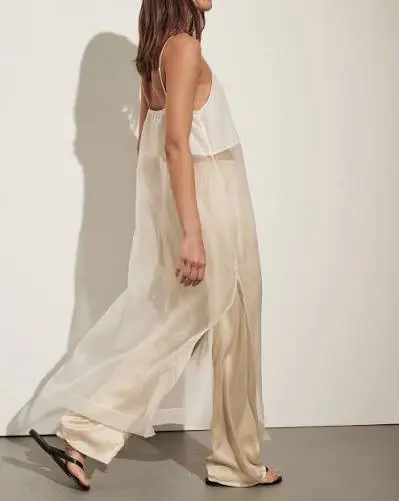
Chiffon is chosen primarily for movement. It responds naturally to gathering, flounces, soft sleeves, bias effects, long skirts, and flowing overlays. Because the fabric is lightweight, folds can overlap and temporarily increase visual coverage while the wearer is standing. During walking, those folds separate, which can make the same garment appear significantly more transparent around the legs.
Organza behaves differently because it has more body. Rather than falling closely against the wearer, it holds shape away from the body and is therefore useful for statement sleeves, layered skirts, bows, ruffles, sculptural overlays, and formal silhouettes. Jinfeng Apparel’s material reference records a common organza range of approximately 30–100 gsm and identifies transparency, edge fraying, pressure marks, layer consistency, and hem balance as important development and quality points.
Tulle is typically more open and airy. It can create volume with very little visual weight and works naturally in formalwear, layered skirts, illusion sections, decorative overlays, and transparent neckline areas. The same material reference lists common tulle weights around 15–80 gsm, although stiffness, mesh opening, yarn type, finishing, and supplier construction can make two fabrics at the same GSM behave very differently.
Sheer Fabric | Approx. Common Weight | Typical Stretch | Visual Character | Common Use | Key Production Risk |
Fashion Mesh | 40–100 gsm | Low to high | Soft, close to body | Sleeves, overlays, cut-outs, ruched dresses | Snagging, neckline growth, opacity variation |
Power Mesh | 80–180 gsm | Medium to high | Sheer with stronger support | Fitted panels, internal support, bodycon styles | Excess tension, recovery inconsistency |
Chiffon | 30–80 gsm | Usually low | Fluid and soft | Maxi layers, skirts, sleeves, ruffles | Fabric shifting, uneven hems, transparency |
Organza | 30–100 gsm | Usually none | Crisp and architectural | Overlays, sleeves, structured volume | Fraying, pressure marks, uneven layering |
Tulle | 15–80 gsm | Usually low | Airy and open | Layered skirts, illusion panels, formalwear | Tears, rough edges, inconsistent layer count |
Lace | Varies widely | Rigid or stretch | Patterned transparency | Bodices, sleeves, panels, overlays | Motif alignment, edge finishing, lining mismatch |
These numbers should be treated as sourcing references rather than fixed performance standards. GSM alone cannot predict how a fabric will behave. Yarn thickness, knit or weave construction, finishing, elasticity, surface treatments, and even color can alter the final hand feel and transparency. A physical swatch and garment-level test remain much more useful than selecting a material from weight alone.
Stretch, Drape, and Opacity
A sheer fabric should never be approved only while lying flat on a table. Many mesh structures open when stretched, meaning a fabric that appears reasonably covered in the relaxed state can become much more transparent across the bust, hip, or seat. The greater the body tension, the greater the difference can become, especially when the yarn is fine and the openings are relatively large.
Drape changes transparency in another way. Chiffon can appear more covered while standing because several folds overlap. As soon as the wearer walks, the layers separate and light passes through a smaller amount of material. Organza creates a different visual effect because its stiffness holds the shell away from the body, making the outline of internal seams and lining edges easier to notice.
Color also changes perceived opacity. Black mesh over a black base normally reads as denser and more graphic than the same construction in ivory or pale pink. White and pastel sheers often require more careful review because body contrast can become obvious under daylight or flash photography. A lining solution approved for a dark colorway should therefore not be copied automatically into every lighter color.
A reliable material review compares the fabric relaxed, under expected body tension, against the proposed lining, and under more than one lighting condition. The objective is not to eliminate transparency. The objective is to make sure the amount of transparency remains close to what the designer intended once the garment leaves the sample room.
How Is Sheer Layering Constructed?
Sheer garments are commonly built with full lining, partial lining, internal slips, bodysuits, opaque panels, doubled transparent layers, or combinations of these systems. Good construction separates visual effect from coverage and support. The shell may provide transparency, while another layer controls exposure and an internal component stabilizes the garment. Seam finishing, attachment points, lining length, stretch direction, and edge treatment should be resolved during sampling.
Full vs. Partial Lining
Full lining is the most straightforward solution when consistent body coverage is more important than visible skin. It is common in light-colored chiffon dresses, lace occasionwear, pale mesh garments, and products sold as complete ready-to-wear outfits rather than pieces that expect the customer to supply a separate underlayer. The lining can also help prevent seam allowances and internal components from becoming visually distracting.
The main challenge is choosing a lining that supports the shell without changing its personality. Heavy lining can make chiffon lose movement, while a rigid lining under stretch mesh can restrict the body and create pulling at the side seams. A lining with too much stretch can grow separately from a stable shell and eventually become visible at the hem or neckline.
Partial lining gives designers more control over where the garment becomes transparent. A sheer maxi dress may use an internal mini layer that stops at the upper thigh, while a lace dress can cover only the bodice and upper skirt. Stretch mesh styles can combine lined bust and hip zones with fully transparent sleeves, waist sections, or lower skirts.
The point where lining stops becomes part of the visual design. If it ends directly at the widest point of the thigh, the horizontal line can attract more attention than intended. If it is too short, sitting can increase exposure dramatically. The transition should therefore be reviewed on the body rather than chosen from a flat sketch.
Bodysuits and Slips
An internal bodysuit can be extremely effective for fitted sheer dresses because it provides continuous torso coverage and prevents a separate inner layer from climbing toward the waist. It also gives designers a stable base for attaching ruching, lace, decorative panels, appliqué, mesh, or corset-inspired details without asking the outer layer to carry all of the structural load.
The solution introduces its own technical requirements. Torso length, crotch depth, gusset width, leg opening, snap placement, elastic pressure, and stretch recovery all affect comfort. If the bodysuit is too short through the body, it can pull the neckline downward or create uncomfortable tension. If it is too long, fabric can collect around the waist and become visible beneath the outer shell.
A slip works better when the outer garment needs independent movement. Lace dresses, relaxed mesh silhouettes, and flowing chiffon styles can move naturally around a simple inner slip without the extra structural complexity of a bodysuit. The slip can also be easier to fit when the garment has a looser waist and hip silhouette.
Neither construction is automatically more sophisticated. A bodysuit is useful when the product needs stability and body control, while a slip is more appropriate when softness and movement are central to the design. The correct base layer should be selected at the start of development rather than added after transparency problems appear.
Overlays, Panels, and Double Layers
Not every sheer garment requires a conventional lining. Designers can control transparency by overlapping panels, doubling the same mesh, placing transparent layers at different angles, combining fabrics of different densities, or introducing opaque sections exactly where additional coverage is needed. These methods are especially useful when a full lining would make the garment look too conventional.
Double mesh can create a softer result than opaque lining because the body remains partially visible. It is often used through the bust, waist, hip, or skirt section of fitted styles. The number of layers should be defined in the technical package because a missing layer in production can noticeably change both coverage and color depth.
Transparent panels can also be used to shape the body visually. Mesh placed along the side waist can create a narrower appearance, while an opaque center panel surrounded by transparency can emphasize the torso. In corset-inspired dresses, sheer areas can reveal boning lines deliberately, turning an internal support system into part of the design language.
Construction Method | Coverage Level | Best Suited To | Main Advantage | Main Development Concern |
Full Lining | High | Chiffon, lace, light mesh dresses | Predictable coverage | Weight and movement compatibility |
Partial Lining | Medium | Sheer maxi, partywear, lace dresses | Controlled reveal/conceal effect | Lining height and riding up |
Double Mesh | Low to medium | Bodycon, sleeves, cut-outs | Maintains a sheer appearance | Layer consistency and stretch |
Internal Bodysuit | Medium to high | Fitted mesh and party dresses | Stable torso coverage | Torso length and comfort |
Slip Layer | Medium to high | Relaxed sheer dresses | Independent movement | Slip migration and length |
Opaque Panels | Localized | Corset, cut-out, graphic styles | Precise coverage placement | Panel alignment and seam visibility |
Whichever method is selected, the layers need to behave as one garment. A visually successful sample can still fail in production when layer count, attachment positions, stretch orientation, or lining height are left open to interpretation. Those details should be measurable and repeatable before bulk cutting begins.
Seams and Edges
Sheer fabric exposes workmanship that would normally be hidden. A wide seam allowance that disappears inside an opaque dress can become a dark vertical stripe beneath chiffon or mesh. Overlock thread, zipper tape, elastic, and binding can also remain visible, which means seam construction has to be considered as part of the design rather than only as a method of joining fabric.
Fine woven sheers may use narrow enclosed finishes, French seams, fine overlocking, or carefully controlled binding depending on fabric weight and garment shape. Stretch mesh requires another approach because the seam must extend with the material. Excessive tension can cause rippling, while a rigid stitch structure can restrict stretch or break during dressing.
Necklines and armholes are particularly sensitive. Lightweight stretch mesh can grow while being sewn, producing a neckline that looks smooth on the table but gaps away from the body during wear. Binding, clear elastic, stabilizing tape, controlled seam construction, or additional mesh layers may be used, but every reinforcement changes how soft and transparent the edge appears.
Hem finishing must also suit the fabric. Chiffon often benefits from a narrow rolled treatment, while organza needs enough control to reduce fraying without producing a visibly heavy line. Some stable tulles can use raw edges, but comfort, consistency, and damage risk still need review. The best finish is generally the least visually intrusive method that can remain reliable through repeated production and wear.
How Do Designers Control Coverage?
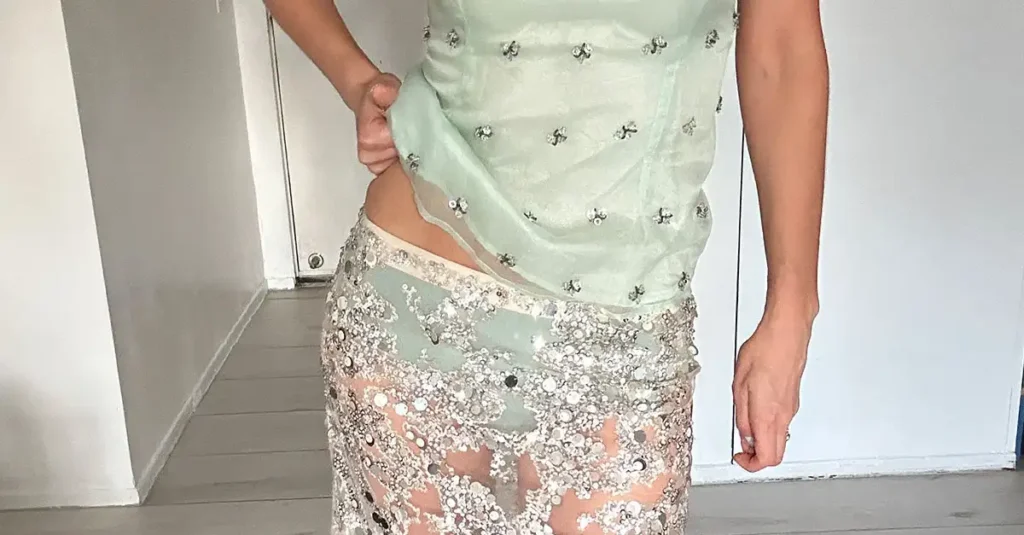
Coverage is controlled through pattern shape, lining height, neckline depth, slit position, cut-out size, fabric density, color, stretch, and internal support. Designers should check the garment on-body because tension and movement can change transparency considerably. Bust, underarm, side body, hip, seat, and upper thigh usually require the closest attention, especially in fitted styles where the sheer fabric is stretched across the body.
Coverage by Body Zone
Coverage is a three-dimensional problem. The point where a pattern edge sits while the wearer stands upright does not necessarily show where it will sit when she raises an arm, turns sideways, bends forward, or sits down. Deep armholes can reveal the side bust during movement, while a backless style can shift exposure farther around the side body than a front-view sketch suggests.
The hip and seat behave differently from the waist because they usually place greater tension on a fitted shell. Stretch mesh can therefore become visibly more transparent in those areas even though the same material looks relatively dense across the waist. A high slit creates another moving boundary: the opening may appear modest while standing but rise significantly when the wearer takes a long step.
For development teams, each coverage zone should therefore have a measurable reference rather than relying only on visual approval. Neckline depth, side coverage, lining length, slit height, armhole depth, back height, and cut-out dimensions can all be recorded in the measurement specification.
Jinfeng Apparel’s pattern-development documentation similarly treats neckline depth, back coverage, slit height, lining length, bust measurements, hip measurements, and strap length as controllable fit points rather than general styling details.
Coverage Area | Standing Check | Movement Check | Common Problem | Typical Development Response |
Bust | Front and side coverage | Lean and reach | Mesh becomes too transparent | Adjust lining, neckline or support |
Underarm | Armhole position | Raise both arms | Bra or side bust becomes visible | Raise armhole or extend coverage |
Waist | Lining placement | Twist and bend | Inner layer shifts | Adjust attachment and ease |
Hip/Seat | Opacity under tension | Walk and sit | Transparency increases sharply | Double layer or stronger mesh |
Upper Thigh | Lining length | Sit and take long steps | Mini lining rides upward | Increase length or hem stability |
Slit | Opening height | Walk and sit | Slit travels too high | Lower opening or extend lining |
Back | Back height | Bend and rotate | Side exposure increases | Rebalance back and side coverage |
Neckline | Neck depth | Lean forward | Gaping or excess exposure | Pattern correction or reinforcement |
Bust and Underbust Control
The bust is one of the most difficult zones because fit, support, transparency, and neckline shape all meet in a relatively small area. A mesh that seems dense in the relaxed state can open substantially once stretched over the cup, while a visible lining edge can cut directly across the bust and make an otherwise refined garment appear poorly engineered.
Development should begin by deciding whether the style is expected to work with a conventional bra, include its own support, or intentionally rely on a specific styling solution. Each option changes the back height, strap position, neckline depth, internal cup construction, and amount of side coverage required.
Built-in cups, boning, underbust seams, elastic, power mesh, and double-layer construction can improve stability, but simply adding more components does not automatically create a better garment. A lightweight sheer dress can quickly become stiff and uncomfortable when an internal structure is designed more aggressively than the outer silhouette requires.
Placement is often more important than the number of supporting elements. A cup sitting slightly too high, an underbust seam positioned too low, or a shoulder strap attached at the wrong angle can change the entire neckline. Front, side, and three-quarter fittings should therefore be combined with movement rather than relying on one perfectly positioned front photograph.
Waist, Hip, and Thigh Balance
Fitted sheer garments often become most transparent around the hip and seat because these areas stretch the material more than the waist. One common response is to make the lining tighter, but a tight lining can introduce new problems. It may ride upward, create visible compression lines, or move independently from the outer mesh as the wearer walks.
A stronger solution starts with compatibility between the layers. The outer shell and inner layer do not need identical stretch percentages, but they should reach their working range without one layer becoming dramatically more restrictive than the other. If the outer mesh continues to extend while the lining has already reached its limit, the garment can distort around the hip.
The height of a short lining also changes body proportion. A horizontal line ending at the widest point of the thigh can make the garment appear shorter or draw attention directly to an area the designer did not intend to emphasize. Moving that line slightly upward or downward can create a noticeably different silhouette even when the outer shell remains unchanged.
Extended sizing requires another level of review because coverage points do not scale perfectly with circumference. Bust support, armhole coverage, back height, lining comfort, slit position, fabric recovery, and waist-to-hip balance may need separate adjustments rather than simple proportional enlargement. Jinfeng Apparel’s documented extended-size development process specifically identifies these points.
Color and Lighting
Transparency cannot be approved under only one lighting condition. Soft showroom or studio light can make a dress look considerably more opaque than daylight. Strong backlighting can reveal legs, underwear, seam allowances, zipper tapes, internal cups, labels, and other details that were barely noticeable during the fitting. Camera flash can create another result again, particularly with pale mesh and lightweight synthetic fabrics.
Color intensifies the issue. Black mesh over black lining normally produces a relatively dense appearance because the layers visually blend. The same construction in ivory, blush, pale blue, or white may reveal a much stronger contrast against the body underneath. Light colors also make staining, seam shadows, and internal components easier to see.
For that reason, transparency should be reviewed under at least several realistic conditions: normal indoor lighting, strong directional or natural light, and photography. The shell should also be evaluated against the exact lining color proposed for production rather than a temporary substitute.
Skin-tone lining introduces another consideration because “nude” is not one universal shade. Some brands deliberately select one tonal effect, while others build several options into their product range. Whatever strategy is chosen, the lining color should be treated as part of the fashion design rather than an invisible technical component.
How Do Fit and Movement Affect Sheer Styles?
Fit can directly change how transparent a garment appears. Stretching opens mesh structures, walking separates overlapping chiffon layers, short linings can move upward, and slits expose more during a long step or while sitting. Sheer garments should therefore be reviewed through standing, walking, sitting, reaching, and turning. The shell, lining, internal support, and pattern need to move together while preserving the intended coverage.
Stretch and Recovery
Stretch measures how far a material can extend, while recovery describes how effectively it returns toward its original dimensions. In fitted sheer apparel, recovery is often the more revealing performance characteristic. A fabric can feel extremely elastic during the first fitting but gradually remain stretched around the neckline, elbows, waist, hip, or seat after repeated movement.
Once mesh remains extended, the issue is not only fit. The openings in the material can stay wider, increasing visible transparency. A neckline can begin to gap, a skirt can ride upward, and side seams can rotate. Ruching may also move away from its approved position as the fabric loses its original tension.
A practical development comparison can begin with a measured fabric section. The material is extended to a defined length, held briefly, released, and then measured again after a controlled resting period. Formal laboratory testing can provide more standardized results when required, but even a disciplined sample-room comparison can quickly reveal meaningful differences between candidate fabrics.
Material substitutions deserve the same attention. Matching GSM, color, and composition does not guarantee matching recovery. When a brand replaces one mesh supplier with another, bodycon fit and neckline behavior can change even when the two fabrics appear nearly identical on the sourcing table.
Measurements That Matter
Bust, waist, and hip measurements remain fundamental, but sheer clothing introduces several additional dimensions that directly control exposure. Neckline depth determines upper-chest coverage, armhole depth influences side-bust security, back height affects underwear compatibility, strap length changes both neckline and underarm position, and slit height determines how far the garment opens during movement.
Lining measurements are equally important. Lining length determines where the transparent section begins, while lining circumference affects whether the inner layer stays in position or climbs upward. Cut-out dimensions and their distance from key body points should also be measurable rather than approved only from photographs.
The pattern system documented for Jinfeng Apparel includes bust, upper bust, underbust, waist, hip, front and back length, strap length, armhole, neckline depth, slit height, back coverage, lining length, and other garment-specific points used during womenswear development.
Tolerance should reflect the importance of each measurement rather than applying one number mechanically across the garment. A relatively small difference in strap length or neckline depth can affect coverage more dramatically than the same difference in a generous skirt circumference. Brands should therefore establish final tolerance standards around the approved tech pack, fit expectations, and construction method.
Lining Movement
A common sheer-garment problem appears only after the wearer has been moving for several minutes. The outer shell returns close to its original position, but the lining has twisted, climbed upward, dropped below the hem, or shifted to one side. The garment looked correct immediately after dressing, yet no longer looks correct once it behaves naturally.
Different stretch, friction, weight, and ease between shell and lining are usually responsible. A slippery lining can rotate beneath a stable outer fabric, while a restrictive lining can creep upward against the body. Heavy lining may pull downward on delicate chiffon, and an excessively loose lining can bunch visibly underneath fitted mesh.
Attachment points help manage those differences, but fixing the layers together everywhere is rarely the best solution. Too many attachment points can remove the independent movement that made a lightweight sheer shell attractive in the first place. The objective is controlled movement rather than complete restriction.
Depending on the style, layers may be stabilized at the neckline, shoulder, waist, zipper, or selected side seams while remaining freer toward the lower garment. Fitting should include several minutes of walking and sitting without repeatedly repositioning the dress. A garment that maintains its relationship naturally is a much stronger production reference than one that has to be reset before every photograph.
Size Grading and Coverage
Sheer styles can change significantly during grading because not every exposure point should increase at the same rate as body circumference. A cut-out that looks balanced in a sample size may become much larger than intended when its dimensions are graded proportionally. Similar problems occur with neckline depth, armholes, back openings, slit height, and short lining lengths.
Fabric tension also changes across the size range. The same mesh may appear more or less transparent depending on how the brand’s grade rules distribute ease around the bust, waist, and hip. An outer fabric can therefore remain technically identical while the visual density changes on different sizes.
Coverage-critical points should be identified before grading begins. Minimum lining height, side-bust coverage, armhole position, back height, slit location, cut-out dimensions, and neckline depth can then be reviewed separately from ordinary circumference grades.
Where the size range is broad, fitting more than one size is valuable. A single small sample cannot reveal every issue likely to appear higher in the range. Extended-size development commonly requires additional consideration of support, shoulder and armhole position, waist-to-hip proportion, lining comfort, and recovery rather than simply enlarging the original pattern.
How Are Sheer Styles Made Production-Ready?
A sheer style becomes production-ready when fabric, lining, transparency, fit, coverage, layer construction, seam treatment, and movement behavior have all been translated into repeatable specifications. Sampling should establish what the finished garment is expected to do before bulk cutting begins. Production then needs consistent control over fabric lots, stretch direction, layer count, measurements, lining attachment, workmanship, transparency, finishing, and packing.
Tech Pack Essentials
A conventional tech pack that lists composition, color, and basic measurements may leave too many decisions unresolved for a garment built around transparency. The document should identify which panels are single layer, double layer, lined, partially lined, reinforced, or intentionally unlined. Different meshes should receive separate material references rather than being grouped under one general description.
Stretch direction should be clearly indicated when performance depends on orientation. Lining length, neckline depth, slit height, cut-out dimensions, back height, strap length, and coverage boundaries should also be measurable. If those details are described only as visual instructions, different operators can interpret them differently during bulk production.
Construction information should explain how the lining joins the shell, where internal supports are positioned, how transparent edges are finished, and which seams are intended to remain visible. When cups, boning, power mesh, elastic, or binding are used, their positions and attachment methods should be clear enough to reproduce.
Color approval should include the inner layer as well as the shell. Two black fabrics can differ in undertone, gloss, and density, making the lining obvious even when both are technically the same color family. Where transparency is particularly sensitive, approved sample photographs can supplement measurements and construction drawings, but they should support rather than replace technical specifications.
Sample Review
A good sheer sample review starts with ordinary garment checks and then goes much further. Measurements, silhouette, seam appearance, fabric quality, and workmanship are reviewed first. The garment should then be placed on the intended body type so that transparency and coverage can be examined from front, side, back, and three-quarter angles.
Movement should be deliberate rather than incidental. The wearer should walk, sit, stand, raise both arms, rotate the torso, and take a longer step when the design includes a slit. Low necklines and side openings should be reviewed while leaning or reaching because those positions often reveal problems that remain hidden during a standard upright fitting.
Lighting should be part of the approval routine. A garment that looks appropriate under soft fitting-room light may become much more transparent near a window or in flash photography. Pale mesh, white chiffon, open lace, and skin-tone lining deserve particularly careful evaluation.
The review should also consider what the customer will realistically need in order to wear the product. If the dress depends on a very specific bra, tape placement, or undergarment that is neither supplied nor obvious from the design, the product can generate dissatisfaction even though the campaign sample looked excellent. Wearability needs to be judged outside the perfect conditions of a photo shoot.
QC Priorities
Sheer fabrics make both defects and inconsistencies more visible. Snags, holes, uneven layer counts, stretched necklines, distorted seams, poorly matched lace, visible seam allowances, twisted linings, and pressing marks can affect the finished appearance more strongly than they would in a heavy opaque fabric.
Incoming material inspection is therefore important. Shade, hand feel, width, stretch, surface defects, and transparency should be compared before fabrics from different rolls or lots are mixed. Stretch-sensitive panels must then be cut in the correct direction, while fabrics with directional sheen or structure need consistent orientation.
During sewing, operators and inspectors should watch neckline growth, seam puckering, asymmetry, layer attachment, strap position, lining height, and slit construction. Final inspection should include measurements and appearance but should also recognize that some sheer garments cannot be fully evaluated while lying flat on a table.
Jinfeng Apparel’s documented quality process includes incoming checks for fabric color, weight, hand feel, width and defects, cutting checks for panel and stretch direction, sewing checks covering seam quality, symmetry, strap length, lining attachment and slit height, and garment inspection covering measurements, appearance, holes, finishing and other visible quality points.
Reducing Bulk-Production Risk
The largest production mistake is assuming that an approved sample automatically guarantees an identical bulk result. Bulk fabric arrives in multiple rolls, sewing is repeated hundreds or thousands of times, operator handling varies, and small material differences can become obvious once finished garments are compared side by side.
Material consistency should therefore be checked before cutting. Stretch, recovery, shade, hand feel, and transparency are especially important when the garment relies on mesh or other delicate transparent materials. Multi-layer styles also need a clearly defined layer count because one missing tulle or mesh layer can alter opacity, color depth, volume, and silhouette.
The approved sample should remain an active production reference rather than a document stored away after confirmation. When a construction revision is accepted, the sewing instruction and corresponding inspection point should be updated so production does not continue using an earlier method. The company’s development documentation follows the same approach by transferring approved workmanship changes into sewing instructions and QC checkpoints.
A useful real-world example comes from an anonymous Australian partywear program developed with Jinfeng Apparel. The project covered nine mesh bodycon and cut-out styles totaling approximately 8,600 pieces. Development focused on mesh transparency, stretch recovery, neckline stability, cut-out proportion, lining length, bust coverage, and on-body appearance. Stretch mesh and power mesh were compared, neckline construction was refined, and sample feedback was completed before PP approval.
The lesson is broader than one project. Sheer garments become easier to manufacture when transparency is treated as a controlled specification rather than an artistic description. The earlier a development team converts visual ideas into measurable material, pattern, lining, and fit decisions, the less likely those decisions are to be reinvented during bulk production.
Conclusion
Sheer layering succeeds when the transparent effect feels effortless to the person wearing it, even though considerable work may sit underneath. Fabric density, recovery, lining position, neckline depth, slit height, internal support, seam treatment, lighting, movement, and grading all contribute to the final level of coverage. No single technical feature can solve every sheer design because each garment creates a different relationship between the body, the transparent shell, and the internal structure.
For fashion brands developing mesh dresses, chiffon styles, lace occasionwear, cut-out party dresses, or layered eveningwear, the most useful development process is usually one that tests visual intent and practical wearability at the same time. A strong manufacturing partner should be able to discuss not only whether a style can be sewn, but how its transparency, fit, support, and coverage will behave across sampling, different sizes, and bulk production. When those questions are settled early, sheer layering becomes a repeatable design language rather than a production gamble.
Share This Article :

Jerry Lee
Categories

Latest blogs
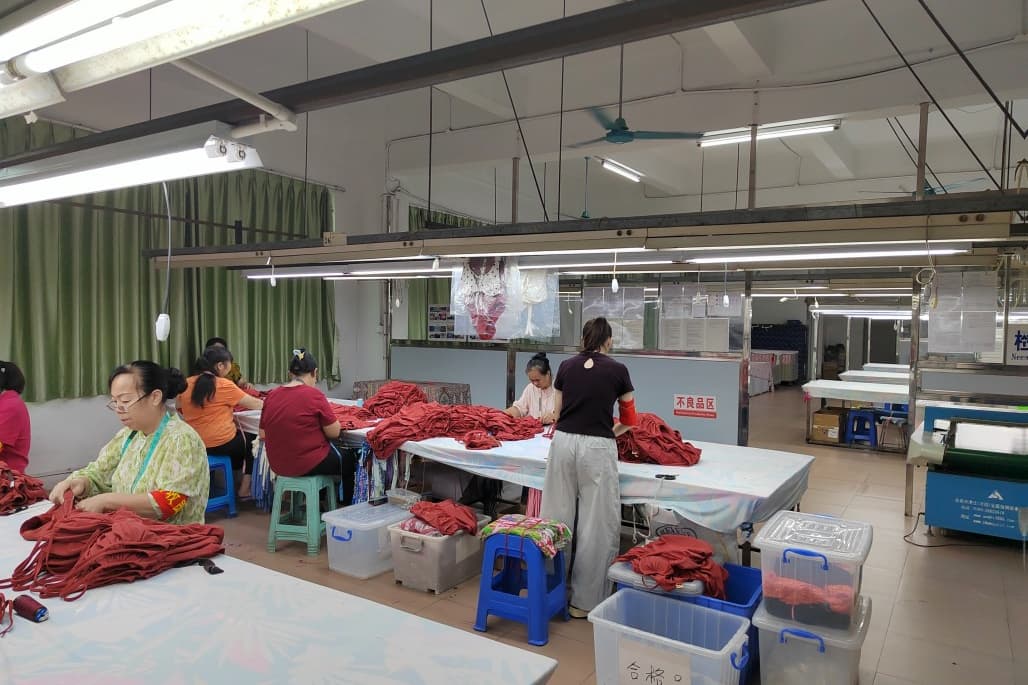

Table of Contents
Here, developing your OEM/ODM private label clothing collection is no longer a challenge—it’s an excellent opportunity to bring your creative vision to life.