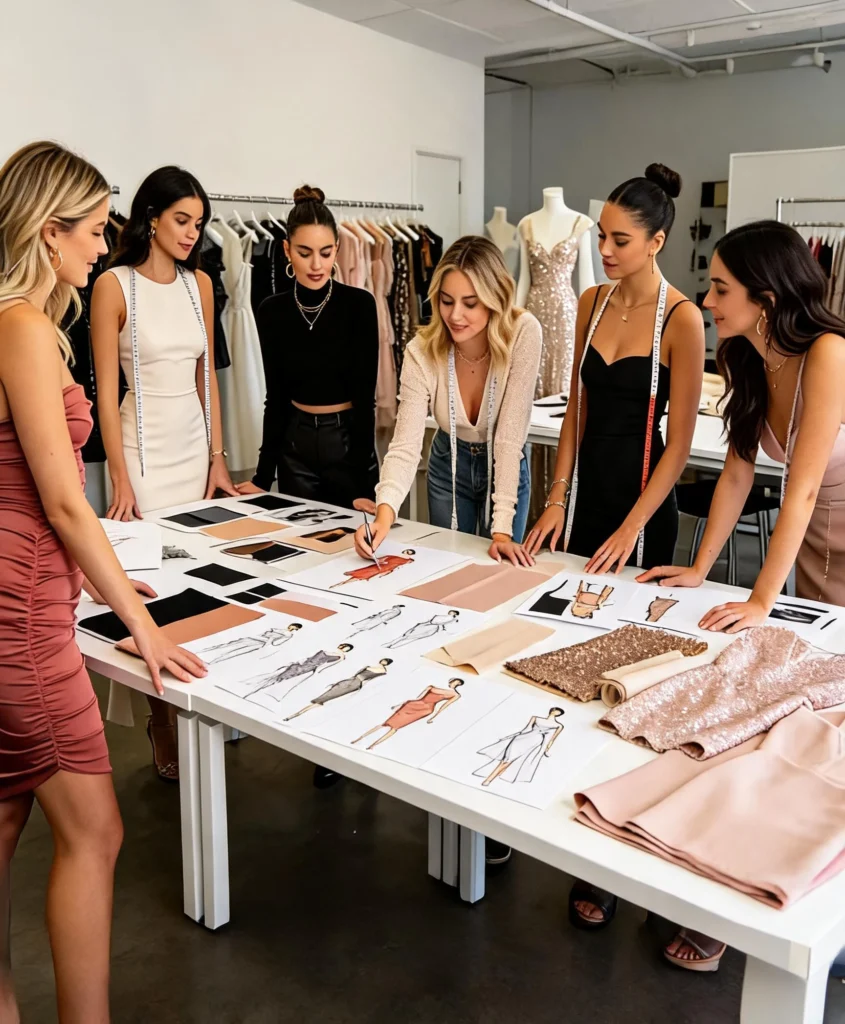
Coordinated Set Fabric Matching Solutions
Fabric, color and fit developed as one coordinated womenswear system — from first material review through bulk production and repeat programs.
- Coordinated-set development is supported by 2 sample rooms, 7+ senior pattern makers and 20+ sample machinists, allowing top and bottom proportions to be reviewed together rather than as unrelated garments.
- Fabric evaluation covers color, weight, handfeel, shrinkage, stretch direction and surface condition before bulk cutting.
- Jinfeng Apparel operates 6 owned women’s fashion factories and 6+ flexible production lines for multi-style and multi-fabric programs.
- 15+ QC inspectors support material, cutting, sewing, measurement, finishing and packing control through production.






Manufacturing Support Built Around Coordinated Set Consistency

Fabric Evaluation

Set Pattern Development

Sample Room Review

Bulk Quality Control

Multi-Style Production
Coordinated collections often combine satin, jersey, mesh, crepe, cotton blends, printed woven fabrics and structured materials within one launch.
Jinfeng Apparel uses 6 owned women’s fashion factories, 18+ sewing lines and 6+ flexible production lines to allocate work according to product construction, fabric behavior and production risk rather than treating every style as an identical sewing job.
Repeat Program Records
Built for Fashion Teams Managing Coordinated Collections
Product Development Teams
Sourcing and Merchandising Teams
Quality and Vendor Teams
Why Coordinated Sets Lose Consistency in Production
Shade Drift
- Satin may reflect light differently from mesh or crepe.
- Separate fabric batches can produce visible shade differences.
- Lining, zipper tape and thread may alter the overall color impression.
Weight and Handfeel
- Compare GSM or relative weight.
- Review surface softness and recovery.
- Check how fabric behaves after lining or reinforcement.
Stretch Imbalance
- Check stretch direction before cutting.
- Review recovery after extension.
- Match pattern ease to actual fabric behavior.
- Recheck measurements after sample wear and handling.
Shrinkage Difference
Two pieces may fit correctly before washing but lose proportion when their fabrics respond differently to laundering or finishing. Rayon, cotton blends, jersey and some woven fabrics require particular attention.
- Review shrinkage by material.
- Consider lining behavior separately.
- Recheck finished length and waist placement.
- Confirm care instructions reflect approved materials.
A short top shrinking differently from a high-waisted skirt can visibly change the exposed-waist distance, turning a proportion problem into a fit complaint.
Surface and Print Conflict
- Establish cutting direction.
- Control motif orientation.
- Review left-right symmetry.
- Confirm placement relative to seams and waistlines.
Proportion Breakdown
Individual pieces can measure within tolerance while the complete outfit still looks wrong. Crop length, waistband position, bust volume, hip ease, skirt length and trouser volume interact visually.
- Review the set on the body.
- Compare exposed waist distance.
- Check waistline alignment.
- Evaluate silhouette across planned sizes.
Jinfeng treats coordinated fit as a relationship between garments, not two independent measurement charts placed in the same purchase order.
Coordinated Set Categories Developed for Fashion Collections
Different set structures require different fabric logic. Product development should begin with silhouette, wearing occasion and material behavior rather than selecting one fabric formula for every top-and-bottom combination.

Satin Top Skirt Set
Satin sets rely on visual continuity, controlled shine and clean seam presentation. A cami, asymmetric or fitted satin top can pair with mini, midi or bias-inspired skirts.
Development focuses on color batch, grain or shine direction, lining color, zipper flatness and pressing. When stretch satin is used, recovery and fit also affect waist and hip balance. Packaging needs enough protection to reduce snagging, pressure marks and severe fold impressions.

Corset Mini Skirt Set

Crop Maxi Skirt Set
Crop-top and maxi-skirt programs depend heavily on vertical proportion. Top length, high-waist placement, skirt drop, hem balance and fabric drape determine whether the outfit appears elongated or visually divided.
Chiffon, rayon, satin, printed woven and lightweight crepe can all work depending on design direction. Fabric transparency and lining length should also be coordinated so upper and lower pieces maintain a consistent level of coverage.

Halter Skirt Set
Halter tops create pressure around the neck and require stable bust coverage, while the skirt determines lower-body movement and waist emphasis. Satin, jersey, mesh and light woven fabrics may be used in different combinations.
Development should compare top support with skirt drape, confirm the color relationship between main fabric and lining, and review how the halter length changes the visible distance between upper garment and waistband.

Blouse Trouser Set

Structured Skirt Set

Printed Resort Set
Printed resort sets depend on more than matching artwork. Base fabric, print scale, motif direction, placement, shrinkage and lining can alter the final result.
Crop tops, tie-front tops, relaxed shirts, skirts and wide-leg bottoms may share a print or use coordinated motifs. Jinfeng reviews direction before cutting and considers how seams interrupt patterns. Rayon, viscose, linen blends and cotton blends require additional attention to wash behavior and dimensional stability.

Party Top Skirt Set
Fabric Matching Decisions Before a Set Enters Sampling
Fabric compatibility is judged through physical behavior, appearance and garment function. One parameter rarely decides suitability. Jinfeng reviews the combination of material properties most likely to influence fit, visual continuity, manufacturing behavior and bulk consistency.
| Decision Factor | What Needs to Match or Coordinate | Main Production Risk | Approval Evidence |
|---|---|---|---|
| Composition | Fiber behavior appropriate to each garment role | Different wash, dye or recovery behavior | Fabric specification / approved swatch |
| Weight / GSM | Balanced with silhouette and structure | One piece feels unexpectedly heavy or light | Fabric comparison and sample drape |
| Handfeel | Compatible quality perception | Top and bottom feel unrelated | Physical swatch review |
| Drape | Appropriate movement across complete outfit | Awkward silhouette or uneven volume | Full-set sample |
| Stretch | Correct direction and extension | Fit pressure differs across pieces | Stretch check / sample fitting |
| Recovery | Fabric returns after extension | Bagging, looseness or size drift | Recovery review |
| Shrinkage | Controlled relative dimensional change | Post-wash proportion changes | Project shrinkage check |
| Opacity | Coverage appropriate to design | Top and bottom show different transparency levels | Light / lining review |
| Surface | Texture and shine work together | Visual shade appears different | Swatch and garment comparison |
| Color | Shade relationship approved by material | Dye-lot or cross-material mismatch | Lab dip / swatch / bulk reference |
| Scale, direction and placement controlled | Motifs conflict across garments | Printed strike-off or sample | |
| Lining | Color, weight and stretch support shell fabric | Lining changes color, fit or movement | Lined sample |
| Seam Behavior | Fabric tolerates selected construction | Puckering, stretching or bulky seams | Sewing trial / sample |
| Care Behavior | Components remain compatible after use | One piece changes faster than the other | Care review and testing by project |
Same Fabric or Complementary Fabrics for Coordinated Sets
Matching does not always mean using one cloth everywhere. The correct route depends on silhouette, support, movement, opacity and brand appearance. Material roles should be decided before color approval, pattern correction and costing move too far forward.
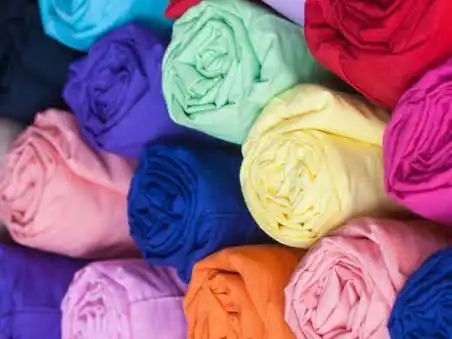
When One Fabric Should Drive the Entire Set
A single-fabric route works well when visual unity is the strongest product requirement and the material can perform adequately across every garment component. Satin top-and-skirt sets, jersey bodycon sets, rib knit sets and selected printed resort sets can benefit from one approved fabric source because surface, color and handfeel begin from a common reference.
Even with one fabric, several controls remain necessary. Panels should be cut with the correct surface or stretch direction. Different dye lots should not be mixed casually within a coordinated outfit. Satin can show visual color changes when panels face different directions, while jersey may behave differently if stretch orientation changes between top and bottom. Printed materials require consistent motif direction and scale across both pieces.
Construction can also change how the same fabric appears. A lined corset top may look denser or deeper in color than an unlined skirt. Reinforcement, interfacing, double layers and seam allowances change handfeel and stiffness. Jinfeng therefore reviews finished components rather than assuming identical roll fabric guarantees an identical garment appearance.
A same-fabric program is strongest when fabric, structure, lining and finishing decisions are considered together. Material sameness can simplify coordination, but it does not replace full-set sample approval or bulk comparison.
When Different Fabrics Create a Better Product
Many stronger coordinated looks require each garment to perform a different job. A corset-style top needs support, shape retention and stable bust coverage; its skirt may need softer movement. A sheer mesh top may require a lined or more opaque lower garment. A relaxed blouse can use fluid rayon while trousers need greater structure and opacity. Matching every piece to one fabric could weaken either function or appearance.
Complementary-fabric development starts by defining roles. The upper garment may prioritize support, surface detail or controlled stretch. The lower garment may prioritize drape, hip comfort, movement, opacity or shape retention. Materials are then compared for color compatibility, handfeel level, surface quality and overall fashion direction.
Cross-material color deserves special care. Satin, mesh, crepe and jersey reflect light differently, so identical digital color values or Pantone references do not guarantee identical visual results. Lining also changes the apparent color of translucent materials. Approval should therefore be based on physical materials under relevant lighting, followed by a complete set sample.
The strongest result is not always “exactly the same.” A deliberately structured top and fluid skirt can look more premium when the contrast is controlled and clearly intentional.
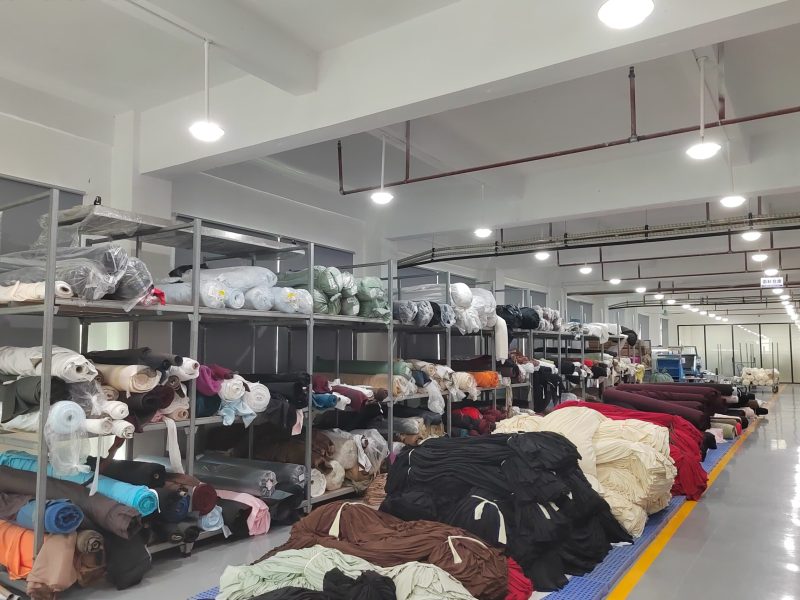

How We Decide Whether Fabrics Belong Together
Jinfeng evaluates a proposed material combination against the intended silhouette rather than using a generic matching rule. A party set, resort set, tailored set and bodycon knit set require different priorities.
First, visual compatibility is checked: color family, shine, texture, transparency and print relationship. Next comes performance: stretch, recovery, drape, weight, shrinkage and seam behavior. Pattern implications follow. If a fabric replacement increases stretch or changes drape, the original pattern may no longer produce the same fit. Finally, lining, trims, zipper tape, elastic and decorative components are reviewed because they can change both appearance and garment behavior.
A fabric combination can be approved even when composition and weight differ, provided the differences support the intended product architecture. Conversely, two materials with similar specifications may still fail if surface shine or handfeel makes the outfit appear disconnected.
Decisions are moved into sampling so fit, proportion and movement can be judged on a complete garment set. Material approval is therefore tied to sample evidence rather than treated as an isolated sourcing task.
Color Matching Across Fabric, Lining and Trims
Color consistency becomes harder when an outfit combines several surfaces. Jinfeng controls color through physical references, fabric batch review, cross-material comparison and garment-level approval rather than relying only on a color name or digital specification.
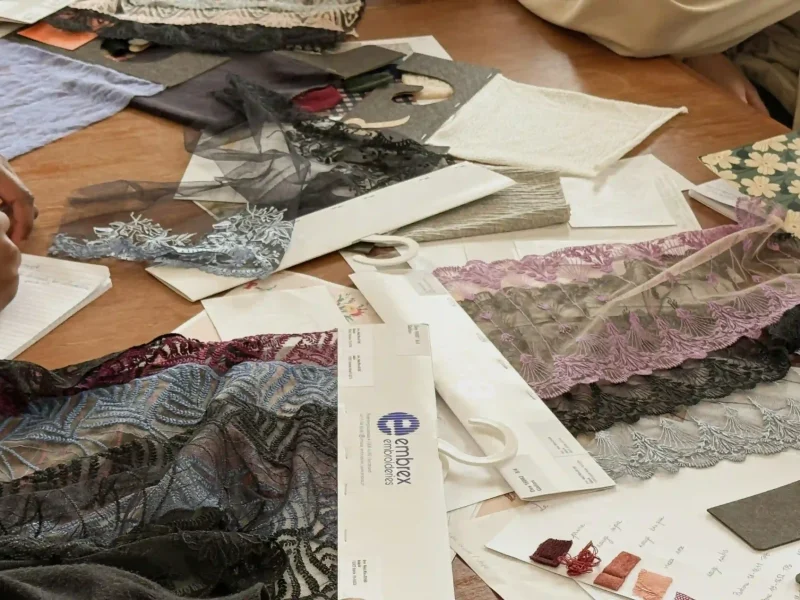
From Pantone Reference to Bulk Fabric Approval
Custom color development can begin from Pantone references, approved physical swatches or project-specific standards. For custom-dyed materials, the approval path can include lab dips before bulk dyeing. Bulk material is then compared with the accepted direction because large dye runs may not reproduce a laboratory sample perfectly without normal commercial tolerance.
Shade-band or batch review becomes especially important when a coordinated set uses large visible areas of the same color. Top and bottom pieces should not be assembled from noticeably different shade groups. Fabric batches, lining colors, zipper tapes and relevant trims need project-specific comparison before production.
Color assessment also needs context. A light satin, double-layered bodice and single-layer skirt can appear different even when the shell fabric comes from one source. Mesh changes according to skin tone and lining. Velvet or directional surfaces alter light reflection as the garment moves.
Jinfeng therefore treats color approval as a physical material and garment decision. A Pantone target gives direction, but final coordination depends on actual fabric construction, finishing, layering and production batch behavior.
Matching Color Across Different Material Surfaces
Cross-material coordination is more complex than same-roll shade control. Matte crepe absorbs light differently from satin. Mesh allows background color to influence the result. Jersey texture can make a dark tone appear flatter, while sequins create highlights that shift under photography.
For sets combining different fabrics, the target should be defined clearly: exact visual match, tonal match or intentional complementary contrast. Trying to force every material into an artificial “exact match” can waste development time when surface construction prevents identical perception.
Lining should also be considered as part of color engineering. A nude, tonal or contrasting lining behind lace or mesh can completely change the visible shade. Thread, elastic, zipper tape and binding become more obvious on clean monochrome sets, especially black, white, ivory, chocolate and saturated fashion colors.
Physical swatches are compared before garment construction whenever possible. Sample review then confirms the relationship under finished layers, seams and body movement. Decisions can be recorded for bulk and later color extensions so future development begins from a known standard rather than memory.
Surface Direction, Prints and Visual Continuity
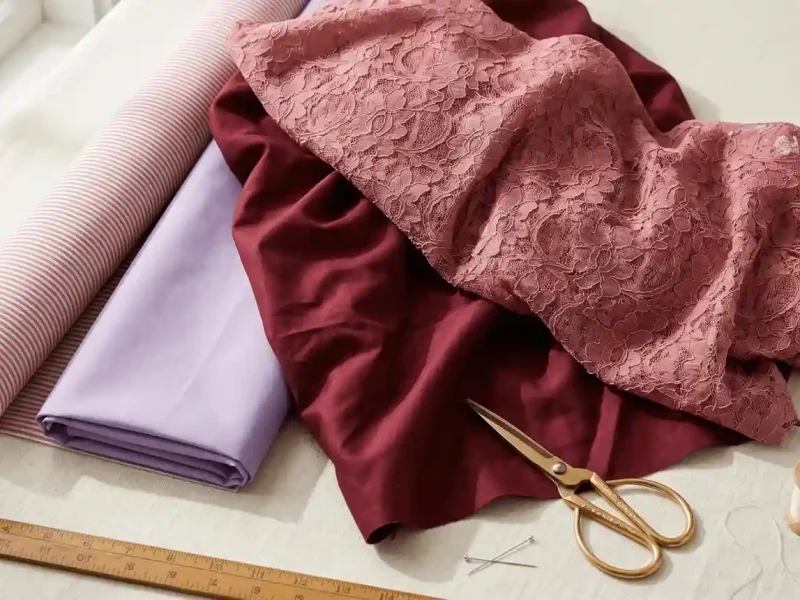
Some apparent color failures are actually direction failures. Satin panels cut in opposing directions can reflect enough light to appear as different shades. Velvet nap creates a similar risk. Sequins, metallic surfaces and brushed textures can change tone according to orientation.
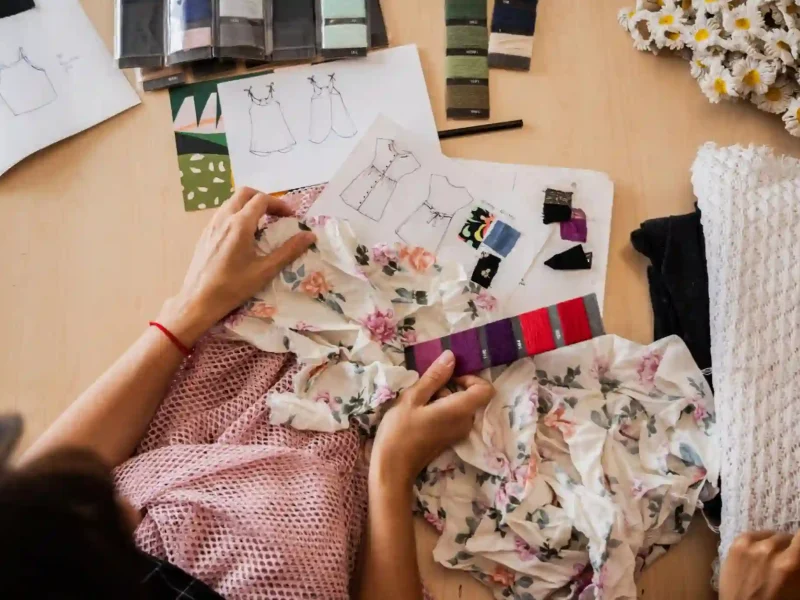
Printed coordinated sets add another layer of control. Motif direction, border placement, stripe orientation, scale and seam interruption need to be considered across both garments. A print that looks balanced on a blouse may become visually heavy on a maxi skirt if scale and placement are not reviewed together.
Cutting instructions therefore need to define directional materials clearly. For placement prints, pattern pieces and print positions must be planned as one system. When top and bottom are intended to form a continuous visual story, the full outfit should be reviewed before bulk release.
Jinfeng’s cutting QC includes fabric direction and print placement checks, while garment review compares the finished set for visual consistency. Directional control is especially important for satin, velvet, sequins, stripes, checks and engineered prints.
Full-Set Fit Depends on Connected Garment Proportions
A coordinated outfit is judged in one glance. Top length, waistband position, bust fit, hip ease and lower-garment volume need to work together. Individual measurements matter, but relationships between measurements determine the complete silhouette.
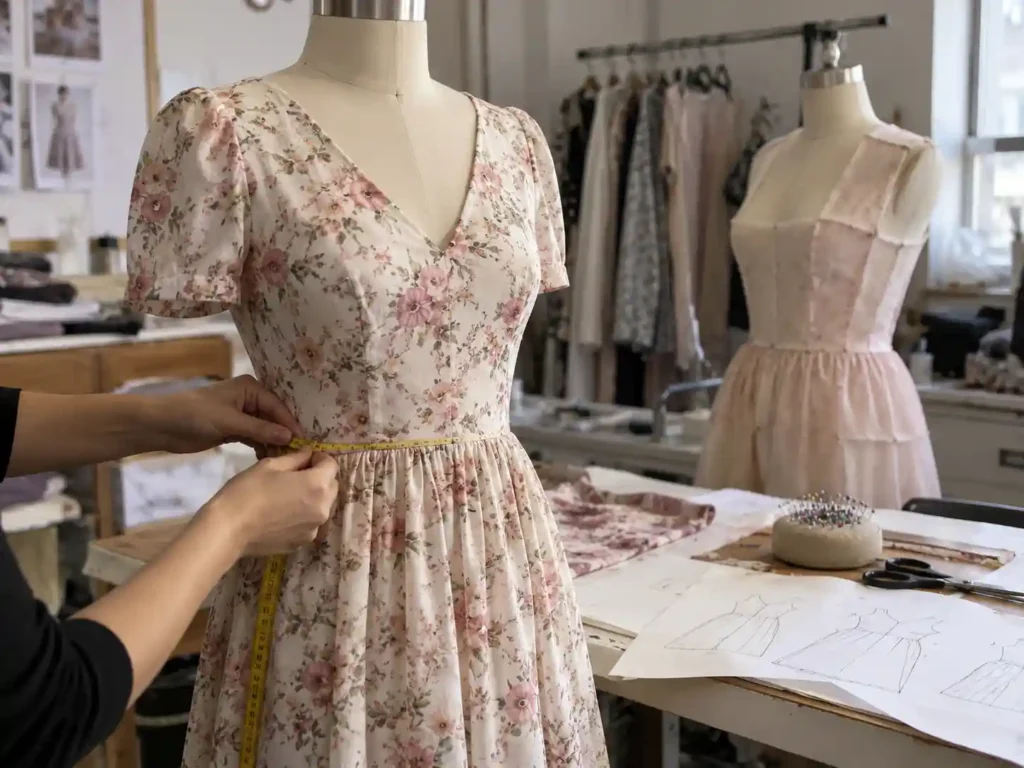
Top Length Must Work With Waist Position
Crop length cannot be approved in isolation. A five-millimeter or one-centimeter change at the top hem or waistband can noticeably alter exposed waist on a fitted fashion set. High-waisted, natural-waist and low-rise bottoms create completely different proportions even when the upper garment remains unchanged.
Jinfeng reviews the relationship between bodice length, front and back length, waistband height and the intended exposure between garments. Corset tops need additional attention because boning, cup shape and waist compression affect where the lower edge sits on the body. Relaxed tops require enough length and movement to avoid bunching awkwardly above a structured waistband.
Skirt and trouser rise also influence the perceived torso-to-leg ratio. A set developed for a young trend-led collection may intentionally use low-waist proportions, while occasionwear may need a cleaner high-waist transition.
Fit comments should therefore describe the outfit rather than only isolated measurements. Notes such as “reduce exposed waist by 1 cm” or “raise waistband relative to corset hem” are more useful than unrelated alterations made to each garment.
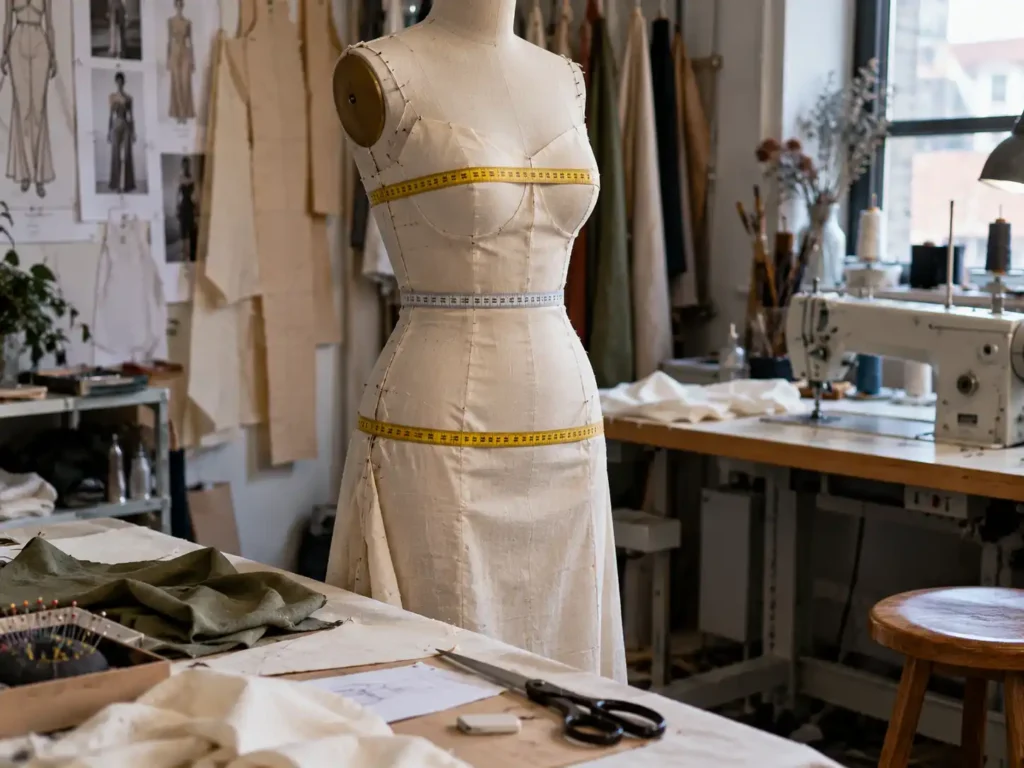
Bust, Waist and Hip Create One Silhouette
Upper-body and lower-body fit must create a consistent level of shaping. A highly fitted top combined with excessive hip ease can make a set look visually disconnected.
An overly tight skirt paired with a soft blouse can create comfort and proportion problems even when both garments technically fit the body.
For fitted sets, Jinfeng reviews bust, upper bust, under bust where relevant, waist and hip alongside fabric stretch and recovery.
Negative ease in jersey or rib must correspond to actual fabric performance. Woven sets require enough ease for sitting and movement while retaining the intended silhouette.
Waist seams and waistband construction are particularly important because they form the visual junction between garments. If the top ends close to the waistband, uneven levels become obvious in photography. Side seams should also appear balanced across the complete outfit.
Sample fitting provides the strongest evidence. Fit comments can then be transferred into pattern updates, measurements and the next sample rather than left as subjective visual feedback.
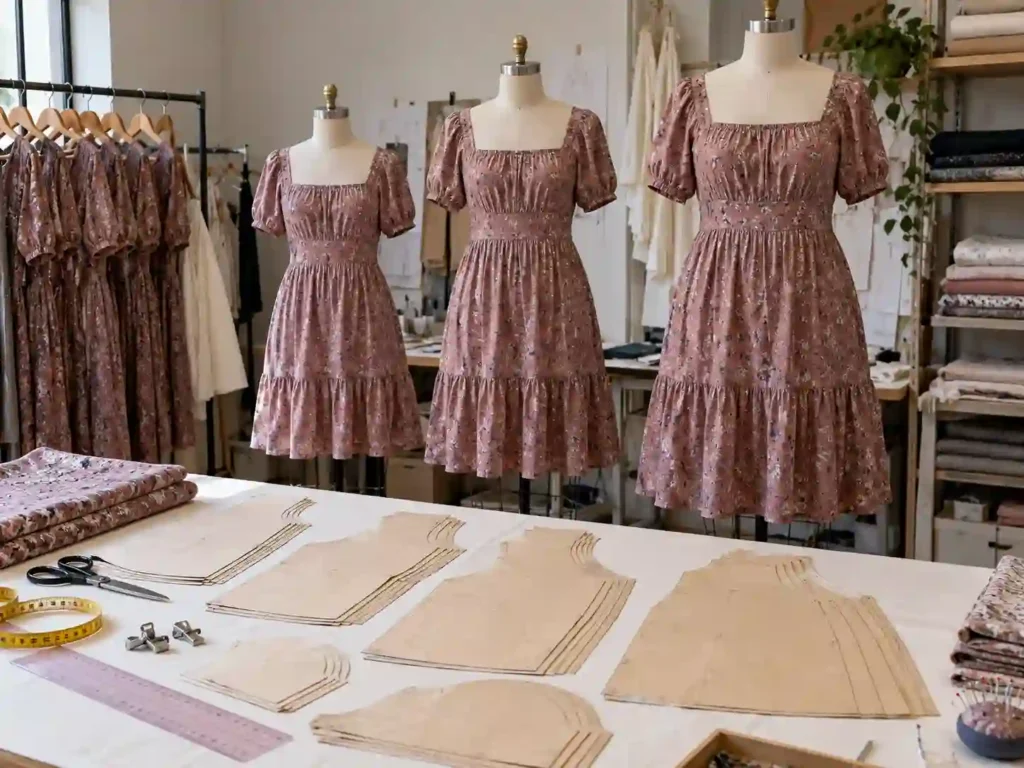
Grading Must Preserve the Set Relationship
A base-size sample can look correct while larger or smaller sizes lose the designed proportion. Simple proportional enlargement is not enough for many fashion sets. Bust coverage, crop length, waistband position, hip ease and skirt length may need controlled grading rules so the outfit still reads as the same design across the size range.
Matching-set development therefore needs both individual garment grading and relationship review. If top length increases too aggressively while waistband height remains stable, exposed-waist distance can change from size to size. Corset cup and under-bust proportions also require more care than a standard relaxed top. Stretch materials may need different measurement logic from rigid woven fabrics.
Jinfeng’s pattern capability covers matching sets, skirts, structured tops and fitted fashion products with attention to bust, waist, hip, garment length, waistline and related proportion points.
Bulk measurement QC then checks approved dimensions against the confirmed size chart and tolerance. Size pairing in packing should follow the agreed commercial structure so correctly graded pieces are also delivered in the correct set combination.
Full-Set Sampling Before Coordinated Production Is Locked
Sampling converts fabric decisions into measurable garment standards. Coordinated sets need material, proportion and construction reviewed together. Jinfeng uses staged samples so fit corrections and material changes are recorded before approved standards move into production.

First Samples Test the Product Architecture
The first sample is used to test structure, material behavior, garment proportions and construction feasibility. It is not treated as an automatic bulk standard. For coordinated sets, both pieces should be reviewed together whenever the relationship between garments affects the intended look.
Jinfeng can begin from a tech pack, reference photo, original sample, sketch, size chart, fabric swatch or line sheet. The team reviews fabric direction, pattern requirements, trims and construction before sample sewing. Medium-complexity dresses, sets and jumpsuits generally require around 12–18 days for a first sample, depending on material availability and development complexity. More complex corset, strapless, lace, mesh or sequin structures may require around 15–25 days. Specially developed fabrics or trims can extend the schedule according to supplier lead time.
During first-sample review, attention goes to top-bottom proportion, fabric response, waistband position, coverage, stretch, drape, lining and visible construction. Problems identified early can be corrected before they become expensive production problems.
Revised Samples Turn Comments Into Controlled Changes
Sample comments need to become production data. “Top feels too long” should translate into a measurable pattern correction. “Skirt feels too heavy” may trigger fabric or lining review. “The colors do not look like one set” can require cross-material color comparison rather than a sewing adjustment.
Jinfeng categorizes sample concerns around fit, fabric, workmanship, on-body effect, color, trims, measurements, detail proportion and cost alignment. Revised sample work can involve pattern changes, measurement adjustments, fabric replacement, trim adjustment or construction changes.
Revised samples commonly require around 7–15 days, with complex revisions assessed according to the actual change. A fabric replacement can require more than a simple resample because drape, stretch, shrinkage or weight may change the pattern result.
Revision records should state what changed, why it changed and which files need updating. Pattern, size chart, BOM, sewing instruction and QC checkpoints are updated as relevant so the next sample reflects controlled development rather than verbal memory.


PP and Golden Samples Define Production Standards
A pre-production sample has a different role from a first or photo sample. By PP stage, the project should have a stable pattern, approved measurements, selected fabrics and trims, confirmed construction and agreed private-label requirements. Changes after PP approval can affect material purchasing, costing and production timing, so late changes require formal reassessment.
The Golden sample provides a physical reference for production, inspection, repeat programs and issue review. For coordinated sets, the reference should represent the complete look whenever both garments are intended to be sold or worn together.
Before bulk release, Jinfeng connects approved sample information to final patterns, measurement charts, fabric references, trim details, sewing instructions, label placement, packing requirements and QC checkpoints.
The aim is not to claim sample and bulk will be mathematically identical in every microscopic characteristic. The aim is to establish a controlled standard against which bulk fabric, construction, measurements, appearance and packing can be checked.
How Fabric Changes Affect a Coordinated Set
Changing material during development can alter far more than color. Drape, stretch, shrinkage, opacity and seam behavior may require pattern, lining, construction or cost review before the revised fabric is approved for the complete outfit.
| Fabric Change | Likely Effect on the Set | Development Action |
|---|---|---|
| Higher GSM | More structure, less fluid movement | Recheck drape, seam bulk and pattern ease |
| Lower GSM | More transparency and softer shape | Review lining, support and finishing |
| More Stretch | Fit may become looser after wear | Review negative ease and measurements |
| Less Stretch | Movement and comfort may reduce | Adjust pattern ease or construction |
| Different Recovery | Bagging or shape loss may appear | Refit sample and review stress areas |
| Higher Shrinkage | Post-wash proportions can change | Recheck finished measurements and care |
| More Shine | Cross-material shade may look different | Review physical color under finished conditions |
| More Transparency | Coverage changes across top or bottom | Reassess lining and body coverage |
| Different Surface Texture | Handfeel and color perception change | Compare complete outfit visually |
| New Print Scale | Motif balance may change by garment | Reposition print and review pattern placement |
| New Base Composition | Dye, wash and sewing behavior may differ | Reassess sourcing, sewing and finishing |
| New Lining | Color, stretch and drape can change | Review shell-lining combination in sample |
Moving an Approved Set From Sample to Bulk
A successful sample only becomes commercially useful when approved decisions are transferred into controlled production files. Jinfeng links the final pattern, materials, measurements, sewing requirements, labels, packing and QC references before bulk cutting begins.

Production Files Must Match the Approved Set
Sample approval should trigger a structured handover. Final pattern versions, size charts, grade rules, BOM information, fabric references, trim details, sewing instructions and QC checkpoints need to describe the approved garment rather than an earlier sample version.
For coordinated sets, each piece also needs a clear relationship to its partner garment. Style numbers, colors, size combinations and set identity should remain consistent through production and packing. If a skirt waistband position was changed during fitting, the revised measurement must appear in the current pattern and size chart. If a top lining was changed to improve color, the new lining reference must enter the BOM.
Jinfeng uses production and process documentation to align development, merchandising, production and quality teams. Sample revision comments are not intended to remain only in chat threads or marked photographs.
The strongest sample-to-bulk handover creates one clear answer to a production question: which version, fabric, trim, measurement and construction represents the approved standard?
PP Lock Protects Material and Construction Decisions
PP approval is a control point. Once fabric, color, construction, measurements, trims, labels and packing are confirmed, uncontrolled changes increase risk. A new zipper can alter weight or color. A different lining may change drape. A fabric substitution can require pattern adjustment. A late waistband change can affect grading and finished measurements.
Jinfeng therefore reviews major changes before allowing them into production. Material purchasing, cutting preparation and sewing instructions should reflect the same approved direction.
For coordinated sets, PP lock is particularly important because one change can affect two garments. Replacing the top fabric may disturb cross-material color harmony. Raising skirt waist position can change the intended crop gap. Altering packing may require new SKU or barcode instructions.
A disciplined change process does not prevent necessary improvements. It ensures changes are evaluated for appearance, fit, cost, production timing, MOQ and QC impact before implementation.

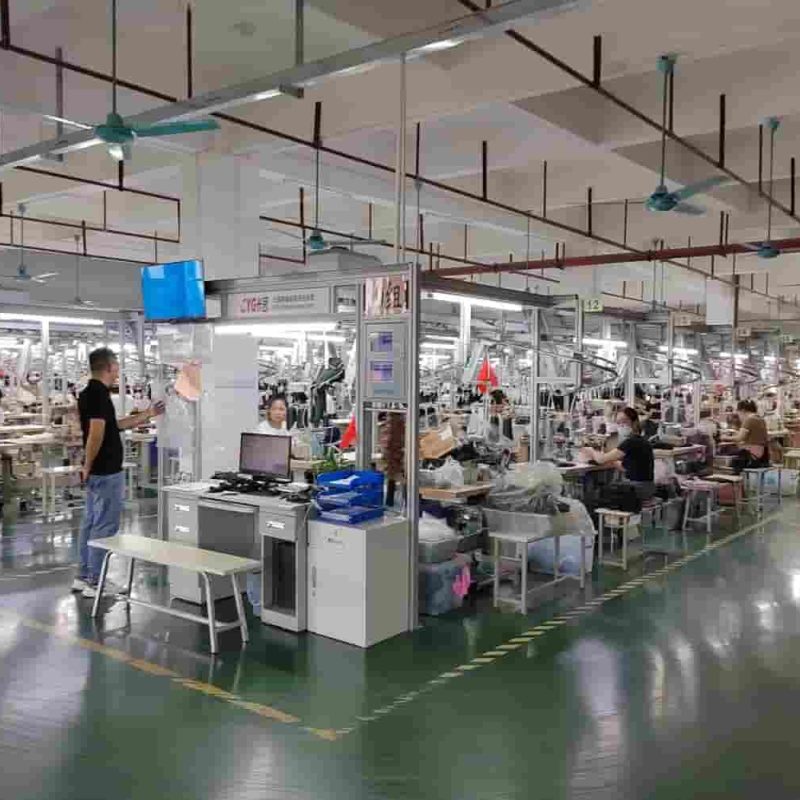
Golden Standards Guide Production and Inspection
Golden samples and approved production references provide physical evidence for workmanship, fit, finishing and overall appearance. They help production teams compare bulk garments against the set that was actually approved.
QC can use the standard alongside measurement charts and inspection instructions. Material shade, garment proportions, zipper behavior, lining, seams, pressing and overall set appearance can then be evaluated against documented expectations.
For later repeat programs, stored patterns, measurement records, fabric references, trims, packing information and Golden standards can reduce unnecessary redevelopment. A repeat still requires confirmation of current material availability and production conditions, but the team does not need to rebuild the entire technical history from memory.
A controlled handover gives development decisions a life beyond the sample room. It creates the production language needed to reproduce a coordinated commercial product across multiple sizes, batches and later seasonal extensions.
Bulk QC for Fabric and Coordinated Set Consistency
Quality is controlled before, during and after sewing. Coordinated-set inspection needs material, direction, measurements and finished appearance checked as connected variables so an individually acceptable top and bottom do not become an inconsistent outfit.

Incoming Fabric and Cutting Control
Incoming QC is the first barrier against bulk inconsistency. Main fabric, lining and relevant materials are reviewed before cutting. Depending on the project, checks can include color, weight, handfeel, width, shrinkage, colorfastness, defects, stretch, transparency and surface condition.
Material type determines additional risk. Satin needs attention to shade and surface direction. Mesh requires snag, transparency and stretch review. Sequins need stability and surface-condition checks. Printed fabrics require direction and print quality review.
Cutting adds another control layer. The production team checks pattern version, panel direction, print placement, size bundling and fabric or stretch direction. Directional fabrics need consistent orientation because incorrect cutting can create visual shade differences even within the same roll.
For coordinated sets, material grouping should also prevent accidental mixing of visibly different shades between upper and lower pieces. The goal is to identify inconsistencies while they are still fabric or cut panels rather than after value has been added through sewing.
Sewing and Measurement Control
Sewing QC looks at how approved materials behave after construction. Stitch density, seam quality, seam allowance, symmetry, zipper flatness, strap length, lining attachment, waistband construction and other style-specific details are checked through production.
Coordinated pieces create additional relationship points. Waistlines need to sit at the approved level. Top lengths need to maintain the intended distance from skirt or trouser waistbands. Side seams should remain balanced. Stretch garments need stable measurements without severe twisting or recovery loss.
In-line inspection allows problems to be corrected before the full quantity reaches finishing. Measurement control then compares bulk garments with the approved size chart and tolerance.
Not every measurement needs equal priority. A coordinated crop set may prioritize bust, top length, waist, waistband height, hip and skirt length. A blouse-trouser set may add shoulder, sleeve, rise and inseam. QC points should follow product architecture rather than a generic garment checklist.


Final Set Appearance and Release
Final garment inspection reviews measurements, visual appearance, pressing, stains, holes, loose threads, zipper function, label position and relevant workmanship details. Coordinated sets require an additional comparison: do the garments still look and function like one approved outfit?
Color relationship, surface direction, proportions and finishing should be checked using the approved project references. Pressing can influence satin shine, waistband shape and seam appearance, so finishing standards matter even after sewing is complete.
Packing QC then confirms labels, hangtags, barcodes, size stickers, polybags, folding, carton marks and packing ratios. When items are sold as a coordinated unit, incorrect pairing can create a commercially unusable product even if every garment is individually well made.
Jinfeng’s 15+ QC inspectors support incoming, cutting, sewing, in-line, garment and packing checks. Client-appointed or third-party inspection can also be coordinated according to project requirements before shipment release.
Set Pairing, Labels and Packing Need Equal Control
A coordinated product can fail after sewing if the wrong top, bottom, size, barcode or carton combination is packed together. Retail and ecommerce delivery therefore requires product identity to remain connected from garment labeling through warehouse-ready cartons.

Style, Color and Size Pairing
Set identity needs to be defined clearly before packing begins. Style number, color name, size and quantity should correspond to the agreed commercial structure. Some programs sell a top and bottom as one set in the same size. Others merchandise components separately but require synchronized colors and coordinated inventory.
Packing instructions need to state which structure applies. Mixed-size cartons, single-size cartons and component-specific cartons each create different control requirements. If a set is sold as one retail unit, the matching pieces must remain paired through labeling and packing.
Size grading also affects pairing. Correctly sewn garments can still create complaints when a medium top is mistakenly packed with a small skirt. Jinfeng uses order information and SKU records to support pack-out checks.
Clear pairing rules become especially valuable in multi-style collections where several black tops, skirts or pants may appear visually similar on a finishing table.

Labels, Barcodes and SKU Accuracy
Private-label production can include woven labels, size labels, care labels, hangtags, barcode stickers, SKU labels and other brand-specific elements. Every item needs the correct file, placement and commercial identification.
Coordinated sets can multiply the risk because top and bottom components may have related but different style numbers, care information or barcode structures. A color name also needs to remain consistent between garment, polybag, barcode list and carton documentation.
Before packing, label content and placement are reviewed against approved project instructions. Barcode and SKU information should be treated as operational data, not decoration.
An incorrect barcode can affect warehouse receiving, inventory and online fulfillment even when garment quality is acceptable.
Jinfeng supports private-label packing while protecting brand-specific label, barcode and packaging files as confidential project information.
Carton and Warehouse Preparation
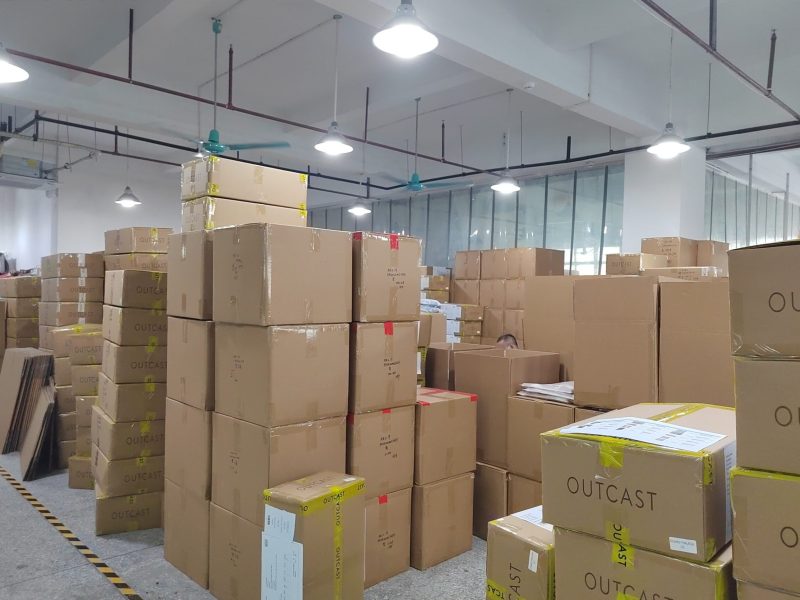
Final packing needs to translate the order structure into cartons that a receiving warehouse can process. Carton marks, size ratios, color breakdowns, quantities and packing lists should agree with physical contents.
For multi-style coordinated programs, carton organization should reduce confusion between similar sets. Polybag labels, size stickers and style identification help finishing teams separate products correctly before cartons are closed.
Jinfeng’s packing QC checks hangtags, barcodes, size stickers, polybags, folding method, carton marks, packing ratio, carton size and carton weight according to project requirements. A team of 30+ finishing and packing workers supports final preparation across bulk programs.
Packing standards should be confirmed before production finishes, not after garments are waiting for shipment. Early confirmation gives enough time to develop or receive private-label materials and avoids last-stage delays caused by missing labels or incorrect barcode data.
Repeat Orders Require Fabric Reconfirmation, Not Assumptions
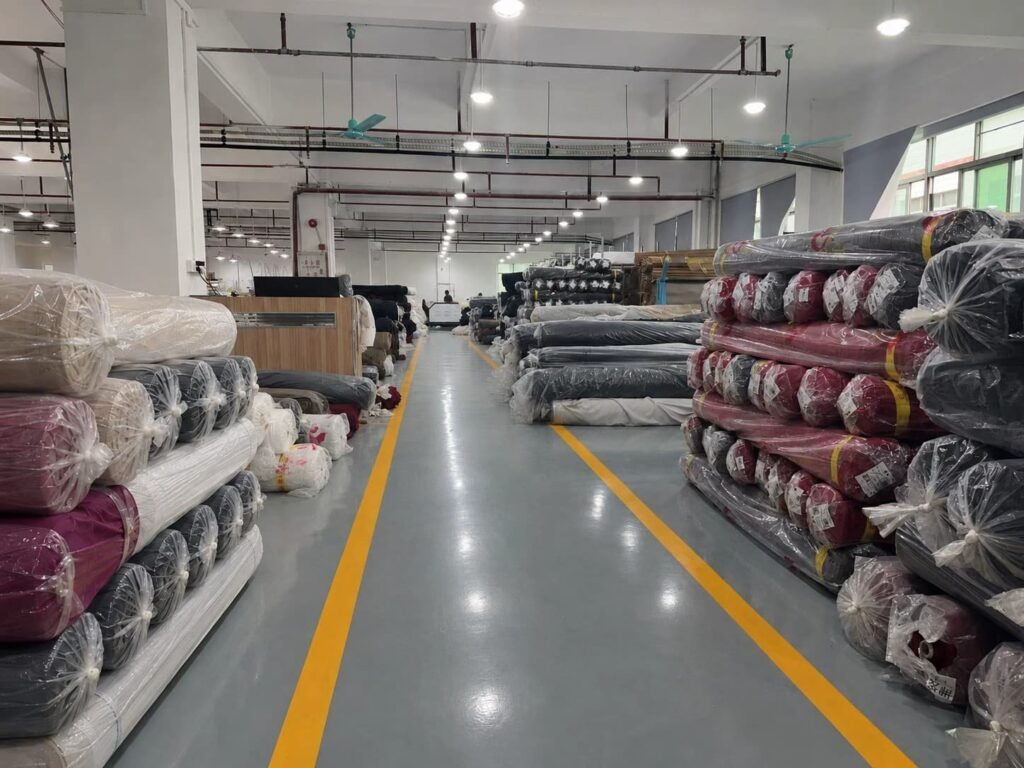
Repeat programs become more efficient when approved technical records are retained. Material continuity still depends on current mill batches, color availability and production conditions, so historical references should guide the new order without replacing fresh verification.

Records Retained for Repeat Programs
A repeat order can draw on approved patterns, measurement charts, previous fabric references, trim information, sewing instructions, packing requirements, QC notes and Golden samples. Those records preserve decisions made during earlier fitting and production stages.
For coordinated sets, historical relationships are particularly valuable. The approved top length, waistband height, exposed-waist distance and size pairing have already been developed. A new order should not accidentally revert to an early sample pattern or outdated packing instruction.
Material records also provide a comparison point for handfeel, surface, color and general performance. When a similar fabric is sourced again, the team can compare it against the previously accepted direction.
Jinfeng supports repeat-order programs as a continuation of product development records rather than beginning every season from zero. The retained information improves communication speed while preserving the technical logic behind the original coordinated set.
Every New Fabric Batch Still Needs Review
Historical approval does not make a future fabric batch automatically identical. Mills may use a new dye lot, yarn batch or finishing run. Stock availability can change.
The same article may show variation in handfeel, color or stretch over time.
Before repeat production, Jinfeng can reconfirm fabric availability, color, trims, production schedule and relevant packaging materials. New colors require additional attention because Pantone direction, lab dip, lining, zipper, thread and SKU information may all change.
A same-pattern, new-fabric program needs even more review. New weight, drape, stretch or shrinkage may alter the fit produced by the existing pattern. A sample or targeted fit check may be required before bulk approval.
Repeat efficiency should come from preserved knowledge, not skipped control points.
The objective is to use historical records to identify what can safely be reused and what must be confirmed again.
Production Capacity Organized by Product and Fabric Risk
Product-Based Allocation
Flexible Production Structure
Merchandising and QC Coordination
Coordinated Set Programs Managed as Complete Collections
North American Occasion Set Program
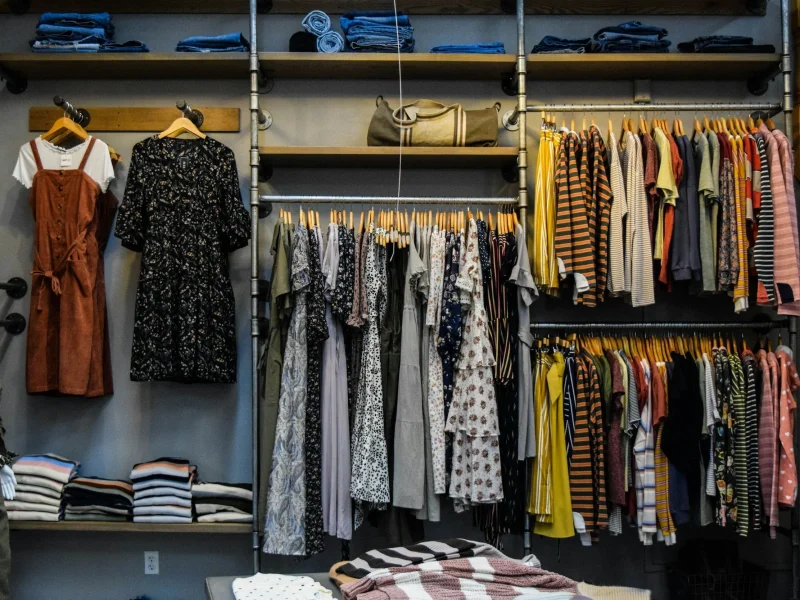
- An anonymous North American premium fashion brand developed an 18-style coordinated collection totaling approximately 42,600 pieces.
The assortment combined satin corset tops, mesh-lined tops, crepe skirts, stretch-satin skirts and selected two-piece occasion sets across multiple seasonal colors. - The main development challenge was maintaining one visual color story across surfaces that reflected light differently. Satin, mesh and lining could not be approved from Pantone references alone. Physical material comparisons were followed by full-set samples so cross-material shade, shine and transparency could be judged after layering.
- Fit work focused on corset hem position, skirt waistband height, exposed waist, bust stability, hip ease and midi proportions. First and revised samples were used to correct the relationship between pieces before PP approval.
- Bulk control covered fabric batch review, surface direction, measurements, zipper flatness, lining, pressing and set appearance. SKU, size and color information then moved into private-label packing instructions. Production records were retained for later color and style extensions.
Australian Resort Set Program
- An anonymous Australian fashion retailer developed a 16-style resort and vacation set program totaling approximately 36,800 pieces. Products included printed rayon tops with maxi skirts, linen-blend shirts with shorts, lightweight woven tops with trousers and selected crop-top combinations.
- The main risk came from materials rather than complex embellishment. Rayon and viscose required shrinkage and drape review, linen blends required agreement on natural wrinkle character, and printed fabrics needed consistent direction, scale and placement. Several outfits intentionally used different fabric weights between upper and lower garments, so development focused on visual coordination rather than forcing identical performance.
- Full-set fitting reviewed blouse volume, crop length, waistband height, hip ease and maxi hem balance. Print direction and fabric orientation were controlled during cutting, while packing preparation managed multiple styles, colors, sizes and coordinated SKU records.
- The project moved from fabric approval and staged sampling into multi-style bulk production, with pattern, color, material and packing records retained for later seasonal development.
What to Check Before Selecting a Set Manufacturer
Fabric Matching Logic
Color Approval Process
Confirm how Pantone references, lab dips, physical swatches, fabric batches, lining and trims are reviewed.
Ask how same-color satin and mesh would be compared, or how separate dye lots are handled in bulk. Strong color control recognizes the difference between numerical color direction and visual appearance on actual textile surfaces.
Full-Set Fitting
Ask whether top and bottom are fitted as one outfit. Crop length, waistband height, bust fit, hip ease, rise and lower-garment length interact. A supplier that reviews each garment separately may miss the proportions that define the commercial look.
Full-set fitting becomes especially important for corset, bodycon, low-waist and high-waist combinations.
Sample Revision Discipline
Bulk QC Structure
Repeat Order Records
MOQ, Fabric Development and Cost Need Clear Boundaries
Production MOQ Structure
Jinfeng Apparel’s standard MOQ starts from 200 pieces per style and color. MOQ is calculated by style and color rather than by combining unrelated styles into one total quantity.
The final requirement depends on fabric availability, trims, construction complexity, packaging and production planning. Multiple sizes can be distributed within the confirmed style-and-color quantity according to the approved size ratio and order structure.
Custom Fabric Requirements
Cost Comes From Construction
Coordinated Set Fabric Matching Frequently Asked Questions
Send Your Coordinated Set Project for Review
A coordinated-set quotation is more accurate when the development team can see how the upper and lower garments are intended to work together. Send your available style information and Jinfeng Apparel will review product structure, fabric direction, color requirements, sample complexity, size range, production quantity and private-label needs before proposing the next development step.
For a focused project review, include:
- Tech pack, sketch or reference imagesfor each coordinated piece.
- Fabric swatches, composition ideas or desired handfeelif materials have already been selected.
- Color direction, including Pantone references or physical standards where available.
- Size chart and planned size range, especially for fitted, corset, low-waist or bodycon sets.
- Quantity by style and colorso fabric and production feasibility can be evaluated correctly.
- Print, lining, trim and construction requirementsthat influence the complete outfit.
- Label, barcode, SKU and packing instructionsfor private-label or retail-ready programs.
- Target launch or delivery windowso sampling, material development and production planning can be reviewed together.