Skip to content

Graduation Mini Dress Collections
Photo-ready graduation mini dress collections developed for fashion brands that need coordinated style depth, reliable fit, clean light-color execution, and controlled seasonal production.
- Collection planning for 10-30 styles in seasonal brand programs.
- Core color directions include white, ivory, light blue, pink, yellow, and floral stories.
- First-sample reference: simple styles 7-10 days, standard dresses 10-15 days, and corset, strapless, lace, mesh, or sequin styles commonly 15-25 days; special fabrics or trims are confirmed by project.
- MOQ starts from 200 pcs per style/color, with separate supplier MOQ possible for custom fabrics, trims, labels, and packaging.
Built for Seasonal Graduation Dress Programs
Graduation & Occasionwear Brands
A focused graduation program often combines clean white minis with a smaller group of satin, lace, corset, halter, bow, and A-line directions.
The challenge is keeping the collection visually connected while giving each style a clear reason to exist. Jinfeng supports collection development from reference images, line sheets, original samples, sketches, or tech packs, then separates each style by fabric, construction, fit risk, trim requirement, sample status, and bulk standard.
Premium Ecommerce Teams
Sourcing & Product Teams
Multi-style programs become difficult when approvals sit across email threads and sample comments are not transferred into production files.
Jinfeng records pattern changes, measurements, fabric approvals, trims, construction notes, labels, packing instructions, and QC points by style.
The goal is to keep a 10-30 style seasonal program readable for development, merchandising, production, and quality teams from first review through shipment.
Retail & Multi-Channel Programs
Retail-ready graduation collections require more than garment quality.
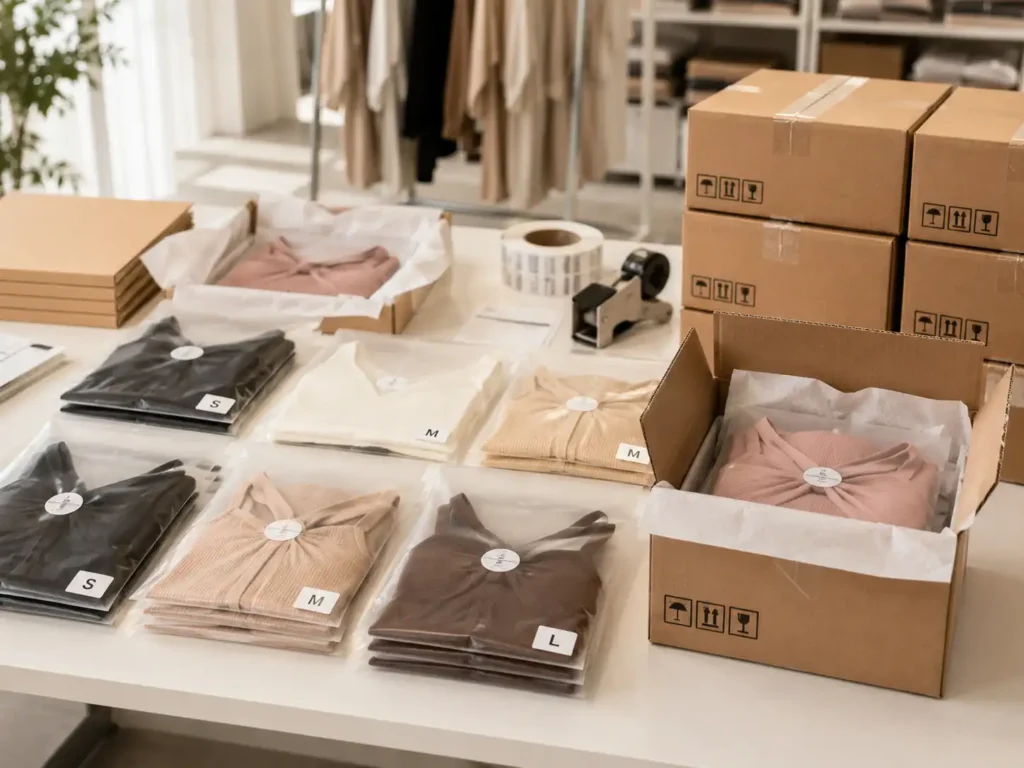
Size labels, care labels, hangtags, barcodes, SKU stickers, polybags, carton marks, carton ratios, and warehouse instructions must match the style, color, and size breakdown.
Jinfeng can support private-label and retail packing requirements while keeping garment MOQ, packaging MOQ, and supplier lead times visible during planning.
Designed Around the Graduation Moment

Commencement Ready
The ceremony places unusual demands on a mini dress. The garment may sit under a graduation gown for hours, then appear immediately in family photos. Necklines should remain stable, straps should not twist under the gown, the skirt should stay at a safe wearable length, and the fabric should recover well after sitting. White and ivory styles also need sufficient lining coverage so the dress remains clean-looking under daylight and indoor lighting.

Photo Ready

Celebration Ready
Graduation Mini Dress Styles for Collection Building
A commercially useful graduation range needs visible style separation without losing a coherent season story. Jinfeng can develop mini dresses by silhouette, neckline, fabric, construction, and detail so merchandising teams can build hero styles, supporting styles, color extensions, and repeat-order options from one coordinated program.

A-Line Mini

Corset Mini
Corset minis create a stronger fashion statement but require more development work. Cup position, boning length, under-bust shape, waist suppression, top-edge security, back construction, and zipper placement all affect both comfort and appearance.
A corset that looks sharp on a hanger may sit too high, collapse at the bust, dig into the body, or shift during movement if the internal structure is not balanced. |
Sample development should confirm cup and boning positions before PP approval, especially when white satin, lace overlays, bow details, or structured skirts are added.

Satin Mini
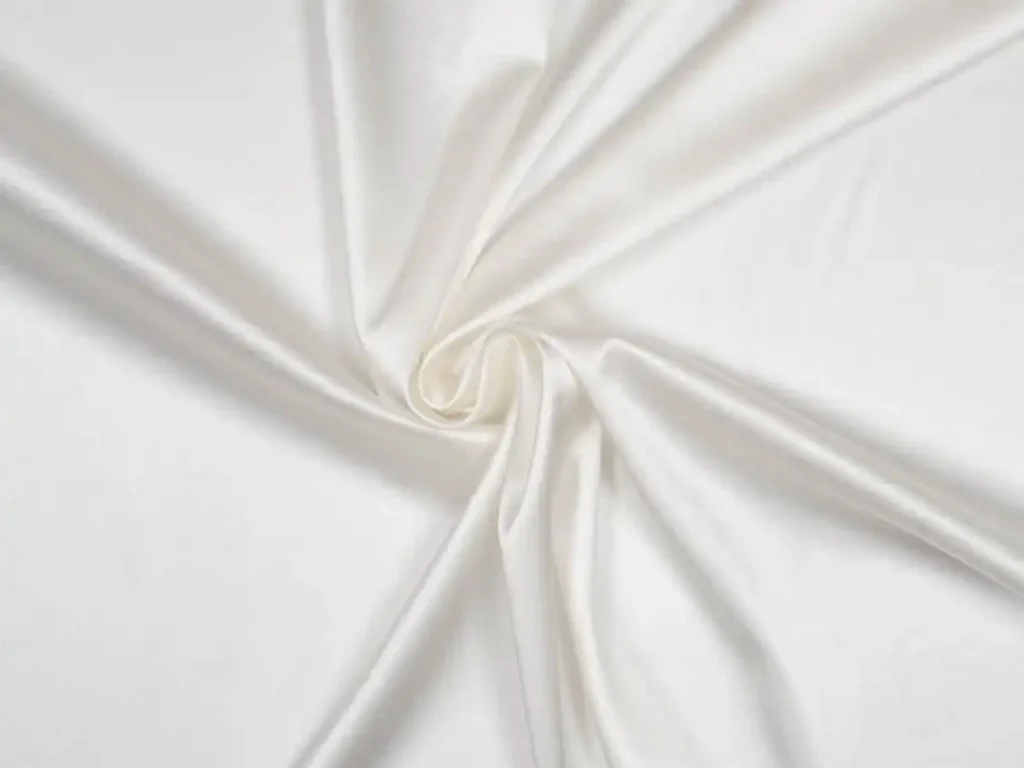
Satin graduation minis depend on surface quality as much as silhouette. Shine direction, color consistency, snagging, seam impression, zipper bulging, pressing marks, and fold lines can all become visible in photography. Slip, A-line, halter, draped, cowl-neck, strapless, or bow-detail versions can share a satin color story, but not necessarily the same construction.
Matte lining, seam allowance control, protected handling, controlled pressing, and clean final packing help preserve the smooth appearance expected from a premium satin mini.

Strapless Mini
A strapless graduation mini must stay secure without forcing the wearer to keep adjusting the dress. Pattern development should review upper-bust circumference, side-body coverage, cup or bust shaping, boning where required, back height, elastic or anti-slip support, and zipper stability. A fuller A-line or bubble skirt can visually balance a fitted strapless bodice, while a straight or body-skimming skirt creates a cleaner profile.
White and ivory strapless styles need special attention at the neckline because extra inner layers can become visible through the shell.

Halter Mini

Lace Mini

Bubble-Hem Mini

Bow & Back-Detail Mini
Fabric and Color Directions for Graduation Minis
White Satin

Lace

Chiffon

Tulle & Organza
Tulle and organza can create volume, layered skirts, sculpted bows, or translucent design details without the weight of heavier formal fabrics.
Tulle requires clean edge and layer control, while organza needs careful pressing and seam finishing because its transparency reveals construction. For graduation minis, these fabrics work best when volume is intentional rather than excessive. A structured bodice with a controlled tulle or organza skirt can create a strong hero style, but lining length, skirt fullness, static behavior, and packing recovery should be tested before bulk.
Cotton & Woven Blends
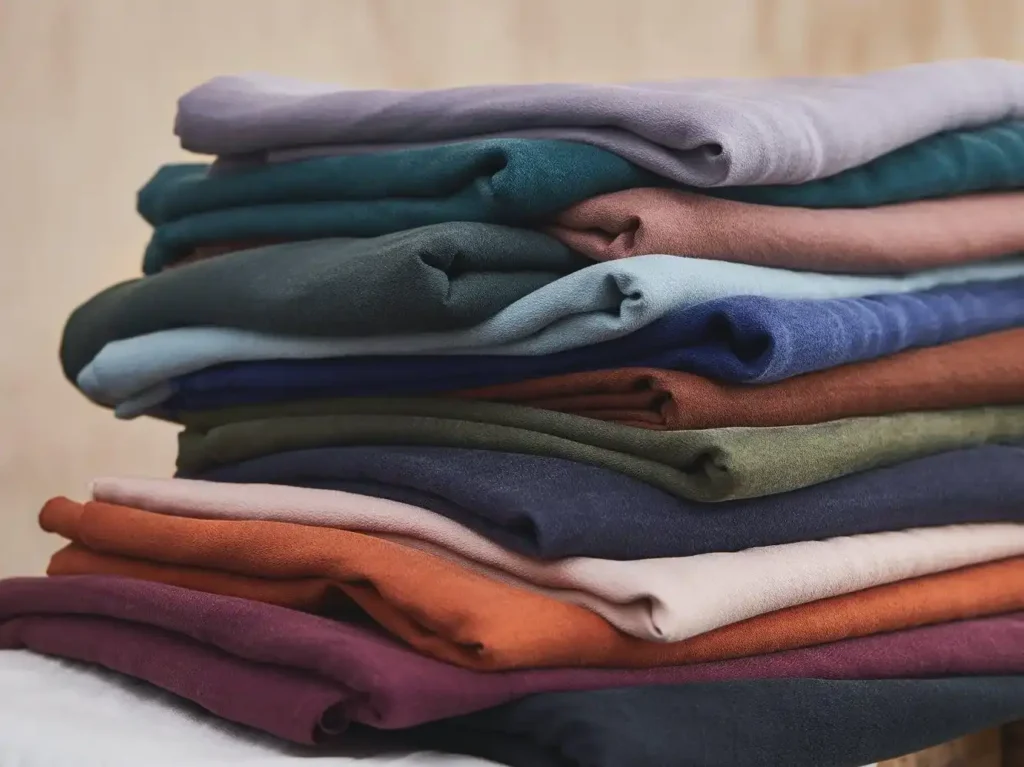
Cotton blends and lightweight woven fabrics suit cleaner daytime graduation directions, including square-neck minis, fit-and-flare shapes, puff-sleeve styles, and simple A-lines.
Compared with satin or lace, they can give a fresher and less formal appearance. The important checks are shrinkage risk, wrinkle behavior, opacity, seam smoothness, and how the fabric holds the intended skirt shape. White woven fabrics should still be evaluated for show-through, especially at pocket bags, seam allowances, darts, and layered areas.

Color Story Beyond White
White remains the strongest graduation direction, but a complete collection can include ivory, soft blue, blush or pink, pale yellow, and selected floral stories. Color development should consider photography, fabric surface, lining, trim matching, and the number of colors per style. Satin can shift visually under different lighting, and pale linings can change the final garment tone. When custom dyeing is required,
Pantone, lab dip, physical swatch, dye lot, bulk color approval, MOQ, and lead-time effects should be confirmed before production.
Necklines, Straps and Support Need Pattern Control
The upper body carries most of the fit risk in a graduation mini dress. A clean neckline can lose its shape when strap angle, armhole depth, bust support, lining, or closure tension is wrong. Jinfeng develops these areas through pattern review, sample fitting, measurement checks, and recorded revisions before the production standard is locked.

Neckline and Strap Stability
Square necklines, sweetheart shapes, halters, spaghetti straps, one-shoulder designs, and deep backs all create different tension paths across the body. A square neckline needs stable corners and enough chest coverage to avoid gaping. A halter needs the correct neck angle so the front does not pull upward or expose the armhole. Spaghetti straps need controlled length and anchor points; even a small change in strap length can alter neckline height and bust position. For bra-friendly directions, the neckline and armhole should work with the intended undergarment rather than relying only on visual appearance.
Jinfeng reviews bust, neckline depth, strap length, strap angle, armhole exposure, back coverage, and lining placement against the supplied size chart and fit preference. Alpha sizing such as XS, S, M, L, and XL can be developed, along with US, UK, EU, AU, extended, or plus-size systems based on the brand’s own measurements and grade rules. A graduation mini should not be graded by simply enlarging every dimension; bust support, strap width, back height, waist-hip balance, and dress length may require different decisions across the size range.
Corset Support and Closure Control
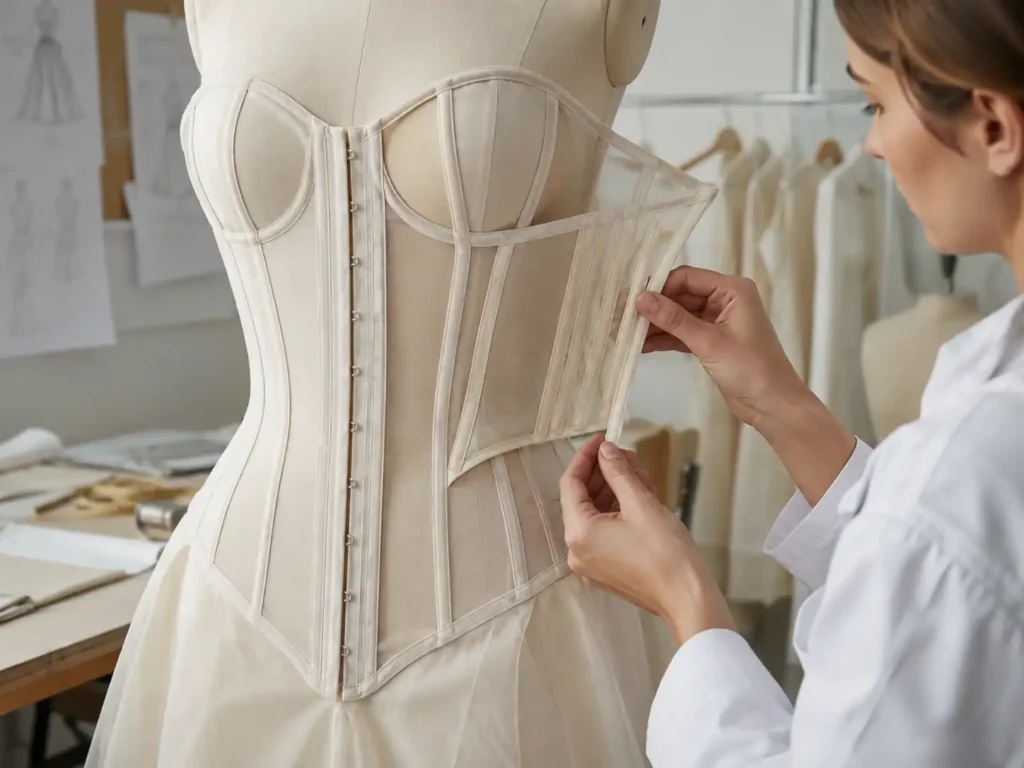
Corset-inspired graduation minis require a coordinated relationship between cups, boning, lining, seams, zipper, and the outer shell. Cup position should align with the target base size, boning should support rather than distort the bodice, and the top edge needs enough security for movement. If the bodice is too rigid, the dress can become uncomfortable; if it is too soft, the neckline may collapse or the garment may slide. Lace, satin, organza, and layered bodices also require different seam and lining solutions because the internal construction may show through pale materials.
Invisible zippers are common in graduation minis, but zipper installation becomes a visible quality point on satin and fitted bodices. The seam should remain flat, the lining should not catch in the teeth, and the color should coordinate with the shell. For strapless or corset styles, the closure also carries structural tension, so zipper position cannot be treated as an isolated sewing detail.
Sample review should confirm top-edge security, cup symmetry, boning placement, zipper flatness, waist position, and comfort before PP approval.
Mini Length and Fit Must Work in Motion
A graduation mini needs a youthful proportion without creating constant adjustment during walking, sitting, stair movement, or photography. Jinfeng develops length and fit against the brand’s target size chart, fit preference, fabric behavior, and silhouette rather than applying one universal mini-dress measurement.

Control the Main Measurement Points
Bust, waist, hip, dress length, strap length, armhole, neckline depth, back coverage, and hem width form the core measurement map for a graduation mini. Corset styles add cup and boning positions; halter and backless styles add strap angle and back height; fuller skirts require balance between bodice length, waist position, and hem sweep. The same numerical dress length can look different when the waist seam, rise of the skirt, fabric stiffness, or wearer proportion changes, so sample review should consider the complete silhouette rather than one measurement in isolation.
Jinfeng works from the client’s base size and grade rules, then records approved pattern and measurement revisions. Size stability in bulk is controlled through pattern-version management, size-chart confirmation, grade-rule review, fabric relaxing where relevant, cutting QC, in-line measurement, finished-garment measurement, tolerance control, and comparison with the approved production sample or Golden sample. The aim is not to force every style into one fit block, but to keep the approved fit logic repeatable across the intended size range.

Keep Short Lengths Wearable
Mini length is a commercial design decision and a production risk at the same time. A very short front can look attractive in a static image but become unsuitable when the wearer sits or walks. A fuller A-line can often carry a shorter visual proportion than a fitted straight skirt because movement is distributed differently. Bubble hems, curved hems, back drapes, and asymmetrical details also change the lowest visible point of the garment. Lining length must be reviewed separately so it does not extend below the shell or become too short to provide coverage.
During sample review, the team should check standing front and back views, side balance, seated behavior, hem level, lining exposure, and how the garment moves when the wearer raises the arms or walks. If a style changes fabric after the first sample, the length and fit may need to be reviewed again because weight, stretch, recovery, and drape can alter the way the hem sits.
These controls are especially important in white graduation minis because any lining or coverage problem is easier to see.
White and Light Colors Need Extra Production Control
Opacity Control
White fabric should be checked together with the intended lining, not as a shell swatch alone.
Fabric weight, weave density, stretch, and surface shine all influence transparency.
Seam allowances, darts, pocket bags, cup edges, boning channels, and labels can also become visible through pale shells.
Sampling is the right stage to decide whether the dress needs full lining, partial lining, double layers, cup coverage, or a different fabric weight.
Stain Prevention
Light garments show oil, dust, pen marks, dirty machine surfaces, handling marks, and packing contamination more easily than darker colors.
Clean handling needs to continue from cutting through sewing, pressing, finishing, QC, folding, and polybag packing.
Finished light-colored garments should receive focused appearance inspection before they enter final packaging, with stains and surface marks separated from construction defects for correction.
Lining & Trim Matching
A white shell can look grey, yellow, or uneven when the lining tone is wrong.
The same applies to zipper tape, thread, cup fabric, boning channels, elastic, and labels.
Matching should consider how materials look under natural light and studio lighting, not only a warehouse lamp.
For lace and organza, the lining color becomes part of the visual design and should be confirmed during sample development.
Pressing & Clean Packing
Satin, organza, and structured white fabrics can retain pressure marks, creases, or shine changes from finishing. Pressing needs to follow fabric behavior and garment structure rather than maximum heat.
After pressing, the dress should be allowed to cool and recover before folding. Packing should protect bows, cups, boning, lace, and smooth satin surfaces while keeping the final parcel clean enough for ecommerce photography or retail handling.
Sampling Turns a Style Idea Into a Production Standard

First Sample
The first sample tests the initial translation from tech pack, reference image, original sample, sketch, or line sheet into a physical garment. Typical internal reference timing is about 7-10 days for simple styles, 10-15 days for standard dresses, and 15-25 days for corset, strapless, lace, mesh, sequin, or similarly complex structures. Special fabrics, custom trims, or supplier-developed materials can extend the schedule and should be confirmed before sampling starts.

Fit & Revised Sample

Photo-Ready Sample
A photo-ready sample is developed for presentation quality and may have requirements beyond a first fit sample, including refined pressing, final-looking trims, cleaner interior finishing, or a specific color. It should not automatically be treated as the production standard.
Photography can prioritize visual finish, while PP approval must lock the exact bulk materials, measurements, construction, labels, packing, and QC expectations.

PP Sample

Golden Sample

Multi-Style Sample Review
Multi-Style Sampling Needs One Clear Control System
Group by Fabric
Styles sharing white satin, lace, chiffon, organza, or a lining family can be reviewed together for hand feel, color, opacity, supplier availability, and bulk risk.
Grouping also helps identify where one approved material can support several styles and where a separate fabric is necessary because the silhouette needs different weight, stretch, or structure.
Set Hero Priorities
Track Every Revision
Lock Before Bulk
Plan the Graduation Launch Calendar Backward
Collection Review
Sample Development
PP Lock
Bulk Scheduling
Production units are assigned according to style type, fabric, construction complexity, quantity, and required QC.
Multi-style programs need separate tracking by style, color, size, fabric, trims, production order, and packing instruction instead of one combined status.
QC & Packing Window
Shipment Planning
Approved Samples Must Transfer Cleanly Into Bulk
A strong sample is not enough if the production team receives incomplete information. Jinfeng transfers approved style standards into patterns, BOMs, measurements, sewing instructions, labels, packing files, and QC checkpoints so bulk production follows a controlled reference instead of verbal memory.

Lock the Product Standard
Before production, the approved sample is translated into a complete set of production references. The final pattern and size chart establish shape and grading. Fabric approval confirms composition, weight, hand feel, drape, stretch, transparency, color, and supplier information as relevant. The BOM links the correct trims and components to each style. Sewing instructions record construction details such as zipper placement, lining attachment, cup and boning position, strap finish, bow attachment, lace placement, or hem method. Private-label files define woven labels, care labels, hangtags, barcodes, SKU stickers, polybags, and carton marks.
A graduation collection needs style-level separation. A white satin halter mini should not inherit the same lining, zipper, or pressing notes as a lace A-line simply because both belong to the same season. Jinfeng manages multi-style orders by style, color, size, fabric, trim, sample version, BOM, production order, QC checklist, packing instruction, and shipment plan. The clearer the approved standard, the easier it is to identify a true production deviation during inspection.

Transfer the Standard to Production
Production handover should answer three questions for every style: what has been approved, what must be measured, and what cannot change without review. Cutting teams need the correct pattern version, fabric direction, color grouping, size breakdown, and lining combination. Sewing teams need the approved construction method and trim placement. QC needs the measurement points, visual standards, defect focus, label placement, and packing requirements. Finishing teams need pressing limits and special handling notes for white satin, lace, organza, bows, corset cups, or other sensitive details.
Bulk consistency is strengthened by PP approval, Golden sample reference, incoming material inspection, cutting QC, in-line sewing checks, finished-garment measurement, packing QC, and final inspection. No system can remove every production variable, so the objective is to make approved requirements visible and measurable. If a material or construction change becomes necessary after approval, the effect on pattern, cost, lead time, and sample status should be reviewed before production continues.
Production Capacity for Multi-Style Graduation Collections
Capacity matters most when it is matched to the right product. Jinfeng uses an owned-factory and long-term partner system to distribute dresses by fabric, construction, quantity, timing, and quality risk rather than treating every graduation style as the same production task.
6 Owned Factories
Jinfeng operates six owned women’s fashion factories within its production system.
Complex or fit-sensitive styles can be allocated according to the experience required for structured dresses, woven fashion, stretch products, or occasionwear. Factory assignment is made by product fit rather than simply by whichever line is open.
10+ Long-Term Partners
More than ten long-term satellite production partners support regular styles, repeat orders, seasonal capacity, and multi-batch delivery.
These partners are not presented as owned factories. Jinfeng’s role is to maintain production files, project coordination, and QC requirements across the selected production units.
18+ Sewing Lines
Eighteen-plus sewing lines support dresses, skirts, jumpsuits, sets, woven fashion, stretch styles, occasionwear, and private-label womenswear. The line count is useful only when matched with the right construction.
A corset mini and a simple A-line should not be scheduled as though their sewing time and control requirements are identical.
6+ Flexible Lines
Graduation Mini Dress Bulk QC Checklist
Graduation minis need product-specific inspection rather than a generic final look-over. Light colors, short proportions, bust security, delicate fabrics, labels, and clean packing create a distinct QC profile that should be monitored from material arrival through final cartons.
| QC Stage | Graduation Mini Dress Checks | Main Risk Controlled |
|---|---|---|
| Incoming materials | Fabric batch, color, weight, hand feel, opacity, lace/tulle damage, lining shade, zipper and trim match | Transparency, color variation, visible defects |
| Cutting | Correct pattern version, grain/direction, size bundle, color grouping, lace motif, satin shine direction | Wrong cut, asymmetry, visible shade difference |
| Sewing | Stitch quality, seam allowance, zipper flatness, strap length, neckline, cup/boning, lining attachment, bow/detail security | Gaping, twisting, bulging, weak support |
| In-line measurement | Bust, waist, hip, dress length, strap, armhole, neckline, key style-specific points | Size drift before defects multiply |
| Finished garment | Fit, silhouette, stains, marks, loose threads, lining exposure, hem balance, closure function, pressing | Poor photo appearance, returns, rework |
| Light-color review | White/ivory surface, transparency, visible seam allowances, cup/boning show-through, clean handling | Pale-color appearance failure |
| Packing QC | Label, care label, hangtag, barcode, SKU, size/color sticker, polybag, folding, carton mark | Warehouse receiving and SKU errors |
| Final inspection | Approved sample comparison, defect classification, quantity/carton review, AQL or client standard when required | Shipment risk before release |
MOQ and Collection Cost Planning
Jinfeng’s standard garment MOQ starts from 200 pcs per style/color. Graduation collections often contain many styles, so assortment planning should separate garment MOQ from supplier MOQ for special fabrics, custom colors, trims, labels, and printed packaging. Cost is calculated from the product structure rather than one flat dress price.
| Planning Item | Working Rule | Effect on a Graduation Collection |
|---|---|---|
| Garment MOQ | 200 pcs per style/color | One style in two colors normally requires 200 pcs in each color |
| Multi-style program | MOQ remains style/color based | A 10-30 style line needs quantity planned per SKU, not only as one total order |
| Custom-dyed fabric | Supplier MOQ and lab-dip process apply | Can raise material minimums and extend color approval time |
| Corset / structured styles | More pattern, sewing and QC work | Increases sample time, sewing time, inspection time and unit cost |
| Lace / tulle / organza | Fabric condition and placement need closer control | Can add cutting loss, lining work, matching or damage inspection |
| Custom labels / hangtags | Common supplier MOQ can be around 500-1,000 pcs depending on item | Packaging MOQ may differ from garment MOQ and can be shared across suitable SKUs |
| Printed polybags / special packaging | Separate supplier MOQ may apply | Best confirmed before the collection is split into many small packaging variants |
| Size and color breadth | More SKUs increase planning and packing complexity | Affects grading, labels, barcode control, carton ratios and QC workload |
Private Label Packing for Graduation Collections

Garment Labels

Hangtags, Barcodes & SKU
Polybags & Cartons
A Representative US Graduation Mini Dress Program
A typical brand-scale graduation program can involve a full seasonal assortment rather than one or two isolated dresses. The following anonymized example is structured around the current 10-30 style, 20,000-80,000 piece order pattern used for Jinfeng’s established brand programs.

16 Styles, Approximately 36,000 Pieces
The program covered white and ivory mini dresses across A-line, corset, satin, lace, halter, strapless, and bow-detail directions. Core materials included satin, lace, tulle, organza, lining, invisible zippers, cups, and boning. The collection used several related silhouettes so the assortment felt coordinated without repeating the same construction across every SKU. Quantity was planned by style and color, with private-label and packing requirements aligned to the final SKU breakdown.
The earliest sample reviews identified five recurring risks: light-fabric transparency, mini-length balance, unstable upper-bust fit on strapless styles, cup and boning position on corset styles, and visible handling marks on pale satin. Jinfeng responded by revising lining coverage, adjusting neckline and dress-length balance, checking strap and armhole positions, updating cup and boning placement, and strengthening clean-handling and appearance inspection for pale garments. Style revisions were recorded before PP approval so production files reflected the confirmed sample rather than the first prototype.

Collection Control From Sample to Shipment
The 16 styles were managed by fabric family and construction risk. High-risk corset and strapless styles moved through earlier structural review, while simpler A-line directions could progress once fabric and fit were stable. Each style retained its own pattern version, size chart, BOM, fabric and trim approvals, label and packing instructions, and QC points. White satin styles received extra checks for shade, snagging, zipper flatness, pressing, and surface marks; lace styles focused on motif, damage, lining, and edge finish.
As bulk preparation moved forward, the program was tracked by style, color, size, material status, production order, QC checklist, packing instruction, and shipment plan.
The brand’s graduation launch window remained the scheduling reference, with logistics chosen according to approved completion timing and SKU priority. Pattern, fabric, color, trim, packing, and QC records were retained to support new-color extensions and repeat development for the following season.
Extend Hero Styles Into Repeatable Collections
Repeat the Approved Style
Add New Colors
Extend the Silhouette
An approved bodice or fit direction can support related designs such as an A-line variation, satin version, bow-detail version, or length adjustment when the new fabric and construction remain compatible.
Pattern reuse is reviewed rather than assumed because a fabric change in stretch, weight, drape, or opacity can require pattern or lining changes.
Preserve Seasonal Records
Graduation Mini Dress Frequently Asked Questions

Start Your Graduation Mini Dress Collection
Send Jinfeng Apparel the real project information used by your product and sourcing teams. A clear line sheet or tech pack allows the team to review style complexity, fabric direction, fit risks, sample path, MOQ, private-label requirements, bulk-production considerations, and launch timing before the program moves forward. For a multi-style graduation collection, include the priority styles and target launch window so sample and PP sequencing can be planned around the commercial calendar.
Please prepare as much of the following as available:
- Style images, line sheet, tech packs, sketches, or original sample references
- Quantity per style and color, including priority or hero SKUs
- Target market and size chart, including base size and grade rules where available
- Preferred fabrics, colors, lining direction, trims, corset or support requirements
- Main label, care label, hangtag, barcode, polybag, carton, and SKU requirements
- Photo-sample requirement, PP approval needs, inspection standard, and target launch date
- Preferred shipment arrangement or nominated forwarder information when known