 Skip to content

Christmas Party Dress Collections
Seasonal partywear development for fashion brands planning coordinated Holiday and Christmas dress programs, not isolated one-style production.
- Multi-style programs can be organized around 10-30 styles with fabric, fit, trim and launch priorities managed as one collection.
- 2 sample rooms, 7+ senior pattern makers and 20+ sample machinists support parallel dress development and revisions.
- 6+ flexible production lines help coordinate mixed silhouettes, fabrics, colors and size ratios within seasonal programs.
- Satin, velvet, sequin, mesh, lace, crepe and structured party fabrics are evaluated by style risk before sampling and bulk allocation.
- Photo-ready samples, PP approval, bulk QC, private-label packing and shipment planning can be aligned to the intended holiday launch window.
Built for Multi-Style Holiday Programs
Since 2008
Six Owned Factories
10+ Satellite Partners
More than 10 long-term satellite production partners provide controlled capacity support for repeat styles, regular programs, peak-season volume and selected production batches.
The satellite structure is used as part of an organized supply network rather than ad-hoc outsourcing. Complex first-time styles remain subject to development review, PP approval and production allocation before bulk sewing begins.
Two Sample Rooms
7+ Pattern Makers
20+ Sample Machinists
A Christmas Collection Needs a Commercial Structure
Assortment Architecture
Seasonal Selling Logic
Build the Range Across Eight Party Dress Directions
Christmas assortments perform better when each style has a clear role. Jinfeng Apparel can develop coordinated mini, midi and maxi silhouettes across woven, stretch and embellished constructions, while keeping the fit, lining, trim and finishing standards appropriate for the chosen fabric. The following directions create useful variety without turning the range into an unrelated mix of seasonal designs.

Sequin Bodycon Mini

Velvet Cocktail Midi

Satin Corset Mini

Mesh Ruched Bodycon

Lace Cocktail Dress

Metallic One-Shoulder Dress

Structured Crepe Party Dress

Formal Slit Maxi
A formal holiday maxi needs proportion, drape and movement to work together. Bust support, waist placement, slit height, lining length and hem balance are all visible when the wearer walks.
Satin, velvet, mesh-over-lining and crepe can each behave differently at full length, so fabric weight and construction should be validated in sampling. Packing method also matters because a heavily creased or compressed maxi can lose the premium appearance expected at delivery.
Design for the Full Holiday Party Calendar

Office Christmas Party

Corporate Holiday Dinner

Cocktail Party

Friendsmas and Night Out

Formal Holiday Event

Christmas to New Year
Plan the Capsule Before Sampling Begins
A clear capsule plan reduces duplicated development, uncontrolled material choices and late cost surprises. The line sheet should identify the commercial role of each style, the preferred fabric group, color direction, fit risk and launch priority before sampling starts. Jinfeng Apparel can review a multi-style plan and group products by material, structure and urgency so the program moves through development with fewer avoidable resets.
| Collection Role | Suggested Styles | Fabric Direction | Commercial Purpose | Development Focus |
|---|---|---|---|---|
| Hero Sparkle | 2-3 styles | Sequin, rhinestone mesh | Campaign impact, social content | Attachment strength, skin comfort, packing protection |
| Structured Statement | 2-3 styles | Satin, structured woven | Corset and strapless impact | Cups, boning, upper-bust fit, zipper flatness |
| Velvet Winter | 2-3 styles | Stretch or woven velvet | Premium winter texture | Nap direction, pressure marks, shade control |
| Cocktail Core | 3-5 styles | Crepe, satin, lace | Broader occasion selling | Waistline, neckline, slit, lining, pressing |
| Going-Out Core | 3-5 styles | Mesh, jersey, stretch sequin | Night-out and party volume | Stretch recovery, ruching, body fit, coverage |
| Elegant Black | 2-3 styles | Crepe, satin, velvet | Cross-occasion commercial anchor | Surface finish, fit balance, styling versatility |
| Formal Holiday | 1-3 styles | Satin, velvet, mesh, lace | Dinner and event dressing | Drape, bust support, hem, anti-crease packing |
| New Year Extension | 1-3 styles | Metallic, black sequin, satin | Extend selling window | Surface durability, event styling, shared trims |
Choose Holiday Fabrics by Performance, Not Appearance Alone
Holiday fabrics are selected for shine, texture, depth and visual impact, but the manufacturing decision has to go further. Weight, width, stretch, recovery, transparency, surface direction, shrinkage, snag risk, lining needs, supplier MOQ and bulk availability all affect whether a fabric can move from a campaign sample into stable production. Jinfeng Apparel reviews those factors before the final material is locked.
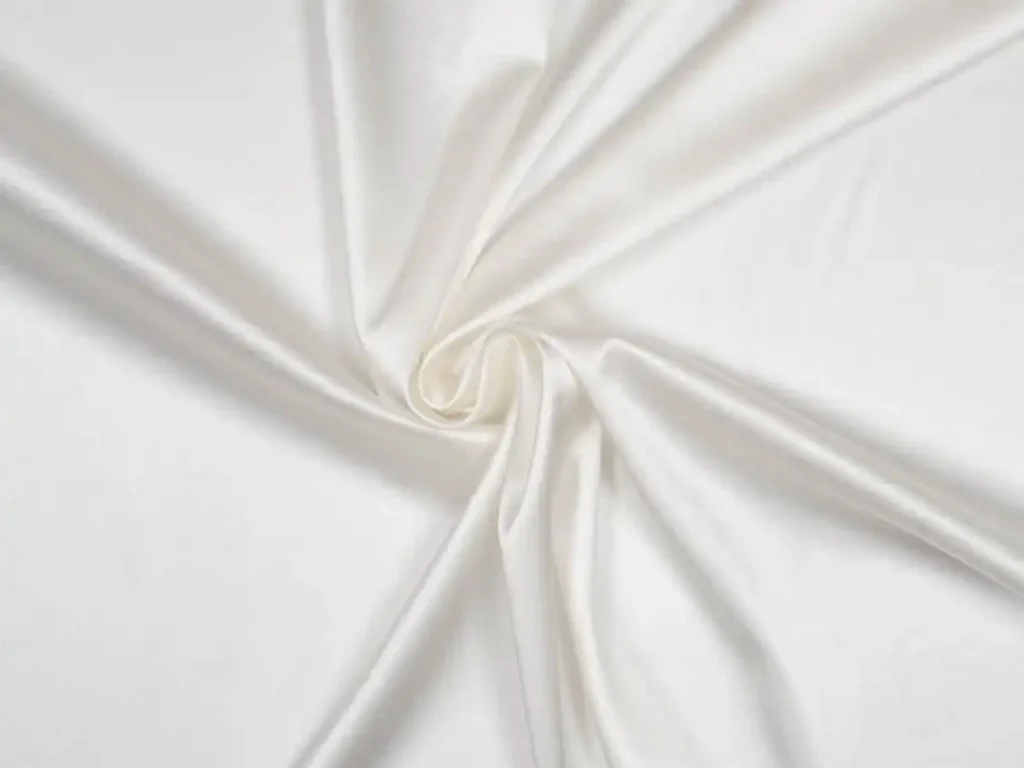
Satin: Control Shine, Puckering and Zipper Lines
Satin looks simple on a hanger but exposes small construction errors under photography and event lighting. The first review should establish fabric weight, drape, surface shine, opacity and whether a lining is needed. A fluid satin slip needs a different hand feel from a structured satin corset, and using the same fabric for both can create fit or surface problems. Fabric direction also matters because light can make neighboring panels look like different shades when cut inconsistently.
Seam puckering and zipper rippling are common risks. Needle choice, thread tension, seam handling and pressing need to suit the satin quality. A smooth sample at the center front is not enough if the side seam waves, the invisible zipper arches or the lining pulls against the outer shell. For fitted styles, the pattern should allow the fabric to sit cleanly rather than forcing stretch where none exists.
Bulk approval should compare color, hand feel and surface against the approved fabric reference. If a substitute satin is introduced because the original quality is unavailable or exceeds the target cost, weight, drape, shine, width, MOQ, lead time and pattern impact should be reviewed again. A visually close fabric can still require a different pattern or lining choice.

Velvet: Respect Nap Direction and Pressure Sensitivity
Velvet is one of the strongest winter holiday materials because it creates depth without needing added decoration. Its production risk comes from the pile. Panels cut in different nap directions can appear to be different colors even when they come from the same roll. Pattern layout therefore needs a consistent direction plan, and material consumption should reflect the fact that pieces may not be flipped freely during cutting.
Pressure is another issue. Heavy pressing, stacking or tight packing can leave visible marks on the pile. Seams, darts and zippers should be handled in a way that avoids flattening the surrounding surface. Velvet also needs careful shade review because lighting changes how the pile reflects color, especially in black, burgundy, emerald and deep navy.
For a Christmas collection, packaging should be considered during development rather than after sewing finishes. Folding method, protective tissue or spacing, carton pressure and finishing preparation all affect how the garment appears when it reaches a warehouse or studio. A velvet sample that looks perfect in the factory but arrives crushed is not a successful development result.

Sequin: Protect the Wearer as Well as the Surface
Sequin fabric provides immediate party appeal but adds sewing, comfort and packaging challenges. Directional sequin layouts should be kept consistent across panels. Dense sequin areas can create thick seams and make invisible zippers difficult to operate. Loose or poorly secured sequins can also fall during wear or transport, while sharp edges around armholes, necklines, side seams and slits can irritate skin.
Development should check where sequins need to be removed from seam allowances, whether edge binding or lining is required, how stretch behaves if the base fabric is elastic, and whether the garment weight changes strap or neckline stability. For fitted styles, added surface weight can alter the way a dress sits on the body even if the base pattern looks correct on an unembellished fabric.
Packing protection should prevent abrasion between garments and reduce crushing of raised surfaces. Final QC should inspect visible loss, loose areas, damaged edges, zipper function, lining coverage and skin-contact zones. The goal is a dress that still looks polished after handling, not only immediately after finishing.

Mesh and Lace: Balance Transparency With Structure
Mesh gives Christmas party styles a lighter, more body-conscious appearance, especially in ruched, cut-out, corset and layered designs. The key variables are stretch direction, recovery, transparency and support. Soft mesh may drape well but offer little structure; power mesh can provide support but changes compression and comfort. Lining color and coverage should be selected together with the outer layer because even small tone differences can change the final look.
Lace requires a different approach. Motif size, fabric width, scalloped edges, placement and seam joining determine whether the finished garment feels considered or random. Large motifs may need deliberate positioning around the neckline, waist, hem or center front. That can increase material consumption and cutting time, so placement should be decided before final costing.
Both fabrics need careful inspection for holes, snags, broken motifs and edge damage. If lace trim is used rather than full lace fabric, the specification should separately define trim width, color, edge finish and placement so the bulk order does not drift from the approved sample.
Build a Holiday Color Story Brands Can Produce Reliably
Holiday Red
Black
Emerald and Forest Green
Burgundy and Wine
Champagne and Metallic
Winter Neutrals
Fit Engineering for High-Impact Party Silhouettes
Party dresses sell through visual impact, but poor fit quickly turns a strong design into a return risk. Jinfeng Apparel develops around the brand’s size chart rather than applying one generic block to every style. Regular alpha sizing can cover XS-XL, with extended, plus, petite or tall adjustments reviewed against the supplied size standard and fit preference. Key fit points change by silhouette and fabric.
Corset and Strapless: Support Has to Be Engineered
Corset and strapless styles need the upper body to stay stable without relying on excessive tightness. Cup shape, bust point, boning position, neckline height, under-bust seam, waist suppression and anti-slip placement all influence the final result. If the cup is too shallow, the neckline may gap; if boning ends in the wrong place, the garment can feel uncomfortable; if the waist is over-reduced, the zipper or side seam may distort.
The outer fabric changes the engineering. Satin shows internal pressure marks, velvet adds thickness, mesh panels need reinforced attachment, and sequin surfaces can make seam allowances bulky. Lining and internal support therefore need to be reviewed as part of the pattern rather than added after the silhouette is approved.
Fit comments should be converted into revised pattern measurements and recorded before a new sample is made. A visually improved sample without updated pattern or measurement files creates risk when the style is graded or moved to another production line.
Bodycon: Stretch Recovery Controls the Shape
Bodycon styles depend on the relationship between pattern reduction and fabric recovery. A fabric with strong recovery can hold the bust, waist and hip cleanly; a weaker stretch base may grow during wear or allow side seams to twist. Development should identify the stretch direction, recovery behavior and lining structure before the pattern is finalized.
Bust-waist-hip proportion should be checked together rather than as separate measurements. A tight hip with a loose waist can distort ruching, while an overly tight bust can pull the neckline downward. Dress length also needs to be reviewed on-body because fitted minis may ride up more than flat measurements suggest.
Bulk QC should retain measurement checks at key points and monitor side-seam position, neckline shape and garment length. When the fabric batch changes, stretch and recovery should be rechecked because an apparently identical composition can behave differently in production.
Slip and Draped Dresses: Balance Matters More Than Compression
Slip and draped silhouettes rely on line, bias behavior, shoulder strap length and controlled movement rather than firm structure.
A small change in fabric weight or drape can alter neckline depth, side seam balance and hem level. Satin slip styles also show puckering quickly, so pattern balance and sewing quality need to work together.
Adjustable straps can help manage fit, but they do not solve every proportion issue. Armhole depth, bust coverage, back height and neckline shape still need to match the target body. For cowl or draped necklines, the fabric should be tested in the intended direction because the fall of the cloth determines the visual result.
If a fabric is replaced during development, a revised sample may be necessary even when the composition looks similar. Different weight, drape or surface friction can change how the same pattern hangs on the body.
Mini and Cut-Out: Exposure Needs Controlled Geometry
Mini lengths and cut-out placements create strong holiday fashion statements, but small proportion errors become obvious on-body. The pattern should control hem length, hip ease, opening position, side coverage and bust security across the size range. A cut-out that looks balanced in the base size may become too large after grading if the opening is scaled without considering body proportion.
Backless and side-cut styles also need stable stress points. Shoulder seams, neck straps, side panels, waist seams and closures may carry more load when fabric has been removed from other areas. Mesh inserts, elastic, lining or internal support can be introduced where the design allows, but every addition should be checked against the intended visual line.
For mini dresses, sitting and walking checks are as important as standing fit. The garment should maintain the intended length and coverage during movement rather than passing only a static measurement inspection.
Midi and Maxi: Hem Balance Completes the Silhouette
Longer party dresses bring different problems: waist placement, drape, slit height, lining length and hem balance become more visible. Satin or chiffon-like fabrics may drop differently after hanging; velvet can carry more weight; structured crepe may need more movement allowance. A maxi that measures correctly on a table can still swing unevenly if the grain, fabric direction or panel balance is wrong.
Slit position should be checked for both styling and wearability. Lining should end in a way that supports coverage without fighting the outer shell. For formal styles, the transition from fitted upper body to skirt volume should remain smooth across sizes.
Final measurement standards should include the points most relevant to the silhouette rather than relying only on bust, waist and hip. Strap, neckline, armhole, slit and garment length may all need independent tolerances in the QC checklist.

Small Construction Details Decide the Finished Look

Zipper Flatness

Ruching Symmetry
Ruching can define waist and hip shape, but inconsistent gathering makes a dress look unbalanced immediately.
The amount, direction and start-stop points should be shown clearly in the sample and sewing instruction. On stretch styles, gathering also interacts with recovery, so left-right symmetry should be checked after the garment relaxes rather than only while it is pulled flat on a table.

Strap Placement

Neckline Coverage
Deep V, square, cowl, strapless and asymmetric necklines each create different exposure risks.
The key question is not simply whether the neckline matches a sketch; it must sit correctly on the target body and remain stable during movement. Cup placement, lining, stay tape, elastic, boning or anti-slip support can be evaluated where suitable without changing the intended fashion direction.

Slit Height

Lining Coverage

Hem Balance

Closures and Hardware
Embellishment Workmanship Needs Dedicated Production Controls
Sequins, rhinestones, lace trims and metallic decorations can transform a Christmas dress, but they also introduce risks that do not exist on plain woven styles. Attachment strength, placement accuracy, added weight, skin comfort, seam bulk, pressing limits and packing protection should be addressed before approval. Decorative workmanship is treated as part of garment engineering rather than a last-minute surface treatment.

Sequins: Direction, Edge Protection and Sewing Access
Sequin fabric can be all-over, directional, embroidered onto mesh or arranged in placement zones. Each construction changes the production method. Dense sequins around a zipper or seam may need to be cleared from the seam allowance before sewing, while directional layouts need marked cutting plans so neighboring panels do not reflect light differently. Stretch sequin also requires careful handling because the decorative layer can reduce the recovery of the base fabric.
Skin-contact areas deserve specific attention. Necklines, underarms, side seams and slits can feel abrasive if sequins are left exposed or folded into the seam. Lining, binding or clean finishing can improve comfort, but every solution affects thickness and appearance. Sample review should therefore include wear tests rather than relying only on flat-lay inspection.
Before packing, the surface should be checked for obvious loss, loose pieces and damaged areas. Protective folding or separation may be required to stop adjacent garments from rubbing during transport.

Rhinestones and Beading: Weight Must Match the Base Fabric
Rhinestones and beadwork create concentrated weight. A light mesh base can distort if stones are too heavy or placed without structural support. Stretch fabrics can also sag when decoration is concentrated at the bust, hip or shoulder. Development should examine the relationship between embellishment weight, base fabric recovery, lining and seam reinforcement rather than selecting stones only for brightness.
Placement accuracy is equally important. A design may look acceptable when one sample is made by hand, but bulk production needs repeatable reference points. Artwork, placement templates, distance from seams and symmetry rules should be confirmed before mass application. Areas near zippers, darts, boning or seam allowances may need clearance to maintain sewing access and comfort.
Final inspection should review missing stones, loose attachment, glue residue where applicable, surface scratches and symmetry. Packing should reduce direct pressure on raised embellishment, especially when garments are stacked in cartons.

Lace and Decorative Trims: Placement Creates Perceived Quality
Lace trim, scalloped edges, bows, ribbons and decorative tapes can elevate a party dress without the weight of sequins. Their success depends on proportion and placement. A lace edge that is slightly off-center, a bow with inconsistent loops or a trim that changes width from sample to bulk can make the whole garment feel less controlled.
Specifications should identify trim material, width, color, placement, seam method and any required motif alignment. If a trim is dyed or developed to match the garment, color approval should be done alongside the shell fabric rather than independently. Supplier MOQ and lead time also matter because a custom trim can become the longest material item in the calendar.
Incoming trim inspection should compare specification, color and function before production starts. Small components are easy to overlook until hundreds of garments have already been assembled.

Metallic Components: Finish Consistency Matters Across the Collection
Metal zipper pulls, chain straps, rings, sliders and decorative hardware can connect several Christmas styles visually. Using a coordinated finish across the collection can strengthen the design language, but consistency must be managed across suppliers and production batches. Gold, light gold, antique gold and champagne are not interchangeable once placed next to satin, rhinestones or metallic fabric.
Hardware should be evaluated for color, plating, weight, edge smoothness and attachment strength. Heavy chain straps can change shoulder tension; metal trims near delicate satin may cause snagging; hard components can mark velvet during packing. If custom logo hardware is introduced, development time and supplier MOQ should be confirmed before the collection calendar is locked.
A trim card or approved physical reference gives production and QC teams a clear standard, reducing the risk of visually similar but incorrect components entering bulk sewing.
Sampling Turns the Line Sheet Into Production Standards
Sampling is where a holiday concept becomes measurable. Jinfeng Apparel can start from a tech pack, line sheet, sketch, reference image or original sample, but stronger input produces faster decisions. The process reviews structure, fabric, trims, fit, MOQ, cost implications and production risk before the style is treated as ready for bulk. Holiday programs benefit from prioritizing hero styles and material-dependent styles early.

Project Review Before Pattern Work
The first step is to establish what the style is supposed to achieve. Product type, target market, size range, fabric direction, color, lining, trims, quantity plan, private-label needs and intended launch timing should be understood together.
A reference image can show visual direction, but it does not automatically define fabric weight, construction, measurements or production method.
The development team reviews likely risk points before pattern work begins. A strapless satin mini may need internal support; a sequin bodycon may require stretch and comfort checks; a velvet midi needs nap planning; a mesh dress needs transparency and lining decisions.
Early risk identification helps avoid producing a visually inaccurate first sample from unsuitable materials.
When a target cost matters, fabric or construction alternatives can also be evaluated before sampling rather than after several revisions have already consumed time.

First Sample: Validate Shape, Material and Construction
The first sample is not expected to be the final bulk standard. Its job is to test the core decisions: silhouette, proportion, fabric behavior, construction feasibility and initial fit. Simple styles may require around 7-10 days, regular dresses commonly around 10-15 days, while complex corset, strapless, lace, mesh, sequin or evening styles commonly require around 15-25 days. Actual timing is confirmed by style complexity, material availability and trim development.
The first sample should reveal whether the selected fabric supports the design, whether the pattern creates the intended proportions, and whether details such as neckline, slit, ruching, zipper or lining behave correctly. Photos, videos and measurements can support remote review, but physical fitting comments remain valuable for fit-sensitive styles.
A rushed first sample is not useful if it creates several avoidable revision rounds. Clear materials and measurements are more valuable than an unrealistic promise on speed.

Fit Sample and Revision: Convert Feedback Into Files
Fit feedback should be specific enough to become pattern action. Comments such as “make it better” or “more fitted” are difficult to control in production; measurable notes around bust, waist, hip, neckline, strap, armhole, slit, garment length and balance can be converted into revised pattern and measurement standards.
Jinfeng Apparel records revisions through updated pattern files, size charts, BOM information, fabric or trim approvals, sewing instructions and QC notes where relevant. If the issue comes from a material change, the team also reviews whether the new fabric affects fit, lining, cost or timing.
Revised samples are commonly around 7-15 days depending on the change scope and material status. Major redesign, new fabric development or new embellishment can require a different schedule. The purpose of revision is to remove uncertainty before PP approval, not to accumulate undocumented chat comments.

PP and Golden Sample: Lock the Bulk Standard
The PP sample is the pre-production confirmation stage. Final fabric, color, trims, measurements, construction, labels and packing should be aligned closely with the intended bulk order. PP samples commonly require around 7-15 days once final materials are available, although complex development can take longer. Material changes after PP approval should be treated as production changes because they can affect cost, timing and consistency.
A Golden Sample can then serve as a reference for production, QC, repeat orders and issue review. The important point is continuity: the approved pattern, size chart, BOM, sewing instruction, trim reference, packaging details and QC checklist should travel with the style into bulk production.
For a Christmas program, styles do not all need to reach PP on the same day. The schedule can prioritize hero SKUs, photography needs and material readiness, then release approved groups into production in a controlled sequence.
Keep 10-30 Styles Moving Without Losing Control
Style Grouping
Fabric Grouping
Hero SKU Priority
Revision Tracker
Shared Trim Logic
Approval Status
Separate Photo Samples From Final PP Approval
Photo-Ready Sample
PP Sample
Golden Sample
Transfer Every Approved Detail Into Bulk Production
Final Pattern
BOM and Trim References
Sewing Instructions
Size Chart and Grade Rule
Bulk measurements should follow the approved size chart, base size and grade rule. Regular alpha sizing can include XS-XL, while extended, plus, petite or tall ranges are developed against the brand’s own standard.
Key tolerances should focus on measurements that materially affect fit, including bust, waist, hip, neckline, strap, armhole, slit and length where relevant.
Label and Packing Instructions
Main labels, size labels, care labels, hangtags, barcode stickers, SKU labels, polybags, folding method and carton marks should be approved before final packing begins.
Holiday programs with many colors and sizes require clear SKU-to-packaging links so the right garment, label and carton information stay together throughout finishing and shipment preparation.
QC Checklist
Work Backward From the Christmas Launch Date
Holiday delivery is a calendar problem before it becomes a sewing problem. Sample reviews, material approvals, PP release, production allocation, QC, packing and freight decisions all compete for the same fixed selling window. Jinfeng Apparel plans the sequence from the intended launch or warehouse date backward, then confirms project timing after product complexity, quantity, materials and packaging are known.
| Development Gate | Timing Reference | What Must Be Confirmed Before Moving Forward |
|---|---|---|
| Collection Brief | Project start | Line sheet, target market, style count, size range, color plan, quantity plan, launch window |
| Fabric and Trim Review | Early development | Fabric direction, lining, key trims, supplier availability, color route, MOQ impact |
| First Sample | Commonly 10-15 days for regular dresses; around 15-25 days for complex party styles | Pattern direction, available materials, construction plan, fit target |
| Revised Sample | Commonly around 7-15 days depending on revision scope | Measurable fit comments, updated pattern and material decisions |
| Photo-Ready Sample | By project | Visual standard, photography date, any temporary material differences documented |
| PP Sample | Commonly around 7-15 days once final materials are ready | Final fabric, trims, measurements, construction, labels, packing direction |
| Bulk Production | Confirmed after PP, materials and quantity are locked | Production allocation, order quantity, size/color ratio, QC plan, packing plan |
| Final QC and Packing | Scheduled before cargo release | Garment inspection, measurements, pressing, barcode/SKU, polybag, carton marks |
| Freight Release | Based on destination and required arrival window | Express, air, sea, split shipment, forwarder instruction and warehouse requirements |
Allocate Styles by Fabric, Complexity, and Launch Priority
A 20-style Christmas collection should not be loaded onto production as one undifferentiated order. Fabric behavior, sewing skill, embellishment, fit risk and launch priority determine where each style belongs. Jinfeng Apparel uses its women’s fashion production network and flexible lines to organize programs by product needs, with PP standards and QC requirements following each style into the assigned production unit.
Match Production Units to Product Risk
Stretch bodycon, woven satin, velvet occasionwear, structured corset and embellished sequin styles require different line experience. Production allocation therefore starts with product structure and fabric behavior rather than available floor space alone. First-time high-risk styles should be placed where the required workmanship is familiar, while repeat or more stable commercial styles can be planned differently once their standards are proven.
The production handover should include approved pattern, size chart, BOM, sewing instruction, trim reference, packing instruction and QC checklist. Moving a style to a suitable line without transferring its technical standard still creates risk, so allocation and documentation need to work together.
Use Flexible Lines for Mixed Seasonal Programs
Jinfeng Apparel operates 6+ flexible production lines within a broader system of 18+ sewing lines. Flexibility refers to production organization for multi-style, multi-fabric, multi-color and multi-size programs; it does not remove material or production constraints. A Christmas program can sequence smaller style groups, move approved SKUs into production at different times and coordinate selected replenishment or phased deliveries where the project supports it.
Flexible planning is most useful when the line sheet has clear priorities. Hero styles, material-ready styles and core commercial products can be organized differently from complex pieces still waiting for final trims or PP approval. The result is a controlled release sequence instead of making the whole collection wait for the slowest item.
Group Production Around Shared Materials Carefully
Several styles may share satin, lining, zipper colors, hardware finishes or labels. Material grouping can simplify purchasing and color control, but it should not force unsuitable construction decisions. One satin quality may work for a slip dress and fail on a structured corset; one zipper specification may work for crepe and become too heavy for fine satin.
Grouping should therefore start with confirmed suitability, then look for efficiencies. Fabric batch, shade, trim finish and packaging components can be coordinated where appropriate, while style-specific items remain separately controlled. The goal is to reduce unnecessary fragmentation without making the collection technically uniform.
Track Progress at Meaningful Production Gates
For multi-style programs, progress updates should focus on gates that affect decisions: material arrival, cutting, sewing, in-line QC, finishing, packing and shipment preparation. A simple percentage-complete number is less useful if a key sequin fabric has not arrived or a hero style is held for PP correction.
Major risks such as delayed fabric, missing trims, changed PP comments, quality issues or warehouse deadline changes should be visible early enough to adjust priorities. Selected styles can be advanced, held or split based on launch needs rather than waiting until final packing to discover that one issue has affected the entire seasonal program.
Partywear QC Must Follow the Product Risk
Jinfeng Apparel’s quality control system covers incoming materials, cutting, sewing, in-line inspection, finished garments, pressing, packing, AQL inspection and client inspection support. For Christmas partywear, the control points need to reflect the actual fabric and silhouette. Fifteen-plus QC inspectors support production review across women’s fashion programs, with risk-specific checks added to the approved standards.
Incoming Material QC
Incoming review is where many partywear problems can be stopped before cutting. Satin is checked for color, surface damage, hand feel, width and shade differences. Velvet requires nap and surface review. Mesh and lace need checks for holes, snags and structural damage. Sequin fabric is reviewed for visible loss, base-fabric condition and consistency. Where relevant, shrinkage, color fastness and stretch behavior are considered before material is released.
Color-sensitive collections should also compare shell, lining and trims together. A red satin shell with a slightly different lining or zipper can become obvious around openings and seams. Material approval should correspond to the style file so production does not rely on a generic fabric name alone.
Cutting QC
Cutting controls pattern version, panel direction, fabric grain or stretch direction, size bundling, panel quantity and visible fabric defects.
Direction is especially important for satin shine, velvet nap, sequins and printed or motif-led materials. A cutting mistake on directional fabric cannot always be corrected later because the panels may look different under light even when the color is technically the same.
For lace or placement embellishment, cutting may also need to respect motif position.
Size bundles should remain clearly separated so panels are not mixed when a collection includes many colors and size ratios.
Sewing and In-Line Inspection
In-line inspection is designed to stop repeat defects while sewing is still underway.
Partywear checks can include stitch quality, seam allowance, symmetry, zipper flatness, strap length, neckline shape, ruching placement, lining attachment, slit height, boning position and visible fabric damage.
Problems corrected after 20 garments are very different from problems discovered after 2,000 garments.
Complex styles benefit from clear first-piece review or early-line checks against the PP standard. When the construction includes sequins, lace, mesh or corset support, the inspector needs product-specific checkpoints rather than only general stitching criteria.
Garment Measurement and Appearance
Finished garment inspection reviews measurements together with the visual result. Bust, waist, hip and length remain important, but strap, neckline, armhole, slit or lining measurements may be critical for certain silhouettes. Garments are also checked for stains, holes, loose threads, zipper function, color difference, symmetry and finishing quality.
Pressing requires special attention. Satin can show shine or seam marks; velvet can be crushed; sequin and rhinestone areas may not tolerate direct heat. The finishing method should match the material rather than applying one standard pressing process to every dress.
Packing QC
Holiday garments often leave the factory in good condition but lose presentation through incorrect packing. Packing QC checks hangtags, barcodes, size stickers, polybags, folding method, carton marks, packing ratio, carton size and weight. Sequin, velvet, satin and raised embellishment may need extra protection or adjusted folding to reduce abrasion, wrinkles or pressure marks.
For retail and ecommerce programs, SKU accuracy is part of product quality. The right dress in the wrong size bag, barcode or carton can create warehouse delays even when the garment itself passes sewing inspection.

Plan MOQ and Cost Across the Collection
MOQ Per Style and Color
Core Colors First
Fabric Supplier Requirements
Construction and Embellishment
Size and SKU Planning
Delivery and Packing Choices
Special retail packaging, printed polybags, custom hangtags, additional testing, urgent handling and freight method can affect the landed program cost. Shipping strategy should be considered with launch priority: urgent hero SKUs may be treated differently from the main bulk where a split-shipment plan is commercially justified.
Finish With Retail-Ready Private Label Delivery
Brand and Care Labels
Hangtags and Brand Details
Barcode and SKU Control
Protective Polybag Packing
Standard polybags may be enough for clean woven styles, while velvet, satin, sequin or embellished dresses may need adjusted folding or added protection.
The packing method should prevent surface abrasion, heavy creasing and pressure damage without creating excessive volume. A garment should arrive ready for normal steaming or retail preparation, not major re-finishing.
Carton Marks and Packing Ratio
Carton marks, carton size, weight, packing ratio and mixed-carton rules should follow the receiving instruction. Incorrect carton identification can delay warehouse intake even when the garments are correct.
Seasonal programs benefit from confirming shipping marks and distribution requirements early, especially when different SKUs are destined for separate warehouses or channels.
Freight and Warehouse Coordination

Representative Christmas Collection Program
The following anonymized example reflects the scale and structure of Jinfeng Apparel’s current multi-style brand programs, where individual seasonal orders commonly contain 10-30 styles and approximately 20,000-80,000 pieces in total. Project details are presented as a representative development model rather than as a named-brand disclosure.
18 Styles / 42,000 Pieces / US Holiday Program
A representative US fashion-brand Christmas party program was structured around 18 styles and approximately 42,000 pieces across a controlled mix of satin, velvet, sequin, mesh, lace and structured woven fabrics. The line included
- 5 sequin or embellished minis
- 4 satin corset and bodycon styles
- 3 velvet cocktail midis
- 3 mesh or lace party styles
- 3 longer evening-oriented silhouettes
Regular sizing was planned across XS-XL with style-specific size ratios.
The development challenge was not total volume alone. Several hero SKUs needed early photography, satin and velvet colors had to stay coherent across different surfaces, structured styles required fit revisions, and sequin products needed comfort and packing controls. A single flat production schedule would have forced the complete program to wait for the slowest development item.
The collection was therefore organized by fabric and complexity. Four hero styles received sample priority for visual review. Corset and strapless pieces moved through focused fit comments around bust support, boning and upper-bust stability. Sequin styles were reviewed for seam thickness, skin-contact areas and packing protection. Velvet styles used controlled nap direction and finishing requirements. Shared black and deep-red color directions were compared across shell, lining and trim references before bulk planning.
Sample status was tracked by version rather than informal progress descriptions. Approved changes moved into revised patterns, measurement files, BOMs and workmanship notes. Photo-ready samples were treated separately from PP standards where materials or timing differed. Styles entered bulk planning only after their production requirements were sufficiently locked.
For production, styles were grouped by fabric behavior, construction difficulty and launch priority. Retail labels, SKU stickers, polybags and carton marks were linked to the style-color-size plan, while final QC emphasized the risk of each product group: satin surface and zipper lines, velvet nap and pressure marks, sequin loss and scratch, mesh transparency and recovery, corset support and measurements.
The representative program shows the operating logic Jinfeng Apparel uses for seasonal collections: organize development around the collection, but control production at style level. A holiday range can look visually unified while still receiving different technical, sampling, QC and packing treatment for each material and silhouette.
Christmas Party Dress Collections Frequently Asked Questions

Start Your Christmas Collection With a Clear Development Brief
A productive Christmas program starts with enough information to evaluate the collection as a whole and each style individually. Send the current line sheet, tech packs, reference images or original samples together with the intended quantity and launch window. Jinfeng Apparel can then review fabric direction, construction risk, sampling priorities, MOQ fit, private-label needs and production planning before recommending the next development step. Clear input helps the sample room focus on the right details, gives sourcing teams a better basis for material decisions and allows production planning to work backward from the seasonal deadline instead of reacting to it later.
Please prepare:
- Line sheet or style list
- Tech packs, sketches or reference images
- Number of styles and priority SKUs
- Quantity per style and color
- Fabric and trim direction
- Color plan and physical color standards where available
- Size range, base size and size chart
- Private-label and packaging requirements
- Target photo or showroom date
- Required warehouse or delivery window
- Destination country and freight preference if already known


